Category: News

  • Venezuelan President Hugo Chavez Calls PlayStation Games ‘Poison’ To Children

    The Associated Press is running a real hootenanny about Venezuelan President Hugo Chavez calling the PlayStation console and its games ‘poison’ to children. Chavez made the shocking statements during his weekly TV/Radio show “Alo Presidente,” and called on local manufacturers to make educational toys, and also dolls with faces and features like native Venezuelan people as “capitalistic” alternatives, such as a Barbie doll “have nothing to do with our culture.” However, the heat was really turned up when he directly stated that,

    “Those games they call ‘PlayStation’ are poison. Some games teach you to kill. They once put my face on a game, ‘you’ve got to find Chavez to kill him.’”

    I could only imagine the reaction of PR for Sony Venezuela. However, things took a really strange turn when Chavez turned that into a dynamic of international arms sales. Apparently, if a game has the ability to “bomb cities or just throw bombs,” then they are sold by capitalist countries to sow violence so they can “later sell weapons.”

    Furthermore, apparently PlayStation games “promote the need for cigarettes, drugs and alcohol so they can sell them. That’s capitalism, the road to hell,” he added.

    The AP also wrote that Venezuelan lawmakers in October passed a law outlawing the sale of “bellicose” games and videogames that can be punished with up to five years imprisonment. However, we’re not really sure if Sony is selling the PS3 there or not anymore. We checked out Sony Venezuela’s website and the link to the PS3 page is broken on the main site, but searching yields plenty of results.

    From a business standpoint, it does hurt Sony when the leader of a country specifically calls out your brand and deems it in such a negative manner. It will be interesting to see if this has a financial impact on Sony’s PlayStation brand in this area over the next quarter or two.

  • Banteay Srei | Siem Reap, Cambodia

    Banteay Srei is a 10th century Cambodian temple dedicated to the Hindu god Shiva. Located in the area of Angkor in Cambodia, at 13.5989 N, 103.9628 E, it lies near the hill of Phnom Dei, 25 km (15 miles) north-east of the main group of temples that once belonged to the medieval capitals of Yasodharapura and Angkor Thom. Banteay Srei is built largely of red sandstone, a medium that lends itself to the elaborate decorative wall carvings which are still observable today. The buildings themselves are miniature in scale, unusually so when measured by the standards of Angkorian construction. These factors have made the temple extremely popular with tourists, and have led to its being widely praised as a "precious gem", or the "jewel of Khmer art."

  • Wireless Onzo Smart Energy Kit Enables Portable Power-Nagging [Usage]

    The Onzo Smart Energy Kit sure looks handy, providing to-the-second energy usage updates from anywhere in the house. It’s UK-only, but there’s nothing about its wireless display that we couldn’t (or shouldn’t) do right here in the US of A.

    Not only can you take the display with you around the house to mind watts, you can also upload up to 10 years of historical energy use data to a web portal that issues more detailed information and conservation tips. If you’re goal-oriented, you can the Smart Energy Kit to set a usage target and keep track of how you’re stacking up.

    I love the functionality, but would I ever use it? Actually, sure! If only to create elaborate betting scenarios with my housemates. And, you know, to help the environment and lower my energy bills and junk. [Onzo via UberGizmo]


  • Come on you Blues!

    A thread for Royal Navy news, comment and rumour in the run-up to the Strategic Defence Review!

    Come on you Blues!! 😆

    Just out…

    http://www.guardian.co.uk/uk/2010/ja…ding-army-navy

    UK military chiefs clash over future defence strategy
    First Sea Lord defends navy and insists Britain must keep ‘hard power’

    The battle over the future shape of Britain’s armed forces will spill into the public domain tomorrow when the First Sea Lord launches a forceful defence of the Royal Navy in a bid to protect it from swingeing spending cuts.

    In a direct riposte to claims today by the head of the army that Britain has put too much emphasis on "hugely expensive equipment", Admiral Sir Mark Stanhope will say that the UK’s influence and commercial interests depend on a fleet that can operate worldwide with full capabilities "including high-intensity warfare".

    He will argue that the armed forces need to fight and win wars with "hard power".

    "We must look beyond Afghanistan … we must be prepared for surprises and strategic shocks. The Falklands war was such an event. It came in from left-field."

    His intervention comes a day after General Sir David Richards delivered a speech in which he painted a very different picture of Britain’s defence needs, arguing it was not only a question of shifting emphasis from the navy and RAF towards the army, but recognising future conflicts will differ from past ones.

    His comments reflect concern over the way the military deals with unconventional attacks, and came as the Taliban launched an audacious guerrilla offensive in Kabul, setting off explosions and exchanging gunfire with security forces near luxury hotels and the presidential palace. Twenty fighters took part in the assault and at least six people died.

    Richards said: "We will be involved in a different type of conflict in the 21st century. Conflict today, especially because so much of it is effectively fought through the medium of the communications revolution, is principally about and for people – hearts and minds on a mass scale.

    "Defence must respond to the new strategic, and indeed economic, environment by ensuring much more ruthlessly that our armed forces are appropriate and relevant to the context in which they will operate rather than the one they might have expected to fight in in previous eras," Richards told the International Institute for Strategic Studies.

    In a thinly disguised attack on the number of fast jets in the RAF and weapons platforms being ordered for the navy, he said "too much emphasis is still placed on … hugely expensive equipment".

    "Hi-tech weapons platforms are not a good way to help stabilise tottering states – nor might their cost leave us any money to help in any other way – any more than they impress opponents equipped with weapons costing a fraction," he said.

    "We have traditionally viewed state-on-state conflict through the prism of putative tank battles on the German plains or deep strike air attacks against strategic sites."

    Presenting a list of equipment most needed by the army – and not as expensive as those in the RAF or navy inventory – Richards said: "Operating among, understanding and effectively influencing people to gain their support and trust requires mass – numbers – whether this is ‘boots on the ground’ …and high-speed littoral warships, or UAVs, [unmanned drones] transport aircraft, and helicopters."

    He added: "We can’t afford to continue as we are, so must take a risk against capabilities that are more relevant to ‘traditional’ 20th century conflict."

    Stanhope will challenge this view. He will say that Britain’s defence is "intimately tied to Britain’s wider position of influence in the world … It is far more than an insurance against future crisis."

    He will say the navy "contributes significantly to the overall business of defence across the globe, and to fully understand the full scope of this business we need to assess in strategic terms how we use it and the other services for the overall benefit of the taxpayer," according to an advance text of his speech seen by the Guardian.

    Navy chiefs are concerned that some of their projects, including two new aircraft carriers, US fighters to put on them, and the replacement Trident submarine nuclear missile system will be victims of cuts in the post-election defence review promised by all parties.

    The different emphasis placed by the heads of the army and the navy is striking. Stanhope dwells on the need for "hard power" and what he called "persistent military activity" – including decades of patrolling the Gulf – as well as the need to "ensure that we are ready to respond at short notice to the unexpected but not unforeseen".

    But Richards said last night: "We must put much more emphasis on preventing conflict, on ensuring fragile states do not become the Afghanistan of tomorrow. Our opponents are agile and unconventional, experts at exploiting asymmetric advantage."

  • iTrust iPhone App Catches Snooping Spouses in the Act [IPhone Apps]

    It doesn’t really matter if you’re a no-good, cheating scumbag or simply married to a paranoiac nutcase—either way, you probably don’t want your partner scanning your every text message. The iTrust honeypot app can catch iPhone meddlers red-fingered.

    iTrust takes a screenshot of your homescreen (which you can take by pressing Sleep+Home at any time) and sets it as a full-screen background. If someone tries to use your phone while it’s running, they’ll see what looks like a regular homescreen, but won’t be able to do anything with it—it’s a dead image, after all. Whatever they try to do, though, is saved in an excruciating, slo-mo simulated screen recording.

    Intruders could obviously just hit the Home button to kill the app completely (not before trying to tap the screen a few times, though!) and the app doesn’t let you recording snooping beyond generalized icon-mashing, but hey! At least you’ve got proof that your spouse tried to open your call history six times while you were taking a dump, which will surely be of help next time you’re having a pleasant conversation abut how much you hate each other and want to die.

    A dollar! [iTrust]


  • Suzuki Gladius 650 wins major design award

    Suzuki Gladius 650 wins major design award

    Now here’s one out of left field. Despite the massive development costs of hundreds of new models by dozens of motorcycle manufacturers, and numerous landmark motorcycle launches of 2009, Suzuki’s middleweight Gladius 650 has gained the most prestigious award of the Japanese market, taking the honours in the motorcycle category of the famous ‘Good Design Awards’. Launched in the spring of 2009, the Gladius features a trellis-styled steel frame and a unique style but unlike most motorcycle award winners (generally assessed by sports oriented motorcycle journalists with added testosterone), it’s not a bike designed for the racetrack – it is an entry-level machine aimed at people who want an all-round machine for economical and enjoyable road usage. ..

    Tags: ,
    ,

    Related Articles:


  • After Sino-African cooperation – India about to invest 1.5 trillion Dollar in Africa

    India Plans $1.5 Trillion Investment in Continent

    George Okojie15 January 2010


    Lagos — Strong indications emerged yesterday that the government of India plans to invest a whooping sum of $1.5 trillion on infrastructural development in Nigeria and other parts of Africa in the next 10 years.

    India’s Minister of Commerce and Industry, Mr. Anand Sharma, who made the revelation at an exhibition and India-West Africa Business Forum in Lagos, pointed out that bilateral trade between Nigeria and India has for several years been in excess of $10 billion in favour of Nigeria.

    He remarked that five out of the 12 fastest growing economies in the world are domiciled in Africa; a continent which he said is richly endowed with natural resources.

    Commending the conveners of the forum, the President of ECOWAS Commission, Dr. Mohammed Ibn Chambers, noted that the event could not have come at a better time, when most nations are emerging from economic failures arising from the global economic recession.

    According to him, the 15 countries in the West African sub-region with a combined population of well over 280million people, Africa remains a major economy that must be taken seriously, noting that the continent is blessed with skilled manpower, favourable climate that can be harnessed as an alternative to power and good forest reserves suitable for the pharmaceutical industry.

    Also speaking, Nigeria’s Minster of Commerce and Industry, Chief Achike Udenwa, noted that India has a lot of success stories that West Africa can learn from, adding that the opportunity the forum avails would go a long way to assist the region in its collective efforts to enhance production capacity and diversity the economic base through the injection of new ideas and technologies, as well as best global practices.

    In his opening remark, Vice President Goodluck Jonathan, challenged the forum to come up with proposals that would be of mutual benefit between Nigeria and the government of India.

    Jonathan, who was represented by Governor Babatunde Fashola of Lagos State, said India holds the ace in the area of education and medical science and recalled the role Indians played in the education of many Nigerians.

    http://allafrica.com/stories/201001150420.html

  • HTC HD2 to be launched in Australia today

    Channelnews.au reports that HTC is set to launch the HTC HD2 in Australia later today (its already the 19th there).

    The 4.3 inch Windows Mobile handset will be launched at a gala event at the Sydney Opera House and will be released on Telstra for an unspecified amount.

    This news may be of particular interest to US punters wishing to use the HD2 in AT&T, as Telstra uses the same 850 Mhz 3G band as AT&T.

    Read more at Channelnews.au here.

    Share/Bookmark

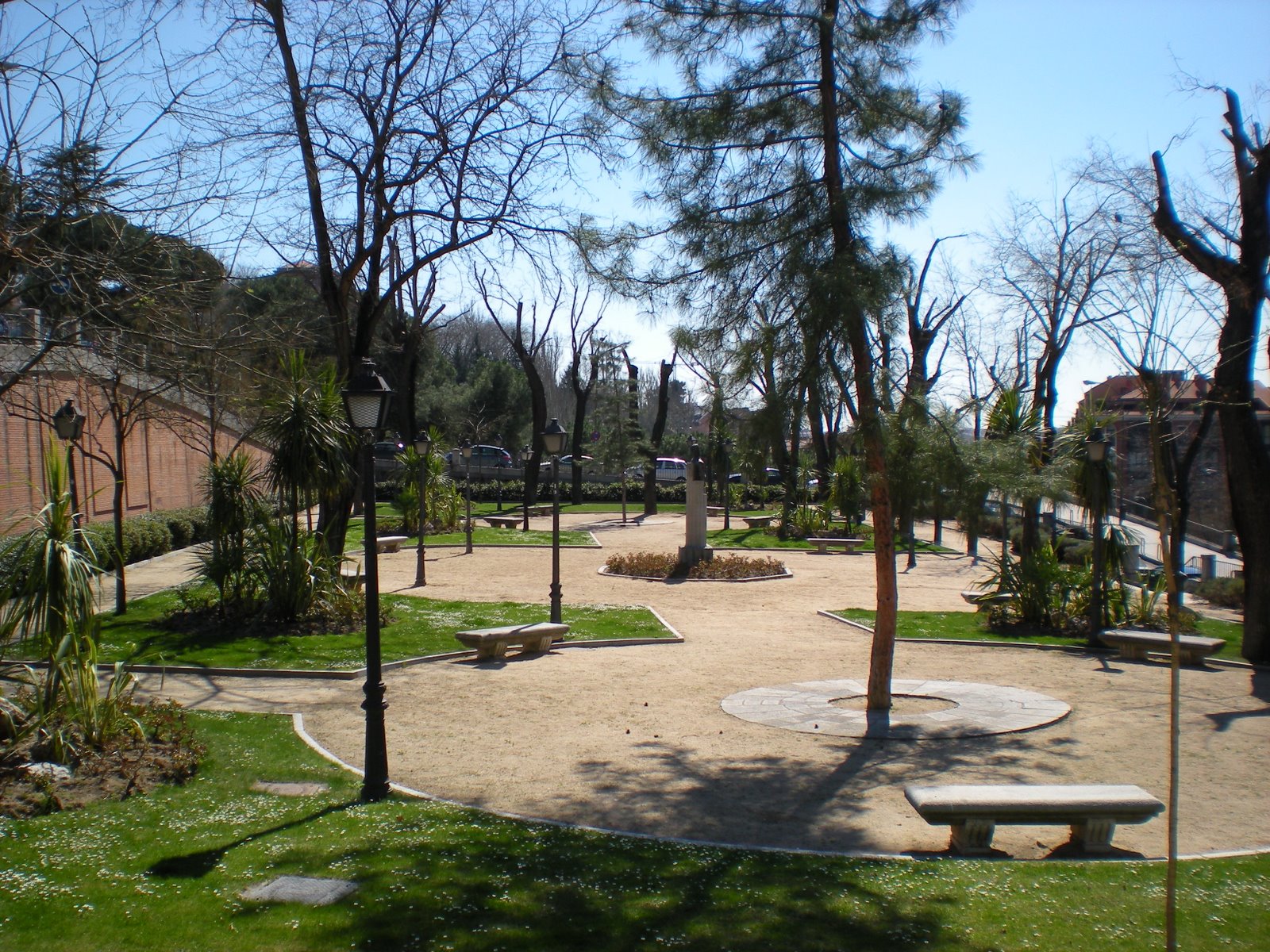
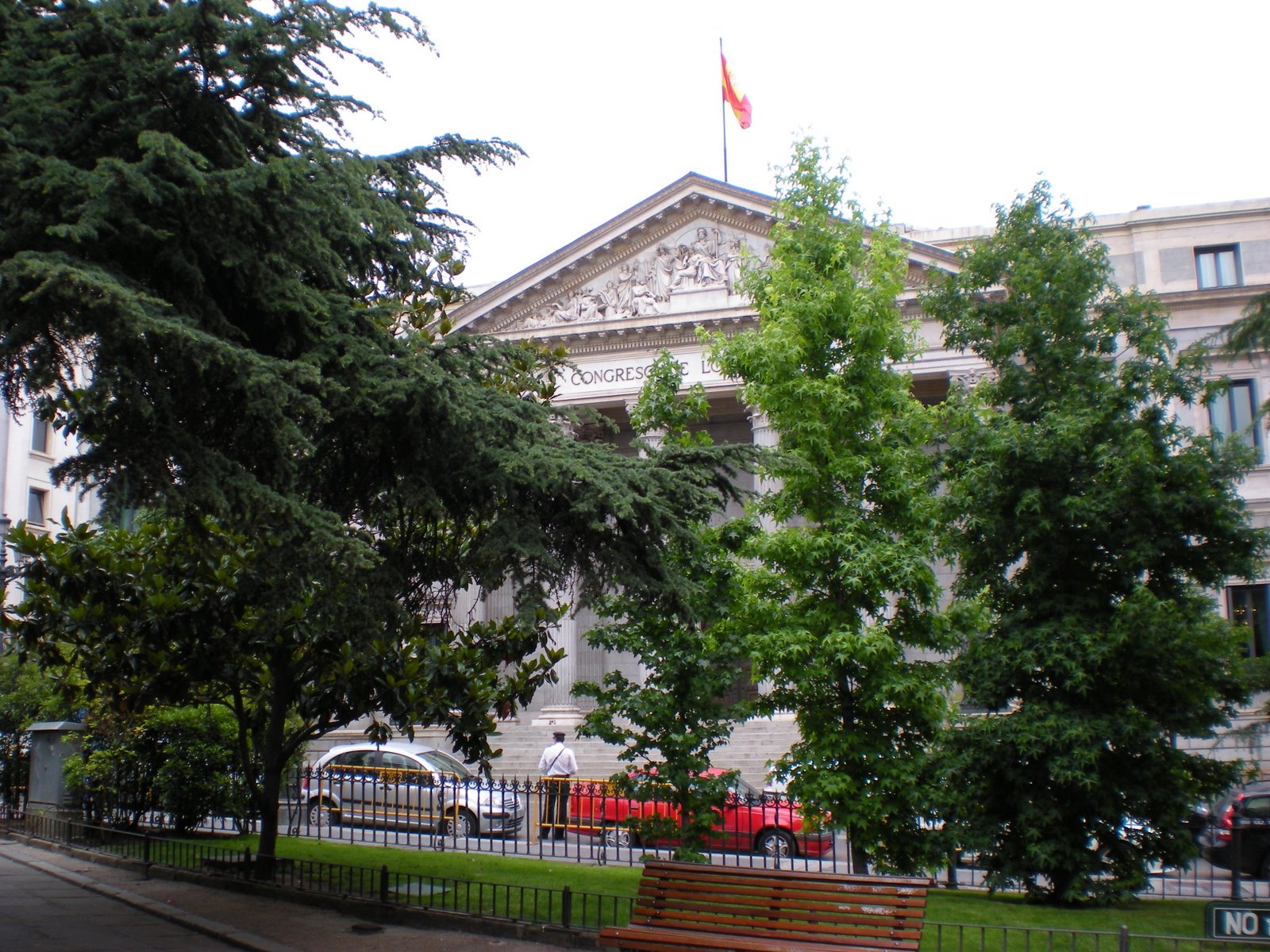
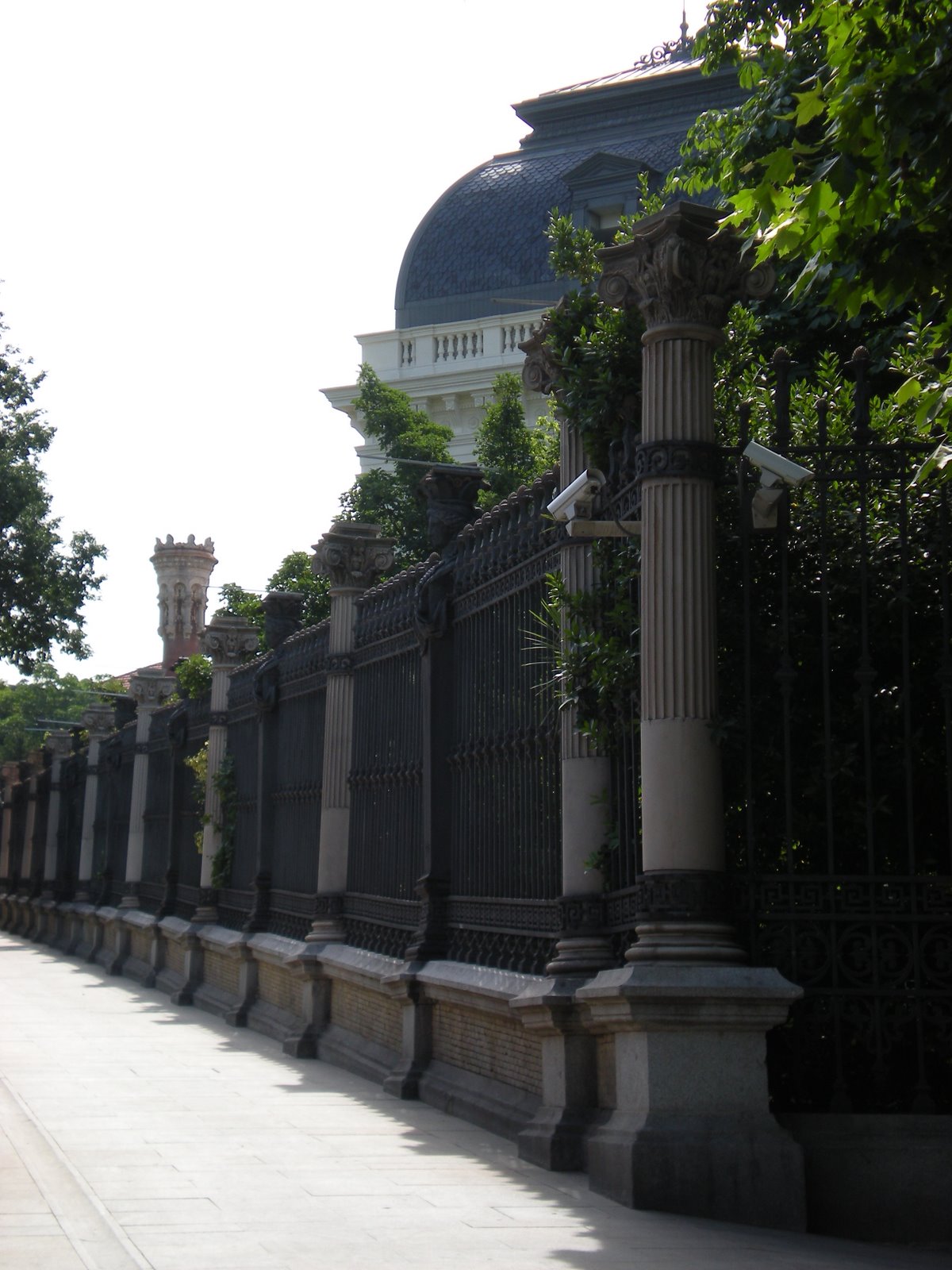
  • MADRID, una mirada diferente.

    Hello, I want to show you photos of Madrid, but with a different point of view. they are my particular vision of the charming of Madrid. First a few photos and more photos other day.

  • The cost of owning a Bugatti Veyron is overwhelming; set of tires cost $38,417

    You’re probably really jealous of those lucky few driving around in a Bugatti Veyron. Well, once you figure out how much it costs to maintain one, you won’t be that disappointed.

    You may think that those lucky guys driving the Veyron can very well afford the operating cost of the supercar but when you hear stories of one Veyron owner who has his trailered to his favorite road while he follows in an executive jet since it’s cheaper – you start to get a little curious.

    According to AutoCar, a routine service for a Veyron costs a whopping £12,866 ($21,033 USD), whereas an annual service for a Ferrari Enzo is £1680 ($2,746 USD). A set of new tires will run you £23,500 ($38,417 USD), and that’s because they have to be capable of handling a top speed of 253 mph. Moving forward, every fourth tire change, the Veyron’s wheels must be replaced, leaving you with a bill of £7050 ($11,525 USD) per wheel.

    Feel better? Good. So do we.

    – By: Kap Shah

    Source: AutoCar


  • My cat

    My cat is the biggest brat I’ve ever witnessed, yes it’s mostly my fault. This morning as I’m almost ready to leave I went to step over my bed to get out of my bedroom and she jumped in the way. Normal, no biggie so I put my foot on the bed and shifted my wieght to step over her and the bed. While doing that she jumped up on my leg started purring thunderously and laid right down on my leg nuzzling my knee.
    I can’t resist that so I stood there with a cat on my knee for five minutes petting her and watching her sometimes frantically mark my knee like she thought someone was gonna steal me.
    Just thought I’d share something that made me smile.
  • Hedging The Net Psychic Wealth

    So the polls have Martha Coakley in free-fall, and even Nate Silver, who’s been pretty pessismistic on Brown, says the FiveThirtyEight forecasting model puts Brown at a 3:1 chance of winning.  Intrade also has her at 25 cents on the dollar.

    I confess, I can’t quite believe it.  It’s Massachusetts.  Teddy Kennedy’s seat.  And special elections are notoriously difficult to poll–many of the results rely on educated guesses about the makeup of the electorate tomorrow.  I’m very tempted to take a flyer on Ms. Coakley’s chances, at 3:1.

    And even if I thought those numbers were about right, it might make
    sense as a way to hedge my net psychic wealth.  If Scott Brown wins,
    I’m happy–and if Martha Coakley wins, at least I get $50 or so to
    drown my sorrows.

    I’m a great believer in hedging emotional
    risks.  Betting against an outcome you really want is an excellent way
    to manage downside disappointment.  But in the case of the whole future
    of our nation’s health care policy, I can’t quite bring myself to do
    it.  Some risks are better off unhedged.


    Email this Article
    Add to digg
    Add to Reddit
    Add to Twitter
    Add to del.icio.us
    Add to StumbleUpon
    Add to Facebook


  • MADRID: uma visão diferente

    Quero expressar a minha visão particular de Madrid eo que eu mais gosto do seu charme. Eu vou colocar algumas fotos e depois mais para vir. Eu espero que você gosta deles. desculpas pelo meu Português.

  • Should ‘tweet’, ‘Twitter’ or ‘unfriend’ be the 2009 word of the year?

    Should ‘tweet’, ‘Twitter’ or ‘unfriend’ be the 2009 wo...

    The English language is continually evolving and thanks to the technology of the 21st century – including the media and internet – new words and phrases are being created at an unprecedented rate. Increasingly, these new words result from our love affair with the internet, online social networking sites and geek-speak. This year, the American Dialect Society (ADS) has voted “tweet” – a short message sent via Twitter – as the 2009 word of the year. But two other organizations disagreed. The Global Language Monitor nominated “Twitter” as the word of the year and the New Oxford American Dictionary claimed “unfriend” – meaning to “de-friend” someone on a social networking site such as Facebook – deserved the 2009 word of the year award. ..

    Tags: ,
    ,
    ,

    Related Articles:


  • Startup Finance: Xero Powers Accounting in the Cloud

    startup_finance_jan10.jpgWhen New Zealand-based entrepreneur Rod Drury began researching his market he could hardly believe what he was seeing. As seen in Drury’s comments last week on the state of the online finance ecosystem, only a handful of players like Saasu and MYOB were targeting small business clients. While Drury saw that a number of cloud-based personal finance companies like Mint were gaining traction with users, small businesses had been stuck with the same tired desktop accounting software they’d been using for the last ten years. Drury built Xero with the intent to help small businesses manage their accounts in the cloud.

    Sponsor

    When asked why the cloud is so important for accounting services he explains, “In the past small businesses rarely shared their business data with accountants as the majority of billable hours were spent simply extracting the right information.” Says Drury, “The fact that your entire business can now look at your accounts in the cloud means that the accountant can finally act as a business advisor and improve your cash flow.”

    Xero also works with a number of banking institutions. This means that rather than waiting 5 business days for a bank to reconcile your accounts, they’re up-to-date with your daily transactions.

    There are currently 12,000 companies working with Xero (including ReadWriteWeb) and the company recently launched integration with invoicing service FreshBooks and CRM-tool Salesforce. For between $19-39 dollars per month startups can access their accounts from anywhere and reduce the anxiety around the accounts payable and receivable process. To try it for yourself visit xero.com.

    Editor’s note: This story is part of ReadWriteWeb’s Online Finance series, a weekly, three-month long look at how the Internet has transformed finance. Up until April 15, the deadline for U.S. readers to file their taxes, we’ll be looking at how finance software has evolved, analyzing top web tools and posting video of our conversations with the people who are shaping online finance. If you are interested in sponsoring the rest of this Content Series, please contact our COO Sean Ammirati.

    Discuss


  • Albion Castle

    San Francisco, California | Eccentric Homes

    Despite its long history and six-story stone tower, most residents of San Francisco, even those that drive by it daily, have no idea that Albion Castle exists.

    Built in 1870 by John Hamlin Burnell, a young English immigrant with plans for a brewery to supply the over 800 saloons serving the growing city. Beer was already a popular choice in San Francisco, with several local breweries already competing for business. But Burnell’s new property had a secret advantage: An underground aquifer that provided pure cold water, perfect for brewing – not to mention free. He built himself not only the workspaces for the Albion Porter & Ale Brewery, but also a castle home. Although relatively petite and built into a hillside, it features a distinctive tower built from stones pulled from cargo ship’s ballast, modeled after Norman fortifications Burnell loved back home.

    Under the castle, Burnell dug out two stone cisterns, each capturing 8,000 to 10,000 gallons of spring water per day. The 200 foot pools are accessed by a cave entrance, and still provide fresh clean water today.

    Burnell built his unusual brewery on land on the outskirts of the city then managed by the Hunter brothers. Now known as Hunter’s Point, it was the site of a huge Naval shipbuilding yard for decades, now a rough-edged neighborhood. The property has changed hands many times, and had several incarnations over the years.

    After the 18th amendment (Prohibition) forced the brewery to close down in 1919, the property was reborn as the Albion Water Company, providing bottled drinking water from the underground cisterns from 1928 to 1947. In 1938, the castle was bought by the sculptor Adrian Voisin who remodeled the living area, adding much of the woodwork and medieval-inspired interior that is there today. He lived and worked there for some twenty years.

    In 1961 the castle was nearly the victim of a highway construction scheme that planned to bulldoze the building, but it was saved based on the argument that the fresh water source under the building “could be the only non-contaminated source of fresh water in the event of a nuclear attack.” (According to the San Francisco Chronicle at the time)

    Over the years, the nearby Naval shipyards complained about the inconvenient proximity of a fresh water source so close to their highly hazardous undertakings.

    In 1998 the property was sold to another artist, this time sculptor Eric Higgs, also known as one of the founders of CitySearch. Until 2005 the castle was used as a residence, art studio, and occasional party location, then it was sold at auction for $2.1 million dollars. The purchasers, local brewers and castle fanciers from Napa county, intended to revitalize the space and re-launch the historic Albion Brewery. Although some renovations to the property and interior have been made, the brewery never materialized.

    As of January 2010, the property is once again listed for sale, ready for its next incarnation. Yours for just $2.9 million.

  • testing in the rain

    Anybody have a good way to test in the rain? I am relatively new to this diabetes thing (type 1) and trying to exercise every day, however the rain is getting in the way.
  • Grey Lady’s Troubles With the P-Word

    restricted area

    Can you implement a paywall at a newspaper website in 2010, or is charging users for content an act of slow-motion seppuku? What if it isn’t a paywall exactly (such a crude term, after all) but a series of turnstiles, or possibly a metered approach, like a hydroelectric utility? These are the kinds of existential questions that gallop through the fevered brain of many a newspaper executive these days, as ad revenues continue to slump and shareholders grow anxious.

    Now the New York Times is (finally) poised to pull the trigger and commit to such a venture, if a recent report by New York magazine is to be believed. The magazine says that the Grey Lady is going to implement some kind of payment system soon — perhaps as soon as next month — and that the debate over doing so has split the paper into two camps (or perhaps only revealed a Web-paper split that already existed). Mexican billionaire Carlos “Slim” Helu, the paper’s largest individual shareholder, is also apparently a fan of charging for content online.

    It’s hardly a secret that the NYT has been considering a paywall, or at least some kind of content-payment mechanism (you can almost feel executives at the paper wincing when someone uses the “p” word) for some time now. The paper was reported to be working on a new pay model as long as a year ago, and NYT Co. chairman Arthur Sulzberger Jr. confirmed as much in March 2009.

    In May 2009, now-former NYT writer Jennifer Lee talked about a potential tiered-membership model on Twitter, after the idea was raised during an internal staff meeting. The paper’s president and its executive vice-president of digital have both talked about the debate over charging readers, and at one point last year the president said a decision would be made by June. In November, however, executive editor Bill Keller said that the decision had proven to be more difficult than expected (hardly surprising), but that an announcement was likely “within weeks.”

    According to the NY magazine report — which it says is based on a source close to Sulzberger, as well as others within the NYT newsroom — the paper has apparently decided to go with a “metered” model similar to that implemented by the Financial Times. Under the FT system, which was launched in 2007, readers can see 10 pages for free per month, and then they are met with a subscription wall. Reuters media writer Felix Salmon (who wrote about his issues with the FT metered model here) has recommended instead a more subtle version, in which a reader’s actual consumption is measured, and then at some point they are billed for it — possibly through an iTunes account, if the NYT becomes part of Apple’s much-anticipated iTablet ecosystem.

    So what will become of the NYT if and when it actually launches a pay system? The response from many observers seems to be binary — either it will succeed or it will fail. But the real danger is that it will be somewhere in between: neither a runaway success, nor an abject failure, but a slow and steady decline (Jeff Jarvis thinks it will likely be the latter).

    The paper’s previous paywall experiment, Times Select, which was dismantled in 2007, arguably fell into that chasm too; plenty of people paid the monthly subscription, but not enough to make a real difference to the bottom line (for what it’s worth, the newspaper I used to work for had much the same experience with its own version of Times Select), and eventually the number of people paying levelled off. In the end, the paper decided (as my former employer did) that it just wasn’t worth it.

    Will a metered model produce a different outcome? Perhaps. On the other hand, someone once said that insanity consists of “doing the same thing over and over but expecting different results.”

    Buy This Item: [Click here to buy this item]

    Read Original Article

  • Report: Ford undecided on Ranger replacement, but F-150 likely to be pressed into service

    Filed under: , , ,


    2010 Ford Ranger – Click above for high-res image gallery

    Ford is deliberating, according to reports, over whether to replace the Ranger in the North American-market. The compact pickup is the second most popular in its class, at 55,600 units last year selling roughly half as many as Toyota does the Tacoma, and it was once the segment’s best seller.

    According to Pickuptrucks.com, Ford’s Derrick Kuzak believes that most customers buying the Ranger use their vehicle like they would a car, rather than taking advantage of its inherent load-lugging utility. With that in mind, Kuzak says a more fuel-efficient F-150 – on which they’re currently working – and new global small cars like the Fiesta and Focus could very well effectively replace Ranger in the North American market.

    As it is, the most efficient 2010 Ranger is the base rear-wheel drive 2.3-liter four-cylinder model with a five-speed manual transmission, and it only achieves 19 miles-per-gallon city and 24 highway. That’s not much better than the much more capable F-150 with the three-valve 4.6-liter V8 and six-speed automatic, which gets 15/21.

    Development is still ongoing in Australia on the next-gen version of the foreign-market Ranger, which is a completely different truck from that sold in North America. However with the Fiesta, Focus and soon the Mondeo/Fusion abandoning their regional entrenchments in favor of global universality, the prospect of bringing the Australian Ranger home to roost still isn’t outside the realm of possibility, but doesn’t sound all that likely, either.

    Gallery: 2010 Ford Ranger

    [Source: PickupTrucks.com]

    Report: Ford undecided on Ranger replacement, but F-150 likely to be pressed into service originally appeared on Autoblog on Mon, 18 Jan 2010 16:28:00 EST. Please see our terms for use of feeds.

    Read | Permalink | Email this | Comments


    Buy This Item: [Click here to buy this item]

    Read Original Article

  • Ferrari prices the 458 Italia for the UK from £169,545

    Filed under: , , , ,


    Ferrari 458 Italia at the Frankfurt Auto Show – Click above for high-res image gallery

    When you’re driving a Ferrari, you’d better keep your eyes open. When you’re buying one, you might want to avert your eyes lest they start watering. Because you know it’s going to be a big bill. Just how big is a matter of details, and new reports from the glossies in the UK give us exactly that.

    For the British market, the new Ferrari 458 Italia will sell for a whopping £169,545, or the equivalent of about $277,000 by today’s conversion rates. A quick look at the outgoing prices reveals a whopping increase over the $199,000 MSRP for a 2009 F430, but a touch less than the $282k commanded by the 430 Scuderia (whose performance the new 458 eclipses and, it could be argued, effectively replaces). It’s also worth noting that the figures are a fair bit higher than those suggested in the alleged leaked price sheet from back in October.

    Of course pricing for new vehicles around the world isn’t based on current exchange rates, but rather on local market considerations, so until U.S. pricing is announced, it’s more relevant to look at relative prices in the UK itself. The £169k 458 Italia is over £40k (~$65k) more than the £128k F430, but a couple grand less than the £171k Scuderia. The California, in case you were wondering, lists at £143,325 on the 2010 UK price sheet (which includes all Her Majesty’s tea party taxes) – but we’re still supposed to believe the Cali’s not the “baby Ferrari” we all predicted it would be.

    If you’re eyes aren’t done watering yet, the price for a new 458 only continues to rise from there, with options like LEDs on the steering wheel at £2,794 ($4,563) Alcantara trim for the trunk at £1,445 ($2,360), electric seats at £2,120 ($3,462) and – wait for it – a £1,156 ($1,888) spare wheel.

    [Source: Evo]

    Ferrari prices the 458 Italia for the UK from £169,545 originally appeared on Autoblog on Mon, 18 Jan 2010 16:01:00 EST. Please see our terms for use of feeds.

    Read | Permalink | Email this | Comments


    Buy This Item: [Click here to buy this item]

    Read Original Article