Category: News

  • 6 Million Cures for Diabetes on Google

    Just for fun this morning I Googled "Diabetes Cure" and got 6 million hits, clicked on one of the first hits and found this:

    The Cure For Diabetes : Men’s Health

    It says to reduce carbs. Says ADA is wrong. Says saturated fat is not bad for you.

    All they left out was a link to DF. 😀

  • Two new patents show Apple getting into the energy tracking game, killing power bricks

    Two new patents show Apple getting into the energy tracking game, killing power bricksApple may already be the favored child of Greenpeace and platform of choice for eco-minded gadgetistas worldwide, but it isn’t resting on its laurels. The company looks like it’s pondering an entrance into the home automation/energy tracking markets, filing for a pair of patents that would enable devices to register their power usage and communicate with each other using HomePluge Alliance standards. Users would be able to monitor the charging status of connected devices and delay their charges to occur during off-peak hours. There’s even a new type of plug that could internally perform AC/DC conversions and automatically provide the appropriate amount of juice to any supporting device. The end of the ubiquitous power brick? Sounds nice, but something tells us it’ll be a few decades before we can reclaim that precious space in our carry-ons.

    Two new patents show Apple getting into the energy tracking game, killing power bricks originally appeared on Engadget on Mon, 18 Jan 2010 09:56:00 EST. Please see our terms for use of feeds.

    Permalink CNet  |  sourcePatent One, Patent Two  | Email this | Comments

    Buy This Item: [Click here to buy this item]

    Article

  • LG marks belated Android entry with GW620 UK launch

    Hey, you know what’s hot right now? Android 1.5. You know what else? Resistive touchscreens and chunky bodies, the ladies just can’t get enough of them. Good thing too, since in some alternate universe where the Motorola Droid, HTC HD2 and the Nexus One existed, this LG GW620 — hereafter to be known as the InTouch Max — would look like it’s arriving about a year too late to matter. A phone that’s been teased and promoted since September, it has finally found homes on Virgin Mobile and T-Mobile in the UK, where unwitting victims can have it forced upon them for free when they sign up to long-term contracts costing at least £20 ($32.50) per month. Hit the source link for more details, if you must.

    LG marks belated Android entry with GW620 UK launch originally appeared on Engadget on Mon, 18 Jan 2010 09:29:00 EST. Please see our terms for use of feeds.

    Permalink CNET  |  sourceVirgin Mobile UK  | Email this | Comments

    Buy This Item: [Click here to buy this item]

    Article

  • Gov. Quinn Hosts Rail Transportation Summit; ‘Beyond Transportation’ Focuses on Rail and Economic Development

    Gov. Pat Quinn today joined Assistant U.S. Senate Majority Leader Dick Durbin (D-IL) to speak at “Beyond Transportation: The Economic Impact of Rail in Illinois.”

    The summit is dedicated to bringing together stakeholders in government, economic development and private industry to improve rail infrastructure and create jobs in Illinois.

    “I am committed to making Illinois an inland port that is the hub of rail transportation, not only for the Midwest, but for the nation,” said Gov. Quinn.

    “This summit will us achieve that important goal, generating much-needed economic development and creating jobs.”

    Governor Quinn partnered with Northwestern University’s Transportation Center and the Environmental Law & Policy Center to chair the event, which is gathering experts from across the country for a rail policy and economic development dialogue.

    “Governor Quinn and I have worked side by side from day one to demonstrate Illinois’ commitment to high-speed rail and the rail industry as a whole,” said Durbin.

    “One of the most important contributions the freight and passenger rail industries provide to Illinois is good-paying jobs that support families and help pay for college. For that reason and many others, we need to invest in rail as we strengthen our nation’s economy. The discussions and ideas shared today will help keep Illinois at the forefront of the railroad renaissance we’re currently undergoing.”

    Assistant Secretary of Commerce for Economic Development John Fernandez of the U.S. Department of Commerce and Administrator Joseph Szabo of the Federal Railroad Administration keynoted the event.

    Attending industry experts hosted several panel discussions on local development, sustainability, manufacturing and connectivity in the global economy.

    “Illinois has been America’s rail hub for more than a century, yet we must constantly improve and expand capacity for both goods and passengers to ensure that rail remains a robust engine for economic growth and energy conservation,” said Administrator Joseph Szabo.

    Developing high-speed rail and improving current rail infrastructure are among Governor Quinn’s top priorities. Illinois has submitted two rounds of applications for stimulus funding from the U.S. Department of Transportation for high-speed passenger rail.

    Additionally, through the Illinois Jobs Now! plan, the state is poised to make the largest investment in rail infrastructure in Illinois’ history.

    For more information, please visit beyondtransportation.illinois.gov.


  • Japanese gamers fire back at IGN’s JRPG article

    IGN posted a feature last week, enumerating the Top 10 Ways to Fix JRPGS (http://xbox360.ign.com/articles/106/1060011p1.html). The article, which criticized numerous elements found in Japanese role-playing games, was met with outrage from the Japanese gaming community. In

  • Man found shot multiple times on Near West Side

    A 23-year-old man was found shot to death this morning in his Near West Side apartment.

    Antwan Peter, of the 1300 block of West 15th Street, was pronounced dead at 4:12 a.m. at Stroger Hospital, according to a spokesman for the Cook County medical examiner’s office.

    About 3 a.m., officers had responded to a 911 emergency call of a person shot, said Police News Affairs Officer Robert Perez. They found Peter, who suffered multiple gunshot wounds to his body, sources said.

    As of 6:45 a.m., police were still on the scene investigating.

    Deanese Williams-Harris

    Read the original article from Tribune News Services.


  • Found Footage: The Story of Macintosh

    Filed under: , ,

    Denver-area Mac consultant Mike Kimble is no stranger to Apple; he worked at an Apple reseller prior to the introduction of the Mac in 1984, and he’s been involved with Macs and other Apple products ever since. Mike recently found several old Apple tapes that were sent to his business back around the Mac intro, and his description of one of them says it all:

    “I found this VHS cassette while cleaning my office this week. This “Found Footage” comes from a video tape I received from Apple back in 1984 when the original 128K Mac was introduced. It was part of the authorized dealer training videos given to each store to help them become familiar with the Macintosh. You will see a very young Burrell Smith, Andy Hertzfeld, Phil Gibbons, Mitch Kapor, Bill Gates and Steve Jobs. You really get a good feel for how proud and excited these people were for the creation of something special. Little did they know how much they were about to change the world…”

    My personal favorite scene is the one where Bill Gates is sitting with a 128K Mac on his desk. The video is divided into two parts; the second can be viewed by clicking the “read more” link below. Enjoy this trip down memory lane!

    TUAWFound Footage: The Story of Macintosh originally appeared on The Unofficial Apple Weblog (TUAW) on Mon, 18 Jan 2010 09:30:00 EST. Please see our terms for use of feeds.

    Read | Permalink | Email this | Comments

    Buy This Item: [Click here to buy this item]

    Read Original Article

  • Restoring Hypo Awareness?

    For a fairly long time I have had to drop pretty low (lower than 3.0mmol/L (54 mg/dl) before I have any feeling of a hypo developing. And the hypos I have even when my BG levels are very low are mild. I suspect when I was on MDI I had frequent enough low BGs (often 2 or more per day) that I lost the hypo awareness. Now that I am on the pump (since Oct. 2009)I have had a lot more control over the lows and now I may only have one per week and usually they are just borderline.

    I am wondering if anyone has managed to restore their hypo awareness after loosing it? With the pump I have consciously been trying to keep my BG levels higher than I really want (6.0 to 7.0 (100-130)) and when I hit around 4.0 (72) or even 5.0 I correct that immediately to avoid falling close to a hypo level. I have managed to maintain this for about a month, but I have not yet detected a change in my reaction to low BG levels. Should I be keeping my average BG even higher?

    This seems like a very challenging process and maybe I need to be more patient. Anyone had any succes with this or advice?
    Pat

  • UN agency highlights potential to fight climate change with grasslands

    UN News Centre: Properly managed grasslands – even more than forests – could fight climate change by absorbing and storing carbon dioxide, according to a newly released report by the United Nations Food and Agriculture Organization (FAO). The world’s nearly 3.4 billion hectares of grasslands store 30 per cent of global soil carbon in addition to the substantial amount of above-ground carbon held in trees, bushes, shrubs and grasses. They also account for 70 per cent of agricultural land.

    In its report “Review of Evidence on Drylands Pastoral Systems and Climate Change,” FAO noted that grasslands could play a major role in supporting the adaptation and reducing the vulnerability to climate change for the more than one billion people who depend on livestock for a living.

    FAO Assistant Director-General Alexander Müller said that the world will have to use all options to contain average global warming within 2 degrees Celsius. He noted that “agriculture and land use have the potential to help minimize net greenhouse gas emissions through specific practices, especially building soil and biomass carbon. These practices can at the same time increase the productivity and resilience of agriculture, thus contributing to food security and poverty reduction.”

    The report also noted that grasslands help improve the soil’s water retention capacity and thus can help its ability to withstand drought, and help safeguard biodiversity.

    In addition, it cautioned that grasslands are particularly sensitive to land degradation, which affects some 70 per cent of pastures as a result of overgrazing, salinization, acidification and other processes. Pressure on the land is also due to the need to meet fast-growing demand for meat and dairy products.

    Read more>>

  • Preventing Rangeland Erosion: Developing Better Management Practices In Iran

    Science Daily: The rangelands of Iran have one of the world’s longest history of agriculture development, with a deep tradition of technological developments and knowledge of the soil that has produced centuries of fertile crops. Currently, however, new pressures to feed an increasing population of humans and livestock in the region has taken its toll on the land, as evidence now suggests that the soil is rapidly degrading.

    With the land overly stressed from the amount of livestock it supports, the ranges are subjected to overgrazing, primarily as a result of inadequate knowledge by those individuals responsible. To prevent further degradation of the land, new training programs to help pastoralists properly utilize their rangelands is needed.

    A recent study was conducted to determine the most effective method of instructing pastoralists in the Ilam province of Iran, comparing the results of lectures and workshops in their understanding of methods to preserve, renovate and utilize their rangelands. After participating in the learning sessions, the subjects were then given questionnaires in order to collect data related to their overall understanding of the issues after their participation. The study was conducted through the Department of Agricultural Extension and Education in the College of Agriculture at Shiraz University of Iran.

    The results have been published as a part of the latest edition of the Journal of Natural Resources & Life Sciences Education.  The authors include Dr. Mansoor Shahvali, Associate Professor of Agricultural Extension and Education in the Agriculture College of Shiraz University; A. Poursaeed, a Ph.D. student of Agricultural Extension and Education and Lecturers of Islamic Azad University, Ilam Branch; and Maryam Sharifzadeh a Ph.D. student of Agricultural Extension and Education and Lecturer of Oceanic and Atmospheric Research Centre of Shiraz University.

    Read more>>

  • Internet Connection Speeds in South Korea Rise 29 Percent to 14.6 Mbps

    Unsurprisingly, Internet connection speeds continue to grow worldwide as proven by the latest State of the Internet report from Akamai, the distributed computing and content delivery provider. The data is based on the connections to the Akamai network from various countries and cities, so it’s not a comprehensive view, but … (read more)

  • US Blocking Costa Rican Sugar From US Markets Unless It Agrees To Draconian IP Laws Citizens Don’t Want

    We were just talking about whether or not countries are really able to push back on the US’s attempts to export draconian anti-competition/anti-innovation copyright and patent policies elsewhere. Michael Geist points us to two cases where US trade representatives are going overboard in trying to get foreign countries to put in place stringent intellectual property rules. The first is in Costa Rica, which is included in the Central America Free Trade Agreement (CAFTA). Yet like with other free trade agreements that the US has agreed to elsewhere, this one includes draconian intellectual property law requirements. I still cannot understand why intellectual monopoly protectionism — the exact opposite of “free trade” — gets included in free trade agreements. At least in Costa Rica, a lot of people started protesting these rules, pointing out that it would be harmful for the economy, for education and for healthcare. So the Costa Rican government has not moved forward with such laws. How has the US responded? It’s blocking access to the US market of Costa Rican sugar until Costa Rica approves new copyright laws. Nice of the US, right? Bankrupting Costa Rican farmers to force Costa Rica to put in place a copyright regime it does not want.


    Then there’s the Bahamas, where US trade representatives are demanding new intellectual property laws, claiming that the country is not in agreement with WTO treaties. Apparently, the USTR is particularly upset about the police force in the Bahamas not cracking down on the sale of unauthorized DVDs, CDs and counterfeit clothing. However, as the Bahamas Chamber of Commerce president notes, nearly all of those counterfeit products actually originated in the US — and that the majority of people doing the buying are US tourists. In other words, the issue is really with the US, but it seems to want everyone else to deal with it.

    Permalink | Comments | Email This Story


  • Funding for Biofuels Research – New York Times (blog)

    Funding for Biofuels ResearchNew York Times (blog)As an interesting counterpoint, a study released recently by Rice University questioned whether the government's goal of reaching biofuel production targets …


  • MLK Day: Contending with King

    NOTE: The following essay by Charles McKinney, professor of history at Rhodes College in Memphis and former board member of the Institute for Southern Studies, appeared on the website of The Jamestown Project in 2008, but the themes it raises are as important as ever.

    CONTENDING WITH KING

    Dr Charles McKinney.jpgBy Charles W. McKinney, Jr., The Jamestown Project

    As the fortieth anniversary of the assassination of Martin Luther King,
    Jr. approaches, the nation’s attention will be ineluctably drawn, once
    again, to the words and teachings of an American who altered the course
    of history.


    Bookmark and Share

    However, unlike the corporate-sponsored celebrations that
    mark King’s birth – or the ones that take place during Black History
    Month – the focus this time around will be on the work and words of a
    veteran activist, drawn to Memphis in the early months of 1968 in an
    attempt to confront the debilitating racial and economic inequality
    that dogged the lives of the city’s sanitation workers.

    Perhaps, as we
    reflect on King’s death, we will – at least temporarily – move away from
    the pop culture caricature of King that’s come to characterize our
    collective memory of him, and actually seek to understand his responses
    to the complex dilemmas that bedeviled American society in his lifetime
    and beyond.

    Historian Tim Tyson writes that in the years after the
    assassination we worked hard to turn King into a “black Santa Claus.”
    This version of King is a raceless, non-confrontational action figure
    that can be, Tyson continues, “filled with whatever generic good wishes
    the occasion may dictate.”

    In an increasingly conflict-averse society,
    we’ve grown comfortable with this new rendition of the Good Doctor –
    King 2.0. This King is meek. This King turns the other cheek. This King
    has dreams. Over time, we’ve become much less comfortable with the
    black southern preacher and fierce social critic who, for most of his
    public life, stood against some of the most powerful forces in American
    society.

    “The church,” King wrote in 1963, “must be the guide and critic of
    the state.” If religious leadership failed in this effort, the church
    would be reduced to “an irrelevant social club without moral or
    spiritual authority.” This belief that the church played a central role
    in the transformation of society placed him on a moral and political
    trajectory that frequently confounded allies and convicted the
    ambivalent.

    Most significantly, it placed him at odds with the Johnson
    Administration on its two central issues, the War on Poverty and the
    war in Vietnam. By 1966, King had come to see Johnson’s domestic war as
    piecemeal and under funded. In a time of soaring prosperity, it was
    absurd, King declared, to spend billions of dollars on travel to the
    moon while poor and working class Americans suffered under unspeakable
    conditions.

    Johnson’s War on Poverty did accomplish the task of
    illuminating the intractability of poverty. For King however, it also
    highlighted the unwillingness on the part of liberal politicians to
    confront the issue in more foundational ways. The seeds of this
    analysis would bear fruit in the Poor People’s March, King’s effort to
    place the issue of poverty front and center in the American conscience,
    and to challenge the country to make the necessary political and
    economic adjustments to address the matter. “True compassion”, King
    wrote in 1968, “understands that an edifice which produces beggars
    needs restructuring.”

    In 1967, a year to the day of his death, King delivered a major
    speech against the Vietnam War at Riverside Church
    in New York City. To
    King, it was morally inconsistent to simultaneously condemn state
    sanctioned violence within the United States while ignoring state
    sanctioned violence abroad.

    The United States, he intoned in that
    historic speech was “the largest purveyor of violence in the world
    today.” Moreover, the war highlighted America’s hostile relationship
    with its poor and minority citizens, who were dying at dramatically
    higher rates than their numbers in the country merited.

    King’s
    political and spiritual instincts led him to a momentous conclusion –
    that the war represented an immoral, racist, imperialist endeavor that
    stained the soul of country. For King, the choice – though difficult –
    was crystal clear: the moral and political crusade he waged in the
    United States was built upon an alter of redemptive nonviolence; this
    reality demanded that he speak out against the war. And so he did; and
    when he spoke, he did so as a child of God and brother to the
    Vietnamese.

    It was a position that placed him in uncharted political territory
    and had serious implications. Despite the fact that he’d recently
    received the Nobel Peace Prize, and had long espoused the international
    nature of the struggle for equal rights in the United States, pundits,
    politicians and activists virulently chastised King, a mere “civil
    rights leader”, for having the audacity to express an opinion on an
    issue not unfurling on the streets of Selma or Los Angeles.

    He faced
    intense resistance from almost every corner of his professional life.
    The board of the Southern Christian Leadership Conference – the
    organization he helped create – expressed its opposition to the effort.
    His closest advisors and political allies urged him to stick to civil
    rights, and warned that an unwarranted foray into foreign policy could
    jeopardize everything they’d worked for over the past decade.

    By the time he arrived in Memphis, King’s opposition to the war –
    now in full bloom – had rendered him persona non grata at Johnson’s
    White House. Surrogates for President Johnson declared that King had
    neither the authority nor the competence to speak about foreign
    affairs.

    His opposition to the war severely damaged his relationships
    with other national leaders within the civil rights movement as well.
    Roy Wilkins, head of the NAACP, questioned King’s loyalty to his
    country. Whitney Young of the National Urban League accused King and
    other anti-war activists of intentionally undermining the War on
    Poverty with their anti-war stance. National publications were hardly
    more kind.

    The New York Times called his anti-war position a “serious
    tactical mistake”, while newspapers across the South reaffirmed – with
    renewed vigor – that King’s recent statements confirmed his suspected
    communist sympathies. The Washington Post ran an editorial titled “What
    on Earth can Dr. King be thinking?”

    Simply put, King thought that unchecked racism, militarism and
    poverty posed a direct threat to the existence of the human race. It
    was this perspective that drew him to Memphis, to support a group of
    men whose relationship with their employer seemed as if it had been
    ripped from the pages of a previous century.

    Called to work with a
    plantation bell, paid starvation wages and fired on a whim, sanitation
    workers represented the nearest thing to an “untouchable” class in the
    city. But they were also increasingly fed up with the city’s antebellum
    treatment. After they decided to stand and fight for better wages, the
    right to organize and their very manhood, they asked King to join them,
    and he did. So, in March of 1968, he brought publicity and star power
    to their movement. He helped to nationalize their plight.

    Of course, King brought a lot of things with him to Memphis for
    what would be his final campaign. He brought the titanic pressures of
    national leadership, pathological harassment by the FBI and the specter
    of his own mortality. He attracted Black Power advocates who openly
    mocked his leadership and attempted to consign nonviolent direct action
    to a bygone era.

    But more importantly, he brought with him a bedrock
    assurance that the universe was morally ordered, and that there was in
    fact a deep, abiding relationship between power, justice and love.
    King, the hard-nosed political realist, also brought with him the
    realization that coercion represented one of the crucial variables in
    the calculus of liberation.

    He knew, in his bones, that Frederick
    Douglass was right about the fact that power conceded nothing without a
    demand. He brought the knowledge that every ounce of freedom won in his
    lifetime was the product of prayerful, deliberative struggle. He
    brought an enduring, ever-deepening confidence in the power of
    redemptive nonviolence to transform the human condition.

    He brought
    with him the prophetic hope that America would one day live up to the
    high principles it set for itself at the Founding and in the wake of
    Civil War. History, King believed, charted an upward path.

    Forty years ago this Friday, the nation’s pre-eminent moral voice
    fell silent for the last time. As in years past, we will run the risk
    of celebrating the man by reducing him to a few familiar sound bites,
    perhaps a video or two.

    However, as we reflect on Martin Luther King,
    Jr.’s legacy this weekend, let us remember him in his context. Let’s
    confront the uncomfortable and perpetually uncompleted journeys he
    dared us all to take. Have we kept each other accountable for our
    mutual betterment? Have we done everything we can to make our democracy
    as vibrant and inclusive as possible? Do our houses of worship speak
    truth to power, or have they become the “irrelevant social clubs” that
    King warned us they could become?

    Finally, let us remember the beautifully complex, conflicted and
    hopeful young man whose full potential – like that of our country – had
    yet to be fully realized.

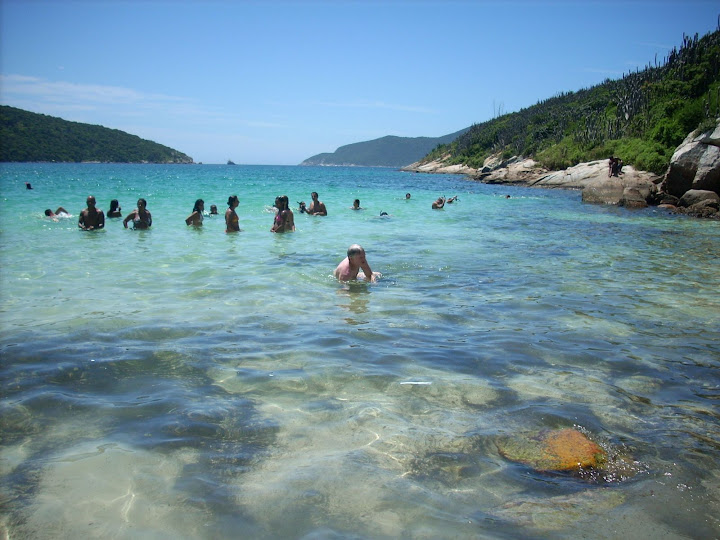
  • Região dos Lagos – Rio de Janeiro

    Região dos Lagos

    Situada ao norte da capital Rio de Janeiro, a Região dos Lagos (também conhecida como Metropolitana de Cabo Frio) é considerada uma das mais belas regiões do litoral do sudeste brasileiro. Uma de suas principais características é conseguir conviver harmonicamente com os contrastes vindos do luxo e da simplicidade, do moderno e do colonial, tudo com a naturalidade de um povo acostumado a receber e a tratar com simpatia todos os turistas que visitam suas belezas naturais.

    CABO FRIO

    By magdarossana – PHOTOBUCKET

    No total, a Região dos Lagos é formada por 13 cidades que compreendem mais de 100 quilômetros de litoral: Araruama, Armação dos Búzios, Arraial do Cabo, Cabo Frio, Carapebus, Casimiro de Abreu, Iguaba Grande, Macaé, Maricá, Quissamã, Rio das Ostras, São Pedro da Aldeia, Saquarema. Todas elas, com inúmeras lagoas e praias belíssimas para todos os gostos, desde as de mar aberto, propícias à prática do surfe, como aquelas de enseada com águas calmas, favoráveis para o mergulho.


    Picasa – José Roberto Cordeiro

    As cidades mais populosas são respectivamente, Macaé e Cabo Frio, 194.413 hab. – IBGE/2009 e 186.004 hab. – IBGE/2009.


    picasa – By dzguy99

    A atividade mais tradicional encontrada na região continua sendo a extração de sal marinho, presente em abundância por toda a costa fluminense. Geralmente junto às salinas encontram-se os moinhos de ventos, considerados também um dos símbolos da região, juntamente com o sol que brilha 300 dias no ano sob um céu azul e limpo.

    Ao visitar as várias cidades que compõem o cenário dessa região litorânea, não é difícil encontrar colônias de pescadores espalhadas pelas praias mais calmas. Apesar de todo o desenvolvimento, ainda existem muitas famílias que vivem em função da pesca, o que intensifica ainda mais a tonalidade rústica de algumas de suas paisagens.


    Wilson Picasa

    Dentre todas essas citadas, as mais visitadas por turistas são Cabo Frio e Búzios. Cabo Frio principalmente de sua noite, belezas naturais e praias. Muito conhecida principalmente por mineiros, que costumam passar a temporada nesta bela cidade do Rio de Janeiro que hoje é considerada uma das maiores. Búzios é uma cidade muito famosa também por suas praias, uma beleza descoberta por Bardot. Outra boa opção são as cidades de Arraial do Cabo e Saquarema.

    Brigitte

    por GEPascual

  • Inflatable product in china have a good future

    In China’s market,inflatables products have many types ,with many uses .addition to the usual ad trades., Recreation projects. sports, fitness, Television Entertainment, Exhibition Promotion, even in the military field. Global Inflatables Co.,Ltd. ‘s Responsible person to say: In recent years, launched a water inflatable products, such inflatable toys is mainly applied in water, such as the water rolling waves of the zorb ball, inflatable boats, are the best summer recreation inflatable water toys. The same ,zorb ball also applies to the grass and become “Walking Ball” this beautiful and huge PVC ball with a transparent irresistible charm, which consists of an outer diameter of three meters over a ball and the inside diameter of two meters ball composition, filled with gas between the two goals by thousands of nylon rope connected to the root. take the person into the inside from the entrance into the ball inside, both single-ride, you can also double take at the same time. the ball is equipped with seat belts, items bag and shoe and so on. This will be a very popular sport.Inflatable model, There are arches, design, with animal shape … and so on, and now appear in the shopping malls, parks, animation city promotional products into the advertising business model. Advertiser Tomsen inflatable cartoon in the United States produced the first "pedigree." Apparently, in addition other than the manufacture of inflatable toys, inflatable toys can also visit all the concepts used in outdoor sporting goods, travel supplies, such as tents, inflatable jumpers, slides, tunnels, Balloons, Air dancer, Castles, Cartoons, Obstacles, etc.. is very much loved by children and young people .At the moment , China inflatable industry has much room for development www.global-inflatables.com it is one of the biggest inflatable products manufacturers in China.As we all know, infatable produce in China has become the model of a fashion product, in shopping malls, entertainment, parks, everywhere, it has become a popular public of everyone.Source:http://www.global-inflatables.com
  • Zagreb as I see it

    Obožavam ovaj grad.Evo ovako ja vidim njegove najljepše strane. Naravno postoje i one manje lijepe, ali iz dana u dan napreduje i iz dana u dan je sve više lijepih a sve manje ružnih stvari u Zagrebu.Volim ja i neke druge gradove u okruženju, ali ovo je moje viđenje Zagreba i molim vas da ne koristite ovu temu za prepucavanja koji je grad ljepši jer svaki grad ima lijepe i manje lijepe strane.
    ___________________________________________

    Za početak centar grada – Jelačićev trg

    Jelačićev trg iz zraka

    Katedrala na Kaptolu iz zraka

    Katedrala

    Jurišićeva ulica od trga prema istoku

    Ilica od trga prema zapadu

    Uspinjača – put prema gornjem gradu – najstarijem dijelu Zagreba

    Gornji grad – trg Sv.Marka – Hrvatski sabor (parlament)

    Gornji grad – trg Sv.Marka – Hrvatska vlada – Banski dvori

    Gornji grad iz zraka

    Gornji grad Markov trg

    Trg žrtava fašizma iz zraka

    Trg žrtava fašizma

    Park Zrinjevac

    Park Zrinjevac

    Park Zrinjevac

    Tomislavov trg – glavni kolodvor

    Starčevićev trg – hotel Regent Esplanade

    Mihanovićeva ulica

    Mihanovićeva- Vodnikova – botanički vrt

    Marulićev trg – Hrvatski državni arhiv

    Bogovićeva ulica

    Cvjetni trg – Pravoslavna crkva

    Hotel Dubrovnik

    Hrvatsko narodno kazalište – trg maršala Tita

    Savska ulica – hotel Westin

    Savska ulica – Zagrepčanka

    Zagrepčanka – nekada najviša zgrada u ZG

    Savska ulica – Cibonin toranj – centar Dražen Petrović

    Savska ulica – Tcom

    Savska pogled s Tcoma na Zagrepčanku

    Mimara – muzej

    Hvatska narodna banka

    Radnička cesta – nove zgrade

    Radnička cesta – nove zgrade

    Radnička cesta – nove zgrade

    Vukovarska ulica – Eurotower – burza

    Sportsko rekreacioni centar Šalata

    Sportsko rekreacioni centar Šalata iz zraka

    Sportsko rekreacioni centar Mladost iz zraka

    Dinamov stadion iz zraka

    Dinamov stadion

    Park Maksimir – ulaz

    Park Maksimir

    Zoološki vrt

    Jarun – zagrebačko more

    Jarun – zagrebačko more

    Jarun – zagrebačko more

    Jarun iz zraka

    Jezero Bundek – drugo zagrebačko more

    Zagreb tower

    Zagreb tower

    Zagreb po noći

    Zagreb iz zraka po noći

    Nacionalna i sveučilišna knjižnica

    Novi tramvaj – crotram 2201

    Prvih 70 novih tramvaja – do danas ih je stiglo 132

    Remiza ZET

    Domovinski most – novi most prema budućem novom aerodromu Kosnica pokraj starog aerodroma Pleso

    Aerodrom Pleso

    Arena Zagreb

    Arena zagreb – pogled s Jaruna

    Autobusni kolodvor

    Novi Zagreb iz zraka

    Novi Zagreb

    Novi Zagreb

    Velesajam Zagreb

    Pogled sa Sljemena na Zagreb po noći

    Medvednica – Sljeme – planina i skijalište iznad Zagreba

    Medvednica – Sljeme – planina i skijalište iznad Zagreba

    Medvednica – Sljeme – planina i skijalište iznad Zagreba

    Medvednica – Sljeme – Janica Kostelić trenira

    Sljeme noćno skijanje

    ______________________________________________

    Nadam se da je ova moja mala foto reportaža po Zagrebu
    uspjela postići da oni koji ga vide svaki dan da ga još više
    zavole, a oni koji ga dugo nisu vidjeli da se podsjete i vide
    kako napreduje.
    ______________________________________________
    Osim mojih fotografija u njoj se nalaze i fotografije sa raznih izvora s interneta pa se zahvaljujem svima koji su
    ih slikali.
    ______________________________________________

  • 2011 Ford Mustang GT to pace 2010 Daytona 500

    Word on the street is that the 2011 Ford Mustang GT will pace the field for the 2010 Daytona 500 on Feb. 14. The new 412-hp 5.0L V8 Mustang will be specially prepared for Daytona with a Race Red paint scheme and Blue/White Lemans stripes, Ford Racing suspension, strut tower brace, mufflers and a special interior including lighted sill plates.

    The model will be an actual production unit with an early VIN and will be offered for auction at the Barrett-Jackson Collector Car Auction on Jan 23. The proceeds over the MSRP of the car will go to help cure childhood diabetes through a donation to the Juvenile Diabetes Research Foundation.

    The 2011 Ford Mustang GT pacing the Dayton 500 will mark the first time in 40 years a FoMoCo vehicle took part in the event. The last FoMoCo to pace the Daytona was the 1970 Torino GT convertible.

    2010 Detroit: 2011 Ford Mustang GT:

    2010 Detroit: 2011 Ford Mustang GT 2010 Detroit: 2011 Ford Mustang GT 2010 Detroit: 2011 Ford Mustang GT 2010 Detroit: 2011 Ford Mustang GT

    All Photos Copyright © 2009 Stephen Calogera – egmCarTech.

    – By: Kap Shah

    Source: Mustang Heaven (via WOT)


  • Collision Centers Owners’ Convention in San Diego

    Automotive supplier PPG announced today the MVP Business Solutions Conference for collision center owners and managers at the Paradise Point Hotel in San Diego, in an attempt to make the owners aware of the challenges of today’s automotive industry. The conference will be held on March 28-30 and is themed "Beyond Tomorrow".

    This MVP conference will be truly unique. An important focus will be how to bring out the best from the employees that comprise the typical collision repair bus… (read more)