Category: News

  • Sony introduces the Xperia SP smartphone to the public

    sony_xperia_sp


    Those of you itching for a new mid-range device are set to have yet another option to choose from as Sony has introduced its Xperia SP smartphone to the masses. Just like we’d previously expected, the new device will fall in between the Xperia S and Xperia P smartphones, this device will come in at 4.6-inches and feature a dual-core 1.7 Snapdragon chip, 720p display, an 8MP camera utilizing an Exmor RS sensor, NFC and LTE capabilities. Oh and in case you were wondering, the device will indeed feature Android 4.1.2 running the show. Additionally, media aficionados will be quite pleased at the fact that Sony is tossing in its WALKMAN, Album and Movies apps which gives access to all sorts of awesome content like 18 million songs to listen to or access to over 100,000 movies— giving users tons of options to choose from.

    The device will be available worldwide sometime in Q2. While you wait for the device to hit the stores, why not hit the break and check out the full press release?

    Sony Mobile adds two new Xperia smartphones to its Spring line up, bringing best of Sony experiences to a broader device range

    Two new models added to the Xperia™ range of premium smartphones with Xperia™ SP and Xperia™ L offering unique Sony features at new price points
    Xperia SP offers a high quality HD experience, LTE 4G and easy connectivity with One-touch function in a beautiful cutting-edge design
    · Xperia L provides a stylish design with best in class Sony camera experience for perfect pictures and videos every time

    18th March 2013, London, United Kingdom – Sony Mobile Communications (“Sony Mobile”) today announced two new Xperia smartphone models to join its 2013 line up – the Xperia SP and Xperia L. The Xperia SP delivers 4G LTE performance and an exceptional viewing experience, with a razor sharp HD screen housed in a beautiful design. The Xperia L provides class leading camera technology with HDR for both photos and videos complemented by a high quality screen.

    Both the Xperia SP and Xperia L offer the best of Sony with stunning premium designs and a range of technologies including a high quality screen for the ultimate viewing experience; the latest camera features for impressive pictures and videos; NFC connectivity for One-touch function; Battery STAMINA Mode for extended battery life; and Sony’s signature media apps for enjoying photos, music, movies and games on the go.

    “Xperia SP and Xperia L are ideally suited for those seeking stylish class-leading smartphones that don’t compromise on features”, said Calum MacDougall, Director of Xperia Marketing at Sony Mobile Communications. “Both of our new models benefit from Sony’s proven innovation and engineering expertise – whether you want to enjoy premium HD quality entertainment over 4G LTE on our mid-range Xperia SP or capture every moment in perfect detail with our more affordable Xperia L.”

    Xperia SP – High Definition brilliance in a premium design
    The Xperia SP utilises expertise from Sony’s BRAVIA® TV engineers to create its stunning 4.6″ HD Reality Display for razor sharp pictures and superior brightness. The latest Mobile BRAVIA® Engine 2 delivers an even better viewing experience by analysing your content type and adjusting the image automatically, making it one of the most intelligent smartphone screens around. The engine will make the adjustment by adding new real-time contrast optimisation to the sharpness enhancement, high-quality colour management and noise reduction.

    As well as delivering brilliant experiences, the Xperia SP looks beautiful too with a precision-crafted co-moulded aluminium frame, for a seamless look that is both sleek and solid. Adding to the unique design innovation is the colour-changing ‘transparent element’ with customisable illuminations which you can personalise to alert you of incoming calls and text messages. And you can even set the illuminations to pulse to the beat of your favourite music.

    Key features for Xperia SP

    · Precision crafted co-moulded aluminium frame

    · Super-bright 4.6″ 720p HD Reality Display with Mobile BRAVIA® Engine 2

    · One-touch functions with NFC to display content on your TV or to share music and photos between devices

    · 4G LTE for superfast entertainment and browsing

    · Unique ‘transparent element’ can be personalised to change colour when notifying you of all your incoming messages and calls. Or simply set it to pulse to the beat of your music to stand out from the crowd.

    · 8MP fast-capture camera with “Exmor RS for mobile”, HDR and Superior Auto for the best photos, even at night or against a strong backlight

    · Battery STAMINA Mode for optimum battery life

    · Available in white, red and black colour variations

    Xperia L – the perfect smartphone camera experience
    The stylish and functional Xperia L features an 8 megapixel camera with Sony’s unique “Exmor RS for mobile” sensor technology for vivid colours and stunning clarity. HDR (High Dynamic Range) ensures that both your photos and videos are captured clearly, even at night or against a strong backlight. And with the dedicated camera key that goes from sleep to snap in just over a second even from a locked screen, this fast-capture camera will ensure that you’ll never miss another moment. Get the most out of your viewing experience with the high quality 4.3″ FWVGA screen that is ideally suited to enjoy all of your content.

    Key features for Xperia L

    · 8 megapixel fast-capture camera takes sharp pictures in any light
    · Enjoy all your content on the generous 4.3″ FWVGA display
    · One-touch functions with NFC to display content on your TV or to share music and photos between devices

    · Fast performance with dual-core processor
    · Battery STAMINA Mode for optimum battery life

    · Available in white, red and black colour variations
    Sony entertainment on the go
    Both Xperia SP and Xperia L benefit from Sony’s media applications offering a consistent entertainment experience across the range. The “WALKMAN”, “Album” and “Movies” apps, provide online and offline content through a single access point with new ways to enjoy and share that content. The “WALKMAN” application provides access to all your downloaded music, plus Music Unlimted* with over 18 million songs to explore from, and Facebook social integration. The “Movies” application gives consumers access to over 100,000 movies and TV series from Video Unlimited* while the “Album” application enables easy access to Facebook friends’ photos as well as browsing photos by location.

    One-touch functions for easy content sharing
    Also featured on both models are Sony’s One-touch functions, allowing you to easily and instantly enjoy music and photos across an array of devices, such as Sony’s SRS-BTV5 speaker and latest range of NFC-enabled BRAVIA TVs, with just a single touch. It’s sharing made easy with no wires, cables, or fiddling with settings necessary.

    The new Xperia SP and Xperia L from Sony Mobile will both be available worldwide from Q2 2013.

    Come comment on this article: Sony introduces the Xperia SP smartphone to the public

  • ‘Google Keep’ Revealed in Drive Source Code, Is a Note-taking Service in the works?

    Google_Keep_01

    Once again Google Drive’s website source code is giving away secrets to new and upcoming apps. 1E100 discovered references to an app codenamed “Memento”, and the icon above in the image.

    This icon looks like it falls right in-line with Google’s other Drive app icons. Some of you may remember Google’s first less-than-successful attempt at a note-taking app called “Google Notebook”, and it looks like they are going to give it another shot.  Let’s hope that this time around they do it right.  Competing with the likes of Evernote, Colornote, MobileNotes, Catch Notes, and GNotes, will be no easy task, and Google will really have to “bring it” to compete in this area.

    Further source code reveals the possibility of an actual Google Play Store app.  This is not the norm for Drive apps, but 1E100 found that http://g.co/keep redirects to https://play.google.com/store/apps/details?id=com.google.android.keep. So this Drive app may prove to be more connected than ever to your Android smartphone and tablet. One user was even able to download the app, but 20 minutes later it was removed. Here are some screenshots…

    Google_Keep_App_05
    Google_Keep_App_04
    Google_Keep_App_03
    Google_Keep_App_02
    Google_Keep_App_01

    Sources: +IE100, AndroidSpin 
    via: Android Police

    Come comment on this article: ‘Google Keep’ Revealed in Drive Source Code, Is a Note-taking Service in the works?

  • Sony ends 20p price promotion in its UK Reader Store

    Sony is at least temporarily ending the 20p price promotion in the U.K. Reader StoreThe Bookseller reported Monday. The 20p promotion, which had been running since July 2012, sold selected ebooks for 20 pence (USD $0.30).

    Amazon U.K. matched all of Sony’s prices, leading to a deeply discounted market for many ebooks and causing concern for publishers about the devaluation of their product (even though the retailers were paying them the full prices on the discounted ebooks).

    The end of the 20p promotion is tied to Sony’s redesign of its U.K. digital bookstore. “Discounted 20p pricing is not currently offered on the newly relaunched UK Reader Store,” a Sony rep told The Bookseller. “However, pricing is always subject to revision. The duration of our 20p pricing is indicative of our commitment to provide great eBooks at exceptionally accessible prices, which is a philosophy we continue to hold.”

    Many of the books included in the promotion shot up U.K. bestseller lists, but some publishers and others were concerned that the promotions would devalue ebooks by permanently lowering the prices that consumers were willing to pay. Those concerns may be lessened now, though Sony could always start its 20p promotion again — or Amazon could start one.

    Related research and analysis from GigaOM Pro:
    Subscriber content. Sign up for a free trial.

  • Pepsi MAX & Jeff Gordon Present: “Test Drive”

    Jeff Gordon Pepsi Max

    Getting in a car with a professional race car driver can be a harrowing experience if you’re not used to being thrown around in an automobile. What if, however, you were with a professional and didn’t know it – what then? Jeff Gordon and Pepsi Max recently teamed up and gave one used car salesman the ride of his life. Check it out after the jump.

    Source: Pepsi

  • Google’s Nexus 5 rumored to feature a potential camera with Nikon branding

    lg_nexus_5_prototype_leak


    You folks remember that dream Nexus 5 “Megalodon” handset we mentioned to you all a few days ago? Well while it appears that some of the preliminary specs we’d heard about may be a slightly over exaggerated (especially the OLED display and 3 gigs of RAM), some new rumors have surfaced indicating the Nexus 5 will at the least include some attractive internals compared to most other smartphones out there. According to a PhoneArena tipster, the rumored device will have a 5-inch 1080p display, 2 gigs of RAM, a 3,140mAh battery. And remember how Vic Gundontra predicted Google’s phones will be capable of some pretty sweet photography capabilities? Well it’s possible the Nexus 5 will have a camera module that has a “triple camera sensor thing” with Nikon branding— pretty much indicating that Google is (finally) taking the cameras on its devices seriously. Oh and the upcoming device will feature Key Lime Pie for good measure as well.

    No word yet on when we can expect Google to unveil this supposed Nexus 5 smartphone, but it’s safe to say that we can all start to salivate at the thought of a potentially sweet device.

    source: PhoneArena

    Come comment on this article: Google’s Nexus 5 rumored to feature a potential camera with Nikon branding

  • BlackBerry CEO wary of producing a PlayBook sequel

    BlackBerry CEO Heins
    The BlackBerry PlayBook was not one of BlackBerry’s (BBRY) more successful products, which is why CEO Thorsten Heins is understandably wary about producing a sequel in the near future. Australia’s Herald Sun reports that while speaking at the BlackBerry Z10 launch in Australia this week, Heins said that he didn’t want to produce a followup to the PlayBook until the company figured out how to make it “not just… another tablet.” Heins also said that the tablet market had become so competitive that it was hard to earn a decent profit from selling them, and that he owed it to “shareholders to provide a return on investment.” So for the moment, it looks like BlackBerry will be all about smartphones first.

  • Pinterest’s Discovery-Focused Desktop Redesign Rolls Out to Everyone

    Back in January, Pinterest began to test a brand new design that featured bigger, more informative pins and better navigation. Today, they are rolling out the new design to all users. If you don’t see the new design when you log on to Pinterest, just wait – you’ll get an invitation soon.

    The new look is all about discovery, as Pinterest wants users to spend more time browsing and pinning. To this end, Pinterest’s new look strongly affects individual pin pages. These “close-up views” now feature other information for people to use as a springboard for other, similar content.

    Each individual pin page now features pins from the same board, pins from the same source, and a widget for “people who pinned this also pinned,” which Pinterest notes is exactly what it sounds like. Each of these new content boxes allow users to discover new content from similar users.

    Pinterest says that they hope to bring these additions to their iOS and Android apps soon.

    Pinterest has also made some updates to how you navigate around the site:

    “We wanted to make things simpler and cleaner, without requiring you to learn anything new. What you’ll find are some subtle but useful changes, like bigger pins, so you see more of what you love. We also responded to some feedback from pinners who told us they hated losing their place while browsing. Now, when you scroll through pins and click on something that interests you, the back button lands you right back where you were no matter how far you’ve gone.”

    Improving discovery is important for users, but it’s also important for the site, who is looking to show potential marketers that Pinterest is worth their time. Earlier this month, Pinterest debuted an analytics tool for site owners. Currently free, Pinterest Web Analytics shows site owners how many people have pinned from their site, the reach of those pins across Pinterest, and the traffic referred to their sites from Pinterest.

  • Minnesota Office of Broadband Development Bills – HF1255 / SF1128

    Last Wednesday Legislators heard about bills to establish an office of broadband in both the House (1255) and Senate (1128). Unfortunately due to some time on jury duty, I wasn’t able to attend the sessions and the archives aren’t yet available online but I thought I’d at least look at both bills. (Both were discussed last week at the TISP Forum.)

    The House Bill (1255) was introduced by Representative Johnson on March 5. The last action was March 14 – to do a committee report, pass it and send to Government Operations.

    Here’s the short description: Office of Broadband Development established in the Department of Commerce and duties assigned; and Department of Transportation required to post a database on its website, and reports required.

    Here are some details:

    Fiber Database – A place where the Department of Transportation will post upcoming construction projects – updated annually. Details will include location, start and end dates, nature of construction. Local governments, utilities are encouraged to post info too. Providers may sign up to get updates. This shall reside on the Department of Transportation website.

    I think this was already in the works. It seems like it might helpful to get buy in from a wider audience to encourage greater collaboration – but I understand that so long as broadband is a competitive commodity, not a utility, that probably won’t happen.

    Reports – Increases current reporting requirements to include suggestions for policies as well as a report on the state of broadband expansion.

    Definitions – They revert to the “FCC definition of broadband,” which is currently slower than the Minnesota Broadband goal. (FCC uses 4 Mbps down and 1 Mbps up; Minnesota is shooting for 10-20 Mbps down and 5-10 Mbps up.)

    Office of Broadband Development – create an office at the Department of Commerce to become the go-to people for broadband in the state: perform broadband planning for the state, work with public and private parties to develop a standard access and use policy, encourage cost-effective broadband access and greater use of broadband, coordinate efforts to meet the 2015 broadband goals, keep an eye on what’s happening in other areas, on the federal level and look at security and redundancy.

    Reporting – the annual reporting, currently the responsibility of  the Broadband Task Force has been extended to include some analysis, predictive modeling and legislative updates. The bill also suggests a second report that, it sounds like, really sets out recommendations to improve access to and use of broadband – including training and reaching out to mobile users

    Broadband Infrastructure Development – The office will strive to work with local government, department and agencies to create a smooth path to deploy fiber. Dig once is mentioned specifically.

    The Senate Bill (SF1128) was introduced on March 7 by Senator Schmit. Last action was March 14, to pass as amended and re-refer to State and Local Government.

    The Long Description: Establishing and providing for the office of broadband development in the department of commerce to improve broadband within the state; requiring the department of transportation (DOT) to post on the DOT web site a list of construction projects; requiring the office to coordinate broadband infrastructure development in collaboration with the departments of commerce and transportation; requiring an office report.

    Here are some details: (Note the bills are quite similar, I’ll just try to call out the differences here.)

    Office of Broadband Development – Again calls for the establishment of an office. The director here will be appointed by the Governor; other staff may be hired if necessary. Again the goals are similar but this version specifically calls out working with commissioners of Commerce, DEED and Transportation. (Ironically not a mention of a website in the first engrossment, although it is mentioned in the description.)

    Appropriation – $500,000 for both 2014 & 2015.

    It will be interesting to see what happens moving forward.

  • Mainstream Support For Windows Phone 8 Ends In 2014

    The traditional Windows operating system has a mainstream support lifespan of at least five years. During that time, Microsoft will continue to update the OS with security and stability updates. It seems that Microsoft will be bucking that trend with its mobile OS.

    Microsoft unveiled its support timeline for Windows Phone 8 and Windows Phone 7.8 recently, and both operating systems will have their mainstream support ending sooner rather than later. In fact, both will stop receiving support next year with Windows Phone 8′s support running out July 8, 2014; and Windows Phone 7.8′s support running out on September 9, 2014.

    This short support lifespan pretty much confirms that Microsoft plans to take Windows Phone into an annual release cycle. A job posting from earlier this month suggested as much, and there’s the persistent rumor of Windows Blue. The latter could prove interesting if it cuts support for desktop Windows earlier than usual. Windows 8 should be in no danger of that for the time being, though, as its mainstream support ends in 2018.

    Some consumers may be a bit sore over Microsoft ending support for Windows Phone 8 so quickly, but the company is just following the lead of its competitors. It’s rare to see any manufacturer support a mobile operating system more than two years after its launch.

    It will be interesting to see if Microsoft updates Windows Phone 8 devices to the latest Windows Phone operating system, or if it will require consumers with older phones to upgrade to hardware. We can only hope for the former, but don’t be surprised if Microsoft pushes for the latter.

    [h/t: Engadget]

  • Emma Watson: Rumors About ‘Fifty Shades of Grey’ Casting Denied

    For nearly a year now, rumors have been flying that British actress Emma Watson has been cast in the role of Anastasia Steele in the upcoming Fifty Shades of Grey movie adaptation.

    Unfortunately for Watson’s fans and admirers, it appears that the rumors were all just wishful thinking.

    Watson took to her Twitter feed this weekend to dispel the rumors, sarcastically asking her followers if they actually think she would be in a Fifty Shades of Grey movie:

    Watson was, perhaps, pegged as a frontrunner for the role because of her age and popularity. The Harry Potter actress is one of only a handful of established actresses to be well within the age range to play the Steele character. In the book, Steele is a 21-year-old college student who is drawn into a BDSM relationship with an older man. The novel, along with its sequels, have found wild success, with over 65 million copies sold worldwide.

  • What if every ‘like’ and ‘favorite’ came with money? Flattr makes it possible

    A lot of people want Flattr — or something like it — to work. Monetizing online content is a continuing problem, and micropayments may provide a solution. Flattr is probably the best-known exponent of these virtual tips, or “microdonations” as it calls them, and a few content platforms such as DailyMotion have signed up to allow their users to make pocket-money off their videos.

    However, “flattring” someone has until now remained a slightly clunky business, with the content platform needing to carry a Flattr button and with the user having to remember to click it in order to reward the creator. No longer – changes revealed on Monday make it possible to flattr someone simply by clicking the “like” or “favorite” button that’s already next to their content. At launch, 8 services are supported: Twitter, Instagram, SoundCloud, Github, Flickr, Vimeo, 500px and App.net.

    That’s right: this makes it possible for you to earn money just by being an awesome tweeter.

    Cashing in

    Let’s remind ourselves of how Flattr works: users budget a certain amount of money that they want to donate or pay each month. Let’s say User X wants to spend $10 a month. Each time User X flattrs someone, that flattr gets added to a tally, and at the end of the month the money gets divided by that number. Flattr itself takes a 10 percent cut, so, if User X flattrs people 100 times in the month, each recipient then gets 9c.

    According to Flattr co-founder Linus Olsson, there have been around 1.5 million flattrs performed since the service launched three years ago. Ignoring the fact that some pay a lot and others very little, the average monthly spend per user is around €4.50 ($5.80) and the average flattr is around €0.50. From this, we can deduce that, on average, users flattr around 9 times each month – this is really not much, and it highlights the need for Flattr to make the changes it announced today.

    As Olsson explained to me, it was one thing to have a button that blog proprietors could integrate into their own self-hosted site, but it’s quite another thing to handle the content spewed out on platforms such as Twitter:

    “The main way of flattring before has been the button, but the problem with the button is with most content sites today it’s impossible to integrate the button. So we have been thinking how to make it simpler to flattr and possible to flattr in places where the button cannot be added.

    “The logical way was to use existing like and favorite buttons, which one can argue are empty right now. Now you can make those functions worth something. We see it as giving them the value they should have.”

    This integration has not involved partnering up with Twitter and the others; instead, Flattr is simply using their APIs. “That’s one reason we didn’t do this when we started three years ago — it wasn’t possible,” Olsson pointed out.

    More widespread, but more subtle

    The use of APIs comes with several benefits for Flattr. For a start, it gets the startup around the problem presented to it by Apple last year. Apple rejected a podcasting app called Instacast on the basis that it included Flattr payment functionality – this apparently broke the App Store T&Cs, because it didn’t give Apple a way to claim its 30 percent cut of all in-app payments.

    Now, because Flattr’s method of tapping into the core service’s APIs obviates the need for a telltale Flattr button, Apple would have no way of knowing whether the use of an app that’s plugged into Instagram or Twitter, for example, might result in someone making money without Cupertino taking a slice.

    The other problem partially solved by the API approach is that of unclaimed flattrs. A Twitter user, for instance, doesn’t have to sign up to Flattr in order to have people flattr their tweets – they do, however, have to create a Flattr account in order to get the cash. So, when they create that Flattr account, authorizing Flattr on their Twitter account will tell the system that, yes, they are the person whom User X meant to credit.

    That said, there is an outstanding problem: right now Flattr has no way of automatically informing people that someone out there is trying to give them money; it’s up to the user to tell their intended recipient to sign up and claim their payment (the payment only leaves the user’s account once it is claimed).

    Will it work?

    As I stated above, there is a lot of goodwill behind the micropayments concept, but also a number of failed attempts to make the concept work in reality.

    If you view this as a chicken-and-egg dilemma, then Flattr is very much doing the right thing. After all, you’re less likely to get into being a Flattr user if the person you want to give money to hasn’t made it super-easy to take Flattr payments. Conversely, if there aren’t scores of people using the service, there is little impetus for content platforms to incorporate the Flattr button.

    In theory, quietly plugging into platforms such as Twitter and Instagram makes it a heck of a lot easier for the service to gain scale. However, it raises another issue: visibility. If there’s no Flattr button, how is the company going to educate users about the scheme? How will they know that this system is in place, allowing them to reward their favorite content producers?

    Olsson reckons the imminent introduction of automated notifications for content creators will help the service spread: “First people get unclaimed flattrs, get a message about them, collect them [then] flattr others.” I’m not so sure. It’s true that the services we’re talking about didn’t sport Flattr buttons in the first place, but I can’t help but feel that some extra marketing element would be needed in order to really educate potential users about the service.

    Related research and analysis from GigaOM Pro:
    Subscriber content. Sign up for a free trial.

  • We Asked, Marketing Execs Answered: If You Could Solve One Challenge in the Advertising Business, What Would It Be?

    The creation of a successful advertising or marketing campaign requires a tricky formula. In a multi-platform world, it includes inventiveness, risk-taking, and luck. And the decision-makers often face a myriad of choices, as we’ve been exploring in the Future of Advertising Insight Center.

    To shed a little light on what it takes to manage this process, we asked a group of top CMOs and advertising executives — from Xerox, Leo Burnett USA, Cleveland Clinic, Adobe, and Nike — a question: If you could solve one challenge in the advertising business, what would it be?

    Read on for their answers:

    80-Christa-Carone.jpeg

    Christa Carone – Chief Marketing Officer, Xerox Corporation

    The challenge we’re seeing is that “paid” is no longer the hero in the marketing mix. “Earned and owned” are playing more prominent roles than ever before. To really engage in conversations with stakeholders, brands are developing and curating quality content that cuts through the clutter. The spots and dots only work if they’re tightly woven into a consistent and ongoing narrative from and about the brand.

    No doubt, advertising agencies can produce the smartest creative, but their businesses were not built to deliver within the speed and cost parameters required for “always-on” content marketing. Brands like ours need highly creative content — lots of it. Advertising agencies have highly creative people — lots of them. But does the Madison Avenue business model survive their clients’ demands for content at scale delivered in much more nimble and efficient ways?

    80-Susan-Credle.jpeg

    Susan Credle – Chief Creative Officer, Leo Burnett USA

    Let’s reverse the trend of advertising agencies becoming vendors and get back to the business of being trusted, respected partners. We give away brilliant thinking because it does not come with hard costs. How do you put a price on a set of words that defines a company or a brand? Creative ideas often appear cheap, even free, and yet, the best ones are priceless. Therein lies the tension.

    Unlike a lawyer who charges by the minute, or the FTE (a tragic acronym for full-time employee that has crept into our business), a great idea can happen in a flash. Time spent solving a problem does not define the value of the solution.

    Project-based assignments force agencies into the vendor business. But a valued partnership embraces long-term growth and thinking. A partnership doesn’t come down to math. A partnership is not just a transaction between two companies. A partnership is about mutual support and success. The global economy, not just advertising, would be far better off if we would get back to truly embracing partnerships for mutual success.

    80-Paul-Matsen.jpeg

    Paul Matsen – Chief Marketing and Communications Officer, Cleveland Clinic

    The business of advertising is fundamentally changing as digital and mobile platforms become the primary way of connecting with consumers. Content marketing expressed through social media, apps, search, and e-mail marketing must be integrated with mature platforms such as print media, television, and digital display advertising. The challenge facing the advertising business and marketers is how to effectively and efficiently organize for this new, nimble era of content creation.

    Traditional agency models often lack the depth of business knowledge and cross-platform skills to address this need. Internal marketing and communications departments are also poorly equipped to move with the speed and teamwork required. To be successful in the digital, content marketing era, marketers and agency teams are going to need team members who can create and shape a narrative and be part of an agile, multi-platform team that executes in real time. While this may sound like a huge challenge to overcome, we witnessed during the Super Bowl how smart marketers are responding to events in real-time to build their brands.

    80-Anne-Lewnes.jpeg

    Ann Lewnes, Chief Marketing Officer, Adobe

    Advertising has long had an accountability issue. There’s that old adage: “I know half my advertising works, I just don’t know which half.” This cliché is obsolete…or at least it should be. The answer is digital. As more advertising has moved to digital, and with the tools and technology we’ve got at our disposal, advertisers are well positioned to tackle this challenge. We now have critical data and insights about how our campaigns are performing and we know more about our customers than ever before.

    This will only happen if marketers accelerate the shift to digital. Gartner estimates that today most marketers are spending, on average, 25% of their budgets on digital. We spend 74% at Adobe. And we invest heavily in digital marketing technology. This has enabled us to determine the budget we need to hit our revenue goals as well as model the ideal media mix. Throughout a campaign, we measure the impact of every element of the mix and optimize the campaign based on what we learn. There are no excuses anymore for not knowing how your advertising is working.

    80-Davide-Grasso.jpeg

    Davide Grasso, Vice President of Global Brand Marketing, Nike

    Brand storytelling is both an art and a science. As marketers, we need to make things simpler and remember to romance the story along the way.

    When communicating a brand’s story, it’s important not to complicate the storytelling by adding friction through unnecessary layers. To avoid this, it’s critical to ask the following: What’s the best way to unleash strong ideas and engage consumers in your story with a relevant and authentic experience? And why should they care? If you’ve satisfied these answers honestly, your story can end up being the one people love and, more importantly, remember.

  • What the internet looked like in 1982: A closer look at Danny Hillis’ vintage directory of users

    Arpanet-Directory

    Danny Hillis registered the third domain name on the internet. You read that correctly — the third. In today’s talk, given at TED2013, he shares what a different world the online community felt like at that point in time.Danny Hillis: The Internet could crash. We need a Plan BDanny Hillis: The Internet could crash. We need a Plan B To underscore the point, Hillis brought a book onstage with him. It’s the ARPANET Directory, a list of every person who had an email address in 1982.

    About the size of a high school’s Parent-Teacher Association directory, Hillis says that the heft of the book makes the online community of the time seem “deceptively large.”

    “There’s actually only about 20 people on each page — because we have the name, address and telephone number of each person,” says Hillis, thumbing through it. “And everyone’s listed twice because they’re there once by name and once by email address.”

    He continues, “There were only two other Dannys on the internet then. I knew them both.”

    Danny-Hillis-book

    Danny-Hillis-Book-3

    Danny-Hillis-Book-4

    When Hillis picked his domain name, Think.com, the only options that were taken were BBN.com and Symbolics.com. It occurred to Hillis to make some additional selections, but he felt that would violate the take-only-what-you-need ethos that permeated the internet then.

    Danny Hillis: Back to the future (of 1994)Danny Hillis: Back to the future (of 1994)“I thought, ‘There’s some really interesting names out there. Maybe I should register a few extras just in case.’ But then I thought, ‘Nah, that wouldn’t be very nice,’” he remembers. “That basic feeling of trust permeated the whole network. There was a real sense that we could depend on each other to do things.”

    Hillis’ point is that trust was built into the technical protocol of the internet. While that was fine when it existed on a small scale, now it includes billions of users and an unquanitifiable amount of machinery and infrastructure. The entire system isn’t just vulnerable to attack — it’s even vulnerable to mistakes. To hear why Hillis thinks we’re setting ourselves up for a disaster, perhaps one even bigger than the financial meltdown, watch this talk. It’s a bold call for us to make a backup system should the Internet crash. A must-see for anyone who has hopped online today. Which, naturally, includes you.

    Watch the talk »

    Want to take a closer look at the ARPANET Directory? Here is a snippet view in Google Books. And, it’s searchable. In fact, here is Danny Hillis’ entry.

  • Flickr for iOS Adds Hashtag Support

    The new version of Flickr for iOS bringss the photo-sharing app a little more in line with similar social apps Instagram and Twitter. Now, when you take a no filter, beach picture in the middle of summer, you can post it on Flickr’s iOS app as a #nofilter picture of the #beach in #summer.

    Yep, Flickr for iOS now has hashtag support. You can addd hashtags to any photo’s title of description, and like hashtag functionality in any other app, clicking on the tag will open up a search of other photos on the service with the same hashtag.

    Version 2.11.820 also allows iOS users to participate in Flickr’s weekly photo challenge, #FlickrFriday.

    You still won’t find any “hashtags” on Flickr on the web – it’s still just “tags.” And any current web tags don’t translate to clickable hashtags on the iOS app. It look like for now, this shift toward hashtags is a mobile-only venture for Flickr.

    In other hashtag news, anyone popular social service may be adding them in the near future. Recent reports said that Facebook is working on incorporating the hashtag.

    You can grab the new Flickr for iOS today.

  • Will Google+ Get Its Own Version Of Facebook’s Ticker?

    Google has applied for a patent for something that sounds an awful lot like Facebook’s ticker feature. While we can only speculate on Google’s plans, it seems likely that they’re thinking about a similar kind of functionality on Google+. And why not?

    Bill Slawski at SEO By The Sea points to the patent filing for “Social Discovery of User Activity for Media Content”. Here’s the abstract:

    Apects of the present disclosure provide techniques that may enable user activity information to be automatically generated and shared with other users of a social network. In one example, a method of automatically publishing, to one or more social network services, information about user activities regarding media content items includes receiving user activity information regarding a media content item, wherein a user is a member of one or more social network services, and the user activity information is generated in response to one or more activities taken by the user with respect to the media content item.

    The method may also include receiving an indication of one or more users of the one or more social network services to whom the user activity information is to be made accessible, and automatically publishing the user activity information to the one or more social network services.

    So, it sounds like you would see a lot more activity from Google+ users showing up in a feed than just the standard stream of updates you see today. Again, we can only speculate, but the Facebook-style separate feed (separate from the News Feed, that is) style would make more sense than a total replacement. This could appear off to the side, or simply as another option from a drop-down for the main stream.

    Facebook itself, of course, is rolling out some design changes of its own. Interestingly, these seem to essentially kill off the ticker, or at least de-emphasize it a great deal.

    You can read the full patent here.

  • Bitcoin apps soar in Spain – will the Cyprus shocker boost virtual currencies?

    Bitcoin Analysis Cyprus Crisis
    Interestingly enough, several Bitcoin-related apps started spiking on the Spanish iPhone market over the weekend. Bitcoin Gold shot up in the Spanish iPhone Finance category from 498 to 72, and another app called Bitcoin Ticker zoomed from 526 to 52 in just one day. A leading service called Bitcoin App jumped from 194 to 151 between Friday and Sunday as Spaniards brooded over the Cyprus crisis.

    Continue reading…

  • ‘Google Keep’ Spotted In The Wild

    While many are still sore about Google killing off Google Reader, the company is busy pursuing other potential products. An Evernote-like service from Google called Google Keep has been spotted in the wild.

    1E100 appears to be the first to have mentioned the product in a Google+ update. They found Google notes in the code of Google Drive pointing to an notes-like icon, then found a new Google Account Service named “Portal,” which when signed in, added a new service called “Google Keep,” though it has since been removed.

    Android Police points to this hint about the service in an official Google+ post back in July. Notice the “Add to Google Keep” link in the second image.

    Google

    When you're on the go, Instant Preview on mobile can help you find what you're looking for faster. Say that you're at the grocery store, searching for [cheese party ideas] and want to find a website that has photographs, as well as written tips, to give you inspiration. On the search results page, you can tap on the magnifying glass next to any search result to see a webpage preview.  When you see a preview that you'd like to explore more, simply tap on it and you'll be taken directly to the website.  This feature is available for Android (2.2+) and iOS (4.0+) devices across 38 languages. 

    #searchtip  

    Android Police was able to grab a screen cap of the desktop version of Google Keep before it was taken down (reports indicate an Android app is on the table as well).

    Google Keep

    Of course just because Google is working on something does not mean it will come to fruition. The company is constantly experimenting with and testing new ideas, but don’t be surprised if Google makes an announcement about this sometime in the near future.

  • Random House gives Da Vinci Code ebooks away free to promote Dan Brown’s new book

    Random House’s Doubleday is giving away free digital copies of Dan Brown’s bestselling book The Da Vinci Code for a week in order to promote his upcoming book, Inferno.

    Inferno is set to be released on May 14. The New York Times reports that the free Da Vinci Code ebooks will include the prologue and first chapter of Inferno.

    The Da Vinci Code, first published in 2003, sold over 81 million copies. The promotion runs through March 24 in the U.S. and Canada at all digital bookstores.

    Update: Several readers had asked where they can download the books. Links:

    Nook

    Kindle

    Sony

    Kobo

    iTunes [discount not appearing yet, but keep checking]

    Related research and analysis from GigaOM Pro:
    Subscriber content. Sign up for a free trial.

    • Arena League For Tebow? Predators Make An Offer

      Reports are coming out that New York Jets quarterback Tim Tebow has been offered a job by the Arena League’s Orlando Predators.

      Politics and faith aside, Tebow has been a controversial figure in the NFL since his arrival to the league. While he managed to lead the Denver Broncos to the playoffs, his play has been a constant topic of debate in the sports world. Many have been very critical of his quarterback skills at the NFL level.

      As Deadspin’s Greg Howard so elegantly puts it, “Tim Tebow is a bad quarterback. Tim Tebow is so bad that last year, he didn’t start a single game in place of another bad quarterback, Mark Sanchez, even though Sanchez was having an uncannily bad season. He is so bad that he is likely to be released from the New York Jets this offseason, and as of this writing, no one in the entire National Football League wants him on their roster, even though he has millions of fans across the country who consider him a good football quarterback, or at least a good Christian, and would invest hundreds or thousands of dollars to purchase his jersey and tickets to his games to show their support. This is not news.”

      Even if no NFL team wants him, he may be able to find work at the Arena level. The Orlando Sentinel quotes Predators owner Brett Bouchy as saying:

      “Tim would certainly want to first exhaust his opportunities in the NFL, but we’d love to have him. I think he would definitely improve as a quarterback in our league. Kurt Warner told me once that when he got back to the NFL after playing in the Arena League, the NFL game was like slow motion. Everything in the Arena League is just so much faster and quicker and predicated on accuracy. Whenever Tim is willing, we have a contract waiting for him to sign.”

      If nothing else, Tebow’s celebrity status would help draw attention to the league itself, not to mention the Predators.

      The New York Jets currently have five quarterbacks on their roster. According to ProFootballTalk, the team is still “looking at all possibilities” with Tebow.

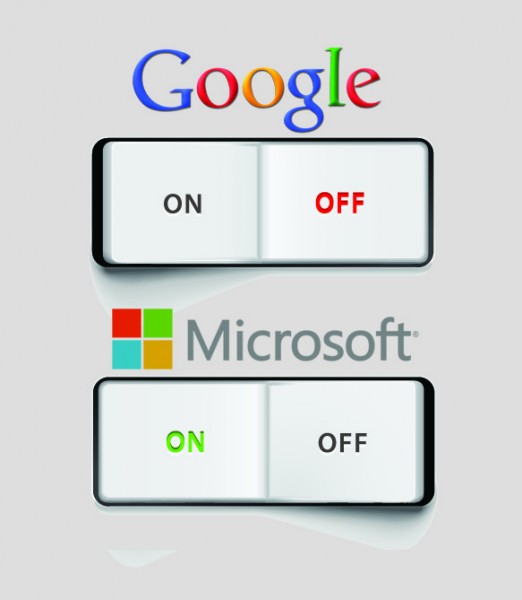
    • Sorry Google, I’m switching to Microsoft

      A week ago, I had a dream. I was sitting on a beach with a glass of wine and a laptop and I was searching the internet using Bing. My wife came up, saw what I was doing, and said “Why aren’t you using Google?” To which I replied, “I’m boycotting it. The company shutdown Reader.” Yes, that’s right, I dreamt Reader was being shuttered before Google even announced it, and now I’m using Bing. Spooky or what?

      But let’s make one thing very clear here. Although I plan to switch to using Microsoft’s services for a while, it’s not a boycott. I realized, after the dream, that I’ve been so tied into Google that I’ve never really given Microsoft’s alternatives — Bing, Outlook.com, Bing Maps, and even Internet Explorer — a fair chance to see how they compare. I’ve used them, in passing at least, but I’ve never used them full time. And today that’s about to change.

      From now, I’m going to start using Outlook.com as my primary email account (still using my Gmail addresses to send and receive messages of course) and Internet Explorer as my web browser. Having only just really made the full time transition from Firefox to Chrome, that will take a while to get used to.

      I’ll be searching exclusively through Bing, which is easy as it’s the default in IE anyway, and using Bing Maps instead of Google Maps. I already have SkyDrive set up through Windows 8, so I’ll switch to using that entirely, in place of Google Drive. Where there’s a straight replacement for an occasional Google service — Bing Translator, for example — I’ll use that. My aim, really, is just to fully immerse myself in Microsoft’s services, and to get a real idea of how they compare.

      Change Can Be Good

      A few years ago I was a die-hard iPhone user, but then I switched to a Galaxy S II, and then to an S III, and while I still own (and love) my iPad, I can’t see myself ever going back to the iPhone — well not without a huge incentive. Because I use my Samsung phone all the time, I’ve become so used to how it works, what features and apps are where, that switching back to an iPhone will seem like a retrograde step. The same is true with Windows 8. Although the OS could stand a lot of improving, I’m used to it now, and prefer the way a lot of things are done in it. When I switch back to Windows 7, it seems odd and (admitting this feels weird) not as good.

      I’m thinking by committing myself to Microsoft’s services, forsaking Google’s, I might — just might — end up preferring at least one if not more of them. I might discover features and ways of doing things that are better and that I will miss if I switch back to Google.

      Or I might end up realizing just how much better Google is at everything. We’ll see.

      I’m not the first BetaNews writer to try giving up Google. My colleague Joe Wilcox did something similar two years ago. Worried that he’d sold his soul to the Mountain View, Calif.-based company he tried to swap as many Google products for alternatives, including Microsoft services. Ultimately he failed.

      Because my plan isn’t a boycott, or — like Joe’s idea — an attempt to entirely remove Google from my life, I will still use some of the big G’s products. I have an Android phone and won’t be swapping it for a Nokia Lumia. Microsoft doesn’t have anything that competes with YouTube (aside from Bing Videos), so I’ll have to stay with that. I use Google Reader religiously, but I may take the opportunity to switch to Feedly, because I’ll have to at some point anyway, so it might as well be now.

      These are the Google products I intend to try and replace with Microsoft ones.

      • Google Search — Bing
      • Google Images — Bing Images
      • Google News — Bing News
      • Google Maps — Bing Maps
      • Gmail — Outlook.com
      • Chrome — Internet Explorer
      • Google Talk/Chat — Skype
      • Google Drive — SkyDrive
      • Google Translate — Bing Translator
      • Google Shopping — Bing Shopping

      In a month, give or take, I’ll report back on how I got on, and what — if anything — I learnt from the experience and which Microsoft services I loved and preferred, and which I couldn’t wait to give up. In between then and now I’ll also report on any discoveries I’ve made. Like, for example, the fun that’s involved in switching from Gmail to Outlook.com full time.

      I’m curious though, have you switched from one of Google’s products or services to a Microsoft alternative, and if so which one(s). And what made you change? Comments below please.

      Photo Credit: Pixotico /Shutterstock