Category: News

  • New playlist: TED for kids

    ted_for_kids

    TED playlists are collections of talks around a topic, built for you in a thoughtful sequence to illuminate ideas in context. This weekend, a new playlist is available: TED for kids.

    Not at all TED Talks are appropriate for elementary and middle schooers. But these 9 talks — filled with information presented in fun ways — is perfect for curious kids. David Gallo takes you into the world under water, Arthur Benjamin performs mathematical mental feats, LXD dancers bend in truly weird ways.

    Watch the “TED for kids” playlist »

  • New Kinect for Windows SDK coming March 18

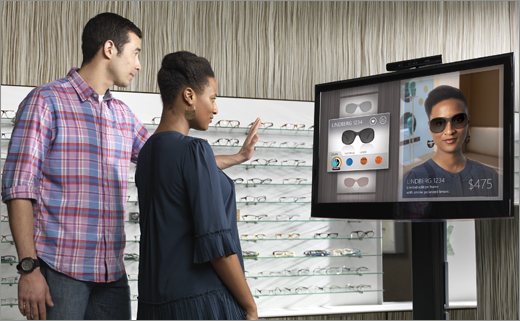
    Yesterday at the Engadget Expand conference Microsoft’s Bob Heddle, the director of Kinect for Windows, announced a new software developer kit is coming very soon — tomorrow, in fact. Version 1.7 will be made available March 18, and Heddle promised it will be the “most significant update to the SDK since we released the first version a little over a year ago”.

    Version 1.7 promises new interaction, including push-to-press buttons, grip-to-pan capabilities, and support for smart ways to accommodate multiple users and two-person interactions. Heddle explains that “we wanted to save businesses and developers hours of development time while making it easier for them to create gesture-based experiences that are highly consistent from application to application and utterly simple for end users”.

    The company is also adding more features to Kinect Fusion — a service that create accurate, full, 3-D models. Fusion will now include OpenCV and MATLAB Samples to allow developers to build advanced Kinect-enabled applications while using industry standards.

    The new SDK also marks a milestone of sorts. Microsoft will be making Kinect for Windows code samples available through CodePlex — marking the first time Kinect code has ever been available through an open-source resource.

    Heddle promises that the new features will be “fully compatible with all previous commercial releases, so we encourage everyone to upgrade to the new version”. If you want to check out the on-stage demonstration from Heddle then there is a video available for you now.

    Photo Credit: Microsoft

  • The week in cloud: VMware fesses up; Amazon churns out features; Newvem watches Amazon

    VMware, at last, comes clean about its AWS killer

    Remember last July when our own Om Malik and Stacey Higginbotham reported on VMware’s plan to take on Amazon with a cloud of its own?  Remember VMware denying it?  Well, last Wednesday it all became official with the announcement of VMware Hybrid Cloud services — in which VMware will host its own public cloud that will be sold by existing VMware partners.

    Gartner’s Chris Wolf has an interesting take on his blog here.

    Now, there is some wiggle room for VMware here. Our original story showed the big cloud coming out of the then-unannounced spin-off of VMware and EMC That spinoff — the Pivotal Initiative — did happen, but it appears that it’s VMware, not Pivotal, that’s running the big cloud. Paul Maritz the former CEO of VMware and now the head of Pivotal, will be speaking this week at GigaOM’s Structure: Data in New York.

    Amazon adds beefs up Virtual Private Cloud

    It was an even more busy week than normal for Amazon itself which unveiled new Virtual Private Cloud capabilities for AWS users. Launched 4 years ago Amazon VPC lets users create “a virtual network of logically isolated EC2 instances and an optional VPN connection to your own data center,” according to the AWS blog. what’s new now is that soon, when a new customer launches EC2 instances, they will do so in the ”EC2-VPC” platform.

    “You don’t need to create a VPC beforehand – simply launch EC2 instances or provision Elastic Load Balancers, RDS databases, or ElastiCache clusters like you would in EC2-Classic and we’ll create a VPC for you at no extra charge.  We’ll launch your resources into that VPC and assign each EC2 instance a public IP address.”

    At that point you can assign multiple IP addresses to a single instance, change security group membership on the fly, and add egress filters to those groups.

    One of Amazon’s weak points when it comes to the enterprise accounts it wants to attract is the unwillingness of IT pros — especially in heavily regulated businesses — to put mission critical workloads on shared public cloud infrastructure. This new VPC capability might make them more amenable to using AWS at a time when more and more “private” cloud options — from competitors Rackspace, HP, and others are coming on line. GCN has more on VPC.

    awsconsoleAlso new his week: AWS tripled the amount of storage that can be associated with each RDB (Relational Database) instance.

    “You can now create DB instances (MySQL or Oracle) with up to 3 TB of storage (the previous limit was 1 TB) and 30,000 IOPS (previously, 10,000). SQL Server DB Instances can be created with up to 1TB of storage and 10,000 IOPS.”

    And, Amazon also launched a version of its mobile AWS console for iPhone so It types can see what’s going on with their Amazon cloud when they’re not at their desks. An Android version of the console debuted in January.

    this public cloud war will only get more interesting if, as has been reported here and elsewhere, that IBM is in the market for SoftLayer and/or Rackspace.  If IBM ends up making either of those rather substantial purchase — Reuters put a $2 billion price tag on SoftLayer and Rackspace would be much more — it would only show how critical IBM sees this market that it would spend that kind of dough after already investing billions in its own cloud infrastructure.

    Working with your Frenemy: Newvem debuts AWS heat map

    Newvem is the energizer bunny of AWS watchers. Amazon keeps “totally copying” Newvem’s capabilities (in the words of Newvem CEO Zev Laderman) and Newvem just keeps on adding more capabilities.

    Utilization Heatmap Main ViewNewvem, the Israeli company obsessed with showing you more about your Amazon Web Services use than you know, was at it again this week, unveiling its Cloud Utilization Heat map that shows AWS users their utilization over multiple regions by time, machine type and availability zone.

    The sales pitch?A substantive portion (15 percent) of the clouds Newvem analyzes now are underutilized. That means “$30 million of $200 million EC2 spending tracked is wasted,” says Newvem spokesman Cameron Peron. Presumably if you know what resources are being wasted you can make moves to streamline operations and run things optimally. Sell off reserved instances you’re not using, for example.

    Newvem CEO Zev Laderman (left) and AWS CTO Werner Vogels.
    Newvem CEO Zev Laderman (left) and AWS CTO Werner Vogels.

    Here’s my guess: Newvem has focused 100 percent on AWS to this point. But as Amazon keeps adding more of its own dashboard and monitoring alerts, I would bet Newvem, like other monitoring companies, will soon turn its eye to other clouds as well. After all, multi-cloud deployments are one tactic large companies are looking at to avoid locking into a single provider.

    That Amazon competes with its own partners is certainly not new. It’s been going on for years as we’ve reported. The company, like Microsoft or IBM before it, treads a fine line between relying on smaller, nimbler partners to come up with innovative new services, and then adding more value-added services itself. Amazon launched a partner program last year to help navigate this terrain.

    Related research and analysis from GigaOM Pro:
    Subscriber content. Sign up for a free trial.

  • ICYMI: Galaxy S 4, Electric Imp, and the whiniest people on the planet

    While you were busy SXSWing last week, you may have missed out on some of our podcasts. What better time than now to catch up with a relaxing and informative weekend listen?

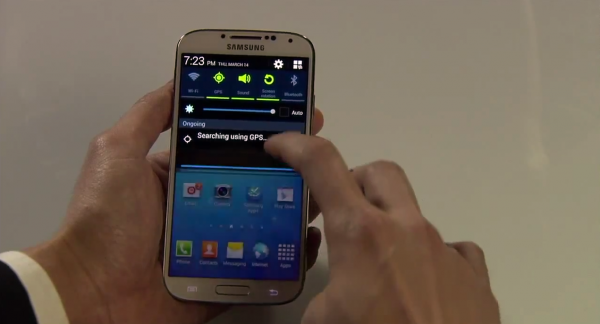
    Hands on with the Galaxy S 4, RIP Google Reader and get better seats at the ballgame

    (Download the weekly news wrapup)

    IoT: Electric Imp aims to make connecting devices devilishly simple

    (Download the Internet of Things show)

    Call-in Show: Screen resolutions and Android battery suck

    (Download the call-in show)

    How SDN is disrupting the network landscape

    (Download the GigaOM Research podcast)

    Related research and analysis from GigaOM Pro:
    Subscriber content. Sign up for a free trial.

  • March Madness: where to watch the 2013 NCAA Tournament live online

    March Madness is here: The 2013 NCAA Men’s Division tournament will start on March 17 with Selection Sunday, and then continue with a total of 67 action-packed games until April 8.

    Unfortunately, quite a few of these games are once again going to unfold when many of us have to work at the office. Fortunately, you won’t have to miss a thing, thanks to live streams of each and every game — if you’re a cable subscriber, that is.

    For the first time, March Madness is going to require authentication for any game that’s shown on cable. This means that you’ll have to log in with your cable TV subscription account if the game you want to watch is airing on TBS, TNT or truTV. Games that are available on CBS will still be available without logging in.

    Confused? Can’t find your cable subscription details in time before the action starts? No worries: The NCAA’s website and apps are going to offer everyone a four hour grace period in which you can start watching without bothering about logging in.

    Here’s where you can start watching on your PC, iPad, iPhone or Android mobile device:

    • The NCAA’s website streams each and every game live, no matter whether it airs on cable or CBS.
    • The NCAA’s iOS app, now available on iTunes, offers live streaming for iPad, iPhone and iPod touch.
    • The NCAA also promises to have an Android app for devices with Android 4.0 and up available in time, but it wasn’t on Google Play at the time of writing. Check the NCAA’s website for the latest links for your device.

    We will update this article with additional links and resources throughout the tournament, so make sure to check back regularly.

    Related research and analysis from GigaOM Pro:
    Subscriber content. Sign up for a free trial.

  • The new Audi R8 V10 plus

    Audi R8 V10

    If Audi set-up displays like this in their dealerships, they’d move triple the amount of R8′s they currently sell.

    Simply outstanding…

    Source: AudiChannel

  • Last week on Pro: how to scale a startup, disengaged work and more

    March madness isn’t just for sports – as we saw this week, spring fever is roaring across the tech world, too. As soon as our writers returned from covering the five-day SXSW Interactive whirlwind in Austin, Samsung launched its highly-anticipated (and much-leaked) Galaxy S 4 at a splashy event in New York, and Google elicited howls of protest by announcing the impending sunset of Google Reader. Meanwhile, over on GigaOM Pro, our analysts are preparing for this week’s Structure:Data conference in New York City and writing research reports full of practical advice for startup founders, analysis of converging trends in the mobile, cloud, and big data markets, and more.

    Note: GigaOM Pro is a subscription-based research service offering in-depth, timely analysis of developing trends and technologies. Visit pro.gigaom.com to learn more about it.

    Cloud: Understanding the Symbiosis of Cloud Computing, Big Data, and Mobile
    David Linthicum

    Perhaps the singularity is coming to the cloud: in his latest weekly update, analyst David Linthicum considers the increasing convergence (and interdependence) of mobile, data and cloud. While the enterprise (and their IT departments) treat these three emerging market segments as separate entities, Linthicum cites examples such as the relationship between big data and cloud storage, and of mobile computing and the concept of “personal clouds” for user data and document management, to argue that these three arms form a complex, symbiotic system that should be linked to gain greater strategic productivity.

    Connected Consumer: 11 Steps for scaling a startup
    David MacMillan

    In an appeal for the unsexy (but very necessary) side of startups, analyst David MacMillan takes a look at several crucial (and often overlooked) aspects of establishing a startup and expanding the business beyond a couple founders and a good idea. While founders (and their funders) focus their initial efforts on product development, technical risks, and marketing efforts, MacMillan’s report covers the critical, mundane infrastructure tasks, such as proper legal and financial infrastructure,  to include in any startup business plan. MacMillan provides a veritable owner’s manual, covering topics like safe harbors, intellectual property ownership and identifying and obtaining proper legal and financial services with actionable advice and important factors to consider at each stage of the process.

    Social: Why work doesn’t happen at work
    Stowe Boyd

    Analyst Stowe Boyd pens a brief thought piece based on a 2010 TED talk by 37signals’ Jason Fried. Fried and Boyd both advocate for thinking outside the box – or in this case, outside the office. Boyd notes the counterproductive nature of the typical office – the so-called “death by a thousand interruptions in the typical workplace” – and instead argues in favor of the disengaged (or semi-disengaged) worker.

    Related research and analysis from GigaOM Pro:
    Subscriber content. Sign up for a free trial.

  • Veronica Mars lives again: Lessons from a record-breaking Kickstarter campaign

    In late 2011, the big story for those fascinated by the Internet’s disruption of traditional Hollywood was Louis CK’s direct-to-fan comedy special. 2013 is young yet, but an early contender for story of the year has to be once-canceled cult series Veronica Mars roaring back to life, thanks to Kickstarter. What have we learned about the project since its launch on Wednesday? And what implications does it have for Kickstarter as well as other canceled shows? Let’s find out.

    Warner Bros. is super-into this

    In a very illuminating interview with HitFix, Veronica Mars creator Rob Thomas addressed a great number of the concerns that have been raised about the campaign.

    The whole interview is worth reading, and one of the biggest takeaways is how engaged Warner Bros. is with the project.

    Working with Warner Bros. was always going to be necessary for a Veronica Mars movie, as Mars is intellectual property belonging to the studio. But there are other benefits. S.T. VanAirsdale looked at the costs typically associated with a campaign like this — specifically in regards to basic things like manufacturing 40,000 T-shirts:

    At the time, the number of backers entitled to Thomas’ limited-edition shirts was 34,000 and change. CustomInk gave me a rough quote for the exact number of shirts I sought: $3.90 each, for a total of $132,600. (“You saved $579,360.00 [81%] with Volume Discount,” the site reassured me.) BlueCotton was cheaper at $3.44 apiece, but it maxed out at 9,999 shirts, meaning some rough multiplication and rougher estimate of $116,960. That’s more than 4% of the total amount raised so far — ostensibly Thomas’ production budget, which also has to cover such actual necessities as crew, equipment, transportation and craft service — just to produce t-shirts.

    While these concerns are huge for independent Kickstarter campaigns, one of the many advantages Thomas has is that a team at Warner Bros. is handling the logistics of the campaign as well as the film’s promotion and distribution. The money being raised on Kickstarter is purely for production — this is because, according to Thomas, Warner is treating Mars as an experiment:

    I know, on the second part of the question, that Warner Bros. isn’t treating “Veronica Mars” like a one-off. I think they’re treating us like a guinea pig — in the best way. They want to see if this model works, and they made the calculated decision, and for a lot of the reasons you articulated in that story, that we were a good test case for this. We just happened to be the right show at the right time, got to be the first one out of the gate. I think Warner Bros., if it works, they could start doing more of these. And you know that if it works at one studio, that they’re not going to be the only studio in town that will be trying it.

    Is Veronica Mars bad for Kickstarter?

    The controversy that’s stirred up around Mars on Kickstarter seems to boil down to the following question: When you contribute to a Kickstarter campaign, what role do you play in it? Are you a consumer, paying a certain fee for a certain benefit, whether it be a T-shirt or tickets to a red carpet premiere? Are you a booster, selflessly donating your money to support a project you believe in? Or does your money give you a role akin to a producer of the project?

    10 minutes of "Veronica Mars"'s Kickstarter campaign -- specifically, March 13th, 8:49 AM-8:59 AM PST.

    10 minutes and $30,000 of “Veronica Mars”‘s Kickstarter campaign — specifically, March 13th, 8:49 AM-8:59 AM PST.

    Many who find the Mars Kickstarter campaign troubling are coming at it from that latter perspective, such as paidContent commenter jrhmobile earlier this week:

    So, do these investors get points in the movie sales? Or are they just throwing a couple of million bucks at a major studio with no return on their investment?

    I’d like to think it’s more than “I funded a movie for Warner Brothers, and all I got was this lousy T-shirt.”

    The key word there, potentially, is “lousy.” Thomas explained to HitFix:

    The nice thing is that we never wanted to be perceived as a charity. We always imagined that we’re putting up a Kickstarter page, and we’re selling real product at real prices to fans. It’s not like a pledge drive where you pledge 100 dollars and get a 4 dollar tote bag, where it’s done out of the goodness of your heart, and for charity. We wanted to created packages where people look at what they’re getting and think, ‘Wow, I got a script and a digital download and a t-shirt for $35. I would pay that!’ So all those people worrying that we’re aksing for this money to make our movie, we’re selling you a product. Think of us as a store, not a charity.

    The other issue being raised is whether success stories like this overshadow independent projects. Kenyatta Cheese, a freelance consultant and co-creator of Know Your Meme, offered the following analysis on Tumblr:

    The success of the Marshmallows does nothing for unknown, unconnected creators on Kickstarter unless Kickstarter can get the backers of its high profile projects to discover some of the lesser known but equally intriguing small projects. That sort of thing has to be planned and programmed. It doesn’t just happen through the implementation of a Discover page with a few carousels of local and staff pick recommendations. This happens through building a backer community that celebrates their continued involvement while fostering a culture of discovery. The good news is that if anybody has a head start on figuring this sort of thing out, it’s Kickstarter.

    And Kickstarter has numbers which show that blockbusters like Mars help build the Kickstarter ecosystem — bringing in new donors who may go on to fund other projects.

    The current largest contributor to the Mars campaign, a guy who pledged $10,000 for a speaking role, is an entrepreneur named Steven Dengler. When interviewed by Entertainment Weekly, Dengler referred to himself as a “small-f fan” of Mars — what he actually is is a fan of Kickstarter projects. He’s funded over 60 of them.

    “Save [NAME OF YOUR FAVORITE CANCELED SHOW HERE]!

    I enjoyed Firefly, don’t get me wrong. But having witnessed the show’s hardcore fanbase overreacting to even the possible hint of new space Western adventures over the past half-dozen years, I’d like to thank Joss Whedon for, within 24 hours of Mars hitting $2 million, telling Buzzfeed that Kickstarter won’t bring back the crew of the Serenity anytime soon:

    I’ve said repeatedly that I would love to make another movie with these guys, and that remains the case. It also remains the case that I’m booked up by Marvel for the next three years, and that I haven’t even been able to get Dr. Horrible 2 off the ground because of that. So I don’t even entertain the notion of entertaining the notion of doing this, and won’t. Couple years from now, when Nathan [Fillion]‘s no longer [on] Castle and I’m no longer the Tom Hagen of the Marvel Universe and making a giant movie, we might look and see where the market is then. But right now, it’s a complete non-Kickstarter for me.

    Hardcore Firefly fans are thus out of luck at present. But other creators are watching Mars with interest. Shawn Ryan, whose offbeat drama Terriers was canceled after one season on FX, Tweeted the below on Wednesday:

    And as Thomas told HitFix:

    I did get an email from Bryan Fuller earlier today saying, ‘Hey, can you jump on the phone with me at some point? I know you’re busy, but I would love to talk to you about how this thing works.’ And I know it was specifically for Pushing Daisies.

    Fuller’s Daisies was canceled by ABC after two seasons — just one of many cult shows that never got the chance to wrap up its many storylines.

    I used the word “cult” in this article more than once, but depending on what happens here, that term might become much more apt than before. Because, after all, aren’t cults financially supported by their followers?

    Related research and analysis from GigaOM Pro:
    Subscriber content. Sign up for a free trial.

    • Qualcomm Snapdragon 600 Confirmed for Galaxy S 4 in Select Regions

      Qualcomm_Snapdragon_600_800_Series_CES_2013

      Well Galaxy S fans, the good news just never stops rolling in concerning Galaxy S 4 specs. Qualcomm has confirmed what we have previously reported, which is the GS 4 will be rolling out with its impressive Snapdragon 600 chip in select regions on April 26. The U.S. is most likely one of those select regions.

      This is welcoming news considering some reports indicated the handsets might be shipping with the still impressive, but power hungry, S4 Pro. The 600 does a much better job at handling power consumption than its predecessor, which should make those of you worried about how long the 2,600mAh will last under the GS 4′s numerous software and hardware upgrades very happy. In fact, the 600 will reportedly provide about 40 percent better battery life.

      As expected, the international version will get the Exynos 5 Octa, which is built on ARM’s “big LITTLE” architecture and consists of four powerful Cortex-A15 CPUs matched by four power efficient Cortex-A7 chips.

      At least we can all take comfort in the fact that Samsung is working hard to ensure the best battery-to-usage ratio possible for its S 4 users. This will be welcomed news for users that were left very disappointed by the short battery life of their stock GSIIIs. Samsung is leading the way with its hardware and software innovations, and are backing it up by developing the integrated power to handle anything you can throw at it.

      Source: Qualcomm

      Come comment on this article: Qualcomm Snapdragon 600 Confirmed for Galaxy S 4 in Select Regions

    • How an unknown Taiwanese server maker is eating the big guys’ lunch

      It all started, Mike Yang says, with a conversation he had with Facebook’s vice president of technical operations in 2007 or 2008. Rather than source servers through a traditional vendor like IBM for its  data centers, Facebook turned to Quanta.

      Back then, Quanta didn’t sell servers directly to customers, it only built them for traditional server vendors who then put their name on them and sold them to customers. Fast forward a few years, and a majority of Quanta’s server revenue stems from direct deals — 65 percent in 2012, and a forecasted 85 percent this year. Now, it counts other large-scale server buyers such as Rackspace and Amazon among its customers.

      Mike Yang. Source: Quanta

      Mike Yang. Source: Quanta

      Yang, the man in charge of Quanta’s cloud computing business unit, beamed during an interview on Thursday as he spoke about how the company can directly offer energy-efficient and high-performance products for webscale customers and smaller ones, too. If the Taiwan-based hardware maker’s 85 percent forecase proves out, it company could become a more recognized supplier for cloud computing venues, further threatening old-line server vendors like Hewlett-Packard and Dell.

      The company, with U.S. headquarters in Fremont, Calif., didn’t show projections of server revenues in dollars or server shipments in total but said it shipped 1.2 million server motherboards in 2012 and plans to ship at least 10 percent more — 1.32 million motherboards — this year.

      Quanta appears to be on a roll with Quanta-brand direct server sales growth. At the same time as it’s doing custom jobs for webscale customers, it’s also promoting direct sales of other gear, including off-the-shelf storage and network appliances, to smaller customers through a subsidiary Quanta established last year, Quanta QCT.

      The company has a few strategies in mind for shifting from an original-design manufacturer to a name brand in its own right, at least in servers. It sees full racks of equipment, under the Rackgo name, as a major seller this year. The Rackgo offering, which includes compute, storage and network appliances, can appeal to customers because there’s simply one company to go to when problems arise, Yang said.

      And then, of course, there’s the Open Compute Project — the Facebook-led open-source hardware initiative that kicked off Quanta’s evolution as a direct server vendor. Quanta will come out with multiple products based on Open Compute specifications later this year, although exact timelines weren’t immediately available.

      Next month, the company will open an office in Seattle in order to be closer to customers. It counts Seattle-based Amazon as a customer, and Yang said Quanta has other customers in the area, although he declined to name them. Microsoft, which is building huge data center capacity for Windows Azure and its Live offerings, is a short drive from Seattle, in Redmond, Wash., and Seattle is much closer to Quincy, Wash., a hotbed of data centers, than is the Fremont office. Quanta will add more U.S. offices for sales and service this year, Yang said.

      Quanta is also opening up to the press, rather than silently working behind the scenes. That campaign started last year.

      The company’s business model has undergone a sea change. If the upward trajectory keeps up and the server-market dynamics keep shifting in its favor, Quanta could become one of the stalwart name brands of IT technology.

      Related research and analysis from GigaOM Pro:
      Subscriber content. Sign up for a free trial.

    • Keep software current with OUTDATEfighter

      There are plenty of tools around to check your PC for missing updates, but most have significant issues. Soft4Boost Update Checker is good at detecting updates, for instance, but it won’t download or install them – that’s left up to you.

      OUTDATEfighter (from the makers of SPAMfighter) is a little more ambitious. Not only will it find updates, but it can also download and install them for you. There’s a Windows update checker as well. And the program is free, so there are no annoying omissions and you’re not forever being nagged to “upgrade”.

      Getting started is simple enough: launch the program, click “Scan for Program Updates” and it’ll examine your installed applications, compare their installed versions against a central list, and produce a report listing available updates.

      Installing all these updates is as easy as checking the Name box, and clicking “Update Selected Software”. OUTDATEfighter then downloads the various files and launches them for you. These won’t be silent installations — you’ll have to work through each setup program, just as normal – but overall you should still save plenty of time.

      If you want more control over your updates, it’s also possible to select particular files from the list. And if OUTDATEfighter can’t download an installer itself, or you need to keep the file to use elsewhere, then the program also provides a direct link to the official download page (click the “Information” icon, and click “Link”).

      Elsewhere, an Uninstall tab lists your installed applications and can launch their uninstaller with a click.

      An “Update Windows” tab seems to be an equivalent to the regular Windows Update tool, listing “Important” and “Optional” updates and installing whatever you select.

      And there are a few useful configuration options, including an “Ignore List” which tells OUTDATEfighter to ignore particular programs which you’d rather manage yourself.

      In our tests, OUTDATEfighter detected only an average number of updates. And for some reason it couldn’t install a Chrome update; we tried repeatedly, but each time were told “Download failed: try again”. Maybe it was a temporary issue, or something related just to our setup, but there was no way to tell.

      We had issues with the “Update Windows” module, too. The regular Windows Update tool said our test PC required only one “Important Update”, but OUTDATEfighter listed eight, most of which weren’t important at all (a fax tool for our all-in-one printer, for instance). Not only does this increase the chance that you’ll install files you wouldn’t otherwise have touched, but it also makes it harder to spot the worthwhile updates amongst the rest.

      This isn’t necessarily a critical problem. The ability to batch download all your available updates is very convenient, and we’d certainly recommend giving OUTDATEfighter a try, just to see what the program can do for you.

      We would also recommend you leave the Update Windows function alone, though. Or at least check what each update does before you agree to install it.

      Photo Credit: ARENA Creative/Shutterstock

    • Qualcomm Snapdragon 600 powers the quad-core Samsung Galaxy S IV

      Two days ago, at the Unpacked event held in New York, with much fanfare, South Korean manufacturer Samsung unveiled the new Galaxy S4. As we have come to expect, the company mostly focused on the added software benefits rather than showcasing the hardware underneath, leaving folks puzzled as to what powers the new Android flagship.

      Samsung revealed two processor choices for the Galaxy S4 — quad-core or octa-core solution depending on the market. Considering the scarcity of octa-core processors coming from high-end chip makers, the Exynos 5 Octa, which is scheduled for production in Q2 represents one-half of the equation. And, as Qualcomm has announced, the Snapdragon 600 represents the other half.

      The Snapdragon 600, which Qualcomm announced during Consumer Electronics Show 2013, powers other Android flagships including the LG Optimus G Pro and HTC One. On Galaxy S IV, the Snapdragon 600 processor features a 1.9 GHz quad-core Krait CPU; Adreno 320 GPU (Graphics Processing Unit); 2GB of LPDDR3 RAM and support for LTE Category 3 connectivity, which delivers download speeds up to 100 Mbps and upload speeds up to 50 Mbps.

      With the Galaxy S III, Samsung chose the Qualcomm-made processor for North America and other markets where 4G LTE adoption rates are high, while the Exynos-branded processor is (still) for the most part reserved for 3G networks. And, judging by its older brother’s path, the Galaxy S4 is unlikely to be any different.

    • Netflix Rival Redbox Instant Launches In The US

      Redbox Instant

      Redbox, in partnership with Verizon, has been gearing up its Instant service and finally launched today in the US. For $8 per month, customers can get unlimited movie streaming and four one-night DVD rentals every month. Redbox and Verizon announced a joint venture to launch Instant back in February of 2012. Users will be able to stream content via iOS, Android, Xbox 360, Samsung connected TVs or Blu-ray players, and Mac or PC. Redbox Instant does have some catching up to do in terms of streaming titles. Major competitor Netflix currently has around 14,000 streamable titles available in the US while Redbox Instant only has around 4,600 titles. However, Instant’s four one-night DVD rentals included in the $8 monthly subscription, may be enough to attract people.

      Source: Redbox Instant by Verizon

      Come comment on this article: Netflix Rival Redbox Instant Launches In The US

    • Egyptology News for March 14th – 16th 2013


      From @egyptologynews.  Happy St Patrick’s Day for tomorrow!

      Bobblehead no more: finishing the falcon mummy conservation treatment. With photos. Penn Artifact Lab http://bit.ly/ZZL2Kx

      RT @SakhmetK Report on findings of two visitor surveys about using mobile devices in museums. Digital Media at V&A http://bit.ly/YtSAnt

      #ForeignBodies Exhibition visitor information can be found here: http://blogs.ucl.ac.uk/researchers-in-museums/foreign-bodies/ … Trail maps will be uploaded very soon! @UCLMuseums

      More photos from the discovery of the remains of battle against the Hyksos. Luxor Times http://bit.ly/WNV8zy

      Important discoveries at Tel Habuwa dig in Delta shed light on campaign by Ahmose I against the Hyksos Ahram Online http://bit.ly/XfABia

      Surprising, but NBC says that for the 1st time the Pyramids of Giza + Sphinx will be lit green on St. Patrick’s Day. http://nbcnews.to/WLDc8E

      Call for abstracts. Origins5 conference 13-18 Apr 2014 (Predynastic and Early Dynastic) Cairo 2013. Full details at http://bit.ly/ZHD19L

      RT @TheSSEA Monica Hanna’s photos of destruction at World Heritage Site Dashur http://bit.ly/Zcs9ml  + Antinoupolis http://bit.ly/Yi1OkA

      RT @wzzw Oriental Stone: New entry on UCLA’s free online Encyclopaedia of Egyptology http://escholarship.org/uc/item/4xk4h68c

      Via Kimberley Freeman ‏@Kim0006
      The launch of #foreignbodies in UCL’s North Cloisters was AMAZING! Well done @ResearchEngager ! pic.twitter.com/U69c9K66LR

      Middle East in Early Prints and Photographs (NYPL Digital Gallery). 1000s of prints, photos from 17th-20th Cs. AWOL http://bit.ly/Zcs9ml

      The Coptic blog has just been resumed by Howard Middleton-Jones with updates on Coptic themes. Coptic News + Archive http://bit.ly/YewLcv

      Travelers in the Middle East Archive. Digital archive emphasising travels to Egypt in 19th and early 20th Cs. AWOL http://bit.ly/16y3qNO

      Short article (from Feb, but I missed it). Musical Apes:Can Baboons Play the Harp? By Gemma Angel. UCL http://bit.ly/Z26vOx

      New Book (French): Laurent Bricault “Les cultes isiaques dans le monde gréco-romain” Les Belles Lettres http://bit.ly/15QWr0V

      Kings and Queens and the case of the pink hippo? Review of the LGBT event at the Petrie, by Chris Webber. UCL http://bit.ly/YyMjqQ

      New Book: Ancient Egyptian Administration ed. Juan Carlos Moreno García. Looks comprehensive but very expensive. Brill http://bit.ly/SbttGS

      Summary of University of Basel 2013 season at the undecorated non-royal tombs in the side valley leading to KV34.Past Horizons http://bit.ly/10PJgdP

      In Spanish. Egyptian state subsidies withdrawn, but as at Aswan excavations continue at Oxyrhynchus. La Vanguardia http://bit.ly/XybJrN

      Via Campbell Price ‏@EgyptMcr
      Tea and cake for #ComicRelief @McrMuseum today – and GINGERBREAD SHABTIS! pic.twitter.com/rkqn0WxIDx

      Landscaping the entry to the open-air museum was the theme of the Aswan International Sculpture Symposium. Ahram Wkly http://bit.ly/14xRp78

      Further to my previous post re the 2013 Amheida/Trimethis report, find out more about the project from their homepage http://www.amheida.org/

      Amheida/Trimithis (Dakhleh Oasis) 2013 season report, Jan 20th-Feb 14th. Directed by Roger Bagnall. PDF New York Univ http://bit.ly/WK2nIN

      Travel in the Fayoum, rich in contrasts. Sun-baked desert valleys, frigid lakes and lush farmland. Daily News Egypt http://bit.ly/Z6p1s6

      During excavations in the Kings’ Valley University of Basel researchers found one of world’s oldest AE sun dials. http://bit.ly/X9Jfid

      End of the season post from the Temple of Mut team, from their dig diary, with loads of great photos. Brooklyn Museum http://bit.ly/YnmbPr

    • Why Google killed off Google Reader: It was self-defense

      It’s not a huge surprise that Google is dropping Google Reader, the blog reader it operated since 2005. After all, they’d let it go for some time now (not that I’m complaining – it was after all, a free service, a fine product, and a boon for the overall ecosystem of blogging, podcasts and RSS).

      The reality, though, is that Google operates at vast scale, and a niche consumer product like Reader just doesn’t move the needle. As crazy as it may sound, today even a billion-dollar business is simply a distraction to Google (unless, of course, it’s well on the way to becoming a five-billion-dollar business).

      So all those who are signing petitions to Google  (and even one to The White House!) are missing the bigger point: that this is a victim of the company’s DNA, one that’s accelerated under Larry Page’s management. Some companies specialize in keeping the status quo, others specialize in moving forward. Google is the latter. If the company maintained every niche product with N thousand fans, even paying ones, it’d become the very bungling bureaucracy we love to hate. For a company with Google’s ethos and standing, any such dead-end, non-revenue-producing product that’s retained is holding others back, and prevents the company from moving forward and making true innovations instead of incremental improvements.

      Open standards just a means to an end

      While Google is giving up on Reader, I believe the company will still embrace subscriptions in a big way, just without RSS (by which I mean RSS, Atom, PubSubHubbub, etc.) Sure, they may continue to lean on RSS as part of their technical infrastructure – e.g. Googlebot will still be crawling external RSS feeds to identify fresh content – but users won’t see those three letters or the shiny feed icon that accompanies them.

      To understand why Google’s walking away from RSS, look at Google’s relationship with open standards over the past decade. Google has experimented with various open technologies and found it difficult to win over Google-scale audiences and developers. The list of casualties would include OpenSocial (present in Orkut but not Plus), Activity Streams (present in Buzz, but not Plus, though certainly an inspiration), Social Graph API (no longer available) and RSS (not just Reader, but Feedburner is fading out and podcast app Listen was killed months ago).

      Furthermore, Android has been a stonking success for the company, and while it may be open source, with a relatively open store policy, it’s not particularly based on open standards in the way that ChromeOS, WebOS, and now Firefox OS are.

      So overall, Google’s lesson has been to lead with a compelling user experience first and then build an API from there, an API which may be based on open standards, but only if it’s a means to an end. Developers are much more attracted to a big market than a glorious proclamation of Open. It’s this philosophy that explains why Google has been so cautious with the Google Plus API.

      Doubling down on media

      Google isn’t giving up on blogs and media. Far from it. They already have Google News, Google Currents, and Google Now. And on Plus, they have vibrant product pages and communities. The Economist, Time, and ESPN all have over 2 million followers, for example.

      This comes at a time when Facebook has been facing a backlash from journalists, with people saying that unless you’re paying for sponsored posts, it doesn’t show up in streams. Facebook’s recent design aims to fix this with a separate Subscriptions area, but as discussed on this week’s TWIT, it’s looking more like they experimented with subscriptions, that it wasn’t core to their business of connecting individuals, and now it’s off to the side.

      So Google has an opportunity to win over media brands right now, and I believe they’ll be placing an emphasis on this in their own apps like Currents, as well as on Google Plus proper. In many respects, Currents is exactly what you’d expect from Google in 2013. It’s pretty, mobile-native, and “just works” without anyone having to learn the details of RSS.

      Looking further ahead, Google has a vision heavily influenced by machine learning. The company has long known that the best search is the one you didn’t have to make, and this always-on attitude is now coming to fruition with Google Now. Google Now anticipates what users might be interested in at any time, and that includes the kind of articles people might presently be discovering on Google Plus.

      Reader’s demise is understandably a sad moment for many, but I believe in time, it will be a positive for the overall ecosystem. Google simply wasn’t innovating on Reader, and as people shift over to services like Feedly or Newsblur (and new ones are popping up as I write), those companies will have extra incentive to innovate and extra resources to do so. Meanwhile, Google will continue to work on what it does best: boiling oceans and shooting for the moon.

      Michael Mahemoff previously worked at Google and is founder of cloud podcasting service player.fm. Follow him on Twitter @mahemoff.

      Have an idea for a post you’d like to contribute to GigaOm? Click here for our guidelines and contact info.

      Related research and analysis from GigaOM Pro:
      Subscriber content. Sign up for a free trial.

    • 2º California Volks Brothers

      Volks Brothers California Meeting

      I don’t think anyone could’ve predicted the impact the original Volkswagen Beetle would have on the automotive world and pop-culture. It’s an icon that spans the globe and is loved by just about everyone. Like Harley-Davidson motorcycles, these little machines are customizable to no-end allowing their owners to personalize each and every inch of them. Recently the Second California Volks Brothers meeting took place and thankfully for us, they filmed it!

      Source: chromjuwelen.com

    • Smartwatch Developers Rejoice! Pebble Will Release Proof-Of-Concept Watchface SDK In Early April

      pebble-outdoors

      After much fanfare the Pebble smartwatch made the leap from fanciful concept to full-fledged product earlier this year, but now that units have started to ship and people have started to wear them, what’s Pebble’s next step?

      Why, enticing developers, of course. Pebble founder Eric Migicovsky noted in a backer update video released earlier this morning that an early version of the smartwatch’s watchface SDK would be made available to would-be Pebble developers during the second week of April.

      And when I say “early version,” I mean early version. At this stage it’s being looked at as more a proof-of-concept release than anything else, and Migicovsky points out that there’s a “99% chance” that the team will revamp some of the underlying APIs involved. What’s more, anyone expecting the ability to use the SDK preview to tap into the Pebble’s sensors and radios (like the accelerometer for tracking movement) will come away disappointed — the release is geared strictly toward new watchfaces, though Migicovsky says that games are also fair game as they rely mostly on button inputs.

      The early SDK has been in testing with “hacker” backers — a group of about 100 people who pledged $235 or more for the privilege of early tinkering rights — for the past few months, and some of the apps they’ve created will be released alongside the SDK. The most notable new app? A low-res (and therefore faithful) reproduction of Snake that hearkens back to Nokia’s feature phone glory days.

      Granted, new watchfaces may not seem like the most crucial addition even to Pebble buffs, but the impending release marks a pretty dramatic shift in scope for the Pebble team. What once started as a company whose daily operations were completely dictated by the need to manufacture and ship over $10 million worth of gadgets is now a company gearing up to focus on the next stage of the Pebble’s life cycle: building up the app ecosystem so the value of owning a Pebble extends beyond the wow factor of wearing a tiny e-paper display on your wrist. Migicovsky concedes that Pebble hasn’t “done the best job so far of communicating with developers,” but the team looks very willing to change that — hopefully a full-blown version of the SDK shows up sooner rather than later.

      Update 34 – Pebble Watchface SDK in April from Pebble Technology on Vimeo.

    • March Madness Live app will let you stream any game as long as you have a paid TV subscription

      march-madness-app-2013

      If you love March Madness then we have some good news for you. This year’s March Madness Live app will be available for your Android devices and is completely free to download. The catch here is that any games broadcasted on cable networks will require you to login using the credentials for your cable or satellite provider’s subscription service. Any other games aired on CBS will be streamed for free using the app or on the web. According to the press release, the app has been “redesigned for optimization across platforms” which means we can expect a good looking app for our tablets as well as our smartphones. March Madness kicks off on Selection Sunday, March 17th, and the first games begin on March 19th, so be sure to look for the app in the Google Play store soon.

      NCAA March Madness Live® to Offer Fans an Unprecedented Multi-Screen Viewing Experience for the 2013 NCAA® Division I Men’s Basketball Championship

      NCAA March Madness Live® App Available in App Store and Google Play in March

      NCAA March Madness Live® will provide college basketball fans with unparalleled multi-screen digital access to the 2013 NCAA® Division I Men’s Basketball Championship. Produced by Turner Sports, NCAA March Madness Live® will offer free streaming across all devices to pay TV subscribers throughout the tournament and is designed to be either a primary or companion viewing experience available to fans across a collection of screens including online, mobile and tablet. NCAA March Madness Live® will feature social and interactive components to provide portable access to the tournament and – in partnership between the NCAA, Turner Sports and CBS Sports – will launch from www.ncaa.com/marchmadness, www.CBSSports.com and www.bleacherreport.com, along with Google Play and the App Store beginning in March.

      NCAA March Madness Live® will provide an unlimited viewing experience throughout Turner Sports and CBS Sports’ coverage of the entire tournament. Fans will have access to all games on TNT, TBS and truTV on the digital device of their choice, by logging in with their TV service provider information, and all games broadcast on CBS with no registration required. As an added feature, NCAA March Madness Live® will offer a preview option that allows up to four hours of live game streaming that does not require viewer registration.

      For the third consecutive year, all 67 games of the tournament will again be available live on TV in their entirety across CBS, TBS, TNT and truTV.

      “Whether viewing on a big-screen TV or a computer, tablet, or smart phone, fans can enjoy the incomparable excitement of March Madness anywhere they are and however they choose,” said Matthew Hong, senior vice president and general manager of operations, for Turner Sports. “With Turner’s commitment to TV Everywhere, passionate fans can use NCAA March Madness Live® as either a first- or second-screen interactive experience to enjoy all 67 tournament games.”

      “NCAA March Madness Live® provides our membership and fan bases with the most up to date coverage of the Division I Men’s Basketball Championship so everyone can catch all of the action at any time and from any place,” said Keith Martin, managing director of championships and alliances. “We’re in an age now where fans want access to games simultaneously and they want to chat about what they’ve seen. NCAA March Madness Live® is a great resource for fans who want to keep up with the games while they are at an arena, at home or from any location.”

      This year’s NCAA March Madness Live® product offers several enhancements including:

      Redesigned for optimization across platforms – With improved navigation, NCAA March Madness Live® will have a completely new look and feel while also providing users with the same levels of access and a consistent user experience across all devices
      Available on new devices – NCAA March Madness Live® will be available on more devices than ever before including smart phones and tablets with the Android 4.0+ operating system, the iPhone 5 and iPad mini
      Capital One NCAA March Madness Bracket Challenge – The official bracket game of March Madness includes new designs and feature enhancements on smart phones and tablets, along with expanded social functionality across all devices allowing fans to join groups, share brackets and chat with friends and other passionate fans via Facebook
      Coke Zero NCAA March Madness Social Arena – A forum to extend the conversation surrounding all of the games within NCAA March Madness Live® products, fans can follow game and tournament tweets, participate in fan chats, watch the games and keep a pulse on all the key moments of every game via the Coke Zero NCAA March Madness Social Arena. Fans can participate in the social commentary by using the hashtag #marchmadness
      Additionally, NCAA March Madness Live® will once again provide video highlights, full game replays and real-time game alerts, as well as fan-favorite features, including live game scoring, real-time tournament brackets, personal channel lineup features, live stats, live social companion views and the return of the “Boss Button.” Fans will have direct access to live radio broadcasts, courtesy of Westwood One/Dial Global Radio Network, for all 67 games across the collection of digital products.
      Co-presenting sponsors for NCAA March Madness Live® are NCAA Corporate Champions AT&T, Capital One and Coke Zero. Additionally, Buick, Capital One and Coke Zero will sponsor the NCAA March Madness Live® iOS app, while AT&T, Infiniti and LG Electronics USA will sponsor the Android app.

      About the NCAA
      The NCAA is a membership-led nonprofit association of colleges and universities committed to supporting academic and athletic opportunities for more than 400,000 student-athletes at more than 1,000 member colleges and universities. Each year, more than 54,000 student-athletes compete in NCAA championships in Divisions I, II and III sports. Visit www.ncaa.org and www.ncaa.com for more details about the Association, its goals and members and corporate partnerships that help support programs for student-athletes. The NCAA is proud to have the following elite companies as official Corporate Champions-AT&T, Capital One and Coca-Cola-and the following elite companies as official Corporate Partners-Allstate, Buffalo Wild Wings, Buick, Enterprise, Infiniti, LG Electronics USA, Lowe’s, Nabisco, Northwestern Mutual, Reese’s (Hershey’s), Unilever and UPS.

      NCAA, March Madness, Final Four and Final Four Friday are trademarks of the National Collegiate Athletic Association.

      Come comment on this article: March Madness Live app will let you stream any game as long as you have a paid TV subscription

    • Minnesota star telecommuting state

      The Minneapolis Star Tribune reports…

      The Twin Cities has experienced the fifth-biggest rise among metro areas nationwide in the number of workers based at least partly at home, according to U.S. Census Bureau commuting surveys. Between 2000 and 2010, the number rose by almost 22,000 people, to about 82,500, according to estimates.

      And Minnesota is the only state with two big job centers, Mankato and St. Cloud, among the top 10 metro areas nationally in the share of people working from home.

      They don’t mention other areas such as Fergus Falls, Olmsted County or other areas featured in an MPR article on telecommuting in rural Minnesota – but I will add them.

      The article highlights some of the benefits of telecommuting. From the point of view of the workers – it’s nice to work and be around when your kids get home from school. As someone who normally lives that life, I have to second that benefit. Also businesses are seeing increased levels of productivity…

      About three-quarters of the 48 eWorkPlace employers [employers who allow telecommuting] reported that productivity increased, while only a smattering sensed a decrease, according to a Humphrey School report.

      And they are reducing costs…

      “Organizations are trying to cut costs,” Kacher said, “and one way is through real estate. It’s not hard to have people like travel agents work from home: It saves lots of money on real estate, reduces turnover and people have more time. ”

      The article recognizes that this news comes in the shadow of businesses such as Yahoo and Best Buy stepping back from telecommuting. Last month, Yahoo CEO Marissa Mayer pulled the plug on telecommuting in a memo…

      “To become the absolute best place to work, communication and collaboration will be important, so we need to be working side-by-side. That is why it is critical that we are all present in our offices. Some of the best decisions and insights come from hallway and cafeteria discussions, meeting new people, and impromptu team meetings. Speed and quality are often sacrificed when we work from home.”

      The Huffington Post countered the Yahoo move with more research supporting telecommuting as a practice but also indicating management’s hesitation with it…

      – A Stanford study, conveniently released on the same day as Yahoo’s memo, reported that call center employees increased their performance by 13 percent when working from home. They also reported “improved work satisfaction and experienced less turnover,” according to the study.

      – A University of Texas at Austin study from late last year found that those people who work from home “add five to seven hours to their workweek compared with those who work exclusively at the office.” Such workhorses, we homeworkers are!

      – A Bureau of Labor Statistics study, also from last year, reported that working remotely “seems to boost productivity, decrease absenteeism” — that means missing work — “and increase retention.” It also gives employers more incentive to ask you to work on weekends, the authors say. Boo!!

      – According to some recent research published in the MIT Sloan Management Review, bosses are roughly 9 percent more likely to consider you “dependable” and “responsible” if you “put in expected face time” Translation: Being at the office can help you get that raise you so desire.

    • Real or fake? Image of possible LG Nexus 5 surfaces

      lg_nexus_5_prototype_leak

      It is always fun to play the real or fake game when it comes to leaked images of Android devices, especially when the image may be the first one to surface. So muster up your skepticism and consider the image above that purports to be a prototype of an LG Nexus 5. The anonymous source of the image claims this particular LG device is one of several that Google is considering for their next Nexus smartphone. The source also provided a list of specs and hardware for the device, codenamed “Megalodon”:

      • 5.2″ OLED Display with 1920×1080 resolution
      • Qualcomm Snapdragon 800 @ 2.3 GHz
      • 3GB LPDDR3 Ram
      • 16/32/64GB of internal storage
      • 16MP rear camera by OmniVision (4k video recording @30FPS, 1080p video recording @60FPS, Real Time HDR & HDR video recording, optical image stabilization, BSI 2.0)
      • 2.1MP front camera (1080p video recording @30FPS)
      • 3300 mAh Lithium Polymer battery
      • Front positioned stereo speakers
      • Qualcomm RF360 (LTE 150 Mbps & HSPA+)
      • Integrated DVB-T / ATSC-antenna
      • Gesture like controls (navigation, zoom, etc)

      Readers may note that a few of the items are not even on the market yet, like the Qualcomm Snapdragon 800 processor or their RF360 chip. According to the source, the new device will be released in October 2013, so it is conceivable some of this hardware could be part of the new device.

      What do you think? Is this legit or a case of someone trying to hoax the Internet?

      source: Android and Me

      Come comment on this article: Real or fake? Image of possible LG Nexus 5 surfaces