Category: News

  • Free Shipping in January on The PRI Directory, 3rd ed.

    To start off the new year, the Foundation Center is offering free shipping on our new edition of The PRI Directory: Charitable Loans and Other Program-Related Investments by Foundations when you order online.

    Pri_dir_3ed_sm
    Published in collaboration with the PRI Makers Network, this 3rd
    edition includes detailed profiles of leading PRI funders, along with
    helpful guidance on securing and managing PRIs and a statistical
    analysis of PRI funding by foundations nationwide. Entries include the
    name, address, and contact information for each funder, descriptions of
    past and present PRI activity, and details of recent PRIs and
    recipients. The directory is fully indexed by subject, grantmaker,
    recipient name and location, and type of support to allow for quick
    access to funder profiles.

    Visit the Marketplace section of our web site for more information on this publication or to view a sample entry

    Order your copy today and shipping is on us!

  • Toyota launching G Sports Series cars at Tokyo Auto Salon [w/video]

    Filed under: , , , , ,

    Toyota FT-86 and Prius G Sports Series – Click above for image gallery

    Seems like Toyota is doing everything in its power to shake the fuddy-duddy, emotionless appliance image its built for itself over the last fifteen years or so. First came word that ToMoCo’s Mr. Toyoda stated the brand needed to get sportier. Next came the very welcome news that along with Subaru, Toyota would be introducing a lightweight, RWD sport coupe (now known to be the FT-86) that would cost about $20,000. Finally, there’s the LFA, the $500,000 Lexus, that if the reviews are to be believed, just might be worth every penny.

    That’s all well and good, but what if you want a sporty Prius?

    Meet the G Sports Series. To quote Toyota, the G Sports Series, “is designed for customers who strongly desire to own a unique vehicle, offering them a personalized interior and exterior design along with sports-driving performance.” Put another way, Toyota is bringing the aftermarket in-house.

    With a total of five vehicles getting the G Sports Series treatment, Toyota is looking to offer customized sportiness to whomever wants it. Only two of the five cars however are U.S. market vehicles: the Prius and the FT-86. The Prius gets one hell of a body kit, including sleek rear-wheel skirts. While far from beautiful, we have to say that we like the G Series Prius much better than the regular one.

    But, the real news is the G Sports Series FT-86. Because it’s the FT-86 is still officially a “concept” Toyota isn’t revealing any hard data beyond RWD, 2.0-liters and six-speed manual. Good enough for us. As far as the G Sports Series version goes, it’s a little busy and the rear wing is beyond unnecessary. Still, we’re quite excited.

    Especially as the front of the FT-86 might just be revealing an intercooler. Which would mean a turbocharger. Or is that just a fancy radiator? Well, you know the Subaru version is going to have an intercooler… Just to add to the speculation, check out the drift-o-rific video after the jump.

    [Source: Toyota | Live Images: LeBlogAuto]

    Continue reading Toyota launching G Sports Series cars at Tokyo Auto Salon [w/video]

    Toyota launching G Sports Series cars at Tokyo Auto Salon [w/video] originally appeared on Autoblog on Fri, 15 Jan 2010 12:57:00 EST. Please see our terms for use of feeds.

    Permalink | Email this | Comments


    Buy This Item: [Click here to buy this item]

    Read Original Article

  • Spy Shots: Lamborghini “Jota” Murciélago replacement caught in snow

    Filed under: , , ,

    Lamborghini “Jota” Murciélago replacement – Click above for high-res image gallery

    Unfortunately, the Lamborghini Murciélago can’t last forever. Despite producing a number of special versions to keep it fresh, including the LP640, LP 650-4 Roadster and LP 670-4 SuperVeloce, Lamborghini will eventually replace its most super of supercars.

    Our spy photographers have caught up with Lamborghini engineers testing what could be the Murciélago’s replacement in Scandinavia. Rumored to revive the “Jota” nameplate, this new car appears to be similar in size to the Murciélago. We’re told to expect a new direct-inject V12 engine producing around 700 horsepower and a lighter overall weight thanks to extensive use of carbon fiber and aluminum. All-wheel-drive is a given, though this time around Lamborghini may use a new system developed in conjunction with Haldex. As for what it look like, expect inspiration to come from the Reventón, another Lambo based on the Murciélago.

    Spy Shots: Lamborghini “Jota” Murciélago replacement caught in snow originally appeared on Autoblog on Fri, 15 Jan 2010 12:27:00 EST. Please see our terms for use of feeds.

    Permalink | Email this | Comments


    Buy This Item: [Click here to buy this item]

    Read Original Article

  • VIDEO: Lingenfelter Chevrolet Corvette ZR1 posts 9-second quarter-mile run

    Filed under: , , , ,

    Lingenfelter Chevrolet Corvette ZR1 runs a 9-second pass – click above to watch after the jump

    The ZR1 might be the fastest Chevrolet Corvette to ever come out of Bowling Green, Kentucky, but that doesn’t mean it can’t be improved upon. That’s where Lingenfelter Performance Engineering of Decatur, Indiana comes in. They’ve built some of the fastest Corvettes in the world, plus some other pretty wild tuned Chevys. Their latest super-Vette is this Jetstream Blue Metallic ZR1 that Lingenfelter took out to the drag strip at Maryland International Raceway last month. The result? A best pass of 9.813 seconds at 145.74 mph.

    As you can imagine, Lingenfelter made more than just a few minor modifications. The ZR1’s supercharger was upgraded with a cast aluminum air intake snout and an 11-rib, 2.6-inch pulley, an upgraded air filter, a four-inch diameter intake tube with mass air sensor, a ported throttle body, and a cast aluminum air inlet all help to stuff more air into the 6.2-liter V8. Other upgrades include a larger heat exchanger, larger intercooler reservoir system, and a set of sticky R345/35R18 Mickey Thompson ET Street Radials. The finished product puts out 739 horsepower and 740 pound-feet of torque measured at the rear wheels. Want to see it in action? Watch the video after the jump.

    [Source: Lingenfelter]

    Continue reading VIDEO: Lingenfelter Chevrolet Corvette ZR1 posts 9-second quarter-mile run

    VIDEO: Lingenfelter Chevrolet Corvette ZR1 posts 9-second quarter-mile run originally appeared on Autoblog on Fri, 15 Jan 2010 12:01:00 EST. Please see our terms for use of feeds.

    Permalink | Email this | Comments


    Buy This Item: [Click here to buy this item]

    Read Original Article

  • GM Corn & Organ Failure: Lots of Sensationalism, Few Facts | 80beats

    cornOn Wednesday, we covered the overreaction by a few important online sources to an International Journal of Biological Sciences article claiming to find “signs of toxicity” in three varieties of genetically modified (GM) corn produced by Monsanto. We posted some caveats that made us uneasy about the study, such as the funding sources, the unknown quality of the journal, and the fact that the toxicity claims rely on reinterpreting statistical data that Gilles-Eric Séralini and his coauthors themselves note is not as robust as it needs to be.

    Karl Haro von Mogel, a University of Wisconsin Ph.D. student who works with Pamela Ronald (the GM expert we quoted in our last post), responded with some other problems he has on this study. He has a blog post of his own (in which he gets hopping mad at coverage that attributed organ damage, organ failure, or even cancer to the rats in the study). But here are the major issues he points out to DISCOVER:

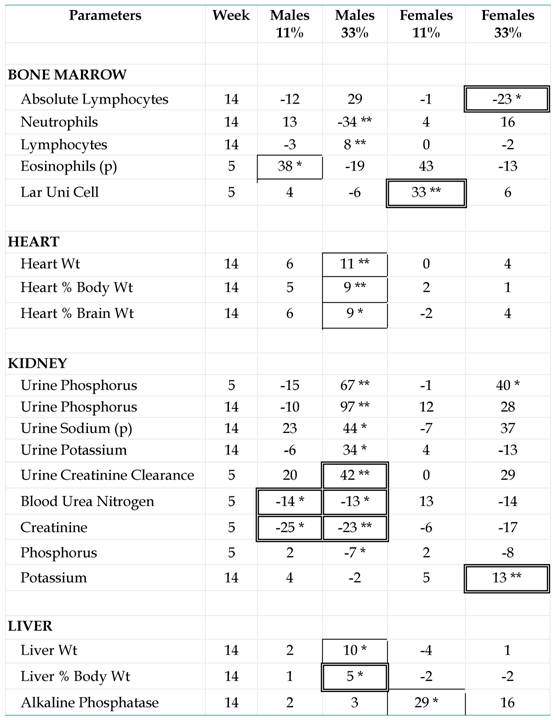
    1. Cherry-picking. “They were picking out about 20–30 significant measurements out of about 500 for one of the sets of data they analyzed,” Haro von Mogel tells DISCOVER. “At the 95% significance level, you would expect that 5% of the observations would show a significant difference due to chance alone, which is what happened.” In other words, one would expect to get some alarming results in approximately 25 out of the 500 of the measurements, which is indeed what they found. “Picking apart what seems to be normal background variability seems to me to be data dredging.”

    2. “False Discovery Rate.” The battle over these corn varieties has been cooking for years; Séralini and others published a paper in 2007 on the same issues, and after statistical criticisms like the ones just mentioned the authors came around with this new edition. One of the main shots scientists took at the previous paper, Haro von Mogel says, was that the team didn’t employ a “false discovery rate”—a stringent statistical method that controls for false positives. This time they did, but for at least two of the three varieties—MON 810 and MON 863—the researchers themselves note p-values that are not significant. (A p-value is a measure of the likelihood that any particular finding was due to chance alone rather than a real effect. By convention, science calls anything that has a greater than 5 percent chance of being a random effect “insignificant.”)

    3. “Insignificant” results. As you can see in the study’s chart, there a significant effect shown in “Lar uni cell” (large unnucleated cell count) for female rats fed the GM corn as 11 percent of their diet. But for female rats fed three times as much GM corn, it’s not there. “Are they highlighting random variation or finding genuine effects? These are the kinds of questions that scientists need to address before concluding that they have found ’signs of toxicity,’”Haro von Mogel asks. (Séralini et al. have argued that more attention needs to be paid to nonlinear toxic effects, where greater doses would cause less harm.)

    4. Lack of corroboration or explanation. The government organization Food Standards for Australia and New Zealand (which disputed Séralini’s 2007 paper [Microsoft Word file]), also disputes the recent study, in part because there is no other science corroborating the statistical data—data that was challenged in the previous points. Their response concludes by saying, “The authors do not offer any plausible scientific explanations for their hypothesis, nor do they consider the lack of concordance of the statistics with other investigative processes used in the studies such as pathology, histopathology and histochemistry…Reliance solely on statistics to determine treatment related effects in such studies is not indicative of a robust toxicological analysis. There is no corroborating evidence that would lead independently to the conclusion that there were effects of toxicological significance. FSANZ remains confident that the changes reported in these studies are neither sex- nor dose-related and are primarily due to chance alone.”

    We emailed Séralini to ask if he would respond to these particular criticisms, and have not yet heard a response. But the study is currently available to read for free, and you can see a YouTube clip of him discussing this paper, his methods, and his criticisms of Monsanto.

    In light of these concerns regarding the study, it would be an enormous stretch to say the study proves that these corn varieties cause organ damage in mammals. But none of this puts Monsanto’s GM corn totally in the clear, either. As commenters on our earlier post pointed out, Monsanto was simply following the rather laissez-faire rules for government approval, doing the 90-day trials themselves. But Séralini’s team calls for long-term studies, upwards of two years, to get reliable data.

    With the dearth of available data, which Monsanto was loath to give up to the researchers in the first place, strong conclusions are tough to come by. As Per Pinstrup-Andersen, a Cornell food expert not associated with Haro von Mogel’s team, sums up this study: “It is very convoluted but the authors imply that the results are not scientifically valid by recommending a study “to provide true scientifically valid data,’” he tells DISCOVER.

    But, as Séralini notes in his YouTube clip, that scientifically valid study would cost a fortune. And considering that these biotech crops have already been approved, Monsanto has little incentive to continue testing them.

    Related Content:
    80beats: GM Corn Leads to Organ Failure!? Not So Fast
    80beats: New Biotech Corn Gives Triple Vitamin Boost; Professors Unmoved
    80beats: Germany Joins the European Mutiny of Genetically Modified Crops
    DISCOVER: Genetically Altered Corn tells how a corn not intended for humans got into the food supply

    Image: flickr / Peter Blanchard


  • Join NC Haiti Action: Donate now and ISS will match gifts up to $1,000

    NC Haiti Action.pngAfter this week’s devastating earthquake, the people of Haiti desperately need our help.

    In
    response, the Institute for Southern Studies has launched “NC Haiti
    Action
    ,” a campaign to mobilize the North Carolina community to raise at least $1,000 in 24 hours for critical medical and
    other relief. (If you don’t live in NC and still want to help, please do!)

    The Institute for Southern Studies will also match all donations made through this cause up to $1,000.

    DONATE HERE through Facebook Causes

    DONATE HERE through Network for Good

    100% of all funds raised will go directly to four credible, social justice-oriented non-profits supporting on-the-ground relief efforts in Haiti:

    1 – DOCTORS WITHOUT BORDERS

    2 – HAITI EMERGENCY RELIEF FUND

    3 – LAMBI FUND OF HAITI

    4 – PARTNERS IN HEALTH

    Please join us in helping Haiti at this critical hour!

    – Chris, Desiree, Jerimee and Sue for Facing South

  • Pedro Paulet en el ECI

    Hola

    Para comenzar a conocer a Pedro Paulet, creo que lo mejor es ver este Power Point que preparé para la ponencia que hice en el Encuentro Científico de Invierno, de agosto último, organizado por Modesto Montoya.

    http://www.scribd.com/doc/19984871/Pedro-Paulet-ECI

    Ustedes me darán sus opiniones y si tienen preguntas, encantado de responderlas

    Saludos

  • Corporation search committee invites nominations and advice

    Members of the Harvard community are invited to offer nominations and advice regarding the search for a new member of the Harvard Corporation, the University’s executive governing board. The search arises in light of the December announcement by James R. Houghton that he plans to step down from the Corporation at the end of the academic year, following 15 years of service. The search will be led by a joint committee of the governing boards including the following members:

    • Drew Faust, president of Harvard University and Lincoln Professor of History
    • Leila Fawaz ’73 (overseer), Ph.D. ’79, Issam M. Fares Professor of Lebanese and Eastern Mediterranean Studies, director of the Fares Center for Eastern Mediterranean Studies, and professor of history and of diplomacy at the Fletcher School of Law and Diplomacy at Tufts University
    • Paul Finnegan ’75 (overseer), M.B.A. ’82, co-CEO, Madison Dearborn Partners and former president of the Harvard Alumni Association
    • Patricia King (Corporation member), J.D. ’69, Carmack Waterhouse Professor of Law, Medicine, Ethics, and Public Policy at the Georgetown University Law Center
    • Richard Meserve (overseer), J.D. ’75, president of the Carnegie Institution for Science and former chairman of the Nuclear Regulatory Commission
    • Robert Reischauer ’63 (Corporation member), president of the Urban Institute and former director of the Congressional Budget Office;
    • James Rothenberg ’68 (Corporation member and ex-officio overseer), M.B.A. ’70, chairman, principal executive officer, and director of Capital Research and Management Company, and treasurer of Harvard University.

    By charter, new members of the Corporation are elected by the President and Fellows with the counsel and consent of the Board of Overseers.

    In addition to Faust, King, Reischauer, and Rothenberg, the current Corporation members include: James R. Houghton’58, M.B.A. ’62, chairman Emeritus of Corning Incorporated, who as noted above will step down in June; Nannerl O. Keohane, LL.D. (hon.) ’93, the Laurance S. Rockefeller Distinguished Visiting Professor of Public Affairs at the Woodrow Wilson School of Public and International Affairs at Princeton University, and former president of Duke University and Wellesley College; and Robert E. Rubin ’60, co-chairman of the council and foreign relations and former secretary of the treasury.

    Confidential advice and nominations may be directed by e-mail to [email protected] or by letter to the Corporation Search Committee, Loeb House, 17 Quincy St., Cambridge, MA, 02138.

  • Senate Lawmakers Working to Resolve ‘Resolution’ Powers

    There’s some buzz in Washington about a tentative bipartisan deal between two lawmakers on the Senate Banking Committee who have been working for weeks to broker a compromise on how to create a “resolution” mechanism to handle the collapse of large financial companies without forcing taxpayers to bail the companies out.

    Sens. Mark Warner (D., Va.) and Bob Corker (R., Tenn.) have reached an agreement in principal and are working on getting the final language together. Their deal would still need to be signed off on by the top lawmakers on the panel, Sens. Chris Dodd (D., Conn.) and Richard Shelby (R., Ala.), but it’s the first sign of a bipartisan compromise to come out of the Senate on financial regulation in months and could pave the way for a broader deal.

    Their deal would work something like this, according to someone familiar with the talks:

    It would create a “presumption” that large, failing financial companies would have to go through a new bankruptcy process. This is different than what the White House proposed, which would give the government immediate control to put large, failing firms through a government-controlled resolution. The Warner/Corker deal would give the government the option to still put failing firms through a government-structured resolution, but they would have to clear hurdles first and it would be a bit more complicated.

    The deal still hasn’t been completely filled out, but details were reported Wednesday by Dow Jones Newswires.


  • U.S. Foodservice Donates $50,000 to Haiti Relief Effort

    In response to the earthquake in Haiti, U.S. Foodservice, the nation’s premier food distributor, has donated $50,000 to the American Red Cross International Response Fund.

    “Our thoughts are with everyone impacted by this disaster,” said Bob Aiken, chief executive officer, U.S. Foodservice.

    “U.S. Foodservice and its employees have a long history of providing food and support to the victims of hurricanes and other natural disasters in the United States.

    However, without a base of operations in the Caribbean, the company has decided to answer the Red Cross’s call for cash to fund these critical efforts.”

    About U.S. Foodservice

    U.S. Foodservice is one of the country’s premier foodservice distributors, offering more than 43,000 national, private label and signature brand items and an array of services to its more than 250,000 customers.

    The company proudly employs 25,000 associates in more than 60 locations nationwide who are poised to serve customers beyond their expectations.

    As an industry leader, with access to resources beyond the ordinary, U.S. Foodservice provides the finest quality food and related products to neighborhood restaurants, hospitals, schools, colleges and universities, hotels, government entities and other eating establishments.

    To find out how U.S. Foodservice can be Your partner beyond the plate®, visit usfoodservice.com.


  • Famous Knots of the World Illustrated in Earbuds [Image Cache]

    I can’t tie a sheepshank knot off the top of my head, but more than once, I’m pretty sure I’ve tangled one by accident. (Yes, this is a Ford Sync ad, but it’s quite clever.) [AdsoftheWorld via 9GAG via TheNextWeb]


  • 2010-01-15 Spike activity

    Quick links from the past week in mind and brain news:

    Herbert Spiegel, legendary pioneer of hypnosis research, has left the building. The New York Times has an obituary.

    Corpus Callosum covers a possible new non-addictive anti-anxiety drug. We have a long history of new ‘non-addictive’ anti-anxiety drugs turning out to be addictive. Fingers crossed for this one.

    Jenny McCarthy dismisses a recent scientific study on autism and demands more anecdotal data, according to a report by Discovery News.

    The Smithsonian Magazine has an article on ‘Phineas Gage: Neuroscience’s Most Famous Patient’.

    There’s an excellent piece about the history of child bipolar disorder, a culture-bound syndrome specific to American psychiatry if ever there was one, over at Neuroskeptic.

    Vox Project is a BBC Radio 4 documentary on the neuroscience of speech and language. Shortly to evaporate into the black hole that is the time-limited BBC archive, so catch it while you can.

    There are some beautiful cut-away illustrations of MRI, PET and CT scanners here.

    BBC News reports on the second biggest danger associated with taking cocaine, after acting like a cock.

    Viewing headless bodies causes changes in how we perceive faces, according to an intriguing study covered by Neurophilosophy.

    The New York Times reviews the new movie documentary on the life of Nobel-winning neuroscientist Eric Kandel.

    The top ten most popular posts on the excellent Addiction Inbox blog are listed for your perusal.

    The Splintered Mind notes philosopher of mind Eric Schwitzgebel is doing a UK tour. T-shirts presumably available at the venues.

    Jewellery and make-up suggest neanderthals were smart, according to archaeologists who have clearly never been down Watford High Street on a Saturday night. Wired UK covers the story.

    Scientific American has an excellent article on online social networks and mental health which is locked behind their newly imposed paywall. Science!

    The effect of stereotypes and how the unconsciously influence our behaviour is covered in a great piece on PsyBlog.

    The New York Times covers new concerns about human rights abuses in China’s drug rehab centres.

    An awesome looking book on the history of prion brain disease kuru is reviewed by The Neuro Times.

    American Scholar magazine has a quirky A-Z narrative journey through brain science that shouldn’t work, but does.

    There’s a great piece on the history of giving beef flavoured Prozac to dogs for ‘canine separation anxiety’ over at Frontier Psychiatrist.

    The LA Times covers the debate over cognitive behavioural therapy vs traditional psychological treatments that continues to rumble on. I assumed it was all dolphin therapy in LA.

    The US Navy wants troops wearing brain-scanners and doing cognitive assessments in the war zone, according to a report by Wired Danger Room.

    Neuroethics at the Core has some excellent coverage of the state-of-play with the ‘next generation’ ampakine cognitive enhancers.

    Post-shit-hitting-the-fan morphine cuts combat PTSD rates in half, according to a new study discovered and discussed by Neuron Culture.

    The New York Times reports that AI pioneer, Ray Solomonoff, has left the building and has an obituary.

    The uncanny valley and the digital Beatles are discussed by the Sensory Superpowers blog.

    BBC News reports on a new study finding that angiotensin receptor blocker drugs cut dementia rates.

    The latest Brain Science Podcast is an interview with pioneering emotion neuroscientist Jaak Panksepp.

    Charlie Rose has part three of his brain series where a cluster of high profile neuroscientists discuss action and the brain.

    In a rather timely post, The Frontal Cortex covers a recent imaging study on the neuroscience of charitable giving.

    The New York Times has an interesting account of how a judge has tried to reconfigure the court system for low-level drug offenders to promote behavioural change.

    A British law automatically sacking MPs who need more than six months out for mental health problems when no such rule exists for physical health problems is being challenged, reports BBC News.

    The San Francisco Chronicle reports on how Yahoo! is tooling up with social scientists.

    The dying art of Braille reading and how the blind community is using technology is covered by an interesting piece in The New York Times.

    New Scientist has an interesting piece on ‘Five emotions you never knew you had’ that tackles various feelings recently classified by psychologists.

    An elegant study that helps explain why light makes migraines worse is covered by Science News.

    In The Pipeline covers an interesting example of the nocebo effect: residents complain that a new cell phone tower making them ill, company reveals it wasn’t switched on.

  • Hampton Court Maze

    U.K., Europe | Mazes

    The Hampton Court hedge maze is the oldest surviving hedge maze in the United Kingdom, a multicursal (unlike a labyrinth which is single path or ‘unicursal’ in a maze which is ‘multicursal’ a visitor must make decisions) puzzle maze baffling and delighting visitors since the 17th century.

    While it isn’t nearly as large as modern day mazes, it still provides a challenge and remains an important historical structure. The original design has since been modified due to gaps in the hedge, offering more ways to the center and more wrong turns, some of them ending in loops. It is constructed on a third of an acre, with half a mile of paths, within 60 acres of riverside gardens.

    Planted by George London and Henry Wise for William III of Orange in 1690, evidence points towards the current maze having replaced an even older one, possibly devised for Henry VIII or Thomas Cardinal Wolsey. The maze is now the remnants of what was once the many winding paths of William III’s ‘Wilderness Garden’. Initially comprised of hornbeams, the maze has since been repaired over the years and was completely replaced with yew in the 1960s.

    A project to restore hornbeam to the maze has been introduced, with hornbeam recently planted in the center to ascertain its viability in modern day wear-and-tear conditions. Unique at its time of development, the Hampton Court Maze provides multiple path choices and dead ends, whereas research shows that previous hedge mazes were unicursal, with only one path leading to the center.

    There are several accounts of people losing themselves in the maze, both in literature and reality. One of the most popular, if exaggerated, accounts of navigating the labyrinth is given by 19th century British humorist Jerome K. Jerome in his 1889 novel “Three Men in a Boat.” He describes one character studying a map of the Hampton Maze, announcing it should hardly be called a maze, as it is so simple. The three men proceed to haughtily navigate the puzzle, only to become lost and circle around the center repeatedly until they had to call for the groundkeeper’s help.

    The Hampton Court Maze takes an average of 30-45 minutes to complete, and though it is an ‘island maze’ which contains separate sections causing this technique to not normally work, the hedges are grown in a fashion where placing and keeping one’s right hand along a wall will lead them to the center.

    A recent addition to the maze is the audio exhibit entitled Trace. Spread across the hedges is a gentle ‘soundwork’ composed of music fragments, snippets of conversation, the rustle of fine silks, and tantalizing laughter that disappears upon turning corners; aimed at luring visitor’s down certain paths, Trace is a permanent art installation that will eventually incorporate one thousand generated sounds.

  • Can you cook?

    Can you cook?

    How well do you cook?

    Are you a master cheff, or do you just burn stuff?

  • Entrepreneurs: It’s Not What You Do, It’s Why You Do It

    Motivational speaker and author of the book Start With Why Simon Sinek believes he has found a way to map out the way inspiring leaders and innovators think. Young entrepreneurs who may think they aren’t up to snuff with the big boys of innovation should be encouraged by Sinek’s theories which seek to break down inspiration into an easily replicated formula.

    He calls his concept “The Golden Circle,” a series of three concentric circles that represent the different ways we think about a product or goal. The outermost circle, labeled “What,” represents, for instance, a company’s product. The next circle, “How,” would be the technology behind this product, and the innermost circle represents “Why” the company makes the product.

    Sponsor

    The crux of Sinek’s ideas lie within this center “Why” circle When he talks about why a company makes a product, he doesn’t mean “to make money,” because that’s the result of the “What.” Instead, the “Why” represents an innovator’s beliefs and passions that drive them toward success.

    In a TEDx speech in Puget Sound, Wash., Sinek repeated a mantra several times to the audience throughout his presentation that sums up his “Golden Circle” theory.

    “People don’t buy what you do, they buy why you do it. And what you do serves as the proof of what you believe,” he said.

    While Sinek points out today’s leaders and innovative companies, like Steve Jobs and Apple, the best example of his theory in practice is of a historical sense. Sinek recounts the story of Samuel Pierpont Langley, who was given money and resources by the U.S. government to invent “the flying machine” only to be beaten to the punch by upstart and impassioned Wright Brothers.

    Sinek says it didn’t matter that Langley – who he says was driven by greed and the possibility of fame – had more money, more people and more resources, because the Wright Brothers were driven by their belief and their passion. Entrepreneurs looking to innovate today should take note of what makes a great leader, and it all starts with “Why”, says Sinek.

    “The goal is not to do business with everybody who needs what you have,” he says. “The goal is to do business with people who believe what you believe.”

    Discuss


  • Ala Moana Residence by Omiros One Architecture

    ala-moana-house-main

    Melbourne, Australia based Omiros One Architecture was the creative team behind the Ala Moana Residence, located on Hamilton Island, in the heart of the Great Barrier Reef. The home’s name is derived from a Hawaiian term that translates to “ocean pathways,” a reference to the winding path that circumnavigates the house before arriving at the entry.

    The residence employs a multi-tiered design, which was spurred by the steep, environmentally sensitive site. The architects aimed to “diffuse the perimeter and help to integrate the building form with the natural character of the site.” Furthermore, the design minimizes impact on the land, takes advantage of prevailing summer winds, and maximizes views.

    The multi-tiered approach also breaks up the visual mass of the home. Natural materials and large operable windows combine to lend the home a sense of transparency. Inside, each level and the accompanying glazing frame views of the impressive terrain, and a reflecting pool flows from interior to exterior, where it functions as a swimming pool.

    Continue reading for more images.


    Source: +Mood


  • Consumer Eating Patterns Forecast Very Bad News For The Dow This Year

    How consumers are choosing to eat and drink is apparently a big predictor of broader markets, according to a graph based on ‘Pub Power’ over at EconomPic.

    Yes, it sounds silly.  But the apparent correlation is impressive.

    The graph overlays relative “pub power” people choosing to go out to eat at the pub, rather than eating at home, along with the Dow set one year back.

    As a forward indicator it’s incredibly revealing showing that since 1993, when people stay at home the DOW has yielded a negative 9.8% return while when people eat out the return is a positive 10.8% on the year.

    From EconomPic:

    Pub Graph

    Join the conversation about this story »

    See Also:

  • Madonna Haiti Earthquake Relief Donation $250K

    Madonna is the latest celebrity putting money behind the relief efforts in Haiti following the massive earthquake that rocked the island on Tuesday. The Queen of Pop has donated $250,000 to the Red Cross to help rebuild the devastated nation.

    “My prayers are with the people of Haiti,” she says. “I can’t imagine the terrible pain and suffering they are experiencing. Sadly the depths of the tragedy are just becoming known and the need for our support grows more urgent with every passing moment. I have given a donation of $250,000 to assist Haiti’s earthquake victims through Partners in Health (www.pih.org), one of Haiti’s leading health care providers. I urge all of my friends and fans around the world to join me collectively to match my contribution or give in any way you can. We must act now. Thank you for your support.”

    The pop star is no stranger to giving back. Madonna is head of the Raising Malawi Foundation, and often lends financial and other aid to that region of Africa.

  • YouTube Lowers the Barrier, Self-Served Overlay Ads

    YouTube may be on its way to becoming profitable, but it’s not quite there yet. One sure way to achieve that is by driving up revenue, which, this being Google, means advertising. A patent filling has popped up which may indicate one way Google plans to bring in more advertisers to the video site, by making it easier for small advertisers… (read more)

  • State Department sides with Google versus China

    statedepartmentlogoThe U.S. State Department told reporters today that it will deliver a formal statement to the Chinese government in the next few days, denouncing a “highly sophisticated and targeted attack” through which the Gmail accounts of Chinese political activists were tapped. Google has already threatened to pull out of China, which would mean closing its offices there and shutting down the google.cn website.

    Now, the U.S. government has gotten involved. Reuters reports that an unnamed senior diplomat met with a Chinese diplomat on Thursday. In the next few days, the U.S. will deliver a démarche — a formal diplomatic communication from one country to another — expressing America’s disapproval of the break-ins.

    A State Department spokesman said at a press conference this morning, “It will express our concern for this incident and request information from China as to an explanation of how it happened and what they plan to do about it.”

    Separately, Microsoft CEO Steve Ballmer told Bloomberg that exiting China is “not something we’re thinking about” at Microsoft.


    Buy This Item: [Click here to buy this item]

    Read Original Article