Category: News

  • Dropbox buys red-hot mobile email startup Mailbox

    It’s been just a few weeks since iOS email app Mailbox launched and already it’s already been snapped up by a larger company. Cloud storage provider Dropbox on Friday announced it will acquire Mailbox. The company did not disclose the purchase price.

    Co-founders Drew Houston and Arash Ferdowsi wrote on the Dropbox blog that they liked that Mailbox is “simple, delightful and beautifully engineered”:

    After spending time with Gentry, Scott, and the team, it became clear that their calling was the same as ours at Dropbox—to solve life’s hidden problems and reimagine the things we do every day. We all quickly realized that together we could save millions of people a lot of pain.

    Dropbox doesn’t replace your folders or your hard drive: it makes them better. The same is true with Mailbox, it doesn’t replace your email: it makes it better. Whether it’s your Dropbox or your Mailbox, we want to find ways to simplify your life.

    Related research and analysis from GigaOM Pro:
    Subscriber content. Sign up for a free trial.

  • Wii U could be Nintendo’s first flop

    Wii U Sales February 2013
    Sales of Nintendo’s (NTDOYWii U gaming console continue to falter, according to the latest retail figures. The NPD Group on Thursday released its U.S. video game sales figures for the month of February, which shows that overall sales of new hardware, software and accessories declined 25% year-over-year. Individual hardware sales were hit the hardest, dropping a whopping 36% from February 2012 as consumers wait for the “Xbox 720” and PlayStation 4.

    Continue reading…

  • JK Shin takes time to highlight there’s no demand for Windows-based products and Samsung/Google are BFFs

    samsung_s_4_jk_shin


    JK Shin may have been pretty excited about the Galaxy S 4 launch yesterday, but he doesn’t seem to be quite as enthusiastic about Sammy’s Windows-based smartphones. As highlighted in an interview with the Wall Street Journal, Shin clearly indicates that:


     ”Smartphones and tablets based on Microsoft’s Windows operating system aren’t selling very well. There is a preference in the market for Android. In Europe, we’re also seeing lackluster demand for Windows-based products”.


    While he took some time to clearly express what we’ve all been thinking all along with Windows-based products, he also took some time to reiterate its partnership with Google and put to rest any potential rumors out there by stating that “we like Android and we plan to continue our good relations with Google. I don’t think it’s correct to say that there’s friction”. So there you have it folks— Samsung is content with Android, knows the market well and will continue to do its best to innovate and grow as a brand.

    source: Wall Street Journal 


    Come comment on this article: JK Shin takes time to highlight there’s no demand for Windows-based products and Samsung/Google are BFFs

  • Google is getting even tougher on sites that abuse links, says report

    Google created a minor shockwave last April when it introduced a new tool that caused millions of websites to tumble in its search listings. The tool, known as the Penguin algorithm, punishes sites that attempt to use dubious linking tactics  in order to increase their visibility. Now, a new report suggests that the company is applying the punishments with increasing severity.

    According to a study by Portent, an internet marketing firm, Google is steadily decreasing the number of manipulative links it will tolerate before it downgrades a site. When Google first introduced Penguin, the algorithm would permit 80 percent of a site’s incoming links to be spammy before it took action; that number then dropped to 65 percent and then 50 percent by the end of 2012 (which is end range of the study).

    To come up with the findings, Portend examined thousands of incoming links for 50 major websites, and the effect those links had on sites’ prominence in search listings.

    If the findings are correct, the upshot is that companies will have to be even more cautious about search engine optimization (SEO) tactics that rely on external links. These links are one signal that Google uses to decide if a site is popular, which has led some companies to acquire non-organic links through trade, purchase or other means. In one famous example, JC Penney used SEO tricks to appear as the top search listing for a wide range of terms, including “bedding” and “area rugs” before Google took action.

    In some cases, it may be unfair for a site to be punished for outside links — particularly, if they have control over the sites that are linking to them. To prevent this, Google offers a “disavow” tool that sites can use to indicate that they don’t want particular links to considered as part of their search score.

    Related research and analysis from GigaOM Pro:
    Subscriber content. Sign up for a free trial.

    • 5 smart materials, from inks that conduct electricity to acrylic that diffuses lights

      Catarina-Mota-at-TED“We may not yet have the flying car that science fiction promised us,” says Catarina Mota in today’s talk, given at TEDGlobal 2012. “But we can have walls that change color depending on temperature, keyboards that roll up, and windows that become opaque at the flick of a switch.”

      Catarina Mota: Play with smart materialsCatarina Mota: Play with smart materialsAs Mota demonstrates, smart materials will allow us to make some very cool things. But not a lot of information is currently out there about how these materials are made, how they work, and how they can be used. This is why Mota co-created OpenMaterials.org, a website for the sharing of experiments, information, tutorials and DIY projects involving smart materials.

      “Innovation has always been fueled by tinkerers,” says Mota. “So many times, amateurs — not experts — have been the inventors and improvers of things like mountain bikes, personal computers, airplanes.”

      To hear some examples of how makers volleying ideas can lead to innovation, watch this talk. And below, Mota shares some of the smart materials gaining momentum on her site.

      Conductive Inks are paints infused with conductive particles like silver and carbon. They are used to create both hand-painted and printed electrical traces on paper, and are at the base of one of the most promising branches of material science: printed electronics. Printed electronics allow us to create cheap, flexible and recyclable circuits using standard paper, a slightly modified document printer and conductive ink. The types of conductive ink currently available outside university laboratories are still too resistive to replace copper and other conductors we use for traces. However, conductive ink is a good material for creating sensors in any shape we want — by simply painting them. In the video above, see some experiments I’ve been working on to create variable resistance sensors using only conductive ink, paper and basic electronic components like resistors and transistors.

      Muscle Wire is a shape memory alloy that contracts between 3 and 7% when an electrical current runs through it. While this material is not strong enough for heavier applications — like rolling up heavy blinds or pulling any significant weight — it allows us to create motion in a noiseless and smooth way for a number of other applications in which the use of motors is not perfect. On the video above, I used muscle wire to make two small paper wings flap when a handmade paper switch is pushed.

      Thermochromic Pigments change color at a given temperature. The two most common types of thermochromic materials are based on either leuco dies or liquid crystals. At specific temperatures the liquid crystals re-orientate to produce an apparent change of color. Thermochromic materials can be triggered by body heat or used in conjunction with heating elements such as nichrome, steel thread or even simply conductive thread. Think: a baby’s bottle that changes color when the milk is cool enough to drink.

      electrotextiles

      Electrotextiles include thread, fabrics and yarn with electrical properties. They are made by blending or coating textiles with metallic fibers and are available in many different weaves and textures. We’re only just discovering uses for these materials — but some of the most interesting, in my opinion, are for making a large array of sensors like the ones developed by Kobakant and pictured above: a zipper slider, a crochet squeeze sensor, a piezoresistive touch pad, an embroidered potentiometer, a knit accelerometer, and a tilt sensor. Conductive fabrics have also been used both by hobbyists and product designers to make objects like roll-up keyboards, jackets with controls for smart phones and electronics-enhanced garments.

      endlighten-3

      Light Diffusing Acrylic is infused with colorless light diffusing particles. While regular acrylic only diffuses light around the edges, this material illuminates across its entire surface. On the example pictured above, we wrapped a strip of RGB LEDs around a piece of this material and made it cycle through several colors to demonstrate its light diffusing properties. Light diffusing acrylics are currently used for interior design and multi-touch applications.

      Also, check out the Lotus Dome — an incredible installation built out of hundreds of “smart metals.” It comes highly recommended by TED’s Director of Design Services, Mike Femia.

    • ‘NotCompatible’ Android malware now being spread through spam

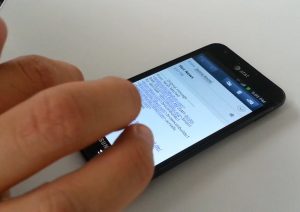
      Security firm Lookout reports that it has a seen a staggering increase in the number of NotCompatible detections this week. While not a new threat (it first appeared last May), the remote proxy malware has moved on from infecting Android devices through hacked websites and is now spreading via email spam.

      Once installed, NotCompatible turns the infected phone into a proxy which is used to commit online fraud, such as through the purchase of concert tickets.

      In the past five days alone Lookout says it has detected more than 70,000 infections, peaking at almost 20,000 detections per day between Sunday and Monday, with 95 percent of them located in the US.

      The threat is currently being spread from hacked email accounts. It tricks unwary users into clicking a link on their phones which redirects the browser to an “Android Security site” that then attempts to download and install the malware. The emails to avoid mostly have the subject line “Hot News”, although I received one from a friend’s hacked account yesterday that was headed simply “Hey!”

      If you open the link on a computer or iOS device, as I did (in a controlled experiment), you’ll be taken to a fake Fox News article on weight loss.

      To avoid becoming infected, just employ the same commonsense you would when opening an email on your computer. Don’t click any unfamiliar links and don’t open any downloaded files unless you know exactly what they are. You can of course install an antimalware tool on your mobile if you want to be extra safe.

      Photo credit: Lookout

    • Samsung Galaxy S 4′s Quad-Core/Octa-Core Chipsets Are Focused On Efficiency And LTE

      gs4

      Much about the Galaxy S 4, Samsung’s new flagship smartphone, is the company remixing its Galaxy S III formula — with no big changes to the design or UI look and feel, and new software features such as face tracking additions like Smart Scroll and Smart Pause that add to and build on what came before. On the hardware side Samsung is also following its prior pattern, putting different chipsets in the U.S. and international versions of the phone as it did with the S III. So while the U.S. S 4 has a 1.9GHz quad-core chip, the international version gets a 1.6GHz octa-core chip.

      Samsung did not confirm exactly what the U.S. chipset is at yesterday’s launch, but the word on the street is it’s Qualcomm’s Snapdragon 600. The international S 4 chipset, however, is apparently Samsung’s own Exynos 5 chip, which is built on ARM’s big.LITTLE architecture — so what you’re really getting is a quad-core phone with two clusters of four chips that it switches between, depending on how taxing whatever you’re asking it to do is.

      Octa-Cores vs Eight Cores

      “It isn’t an eight-core chip in the traditional sense of eight cores — it’s not like the same jump from dual-core to quad-core,” says Nick Dillon, analyst at Ovum. “The lower powered cores run when it’s just idling in the background and then when you need the full power it kind of clicks over to the other one.”

      So this is not a case of the U.S. getting shortchanged on S 4 cores, rather it’s just two different approaches to achieving similar power-plus-efficiency ends — all the more important for a phone with such a big screen (pushed up to a full ‘phablet’ 5 inches from the S III’s slightly more modest 4.8-inch pane).

      “I guess somebody like Qualcomm would probably argue they don’t need to have that complexity [of octa-cores] because what they’re able to is dial down the power of their main chip to a lower power when it just needs to idle,” Dillon adds. “They can adjust the clockspeed and the power that goes into them on the fly so they really don’t need this compromise of having four extra chips.”

      Speaking to TechCrunch at the Mobile World Congress tradeshow in Barcelona last month, Qualcomm’s Raj Talluri, SVP of product management, did argue just that — saying the chipmaker is focused on “heterogeneous compute” for the next generation of chipset innovation, or getting the various components to work together better, rather than just sticking in more cores.

      “Clearly we will do the right number of cores to get the right performance but that’s not all we focus on,” Talluri told TechCrunch, pointing to video, audio, camera, LTE, touch input, gestures, different forms of user interface, noise cancelling tech, gaming and more as all areas the chipmaker now has to consider. “If all we had to do was multicore my job would be very easy.”

      So which approach is best? Four big cores that can act like they’re little or a pair of big and small quad-cores? At this early point it’s hard to say, until the comprehensive benchmarks and real-world tests start rolling in.

      “Whether [Samsung’s octa-core chip is] actually going to bring any real world benefit in terms of top end speed or in fact battery life… we’ll have to see,” says Dillon, adding: “This is the  first device with the chip in it — the first phone at least.”

      Of course, from a spec sheet point of view, Samsung’s octa-core boast might garner a little more attention than the quad-core label. ”From a marketing point of view, it obviously sounds impressive,” adds Dillon. “It’s still a specs race at the top end. You’ve got to have the fastest process so if you’re able, through your own technology, to include what looks like an even better processor — on paper at least — then you’ve got to.”

      But marketing vanity metrics won’t win you long term customer loyalty if the overall experience is poor. And while mobile apps that truly tax multicore chips remain thin on the ground, every mobile user knows what it’s like to run out of juice — hence both Samsung and Qualcomm are focusing on making less wasteful use of all that power sitting in our pockets.

      LTE

      Why can’t Samsung just stick its own Exynos chip across the board in the S 4? The answer is likely to be LTE/4G — underlining once again how Qualcomm’s decision to wrong-foot the competition by moving quickly on LTE continues to pay off for mobile’s No. 1 chipset maker.

      “Samsung is not as advanced in terms of their LTE modem development as Qualcomm are, who are by far the leaders in that space,” notes Dillon.

      IHS Screen Digest analyst Ian Fogg also explains the chip variation between geographies as “almost certainly” down to “LTE maturity in terms of bands available” — since the processor is integrated with the LTE hardware (and different LTE bands are in use in different parts of the world).

      While Samsung have now got LTE connectivity in their own modem, it’s likely they don’t have support for commonly used bands in the U.S. such as 700Mhz, says Dillon.

      “Maybe they’ve had to fall back on Qualcomm to provide that variant, that connectivity in that market,” he adds. “You imagine that if that capability was there they’d stick their chip in everything.”

      Quad-Core Apps

      What about apps? Is there much making use of quad-cores at this point? ”It’s hard to tell whether Samsung are making the most of all this extra power,” concedes Dillon. Many of the Samsung software additions to the S 4 are focused on the camera, with apps like dual record and dual shoot, but such apps are likely to be able to lean on dedicated image processing hardware to do the grunt work, rather than requiring massively multicore processors.

      “We’ve kind of got to the point where most dual-core chips and definitely quad-cores, there’s nothing really that pushes the limits of them,” adds Dillon. “There are a few very specific applications — some augmented reality stuff for example is pushing the boundary but the majority of what you’re doing on most phones, switching between apps, general usage, you’re not going to see any difference.

      “So I think the focus has shifted somewhat to power efficiency and battery life — which is where the whole big.LITTLE thing comes in. Having the high power but also using less power meaning you can actually make it through the day on a charge — which is a real issue.”

      The multicore race for mobiles may not quite be over — at least not on the marketing front — but it looks like a war of diminishing returns at this point. “I think it will be of reducing interest for consumers,” concludes Dillon. “I don’t think consumers will see a direct benefit from it. Never mind looking on paper but in terms of reality — having a quad-core over an eight core, whether you’ll actually see any difference between those is debatable.”

      It’s pretty much the same point Qualcomm’s Talluri made last month, when asked whether phones actually need eight cores: “We definitely haven’t said eight cores, we said we have four good ones,” he told TechCrunch.

      But Talluri did point to some apps — such as video games and a video editing application Qualcomm was demoing at MWC — as examples of software that is beginning to tax quad-core hardware.

      He also suggested video is are an area where quad-core chips have the potential to support new types of (disruptive) experiences and applications. “Slowly applications are catching up to using multicore,” he said. “We have very nice video editor application – the first real quad core application I think that’s not a gaming or a browser. And you can see as you plug in more cores the performance is better.”

    • Buy An HTC One, Get $100 Visa Gift Card Deal Extended Through April 4

      HTC One

      HTC is wanting the launch of their One smartphone to be a success and has extended a special deal through April 4. For consumers in the market for a new phone, when you sign up online and buy the HTC One, you’ll receive a $100 Visa pre-paid gift card in the mail. To fully qualify, you’re required to send in your old smartphone and proof of One purchase. HTC doesn’t say how long it’ll take for the gift card to arrive, but you can likely expect at least several weeks after mailing your old phone and proof of purchase. Does this deal entice you to buy the new HTC One or are you more interested in another phone?

      Come comment on this article: Buy An HTC One, Get $100 Visa Gift Card Deal Extended Through April 4

    • Data Can Open College Doors for Disadvantaged Kids

      A revolution in information technology has transformed businesses around the globe over the past two decades. More recently, companies have discovered that technology-enabled data is an underappreciated but highly valuable asset.

      A parallel transformation is now taking hold in the nonprofit sector. In fact, our research shows that the fastest-growing organizations are making serious efforts to track their results and learn from them. It’s an essential ingredient of scaling the impact of any venture — all the more so for social ventures where access to a decent education, basic healthcare, or clean water may be at stake.

      College Summit, a nonprofit that helps increase college enrollment and persistence rates among low-income high school graduates, is a case in point. (College Summit is a previous client of my organization). Data collection and analysis is built into the organization’s DNA. And innovative technology soon will extend its reach without increasing its size.

      College Summit partners with 180 high schools in 12 states and serve upwards of 50,000 low-income students in their quest for a college education. The organization offers a post-secondary planning course for ninth- and tenth-graders and guides juniors and seniors through the college selection and application process. It also provides teachers with annual training academies and onsite coaching. Just as importantly, College Summit seeks to create a college-going culture by recruiting and training “peer influencers,” seniors others kids look up to and who mentor classmates.

      Numerous programs aim to boost college enrollment among low-income high school grads but what sets College Summit apart is its relentless pursuit of data to inform and guide its work. The organization’s data gathering system, developed by corporate supporter Deloitte, generates weekly reports at the school and district level. The reports track, for example, how many ninth graders have developed a postsecondary plan, which steers them to sign up for courses required for college admission. Among seniors, the system tabulates how many have written an admission essay, where they have applied, and how many have filled out the federal financial support application.

      The data in these reports give principals and teachers the ability to track individual students’ progress. “The reports help schools focus scarce resources on the students who need it most,” says J.B. Schramm, College Summit’s founder and CEO. “Those who are falling behind get extra attention.”

      But data collection doesn’t stop at the schoolhouse door. Ultimately, College Summit wants to measure its long-term impact. That means tracking students’ experience in college. Gathering that data proved to be a major challenge. It isn’t easy to follow students once they’ve left the program and to extract data from multiple colleges and universities. But it’s worth the effort. In a 2010 nationwide survey by Deloitte, 92% of high school principals and teachers said that having data on students’ academic performance in college was critical to evaluating the effectiveness of high school curriculum and teaching. But only 13% said they actually receive such information.

      At College Summit high schools, educators now get reports showing where students enroll, the credits they earn, and the remedial courses they take. Educators use the information to make curriculum changes and improve future graduates’ chances of college success.

      College Summit’s experience with postsecondary student performance data played a role in building congressional support for statewide data collection programs. In three separate acts since 2007, Congress has authorized funds to help states development postsecondary outcomes data for all high school graduates. As a result, all 50 states have committed to producing these reports and sharing them with educators and parents.

      If data has been the story of College Summit’s early success, technology is poised to write a new chapter. After nearly two decades of successful program replication, “we reach only a small portion of the total demand among low-income students,” says Schramm. As a result, College Summit began to question how it could scale its impact without increasing its size. “Our model has been all about young people taking charge and making decisions,” says Schramm. “So the question became, how can we take that model and scale it up?”

      The answer: Facebook. Next fall, in collaboration with the Bill & Melinda Gates Foundation and Facebook, College Summit will launch 20 free, custom-designed apps on the social networking site that will help guide low-income students through college admission and on-campus success while providing students a platform for building supportive online peer groups. College Summit secured a $2.5 million grant from the Gates Foundation to support the app development project, called the College Knowledge Challenge. It kicked off last fall with two hackathons that attracted 160 app developers. From those, 20 winners have been funded to develop their projects — everything from an app that provides automated alerts for important deadlines, to one that guides students seeking to transfer from community college to a four-year university, to another that forms “personal success teams” to help students through critical steps in college preparation.

      Schramm acknowledges that apps alone are no substitute for a supportive home and school environment. But for students who don’t have the benefit of such support, the apps may provide a much needed lifeline.

      What data did to propel College Summit’s success to date, technology is poised to do for its future. The lesson here is clear. Together, data and technology put measuring and expanding social impact within reach as never before. It’s a lesson in the power of investing in “good overhead” that too few organizations — and their funders — take to heart. Yet it is at the very heart of tackling the world’s thorniest problems and winning.

      Please join the conversation and check back for regular updates. Follow the Scaling Social Impact insight center on Twitter @ScalingSocial and give us feedback.

    • Blackberry introduces its topnotch security software to Android

      blackberry


      Those of you who are looking to get a more secure device can look forward to something new and exciting from Blackberry. It has announced that it plans on bringing its Secure Work Space for Android devices in June, which should bode well for those of you who happen to hear about a little something called Samsung Knox, but want to stay with your existing smartphones. In case you’re not familiar, Secure Work Space is a security solution that allows enterprise customers to separate and secure both work and personal data on employee smartphones— effectively creating a work profile completely independent of a personal profile that’s all on one device. The great thing is that the product is completely managed by BlackBerry Enterprise Service 10, which frees users from the need of having to use separate phones or complicated virtual networks. No word on the cost yet, but further details will probably be out before you know it.

      source: AllThingsD

      Come comment on this article: Blackberry introduces its topnotch security software to Android

    • Scientists Outfit A Drone With A Claw, Because Why Not?

      Drones are not exactly frightening. The little quadcopters that we’ve seen delivering pizza and tacos are actually kind of cute as far as heartless robots go.

      Well, those cute little quadcopters have not been turned into heartless killers thanks to a simple additions by researchers at University of Pennsylvania’s GRASP Lab. They thought it would be a good idea to attach a claw onto the copter so that it can dive down and grab objects without ever slowing down. The maneuver was inspired by how eagles hunt by diving to grab prey.

      What’s terrifying about this particular robot is that it can grab objects while moving at three meters per second. If it ever becomes big enough, it could pick you up off the ground before you even realize you’ve been captured by the robotic equivalent of a pterodactyl.

      [h/t: NewScientist]

    • Facebook updates their Android app… without using the Play Store

      Facebook_VoIP_Voice_Calling

      We always love updates for our apps, especially when they bring drastic changes for the better. Facebook’s newest update is definitely a big change, but it’s also pretty weird. Instead of getting the prompt to update your app from the Play Store, users are beginning to see a notification from within the Facebook app itself letting you know there’s an update available. The app then updates from within itself, no Play Store required. It’s a weird approach to take, especially for a major application like Facebook. Although, with Google’s foray into the world of social networking and web integration with Google Plus, maybe we shouldn’t be surprised to see Facebook attempt to distance themselves from their competitor’s market.

      As far as the update goes, it’s actually pretty minor. It includes the ability to change profile photos from within the app, and you can now hide and mark postss as spam. It also comes with a new permission to allow the app to auto-update itself. According to Facebook’s support center, that’ll only happen over WiFi, but I’m not sure this is a direction everyone is going to be comfortable with. Anyway, we’d give you a Play Store link in the source and tell you to go download the app, but, uh… I guess that doesn’t work anymore. So let us know in the comments if your Facebook app has become self aware updates itself.

      source: Facebook

      Come comment on this article: Facebook updates their Android app… without using the Play Store

    • Who needs the iPhone 5S? $150 Chinese knockoff running Android now available [video]

      iPhone 5S Android
      The company behind the original “Goophone,” a Chinese iPhone 5 knockoff powered by Android, has beaten Apple (AAPL) to the punch by launching an updated “i5S” version of its smartphone. The handset uses a design that is nearly identical to Apple’s iPhone 5 and it runs a highly customized version of Android 4.1.2 Jelly Bean that has been modified to look and act like iOS. The handset features a 4-inch “oneglass” screen with 854 x 480-pixel resolution, a 1GHz dual-core MediaTek processor, 512MB of RAM and a 5-megapixel camera, and it costs just $150 in China. A hands-on video of the Goophone i5S follows below.

      Continue reading…

    • Save Google Reader Petition Quickly Tops 100,000 Signatures

      Within hours of Google announcing that they would be shutting down Google Reader on July 1st, a handful of petitions popped up that urged the company to reconsider.

      Those petitions included a few on Change.org, a single-serving site called keepgooglereader.com, and even a White House petition on the We The People site. That latter was quickly removed by the administrators before it could garner more than a few hundred signatures. Clearly, telling Google to maintain Google Reader is outside the purview of the Obama administration.

      Out of all the petitions, one has risen above the rest. That particular petition, hosted on Change.org, simply asks Google to Keep Google Reader Running. And in less than two days, that petition has already crossed the 100,000 signature mark. Its next goal is to hit 150,000, which is most definitely achievable considering it’s gaining a hundred or so signatures every few minutes.

      Here’s the full petition:

      Dear Google:

      A few years ago — years, wow — Google Reader was one of my go-to social networks. It was an accidental one. I was using it for its intended purpose — aggregating and reading a lot of web content in one place — but it turns out, a lot of other people were doing the same thing. A lot. Many of which shared interests and when you added the amazing (amazing!) share and comment features, Google Reader blossomed into a wonderful experience for many of us, core to our day-to-day consumption of content online.

      Unfortunately, you decided to kill those “extra” functions. I’m not here to ask you to reverse that (you should, though). In doing so, Google Reader’s day-to-day value declined, and I, like many, ended up using it less often. Instead of hitting the bookmarklet I have on my Chrome install three, four times a day, it’s now a once a day (okay, once every other day more often, recently) experience.

      But it’s still a core part of my Internet use. And of the many, many others who are signed below.

      Our confidence in Google’s other products — Gmail, YouTube, and yes, even Plus — requires that we trust you in respecting how and why we use your other products. This isn’t just about our data in Reader. This is about us using your product because we love it, because it makes our lives better, and because we trust you not to nuke it.

      Oh.

      So, please don’t destroy that trust. You’re a huge corporation, with a market cap which rivals the GDP of nations. You’re able to dedicate 20% of your time to products which may never seen the light of day. You experiment in self-driving cars and really cool eyewear which we trust (trust!) you’ll use in a manner respectful to our needs, interests, etc.

      Show us you care.

      Don’t kill Google Reader.

      So it’s obvious that plenty of people are upset about Google’s decision. Although Google cited a decline in usage as the motivation behind canning Reader, the product clearly has a loyal and substantial following.

      But will this incredible show of support for Google Reader make any difference? I wouldn’t hold my breath. Google has killed 70 products or features since instituting “spring cleaning” back in 2011, and Google Reader is simply one of those layers of fat that needs to be trimmed, in Google’s eyes. Google admitted that the decision was a tough one, but in the end they need to do this in order to focus on other, newer and more innovative products as not the “spread themselves too thin.”

      And that very well mean sending resources to work on Google+.

      If Google decides to go through with the kill, which it probably will, where does that leave RSS readers? Alternatives already exists, such as Feedly or Newsblur. You can bet that there will be a race to fill the massive void left by Google Reader’s departure. Take for instance Digg, who announced yesterday that they were prioritizing plans to build their own reader that will serve as a replacement for Google’s – API and all.

      So, a hundred thousand signatures in less-than 48 hours is a big deal. Hell, it’s a landslide of support for Google Reader. Unfortunately for the signers, Change.org is not the We The People site and Google isn’t the White House. 100,000 signatures does not force Google to respond. But I wouldn’t use that as a reason to stop spreading the word.

      Stranger things have happened.

    • Kate Middleton’s Nose Becoming Popular For Plastic Surgery

      Many women dream of someday becoming a princess. While only a select few women will get to live out that fantasy in reality, many more will do just about anything to get close to that dream.

      The New York Daily News this week reported that women in New York are now requesting that plastic surgeons change their nose to match the one seen on Kate Middleton‘s face. Evidently, some women have become obsessed by the Duchess of Cambridge’s schnoz.

      A plastic surgeon in New York interviewed by the Daily News stated that he had already created 100 Kate Middleton noses for women. The women in the article referred to the duchess’ nose as “adorable,” “perky,” and “feminine.” One woman noted that she liked the way the bridge on Middleton’s nose “swoops” and how its tip “doesn’t fall when she smiles.”

      This isn’t the first trend for rhinoplasty, and it won’t be the last. Before the duchess’ nose became popular patients were often requesting actress Jennifer Aniston’s. Before Aniston, Nicole Kidman’s thinly-sculpted nose was awkwardly placed upon the faces of many women, so perhaps Middleton’s normal-looking nose is a step in the right direction.

    • Samsung Game Pad Accessory Hints At 6.3″ Galaxy Note III

      Samsung Game Pad

      Last night’s Samsung Unpacked event unveiled the Galaxy S 4 and one accessory, the Game Pad, caught gamers’ interest. Looking very reminiscent of an Xbox 360 controller, the Game Pad can attach to the S 4 for better game play on the phone’s 5-inch 1080p HD display. What’s particularly interesting though is that it works with devices up to 6.3 inches. If you’ve been following news around the Galaxy Note III, you’ll remember that it’s rumored to have a 6.3 inch Full HD display. We’re still months away from hearing anything concrete about the Note III, but in the meantime, you can check out the video below of the Samsung Game Pad in action.

      Click here to view the embedded video.

      Source: Samsung

      Come comment on this article: Samsung Game Pad Accessory Hints At 6.3″ Galaxy Note III

    • Mozilla Under Attack By Ad Industry For Planning To Block Cookies By Default In Firefox

      Over the past few years, Mozilla has emerged as a company dedicated to the privacy of its users. It’s going to take that to the next level with Firefox 22 as the browser will start blocking cookies by default. The ad industry isn’t particularly happy about it.

      The Interactive Advertising Bureau sent out a press release this week claiming that Mozilla is “undermining American small business” by choosing to block cookies by default. The group says that the makers of Firefox are also undermining consumer choice by automatically blocking cookies, instead of giving users a choice.

      “Thousands of small businesses that make up the diversity of content and services online will be forced to close their doors,” said Randall Rothenberg, President and CEO, IAB. “This move will not put the interest of users first. Nor does it promote transparency or ‘move the web forward’ as Mozilla claims in its announcement. It will not advance Mozilla Corporation’s objective, as stated in its bylaws, of ‘promoting choice and innovation on the internet,’ but will, instead, impede both.”

      As Consumer Affairs points out, Firefox isn’t the first browser to block third-party cookies by default. Apple’s Safari has been doing it for quite a while as well. It’s also not like Mozilla will be blocking all cookies anyway. It will only be blocking cookies from Web sites that users don’t frequently visit. What that means is a user’s one time visit to a blog covering the world of decorative dog sweaters won’t see any tracking cookies installed on their browser.

      This isn’t the first or last time that advertisers will be upset with browser makers over controversial pro-privacy practices. Microsoft was caught in the middle of a controversy last year over its decision to make Do Not Track the default option in Internet Explorer 10. That decision has yet to break the Web or online advertisers, and Mozilla’s move will probably not affect much either.

      That being said, advertising has a valid purpose on the Internet, and shouldn’t be blocked just because. Many of the things we enjoy for free are paid for with advertising. That’s why there needs to be choice in the matter, and Mozilla will hopefully make that choice clear when it starts to block third-party cookies by default later this year.

    • Straightforward Disk Cleaning Freebie

      There is definitely no shortage of Windows applications created especially for the purpose of cleaning the operating system of clutter and thus claim more free space.

      BleachBit is also part of this category, but a tad different from the popular programs you might be accustomed to. This is mostly because of its minimalist interface, but the fact that it is straight… (read more)

    • Amazon Publishing launches literary fiction imprint, Little A

      Amazon Publishing is launching a new imprint, called Little A, that will publish literary fiction — novels and collections of stories — and memoir.

      Little A joins Amazon’s six other imprints, which focus on genres like romance and science fiction. Until now, literary fiction had been published under the general Amazon Publishing division in New York, and Little A will be part of that division.

      Upcoming titles from Little A will include James Franco’s novel Actors Anonymous — which Larry Kirshbaum signed back in 2011, and which will be published this October — among others. A digital-only series called Day One will focus on “short stories from debut writers”; those will be for sale in the Kindle Singles store.

      As with other titles from Amazon’s New York division, Houghton Mifflin Harcourt’s New Harvest imprint will distribute print versions of Little A titles.

      Here’s the full mini-announcement:

      “Little A is a literary fiction imprint under the Amazon Publishing Group, publishing novels, memoirs and story collections. The first titles to be published under Little A are A.L. Kennedy’s The Blue Book (on sale now), an intricate, heartbreaking story of psychics and cruise ships by the dazzling U.K. author; Jake Arnott’s The House of Rumour (on sale 3/19/13), which weaves the secret histories of science fiction and espionage into a modern classic; Jenny Davidson’s The Magic Circle (on sale 3/26/13), a literary thriller about the culture of gaming; and Shawn Vestal’ s Godforsaken Idaho (on sale 4/2/13), stories of the afterlife, the rugged Northwest, and the early days of Mormonism by a ferociously imaginative new writer. Other 2013 Little A titles will include Dan Kennedy’s American Spirit (on sale 5/28/13), Allison Lynn’s The Exiles (on sale 7/2/13), and James Franco’s Actors Anonymous (on sale 10/15/13).

      Day One is a digital-only series within Little A that is focused on short stories from debut writers and is available in North America and in the U.K. The first title, Kodi Scheer’s, haunting, fabulist “When a Camel Breaks Your Heart” was released on February 5, 2013. On March 19, Day One will release “Monster” by McSweeney’s contributor Bridget Clerkin, in which a woman struggles to keep her dysfunctional family together amid unsettling events–the family dog goes missing and an unidentified, mysterious animal corpse washes up on the beach.”

      Related research and analysis from GigaOM Pro:
      Subscriber content. Sign up for a free trial.

    • Transforming a Company Is Daunting, But You Can Prepare for It

      There’s no harder job for a corporate leader than transformation. One key to success is recognizing that transforming a business involves three activities:

      • Transforming the core business to maximize its resilience (“Transformation A”)
      • Creating a disruptive growth engine (“Transformation B”)
      • Building a mechanism to share capabilities between the two (“Capabilities Exchange”)

      Those three activities (detailed in an article Gilbert co-authored in December’s Harvard Business Review based on his experience transforming Desert News and Deseret Digital, Utah-based media organizations) don’t happen accidentally. Instead, they require careful, consistent leadership. We suggest leaders that leaders looking to drive corporate transformation remember the “Four P’s” of Transformation.

      1. Purpose. Transformation is hard work. On bad days, you will have to deal with stark realities. You may need to cut the core (Gilbert cut 42 percent of newspaper staff in August 2010) or lead a large course-correction in new growth efforts. Naysayers will argue it’s simply easier to sell off or shut down the “legacy business.” But not only are legacy businesses important, they have critical capabilities that, when shared, provide advantages for new growth efforts.

      A clarifying purpose — a guiding mission that’s larger than financial returns — provides a reason to pursue both Transformation A and B. Part of that purpose should be a story. What could the organization look like post-transition? Deseret News’ orientation around faith, family, and education gave the organization fortitude to make tough changes and increase long-term sustainability.

      2. People. There are plenty of axioms suggesting the importance of people in change efforts. The challenge is that the right people might not be who you think, particularly for new business efforts. Your best people will want to participate in Transformation B. You will be tempted to let them. Don’t. Those people have developed skills and mindsets appropriate for yesterday’s business, not tomorrow’s.

      Instead, field a talented team that has honed their skills in the closest comparable business to your new venture. For Gilbert, that meant attracting people who had worked at pure-play Internet companies like Yahoo!, Omniture, and Demand Media to create Deseret’s digital growth business.

      3. Paradox. Focus on efficiency and growth. Leverage capabilities and walk away from them. These are just two of seemingly paradoxical demands facing leaders driving transformation. Since dealing with paradox doesn’t come naturally to most, minimize the number of people who have to straddle two sometimes inconsistent paths. This will be a challenge because your management team is used to being involved in strategic decisions. They still will be — for either kind of transformation, but not for both. That is a job for the CEO, a handful of trusted executives and select Board members.

      4. Persistence. Transformation doesn’t happen overnight. Historical success stories like Apple and IBM had their dark days; other case examples in the HBR article like Xerox and Barnes and Nobles did (and do) too. Leaders need to stand fast in the face of these challenges, going beyond consistently exhorting the organization to work harder. Leaders need to push for, and celebrate, small wins that reaffirm progress.

      Leading transformation sounds daunting. Leaders starting this journey need to ensure the time is right. All organizations transform eventually, but be wary of conducting the corporate equivalent of highly invasive heart surgery prematurely. Use your Board and personal network to build a coalition of advisors that can bring vital outside perspective, and don’t go it alone.

      If transformation is on the horizon, train yourself for the ambiguity that will characterize your effort. Ensure your network has artists, entrepreneurs, and others who live lives fraught with uncertainty. Seek out opportunities outside of work characterized by ambiguity. As the old saying goes, fortune favors the prepared mind.