Category: News

  • Germany may slash solar subsidies by 17%, stock prices drop around the world

    solar_money_houseEven though Germany gets about as much sun as the average town in Alaska, it’s the world’s leader in the solar power industry. Why? Extensive and effective government subsidies. Today, it looks like subsidies will shrink 16 to 17 percent starting in April, with further cuts coming next year. Solar stocks all over the world have plunged in response to the news, providing a bittersweet opportunity for investors.

    Subsidy cuts have been a long time coming in Germany, where the solar market is so saturated that equipment and component prices have dropped off a cliff. The same problem has been observed in Spain, where the government is also very supportive of the sector — it might very well follow Germany’s lead in scaling back. Now that the two countries have established dominance in solar, it seems like the time is ripe to ease off and let prices go back up. Sources say legislation is in the hopper but no official government announcements have been made by either to this effect.

    France has actually beaten everyone to the punch, announcing a 24 percent reduction in solar subsidies. This won’t have much of an effect on its own, with the country cornering just 3 percent of the market. It will also be lowering its feed-in tariff to defuse a potential solar bubble.

    Regardless of its long-term impact, the decision to cut subsidies for rooftop and open-field panels has darkened the day for public solar companies across the board. San Jose, Calif.-based SunPower’s stock is down 4.4 percent and First Solar’s is down 5.5 percent. China’s solar giants were also hard hit, with Trina Solar’s share price falling 11.5 percent and Suntech Power Holdings seeing its drop 8.5 percent.

    This seems gloomy, but there’s a silver lining for solar investors. Those that missed out on getting in on the ground level, especially when it comes to the Chinese companies, may get another shot at it before it inevitably heads back up. In fact, this could be really good news for solar companies in China and the U.S. where subsidies and renewable energy quotas are just starting to kick in.

    First Solar’s performance today already foreshadows a rebound (although there’s no telling what will happen when the subsidy cuts actually happen). It acquired a number of solar projects being developed by Edison Mission Group, a subsidiary of Edison International, for an undisclosed amount. Even though the Tempe, Ariz.-based company made 60 to 70 percent of its revenue in Germany last year — and even has its own manufacturing site there — it so far seems unfazed by the impending changes.


    Buy This Item: [Click here to buy this item]

    Read Original Article

  • Court Report: Wait ’til next season

    Blake Griffin’s(notes) debut has been postponed until at least next season, and Brandon Roy’s(notes) hammy could need some rest.

    • Blake Griffin’s season is officially over (not that it ever officially started). He experienced pain in his knee soon after ramping up his rehabilitation to include activities like jumping in a pool, so he’s been shut down and will undergo surgery. The expected rehabilitation period is four to six months, which should leave him plenty of time to be ready for the 2010-11 season. The unsuccessful attempt to avoid surgery (Mike Dunleavy called the effort a calculated risk) is another knock on his long-term fantasy potential. His college game was almost completely dependant on explosive athleticism, and he never was a player that projected to accumulate many steals-plus-blocks, make more than 60% of his free throws, or help anyone in terms of assists-to-turnovers. Captain Obvious thinks that Griffin and Greg Oden’s(notes) recoveries and off-season regimens will be heavily scrutinized.

    Knowing that Griffin isn’t coming back could mean that the Clippers don’t move Marcus Camby(notes) at the trade deadline, having no other everyday option at power forward. Camby is in the midst of another monster season, with a current per-game rank of 13th thanks to averages that include 11.7 boards, 3.2 assists, 1.1 turnovers, 1.2 steals, and 2.1 blocks. … Chris Kaman(notes) has missed the past two games because of a bad back, but is feeling better and an MRI showed nothing of consequence. He said he may be able to go Friday, but that "could be optimism." I’ve been saying since early in the season that 37 minutes per game are too many for Kaman’s body to handle, and you only need to look at his history to come to that conclusion. DeAndre Jordan(notes) has started the past two games (averages 15 points, 7 boards, 1.5 blocks in 29 minutes) in Kaman’s absence and would be the clear beneficiary if Kaman ends up with significant health issues. Jordan (20 minutes, 7 points, 7 boards) lost time to Brian Skinner(notes) (19 minutes, 14 points 2 boards) Wednesday, but there aren’t many good reasons for that to become a trend.

    • Brandon Roy is "concerned" about a right hamstring strain that "could be serious." Plenty of ominous quotes here, with the most troubling aspect being that this is an injury that has never fully recovered from last season. To summarize: he aggravated the injury on Jan. 2 and it’s been bothering him since, and it really tightened up on him during Wednesday’s blowout of the Bucks, during which he played 27 minutes. A Thursday MRI confirmed the strain and he’s currently questionable for Friday. Fantasy owners shouldn’t be surprised if Roy gets a few games off and deep-leaguers should make a quick check of Jerryd Bayless’(notes) availability, although Rudy Fernandez’s(notes) return muddies the backcourt roles in Portland.

    Tim Duncan(notes) got the night off Wednesday and will continue to sit out
    parts of back-to-backs as the season progresses, according to Gregg
    Popovich. Duncan figures to be active for both of the Spurs’ games this weekend, and the team only has one back-to-back in February, but then it will get interesting. The Spurs have five back-to-backs in March and two in April,
    so you have to expect those DNP-CDs to be a potential factor in h2h
    playoff matchups. … DeJuan Blair(notes) went off in Duncan’s absence
    Wednesday, scoring 28 points and adding 21 boards, two steals, and two
    blocks in 31 minutes before fouling out. Blair’s per-31 minute averages
    on the season include 13.2 points, 10.9 boards, 0.9 steals, 1.1 blocks,
    and 4.8 fouls.

    Kobe Bryant’s(notes) back spasms kept him out of the entire second quarter
    Wednesday, but he then went on to play all 24 minutes of the second
    half. Bryant took just 11 shots and no free throws in the 100-95 win
    over the Mavericks, after encouraging his teammates to be more agressive earlier in the day. 

    • So much for Dwyane Wade’s(notes) sore wrist. He scored 35 points on 10-of-15 shooting and made all 15 of his free throws in the 115-102 win over the Warriors on Wednesday. 

    Jameer Nelson(notes) says his left knee isn’t close to 100 percent and the numbers back it up. In 12 games since returning, Nelson has averaged 9.8 points on 38-percent shooting, 1.1 threes, 4.3 assists, 1.7 turnovers, and 0.5 steals in 27 minutes. He’s still dealing with soreness and occasional swelling, but he’s currently considered healthy enough to play through the issues.

    Josh Howard(notes) (finally) replaced Jose Juan Barea(notes) in the starting lineup for the Mavs, scoring 18 points and adding three treys, five boards, three assists, one steal, and one block in 36 minutes during the loss to the Lakers.

    Jodie Meeks(notes) set season-highs for minutes (31) and points (21) Wednesday, the second game for the post-Redd Bucks. He also added three treys, four boards, and a steal, and should be given plenty of chances to assert himself in the Bucks’ rotation moving forward. Deep-leaguers in need of offense should consider an add here. 

    Here’s the current top 10 in the Curry Line standings ((AST+STL+BLK)/TO): 1. Chris Paul(notes) (6.14), 2. Marcus Camby (5.90), 3. Ronnie Brewer(notes) (5.19), 4. Jason Kidd(notes) (4.92), 5. Ben Wallace(notes) (4.74), 6. C.J. Watson(notes) (4.50). 7. Mike Bibby(notes) (4.49), 8. Jose Calderon(notes) (4.45), 9. Chris Duhon(notes) (4.27), 10. Rajon Rondo(notes) (4.26)

    And the bottom 10: 1. Tyson Chandler(notes) (0.89), 2. Amar’e Stoudemire(notes) (0.99), 3. Jonas Jerebko(notes) (1.20), 4. Carl Landry(notes) (1.23), 5. Udonis Haslem(notes) (1.26), 6. Kendrick Perkins(notes) (1.30), 7. Corey Maggette(notes) (1.30), 8. Chris Kaman (1.33), 9. Kevin Durant(notes) (1.37), 10. Al Harrington(notes) (1.42)

    Friday status quick hitters: Pau Gasol(notes) will practice Thursday and is expected to play. … Kevin Martin(notes) practiced Wednesday and is "very likely" to play. … Vince Carter(notes) remains day-to-day with a sprained left shoulder and his availability is not yet known. … Both Ben Gordon(notes) and Tayshaun Prince(notes) will have their status’ updated on Friday. … Mike Miller(notes) is doubtful

    Photos via Getty Images

  • Haiti Earthquake Relief

    If you are interested in donating to a charity that is helping with the Haiti Earthquake Relief efforts, you might try one of these:

    Mercy Corps

    Mercy Corps

    Doctors Without Borders

    Doctors Without Borders

    American Red Cross

    American Red Cross

  • Ricky Gervais Leaves Twitter

    Ricky Gervais has called it quits with social networking juggarnaut Twitter.com after less than a month online – calling the popular microblogging hub “undignified” and “pointless.”

    The British comic — whose success across the pond inspired the NBC comedy The Office – opened an account on the social networking site last month to promote his hosting gig at this weekend’s 2010 Golden Globe Awards. However, Gervais ditched the site last week. Ricky says he was unimpressed with how other celebrities who use the service and has banned it only suitable for people under 18!

    In a post on his personal blog, Ricky writes: “As you may know I’ve stopped with Twitter. I just don’t get it I’m afraid. I’m sure it’s fun as a networking device for teenagers but there’s something a bit undignified about adults using it. Particularly celebrities who seem to be showing off by talking to each other in public. If I want to tell a friend, famous or otherwise what I had to eat this morning, I’ll text them. And since I don’t need to make new virtual friends, it seemed a bit pointless to be honest….”


  • Facebook Blocks Defriender, App for Tracking Friend Removals

    An iPhone application released this week from a company called i-Doodz tracks those who have “defriended” you on the social networking site Facebook. Defriended, as the app is called, takes its name from the slang word that means “to remove from one’s list of friends (e.g. on a social networking site)”, according to Wikitionary, an open content dictionary that operates like Wikipedia for words.

    The Defriended app gives you an easy way to track these defriending events since Facebook itself doesn’t provide this feature – or at least that’s what the app did until Facebook blocked its operation. Apparently, the social network thinks defriending should be a private matter. As of now, the app is no longer available for download in the App Store.

    Sponsor

    The way Defriended works – or rather, the way it used to work – was simple. Each time you launched the app, it would scan your Facebook friend list and compare that scan to the previous one. Any friends that went missing between scans were listed.

    Unfortunately, the little side project created by an i-Doodz developer was in violation of Facebook’s platform developer agreement. In section 2, Facebook warns developers that they may not circumvent the company’s “intended limitations” on core Facebook features. Specifically, it reads: “you must not notify a user that someone has removed the user as a friend.” In other words, Facebook doesn’t want you to know who doesn’t want to be your friend.

    Today, a message on the i-Doodz site states:

    Last week our developer was bored one evening, had an idea, and a few hours later uploaded the "defriended" iPhone app. it unexpectedly got a lot of attention, then subsequently Facebook blocked the app, causing it to stop working. We will be looking at how feasible it is to make the app work without a corresponding facebook app, but in the meantime if you’ve bought the app you should ask apple for a refund – and please do…we don’t really want to get money for an app you paid for and that doesn’t work. We apologise for the inconvenience.

    Tracking Defriending Events – A Bad Idea

    We suppose that if you were notified every time someone removed you as a friend, you might get angry or hurt – feelings Facebook wouldn’t want you to associate with their site. After all, social networking is supposed to be about making connections, not ending them… or is it? Even worse, you might contact the person doing the defriending and ask them, “Why?” This may force them to re-add you out of social politeness when really they had no longer wanted to retain the connection.

    Although it seems like a petty move to block Defriender from operating, it makes sense. Social networking connections are meant to mirror our real life friendships… at least that’s what Facebook thinks. As two people go their separate ways in life, friendships fade. They’re meant to. Very few people maintain a meaningful relationship with everyone they’ve ever met and became friends with throughout their life. In fact, if you tried to do so, it would be overwhelming. So while it may be nice to catch up with your best friend from junior high or your old college roommate via Facebook, after some time – and very little interaction after the first “How have you been?” – those connections should be able to fade away again… just like they did in real life.

    Even though Facebook doesn’t alert users now when they’ve be defriended, the decision to thin the list is still a bit uncomfortable for some people. What if they notice?! Chances are, if you haven’t communicated with the person in months on end, they won’t. We promise. Still, to avoid the whole messy defriending situation in the first place, the best method is to simply not accept the friend request to begin with. That’s what the “ignore” button is for.

    However, if you slipped up and have contaminated your News Feed with these non-friends, it’s time to remove them. An article in the New York Times from January 2009 suggested that proper Facebook friend etiquette involved culling your friend list once per year to remove “total strangers and other hangers-on.” (We think heavy Facebook users may need to do that a little more often.) The article, an examination of our new social morals, shows how the act of defriending is just as much a part of social networking as the initial friending request is. Tracking these events via an iPhone app or any other service would be an unnecessary – and potentially painful – process. Let’s let the defriending continue quietly… the way it was intended to be.

    (Image credit: geek.com)

    Discuss


  • NBC Announces That “Who Do You Think You Are?” Will Premier March 5

    At last – we have a firm date and details from NBC about the American version of “Who Do You Think You Are?” The program will be part of what NBC calls their “post-Winter Olympics primetime schedule.” Although the series was announced as upcoming in 2008 and 2009, it looks like it’s actually going to happen this time. I saw a trailer for the series when I was at Ancestry.com a few days ago – and I can tell you that the series looks fantastic! Although I’m not a fan of NBC (they seem to have a hard time getting anything right…), this time I believe they’ve backed a winner. Tell your friends – and don’t miss the premiere on March 5. MARK YOUR CALENDAR – RIGHT NOW!

    “Who Do You Think You Are?” premieres Friday, March 5 (8-9 p.m. ET) and gives viewers an up-close and personal look inside the family history of some of today’s most beloved and iconic celebrities. Among the celebrities featured are Matthew Broderick, Lisa Kudrow, Spike Lee, Sarah Jessica Parker, Susan Sarandon, Brooke Shields and Emmitt Smith. Ancestry.com is NBC’s official partner on the series. From executive producer Kudrow (”Friends,” “The Comeback”) – in conjunction with her production company Is or Isn’t Entertainment and the U.K.’s Wall to Wall productions – “Who Do You Think You Are?” is an adaptation of the hit BBC television documentary series created and executive-produced by Alex Graham.

    “Who Do You Think You Are?” is produced by Wall to Wall productions (a Shed Media Company) in association with Is or Isn’t Entertainment. Alex Graham and Lucy Carter from Wall to Wall and Lisa Kudrow, Dan Bucatinsky and Don Roos from Is or Isn’t Entertainment are the executive producers. Bryn Freedman is the co-executive producer.

    FRIDAYS: 8-9 p.m. – “WHO DO YOU THINK YOU ARE?” (premieres March 5) Don’t miss this premiere! This series looks to be an exciting series.

    Thanks to Anastasia Tyler for the heads-up about this news!

  • Detroit 2010: Kia channels its inner tattoo artist with limited-edition Shadow Dragon Soul

    Filed under: , , , , , ,


    2010 Kia Shadow Dragon Soul – Click above for high-res image gallery

    Is the third time really the charm? We’ll leave that up to you as Kia has unveiled its third special edition Soul at the Detroit Auto Show, this time featuring automotive tattoos. The 2010 Kia Shadow Dragon Soul is available now and follows in the footsteps of the Denim and Ignition specials. As the name implies, the Shadow Dragon is done up in a special black color scheme, and it also features a Soul-first leather-trimmed interior and crowd-sourced black dragon graphics (the Korean automaker trolled the Kia forums to determine what type of ink the Soul should wear).

    Besides the matte-on-gloss black graphics, the Shadow Dragon sports blacked-out 18-inch wheels like the ones on the Ignition, glossy accents in the front and rear bumpers, and a unique rear wing. Like the other two Soul specials, the Shadow Dragon starts out as a Soul+ model, so it’s stuffed to the gills with options. It includes the Audio Upgrade Package with its center speaker, subwoofer, external amp and those trick speaker lights that pulse to the beat of the music. There’s also an iPod connector, carpeted floor mats, moonroof, foglights and fender vents with encapsulated side markers.

    On top of that, the Shadow Dragon Soul adds keyless entry, limo tint on the cargo area windows, body-color door handles and power mirrors. That’s in addition to the steering wheel-mounted cruise control, Bluetooth, dual power ports, separate tweeters and usual array of cubbies and lights to make living inside the Dragon a little more hospitable. All of that for just $18,195 with a manual transmission. That strikes us as a modest price but also makes it the most expensive special Soul so far, some $695 dearer than the Ignition. Check out the press release after the jump for even more details.

    [Source: Kia Motors]

    Continue reading Detroit 2010: Kia channels its inner tattoo artist with limited-edition Shadow Dragon Soul

    Detroit 2010: Kia channels its inner tattoo artist with limited-edition Shadow Dragon Soul originally appeared on Autoblog on Thu, 14 Jan 2010 17:29:00 EST. Please see our terms for use of feeds.

    Permalink | Email this | Comments

  • INSIGHT: Micromanaging is something we only accuse

    Micromanaging is something we only accuse other people of. When we do it, it’s “helping” or “clarifying.” Or is it?

  • INSIGHT: Micromanaging is something we only accuse other people of.

    Micromanaging is something we only accuse other people of.

  • SANTIAGO DEL ESTERO – Parque Temático Infantil

    SANTIAGO DEL ESTERO – Parque Temático Infantil

    Quote:

    ADELANTO – Ayer se firmó el contrato de ejecución de la obra
    Cómo será el moderno parque temático infantil de la ciudad

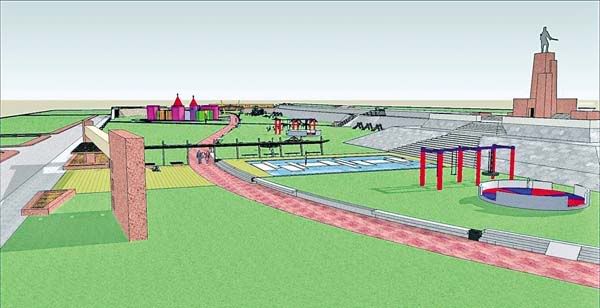
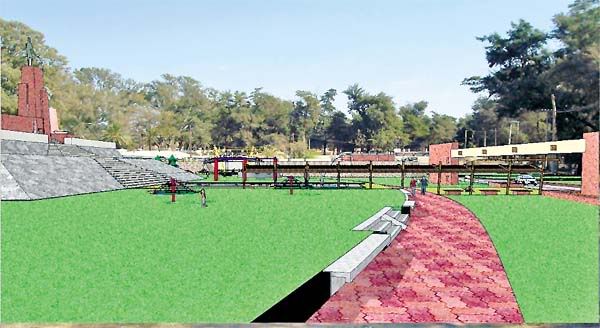
    Ayer por la mañana se firmó en la Municipalidad de la Capital el contrato de ejecución del parque temático infantil que se emplazará en el parque Aguirre, en la zona de Pulgarcito y el viejo piletón, y EL LIBERAL accedió a los diseños en 3D de cómo se verá el nuevo espacio verde.
    La firma para la realización de esta obra que ocupará cinco hectáreas, se realizó en el Salón de Acuerdos de la Municipalidad de la Capital, con la presencia del jefe comunal, Hugo Orlando Infante, acompañado de los secretarios de Obras Públicas y Gobierno, Arq. Carlos Giambroni y Humberto Santillán, respectivamente y de los subsecretarios de Planeamiento y Obras Públicas, Arquitectos Nilda Rodríguez de Mishima y Adrián Agüero Trotta, además del director de Tránsito, Sr. Rubén Suárez.
    Este emprendimiento que tendrá una extensión de 80 metros de ancho por 550 de largo, y estará a cargo de la empresa constructora Lo Bruno Estructuras SA, que en este acto estuvo representada por el Sr. Ricardo Lo Bruno. Como se recordará, hace pocos días comenzaron los trabajos de desmantelamiento de las instalaciones existentes en el perímetro donde se construirá el parque infantil, cuyo presupuesto es superior a los diez millones de pesos.
    El intendente Infante señaló que “será un espacio verde para toda la familia, que tendrá iluminación de última tecnología, tendrá un castillo, un puente y una fuente”.
    El objetivo es terminar la obra antes de fin de año. “La empresa tomó el compromiso de terminar antes de fines de junio, para poder inaugurarla en el marco del aniversario de la ciudad”, adelantó Infante.


    Fuente: Diario El Liberal

  • Intel’s Results Rocked, But It Can’t Count On the Old Guard

    The tech earnings season kicked off with a bang this afternoon, as Intel reported much higher-than-expected fourth-quarter profits of $2.3 billion vs. just $234 million for the comparable period the year before, and revenue of $10.6 billion, up 29 percent. ”Our ability to weather this business cycle demonstrates that microprocessors are indispensable in our modern world,” said President and CEO Paul Otellini. Still, for the decade ahead, Intel can’t count on high PC market growth and other familiar benefactors.

    Among notable results for the company’s various divisions, Data Center Group revenue was up 21 percent year-over-year (there have been predictions that better times lie ahead for companies selling high-margin servers and producing chips for them), and average selling price for chips came in higher as well (so the company is selling more than just low-priced Atom chips). Intel does continue to benefit from growth in netbook sales with its Atom chips, and a possible coming wave of upgrades to Windows 7 at businesses could benefit it as well.

    Nevertheless, as this decade begins, things are different for Intel compared to the start of the previous two. At the onset of the 90s and the Naughts, dramatic growth potential for PCs made it obvious that Intel’s fortunes would rise significantly with them. Although a solid rebound in the PC market helped it in the fourth quarter (keeping in mind that the fourth quarter of 2008 was abysmal for the PC market), the company no longer has the same long-term, PC-driven wind at its back to look forward to for the next decade — and even Intel’s presence inside Apple systems can’t make up for that problem.

    Phones on Fire, PCs — Not So Much

    Researchers at Gartner have just predicted that by 2013, mobile phones will handily outpace PCs as the predominant way for people to interact with the web. Gartner foresees the total number of PCs at 1.78 billion in three years, while the number of smartphones and web-ready phones will sit at 1.82 billion units, with rapid  growth ahead for mobile phones. The trend toward mobile usage will change the whole infrastructure of the web, and web design.

    Meanwhile, despite good notices for its CES demo of the LG GW990 smartphone running Intel’s new Moorestown chip and the Moblin OS, the fact is that Intel, like Microsoft, just doesn’t have enough equity in the rise of smartphones. As ARM CEO Warren East told Computerworld this week:

    “We’ve been saying that the 100 percent share of applications processors in phones that we have can’t continue. We don’t really see Intel making meaningful inroads into it, not for many years, probably never. In order [for device makers] to switch architectures, the Intel product has to be significantly better to outweigh the cost of switching.”

    ARM chips are headed beyond mobile phones and will make it into netbooks, smartbooks, and many new kinds of portable devices, where Qualcomm is becoming an increasingly significant player, in addition to its existing presence in mobile phones. Qualcomm is also leaping past Intel’s 32-nanometer manufacturing technology, and will produce 28-nanometer chips. In phones and in many new types of mobile devices, that advantage could help deliver faster chips that cost less than Intel’s. AMD is behind Intel in 32-nanometer chip manufacturing, giving Intel a short-term advantage, but will catch up next year, increasing competition between the companies.

    In the Crosshairs

    In addition to these issues, Intel is under intense scrutiny for any exclusionary or anti-competitive practices that regulators can dredge up, and is ensconced in a wave of bad PR. Nvidia had to be dancing in the streets as the FTC recently sued Intel, claiming that it abused its market power and cut competitors out of the marketplace. Nvidia wants to make sure vendors can buy and use its Ion processors that accelerate graphics inside netbooks containing Intel’s Atom chips without paying a higher price for the Atom chip.

    The FTC’s move follows a huge fine from Europe last year, and Intel also paid out $1.25 billion last year to settle long-standing disputes over business practices with AMD. The company is even drawing criticism for what many people feel are exclusionary practices toward proposed industry wide-standards such as USB 3.0.  The new standard is much faster than USB 2.0, but Intel has guaranteed its slow adoption by pledging not to support it until next year.  Why would it do that? The answer is that it favors its own LightPeak connectivity technology, which has little industry traction.

    As long-time Intel CEO Andy Grove used to say when the soaring PC market was guaranteeing Intel quarter after quarter of success, “only the paranoid survive.” With mobile phones reshaping tech usage and the web itself, the PC market growing more slowly now, scrutiny from regulators, and more, Intel’s sterling results from today certainly don’t mean the company shouldn’t be paranoid about tomorrow.

    Image courtesy of Intel.

  • “Glee” Matthew Morrison Record Deal

    Matthew Morrison is already dropping hits on FOX’s Glee, and in the fall of 2010, the entertainer is hoping to drop a few of his own when he releases his debut album.

    According to PEOPLE Magazine, the former Broadway star has inked a recording contract with Mercury Records, and will soon begin recording his debut album, set for release this fall. Morrison, who plays Glee club mentor Will Schuester on the hit TV musical, will enter the recording studio shortly to begin production on his album.

    Morrison, 31, performed on Broadway for ten years before nabbing the part of Schuester. The actor is up for a Golden Globe Award as Best Actor for the role.


  • Logroño| Is there a 300 metres tall radio mast?

    According to http://en.wikipedia.org/wiki/Longwave , there is a 300 metres tall radio mast at Logroño, which is used for longwave broadcasting on 207 kHz. As I kno, there is and was never a longwave broadcasting station in Spain although there are some frequiencies coordinated. Does this transmitter really exist or is this a fake!
  • Alaska Pollock Remains Good Seafood Choice Despite Current Challenges

    Today the Monterey Bay Aquarium – with whom Environmental Defense Fund partners on its Seafood Selector – updated its popular Seafood Watch pocket guides. A number of new and revised rankings were part of the update, including the first-ever farmed salmon to reach the ‘Green’ (Best Choice) list.

    Perhaps the most notable new ranking is for Alaska pollock, which was moved from ‘Green’ (Best Choice) to ‘Yellow’ (Good Alternative). If you’ve never heard of pollock, it’s related to cod and is actually the fourth most popular seafood item in America. It’s the whitefish used in fish sticks, fish filet sandwiches, and surimi (imitation crab meat). Pollock is the largest fishery in the United States (and the largest food-fish fishery in the world), with annual catches averaging two billion pounds.

    Some people may interpret the ‘Good Alternative’ ranking to mean that the Alaska pollock is no longer sustainable. Rather, Monterey Bay Aquarium’s new report, which took more than a year to write, highlights some environmental challenges facing the fishery, but ultimately concludes that pollock is still a good choice for both seafood consumers and businesses. (This fact was confirmed yesterday when the pollock fishery was recommended for re-certification to the Marine Stewardship Council).

    Here’s a brief outline of Monterey Bay Aquarium’s findings:

    1. Pollock biology
    The good news: Pollock mature quickly, are short-lived and reproduce often, making them resilient to fishing pressure. Important spawning areas are also off-limits to fishing.

    2. Status of pollock stocks
    The good news: pollock populations are not overfished, and are still considered healthy;
    The bad news: they have steadily declined from all-time highs earlier this decade. The stock is also influenced by changing environmental conditions, and climate change is affecting the Bering Sea faster than many other places on Earth.
    Outlook: Fishing quotas have been reduced in each of the last four years to account for less pollock, and the latest projections show the stock rebounding by 2012.

    3. Bycatch
    The good news: the pollock fishery is one of the ‘cleanest’ – averaging less than 1% bycatch relative to overall catch.
    The bad news: bycatch of chinook salmon – a commercially and culturally important species in coastal Alaskan communities – steadily increased from 2001-2007, peaking at 120,000 fish.
    Outlook: the pollock industry instituted a voluntary bycatch avoidance program in 2008 that helped reduce salmon bycatch by more than 80% in just two years. Additional regulations are scheduled to go into effect in 2011.

    4. Habitat & ecosystem impacts
    The good news: the latest government study concluded that groundfish fisheries (including pollock) have only minimal and temporary impacts on the Bering Sea floor.
    The bad news: the study also showed that midwater pollock trawls contact the bottom more than originally thought (~44% of the time), which reduces sensitive habitat features in parts of the Bering Sea. There are also concerns about the effect of the fishery on Steller sea lions and northern fur seals.
    Outlook: The North Pacific Fishery Management Council has closed sensitive areas to pollock fishing in an effort to protect bottom habitats and important marine mammal sites. Additionally, new science will continue to identify sensitive areas in need of protection.

    5. Management
    The good news: the pollock fishery is managed by one of the strongest catch share management systems in the world. It is well-equipped to tackle conservation challenges quickly and effectively, and features a number of characteristics shared by few others:

    • The pollock fleet regularly catches less than their quota, meaning that in many years, they intentionally leave millions of pounds of fish in the water;
    • The North Pacific Council has set the Total Allowable Catch at or below the levels recommended by its scientific advisory body every year since 1977;
    • Most pollock vessels have 100% observer coverage – which is paid for by industry – minimizing the government’s cost to effectively manage this fishery;
    • The cooperative nature of the pollock fleet means they can share information and respond to environmental issues – such as salmon bycatch – in real-time (as opposed to the slower nature of the Council process);
    • The pollock management plan features a number of protections for the marine ecosystem at-large, including a provision to ensure that pollock populations are large enough to provide adequate food for marine mammals and other predators;
    • The management system and the pollock industry cooperatively collect an unprecedented amount of scientific information about the fishery and the marine ecosystem. These data are used for stock assessments, monitoring quotas and bycatch, assessing habitat and ecosystem impacts, and improving the conservation and management of marine resources in Alaska.

    The bottom line is that pollock remains a sustainable seafood choice for both consumers and businesses. The fishery has demonstrated unparalleled sustainability leadership in the past and is well-positioned to address new environmental issues. Their innovative catch share management system is more responsive than conventional approaches, meaning they can identify and address issues as they arise (as opposed to most fisheries, which often find out once it’s too late). Finally, all Monterey Bay Aquarium and Environmental Defense Fund seafood rankings are updated as new information emerges, meaning any changes in the pollock fishery will quickly be reflected in future assessments.

  • Ritmo Pregnancy Sound System Forces the Devil’s Music on Little Angels [Audio]

    It’s never too early to corrupt a child’s musical tastes, but sadly, you can’t just shove a pair of white earbuds into the womb—not without a lot of work. The solution?

    The Ritmo Advanced Pregnancy Sound System shares pretty much any source that’s got a headphone jack (iPods, Blackberries, etc) with a baby via a speaker-filled strap. The strap wraps around an expectant mother’s stomach, connects to an audio regulating breakout box and shares her playlist with her unborn child.

    But even if the baby doesn’t appreciate the effort, any participating third trimester mother with aching joints and a bulbous gut protrusion gets to feel like just like that party-ready green shadow chick—we’re absolutely certain. $130. [Ritmo]


  • CGMS Insertion

    I got my 96 hr CGMS insertion today. It’s a MM CGMS unit. Wow, this thing is so different from the one I had in ’08. The DE told me that they had made some major improvements in them. I now have a new meter to add to my collection. I will be keeping the Ultra Link that she gave me today. Also, she hooked me up with some Cleo 90 sets that they had.
  • Surface 2 Air – Will Jacket

    surface2air-willjacket-main

    The Will Jacket comes from Surface to Air’s current Fall/Winter 2009 collection. The jacket is a moleskin outerwear in a camel hue, which is sure to keep anyone warm for the current freeze. The unique button detailing in the front is a stylish touch, and the warm fur collar is sure to come in handy as the temp keeps dropping. Just flip it up. Available now at Freudian Kicks.

    Continue reading for more images.


  • Can’t Find Answer to this Metformin Question

    hello! i’ve been on metformin 500 2x/day for three weeks now. my BS’s are doing well, but i feel like **** … no energy at all and all i want to do is sleep. i test many times a day, so i know i’m not hypo. can metformin be the culprit here? i had a complete physical and blood work done in november, so i don’t think it’s anything else other than the metformin. (oh, well, i do have a head cold, but it’s JUST a head cold.)

    any ideas would be greatly appreciated.

  • Lotus Evora Cup for one-make series gets 400-hp

    Lotus Evora Cup

    Now that the Lotus Evora has taken the world by storm, the British automaker’s motorsport department has put together an Evora Cup race car that will join the European race series for 2010. The Lotus Evora Cup will make its first public debut at the Autosport International racing car show in Birmingham, UK on the January 14, 2010.

    The Evora Cup race car is designed to offer a level of performance that would make it competitive in GT4 racing. Power comes from a 4.0L V6 unit making 400-hp and a dry sump system for the high cornering situations. The engine is mated to a Cima six speed sequential paddle shift dog gearbox.

    The Lotus Evora Cup race car will be eligible to compete in a variety of different national and international series. The Evora Cup race car will go on sale with a price tag of £120,000.

    Click through for the press release for more info.

    Lotus Evora Cup:

    Lotus Evora Cup

    Press Release:

    Lotus Evora Cup

    Lotus Motorsport announces the Evora Cup race car together with an innovative European points based race series for 2010. The race car will make its first public appearance at the Autosport International racing car show in Birmingham, UK on the 14th January 2010.

    The Lotus Evora is a highly acclaimed road car that incorporates many race car elements to give it incredible handling and performance. The Evora has a mid-engine layout, high-tech, super-stiff extruded and bonded aluminium chassis and double wishbone suspension all round. These elements mean that it is a relatively easy progression from the production car to a competitive race car.

    The Evora Cup race car has been developed by Lotus Motorsport and is designed to offer a level of performance that would make it competitive in GT4 racing. The race car will be eligible to compete in a number of different national and international series, with options for endurance racing and sprint racing.

    The Evora Cup show car is finished in Epsom Green with a Solar Yellow stripe down the centre. It is an evocative sports car that will offer a great platform to race in high level motor sport.

    At the heart of the Evora Cup race car is a new 4 litre V6 race engine that boasts more than 400 PS and a dry sump system for the high cornering forces encountered during racing. The mid mounted engine is mated to a Cima six speed sequential paddle shift dog gearbox, which is designed for international motor sport.

    The efficient Evora body has received a Dallara developed aero package, which includes a number of updated carbon fibre parts and significantly improves performance for racing applications, giving greater downforce and improved cooling.

    “Performance through light weight” is a Lotus philosophy and the Evora Cup race car has been pared down to less than 1200 kg, which translates into a reduction of more than 200 kgs over the production car. This weight saving has been achieved by using high performance parts and materials and deleting parts not required for motor sport

    The Evora Cup race car will come with adjustable motor sport dampers and six piston front brake callipers, with two piece aluminium belled brake discs. The car has an electrical cut off, fire extinguisher, traction control and is designed to have all the relevant FIA compatible motor sport equipment to race.

    Claudio Berro, Director of Motorsport at Group Lotus plc stated, “Lotus has an enviable heritage of producing very competitive racing cars and we wish to continue this heritage with the Evora Cup race car. The company started by creating world beating racing cars and this is evident from the design of Lotus cars as the production cars have many racing car design features and perform exceptionally well on track.”

    Claudio Berro continues, “The Evora Cup racing car is the first step along the route for Lotus Motorsport to realise its racing ambitions. I am looking forward to seeing the Evora racing this year in the Lotus Evora Cup competition and I am excited by the plans for 2011, where Lotus intends to introduce a pan European one make race series for the Evora Cup.”

    The 2010 Evora Cup series will be a European event with points initially being awarded to competitors for entering races with the points values awarded relative to Evora finishing positions. There will be five points for attending any eligible national race meeting with five points awarded for the first Evora to finish down to one point for the fifth.

    The series will then culminate with two Lotus Festivals, with provisional dates for Donington Park in the UK (16th & 17th October 2010) and the second at Vallelunga in Italy (21st and 22nd November 2010). All the competitors from around Europe will be invited to race at these festivals and there will be double points on offer. The championship winner will be the driver who accrues the most number of points from a maximum of 6 races over the 2010 season.

    A prize fund of at least €100,000 will be available.

    The final design and specifications will be presented at the Geneva Motorshow in March 2010.

    Drivers are invited to register their interest at the Lotus Evora Cup website: http://www.lotusevoracup.com

    The Evora Cup race car will go on sale at £120,000 excluding taxes.

    – By: Kap Shah