Does anybody know if there is a difference carbohydrate wise between raw onions and carmelized onions? I know I’ve seen carmelized onions as a side dish at some restaurants and at Longhorn they are listed at 10 or 11 carbs. I know the carmalization brings out their natural sugars for taste so I’m wondering if the higher carb number listed at the restaurant has to do with the portion size? I know they shrink up alot when cooked and to be listed as a side dish they would have to be somewhat sizeable. I’m thinking maybe I could order that and split it with my husband.
Category: News
-
EJI Encourages Supporting Relief Efforts in Haiti Through Partners in Health
EJI urges our supporters to contact our sister organization Partners in Health (PIH) which is coordinating emergency services for the victims of the hugely destructive earthquake that hit Haiti on January 12, 2010. PIH is on the ground in Haiti and is one of the most effective health care providers in impoverished settings in the world. PIH is already in Haiti leveraging the skills of more than 120 doctors and nearly 500 nurses and nursing assistants who work at its health clinic sites in Haiti. To help PIH respond to the crisis in Haiti, click here.
-
“Good Morning America” Posts Highest Demo in Nearly a Year and Delivers Highest Total Viewers in a Month
“GMA” Extends its Viewing Advantages Over CBS Both Week-To-Week and Year-to-Year in Both Adults 25-54 Demo and Total Viewers
For the week of January 4th, ABC’s “Good Morning America” averaged 4.6 million Total Viewers and a 1.6/11 among Adults 25-54. The show posted its best Adult 25-54 delivery in nearly a year (since the week of 3/30/09) and delivered its highest number in a month among Total Viewers (since the wk of 12/7/09)
In addition, “GMA” expanded its demo (840,000) and Total Viewing (1,520,000) advantages over the “Early Show” both week-to-week (A25-54: 50%; Total Viewers: +17%) and year-to-year (A25-54: +31%; Total Viewers: +16%). This was ABC’s largest weekly demo lead in more than nine months (since the week of 3/30/09)
Week-to-week, “GMA” posted impressive gains among both A25-54 (+28%) and Total Viewers (+19%).
Year-to-year, “GMA” grew among Total viewers by +2%.
The Emmy Award-winning morning news program, featuring the anchor team of Robin Roberts, George Stephanopoulos, Sam Champion and Juju Chang, airs live Monday through Friday from 7:00-9:00 a.m. ET on the ABC Television Network. Jim Murphy is the senior executive producer and Tom Cibrowski is the executive producer of ABC’s “Good Morning America.”
MORNING NEWS (Week of January 4, 2010)
Total Viewers Adults 25-54 Households
ABC 4,600,000 1.6/11; 2,040,000 3.5/13
NBC 6,040,000 2.2/15; 2,750,000 4.5/16
CBS 3,080,000 1.0/7; 1,200,000 2.3/8
Source: Nielsen, NTI (Total Viewers and Adults 25-54 Live + SD weeks of 1/04/10, 12/28/09, and 1/05/09)
-
PlaySpan Strikes Deal With THQ To Power Micropayments

Micropayments startup PlaySpan has struck a major deal with games publisher THQ to power payments for its virtual currency. PlaySpan powers micro-payments across over 1,000 video games and virtual worlds and has virtual goods storefronts on Facebook, MySpace, within games and on its standalone site. THQ will be using PlaySpan’s payment methods to allow online gamers to purchase ICE (the company’s virtual currency) for the game Dragonica Online.
PlaySpan’s platform is attractive to many game publishers because it offers more than 85 global payment methods. And the payments platform also provides a comprehensive credit card processing and fraud risk management services. Dragonica Online is a popular free-to-play multiplayer online casual game that allows players to purchase additional content and features via ICE cash.
The micropayments startup has been doing fairly well in the space, striking similar deals with Nickelodeon and hi5. PlaySpan recently revealed some telling numbers about the strength of the virtual goods space, reporting that over $30 million was spent on virtual gifts this holiday season. Last year, PlaySpan acquired micro-transaction app developer Spare Change, which powered micropayments across 700 social networking apps on Facebook, MySpace, and Bebo.
Crunch Network: CrunchGear drool over the sexiest new gadgets and hardware.
Buy This Item: [Click here to buy this item]
-
Is the Internet Finally Robbing the Greedy Financier’s Gravy Train?
 The most amazing thing about the Internet is how many industries it’s wrecked. File sharing and iTunes forever changed music’s economics; blogging and other forms of online content have killed old media; and open source and software-as-a-service have brutalized the expensive, on-premise enterprise software products.
In all these examples companies suffered and good people have lost their jobs, including many of my friends when it comes to media. But mostly, the Internet has acted like Robin Hood—taking big fees from greedy fat cat middlemen, giving more value for a lower price for the end users, and breaking the barriers for new entrants.
Here’s the second most amazing thing about the Internet: The fact that there are still industries it’s barely touched. One of those is finance. Sure we had eTrade, Ameritrade and Scottrade in the early days, but opaque, confusing, regulated finance is still largely the same. And as we discovered with last year’s financial meltdown, that’s not a good thing.
Fortunately, though, we’re starting to see change from several different –and surprising– avenues. An obvious first foray into finance 2.0 was Mint.com. Thanks to its sale to Intuit, Mint helped validated the category in a Valley that’s suspicious of Wall Street. But Mint was still pretty basic in terms of a financial revolution. The UI was excellent and there were new features, but people were used to managing money online via their bank, Quicken or Microsoft’s Money.
Mint’s greater contribution was convincing investors and entrepreneurs that finance is still a viable category. Hot on its heels, a newer– and far more ambitious—pack of online finance companies are threatening to really upend, piss off and steal fat cat fees from existing players. Say it with me: Hallelujah.
We’ve written about most of these guys already, but they’re worth taking a look as a group to see just how big this impending revolution could be. They’re attacking different parts of the finance industry, but they have one thing in common: Finally aligning interests between the finance professionals and the users. This list isn’t exhaustive but these are the names I’m most excited about:
–Wonga is remaking payday lending. It charges high fees for a lender, but incents people to repay quickly, meaning overall the fees for emergency lending are much lower. Wonga makes money only when debts are paid off—unlike most credit card and payday lenders that make more money the longer you’re in debt and the bigger those debts are.
–kaChing is remaking mutual fund investing, cutting fees from an average of 3% to 1.5% and giving more transparency into what investments fund managers are making now, not just past returns on decisions they’ve already made. In the past, fund managers have been paid more by how many assets they can get under management than on how well they perform. That in turn makes the funds’ performances worse, because they can’t get in and out of stocks quickly. By giving investors more transparency into how investment decisions are made and exposing them to more boutique fund managers, kaChing hopes to flip that around.
–Square and Bling Nation are changing how we make payments, adding convenience and, in many cases, eliminating fees from ATM withdrawals and those levied by Visa and Mastercard. It’s a boon for pretty much everyone else the transaction touches including end users, retailers and even banks. “I underestimated the level of hatred there is for Visa and Mastercard,” says Wences Casares Bling Nation’s founder and CEO.
-On the “does-the-world-really-want-this?” front is Blippy, the social payment site that could bust opaque pricing wide open, when people can compare how much they pay for, say, a hotel room, with how much their friends paid. Blippy is comparatively TBD. It’ll test whether people are getting more comfortable sharing financial information the way they’ve gotten more comfortable sharing contact and location information in the last ten years. That answer might be no. But when it comes to fees and pricing, transparency does usually lend to lower prices.
If these companies are successful, this would be as radical a shift for the finance industry as when the music industry had to start selling by the song and not the album. Think back to how revolutionary that was at the time—and how much the labels fought it tooth and nail. Now imagine a financial transaction where you didn’t assume there was a catch, extra fee or damaging fine print. Imagine a financial world where everything is upfront and institutions don’t profit off your financial naiveté; a financial world where making money isn’t a zero sum game that the house is all but guaranteed to win in the end. It’s as common-sense-and-yet-controversial as when open source and software-as-a-service pioneered business software that actually worked and that employees actually used.
Finance has been so anti-innovation and so anti-consumer for so long, these companies don’t have to be perfect to be huge. And the margins are there. For instance, Casares, who has built and sold two online financial services companies already, says the cost of digital transfers have plummeted, but the banks haven’t passed those savings along. That’s similar to what we saw in telecom. Remember how expensive it used to be to call someone one state away? If mobile companies hadn’t collapsed prices, we’d likely still be paying those fees.
Combined investors in these companies include well-heeled names like Khosla Ventures, Charles River Ventures, Greylock Partners, Accel Partners, Marc Andreessen, Sequoia Capital, Evan Williams, Balderton Capital, Lightspeed Venture Partners and DAG Ventures and they have put a combined $80 million into these companies, which isn’t much considering the potential. For instance, if kaChing can get to $10 billion in assets under management, it will be a $100 million revenue a year business. And $10 billion in assets wouldn’t even crack the top 100 funds in the massive $11 trillion mutual fund universe. To put it in further perspective, Square’s valuation is already half of what these companies have raised combined.
And here’s the most important part of this trend: These new financial services companies are not being built to flip. Instead, these companies are thinking big—a rarity in the Web world right now. A few weeks ago, I wrote about Casares’s view on how selling has made him a “failure” as an entrepreneur. Don’t expect him to do it again unless things go horribly wrong. Errol Damelin spent years studying payday lending before starting Wonga, and having already sold a few companies, expects this to be his big one. Similarly, Square founder Jack Dorsey is already the second largest individual shareholder in Twitter. That’s just paper money now, but it’s safe to say his financial future is pretty assured. With Square, he’s out to prove he can have more than one big idea. Likewise, veteran entrepreneur Philip Kaplan was lying in cushy wait at Charles River Ventures as an entrepreneur-in-residence before he jumped for Blippy. You don’t jump for something you don’t expect to be a real business.
But of all the companies mentioned in this post, kaChing may be the least likely to sell. I met with the company’s CEO Andy Rachleff and founder Dan Carroll last week. Rachleff—a founder of Benchmark Capital during its eBay funding glory days—has made plenty of money and was looking forward to a life of teaching at Stanford. He quit that to be kaChing’s CEO and he certainly didn’t do that to sell for a few million. He doesn’t even take a salary from kaChing. He called Mint—also a Benchmark investment—a “disappointment” for selling so early and said he made it very clear that if he was leaving his plush, retirement-esque life it was to build a big, public company. (See what Mint’s founder Aaron Patzer says about that view in the clip below at the 6:09 minute mark. Patzer was on NBC’s Press:Here last week. Go here for the whole show.)
I think finance just became my favorite category of startups. Step one of building the next billion dollar Web powerhouse is a good team. Step two is a good product. Step three is market opportunity. But an all-important step four is saying “no” to quick money offers. Every decade Silicon Valley produces a handful of huge multi-billion dollar public companies. I’m betting the ‘10’s see at least one finance company in that category….finally.
Information provided by CrunchBaseInformation provided by CrunchBaseInformation provided by CrunchBaseInformation provided by CrunchBaseInformation provided by CrunchBaseCrunch Network: CrunchBoard because it’s time for you to find a new Job2.0
Buy This Item: [Click here to buy this item]
-
One In Eight Dollars In Receivables During The November Collection Period Has Been Written Off As Uncollectable
Taking a playbook straight from Wall Street, consumers maxed out their store-branded retail cards and decided simply to not pay them in November-December. And even that could not prevent December retail sales from coming it at below expectations: one wonders just what it is that will drive the retail dynamo that ever more clueless pundits on CNBC claim will boost 2010. Here are the facts: “Fitch notes that in December more than one in every eight dollars of receivables was written off as uncollectable during the November collection period on an annualized basis.” Well, at least the government (if not private retailers) got something out of this and managed to revise November sales slightly higher. Good luck repeating this.
Read the whole story at Zero Hedge — >
Join the conversation about this story »
See Also:
- Beware The Bernanke Non-Confirmation Doomsday Scenario
- Argentina Central Bank Mutiny Costs Local Bernanke Equivalent His Job, Criminal Charges
- The Wild Ride Of The Wesleyan CIO Who Set Up Shop In "The Taj" Has Come To An End
-
Burning DVDs
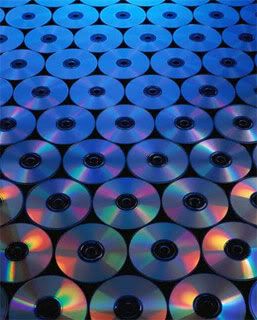
DVD stands for both Digital Video Disk and Digital Versatile Disk. DVD is an optical storage medium that is very much like a compact disc. The differences are that DVDs have a improved storage capacity and bandwidth compared to a Compact Disc. Other than that, you can do pretty much about anything on a DVD that you can do on a Compact Disc, which invokes the question of how to burn DVDs.
DVDs can store about six times as much data as your regular CDs. Since you can do the same things to a DVD, you can be sure that you can burn various types of data on your DVDs. With its improved capacity, a DVD can contain 133 minutes of a full length film.
Types of DVD Discs
Depending on how the data is stored onto a disk, DVDs are often called by various names. DVD-ROM would mean you can only read from such a disk, which means you can’t burn DVDs using that disk. DVD+R/DVD-R can be used to record data once. DVD-RW/DVD+RW/DVD-RAM disks can be written to and then erased and burned again a number of times.
Burning Data onto a Disc
Your regular data will have the least requirements on how to burn DVDs. These include any data format from databases, spreadsheets, documents and other types of files you may have on your computer’s hard drive.
The first thing you need to have in order to burn DVDs is burning software. You may buy software to burn DVDs or alternatively you may download ones that are free. You also need a drive that can burn DVDs. Make sure you have one that supports both Compact Disc burning and DVD burning. You can write up to 4.7 GB of data onto one disc.
Burning Multimedia Files onto a DVD Disk
Burning multimedia files is basically just like burning data files. You’ll follow the same steps on how to burn DVDs for your multimedia files. Video files take more space and a much longer time to burn onto your disk.
Your videos can come from a variety of sources. Some would want to convert their videos from VHS tapes and burn them onto a disk. Videos recorded from a camcorder, digital camera, or your television can also be burned.
There are added features on how to burn DVDs when you’re dealing with multimedia. You can add chapters, a title page, a menu page, and even subtitles. You will need to install authoring tools in order to add these specific features when you burn DVDs. You can also copy protect your disk using DRM software.
Burning DVD Movies
Before going over how to burn DVDs for commercial purposes, take note that it is illegal in most countries to make copies of copyrighted DVDs and redistribute them to the market. You are breaking copyright laws even if you are giving them away as gifts. That being said, it isn’t a breach of copyright laws to make copies for an archive or backup for another device you own (such as another computer or a player on your car).
In addition to your burning software, you’ll also need software to rip the videos from commercial disks. These will remove the Digital Rights Management and allow you to copy the videos. At times you may have to convert the videos you rip into other video formats before you write them onto a DVD disc. That is the basics of how to burn DVD movies.
Sources of Free Software to Burn DVDs
Other Sites on How to Burn DVD’s
Tags: how to burn a dvd, windows media player, how to copy a dvd, free dvd burning software, dvd flick, how to burn a dvd movie, how to rip a dvd, dvd shrink, dvd burner
-
You can always do less
The hardest part about making good software that ships on time is knowing what and when to sacrifice. As programmers and designers, we often fall in love with our requirements and are unable to kill our darlings. We mistake what we said we’ll do with what must be done. It’s rarely so; you can always do less.
What stops most people from doing less is the fear of failure. The misconception that if you don’t get it all done, the rest is worth nothing at all. That without this feature or that tweak, nobody will want to use it at all. Bollocks. Most software has a tiny essence that justifies its existence, everything after that is wants and desires mistaken for needs and necessities.
The easiest way to force the insight of what can be lived without is by playing a game of constraints: You have to ship on Friday, you can’t add more people, you can’t work nights. Fixed resources, fixed time. All that’s left to give is scope. It’s amazing how creative the cuts and sharp the sacrifices become when you’re backed into a corner. It’s when you have to choose that you make the best choices.
For every 1 day estimates of a task, there’s a simpler version of that you can do in 3 hours, and an even simpler still you can do in 30 minutes. Back yourself into a corner and these versions will vividly appear before your eye. You can always do less.
-
Rumors of Y Death Are Greatly Exaggerated; Male Chromosome Evolving Like Crazy | 80beats
 Don’t count out the Y chromosome just yet. Far from being in a state of decay, as some studies have suggested, a new study in Nature says the male chromosome in humans is actually evolving at a furious pace.
Study leader David Page of MIT sequenced the human Y chromosome back in 2003, and in the new study his team compares it to the male chromosome of chimpanzees. The scientists expected the two sequences to look very similar. However, while human and chimp DNA generally differ by less than 2 per cent, more than 30 per cent of the Y chromosome differed between the two species [The Times].
The prevailing theories, according to the study’s introduction, have held “that Y chromosomes evolve by gene loss, the pace of which slows over time, eventually leading to a paucity of genes, and stasis.” Originally, the Y had the same set of genes as the X, biologists believe. But the two can’t trade DNA; so as the Y shed most of its X-related genes, researchers thought it lacked a way to get fresh genes and was therefore on the road to stagnation. Earlier research showed that over 300 million years of evolution, the X chromosome retained many hundreds of genes, while the Y chromosome was reduced to only about 70 or 80 genes.
However vast differences between human and chimp Y chromosomes imply not that the male chromosome is grinding to a halt in humans, but rather the opposite—it’s evolving as a furious pace compared to the rest of the genome. In fact, that study says, while the overall genome of humans and chimps are separated by a tiny relatively amount because we diverged just 6 million years ago, the Y chromosomes differ by about as much as the overall differences between humans and chickens, which last had a common ancestor more than 300 million years ago.
Why the big Y chromosome differences? Humans, the researchers say, seem to be adding and deleting genes; chimps, on the other hand, are mainly just losing them. They point to few possible explanations, including differing mating behavior. Many male apes mate with one female in the species, leading to evolutionary success only for those whose sperm out-impregnates others, a process called “sperm competition” in evolutionary biology. The human male chromosome, in contrast, shows no evidence of such competition, according to the study [USA Today].
The implications of the Y chromosome’s newfound vitality remain to be seen. This does not mean that men are evolving faster than women, given that the two belong to the same species, but it could be that the Y’s rate of change drives or influences the evolution of the rest of the human genome in ways that now need to be assessed. It would be “hard to imagine that these dramatic changes in the Y don’t have broader consequences,” Dr. Page said [The New York Times].
Related Content:
80beats: Boom Boom Krak-oo! Have Monkeys Demonstrated Syntax?
80beats: A Fossil Named Ardi Shakes Up Humanity’s Family Tree
80beats: Scientists Tickle Apes & Conclude Laughter Is At Least 10 Million Years Old
DISCOVER: Whither the Y?
DISCOVER: Y So Small?Image: Wikimedia Commons / Frans de Waal, Emory University
-
Art Institute of Chicago Calls for Public’s Creative Feedback as Part of Its 500 Ways of Looking Modern “Red Cubes” Exhibit
 The Art Institute of Chicago is calling all creative types out there to help us decorate and redesign our “Red Cubes” that have been scattered around the city.
Your design could be selected to be featured in an exhibition in the museum!
Chicagoans are invited to contribute to the “500-Ways Project,” a city-wide art project that supports “500 Ways of Looking at Modern,” the Art Institute’s season celebrating the opening of the Modern Wing.
Whether you found one of the 500 cubes scattered around the city, or simply downloaded the 501st cube online, artists are encouraged to participate in the project by completing the unique tasks assigned to their cube.
The installation–a selection of the best entries–will run for the entire month of March, featuring sculpture, video, photography, poetry, and prose.
Submit your creations by posting projects to 500-ways.com, tweeting @artinstitutechi, leaving a message on our Facebook page, or dropping your artwork off at the museum by Jan. 31, 2010.
Entries chosen for display will be returned at the end of the exhibition.
For a taste of what’s already been submitted, visit 500-ways.com or browse our Flickr gallery: flickr.com/photos/artinstitutechicago/sets/72157622920287664/
MEDIA CONTACT:
Katie Rahn, 312-443 3713
[email protected]Chai Lee, 312-443 3625
[email protected]
-
Will Android Pay for Google’s Moves in China?
 British scribe Paul Carr is not one to mince words. For him, Google’s newfound morality around censorship and China is too little, too late. Four years too late, to be precise. And I agree with him — up to a point. Morality has to be absolute; it cannot be used as a tool of convenience. That said, and despite being a born cynic, I’m actually unable to view Google’s decision through the same lens.
I mean, if as a society we’re all too ready to forgive steroid-enhanced baseball players when they come clean, how is that we can’t give a company a second chance when it finally decides to do the right thing? Moreover, the company is risking a lot of money by adopting what Carr describes as “scorched earth diplomacy” — especially when it comes to Android.
J.P. Morgan estimates that Google’s move is going to cost it some $600 million in 2010 revenues. UBS puts the sales loss forecast in the $400-$500 million range. Others estimate that it could be even lower — between 1 and 1.5 percent of 2010 revenues. Citibank, meanwhile, believes that nearly 1 percent of Google’s profits are at risk.
The wide variance in the loss estimates makes clear that no one really knows how big a financial gamble this decision is. And that alone makes it a brave move.
But while many argue that it isn’t logical for a publicly traded company to take a stance that’s going to hamper its ability to capture the opportunities offered by such a fast-growing Internet market — China currently has 298 million Internet users (and 99.4 million connections) representing just 22 percent of its population — as far as I’m concerned, the biggest impact of Google’s decision will be on its mobile efforts. With more than 638 million wireless users (according to Telegeography), China has already emerged as the world’s largest mobile market. Sales of mobile phones in the country are expected to grow 21 percent this year alone.
The bottom line is that Google’s decision to take on the Chinese political establishment means that it no longer controls Android’s destiny in China. In theory, Android is open source and as such, handled by the Open Handset Alliance. But in reality, it is closely associated with Google. For starters, the banning of Google.cn would close a marketing channel for Google’s Nexus One device, if and when it was launched in China.
The country was well on its way to helping Google grow Android. Chinese handset makers such as Huawei and ZTE have been some of the earliest supporters of the upstart OS. China Mobile already sells its own version of an Android-based phone system called OPhone. Motorola is making a big push into the Chinese market with smartphones based on the Android OS. And China-based Lenovo has developed numerous Android-based products, including the LePhone. Any undue pressure from the establishment would mean that most of these companies would have to abandon Android in favor of other mobile operating environments.
Google’s willingness to risk not only its present (search) but also its future (mobile), shows that as a company it’s willing to go where no Western company has gone before: in China’s face. The next few months will determine whether Carr is being too harsh or I am being too generous in our respective judgments. For now, at least on this one decision, I am on the side of Larry & Sergey.

-
Snow Day Treat: How To Make Maple Syrup Taffy


The sun is finally shining again in our corner of the world, but there’s still a thick blanket of snow on the ground. So we turned to one of our favorite books, Little House in the Big Woods, and made a snow treat we’ve been wanting to try for years.
-
Nokia N900 gets another software update

Are you rocking a Nokia N900 yet? If you hail from the US, probably not — they do sell’em here, but the carrier-folk (read: T-Mobile) have yet to put it on their shelves. If you plan on buying one in the near future, however, be happy: it just got a wee bit better.
In its second software update this week, the Nokia N900 packs a bunch of small but worthwhile goodies. They’ve tucked in Exchange 2003 support, global address lookup, a UI overhaul for the Ovi Maps application, and performance tweaks all around.
So how do you get it? Sit tight – it’ll come to you over-the-air sometime soon, and you’ll be prodded to confirm the update when it’s ready. If you’re the anxious type you might be able to nab it a bit early with the Nokia Software Updater, but I can’t promise that.
Crunch Network: TechCrunch obsessively profiling and reviewing new Internet products and companies
-
They Asked for It
I frequently get mail from folks telling me that their religion “isn’t like that” – if only I’d take the time to understand the true nature of their particular faith I would see the light and save myself.
Many are the same people who give to a giant douche-bag like Pat Robertson. According to the faith-based idiot, Haiti brought this earthquake on themselves by get this, making a pact with the devil! The fact that people don’t laugh out loud at this stuff is beyond me. No, not the current people of Haiti, their ancestors in order to be rid of the French. Has nothing to do with plate tectonics, it’s a spiteful god claiming vengeance on the descendants of alleged devil dealers. That’s rich!
Watch the clip below, you can make your own judgment.
-
Dia cinzento

________________________________________________Bem, to sem fotos novas, mas vi que o UPC ta meio parado essa semana, e resolvi por uma do meu arquivo pra ver se dá um up..
-
Motorola: Multi-Touch on “Majority of Devices Going Forward”
 One of the first things to be pointed out about the Nexus One was its lack of multi-touch. In fact, the same could be said of the Motorola Droid. While we settle for double tapping and zoom buttons, our friends around the world are enjoying pinching and pulling. According to Motorola CEO, Sajnay Jha, they’ll be doing their part to bring multi-touch to more handsets.
I think you will see us deliver multitouch in the majority of our devices going forward. There’s a complex set of factors, not all of them technical. But I think you’ll see us being proactive on multitouch because the user feedback on multitouch is very good.
Wonder what the “complex set of factors” are if they are not technical. Sounds political.
We’re curious to find out just how important multi-touch is to you. Is it an “about time” deal for you or is it more “that’s cool, but not necessary” type thing? Leave a comment below!
Source: Androinica
-
Linux skills now more employable than ever
 When I first started using Linux, back in the late 1990s and the Red Hat 5.2 era, the skills I gained weren’t very useful to many employers. I initially hoped that learning Linux would help me spring into some kind of “real” UNIX job. Now, more than a decade later, Linux is more and more common, has replaced a lot of “real” UNIX systems, and the skills required to administer Linux systems are actually helpful when looking for a job. Linux is found in networks and appliances all over, and the monoculture of Microsoft hegemony is slowing fading. According to the Linux Foundation, Linux-related jobs have grown 80% since 2005.
There’s a new Linux job board at Linux.com, where employees and employers can find one another.
“Linux’ increasing use across industries is building high demand for Linux jobs despite national unemployment stats,” said Jim Zemlin, executive director at the Linux Foundation. “Linux.com reaches millions of Linux professionals from all over the world. By providing a Jobs Board feature on the popular community site, we can bring together employers, recruiters and job seekers to lay the intellectual foundation for tomorrow’s IT industry.”
Of course, I’ve seen very few Linux-only jobs. Most of the time, Linux skills are part of a broader compliment of systems management, development, or integration, and a host of related skills — with both open source and proprietary systems — are required, too. Nonetheless, it’s heartening to see that Linux skills are more employable than ever before.
Buy This Item: [Click here to buy this item]
-
Office Depot somehow gets exclusive rights to sell $230 NASCAR chair

I don’t know how in the world Office Depot managed to secure the rights to this exclusive, limited edition “No. 14 Tony Stewart NASCAR High-Back Leather Bonded Chair” but all the suits at Office Max and Staples must be going ape shit right about now. If you don’t have stock in Office Depot, buy as much as you can afford as soon as possible (disclosure: I don’t own any stock in Office Depot… YET).
And if you’re in a position of power at your company, you certainly don’t need me to tell you how important it is that you buy this chair. Think of the intimidation factor. Nobody’s gonna mess with the guy who bought the $230 NASCAR chair. A guy like that jumps on people and bites them in the head like Blanka from Street Fighter II.
NASCAR High Back Bonded Leather Chair Limited Edition [Office Depot]
Buy This Item: [Click here to buy this item]
-
Apple May Put Contacts on iPhone’s Home Screen [IPhone]
 This one comes from the Patent Office, Department of Obvious Things that Seem Like a Must-Have, Office of iPhone OS 4.0 Potential Features: Apple thinks that adding contacts to the iPhone’s home screen is a great idea. I wholeheartedly agree.
The contact icon won’t only bring contact information. It would be able to do much more:
The icon can also be used to invoke one or more applications that are personalized to the contact. The icon can be modified to display information related to the contact. In one aspect, an icon associated with an entity can be temporarily displayed on the mobile device based on the proximity of the mobile device to the entity.
Anything that could save a click seems good to me. [Redmond Pie]