Category: News

  • Firefox OS Simulator 3.0 Now Available

    Late last year, Mozilla released Firefox OS simulator 1.0. The preview software would give developers an idea of how Firefox OS looks when running on a mobile device while allowing them to develop apps for the HTML5-centric platform. It’s only been a few months since then, and Mozilla has already pushed out two new versions with the latest being made available this week.

    Mozilla announced that Firefox OS Simulator 3.0 is now available to developers. What sets this apart from previous Simulator builds beyond the obvious new features is that it’s a really early build that’s still “rough around the edges.” Still, Mozilla wants you, the developers, to have a go at it to help the team build the best product they can.

    Here’s what you can expect to see in version 3.0 of the Firefox OS Simulator:

  • Push to Device
  • Rotation simulation
  • Basic geolocation API simulation
  • Manifest validation
  • Stability fixes for installation and updates to apps
  • Newer versions of the Firefox rendering engine and Gaia (the UI for Firefox OS)
  • The most helpful update in version 3.0 is probably the ability to push apps to a device loaded with Firefox OS. Sony has recently released an experimental version of the mobile OS for its Xperia E smartphone. With the latest version of the simulator, developers can now test apps on these devices to make sure they properly work in a true mobile environment.

    If you want to try out the latest version of Firefox OS Simulator, you can grab it for Windows, Mac or Linux. Be aware that it acts as an extension of Firefox so you’ll have to keep the browser open to play around with it.

  • Amanda Bynes is Looking Strange in New Twitter Pics

    Former Nickelodeon child star Amanda Bynes has had a rough year. Her decision-making (and driving) skills were called into question in 2012 when she was cited for driving while talking on a phone and later was charged with driving under the influence for a separate incident, despite insisting that she doesn’t drink alcohol. Later that year, Bynes had her driver’s licence revoked for hit-and-run charges involving a police car.

    Bynes’ agnet and publicist dropped her as a client over the incidents, and she began acting in bizarre ways. Now, even her face is beginning to match her strange behavior.

    In between cryptic messages such as “Forgetting past memories” and “Don’t read my mind read my lips,” Bynes’ Twitter feed has been chronicling her changing style and makeup choices.

    This week, her latest picture shows off cheek piercings and long, curly blonde hair draped over a camouflage top:

    This isn’t the first time Bynes has shown off the odd look. Back on February 7 Bynes showed off her suspicious curly hair and beanie, and on February 15 her cheek piercings were shown off in another pic:

    On February 25, Bynes announced that she had obtained a puppy, which she named Jasmine:

    Bynes has neither posted pictures of nor mentioned Jasmine since that post.

  • Redbox Instant Now Open to the Public

    Back in January, at CES, Redox Instant CEO Shawn Strickland said that the service would move out of beta and be open to everyone by the end of March.

    And it looks like he’s a man of his word. Today, Redbox Instant is officially open to the public.

    “Disc + digital for everyone! We’re now open to the public,” tweeted Redbox Instant this afternoon.

    Redbox Instant, which launched its private beta back in December, costs $8 a month and gives subscribers access to over 4,500 movies (no TV shows yet). There’s also a bonus 4 free DVD rentals built in to the monthly price, which pays for over half the fee itself.

    Redbox Instant doesn’t boast the quantity or quality of content available on Netflix Instant. A recent analysis showed that out of the “first 50″ titles streaming on Redbox Instant, 40 are available on Netflix too. It’s not to say that Redbox doesn’t bring anything to the table, but it’s going to fight to compete with the entrenched services like Netflix, Hulu, and Amazon Prime Instant Video.

    Back in February, we learned that Redbox Instant would be coming to the Xbox 360 as a console exclusive. Of course, to access that app you have to be a Xbox Live Gold member.

    [GigaOm]

  • Inky takes a different approach to the future of email

    It’s rare that you find people who actually enjoy checking or using their email, but the recent launch of sleek new apps like Mailbox might reinvigorate the fairly staid technology. Could email be getting cool again?

    The entrepreneurs behind the email app Inky think that email could indeed be cool, but CEO David Baggett said it will take a more tech-centric approach than what most popular apps are doing to really tackle the core of email, addressing some of the trickier things like attachments that keep it from being truly easy to use.

    A good number of apps like Mailbox, Mailstrom, and Gander, just to name a few, are tackling email management by improving the ways that we sort or deal with a huge email influx or the inability to take action on the emails that arrive. While email overload is a huge part of what makes it overwhelming for most people, most of those apps sit like filters or layers on top of whatever email service you use — like Gmail — and don’t actually dig deep into the platform itself. Inky, a desktop client for email, is taking a more technical approach and hoping that bet pays off, Baggett said.

    “Because it’s hard, you see two distinct approaches. One is to build a layer on top of existing mail platforms and make a new UI. What’s nice about that is you don’t have to solve any of the actual mail problems: all of that’s done for you by Google or Microsoft,” Baggett said. “You can paint your house another color but it’s not going to change the energy efficiency of the whole house.”

    Inky is a desktop app that lets you pull all of your mail clients onto one simple screen that has much more white space and fewer controls than you might be used to. The app shows which accounts have unread emails (you can pull in any IMAP or POP account), sorts mail by the importance of the sender based on frequency of communication and social signals, and divides up your mail by type (social media, daily deals, etc.). You can reply and sort emails from all linked accounts within the Inky app. But Baggett has big plans for where Inky is headed, and is still expecting improvements to the service.

    If you’re an avid user of Gmail’s filters and folders, you might not see as much value to Inky’s controls right now. But Baggett points out that setting up Gmail filters is not something that everyone wants to do, and providing a simple approach is a good way to reach a wide variety of users.

    Baggett is no stranger to tackling tricky problems. He previously founded ITA Software, technology that provided flight search software, that was eventually acquired by Google for $700 million.

    “I thought to myself, ‘What’s the biggest thing I could potentially do?’” He discounted browsers, search, and operating systems, but thought email could have potential. “I thought mail is really interesting because most people are really unhappy with their mail.”

    So Baggett launched Inky, and was pleased to discover that while it’s stiill growing, he already has a strong following. The app doesn’t have a mobile version yet (which was a big downside that would keep me from using it right now) but Baggett argued that desktop computers are still where most people do the heavy lifting when it comes to email — few are spending a lot of time composing on their phones, which seems true.

    “We started with desktop because it’s where people have the highest expectations in terms of features and feature set. If you can convert someone from Gmail or Apple mail to your mail client than you have an MVP mail client,” he said.

    inky inbox screenshot

    Related research and analysis from GigaOM Pro:
    Subscriber content. Sign up for a free trial.

  • Outside the box: UCLA uses brain aneurysm treatment to stop irregular heart rhythms

    For the first time, a UCLA team has used a technique normally employed in treating brain aneurysms to treat severe, life-threatening irregular heart rhythms in two patients.
     
    This unique use of the method helped stop ventricular arrhythmias — which cause “electrical storms” — that originated in the septum, the thick muscle that separates the heart’s two ventricles. This area is virtually impossible to reach with conventional treatment.
     
    The research is published in the February issue of Heart Rhythm, the official journal of the Heart Rhythm Society, and is highlighted on the cover.
     
    Many people suffer from ventricular arrhythmias, which are one of the leading causes of death in the U.S., claiming 400,000 lives annually. These arrhythmias can usually be controlled by medications, by implanting a cardioverter defibrillator device that automatically shocks the heart back into normal rhythm, or by a procedure called catheter ablation, which involves a targeted burn or the application of extreme cold to the tiny area of the heart causing the irregular heart beat.
     
    None of these traditional treatments worked for the two patients featured in this report, who suffered from a severe form of arrhythmia called ventricular tachycardia, which causes a dangerous rapid heartbeat.
     
    Instead, the UCLA team of cardiologists and interventional neuro-radiologists used coil embolization, a minimally invasive method originally developed at UCLA and now commonly used around the world to treat brain aneurysms.  
     
    “We have to think outside the box to help patients with severe arrhythmias located in hard-to-reach areas of the heart,” said senior author Dr. Kalyanam Shivkumar, director of the UCLA Cardiac Arrhythmia Center and a professor of medicine and radiological sciences at the David Geffen School of Medicine at UCLA. “We hope that this treatment will offer new hope for these heart patients, who previously had few options.”
     
    As is common with other arrhythmia procedures, the team first took colorful images of the electrical system of each patient’s heart using wires within the arteries of the heart muscle. This helped pinpoint the exact origin of the arrhythmia and served as a roadmap for the medical team. 
     
    During the coil embolization procedure, the team inserted a tiny catheter through a small incision in the groin, then guided it up to the heart and into the small arteries known as septal perforators, which supply blood to the area of the septum wall in which the arrhythmia originated. 
     
    Once positioned, the team carefully guided tiny, soft-metal coils — just slightly larger than the width of a human hair — through the catheter and into the arteries. The doctors filled each targeted artery with coils, thereby cutting off the blood supply to the region where the arrhythmia originated and stopping it.
     
    Similarly, during coil embolization for a brain aneurysm — an abnormal bulge in a blood vessel caused by a weakening in the vessel wall — coils are guided into the aneurysm to fill it. In this way, the aneurysm is sealed off, eliminating the danger that the ballooning area of the vessel will burst in the brain. This procedure also employs a catheter inserted in the groin.
     
    “We are seeing more cross-over into different medical specialties of these cutting-edge techniques that are able to target and navigate delicate areas in the body, such as the brain and heart,” said Dr. Gary Duckwiler, a professor of radiological sciences at the Geffen School of Medicine. “We look forward to future collaborations with cardiology.”
     
    Shivkumar lauded the partnership between the two medical specialties.
     
    “Cardiac electrophysiologists are like fighter pilots in chasing and zeroing in on arrhythmias that can be tricky to track down,” he said. “Once we have the arrhythmia’s origin pinpointed — and if it’s in a place that is hard to reach — we turn to help from interventional radiologists, who are truly like astronauts in developing novel treatments and ways to navigate through the body.”
     
    “More study will help determine if coil embolization could be used with a broader range of arrhythmia patients,” said Dr. Noel Boyle, a clinical professor of medicine and director of the electrophysiology lab at the UCLA Cardiac Arrhythmia Center.
     
    For now, the technique will be used to treat patients for whom conventional methods are not an option. 
     
    Dr. Rod Tung, an assistant professor of medicine and director of the ventricular tachycardia program at the UCLA Cardiac Arrhythmia Center, noted that both patients in the case study are doing well and have had no recurrences in several months.  
     
    Other study authors included Dr. Venkakrishna N. Tholakanahalli and Dr. Stefan Bertog of the Veterans Affairs Medical Center in Minneapolis, and Dr. Henri Roukoz of the University of Minnesota, Minneapolis.
     
    For more news, visit the UCLA Newsroom and follow is on Twitter.

  • The 10 most popular TED-Ed lessons so far

    A still from the most-viewed TED-Ed lesson so farThe TED-Ed team is excited to have just passed our one-year mark — we launched our YouTube Channel on March 12, 2012. And what a year it has been! In 365 days, we have published more than 100 TED-Ed Originals plus nearly 100 TED Talks, totaling more than 16 million views. And we have almost 100 additional projects in production as we speak.

    This milestone would not be possible without the brilliant educators and talented animators who have contributed to the TED-Ed initiative, making curiosity-inspiring Lessons available to people all around the globe. These collaborators have put great efforts — and many late hours — into each Lesson. And it shows.

    In honor of our first birthday, we’d like to celebrate our top 10 most-watched videos so far, on topics ranging from chemistry to Shakespeare to origami.

    1. How simple ideas lead to scientific discoveries by Adam Savage: 969,931 views
    2. Questions no one knows the answer to from Chris Anderson: 889,724 views
    3. Sex determination: More complicated than you thought courtesy of Aaron Reedy: 889,022 views
    4. Just how small is an atom? asks Jonathan Bergmann: 763,982 views
    5. What’s invisible? More than you think by John Lloyd: 531,415 views
    6. How big is infinity? from Dennis Wildfogel: 507,805 views
    7. Why can’t we see evidence of alien life? asks Chris Anderson: 469,687 views
    8. The secret life of plankton by Tierney Thys: 428,630 views
    9. Insults by Shakespeare courtesy of April Gudenrath: 402, 630 views
    10. How folding paper can get you to the moon from Adrian Paenza: 401,127 views

    Here’s to ten more!

    Check out the TED-Ed blog »

  • Showcase Your Knowledge With Mozilla’s Open Badges

    For the past few years, Mozilla has been working on a project called Open Badges. You can think of the project like merit badges for the Internet. It allows people to prove that they have accomplished something, or are knowledgeable in a topic, in a visual format. Now after a year of extensive beta testing, the finished product is finally ready.

    Mozilla announced today that Open Badges 1.0 is ready for public use. The first release of Open Badges will be focused on three areas:

  • earn badges for skills you learn online and offline
  • give recognition for things you teach
  • show your badges in the places that matter.
  • Right from the start, Open Badges users will be able to prove their worth with badges from over 600 organizations. Mozilla itself offer a wide range of badges, including badges for Web development. Other organizations offering badges include the Girl Scouts and NASA.

    For a more in-depth breakdown of what Open Badges offer, the Mozilla blog explains:

    Knits skills together. Through the Open Badges shared standard, badges for the same skill-set can connect and build on one another — whether they’re issued by the same organization or many different ones. Individuals can earn badges that recognize learning and skills from multiple sources both online and offline — from learning HTML with Mozilla, to volunteering and leadership skills with Girl Scouts, to learning introductory robotics and engineering with NASA.

    Full of information. With Open Badges, every badge has important data built in that links back to who issued it, how it was earned, and even the projects a user completed to earn it. Employers and others can dig into this rich data and see the full story of each user’s skills and achievements.

    Can go anywhere on the web. The Open Badges backpack gives users an easy way to collect their badges, sort them by category, and display them across social networking profiles, job sites, websites and more.

    Recognizes learning that matters. Open Badges’ free software allows any organization that meets the standard to begin issuing — and verifying — badges. Currently 600 organizations have issued 62,000 badges to 23,000 learners. A growing list of who is issuing badges is available here.

    Free, open to anyone, and part of Mozilla’s non-profit mission. Open Badges is designed, built and backed by a broad community of contributors. The open source model means improvements made by one partner can benefit everyone, from bug fixes to new features.

    If you want to start working with Open Badges, you should start with the developer community. After that, check out the source code and contribute to its development. Open Badges has an opportunity to change how we learn and earn accomplishments on the Web, but it won’t be able to do anything if it doesn’t have the support of the open source community.

  • Higgs Boson Found in Large Hadron Collider Data

    Scientists working with data from CERN’s Large Hadron Collider (LHC) this week revealed that a detailed analysis suggests that the elusive Higgs boson really has been discovered.

    The possible discovery of the so-called “god particle” was announced last year, but scientists emphasized that more research would be needed before the discovery could be confirmed. Researchers have now analyzed two and a half times the data available at the time of that announcement, and it still appears likely that the Higgs Boson has been found.

    “The preliminary results with the full 2012 data set are magnificent and to me it is clear that we are dealing with a Higgs boson though we still have a long way to go to know what kind of Higgs boson it is.” said Joe Incandela, a physicist working on the CMS project at CERN.

    The analysis of the data focused on the observed particle’s quantum properties and interactions with other particles. The Higgs boson is hypothesized to have no spin and its parity is hypothesized to be positive. Researchers stated the data collected at CERN “strongly indicates” that the observed particle is the Higgs.

    “The beautiful new results represent a huge effort by many dedicated people,” said Dave Charlton, spokesperson for the ATLUS experiment at CERN, which is using the LHC’s high power to observe particle interactions. “They point to the new particle having the spin-parity of a Higgs boson as in the Standard Model. We are now well started on the measurement programme in the Higgs sector.”

    (Image via CERN)

  • Digg: We’re Building a Reader to Replace Google Reader

    If you were wondering which RSS reader is going to step up and fill the void left when Google yanks Google Reader out from under us on July 1st, Digg has your answer.

    It’s Digg. The answer is Digg.

    On their blog, Digg has just announced plans to build a reader to replace Google Reader both in function, and in our hearts.

    The news aggregation site says that RSS isn’t dead yet , and it’s worth saving. Apparently, Digg has had plans to build its own reader for some time, planning to start the project in the second half of 2013. But Google’s announcement that they were canning their own Reader has forced Digg to “move the project to the top of their priority list.” Work on the new reader begins today.

    According to Digg, the reader will be comparable to, if not mimic Google Reader – even down to the API.

    “We hope to identify and rebuild the best of Google Reader’s features (including its API), but also advance them to fit the Internet of 2013, where networks and communities like Facebook, Twitter, Tumblr, Reddit and Hacker News offer powerful but often overwhelming signals as to what’s interesting. Don’t get us wrong: we don’t expect this to be a trivial undertaking. But we’re confident we can cook up a worthy successor,” says Digg.

    Digg? Why not Digg? Someone has to step up. There are plenty of Google Reader alternatives out there right now, such as Newsblur, Feedly, FeedReader, and Bloglines. Plus, there are those magazine-style readers that kind of work like an RSS reader – we’re talking things like Flipboard or Pulse. But Digg, even having seen some troubled times over the past few years, has that name recognition. We’ll be anxious to see what they come up with.

  • Skype 6.3 for OS X and Windows are available

    Microsoft has released Skype for Windows 6.3 and Skype for Mac 6.3. Despite identical version numbers, both builds are independent of each other, and are released separately.

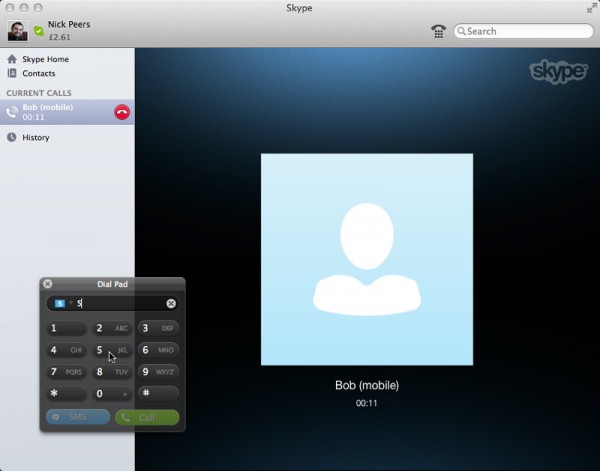
    While the Windows version is a straight maintenance release, Mac users gain a couple of new features: an in-call DTMF dial pad and the ability to view a slideshow of other participants in a group call when the user is the current speaker.

    When speaking in a group call — a feature limited to Skype Premium users — the user will see a slideshow of their fellow participants in one of two places: the call monitor or  – if someone else is screen sharing — in the main call view.

    The new in-call DTMF dial pad — triggered by clicking the dial pad in the call toolbar — allows users to generate DTMF tones when calling lines that use automated systems. DTMF support is already present in the Windows version.

    Notable resolved issues in Skype for Mac 6.3 include ensuring the participant list in a large group conversation shows correctly even when continually resizing the Skype window, and users will no longer be sent New Message notifications when the user returns from an offline status with “Do Not Disturb”. One known issue — birthday notifications failing to work — remains unresolved.

    Skype for Windows 6.3 contains more than a dozen notable fixes, including the correct display of tooltips on non-32bit monitor setups, ensuring all profile edits are saved and no longer freezing the program when opening a snapshot gallery containing a large number of pictures.

    Other fixes largely concern problems displaying certain screen elements, but as with Skype for Mac 6.3, an issue with birthday notifications remains unfixed.

    Skype for Windows 6.3 and Skype for Mac 6.3 are both available as freeware downloads. Other versions have also recently been updated – Skype for Windows 8 1.5 now supports file-sharing, for example, while you can also download Skype for iPhone 4.6Skype for iPad 4.6, and Skype for Android 3.2.

  • The BlackBerry House: Hands-On Time with the BlackBerry Z10 in Austin, Texas [VIDEO]

    The team has been in Austin, Texas at the BlackBerry House to showcase the new BlackBerry Z10 and some amazing musical acts. We’ve had some exciting announcements from our carrier partners in the US this week with a few major pre-sale and in-store availability dates being announced (not to mention a BlackBerry partner purchasing one million BlackBerry Z10 smartphones). The reactions from people getting their hands on the new BlackBerry Z10 smartphone for the first time have been amazing. But don’t just take my word for it – check out this video to get a feel for all the action:

    [ YouTube link for mobile viewing ]

    blackberry-house-live

    We’ve also had an amazing crew of bands come by to play the house this week and still many more to come. If you’re in Austin, Texas, be sure to check out the schedule on theBlackBerryHouse.com – and if you’re in the United States, be sure to pre-order your BlackBerry Z10 today and pick one up in stores March 28.

  • Digg: Don’t worry, Google Reader fans, we’re building an alternative

    For those of us who rely on Google Reader for organization of our RSS feeds and staying up to date on the day’s news, the announcement yesterday that Google will shutter the project as part of a “spring cleaning” was fairly devastating. But almost instantly, a few clever companies like Feedly began highlighting their support and solutions for RSS orphans. And on Thursday, Digg jumped into the fray with the promise of such a new answer to Google Reader.

    Reuters had reported Wednesday night that the Betaworks-owned company had something in the works, and on Thursday the company released a blog post explaining that it has been working on something around Reader, but will speed up production in light of Google Reader’s imminent demise on July 1:

    “We’ve heard people say that RSS is a thing of the past, and perhaps in its current incarnation it is, but as daily (hourly) users of Google Reader, we’re convinced that it’s a product worth saving. So we’re going to give it our best shot. We’ve been planning to build a reader in the second half of 2013, one that, like Digg, makes the Internet a more approachable and digestible place. After Google’s announcement, we’re moving the project to the top of our priority list. We’re going to build a reader, starting today.

    Since 2010, when we started working on News.me at betaworks, we’ve been obsessed with building tools that surface the most interesting things on the Internet, in real-time. That’s what has guided our approach to rebuilding Digg, and it’s with that experience behind us (including a whole load of mistakes), that we will build the new reader.

    We hope to identify and rebuild the best of Google Reader’s features (including its API), but also advance them to fit the Internet of 2013, where networks and communities like Facebook, Twitter, Tumblr, Reddit and Hacker News offer powerful but often overwhelming signals as to what’s interesting. Don’t get us wrong: we don’t expect this to be a trivial undertaking. But we’re confident we can cook up a worthy successor.”

    Om published an interview Wednesday night with Google Reader creator Chris Wetherell, who’s working on his startup Avocado now, and Wetherell explained that Google Reader always lived on borrowed time. But as Buzzfeed’s John Herrman pointed out, the RSS reader was still driving significant traffic for many publishers, and as Laura Owen wrote for PaidContent, Google Reader’s demise could have a significant impact on digital publishers and news outlets.

    Whether Digg’s new product solves the problems that Google Reader’s exit creates is unclear, but creating a news reader built on RSS from scratch could allow for some innovation around a product that hasn’t changed much since the mid-2000′s. If you’re interested in following Digg’s progress, the company has a sign-up list … along with a highly depressing countdown until Google Reader is really dead.

    Digg reader Google Reader countdown

    Related research and analysis from GigaOM Pro:
    Subscriber content. Sign up for a free trial.

  • DeveloperAuction nets $2.7M to connect employers and developers

    DeveloperAuction, a site where companies can bid for developers seeking jobs, has taken on $2.7 million in first-round funding, suggesting that investors think tech recruiting can be disrupted again, even with LinkedIn, Stack Overflow and other online venues playing in the space.

    NEA and Sierra Ventures led the DeveloperAuction funding round, and Crosslink Capital, Google Ventures, SoftTech VC and Step Partners contributed as well.

    Last month I wrote about how venture capitalists were showing interest in DeveloperAuction despite its shortcomings, which span from monetizing a recruiting process that already happens naturally to using an arguably questionable word, auction, in the company’s name.

    Even so, the site does operate on a concept that challenges the generic recruiting model. (According to a statement, companies have floated more than $225 million in job offers.) The idea of asking companies to appeal to job seekers strongly contrasts the usual way of making many job seekers compete for individual openings. It’s a refreshing approach. And Matt Mickiewicz, a co-founder and CEO of the company, told me in an interview last month that he wants to bring the DeveloperAuction way to other verticals.

    The question is, how many types of jobs have consistently high demand and low supply in many geographical areas, as is the case for developers? Now that VCs have a stake, the question could become more important than it was when news of the company first surfaced a few months ago.

    Related research and analysis from GigaOM Pro:
    Subscriber content. Sign up for a free trial.

  • Why eating dirt makes this a better world

    Hacktivist groups like Anonymous or, more broadly, groups like Wikileaks may cause big problems for institutions and companies, but overall they’re good for us and good for the internet, said Joi Ito, director of the MIT Media Lab.

    Joichi_Ito_Headshot_2007Ito likened these groups and the challenges they pose to innoculating a young child against illness. If you protect him so stringently against germs to keep him from getting sick, you can bet he will get really sick at some point. But if you let him “eat dirt” and expose him to lots of things he’ll be a healthier child, Ito said during a BBC World Service event held at MIT and broadcast live on Thursday.

    The specter of groups like Anonymous lurking in the background may also encourage better behavior by people and organizations, Ito added.

    These groups make us more “transparency robust” and that’s a good thing, he noted.  The thinking is: If you know someone might be poking around in your business, you’ll probably be better, more ethical, smarter about how you conduct that business in the first place.

    This was a good, wide-ranging session with good insights on the maker movement and other topics. I’m sure it will be streamed later today. I’ll include the link here when it becomes available.

    Related research and analysis from GigaOM Pro:
    Subscriber content. Sign up for a free trial.

  • New Audio Series Shows What It’s Like ‘Being Biden’

    The White House is launching a new audio series, powered by SoundCloud, that takes you into the daily life of the man behind the most powerful man in the world, Vice President Joe Biden.

    It’s called “Being Biden.”

    “The series will combine a photo that offers a glimpse into the Vice Presidency with an audio recording of the Vice President narrating the moment and its significance. He will tell the story behind the story – of where he was when the photo was snapped, why it matters to him, and how the experience fits into the broader narrative of this Administration. From meetings at the White House to travels around the country, the Vice President will share his perspective in candid, behind-the-scenes snapshots,” says the White House blog’s Macon Phillips.

    The series will be available on whitehouse.gov/beingbiden, and you’ll know when a new episode is available by following the VP’s Twitter account. You can even sign up for email alerts if you want.

  • Google Kicks Adblock Plus Out Of Google Play

    In a report from February, it was found that Google stands to make about $20 billion in mobile search advertising by 2016. That won’t happen if more people start using ad block software on their mobile devices.

    Till Faida, creator of Adblock Plus, says that Google removed his app from the Google Play store due to “interference with another service or product in an unauthorized manner.” In other words, Google didn’t like that Adblock Plus was removing ads from mobile apps.

    Adblock Plus wasn’t the only ad blocking software to be removed from the Google Play store. Venture Beat reports that pretty much all ad blockers have been removed from Google Play. A search for ad block on Google Play now only returns apps that block push notifications, not in-app ads.

    The move is likely to make some Android users unhappy, but there are plenty of reasons to be unhappy at Google this week. Adblock Plus’ Faida told Venture Beat that it’s no coincidence. He believes that Google took down Adblock Plus when everybody was still fuming about Google Reader so nobody would make a stink out of it. He feels that Google will use the lack of outrage over its removal from Google Play to remove Adblock Plus from Chrome as well, despite it being one of the most popular add-ons for the browser.

    Ad blocking is a complicated subject. Many mobile services are free, but they’re only free thanks to support from ad revenue. These services might start to cost money if they can’t bring in that ad revenue. It’s also true, however, that mobile ads are obnoxious and generally unwelcome. Google, app developers, advertisers and consumers need to come together to find a way to make advertising work for everyone.

    Oh, and if you used Adblock Plus on Android, you’ll still get updates. The team is now working on a version of the app that delivers automatic updates from within the app, and it’s still available from their Web site. It will take a few more steps to install, but it shouldn’t be a big deal for those who don’t want to see ads.

  • How OpenStack upended the private cloud market overnight

    I like to think of the private cloud market as existing in two distinct eras — Before OpenStack and Anno OpenStack. It is now 3 A.O. (well, in a few months), and Oracle’s announced acquisition of Nimbula on Wednesday got me thinking of just how much the world has changed since OpenStack officially launched on July 18, 2010.

    A report I wrote for GigaOM Pro in June 2010 (subscription req’d), entitled “Defining Internal Cloud Options: From Appistry to VMware,” seems like a good starting point for a private-cloud startup edition of “where are they now.” Ignoring the public companies on the list for the time being (with the exception of CA), here’s what has happened to the private companies and startups.

    1. Abiquo: Abiquo has a new CEO, a tight partnership with NEC around selling to service providers and appears focused on the European market. The company raised about $14 million in 2010, but hasn’t really made a lot of noise stateside since then.
    2. Appistry: Appistry made a huge shift in August 2011 and it now positions itself as a platform for running high-performance applications in areas such as life sciences, defense and financial services. Its biggest area of focus is genomics, where it is even developing new methods for analyzing genomes.
    3. CA: CA bought a bunch of cloud startups in 2009 and 2010 — Cassatt, 3Tera, Oblicore and Nimsoft among them — but it has been essentially silent since then in terms of real innovation. Maybe these acquisitions are driving big business, but I was expecting a more-visionary strategy in terms of fusing them into a cohesive and forward-looking whole.
    4. Cloud.com: Winner!!! Cloud.com had big-name users and workable technology, and it sold itself to Citrix for more than $200 million in 2011. It has since launched an open source competitor to OpenStack called Apache CloudStack and appears to be doing good business.
    5. Elastra: Elastra is no more.
    6. Enomaly: Enomaly’s products still technically exist, but Virtustream bought the company in 2011 with the primary goal of repurposing its intellectual property in the realm of cloud federation and gaining a toehold in China.
    7. Eucalyptus Systems: If you ask CEO Marten Mickos, everything is great with Eucalyptus, and its whopping $55.5 million in venture capital (including a $30 million round in April 2012) and tens of thousands of downloads of its Amazon-compatible cloud softwware are proof. Ask anyone else and they’ll likely tell a different story.
    8. GigaSpaces: GigaSpaces appears to be doing well enough, although it was around well before the term “private cloud.” It has always been much more about its in-memory data grid tech and apps that need dynamic scalability, although it does now offer a Platform-as-a-Service product that’s somewhat disconnected from the legacy business.
    9. JoyentJoyent has always been respected for its engineering chops, although rumors sometimes swirl about how much business the company — which has raised an incredible $115 million — is actually bringing in. Still, it continues to improve its public and private cloud offerings and has landed some big-name users.
    10. Librato: Librato looks to have abandoned its resource-management product line to focus on measuring stuff — sensors, server use, whatever.  It wears that hat well, and Heroku is among its loyal users.
    11. LongJump: In hindsight, LongJump’s business was not actually a great fit for that 2010 report, and its business appears about the same: you build apps in a user-friendly setting and they can run on LongJump’s infrastructure or your own.
    12. Morphlabs: Morphlabs is the master of pivots, although it’s still hanging around and pushing out new products. Now an OpenStack-based cloud-software vendor, it released a new service-provider-focused platform called mCloud Osmium in February.
    13. Nimbula: Nimbula, as noted above, is now part of Oracle in a move that is widely believed to be an “acquihire” situation, although neither company will comment on the details.
    14. Platform ComputingIBM bought Platform Computing in October 2011 and appears to have refocused the company around its HPC roots. Not that that’s a bad thing — Platform was a $72 million company on its own in a niche market, and I’d guess IBM paid a fair price for it.
    15. VirtustreamAnother winner! Virtustream has been on fire since 2010 (actually buying up Enomaly) and looks to be the darling of the enterprise cloud space. It’s primarily a public cloud provider, but it has a strong private/hybrid cloud business that ties Virtustream back to customers’ data centers.
    16. Voxel: Voxel, whose main business was a public cloud offering, got acquired for $30 million by managed hosting provider Internap in January 2012.

    OpenStack is what happened to the private cloud market and forced so many acquisitions, pivots and even one closure. Users, investors and everyone, really, were waiting for some promise of cloud interoperability and portability (aka something other than Amazon, VMware or Microsoft) and OpenStack delivered it. Further, for the service provider community — which has arguably bolstered the sales of private cloud software since its inception — OpenStack provided a relatively engineering-free path to public cloud offerings (compared with building their own from scratch, that is) without fear of being at the mercy of a startup that might fold tomorrow and take its core technology with it.

    I haven’t run the numbers, but I’d be willing to bet the majority of venture capital going toward “private cloud” in the past two years has gone to OpenStack-based startups. We’ve also seen nearly every large software vendor pin its cloud ambitions to OpenStack to some degree — Cisco, HP, IBM and Red Hat to name a few. Even Rackspace is now in the private cloud game thanks to OpenStack.

    For buyers, a large, well-heeled and deep-pocketed community has to be more appealing than a disparate collection of startups all doing their own thing.

    Structure 2012: Marten Mickos - CEO, Eucalyptus Systems, Chris C. Kemp - CEO, Nebula and Co-Founder, OpenStack, Sameer Dholakia - Group VP and GM, Cloud Platforms Group, Citrix, Jo Maitland - Research Director, GigaOM Pro

    L to R: Marten Mickos of Eucalyptus, Chris Kemp of Nebula (an OpenStack startup) and Sameer Dholakia of Citrix at Structure 2012.
    (c) Pinar Ozger

    Who’s not doing OpenStack (at least in any meaningful way)? VMware, Microsoft, Amazon Web Services — all companies with their own intellectual property, huge user bases and lots of money to back their visions. They all also have strong public cloud connections (some, obviously, stronger than others).

    The cloud startups from 2010 that are still arguably thriving today share similar characteristics. They’ve been big on engineering, won major customers early on and raised a lot of money to help them maintain through any tough times. All but Cloud.com, now part of Citrix, have a very prominent public cloud component, too — which appears critical for a truly seamless hybrid environment — but it has staked out its own claim as the anti-OpenStack.

    All of the aforementioned companies are/were doing infrastructure as a service primarily, but we’re already seeing a similar thing happen in the platform-as-a-service space thanks to Cloud Foundry. Providers that weren’t part of that community are jumping on board, and it’s just a few established holdovers that look like they’ll be able to push forward without riding Cloud Foundry’s coattails.

    Perhaps this is telling for how the future of anything at the infrastructure or platform layers is going to play out. You’re either really early and really good, or you wait for an open source project — OpenStack, Cloud Foundry, Hadoop, Open Compute, OpenFlow, etc. — and try to build on that. There’s following fast, and there’s following smart.

    Feature image courtesy of Shutterstock user Alexey Repka.

    Related research and analysis from GigaOM Pro:
    Subscriber content. Sign up for a free trial.

  • ’24′ Movie Project Dead, Says Director Anton Fuqua

    Fans hoping for a new 24 story in the form of a movie got some disappointing news this week. Film director Anton Fuqua told Indiewire in an interview this week that the movie project is now dead.

    The movie project would have feature Kiefer Sutherland reprising his role as counter-terrorist agent Jack Bauer. Rumors held that Sutherland was holding out for a better contract for the movie deal, Fuqua stated that the project simply fell apart after a while. From the Indiewire report:

    “Yeah, that’s not happening. I don’t think it’s gonna happen at all, definitely not with me,” Fuqua shrugs, putting the stake in what has always been a pretty tenuous project. “I met with Kiefer [Sutherland], Fox wanted to do it, it was a matter of his schedule before he went off to do his new show [’Touch‘].” The story that circulated was that there were budgetary disputes, as well as the matter of a meager offer to Sutherland, and Fuqua leans towards that by admitting, “I don’t think he was able to get a proper agreement with Fox. The time just passed, and I went off to go to what I was doing.”

    Though Jack Bauer won’t be returning any time soon, Sutherland can still be seen on Fox starring as a struggling parent in Touch. Fuqua, who is best known for directing the movie Training Day, has also moved on with other projects. He is currently attached to a biopic about Colombian drug lord Pablo Escobar and a military thriller called Hunter Killer.

  • Samsung Galaxy S IV Gets Picked Over Before The ‘Unpacked’ Event In Exhaustive Review

    293d1962bc3f1f68

    Times Square is where Samsung is gearing up to unveil the Galaxy S IV tonight at a special press event, but the leaks won’t stop coming. The latest, from the same Chinese source that brought us videos of key features earlier today, is a long, extensive review of the supposed SGS IV hardware, laying bare all of its secrets and even going so far as to take a microscope to the new smartphone’s screen.

    The review is, as mentioned, exhaustive (and also in Chinese), but there are some key elements worth drawing specific attention to. In the disappointing column, that metal-look border surrounding the phone does indeed appear to be plastic upon closer prodding. On the good side, it looks like the plastic backing for the device actually doesn’t feel like plastic, according to the reviewers, thanks to micro-perforations in the surface.

    Taking the scope to the screen reveals improvements to the sub-pixel arrangement which help increase density and maximize the rendering of deep blacks, with changes that also help it improve its ability to render fine detail. The screen is reportedly better able to render images clearly, making it impossible to discern pixels with the reviewer’s naked eye. The camera also looks improved, in side-by-side comparisons with the iPhone 5, though the reviewer says accurate color rendering isn’t up to par with Apple’s smartphone.

    The Samsung Galaxy S IV tested in the leaked review had an eight-core Samsung Exynos Octa processor on board (the one rumored for the international version, which makes sense), which led to it blowing away the competition in AnTuTu benchmarking tests. Users definitely won’t be disappointed by the GSIV’s performance if these leaks prove legit.

    The review notes that Samsung has focused a lot on adding and refining screen transition animations and tap action effects, which are likely made possible by the big bump in processing power. It also supposedly has Smart Scrolling, Smart Pause, and Smart Rotation features onboard, which is in keeping with earlier reports about Samsung enabling eye-tracking interaction on the handset.

    The leak may disappoint some who were hoping for more surprises later tonight, but Samsung likely isn’t too concerned: this phone will sell well, regardless of how much it has to demo to the press tonight has been publicized beforehand. Check out the full review at it168.com for all the poorly translated spoilers your heart could desire, and then follow along with our live coverage to get the full scoop.

  • Google Splitting Up Mapping and Commerce, Former SVP Jeff Huber Joins Google X

    Google is shaking things up even more today as the Wall Street Journal reports that the company is breaking up their mapping and commerce units.

    According to the report, Google’s mapping unit will become part of the search division, and the commerce will fall under the advertising division.

    The personnel blowback of this is that Google SVP Jeff Huber is out of a job – but not really. He’s actually moving on to another Google unit.

    Huber joined Google back in 2003 and up until now was the Senior Vice President of Geo and Commerce, overseeing maps, payments, and travel. He also led engineering & development for AdWords, AdSense, DoubleClick, and for Google Apps.

    Huber will be joining Google X, the Sergey Brin-led secret projects wings of Google that is responsible for the company’s crazier ideas – like Google Glass.

    Of course, this isn’t the only big shift at Google this week. Yesterday, we told you that longtime Android head Andy Rubin was stepping down and being replaced by Sundar Pichai, SVP of Chrome and apps. Google CEO Larry Page said that Rubin would be starting a “new chapter” at Google, but didn’t do into any more details? Is everyone running to Google X?

    In other, non-personnel-related drama, Google also announced that they were shutting down Google Reader on July 1st. So much drama in the MVHQ.

    [Wall Street Journal]