Category: News

  • Arrecadação com multas bate recorde em SP em 2009

    Arrecadação com multas bate recorde em SP em 2009

    São Paulo – O Município de São Paulo registrou um recorde na arrecadação com multas de trânsito em 2009. Entre janeiro e dezembro, foram R$ 473,3 milhões. O valor é maior do que o orçamento de 5,5 mil cidades do País, entre elas cinco capitais. Só 62 municípios têm em caixa quantia maior do que a arrecadada com multas de trânsito em São Paulo. Com esse recurso, seria possível instalar 2 mil semáforos inteligentes e construir 40 terminais de ônibus.

    A quantia é a maior da história e 22% superior à que entrou no caixa da Prefeitura em 2008: R$ 386 milhões. A Secretaria Municipal dos Transportes (SMT) atribui o aumento à ampliação do número de equipamentos de fiscalização eletrônica. Em 2009, a cidade ganhou 105 aparelhos. No total, há atualmente cerca de 500 radares.

    Segundo balanço do primeiro semestre de 2009, 3,1 milhões de infrações foram flagradas por radares (56%), por agentes da Companhia de Engenharia de Tráfego (CET) (36%) e por policiais militares (11%). A quantia representa crescimento de 36,7% em relação ao mesmo período do ano anterior. A infração campeã continua sendo o desrespeito ao rodízio, seguido de excesso de velocidade. Segundo a SMT, os números do segundo semestre ainda não foram fechados.

    Membros da Junta Administrativa de Recursos de Infração (Jari) dizem que o incremento na arrecadação e no número de autuações é resultado também da entrada em vigor de mais duas restrições na cidade. Em 2008, a Prefeitura proibiu a circulação de caminhões numa área de 150 km². E, em julho de 2009, foi a vez de ônibus fretado enfrentar restrição, sem poder circular em vias como Paulista e Faria Lima. As informações são do jornal O Estado de S. Paulo.

    http://noticias.uol.com.br/ultnot/ag…469u51679.jhtm

  • Video and Text: Special State Department Briefing on Haiti

    Briefing on the Situation in Haiti

    Cheryl Mills
    Counselor

    USAID Administrator Raj Shah and U.S. SOUTHCOM Commander General Douglas Fraser
    Washington, DC
    January 13, 2010

    MR. CROWLEY: Good morning and welcome to the Department of State. As the President said earlier, we are committed to helping the people of Haiti, as well as looking after the welfare of the roughly 40,000 Americans who live and work in Haiti, including those who are part of our U.S. Embassy family in Port-au-Prince.
    This is a whole-of-government effort, as you’ll see by the speakers who will be at the – who will give you kind of a status report on the way forward, representatives from the Department of State, Defense, and Agency for International Development. We are obviously supported by other agencies, including the Department of Homeland Security, as we go forward. And as you will hear, we’re responding as rapidly and effectively as we can to the difficult situation in Haiti.
    We’ll begin this morning’s briefing with Cheryl Mills, Counselor to the Secretary of State and a driving force behind Haiti policy formulation here at the State Department, followed by Raj Shah, the Administrator of USAID. And we’re thrilled to have General Doug Fraser, the Commander of U.S. Southern Command, who will be coordinating the considerable military response to this disaster. But we’ll begin with Cheryl Mills.
    Date: 01/13/2010 Description: Earthquake in Haiti © State Dept ImageMS. MILLS: Good morning. Let me just first start out by saying, and echoing the sentiments of the President, that our thoughts and prayers are with the Haitian people and the vast international community that is present in Haiti as we are going through what is going to undoubtedly be a very challenging and difficult time. And we are looking forward to being able to provide all the support that we can bring to bear to try and ameliorate the impact of this terrible situation.
    As you all know, shortly before 5 o’clock yesterday, an earthquake struck outside of Port-au-Prince and outside of the island of Haiti, and then there were multiple aftershocks that had an impact on the island as well. According to our initial overflights that have gone on this morning, it appears that most of the damage has been within Port-au-Prince, and that the outlying areas have sustained less damage or very limited damage.
    The situation on the ground is very fluid. We have very limited telecommunications, and certainly within the Haitian community there’s limited telecommunications. We have been fortunate our U.S. ambassador has been able to reach President Preval, who is safe and who is grateful to the outpouring of assistance that he has been receiving from the international community. And they have had a couple of occasions to have a conversation.
    As many of the people have already seen, there are numerous structures that have sustained substantial damage, and we also know that there have been not insignificant numbers of casualties. We do not have any estimates yet of the numbers of those, nor for the number of individuals who are – who have been injured, but the situation is very severe.
    In addition to the numerous facilities that have sustained damage, we also note that the UN peacekeeping force headquarters also sustained considerable damage, and so we will be lending our assistance to see how we can provide the appropriate support to be able to provide search-and-rescue support in that area.
    I’m going to speak a little bit about our American citizens who are there, and Raj will be speaking about disaster assistance – Administrator Shah. And we will then have General Fraser, who will also be speaking about our military response.
    So in that vein, there are approximately 45,000 U.S. citizens who are in Haiti. The Embassy Port-au-Prince has activated its Early Warning System to connect with those citizens and establish, one, how they are doing and, two, what support they might need. We have received a number of reports of injured U.S. citizens, so we are working through those to be able to make sure that we are getting everybody the assistance that they need.
    There have been a number of calls that have come into our Consular Affairs here at the Department seeking information about loved ones who are in Haiti. For those people who are seeking information, the President gave out this number. I just want to give it one more time, and that is 1-888-407-4747. And that’s a number that you can call into if you are seeking information or seeking to make a request with respect to someone who is – that you are trying to connect with that’s in Haiti.
    In terms of Embassy personnel on the ground there, we have about 172 personnel who are there under chief-of-mission authority. As of 8:00 a.m., we had accounted for just about all of them. There were eight personnel who were wounded, four who had been seriously wounded. We have already had U.S. Coast Guard heels on the ground to be able to medevac them to get appropriate care. And so we are beginning to see that happen as well.
    We have ordered the departure of approximately 80 Embassy spouses, children, and non-essential personnel. Those will begin happening later today so that we can ensure that the infrastructure and resources that are there can be properly concentrated on those who are in need. The Coast Guard will have planes actually arriving, I believe, this afternoon. And I’m sure General Fraser will be able to speak to that to help and assist in that evacuation process.
    The Embassy structure has remained intact and so it has become a point of support. And it has been providing medical support and other support for Haitians and Americans and others who have been able to reach the Embassy.
    We have reached out to the government of Haiti to be able to assess what their needs are and to be able to understand what their priorities are. We have launched a multiagency effort to provide disaster assistance, which is being led by Ambassador Shah through the Office of Disaster Assistance.
    And so with that as a background, I’m going to turn it over to Ambassador Shah, who can speak to those efforts.
    Date: 01/13/2010 Description: Earthquake in Haiti © State Dept ImageADMINISTRATOR SHAH: Thank you. Thank you, Cheryl. Our first comment, of course, is that our thoughts and prayers are with the people of Haiti, who have, of course, suffered a tremendous tragedy with this earthquake that started last night just before sundown. We are working aggressively and in a highly coordinated way across the federal government to bring all of the assets and capacities we have to bear to quickly and effectively provide as much assistance as possible.
    The goal of the relief effort in the first 72 hours will be very focused on saving lives. That is the President’s top priority and is what the President has directed us to do. We will do that by first putting in place significant Disaster Assistance Relief Teams. We’ll have, by the end of today, 15 members of that team doing surveillance, collecting data, identifying priority sites, and guiding the efforts of the larger search-and-response units that will following their entry into the country.
    We have two urban search-and-rescue units on their way, both are units with 72 individuals, people who have significant training and significant equipment and technical capacity to conduct search and rescue in urban settings, to drill through and clear as much as is possible rubble in order to try and identify individuals that can be saved and continue with the mission of saving lives. We’re working aggressively across the various agencies of the federal government, including FEMA and the Department of Homeland Security, to identify additional units that will be able to deploy as rapidly as possible. And we’re working hand-in-hand with the Department of Defense and General Fraser to make sure that we have the transport and logistics to get these assets into the country and efficiently operating as quickly as possible.
    The other comment I wanted to make is that as part of this we are also, of course, thinking about critical needs in the area of health and food, water, transportation, and infrastructure, and other advanced planning that needs to take place now so that we can, because we know that we will have quite a lot of work to do in the days and weeks ahead. We are committed to a significant effort, and we are committed to doing everything we can in all of those sectors. And so our team, which includes members from every agency in the federal government that has the capacity to help, is working to develop plans and put resources in place so that we can effectively respond to some of the requests that have come from the Haitian leadership and from our teams on the ground.
    Finally, I’ll point out that we do already have, of course, teams on the ground, including our Ambassador, our USAID mission and mission director, and other brave men and women who work for the U.S. Government in that capacity. And they’ve been providing guidance and support and data and information, and are very much a part of the effort despite having themselves gone through a very significant and challenging experience. So we want to thank them for that effort.
    So we will be pushing forward with an aggressive and coordinated effort, focused very much on saving lives through aggressive search-and-rescue in urban – in the urban environment for the next 72 hours. And that’ll be the primary focus of our engagement.
    I’ll hand it to General Fraser, who can talk about the logistics support that we are getting and that we need to continue to get and will continue to get from our armed forces in order to make sure that we’re using every capacity we have in the government to be effective. Thank you.
    GEN FRASER: Thank you, Raj. From the United States Southern Command and from the Department of Defense, our prayers and our condolences go out to the citizens of Haiti also. In coordination with USAID and with the entire U.S. Government, we have a significant effort undergoing to support this. From the time we found out about the earthquake, we started into motion.
    There are still concerns about the airport and the access to the airport in Port-au-Prince. The word we are getting is that the airport is functional but the tower and the capability to operate there are limited, and so we’re pushing capability there now to be able to operate and secure that airport.
    We’re also pushing command-and-control capability and communications. As you all know, communications has been very difficult in Haiti. And so we’re pushing that to not only support U.S. forces who are there, but because of a lot of the communications from MINUSTAH was in their headquarters, that has been lost, and so we’re looking to support the MINUSTAH effort as we go forward also.
    We also have various ships within the region, U.S. Coast Guard ships, as well as some Department of Defense ships that are moving in that direction. They have limited humanitarian assistance supplies on them, but they have some vertical lift capability, some helicopters with them.
    In addition, we’re moving the aircraft carrier Carl Vinson from Norfolk to the vicinity. It will take on a complement of helicopters as it proceeds, and we’re hoping to have that in the vicinity of Haiti tomorrow afternoon.
    So we continue to robustly move capability and support into the area to provide that lifesaving assistance as well as do assessments of what the follow-on needs will be. And we’re already looking beyond the immediate needs to understand, as we get those assessments in, to provide the capability as quickly as we can to Haiti. So a significant effort across the board, onboard. So thank you very much.
    QUESTION: Yeah. General, can I ask, all of the –
    MR. CROWLEY: Why don’t you identify yourself for the –
    QUESTION: I’m Matt Lee with the Associated Press. I’m wondering, considering the situation there right now and the fact that the UN appears to be not completely functional, the – you know, a hundred people trapped and their command – their communications out, and the fact that this humanitarian response is – can’t really function unless there is – unless there is law and order there, I’m wondering if there’s been any thought given to sending troops to complement the UN forces who may or may not be able to secure the area.
    GEN FRASER: We’re really looking at that capacity. And as you heard, from my standpoint, the destruction is very focused, at least it appears right now, in Port-au-Prince. MINUSTAH has forces all around the island of Haiti. So we’re working with them right now to get an assessment.
    As a matter of circumstance, my deputy commander happened to be in Haiti during the earthquake, so he’s working with MINUSTAH to coordinate those efforts. So that is a significant concern that we have with security, so we’re working with MINUSTAH and then doing the assessment to understand what kind of follow-on capability we’re going to need.
    QUESTION: So it is possible that American troops might be sent to – at least temporarily to help the UN and secure –
    GEN FRASER: We’re very seriously looking at that. We’re looking at the possibility of sending a large-deck amphibious ship that will have a Marine expeditionary unit embarked on that, and so that will be in support of MINUSTAH and the Embassy and USAID as we continue this effort.
    MS. MILLS: I would just – also just stress that the commander of MINUSTAH happened to be out of Haiti at the time, and so the Coast Guard is providing him with transportation back, so he will be able to also establish command-and-control. And so in that regard, we have a fortuity of events and –
    GEN FRASER: Right. He should get in early this afternoon.
    QUESTION: Elise Labott with CNN. Thank you for doing this. I have a couple, and maybe a few, if you can just take each one.
    MS. MILLS: You have a multi-part question.
    QUESTION: Multi-part. We’re famous for them.
    Cheryl, in terms of the Americans, we understand that you’ve only heard from a couple dozen out of 40- to 45,000 Americans. Is that – do you think that’s a factor of the lack of communications and the ability to get around, or are you bracing yourselves for serious American casualties? And what’s being done about that?
    Then on the – just if you could talk a little bit about the communications with the government to this point. It seems as if the government itself – because you have your own kind of U.S. communications that are working well – but the rest of the government doesn’t necessarily have communications. So how are you working with them not just on kind of talking, but given the state of Haiti even before the earthquake, they had a lack of capacity, a lack of infrastructure, you know, the government, while stable, certainly needed a lot of help to begin with.
    So, I mean, how are you dealing with this delicate balance of dealing with the Haitian Government that was – needed help to begin with and now not trying to be seen as taking over, but seriously know that you can provide a lot of capability right now?
    MS. MILLS: Let me try to address both of your questions. In terms of U.S. casualties, we are a – we’ve activated our warden system there, which is in communication with our folks that are on the ground there and American citizens there. We have not yet had reports of major U.S. casualties. We are obviously going to continue to monitor the situation. We do have – we have relatively good communication in terms of being able to start doing some assessments of where folks are, and so that’s what we’re going to continue to do, and we’re going to continue to be hopeful that this – it works out for everybody on the ground there, Haitian or American.
    With respect to government communications, Ambassador Joseph from Haiti has indicated a request for communication support, and that’s something that we are going to be providing. USAID and DOD are providing support that will actually arrive there today and be able to provide that kind of support, because I do believe that one of the challenges is being able to communicate among themselves as a government and to their people, and we’re going to do the very best that we can to provide that kind of support to them so they can do so.
    QUESTION: Administrator Shah, could you just pick up on the point of the kind of – even before the earthquake, the lack of development and infrastructure in the country puts Haiti – this seems to be a country that can afford it the least right now. So how do you, you know, not be seen as taking over, but know that certainly the government doesn’t have the resources to provide?
    ADMINISTRATOR SHAH: Well, it’s without question that Haiti has had less capacity than we have here, of course, to administer these types of efforts and to run these types of emergency operations. We’re working in close coordination with the Haitian Government. We are – the principle of our assistance, whether humanitarian or development and its orientation, is around deep partnership with those whom we work with and serve. And so we are being responsive to their stated request for health and medical services, for example, by deploying specific assets to meet the needs that they have there and exploring a range of other things we can do by standing up emergency medical services and emergency medical facilities in Port-au-Prince.
    We will continue to stay connected and communicate with them. That’s why we’re sending the communications package to allow the leadership there to have regular access to effective communications. And we made that a priority and put that on the first plane down. So we will continue to work with them to stand this up, but you’re right, it’s going to be a challenging operation for everyone involved. But we have the resources and the capacities to be effective, and so we’re going to work that way.
    QUESTION: Thank you.
    MR. CROWLEY: Michelle.
    QUESTION: Michelle Kelllerman with National Public Radio. You talk about saving lives is the priority, but I wonder if you have any sense of where these teams of – rescue teams are going to head first. I mean, do they go first to the UN Headquarters or their hospitals? Talk about – a little bit about the priorities.
    ADMINISTRATOR SHAH: Sure, and I may ask my colleagues to help address that. That’s why we send the Disaster Assistance Response Team in to do the assessment. We’re also getting information, of course, from our partner countries around the world from the UN system, and of course, some of the challenging situations they are facing right now, and from our various partners in Haiti. But we will have a team on the ground that can actually survey firsthand. We have overflight data right now that’s getting better by the moment that’s allowing us to get a sense of where the destruction is and what the priorities ought to be. And our goals will be to save as many lives as possible in the first 72 hours, because that is the window in which that is a possible outcome. So we’ll stay very focused on that while meeting the obvious priorities of supporting our American personnel there and the personnel of our partners.
    MS. MILLS: Can I just – I’ll only add one thing. The UN is also sending in a disaster team that is going to help coordinate all the different efforts that are coming in from multiple countries, and so we anticipate being in close partnership with them as they go about making those assessments as well and providing whatever support that we can.
    MR. CROWLEY: Charles.
    QUESTION: Charlie Wolfson with CBS. First of all, General Fraser, can you tell us how many Marines are on that ship, the Vinson? I believe it is called the Vinson.
    GEN FRASER: Well, on the first ship going down there, there are no Marines down there. On the aircraft carrier that’s going in, it’s really going to be to provide the support lift. That ship just happened to be out of port. It was training and it has a limited capacity onboard, and so that’s why as it goes south we’re going to put a complement of helicopters on it. So we’re providing and provisioning the carrier as it steams south, so there is not a complement of Marines on there right now.
    The ship that I was talking about where there may be is a large-deck amphibious ship. That’s another day or two away, and so it will have a standard Marine expeditionary unit. Don’t tie me to the precise numbers – roughly, 2,000 Marines potentially on there. But we’re still determining that right now.
    MR. CROWLEY: Margaret.
    QUESTION: Margaret Warner, the PBS NewsHour. General Fraser, under what circumstances would you feel it is necessary to deploy the Marines there? In other words, is it a question of keeping civil order, or is it just facilitating the disbursement of supplies? And what is the situation on the ground in terms of the degree of order or disorder?
    GEN FRASER: From what I’ve been told by General Keen, who is my deputy commander who is on the ground, is the situation is calm right now. And so we’re anticipating going in being able to provide that humanitarian assistance, that lifesaving effort, and that’s going to be the focus primarily getting out there. So it’s going to be our assessments that are going to determine, in conjunction with MINUSTAH and the other international partners who are there, how best to deal with any security situations that come up.
    QUESTION: So are you saying the Marines are being sent there as – for a security situation or simply that they may be actually needed to help facilitate the delivery of aid?
    GEN FRASER: What I’m saying is we don’t know precisely what the situation is on the ground, so we’re leaning forward to provide as much capability as quickly as we can to respond to whatever the need is when we get there.
    ADMINISTRATOR SHAH: Could I also address that? This is about having options. And the President has asked us to make sure we look across the entire government, all of our capabilities, and make sure we generate as many options as possible. We’re doing that on the health side, where we’re standing up two or three different types of emergency medical service provision strategies. And as we get real information on the ground about what is the best way to pursue the President’s goal of saving lives in this critical timeframe, we’ll be able to narrow those options and make strategic decisions. But we are in the process of trying to generate as many potential options and put as many assets as we have into where they could potentially be used quickly and efficiently to achieve that goal.
    QUESTION: Yes, for General Fraser. This is Luis Martinez with ABC News. You mentioned the Marines, but the Army also has the Global Response Force with the 82nd Airborne and the brigade out there. Have you given any consideration to them possibly assisting in this effort?
    GEN FRASER: We have given consideration to that, so we have put various forces around the Armed Forces on alert so that as we get the assessments in we are postured to move those forces in an expeditious manner. So we have put a brigade on alert just in the circumstance. So we’ll determine that as we get the assessments.
    QUESTION: In the flow of air resources flying in, do you anticipate tomorrow C-17s coming on a regular pattern or –
    GEN FRASER: I think it’s going to be an international effort that we go – we’re working with USAID. We’re trying to understand what the other partners are doing there. I think it’s also important to understand that there’s really one airfield, one runway, limited ramp space. The terminal is not functional right now, or we’re not certain what the status of it is, so it’s a difficult environment that we’re going into. So we’re trying to understand that. We think that we’re going to – we’re working our team in there to make sure that we can operate that airfield as efficiently as we can to keep the flights moving in and out of it. We’re also taking an assessment of the port, because in likelihood, the port of Port-au-Prince will be more important in being able to move a volume of goods through. We don’t know what the status of that is, so we’re looking at all of the options to try and make sure that we have as much flexibility as possible.
    QUESTION: Mike Emanuel from Fox News. I know it’s early on the disaster, but I’m wondering if there’s a relevant disaster that this seems to compare to from experience so the American public maybe can get their minds around exactly what’s going on there.
    ADMINISTRATOR SHAH: Well, rather than comparing this to a previous disaster, I would just say that this does present unique challenges because so many of our partners and many of our own people are in a position where we’re still accounting for their safety and their security. And certainly, that’s the case, as was mentioned, with the UN team out there.
    So of course, these are people who have gone through a lot in the last day and now are also called upon to help protect and serve others. And it will be challenging, they will need all of our support, and that’s why when the President asked us to be swift and aggressive and coordinated in doing this, we’re bringing together the entire federal government to make sure we have as many options as we possibly can to provide that support as quickly as possible.
    QUESTION: Thank you.
    MR. CROWLEY: Ken.
    QUESTION: Ken Dulaney and USA Today. Administrator Shah, you mentioned you were looking to deploy more urban search-and-rescue teams. Does the federal government have that capability or are other countries pledging to move those in? Or where are you looking for those teams?
    ADMINISTRATOR SHAH: Well, both, and in particular through our partnership with FEMA, we can expand our capacities and make sure that in addition to the teams that the Office of Foreign Disaster Assistance has ready to go, we can explore using other teams and getting them ready and getting them in place quickly. So that’s what we’re doing to try to expand the search and rescue immediately.
    QUESTION: But – so why was it just the two initially? Is that all that were ready to deploy sort of at a moment’s notice?
    ADMINISTRATOR SHAH: Well, two teams of 72 people each with significant equipment, training with all of their visas and international training and status ready to go is a significant capability. In addition to that, and really in parallel, it was not something where we waited before we deployed. We built – we have a partnership with FEMA and are trying – and are deploying a third team. And we will look to get other teams onboard as well. Part of the challenge will be getting information from the ground, which we will start to do in a matter of hours, understanding the priorities, and letting that guide the capabilities we have so that we can affect this work in a really coordinated way.
    QUESTION: Where’s the third team coming from?
    ADMINISTRATOR SHAH: The third team is currently based in Miami.
    MR. CROWLEY: Goyal.
    QUESTION: Raghubir Goyal, India Globe & Asia Today. Administrator Shah, if you go back 2001, January 26th, in your state where you come from, the state of Gujarat in India, thousands of people died and millions were homeless. And what – the people of Gujarat were not ready just like the people of Haiti this time – what can you learn from that? And what you have for the people of Haiti this time?
    ADMIINSTRATOR SHAH: Well, that’s a broader question. We’re going to stay very focused in the short term on the search and rescue and saving lives in the first 72 hours. The question does touch on when the rebuilding commences, and it will commence, thinking in a smart and strategic way about building the right types of structures and building the right types of institutions that can be more resilient in the future.
    And of course, our agencies and many of the other agencies that we are working with around the federal government have had a wealth of experience working in disaster environments, and there are ways to be prepared. But right now, our focus is entirely on the search-and-rescue effort, and the effort to save lives in the first 72 hours.
    QUESTION: I mean, what sort of international help you are seeking from other countries, like let’s say, including India? Because maybe in this case, doctors and medical help and all that sort of –
    ADMINISTRATOR SHAH: Well, there are a wide range of countries that have offered to provide support, and those are coming in by the moment. So we are working through that and trying to have a coordinated approach on the ground to make sure we execute that in a way that’s most effective. For example, I believe the Dominican Republic is offering helicopter transport support and a few other capacities. Those are important partnerships that we hope to have with a range of international partners.
    QUESTION: Are you specifically coordinating the international assistance, or is this done through the Haitians with your assistance, or how does that work?
    ADMINISTRATOR SHAH: Well, we’re working with the Haitian Government. We’re working with the U.S. Government in a broad way, the Department of State and others. Right now, we have an Embassy that is standing and with some communications, so we will do everything we possibly can with the capabilities we have to make sure that we’re serving the Haitian people and that we’re serving American citizens in that environment and trying to save lives. And if that means being more active and aggressive and fast about trying to secure commitments and support from other countries and trying to coordinate that effort, we’re prepared to do that.
    MR. CROWLEY: One or two more.
    QUESTION: He already responded to the question that was about international coordination, so we are –
    MR. CROWLEY: Very good. Thank you very much.
    QUESTION: Thank you.
    GEN FRASER: Thank you.

  • VIDEO: LG eXpo (AT&T) – Hands-On

    Noah goes hands-on with LG’s new Snapdragon-packing, pico projector wearing smartphone, the eXpo for AT&T. This Windows Mobile 6.5 device features a touchscreen and side-sliding QWERTY keyboard, even though that projector isn’t available just yet.


  • VIA launches their wee server, the M’SERV

    photo03VIA just launched their latest little computer, the M’SERV S2100. Designed for the small business and home user, the M’SERV uses a VIA 64-bit processor with support for DDR2 and SATA.

    The M’SERVE also has a bootable CF socket, allowing you to install your OS on a compact flash card, and then boot from said card. A pretty neat feature. The S2100 also has dual gigabit LAN, and very low power consumption so you don’t have to feel guilty about leaving it on all the time. VIA hasn’t announced how much the M’SERVE is going to cost, or when it will be available.

    From the press release:

    Thanks to the VIA Nano processor and its 64-bit architecture and integrated hardware assisted virtualization technology, the VIA M’SERV S2100 is capable of hosting multiple virtual environments. In addition, the VIA VX800 single-chip media system processor provides support for SATA, USB, and a whole host of other essential functions.
    The VIA M’SERV S2100 mini server is even smaller than most small form factor (SFF) desktop PCs. Its ultra compact size and whisper quiet operation makes it a perfect server for the home, or any place where space is at a premium or noise is an issue.


    Buy This Item: [Click here to buy this item]

    Read Original Article

  • Genomic Advances of the 2000s Will Demand an Informatics Revolution in the 2010s

    Eric Schadt wrote:

    We have witnessed some of most striking technological and scientific innovations in humankind during the first decade of the new millennium. While such claims perhaps seem cliché in an age where the media constantly report on new findings that really do not warrant our full attention, several discoveries and innovations in the recent history of genomics were truly groundbreaking and will have long-lasting implications.

    The expanding applications of genomic technology that will help us better understand causes and treatments of common human diseases, global warming, and hunger will become clear in the coming decades. The innovations most impressive to me in the past decade were those that have begun to shake many of the foundations upon which the life sciences and biomedical research have been built. Here are what I consider four of those more impressive discoveries:

    1) The discovery that environmental stress can induce heritable DNA-based changes.

    2) The maturation of highly parallel sequencing and genotyping technologies that have revolutionized our ability to associate changes in DNA with disease.

    3) The discovery of whole new classes of RNA that do not carry out instructions from genes, yet are still critical to cellular and higher order biological processes.

    4) The development of third-generation DNA sequencing that will lead to greater insights about underlying biology.

    As our ability to capture data from entire genomes increases exponentially, this is creating a huge software and computing challenge. Life sciences and biomedical researchers will need novel solutions (a yet to come fifth innovation):

    5) The translation of the deluge of data coming from the new discoveries and technologies into actionable results that can impact human wellbeing.

    This will be a big trend to watch in the coming decade, but more on that later. First, I want to explain a little about why I’m singling out these four particular discoveries and technologies as groundbreaking:

    1. Environmental stresses can induce heritable DNA-based changes.

    In 2005 Michael Skinner, a professor at Washington State University, published a paper in Science demonstrating that in response to exposure to an endocrine disruptor (a common environmental toxin), DNA can be chemically modified in certain locations and that these modifications can affect the ability of the biological machinery within the cells in every bodily organ to read the modified DNA. Reading DNA is a necessary first step for cells to manufacture the proteins …Next Page »


  • Quirky – Cool Stuff We Can’t Take our Eyes Off Of

    DSC06771 300x183 Quirky – Cool Stuff We Can’t Take our Eyes Off OfQuirky is full of, well, Quirky products with great designs. I’m not sure what I love more, the awesome and unique little products, or the concept behind Quirky. At Quirky.com you can submit your own product ideas and the Quirky community will weigh in on your ideas. With enough feedback and interest you could have the next quirky product, distributing it to thousands of people, and earning good money along the way. Don’t have any great ideas floating around up there just yet? Take a look at everyone else’s ideas and help them out. You can even earn money from just influencing the production of a quirky product. You’re sure to enjoy yourself browsing around Quirky.com. My Quirky Split Stick and DigiDudes certainly came in handy during CES. Split Stick allowed me to keep business from pleasure on one flash drive. One side of the flash drive had hundreds of my CES pictures, while the other side had hundreds of wild pictures from the rest of Las Vegas (and other conventions……). Also, originally I thought the DigiDude just looked like a really sweet keychain, but it certainly served its purpose, extending into a portable camera tripod which enabled us to take some fabulous shots of the Chip Chick team. Now if I only had a PowerCurl and a Beamer I would have been unstoppable over there.

     Quirky – Cool Stuff We Can’t Take our Eyes Off Of


  • Jitterbug J Now Available in Red with Special Health & Wellness Features

    SCH-a310 Jitterbug J Red OpenThe Jitterbug J is a unique cellphone designed for those who are in need of a simple to use phone with big buttons and a display that uses big characters. Samsung has now teamed up with Jitterbug to create the Jitterbug J in red. This special edition of the phone is designed to encourage women to speak up against heart disease. It succeeds in doing this, by featuring health and wellness services and applications like “Daily Health Tips”, as well as a LiveNurse service that connects customers to 24-hour registered nurses offering medical advice and support. In addition, Jitterbug, together with Samsung, has donated $500,000 support of the American Heart Association’s 2010 Go Red Campaign to raise awareness about heart health for American women.

     Jitterbug J Now Available in Red with Special Health & Wellness Features


  • Sending a Text Message to Canada Saved a Woman in Haiti [SMS]

    A Canadian woman trapped under rubble after the recent earthquake in Haiti managed to send out a text message to the Foreign Affairs Department in Ottawa, a place nearly 3,000 miles away. And it saved her life.

    Once received, the text message was “relayed to Canadian diplomats back in Haiti” who then provided aid in the search for the woman. There’s not much more information beyond that, but it’s simply good to hear even the tiniest bit of encouraging and happy news in regards to this devastating event—particularly when it shows that a gadget and solid communication between diplomats can save a life.

    Also, we’ve mentioned it before, but a reminder doesn’t hurt: If you’d like to donate to an organization that can help in this situation, here are some ways to do so:

    MSF/Doctors Without Borders
    The American Red Cross International Response Fund
    • Texting “HAITI” to 90999 to donate $10 to the American Red Cross International Response FUnd
    • Online tech store SmallDog, who is matching any MSF/DWB donations up to $200

    [ABCPhoto by Telegraph.co.uk]


  • Jeep amplia sua linha de veículos com três novos modelos

    Jeep Liberty  Renegade
    Jeep Liberty Renegade

    O nome ‘Renegade’ está de volta à linha Jeep em 2010. Usado pela primeira vez em 1964 no Jeep Wagoneer, o Renegade sempre representou o coração e o espírito rebelde da marca Jeep.

    Posicionado entre os modelos Sport e Limited, o novo Jeep Liberty Renegade amplia a linha do Jeep Liberty, apresentando sua reconhecida capacidade – com destaque para o sistema Selec-Trac II integral, mudança de modo 4×2 para 4×4 em movimento e sistema ativo de tração nas quatro rodas – em um design exclusivo, robusto e de primeira linha.

    As características externas de série do Liberty Renegade incluem rodas de 16 polegadas pintadas em Mineral Gray Keystone, com os novos e resistentes pneus todo-terreno P235/70R16 com a inscrição lateral branca (OWL); molduras das caixas de rodas, protetores inferiores contra impactos, pára-choques dianteiros e traseiros, frisos laterais e da placa traseira em cores metálicas neutras escuras; aros dos faróis pretos; detalhes prateados nas saias do pára-choques e no rack de teto; grafismos em vinil preto acetinado no capô; vidros escuros; faróis de neblina; placas protetoras de cárter, caixa de transmissão e tanque de combustível, e engates para reboque.

    Jeep Wrangler Islander

    A edição limitada do Jeep Wrangler Islander está disponível nos modelos Wrangler e Wrangler Unlimited 4×4 . Baseado no modelo Wrangler Sport, o exclusivo tema de praia do Islander proporciona de cara diversão ao ar livre.

    O Jeep Wrangler Islander é apresentado com a exclusiva pintura na cor Surf Blue Pearl Coat (Azul Surf Perolado), e também nas cores Stone White Clear Coat (Branco Mineral Claro), Bright Sliver Metallic Clear Coat (Prata Metálico Brilhante) e Brilliant Black Crystal Clear Coat (Preto Cristal Brilhante).

    Outras características externas incluem um decalque do Islander ‘Tiki Bob’ no capô com as coordenadas de latitude e longitude que representam um local real, relacionado ao tema ‘Islander’ do veículo, estribos laterais pretos e as populares rodas Moab de 17 polegadas, com pneus de 32 polegadas.

    Jeep Wrangler Mountain

    Aumentando ainda mais a abrangência do ícone da marca Wrangler, a Jeep lança outro modelo de edição limitada e de alto impacto com a versão Jeep Wrangler Mountain.

    A edição Jeep Wrangler Mountain está baseada no pacote Wrangler Sport S, e está disponível em todos os modelos Wrangler e Wrangler Unlimited 4×4.

    A parte externa inclui um decalque ‘Mountain’ exclusivo no capô, contendo as coordenadas de latitude e longitude, que representam um local real e relacionado com o tema ‘Mountain’ do veículo; suas rodas Moab com 17 polegadas em Cinza Mineral de alto brilho, grafismo na grade e no pára-choques; estribos laterais tubulares de 32 polegadas; protetores das luzes traseiras e tampa do tanque de combustível em preto da Mopar.

    Fonte: Chrysler


  • Hair Loss Without Using Hair Loss Treatments: It’S Psychological Effects

    Hair loss is not just something that affects the physical – it transcends first to the psychological, then to the emotional and eventually to social. No matter what people say, on the onset of baldness, people panic and people experience various reactions. It is somehow difficult to convince somebody who is in the starting phase of losing his/her hair that everything is going to be okay – for them, you lose your hair, your looks, the one that you work so hard to maintain, would change and you will be a different person from then on.

    Many of the people who experience excessive hair loss, with the impending doom of baldness for whatever reasons, find it difficult to the change that they are undergoing. Most of them would experience anxiety, social phobia, depression. In some cases, there are some people who even have a change in their identity.

    “I used to be a very outgoing person. I went out a lot and I did not have any problems mixing with people or being in a new crowd or place. Then, my hair started falling and from then on, as what my family and friend notice and told me, I changed. I stopped accepting invitations to dinners, night outs, vacations or even shopping. I hated new and old faces alike. I did not look at people’s faces anymore – I was to afraid to see if they are looking at my baldness and I was always imagining them smirking and trying to hold their laughter off. It was a terrible nightmare.”

    People like Jane who have this kind of reaction to baldness usually experience a change in their self-concept and their body image. Especially for people who had undergone chemotherapy, although they may still get their hair back, the regrown hair would not show the same look as they had before they the treatment. In this case, for chemotherapy patients and just plain balding patients, they lose their confidence, especially for those who people who used to have high self-esteem. The person that they were before has physically changed and they think people looking at them notice this change and that these people would either laugh at or mock them.

    However, this kind of reaction to baldness is not limited to negative effects. Other people, after their initial reactions develop a more positive outlook towards baldness especially with growing trend of fashion icons in the western countries of men who have very short hair or shaven head. This positive development can also be attributed to some common ideas that society has among bald men. Baldness can also express sexual virility and even success.

    “Well, at first I was really worried. I mean, I was going bald. But the more I read about baldness, the more I knew people who are bald and successful. So, I thought, it was just all in the head. If I think its bad for me, then it will really be bad for me. But if I do not think about or think about it with a more positive attitude, then it would just be okay. Sometimes, I still kinda feel bad but not as bad as when everything started.”

    This shows that baldness is not something to be worried about – that is if you have this super strong self-concept and self-esteem. The sad thing is that not all people have this kind of kind of personality. Others might be able to develop this kind of attitude eventually but still they would be just a handful compared to the many people who have been extremely affected by the psychological effects of hair loss and are not capable of doing something to heal the emotional and social imbalance the psychological effects of baldness have brought them.

    If you think your self-concept is not really that strong, another way to counter the bad psychological effects of baldness is to do something that would somehow restore what baldness has took from you-your hair. Try to get a decent and effective Katy hair loss treatment that would bring back your lost hair. Make sure that the hair loss treatment that you get is suitable and compatible for the kind of hair loss case that you have.

    No matter what way you use to take you away from the bad psychological effects of baldness, make sure that it is something that would suit you and that it would not lead to more problems. Remember, baldness is just a state of mind, do not let it eat you. But, if it does, there are always hair loss treatments that you could use.

    Dr. Seymour M. Weaver, III, M.D. is a Black Hair Medical Expert & Board Certified Dermatologist and is one of Houston’s most respected cosmetic dermatologists and surgeons. His expertise provides breakthrough advancements in Katy hair loss treatments and and procedures to help his clients get the skin and shape that can boost their confidence.

    Possibly related posts: (automatically generated)

  • 2010 outlook for solar in California

    by Adam Browning

    Felix Kramer of Calcars thinks 2010 will be the year of the plug-in car.  He’s got a good case: after years of advocacy and technology development, 2010 is the year that major manufacturers will finally make plug-ins broadly available, and rapidly decreasing battery costs are helping the conversion industry reach new customers and help retrofit the existing fleet at scale. After years of work and promise, 2010 is the payoff year.

    I see a similar trend in solar in California, where years of policy and business development are all coming together to make 2010 an extraordinary year for solar development.

    There are four major market drivers:

    The California RPS

    California’s renewable portfolio statute requires the state’s utilities to include 20% renewables in their portfolio by 2010, and last year Governor Schwarzenegger issued an Executive Order increasing the requirement to 33%. To date, California investor-owned utilities have signed over 7 GW of contracts with solar companies, of which 4.9 GW are at prices below the Market Price Referent (that’s the 20-year levelized cost of energy for a combined cycle gas turbine, a proxy for the fossil fuel alternative). An Excel spreadsheet of the contracts, modified from the one found on the CPUC’s website, here.  This list will be expanding rapidly; by all accounts, the 2009 RPS solicitation garnered a tremendous response from solar (especially photovoltaic) developers, and as the utilities send contracts to the CPUC for approval, we are likely to see contracts for gigawatts more of mid-sized wholesale PV projects in the coming months. That’s what happens when solar gets cheap.

    Utility Wholesale Distributed Generation Programs

    California’s investor-owned utilities have all applied for significant investments in utility-owned solar projects, and 2010 is when these programs hit the street (or rooftop). Southern California Edison (SCE) wants to develop 250 MW of primarily rooftop solar projects; as a condition for approval, the California Public Utilities Commission is requiring SCE to buy an equivalent amount of solar, in 1-2 MW increments (90% of which have to be rooftop) from independent power producers through competitively-bid power purchase agreements. The details of how the auction mechanism is to work (including standard terms and conditions of the contract) were the subject of a workshop process last fall, and are to come before the CPUC for approval on Jan 21. Assuming approval, the first auction for PPAs could take place the following month or so. Details of the proceeding here and here.

    Pacific Gas and Electric (PG&E) has applied for a similar program: 250 MW of utility-owned generation (systems sized from 1-20 MW), and an equivalent amount to be purchased from independent power producers. For the IPP portion, PG&E’s initial application proposed to offer standard contracts at PG&E’s cost of development (initially estimated to be 29.5 cents/kWh, but would reset based on actual costs); this issue is being litigated before the CPUC, with resolution expected around February. As the CPUC forced SCE to competitively bid their IPP portion, it would be a good bet to speculate that they will decide on a similar requirement for PG&E, but who knows?

    Combined, these utility programs represent a gigawatt of wholesale distributed generation solar over the next 5 years.

    Feed-in Tariff Programs

    California has two feed-in tariff programs under development. The first is a proposed 1 GW market-based feed-in tariff, which would require the state’s investor-owned utilities to conduct multiple annual solicitations for 1-10 MW renewable projects. It’s different from a traditional feed-in tariff in that instead of guaranteeing a price, it guarantees a market and lets project developers set their own price. The proceeding to establish this program is inches from the goal-line—after over a year of work, we we are currently waiting on the Administrative Law Judge to issue a proposed resolution. We expect the process to be concluded in the next few months (knock wood), and the first auctions to begin before summer. The pilot program totals 1 GW over 4 years, though once the process gets moving and proves successful, it could easily be expanded. I believe that this program hits a sweet spot on several levels: 1) the 1-10 MW size targets projects that don’t need new transmission, and can thusly come on line quickly, and 2) the competitive pricing element, combined with solar’s dramatically lower costs, will finally bring on massive amounts of solar at politically palatable price-points.

    The second is SB 32, passed by the legislature last year. SB 32 requires the CPUC to develop a must-take standard-offer price for renewable contracts—essentially based on avoided cost. More details here, but as rulemaking will take awhile, it is unlikely that this program will be available in 2010.

    Customer-side of the meter

    The California Solar Initiative is the program that provides incentives for behind-the-meter generation—the owner of the system uses the production to offset purchases from the utility and reduce electric bills. Over 135 MW of photovoltaics, both residential and non-residential, were installed in 2009. We still have to raise the 2.5 % net metering cap, but if that’s accomplished, Jigar Shah (founder of SunEdison) told me he has a standing bet that the remaining incentives (all 1303 MW) will be reserved in 2010.  Here’s hoping he’s right. Also of note, just about every property owner in California will have access to a PACE financing program by the end of the year. As financing the high up-front costs of solar and energy efficiency is a long-standing hurdle to greater adoption, these new programs should help drive demand considerably.

    All told, we are looking at tremendous amounts of new solar development in the state. Here’s to more solar gen in two-thousand and ten …

    Related Links:

    China powers the global green tech revolution

    Everyone Poops – – and a few spin gold

    Copenhagen coal in the stocking?


  • Walt Disney World on five apps a week

    Filed under:

    We did a write-up of apps used at Disneyland and Walt Disney World back in November, but I just spent a week at Walt Disney World where my daughter got married, and wanted to add some personal perspective on my experience with five iPhone/iPod touch apps for seven days. There are a lot of apps out for Walt Disney World, but from reviews both here and anywhere else I could find, I decided upon, and bought, five of them. The quality of these apps ranged from beautiful but arcane, to incredibly useful.

    The most eye-catching of all the apps has to be The Walt Disney World Maps Boxed Set US$3.99 [iTunes Link]. This set contains maps of all four parks: Magic Kingdom, Animal Kingdom, Hollywood Studios and Epcot, along with Downtown Disney, Blizzard Beach, Typhoon Lagoon and the Orlando International Airport tossed in for good measure. Maps of each of the parks can be bought individually for US$.99. When running the app, you are presented with the main screen which goes black for a few seconds and then re-appears. Odd. Tapping on any of the parks gives you a detailed “cartoony-looking” map that can be pinched and stretched to an extent. You can’t pinch any map enough to see the entire park on one screen. This means that you really have to know basically what you’re looking for before the app can be of much help, and since the map has no text of what the buildings represent, it’s hit or miss. At least it was until I found the spyglass button which brings up a screen that searches attractions either by A to Z, by location, or by category. Choosing one brings up a screen with the name, a one line description, and some additional information.We did a write-up of apps used at Disneyland and Walt Disney World back in November, but I just spent a week at Walt Disney World where my daughter got married, and wanted to add some personal perspective on my experience with five iPhone/iPod touch apps for seven days. There are a lot of apps out for Walt Disney World, but from reviews both here and anywhere else I could find, I decided upon, and bought, five of them. The quality of these apps ranged from beautiful but arcane, to incredibly useful.

    The most eye-catching of all the apps has to be The Walt Disney World Maps Boxed Set US$3.99 [iTunes Link]. This set contains maps of all four parks: Magic Kingdom, Animal Kingdom, Hollywood Studios and Epcot, along with Downtown Disney, Blizzard Beach, Typhoon Lagoon and the Orlando International Airport tossed in for good measure. Maps of each of the parks can be bought individually for US$.99. When running the app, you are presented with the main screen which goes black for a few seconds and then re-appears. Odd. Tapping on any of the parks gives you a detailed “cartoony-looking” map that can be pinched and stretched to an extent. You can’t pinch any map enough to see the entire park on one screen. This means that you really have to know basically what you’re looking for before the app can be of much help, and since the map has no text of what the buildings represent, it’s hit or miss. At least it was until I found the spyglass button which brings up a screen that searches attractions either by A to Z, by location, or by category. Choosing one brings up a screen with the name, a one line description, and some additional information.

    TUAWWalt Disney World on five apps a week originally appeared on The Unofficial Apple Weblog (TUAW) on Wed, 13 Jan 2010 23:00:00 EST. Please see our terms for use of feeds.

    Read | Permalink | Email this | Comments

    Buy This Item: [Click here to buy this item]

    Read Original Article

  • Sleep Suit Allows You to Doze Anywhere and Be Touched Everywhere [Sleep]

    I like the sleep suit, because can’t not like anything that allows me to sleep anywhere I want, and has holes for people to poke their hands inside.

    The suit is designed for siestas—four 30 minutes ones taken over 24 hours periods—, with holes that allow “human contact.” I don’t know about the contact, but I can tell you that people from any country who actually practice siestas, would just prefer a sofa and a boring nature TV program to fall sleep for an hour or two. [Blogitecture via Presurfer via New Launches]



  • Think the Internet Will Replace Cable ? Read this first

    As is the normal way on the internet, people love to read headlines. Of course they rarely read the substance of the article behind the headline. They take the headline and run with it as gospel. This is particularly true of internet video and the presumption by many that the internet will be so vast and powerful that its a foregone conclusion that video on the internet will replace traditional television delivery.

    Aint gonna happen.  I can go into depth about it, but my buddy Dan Rayburn does a far better job of it.  He asks the simple question of “how is it the Youtube , with all of google’s resources,. cant solve their buffering problem ? ” Then he answers much of it.

    Now maybe Youtube will fix their buffering problem someday, along with the other issues that Dan addresses, but it wont be easy and it wont be quick.

    You can find Dan’s work here. Make sure to also read the comments. He does a good job there as well

    Let me add a couple other thoughts. There are many that think that video over the internet will “set them free” from having to deal with a small number of big companies (think cable, telco). . If that is what you think, you better think again.  There are maybe 3 companies that can stream to 1mm or more simultaneous users. Google, Limelight and Akamai.  And that 1mm simultaneous users isnt just for your content. That is for EVERYONE’s content and they cant get much beyond 2mm without big problems.  More importantly, if you want to stream your content to millions of users at once, its going to cost you an incredible amount of money.

    Which leads me to a lesson for all you netizens who are jazzed up about over the top video.  If you really believe the demand is there and your content will command 1mm simultaneous users , its probably cheaper to pay Directv, Dish Network and Comcast to create a channel for you and let your viewers watch it on tv.

    Let that sink in. Its going to be cheaper to have the big traditional cable distributors offer your content to viewers than it will be to reach a large audience on the net. Thats for a one time offering. If you plan on doing it more than once or on a regularly scheduled basic, there is no question its cheaper to do it this way. And the picture quality will be dramatically better.

    In fact, that is probably a great business opportunity for satellite, telco and cable companies. Open up times to bid to offer content over their networks. You want channel 1020 on Directv, its X dollars per hour minimum or the best price bid. Here is how you provide your content to us. You can buy marketing from us as well. Directv, Dish, Comcast could make a boatload of extra money offering this service.

    And i can give you one more option.  It may be cheaper to go to a movie theater chain and pay them to broadcast the content you want people to see via digital to their theaters. As long as its a slow night and they can sell popcorn, I can assure you it will cost you less than a content distribution network would charge to deliver to thousands of viewers.

    Maybe someday over the top video will be a realistic alternative to traditional distribution of content, but its not now and its not this year or next or the next and probably not the year after that

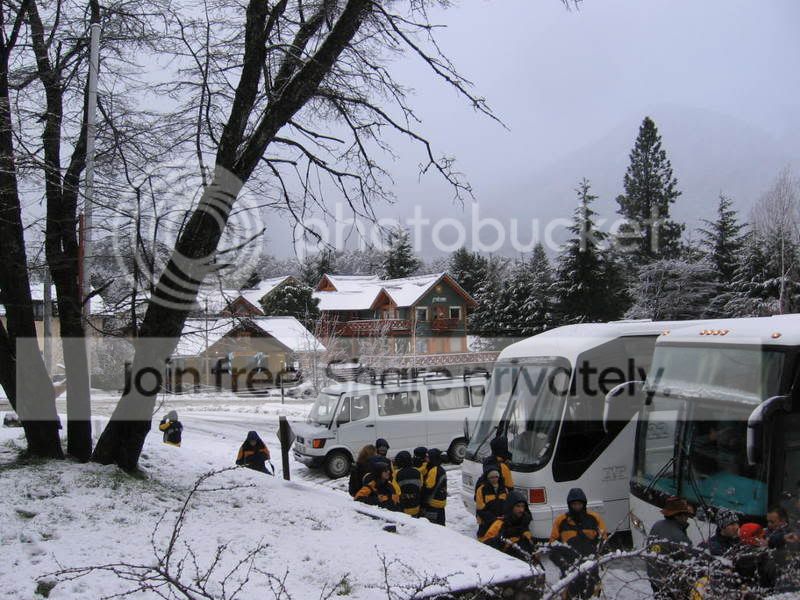
  • Villa Langostura – Argentina

    [/B]Villa Langostura Estado De Neuquen :cheers:

    Villa La Angostura é uma cidade localizada no departamento dos Lagos, na província de Neuquen, Patagonia, Argentina.

    Localizado no setor norte do Parque Nacional Nahuel Huapi, cercado por lagos, florestas e montanhas, é considerada um dos locais mais bonitos da Patagônia Cordillera, ganhando o apelido de "Jardim da Patagônia.

    A poucos quilômetros de distância é a fronteira com o Chile, Samore Cardenal, e juntamente com outras cidades vizinhas, como San Carlos de Bariloche e San Martin de los Andes formam um corredor turístico muito popular tanto no verão como no inverno.

    Suas origens remontam ao início do século quando, em 1902, o Ministério da Administração ordenou a criação da Colônia Nahuel Huapi e fixado por razões de natureza topográfica, num lugar chamado "Angostura", como uma reserva para o povo. Através dos anos, começaram a chegar e resolver os primeiros colonos norueguês dinamarquês e Astriacos.

    01 – A Villa Sem Neve

    02

    03

    04

    05

    06

    07 Mansion Pasador

    08

    09

    10 – Zona Centrica

    11

    12

    13

    14 – A villa Na temporada de Imverno

    15

    16

    17

    18

    19

    20

    21

    22

    23

    24

    25

    26

    27

    28

    29

    30

    31

    32

  • Snooki Appearance Fee Hits $10,000

    Snook will soon be fist pumpin’ all the way to the bank! It turns out getting the daylights knocked out of you on national television can be very beneficial for your finances. Who knew?

    Just last month, Nicole “Snooki” Polizzi was the bargain basement star of MTV’s breakout hit Jersey Shore, charging just $2,000 for personal appearance and hosting gigs. Of course, that was before the pint-sized Italian was sucker-punched by brute Brad Ferro, a girl-beating gym teacher from Long Island. According to Gawker.com, being punched has boosted Snooki’s popularity — and her appearance fee — the star now commands up to $10,000 per event! The figure officially solidifies Snooki’s place as the show’s most expensive star.

    Ferro, by the way, has since fired from his position with the New York City Department of Education. Snooki will be spending Valentine’s Day Weekend back on the beach; she’s hosting a Jersey Shore-themed bash at Peabody’s Nightclub in Virginia Beach on Feb. 12.


  • Nuke deal signed during Erdoğan’s Moscow visit

    MOSCOW, Russia From wire dispatches Wednesday, January 13, 2010- Hurriyet Daily News

    Prime Minister Recep Tayyip Erdoğan held talks with Russian leaders Wednesday. While most discussions focused on oil pipelines, the two countries signed a joint declaration to cooperate in building Turkey’s first nuclear power plant.

    The declaration was signed in Moscow by Russian Deputy Prime Minister Igor Sechin and Turkey’s Energy Minister Taner Yıldız. In November, Turkey canceled plans to award a contract to Russia’s ZAO Atomstroyexport to build the plant.

    Meanwhile, at a joint press conference in Moscow, Russian Prime Minister Vladimir Putin and Erdoğan discussed increasing the use of the two countries’ national currencies in trade. Erdoğan said using national currencies are important because of fluctuations in world currency markets during.

    Erdoğan was also expected to propose scrapping the visa regime between the two countries as part of what looks like Ankara’s new strategy of “visa diplomacy.”

    “I have spoken to [Prime Minister Vladimir] Putin about this before. I will bring it up again when we meet. I will suggest lifting the visa regime with Russia as well. At least in some areas we expect cooperation toward no visa requirements,” Erdoğan said, according to the Doğan news agency. Turkey has removed visa restrictions with at least Albania, Jordan, Lebanon, Libya and Syria in the last six months.

    Delivering a speech at a conference on “Turkey’s Foreign Policy” at the Moscow State Institute of International Relations, Erdoğan said the Turkish government built its foreign policy on “winning and making friends.”

    Erdoğan said the Turkish government’s initial step with this objective was settlement of peace with all countries, indicating that the target had been achieved.

    “Turkey lives in peace with all countries in the region. The steps that have been taken in areas of politics, military, economics, trade and culture are all obvious expressions of it,” Erdoğan said. “Turkey is a country where constitutional and legal amendments were rapidly made to human rights, freedoms, democracy and the rule of law. Turkey is also a pioneering force of a civilization project where prosperity and permanent stability prevail. Turkey has fulfilled this with the steps taken on the ‘Alliance of Civilizations,’” he said, referring to the United Nations-sponsored initiative begun by Turkey and Spain.

    Erdoğan said big steps were taken to improve relations between Turkey and neighboring Armenia. He said urgent steps were needed to end the occupation of Azerbaijani land, however, adding that the OSCE Minsk 3 Group had a vital role to play in this matter and should continue to perform its duty. The group consists of the United States, France and Russia, and Erdoğan said he believed Moscow could play a more active role in the process. He said the Nagorno-Karabakh problem had not been solved for 20 years even though the group was established to solve the issue.

    Turkey in August agreed to allow Moscow to start surveys of its territorial waters in the Black Sea for Russia’s South Stream pipeline, which aims to pump Russian gas to Europe via a new route that bypasses Ukraine.

    But Ankara is also a leading player in the European Union-backed Nabucco pipeline, which aims to carry gas from the Caspian Sea region to Europe and is seen as a way of reducing European reliance on Russian gas.

    “The energy sphere has a very important significance. In this, we share a very developed cooperation,” Erdoğan told Russian President Dimitry Medvedev in talks at his country residence outside Moscow. “Not only in the sphere of natural gas but in crude products, there exists a whole series of opportunities … I see this meeting as a huge opportunity.”

    Medvedev, in turn, hailed the countries’ “serious and major” cooperation. “The Russian-Turkish relationship is improving. It is really a strategic partnership,” he said.

    Erdoğan will later also meet with his Russian counterpart Putin for talks underscoring the warming relations between the former Cold War-era foes. A joint press conference is expected after the meeting.

    NATO member Turkey, which has long pursued EU membership, has sought to downplay rivalry between the pipelines.

    The daily Kommersant said there is speculation Ankara wants Moscow to participate in Nabucco and believes the need for South Stream may be reduced once Viktor Yushchenko, a foe of Russia, departs the Ukrainian presidency. “However, Moscow is not prepared to give up its beloved child,” the newspaper added, referring to South Stream.

    It is unclear whether gas supplies are sufficient to fill two pipelines, and Moscow is keen to complete South Stream ahead of its rival, with plans to go online with the pipeline’s section in Turkish waters as early as 2013.

    The construction of Turkey’s first nuclear power plants and plans to extend the existing Blue Stream gas pipeline linking the two countries are also on the agenda, the Kremlin said in a statement.

    Turkey in turn is seeking Russian support for a planned Turkish oil pipeline to be built from the Black Sea port of Samsun to Ceyhan on the Mediterranean. Russia will play an active role in the project and the two sides are in talks over Moscow taking a stake, Russian Deputy Prime Minister Igor Sechin told reporters on the sidelines of the meetings.

    Talks are also expected to focus on security in the Caucasus region, where Turkey is increasingly presenting itself as a major diplomatic player. Turkey and Russia have joined efforts to broker peace between ex-Soviet states Azerbaijan and Armenia, which are still technically at war over the mountainous Nagorno-Karabakh region.

    Shared concerns over stability in the Caucasus were tested as Russia fought a brief war with Georgia in August 2008, but Moscow has since played a role in the recent rapprochement between Turkey and its ally Armenia.

    Russia is one of Turkey’s top trading partners and its main gas supplier, accounting for about 60 percent of the country’s gas imports. The countries had bilateral trade ties of $33.8 billion in 2008, the Kremlin said.

  • Google Earth, GeoEye bring satellite photos of Haiti’s devastation

    haiti-palace-downtownSatellite images of the aftermath of the Haiti earthquake are now available on Google Earth. The search giant partnered with imagery specialist GeoEye to provide a markup that shows satellite photos of Haiti from around 7:30 a.m. Pacific time this morning.

    The company lets you download the markup here and open it in Google Earth. There’s also a browser plug-in here.

    At right is a birds-eye view of the Presidential Palace before and after the quake.

    For perspective, below is an on-the-ground view of the palace from The Boston Globe’s Big Picture blog. The building was apparently three stories tall and the second floor completely collapsed, according to Reuters.

    haiti-palace


    Buy This Item: [Click here to buy this item]

    Read Original Article

  • Tiffen Smoothee brings Steadicam to the iPhone 3GS

    We had no idea the market of iPhone filmmakers out there was big enough to support pro-quality accessories, but it looks like we were mistaken: Tiffen just announced the Smoothee Steadicam rig for all you mobile Tarantinos out there. As with all Steadicam rigs, the Smoothee stabilizes a handheld camera by means of a counterweight, and the phone cradle can also be detached and mounted on a tripod or used as a stand on a flat surface. No pricing or availability yet, but those things don’t matter when your masterpiece is at stake. Video after the break.

    Continue reading Tiffen Smoothee brings Steadicam to the iPhone 3GS

    Tiffen Smoothee brings Steadicam to the iPhone 3GS originally appeared on Engadget on Wed, 13 Jan 2010 22:02:00 EST. Please see our terms for use of feeds.

    Permalink   |  sourceCNET  | Email this | Comments

    Buy This Item: [Click here to buy this item]

    Article

  • Southport Shrimp

    Southport, North Carolina lies just below the mouth of the Cape Fear River, just a short hop from the South Carolina border. It was the very first area of commercial shrimping hundreds of years ago. Southport is close enough to the big city of Wilmington for conveniences but far enough away from the interstate to retain its small town feel. The town is filled with shady live oaks lining the walks, old cemeteries filled with the history of the area and the charm of the old south. Shrimping remains an important commercial industry in the area. This recipe is very different and very delicious and reflects small town ease with a big history in its simplicity and authentic appeal. I hope you enjoy.

    Southport Shrimp

    Ingredients:

    1 lb. shrimp, cleaned and deveined
    1 Tbsp. shallots, diced
    1 tsp. garlic, minced
    1 Tbsp. olive oil
    1 1/2 cups no salt added tomato sauce
    2 cups cremini or white button mushrooms, quartered
    2 cups zucchini, sliced into coins and halved
    1/2 cup white wine
    2 Tbsp. brandy (optional)
    1/2 tsp. each onion powder, garlic powder, lemon zest, Splenda, paprika and turmeric
    1 Tbsp. parsley, chopped

    Saute the shrimp, shallots and garlic in the olive oil in a large saute pan for about 2 minutes, turning once, until they are pink and slightly curled but not completely cooked. Remove and set aside.

    Add remaining ingredients, except parsley, and simmer for about 7 to 10 minutes on medium heat. Return shrimp to pan and cook for another 2 minutes to reheat shrimp. Garnish with fresh parsley.

    Nutrition Facts
    4 Servings
    Amount Per Serving
    Calories 299.9
    Total Fat 9.0 g
    Saturated Fat 1.3 g
    Polyunsaturated Fat 1.5 g
    Monounsaturated Fat 5.3 g
    Cholesterol 172.3 mg
    Sodium 199.1 mg
    Potassium 650.7 mg
    Total Carbohydrate 14.7 g
    Dietary Fiber 3.7 g
    Sugars 7.1 g
    Protein 26.7 g