Eco Factor: Low-cost water cleaning system based on a unique “swelling glass.”
Researchers at the College of Wooster have developed a unique glass that swells like a sponge and can be used to clean polluted water sources. The glass binds with gasoline and other pollutants but doesn’t bind with water. This smart material has the ability to pick and choose pollutants from contaminated groundwater.
Here come loads of chances for you to use a new computer or something like reformatted hard disk. For an iPod/iPhone user, its not so convenient though. You need to move your iTunes library to the new computer or recover the iTunes library on the reformatted hard disk if you want to add new songs to your iPod/iPhone. Here well talk about how to add new songs onto an iPod/iPhone on a new /reformatted computer while keeping all songs on your Pod. Step 1: Download and install iTunes on the new/reformatted computer
Step 2: Open iTunes and add new songs to iTunes
Step 3: Plug your iPod/iPhone and turn off the auto sync in case that automatically synchronization will erase the content on iPod
How to turn off the auto sync:
(1), Launch iTunes
(2),go to the menu edit–> "preferences on iTunes menu
(3),go to "devices and select "disable auto sync for iPhone and iPod and then go to "ok"
Step 5: Transfer all the content from iPod/iPhone to iTunes with Aniosoft iBackup and then iPods original songs are together with new songs on the newly installed iTunes
Step 6: Sync your iPod/iPhone to iTunes where both new songs and iPod/iPhones songs are currently included
If you haven’t yet heard of the Livescribe Pulse smartpen, it’s a pen that both electronically saves everything you write and draw and records sound, such as a lecture or a business meeting. You can save what you’ve jotted down to your computer. And if you later touch the pen to your written notes, any audio recorded at the time you worte it will be played back for you. Pretty nifty technology, but what else can it do?
Plenty, say Livescribe’s executives who are rapidly building a developer community around the device. Close to 6,500 developers have registered and downloaded a Java-based software development kit to start creating apps. And Wednesday night, Jan. 13, Livescribe is hosting a global developer conference to enlist more developers and to tout the platform.
People can attend the conference at the Computer History Museum in Mountain View, Calif., or view a Web cast of it at www.livescribe.com. Cash prizes will be awarded March 7 for the best apps developed for the Pulse. The company has invited developers to upload 30-to 90-second videos demonstrating how their apps work.
Livescribe has recently loaded two applications onto the Pulse to whet the appetite of other developers, said Jim Marggraff, founder and chief executive officer. One is a translation app that lets the user to, for example, write the word “please” on a piece of paper, set the pen to translate to Spanish and hear the words “por favor” come from the pen’s speaker and see them spelled out on a display screen. With the other app, the user draws the lines for sheet music on the page and fills in notes for the keys of A, B, C, etc. The pen’s built-in camera recognizes where the notes are on the paper and plays those notes through the speaker.
“People started to play with it and they say, ‘There’s some cool stuff here,’” said Marggraff, who calls the platform pen-based computing. “This is where it’s going now with a set of applications that are only the beginning of a multidimensional [number] of apps that we’re creating.”
Livescribe, based in Oakland, introduced the first Pulse smartpen in 2008 and now offers two models, one with 2 gigabytes of storage for $169 and another with 4 gigabytes for $199. Just like any computer it has inputs and outputs, he said. A camera mounted at the pen point and a microphone are the inputs. The speaker, display screen and a USB connector to a computer are the outputs.
The Livescribe application store currently has about 30 apps available, a mix of free and for sale products. Livescribe gets 35 percent of the sales revenue while the developer gets the rest.
Despite the niche nature of the Livescribe Pulse, it’s attracting a diverse group of developers, said Byron Connell, chief marketing officer. According to a recent survey of Livescribe developers, 70 percent have experience writing Windows PC-based applications and another 30 percent have written smartphone apps, primarily for the Apple iPhone and iPod devices. Some game developers have also joined the Livescribe community. While about 40 percent of them plan to develop consumer apps, another 18 percent are targeting the education market and 14 percent the enterprise market.
The Pulse works with specially printed paper, called “dot paper,” with navigational icons preprinted on it, such as the “pause,” “play” and “stop” functions for the audio recorder. The device recognizes the keys on a preprinted image of a calculator and performs the calculations. One of the present applications allows a user to print their own dot paper on their own printer.
This wouldn’t be the first time we’ve seen a sugar fuel cell, but gosh darnit, it just might be the sexiest. Chinese designer Daizi Zheng has conjured up a vision for a soft drink-powered cylindrical Nokia of the future that pounds Coca-Colas to stay juiced: just screw off the top, pop the can, and pour. Daizi estimates that that a single can of the stuff could outlast a traditional lithium ion battery by three to four times — never mind the obvious ecological benefits — but don’t you dare steal our caffeine the next time you need a charge, alright?
I’ve taken a lot of TTC routes and found that some of the areas that these buses and streetcars pass is very beautiful. Here are some TTC routes I can think of:
501 Queen
From Long Branch to The Beaches, you see a lot of things. Lake Ontario, the extravagant condos near the Humber Bay, Trinity Bellwoods, Queen West, downtown, Leslieville and The Beaches. I haven’t done the ride from one end of the streetcar route to the other yet, but it looks fun.
91F Woodbine
I was on this today because the Bloor-Danforth was experiencing delays. Most of the route is around creeks and rivers, and when the bus reaches York Mills, you get a nice view of the DVP.
504 King
Most of this streetcar route is downtown, but the view along Broadview and approaching Roncesvalles from the east is nice.
510 Spadina
You go through the western boundary of U of T, Chinatown, Queen west, Rogers’ Centre, CN Tower, Rail lands and the Harbourfront.
Any other TTC routes that provide eye candy to the TTC rider?
My substitute teaching takes me into many classrooms to teach many subjects.
This year one of the second grade teachers has been out due to illness, so I’ve subbed for her quite a bit. I’ve been having a delightful time writing with these youngsters.
Now when they see me in the classroom, the students ask if they can write books that day. The first day I subbed, the teacher had a booklet project in which the youngsters wrote and drew pictures about the weather, after we’d watched a video and I read a book. (Weather was their science topic for several weeks.) The next couple of days, many wanted to make more weather books. I also wrote weather poems with them.
Now when they want to write and illustrate booklets, I check to see what topics we’re studying. Then, when their other work is finished, they can make books or write poems about it. This week they were contrasting and comparing country and town living in Social Studies, so they made booklets related to this. It’s exciting for me, as a children’s author, to see such enthusiasm about writing books.
So…with your own children. If you need something for them to do, choose a topic and see what they can do with making a book. I only use two pieces of 8 1/2 x 11-inch paper folded over and stapled. That way the book isn’t too long and won’t become a discouraging project, especially for second graders. You can add folded colored paper for the cover and back, if you desire.
The fastest laptops usually get lousy battery life, but Asus has made a few innovations that supposedly net its memorably named UL80JT laptop an incredible 12 hours of battery life, despite its Core i7 processor. I really hope it’s true.
The big change here is a real-time management system that re-clocks the processor on a moment-to-moment basis depending on what you’re doing, which means light work should result in light power usage. That’s how it can hit 12 hours of battery life despite the Core i7 and its Nvidia GeForce 310 GPU. We haven’t been able to test it yet, since it was just announced at CES, but here’s hoping the claims are anywhere near true. [Ars Technica]
UK-based Scissal created these beautiful raised feeders with sensitivity toward how they are manufactured. The company founders felt strongly that quality pet products should not be manufactured in countries with poor animal welfare records. Therefore, these feeders are designed and manufactured in the UK. Makes sense, why should a country benefit from pet product manufacturing revenues when that country doesn’t treat its own animals humanely.
The Scissal feeders are made from sturdy acrylic with removable stainless steel bowls. Choose from freestanding or wall-mounted feeders in a variety of colors. Both single and double feeders are available ranging from 59.00 to 182.00 Euros. Looks like they only ship to the EU for now.
Mochi Media, a Flash game advertising network and payments platform funded by Accel Partners and Shasta Ventures, has been acquired by Shanda Games for $60 million in cash and $20 million in equity. The company has raised $14 million over two venture rounds.
The deal will be announced shortly.
Shanda is China’s largest operator of online games, with nearly 10 million active accounts. The company hosts so-called MMORPGs, or massively multi-player online role-playing games, under which users pay monthly subscriber fees as well as purchase items within the game. The company went public on NASDAQ late last year and has the enviable ticker symbol GAME.
As of June 2009 100 million people were playing games that included Mochi Media. They also launched a payments platform for game developers last year.
The company was close to being acquired last year, but an internal battle between the founders and investors led to a scrapping of that deal. Shortly afterwards the hired executive team left to other ventures. And the Mochi Media founders took over management of the company again.
Shanda also acquired Goldcool Games earlier this month, a Shanghai-based online game developer and operator. Goldcool Games currently operates two MMORPGs, “Hades Realm” and “Dukes and Lords.” The company also has several MMORPGs in the pipeline, including “Dragon Heir,” “Zodiac Tales,” “Martial Glory” and “Hades Realm II.”
Crunch Network: CrunchBasethe free database of technology companies, people, and investors
Supertall(300m 이상)
SEOUL | Green Gateway Center | 600m | 114 fl | App
Skyscraper(200~300m)
INCHEON | Songdo OK(Overseas Korean) Center | 260m | 72 fl | PREP
INCHEON | Yeonsei Songdo Global Academy Campus Complex(M1,M2부지) | 250m | 66 fl | App
INCHEON | Dohwa SK Leader’s view(인천 도화구역 도시재생사업) | 72 fl | App
CHEONAN | Cheonan Theme Park Town Complex | 216m | 57 fl | App-천안복합테마파크타운 조성사업
CHEONAN | Herumeka Business Town | 290m | 65 fl | App-천안국제비즈니스파크 조성사업-대우건설 컨소시엄
BUSAN | Gwangan Nine Star | 59 fl | App(대림산업 계열사 삼호 광안리 초고층 주상복합 개발 프로젝트-지상 59층 3개동)
ANSAN | Ansan Star Dome city(안산 돔구장 도시개발사업-화랑역세권) | 230m | 62 fl | App
INCHEON | Songdo Global Campus Prugio(송도 사이언스빌리지 RM1블럭) | 230m | 46 fl | PREP
GURI | New World Design Trade Center(구리 월드디자인무역센터 조성계획-토평동) | 70 fl | App
GURI | Guri New Town Land(구리뉴타운-수택,인창 재정비촉진지구 랜드마크 조성계획) | 60 fl | App
highrise(100m~200m)
BUSAN | Lamuette Condominium | 165m | 42 fl | PREP
BUSAN | Centum Square | 131m | 38 fl | PREP
INCHEON | Cheongna Lotte Castle Premium Town | 170m | 50 fl | U/C
INCHEON | Songdo International Business Square | 155m | 35 fl | U/C
INCHEON | Songdo I-Tower | 33 fl | App
INCHEON | Songdo Prugio Harbour view 2(송도 D17-1,D18블럭) | App
INCHEON | Songdo Posco The # Harbour view 2 | 160m | 38 fl | U/C
BORYEONG | Mud International Resort | 46 fl | App
GUNSAN | SGFEZ International Hotel | 47 fl | App
INCHEON | Songdo Posco the # Canal Street | 160m | 35 fl | App
INCHEON | Songdo Science Village Auto Vision Tower | 130m | 30 fl | PREP
SEOUL | Urban Trachia(서울역 북부역세권 개발사업) | 34 fl | App
SEOUL | Yongsan Samsung Trapalace | 150m | 40 fl | PREP
INCHEON | Songdo Global Campus Prugio 230m | 45 fl | App
INCHEON | Cheongna Prugio | 180m | 58 fl | PREP-청라국제업무타운 A8블럭
MOKPO | Mokpo Tower Residence 120m | 31 fl | App -목포 중앙공설시장 재건축사업-주상복합-목포타워 휴먼시아 건설
SEOUL | Asterium Seoul Twin Park | 150m | 35 fl | PREP
INCHEON | Cheongna Lynn Straus | 180m | 42 fl | PREP
SEOUL | Seocho Lotte Town | 46 fl | App
청라 반도유보라 주상복합(청라 M1블럭)-Cheongna U-Bora Tower -59 Floor
부산-해운대 AID 주공 재건축사업-해운대 힐스테이트 & 위브-Haeundae Hillstate & We’ve
서울숲 두산위브더제니스-지상 48층,높이 162m 주상복합 건설-2010년 6월 착공.
Majestower Gaegeum(개금 진흥마제스타워)-지상 37층 4개동 ,2010년 상반기 분양
2010년 6월 착공-센텀시티 KNN 신사옥-지상 28층
General Development(100m 이하 빌딩 소규모개발)
INCHEON | IFEZ Arts Center | PREP
INCHEON | Songdo Global Academy Campus Town | U/C
SEOUL | Seoul Performing Arts Center | App
INCHEON | Asian Game 2014(경기장) | App-Stadium Arena Page로 이동가능성!
INCHEON | Kyeongin Canal Way(경인운하) | U/C
SEOUL | 고척동 하프돔구장(Seoul Municipal Half Dome Stadium) | PREP-Stadium arena page로 이동가능성!
INCHEON | Songdo Bio Research Complex | PREP
INCHEON | Songdo Aerospace City Complex(송도 11공구 개발사업) | App
SUWON | Hyundai I’Park City | PREP
INCHEON | Fiera Incheon Complex | App
MASAN | Robotland | App-마산 로봇랜드 조성사업
SEOUL | Digital Media City | U/C
JEJU | MGM Jeju Resort | App
SUWON | Gwanggyo New City| U/C(광교신도시)
INCHEON | Incheon Bridge Phase 2(영종-강화 연륙교 개발사업-인천경제자유구역 확대조성특구) | App
SEONGNAM | Alpha Dome City | PREP
BUSAN | BEXCO Phase 2 Development(제2벡스코 시설확충사업,오디토리움 개발) | PREP
SEOUL | Green Hills(서울 한남뉴타운 마스터플랜 개발) | App
SEOUL | Garak Green Business Park(가락 농수산시장 현대화사업) | App
청라국제업무단지 투자용지 4BL-Incheon Holly Land Cheongna Theme Park Development(홀리랜드 청라 테마파크 건설)-App
General Development-송도 국제병원(Johns & Hopkins Medical University-Seoul National University MOU) 건립사업-App
부산 센텀시티 다이아몬드 타워(Busan Centum city Diamond B/D Tower)
City/Metro Compilation(광역지자체,구역별)
BUSAN | Central Bay(부산북항재개발 사업) | PREP
INCHEON | Cheongna Crystal City(청라지구 개발사업) | U/C
INCHEON | Songdo International Business District(Songdo IBD) | U/C
INCHEON | Songdo Techno Park | U/C(songdo 5,7 district)
INCHEON | Songdo Landmark City | PREP(Songdo 6,8 district)
INCHEON | Incheon International Harbour | PREP(Songdo 10 district-인천신항 개발사업)
INCHEON | The One City | Pro (용유무의관광단지-인천경제자유구역 개발사업)
INCHEON | Songdo Harbour city | PREP(Songdo 9 district)
INCHEON | Yeongjong Sky city | PREP(영종지구 개발사업-영종하늘도시)-인천경제자유구역 개발사업(IFEZ’s Try port Development)
SEOUL | Digital Media City | U/C
SUWON | Gwanggyo New City| U/C(광교신도시)
INCHEON | Incheon Free Economic Zone(IFEZ) Development News | U/C
This post is part of the IT Innovation series, sponsored by Sun & Intel. Read more at ITInnovation.com.
Of course, the content of this post consists entirely of the thoughts and opinions of the author.
I’m always quite skeptical about huge numbers that come out of studies, such as the “losses” claimed by the entertainment industry due to piracy. So I was pretty skeptical of a story (found via Slashdot) claiming that IT failures cost $6.2 trillion per year worldwide. If true, that would be a staggering figure. I have no doubt that IT “failures” are costly, but that number seems extreme. Just glancing over the report itself, it’s definitely not based on any kind of stringent methodology, and seems to count any IT project failure as a total loss, and then adds in “indirect costs” which sound suspiciously like “ripple effects” which, as we’ve demonstrated before are actually ways to double- or triple-count the same dollars over and over again. It seems that many others see huge problems with the original report as well, even to the point of suggesting that its orders of magnitude off.
While the debate rages on over how to properly count the “cost” of such failures, I’m beginning to wonder how useful such a number is. Isn’t a more useful discussion on how to prevent or minimize the impact of any such failures? The aggregate number may look good in being able to see some big number, but aggregate numbers can hide important details inside. For example, back in the early (and even late) 90s there were lots of reports about how computerizing your business was not shown to have added any productivity. A poor conclusion from this was that computering your business was not a smart idea. But the problem was that this was aggregate data. It failed to realize that many, many businesses had boosted productivity through the use of computers, and many of the large failures that wiped out the aggregate “gains” were from a few big businesses that did a really poor implementation. It didn’t mean that computerizing was necessarily a bad idea, but that some of the biggest early players just did a bad job of it.
So, if we’re going to be discussing IT failures, why not step away from that aggregate info and try to focus in on ways to actually minimize the impact of whatever IT failures might occur?
a few closeups of a recent model. any guesses what it is? The model is about 95% there, I’d like to dirty up the textures a lot more for the final images.
Eco Factor: Adobe installs wind turbines for renewable energy at its headquarters.
Adobe’s San Jose headquarters includes three office towers that have received three LEED Platinum certifications. The company’s green efforts have reduced its indoor water use by 22%, landscape water use by 76%, electricity use by 35% and natural gas by 41%. The company is now trying to even better its green credentials by installing 20 Windspire vertical axis wind turbines to provide renewable energy.
Somalia signs currency printing agreement with Sudan
Tuesday 12 January 2010 06:21.
Printer-Friendly version Comments…
January 11, 2010 (KHARTOUM) A batch of new Somali currency will be printed in Sudan following an agreement signed in Khartoum today, Sudan state media reported.
The Managing Director of Sudans Currency Printing office Mohammed Al-Hassan Al-Bahi signed for Sudan Government while the Somali Finance Minister Sharif Hassan Sheikh signed for his government.
The cost of the printing process will top $17 million, SUNA reported
The Sudanese minister of Finance and national economy Awad Al-Jaz and the governor of Sudans Central Bank Saber Mohammed Al- Hassan were present at the ceremony.
Al-Jaz noted the historical relations between the two countries adding that the printing of the currency can contribute in realizing stability and development in Somalia. He said that Sudans experience in as a country emerging from conflict can be a good experience for Somalia.
The Somali minister hailed Sudans efforts in achieving peace saying that the presence of legal currency would contribute positively to the economy.
Somalia has been seeking Sudans help in rebuilding its governments institution and security forces in a bid to assert control over the lawless country. The issue of currency was discussed during the visit of Sharif Hassan to Sudan last year.
Somalia has had no effective central government for 19 years. Regional and international efforts to install one have so far been undermined with rampant insecurity fueled by Al-Shabab Islamic insurgency.
The latter half of the 1990s was a dark time for the company then known as Apple Computer, Inc. Windows 95 had dashed any remaining hopes of mass-market desktop dominance for Apple. The big profits of the earlier part of the decade had given way to some huge annual losses. The future of the entire company was in doubt.
Like injured animals, corporations are adept at hiding the true magnitude of their injuries. As grim as things appeared from the outside, few Apple enthusiasts knew at the time just how close the company came to fiscal ruin. But the software picture was always crystal-clear—clear, and terrifying.
Ten years ago Tuesday, USA TODAY’s Scott Bowles had a kidney and pancreas transplant to treat his juvenile diabetes. He kept a journal of the experience, which ran as a series in the newspaper and in his book, The Needle and the Damage Done. Bowles, 44, a film reporter in Los Angeles, looks back at the decade and life after the surgery.
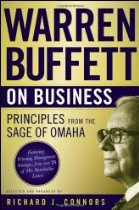
What is better than reading a book about Warren Buffett but a book by Warrren Buffett himself. Warren Buffett on Business: Principles from the Sage of Omaha, by Richard J. Connors is the new book containing excerpts of annual letters from Warren Buffett himself to his Berkshire Hathaway shareholders.
I am a Buffett devotee, and I was caught from the first word but there is stuff there for every investor to read and most importantly to learn from.
Amongst his various witty anecdotes and cute quotes, is advice about ethics, morals, managing businesses, investing in companies long term and stressing the ability of everyone to strive by hard work, invest early and in the right way, eventually, and of course in the long term it will pay off for you.
Buffett’s words and advice are easy to follow and are not cluttered with the usual business or financial gobbledygook that other financial books usually contain.
The excerpts compiled by Connors are memorable and highly readable but there is some serious repetition there of the same stuff and even a glaring error where the same paragraph is repeated not long after the original.
I had an advance copy so it could have been an error in the first print run.
Having said that the book is still highly readable with classic advice for investors that Buffett has stuck to over 70 years of investing and it will never be out of fashion.
It is by no means the best book on or by Warren Buffett but is worth buying to read and refer back to when you need to be reminded on what you might want to do when it comes to investing your hard earned moola.
8 out of 10.
Thanks to Adrianna Johnson from John Wiley & Sons for supplying a copy of the book to review.
Tomorrow, at the second press preview day of the 2010 Detroit Auto Show, General Motors will show its new Cadillac XTS Platinum Concept. The concept hints at a future full-size luxury sedan from Cadillac and also shows some technological features, including a plug-in hybrid system.
GM says that the XTS Platinum Concept was designed to re-imagine the luxury sedan segment as your “personal headquarters.” While it carries most of the exterior design elements seen on other Caddys, inside the XTS Platinum is all about comfortable luxury design and technology with a different approach to in-car electronics.
Power on the Cadillac XTS Platinum Concept comes from a 3.6L V6 direct-injected gasoline engine mated to a plug-in hybrid system. Working together, the system provides a total output of 350-hp and 295 lb-ft of torque. The XTS Platinum also gets Magnetic Ride Control (MRC) to enhance handling and performance.
The plug-in technology builds on what Caddy has learned from its Escalade Hybrid and Escalade Platinum Hybrid models. GM doesn’t say how many miles you’ll be able to travel on electric power alone, but the Detroit automaker says that the XTS takes roughly five hours to reach full-charge.
We’ll get more details for you tomorrow. Stay tuned.
Click through for the press release and the high-res gallery.
2010 Cadillac XTS Platinum Concept:
Press Release:
Cadillac Unveils The XTS Platinum Concept
– A new study re-imagining the luxury sedan, showcasing the progression of the Cadillac Art and Science philosophy
– Designed from the inside out, featuring a new concept for the interface between the driver and the auto electronics
– Plug-in hybrid system is matched with a 3.6L V-6 and all-wheel drive for dynamic and efficient performance
DETROIT – Cadillac unveiled the XTS Platinum Concept at the 2010 North American International Auto Show, suggesting a new paradigm for the luxury sedan of the future. The concept showcases Cadillac’s emerging top-of-the-line Platinum series of models, emphasizing new expressions of luxury and technological features, including a plug-in hybrid propulsion system.
The XTS Platinum Concept was designed from the inside out, re-imagining the luxury sedan as a personal headquarters, built for efficiency, luxury and connectivity. The concept introduces a new approach to in-car electronics that improves the form and function of the car’s entertainment, navigation and information systems.
“The XTS Platinum concept is the next expression of Cadillac’s Art and Science execution philosophy, reflecting our drive to deliver the latest innovations in the most artful manner,” said Bryan Nesbitt, Cadillac general manager. “We envisioned this concept as an automotive personal headquarters, using advanced technology to enable new levels of connectivity and luxury.”
The XTS Platinum Concept uses Cadillac’s 3.6L V-6 Direct Injection gas engine, paired with a plug-in hybrid system. The plug-in technology enables the battery to fully charge from a standard electrical outlet, enabling pure electric propulsion in many driving situations, especially urban commutes in which fuel efficiency may double that of a conventional hybrid.
Traditional luxury sedans were defined by elegant interiors and Cadillac’s XTS Platinum Concept propels that formula into the future. It delivers new approaches to luxury within a design that combines fine craftsmanship with customer-driven innovation. Like the current Platinum Edition products, such as Escalade Platinum and the STS and DTS Platinum sedans, the interior is based on hand cut-and-sewn materials. The XTS Platinum Concept injects more contemporary forms and themes into the interior design, including the use of Organic Light-Emitting Diode (O-LED) displays in place of traditional gauges and screens.
The concept previews a new integration philosophy guiding the development of future models with respect to in-car electronics. The intent is to progress Cadillac’s intuitive in-car electronics systems, typified by the deployable touch-screen navigation system that has been highly acclaimed in the brand’s CTS and SRX product lines. The XTS Platinum Concept previews this strategy via the minimization of traditional buttons and switches. Designers blended the display screens into a flowing instrument panel. They call it a “dead front” design, because the panels appear black until the car is turned on and the screens illuminate. The instrument panel itself reflects the XTS Platinum’s other focus – uncompromising luxury and attention to detail on the interior.
“The Platinum distinction in Cadillac means the fullest extent of luxury and technology and we’ve tried to reach even further with this concept,” said Clay Dean, Cadillac design director. “Just as the technology pushes the boundaries of what a Cadillac can offer, so do the details that make the XTS Platinum Concept an uncompromising experience.”
The interior takes inspiration from nature, specifically the intricate layers of petals that combine to form an orchid. Cadillac designers translated that into a layered and detailed interior. Light cream is the cabin’s primary color and is contrasted with darker elements, such as the steering wheel and an overhead console motif that runs the length of interior’s roof. The console is made of a richly finished wood and houses lighting features.
Premium leather seats include a new style of automotive suede, with a laser-etched pattern. The patterned material adorns the center sections of the seats and accents the door trim. Thoughtfully detailed stitching is used throughout the interior, including the seats, instrument panel and door panels. Passengers in the spacious rear compartment of the XTS Platinum Concept also have access to the car’s connectivity feature, along with a range of infotainment choices.
“We never lost sight of the fact that a large luxury sedan needs to be spacious and accommodating,” said Dean. “Passengers will find generous headroom, legroom and knee space, along with the technology elements that make the drive more productive.”
A new proportion
The XTS Platinum Concept has a distinctive proportion that transcends the traditional aesthetic of luxury sedans and carries the brand’s Art and Science design in a more progressive manner. The unique proportion supports the “inside out” design priority, while creating a sleek profile that complements the car’s advanced technology elements and necessary aerodynamics.
“The XTS Platinum Concept design artfully conveys its focus on functionality through technology,” said Dean. “It is the antithesis of the conventional three-box sedan, suggesting the active evolution of Cadillac’s design language.”
A sweeping profile culminates in a short, high deck lid that meets the XTS Platinum Concept’s aerodynamic needs – including a rear spoiler mounted on the deck lid, incorporating the center high-mounted stop lamp. A high, sloping beltline gestures the vehicle forward, suggesting motion, while the fenders flare outward wrapping tightly around 20-inch wheels and tires. The wheel-to-body proportion was carefully tailored to visually communicate the car’s all-wheel-drive chassis.
Like the interior, the exterior elements are precisely tailored and elegantly detailed. Brushed billet aluminum trim is used selectively and the 20-inch, 11-spoke wheels feature a brushed aluminum face accented with bright inserts within the spokes. The wheels are wrapped with special Bridgestone tires that were created specifically for the XTS Platinum Concept.
Signature elements essential to Cadillac’s Art and Science design language include vertical headlamp and taillamps, with integrated light pipes and richly detailed lighting components. The headlamps feature light-emitting diode technology for bright illumination that requires less energy, as well as Cadillac’s Adaptive Forward Lighting technology, which turns the headlamps with the direction of the front wheels for greater visibility in turns.
Purposeful and efficient performance
The XTS Platinum concept’s plug-in hybrid electric propulsion system (PHEV) builds on the experience Cadillac has gained with the Escalade Hybrid and Escalade Platinum Hybrid flagship models. The plug-in capability boosts the car’s electric-only driving capability, offering additional battery energy capacity and enabling it to recharge from a standard external electrical outlet. The key benefit of external plug-in recharging is that in many situations – such as overnight parking – the battery can fully recharge in roughly five hours while the car is not in use. The plug-in system operates at maximum efficiency when operating on power the battery has drawn from the electric grid. In some conditions, such as urban commutes, drivers can experience efficiency that doubles that of conventional hybrids.
At higher speeds or when conditions demand it, such as brisk acceleration, a combination of engine power and electric power or engine power only, propels the vehicle. The combination of the Direct Injection V-6 engine and the PHEV system featuring fully electric variable drive provides a spirited driving experience. The system provides an estimated 350 horsepower (260 kW) and 295 lb.-ft. of torque (400 Nm).
Magnetic Ride Control (MRC) enables the XTS Platinum Concept to deliver superior road-holding performance while maintaining luxury car composure in “regular” driving conditions. It uses shocks controlled by advanced magneto-rheological technology, rather than mechanical valves, to greatly accelerate response time and precision.
MRC uses electronic sensors at all four wheels to literally “read the road” every millisecond, making constant adjustments to damping to create virtually instantaneous and extremely precise control of body motions.
An advanced, specially calibrated all-wheel-drive system ensures optimal traction in wet and slippery conditions, and helps deliver maximum traction while cornering. Four-wheel disc brakes, with four-channel ABS, StabiliTrak stability control and full-function traction control complete the drivetrain details.
“The XTS Platinum Concept was designed to deliver an engaging driving experience without compromising the functional features, space and comfort customers seek in a luxury car,” said Nesbitt. “It is a new vision of luxury that uses advanced technology to deliver functionality efficiently and rewardingly.”
CADILLAC XTS PLATINUM CONCEPT SPECIFICATIONS
Vehicle type:
luxury sedan concept
Wheelbase (in / mm):
111.7 / 2837
Length (in / mm):
203.5 / 5170
Width (in / mm):
74.8 / 1900
Height (in / mm):
59.1 / 1500
Track (in / mm):
62.6 / 1589 (front); 62.8 / 1594 (rear)
Powertrain:
plug-in hybrid system with 3.6L Direct Injection gas engine (with variable valve timing); lithium ion battery
Suspension:
four-wheel independent with Magnetic Ride Control.
In today’s remainders, the big and the little. A big quantum computer simulates a little molecule. A big series of tubes make a big difference at Stanford hospital. And a Big Brother ad makes me a little worried.
Quantum Time Quantum computing, like Pilates, is one of those things that sometimes seems to offer more in theory than in meaningful results. In the case of the former, the tide may be turning. Chemists at Harvard University have used a quantum computer to calculate the exact energy of a hydrogen molecule, a finding that could only be approximated by conventional supercomputers. These traditional computers, working in binary bits of zeroes and ones, falter as molecular simulations become increasingly complex. Instead, the quantum computer works in qubits which can test configurations with both ones and zeroes, allowing for more precise models. Still, some might say that “meaningful results” have yet to be achieved. [Eureka Alert]
Half Past Cloudy One of the makers over at Make has made this handsome clock which instead of telling time tells the weather. The weatherpiece checks for updates on the Environment Canada website every quarter of the hour via an Arduino micro-controller, its lower hand adjusting to the correct temperature and its upper hand swinging to show the day’s forecast. Though the clock’s case gives it a decidedly old-school feel, it hosts a web server so it can be tweaked from any browser. It may not dispense the most robust meteorological data but what it does display it does with style. [Make]
A Dose of Tubes Your local bank isn’t the only place that’s zipping your information around using pneumatic tubes. This report on the Stanford Hospital’s pneumatic tube system reminds us that the very old technology is still very much alive today. Stanford’s system, which includes over four miles of pipes, is one of the largest in the nation. The containers navigate the complex system with computer guidance and reach speeds of up to 18 miles per hour as they send important patient data to and fro distant areas of the hospital. Dating back to the 19th century, pneumatic tubes are not a new technology, to be sure, but they are an important one. As Leander Robinson, chief engineer of Stanford’s system, puts it: “The tube is everywhere.” [Stanford School of Medicine]
Ad Watch At seven and a half feet tall and packed with super-smart tech, not only do you read Intel’s Intelligent Digital Signage Concept, it reads you, too. Conceived by Frog Design, the multi touch-enabled, data-collecting, life-size advertisement (which we mentioned and showed briefly when covering Intel CEO Paul Otellini’s keynote at CES 2010) looks to make signage an interactive affair.
Intel’s concept engages shoppers with captivating graphics and a touchable screen and then uses a built-in camera to register their demographic data. Fast Company has a video of the gigantic advertisement, but thankfully it’s just a prototype and there are currently no plans for it to invade malls or your privacy anytime soon. [Fast Company]
Heading into the second half of the season, Harper’s men’s basketball team has a record of 7-8, and Head Coach Anthony Amarino is encouraged as his team begins conference play.
“We finished the first half very well, winning 4 of the final 6 games,” said Amarino. “We made it to the championship round of the Illinois Valley Tournament (losing to Waubonsee, 75-66, in the championship game.), and we’ve been in contention in our games.”
“Our most consistent player has been Brandon Bolger (Sophomore – Schaumburg),” says Amarino. “Everyone has contributed to a balanced attack.”
“Overall, we’ve taken advantage of our opportunities, and our freshmen have made a positive contribution,” adds Marino.
As an always difficult conference portion of the schedule begins, Amarino will looks to start 2-3 freshmen in his line-up. “With half a season behind them, our freshmen have matured to the point where we can count on them.”


 If you haven’t yet heard of the


 The fastest laptops usually get lousy battery life, but Asus has made a few innovations that supposedly net its memorably named UL80JT laptop an incredible 12 hours of battery life, despite its


 This post is part of the IT Innovation series, sponsored by Sun & Intel. Read more at




 Quantum Time
 Half Past Cloudy
 A Dose of Tubes
 Ad Watch