OpenStack, the fast-growing IaaS platform, is taking root across the industry, promising an open cloud computing platform that enables portability, security and trust in the cloud. OpenStack distributions continue to come to market, and customers are testing the platform as an adjunct to public clouds or their own private infrastructure. How many customers are using OpenStack in production today, and is the platform living up to its promise of openness and security, beyond what’s available from other cloud providers?
Key topics of discussion:
Who is using OpenStack today?
What underlying infrastructure and technologies provide the foundation for OpenStack clouds today and into the future?
Are open APIs enough or is there a further level of interoperability that must occur in order for true portability of workloads across clouds?
How does OpenStack enable trusted compute pools at the hardware level?
What are the challenges with ensuring authenticity at the infrastructure layer?
Register here to join GigaOM Research and our sponsor Intel for “OpenStack: Building portability, security and trust in the cloud,” a free webinar on Wednesday, March 27, 2013, at 10 a.m. PT.
The Data Center Knowledge Webinar series continues with the next one titled, “A Roadmap for Data Center Transformation.”
You’re invited to learn more about data center transformation when IO Senior Vice President Aaron Peterson has an in-depth conversation with the Editor-in-Chief of Data Center Knowledge, Rich Miller, during the next DCK Webinar. The discussion will revolve around the increasing pace that the global demands being placed on data center providers.
Register now for the DCK Data Center Transformation Webinar on March 28 at 2 p.m EDT. The event lasts 1 hour.
In the webinar, various vital topics around the existing and future data center transformation areas will be covered. This includes:
The predominantly static data center and its limitations.
The approaching crisis, a “perfect storm” on the data center horizon, made up of supply and demand constraints, which must be prioritized and transformed.
The technology-based, sustainable solution that is Data Center 2.0 which represents a fundamental transformation of data center DNA.
U.S. venture firm Domain Associates has partnered with Elite Consulting, an advisory to the Chinese pharmaceutical and medical device industry, have partnered in a new venture called Domain Elite. The partnership will work to establish new companies in China that will provide Western companies the “financing, regulatory, medical, and marketing support and infrastructure needed to bring their products to China,” the firms said.
PRESS RELEASE Domain Associates, a U.S. venture capital firm investing in breakthrough life sciences technologies, and Elite Consulting, consultants and financial advisors to the Chinese pharmaceutical and medical device industry, today announced a partnership to bring the most advanced healthcare products and technologies to China. The partnership called Domain Elite (www.meetdomainelite.com) will establish new companies and joint ventures in China that will provide Western companies the financing, regulatory, medical, and marketing support and infrastructure needed to bring their breakthrough products to China. Target technologies will be mainly focused in the areas of pharmaceuticals, diagnostics, and medical devices. The partnership is exclusive and is envisioned to be the source of multiple emerging businesses in Chinaover the course of several years.
“The Chinese healthcare system has a great and significant need for best-in-class, innovative therapies and medical products,” said Brian Halak , Ph.D., partner at Domain Associates. “We see Domain Elite as the first partnership of its kind to create new companies by leveraging the resources of both China and the U.S. These companies will bring the most effective new drugs and novel technologies to fulfill unmet medical needs and improve healthcare in China. In the process, Domain will create its own investment opportunities in the rapidly expanding Chinese market.”
“From patients to doctors to the government, health is of major importance to everyone in China,” said Micah Zimmerman, partner at Elite Consulting. “Our analysis of the needs of the Chinese healthcare market led us to develop Domain Elite as a bridge between overseas technology companies and Chinese doctors and patients. Everyone benefits when patients can access the most advanced technologies to improve health.”
The partnership brings together Elite Consulting’s in-depth knowledge of the Chinese healthcare landscape with Domain’s capital and deep networks, both within its portfolio and throughout the industry. Domain has provided seed financing to Domain Elite for the initial search and evaluation process and will contribute more significant capital for each new technology introduced to China.
“With more than three decades of experiences, connections and accomplishments in life sciences investing, Domain Associates understands how to found and execute industry leading investment solutions to launch and build successful companies that meet healthcare needs,” said Mr. Zimmerman. “Domain’s investment in Eddingpharm, a Chinese pharmaceuticals marketing company, and involvement in The Foundry, the premier U.S. medical device company incubator, illustrate Domain’s innovation not only in addressing healthcare needs but also in establishing important collaborations that facilitate company creation for the development and marketing of cutting-edge technologies.”
“With an exclusive focus on healthcare and more than 16 years of experience in China, Beijing-based Elite Consulting brings incomparable ‘local’ expertise and international dependability to developing new medical technologies and products for the Chinese market,” said Dr. Halak. “We believe Domain Elite will create multiple successful companies that will translate cutting-edge medical technologies into impactful, best-in-class products for Chinese healthcare.”
About Elite Consulting and Elite Capital Advisors
Founded in 1997 by six Chinese executives from the pharmaceutical and diagnostics industry, Beijing Elite Management Consulting has an active client base of 1,200 domestic pharmaceutical and medical product companies in China. Elite Consulting provides sales and marketing management services, contract executive management, high-level SFDA experts and registration services, clinical development expertise, marketing research, and a partially owned sister company, which provides formulation, manufacturing, and cGMP consulting for international and domestic pharmaceutical and device manufacturers in China. Elite also is among the most active commercial due diligence providers in the China healthcare industry. Annually, Elite conducts diligence on more than $500 million of direct investment in the pharmaceutical, device, and hospital industries inChina. Elite Capital Advisers provides mergers and acquisitions brokerage, facilitation, and capital investment to leading investors and multinational and domestic pharmaceutical companies. Elite Consulting is located in Beijing. For more, please visit http://www.bjelite.com.
About Domain Associates
Founded in 1985, Domain Associates, L.L.C. is a venture capital firm with an exclusive focus on investing in life science companies that advance human health. Domain’s focused network, deep experience, and dependable reputation of this team have made it one of the top private-equity groups participating in healthcare investing. Domain has been involved in the formation and growth of more than 250 life sciences companies. With $2.4 billion of capital under management, Domain invests in three major segments: pharmaceuticals, diagnostics, and medical devices. Representative past investments include Amgen, Amylin Pharmaceuticals, BiPar Sciences, Biosite, Dura Pharmaceuticals and Pharmion. Domain has offices in Princeton, N.J.and San Diego.
Though we still haven’t gotten a peek of the LTE-capable Galaxy Note 8.0, it would appear that the 3G version is currently making its way through the Federal Communications Commission for final approval before retail availability.
The Galaxy Note 8.0 was announced back at MWC, and Samsung mentioned that the tablet would be available in the second quarter of this year. The WiFi-enabled version already passed through the FCC a couple of months ago.
Unfortunately, we still don’t have word from Samsung or carrier partners on retail availability, but seeing as the FCC is a crucial part of the certification process, we’re at least a step closer to the GalNote 8.0.
In terms of specs, the smaller Galaxy Note tablet is meant to compete directly with the iPad mini, sporting an Exynos 4 Quad processor clocked at 1.6GHz, Android 4.1.2 Jelly Bean, and TouchWiz of course.
You’ll also see an 8-inch 1280×800 TFT LCD display, 2GB of RAM, and support for 3G, as well as an S-Pen stylus. However, it would appear that the 3G version doesn’t come with a 32GB option, although you can always make up for the lost storage with the expandable microSD card slot.
We went hands-on with the Galaxy Note 8.0 back in February, and though we find the portrait orientation slightly odd, we’re mostly pleased with the performance we’ve seen out of the tablet.
Brace yourselves because tomorrow Samsung unveils the next Galaxy flagship at the Unpacked event held in New York. And, even if there are more than 24 hours until the announcement, UK mobile operator EE (previously known as Everything Everywhere) has joined the pre-show hype bandwagon with an announcement of its own.
In a Twitter post, featuring the same teaser photo that Samsung released yesterday on its own Twitter account, EE has announced that it will carry the next Galaxy (presumably called Galaxy S IV) but with the added bonus of “superfast” 4G LTE connectivity.
The UK carrier has also linked to its next Galaxy update page, which lists the smartphone as “coming soon” also on Orange and T-Mobile, the two mobile operators which laid the foundation for EE. However, on Orange and T-Mobile the handset will not feature 4G LTE connectivity.
Google’s (GOOG) most exciting and innovative mobile service is currently only available on 15.5% of Android devices, but it will soon be accessible to nearly every iPhone and iPad user on the planet. A leaked promotional video picked up by Engadget reveals that Google Now, the Android feature that presents users with useful information driving directions, weather reports and traffic information before they even know they need it, will soon be available on the iPhone and iPad as a downloadable app. The video was pulled shortly after it was discovered on YouTube, but a copy can be viewed below.
I watched an advert for Microsoft’s new webmail service yesterday. It starts by showing a man changing his job from Deliveryman to Stuntman on the website. Next up, there’s a pretty young woman getting married and locking lips with her partner. Afterwards she uses Outlook.com to change her name from Sarah Jones, to Sarah Jones-Brown, and a female friend emails to congratulate her. The advert ends with a voiceover saying “Get email that keeps your friends information up to date automatically”.
I thought it was a decent, if unspectacular, ad that gets its message across well. Then I scrolled down to the comments. And oh my, the bigots were out in force. Because, you see, the woman in the video was getting married to — shock horror — another woman!
The homophobes and trolls were, as you’d expect, outraged by the inclusion of a lesbian couple in the clip and the vitriol and ignorance was flowing.
There is, in truth, absolutely nothing in the video for anyone to be offended by, but of course same-sex marriage is a big deal for a lot of people, and it gets many straight Americans (in particular) very angry and opinionated. My personal view is if someone wants to get married to the love of their life, they should be allowed to, irrespective of little things like gender and race. This is the 21st century after all.
When I was growing up, I knew people who thought interracial marriage should be outlawed. Times have moved on, and now it’s same-sex marriage in the crosshairs. Homosexuality is no longer the “love that dare not speak its name” but it’s still a challenge, and in a lot of places a complete impossibility, for gay couples who want to show their commitment to one another to get hitched. (As an aside, I do wonder how many of the men who are firmly against same-sex marriage enjoy lesbian porn? Two women getting it on, well that’s fine, but two women in a loving relationship? That’s an abomination!)
A lot of tech firms stand up for same-sex marriage. Last month 278 companies, including Apple, Google, Facebook, Intel, Cisco, and Amazon, told the US Supreme Court that federal same-sex marriage restrictions hurt their businesses, affected employee morale, and forced them to betray their company principles. Many employees of tech firms like Google have contributed videos to the excellent and very worthy It Gets Better Project.
The Tide Turns
This morning, returning to the video, I see the comments under the advert are now mostly positive. The homophobes and trolls have been shown short shrift and the majority of the negative remarks from yesterday have been removed by their shamed authors. The top comment, from SilverAnicore, now says:
I love it when well-known companies make such a public and natural statement against homophobia and bigotry – by focussing on the thing they support, love, not the things they hate.
Love the ad.
The second most popular comment, from RetroishDude asks:
Why couldn’t someone be happy for a couple that has just gotten married? Weird.
Big businesses do sadly have to play it carefully when it comes to promoting or supporting homosexuality, in the same way they have to be careful when stepping into any political minefield. Last year the century-old creme-filled cookie brand Oreo created an advert showing a rainbow-layered cookie in time for LGBT Pride month, captioned it with “Proudly support love!” and faced an instant backlash. But for all the negative comments Oreo received, it got a lot more overwhelming support and positive press in the end, and that is likely what Microsoft was hoping for, and now seems to be getting.
Has the advert generated a lot of interest? Undoubtedly so. If it had shown a man and a woman getting spliced a lot less people would have watched it, or cared, or commented about it. I wouldn’t have mentioned it.
Was Microsoft brave to feature a lesbian couple getting married? Yes, I suppose it was, in some small way, and regardless of whether it was done to show support for same-sex relations, or to get people talking about the advert, or more likely a bit of both, the software giant deserves to be applauded for its decision.
I do wonder, though, if there wasn’t a degree of calculation in this advert. If someone at Microsoft decided that lesbians might be less offensive than gay men to their target audience. Though maybe I’m overthinking it, because really, ultimately, it’s just an ad showing two people in love getting married and using Outlook.com to announce a name change.
There’s a lot to be annoyed at Microsoft’s webmail service for — still letting damn spam into my inbox for starters — but showing same-sex marriage in an advert? Not so much.
The Xi3 Piston opened for pre-orders on Monday, and seemed to be the first of many Steam Box type devices powered by Valve’s online gaming store and service. But Valve quickly came out and said that despite their investment in Xi3, the company has no “official involvement” in the development of the Piston itself. Now Xi3 is firing back, admitting that while it received investment and the Piston console was built as the result of a request to build a device specifically for Valve, Valve isn’t currently involved in the project.
Xi3 says that Valve president Gabe Newell personally asked its founder and CEO Jason A. Sullivan not to disclose any info about the relationship between the two companies, and that’s just what it has done. The Piston was never an official “Steam Box,” Xi3 says, which is also what we pointed out in our article. Instead, we suggested it would be one of many devices from third-party OEMs that could fit the generic description of a PC console designed for Steam.
The release from Xi3 also goes on to claim that the Piston can actually do one better than any official hardware, since it’s fully open to support a whole host of different gaming platforms, not just Valve’s. Xi3 also says that it’ll ship with Windows initially, since that’s where the “vast bulk of game software and computer gamers are today,” not Linux (thought it is Linux-compatible). Xi3 says this is where Valve and it have a philosophical difference, and where the Piston will be able to offer consumers more choice than any officially blessed Steam Box.
Sullivan says in the release that pre-order demand has been very strong so far, and the company is actually concerned it won’t be able to meet holiday 2013 demand for the console. But the tone overall seems a little like that of a child whose affection was spurned: it gives the impression that Xi3 was slightly taken aback at the force with which Valve distanced itself from the Piston project.
Whatever the situation between Xi3 and Valve, the upshot is that there will be ‘Steam boxes’ and there will be ‘Steam Boxes,’ (Official) and Valve might have trouble keeping the public educated as to which is which. And in the end you have to wonder if it matters, so long as both provide full access to Steam and its games in a console-style environment.
Gary Watson is Chief Technology Officer, Nexsan, an Imation Company.
GARY WATSON
Nexsan
With today’s wide variety of storage devices comes lots of confusion about what types of drives to use for what data types. Adding to the confusion is Serial ATA (SATA) and SAS, which refer to disk drive interfaces, and Solid State Drive (SSD) which refers to a particular kind of internal technology. Then there are considerations of random access performance, sequential performance, cost, density and reliability.
All these factors make selecting the right drives a challenge. This article offers six tips for navigating through this complexity to help you pick the right solutions for your needs.
1. Don’t Confuse Interface Type with Disk Performance or Reliability.
In the past, SAS and SATA were used as convenient shorthand for fast (SAS) or dense (SATA) disk drives. Now, however, we have SSD drives with SATA interfaces as well as inexpensive and dense but relatively low-IOPS 7200 RPM drives with SAS or even Fibre Channel interfaces. Users can no longer make blanket assumptions like “SAS is better for databases.” For example, if we’re comparing a blazing fast SLC SSD with a SATA interface vs. a relatively sluggish 7200 RPM NL-SAS drive, we might be wrong by a factor of 1000x.
Users can’t even use SAS or SATA as shorthand for desired drive reliability. There are several SATA drives that have a claimed 2.0M hour MTBF (mean time between failure), for example a 4TB enterprise hard drive from one of our technology partners. This is in contrast to the typical 1.6M hour MTBF number for many 3.5-inch 15,000 RPM SAS drives, or the even lower 1.4M hour MTBF number for some 2.5-inch small form factor (SFF) 7200 RPM NL-SAS drives.
Think about that last number for a minute – for a 40TB system, users would need 40 of the 1TB SFF NL-SAS drives, while only needing 10 of the 4TB drives referenced above – one fourth as many. Furthermore, and this is crucial, because the 4TB drive I referenced is so much more reliable, there would be 5 times as many SFF drives failing per year. Additionally, the 4TB drive would only consume 113 Watts, whereas the SFF drives would consume over 200 Watts for the same capacity. When power is a concern, 3.5-inch drive systems often deliver twice the gigabytes per Watt as compared to 2.5-inch drive systems.
2. For Best $/GB, 3.5-inch RPM SATA Is Still King.
Storage vendors have a seemingly endless variety of pricing models, but one constant seems to be that 2.5-inch systems cost twice as much per gigabyte as 3.5-inch systems, assuming both are using “enterprise-grade” drives. But as previously noted, the 3.5-inch solution will be far more reliable.
10K and 15K SAS solutions in either 2.5-inch or 3.5-inch form factor will be approximately 3X to 6X more expensive per gigabyte. SSD solutions can be from 10X to 50X more per gigabyte than comparable SATA drives.
3. HDD Performance is Mostly Dictate by Density and Mechanical Speed.
The random or transactional (IOPS) performance of spinning drives is dominated by the access time, which in turn is determined by rotational latency and seek time. Interface performance has almost no influence on IOPS, except in the negative sense that complex or new interfaces sometimes have bloated or immature driver stacks which can hurt IOPS. Highly random applications which benefit from high IOPS drives include email servers, databases and hypervisor environments.
Sequential performance, which is important for applications like video and D2D backups, are dominated by the RPM of the drive times the bits per cylinder. This number will decrease 50 percent or more as the drive moves from the outermost to the innermost cylinders. Again, as long as the interface is fast enough to keep up (and it is in all modern hard drives), the interface speed (or even the quantity of interface ports) has no measurable effect on sustained performance. The fastest drives today can sustain less than 200 MB/s, which is less than the performance of a single 3 GB SATA port.
4. Consider SSD Instead of 10K OR 15K Drives for Transactional Workloads.
Due to their ever-increasing performance and reliability, 7200 RPM SATA drives are taking on more types of workloads including moderate transactional applications. However, 15,000 RPM drives can deliver roughly two to three times as many small block random transactions as 7200 RPM drives due to their lower rotational latency and much more powerful actuator arm. As a result, they are often used for demanding database or email server workloads.
Recently, SSDs have become mainstream options from most storage vendors. Though not faster at sequential workloads, they are incredibly fast at random small block workloads and may be a superior choice for demanding SQL, Oracle, VMware, Hyper-V and Exchange requirements. Many customers report that they can support more guest virtual machines (VMs) per physical server due to the lower latency of SSD solutions, which may offer tremendous cost savings depending on specifics of licensing and hardware.
SSDs continue to advance at a very fast pace, and are now the leading technology in terms of dollars per IOPS as well as IOPS per watt. Today it is very likely that an all-SSD solution will have lower overall capital and operational cost than one made from 15,000 RPM drives due to the reduction in total slots required to achieve a given transaction performance, and the greatly reduced power footprint as compared to spinning drives for a given number of transactions. Some enterprise SSD’s meet or even exceed the reliability and durability of 15,000 RPM drive systems because far fewer SSD’s are required to achieve any given IOPS level.
The expo hall was bustling with activity at the DatacenterDynamics Converged conference held yesterday at the Marriott Marquis hotel in New York. (Photo: Rich Miller)
More than 1,500 data center professionals from the New York region gathered Tuesday for the DatacenterDynamics Converged conference at the Marriott Marquis. Featured topics included the lessons learned from Superstorm Sandy, cooling guidelines from ASHRAE, the latest industry research findings, and risk management planning for data centers. Check out our photo feature, Scenes from DatacenterDynamics Converged NYC, for a recap of the conference highlights.
HG Data Company has raised $2 million in funding led by EPIC Ventures. The company is developing a cloud-based business intelligence database, and will use the money to increase coverage of the database, and expand its operation.
PRESS RELEASE
SANTA BARBARA, Calif.–(BUSINESS WIRE)–HG Data Company today announced it has successfully raised $2 million in funding led by EPIC Ventures. The investment will be used to increase coverage of the company’s cloud-based business intelligence database and expand into the Asia-Pacific region.
“While LinkedIn maps the connections between people in business, HG Data maps the connections between businesses themselves – who sells to whom, who buys what, and who partners with whom,” said Craig Harris, CEO and founder of HG Data. “After more than two years of honing our algorithms with feedback from top-tier technology suppliers, we are ready to scale our data distribution to the long tail of business-to-business intelligence applications. With EPIC Ventures’ capital infusion in tow, that journey is ready to be accelerated.”
The company’s data procurement technology extracts business intelligence from hundreds of millions of Web documents and offline sources to create a comprehensive database of business relationships. Armed with this highly granular intelligence, HG Data is able to empower clients to improve their lead generation and scoring, marketing automation and market share analysis.
In 2012, HG Data released the world’s leading database of technology deployments, which produces a census of the worksites operating thousands of specific enterprise resources, ranging from Adobe and Salesforce.com to SAP and VMware. Selected as one of Outsell’s “30 to Watch” in the information industry for 2013, HG Data already counts four Fortune 100 companies as customers of its business intelligence services.
“HG Data’s robust platform made this a very compelling investment concept,” said Kent Madsen, managing director of EPIC Ventures. “Rarely have we seen such uniformly rave product reviews in our due diligence with customers. HG Data’s unique methodology and sophisticated product set form a winning combination that we anticipate will be a highly disruptive player in the massive company-information market.”
Investing alongside EPIC Ventures in this funding round were angel investors including Kevin O’Connor, founder of DoubleClick and current CEO of FindTheBest; Eric Kanowsky and AJ Rice, both co-founders of Software.com; and Tim Baskerville, former CEO of JupiterResearch.
HG Data’s leadership team brings a wealth of experience in building business information brands. Prior to founding HG Data, Harris served as founder and CEO of NOZA, Inc. through a successful acquisition by Blackbaud, Inc. in 2010.
About HG Data
HG Data is a business intelligence service used by leading technology companies for marketing and sales leads as well as research and investment. HG Data produces a detailed census of specific technologies utilized at an enterprise’s geographic sites. The company’s unique data science approach scours the open Web, combining unstructured data with archived offline sources, resulting in detailed profiling of the enterprise technology marketplace. HG Data was founded in 2010 by the team that built and profitably sold data-company NOZA to Blackbaud, Inc.
Getting easier access to a Windows 7 shortcut is extremely easy: right-click, select “Pin to taskbar”, and an icon will pop up on your taskbar, ready for immediate use.
Right-click a file, though — or a folder, a drive, a Control Panel applet or just about anything else — and you’ll find no “Pin” option. There are various manual workarounds you can apply, but your life will be much simpler if you grab a copy of Taskbar Pinner, which allows you to fill the taskbar with just about anything you like.
The program arrives as a tiny (236KB) download. Unzip this and launch either the 32 or 64-bit Taskbar Pinner, depending on your version of Windows. (Or if you’re not sure, just pick one, and the program will tell you if you need to use the other.)
The Taskbar Pinner interface looks much like a regular Windows 7 dialog, and it’s very straightforward. You have four options — “Pin a File”, “Pin a Folder”, “Pin a Shell Location” and “Pin a Library” — and all you have to do is click one, choose whatever it is you’d like to pin, and you’re done.
Probably the most interesting option here is “Pin a Shell Location”, as this gives you access to all kinds of system features (not just your own folders). So you can pin Control Panel applets, Windows Help, the Recycle Bin, Windows Search, the Run box and more.
Whatever you select can be removed in the usual way, just by right-clicking and selecting the “Unpin” option.
And if you think you’ll use Taskbar Pinner a lot, then checking the “Explorer context menu” allows you to access it from Explorer, or the desktop, without needing to manually launch the program first. To pin a file, folder or drive to the taskbar, say, you’d just right-click them, select “Pin with Taskbar” and the shortcut will be added right away.
Moving into India’s engineering sector, Nadathur Group has acquired Insight Engineering Pvt. Ltd. Terms were not released. o3 Capital, a mid-market investment bank in India, was sole advisor to the transaction.
PRESS RELEASE
It is a pleasure to announce that our client, Nadathur Group,
has acquired Insight Engineering Pvt. Ltd. (“Insight”), to mark its foray into the engineering sector in India.
As part of the transaction, Jaggi Nadig from Nadathur has been inducted into the board of Insight as a Director. Commenting on the transaction, Nadig said “With this acquisition, Nadathur has strengthened its focus on creating a Technology Platform in the Engineering Space”.
o3 Capital was the Sole Advisor to the transaction.
Insight Engineering
Insight is an engineering firm with expertise in design, manufacturing of component cleaning machines and surface treatment lines for industries such as automobiles, FMCG, aerospace. These machines are used to clean/coat components post-manufacturing and before assembly. Insight is one of the leaders in India in this niche segment and its strength lies in designing customized solutions for its clients. Insight has design and manufacturing facilities in Mumbai and Chennai.
Nadathur Group
Nadathur Group, founded by N. S. Raghavan, co-founder of Infosys Technologies, has investments spread across multiple asset classes and investment life cycles – from angel and venture funds to private equity, public equity and debt. It has presence across a diversified portfolio of industries including hospitality, education, technology, life sciences, real estate and engineering amongst others.
o3 Logo o3 Capital
o3 Capital is a leading mid-market investment bank in India, focused on private equity capital syndication, cross border M&A and strategic advisory services. The company focuses on industries where Indian companies have a strategic growth advantage, including Pharmaceuticals and Healthcare, Consumer Markets & Retail, IT / ITES and Infrastructure & Real Estate. o3 Capital has closed 68 transactions in the last 6 years across verticals and product groups aggregating to over USD 3.6 Bn in transaction value.
U.S. private equity firm Apollo Global Management LLC is in talks to sell its 11 percent stake in India’s largest direct-to-home satellite service operator Dish TV India Ltd, Reuters reported on Wednesday. The stake has a market value of about $144 million. Apollo, which manages about $113 billion globally, has hired UBS to run a process to sell its holding.
(Reuters) – U.S. private equity firm Apollo Global Management LLC is in talks to sell its 11 percent stake in India’s largest direct-to-home satellite service operator Dish TV India Ltd, two sources with direct knowledge of the development told Reuters on Wednesday.
The stake has a market value of about $144 million.
Apollo, which manages about $113 billion globally, has hired UBS to run a process to sell its holding, the sources said.
Apollo paid about $100 million for its 11 percent stake in the company in 2009. (Reporting by Nandita Bose and Indulal P.M.; Editing by Tony Munroe)
Cosmopolitan magazine is teaming up with romance publisher Harlequin on a line of ebooks called Cosmo Red Hot Reads. While the partnership was first made public in December, the companies announced Tuesday that the first two books in the series will be written by the bestselling author Sylvia Day. Day originally self-published her bestselling Bared to You before signing a deal with Penguin’s Berkley last year.
Day signed a seven-figure deal with Harlequin; the first ebook, Afterburn, will be released on August 15, and the second, Aftershock, on November 15. Each will be about 30,000 words long and will cost $3.99 as ebooks. They’ll also be released as a “two-in-one trade paperback” in November, according to the release. Overall, Cosmo and Harlequin plan to release two Red Hot Reads a month starting in August, and all the books will ”feature strong narratives centering on modern young women living the free-spirited and outgoing lifestyle espoused by the international magazine.”
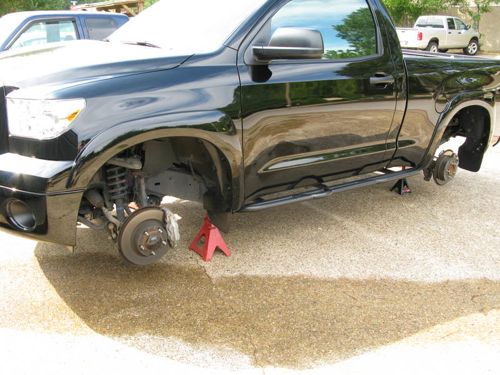
You work hard and you deserve your truck candy. Let’s face it. Steel wheels can make even the most beastly mecha-Tundra look like an over-sized Power Wheels. Whether you’re a DIY junkie or looking to outsmart a wiry bank account, this DIY guide will get you the crisp, clean look you deserve for under $50.
Materials You’ll Need:
(2) Cans Dupli-Color WP10() High Performance wheel coating (WP103) (2) Cans Dupli-Color HWP103 High performance wheel clearcoat (1) Can Dupli-Color CM-541 Wax and grease remover (1) Roll 3M ¾” green high performance tape PN-03431 (1) Roll 3M 2” Scotch masking tape 2015 (1) Roll Shop towels (1) 3-Pak maroon 3M Scotch Brite pads 37447 (1) Sleeve 600 grit 3M wet or dry sand paper 03020NA (1) 5-gallon bucket (optional, but will make your life much easier.) (1) Tack cloth (optional but highly advised!)
How to Paint Your Wheels: a DIY Guide
Steel: it’s functional, more durable than alloy and cheaper– but this frugal/durable mindset falls short on aesthetics. Spend a warm day with the garage door open and a great playlist and you’ll be rewarded with a great look and the cash to celebrate.
Before You Install
Difficultly level: Beginner
Project Time: 6 Hours
DIY Rating: 8. Like all DIY project, this takes time and patience.
Step 1: Take ‘em off.
Start being being smart. Park on level ground and set the parking brake. Loosen, but don’t remove all lug nuts. Lift the front of the vehicle and place on jack stands. Remove the front wheels. Repeat the process for the rear.
Step 2: Scrub-a-dub-dub.
Once all the wheels have been removed it is time for some serious cleaning. When I painted the wheels on my ’73 Beetle, soap and water barely phased 40 years of grime. Home Depot carries an eco-friendly degreaser called Simple Green. At about $10/gallon, it tears through the grease and lets you move on to the fun stuff.
An old painter’s trick is to use some Comet in combination with a red scotch brite and water to clean and prep the surface simultaneously. If you opt to use comet, grab some elbow length gloves and do NOT touch your face.
Scrub the wheels inside and out. The trick to a great DIY is making it look like a pro did it. If you want the paint to stick, the wheels need to be spotless.
Step 3: Sand!
Once the wheels are OCD clean, you’re ready to sand. Grab your 5-gallon bucket and fill it with warm water and about a quarter-squirt of dish soap. Soak a couple of the wet or dry sandpaper sheets in there and give them a couple minutes to “soften” up*.
Dip a rag in the water and use this to irrigate the area you will be sanding. Fold the sandpaper over and get to sanding. Use smooth overlapping motions and be sure to check your work every once in awhile. You can do so by drying the area to check for remaining shiny spots. Sand the entire wheel.
*Couldn’t I dry sand my wheels? Yes and you will enjoy a slow, steady stream of steel dust.
Step 4: Give it a once over with a Scotch Bright Pad
Once you’ve rinsed the wheels and let them dry, go over them again with a maroon Scotch Bright pad. This will even out your sanding and catch any spots you missed.
Step 5: Mask
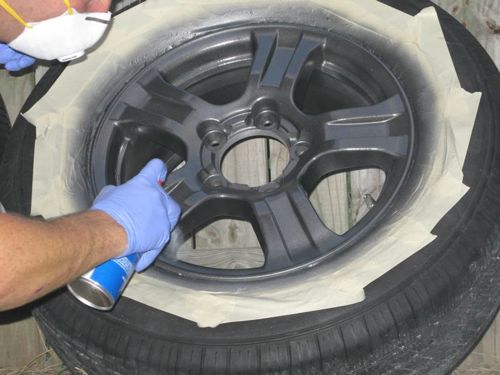
They keys to a good mask job are neatness and completeness. A sloppy mask job with several folds and wrinkles will only provide a place for dust and trash to settle that will later end up in your paint job.
Good rule of thumb here: if you can see tire– keep taping. You’ll never realize how much paint gets picked up in a slight breeze until you have your tires have over spray highlights. Be sure to wrap the valve stem.
Step 6: Grease and Wax remover time
Grab some wax and grease remove and a roll of shop towels. Apply the remover with one rag and remove it immediately with a dry, clean one. Each step of this process is as crucial as the next.
Once you are done, blow off the wheels with compressed air and wipe again with either a lint free towel or a tack rag. If you don’t have compressed air, run to Office Max and grab some. You’ll be back and finished before you could manually remove all traces of dust. Remember, paint simply won’t stick to a greasy or dusty surface.
Step 7: Paint!
Read the directions on the can of spray paint. Then read them again. There’s no one size answer for how to apply wheel paint or how long it will take to dry. Only your can knows for sure.
If you’re going James Bond gun-metal or any shade of metallic, a tack cloth is your best friend. Metallic paint is tricky. The metal particles need to flow evenly through the mist of paint in order to lay down properly. Get sloppy and you’ll end up with a clustered or mottled look.
After the first coat of paint has dried, you may notice a slightly dusty finish. This dust is made of excess metallics and over spray that didn’t settle or conformed with the paint. Once the paint is dry to the touch, run your tack rag over the surface to remove the particles. This will leave a smooth layer for which to apply subsequent layers of paint.
Clear coating is a bit of overkill, but if you opt for that extra glossy look don’t wipe it down with the tack cloth between layers. Since there aren’t any metallic particles in clear coat, you’re really just mucking up your shine.
Step 8: Take a step back and look at those damn sexy wheels.
Good job, buddy.
Many Thanks to TundraSolutions member Swank501 for his original DIY Wheel Painting post and images.
The British federated cloud company OnApp has launched CDN.net, a new brand for selling pay-as-you-go content delivery network (CDN) services directly to companies around the world.
OnApp started out selling cloud orchestration software to hosting providers that wanted to get into the public cloud business. Over time, the firm built a sizeable federation of service provider customers, giving them the ability to use each others’ spare capacity – federated CDN launched in 2011; then came distributed storage; and federated compute capacity is next on the horizon.
However, until now OnApp’s game has been all about helping service providers make the most of their spare resources within the federation – one provider may lack a point of presence (PoP) in a certain location but be able to use that of a fellow federation member, for example. CDN.net is OnApp’s first attempt at selling that federated capacity directly to end users, in this case companies that want to boost the performance of their websites in various locations around the globe.
CDN.net offers access to over 150 PoPs, which is not as extensive a network as those offered by Akamai and Limelight, but way bigger than those from smaller players such as Yottaa, MaxCDN and CacheFly — it’s even slightly more wide-ranging than CDNetworks’ network. However, according to CDN.net marketing manager James Fletcher, the real selling point is CDN.net’s flexibility and pay-by-usage pricing:
“It allows the end user to be in control of what they are purchasing … We saw in the marketplace that you can buy CDN and get a one-size-fits all solution, but that doesn’t work for everyone. The end result is you pay for resources and locations you don’t use. The CDN.net vision allows you to spin up on the fly and provision and customize as you need to.”
At launch, CDN.net will only include 30 PoPs with a focus on Europe, North America and Asia-Pacific. However, OnApp is working to add locations in emerging markets and users will be able to add locations based on demand. “If the customer comes along and wants somewhere in South Africa, we can work with the service provider network to get one up and running,” Fletcher explained. Livestreaming capabilities will also go live soon.
Ultimately, OnApp is trying to “help line the pockets of the service providers”, as Fletcher put it, but it’s also quietly becoming one of Europe’s most significant cloud players, perhaps the most significant. Others have talked about or even attempted this kind of federated model, but no-one has achieved the sort of scale that OnApp can boast – scale that it achieved by stealth, but that it’s now starting to exploit in earnest.
Enterprise cloud computing company Salesforce.com (CRM) announced its intention to offer $1 billion aggregate principal amount of convertible senior notes, with the potential for $150 million more, in long-term convertible debt. The company recently announced 2013 fourth quarter and full year fiscal results, with operating cash flow totaling $737 million, up 25 percent year-over-year. Total cash, cash equivalents and marketable securities finished the quarter at $1.8 billion.
With $1.15 billion Salesforce.com intends to use a portion of the net proceeds for the cost of the convertible note hedge transactions, and fund possible acquisitions of, or investments in, complementary businesses, services or technologies, working capital and capital expenditures. The company has an almost $27 billion market cap presently.
Salesforce.com issued a sustainability commitment memo recently, citing a goal of becoming fully powered by renewable energy. It will work to steadily increase the amount of renewable energy used in its data center operations. The company memo lists four steps that it will take this year towards achieving the goal:
Adopting a data center siting policy that states a preference for access to clean and renewable energy supply
Researching energy efficiency and renewable energy solutions for future data centers
Encouraging data center energy providers to increase the supply of renewable energy
Convening peers, sustainability specialists and energy experts around data center energy issues
Salesforce.com added more than 100,000 square feet of new data center space in 2012. The company currently houses much of its operations in colocation space from third-party companies, including Equinix, and thus is currently reliant on the power mix from these providers. Salesforce.com has said that it will evaluate building its own data centers as its infrastructure expands.
Celebrating its 14th birthday recently, Salesforce.com CEO Marc Benioff reflected on the journey of turning a simple idea into a high-growth company.
To change the global mindset of any company, you have to brave the world beyond the boardroom.
That’s the theory behind our one-month relocation of Starwood’s corporate headquarters — across nine time zones — to Dubai. We’re here to be immersed in one of the world’s most dynamic regions, and to see our global business through a sharply focused local lens.
The Dubai move is a sequel to the month we spent in Shanghai in 2011. Our relocation to China stretched our thinking. We saw what it’s like to have as many hotels under construction as open; to hire 20,000 associates in one year; to watch consumers use smartphones to book same-day hotel rooms. All this drove home the point that we need to be more agile in extreme-growth markets.
As a new crossroads of global travel, Dubai will soon be home to the world’s busiest international airport. It’s already a shining example of a new golden age of wealth and travel, just an eight-hour flight from half the world’s population. While we’re here, Dubai will serve as a hub for our own travel to Saudi Arabia, Kuwait, Kazakhstan, Lebanon, Qatar and India.
Our relocation is geared to shift our own mindset to being both a global and a “multi-local” company. To get there, we’re following three principles based on what we learned from our relocation to Shanghai:
1. Let the local team shine. While we’re here, the Middle East team is the master of ceremonies. They’ve crafted a varied schedule that will make the most of our time. We’ll meet face-to-face with hotel owners, partners, customers, and guests to build stronger relationships. The best part will be the extra time with our associates, seeing the world through their eyes. Our role is to support our local teams, not to oversee them.
2. Continue running the global business. Working 7,000 miles away has its challenges. Friday is a “weekend” here and Sunday is a “weekday.” But this is a relocation, not a business trip, so we must continue to do our day jobs balancing both schedules and time zones. Technology will allow us to push projects forward with emails, conference calls, and video conferences. Our teams back in Stamford still have goals and deadlines to meet. Our culture is set up to make decisions no matter where the senior team is sitting.
3. Engage the entire organization. Geographically we’re in the Middle East and our meetings are focused on this region. But we know great ideas that make sense globally can come from anywhere. We’ve invited over 200 leaders from Europe, Asia Pacific, and the Americas to join us during parts of the relocation to get a first-hand look. And our associates will follow our postings on Tumblr and Instagram . We are traveling locally and sharing globally to disperse the experience throughout Starwood.
Globalization is changing how companies need to think. A new style of leadership is emerging. In a “flat” world, we no longer think about being centralized or decentralized. Our relocations are helping to re-level our company, opening us up to more dialog, smarter decisions, and better results.
This last point is especially important. I strongly believe the best decisions happen when people with the same goals and values — but different points of view — speak frankly around the table. These trips set us up to have such discussions around the globe. We get to listen firsthand to what our leaders and associates are saying.
We’re ready for a month on the go — and look forward to listening and learning every step of the way.
“Abenomics” is the buzzword in Japan these days — it refers to Prime Minister Shinzo Abe’s aggressive reflationary fiscal and monetary policies that triggered the yen’s 10 percent decline against the dollar and 17 percent rally in Tokyo stocks this year.
So it’s no wonder that the Japanese mutual fund market, the second largest in Asia-Pacific, enjoyed the largest monthly inflows in almost six years last month, raking in as much as $11 billion.
With all that new money coming in, will you be late to the game if you haven’t gone in already?
French fund manager Carmignac Gestion does not think so.
Carmignac, whose fund already has a 10 percent allocation to Japanese stocks, says investors’ general loss of interest in Japan since the 1990s has resulted in very low valuations. It estimates Japan’s price-to-book ratio is less than 0.7 times.
So it would seem that the equity market’s 20 percent rise over three months has not exhausted investment opportunities in Japan, provided that currency risk is fully hedged.
Morgan Stanley, however, has this health warning:
PM Abe has started with all policy guns blazing. For 2014, in order to keep growth going and end deflation, he will need to reload. Micro reform policies are his only new bullets. Market stability depends on him firing more, larger calibre ones.


 Brace yourselves because tomorrow Samsung
 I watched an
 GARY WATSON
 Getting easier access to a Windows 7 shortcut is extremely easy: right-click, select “Pin to taskbar”, and an icon will pop up on your taskbar, ready for immediate use.
 Whatever you select can be removed in the usual way, just by right-clicking and selecting the “Unpin” option.

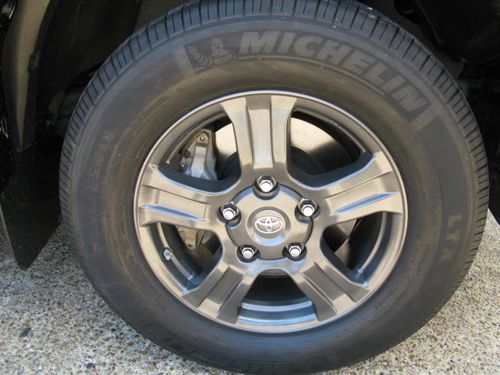 You work hard and you deserve your truck candy. Let’s face it. Steel wheels can make even the most beastly mecha-Tundra look like an over-sized Power Wheels. Whether you’re a DIY junkie or looking to outsmart a wiry bank account, this DIY guide will get you the crisp, clean look you deserve for under $50.