The U.S. Supreme Court will hear oral arguments this morning in a case that could challenge last term’s groundbreaking decision granting criminal defendants the right to call forensic analysts as witnesses.
Seven months ago, the court ruled, in a 5-4 decision in Melendez-Diaz v. Massachusetts, that under the Confrontation Clause of the constitution, prosecutors can’t simply enter lab reports as evidence without giving defendants a right to cross-examine the analyst who conducted the tests. Since the decision came down, prosecutors have complained that the new rule puts an unmanageable burden on them — and 26 states join Virginia is today’s case, asking for a reversal of the decision in Melendez-Diaz.
Today’s case, Briscoe et. al. v. Virginia, could provide a window for a slim majority of the court to limit last term’s decision. The makeup of the court has changed — Justice Sonia Sotomayor, a former prosecutor, has replaced David Souter, a member of the majority in Melendez-Diaz.
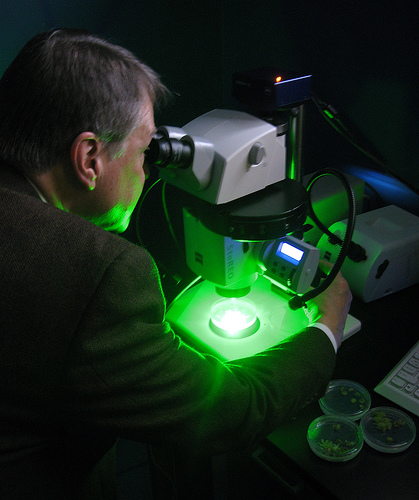
Melendez-Diaz protected a critical right for defendants in criminal cases, and it should be upheld. The case has had most its most immediate impact in drug cases, but it also ramifications in violent crimes. More than half of the wrongful convictions overturned through DNA testing to date were caused in part by faulty forensics. Without the right to challenge a forensic analyst, defendants are at a disadvantage when prosecutors throw flashy — but questionable — CSI antics into a trial.














 MotoGP World Champion and Yamaha rider Valentino Rossi made a guest star appearance at the Auto Expo in New Delhi the past weekend, marking the Italian’s first visit to India. During the first day, Rossi met India Yamaha Motor’s senior management, signed autographs and also inspected the latest India Yamaha models.
 As regular Intersection readers know, I’ve


