The new MyFord Touch system has the specs to revolutionize the way we interact with our vehicles, and we finally get some hands-on time with the SYNC’s sexy successor.
Get ready for another season of Simon and Paula’s signature bickering — on the US adaptation of The X Factor.
Paula Abdul has allegedly inked a $4.5 million contract to bring her loopy commentary to the judges panel on an American version of Simon’s hit UK talent show, The X Factor. That’s interesting, considering the star walked away from her post at American Idol because she failed to secure the $10 million-a-year payday she was vying for.
Apparently, Paula isn’t very good at gambling, is she?
A FOX tipster revealed to The National Enquirer’s Mike Walker: “Simon flew Paula to London and wined and dined her relentlessly over the course of several days, even introducing her to everyone who works on X Factor. But what really clinched the deal was Simon’s pledge that she wouldn’t have to deal with all the nonsense and infighting that she hated on Idol.”
San Diego-based Prometheus Laboratories, which develops specialty pharmaceuticals and diagnostic tests, says today it has secured $260 million in financing that consists of a $210 million loan and a $50 million line of credit. The company says proceeds will be used to finance the acquisition of more therapeutic and diagnostic products, and to refinance existing indebtedness.
With the increasing computing power available to even casual users, the security-conscious have had to move on to increasingly robust encryption, lest they find their information vulnerable to brute-force attacks. The latest milestone to fall is 768-bit RSA; in a paper posted on a cryptography preprint server, academic researchers have now announced that they factored one of these keys in early December.
Most modern cryptography relies on single large numbers that are the product of two primes. If you know the numbers, it’s relatively easy to encrypt and decrypt data; if you don’t, finding the numbers by brute force is a big computational challenge. But this challenge gets easier every year as processor speed and efficiency increase, making “secure” a bit of a moving target. The paper describes how the process was done with commodity hardware, albeit lots of it.
Their first step involved sieving, or identifying pairs of prime integers; that took the equivalent of 1,500 years on one core of a 2.2GHz Opteron; the results occupied about 5TB. Those were then uniqued and processed into a matrix; because of all the previous work, actually using the matrix to factor the RSA value only took a cluster less than half a day. Although most people aren’t going to have access to these sorts of clusters, they represent a trivial amount of computing power for many organizations. As a result, the authors conclude, “The overall effort is sufficiently low that even for short-term protection of data of little value, 768-bit RSA moduli can no longer be recommended.” 1024-bit values should be good for a few years still.
Given that these developments are somewhat inevitable, even the authors sound a bit bored by their report. “There is nothing new to be reported for the square root step, except for the resulting factorization of RSA-768″ they write. “Nevertheless, and for the record, we present some of the details.” Still, they manage to have a little fun, in one place referencing a YouTube clip of a Tarantino film following their use of the term “bingo.”
Palm stole the show last year at CES when it revealed the Palm Pre and webOS, the company’s new flagship smartphone and Linux-based mobile software platform. It was a bold Hail Mary from a company that many industry observers thought was already out of the game. Palm’s press briefing this year was less daring, but still delivered some significant evolutionary advancements for the company’s mobile vision.
Palm is boosting its hardware lineup, augmenting its software platform, and expanding its developer ecosystem. The biggest news is a pair of new devices—incremental updates of the company’s existing Pre and Pixi smartphones. The new handsets, called the Pre Plus and Pixi Plus, will be available later this month from Verizon. The Pre Plus got a minor facelift with a simplified design that ditches the front navigation button. It will also have more memory.
Scientists created these virtual 3-D reconstructions of 30,000-year-old teeth.
Did our extinct Neanderthal cousins have an artistic bent, and did they interbreed with modern humans? Newly published research seems to support affirmative answers to both questions, but those answers are far from final.
The fresh findings appear this week in two reports written by overlapping teams of researchers and published by the Proceedings of the National Academy of Sciences.
One study focuses on bones and marine shells found at 50,000-year-old Neanderthal cave settlements in southeast Spain. The other study looks at the teeth of a 30,000-year-old human skeleton from Portugal.
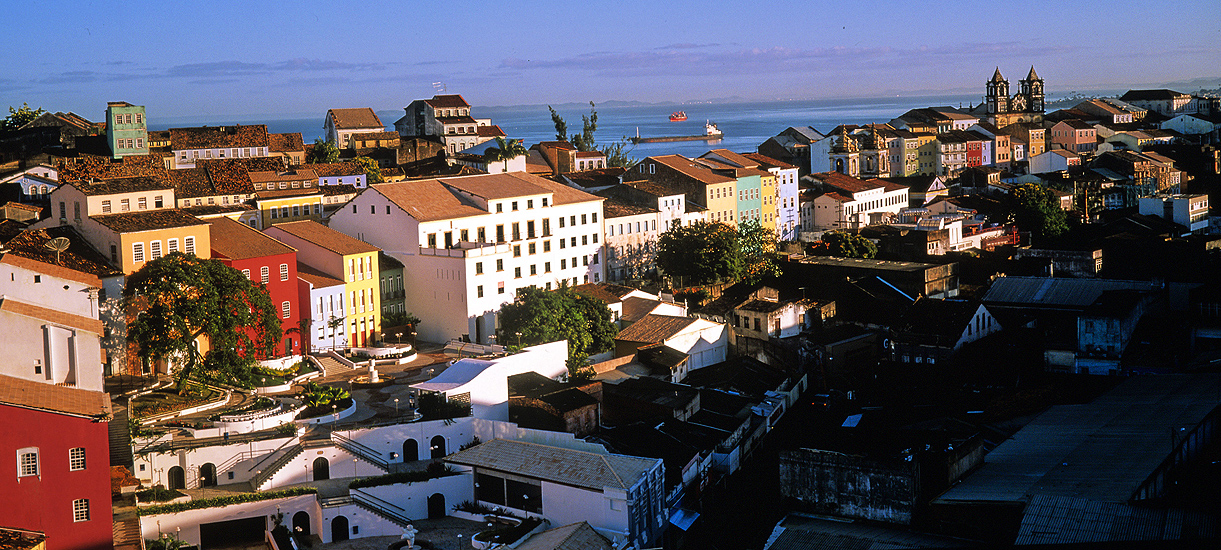
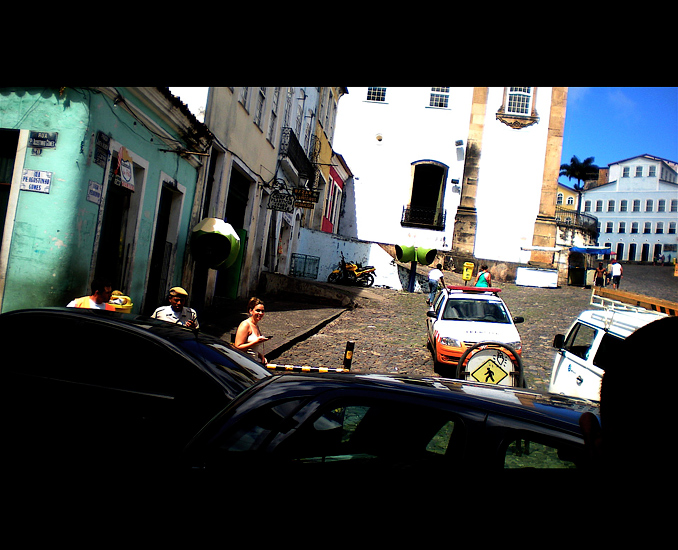
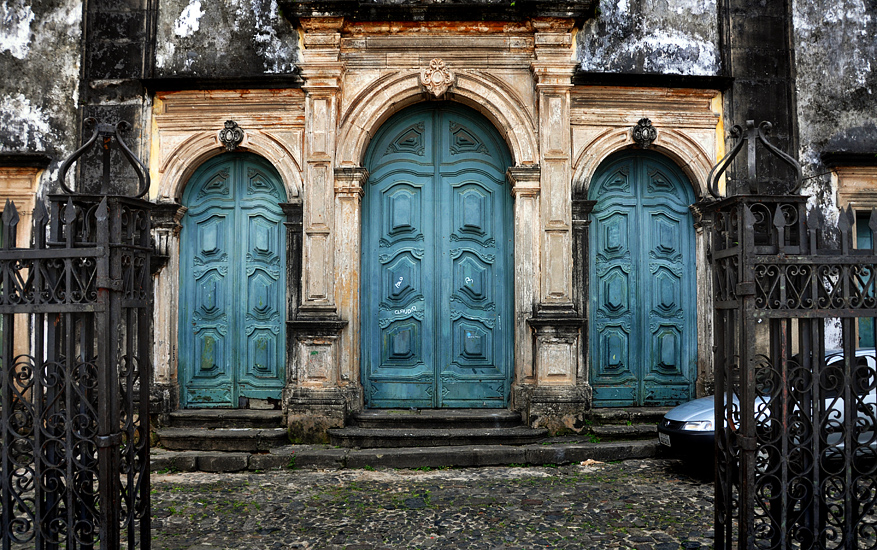
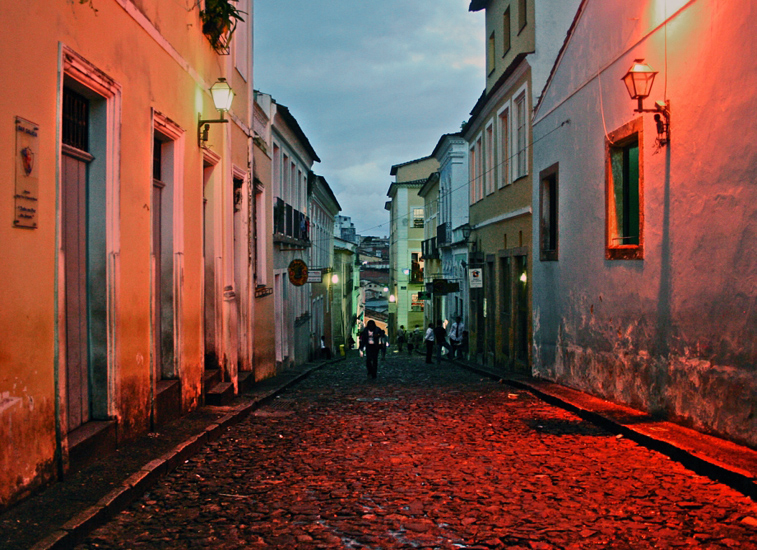
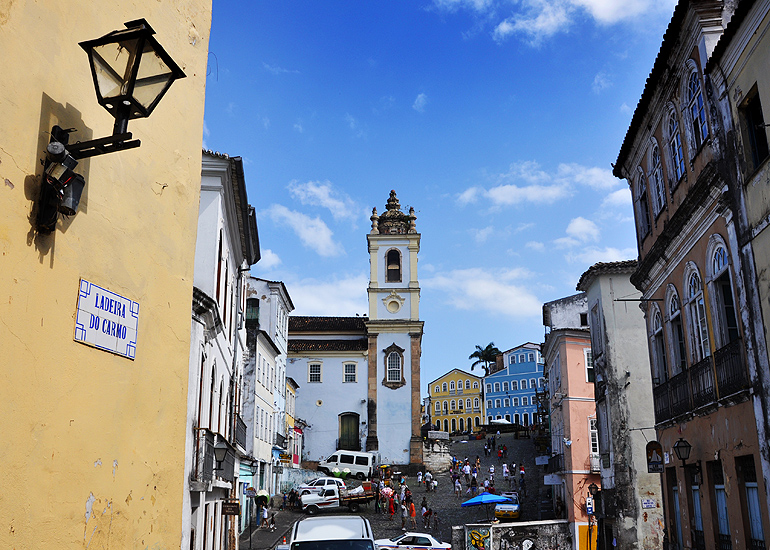
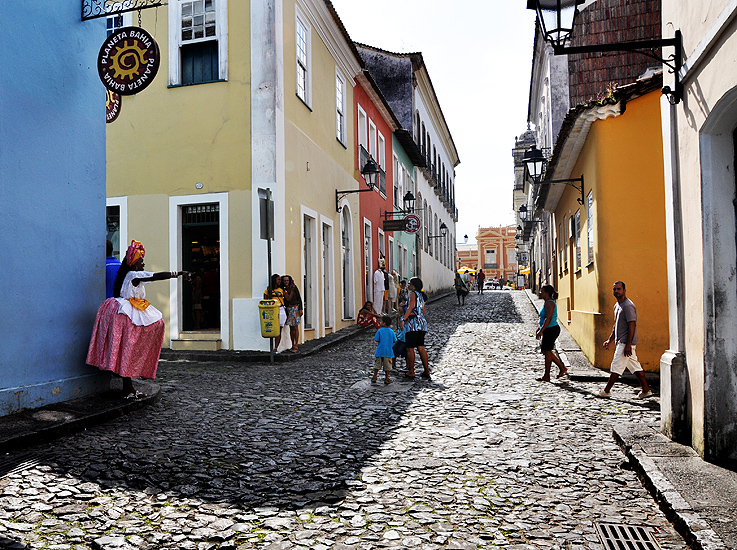
O Centro Histórico é parada obrigatória pra quem visita Salvador. Situado em cima de um paredão de 90 metros com vista singular para mar, teve sua localização estrategicamente escolhida para ser berço da cidade pelo primeiro Governador Geral do Brasil, Tomé de Souza, que buscava proteção de flibusteiros.
Embora formalmente denominada de Centro Histórico da Cidade de Salvador, o bairro reponde mesmo é pelo nome de Pelourinho (ou Pelô para os que já são de casa)- nome que remete aos tempos da escravidão, já que ali era o local onde a aristocracia demonstrava seu poder e castigava os escravos rebeldes em praça pública.
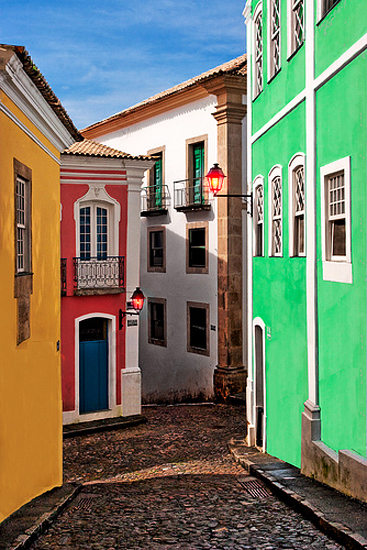
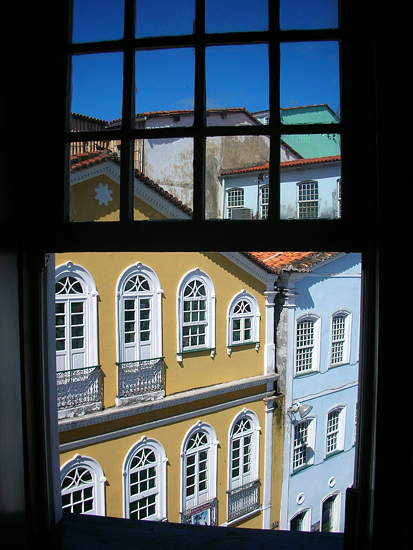
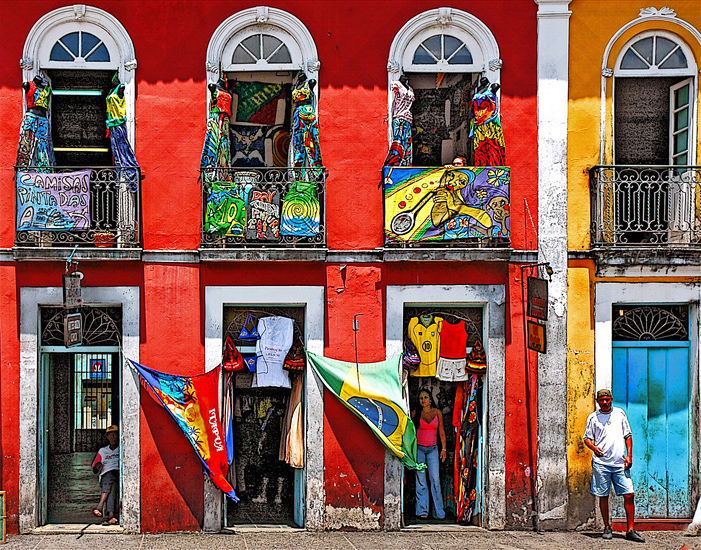
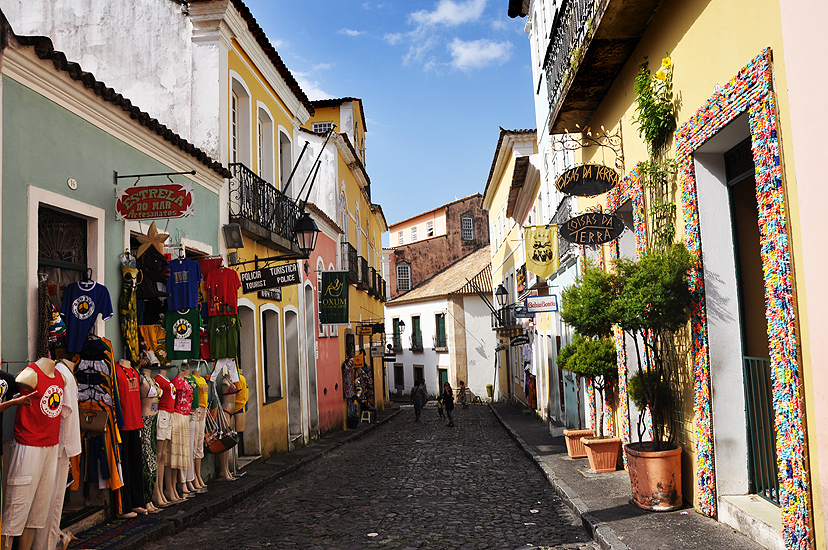
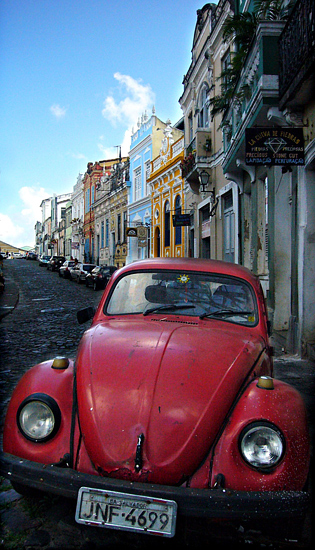
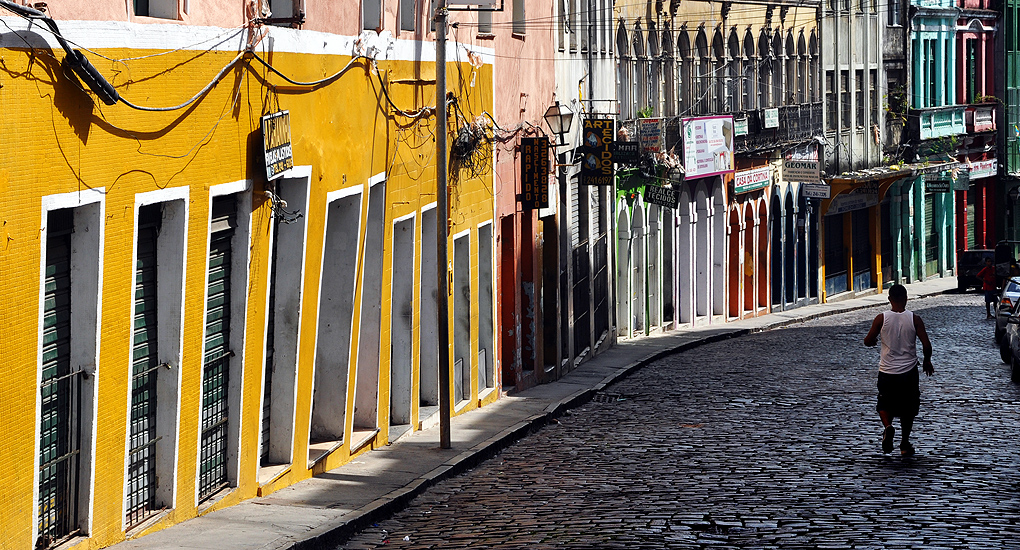
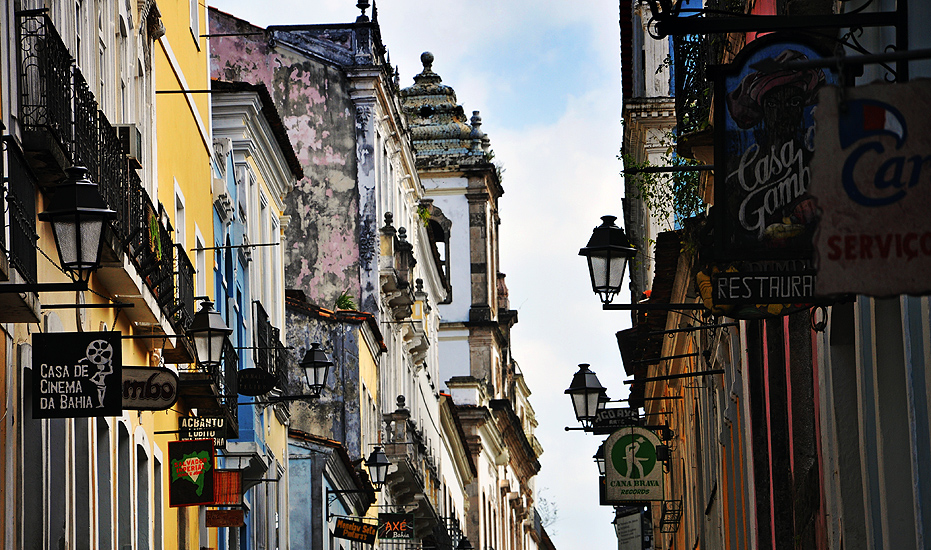
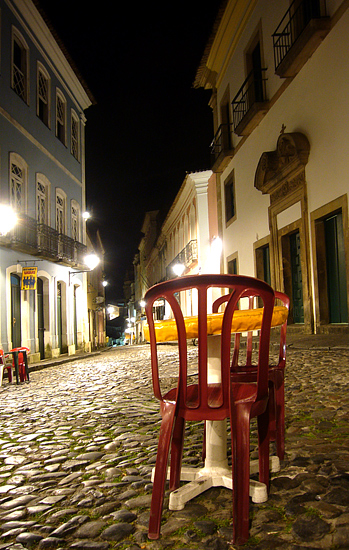
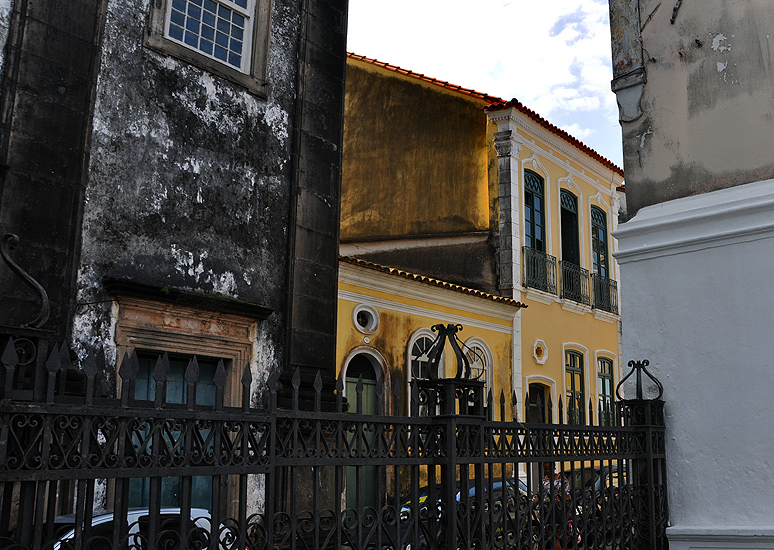
O conjunto de casarões, sobrados e igrejas de cores diversas e em estilo barroco português começa nas imediações do Terreiro de Jesus e se embola por ruas, vielas e ladeiras curvilíneas até as proximidades da escadaria do Passo, e, como não poderia deixar de ser, exala riqueza cultural e histórica em qualquer uma de suas esquinas.
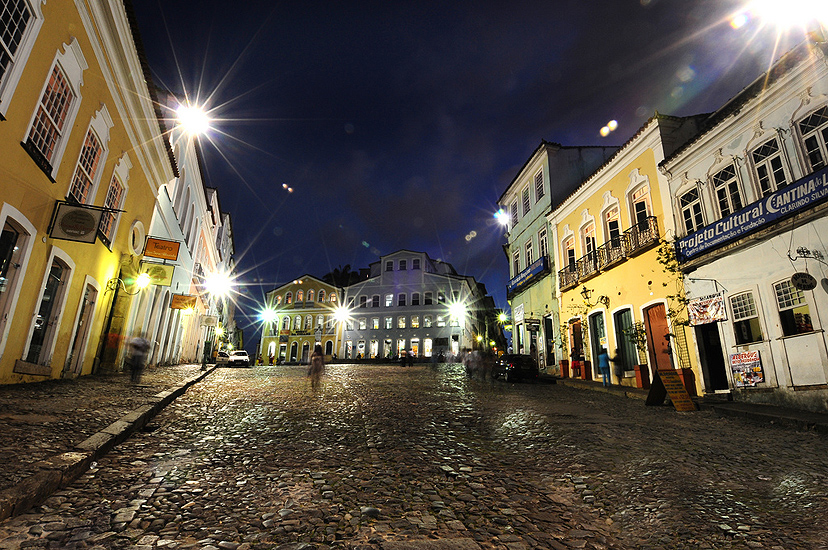
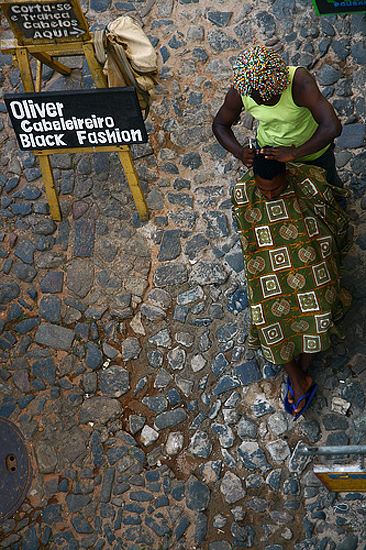
Só que os casarões que ora eram habitados pela aristocracia e formadores de opinião agora são tomados por turistas e artistas. Da praça de onde ecoavam gemidos de dor agora se ouvem os batuques inconfundíveis do Olodum e os cantos de paz dos Filhos de Ghandy.
Restaurantes, lojas, museus, ateliers, bares, shows…. pode-se desfrutar de tudo numa caminhada pelas ladeiras do Pelô. Não é por menos que ele atrai e encanta, todos os dias, milhares de turistas e faz parte do Patrimônio Histórico, reconhecimento dado pela UNESCO.
It won’t be long until the next CES post, so if you are caught up, pass the time by playing virtual instruments from instrumentube and kokokaka3000. It’s actually a really interesting way to use the timeline.
One outlandish theory about food that is consistently recycled by activists is the idea that what we eat is somehow “addictive.” In other words, people can’t control what they put in their mouths. If you are thinking no sensible human being would honestly believe this, look no further than a commentary in last month’s Canadian Medical Association Journal. Authors Valerie Taylor, Claire Curtis, and Caroline Davis claim that “neurologic findings linked to substance abuse are shared by some individuals with weight problems.”
You read that right. According to this premise, some people who choose to overeat are neurologically the same as cocaine addicts.
See where this is going? The strategy behind this “addiction” claim is to absolve individuals of responsibility for overeating and assign it instead to food manufacturers and restaurants for making food that’s, well, irresistible. And given the deeper-pockets of companies relative to most individuals, it’s no surprise to see that this strategy has drawn the interest of trial lawyers everywhere like John “Sue the Bastards” Banzhaf. Banzhaf has gone so far as to call personal responsibility “crap” and has been a driving force behind obesity lawsuits using this bogus theory.
Where does this “addiction” path ultimately lead? As a psychiatrist wrote in USA TODAY: “The word ‘addiction’ is perilously close to losing any meaning. If lawyers can turn fast food into an addiction and pin liability on restaurants, it won’t be long before adulterers sue Sports Illustrated, claiming its swimsuit issue led them astray.”
But for trial lawyers looking for a super-sized payout, consequences be damned. If they can get their foot in the door here, then after suing food companies they’ll deal with the resulting mess with more litigation. As Banzhaf says: “We’re going to sue them and sue them and sue them.”
Up to 1000 Maine jobs linked to carbon trading istockAnalyst.com (press release) A principle of RGGI was returning revenue, in the form of efficiency grants, to the industries that bought credits to offset their carbon emissions. …
Rightware, a Finland-based developer of user interfaces for mobiles and mobile applications, has closed a $4.3 million (€3 million) round of funding from Finnish VC firms Nexit Ventures Oy and Inventure Oy. The company has also acquired the Mobile and Embedded business unit from Futuremark, from which it was spun off only last month, for an undisclosed sum.
Rightware develops and markets a 3D graphical UI solution called Kanzi, which it sells into both the mobile and automotive industries. 3D user interfaces have become a standard, and very central, feature in touch-screen handsets. Rightware’s customers include Texas Instruments, Imagination Technologies, China Mobile and Audi. The UK chip maker Imagination counts Apple (NSDQ: AAPL) and Intel (NSDQ: INTC) among its customers and investors.
Rightware’s purchase of Futuremark’s mobile and embedded business division includes all of the unit’s intellectual property rights, assets and liabilities. Some of the platforms currently using the technology include Symbian, Android, Windows Mobile, Linux and mobile Java. TMC notes that Futuremark will use the sale to concentrate on games development and its PC Benchmarks operations. Release
Scientists have figured out a way to switch brain cells on and off like light bulbs, but instead of using a clapper, they’re using microbial proteins and lasers. Ed Boyden, a neuroscientist at the Massachusetts Institute of Technology, has developed a way to shut down parts of a brain just by shining light on them. When the light is turned off, the brain switches back on [Forbes].
The research team says their technology will help neuroscientists probe the brain’s circuitry by silencing certain regions and studying the effects. The technique, which was described in the journal Nature, could one day be used to shut down overactive regions of the brain often found in people with epilepsy, depression, Parkinson’s disease, and blindness.
A bit of fancy genetic tinkering is required to prime the brain to respond to light. Neurons fire when electrically charged atoms – ions – flood in and out of them, creating a tiny electric potential across their membranes [New Scientist]. Using this knowledge, the MIT researchers built upon Boyden’s 2005 discovery that demonstrated that certain microbial proteins can create a stimulating effect when genetically engineered into neurons and blasted with light. Boyden has now found a similar pair of bacterial and fungi proteins that also respond to light, but respond by shutting off their neuron hosts.
What’s more, one of the proteins responds to yellow light, while the other reacts to blue. A far-off hope, especially of those who study artificial intelligence, is that using a combination of [the two new proteins] to turn off certain types of neurons along with using Boyden’s earlier method of activating neurons, the brain could be manipulated in complex ways. Researchers could then learn much about how the brain processes information, better copy it and, maybe, better control it [Forbes].
Obviously, using optogenetics to treat humans is years, and maybe decades, away from reality. However, even if the technology never makes its way into medical treatments for human brains, it will certainly prove useful as a research tool for basic scientific research on brain circuitry.
So I go out to get some lunch today and I get it to go, and they tell me if I want it in a plastic bag I will have to fork over an additional 5 cents. Later I realize that in the district starting this week, if you buy groceries or get something to go at a restaurant, you will have to pay 5 cents for each plastic bag they give you. They say this will cut down on plastic trash and help the environment. Good idea? Only time will tell I suppose.
Best known for its movie stars, sun and surf, Los Angeles probably isn’t the first place you’d think to breed technology. But when you consider the influence of investors like Jason Calacanis and Mark Suster, in addition to the fact that companies like Demand Media and Docstoc call Southern California home, it’s not surprising that the community is emerging as one of the country’s hottest startup hubs. ReadWriteWeb caught up with some defining characters of the LA Tech scene to find out why they’ve made their homes away from the traditional tech haunts of Silicon Valley.
FUNDING
Says Sean Percival, developer and founder of LA tech blog Lalawag, “The tech space in the Valley feels over saturated at every level, at least to me. Here in LA there are still so many untapped resources and opportunities.” Similarly Twiistup producer Francisco Dao remarks, “There’s certainly a smaller funding infrastructure in LA but it is MUCH more accessible. SoCal VC’s can be easily found at events looking to meet entrepreneurs. In Northern California, it’s harder to get into the loop and get to know some of the VCs and players.”
In some cases, competition to pitch angels in the Bay is so fierce that entrepreneurs have paid to present their companies. Upset by the exploitative practice of pay-to-play angel pitch sessions, serial entrepreneur Jason Calacanis recently launched the Open Angel Forum. Based out of LA, the Forum allows companies to submit an application free of charge with the best applicants invited to dinner alongside some top-tier angels. Other LA-based funding sources include firms like Rustic Canyon Partners and GRP VC. Dealmaker Media also hosts regular LA-based events where founder Debbie Landa invites some of the country’s top VCs to coach LA startups through industry trends and tactics.
MENTORSHIP
As for mentorship opportunities, in 2009 GRP VC‘s Mark Suster created Launchpad LA to offer help to early-stage LA-based entrepreneurs. The group meets virtually 2 times per month and seasoned veterans pass their knowledge on to startup newcomers. Some of these newbies include companies like band app-maker Mobile Roadie and parenting social network Totspot.
Says Suster, “We historically didn’t have a ton of successful tech companies. But things have changed and now companies like PriceGrabber, MySpace and Shopzilla are well established. LA is seeing a resurgence in second time entrepreneurs and it’s this generation of people that are helping breed success for others.”
Docstoc CEO Jason Nazar also works with Dealmaker to host a monthly Startups:Uncensored meet up series. Meanwhile, Francisco Dao’s Twiistup is the event to attend for SoCal tech networking.
Says Dao, “I think the smaller more familial environment in LA may act as almost a natural incubator. Everyone talks to everyone else here.”
There’s an old saying that “a cloudy day is no match for a sunny disposition.” Lucky for them, the LA tech scene gets to experience warmth in more ways than one.
New year, the typical time of the year when everyone sets their goals for the coming year. And so should you! Setting your goals is important if you want direction, and face it, we all need direction, or we’re just wandering around.
When you set your goals, you should set them SMART: Specific, Measurable, Ambitious, Realistic and Tim-based. Let’s first take a look at what these SMART goals are, and later we’ll see a great way to reach them.
Setting your goals
Specific: You need to set specific goals. Don’t just say I want to monetise my blog in 2010, or, I want to lose weight, but specify: I want my blog to earn me a living by the end of the year, or I want to reach a healthy BMI score by the end of march.
Measurable: This point is very closely related to the first point. By setting a number, you make your goals measurable: I want my blog to earn me 2500$ a month by the end of the year, or I want to lose 5 pounds by the end of march.
Ambitious: There is no point in setting goals if they don’t take you somewhere. Preferably somewhere further down the road. Make your goals ambitious. Very ambitious. There is no point in setting a goal like: I want my blog to earn me 1$ a year by the end of 2010. Or I want to lose half a pound in the coming 6 months. Reach for the stars! Like Michelangelo said it: “The greatest danger for most of us is not that our aim is too high and we miss it, but that it is too low and we reach it.”
Realistic: It may sound contradictory to the previous point, but however high you aim, your goals must still be realistic. Don’t set goals like I want to lose 100 pounds in two weeks. That’s not healthy, really. Or, I want my blog to earn me 1 million dollars by the end of this month. That’s just plain luck!
Time-based: As you’ve seen in all the points before, your goals need to be time-based. There is no point in setting your goals without timing. I mean, I want to lose 10 pounds. Yes, if you wait long enough, you will, eventually, in 150 years or so, I bet you’ll weigh even more than 10 pounds less then today… Or, I want my blog to earn 100$. Over a timespan of 10 minutes? Great blog! Or over a timespan of 10 years? Man, your blog sucks then.
But… Which timeperiod to choose? And now (drum roll)… what this post is all about: You should set your goals short. Why’s that? Well, setting your goals on a short time, will create very strict deadlines for you. This gives you no time to wander off to other things. This gives you no time to get into doubt about the better best of bestest way to reach it. This gives you no time for distractions. This gives you only time for action! And that is what you need to reach your goals!
So go out now, take a piece of paper and a pen, and write down your goals. Not for 2010, not for january, but for this week, for tomorow, for today. And then go and achieve them.
Oh, and come back over here, and share your goals in the comments, because another factor in achieving your goals is sharing them (what? Do I see you lighting a cigarette? You told me your goal was… etcetera, you get the point ).
Do you wish that you were famous? Know what famous people do? They get hired to sit at events like Santa Claus in order to provide photo opportunities to rabid fans. Such is the case of comic book legend Stan Lee. He’s here at CES, sitting like Santa Claus while rabid fans stand in line for photos.
I’d think that it’d be much nicer to be a minor celebrity. Some people recognize you, but you don’t have to sit if you don’t want to. Major celebrities make more money, though. But, again, there’s more sitting.
At the 2010 CES show today, Ford announced today that it will offer navigation as standard on all Ford vehicles with MyFord and SYNC – well, almost. Ford says that its new Secure Digital (SD) card based navigation requires no extra hardware upgrades. So all you’ll have to do is purchase an upgradeable Secure Digital (SD) card-based navigation, which features full graphical maps and turn-by-turn directions, eliminating the need for expensive navigation hardware.
While all Ford vehicles equipped with SYNC already have turn-by-turn directions available via the Traffic, Directions & Information application, the addition of MyFord and MyFord Touch driver connect technology will allow them to use the two 4.2-inch LCD screens built into the instrument panel and the 8-inch touch screen in the center stack to display basic turn-by-turn direction information.
The SD card navigation, supplied by TeleNav, will be offered as an option for MyFord Touch system. It will hold map database, voice data, 3D map graphics and enhanced point-of-interest information from Wcities.
The MyFord Touch system will debut on the 2011 Lincoln MKX at the 2010 Detroit Auto Show next week and will trickle down to the rest of Ford’s lineup.
Click through for the press release for more details.
MyFord Touch / MyLincoln Touch:
Press Release:
FORD MAKES NAVIGATION STANDARD ON MYFORD, SYNC-EQUIPPED VEHICLES
* Navigation features will be standard on all Ford vehicles with MyFordTM and SYNC® with no extra hardware upgrades needed, making Ford the first automaker to compete with offerings from the hand-held navigation market
* MyFord vehicle interface will have basic graphical turn-by-turn directions standard, with full map-based navigation delivered by Secure Digital (SD) card, eliminating the need for expensive, specialized navigation DVD drives and displays
* Map-based SD card navigation builds on current SYNC Traffic, Directions & Information application, which delivers personalized traffic reports, precise turn-by-turn directions and up-to-date information including business listings, news, sports and weather – without the need for built-in navigation systems
LAS VEGAS, Jan. 7, 2010 – Ford Motor Company is the first automaker to launch an affordable navigation system that competes with the ease and upgradability of hand-held navigation devices.
Starting in 2010, a convenient, upgradable Secure Digital (SD) card-based navigation system requiring no expensive hardware or “head unit” electronics upgrades will be available for all Ford vehicles equipped with MyFord TouchTM. Turn-by-turn directions with generic display icons and voice guidance will be standard on all Ford vehicles with MyFord and SYNC®, using the existing Traffic, Directions & Information application.
The new system marks the first time that an automaker has offered a system that competes with the ease of use and upgradability of hand-held navigation devices, without requiring the purchase of an expensive navigation system upgrade.
Map-based SD card navigation builds upon SYNC with Traffic, Directions and Information. The current system leverages industry-leading voice-recognition software, integrated GPS technology and a Bluetooth®-capable mobile phone to deliver personalized traffic reports, precise turn-by-turn directions and up-to-date information including business listings, news, sports and weather – without the need for a built-in navigation system.
Beginning with the Lincoln MKX crossover and its MyLincoln Touch system, which will be revealed at the North American International Auto Show next week, MyFord will begin to migrate across the company’s full product portfolio.
“Navigation systems have moved to the realm of automotive features consumers expect to find,” said Derrick Kuzak, Ford group vice president, Global Product Development. “Harnessing the power of SYNC and the flexibility of our new MyFord system, we’re bringing an affordable, accessible, easy-to-update navigation system to millions of new consumers.”
The move will eliminate the need for expensive optional factory navigation systems, as well as “stick-on” aftermarket units that don’t integrate well with vehicle interiors and can prove to be distracting.
Two levels of navigation
All Ford vehicles with SYNC will have turn-by-turn directions available via the Traffic, Directions & Information application enabled by the user’s mobile phone. The addition of MyFord and MyFord Touch driver connect technology brings a new visual element to the basic navigation system, thanks to the display capabilities built in to the systems.
MyFord gives drivers two 4.2-inch full-color LCD screens, one in the instrument panel and another in the center stack.
The MyFord Touch system brings two 4.2-inch LCD screens into the instrument panel and places an 8-inch touch screen in the center stack. Using the Traffic, Directions & Information application, either version of MyFord will be able to display turn arrows, street names and distance-to-turn information.
“The MyFord displays really bring turn-by-turn directions alive for the first time,” said Jim Buczkowski, Ford director of Electronics and Electrical Systems Engineering. “Instead of just a voice telling drivers where to turn, there will now be visual cues in the form of street names, directional arrows and distance markers integrated right into the MyFord instrument cluster display.”
Vehicles equipped with the upgraded MyFord Touch system already will have an 8-inch touch-screen display built into the center stack, which also is capable of displaying basic turn-by-turn direction information. SD card navigation, supplied by TeleNav, will be available as an option for the MyFord Touch system, activated by inserting the SD card in to the system’s built-in Media Hub. The SD card will contain the map database and voice data, 3D map graphics and enhanced point-of-interest (POI) information from Wcities.
“Storing navigation information on an SD card installed in the Media Hub will be simpler and less expensive for customers and suppliers alike,” said Jason Johnson, Ford user interface design engineer. “In the past, map data were stored on a hard drive and updates took a significant amount of time to load from DVD. To get a map update with MyFord, you simply take the old SD card out of the Media Hub and pop in a new one. It will be the first time an automaker will offer something that competes with personal navigation devices.”
Lowering costs while expanding accessibility Because the navigation system is simply an application that runs on SYNC, the map database and POI information can be contained on a relatively inexpensive SD card. This new capability eliminates the costs of an internal hard drive storage system and DVD player for map updates.
“When we designed MyFord one of our driving principles was the democratization of technology,” said Kuzak. “Navigation doesn’t have to be a high-end luxury product. With MyFord, it will be standard on almost every Ford vehicle worldwide, and we believe it will help more people look forward to spending time behind the wheel of our vehicles.”
So, Microsoft has unveiled a new tablet PC — a prototype made by HP, dubbed (not coincidentally) a Slate. Fake Steve Jobs suggests it ought to be called the “meh,” and he’s dead right, while the UK’s Telegraph said it could be a “major blow” to Apple, and they’re just dead wrong.
I’d like to laugh at this crazy last-minute pantomime display of “Me too!” (all dressed-up, it seems, as “Me first!”) but I can’t because the whole thing reeks of desperation.
In my personal blog yesterday I made some (not particularly original) predictions about Microsoft’s new tablet. I said it would fail, and that it would fail because it would run the full version of Windows 7 and require a stylus. My stylus prediction proved incorrect (so far; just you wait for the “Microsoft Slate PC Student and Business Edition” which will likely have a stylus and fold-out keyboard. That’s right, aka “a notebook”.)
Now, I know what the first comments down below will be; I’m a shameless Apple fanboy and this is pointless Microsoft bashing, yada yada… but while the former might contain an ounce of truth, this is by no means a pointless exercise. There’s good reason to study the Microsoft slate; while it doesn’t precisely tell us what to expect from Apple’s tablet, it does demonstrate what not to expect.
Chunky Fingers, Dinky Screens
A mixture of bad timing and poor UI design doomed Microsoft’s original Tablet PC vision. The hardware available in the early 2000’s was underpowered, overpriced, and remained that way through the end of the decade. (And I should know — I owned several tablet PC’s myself!)
Ironically, it was the one thing Microsoft could have fixed, the software, that proved to be the weakest link. Microsoft crowbarred-in a mostly-unmodified version of their desktop operating system, an OS designed with a keyboard and mouse in mind. Not a stylus. Certainly not a finger. If you ever tried holding a bulky tablet in one hand, brandishing a delicate stylus in the other, while doing anything other than sitting perfectly still and you’ll know why the whole thing was an exercise in error and frustration.
Apple avoided making that mistake. The iPhone’s software might be based on OS X, but you’d never know by looking at it. Its UI is perfectly suited for a chunky finger on a dinky little screen. I expect when Apple’s slate is revealed it will employ yet another version of OS X; something that lies between the iPhone’s UI and that of the full-fat, full-sugar, carb-rich desktop Mac OS X.
And I guarantee you will not see a single control element (button, tab, scrollbar and the like) migrate, intact and unchanged, from desktop OS X to tablet OS. Apple knows not to make that mistake. Microsoft does not; it’s loading Windows 7 — unmodified UI et al — onto its tablet. But this time there’s not even a stylus to help you. You gotta use your pinkies. The result — an awkward, practically unusable UI.
Ballmer very handily (pun intended) demonstrated this by fumbling about with the thing. His fingers weren’t particularly good at hitting the UI controls on the 7-inch screen that, due to its very form factor, rendered Windows controls as little more than diminutive dots.
We can only conclude Microsoft is making the same mistakes it made nearly 10 years ago with the first tablet PC’s. At least in 2002 it was doing something innovative.
Microsoft’s tablet announcement — just weeks before Apple’s — seems a desperate attempt to grab a little media attention and be the first to announce a tablet. Only, there’s nothing to gain in rushing to make this announcement, particularly not now, while it’s still only at prototype stage. The indomitable Andy Ihantko said it best on Twitter;
Title of Ballmer’s CES keynote: “Sorry, Guys…I Panicked And Told The NYT We’d Unveil A Tablet. You Have 72 Hrs To Build One.”
Worse: Microsoft has backed itself into a corner. This summer, in the wake of Apple’s iSlate (or whatever it’s called) if HP releases this tablet largely unchanged, it’ll get laughed out of the room. The alternative — massively changing it to more closely resemble Apple’s device — will be humiliating.
If we lived in Bizarro World, and Apple’s tablet turned-out to be just like Microsoft’s prototype, I’d be devastated. I’d question Apple’s creative strategy. I’d wonder if Jonny Ive was out of his mind. I’d definitely question Steve Jobs’ sanity. But you and I both know that when El Jobso takes the stage on the 27th and unveils his shiny new toy it will be breathtaking.
In the entire tech industry, the company with the requisite financial and engineering might to even come close to challenging Apple’s tablet is Microsoft. So, is this tired-old slate the best they can do? C’mon. For even the most ardent Microsoft fan, that’s simply embarrassing.
Who will buy this? The curious? Microsoft fanboys? Those who can’t afford an Apple slate? Or just masochists? Disagree vehemently with my fanboy ravings in the comments below.



















 Scientists have figured out a way to switch brain cells on and off like light bulbs, but instead of using a clapper, they’re using microbial proteins and
  Best known for its movie stars, sun and surf, Los Angeles probably isn’t the first place you’d think to breed technology. But when you consider the influence of investors like Jason Calacanis and Mark Suster, in addition to the fact that companies like
  In some cases, competition to pitch angels in the Bay is so fierce that entrepreneurs have paid to present their companies. Upset by the exploitative practice of pay-to-play angel pitch sessions, serial entrepreneur Jason Calacanis recently launched the
 ).
).


