Category: News

  • REUTERS: EU clears Kraft takeover of Cadbury with conditions


    BRUSSELS (Reuters) – The European Commission said on Wednesday it had given conditional approval for U.S. food group Kraft Foods Inc to take over British confectionery maker Cadbury.

    The European Union executive said in a written statement the hostile bid was conditional on Kraft’s divestment of Cadbury’s Polish and Romanian chocolate confectionery businesses.

    The combination of Kraft and Cadbury would create the world’s largest sweets, chewing-gum and chocolate group, overtaking Mars-Wrigley.

    The Commission took its decision after Kraft, the maker of Dairylea and Oreo cookies, offered concessions last month to ease regulatory concerns that its bid for Cadbury could be anticompetitive.

    “In view of the remedies offered, I am satisfied that the proposed takeover would not adversely affect competition anywhere in Europe and that consumers would not be worse off,” Competition Commissioner Neelie Kroes said.

    The Commission made clear that while both Kraft and Cadbury were strong global players, Kraft was not so dominant in Britain and Ireland, where Cadbury is the market leader.

    Kraft’s cash and shares bid is currently worth 767 pence or 10.5 billion pounds ($16.8 billion) for Cadbury, but under Britain’s takeover rules the U.S. group has until January 19 to raise its bid. Cadbury shareholders have until February 2 to make their choice.

    Kraft said it had a 1.52 percent take-up from Cadbury shareholders for its hostile bid. But most shareholders are expected to wait to see if Kraft raises its bid before making their decisions.

    Kraft said it had received the acceptances by its first closing date of 1300 GMT on January 5, but its offer remains open until 1300 GMT on February 2.

    Kraft’s biggest shareholder, Warren Buffett, warned the U.S. group on Tuesday that he would vote against Kraft’s proposal to issue 370 million new Kraft shares to fund the bid unless he was convinced it did not destroy shareholder value.

    Buffett’s intervention and Nestle’s decision on Tuesday not to bid for the British confectionery group pushed Cadbury shares lower and Kraft higher, narrowing the current bid premium to around 0.7 percent, from nearly 10 percent on Monday.

    The purchase of Cadbury would help expand Kraft’s business into faster-growing and higher-margin markets such as India.

    (Writing by Timothy Heritage, editing by Luke Baker)

    Share Investor Links

    Share Investor Blog – Stockmarket & Business commentary
    Share Investor New Zealand Business News– Get more business news
    Discuss this topic @ Share Investor ForumRegister free
    Share Investor’s Daily Forex Updates

    Recommended Amazon Reading

    Security Analysis: Sixth Edition, Foreword by Warren Buffett (Security Analysis Prior Editions) Security Analysis: Sixth Edition, Foreword by Warren Buffett (Security Analysis Prior Editions) by Benjamin Graham
    Buy new: $47.25 / Used from: $46.96
    Usually ships in 9 to 11 days
    The Four Filters Invention of Warren Buffett and Charlie Munger The Four Filters Invention of Warren Buffett and Charlie Munger by Bud Labitan
    Buy new: $33.25 / Used from: $43.89
    Usually ships in 24 hours

    From Amazon – Apple iPod touch 32 GB (3rd Generation) NEWEST MODEL


    Bookmark and Share


  • U.S. car fleet shrank by four million in 2009

    by Lester Brown

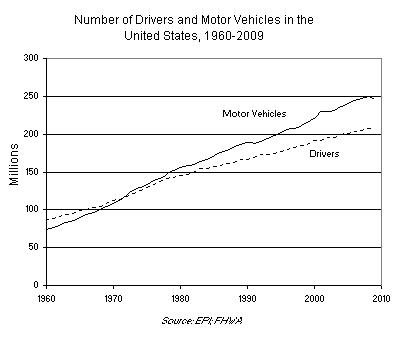
    America’s century-old love affair with the automobile may be coming to an end. The U.S. fleet has apparently peaked and started to decline. In 2009, the 14 million cars scrapped exceeded the 10 million new cars sold, shrinking the U.S. fleet by 4 million, or nearly 2 percent in one year. While this is widely associated with the recession, it is in fact caused by several converging forces. 

    Future U.S. fleet size will be determined by the relationship between two trends: new car sales and cars scrapped. Cars scrapped exceeded new car sales in 2009 for the first time since World War II, shrinking the U.S. vehicle fleet from the all-time high of 250 million to 246 million. It now appears that this new trend of scrappage exceeding sales could continue through at least 2020.

    Among the trends that are keeping sales well below the annual figure of 15–17 million that prevailed from 1994 through 2007 are market saturation, ongoing urbanization, economic uncertainty, oil insecurity, rising gasoline prices, frustration with traffic congestion, mounting concerns about climate change, and a declining interest in cars among young people.

    Market saturation may be the dominant contributor to the peaking of the U.S. fleet. The United States now has 246 million registered motor vehicles and 209 million licensed drivers—nearly 5 vehicles for every 4 drivers. When is enough enough?

    Japan may offer some clues to the U.S. future. Both more densely populated and highly urbanized than the United States, Japan apparently reached car saturation in 1990. Since then its annual car sales have shrunk by 21 percent. The United States appears set to follow suit.

    The car promised mobility, and in a largely rural United States it delivered. But with four out of five Americans now living in cities, the growth in urban car numbers at some point provides just the opposite: immobility. The Texas Transportation Institute reports that U.S. congestion costs, including fuel wasted and time lost, climbed from $17 billion in 1982 to $87 billion in 2007.

    Mayors across the country are waging a strong fight to save their cities from cars, trying to reduce traffic congestion and air pollution. Many are using a “carrot-and-stick” approach to reduce costly traffic congestion by simultaneously improving public transportation while imposing restrictions on the use of cars.

    Almost every U.S. city is either introducing new light rail lines, new subway lines, or express bus lines, or they are expanding and improving existing public transit systems in order to reduce dependence on cars. Among the cities following this path are Phoenix, Seattle, Houston, Nashville, and Washington, D.C. As urban transit systems expand and improve, commuters are turning to public transit as driving costs rise. Between 2005 and 2008, transit ridership climbed 9 percent in the United States. Many cities are also actively creating pedestrian and bicycle-friendly streets, making it easier to walk or bike to work.

    Forward-looking cities are also reconsidering parking requirements for new buildings. Washington, D.C., for example, has rewritten its 50-year-old codes, reducing the number of parking spaces required with the construction of both commercial and residential buildings. Earlier codes that once required four parking spaces for every 1,000 square feet of retail space now require only one.

    As parking fees rise, many cities are moving beyond coin-fed parking meters and replacing them with meters that use credit cards. The nation’s capital is making this shift in early 2010 as it raises street parking fees from 75¢ to $2 per hour.

    Economic uncertainty makes some consumers reluctant to undertake the long-term debt associated with buying new cars. In tight economic circumstances, families are living with two cars instead of three, or one car instead of two. Some are dispensing with the car altogether. In Washington, D.C., with a well-developed transit system, only 63 percent of households own a car.

    A more specific uncertainty is the future price of gasoline. Now that motorists know that gas prices can climb to $4 a gallon, they worry that it could go even higher in the future. Drivers are fully aware that much of the world’s oil comes from the politically volatile Middle East.

    Perhaps the most fundamental social trend affecting the future of the automobile is the declining interest in cars among young people. For those who grew up a half-century ago in a country that was still heavily rural, getting a driver’s license and a car or a pickup was a rite of passage. Getting other teenagers into a car and driving around was a popular pastime.

    In contrast, many of today’s young people living in a more urban society learn to live without cars. They socialize on the Internet and on smart phones, not in cars. Many do not even bother to get a driver’s license. This helps explain why, despite the largest U.S. teenage population ever, the number of teenagers with licenses, which peaked at 12 million in 1978, is now under 10 million. If this trend continues, the number of potential young car-buyers will continue to decline.

    Beyond their declining interest in cars, young people are facing a financial squeeze. Real incomes among a large segment of society are no longer increasing. College graduates already saddled with college loan debt may find it difficult to get the credit to buy a car. Young job market entrants are often more interested in getting health insurance than in buying a car.

    No one knows how many cars will be sold in the years ahead, but given the many forces at work, U.S. vehicle sales may never again reach the 17 million that were sold each year between 1999 and 2007. Sales seem more likely to remain between 10 million and 14 million per year.

    Scrappage rates are easier to project. If we assume an auto life expectancy of 15 years, scrappage rates will lag new sales by 15 years. This means that the cars sold in the earliest of the elevated sales years of 15–17 million vehicles from 1994 through 2007 are just now reaching retirement age. Even though newer cars are more durable than earlier models, and may thus stay on the road somewhat longer on average, scrappage rates seem likely to exceed new car sales through at least 2020. Given a decline of 1–2 percent a year in the fleet from 2009 through 2020, the U.S. fleet could easily shrink by 10 percent (25 million), dropping from the 2008 fleet peak of 250 million to 225 million by 2020.

    At the national level, shrinkage of the fleet combined with rising fuel efficiency will reinforce the trend of declining oil use that has been under way since 2007. This means reduced outlays for oil imports and thus more capital retained to invest in job creation within the United States. As people walk and bike more, it will mean less air pollution and fewer respiratory illnesses, more exercise and less obesity. This in turn will also reduce health care costs.

    The coming shrinkage of the U.S. car fleet also means that there will be little need to build new roads and highways. Fewer cars on the road reduces highway and street maintenance costs and lessens demand for parking lots and parking garages. It also sets the stage for greater investment in public transit and high-speed intercity rail.

    The United States is entering a new era, evolving from a car-dominated transport system to one that is much more diversified. As noted, this transition is driven by market saturation, economic trends, environmental concerns, and by a cultural shift away from cars that is most pronounced among young people. As this evolution proceeds, it will affect virtually every facet of life.


    For more information and data resources regarding this article, please visit the Earth Policy Institute website.

    Related Links:

    The policy and politics of Obama’s $2.3 billion in clean energy tax credits

    The melting of America

    EPA gets tough on smog


  • Why Fed Introspection Wouldn’t Help

    A column by David Leonhardt in today’s New York Times seems to be getting a lot of notice in the blogosphere. In it, Leonhardt asks the question: if the Fed missed the real estate bubble, how can we expect it to see the next one? I sort of addressed this question on Monday, when I called into question the theory that the Fed needs more power to prevent such future failures. Leonhardt argues something different, and I disagree.

    He buys into the idea that the Fed should get more regulatory power because it has the best resources to spot bubbles. Essentially, he’s calling for an apology and an explanation. In other words, he thinks the Fed can better spot bubbles if it’s a little more humble and introspective. I’m not convinced.

    Specifically, Leonhardt calls for a sort of commission, charged by Congress, to investigate how bubbles were missed, saying:

    In the future, a review process like this could become a standard response to a financial crisis. Andrew Lo, an M.I.T. economist, has proposed a financial version of the National Transportation Safety Board — an independent body to issue a fact-finding report after a crash or a bust. If such a board had existed after the savings and loan crisis, notes Paul Romer, the Stanford economist and expert on economic growth, it might have done some good.

    Spotting bubbles is a really hard business. Imagine, for example, if such a report was issued after the tech bubble pop a decade ago. We might have learned how to prevent another tech bubble exactly like the one that formed, under exactly the same initial conditions. Of course, such a scenario would almost certainly never happen again anyway.

    And the report certainly wouldn’t have helped with the real estate bubble, which was completely different. No other such report which might have been issued resulting from bubbles throughout the history of the U.S. would have helped either, because we had never experienced a real estate bubble leading to such disastrous consequences. Such reports won’t prevent new, unforeseen kinds of bubbles — which are precisely what we’re trying to avoid. The problem with unexpected systemic risk is that it’s, well, unexpected.

    Stopping bubbles once they’ve started is also very difficult — both logistically and politically. This is particularly true for the Fed, whose mission statement includes keeping unemployment as low as possible. Even if the Fed had seen statistics indicating that a dangerous housing bubble might be forming in 2005 and decided to take action — can you imagine the political fallout if it caused a recession resulting in a few percentage points rise in unemployment?

    Washington would have gone crazy. Most Americans would have too. How did the Fed know a bubble was forming? What if it was wrong and it hurt the economy for no reason?

    I think the only way to ever hope to prevent systemic risk and bubbles — which might simply be impossible anyway — would be through a new, independent agency charged with exactly that task. It should be completely devoid of conflicts of interest. Its sole focus should be mitigating systemic risk. And if it’s also the non-bank resolution authority, then it would have the vested interest to do so, as its insurance fund used to wind-down institutions would suffer if it screws up.

    I’ve never accepted the argument that the Fed should be systemic risk regulator just because it’s the most easily equip to do so. There are conflicts of interest that I’ve explained before that could prevent it from excelling in this responsibility. Frankly, even the FDIC would be a better choice to house this new regulator, if it weren’t a separate new agency altogether. Unfortunately, looking at the House’s financial regulation bill, which is likely to resemble whatever becomes law, the Fed will likely get this power anyway.


    Email this Article
    Add to digg
    Add to Reddit
    Add to Twitter
    Add to del.icio.us
    Add to StumbleUpon
    Add to Facebook


  • Incoming FOMC Voters Keep Hawk-Dove Balance Mostly Intact

    The new year brings a new set of voters to the Federal Open Market Committee, but the tilt of the committee won’t change much as hawks are replaced by other hawks and doves by other doves.

    The Federal Reserve’s interest-rate-setting body will spend much of the year weighing whether to tighten policy — as futures markets expect — while the economy recovers. But the new voting lineup probably won’t tilt the balance much from the 2009 FOMC.

    The four presidents of regional Fed banks joining the rotation this year are James Bullard of St. Louis, Thomas Hoenig of Kansas City, Sandra Pianalto of Cleveland and Eric Rosengren of Boston. They’ll join the eight permanent voters on the FOMC — seven governors of the Federal Reserve Board (two of those positions are now vacant) and the New York Fed president. Every Fed policymaker, including presidents who are not voting this year, gets a voice at the table. But regional bank presidents tend to draw a bit more attention when they’re voters.

    In the 2010 lineup, which takes effect at the January 26-27 meeting, Hoenig is likely to be the most hawkish voice on the spectrum, perhaps even dissenting as Jeffrey Lacker of Richmond did last year. As the dovish Janet Yellen of San Francisco moves off the voting slate, Rosengren steps in. (He dissented in late 2007, seeking a deeper rate cut than the rest of the FOMC backed.) The other 2009 voters coming off the rotation, Charles Evans of Chicago and Dennis Lockhart of Atlanta, consistently represented the center of the FOMC behind Fed Chairman Ben Bernanke. On the 2010 rotation, Pianalto is likely to line up with the FOMC’s center. Bullard, who will vote for the first time as a regional bank president, views himself as hawkish — though some economists don’t necessarily describe him that way anymore.

    Some recent commentary on the economy and policy from the incoming voters:

    St. Louis’s Bullard: He doesn’t see the Fed raising short-term interest rates in 2010, but he wants to consider other steps to tighten policy — such selling mortgage backed securities — if the economy heats up. “I started out saying I was a hawk and I very much see myself in that role. Inflation is very costly for the economy so I’d be very reluctant to let inflation get out of control or do anything that would jeopardize our low and stable inflation rate.”

    Kansas City’s Hoenig: “I would not support a tight monetary policy in the current environment, but my experience tells me that we will need to remove our very accommodative policy sooner rather than later,” he said in October. “Even if we were to start immediately, much time would pass before incremental increases could be considered tight or even neutral policy.”

    Cleveland’s Pianalto: “We have lived through a brutal recession that is only just starting to lose its grip on the economy, and I do not expect to see a quick turnaround. Our economy must contend with a fragile financial system, a consumer sector that is more inclined to save than to spend, a labor market weakened by a lack of business confidence, and the removal of many governmental supports for the economy. I expect to see a gradual and bumpy recovery as our economy addresses these challenges. Still, despite some concerns that inflation will be unleashed from its anchors, I believe there is enough slack in the economy to keep inflation subdued for some time.”

    Boston’s Rosengren: The Fed needs to eventually ease its accommodative fiscal policy as well, but “first we have to get the economy in recovery mode and get us closer to full employment,” he said in October. He talked about the importance of returning to full employment without households becoming over-leveraged in the process. “The goal is not to get leverage back to where it was before. The goal is to get the economy back.” Rosengren added that one of his top concerns as the economy recovers is capital losses in commercial real estate that could hamper the financial sector.


  • REUTERS: GE shareholders may face a year of living sideways


    BOSTON (Reuters) – After a tumultuous year that saw General Electric Co (GE.N) stock tumble to 18-year lows, then whipsaw back to triple that level, shareholders of the largest U.S. conglomerate may be in for a year of few, if any, gains.

    GE Chief Executive Jeff Immelt last month told investors he expects profit at the company’s big industrial units — which make jet engines and electric turbines — to be “in a word, flat,” which aptly describes GE’s overall 2010 prospects.

    Sluggish demand for heavy equipment and the hangover of the credit crunch on its hefty finance arm could set the stage for little movement in GE shares, investors said.

    “They’re going to continue to struggle. From an earnings standpoint, they can certainly get some wind behind them on the industrial side. Things will be tougher on the financial side,” said Peter Klein, senior portfolio manager at Fifth Third Asset Management in Cleveland, Ohio. Referring to the stock, he added, “It’ll go sideways for a while.”

    The Fairfield, Connecticut-based blue-chip company’s portfolio will be in flux this year, as its deal to sell a majority stake in its NBC Universal media business to No. 1 U.S. cable operator Comcast Corp (CMCSA.O) faces regulatory scrutiny and the company continues to pare back its GE Capital finance unit.

    Wall Street analysts, on average, have a 12-month price target of $18 on GE shares, according to Thomson Reuters I/B/E/S. That represents a 16 percent rise from the stock’s current level at around $15.50.

    PORTFOLIO NOISE

    While GE’s equipment arms have strong growth prospects in emerging markets, including China, India and the Middle East, their performance will be offset by continued concerns about other business units, investors said. That marks a contrast to more focused industrials, including United Technologies Corp (UTX.N) and Caterpillar Inc (CAT.N), which have outperformed GE and the broader market over the past year.

    GE shares are currently trading at about 15.5 times forecast earnings, a premium to the forward price-to-earnings ratio of 13.5 for the Dow Jones industrial average .DJI but a discount to Caterpillar’s 29.5 and United Technologies’ 17.2.

    Wall Street also expects profit growth from those companies this year, with analysts forecasting a 35 percent profit rebound at Caterpillar and a 12 percent rise at United Tech.

    Worries about GE’s finance arm have been the main drag on the stock, which tracked the financial sector closely during its heavy slide in the early part of 2009. Further scaling back finance and selling NBC could prompt investors to shift focus off GE Capital — which is facing rocky going in its commercial real estate portfolio — and on to the better-performing industrial units.

    “As they grow the infrastructure business and shrink the rest of the portfolio, it will start trading more like an industrial,” said Matt Collins, capital goods analyst at Edward Jones, in St. Louis. “That strategy is already in place.”

    GE management has begun telling Wall Street that the company is no longer in a defensive position financially and is interested in buying back the preferred shares it sold in 2008 to Warren Buffett’s Berkshire Hathaway Inc (BRKa.N), though its earliest opportunity to do so is October 2011.

    In the meantime, the big risks the company faces — apart from another sharp slump in the global economy — are a further downturn in the commercial real estate sector and arduous new regulations on GE Capital.

    “The good news, bigger picture, is that the key risks are better understood now versus a year ago,” said Collins. “You have to have a longer-term focus to want to own this stock. You’re looking at flat earnings this year, while the typical industrial will be up.”

    Having a flat run ahead puts long-term GE shareholders in a familiar position. The stock showed little movement through the middle years of the past decade.

    Some shareholders are questioning how much growth the stock could experience once it puts the downturn behind it.

    “Is it still going to face that conglomerate discount?” asked Peter Sorrentino, senior vice president and portfolio manager at Huntington Asset Advisors in Cincinnati, which holds GE shares. “We think it’s cheap relative to its intrinsic value. In the mid-$20s, we might be looking to sell out and move on. In terms of real growth, we’ve been looking elsewhere.”

    (Reporting by Scott Malone; editing by John Wallace)

    Share Investor Links

    Share Investor Blog – Stockmarket & Business commentary
    Share Investor New Zealand Business News– Get more business news
    Discuss this topic @ Share Investor ForumRegister free
    Share Investor’s Daily Forex Updates

    Recommended Amazon Reading

    Security Analysis: Sixth Edition, Foreword by Warren Buffett (Security Analysis Prior Editions) Security Analysis: Sixth Edition, Foreword by Warren Buffett (Security Analysis Prior Editions) by Benjamin Graham
    Buy new: $47.25 / Used from: $46.96
    Usually ships in 9 to 11 days
    The Four Filters Invention of Warren Buffett and Charlie Munger The Four Filters Invention of Warren Buffett and Charlie Munger by Bud Labitan
    Buy new: $33.25 / Used from: $43.89
    Usually ships in 24 hours

    From Amazon – Apple iPod touch 32 GB (3rd Generation) NEWEST MODEL


    Bookmark and Share


  • A Case That Has It All: Kim Kardashian, Twitter, Libel, Cookie Diets… And The New FTC Sponsorship Rules

    Oh boy. Here’s a fun one. You had to expect that there would be more defamation lawsuits about Twitter following the first one involving Courtney Love, but this one is quite impressive, considering of all the twists and turns that must be followed. It involves some company promoting something called “The Cookie Diet” (which appears to be exactly what you would think) suing Kim Kardashian for libel. If you don’t keep up with pop culture, Kim Kardashian is one of those people famous for being famous. The details of the lawsuit, though, are somewhat complex, and it’s difficult to figure out who to side with in this trainwreck in progress (and, yes, it seems pretty likely that the whole thing is a publicity stunt for all involved, but that doesn’t mean it’s not worth covering).

    So, basically, the story is that this “cookie diet” supposedly has some fans in Hollywood, and a variety of media have covered the story. Some of those media reports claimed that Kardashian (among many others) were fans of the diet. The Cookie Diet people — like you would expect — have a page on their website that links to news coverage, including a story (which they had nothing to do with) that said Kardashian used the diet. At some point, they also sent Kardashian’s publicist a box of the cookies.

    At some point towards the end of last year, Kardashian saw the link on the website and got upset, posting two Twitter messages saying the following:

    • “Dr. Siegal’s Cookie Diet is falsely promoting that I’m on this diet. NOT TRUE! I would never do this unhealthy diet! I do QuickTrim!”
    • If this Dr. Siegal is lying about me being on this diet, what else are they lying about? Not cool!”


    After that, her lawyers sent the Cookie Diet people a letter demanding that it remove the link to the story. It’s unclear on what legal grounds the demand was made, as the diet company insists it had nothing to do with the story, did not supply the information and, in fact, had no knowledge that Kardashian had tried the diet. However, they did remove the link. It was only then that they noticed the Twitter messages and… then we get the lawsuit.

    OK. So far we’ve already got some confusion about whether a link to a news article is actionable, combined with a Twitter libel claim. But then the story gets even more bizarre. You see, there’s been a lot of talk lately about Kardashian being the most high profile client of some company that gets people to post sponsored Twitter messages. In fact, reports claim that some companies are paying her $10,000 per sponsored message. This may or may not be true, but if it is true, then the companies paying that money are likely getting seriously ripped off because they don’t understand how Twitter works and how follower counts are grossly inflated.

    So, what does this have to do with the cookies? Well, the cookie people are noting in the legal filing that Kardashian is paid to promote QuickTrim, but that she failed to note this. How does that become important? Well… you may recall last year’s kerfuffle over the new FTC “guidelines” about paid endorsements online. While the cookie people don’t specifically bring this up, it’s certainly implied that Kardashian’s paid sponsorship had something to do with her messages against the cookie people.

    It’s hard to see either side as being worth defending here, but sit back, grab a cookie and enjoy watching the legal arguments fly.

    Permalink | Comments | Email This Story


  • A mirror that makes you save water by riding on your guilty conscience

    mirror2.jpg
    Emotional blackmail is the worst form of blackmail that ever exists. And when even machines use the emotional tactic, it sure is going to get very difficult for us emotional fools to survive. Better yet, we will at least get environmentally sensitive. Designer Jin Kim has designed this mirror that can show how much water we use on a daily, monthly and even on a yearly basis. The mirror looks unsuspecting until the LED lights glow with the hard to digest facts about your water usage. The system is attached with the sink, so the colors on the lights work on tandem with the amount of water used. You can also make the mirror control the excessive amount of water you consume. If the water used is over the regular mark, the LED flickers the image of an African child carrying a pot of water reminding of the painful fact that how these kids have to travel miles together to fetch one mere pot of water. Very thoughtful indeed.
    mirror4.jpg
    [YankoDesign]

  • Karnataka Cement Corridor

    Karnataka Cement industries are showing signs of good growth. Gulbarga, Bagalkot, Chitradurga have been identified as Cement Hub centers. This thread is for capturing all cement indutry related developmental activities in Karnataka.

    Existing:
    ACC
    – Wadi, Gulbarga- The ACC has two cement plants of capacity 2.11 and 2.60 million tonnes per annum (mtpa)
    – Kudithini, Bellary – 1.2 mtpa
    – Thondebhavi, Chickballapur – 1.6 mtpa
    Vasavadatta Cement (B K Birla), Sedam, Gulbarga – 1.2 mtpa
    Rajashree Cements (Aditya Birla, Grasim), Malkhed, Sedam, Gulbarga – 2.60 mtpa
    Heidelberg (formerly Mysore Cement), Ammasandra, Tumkur – 0.57 mtpa
    Cement Corporation of India, Kurkunta – 0.20 mtpa
    HMP cements, Shahabad, Gulbarga – 0.48 mtpa
    Kanoria Industries, Bagalkot – 0.33 mtpa (expanded to 0.7 mtpa?)
    JK Cement, Maddapur, Mudhol, Bagalkot – 3.0 mtpa

    Proposed:
    Dalmia, Yadwad, Gokak, Belgaum – 4.0 mtpa?
    Dalmia, Gulbarga – 2.0 mtpa?
    Sagar Cements, Gulbarga – 5.5 mtpa?
    Zuari Chambal, Ferozabad, Gulbarga – 3.0 mtpa
    Shree Cement, Gulbarga – 2.3 mtpa?
    Lafarge, ? – ? (Rs. 1500 crores)
    ACC, Udupi – 1.0 mtpa

  • Kindle DX Goes Global, But Still Not Truly Local


    Kindle DX

    Better late than never? Amazon today has started to sell the Kindle DX, the larger of its e-readers, outside the U.S. The launch comes three months after the smaller device went on sale internationally, and nearly two years after the first of the devices hit the U.S. market.

    Like the smaller-sized Kindle, Amazon (NSDQ: AMZN) has opted to run the DX on mobile networks from AT&T’s roaming partners, rather than cut deals with operators country-by-country. Not yet clear which UK networks are AT&T (NYSE: T) roaming partners or what those deals look like. “We’re not providing additional details beyond our relationship with AT&T, since it’s seamless to our customers – no annual contract, no monthly fees, no hunting for a hotspot,” is how one Amazon.co.uk spokesperson put it to us.

    It will use 3G where available to give access to some 320,000 books and more than 100 newspapers.

    But while it has worked to get some non-English content into the Kindle store, Amazon has not gone very local in its sales pitch: it is still redirecting international buyers through to its U.S. portal, listing prices for the two e-readers in U.S. dollars and promoting them in English. (Amazon has not returned calls for comment on this. We will update this if they do.) “Kindle is currently offered on Amazon.com only; and not sold through Amazon.co.uk,” is all the spokesperson for Amazon.co.uk will say on this.

    As with U.S. Kindlers, international users are shielded from network costs for downloading books but it still costs several dollars more to download books and other publications outside the U.S., and other network usage, for example for web browsing, incurs charges. The company has remained silent on actual sales figures for the devices.

    It’s worth watching how the Kindle plays against the many other e-readers launching in the year ahead. Given the heavy emphasis on English-language content, Amazon will be looking to the UK market for strong uptake.

    But in the UK, operators are not strangers to subsidies for devices, offering free mobile handsets, netbooks, gaming devices and set-top boxes, as a way of luring users to their networks. It wouldn’t be far-fetched, then, to expect eReaders to come into the free game, too. Will Kindle be able to keep up?

    The DX will retail for $489 (£305) and is now on sale in over 100 countries, to start shipping on January 19.

    Related


  • Facebook’s Former CTO Launches Stealth Startup & We’ve Got Invites

    Quora, the super stealthy startup that was started by Facebook’s first CTO Adam D’Angelo and that is now in private beta, is beginning to crack its doors open for press, and the ReadWriteWeb crew is impressed and already mildly addicted.

    It’s a user-generated Q&A with real-time elements. It’s useful and fascinating, with similarities to apps such as Google Wave, Aardvark, FormSpring.me – but it’s beautifully built and easy to use off the bat. Read on for details on how to get your invitation for this still-private site.

    Sponsor

    Topic experts in all areas of technology, design, startups and other areas are quickly populating the site. Users follow topics and other users, then get to participate in conversations around those topics or with those people. One of our favorite aspects of the site so far is that you can ask and answer provocative questions anonymously.

    To get an idea of how the site works and what it looks like, check out these screenshots:

    Since the invite process is a lot like Google Wave (each user gets a small number of invitations to email to friends), we’ve decided to pool our invitations and give them to our Facebook friends. So, if you go to the ReadWriteWeb Facebook page (and if you’re a fan, please add us and leave us a comment so we know who you are!), you’ll see a short screencast from Marshall Kirkpatrick with the email address for your to request your Quora invitation.

    We’ve got 100 invites to give away. The first 100 folks who email the address Marshall gives in our Facebook video will get them. Good luck, and thanks for reading and watching!

    UPDATE: Invites are gone, folks! If you didn’t see one, check your spam folder. If you don’t see one, try asking around Twitter or in the comments here.

    If you got your invite and are now inside Quora, leave us a comment and let us know what you think! We’ll be posting an in-depth analysis of the site later today, and we’d love to know what you think.

    Discuss


  • National soccer

    Since the Atlas Lion Soocer thread is not that active ,let’s try this one with anything that sticks to Moroccan soccer in general, specially "Botola" ,i believe that a handful of people here watch and follow a special team as wydad for me .

    Lemme ask you this ,do you watch al Botola (Moroccan league) ? What’s your favourite team? what do you think of the overall level ? Is there anything the federation should do, conducive to enhance the team’s performance within the league ?

    Ante up^^

  • Style Your Smart: Design your own Smart ForTwo and win $7,210

    Style Your Smart

    Not digging the Microsoft Windows themes Smart ForTwo above? Think you can do better? Well head over to www.styleyoursmart.com and show off your talent. From now until February 3rd, Smart is running a content and is looking for the coolest design and will award prizes to the winner with a total value of €5000 ($7,210).

    The “Style your smart” project is one of more than 1200 ideas submitted by the “Business Innovation Community”, a Web 2.0 platform on the Daimler intranet.

    Winners will be announced on Feb. 26th.

    Click through for the press release for more info.

    Press Release:

    Stuttgart – smart is staying true to its brand slogan “open your mind” and opening to outside ideas with a design contest. From 6 January 2010 fans of smart and design worldwide are invited to design a smart fortwo on the website www.styleyoursmart.com. smart is looking for the coolest smart design and will award prizes with a total value of €5000 to the winners.

    Marc Langenbrinck, Managing Director smart brand and Head of Sales & Marketing smart says “In our daily contact with our customers we keep experiencing how passionate they are about smart. Many of them personalise their smart with products from our wide range of accessories. Lots of them go even further and realise their own ideas. We are now taking this up. The design contest offers all smart drivers and fans a platform to lend expression to their creativity.”

    Participants can give free rein to their imagination. A design configurator is available on the online platform www.styleyoursmart.com. It offers a multitude of colours, prints, patterns and shapes. At the same time budding artists can also develop their own graphic ideas. In addition, they can exchange views with other contestants and comment on and rate ideas and designs. In this way a design community for car enthusiasts and smart fans will be created.

    Designs can be put online until 23 February 2010. An independent expert jury will subsequently select the best contributions based on the community ratings. The winners will be announced on the website on 26 February 2010 and can look forward to prizes totalling €5,000.

    “Style your smart” is one of more than 1200 ideas submitted by the “Business Innovation Community”, a Web 2.0 platform on the Daimler intranet. Employees can post their ideas here – and their colleagues from other departments and regions can comment on them, rate them and further develop them.

    – By: Kap Shah


  • PIRAEUS | Architectural Competition for the Facade Reconstruction of the Incomplete Piraeus Tower

    Foreword: (World Forums)

    As it is very well known to most of the members of the International Community Here, Piraeus is the port of Athens (related in the same way as Tokyo and Yokohama).

    It is also probably known to almost all that for a number of reasons (analyzed HERE, in the principal thread about Athens Skyscrapers and Highrises) Athens and Piraeus don’t have skyscrapers (with the exception of the Athens Tower which only marginally passes the lowest limit for a building to gain the title of a skyscraper with a height of 103m and 28 habitable floors.

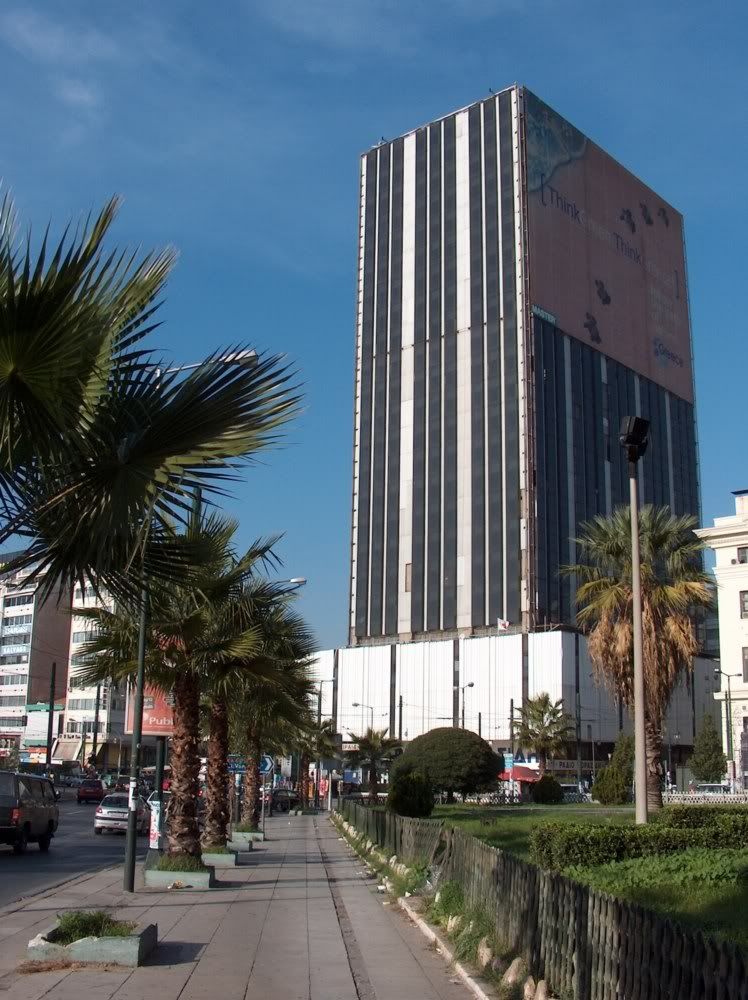
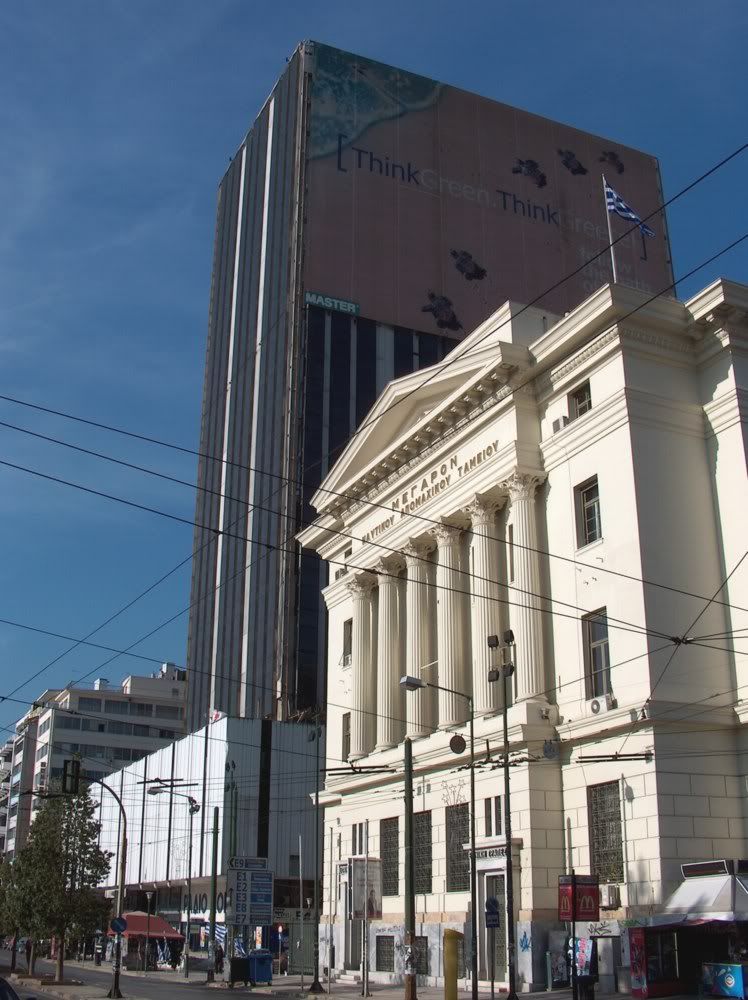
    Few however know that the second tallest building in the Athens-Piraeus metro area, the infamous Piraeus Tower, remains incomplete for over 35 years. The reasons for this are unclear and there have been many reports and alleged reasons attributed to this, including engineering errors, or simply, bureaucracy and jurisdictional conflicts as to whom the authority for the completion of the tower belongs, including the owners of the first three of floors which are the only ones in use, the Piraeus Port Authority and the Municipality of Piraeus.

    In his context, after several weeks of forced silence by the members of greekarchitects.gr not to disclose anything on the details until I received the “go ahead”, I am very happy to announce the opening of the architectural competition regarding the Tower of Piraeus.

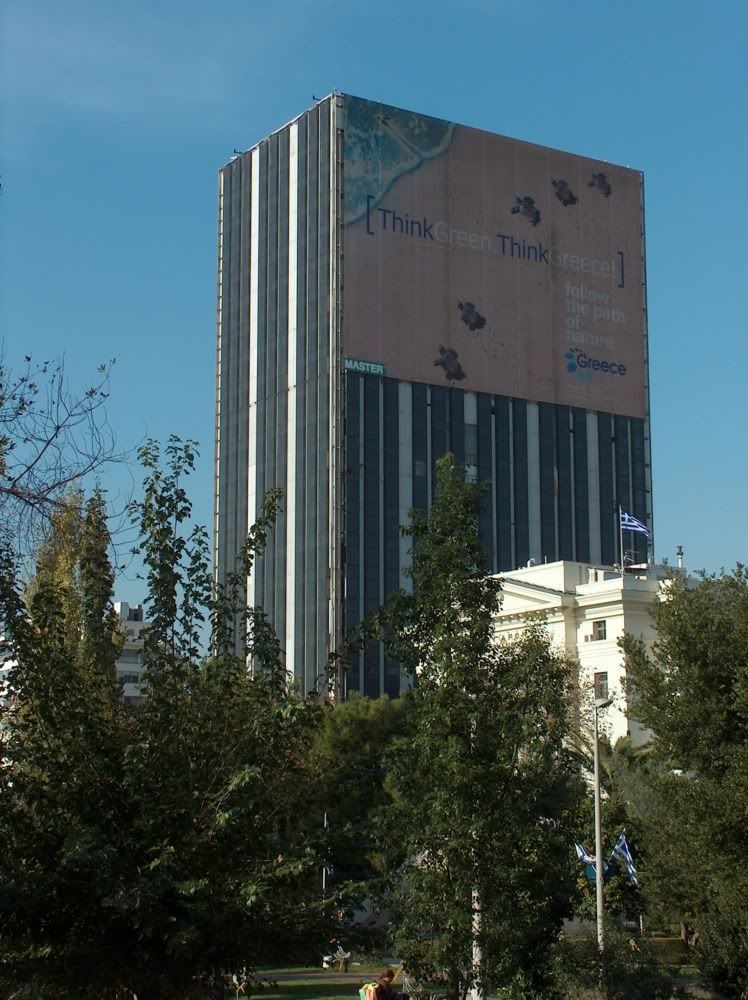
    As most of the Greek forumers already know, the particular building, is an empty 25-storey, 84m-tall shell overlooking for over three decades the main port of Piraeus. As said before, for quite some time, I was aware of the intentions of the organizers of the that is, the GreekArchitects.gr people to try to instigate some interest as to the fate of this gigantic empty shell that haunts the cityscape of Piraeus and occupies precious unusable real estate space that could otherwise have been used in a more efficient manner.

    Furthermore, what may be to the interest of an international contender is the challenge to create a proposal for a new tall building which will be completed in an urban environment that does not have any serious experience in dealing with height or better put, the vertical dimension of architecture.

    How can this new building type be introduced and to what extent, novelties in design and visual aesthetics be explored? What may be the input of an international contender who, without being immersed to the local prevailing normative circumstances as to what constitutes an appropriate measure for the size and dimensions of a building, will attempt to rejuvenate an empty urban shell and give it new form for a city in need for transition?

    Below two texts are included, that is, the announcement for the architectural competition as well as the article on the main Greekarchitects.gr site regarding the characteristics of the building. This article was co-authored by myself and Alexios Vandoros who is a practicing architect and member of the architects.gr team who also did all substantial research at the Municipality of Piraeus, the Hellenic Techical Chamber (TEE), as well as many on-site inspections, and other contacts with public and private institutions directly or indirectly involved to the building’s construction, utilization and exploitation in the past or present time.

    Overall though, I wish to publicly express my appreciation to the efforts of all involved in the project, in the hope that it will pave new directions in terms of the overall architectural discourse in Greece and that it will constitute the first step towards the completion of this tower and the long awaited introduction of the "third dimension" in the Modern Greek architecture.

    Well done guys, and I am proud to have helped the little bit I did for you. Time to go higher.

    Architecture that reaches for the skies is the product of visionary minds.

    ______________________________________________________

    I. The Competition

    “Piraeus Tower 2010 – Changing the Face/Façades Reformation”

    For further details and expression of Interest to participate:

    -Please Click HERE to access the Competition’s main Website in English
    -Please Click HERE to access the Competition’s main Website in Greek

    ANNOUNCEMENT

    GreekArchitects.gr and DuPont Hellas S.A have proudly launched an open architectural ideas competition entitled: “Piraeus Tower 2010 – Changing the Face/Façades Reformation”

    The initiative of our architectural ideas competitions is the localization of urban issues at vital points of Greek cities and the attempt to resolve them through Architecture, presenting to the citizens and State the real proportion of Architecture in the real urban space.

    For all the above, a Tall Building at the port of Piraeus that is abandoned for more than 30 years was located. It is a 22-storey building, 84 m. tall and it is known as “Piraeus Tower”. The only tower of the area is “sleeping” in one of the bigger ports of the Mediterranean that presents a dynamic growth at the last decades.

    The main issue of the competition is not the completion of another high rise building, whose completion is pending for years. The problematic exceeds the narrow limits of the dialectic regarding the construction or not of high rise buildings and skyscrapers in Greek cities and particularly in Athens.

    The competition is focused only at the reconstruction of the external façade of the building in order to set off a synectic and clear position regarding the conversation of the Tower with the Piraeus urban landscape and how this new “facade” takes part in and partially forms the relation between the Port, as an important entrance and exit point of the capital, and the urban complex of Athens.

    There is no material restriction in each proposal- any material can be used. The only requirement is the use of at least one material of DuPont Company.

    The objective pursued through the competition Piraeus Tower 2010: Changing the face. Façades reformation is to include the building in the urban landscape through the design proposal and to highlight it as the landmark for the wider area.

    GreekArchitects.gr and DuPont Hellas S.A. would like to welcome all the participants and wish you good luck.

    Organization: GreekArchitects.gr

    Director:

    Vassilis Mistriotis, Architect

    The competition Steering Committee:

    Alexios Vandoros, Architect, Chief Editor & Press Representative of the competition;

    Manolis Anastasakis, Architect, Organisation Head of the Competition;

    Santra Kalliagra, Architect, Assistant Chief Editor;

    Maria Papadimitriou, Architect, Assistant Editing Director;

    Simos Gerasimidis, Civil Engineer.

    II. Piraeus Tower – The Sleeping Giant
    by Alexios Vandoros (SSC Username: VandoTeam) and Gregory Maloukos (SSC Username: gm2263) – 2009-12-16

    First Published in Greek Architects.gr Tall Buildings Section
    Click HERE to access the article in English in greekarchitects.gr
    Click HERE to access the same article in Greek in greekarchitects.gr

    Standing on the Acropolis, once upon a time an architect is rumored to have said, looking towards the sea of concrete, which is the trademark of modern Athens:
    “This city always struck me as a continuous work-in-project”, meaning that the city seems to be nearing the completion of a stage in its development and being close to a leap to the next level, something which never comes, always being postponed.

    Very few buildings epitomize the essence of this statement with such intense symbolism more than the incomplete Tower of Piraeus also known as “Piraeus Tower”, or “Piraeus Trade Center”. The latter was a name tagged to it in a stunning analogy to its role, which was envisioned at the time of construction to be the same for the port of Piraeus with the role of its twin, ill-fated, much larger counterparts that were destroyed on the port of New York in the events of September 11, 2001…


    Far view of the Tower as seen from the Profitis Ilias Hill
    (C) gm2263 -2002

    As fate would have it, many decades after groundbreaking, the 25-storey tower (84meters height) still remains a grandiose urban carcass that haunts the skyline of the port of Piraeus. There, in the bustling port, thousands and thousands of commercial ships come and go in a clockwork fashion under the silent presence of the incomplete giant, an image which truly justifies the title of an unfinished “work in progress”. An image that clicks in the mind as a silent invitation to (re-)act against the prospect of such a gigantic perpetuated degradation.

    Event Chronology

    The reasons for what seems to be the perfect urban stagnation tale, which is stunning even for those familiar with the so-called “Greek reality” starts during the years of the military dictatorship (1967-1974). At that time (1968), and under a new law, namely the “Development Law Α.Ν. 395/68 on the Heights of Buildings and Free Construction", construction permits for a few dozens of tall buildings were given (12-28 habitable floors), something that for the lovers of the “Attica Landscape” was and still is “an act of sacrilege” and utter disrespect for the monument of the Acropolis which dominates the historic landscape of the city of Athens.

    On the other hand, the construction of the Tower of Piraeus was the result of a political decision that was taken during the same period and after Athens had already built its first (and to many, the only real) skyscraper, the Athens Tower (28 fl, height 103m). The rationale for its construction was related to the desire of the then political regime to provide Piraeus with a landmark icon of economic and urban development and enhance its image as a shipping business and commercial center, as well as to solidify the status of the officers of the then regime as reformers of the Greek political and economic system.

    In addition to all the above, the Piraeus Tower may have been perceived as the opposite pole to the Athens Tower, reflecting the relationship between Athens and Piraeus, a fact that may be corroborated by the similar morphology and architectural style of both buildings (International Style).


    The "Sleeping Giant"
    (C) Alexios Vandoros and GreekArchitects.gr

    Project Team:

    Architects: I. Vikelas, G. Molfesis, A. Loizos

    Civil Engineer: A. Oikonomou

    In short, the timeline of the most significant events in the life of this building up to the time of this writing are as follows:

    -1972 to 1974: Preliminary works and topping out of the frame of the building (Mayor: Mr Skylitsis). During those works, a historic landmark building in the area with a clock on its top is demolished as part of the renovation planning. When the frame is completed, it has 25 floors above the ground level, stands 84m tall and is clearly visible from all parts of the port.

    -1983: Cladding of the external surfaces of the building with glass (Mayor: Mr Papaspyrou)

    -Late 1980s to present: The three first floors of the building accommodate various uses including a high school, an electronics superstore and public and state authorities. No floors above that level were ever occupied. Various rumors about the static capacity and stability of the building appear in the press and become the object of concern of mainly the city’s society despite the denials coming from the technical world and other official bodies and public authorities.

    -1997-1998: Competition for the design and construction with a contractor by the municipality of Piraeus which did was not completed (Mayor: Mr. Logothetis)
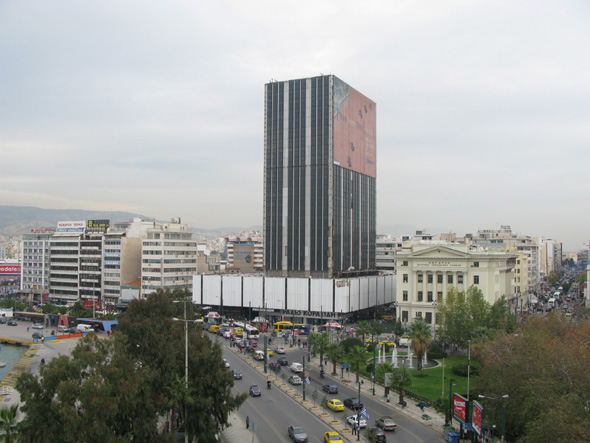

    General view of the Tower
    (C) Alexions Vandoros and Greek Architects.gr

    – 2001-2: International public ‘allocation to the lowest bidder’ competition by the municipality of Peiraius (Planning – construction – completion of the Peiraus Tower with the system that includes exchange / operational compromise).

    The competition was won by the company ‘AVAX’, but was never completed. (Mayor Agrapidis)

    Today: The structural body of the building is completed. The ground floor stores and the first two floors have been constructed and are in function. The claddings of the external surfaces of the building and the insulation of the second’s floor rooftop have been completed. The separate stores that are in use have their own EMP installations.
    Since then, the status of the building has not changed despite the good wishes of various parties to assist in its completion. What is surprising is that even the 2004 Summer Olympic games have not been a sufficient cause to mobilize the completion of the building, despite the fact that the port of Piraeus was filled with docked cruise ships, many used as floating hotel facilities at the time.

    Note: Some of the basic problems of the building, which were spotted by the municipality of Peiraius and were set at the prescriptions of the past competitions, are the approach to the Tower and the car parking. Initially the building provided very narrow parking area. This fact is aversive for its utilization, since the offered office spaces cannot be served and terrible problems will be generated at this already overloaded area. The adjacency with the terminal train and subway station is a positive element at this direction.

    At this point, the direct connection of the possible placement of high rise buildings at the urban habitat with the essence of sufficient public transportation and general access to the buildings, must be underlined. The high rise buildings must not be faced as autonomous building units, rather than as a part of the wider urban habitat. This way high rise buildings can give a solution to the enhancing impasses of the urbanization, rather than making them worse.

    Proprietary: According to the proclamation of the competition by the municipality of Peiraius the building is a property of the municipality of Peiraius, except from a ground floor store (334,80 s.m.).

    Plot: the plot where the building has been constructed is 3840,30 s.m. at the roads Akti Poseidonos, Dimosthenous, Tsamadou, Ippokratous, Makras Stoas, Anonymos.

    Coordinates: 37°56’41"N 23°38’38"E
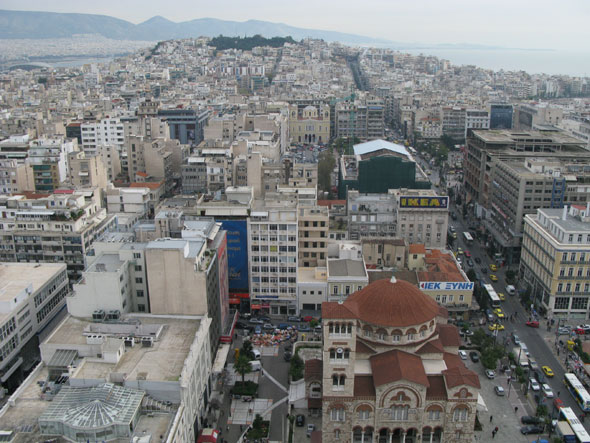

    View from the top of the Tower looking towards the Aghia Triada Church and the Profitis Ilias Hill
    (C) Alexios Vandoros and greekarchitects.gr

    Technical characteristics of the building

    Building plan:

    a. Two basements.
    b. The narrow volume – ground floor shops, Α’ and Β’ floor.
    c. The high volume – 3rd to 22nd floor
    d. The terrace

    The areas of the surfaces mentioned above are:

    Α. Existing Building
    Basement B: 1386 m²
    Basement A: 2125 m²
    Ground Floor: 2125 m²
    Α’ and Β’ floor: 3147 m² each one
    Typical Floor: (3rd – 22nd): 1034 m² (besides the 20th)
    20th floor: 648 m²
    Terrace: 154 m²
    The volume of the building is 91,942 m³

    The initial uses of the building were:

    1. Basement B: Engine Room
    2. Basement A: Garage for the property owners
    3. Ground Floor: Stores – Shops
    4. Α’ and Β’ floor: Stores – Shops
    5. 3rd floor: Coffee Shop
    6. 19th and part of the 20th: Lecture Hall
    7. 20th and 21st floor: Restaurant
    8. 22nd: EMP facilities
    9. Rest of the floors: public services and private offices


    View of the inside of the Tower
    (C) Alexios Vandoros and greekarchitects.gr

    Geometrical Characteristics of the building:

    1.1.1. Characteristics of the building.
    1.1.2. Building Dimensions
    2.1. Maximum exterior dimensions (including 58 χ 54 m of sidewalks)
    2.2. Exterior dimensions (a’ and b’ floors), plot area: 3.147 m²
    2.3. Typical floor plan: 1.034 m²
    2.4. Typical height: 85.02m
    2.5. Building height: 84.00m
    2.6. Building height without terrace: 80.20 m

    1.1.3. Typical Floor characteristics
    3.1. Typical Floor dimensions, plot area: 25 χ 40 = 1.034 m²
    3.2. Height of typical floor: 3,26 m.

    1.1.4. A’ and B’ floor characteristics
    4.1. Α’ and Β’ floor: 3.147 m²
    4.2. A’, Β’and C’ height: 4.10 m

    1.1.5. Basements’ characteristics
    5.1. Basement B’ plot area: 1.386.14 m²
    5.2. Basement A’ plot area: 2.124.94 m²
    5.3. Basement A’ Height: 3.00 m
    5.4. Basement B’ Height: 4.30 m
    5.5. Basement C’ Height:: 5.50 m

    1.1.6. Other Characteristics
    6.1. Terrace Dimensions: 11.5 χ 36 m
    6.2. Mezzanine Height: 3.50 m., plot area.: 2.125 m²
    6.3. Ground Floor height: 3.50 m

    In Conclusion…

    To many, the prolonged existence of the incomplete tower is yet another proof of the embarrassment from various parties, including the Greek state, the Greek technical construction and architecture community and the public opinion, as to what will be done with this issue. For it is now a common secret that the traditionalists within the Greek architecture and wider general academic community still view tall buildings as negative icons reminiscent of the hatred years of military junta, as well as symbolizing the destruction of the Athenian landscape after the Second World War.

    The issue is far beyond the dialectic for the construction (or not) of tall buildings at the Greek Cities and especially in Athens. At the relevant column in GreekArchitects (http://www.greekarchitects.gr/index.php?maincat=22) there are many writings (at the Greek language) for the specific issue. The paradox is not the acceptance of constructing high rises and building tall in Greece, but rather the complete absence of any dialog for this possibility altogether.

    In view of the above, it becomes apparent that the main problem here is not the completion of yet another big building whose construction remained on hold for years, as in the case of the new Athens Museum of Modern Art, but it extends well beyond that, and into the acceptance of the re-entry of tall buildings and even skyscrapers into the architectural vocabulary of Piraeus, Athens, and potentially a couple more big cities too.

    This prospect of the construction of new tall buildings or even imminently, of world-class skyscrapers (that is, buildings of well above 100m height) still fuels a never-ending controversy and should be seen as one of the most deterring factors in re-opening the discussion about the ages-old 25-floor empty shell still overlooking the port in its seemingly timeless and unending idleness.

    Alexios Vandoros, chief editor of GreekArchitects.gr / CTBUH Country Leader for Greece
    Grigoris Μaloukos, BSc, MBA / Emporis.com, Editor for Athens and Greece

    __________________________________________________________________________________

    My latest pictures:
  • Finally BBC asks: are we maybe a bit biased on ‘climate change’? by James Delingpole

    Article Tags: BBC, Headline Story, James Delingpole

    At last. The BBC Trust – the BBC’s governing body – is to launch a review of its science coverage, especially regarding “climate change”. (Hat tip: Yaosxx)

    The review comes after repeated criticism of the broadcaster’s handling of green issues. It has been accused of acting like a cheerleader for the theory that climate change is a man-made phenomenon.

    Critics have claimed that it has not fairly represented the views of sceptics of the widely-held belief that humans are responsible for environmental changes such as global warming.

    Knowing what we do about the BBC, I’m sure the review’s considered conclusion after a careful ignoring of all the relevant facts will be that the Pope most certainly isn’t Catholic, and that in no wise are bears guilty of sub-arboreal defecation. But just in case the BBC is interested in having a full-on, Caliban-style bit of self-examination in the glass, the excellent website Biased BBC has an abundance of useful leads.

    Click source to read FULL article by James Delingpole

    Source: blogs.telegraph.co.uk

    Read in full with comments »   


  • REUTERS: Cadbury shareholders bet on higher Kraft bid

    David Jones

    Wed Jan 6, 2010 1:12pm EST

    LONDON (Reuters) – Kraft faced pressure to raise its bid for Cadbury with extra cash as the market digested Tuesday’s warning from key investor Warren Buffett and an initial deadline passed with few of the UK confectioner’s shares changing hands.

    The U.S. food group said on Wednesday it had a 1.52 percent take-up from Cadbury shareholders for the 10.5 billion pound ($16.8 billion) hostile bid by a first closing deadline of 1300 GMT (8 a.m. EST) on January 5.

    It said the cash and shares bid, currently worth 767 pence per share, remained open until February 2, but analysts said Kraft would have to improve the terms to 800 pence or more to stand a chance of success.

    Most investors will likely be waiting until a January 19 deadline for Kraft to raise its bid before deciding whether to accept.

    “Kraft will have to offer at least 810 pence to attract acceptances,” said analyst Dirk Van Vlaanderen at Jefferies International.

    Buffett’s warning, which coincided with Swiss food group Nestle’s announcement it would not make a rival bid, pushed Cadbury shares lower and Kraft stock higher as it raised the chance of Cadbury escaping and cut the chance of Kraft overpaying in an auction.

    Buffett said on Tuesday his Berkshire Hathaway investment group would vote against Kraft’s proposal to issue 370 million new Kraft shares to fund the bid unless he was convinced it did not destroy shareholder value.

    MORE DEBT, LESS EQUITY

    Analyst Martin Deboo at Investec Securities said Buffett’s message was not to kill the deal but for Kraft to use more debt than shares to fund it, and he believes there is a 50:50 chance between Kraft winning with a bid of 820p and that of Cadbury escaping.

    “We read Berkshire not as trying to impose a veto, but challenging Kraft’s management to back their convictions with more cash and less equity,” Deboo said.

    Cadbury shares closed off 0.9 percent at 772 pence.

    Martin Dolan at Execution Research said Buffett’s comment show the conflict between him and Kraft, and the latter will have to offer over 800p to encourage Cadbury to let Kraft see its books and says Kraft could pay an extra 60p per share.

    Buffett’s intervention and Nestle’s decision has narrowed the premium of Cadbury’s share price to the bid price to around 0.7 percent from nearly 10 percent on Monday.

    Under Britain’s takeover rules, Kraft has until January 19 to raise its bid while Cadbury shareholders have until 1300 GMT on February 2 to accept.

    Potential bidders for Cadbury who have expressed an interest publicly, Hershey and Italy’s Ferrero, have until January 23 to come up with fully financed bids or withdraw.

    Cadbury has until January 12 to come up with fresh information to defend itself against the Kraft bid when it is expected to pre-release its 2009 results, but has gained a three-day extension to January 15 to give some further financial details.

    (Reporting by David Jones; Editing by Dan Lalor, John Stonestreet)

    Share Investor Links

    Share Investor Blog – Stockmarket & Business commentary
    Share Investor New Zealand Business News– Get more business news
    Discuss this topic @ Share Investor ForumRegister free
    Share Investor’s Daily Forex Updates

    Recommended Amazon Reading

    Security Analysis: Sixth Edition, Foreword by Warren Buffett (Security Analysis Prior Editions) Security Analysis: Sixth Edition, Foreword by Warren Buffett (Security Analysis Prior Editions) by Benjamin Graham
    Buy new: $47.25 / Used from: $46.96
    Usually ships in 9 to 11 days
    The Four Filters Invention of Warren Buffett and Charlie Munger The Four Filters Invention of Warren Buffett and Charlie Munger by Bud Labitan
    Buy new: $33.25 / Used from: $43.89
    Usually ships in 24 hours

    From Amazon – Apple iPod touch 32 GB (3rd Generation) NEWEST MODEL


    Bookmark and Share


  • “Jersey Shore” Ronnie Magro Arrested

    A night of fist-bumping landed Jersey Shore “guido” Ronnie Magro behind bars in the Ocean County Jail.

    Magro was arrested for aggravated assault after he decked a drunken racist during an altercation outside a Seaside Heights bar last September. Ronnie tells PEOPLE the fight — which was captured by MTV camera, mind you — erupted after an unidentified man hurled racist obscenities at one of Magro’s African-American bodyguards before spitting on him.

    “I really don’t feel bad for the altercations that I did get into in Seaside because I’m really not a person who likes to fight,” Ron explained. “He was just being a drunk jerk, saw the camera… [and] I think he chased us down like two blocks or something like that. At that point, you’re like, ‘What am I gonna do?’”

    Ronnie was later notified by mail that the charges were dismissed, but said he spent a few hours in jail, had a mug shot taken and was forced to fork over $600 smacks for bail.

    “I definitely felt out of place,” he calls. “It’s definitely a place I never want to go back to again. Definitely a lesson learned.”


  • How Apple “Unofficially” Leaks Information [Apple]

    The “Apple Gestapo” may be ruthless about hunting down leaks, but they don’t shake down every employee with access to sensitive information. As one former Apple Marketing Manager describes, some employees are instructed to engage in “controlled leaks.”

    According to John Martellaro, the former exec, the Wall Street Journal’s recent scoop on the Apple tablet was a perfect example. He goes on to describe the process:

    The way it works is that a senior exec will come in and say, “We need to release this specific information. John, do you have a trusted friend at a major outlet? If so, call him/her and have a conversation. Idly mention this information and suggest that if it were published, that would be nice. No e-mails!”

    The communication is always done in person or on the phone. Never via e-mail. That’s so that if there’s ever any dispute about what transpired, there’s no paper trail to contradict either party’s version of the story. Both sides can maintain plausible deniability and simply claim a misunderstanding. That protects Apple and the publication.

    In the case of yesterday’s story, Walt Mossberg was bypassed so that Mr. Mossberg would remain above the fray, above reproach. Also, two journalists at the WSJ were involved. That way, each one could point the finger at the other and claim, “I thought he told me to run with this story! Sorry.”

    Finally, the story was posted online late Monday, eastern time, so no one could ever suggest there was any attempt to manipulate the stock market.

    Martellaro claims that leaking information is not about inflating stock prices, although you won’t hear anyone complain when that happens. Generally, there is a specific goal like gauging public reaction, throwing off competitors, manipulating partners and the like. In the end, Apple comes off clean—maintaining its reputation for never talking about unreleased products. The reality is that they are all about it, as long as its officially unofficial information. Of course, this tactic probably par for the course for most major companies. [The Mac Observer]


  • Play.me Announces Music ‘Caching’ Android App for US

    Recently launched digital music service, Play.me,  has announced an Android app which gives users the ability to temporarily save playlists directly to their phone.   The current browser-based setup allows for instant access to over 2.5 million songs, custom playlists and radio stations for streaming and sharing through social networks.
    Play.me enables music fans to quickly find and play all the songs they love from a comprehensive, continually updated catalog and find new artists with Play.me’s discovery tools, including similar artist suggestions, new releases, and dynamic commercial-free radio stations which can be instantly created based on genre, artist, and decade. – press release

    The Play.me Android app, touted as a “first of its kind in the US market”  allows users to temporarily save playlists directly to their phone for uninterrupted playback should a cell phone/WiFi connection be lost.  This would come in handy for jet-setters and daily commuters who often find themselves on the subway.

    Play.me from Play.me on Vimeo.

    Play.me should fill the void here in the US while we wait for Spotify licensing issues to be resolved.  Play.me offers consumers both a $9.99 premium monthly subscription service as well as a free trial version with limited streaming capabilities and complimentary downloads.


  • VIZIO announces 1080p WirelessHD integration in LCDs and set-top boxes

    Vizio's XVT Pro LCD will offer full quality 1080p wireless media streaming

    Media streamers are rapidly gathering momentum as digital media collections grow, and it should come as no surprise to hear that the technology involved in streaming a collection of files to a TV is being built into more and more screens as standard. The Western Digital WDTV Live demonstrates how it’s possible to fit everything you need into an extremely small box, and such developments have encouraged VIZIO, the number one LCD HDTV company in America, to go one step further by adding lossless 1080p wireless HD support to its new screens.
    ..

    Tags: ,
    ,
    ,
    ,
    ,
    ,

    Related Articles: