Category: News

  • Live Blog: Google’s Android Press Gathering

    android_logo_oct09.pngGoogle is holding a press event to showcase the new Nexus One and possibly some other mobile innovations today. We already know quite a few details about the phone itself, but hopefully Google will also have a few surprises up its sleeve. The press conference should get under way at 10 a.m. PST and we will live blog the event here.

    Sponsor

    We will post updates as they happen. Keep reloading this page to see the latest news.

    google_press_1.png

    10:00 a.m. As usual, the event is running a bit late.

    10:06 a.m. Getting started. VP of Product Development takes the stage to talk about the Open Handset Alliance.

    “We will unveil the next generation of the evolution of Android today.”

    google_press_2_head.jpg

    Thirteen new members will join the OHC – including: NEC, China Telecom and Freescale.

    Recapping the history of Android hardware (G1, myTouch, Droid)

    10:10 a.m. “A year ago we had 1 device, now we have 20 devices on 59 carriers.”

    Google wants to prevent fragmentation – talking about compatibility test suite.

    “Android today is about getting more users onto the mobile web.” Android users search the web over 30-times more on Android than on feature phones.

    From the beginning, Android was always about being developer friendly.

    Talking about being able to multi-task (a subtle swipe at the iPhone?)

    The Next Step in the Android Evolution

    10:15 a.m. “We are only in the early stages of the evolution of Android.”

    nexus_one_apg.pngVolume and variety of Android devices has exceeded Google’s expectations. “But we want to do more.”

    Wants to work closer with hardware partners to showcase the software.

    Announcing the Nexus One

    “Where Web Meets Phone”

    10:18 a.m. Google calls this a new category of phones: “super-phones”

    On stage now: Peter Chou, CEO of HTC.

    Talking up the Nexus One: “The Nexus One is one of the best designs from HTC.” Outstanding display, fast processor.

    “It pushes the limits of what is possible on a mobile phone today.”

    Chou leaves the stage after posing with the phone…

    10:22 a.m. In depth look at Nexus One

    Erik Tseng takes the stage to demo the phone.

    Hardware: 3.7 inch AMOLED display – WVGA. “Deep contrast and brilliant colours.”

    1 GHz processor – fast processor = less slowdowns.

    Trackball works as notifications tool. Will pulse when you get new messages.

    nexus_one_chart.png

    130 grams – 11.5 mm thick

    Sensors: light sensor, proximity sensor.

    5 megapixel camera

    New for Android: active noise cancellation – using two microphones.

    10:29 a.m. Google will offer custom engraving (just like the iPhone…)

    “With this hardware, we think we have half of the story. It’s the combination of hardware and software that makes this such a great phone.”

    weather_nexus.pngNo surprise: Nexus One will come with Android 2.1

    10:31 a.m. New features in 2.1: Customization

    More homescreen panels – more widgets

    Example: weather widget: knows where you are from GPS

    Google expects to see more widgets from 3rd-party developers

    Showing live wallpapers.

    10:35 a.m.3D capabilities of the Nexus One and Android 2.1

    App launcher: new twist – 3D scroll-wheel – icons sit on a 3D wheel instead of a flat page

    New photo gallery – written with CoolIris

    android_photo_1.jpg

    Everything scrolls smoothly – quite impressive. Looks just like CoolIris on the desktop.

    Features background sync with Picasa Web Albums

    10:39 a.m. Voice Commands

    google_earth_android_1.jpgIn 2.0: Voice queries (“directions to nearest Ikea”)

    In 2.1: Every text field is now voice-enabled.

    Voice recognition learns every time you speak a query.

    10:42 a.m. Sneak peek at Google Earth for Android

    Also voice-enabled.

    Clearly making good use of the fast processor. Everything scrolls very smoothly.

    Buying the Phone: Google Hosted Web Store

    10:45 a.m. How to buy the phone?

    Google will sell the phone in its own web store.

    Keeping it simple: buy phone without service ($529) – or with service from partners (T-Mobile $179).

    For now, T-Mobile only. But: “Expect to add more carriers and hardware in the future.”

    Verizon Wireless and Vodofone will join the program.

    Web Store

    10:49 a.m. Demoing the Store

    google_web_store_nexus.png

    Purchasing all done in the store – no need to go to the physical store.

    nexus_engraving.png

    10:54 a.m. Recap

    First phone of a series of phone – more operators, devices and countries coming in the future.

    Showing demo video right now.

    nexus_demo_video.jpg

    Q&A

    11:00 a.m. Question: Why only such a small amount of space for app storage?

    Answer: Soon, you will be able to store apps on SD cards

    Question: Will it ship today?

    Answer: Yes.

    Question: Is this an iPhone killer?

    Answer: Choice is a good thing.

    Question: Whose inventory will the phone come from? What will you do to make the App Store more well-known?

    Answer: Unlocked phone comes from Google. Regarding the Android Market: Marketing for Nexus One and new Web Store will be essentially online. Focused on making the store better.

    Question: Why was it necessary for Google to design the phone? Why not just have an HTC phone that runs Android?

    Answer: Google didn’t design the phone – HTC did. Google is just the retailer and worked mostly on the software.

    Question: What would convinces somebody to buy a $530 phone?

    Answer: That’s choice at work. “This is the early stages of a longer journey.”

    Question: Google isn’t known for being a retailer.

    Answer: “We shouldn’t focus on retailing.” Google wants to offer a complete solution and give consumers choice. Retail part is very important but just another channel – not a channel that will replace other channels.

    Question: What’s the revenue opportunity for Google?

    Answer: These super-phones are great for accessing the Internet and that’s where our business is. Hardware sales are not the big deal – just wants to get more people on the mobile web. “If you want the best possible Google experience you come to the store and get the device.”

    Question: Will it support tethering?

    Answer: In future versions. Not a strategic issue but just something Google needs to implement.

    Question: Is the physical keyboard dead? Will Google start to sell more products online?

    Answer (from HTC): We offer lots of different phones and people can choose what best fits for them. This design is focused on the form-factor and screen. HTC offers other devices for “keyboard-lovers”. From Google: The new voice input works very well and Google will soon offer other devices as well.

    Question: Will other counties support multi-touch on the Nexus One?

    Answer: It’s a software thing. “We’ll consider it.”

    Question: When will Google Voice launch publicly? What about the other phones that are coming soon? Will something awesomer come next month?

    Answer: Other manufacturers will add more devices. “If you need a great phone today – the Nexus is a great phone.” (Nothing about Google Voice in the answer.)

    Question: Google wants to do revolutionary stuff? What’s revolutionary about this phone? Why does Google get behind this phone if it’s pretty average? Why not revolutionize the pricing structure with an ad-supported phone?

    Answer: This is a baby step. Let’s get the store going and then we can see what comes up in the future.

    Question: Will people be able to check out the phone in retail store?

    Answer: We want this to remain pure and simple. Marketing this online-only and selling online-only.

    Question: What’s the difference between a super-phone and a regular smartphone?

    Answer: The big differentiator is the openness of the app store. This is as powerful as your laptop was a year ago.

    Question: Question for Motorola: Will the Nexus One cannibalize sales of the Droid?

    Answer: We try to deliver the best products we can. Will upgrade software on the Droid.

    Question: Why does Google feel the need to change the way phones are bought? What’s broken about the current system?

    Answer: We are trying to optimize efficiencies. Just like web store revolutionized the way you buy a camera, Google wants to do the same thing for phones. After there are enough phones out there, you can experience it through using somebody else’s. Marketing just increases prices.

    Sidenote about partners: We would love to sell for Verizon and Vodafone right now – just have to integrate the IT.

    Question: What can users expect in terms of software upgrades? Users never really know what phone will get the upgrade.

    Answer: HTC wants to upgrade all of its phones (nothing specific). Google argues that some phones simply don’t have the hardware capabilities for the upgrade. The intention is to make sure everybody gets some kind of future-proof hardware that can get upgrades for a certain amount of time. From Motorola: Intention to upgrade the device to the best software that the hardware can run. Not every device supports the 3D capabilities of Android 2.1, for example. Backward compatibility slows down innovation.

    Question: Will Verizon get unlocked phones?

    Answer: Unlocked phones are a problem with CDMA phones. Will only be sold with Verizon plan.

    Question: Will you port Google Voice to the iPhone or will you suppress this to give Android an advantage?

    Answer: Google Voice team isn’t opposed to having its app run on other platforms.

    Question: Didn’t Google say it won’t do a phone?

    Answer: We don’t do hardware.

    11:43 a.m.: And that wraps up today’s live blog. Thanks for reading!

    Discuss


  • Google Nexus One Liveblog [Liveblog]

    Google’s Nexus One: The Google Phone. It’s being unveiled officially right now. We’re here. Here’s our liveblog page.

    Check in bright and early to see what’s coming, and see whether the leaked pricing details are really true, and whether anything’s changed since our first hands on back in December. [Liveblog Page]

    Watch it live here:

    Live video by Ustream


  • Testing times

    I called my Dr’s office today to reschedule an appointment and to ask him a question about increasing my Metformin doses (see my thread on that). So when we got to discussing my BGL’s the assistant told me that I was doing it wrong, that my testing should be right at the beginning of a meal, not two hours after.

    I can see to get a good baseline at the beginning of the meal, but it makes no sense to me why not to test two hours after. This just seems flat out wrong.

    I can’t test myself that often especially since I eat smaller, more frequent meals. I would be testing myself at least 11 times a day if that was the case. Originally the Dr just wanted me to test fasting and then after a meal, but I increased that to test my carb sensitives in foods to hone in my diet.

  • Loss | Cosmic Variance

    I am heartbroken to learn the loss of a member of the physics community in the recent avalanche in Switzerland. I have few details, but it appears one physicist was killed in the avalanche, and that at least two others from the party have been hospitalized. Many others were lost, including some of the rescuers, who were swept up in a second avalanche.

    Condolences to all who have been affected by this tragedy.


  • The Palm Pre …Minus (Knockoffs)

    Cool K07

    Over what the Palm Pre has right now, this sucker’s got a front-facing camera in addition to the one with flash on the back, dual SIM card slots, Java functions, a full QWERT keyboard, FM radio with recording, analog TV, eBook support, handwriting input, and a 3800 mAh battery.

    And that’s just the stuff we’ve heard of before, it also comes with revolutionary technology like a gravity inducer, something amazing called “Magic Voice,” a TransFlash card slot supporting up to 8 GB, handshaking function (to avoid H1N1 transmission, we presume), a ‘spotwatch,’ and four common games. That last bit has our minds thoroughly blown: we always put four common games at the top of our must-have list. Strangely, Touchstone support seems to be missing, as is webOS; it must be some sort of marketing mix-up (like a Sprint Pixi with Wi-Fi)

    We know, you’re sincerely hoping that this is what Jon Rubinstein is going to pull out of his pocket on stage come Thursday. Want one now? The Cool K07 can be yours for a cool $128, with bulk pricing available if you want to buy one for all your cool friends too.

    [via: Engadget]

  • Interview: ShoZu CEO: Mobile Social Model Remains Unclear


    Chris Wade

    Nine years after starting the what he hoped would be the biggest way to upload mobile social media, CEO Chris Wade, who has just sold ShoZu to white-label telecoms services business Critical Path, conceded: “It is unclear to me that there is a standalone business model in social aggregation.”

    Social media consumption has been a runaway success on mobile, but not necessarily so for some of the middle men that make those services possible. ShoZu received $36 million from VCs including SEB Venture Capital and Atlas Venture. But Wade, still ShoZu’s largest individual investor, admitted to the challenge in an interview with paidContent:UK…

    ShoZu’s foray into paid apps has been a “medium” success: Last June, the company hopped on the apps bandwagon and launched an app for the premium price of $4.95. “The great news is that every day on seven or eight app stores, people are paying for our app,” says Wade. “But are they in the tens of thousands? Absolutely not.” He says the company plans to reevaluate the offering. He mentions more services storage and content replication, and a possible change in pricing, too.

    ShoZu brand to live on: “We’re going to continue to service the ShoZu customers that exist today in the different venues they’re accustomed to,” Critical Path CEO Mark Palomba told me. Critical Path also plans to integrate some of Shozu’s functionality into its current white-label offering, which it sells via mobile operators. Current customers include O2, Orange, Vodafone (NYSE: VOD) and Deutsche Telekom (NYSE: DT).

    Wade said he has been talking with ShoZu for the good part of a year already, but the opportunity to buy the company only presented itself more recently. No word from either man on the financial terms of this deal, or who/what provided the impetus for the acquisition. In some ways, the move seems an obvious fit for the two companies…

    —Critical Path focuses on network-based, white-label solutions for messaging, email and content management, which it sells to mobile and fixed operators to offer as their own retail services.

    —In mobile, its primary aim is services for what Palomba calls the “value phone” market. And it is increasingly moving into offering social media-focussed services, such as universal contact management. So it makes sense to have more social media expertise, and to have those services focused on the smartphone devices, both of which are strengths for ShoZu.

    Other synergies are less clear. ShoZu once wanted to co-opt rock stars to use its service to post live updates for fans. Critical Path is less sexy, selling its solutions into the enterprise and government sectors. Palomba maintains that there is a fit with Shozu here – around the idea of businesses using social media services to collaborate – but Wade seems less sure of how the company’s offerings will evolve post-acqusition. “It will be fascinating to have this call in 12 months’ time to see what will be a ShoZu service,” says Wade.

    One hint might come in Wade’s predictions for social media: “I think you will find commerce starting to come in more [in the form of] advertising and the ability to buy things through social networks. It will become a more enterprise centric environment.”

    Related


  • Guadalajara proyecta repoblarse

    Guadalajara proyecta repoblarse


    La reserva urbana, de 119 hectáreas, se agotará en menos de tres años


    La pérdida del capital humano en la Perla Tapatía vendrá acompañada de otras consecuencias negativas. ARCHIVO

    Hay propuestas de impulsar vivienda popular en el Centro y mantener la población por arriba de millón y medio

    GUADALAJARA, JALISCO.- La ciudad de Guadalajara enfrentará un grave despoblamiento de 400 mil habitantes en un periodo no mayor a 25 años, debido a la expulsión de personas –en su mayoría jóvenes– ante la carencia de alternativas populares de vivienda.

    La pérdida del capital humano en la Perla Tapatía vendrá acompañada de otras consecuencias negativas, como la reducción en la captación de impuestos por parte de la autoridad municipal, con los efectos inherentes en el mantenimiento de la infraestructura urbana y la prestación de los servicios públicos.

    La situación se complica al considerar que las 119 hectáreas de reserva urbana que le quedan a la ciudad se agotarán completamente en menos de tres años, de ahí que la estrategia de repoblamiento que elaboró el Ayuntamiento y que se engloba en el Programa Municipal de Desarrollo Urbano (PMDU), se centra en la densificación del municipio con la intensificación de los usos de suelo que permitiría, en las zonas con la infraestructura adecuada, el crecimiento vertical de los desarrollos inmobiliarios.

    El objetivo del PMDU, cuya aprobación está pendiente por la administración municipal que recién comienza, es que la población de Guadalajara no baje del millón y medio de habitantes y que incluso pueda subir a 1.8 millones, sabiendo que la cifra actual es de un millón 600 mil 894 tapatíos.

    En el caso particular del Centro Histórico se contempla la edificación de mil 100 unidades de vivienda media y de interés social (alrededor de cinco mil 500 nuevos habitantes) en un plazo de 10 años sobre 13 hectáreas, lo que se lograría a través del aprovechamiento de los baldíos y las fincas no armónicas que representan en total 18.01 hectáreas.

    Guadalajara enfrentará un drástico despoblamiento

    La ciudad de Guadalajara se vacía. Si la estrategia de densificación y repoblamiento que elaboró el Ayuntamiento tapatío no funciona, en 25 años habrá perdido alrededor de 400 mil habitantes, principalmente sus jóvenes, quienes parten año con año en búsqueda de alternativas asequibles de vivienda en los municipios de Zapopan y Tlajomulco, particularmente.

    En el horizonte de la Perla Tapatía está una ciudad vacante con un Centro Histórico “fantasma”. El Programa Municipal de Desarrollo Urbano (PMDU) engloba todas esas acciones tendientes a la revitalización de la ciudad, y que conciben una Guadalajara compacta y densa que intenta frenar la expansión de la mancha urbana, su crecimiento disperso y detener la cuenta regresiva del reloj, que comenzó en 1990.

    Desde ese año la población de Guadalajara decrece de forma sostenida. Su mayor riqueza se le va. De 1990 al año 2005 perdió 49 mil 265 de sus habitantes. “Hay menos niños y más ancianos”, dice el PMDU, como lo demuestra el quinquenio del año 2000 a 2005, pues al combinarse la disminución en el ritmo de crecimiento de la población infantil –descenso en la natalidad– y la expulsión de gente joven, hay una reducción de 102 mil 635 integrantes del grupo de los cero a los 29 años; en cambio, el grupo el de la tercera edad creció en 23 mil 751 personas, pues también hay un descenso en la mortalidad.

    Aunque la migración intraurbana, en la que Guadalajara juega un papel expulsor, tiene una explicación multifactorial, hay elementos preponderantes que la explican. Primeramente, la superficie en reservas urbanas de Guadalajara para albergar nueva vivienda es mínima, apenas cuenta con 119 hectáreas en este momento. Esto significa que con la tasa de consumo anual de suelo urbanizable que presenta desde hace ocho años y que asciende a 55 hectáreas, su reserva actual se habrá terminado completamente en menos de tres años.

    Considerando el valor promedio de vivienda por hectárea actual (51.1 viviendas por hectárea), señala el documento, las reservas urbanas que le quedan a Guadalajara podrían albergar sólo seis mil 83 viviendas para alrededor 25 mil personas. Muy poco, si se pone en perspectiva con el crecimiento poblacional que registrará la metrópoli en el periodo 2005 a 2010, con 451 mil 638 habitantes, que representan una demanda de 120 mil 901 viviendas sobre una superficie de dos mil 365 hectáreas. Con las reservas actuales de Guadalajara sólo podría responder a 1.34% de esas necesidades.

    Es Juan Palomar Verea, quien fungió como vocal ejecutivo de la Comisión de Planeación Urbana (Coplaur) durante el periodo 2007-2009 , quien tiene una explicación más simple para todos estos números y el despoblamiento del municipio: “No se construye vivienda popular en el municipio de Guadalajara, punto. Estamos perdiendo habitantes, lo cual es gravísimo, porque esto significa menor capital humano, menor base gravable, menores participaciones; se nos está fugando la gente a municipios colindantes”.

    ¿Para dónde crecer?

    El PMDU establece las directrices para densificar con la intensificación selectiva de los usos de suelo en la ciudad de Guadalajara promoviendo el crecimiento vertical, con lo que se podría ofrecer nueva vivienda y volver atractivo el municipio para vivir, principalmente en su Centro Histórico, en los corredores de movilidad y aquellas zonas con la infraestructura adecuada.

    “Tenemos comprobado que podemos tranquilamente asimilar muchos habitantes más por hectárea si se hace una densificación inteligente y cuidadosa”, señala Palomar Verea, y apunta que “cada que se haga una acción de densificación tendrá que garantizar que la calidad de vida de los habitantes del contexto no se demerite. Es un reto, pero creemos que es la única manera como Guadalajara puede encarar el futuro con optimismo, porque la inercia que llevamos del desangramiento de funciones y de habitantes, de talento, respecto a la Zona Metropolitana, es gravísima”.

    La planeación de Guadalajara se basa en su división en siete distritos urbanos. El movimiento de migración intraurbana o expulsión de habitantes se origina principalmente en los distritos 1 Centro Metropolitano (que comprende al Centro Histórico), 2 Minerva y 5 Olímpica. En estos momentos, la densidad poblacional promedio de Guadalajara es de 115 habitantes por hectárea (otro cálculo señala 119 hab/ha), y ya en un análisis por distrito, se puede saber que las dos más bajas se registran precisamente en el número 2 Minerva, con 49 habitantes por hectárea, y el 1 Centro Metropolitano, con 90 habitantes por hectárea.

    Palomar Verea dijo: “El objetivo es llegar a una cifra que hemos evaluado, estamos pensando poder llegar a los 380 habitantes por hectárea, pero no es parejo, o sea, en ciertas zonas sería la densidad que estaríamos buscando y que sean propicias y adecuadas para ello”.

    Si la población actual del municipio asciende a un millón 600 mil 894 habitantes y la proyección al año 2030 señala que se reducirá a un millón 216 mil 292, lo que el PMDU busca es que mediante la densificación y repoblamiento de la ciudad la cifra no baje del millón y medio de personas.

    “La política de repoblamiento deberá obligarse a generar condiciones para fomentar una tasa de reposición por lo menos cercana a la de reducción necesaria, con el objetivo de conservar la rentabilidad de la plataforma urbana. Se trataría de sostener un volumen poblacional aproximado de entre 1.5 y 1.8 millones de habitantes”, dice el PMDU.

    Las posibilidades de incremento poblacional están principalmente en los distritos 1 Centro Metropolitano, 2 Minerva y el sureste del 7 Cruz del Sur, para exceptuar sus zonas industriales. Este aumento de densidades, precisa, estaría condicionado en los distritos 3 Huentitán, 6 Tetlán y 4 Oblatos “en función de la cobertura de los servicios públicos, posibilidades de empleo, nivel de equipamiento y accesibilidad”.
    En el caso particular de la Barranca de Huentitán, uno de los proyectos estratégicos del PMDU es el llamado “Habitar en la Barranca”, que busca la edificación de 650 unidades de vivienda en seis años, lo que podría representar alrededor de tres mil 200 personas. Actualmente, en los dos distritos urbanos que son frontera con la barranca, el 3 Huentitán y 4 Oblatos, se encuentran 5.37 hectáreas y 42.65 hectáreas como reserva urbana, respectivamente, que pueden ser aprovechadas.

    Sin embargo, es preciso señalar que en el distrito 3 Huentitán existen disponibles otras 70 hectáreas de suelo no urbanizado, pero que se encuentran por debajo de la cota mil 500 en la barranca, y en el distrito 4 Oblatos están de igual forma otras 38 hectáreas, es decir, 108 hectáreas más que, según el Programa, “pueden incorporarse como áreas de reserva al considerar los lineamientos ambientales decretados respectivos”.

    La restricción que impedía las construcciones por debajo de esa cota fue establecida en el Plan de Ordenamiento de la Zona Conurbada de Guadalajara, pero éste reglamentaba una disposición ahora derogada: La Ley de Asentamientos Humanos, de ahí que el propio Congreso estatal en su acuerdo 920/05 haya solicitado a los ayuntamientos que se “aparten” de la aplicación de dicho criterio.

    Esas 108 hectáreas debajo de la cota no se contabilizaron dentro de las 119 hectáreas de reserva urbana formal que le queda al municipio, por lo que se presentan como una oportunidad.
    Otras acciones concretas de densificación integradas en el PMDU son la edificación de 105 viviendas en seis años en la zona Universidad-Expiatorio; 350 unidades de vivienda media en seis años en la zona Mezquitán

    Parque Alcalde-Normalistas; 200 unidades de vivienda media en seis años en Santa Teresita; 120 departamentos-estudio en el entorno del Centro Médico de Occidente; vivienda dúplex y de interés social en Mexicaltzingo, y edificar mil unidades de vivienda media y de interés social en suelo subutilizado en zona de la Estación del Ferrocarril.

    El Centro Histórico

    El rescate del Centro Histórico de Guadalajara tiene como objetivo su consolidación como una “alternativa de residencia” competitiva, capaz de disminuir el fenómeno de despoblamiento y la migración intraurbana, esto, primordialmente mediante el aprovechamiento de los predios ociosos o baldíos detectados en él, así como de fincas no armónicas que tampoco cuentan con algún tipo de valor patrimonial, por lo que pueden ser sustituidas por nuevas viviendas.

    Según los estudios que la Coplaur ha realizado, en el distrito 1 Centro Metropolitano se encuentran mil 915 fincas no armónicas y 241 baldíos que podrían intervenirse para la construcción de desarrollos habitacionales, con comercio y servicios.

    El PMDU señala que los predios ociosos representan 4.31 hectáreas, y las fincas no armónicas, por su parte, 13.7 hectáreas. En total, 18.01 hectáreas con el potencial para revitalizar el Centro Histórico. Con estos dos conceptos (predios y fincas) se concretizan 245 polígonos con factibilidad para la construcción de vivienda, por
    presentar una superficie mayor a los 400 metros cuadrados.

    El objetivo puntual que se marca en el PMDU es edificar mil 100 unidades de vivienda media y de interés social sobre 13 hectáreas de suelo ocioso y de reciclamiento en el Centro Histórico, para sumarle alrededor de cinco mil nuevos habitantes en un plazo de 10 años.

    También se considera la rehabilitación de fincas ahora sí con valor patrimonial para brindar servicios a la comunidad de acuerdo a sus diseños arquitectónicos. Se adquirirán en siete años 44 fincas con valor patrimonial para incorporarlas al capital de equipamiento urbano. Además de otras 23 en el perímetro B del Centro y 18 más en barrios tradicionales para convertirlas en bibliotecas, salas de teatro y exposición pictórica o salas de acceso a internet y lectura.

    El PMDU destaca una y otra vez la necesidad de que estas intervenciones se den mediante proyectos de naturaleza público-privada.

    A decir de Palomar Verea, quien fungió como vocal ejecutivo de la Coplaur, la mejor vía de convencimiento para que los desarrolladores inmobiliarios opten por invertir en el suelo de Guadalajara, más caro que el que encuentran en la periferia de la metrópoli, es la intensificación de los usos de suelo, con lo que incrementará la competitividad de la ciudad:

    “En el momento en que sobre el mismo suelo que cuesta caro, puedes construir cuatro viviendas, pues entonces tienes que venderlas caras para que pueda salir el negocio, cuando sobre ese mismo predio puedes construir 16 viviendas, entonces ya empiezas a entrar a un nivel competitivo en el mercado y resulta interesante para los promotores llegar a ese nicho, que en la actualidad no existe (la vivienda popular)”.

    En el PMDU también se contempla un programa de reordenamiento vial interior en el Perímetro A del Centro Histórico, para reducir la afluencia vehicular en calles locales a través de la formalización de zonas peatonales, lo que mejoraría sus condiciones de habitabilidad.

    Guadalajara mayor

    La densificación de la ciudad no sólo tiene que ver con la modificación del modelo actual de crecimiento no sustentable que registra la metrópoli con su dispersión y horizontalidad, sino también con la estabilidad de la recaudación impositiva que requiere el Gobierno municipal para la prestación de servicios públicos y el mantenimiento de la infraestructura urbana para evitar su deterioro.

    Es decir, para la viabilidad misma de la operatividad del Gobierno municipal, cuyos programas, acciones y nuevas obras deberán responder a las exigencias de la nueva composición demográfica que se consolidará en la ciudad en 25 años, particularmente con el crecimiento del grupo de la tercera edad.

    “Las posibilidades de incrementar densidades poblacionales a través de la promoción de mejores facilidades para el mercado inmobiliario y el aprovechamiento de suelo aún ocioso, tendría por consecuencia atraer más población (incluidos matrimonios jóvenes), lo que significa la ampliación de la base distributiva de los costos y el incremento en la captación de recursos”, señala el PMDU.

    Con la proyección del Consejo Estatal de Población al año 2030, en la composición demográfica de Guadalajara el grupo de la tercera edad tendrá un incremento cercano a 50% con respecto a su integración actual, por 113 mil 619 miembros, pues llegará a las 168 mil 901 personas. En el contexto metropolitano, 4.9% que representan los adultos mayores de su población total, pasará a 11.2% en e 2030, llegando hasta las 603 mil 206 personas.

    De esta forma, en el tema particular de la salud, el equipamiento y los programas de atención deberán orientarse “a la atención de grupos específicos, como mujeres y niños, pero también a la adecuación del sistema para prepararlo hacia la atención y cobertura de las personas de la tercera edad, pues este grupo se incrementará notablemente y la atención de su salud es de características altamente especializadas”.

    El PMDU profundiza: “La densificación significa aumento de población, rentabilización de los equipos y de la infraestructura, así como una mayor captación de impuestos, pero también el abatimiento de los costos de manutención del sistema de educación, salud y derechohabiencia para cada ciudadano”.
    El arquitecto Marcos Pineda Cruz, al frente de la Dirección de Gestión Urbana de la Coplaur durante la elaboración del PMDU, señala que la atención a los adultos mayores incluso deberá influir en la concepción de los espacios públicos:

    “Tenemos que ir pensando qué actividades como gente adulta requerimos, y en espacios ya no tanto como los que se han estado generando como centros de diversión, que todo va muy direccionado a gente joven, que tiene una cierta energía, pero no hay equipamiento para gente adulta que tiene otras necesidades o que simplemente, por su ritmo de vida, es otro gasto de energía que dosifica. Ése es el gran reto”.

    El PMDU apunta: “El rápido descenso de la fecundidad y la mortalidad ha traído como consecuencia una transformación en la estructura por edad de la población, así como el alargamiento de la sobrevivencia ha originado por cada vez más personas alcancen las edades adultas y la vejez”.

    Esto se complementa con lo que marca el Plan Intermunicipal de Desarrollo Urbano (PIDU), otro instrumento fundamental en la planeación y reordenamiento de la metrópoli, que aúna: “El principal reto será económico. Si actualmente casi la mitad de la Población Económicamente Activa (PEA) carece de cobertura en los sistemas de salud y de pensiones, en la medida en que envejezca la población se generará un incremento en la presión económica y social por atenderlos (a los adultos mayores)”.

    Los servicios de salud deberán ampliar su capacidad en la atención geriátrica y en las enfermedades crónico-degenerativas (diabetes, cáncer, esteroesclerosis, artritis y Alzheimer), todo acompañado del fomento de “un ambiente solidario, de respeto e inclusión a los adultos mayores”.

    Palomar Verea recordó, por su parte, el caso particular del programa de instalación de módulos lúdicos en la ciudad, que ya contempla equipamiento y espacios que responden especialmente a las necesidades de los adultos mayores, y afirmó:

    “Sí se ha tomado en cuenta que un usuario cada vez más importante es el adulto mayor, y es en ese sentido que Guadalajara tendrá que hacer lo necesario para prepararse a tener una población más madura, pero también tendrá que hacer lo necesario para tener una población joven e infantil, si es que no quiere tener una decadencia que puede ser muy drástica”.

    El crecimiento disperso

    Las directrices establecidas en el PMDU son concomitantes con el Plan Intermunicipal de Desarrollo Urbano (PIDU), un instrumento para reordenar y regular el crecimiento de la metrópoli, comprendiendo a Guadalajara, Zapopan, Tlaquepaque, Tonalá, Tlajomulco de Zúñiga y El Salto.

    EL INFORMADOR presentó un resumen de este documento los días 29 y 30 de septiembre de 2008. Se puede destacar que el PIDU busca dirigir 70% del crecimiento poblacional que registrará la metrópoli hacia el año 2030 a los espacios intraurbanos subutilizados o predios baldíos, para que solamente 30% restante se asiente en las reservas urbanas que se encuentran en la periferia.

    Actualmente la metrópoli tiene cuatro millones 60 mil 531 habitantes, y hacia 2030 se estima un incremento de un millón 913 mil 689 personas. Los espacios intraurbanos subutilizados ascienden a siete mil 135 hectáreas que deben ser aprovechados para incrementar la densidad actual de la metrópoli, que es de apenas 65 habitantes por hectárea, con el fin de, al menos, duplicarla.

    Para conocer las desventajas de la expansión de la mancha urbana como se ha registrado hasta ahora, el PIDU cita al Environmental Law Institute, que ha realizado estudios sobre el crecimiento disperso de las urbes y concluido las siguientes consecuencias negativas:

    Equipamiento y servicios públicos “diluidos” (obstruye la cobertura universal); encarecimiento del mantenimiento urbano y la expansión de la infraestructura pública; incrementa costos y distancias del transporte; mayores cantidades de recursos naturales consumidos; generación de segregación urbana, espacial y social (en la periferia no hay acceso a todo el equipamiento urbano); impuestos más altos; degradación de la calidad de aire y agua; alteración o destrucción de hábitats naturales, y una sociabilidad obstaculizada.

    El PIDU informa que en los últimos cinco años la expansión de la metrópoli consumió mil 600 hectáreas en llanos, lo que afecta las actividades agrícolas en los valles de Tesistán, Toluquilla y Tlajomulco de Zúñiga, y otras dependientes del capital natural que generan anualmente alrededor de mil millones de pesos.

    Palomar Verea abonó: “El fondo del tema está en que densificación quiere decir todo esto que está en contra de la ciudad dispersa, que es una ciudad injusta, antiecológica, no sustentable, que propicia la fragmentación social, mayores impuestos y una menor calida de vida”.

    Especialistas como Eduardo López Moreno, director del Observatorio Global Urbano de las Naciones Unidas, han señalado que el crecimiento disperso de las ciudades también le genera enfermedades a la población: cuando se da de forma irregular y en pobreza, por la falta de servicios básicos y salubridad; cuando se da en zonas con mayor riqueza, genera estrés en las personas que deben recorrer grandes distancias diariamente.

    Palomar Verea apuntó: “Lo que no nos hemos dado cuenta como metrópoli es que la ciudad se está saliendo de control y de límites, ya la energía, el costo económico y humano que está pagando la gente por recorrer las distancias de sus centros de trabajo, de estudio, a sus centros de vivienda, está resultando excesivo. Hay gente que se mete hora y media, dos horas o más en traslados cotidianos que son contra el recurso más valioso que tiene la población, que es su tiempo y su calidad de vida”.

    Y concluye: “(Buscamos) Una ciudad más conectada, mejor comunicada que aprovecha mejor sus equipamientos, que además genera más espacios públicos, porque la densificación bien aprovechada genera más espacios públicos al poder liberar suelo y posibilitar acciones que permiten que la ciudad tenga una mayor riqueza y que tenga menores problemas de transporte, de contaminación, menores problemas de desgaste social que significa la ciudad dispersa”.

    El Programa Municipal de Desarrollo Urbano

    El Programa Municipal de Desarrollo Urbano (PMDU) es de gran relevancia para el municipio, pues engloba la visión de ciudad para la que se invertirán los recursos públicos del Ayuntamiento en los próximos años. En el Programa no sólo se mencionan las directrices generales para el desarrollo integral de la ciudad, sino que se incluyen una serie de actividades, programas y acciones muy específicos en sitios concretos para el mejoramiento de las condiciones de habitabilidad de Guadalajara.

    Incluso, su aprobación por parte del Ayuntamiento implica que la propia autoridad municipal deberá sujetar su proceso de presupuestación a las actividades, programas y acciones claramente estipulados en el PMDU, lo que debiera traer en consecuencia la garantía de que la inversión de los recursos se dará con criterios de planeación.

    En la fundamentación del documento se puede leer: “El PMDU es el sustento territorial para la formulación de la planeación regional económica y social, así como para la programación y presupuestación públicas del Municipio, para concretar los objetivos, estrategias, metas y prioridades de desarrollo, deberán ajustarse a las disposiciones de ubicación espacial y las prioridades definidas en el mismo”.

    Y agrega: “Todas las acciones, inversiones y obras relativas al aprovechamiento del territorio que realicen el Gobierno del Estado y el municipio, deberán sujetarse a lo dispuesto en este Programa. Sin este requisito la autoridad competente no podrá otorgar la autorización presupuestal o de financiamiento o las autorizaciones administrativas para efectuarlas. Para tal efecto, la solicitud presupuestal correspondiente deberá incluir una exposición de la relación entre las acciones, inversiones y obras de que se trate con fundamento en los objetivos y metas del programa”.

    El respeto del Programa también atañe también a los diputados locales: “El Congreso del Estado, el Gobierno del Estado y el municipio, así como sus entidades paraestatales, deberán prever en sus procesos de presupuestación, programación y gasto, el ejercicio de acciones y recursos en plena congruencia con lo que dispongan en el Programa”.

    Aunque la elaboración del estudio que fundamenta al Programa se realizó durante la administración 2007-2009 y fue puesto en consulta pública, se dejó para su aprobación a la que acaba de entrar en funciones este año para su enriquecimiento por la nueva composición del Ayuntamiento.

    Densidad poblacional por distrito urbano:
    1 Centro Metropolitano: 90 hab/ha.
    2 Minerva: 49 hab/ha.
    3 Huentitán: 115 hab/ha.
    4 Oblatos: 170 hab/ha.
    5 Olímpica: 125 hab/ha.
    6 Tetlán: 178 hab/ha.
    7 Cruz del Sur: 108 hab/ha.
    Densidad poblacional promedio de Guadalajara: 115 hab/ha.

    NUMERALIA
    1 millón 600 mil 894 habitantes es la población actual de Guadalajara.
    1 millón 216 mil 292 habitantes es la proyección de población a 2030.
    1 millón 800 mil a un millón 500 mil habitantes es el objetivo de población con densificación.

    FRASE:
    “El objetivo es una cifra que hemos llegado a evaluar, estamos pensando poder llegar a los 380 habitantes por hectárea, pero no es parejo, o sea, en ciertas zonas sería la densidad que estaríamos buscando en zonas que sean propicias y adecuadas para ello”.
    Juan Palomar Verea, Vocal ejecutivo de la Coplaur.

    PARA SABER
    En Guadalajara el grupo de personas de la tercera edad tendrá un crecimiento cercano a 50% hacia el año 2030, al pasar de 113 mil 619 miembros a 168 mil 901, según el Consejo Estatal de Población. A nivel metropolitano, el 4.9% que representan los adultos mayores de su población total, pasará a 11.2% en 2030, llegando hasta los 603 mil 206 personas.

    EFECTOS DEL DESPOBLAMIENTO:

    -Pérdida de capital humano.
    -Reducción en recaudación impositiva de la autoridad.
    -Deterioro de la infraestructura urbana.
    -Afectación en la prestación de servicios como la salud para el grupo creciente de adultos mayores.

    Textos: Luis Herrera
    fuente: Informador http://www.informador.com.mx/jalisco…repoblarse.htm

  • What Croatian cities do you know by name??

    This might be a little difficult…:)
  • Congress Should Telecommute

    I’m a huge fan of telecommutes. It’s not that I don’t like being around people. I do, and my colleagues in particular are wonderful. But I can blog from my laptop from anywhere with an Internet connection, my line on the DC metro is a sardine can, and staying on my couch saves over an hour of total travel. In the aggregate, telecommuting is good for conserving office space, good for family time, good for the environment, good for overall travel times (if there are fewer people going to work, the roads are less congested).

    But would telecommuting be good for our government? Conor Friedersdorf thinks so.

    His argument isn’t so much about the environment, or the commute times, or family. It’s about K Street:

    As professional lobbyists grow ever more powerful, it is increasingly
    consequential that members of Congress spend significant stretches of
    time hundreds or thousands of miles from their constituents, but mere
    minutes away from every K Street firm. An e-Congress wouldn’t merely
    result in legislators more attuned to their constituents by virtue of
    spending their working lives among them — it would make influence
    peddling far more difficult on lobbying firms, who’d find it more
    expensive and time-consuming to get face-time with multiple senators
    and Congressional representatives, or to simultaneously court a
    senator, six members of the federal bureaucracy, a few political
    journalists, and a dozen House underlings …

    And although lost social lubricant would be one cost of an e-Congress,
    it would be mitigated by an important benefit: fewer folks would get
    jobs as congressional staffers, put in a few years at a mediocre wage,
    and cash out by using their contacts as leverage when they negotiate
    their starting salary at a lobbying firm. Ask yourself whether social
    cohesion among D.C. insiders results in good governance — or the
    opposite.

    There are a few double-edged swords here. It might be more difficult for a Whip to unite an opposition for partisan reasons, but it would also be more difficult for committees to produce bills as anybody who has every dozed on in a teleconference meeting knows. You might mitigate obstructionism that way, but you’d also mitigate constructive conferences in Congress (if that isn’t oxymoronical, anyway).

    Similarly, a more hyperlocally-focused Congress would be a good thing for individual districts, but it could also (a) increase the pressure for more pork; (b) allow local interests to eclipse national legislation, which would result in (c) even more money being used to pay off local interests to bring that national legislation to the floor. Just look at the health care bill. So this is an unperfect idea, but still it is a very interesting piece by Conor.


    Email this Article
    Add to digg
    Add to Reddit
    Add to Twitter
    Add to del.icio.us
    Add to StumbleUpon
    Add to Facebook


  • Plitvice Lakes

    Croatia, Europe | Natural Wonders

    Karst is not a particular kind of rock, but rather the landscape that results from the combination of certain types of rock, often limestone or dolomite, and water. The important element is that these types of rock are all solvable in water.

    Put this type of rock in combination with water and over the years the water works its way through the rock and leads to all sorts of natural wonders. This type of geographical landscape is known as “karst topography” and is the basis of some of the most visually amazing geographical locations in the world.

    Most of stone foundation of the Balkan peninsula is made of thick deposit of limestone accumulated over eons. Together with the areas abundance of springs, rivers and lush vegetation it has created some spectacular and Eden-like environments.

    Plitvice lakes in Croatia is a series of 16 mountain lakes formed thanks to one such phenomenon. Travertine is a special kind of limestone which accumulates from calcium carbonate rich surface waters on the surface of living moss, forming growing barriers, and creating a chain of lakes and waterfalls. In an epic race, on a timescale of many thousands of years, the water wears away at the underlying limestone at the same time as the travertine barriers grow at pace of up to 1cm per year, creating an ever morphing, growing, reducing landscape..

    The whole region of Plitvice is a national park, and the plitvice lakes are one of the main attractions of the inland part of Croatia, situated in Lika region of Croatia, in the midst of the Dinaric Alps. The lakes are divided into the 12 Upper Lakes (Gornja jezera) and the four Lower Lakes (Donja jezera).

    While the national park is quite safe, don’t wander too far from the paths. The UNESCO recognized park was the site of the first skirmish between Serbia and Croatia during the Balkan wars and landmines were planted throughout. Though it was certified mine-free in 1998, (Croatia has worked extremely hard to demine the country) it is believed there may still be a few errant landmines in some of the more remote areas of the park.

  • Placing Bets On Social Strategy, SCRM, and Mobile in 2010

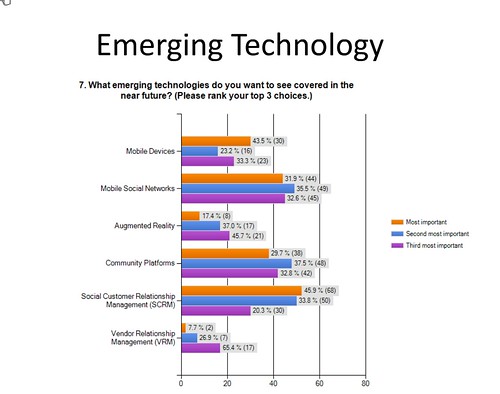
    Screen shot 2010-01-05 at 12.43.57 PM

    Above Image: Readers of this blog asked for coverage in Social CRM, Mobile Social Networks, and Community Platforms. This is in alignment with my goals for 2010.

    First of all, thanks to those who responded to the 2009 Web Strategy survey, the results were telling. One of the questions that I asked was about areas of focus, I’m pleased to hear that the direction readers want me to focus is in alignment with where I’m headed. It’s important to have goals, (even my personal goals to live in Hawaii 30 days a yearlike Operation Bluewater) and I’m happy to share my focus for the coming year.

    Here’s my baseline topics that I’ve been blogging about, and helping clients through advisory and research, I’ve been doing this since I ran the social program at Hitachi, back in 2006, over four years ago.

    Organizational Social Readiness: 80% of a companies success is getting their organization ready through the right roles, processes, policies, measurement, only 20% should be on tools. I’ll continue to talk about organizational readiness.

    Social Strategy: This also ties into social marketing strategy, which should be focused first on socialgraphics (how your customers use these tools) and business goals –not reacting to the latest technology.

    Vendor and Technology Review: I’ll continue to cover the social networking space, like Facebook, MySpace, Twitter, as well as enterprise systems like Community Platforms like Jive, Lithium, Telligent, Awareness, Mzinga, Pluck, Eos, Salesforce Chatter.

    I make it a point in my career to always be uncomfortable: trying new things, looking at the upcoming changes and taking risks, I hope that by continuing to blog what I learn, we can grow together. The areas of increased focus for this year are:

    Social CRM: An organization’s response to the fleeting customer in the social space, and how companies must provide a holistic experience to customers by creating processes, integrating new channels, and responding to customers in near-real time. Why this space? Most companies don’t know they need it, but as customers increase their social behavior, tacking, managing, and responding will become increasingly difficult. I’ve already blogged some of my findings, read all the posts tagged ’social crm’.

    Location based and Mobile Marketing: I place to distinct separations between these topics, although they are intrinsically tied. I’m placing bets on the increased marketing context that’s available by triangulating information through mobile and location devices. Similarly, I’ll continue to look at applications that extend to mobile devices –a natural extension to the social web. I’ve never put a lot of effort into the immature mobile space, but the adoption of these mini-computers are taking off, the space is slowly moving out of diapers and into adolescence. Read all my posts tagged ‘mobile’.

    Now back to you: What topics and focuses will you have during this coming year? What areas of education are you planning to bolster up on? What will you practice and deliver? Wishing you a very successful 2010!


  • Consumer Electronics Show Offers Showcase for San Diego Tech Companies

    ces_logo
    Bruce V. Bigelow wrote:

    [Corrected 1/5/10, 2:45 pm. See below.] “Connectivity” will be one of the prevailing themes at the annual International Consumer Electronics Show, according to analyst John F. Bright of the investment banking firm Avondale Partners. And several San Diego firms are poised to get connected at the show, which officially begins Thursday in Las Vegas.

    [Correction: Entropic Communications is a public, not privately held, company] Connecting devices in the home encompasses the core business of Entropic Communications, (NASDAQ: ENTR) a fabless semiconductor company in San Diego that has developed technologies that provide connectivity to home entertainment systems. Entropic is among many companies that plans to showcase its latest innovations at the four-day show, which is expected to draw 110,000 attendees before closing Sunday.

    Another San Diego company at CES is DivX, (NASDAQ: DIVX) the digital media technology company that specializes in video compression. Bright says DivX is expected to demonstrate technology related to its September acquisition of AnySource Media, a Pennsylvania company with technology that allows users to directly connect their TV to a wide variety of Internet-based content and services. He writes in his preview that a key question for DivX is whether the Anysource technology, which is designed to facilitate browsing on Internet-connected TVs, is approaching marketability.

    VMIX, a privately held San Diego company that also specializes in digital video technology, has been focused on providing its media clients monetization strategies as well as a complete video platform, according to spokesman Bill Curci. As part of that continuing effort, VMIX CEO Mike Glickenhaus is participating in a CES panel discussion on “Monetizing Digital Content” that is set for noon Saturday. (Other local digital media companies headed for CES include Carlsbad, CA-based Sorenson Media and Veoh Networks.)

    Under the heading of mobile connectivity, Avondale’s Bright points to San Diego-based Novatel Wireless (NASDAQ: NVTL) which specializes in USB modem cards for laptops and related broadband access technologies. Novatel has focused much of its marketing efforts in recent months on its credit card-sized MiFi wireless router, which converts a cellular 3G signal into a Wi-Fi bubble so Wi-Fi computers and gadgets can get online anywhere.

    A major San Diego technology company not on Bright’s list is Qualcomm, which has pushed into an unfamiliar role as a consumer-facing business with its Flo TV mobile television network. The wireless giant has long served as a major, albeit behind-the-scenes, supplier of wireless technologies for mobile network operators and other big businesses, and Qualcomm provides Flo TV to consumers with Flo TV-enabled cell phones as an add-on subscriber service through Verizon and AT&T. But Qualcomm also introduced its handheld Flo TV device as a $250 mobile personal TV just in time for Christmas, and the company has been marketing the gadget to sports fans and youngsters.

    Qualcomm’s foray into consumer markets also helps to explain why 2010 marks the first time that the San Diego company’s chairman and CEO has agreed to deliver a keynote address at the international conference (which has a predicted attendance this year of 110,000). Qualcomm’s Paul Jacobs, who is set to speak Friday morning at the Las Vegas Hilton, has been the primary driver in the company’s emphasis on accelerating wireless data services. As a result, mobile devices based on Qualcomm technology are moving beyond voice communications—expanding into entertainment, social networking, computing, and information access.

    Other keynote speakers scheduled for the four-day conference include Microsoft’s Steve Ballmer, Ford’s Alan Mulally, Intel’s Paul Otellini, Nokia’s Olli-Pekka Kallasvuo, and Hisense’s Zhou Houjian.

    Another major player to watch at CES this week will be Japan’s Sony Electronics, which was once the world’s leading brand for premium-priced consumer electronics. Sony Electronics maintains its North American headquarters in San Diego. The company still makes Vaio laptops at its suburban manufacturing plant in Rancho Bernardo, which also hosts Sony’s new center for research and engineering development. But it’s been a long time since the maker of Walkman radios and Trinitron TVs has led the industry, and the Japanese goliath has been undergoing wrenching organizational changes over the past year under CEO Howard Stringer.

    A Sony spokeswoman in San Diego would not discuss the company’s plans for CES, even in a general way, except to say, “I would say that our TV announcements are going to be huge.”

    Sony could be among the major consumer electronics manufacturers with plans to introduce 3-D television technology at this year’s CES. CNET’s John Falcone is among those who predicts 3-D TV will be the biggest trend at this year’s show, but Falcone remains doubtful that consumers are ready for 3-D and he calls the industry’s enthusiasm “premature.”


  • Ke$ha Bisexual?

    Ke$ha has raised questions about her sexuality after refusing to confirm her orientation.

    Ke$ha — whose slightly-catchy single “TiK ToK” is a breakout hit — is remaining coy about whether or not she enjoys the company of women, but she’s ignited speculation about her sexual preference after admitting her views on the subject are blurred.

    “I like people. I wouldn’t say I’m gay or straight – I don’t like labeling things anyway. I just like people,” she tells Out.com.

    Ke$ha appeared in Katy Perry’s 2008 music video “I Kissed A Girl.”

  • Aston Martin Lagonda: ¿Un proyecto posible o no?

    Lagonda

    Mientras muchas marcas de vehículos de lujo, como Rolls-Royce, Jaguar y Mercedes-Benz, ven la tecnología híbrida como una parte vital de su futuro, la marca británica Aston Martin, insiste en que no introducirán novedades en dicha area.

    Ya hace hace unos días os presentamos unas fotos del modelo híbrido de Aston Martin y os comentamos que parecía que el proyecto saldría adelante, la cantidad de detalles que están circulando y la tendencia del mercado así lo apunta, pero la realidad es que Aston Martin parece que no está dispuesto a introducirce en el mercado híbrido .

    Desde Motor Authority se apunta a que una de las razones de esta decisión es que Aston Martin se ve a si misma, como un fabricante de coches deportivos de lujo sin compromiso y que el estado de la tecnologíua híbrida actual, no está ni cercana al estándar que busca la marca.

    Por otra parte, el Lagonda, podría utilizar tecnología híbrida en sus primeros modelos, los cuales serán lanzados en tres años, se espera que el modelo sea muy pesado, algo que es perfecto para aplicaciones híbridas, pero sólo son especulaciones.

    Para complicar aún más las cosas, el Director General de Aston Martin, el Dr. Ulrich Bez, reveló que el Aston Martin Cygnet podría ser lanzado como un modelo totalmente eléctrico.

    Vía | Motor Authority


  • 2010 Detroit Preview: Hyundai BLUE-WILL Concept to make stateside debut

    Hyundai BLUE-WILL Concept

    The Hyundai BLUE-WILL Concept, which originally made its debut at the Seoul Motor Show last year, will make its North American debut at the 2010 Detroit Auto Show.

    Known as the company’s first plug-in hybrid, the BLUE-WILL is powered by a gasoline direct-injected 1.6L engine mated to a CVT transmission and a 100kw electric-motor. The electric-motor is be powered by a lithium-ion battery pack that sits under the rear seats.

    No word on when or if the BLUE-WILL will enter production but Hyundai says that the car “demonstrates to eco-conscious car buyers everywhere that Hyundai has practical hybrid solutions that will appear on the next generation of vehicles.”

    Make the leap for the press release.

    Hyundai BLUE-WILL Concept:

    Press Release:

    Blue-Will Concept is the First Plug-in Hybrid from Hyundai

    DETROIT, Jan. 11, 2010 – Following Hyundai’s successful ascent to the top of the Environmental Protection Agency’s (EPA) Corporate Average Fuel Economy (CAFE) report in December, the Blue-Will Plug-in Hybrid concept makes its U.S. debut at the 2010 North American International Auto.

    * Blue-Will is the first-ever plug-in hybrid from Hyundai
    * Four-seat sedan concept explores future design direction of compact cars
    * Features panoramic glass roof with solar cells for recharging batteries
    * Thermal generator converts hot exhaust gases into electricity

    Blue-Will serves as a test bed of new ideas that range from roof-mounted solar cells to drive-by-wire steering, lithium polymer batteries and touch-screen controls. Blue-Will could see the road as a hybrid-only model, similar to the Toyota Prius in the future. Blue-Will promises an electric-only driving distance of up to 40 miles on a single charge and a fuel economy rating of more than 100 miles per gallon. Codenamed HND-4, the Blue-Will is the fourth in a series of highly innovative concept vehicles to come out of the Namyang Design Center.

    “Blue-Will’s bold character lines and innovative design language give the perfect expression to the advanced eco-friendly technologies found beneath the skin,” said Oh Suk-Geun, executive vice president of design, Hyundai Motor Company. “At a time of rising concern about the environment and our energy future, Blue-Will demonstrates to eco-conscious car buyers everywhere that Hyundai has practical hybrid solutions that will appear on the next generation of vehicles.”

    Exterior

    “Eco-sleek” was the core concept driving the design process. Its sweeping character lines and detailed form elevate this next-generation hybrid to an entirely new level. Blue-Will’s slippery surface treatment extends to the underbody where a full-length cover has been applied to minimize aerodynamic drag while maximizing fuel economy.

    The LED panel on the front expresses a highly distinctive, futuristic image. The rear bike rack, neatly integrated into the trunk, adds an extra measure of convenience. To minimize weight, advanced materials such as carbon-fiber reinforced plastics and nano composites have been applied to the side sills, moldings and fenders.

    Recycled PET material was used for the headlamp bezel, and PLA and PA11 bioplastics have also been used on interior and exterior parts.

    Interior

    Thanks to the rapid advances in information technologies, designers had a completely free hand to redefine the interior of a compact car achieving a “digital flow” throughout the cabin. The conventional gauge cluster has been replaced by an ultra-thin Transparent Organic Light Emitting Diode (LED) display mounted on the steering column that is adjustable for rake and distance. Thin-film TOLED technology allows information to be displayed in high resolution color.

    HND-4 designers designed the center stack with a simple and clean look thanks to high-tech touch-screen control technology which operates the HVAC, drive (PRNDL) selector and infotainment systems. The focal point of this display is the Eco-Coach. Eco-Coach graphically promotes fuel-saving habits by providing continuous feedback on fuel consumption and driving efficiency. Infotainment capabilities include Bluetooth-enabled speakers.

    Hybrid Blue Drive Architecture

    The Blue-Will concept is powered by an all-aluminum 152-horsepower Gasoline Direct Injected (GDI) 1.6-liter engine mated to a Continuously Variable Transmission (CVT). A 100kw electric motor is at the heart of Hyundai’s proprietary parallel hybrid drive architecture. The wheels are turned by power coming directly from the gasoline engine, the electric motor, or both together, as conditions demand. This parallel hybrid drive architecture serves as the foundation for future Hyundai hybrids, starting with the Sonata hybrid coming later this year in the U.S.

    For maximum luggage space, the fuel tank is located under the rear seat where it is neatly bundled alongside the Lithium Polymer battery that can be recharged using household current. Hyundai will be the first automaker in the world to apply Lithium Polymer in a mass production vehicle this July when the Elantra LPI Hybrid Electric Vehicle goes on sale in Korea.

    A further expression of the Blue-Will’s design flexibility is found on its panoramic roof where the glass integrates dye-sensitized solar cells without impeding visibility. The solar cells provide a trickle charge that helps operate a cabin cooling fan, reducing interior temperatures while the car is parked in the sun.

    Thermal Generator: Energy-Saving Innovation

    Energy from hot exhaust gases is recaptured by a thermal generator which is fitted into the exhaust manifold. The thermal generator then converts the heat into electrical energy to help power auxiliary systems.
    Efficiencies are further improved by low-rolling resistance tires and low-drag brakes, where special attention has been paid to the engineering of the brake pads and calipers.

    – By: Omar Rana


  • Liveblog: Google Android Press Event


    MOUNTAIN VIEW—Ars is on-site at the Google HQ for an Android-related press event that kicks off at 10:00am PT (click here to see when the event happens in your timezone). Though it hasn’t been officially confirmed, it’s all but certain that Google will launch a Google-branded phone, named Nexus One. We’re providing news, analysis, and pictures live and in real-time, so join us in the chat below. A replay of the chat will be available after the event is over.

    Read the rest of this article...


    Buy This Item: [Click here to buy this item]

    Article

  • Fed’s Hoenig Warns on Too-Big-to-Fail, Backs Glass-Steagall

    A top U.S. Federal Reserve official said Tuesday it’s necessary to consider how banks considered too big to fail can be broken up so they no longer pose a systemic risk to the U.S. economy.

    Hoenig

    “Beginning to break them, to dismember them, is a fair thing to consider,” Federal Reserve Bank of Kansas City President Thomas Hoenig told a panel at the annual meeting of the American Economics Association.

    An initial way to define too big to fail banks could be to take firms that have $50 billion or more in assets or have $100 billion or more in assets under management, the Fed official said.

    The U.S. economy could face a similar financial crisis to the one it’s emerging from now if the government doesn’t tackle the problem of some banks remaining too big to fail, several top economists have said at the AEA meeting.

    “We’ve got to start somewhere — and size matters,” Hoening said, calling for rules to address the problem that are simple and easy to enforce.

    To prevent a repeat of the crisis, the U.S. Congress is considering an overhaul of the financial sector that includes new rules to shut down failing firms in an orderly way.

    “We’ve got to strike while the iron is hot … but we must also do it right,” Hoenig said, adding there was a “chance” that new rules could be passed this year.

    Big banks posing a systemic risk to the U.S. economy need to be identified in advance so that the right steps can be taken when they’re at risk, Hoenig said.

    In a separate panel Monday, Simon Johnson, economist at the Massachusetts Institute of Technology, identified six banks as posing a risk: Bank of America Corp., Citigroup Inc., Goldman Sachs, J.P. Morgan Chase, Morgan Stanley and Wells Fargo & Co.

    Hoenig also said he shared former Fed Chairman Paul Volcker’s view that commercial banking activities should be separated from investment banking ones. Volcker heads President Barack Obama’s Economic Recovery Advisory Board.

    “We do need to consider some activities that are in these largest institutions that probably should not be: trading for their account, gambling. That portion … does need to be separated out ” the Fed official said.


  • Wtf?!

    OK, so I wake up today with a bg of 189…bad I know….I don’t eat breakfast, have only had tea all morning, check my bg and it’s 255!!! What happened??

    I’m sick, so I’ve taken an Aleve and had 2 cough drops, but they were sugar free. I don’t know what’s going on today?? Is it the sickness that’s making me go high?

  • Gold: Goldstone Resources Inc. Deep drilling at Hardrock intersects high grade gold including 10.05g/t (0.29 oz/ton) gold over 24.2m(79.4 feet) GRC.to

    Goldstone Resources Inc. is a major force in gold exploration and development, combining significant historic and newly discovered resources and exploration potential in the Beardmore-Geraldton Camp in Northwestern Ontario.
    Formed late in 2009 by the merger of Ontex Resources Ltd. and Roxmark Mines Ltd, the company benefits from extensive existing infrastructure above and below ground including an upgraded, fully-permitted mill. In addition to gold resources and exploration targets on its 100% owned properties, Goldstone enjoys a 30% carried interest in The Hardrock Project, a joint venture with Premier Gold Mines Limited as operator.
    Goldstone’s Brookbank and Northern Empire Mine properties both have NI 43-101 compliant resource estimates, containing a combined total of indicated and inferred resource in excess of one million ounces of gold. Overall, the ten formerly productive mines on Goldstone lands — including the Leitch Mine, at one time, Canada’s richest — produced in excess of 4 million ounces of gold, remained open at depth, and offer major untapped potential through extensions and parallel occurrences.
    Goldstone is currently planning an aggressive, multi-rig drilling program for 2010 and awaiting a NI 43-101 report to be issued early in the year by Premier Gold Mines, summarizing results of the exploration and drilling efforts on The Hardrock Project.
    Goldstone Resources Inc trades on the Toronto Stock Exchange under the symbol GRC
    Learn more about Ontex Resources Ltd.
    Learn more about Roxmark Mines Ltd.

    This Canadian Gold play – one of our Top Picks for 2009, is getting better and better with new high grade intersections. Roxmark Mines became a part of the new company Goldstone Resources GRC.to after merger with Ontex Resources. We have considered it as Canadian Gold M@A Play with premier buying out 30% of Hardrock project at some point.
    Management of Roxmark was not very active, to put it mildly, before Premier moved into the Hardrock. All success later came as a result of a very aggressive exploration by Premier Gold and Hardrock is shaping up into a multi million Oz gold deposit now.
    We will still have to see whether this merger was an attempt for the Roxmark management to hide from Premier acquisition and termination into the corner office or Ontex team will be able to bring a new dimension to the combined assets apart from Hardrock, including mill and former producing gold properties in Greenstone Belt.
    Recent consolidation has given us a good opportunity to reenter the Play below 0.2CAD in Roxmark after taking initial profit in 2009.
    We will revisit our Top Picks for performance for 2009 and will review Top Picks for 2010 later.

    Premier Gold – Deep drilling at Hardrock intersects high grade gold including 10.05g/t (0.29 oz/ton) gold over 24.2m (79.4 feet)

    Shares Issued: 84,452,179

    THUNDER BAY, ON, Jan. 5 /CNW/ – PREMIER GOLD MINES LIMITED (TSX:PG) announced today that multiple deep drill holes have intersected broad zones of high-grade gold mineralization below the bottom level of the historically mined North Zone at the Hardrock Project in Northwestern Ontario. Highlights include intercepts of 10.05 grams per tonne gold (g/t Au) across 24.2 metres (m) or 0.29 oz/ton across 79.4 feet; and 8.41 g/t Au across 22.9 m, or 0.25 oz/ton across 75.1 feet. This drilling confirms that the North Zone deposit is wide open at depth.

        North Zone Deeps     ---------------- 

    All holes drilled to test the down-dip potential of the mine have intersected multiple zones of gold mineralization to 100 metres below the mined portion of the North Zone. Significant intercepts include:

        -   39.20 g/t Au across 4.8 m (1.14 oz/ton gold across 15.7 feet) in         MM050      -   18.86 g/t Au  across 3.3m (0.55 oz/ton across 10.8 feet) in MM050A      -   21.90 g/t Au across 1.5m (0.64 oz/ton across 4.9 feet) in MM079      -   8.41 g/t Au across 22.9m (0.25 oz/ton across 75.1 feet) including         15.95 g/t Au across 8.1m (0.47 oz/ton across 26.6 feet) in MM079A      -   10.05 g/t Au across 24.2m (0.29 oz/ton across 79.4 feet) including         20.76 g/t Au across 5.4 m (0.61 oz/ton across 17.7 feet) in MM079B 

    Stephen McGibbon, Premier’s Executive VP and COO, said, “Hardrock continues to exceed even our optimistic expectations. These solid results bode well for our forthcoming resource estimate and our ongoing aggressive drilling program. During 2010 we are eager to continue to further outline both the open pit and underground potential of Hardrock.”

    Table 1 below provides a full summary of significant results from the deep drill program received to date. Ongoing drilling will continue to step out down-plunge to the west in an effort to further define the potential of the North Zone deposit.

    The longitudinal section in Figure 1 profiles the location of the new deep drill intersections in relation to the bottom (2000 foot) level of the mine. The North Zone was previously mined to a depth of 610 metres (2,000 feet) with production of 2.97 million tons at a recovered grade of 0.22 oz/ton (7.54g/t Au). This drilling demonstrates that this zone remains wide open for expansion at depth.

    A full presentation detailing the location of this deep drilling is available at the Company’s website http://www.premiergoldmines.com/.”

  • Nvidia Optimus the Secret to the New MacBook Guts? [Notebooks]

    Nvidia’s teasing a new notebook tech called Optimus that “get[s] the performance of discrete graphics from a notebook while still delivering great battery life.” Which could solve the mystery of the next MacBook guts.

    A brief recap: Intel’s new Arrandale Core i5 processors for notebooks have integrated graphics built right into the chip, but they suck, and Nvidia’s chipsets with superior integrated graphics, like the current MacBooks have, are incompatible with all of Intel’s new chips. So if refreshed MacBooks were to use Intel’s integrated graphics, they’d have worse graphics than the current models.

    The top-end MacBook Pros have switchable graphics and have had them since the unibody debuted—integrated GeForce 9400M to save battery life, discrete GeForce 9600 GT for more power. Nvidia’s Optimus, if it’s good, seems to open a door for Apple to use straight-up discrete graphics, like older MacBook Pros (and even PowerBooks), without seriously harming the massive battery life that’s a big part of the current MacBook Pros—maintaining graphics performance and battery life without some kind of custom hardware arrangement.

    And it wouldn’t be the first time Nvidia’s debuted new tech with Apple, since that was exactly the case with the GeForce 9400M chipset/graphics that’s in almost all of Apple’s current machines, which you might also know as Ion, Nvidia’s better-graphics-for-netbooks chip.

    My guess is that it’s simply scalable performance, trading off battery and performance as efficiently as possible. Guess we’ll see, and know more, in about a month, according to Nvidia. [Nvidia]