Category: News

  • Magnum Marine’s largest yacht will come with green credentials

    magnum marine 100_1

    Eco Factor: Low-emission yacht powered by a fuel-efficient hybrid engine.

    Magnum Marine has announced the development of a new 100’ model, which will be the largest yacht produced by the company. Powered by a fuel-efficient hybrid engine, the yacht is expected to be delivered by 2012.

    (more…)

  • Luxgen debuts world’s first all-electric 7-passenger MPV

    luxgen ev

    Eco Factor: MPV designed to run on an electric engine.

    Taiwan-based automaker Luxgen has unveiled a new all-electric MPV that is being claimed to be the world’s first all-electric 7-passenger MPV. Dubbed the EV+, the vehicle was unveiled at the Dubai International Auto Show and features an AC propulsion motor that can make it hit a speed of 62mph in just 8.5 seconds.

    (more…)

  • JPMorgan Forecasts A 10.5 Percent Rebound In U.S. Display Advertising in 2010

    In the advertising industry overall, revenues generated by direct and brand advertising are roughly split 50/50. But in the online world, where direct advertising is represented mostly by search and email ads and brand advertising by graphical display ads, the split is closer to 70/30 in favor of direct ads.

    Last year, with the economy down, the display portion of the U.S. online advertising industry had a particularly rough time. Total revenues in 2009 were down 5.2 percent to $7.5 billion, estimates JPMorgan analyst Imran Khan in a new Internet industry report. But he forecasts that in 2010 U.S. display advertising will rebound 10.5 percent to $8.3 billion, buoyed by a rising economy and actions to reduce the glut of display ad inventory for higher quality sites and content.  For instance, both AOL and CBS are making moves to remove their premium ad inventory from ad networks where prices get beaten down to the lowest common denominator.

    As the industry moves away from plain-vanilla CPM ads—which lead to banner blindness—and towards a variety of better-performing ad formats (including sponsorships, behavioral targeting, and more timely display ads), that should help lift revenues as well.

    Khan expects U.S. search advertising to grow an even brisker 13.2 percent pace in 2010 to $16.6 billion, after virtually flat 0.8 percent growth in 2009.  To get a sense of the disparity in the economics between display and search advertising look at JPMorgan’s estimates of display RPM (revenue per 1,000 impressions) and search RPS (revenue per 1,000 searches).  The average display RPM is forecast to be $1.92 this year, while the average RPS is forecast to be $70.14.  Which side of that equation would you rather be on? Which has the most upside?

    In mobile advertising, both display and search are puny compared to text messaging ads.  Total U.S. mobile advertising for 2009 is estimated at $2.6 billion, up 62 percent.  But $2.3 billion of that was from text messaging.  Only 178 million was mobile search, and $140 million was display (both up 80 percent last year).  In 2010, mobile advertising is forecast to grow 45 percent to $3.8 billion, with the breakdown being $3.2 billion SMS advertising, $253 million mobile display, and $321 million mobile search.

    One of the biggest reasons to be hopeful about the outlook for the continued growth of the Internet advertising industry is that when you look at the time U.S. consumers spend on the Internet versus the amount of ad dollars which go there, the proportions are out of whack.  As recently as 2008, U.S. consumers spent 38 percent of their media consumption time on the Internet (29 percent if you exclude teens and young adults), but it attracted only 8 percent of advertising dollars.  Whereas consumers spent 37 percent of their media consumption time on TV, which captured 32 percent of advertising dollars.  If you believe that time is money, advertising dollars should continue to flow towards the Internet.

    Crunch Network: CrunchBoard because it’s time for you to find a new Job2.0


    Buy This Item: [Click here to buy this item]

    Read Original Article

  • CES 2010: myDitto is a Portable Network Server in Your Pocket

    myditto 300x169 CES 2010: myDitto is a Portable Network Server in Your PocketWell we haven’t even begun to scratch the surface of CES related content and so far the most exciting items have been creative new ways for using USB Flash Drives. The latest is myDitto from Dane-Elec a new device that allows users to remotely access their home or office Servers – using a USB key. myDitto enables users to remotely access their home or business myDitto Servers through a direct peer-to-peer connection – simply by inserting an easy-to-use, lightweight USB key into any PC or laptop. All you need to do is Connect the myDitto Server to a router, create and authenticate up to 30 personalized myDitto Keys for all users, and then simply insert their myDitto Keys into a laptop or PC for instant access to their critical data files, music, videos and photos located on their servers. Through a software application smart phone users, including those with an iPhone can also enjoy access to their myDitto Server. Dane-Elec also designed the myDitto Server as a one-step, plug ‘n play network server for the home or small business.  With no technical knowledge required, users can easily transfer digital files to the myDitto Server from both wired and wireless devices (including PCs, laptops, PDAs and smart phones).  Everyone in the home or office can then share and access all of their data from the centralized myDitto Server. This is perfect for an alternate solution to VPN or for others it offers rapid remote access to an entire home network through a small and lightweight USB key. Pricing and availability to be announced soon.

     CES 2010: myDitto is a Portable Network Server in Your Pocket


  • A Room with a Charm

    The Bender Room mimics a living room with its bright lighting, plush couches and coffee tables

    Circa 5 p.m., about twenty students dot the room, scattered about one-person cubicles, large circular tables and armchair-surrounded coffee tables. Silence fills the space, interrupted by the occasional cough, creaking chairs and the constant patter of fingers typing. The bells of Hoover Tower and the voices of children playing outside are faintly audible.

    Accessible only by an old, slow moving elevator and a hidden staircase, the Bing Wing’s Albert M. Bender Room–more commonly referred to simply as the Bender Room–is Green Library’s tucked away, fifth floor treasure.

    Upon exiting the elevator, one is greeted by an austere hallway and a nondescript plaque that reads “500: Albert M. Bender Room.” Indistinguishable outside from room 510 just across the hall, the Bender Room is easily bypassed by an unknowing visitor.

    Claire Woodard ’12, a self-proclaimed Green Library and Bender Room enthusiast, still recalls her first exposure to what has become one of her favorite paper-writing getaways.

    “I was on a library tour during New Student Orientation, and our tour guide took us to the Bender Room,” she recounted. “She prefaced this part of the tour by saying, ‘This is one of the lesser known study spots in the library. It’s a magnificent room.’ She kind of played it off like it was a secret.”

    “It was love at first sight,” Woodard recalled. “It just seemed like such a homey place. The couches are lovely, the view is amazing and I love the variety of books! Sometimes when I’m studying there I take a break and go browse the shelves.”

    One step through its heavy wooden door and it is evident that the Bender Room is a far cry from Old Union, dorm lounges or any other spot on campus.

    Sunlight pours in through the wide, diamond-patterned windows, illuminating the room’s cheerful golden walls and smooth wooden floorboards. The airy space is comfortably decorated in warm browns, with plush velvet chairs, floral-printed rugs and abundant tables and lamps.

    With Bender’s idyllic setting and ample workspace, the room appears conducive to intense study sessions–but is it? Amidst the seemingly serious workers, many Bender Room inhabitants are actually browsing random Web sites, appear completely lost in thought or have fallen asleep.

    “There’s always people asleep on the couches,” Woodard laughed. “Sometimes drooling. Often drooling, actually.”

    In one corner of the room, a girl is slumped face down, her Chemical Principles and Chemistry: Science of Change texts unopened as she dozes soundlessly. A boy in a green sweatshirt sits at a cubicle by the door, an assortment of papers and an open laptop spread out before him. His head nods forward and back for a moment before he straightens up, looks around and dejectedly glares down at his work.

    “How cute is this?” a girl sitting on the floor whispers to her friend. She turns her computer screen, displaying a black and white striped mini dress from American Apparel on her Macbook Air. Her friend smiles and gives a nod of approval.

    A set of wooden cupboards with glass windows at one end of the room display various prints, paintings, drawings and other Stanford depictions and paraphernalia, some of which dates back to the late 1800s. A boy wearing gray Vans and a bulky backpack stops to gaze into the display cases for a few minutes on his way out the door.

    A boy wearing glasses and a checkered shirt stands up and wanders toward a set of large framed prints of impressive world libraries on the wall. He stops beside an image of Biblioteca Alexandria in Egypt, then the Library of Congress in Washington, D.C. He glances around the room before returning to his cubicle.

    The room’s door creaks open and a girl in a Stanford sweatshirt walks purposefully toward a table in the opposite corner of the room. She sits and unwinds her Apple charger before standing and relocating to the next chair over. She sips from her disposable coffee cup and takes a granola bar out of her North Face backpack.

    “People always eat in there because there’s no librarian to tell you not to,” Woodard said. “One time I was eating snap peas and carrots in there really loudly and everyone stared at me. I guess that was, like, crossing the line.”

    Shelves of books bearing works ranging from a thick copy of Atlas Shrugged by Ayn Rand to Amy Tan’s Joy Luck Club encircle the space. The Bender Room, with its impressive literary collection, is even enshrined in Stanford folklore.

    “According to general wisdom, the Bender Room contains the best books selected by the heads of every department–say whatever 20 to 50 books represent that field of study best,” explained Kyle Wulff ’10. “There’s a sort of urban legend or Stanford myth of the Bender Room major.”

    The idea behind the supposed major is that someone throughout his or her four years will make it a task to read every book in the Bender room.

    “Theoretically, he or she will have the most complete, well rounded major that Stanford can provide,” Wulff said.

    Major or not, many are at their most productive within the walls of the Bender Room, or at the least, they appreciate its aesthetic charm.

    “The Bender Room is the crown jewel of the Stanford libraries,” Woodard sighed. “Maybe I’ll get married in the Bender Room.”

  • Sony Refreshes HDD Handycam Family Of HD Camcorders With 24Mbps AVCHD


    Sony announced during CES 2010 a refresh to their HDD Handycam line of camcorders – similar to the HDR-XR models of 2009. The new models (HDR-XR550V, HDR-XR350V and HDR-XR150) have some great additions inside and out compared to last year and range from $700 to $1400. All of these camcorders will be available in February and are compatible with PC and Mac. We’re really excited about these new models because it is the first time Sony has included the ability to HD video at 24Mbps, which other manufacturers have had in their AVCHD-based camcorders for a while. For those of you tired of limited options in the past, I’m also pleased to inform you that Sony put Memory Stick PRO Duo, Secure Digital (SD), and SDHC storage card slots on each model. We’re also seeing mention of the ability to down-convert from AVCHD to MPEG2, and are seeking clarification on this feature and if its built-in to the device or something external.

    The Sony HDR-XR550V High-Definition HDD Handycam Camcorder will be the flagship model at $1400, and features full 1920×1080 high-definition video recording at up to 24Mbps and 12-megapixel still image capture. Sony has also included the 240GB hard drive again this year, which is enormous and probably more than sufficient for most consumers. Within, you’ll have confidence in every shot as the lens is a masterful “Exmor-R” CMOS sensor with accelerated auto focus and is also a Wide Angle G-lens for a 2x larger shooting area. And speaking of shooting area, you will never miss a detail on the extremely large 3.5” touchscreen Xtra Fine TruBlack LCD (921K) with a newer, improved interface.

    Like other Handycams this year, the XR550V has Optical Steady Shot with Active Mode, from wide to telephoto end. The high-speed BIONZ imaging processor enables some new advanced features such as Golf Shot (renders two seconds of motion into sequence of up to 22 still images) and iAuto (11 optimized settings depending on the scene). Incredible face detection, Smile Shutter, and Face Touch recognizes up to eight faces to auto correct and prioritize a subject with one touch, while also taking photos. To ensure you remember where you took your video, the XR550V has a built-in GPS receiver with integrated Navteq maps technology that automatically geo-tags content for you.

    Aside from the mini HDMI port, USB, and excellent storage card compatibility the XR550V has mic and headphone inputs as well as an assignable dial for manual control (Iris/Shutter/Exposure/WB/Focus).

    For nearly four hundred dollars less, the  HDR-XR350V High-Definition HDD Handycam Camcorder is a good alternative that still packs solid features in comparison to the XR550V. It has full 1920×1080 high-definition video recording at up to 24Mbps and 7-megapixel still image capture. Sony has also included a 160GB hard drive in this model, which is about 90GB less than the XR550V but I find it hard to believe that this will be considered a limitation by most people – its a lot of hard drive space.

    Within, you’ll have confidence in every shot as the lens is a masterful “Exmor-R” CMOS sensor with accelerated auto focus that also is a Wide Angle G-lens for a 2x larger shooting area. A powerful 12X optical zoom and higher digital zoom allow you to crop that perfect frame, or simply peer far off into the distance. And speaking of shooting area, it will be hard to miss a detail on the nice touchscreen 2.7” Clear Photo LCD Plus screen (230K) with a newer, improved interface.

    Like other Handycams this year, the XR350V has Optical Steady Shot with Active Mode, from wide to telephoto end. The high-speed BIONZ imaging processor enables some new advanced features such as Golf Shot (renders two seconds of motion into sequence of up to 22 still images) and iAuto (11 optimized settings depending on the scene). Incredible face detection, Smile Shutter, and Face Touch recognizes up to eight faces to auto correct and prioritize a subject with one touch, while also taking photos. It however does not have the GPS option like the XR550V.

    And lastly, we have the $700  HDR-XR150 High-Definition HDD Handycam Camcorder that does an impressive full 1920×1080 high-definition video recording at up to 24Mbps, but is far lower than the other models with only the ability to do 3-megapixel still image capture. Sony has also included a 120GB hard drive in this model and a 2.7-inch Clear Photo LCD Plus screen (230K). The high quality “Exmor-R” CMOS sensor with accelerated auto focus and Carl Zeiss Vario-Tessar 25X optical zoom lens will make this camcorder a strong contender in its price range.

    Like other Handycams this year, the XR550V has Optical Steady Shot with Active Mode, from wide to telephoto end. The high-speed BIONZ imaging processor enables some new advanced features such as Golf Shot (renders two seconds of motion into sequence of up to 22 still images) and iAuto (11 optimized settings depending on the scene). Incredible face detection, Smile Shutter, and Face Touch recognizes up to eight faces to auto correct and prioritize a subject with one touch, while also taking photos. It however does not have the GPS option like the XR550V.

  • Arranged, but not Loveless

    The bride and groom in this modern Indian wedding exchange rings halfway through the ceremony. Although the couple met on their own, their marriage is considered arranged because their parents organized the wedding (ARNAV MOUDGIL/Staff Photographer)

    The bride and groom in this modern Indian wedding exchange rings halfway through the ceremony. Although the couple met on their own, their marriage is considered arranged because their parents organized the wedding (ARNAV MOUDGIL/Staff Photographer)

    In many cultures, arrange marriage persists, but ts strict rationality has disappeared

    Western notions of love and marriage are filled with acts of passion and fuzzy feelings. Yet, the divorce rate in the U.S. averages 60%, according to www.divorcerate.org.

    Instead, arranged marriages continue to be practical solutions in various cultural traditions. Some critics say that there is a disconnect between arranged matches and current concepts of love. Others cite lower divorce rates, but even this statistic is disputed.

    The prevalence of students in or heading toward arranged marriages on the Stanford campus proved nonexistent–but that doesn’t stop students from having opinions.

    Many students at Stanford find arranged marriage to be an outdated concept.

    “I do not believe arranged marriage is necessarily bad,” said Nishant Jacob ’13. “However, it was more effective before, like in the time of my parents. Now it seems a bit redundant, what with all the ways to socially network. It also seems a little restrictive.”

    Some, however, were entirely against arranged marriage, expressing that it limited personal freedom.

    “I think arranged marriage is one of the most oppressive institutions,” said Dakin Sloss ’12. “One of the most significant choices we make is choosing who we want to be with. No one should force it on you.”

    Quite a few students said that their grandparents, and even some parents, had arranged marriages that ended up quite well. This used to be considered fairly common across many cultural lines.

    Nupur Kantamneni ’13 pointed out that arranged marriages have evolved over the years and do not deserve the archaic, oppressive reputation that they are so often given.

    “Arranged marriages today are not the same as they used to be,” she explained. “Now it is more like parents know other parents, etc. It is not so different from introducing friends to each other.”

    Irteza Binte-Farid ’13 explained that her parents met via this loose definition.

    “My parents had an arranged marriage,” she said. “They were both in medical school in Bangladesh and my father liked my mother. They did not know each other too well, but their families arranged for them to go to a movie together.

    “They have been married for twenty three years and they may have their ups and downs, but they’re happy,” Binte-Farid continued. “I’m not saying that arranged marriage is for everyone, but it is not the evil that people make it out to be.”

    In the long run, how different are relationships now from arranged marriages? Really, the difference may just be in the “courting” period. And perhaps that courting period is where the height of romance is seen.

    Maria Del Carmen Barrios ‘13 explained her grandparents’ fairytale love story.

    “My grandparents were not arranged but they went through the courting period…They liked each other right away but my grandfather did not speak Spanish and my grandmother did not speak Italian,” she said. “They learned English for each other and my family still has the tapes that they used. They kept in contact through a series of letters and then got married after only seeing each other a few times.”

    Our ideas of love may have changed over the years, but the effort that goes into making love work has not. It is not an easy road and it is never perfect. And this uncertainty might be what makes it so bewildering and enchanting.

  • Wire Harness Pull Tester for Crimp and Cable Joints

    Wire pull tester for many applications, especially cable joints, solder pins etc.

    – Test stand for accurate determination of tensile strength under identical conditions
    – Lever operation, max. stroke 85 mm
    -Wire pull tester for the following force gauges up to 500 N:
    · mechanical – models PS and FB
    · electronical – models DPS, DS2, Z2 and ZP
    – Delivery includes wedge grip (CW-500N) and wire terminal grip (CH-500N)
    – Capacity max. 500 N
    – Dimensions 450 x 155 x 182 mm (L x W x H)
    – Force gauge is not included

  • The MathWorks Introduces New Version of Parallel Computing Toolbox

    Simplifies Access to Large Data Sets from MATLAB and Speeds Up Statistics and Communications Algorithms

    NATICK, Mass. – (17 Nov 2009)

    The MathWorks today announced a new version of Parallel Computing Toolbox that now provides an improved distributed array construct to enable MATLAB users to directly access from a MATLAB session data that is stored on multicore computers or computer clusters. In addition, key algorithms in Statistics Toolbox and Communications Toolbox now execute faster when run in conjunction with Parallel Computing Toolbox.

    With the new capabilities in Parallel Computing Toolbox, engineers and scientists can make better use of advanced hardware from their desktops. Distributed arrays and the improved set of MathWorks parallel computing tools that work with them enable MATLAB users to easily manipulate large data sets that reside on a computer cluster or multicore computer without significant changes to algorithm code.

    “As hardware systems become more powerful, MATLAB users are increasingly presented with data-intensive problems that involve highly complex data sets,” said Silvina Grad-Freilich, manager of parallel computing and application deployment marketing at The MathWorks. “By adding parallel computing capabilities to our products, users can more easily take advantage of the benefits of parallelized applications to operate their large data sets. And because users can remain in the MATLAB environment, the cost is small and their workflow is streamlined, leading to results sooner.”

    Parallel Computing Toolbox can now be used with two additional MathWorks toolboxes to accelerate specific algorithms on multiprocessing hardware without requiring users to write or modify a single line of code. In particular, algorithms in Statistics Toolbox have been modified, including the bootstrap and cross-validation algorithms, which are resampling methods that require repeatedly evaluating statistical functions on multiple data samples. Similarly, algorithms in Communications Toolbox have been modified so that you can run computationally intensive simulations of error-rate performance models in parallel. These enhancements build on the existing set of toolbox algorithms that take advantage of parallel operations, such as those in Optimization Toolbox and Genetic Algorithm and Direct Search Toolbox.

    About The MathWorks

    The MathWorks is the leading developer of mathematical computing software. MATLAB, the language of technical computing, is a programming environment for algorithm development, data analysis, visualization, and numeric computation. Simulink is a graphical environment for simulation and Model-Based Design of multidomain dynamic and embedded systems. Engineers and scientists worldwide rely on these product families to accelerate the pace of discovery, innovation, and development in automotive, aerospace, electronics, financial services, biotech-pharmaceutical, and other industries. MathWorks products are also fundamental teaching and research tools in the world’s universities and learning institutions. Founded in 1984, The MathWorks employs more than 2,000 people in 15 countries, with headquarters in Natick, Massachusetts, USA. For additional information, visit www.mathworks.com.

    MATLAB and Simulink are registered trademarks of The MathWorks, Inc. See www.mathworks.com/trademarks for a list of additional trademarks. Other product or brand names may be trademarks or registered trademarks of their respective holders.

  • CNN’s Take On ‘Book Piracy’

    paperbag was the first of a whole bunch of you to send in CNN’s article on ‘book piracy.’ To be honest, there was so little substance in the article that I didn’t see much of a reason to post it — but since people keep submitting it, it seems that quite a few of you are hoping to discuss it. A lot of folks pointed out Sherman Alexie’s comments complaining about “piracy,” but those quotes were taken verbatim from his appearance on The Colbert Report, which we already discussed.

    To be honest, what disappointed me with CNN’s article is that it didn’t challenge any of the obviously bogus statements made in the article. We already covered the problems with Alexie’s, but CNN also notes: “J.K Rowling has thus far refused to make any of her Harry Potter books available digitally because of piracy fears.” Of course, that assumes that it’s the official digital version that gets copied. While I haven’t checked, I would be stunned to find out that all of Ms. Rowling’s work is not already widely available via file sharing sites. Her deciding not to offer up an ebook copy didn’t stop piracy. In fact, it probably encouraged it, because those who want a digital copy now only have the option of using an unauthorized copy. The article also implies (though doesn’t state directly) that Apple iTunes has “solved” the piracy issue in music. Oddly, however, it doesn’t note that, unlike the music industry, at least the ebook industry is starting out with at least some legal marketplace for books. The music industry had to be dragged kicking and screaming to get there.

    Permalink | Comments | Email This Story


  • Aura Organic Air Filtration uses plants and sunlight to remove pollutants

    aura organic air filtration_1

    Eco Factor: Concept air purifier runs without electricity.

    Conventional air filters do help in reducing the amount of pollutants that you breathe indoors, but in the process consume a large amount of energy to keep their fans and pumps running. Designed by Ben McGinley, the Aura Organic Air Filtration system is different, as it does keep indoor air quality healthy, but doesn’t consume any electricity for the same.

    (more…)

  • Famitsu survey says PS3 slim announcement is 2009’s biggest newsmaker

    2009 had its fair share of crazy controversies, but which among them all topped the list as the best newsmaker? Famitsu handed out a survey, and the result was that the PS3 Slim announcement was the biggest

  • Sony’s Total Package HD 3D TV Experience Coming Summer 2010 With The BRAVIA XBR LX Series


    The era of 3D has finally come home as Sony announced at CES 2010 that they are releasing four complete Bravia HD 3D TV’s for those of you who want to be the first adopters of the 3D revolution. We consider this the all-in-one package because these XBR LX Series Bravia TV’s will come with two pairs of 3D (active shutter) glasses and a built-in emitter. Just about every screen size is covered, as there will be the XBR-60LX900 60-inch model, 52″ (XBR-52LX900), 46″ (XBR-46LX900), and 40-inch (XBR-40LX900) options.  The LCD panel features Edge LED backlighting, which some have criticized but I still believe that it delivers a phenomenal picture that will suite this product well.

    Consumers will enjoy silky smooth movement scenes with the integrated Motionflow PRO 240Hz Technology, which assures that no matter what scene that moving images are fluid and have crisp detail. BRAVIA Engine 3 ensures breathtaking picture quality with reduced visual noise, enhanced color and overall image detail.

    This is one of the first BRAVIA series to feature the Monolithic Design concept, which can be displayed at a six-degree upward slant, producing the most natural viewing experience, especially with lower TV stands. The new sets’ near-invisible bezel, concealed touch sensors, and combination of both glossy and matte finishes allow them to blend into any décor, adding state-of-the-art style to a home theater. The optional Intelligent Presence Sensor feature will also turn off your TV and save power along with extending its life when your not in front of the TV. I can’t tell you how many times I have left a room and the TV just sits on playing for no one.

    Want to experience rich internet content? With a built in Wi-Fi connection, the XBR LX series can easily connect to your wireless network at home which allows you to enjoy BRAVIA Internet Video (YouTube, dozens of streaming content providers and more) and Widgets, such as Twitter, Netflix, and more. Physical connectivity is also covered – with many HDMI inputs, optical audio, and so much more. A USB  port and DLNA photo/music/video playback are also included.

    It’s amazing to witness Sony’s first push to put 3D in the living room and we will be watching very closely to see how long it takes content providers to start offering 3D in the home. Fortunately, the PS3 will be 3D compatible through a firmware upgrade and that should help hold people over with movies and games until cable and satellite providers offer 3D channels. However, this is for the true playboys and playgirls out there, as we’ve heard rumors that the 60 inch model will cost a little north of $7,000!

  • Skiff e-Reader Outed

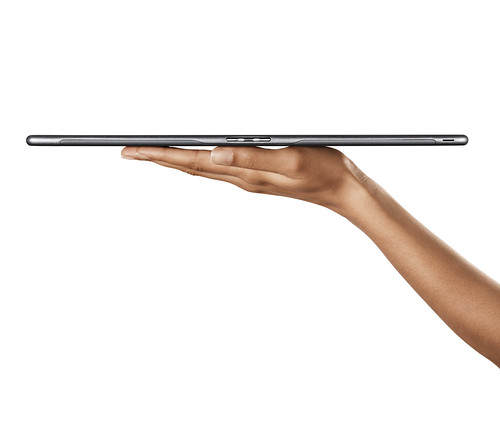
    Another very interesting e-Reader having it’s coming out party at CES is the Skiff Reader.  It’s focus seems to be with magazines and newspapers but of course works with e-Books as well.  It looks really nice, has a flexible form factor with a touchscreen surface but be ready for a large footprint.

    Check out these photos to see why this e-Reader excites me.  It’s similar to the PlasticLogic Que e-Reader and will compete with the Kindle DX.  Now that I mention it, both of these devices seem to easily beat the Kindle DX (not necessarily the Kindle 6”) with the feature-set as well as the form factor.

     shot05_enlgshot01_enlgshot03_enlgshot02_enlg

    More Details:

    The wireless will be provided by Sprint, will also have WiFi and the device will be sold in Sprint stores.  It’s just over 1/4” thick and touts itself as the thinnest e-Reader announced to date.  It also has a large 11.5”, 1200×1600 pixel (UXGA) display that is touchscreen.  Weight is just over 1 pound.

    More info at the Skiff website

    via jkontherun


  • Feature: The format wars: of lasers and (creative) destruction


    I have this love/hate relationship with format wars.

    No, it’s not reality television versus talk shows, or Top 40 radio against “the best of the ’80s — and more!” The wars I’m thinking about pit technologies against one another, usually in a battle to the death of one or more of the contestants. It’s One format to rule them all every time, and the streets are littered with the remains of the losers.

    These wars are loathsome because we consumers have to pick a side or else lose out on something awesome, and then the ones who picked wrong have to pay up again for the winning technology. But format wars also keep the carousel of progress spinning and fan the flames of innovation. Join me for a brief look back at the format wars of yesteryear, and a look a head at what will replace them.

    Read the rest of this article...


    Buy This Item: [Click here to buy this item]

    Article

  • Horizon Technologies to debut desktop hydrogen generator at CES

    horizon hydrofill_1

    Eco Factor: Portable hydrogen generating device.

    Horizon Fuel Cell Technologies made waves in 2006 when the company launched the first hydrogen-powered educational toy car. The company has some big plans for this year’s CES with the launch of the first portable desktop hydrogen generator being unveiled.

    (more…)

  • ”4 January 2010” The day of world record

    เมื่อคืนใครดูถ่ายทอดสดพิธีการเปิดตัวของตึก Burj Dubai บ้างครับ ผมดูผ่าน Cnn Live ทางเน็ต ยิ่งใหญ่มาก สมแล้วกับการเป็นตึกที่สูงที่สุดในโลกที่ทุกคนต้องจารึกไว้
  • Westfield to unveil all-electric iRACER sports car in 2011

    westfield iracer_1

    Eco Factor: Zero-emission sports car powered by electricity.

    Westfield has unveiled plans for an all-electric sports car that will be used in a one-make race series to be held in 2011. Dubbed the iRACER, the sports car will feature two electric YASA motors that will take place of the differential and provide direct drive to each of the vehicle’s rear wheels.

    (more…)

  • Leakage: Six new cameras from Panasonic

    panasonic-lumix-fh1Nothing official yet, but this looks like a pretty good leak. Panasonic loves to do this kind of thing, announcing several cameras at once to distract from the other manufacturers.

    Obviously someone made a mistake and leaked this, but it’s bound to happen now that CES is here. No word on pricing or availability yet, but when we see the official release we’ll let you know. And without further ado:

    Panasonic-lumix-fp3
    Lumix FP3:
    4x Zoom, 3.0″ touchscreen LCD, 14.1 MP, and HD video.

    panasonic-lumix-f3
    Lumix F3:
    4x zoom, 12.1 MP, Face detection, and HD video.

    panasonic-lumix-fh3
    Lumix FH3/FH1:
    12.1 MP, 5x zoom, HD 720p video

    The original rumor came out of Asia, and was dug up by Photo Rumors.


    Buy This Item: [Click here to buy this item]

    Read Original Article