Category: News

  • January is Glaucoma Awareness Month

    It’s January again – funny how that comes around every 12 months, isn’t it? And with January and a new year, we’re back to Glaucoma Awareness Month.

    It seems that one month isn’t enough to help raise awareness for such a devastating disease. Glaucoma, which is really a group of diseases, hits what people seem to fear most – losing their eyesight. Glaucoma is a silent disease, it has no symptoms in its early stages, nothing that can warn you that it’s going to happen to you. This is why awareness is so important, particularly if you fall into a high risk category.

    awareness_logo

    What is Glaucoma?

    Glaucoma is the leading cause of preventable blindness around the world. While it’s more common among seniors, even babies can develop it. According to Glaucoma.org,

    Over 3 million Americans, and nearly 70 million people worldwide, have glaucoma. Experts estimate that half of them don’t know they have it. Combined with our aging population, we can see an epidemic of blindness looming if we don’t raise awareness about the importance of regular eye examinations to preserve vision.

    The disease isn’t complicated – for some reason, depending on the type of glaucoma, fluid pressure builds up in the eye. As this pressure increases, it presses on the optic nerve, the nerve that connects the retina to the brain and sends images for your brain to interpret into sight.

    The most common type of glaucoma is called primary open-angle glaucoma, but there are other less common ones as well:

    Risks

    As with many diseases, some people are at higher risk of developing glaucoma than are others. However, if you aren’t in one of the high risk groups, this doesn’t mean you may not develop it.

    The high risk groups include:

    • African Americans over age 40.
    • everyone over age 60, especially Mexican Americans.
    • people with a family history of glaucoma.

    Other risks include:

    • being severely near-sighted, or myopic
    • having high pressure level in the eye
    • having an enlarged optic nerve
    • sustaining eye trauma or injury
    • having diabetes
    • having had previous eye surgery
    • having taken long-term steroids, even for medical purposes

    Prevention

    The best treatment is – you guessed it – prevention. So, how do you prevent a disease you don’t know you may have? You have regular eye examinations, whether you are at risk or not. Obviously, those who are at risk should have more frequent ones, as recommended by their eye care health professional.

    Testing for glaucoma is not painful, uncomfortable, long, or tedious. All it involves is two tests:

    Tonometry
    The tonometry test measures the inner pressure of the eye. Usually drops are used to numb the eye. Then the doctor or technician will use a special device that measures the eye’s pressure.
    Ophthalmoscopy
    Ophthalmoscopy is used to examine the inside of the eye, especially the optic nerve. In a darkened room, the doctor will magnify your eye by using an ophthalmoscope (an instrument with a small light on the end). This helps the doctor look at the shape and color of the optic nerve.

    If the tests cause suspicion, then more tests will be recommended.

    Don’t take chances with your sight. Not when this is a treatable illness.

    ~~~

    Image: Glaucoma.org

    Post from: Blisstree

    January is Glaucoma Awareness Month

  • California’s renewable pipeline nearly 70 GW

    Reuters has a report on California’s burgeoning pipeline of renewable energy projects – California’s renewable pipeline hits nearly 70 GW.

    Renewable energy projects proposed in California total nearly 70 gigawatts, Governor Arnold Schwarzenegger said on Tuesday, a large pipeline that could help the state meet its renewable energy goals.

    California has a mandate to obtain a third of its electricity by 2020 from clean power, spurring utilities and the clean power industry to develop new projects.

    The 244 proposed projects in the state include solar, wind, geothermal, biomass and hydro technologies. In order to be built, renewable energy projects must win regulatory approval.

    About 50 projects in California hope to break ground by the end of 2010 in order to receive federal stimulus funds.


  • New to Diabetes and learning

    My husband has just recently been found to have diabetes. His readings are very high 320 – 550. He has just begun to take Glucophage, third day so far @ 500mg 2x per day. How long before we see a reduction in his bg readings?

    He now eats no sugary items and no alcohol yet these readings remain so high. Does he need to wait a certain length of time to see these numbers come down?

  • Origin steps up gas search

    The SMH has an article on the search for more coal seam gas in Queensland – Origin steps up gas search.

    ORIGIN ENERGY and its joint-venture partner ConocoPhillips have taken another step in the race to export Queensland’s coal-seam gas reserves, awarding a $220 million drilling contract to the US firm Savanna Energy Services.

    Under the contract, Savanna will supply two drilling rigs for five years from September next year, helping in the extensive drilling needed to extract gas from underground coal seams.

    The move comes amid growing market concern that Origin and Conoco are losing ground to rival projects also planning to export liquefied natural gas from the region. …

    The contract will create 50 jobs and is a milestone for Origin, which is responsible for extracting the gas from coal deposits across southern Queensland. Coal-seam gas is dispersed across a large area, and for each LNG project that goes ahead, the proponents will have to drill approximately one hole a day to supply enough gas over the life of the project.

    “This contract is designed to provide the very latest in drilling and rig technology, supplement our existing drilling operations, and help us to meet our target of between 300 and 500 wells a year over the life of the project,” Origin’s executive general manager of upstream oil and gas, Paul Zealand, said.


  • January 1 reflections on my favorite things

    Filed under: , , , , ,

    January 1 is always a little strange. A quiet time after a night out, a time to take the tree down and deal with all the green light cords that started out so neatly applied and wind up a tangled maze of complexity. Time to get rid of all the holiday wrappings and hope the trash pickup is soon.

    It is also a time to reflect on all things Apple and how the ecosystem of products has changed our lives in ways we sometimes forget or are barely aware of.

    This morning I was in a melancholy mood and needed some music to match. I thought a good idea was for some music by Eric Ewazen, [iTunes link] who writes some pretty deep and mystical compositions. I had already bought some of his tracks from the Apple Store. In the old days, waking up on a holiday and craving some music you don’t have was a lost cause.

    Now I can get what is admittedly an obscure album of music, download it to my computer, put it on my Sonos system with a few clicks and sync it to my iPhone for my morning jog. Basking in the early morning Arizona light I loved hearing Ewazen’s ‘Hymn for the Lost and the Living’ while contemplating a new year with new challenges. Apple enabled much of what I was able to do, and we take it for granted, but when you stand back from it all you can see how changed our lives are.

    Some of my other favorite things from this year include MacSpeech Dictate, software that allows me to reliably dictate my emails, some longer reports, and even some of my TUAW posts. It’s truly science fiction in the here and now (or is it ‘hear’ and now?) and some updates in 2009 made it easier to use and far more accurate.

    I’ve also enjoyed using Photomatix Pro, software that combines photos shot at different shutter speeds into High Dynamic Range images. You can’t use this software for everything, but used wisely it can really make landscape images quite spectacular.

    The updated iPhone 3GS has had a positive impact in my life as well. The little astronomy app Distant Suns has been updated to use the compass on the iPhone, and I can point my phone at the sky and see exactly what I am looking at, properly identified and accompanied by all sorts of background information about the planets, nebula and galaxies it reveals.

    iCam [iTunes link] lets me keep an eye on the house, and for 5 dollars coupled with a web cam it features motion detection and recording. It gives me some inexpensive security and peace of mind while keeping an eye on the family pet. Again, another treat enabled by Apple tech and some creative developers.

    Find my iPhone was a great idea, and almost made a MobileMe subscription worth it. I’ve already used it a couple of times to find the iPhone around the house. It will really come in handy if it’s stolen, and I can wipe my data.

    I can’t forget about iChat. It didn’t have any major upgrades this year, but it certainly got used a lot. I do some Photoshop tutoring, and being able to help someone across the ocean with no charge for the connecting tech is too good to be true. Apple didn’t invent video conferencing, but they made it easy and reliable. Coupled with desktop sharing it’s a great tool and allows you to work in ways that make me feel like George Jetson.

    Those are a few of my favorite things (apologies to Rodgers and Hammerstein). Did Apple change your life in 2009? We all have our ‘favorite things’ list. Share your thoughts with us, and Happy 2010 from all of us at TUAW.

    TUAWJanuary 1 reflections on my favorite things originally appeared on The Unofficial Apple Weblog (TUAW) on Fri, 01 Jan 2010 17:00:00 EST. Please see our terms for use of feeds.

    Read | Permalink | Email this | Comments

    Buy This Item: [Click here to buy this item]

    Read Original Article

  • Gov. Quinn Signs Bill to Protect Homebuyers; New Law Increases Education Requirements for Realtors, Expands Anti-Predatory Lending Program

    Gov. Pat Quinn today signed a bill into law to help protect homebuyers across Illinois.

    Senate Bill 1894 increases the education requirements for real estate agents in Illinois and expands an anti-predatory lending program to three new counties.

    “Homeownership is a cornerstone of our economy,” said Gov. Quinn.

    “This important new law helps protect Illinois’ homebuyers from unscrupulous lenders and ensures that our real estate agents have comprehensive, up-to-date training.”

    Under the legislation, the education requirement to become a real estate agent in Illinois increases from 45 to 120 hours by eliminating the “salesperson” licensure category and establishing “broker” as the new entry-level license.

    Additionally, the new law requires real estate brokers to complete 12 hours of continuing education every renewal period (two years). The bill also creates the licensure category of “managing broker,” which requires 165 hours of education and 24 hours of continuing education every renewal period.

    Senate Bill 1894’s stringent education requirements help ensure that Illinois’ real estate agents are fully trained and up-to-date on Illinois’ real estate laws and homebuyer protections.

    The legislation also expands the state’s anti-predatory lending database program to three counties that have among the state’s highest foreclosure rates – Kane, Will and Peoria. Under current law the program only applies to Cook County.

    The program requires lenders to provide loan information to the State to determine if the homebuyer should receive loan counseling, prior to approval of the loan. The types of loans that qualify a homebuyer for counseling are those that frequently result in foreclosures.

    These include: (1) the loan permits interest-only payments; (2) The loan may result in negative amortization; (3) the total points and fees payable by the borrower at or before closing will exceed five percent; (4) the loan includes a prepayment penalty; or (5) the loan is an adjustable rate mortgage which allows adjustments of the interest rate in the first three years.

    Senate Bill 1894 also includes a provision that allows municipalities to place a lien on an abandoned residential property to help cover the cost of clean-up. The legislation was sponsored by Rep. Kevin A. McCarthy (D-Orland Park) and Sen. William R. Haine (D-Alton).

    “The signing of Senate Bill 1894 provides significant protections to the citizens of Illinois. Maintaining the professionalism of real estate brokers across the state, instituting programs to stop predatory lending, and assisting municipalities in cleaning up abandoned or foreclosed properties will help all of Illinois rebound from the economic difficulties we have faced,” said Rep. McCarthy.

    Also today, Governor Quinn signed Senate Bills 253 and 332.


  • Examining the Political Twittersphere: Obama, Schwarzenegger and Stephanopoulos

    political_twittersphere_logo_oct09.jpgDuring the 2008 presidential campaign, politicians and reporters quickly discovered the power of Twitter. These days, Twitter has become yet another tool for politicians to get the word out about political initiatives and for reporters to reach out to their readers. In October, social media analytics firm Sysomos took a closer look at the political Twittersphere and how politicians like President Obama and California’s Governor Arnold Schwarzenegger use this tool and who they connect with on Twitter.

    Sponsor

    redux_150x150.png

    Editor’s note: This story is part of a series we call Redux, where we’ll re-publish some of our best posts of 2009. As we look back at the year – and ahead to what next year holds – we think these are the stories that deserve a second glance. It’s not just a best-of list, it’s also a collection of posts that examine the fundamental issues that continue to shape the Web. We hope you enjoy reading them again and we look forward to bringing you more Web products and trends analysis in 2010. Happy holidays from Team ReadWriteWeb!

    Specifically, Sysomos’ Alex Cheng, Mark Evans and Nick Koudas were interested in examining who the most followed politicians on Twitter are and “how those within the political Twittersphere behave in terms of their follower/followed patterns.” In order to do so, they created a list of 168 accounts of influential politicians, reporters and bloggers from the U.S., Canada, and the U.K. that comprise the core of the political Twittersphere.

    Politicians with the most followers

    1. Barack Obama: 2,240,540
    2. Al Gore: 1,693,420
    3. John McCain: 1,425,419

    Media personalities with the most followers

    1. George Stephanopoulos: 1,344,034
    2. Rachel Maddow: 1,287,323
    3. David Gregory: 1,244,844

    Obviously, we can’t really know if the fact that somebody follows somebody else actually means that they are reading all the updates and the political Twittersphere is arguably a bit larger than the sample that Sysomos looked at here. For this study, Sysomos only looked at accounts that had over 5,000 followers and the team acknowledges that it had to make some editorial choices to keep the study manageable. The fact that the map of all the connections between the 168 accounts weighs in at 16 MB shows the complexity of this study, so some editorial control was obviously necessary.

    Here are some of the highlights from the report:

    The President

    With over 2.33 million followers, President Barack Obama is the most followed politician on Twitter, though he is only being followed by 56 members of the 168-member political Twittersphere. Among Obama’s followers are Al Gore, Portland’s Mayor Sam Adams, London’s Mayor Boris Johnson and British Prime Minister Gordon Brown. Newt Gingrich also follows Obama’s updates, as does blogger Marc Parent (@mparent77772)

    There is probably a reason why relatively few political influencers follow Obama. After all, if you want updates from the president, his Twitter account is probably one of the worst ways of following him and most of the updates on Obama’s account aren’t very interesting. Other politicians like Schwarzenegger and John Boehner also update their accounts far more regularly.

    Politicians and Political Reporters

    political_twittersphere_graph.jpgAmong politicians and reporters, ABC News’ George Stephanopoulos follows 105 members of the 168-member political Twittersphere Sysomos analyzed, followed by the Newshour (104), followed by John Boehner (98), the Huffington Post (98), and Governor Arnold Schwarzenegger (92).

    Within the political Twittersphere, Schwarzenegger is also the most followed politician and Stephanopoulos is the most followed media personality.

    Daryl Cagle, the cartoonist for MSNBC.com, is the #1 media personality that other reporters follow on Twitter.

    News Organizations

    Besides looking at individual reporters, Sysomos also examined the larger news organizations in the US. CNN’s Breaking News account (@cnnbrk) has over 2.75 million followers, followed by NPR Politics (@nprpolitics) with 1.51 million and Good Morning America (@gma) with 1.37 million. CNN doesn’t really follow anybody back, though, while the NPR Politics account follows close to 117,000 Twitter users and Newsweek (@newsweek) follows 97,000.

    The members of the political Twittersphere as identified by Sysomos that are most likely to be followed are the PBS Newshour account, the Huffington Post and the LA Times.

    Discuss


  • Speaker Bot: The Iron Giant Reimagined as an Artsy iPod Dock [Art]

    This Speaker Bot is a handmade, Etsy-fied robot seemingly designed around one of those little pocket guitar amps. It’s maybe not the most technologically advanced iPod dock around, but it’s about as cute as robots ever get.

    It’s a fair-sized sculpture, the only one of its kind, about a foot and a half tall. It seems to be constructed from recycled materials, which gives it a nice weathered look. It also costs $500, which is okay for a unique sculpture but as much as a pretty decent full-sized stereo, so it’s probably more for the art crowd than the omg cool robot! crowd. [Etsy via Coolest Gadgets]


  • US government launches Distraction.gov, wants to scare you straight (video)

    European countries may have long ago banished the use of cellphones while driving to the dark side of the law, but many of the United States persist in allowing their citizens to talk while driving. One reason for their reluctance may be that outlawing something that has become second nature to most people would be both unproductive and tough to enforce. So what do you do? The natural alternative to forcing people to drive attentively is educating them of the reasons why. Never mind the fact that we all kinda, sorta know the risks we undertake while operating a Droid and a Dodge concurrently. The newly minted Distraction.gov is chockfull of scaremongering statistics, topped by a truly epic video which we’ve handily stashed for you just after the break. Go get it while it’s hot.

    Continue reading US government launches Distraction.gov, wants to scare you straight (video)

    US government launches Distraction.gov, wants to scare you straight (video) originally appeared on Engadget on Fri, 01 Jan 2010 16:02:00 EST. Please see our terms for use of feeds.

    Permalink Autoblog  |  sourceDistraction.gov  | Email this | Comments

    Buy This Item: [Click here to buy this item]

    Article

  • Endoscopic Sinus Surgery Results

    Endoscopic sinus surgery can be an intimidating experience with some serious risks involved, yet for some the payoff is big. According to new research, more than 76% of patients with chronic rhinosinusitis (CRS) reported great quality of life improvements after endoscopic sinus surgery. The findings were published in the January issue of Otolaryngology – Head and Neck Surgery.

    sinus-surgery

    I had endoscopic sinus surgery in July of 2008. I’ll share more on that, but first I want to explain what the procedure is. During surgery, a thin fiber-optic tube called an endoscope is inserted into the nose for visual examination of the openings into the sinuses. Using high-tech micro-telescopes and instruments, ENTs remove abnormal and obstructive tissues. Endoscopic sinus surgery is much less extensive than traditional sinus surgery. In fact, it’s often performed on an outpatient basis.

    However, don’t think it’s not an expensive surgery just because it’s outpatient. I was amazed at my hospital charges, even with my insurance covering 90%. And there are some annoying post-surgery things to deal with: feeling like you can’t breathe through your nose and being unable to blow your nose for several days.

    My ENT wanted me to stay in town for a week or so in case I had any bleeding issues. As for pain and bleeding, I had no problems. Yet, perhaps my experience wasn’t typical. My ENT was shocked at how alert I was when he called to check on me after surgery and similarly surprised that I had no bleeding and pretty much zero pain.

    If you’re planning on having sinus surgery, know this: You must commit to post-op care. You’ll likely be instructed to start a sinus rinse several days after your surgery and continue it for a few months. (Please note: Your experiences may be different, and you should never start a sinus rinse after surgery unless your ENT has instructed you to do so.) You’ll probably have several follow-up appointments so that the ENT can look into your sinuses with a scope to make sure everything is still fine. Though that’s done in the office, it’s still considered surgery by many insurance companies.

    I wasn’t expecting so many follow-up appointments. I’m going back again in May for a final sinus check with the scope, but I’m not complaining. Compared to many surgeries out there, endoscopic sinus surgery was a snap, for me anyway.

    Though I did have some problems with CRS prior to the surgery, I wasn’t a miserable sinus sufferer and I didn’t have the surgery primarily for that reason. That means it’s difficult for me to comment on the surgery helping with CRS. However, I haven’t really been sick sinus-wise since the surgery.

    If you’ve had endoscopic sinus surgery, were you pleased with results?

    (Image via MorgueFile)

    Post from: Blisstree

    Endoscopic Sinus Surgery Results

  • Bloomberg: U.S. auto sales “probably rose” in December

    Filed under: ,

    This just in from Hard Numbers News: From 2000 to 2007, an average of 16.8 million vehicles were sold in the States. In 2008, that figure dropped to 13.2 million. Perhaps unsurprisingly, the tally for 2009 is expected to put the sales needle somewhere around 10.4 million. According to Bloomberg, that would make last year the worst for new car sales since 1982, when there was not only a recession but also 25 percent fewer Americans.

    The good news: sales began to rise at the end of 2009, having sustained themselves nicely after the revelry of cash-for-clunkers. The final data isn’t in yet, but Bloomberg’s survey of analysts suggests two months of gains in November and December. Predictions estimate that Ford, Toyota, Honda and Nissan saw increases, with General Motors and Chrysler looking at slipping sales.

    The silver lining? Meager sales could “indicate significant pent-up demand.” That kettle of demand is going to take some time to boil, but a rise in household spending is penciled in for late 2010, along with greater availability of credit, and a drop in unemployment numbers is in the forecast as well. The road to recovery will be a slow one, but hopefully with the turn of the calendar year will come a turn in fortunes for the U.S. economy.

    [Source: Bloomberg | Image: Scott Olson/Getty]

    Bloomberg: U.S. auto sales “probably rose” in December originally appeared on Autoblog on Fri, 01 Jan 2010 16:46:00 EST. Please see our terms for use of feeds.

    Read | Permalink | Email this | Comments


    Buy This Item: [Click here to buy this item]

    Read Original Article

  • ARTICLE: ‘Distraction.gov’ launches to promote awareness

    Distraction.gov

    I’d be willing to wager that nearly everyone reading this article (including the person writing it) has messaged, e-mailed, eaten, or done something distracting while in the car, causing you to lose your focus for a split second.  While most states have banned certain forms of communication while driving, the issue is still a concern for advocacy groups nationwide.

    Enter Distraction.gov, a website created by the US Department of Transportation to promote awareness of the dangers of messaging – and really anything, for that matter – while driving.  Loaded with statistics, frequently asked questions, research, and more, the website is intended to provide hard facts on what distracted driving actually does to our communities.

    Distraction.gov is worth a look, and I imagine it will be the first of a long list of educational resources as messaging continues to increase nationwide.

    Via PhoneArena and Distraction.gov


  • Meyer Lemon Bundt Cake

    Meyer Lemon Bundt Cake

    One of the things that I look forward to in the winter is meyer lemon season. Meyer lemons are hybrid fruits, a cross between a mandarin orange and a lemon that has all the flavor of the lemon without the acidity. They’re really easy to work with and make for a nice change in recipes. In this Meyer Lemon Bundt Cake, for instance, there is a lot of lemon juice but the finished cake comes out with a smooth and somewhat mellow – as opposed to bright and tangy – lemon flavor.

    Apart from the Meyer lemons themselves, this is a fairly standard bundt cake. It is moist, with a tight crumb and is especially good with a little bit of glaze on top. I included a good amount of lemon zest to emphasize the lemon flavor and opted not to include vanilla extract so that the citrus wouldn’t have any competition for the spotlight in this cake. The cake will keep, well-wrapped or stored in an airtight container, for a couple of days, so this is a nice cake to bake on a weekend and nibble at during the week.

    Now, if you can’t get Meyer lemons, you can easily substitute regular lemon juice into this recipe and get great results. If fact, if you’re not too familiar with meyer lemons, you might want to try giving both versions a try (or simply compare the lemons side-by-side) to get a feel for the differences between the two.

    (more…)

  • Is Saw Palmetto Used For Male Pattern Baldness?

    Many nowadays prefer a natural hair loss remedy rather than treat their hair loss with drugs and medication. If you are looking for a natural hair loss remedy for male pattern baldness, you can try saw palmetto.

    Saw palmetto is a particular type of fruit that has been shown to help in hair loss according to some studies. Having some information about saw palmetto, its use and its benefits can help you decide if this natural hair loss remedy is the type of treatment that you are seeking for.

    Saw palmetto is a red fruit that grows in warmer climates throughout the world. It is most often seen in South Eastern regions of the United States. Studies into the use of saw palmetto was first done for research on prostate health. However, it was also noticed during the clinical trials that this popular fruit have positive benefits to those with male pattern baldness.

    Male pattern baldness is a hereditary condition that afflicts more men than women. Hair loss in male pattern baldness is characterized by a receding hairline and that continues in a horseshoe pattern. Hair on the sides and back of the head are mostly unaffected. The exact reason for male pattern baldness is still not very clear. Some studies suggest that excessive conversion of testosterone to another hormone called dihydrotestosterone (DHT) may be an underlying cause. In the studies for prostate health, saw palmetto was shown to block the production of DHT in men suffering from enlargement of the prostate.

    So how much saw palmetto should you eat for your hair loss? Unverified sources say that if you are eating the fruit, then one per day would in most instances be effective with treating your hair loss. However, if you are taking an extract, then a dosage of three hundred and twenty milligrams per day is recommended. Supplements containing nutrients of saw palmetto are also available to help with hair growth.

    One of the advantages of taking saw palmetto is that there are no known side effects. This is obviously better than taking synthetic drugs or medication that may have potential adverse results. In fact, these side effects include fast heart rate, headaches, impotence, and decreased libido.

    Saw palmetto should preferably be taken with other foods or substances. Otherwise, you may end up with a headache or stomachache. In addition, if you observed that you are getting allergic reactions, you should stop consuming saw palmetto immediately.

    In addition, if you are female and pregnant, then you should not use saw palmetto without medical supervision.

    Is Saw Palmetto used for Male Pattern Baldness? Currently, there is no known cure for male pattern baldness. Both conventional and natural treatments can help control the hair loss as long as one maintains the treatment. However, once the treatment is discontinued, there is the chance of recurrence. Saw palmetto may be the answer to providing your body with the necessary balance of the hormones and enzymes beneficial for combating hair loss. Do research more into this option if you are looking for a natural hair loss remedy for mild to moderate male pattern baldness.

    Kathlene Capelle writes on female hair loss, male hair loss, cause of hair loss, hair loss prevention and natural hair loss treatments. Get more info on Hair Loss Remedy here http://www.hair-loss-remedy-central.com .

  • Hair Loss Remedies – Get Informed Now

    The trigger for male pattern baldness, also called androgenic alopecia, is DHT, a powerful sex hormone that can adversely affect the hair and prostate gland too. One large study that was done in Australia showed that the prevalence of mid-frontal hair loss increases as people age and affects 57% of women and 73.5% of men aged 80 years and over. The most common form of baldness is a progressive hair thinning condition called androgenic alopecia or ‘male pattern baldness’ that occurs in men.


    Temporary loss of hair can occur in areas where sebaceous cysts are present for one week to several weeks in length. Correcting a hormone imbalance may prevent further hair loss. If the thyroid gland is overactive or underactive, hair may fall out; treating thyroid disease will help remedy this.


    Some drugs or medications can cause hair loss, which improves when you stop taking the medicine; medications that can cause hair loss include blood thinners, medicines used for gout, and chemotherapy drugs used for cancer, too much vitamin A supplementation, birth control pills and antidepressants. One type of baldness is called traction alopecia, which is most commonly found in people with ponytails or cornrows who pull on their hair with excessive force. Recognizing and treating an infection may help stop hair loss.


    Hair loss may occur if male or female hormones, known as androgens and estrogens, are out of balance; correcting the hormone imbalance may stop the hair loss. Hypothyroidism can cause hair loss, especially thinning of the outer third of the eyebrows. Hair loss may occur as part of an underlying disease, such as lupus or diabetes.


    Minoxidil is a drug that’s used daily to prevent hair loss but may create heart problems; the hair it grows is very fine, only on the top of the head and may fall out again soon after the drug is stopped. Very little testing has been done on the long-term effects of Minoxidil on women. Hair loss treatments and remedies range in price from free to expensive.


    Surgery is another method of reversing hair loss and baldness, although it may be considered an extreme measure. Stress reduction can be helpful in slowing hair loss. Minoxidil is a very expensive drug, costing about one hundred dollars per month for daily treatment.


    Please be aware there are side effects and serious side effects sometimes with the drugs that are commonly used for hair loss. Regular aerobic exercise can help keep androgen levels naturally lower while maintaining overall health, lowering stress and increasing SHBG. There are natural home remedies and many recipes for making mixtures to apply topically to the scalp.


    Olive oil and rosemary remedy for hair loss – use equal amounts of olive oil and oil of rosemary; combine them in a bottle, shake vigorously, massage into the scalp, put on a cap and shampoo in the morning. Apple cider vinegar used as a hair rinse may stimulate hair growth. Raw onion remedy for hair loss – take half a raw onion and massage the scalp with it; cover the head overnight, shampoo and rinse in the morning.


    Asian remedy for hair loss – rub sesame oil on your scalp every night, cover with a cap or old towel; in the morning wash with an herbal shampoo, rinse with a solution of one tablespoon of apple cider vinegar in one quart of water. Massage the scalp nightly with oil made of one part rosemary oil and two parts almond oil. Onion juice and honey remedy for hair loss: prepare a hair-growing elixir by combining 1/4 cup of onion juice with one tablespoon of honey; massage the scalp with the mixture every day.

    Make sure to test remedies on a small area first and check with your hair loss doctor or skin doctor before trying any natural home remedy if it includes any irritating ingredients. Try lying on a slant board with head down for 15 minutes a day, but clear it with your doctor first. Circulation to the scalp is important.


    Vodka and cayenne remedy for loss – mix one jigger of vodka with a 1/2 teaspoon of cayenne pepper (test on skin first for sensitivity) and rub it on the scalp; blood rushes to the hair follicles stimulated by the vodka and cayenne pepper – be careful if you try it. One patient reported that he used coconut oil on his hair and scalp for a year and during that time his hair became thicker and he hade more of it on the top of his head where he had been receding a bit; good as a hair gel too. Try scalp massage every day.


    If large amounts of hair are lost it’s important to see a doctor or skin doctor to rule out an underlying disease. If you experience any form of hair loss that causes you concern, make an appointment with your doctor to discuss the treatment options available to you for your particular condition. Concentrate on boosting your immune system to give your hair the best chance to regrow.

    For more information on hair loss remedies and hair loss products go to http://www.HairLossRemedy.us a nurse’s website specializing in hair loss treatments, causes and resources for men, women and children including information on hair transplants and hair loss natural treatments

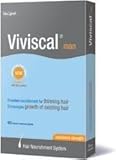
  • Viviscal Hair Loss Vitamins for Men 60 Tablets For Hair loss Thinning or Balding Hair

    • Called the miracle mane pill by Cosmo and Vogue
    • Specially formulated to promote longer, healthier hair growth
    • Helps stop thinning, shedding hair
    • Perfect hair vitamin for all around hair health

    Product Description
    Thinning hair is a problem for many men, with 50% of men experiencing thinning hair before the age of fifty. Viviscal for Men is a natural hair growth vitamin that has been specially formulated to tackle this problem and also to help delay or prevent hair loss. Viviscal for Men contains the exclusive AminoMar C Marine Complex that provides the essential proteins needed to nourish thinning hair and encourage existing hair growth. This is combined with Flax Seed which… More >>

    Viviscal Hair Loss Vitamins for Men 60 Tablets For Hair loss Thinning or Balding Hair

    Possibly related posts: (automatically generated)

  • Various Meter comparisons

    Hey gang,
    I know this topic has come up from time to time and there are scads of good comparison articles out there about accuracy. I just thought you might like to see the results of my testing between 4 meters — my examples below are from several multiple test scenarios and they represent the ‘LEAST variance’ between meters. So other 4 meter comparison tests I did had WIDER ranges. This is the ‘MIDDLE’ of the range – meaning the CLOSEST they got. All tests were done with clean hands and prick area untouched within 1 minute of hand cleaning and all test strips were touched with the same blood site. (I did testing taking blood from 3 different finger tips {worried that the third meter’s remaining blood wouldn’t be as ‘true’} and the results weren’t markedly different.

    High range:
    FreeStyle FREEDOM LITE: 151
    Bayer BREEZE2: 140
    RELION MICRO: 134
    RELION CONFIRM: 135
    (new for 2010)

    Medium range:
    FreeStyle FREEDOM LITE: 121
    Bayer BREEZE2: 115
    RELION MICRO: 112
    RELION CONFIRM: 111

    Low Range:
    FreeStyle FREEDOM LITE: 98
    Bayer BREEZE2: 84
    RELION MICRO: 71
    RELION CONFIRM: 75

    As you can see the FREESTYLE LITE is always the highest number which others of you have reported. So using that one will "keep you honest". And in the high range it’s WAY high. The difference between it at 151 and the ReliOn at 134 would definitely make me think differently about how to bolus or how well a certain food worked for me. I can’t have that much difference. Even the Bayer’s number was sufficiently lower than the Freestyle in the higher range that I’d make worse decisions following the FreeStyle.

    In the medium range they got a little closer but the difference between the FreeStyle and the ReliOn meters is too wide for me to trust the FreeStyle — AND too depressing.. ;).

    In the low range — the ReliOn gets a little too forgiving and could make me overreact in dealing with a hypo. The day I had my one and only ’30’ — that was measured with the ReliOn Micro. I’ll get it was closer to a 45. Still too low.. but… – Remember the variances of about 6 other times when I tested with all 4 meters were WIDER in the same pattern I’ve noticed here with the FreeStyle getting higher and higher compared to the Breeze and at lo ranges the ReliOn Micro being too forgiving.

    The Breeze2 is the middle and so I trust it the most — though it requires 1.0µ of blood which is a pretty bit drop requiring a pretty deep lance. The other 3 meters only require 0.3µ which is way easier on those delicate fingertips. So the convenience of the test strip DISCS of 10 for the Bayer is REAL nice — but I’m tiring of the deep lances for the test. SO — I’m hoping that the Bayer CONTOUR has the testing range of the Breeze — and it only needs 0.6µ of blood. So that may be where I land. Haven’t purchased it yet.

    Keep in mind none of this testing was done in comparison to a LAB test at my Drs ofc. Only meter to meter.

    The widest difference I ever had was FREESTYLE 168, BAYER 141, RELION 131 — *tested twice to be sure* FREESTYLE 165, BAYER 143, RELION 135

    Any body else done testing comparisons and have any input?

    Thanks and Happy New Year ALL!!

  • Contest: Win a prize pack of Energizer ‘Energi to Go’ chargers worth over $450

    energizer

    See the photo there? That’s just ONE of the items in the $450+ prize pack that Energizer will be giving to one of our lucky readers. The rules are simple, here’s how to win:

    1. Become a fan of Energi to Go on Facebook: Facebook – Energi To Go

    2. Leave a message on Energi To Go’s wall with the word “CrunchGear” in it.

    That’s it. Also check out Energi to Go on Twitter. This offer is open to U.S. residents only.

    Here’s what’s in the prize pack:

    • The AP1500 – charging case for iPhone 3G/3Gs (retails for $79.99)
    • The SP2000 – a solar charger for cell and smart phones, iPod and mp3 players, gaming devices, digital cameras and more (retail at $99.99)
    • The XP2000 – a charger for cell and smart phones, iPod and mp3 players, gaming devices and Bluetooth devices (retail at $39.99)
    • The XP4001 – charges up to two devices at once, including cell and smart phones, iPod and mp3 players, gaming devices, Bluetooth devices, digital cameras and camcorders (retail at $69.99)
    • The XP18000 – charges netbooks and laptops (retail at $179.99)

    Happy New Year and Good Luck! The winner will be notified by Energizer directly.

    Energi to Go [Energizer]


    Buy This Item: [Click here to buy this item]

    Read Original Article

  • Apple up, down in end-of-year report

    Filed under: , , ,

    Now that 2009 is officially behind us, web metrics firm Net Applications has released their final report of the year, which finds Apple up in some areas and down in others. Specifically, the iPhone OS has grown significantly, while Chrome has surpassed Safari.

    The iPhone jumped to 0.43 percent of the total OS market in December, a 20% increase over November and the largest monthly gain since its introduction. While holiday sales estimates are still unavailable, its expected that the quarter’s numbers will eclipse the previous quarter’s record-breaking 7.4 million units sold.

    At the same time, usage of Google’s Chrome web browser has exceeded that of Apple’s Safari for the first time. As for alternatives to the nearly-ubiquitous Internet Explorer, Firefox is first, Chrome second and Safari third, according to Net Applications. Specifically, Chrome is now at 4.63 percent of browser share and Safari is at 4.46 percent.

    The novelty of Chrome probably plays into these numbers, but it’s also a nice product. I’ve been using it on Windows and Mac OS X (in beta, of course) and found it snappy and responsive.

    Overall this is a positive report for Apple. Here’s to 2010.

    TUAWApple up, down in end-of-year report originally appeared on The Unofficial Apple Weblog (TUAW) on Fri, 01 Jan 2010 16:00:00 EST. Please see our terms for use of feeds.

    Read | Permalink | Email this | Comments

    Buy This Item: [Click here to buy this item]

    Read Original Article