
As New Yorkers and visitors gear up for New Year’s Eve celebrations, the Citizen
Soldiers and Airmen of the New York National Guard remain on duty in support of
homeland security missions across the state…
As New Yorkers and visitors gear up for New Year’s Eve celebrations, the Citizen
Soldiers and Airmen of the New York National Guard remain on duty in support of
homeland security missions across the state…
SIOUX FALLS, S.D. — Officials associated with wind energy want Congress to establish a national renewable energy standard that they say would promote jobs in South Dakota and spark the economy. Steve Wegman with the South Dakota Wind Energy …
The Department of Energy quietly announced this month (hat tip Green Inc) that Korean electronics giant LG can’t use the Energy Star logo for over a dozen of its refrigerators starting in the new year. The decision was a result of findings of multiple independent labs that found the fridges didn’t save enough energy or […]
 Online music services are hardly new. In one way, the ill-fated Napster was the first online property to shake up the music industry’s status quo and it certainly wasn’t the last. A big number of music-streaming sites have popped up in recent years, most realizing that it’s only a matter of time until the ‘cloud’ becomes the main way people will consume music. What most hadn’t anticipated, though, was the established music industry’s reluctance to anything that might potentially hurt its very lucrative business model, which doesn’t really have to do with music but very much with selling plastic discs at a huge markup.
Many startups have fluttered, the recent story of Imeem is a clear reminder that it’s a tough business to be in, tougher than it ought to be maybe. Yet, despite the fact that most of the existing services aren’t generating any real revenue and the ones that are aren’t exactly drowned by the profits, with the sole exception of Pandora perhaps, new online music services and especially streaming services are popping up like never before.
Spotify has caused a sensation in Europe and, despite not making as much money as it would like, is very popular on the old continent. And it’s about to make its biggest move yet, with the upcoming launch in the US. Slated for the end of 2009, it… (read more)
Unemployment is the pits, but employment can be a pain, too. You want proof? Here’s proof. The winner of the “Best Job in the World” competition to explore an island off the Great Barrier Reef and write a blog about it for $120,000 was unceremoniously greeted by a island native:
Trouble struck paradise this week when a British man who has the
“Best Job in the World” as the caretaker of a tropical Australian
island was stung by a potentially lethal jellyfish.Ben
Southall — who won a contest to blog for six months about life on
Australia’s Hamilton Island to promote tourism — wrote Tuesday that he
was lucky to have survived his brush with the extremely venomous Irukandji jellyfish.


 What’s with all the tongue-eating parasites popping up these days?
At least this one is pretty. (As it should be, given that it’s the winner of the symbiosis-and-parasitism photo contest over at WetPixel.)
 You may remember back in October that NASA scientists downgraded the threat of the asteroid Apophis slamming into the Earth from remote to even more remote. Thanks to refined computation of the object’s motion, astronomers changed their estimate of the chances for a 2036 collision from an already unlikely 1 in 45,000 chance to a further long shot of 1 in 250,000. Well, that wasn’t enough to ease the head of Russia’s space program, Anatoly Perminov, who today said his nation would plan an ambitious space program to spare the Earth from certain doom, and would eventually ask other world powers to join Russia on this quest.
Without mentioning NASA findings, Perminov said that he heard from a scientist that Apophis is getting closer and may hit the planet. “I don’t remember exactly, but it seems to me it could hit the Earth by 2032,” Perminov said [AP]. Truly, Perminov didn’t remember exactly: Apophis makes a close but harmless pass of our planet in 2029, when it could come within 20,000 miles of Earth, and then swings by again in 2036 (the visit for which NASA downgraded the danger to the remote four-in-a-million).
Despite his chronological uncertainly, Perminov was certain something must be done. “We are talking about people’s lives,” Perminov was quoted by news agencies as telling the radio station. “Better to spend a few hundred million dollars to create a system for preventing a collision than to wait until it happens and hundreds of thousands of people are killed,” he said [AFP].
Apophis, discovered in 2004, is almost 900 feet long. NASA originally estimated the chance of a 2029 impact at 2.7 percent—that being before its scientists had the opportunity to refine their math through further observations. They also expect the minuscule probability of 2068 Apophis collision, already listed at just 1 in 330,000, to diminish as they continue to learn about the object’s trajectory.
Perminov offers no hint as to how Russia plans to deal with Apophis, except to say it would not destroy the asteriod [sic]. “No nuclear explosions (will be carried out), everything (will be done) on the basis of the laws of physics,” he says [USA Today]. Russia is beginning its project in secret, he says, but despite failing to mention NASA’s numbers on the actual threat, he expects space experts from the United States, China, and elsewhere to join in on an international operation to save the planet.
Related Content:
80beats: Will NASA’s Next Step Be an Astronaut Rendezvous with an Asteroid?
80beats: Scientists Pick Up the Pieces (Literally) of an Asteroid Spotted Last October
DISCOVER: What To Do Before the Asteroid Strikes
Bad Astronomy: Apophis Danger Downgraded
Bad Astronomy: We’re All Doomed… Oh Wait, No We’re Not
Image: UH/IA
 Innalillahi wa inna ilaihi rajiun…..
Turut berduka cita atas wafatnya Gus Dur pada hari Rabo, 30 Desember 2009.
Semoga jasa dan perjuangan beliau dalam menegakkan demokratisasi di Indonesia dapat kita lanjutkan.
Selamat jalan Guru Bangsa.
:: :: :: posting menggunakan WLW :: :: ::
Posted in Berita, Events, Umum Tagged: Guru Bangsa, Gus Dur, Indonesia 


Filed under: Government/Legal, Recalls, Safety, Chrysler, Ford, GM

2009 has seen a bumper crop of automobile recalls. The Detroit Free Press reports that there were 15.2 million units recalled this year – nearly double the 8.6 million vehicles that were called back in all of 2008. And the leader of the recall pack was Toyota, with a knee-wobbling 4.87 million cars and trucks recalled due mostly to the Japanese automaker’s unintended acceleration issue. Toyota had nine major recalls in all in 2009, with the other big issue coming courtesy of rusting Tundra frames. Toyota took the top spot in recalls for the first time ever this year, which tells you as much about how bad 2009 was for Aichi, Japan-based automaker as it does about its history of making high-quality automobiles.
This year’s second biggest offender? Ford Motor Company. The Blue Oval recalled 4.52 million vehicles to land in second place in the recall rankings, due mainly to the company’s ongoing issue with cruise control modules. Without the years-old cruise control issue, Ford would have had posted best year ever. General Motors rounded out the top three, with 2.24 million recalls announced in 2009, thought it is worth noting that the Detroit, MI-based automaker’s 17 total recalls was the most of any automaker. Chrysler actually had a good 2009 – at least when it comes to recalls – with just under 600,000 vehicles affected. Head over to the Detroit Free Press for the complete ranking of 2009 recalls by automaker.
*UPDATE: In related global news, Toyota is recalling 43,000 Chinese-market vehicles including its Highlander and Previa models, along with Lexus’ ES350 and RX350. The culprit? Engine oil leaks.
[Sources: Detroit Free Press; Zachs Investment Research (via Yahoo)
Detroit Free Press: Toyota led all automakers with most recalled vehicles in 2009 *UPDATED originally appeared on Autoblog on Wed, 30 Dec 2009 11:30:00 EST. Please see our terms for use of feeds.
Read | Permalink | Email this | Comments
A couple news stories caught my eye yesterday. (To be entirely honest one caught my ear… I was driving.) It’s not often that I find two related stories (and relevant), however this is the exception.
The first story that I heard about is Good Riddance Day. The idea is to take something in the past year and put it where it belongs… in the past. It could be your ex or maybe a grudge you have against your boss. How does it work? You have to create a paper represenation of that thing you want to get rid of. So you can write that ex’s name on a piece of paper. Or you can take that big credit card bill and put that in there. This might be a New York City holiday, but I can see it expanding. I could also see it morphing into saying good riddance to some physical objects that you don’t need anymore. I have a couple of laptops and desktops that fit that bill.
The other story that I read is a lot more vague. I apologize that I couldn’t get more details on it, but I still thought it was worth sharing. Someone, somewhere, (see, really vague) came up with the idea of collecting unwanted Chirstmas gifts and giving them to the soldiers. Finally a way to bid good riddance (see the connection now), to that ugly sweater. You don’t even have to feel bad about regifting it… it’s going to a good cause. I wish I could find more details on this, but my Internet sleuthing has come up empty. Maybe a helpful reader can find more details on it.
So as the new year approaches, what are you going to say good riddance to? I think I’m going to focus on saying good riddance to my procrastination… Actually, I’m a little busy this time of year, so maybe I’ll say good riddance to it next month.
Related posts:
Officials associated with wind energy want Congress to establish a national renewable energy standard that they say would promote jobs in South Dakota and spark the economy. Steve Wegman with the South Dakota Wind Energy Association said about 10 …
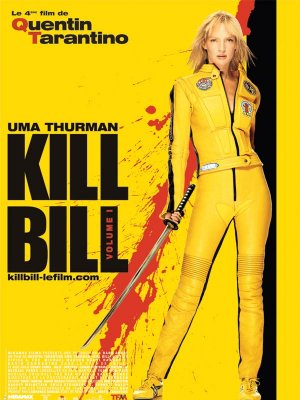 A great post today by Alan Bean at Friends of Justice examines the human instinct for vengeance and draws the apt connection to the increased chances of wrongful conviction in heinous, bloody crimes.
“If a terrible crime has been committed,” Bean writes, “a clever prosecutor can have a jury screaming for vengeance simply by laying out the grizzly facts and declaring that somebody (the defendant, for instance) must pay.”
Bean’s inspiration for this post comes from New York Times columnist (and Florida International University law professor) Stanley Fish, who pointed this week to the popularity of vengeance as theme in cinema. Fish offers a top-ten list of vengeance films and explores the relationship between violence and morality.
The difficult global economy has already created a simmering trade war between nations. The U.S. and Europe have issued a bevy of protectionist regulations in a bid to appease domestic interest groups, while key developing nations have raised their own trade barriers in response.
Problem is, while we've all heard the argument that free-trade benefits the entire world in the long-term, there might be another reason for developed nations to worry about protectionism.
A global trade war would be worse for the U.S. and Europe than for Asia according to Liam Halligan at The Telegraph. 'The West' probably has more to lose from trade barriers than 'The East', going forward.
Telegraph: Over the last year, the US – the global "free-trade champion" – has imposed 46 separate protectionist measures on goods and services crossing its borders. The EU, disgracefully, has implemented 90. The likes of China and India have retaliated, introducing 51 and 29 new anti-trade measures respectively. Little wonder that world trade volumes remain 13pc below their pre-sub-prime peak.
In 1950, international trade accounted for only 8pc of global GDP. That share has since more than tripled – with values increasing 24-fold – due to a relatively liberal global trading regime created by the WTO.
...
A few years ago, Pascal Lamy, the WTO's long-standing director-general, told me that some Western nations retained "neo-colonial" attitudes towards the rest of the world. The man spoke the truth. Having bought into the WTO, many developing economies are furious at what they see – rightly, in many cases – as Western intransigence. There's now a real danger they will go their own way, cutting bi-lateral trade deals that exclude the West.
The bottom line is that "we" as Westerners have more to lose than "they" do. "They" are growing fast, "they" are driving the recovery in trade we're now seeing and "they" will soon account for the lion's share of the global economy. Over the coming decade, such realities will become stark. Western leaders need to bite the bullet and complete the Doha round. The reality is that, from our perspective, the terms can only get worse.
Thus if the U.S. and Europe continue along their protectionist path, they could be left behind in the years ahead, achieving lower economic growth due to lower trade. Meanwhile developing nations will create their own separate trade blocs and speed ahead as their exchange of goods and services explodes.
Note China is already working on just such a plan, forming the largest free trade bloc in the world, separately in Asia.
AFP: China and Southeast Asia establish the world's biggest free trade area (FTA) on Friday, liberalising billions of dollars in goods and investments covering a market of 1.7 billion consumers.
Eight years in the making, the ASEAN-China FTA will rival the European Union and the North American Free Trade Area in terms of value and surpass those markets in terms of population.
Officials hope it will expand Asia's trade reach while boosting intra-regional trade that has already been expanding at 20 percent a year. "In 2010 we are sending a strong signal that ASEAN is open,"
Join the conversation about this story »
See Also:
Taser is notoriously defensive about any claims that its supposedly “non-lethal” devices have ever caused anyone to die. Yet, there is a ton of evidence concerning people who have died after being tazed. There are even cases where the company has had courts overrule medical examiners forcing them to change the “cause of death.” Now, as Karl Bode points out, an appeals court has ruled that using a Taser can constitute excessive force. The ruling doesn’t say that Tasers are automatically excessive force, but suggests that the overall circumstances behind the use need to be taken into consideration, and if the victim is not acting in a threatening way, use of a Taser may be inappropriate and excessive.
Permalink | Comments | Email This Story
This is a video showing BlueMaemo, an application that allows you to control your PS3 with a Nokia N900. Well, it will allow you to control any number of devices, it’s just that there’s a video of it interacting with a PS3. All hail mighty Bluetooth, king of the wireless protocols.
The video is in Italian, but it should be easy enough to follow. It’s not like too much is going on or anything.
The application is totally free, and was developed by Valério Domingos Valério, a Benfica fan. Incidentally, that makes he and I mortal enemies, being a former Sporting season ticket holder. (And how good is Jorge Jesus? Oh, wait, nobody knows what I’m talking about! Woo~!)


Buy This Item: [Click here to buy this item]
Everyone’s favorite man-child of indeterminate age or nationality, DiiFii, takes an adrenaline-fueled look at Tekken 6 in his latest review.
[YouTube]


Buy This Item: [Click here to buy this item]
 Lots of big drug makers have been pushing into China lately. Eli Lilly’s adding jobs there even as it makes cuts in the U.S.; Novartis is spending $1 billion to expand an R&D facility in Shanghai; and Pfizer has made a couple deals to study and sell drugs in China.
But at least one drug maker is moving in the other direction: Ranbaxy, the big Indian generics shop, said it’s getting out of a joint venture with a state-owned company to manufacture drugs in China. The partnership, established 16 years ago, was one of the first Sino-Indian joint ventures, the Financial Times notes.
Ranbaxy will still sell drugs in China, but the company is consolidating manufacturing as part of a series of cost-cutting measures. The company has also cut staff in some markets, Dow Jones Newswires says.
Last year, the Japanese drug maker Daiichi Sankyo bought a controlling share in Ranbaxy, shortly before Ranbaxy ran into trouble with the FDA. Daiichi Sankyo took a write-down of nearly $4 billion on the deal.
Map: iStockphoto
That will be all.

It’s not a groundbreaking device by any means, but the Pantech P9020 that was spotted over at the FCC shows that the QWERTY trend is far from being over. Offering a 2.0-megapixel camera, full QWERTY keyboard, touchscreen, and 850/1900 MHz 3G connectivity, it appears to be a decent mid-range device. What’s more, FCC documentation and the user’s manual show that the device is indeed headed to AT&T, making it a good option for text-centric teenagers on the nation’s second largest wireless carrier.
What say you – is this something that you would carry? Let me know in the comments.
Via: Engadget Mobile
 Here’s a look back at the 20 most popular posts we published in 2009. There was a $30 kitchen makeover, snacks for lunchbox, a gallery of lovely white kitchens, a roundup of many DIY recipes, and much more!


