Category: News

  • ‘Cybugs’ Are All the Buzz – D.A.R.P.A. Funds Spying Beetles

    cyborg beetle - Megasoma elephas (elephant beetle)

    In what is being touted as the first time humans have remotely controlled insects, University of California at Berkeley engineers successfully implanted radio-equipped, “miniature neural stimulation” systems into flying beetles–most notably, the “elephant” beetle Megasoma elephas (pictured above), which can grow up to 20 cm (about 7 + inches) in length.

    Read more of this story »


  • Will Microsoft Drive Cloud Revenues in 2010?

    As the ramp-up towards the January launch of Microsoft’s Azure platform reaches a crescendo, it’s worth asking whether the software giant, of all companies, could be the most significant revenue driver for the cloud in 2010. While cloud adoption is practically a foregone conclusion in IT circles, cloud computing revenues still pale in comparison to total corporate IT spending. To drive significant revenue growth in 2010, cloud computing software and service providers need the simplest, fastest ways to move more spending from enterprise deployments to the cloud. And Microsoft, Azure, and the Windows ecosystem could emerge as the catalysts.

    In December, Microsoft reorganized by forming a Server and Cloud division, following a slow and steady rollout of Microsoft Azure throughout 2009. The updates included all the usual tactics of getting developers, service providers, and early customers on the bandwagon. In November, Microsoft officials held court at the company’s Professional Developers Conference, seeking to engage the development community. It became clear there that while Azure does not equal Windows, common development frameworks like .NET deliver a more seamless bridge between on-premise and cloud deployments than existed previously.

    Microsoft’s cloud emergence is visible elsewhere, too. Amazon recently announced support for Microsoft Server 2008 on EC2, and the company has been offering at least some Windows support since late 2008. In November,  Amazon announced support for a software development kit for .NET developers that “provides a set of developer-friendly APIs that hide much of the low-level plumbing associated with programming for the AWS cloud, including authentication, retries, and error handing.” Rackspace has also announced Windows support is coming, with a beta release slated for early 2010.

    Other factors are behind Microsoft’s cloud focus as well. One is the Microsoft Service Providers License Agreement (SPLA), which was updated in 2009 to make it easier for service providers to offer Windows options more cost-effectively. While there’s some debate in the service provider community about how the SPLA actually works and whom it benefits, Microsoft has provided more options than in the past, giving cloud service providers better flexibility.

    It’s also worth considering the sheer volume of tools and resources that Microsoft is wrapping around Azure. As Stacey outlined in “Microsoft Azure Walks a Thin Blue Line,” there are plenty of tricks up Microsoft’s sleeve for supporting enterprises and service providers, including AppFabric, which “helps developers connect applications and services in the cloud or on-premise.” Microsoft is also going all out to provide interoperability with programming frameworks and software such as Ruby on Rails and MySQL.

    Finally, there’s the issue of what enterprises really want from the cloud. While there’s been plenty of discussion about virtualization at both the enterprise and service provider level, Windows commands a far greater footprint than any hypervisor out there. It appears unlikely that many CIOs favor Windows administration as a long-term core competence. Perhaps those CIOs can offload some of their more basic Windows applications directly to the cloud first. That’s just one more way that Microsoft’s business model and dependence on success in the cloud could shift dramatically next year.

    Image courtesy of TechFlash Todd on Flickr.


    GridRouter by SmartSynch: The communications hub for the Smart Grid

    Buy This Item: [Click here to buy this item]

    Read Original Article

  • Fun: FirstFollower Identifies Any Twitter User’s First Follower

    Who was the first person to follow you on Twitter? According to the app FirstFollower.com, mine was someone I never followed back until today! Chances are you’re already following your first follower, but you probably don’t remember who they are and it’s interesting to find out.

    Built by Russian developer Victor Babichev, FirstFollower appears to perform a function that’s relatively simple but in a much faster way than you can do manually. You could scroll back page by oddly numbered page through a person’s Followers list, but now this handy little app will do it for you. It’s also a very interesting way to find people who are close friends in real-life of Twitter users you admire.

    Sponsor

    firstfollower.jpegIt’s hard to know for sure how accurate the service is, particularly since Twitter changed the way it displays followers earlier this year, but Twitter founder @ev is said to have been followed first by @dom, one of the handful of people credited with creating Twitter in the first place.

    The first person to follow @barackobama? Cori Schlegel, a contract web developer who’s worked on several projects for tech journalist Steve Gillmor and probably a good guy to know.

    Did you know that Mary Hodder was the first follower of both chronic innovator Chris Messina’s new Twitter account and our own Alex Williams? That’s enough to make you think that anyone Mary follows in the future deserves a close look.

    Fun and useful! What more could you ask for from a lightweight little Twitter app? This is just a small example of the kind of social graph analysis that’s made possible by Twitter’s relatively open user data.

    Discuss


    Buy This Item: [Click here to buy this item]

    Read Original Article

  • The Year in Reading 2009

    The best books of the year, unranked, grouped by Borgesian principles.

    Kicking things off at the start of the year, Greer Gilman’s Cloud & Ashes is fantasy the way it should be done. It’s a uniquely voiced view of a fully realized world filled with compelling characters. Old North English diction drives an initially fragmented story into coherence; it’s like having folk songs sung to you while you rise into dreams. Like everything else from Small Beer Press, it’s excellent. Also from Small Beer, Geoff Ryman’s The King’s Last Song reveals the Cambodia of the 1960’s, 1990’s and 1100’s, through the life story of Jayavarman VII.
    Another set of books involved various young people not wanting to go to Brown. Peter Cameron’s Someday This Pain Will Be Useful To You follows 18 year old James Schweik (aka Bryce Canyon) around Manhattan in search of love, or maybe just some peace and quiet. In a nonfiction effort, Brownie Kevin Roose, The Unlikely Disciple, takes a semester off from Brown to go to Liberty University for his semester abroad. Hanging behind the book are the questions of whether there are two groups of people (saved and unsaved) or only one? Is your membership in the group dependent on your own choice, or does someone else get to choose for you? The spiritual cliffhanger hinges on whether a nice liberal boy from Oberlin, Ohio will wake up one day to find himself converted on the one hand, or whether the Liberty kids will move closer to mainstream America on the other. The same questions of identity lie behind Chandler Burr’s You Or Someone Like You. Main character Anne Rosenbaum draws her strength from literature, and from being, simply, human in the face of family trials. I recommended this book to more people than any other this year. Lev Grossman’s Quentin Coldwater forsakes Princeton rather than Brown to attend Brakebill’s College of Magical Pedagogy in The Magicians. It’s been described as JK Rowling and CS Lewis meet Bret Easton Ellis and Donna Tartt by too many reviewers, but…there you go. If Hogwarts were populated by snarky twentysomething malcontents with encyclopedic knowledge of pop culture (and Etruscan linguistics), it would look like Brakebills. Marvelous and also Very Bad Things ensue.

    Books about books filled much of the past year. Nicholas Basbanes’ true stories of book collectors, librarians, publishers and others of the “gently mad” and Alberto Manguel’s The Library at Night are the sort of nourishing books that give one new perspective and the vim to face the day.

    Elsewhere in nonfiction, out of a number of very good books about strategy, thinking and human endeavor, Winifred Gallagher’s Rapt and Daniel Tammet’s Embracing the Wide Sky proved the most insightful of the bunch, covering attention and neurovariant thinking as well as broader issues of cognition and strategy. In history, The Inheritance of Rome by Chris Wickham, covers an era that I had little prior knowledge of (I guess that’s why they call them the Dark Ages, nudge, nudge.) In history of science, The Invention of Air by Steven Johnson about uber-scientist and gadfly Joseph Priestley and The Age of Wonder by Richard Holmes cover the 18th/19th century scientific revolution in thrilling detail.
    Carl Jung was, quite literally, a wizard, or as much of one as it was possible to be at the start of the 20th century, based on the contents and construction of his Liber Novus/Red Book, which represents both a harrowing journal of his encounter with the unconsious mind using techniqes of active imagination (in which dream imagery is brought up ito te conscious mind), and a stunningly beautiful work of art. An illuminated manuscript kept in the family vaults for fifty years following Jung’s death, the story of how it came to be published was also one of the best articles of the year.
    On the to-read stack are several widely recommended books: Let The Great World Spin, by Colum McCann is up next.

  • Algunas fotos de Car Magazine que podrían servir de fondos de pantalla

    4.jpg

    No soy muy afecto a tener fondos de pantalla con muchos bombos y platillos, ya que prefiero un escritorio sencillo y que no ocupe muchos recursos del ordenador. Sin embargo, muchas veces nos encontramos con imágenes que vale la pena guardar, e incluso compartir como fondos de pantalla.

    Es el caso de un recuento anual de fotos hecho por la revista inglesa Car, realmente alucinante y en donde tendremos la oportunidad de adaptar unas cuantas imágenes a nuestras necesidades. Solamente para los que les gusten fotos muy selectas de sus vehículos preferidos, para poner como fondo de pantalla, las cuales encontrarán en el vía.

    Vía | Car Magazine


  • When Apple Fanboys Rap

    Unless you’ve been living offline for the past year, you’ve undoubtedly heard and/or seen “I’m On A Boat,” Lonely Island’s mock hip hop song/video. Today brings a response to it in the form of a group of Apple fanbois rapping about their love of using Apple products. They even have one character autotuned up, just like T-Pain in the “I’m On A Boat” version. No word on if they used the I Am T-Pain iPhone app to get the effect, but a major plus if so.

    It’s pretty standard stuff: Love Macs, love iPods, love iPhones — hate PCs, hate Zunes, hate drivers and viruses, etc. Fairly well made, this isn’t nearly as bad as the Bing Jingle, but it’s still a little cringe-inducing. Sample line: “I’m pluggin girls, you at work pluggin in devices.”

    These guys clearly have an agenda as they run the site Switch to Mac — you can probably guess what that’s about. This video is technically the follow-up to their “Mac or PC” rap video.

    Crunch Network: CrunchBoard because it’s time for you to find a new Job2.0


    Buy This Item: [Click here to buy this item]

    Read Original Article

  • So You Received a Kindle for Christmas – Now What?

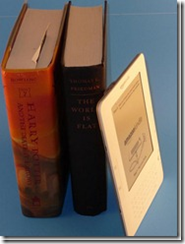
    As readers of GeekTonic know, we’re fans of the e-Readers – and the Kindle by Amazon is one of the most popular options.  It appears that Amazon has had a stellar holiday season and the Kindle was their number one seller this year.  I watched as many of my co-workers received or gifted the Kindle – many of which never shop online.  I also observed that many on twitter and facebook received a Kindle or Nook this season.  So for those of you who received a new e-Reader – particularly a Kindle, what do you do with that thing?

    The Kindle (and any e-Reader) isn’t for everyone.  Some just want the smell of the old books or the nostalgia of holding that book in your hands.  Or you’re one who trades your paperbacks among your friends.  For the rest of you, you are going to love your Kindle, Nook or Sony e-Reader.  Here’s a few things to know about your new Kindle:

    1. Instant gratification.  You’ve probably already discovered this, but shopping for a book through your e-Reader or computer is super easy, fast and painless.  No need to trudge out in the snow to buy the next book in that series and it’s always in stock.  The ability to browse and purchase a book 24/7 from the comfort of your favorite reading chair (or from the airport) is very nice indeed.

    2. Kindle without the Kindle – iPhone App.  The Kindle app for the iPhone and iPod Touch is a great app by itself.  But if you have a Kindle as well the iPhone app makes that book even more mobile.  Waiting in line at the store or waiting in a doctors office but don’t have the Kindle with you?  Pull out your iPhone, select the book you’ve been reading and it automatically takes you to the farthest point in the book you’ve been reading.  It’s not as nice to read from your iPhone since it isn’t the comfortable-to-read-on e-ink screen and quite a bit smaller screen.  But it’s a great way to always have your book with you.

    3. Finding Free Books – There are many ways to find and save free e-Books on your Kindle.  One of my favorites is Project Gutenberg.  Just save this url http://www.gutenberg.org/catalog/ to your Kindle web browser and you can search, browse and download free e-Books right to your Kindle without a computer.

    4. Kindle Covers that Work.  One of the first things you should get to go with your Kindle is a good cover.  We’re not fans of the standard Amazon cover because it’s difficult to lock into place and if you drop it, the Kindle is still exposed to the fall since the cover doesn’t latch into place.  Here’s a few of the best covers in my opinion:

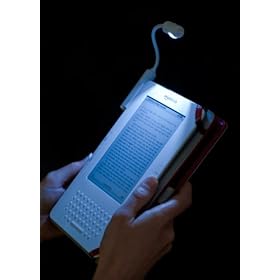
    5. Book Light? – We don’t have one for our Kindle, but my Dad’s Kindle sports the very popular M-Edge e-Luminator2 Kindle Booklight for $25


    6. If you’re into Podcasts, be sure and add theKindleChronicles to your list.  Len Edgerly has one of my favorite podcasts that focuses on the Kindle and e-Readers in general.  It’s enjoyable to listen to and I amazingly learn something new each week.

    7. Check out this list of Kindle tips & tricks for other tips on making the Kindle work for you

    If you have a tip of your own regarding the Kindle let us know in the comments


  • Second Release Of Crunchies Tickets Are Available Now.

    The second batch of 150 tickets to attend the Crunchies Awards are on sale now, courtesy of Eventbrite. Balcony seats are $45 (orchestra is sold out.)

    Remember that voting is open through midnight PST, Wednesday, January 6. Everyone is eligible and encouraged to vote daily for their favorite people, products and companies of the year.

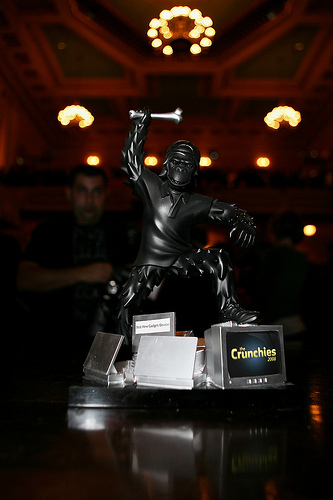
    crunchieaward

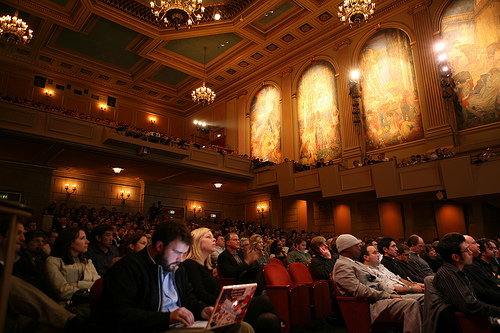
    The Crunchies Awards celebrate the best tech accomplishments of 2009 and will be held at the Herbst Theater in San Francisco on Friday, January 8, 2010 at 7:30 pm PST. Along with our co-hosts, GigaOm and VentureBeat, we will announce the winners from 18 different award categories live on stage.

    herbst3

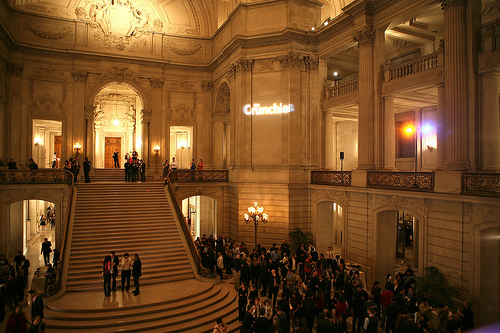
    Orchestra and balcony tickets include access to the after party hosted across the street in City Hall’s Grand Rotunda through midnight. There will be a sponsor-hosted bar, savory nibbles and desserts, music and a game room, featuring a mix of traditional and online games to play. Check out more party photos from 2008 and 2007.

    cityhall2

    There are plenty of ways to sponsor and support the after-party energy. Contact Jeanne Logozzo or Heather Harde if you’d like to sponsor: card-game tables, demo tables, photo booths or walls, drinks or food, giveaways and prizes and the like. We have creative packages available in all shapes and sizes. Room for award benefactors and entertainment sponsors for the ceremony too.

    Hope to see you there.

    FINALISTS: If you haven’t already, please contact us asap so we can get you set up with your two complimentary passes to attend.

    Crunch Network: CrunchBase the free database of technology companies, people, and investors


    Buy This Item: [Click here to buy this item]

    Read Original Article

  • 30 Kitchen Spotlights, Peeks, & Transformations from 2009 Best of 2009

    From colorful open kitchens to tiny yet well-appointed city galleys, we have peeked into many kitchens this year! Here are thirty peeks into kitchens big and small.

    Read Full Post


  • Dr. behind the times?

    I was looking at my lab work, I had a fasting blood glucose of 110. My doctor’s lab work says normal fasting is 70-106. He said I am just slightly above, and should be fine. My question is, where did the 106 come from I have never heard of that? Anyone else? Thank you!
  • Koreshan State Historic Site

    Florida, US | Hoaxes and Pseudoscience

    Cyrus Reed Teed was an eclectic physician whose experiments in alchemy often involved dangerously high levels of electricity. In one such experiment in 1869, Teed was electrocuted so badly that he blacked out. It was during this period of unconsciousness that Teed insists a “divine illumination” occurred.

    In this alleged mystical experience, Teed believed that God, in the form of a beautiful woman, divulged all the secrets of the universe and urged him to use his scientific knowledge to interpret the Bible. Though many believed that Teed’s experience was more a result of brain damage than divine intervention, Teed dramatically changed his life to fit his new calling.

    In the years that followed, Teed changed his name to Koresh, the Hebrew name for Cyrus, and began building the fundamental theories for his new religion, Koreshan Universology, or Koreshanity. Of Teed’s pseudoscientific theories, there was one that became the core tenet of Koreshanity: Cellular Cosmogony, the belief that the universe exists inside a giant, hollow sphere.

    Similar to other Hollow Earth theories, Cellular Cosmogony posited that humans lived inside — rather than on the surface of — the Earth, and were held there by centrifugal force, not gravity. Moreover, Teed believed that the universe also existed inside this sphere, and that the Sun was an electromagnetic battery-operated helix.

    For the next few decades, Teed formed small Koreshan Unity groups around New York, Chicago and San Francisco. Even still, Teed fantasized about forming the “New Jerusalem,” a utopian city built on 400-foot wide streets and consisting of 10 million citizens . Eventually, Teed decided to build his utopia in the small town of Estero, Florida, and he and his followers moved south in 1894.

    Unfortunately, the “golden age” of Koreshanity was between 1903-1908, at a maximum membership of only 250 people. During this time, however, the Koreshans built extensively, erecting a bakery, printing press, and their own “World College of Life.” Additionally, the Koreshans created their own political party and built their own power plant, providing electricity to surrounding towns years before the technology was available to the region.

    Teed died in 1908 after being pistol-whipped during an altercation with locals. For days, the Koreshans left his body in a bath tub in hopes that his spirit would be resurrected. Though reincarnation was a central belief in Koreshanity, Teed’s spirit never rose, and local health officials eventually demanded a proper burial.

    The membership quickly declined, led by roughly three dozen members for the next thirty years. The last surviving member of the Koreshan Unity was Hedwig Michel, who fled Nazi Germany and came to Estero in 1940. Michel spawned a brief Koreshan revival for the next two years, opening up a Western Union and a gas station; however, with only four members left by 1960, she ceded the three hundred acres of land to the State of Florida in 1961.

    Today, the area is a historic site and state park. Many of the buildings are still preserved, including the “Planetary Court,” where Michel lived until her death in 1981. Visitors can see her grave, the only Koreshan grave on site, as well as browse the extensive landscaping on the grounds. A Monkey Puzzle tree, which drops football-sized seeds, and a number of Sausage trees are among some of the exotic plants that the Koreshans imported to Florida.

  • Great Climate Change Images from WWF & good50×70

    The World Wildlife Fund (WWF) recently teamed up with good50×70 to create a great collection of graphics depicting the climate change situation we are in today.

    They are so great that I decided to share the news with you here.

    Read more of this story »


  • Send Pet-Themed Cards for New Year’s

    It’s hard to believe we’re at the tail end (so to speak) of 2009 already. I could have sworn I just put away last year’s holiday decorations and now here we are, ready to stash this year’s decor for another eleven months!

    partydog

    Though I don’t make New Year’s resolutions (and well, neither do my cats and dogs!), I do like to incorporate my love for them into the holidays when I can. One way to do this is with cute e-cards.

    Sloppy Kiss Cards have electronic cards for pretty much any occasion you can imagine, including Thinking of You, Birthdays, Anniversaries, and of course, New Year’s 2010. They even have “New Dog or Baby” announcements, too!

    Simply choose the card you want to send, pick which pet you want represented (dogs, cats, monkeys! even specific breeds), name it, add your message and send it off to your friend or loved one’s email address. Some cards even allow you to upload your own picture!

    [image: flickr]

    Post from: Blisstree

    Send Pet-Themed Cards for New Year’s

  • Fun: FirstFollower Identifies Any Twitter User’s First Follower

    Who was the first person to follow you on Twitter? According to the app FirstFollower.com, mine was someone I never followed back until today! Chances are you’re already following your first follower, but you probably don’t remember who they are and it’s interesting to find out.

    Built by Russian developer Victor Babichev, FirstFollower appears to perform a function that’s relatively simple but in a much faster way than you can do manually. You could scroll back page by oddly numbered page through a person’s Followers list, but now this handy little app will do it for you. It’s also a very interesting way to find people who are close friends in real-life of Twitter users you admire.

    Sponsor

    firstfollower.jpeg
    It’s hard to know for sure how accurate the service is, particularly since Twitter changed the way it displays followers earlier this year, but Twitter founder @ev is said to have been followed first by @dom, one of the handful of people credited with creating Twitter in the first place.

    The first person to follow @barackobama? Cori Schlegel, a contract web developer who’s worked on several projects for tech journalist Steve Gillmor and probably a good guy to know.

    Did you know that Mary Hodder was the first follower of both chronic innovator Chris Messina’s new Twitter account and our own Alex Williams? That’s enough to make you think that anyone Mary follows in the future deserves a close look.

    Fun and useful! What more could you ask for from a lightweight little Twitter app? This is just a small example of the kind of social graph analysis that’s made possible by Twitter’s relatively open user data.

    Don’t forget to come make friends with us at ReadWriteWeb on Twitter!

    Discuss


  • Forget What Apple Is Gonna Do — What Do You Want in an Apple Tablet?

    The rumors about the mythical Apple Tablet are swirling around at such a rapid pace that my head is swimming. Depending on where you turn, this non-device has a 7-inch touchscreen, a 10-inch screen, a tempered glass screen, a multitouch screen, or even a screen that morphs into a keyboard. Give me a break! It doesn’t exist yet, and the number of people who say the Apple Tablet has a certain feature doesn’t make it so!

    Let’s take this approach — what would you like to see Apple put in the Tablet? What features would you find worthy of capturing your dollars? What OS? What apps? Tell us what you want, not what you heard would be there. Add what you’d do with such a beast if it really existed, and it contained the magic features you desire. You’re the ones who are going to buy them, so make your voice heard. Don’t just sit back and take whatever Apple is willing to dole out. Oh yeah, that’s how Apple normally works, isn’t it?

    Note: No Apple Tablets were harmed during the production of this post.


  • VIDEO: Nokia N97 Mini – Unboxing

    Noah checks out Nokia’s N97 Mini – the little brother to the trainwreck that is the N97. Can a smaller form factor and redesigned QWERTY board make the mini a winner?


  • More Crunchies Tickets on Sale Today

    The second batch of tickets for the third annual Crunchies awards ceremony — scheduled to be held on Jan. 8 at the Herbst Theater in San Francisco — goes on sale today, here, starting at noon PST. You can also still vote for the tech people, products and companies that are finalists.

    We will once again be co-hosting the Crunchies awards, with VentureBeat and TechCrunch. The awards ceremony, which will kick off at 7:30 p.m. on the 8th, will be followed by an after-party at San Francisco’s City Hall’s Grand Rotunda.

    You can vote for your favorite finalists from each of this year’s 18 award categories here. You can also find the rules here. Everyone is eligible and encouraged to vote once per day, per award category, through Wed., Jan. 6 at midnight PST. Orchestra seats are sold out at this point, and and balcony tickets are $45, so get your tickets now if you want to attend the ceremony.


    GridRouter by SmartSynch: The communications hub for the Smart Grid

  • Mozarts Skull: University Mozarteum

    Salzburg, Austria | Memento Mori

    The thing about skulls is that, it can be remarkably hard prove whos they were.

    Of course, one can tell things like gender, age, sometimes history of disease or injury from a skull, therefore making a mismatch easy to identify. But if all those match up, it gets a bit more difficult to make a definite positive match. With the advent of DNA, in theory one should be able to scrap a little bone, run some tests, and viola: definitive proof of skull ownership… Alas, it is not so simple in the real world.

    In 1902 the Mozarteum in Salzburg, Austria came into the possession of what was said to be Mozarts skull. Missing its lower jaw, this skull matched a historical record indicating that Joseph Rothmayer a gravedigger had taken the skull from the group grave in which Mozart was buried ten years after Mozart’s death in 1791.

    Though often said to be buried in a mass or paupers grave, Mozart was actually buried in a grave with only four or five other bodies in it, a standard middle class burial procedure in those times. According to the story the grave digger attached a wire to the skull so he knew which one it would be when he went to retrieve it. (That he would have waited ten years to do so, though casts some doubt on this claim.) From there the passed through various hands, a sexton, a Dr. Hyrtl’s phrenologist collection — which excluding Mozart’s skull would go on to become the Mutter Museum’s skull collection — before ending up in the hands of the Mozarteum in 1902.

    So it was with great excitement that in 2006, 104 years after acquiring it, the Mozarteum was going to prove once and for all that it was Mozart’s skull. The plan was to test the skulls DNA against the DNA of Mozart’s relatives, taken from his maternal grandmother and niece’s thigh bones. The results were dismaying.

    Using Mitochondrial DNA, the results came back suggesting that not only was the skull unrelated to the family remains, but that the family remains were unrelated to each other, casting doubt on the authenticity of the remains of the maternal grandmother and niece as well. The result was neither fully negative, nor positive, but once more: inconclusive.

    Perhaps the best case for the skull being that of Mozart’s is the evidence that it took a hard hit about a year before Mozart’s death. This would be consistent with the headaches that Mozart described in his last year of life and provide some additional explanation of his early death.

    However, this too is ultimately speculative, and the mystery of Mozart’s skull will, for the time being, simply have to remain unsolved.

    Still at the Mozarteum, the skull is no longer on display, as it unnerved a number of the docents. However with an advance request, a showing of the skull may be given.

  • Video: 2011 Ford Mustang GT shows off its new 5.0L V8

    2011 Ford Mustang GT

    Earlier in the morning (12:01 a.m. to be exact) Ford released all the details and images of the 2011 Ford Mustang GT that will make its debut at the 2010 Detroit Auto Show next month.

    We now have a video of the 2011 Mustang GT showing off its new 5.0L V8.

    Refresher: The 2011 Ford Mustang GT is powered by a 5.0L 4-valve Twin Independent Variable Camshaft Timing (Ti-VCT) V8 engine producion 412-hp with a peak torque of 390 lb-ft. Transmission choices include a 6-speed automatic, which helps deliver an estimated fuel-economy of 17/25 mpg (city/highway). A standard 6-speed manual is also available.

    Follow the jump for the video.

    2011 Ford Mustang GT:

    2011 Ford Mustang GT 2011 Ford Mustang GT 2011 Ford Mustang GT 2011 Ford Mustang GT

    2011 Ford Mustang GT in Action:

    2011 Ford Mustang GT:

    – By: Stephen Calogera


  • Pumps

    I think I am ready to take on a pump. I’ve been really looking at the OmniPod. It seems like people either love or hate it. Also, I’ve read a few things that they will be working with DexCom 7+, but I’m not sure if that is true. The other pump I’m thinking about is the Ping. I am a first grade teacher, and a little worried about the kiddos pulling on the tubing. Anyone have any good/bad experiences with these?