Category: News

  • Rock out to Wikipedia

    Screen Shot 2013-08-02 at 1.45.05 PM

    This audio-visualization of Wikipedia sounds out edits to the site in real-time.

    Beardyman: The polyphonic meBeardyman: The polyphonic meIn the spirit of today’s euphonious talk from Beardyman, and our companion piece of the weirdest sounds to grace the TED stage, celebrate all-things-music with this incredible audiation of Wikipedia.

    The world’s largest crowd-sourced encyclopedia got a little more melodious this week, when Stephen LaPorte and Mahmoud Hashemi of Hatnote turned the cacophony of information on the site into a serenely harmonious concert in real-time. Inspired by a recent TED Radio Hour episode on collaboration, they wanted to try out the ideas for themselves.

    The audiation captures the energetic whir of the wiki as it tracks edits to the site. Bells ring when information is added, and strings strum when content is subtracted. The deep echo of an orchestra sounds out with each new user who signs up for the site.

    Listen to Wikipedia (L2W) encourages users to compare the differences between revisions to individual articles and to welcome new users to the site by writing them a message. The audiation is available in 11 unique languages, including Bahasa Indonesia, and tracks human users and autobots alike.

  • New therapy strategy could help treat cancer that has spread from breast to brain

    Researchers at UCLA’s Jonsson Comprehensive Cancer Center have successfully combined cellular therapy and gene therapy in a mouse-model system to develop a viable treatment strategy for breast cancer that has spread to a patient’s brain.
     
    The research, led by Carol Kruse, a professor of neurosurgery and member of the Jonsson Cancer Center and the UCLA Brain Research Institute, was published Aug. 1 in the journal Clinical Cancer Research.
     
    Breast cancer is the most common form of cancer in women, and metastasis is a major cause of health deterioration and death from the disease. Managing metastasis is difficult for several reasons: The circulatory network known as the blood–brain barrier prevents many anti-cancer drugs from reaching areas of the brain to which cancer has spread, and metastases have a tendency to spring up in multiple brain locations simultaneously, making current treatments such as radiation challenging.
     
    Cellular therapy is a type of immunotherapy that uses T cells, the foot soldiers of the immune system, that have been sensitized in the laboratory to kill breast cancer cells. These sensitized T cells are injected into the parts of the brain to which cancer has spread. The research shows that the T cells can move through tissue and recognize and directly kill the tumor cells.
     
    With the gene therapy, genetically modified cancer cells are killed by a drug called 5-flurocytosine (5-FC). To get the gene into the cancer cells, the researchers first insert it into a virus that can infect the tumor cells. After the virus has infected the cells, non-toxic 5-FC is given to the patient. Tumor cells infected by the virus convert the non-toxic drug to a toxic form that kills the cancer cells. Dr. Noriyuki Kasahara, a professor in the department of medicine at UCLA, developed the gene therapy method in his laboratory.
     
    While the two methods alone each show efficacy in mouse models, the greatest reduction in metastatic brain tumor size occurred when the cellular and gene therapies were combined, the researchers said.
     
    “There is a significant lack of federally funded research addressing translational studies on brain metastases of systemic cancers, even though metastatic brain tumors occur 10 times more frequently than primary brain tumors in humans,” Kruse said. “These patients have a dismal prognosis because the brain represents a ‘sanctuary site’ where appropriate access by many chemotherapeutics is ineffective. Our research addresses this unmet need.”
     
    Both experimental therapies are being tested individually in ongoing clinical trials for primary malignant brain tumors; this presents a unique opportunity for the rapid translation of these technologies from the laboratory to the clinic for breast and other types of cancer that metastasize to the brain, the researchers said.
     
    This study was supported by the U.S. Army Research Materiel Command; the California Breast Cancer Research Program; the National Center for Advancing Translational Sciences of the National Institutes of Health: the UCLA Clinical Translational Science Institute; the Joan S. Holmes Memorial Research Fund; the Joan S. Holmes Memorial Postdoctoral Fellowship; and Tocagen Inc.
     
    UCLA’s Jonsson Comprehensive Cancer Center has more than 240 researchers and clinicians engaged in disease research, prevention, detection, control, treatment and education. One of the nation’s largest comprehensive cancer centers, the Jonsson center is dedicated to promoting research and translating basic science into leading-edge clinical studies. In July 2013, the Jonsson Cancer Center was named among the top 12 cancer centers nationwide by U.S. News & World Report, a ranking it has held for 14 consecutive years.
     
    For more news, visit the UCLA Newsroom and follow us on Twitter.

  • X marks the spot: Hackers turn hijackers, plus this week’s TEDx Talks

    Hacker-hijackerThis week, during a computer security conference in Las Vegas, researchers Chris Valasek and Charlie Miller demonstrated how easily they could hack into the systems of moving cars using just a laptop computer. Illustrating that modern devices are worryingly vulnerable to hacking, Valasek and Miller showed their ability to jerk seatbelts, turn wheels and influence car breaks — all from afar.

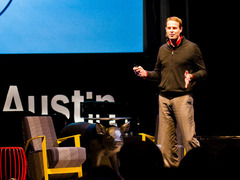
    Todd Humphreys: How to fool a GPSTodd Humphreys: How to fool a GPSWith this news, the TEDx team was reminded of Todd Humphrey’s talk “How to fool a GPS,” given at TEDxAustin last year, in which he warned that cutting-edge technology also made ships, airplanes and even time vulnerable to hijacking. Read more about the connection on the TEDx blog »

    In these developments, we can see the relevance and influence of TEDx events, dozens of which happen around the world every week. From these events, the TEDx team chooses four stellar presentations to highlight each week, showing just a few of the incredible ideas from the diverse TEDx community. This week’s talks range from morality and memory manipulation to dissertation-writing-iPhones.

    Pills that improve morality: Julian Savulescu at TEDxBarcelona
    At TEDxBarcelona, Julian Savulescu proposes that we can use drugs not only to improve our cognitive and physical capabilities, but also our moral dispositions. He suggests that it is imperative that we investigate this option of genetically engineering our moral dispositions in order to better problems — like terrorism and nuclear warfare — that we have created for ourselves.

    How to manually change a memory: Steve Ramirez and Xu Liu at TEDxBoston
    Steve Ramirez and Xu Liu explain their experiments to control and manipulate memory. The pair shoot laser beams into the brains of living mice to activate switches that control particular memories. In a funny and perhaps unnerving talk from TEDxBoston, Ramirez and Xu address both the scientific and potential ethical questions related to their research.

    The three myths of terrorism: Raghu Raman at TEDxMehrauli
    This is the question that Raghu Rahman asks in his talk from TEDxMahrauli. By outlining three myths of terrorism and exposing the small changes that acts of terror force to be implemented within government and security, Raman shows that everyone’s answer to this question should be yes.

    The computer teaches you: Philip Parker at TEDxSeattle
    Philip Parker suggests a solution for the difficult job of supplying expensively produced literature to developing countries — algorithms. At TEDxSeattle, Parker shows that the creation of algorithms to build formulaic texts such as crossword puzzles, dictionaries, poetry and educational video games can provide education in any language to underserved communities. This technology will, in the future, be able to improve agriculture in poor regions by giving details on soil and weather conditions and enable academics to use their iPhones to write dissertations for them.

    Other great features on the TEDx blog this week:

  • How to Schedule Time for Meaningful Work

    An interview with Julian Birkinshaw and Jordan Cohen, coauthors of the forthcoming article “Make Time for the Work that Matters.”

    Download this podcast

    A written transcript will be available by August 9.

  • A crystal of a different color

    Chemists have unexpectedly made two differently colored crystals – one orange, the other blue – from one chemical in the same flask while studying a special kind of molecular connection called an agostic bond. The discovery, reported in Angewandte Chemie International Edition on July 29, is providing new insights into important industrial chemical reactions such as those that occur while making plastics and fuels.

    “We were studying agostic bonds in a project to make liquid fuels like methanol from carbon dioxide to replace fuels we get from oil,” said chemist Morris Bullock at the Department of Energy’s Pacific Northwest National Laboratory. “We knew the molecule we were making would have an agostic bond, but we had no idea there’d be two flavors of these metal complexes.”

    While chemists have studied these bonds in chemicals in liquid form, no one had crystallized one chemical with multiple forms of its agostic bonds. And no one expected different forms to give rise to different colors.

    Bonds come in many varieties in molecules. They string atoms together, sometimes forming a trunk and branches of atoms like a tree. But the trunk and branches of chemicals often fold up into a more compact shape, requiring additional weaker bonds to hold the shape in place. An agostic bond is one of these additional bonds, a shape-holder. They occur between a metal and a distant carbon-hydrogen bond along some chain, folding the chain back to the metal and pinning it there.

    First discovered in the 1980s, agostic bonds frequently occur in catalysts because catalysts usually contain metals. This work will help researchers get a better handle on some catalytic reactions found in common industrial processes such as making plastic or fuels.

    Heart of the Matter

    The metal in a catalyst is usually the reactive heart of the molecule. Bullock and postdoctoral chemist Edwin van der Eide knew an agostic bond in their catalyst would help protect the reactive metal from working at the wrong time: The carbon-hydrogen bond blocks the reactive metal until conditions are right, which in turn would help the scientists better control the catalytic reactions. So van der Eide set about producing and crystallizing catalysts that contain a metal atom — in this case, molybdenum.

    In the lab, van der Eide’s flask of chemicals held a molybdenum-containing molecule that turned the solution violet. He added another liquid to coax the molybdenum complex to crystallize, just as salt crystallizes from seawater to form flakes at the seashore. Some crystals formed at the bottom of the flask and others formed near the top of the violet solution.

    Oddly, the crystals were two different colors.

    Orange crystals formed at the bottom of the flask and blue above. If van der Eide dissolved either the orange or blue crystals in a fresh flask of the original solvent, the violet color returned, with the same properties as the original violet solution. These results suggested that either molecule in the two colored solids could give rise to both structures in liquid, where they easily change back and forth.

    The researchers examined the differently colored crystals to determine their structures. The molecule forms a shape like a piano stool: a ringed section forms a stool seat on top of the molybdenum atom, with multiple legs connecting to the molybdenum at the bottom.

    One of the legs, however, is longer than the others and contains a chain of three carbon atoms, each with at least one protruding hydrogen. The team found that the long leg was involved in the agostic bonds, with the middle carbon atom involved in the orange crystals and an end carbon involved in the blue crystals.

    PNNL’s Ping Yang at EMSL, DOE’s Environmental Molecular Sciences Laboratory on the PNNL campus, took to EMSL’s supercomputer Chinook to perform theoretical calculations on the orange and blue structures. Chemically, the two structures were almost equally likely to form, with the blue one having a slight edge. The analysis also revealed why the crystals were different colors, which is due to subtleties within the structures.

    This work was supported by the Department of Energy Office of Science.


    Reference: Edwin F. van der Eide, Ping Yang, and R. Morris Bullock. Isolation of Two Agostic Isomers of an Organometallic Cation: Different Structures and Colors, Angewandte Chemie. July 29, 2013, DOI 10.1002/anie.201305032.


    The Department of Energy’s Office of Science is the single largest supporter of basic research in the physical sciences in the United States and is working to address some of the most pressing challenges of our time.

  • Being the World’s Largest Ad Agency Might Not Be Something to Brag About

    Google’s All “Who Cares?”

    This week’s merger announcement between Omnicom and Publicis, two ad and marketing agencies with a combined 2012 revenue of $23 billion, involved glasses of champagne. But perhaps a jug of water would have been the more appropriate thirst-quencher for these industry giants’ long road ahead, even as the biggest agency in the world. This commentary from The Economist is both a primer for those who haven’t been keeping up with the news and a witty analysis for those paying attention to only a particular segment of the story. The bottom line, of course, is that the companies merged in an attempt to solve a couple of major problems: the growth of digital advertising that bypasses agencies’ traditional role in placing content and, secondarily, an ongoing succession conundrum at Publicis (Maurice Lévy, who heads the company, is 71). The new agency also promises to cut $500 million in costs, and because it will represent 20% of ad spending and 40% of some publishers’ ad slots, it could be in a great position to help clients get better rates. But there may be more bad news than good. Aside from the whole “We have to get this approved by antitrust authorities in more than 40 countries” issue, the stumbling blocks could include client dissatisfaction (several competing brands are now being represented under the same mammoth umbrella); cross-cultural differences; and the challenge of catching up to the nimble Google, which controls a third of all online ad spending. Perhaps, the article argues, the change is akin to what happened on the Wall Street trading floor when everything became automated: “The move toward buying ads on exchanges will mean that their margins are squeezed and life gets a lot tougher.” Cheers?

    The Limits to Self-Interest

    A Manager’s Moral Obligation to Preserve Capitalism Working Knowledge

    Most people think of capitalism as morality-neutral, at best. Others think of it as downright immoral. Karthik Ramanna of Harvard Business School differs with both views. True, capitalism unleashes people’s self-interest. But in order to let them pursue their goals, it has to enable individual freedom and fairness of opportunity, which are among society’s important moral “goods.” This delicate balance shouldn’t be taken for granted, however. In a new working paper, Ramanna and Rebecca M. Henderson, the John and Natty McArthur University Professor at Harvard, say executives in the financial industry have the capacity to do a lot of harm to capitalism’s moral framework if they give in to the temptation to structure the rules of the game around maximizing their own profits — something that’s fairly easy to do when practically no one understands the esoteric markets and instruments that big banks have been brandishing lately. Pressure from industry groups can help these executives recognize that they have a responsibility to set aside their self-interest “in order to preserve the interests of the system as a whole.” Ramanna believes the executives will eventually get the message and do the right thing. “CEOs are usually not immoral people,” he says. —Andy O’Connell

    Strip-Mining People’s Lives

    The Trouble with Zuckism PandoDaily

    Facebook (finally) traded for over $38 a share this week, the magic number it initially went public for back in 2012. To some extent this shows that fears about the social network’s ability to make money may have been overstated. But it’s the way they make money — mining user data to generate ad revenue — that’s the focus of Kevin Kelleher’s piece. Most users, he says, don’t love the social network, but the cost-benefit proposition of connecting with people easily across the globe is too good to pass up. It’s under this condition that Zuckism flourishes: “Zuckism says that if you can tap a deep enough need at a big enough scale you can strip-mine a billion intimate lives for profit.” The question going forward, Kelleher says, is what will happen when Facebook’s two constituent bases — its users and its investors — grow further and further apart as user enthusiasm wanes and investors make more money.

    You Can’t Eat a Check

    In Lieu of Money, Toyota Donates Efficiency to New York Charity New York Times

    Kaizen, Japanese for “continuous improvement,” is Toyota’s self-described business model. Sure, it can help Toyota make great cars and trucks, but can it also help feed hungry New Yorkers? In a rebuke to the traditional practice of cutting a check to support a charity, Toyota offered the Food Bank for New York City some strategy consulting instead. And despite some initial apprehension, it worked: Toyota engineers were able to cut down the dinner wait time from 90 minutes to 18 minutes. And after Hurricane Sandy, a Food Bank warehouse lowered the time it took to pack boxes of supplies for victims from 3 minutes to 11 seconds. This efficiency gets food to more people, sure. But it also saves the Food Bank time and money. So next time your business is thinking of donating money to a cause, you might want to consider just how far your expertise can go instead.

    Live and Let Die

    How Link “Suicide” Could Save the Web Wired

    A link is a link, right? Nope. There are web links that are relevant, useful, and significant. And then there are all the rest. The relevant-slash-useful-slash-significant ones are great and deserve to live on in perpetuity, but the rest should die, writes Jeff Stibel. In fact, the web should be structured so as to let pointless links disappear automatically after a while. Same with unused sites, for that matter. Summary executions of useless links and sites would prevent the web from becoming ever more cluttered with things no one needs. A cleaned-up web would be more meaningful and, ultimately, more useful. But how to distinguish the good from the bad? A start might be for users to agree that one-way, and thus weaker and less significant, links (I link to you but you don’t link to me) should appear in a different color or font size from two-way, and thus stronger and more significant, links (we both link to each other). “There’s no reason we can’t eventually build this facet into the web’s very fabric,” he writes, making it sound oh so easy to unleash a web-crawling killing machine. —Andy O’Connell

    BONUS BITS:

    Oh No They Didn’t

    A New App Will Let You Share Your Leftovers With Strangers (NPR)
    CEO Mocks Steve Cohen in Bizarre Full-Page Wall Street Journal Ad (Quartz)
    House Party: Working and Living at the Office (Wall Street Journal)

  • How Your Brand Can Flirt on Vine

    The look is always the same: A seasoned marketer is cajoled into watching their first Vine video. Six seconds pass and it’s over. The marketer gazes quizzically at the smiling young person that brought the video to his attention.

    “That’s it?”

    Like any emerging platform, Vine (the short-form video app owned by Twitter) requires a recalibration for users to understand a new context within a new format. And for marketers who are used to their 15 second online pre-rolls, it’s especially important for them to recognize that this burgeoning technology could one day deliver more value for them than YouTube. If a 60-second video is a dinner date, then Vine is the opening flirt across a crowded bar.

    First, let’s dissect the anatomy of the flirt: The wink, the blown kiss from a loved one. These familiar tactics are short-form moments that over-index with joy. At Virgin Mobile, we call these surprise and delight moments the “Virgin Touch.” Our goal is to shower the customer with tons of little, metaphorical kisses, hoping that a few stick. Virgin flirts constantly with hopes that some of these moments are shared, which in turn adds to the mythology of our brand.

    Now look at Vine. It’s a platform invented to maximize joy in six seconds. People who post on Vine — or “Viners” — tend to be 15- to 30-year-olds who have perfected the art of telling a good story in the shortest amount of time possible. Viners may use a series of techniques to make you smile. Some, like Nicholas Megalis (the top Viner at 1.9M followers at the time I write this) use catchy jingles or songs. Others, like Meagan Cignoli, use stop-motion animation. Rudy Mancuso is the king of “looping” — the ability to manipulate your six seconds to create an endless loop (Vine videos auto-repeat after they end). Then there’s Brandon Calvillo, an emerging Viner (and one of my personal favorites) currently hijacking our Virgin Mobile Vine account, who has invented a new technique inserting pop song lyrics as punchlines to mundane everyday situations. He’s been especially clever with this technique when it came to commenting on our recently announced Virgin Mobile FreeFest.

    Vine was brought to my attention by Gary Vaynerchuk, the internet maven who himself started his career as a YouTube wine celebrity. He had the bold idea, along with his co-founder Jerome Jarre (also a celebrity Viner) to start a new company called Grape Story that would solely represent Vine stars (similar to how CAA represents actors) and connect them with brands. At the time, he was putting the final touches on his new book, Jab Jab Jab Right Hook, which focuses on the multiple touches a brand needs to do to break through and win a prospect.

    What we at Virgin saw as kisses, Gary saw as punches. Both hope for the same result: a constant barrage of conversation with an engaged prospect about their values, culture, and sensibilities. Gary walked me through the explosive growth of Vine, which was approaching a tipping point after surging to 13 million users in the first four months after launch. Having seen a similar trajectory at Buzzfeed 18 months earlier, we decided to help him launch his new business. Virgin Mobile was the first brand that would partner with Grape Story on Vine and would attract top-tier talent to help bring awareness to our brand.

    At its core, Vine is about “rubbernecking” — distracting your attention for a mere instant with hopes for a payoff. For some it’s an attractive passing stranger. For others it’s a car accident at the end of a long traffic jam. Either way, for a brand to break through on the platform, you need to reduce your message or brand essence to a simple beat, and then set up for the payoff of that beat. All in six seconds. Though this may sound daunting, there are considerable benefits. Vine videos automatically repeat after they play, so your moment’s frequency will deliver roughly three times for a given user (if they enjoy the video, that is).

    Within three weeks of launching our Vine relationship with Grape Story, we gained over 30,000 followers (and trending to hit 100,000 followers in a month or so). The lion’s share of these followers were from a contest we called #happyaccidents, where Viners were encouraged to post videos of their phones distracting them from everyday life. Subsequent to this contest, we created “Resident Viners” — similar to resident DJs at hot clubs — where an emerging Viner would guest-Vine from our account for a few weeks, help build our base, then leave.

    Currently, we’re still testing the mechanics of the platform to understand what are the most reliable breakthrough methods. Based on our findings experimenting with the platform thus far, Vine feels ideal for what I call “Product Placement 2.0” — that is, a place where the brand or product can act as a character in the piece rather than just set dressing. Rudy Mancuso was successful at integrating Ritz crackers in this fashion.

    At times, Viners have experimented to be more subtle with our branding. And at other times, less so. As the most influential Viners engage with our page, we start to see other junior Viners creatively interpret our brand in the form of contest entries. These moments are the “kisses” we most enjoy. “Brand Flirting” at its finest.

    So how does Vine fit into your existing marketing ecosystem?

    To make sense of it all, it’s best to first temper expectations. Vine, at this moment, is not a brand that will increase sales. But its role in the ecosystem is no different than the traditional out-of-home assets you may have used in traditional campaigns. Think of a good, branded Vine video as the passing bus that carries a clever summer blockbuster film ad on it. And the true value of the medium is in its low cost. A typical sponsorship of a Vine video can run a mere few thousand dollars, yet it can gain tens of thousands of “likes” or “re-Vines”. Marketers with lower marketing budgets can capitalize on this as one of many tactics to break through in a cluttered space with fickle Millennials.

    Vine, of course, isn’t the only platform out there for short-form video. Instagram recently announced their entry into the market. Though the jury is still out on which platform will win over brands, it’s clear that both platforms will address different objectives for advertisers. Instagram videos will most likely feel more like pre-roll ads and look to formally begin a customer relationship with the prospect. Vine will focus more on brand voice and whimsy.

    Viners have the unique ability to tell a breakthrough story in six seconds and can build an organic following because of this skill. According to our friends at Grape Story, there is no famous Viner that gained fame in another platform prior to joining Vine. Engaging fans in such short time is a talent. Brands can learn plenty from those who’ve mastered the art of digital flirting.

  • Should Your CIO Be Chief Digital Officer?

    We’ve all seen it. CIOs who do great things in leading IT soon gain extra responsibilities. By helping business leaders to improve their businesses, the CIO becomes an obvious candidate to fill any open role that involves technology, process, or strong governance. Some CIOs become CIO-Plus-COO or CIO-Plus-Head of Shared Services. Others gain new responsibilities in strategy, M&A integration, or innovation. Still others move on to business roles including CEO. In the book, The Real Business of IT: How CIOs Create and Communicate Value, Richard Hunter and I coined the phrase CIO-Plus. In the four years since our book was published, the CIO-Plus idea has gained real traction, and there are numerous stories and cases studies on the phenomenon.

    But there is another leadership role that has arisen in many organizations in recent years: the Chief Digital Officer (CDO). In many companies, “digital” is a cacophony of disconnected, inconsistent, and sometimes incompatible activities. One company had three simultaneous mobile marketing initiatives, conducted by different groups, using different tools and vendors. Other companies have multiple employee collaboration platforms with different rules and technologies. The problem is exacerbated as business units do their own things digitally, or as companies hire vendors who can only do things their own way. If your company has wildly different digital marketing activities for each brand or region, you know what I mean.

    The CDO’s job is to turn the digital cacophony into a symphony. It’s OK to experiment with new businesses and tools, but experimentation must be coupled with building scalable, efficient capabilities. The CDO creates a unifying digital vision, energizes the company around digital possibilities, coordinates digital activities, helps to rethink products and processes for the digital age, and sometimes provides critical tools or resources. That’s why Starbucks — an early leader in all things digital — hired a CDO last year. And it’s why many other companies are naming CDOs before they get too far along the digital road.

    The title CDO may or may not become permanent in your company. But the responsibilities of the CDO will be required. You may appoint a temporary CDO to get your house in order, or you may develop other ways to get the job done. Whatever approach you choose, you need to create appropriate levels of digital technology synergy, brand integration, investment coordination, skill development, vendor management, and innovation over the long term.

    Is CDO the next step for the aspiring CIO-Plus? The answer is not obvious, but it’s well worth considering. Many of the CDO’s roles are challenges that great CIOs have already mastered in their own domains. But some, such as brand synergy, are new to the CIO. Diverse companies are responding to the digital leadership challenge in different and dynamic ways.

    Although relatively few CIOs have an official CDO title, roughly 20% of CIOs in Gartner’s latest survey said they played the role. At Codelco, the world’s largest copper mining company, CIO Marco Orellana is helping to fundamentally transform the process of mining and selling through digital technologies such as real-time coordination, analytics, and autonomous vehicles. At Asian Paints, Manish Choksi managed the difficult step of centralizing and standardizing processes across a loosely-coupled set of regional units. Now, as CIO and Chief of Corporate Strategy, he leads the digital transformation of manufacturing, selling, and customer service.

    In some companies, the CIO and CDO are deliberately separate roles. The CIO of an apparel company participates in digital decisions and supports digital initiatives while keeping the company’s traditional IT unit running smoothly. He is not seen as a potential CDO, but the company values his skills in a strong supporting role. Meanwhile, Starbucks’ CDO Adam Brotman and CIO Curt Garner work very closely as a team to drive digital strategy and execution.

    Then again, executives in some companies feel their CIO does not have what it takes to be part of the digital conversation. The CIO of a business-services provider had little role in digital at all; the CEO asked him to focus only on legacy IT systems while a newly-hired CDO managed digital activities. Two years later, the company moved all IT functions under the CDO, and the CIO moved to a new firm.

    So, should your CIO take on digital responsibilities? Here are some questions you can ask yourself:

    • Is your CIO great at the CIO role? Is IT clearly running well? Are IT costs and agility what you want them to be? If your answer to these questions is “no,” then you probably want your CIO to focus on fixing IT, not expanding beyond IT.
    • Is your CIO ready for a CIO-Plus role? Do you see your CIO as a senior executive colleague or just a leader of the technology function? Has he successfully managed non-technical roles such as merger integration, process management, or shared services? Is your senior team smarter when your CIO is in the room?
    • Does your CIO have digital expertise? Can she talk the language of social media or mobile or analytics, and can she help you understand? Does she understand the digital threats and opportunities your company faces — from inside and outside its industry? Can she create a compelling digital vision for the firm?
    • Will your CIO command respect across the enterprise? The CDO role can require even more political savvy and communication skills than the CIO role does. Is your CIO up to the task of driving change across a strong-willed senior executive team? Can she engage a busy workforce to turn digital vision into reality?

    In an increasingly digitizing business world, most companies need better digital leadership and coordination. You need to create a compelling digital vision, coordinate digital investments, drive appropriate synergies, build a clean technology platform, and foster innovation. You need to energize a busy workforce and generate shared understanding in your senior executive team.

    If your CIO is good, look to him for help. Strong CIOs have already tackled some of the tough challenges of digital leadership. They understand the importance of governance and policy. They know the intricacies of managing across organizational units. They tend to be highly connected with senior executives, having helped them achieve their objectives over the years. They know the current business and the future opportunities technology can create. Plus, in any big company, it’s difficult — if not impossible — to build great digital capabilities without linking to your existing IT capabilities and people.

    So, should your CIO be CDO? You need to get the digital leadership job done, whether through a new C-level title or other methods. If you have a great CIO, give her some digital responsibility. You may not choose to make her your digital leader. But the skills and relationships of a great CIO will be an asset to any digital leadership team.

  • Evaluating Obesity Prevention Efforts: A Plan for Measuring Progress

    Prepublication Now Available

    Obesity poses one of the greatest public health challenges of the 21st century, creating serious health, economic, and social consequences for individuals and society. Despite acceleration in efforts to characterize, comprehend, and act on this problem, including implementation of preventive interventions, further understanding is needed on the progress and effectiveness of these interventions.

    Evaluating Obesity Prevention Efforts develops a concise and actionable plan for measuring the nation’s progress in obesity prevention efforts–specifically, the success of policy and environmental strategies recommended in the 2012 IOM report Accelerating Progress in Obesity Prevention: Solving the Weight of the Nation. This book offers a framework that will provide guidance for systematic and routine planning, implementation, and evaluation of the advancement of obesity prevention efforts. This framework is for specific use with the goals and strategies from the 2012 report and can be used to assess the progress made in every community and throughout the country, with the ultimate goal of reducing the obesity epidemic. It offers potentially valuable guidance in improving the quality and effect of the actions being implemented.

    The recommendations of Evaluating Obesity Prevention Efforts focus on efforts to increase the likelihood that actions taken to prevent obesity will be evaluated, that their progress in accelerating the prevention of obesity will be monitored, and that the most promising practices will be widely disseminated.

    [Read the full report]

    Topics: Food and Nutrition | Health and Medicine

  • What Does Post-Bureaucratic Leadership Look Like?

    Remember that classic New Yorker cartoon with Rover sitting in front of a computer? The caption read, “On the Internet, no one knows you’re a dog.” Well, on the web, no one knows you’re a senior vice president either. That’s why every leader is going to have to learn how to get things done in a world where authority is the reciprocal of followership.

    As traditional hierarchies get supplanted by networked, or “social” organizations, leadership will become less a function of “where you sit,” than of “what you can do.” Any company that strives to build a leadership advantage will need more than a celebrity CEO and a corporate university that serves up tasty educational morsels to the “high potentials.” It will need an organizational model that gives everyone the chance to lead if they’re capable; and a talent development model that helps everyone to become capable.

    What does it take to dramatically enlarge the leadership capacity of an organization — and equip all of its people to lead without formal authority?

    Those are the questions behind the Leaders Everywhere Challenge, the second leg of the Harvard Business Review/McKinsey M-Prize for Management Innovation. And today we’re proud to announce the eighteen finalists. This is a robust collection of real-world case studies and courageous experiments in rethinking the work of leadership, redistributing power, and unleashing 21st century leadership skills. Here they are in alphabetical order:

    Biggest-Ever Day of Collective Action to Improve Healthcare That Started With a Tweet
    Story by Helen Bevan, Damian Roland, Jackie Lynton, Pollyanna Jones

    Using Micro-Learning to Boost Influence Skills in Emergent Leaders
    Story by Mark Clare

    Reweaving Corporate DNA: Building a Culture of Design Thinking at Citrix
    Story by Catherine Courage

    Teaming at GE Aviation
    Story by Rasheedah Jones

    The System of Leadership
    Hack by Monique Jordan

    Total Volunteer Force for the U.S. Military
    Hack by Timothy Kane

    A Tale of Two Captains: Making the Case for the Universal Applicability of Leaders Everywhere
    Story by Charlie Kim and David Marquet

    Don’t Remove Their Igloos!
    Story by Peter King

    Co-Presidents: Distributed Leadership at The Nerdery
    Story by Mark Malmberg

    The Power of Employees to Overcome the Bank Crisis
    Story by Valerie Martens

    The 4-Hat Hack: How a Micro Change in Your Employee Portal Can Yield Mega Results in Leadership
    Hack by Joel Modestus

    Rap a Tap, Tap Tap, Join TITAN and You Are the Leader
    Story by Lalgudi Ramanathan Natarajan and Sumant Sood

    What Goes Into Building a CEO Factory?
    Story by Stephen Remedios

    Empowering Intrapreneurs within the Federal Government at NASA
    Story by Kevin Rosenquist

    Integrity, Rationality and Collegiality: Ingredients for Greatness
    Story by Marcus Ryu

    Who Do People Report to Here?
    Story by Richard Sheridan

    Project 10X: Growing the DNA for 21st Century Leadership in Organizations
    Hack by Max Shkud and Bill Veltrop

    Quit Email and Start Leading
    Hack by Kim Spinder

    Please explore the finalist stories and hacks and add your comments and ratings — they’ll make a difference as finalists update and build on their entries for final judging. We’ll announce the winners of the Leaders Everywhere Challenge the week of August 19th.

  • Three Differences Between Managers and Leaders

    A young manager accosted me the other day. “I’ve been reading all about leadership, have implemented several ideas, and think I’m doing a good job at leading my team. How will I know when I’ve crossed over from being a manager to a leader?” he wanted to know.

    I didn’t have a ready answer and it’s a complicated issue, so we decided to talk the next day. I thought long and hard, and came up with three tests that will help you decide if you’ve made the shift from managing people to leading them.

    Counting value vs Creating value. You’re probably counting value, not adding it, if you’re managing people. Only managers count value; some even reduce value by disabling those who add value. If a diamond cutter is asked to report every 15 minutes how many stones he has cut, by distracting him, his boss is subtracting value.

    By contrast, leaders focuses on creating value, saying: “I’d like you to handle A while I deal with B.” He or she generates value over and above that which the team creates, and is as much a value-creator as his or her followers are. Leading by example and leading by enabling people are the hallmarks of action-based leadership.

    Circles of influence vs Circles of power. Just as managers have subordinates and leaders have followers, managers create circles of power while leaders create circles of influence.

    The quickest way to figure out which of the two you’re doing is to count the number of people outside your reporting hierarchy who come to you for advice. The more that do, the more likely it is that you are perceived to be a leader.

    Leading people vs Managing work. Management consists of controlling a group or a set of entities to accomplish a goal. Leadership refers to an individual’s ability to influence, motivate, and enable others to contribute toward organizational success. Influence and inspiration separate leaders from managers, not power and control.

    In India, M.K. Gandhi inspired millions of people to fight for their rights, and he walked shoulder to shoulder with them so India could achieve independence in 1947. His vision became everyone’s dream and ensured that the country’s push for independence was unstoppable. The world needs leaders like him who can think beyond problems, have a vision, and inspire people to convert challenges into opportunities, a step at a time.

    I encouraged my colleague to put this theory to the test by inviting his team-mates for chats. When they stop discussing the tasks at hand — and talk about vision, purpose, and aspirations instead, that’s when you will know you have become a leader.

    Agree?

  • The Employment Situation in July

    While more work remains to be done, today’s employment report provides further confirmation that the U.S. economy is continuing to recover from the worst downturn since the Great Depression. It is critical that we remain focused on pursuing policies to speed job creation and expand the middle class, as we continue to dig our way out of the deep hole that was caused by the severe recession that began in December 2007. 

    Today’s report from the Bureau of Labor Statistics (BLS) indicates that the unemployment rate declined from 7.6 percent to 7.4 percent in July, reaching its lowest level since December 2008. The unemployment rate for African Americans fell from 13.7 percent to 12.6 percent, also its lowest level since December 2008. The unemployment rate for women fell from 7.3 percent to 7.0 percent, its lowest level since January 2009, and from 7.8 percent to 7.7 percent for men.

    The establishment survey showed that private sector employers added 161,000 jobs last month (see chart below). Total non-farm payroll employment rose by 162,000 jobs in July. The economy has now added private sector jobs for 41 consecutive months, and a total of 7.3 million jobs have been added over that period. So far this year, 1.4 million private sector jobs have been added.

    With the recovery entering its fifth year, we need to build on the progress we have made so far and now is not the time for Washington to impose self-inflicted wounds.  The across-the-board budget cuts known as the sequester continue to be a drag on the economy now and in the future.  The Administration continues to urge Congress to replace the sequester with balanced deficit reduction, and promote the investments our economy needs to put more Americans back to work, such as by rebuilding our roads and bridges.

    read more

  • The Problem with Procurement

    Back in 1983, in a Harvard Business Review article, Peter Kralijc called for the procurement function to take on a larger and more strategic role in managing the supply chain. Thirty years on, sales people in most large companies are still being trained in ways to actually bypass procurement folks in their customer companies. This is not evidence of people taking the function seriously. What went wrong?

    To find out, we conducted a survey with close to 200 procurement executives, in Asia and in Europe. We found pretty conclusively that procurement managers are their own worst enemy, both with external suppliers and within the company, with internal customers and other stakeholders.

    Let’s begin with supplier relationships. Nearly half our respondents claim they spend time with suppliers asking them for updates on the markets and new business suggestions. This is not great, perhaps, but it certainly sounds encouraging.

    Poke a little deeper, though, and you’ll find the picture looks less rosy. As the chart below shows, only about a third of managers are actually bringing any supplier intelligence into their organizations by advocating for suppliers and facilitating new connections for them, which is what you would expect someone managing the supply chain to do. Just 20% claim to be communicating business insights shared by those customers; only 17% could even tell us in what segment their supplier put their company. No wonder suppliers don’t want to spend time with these folks.

    Supplier Intelligence Graphic

    Let’s turn to what’s going on inside the company. As the second graphic shows, many procurement managers are trying to demonstrate internally that they have strategic value. They’re gathering intelligence systematically about the company’s stakeholders and communicating their successes. But it isn’t getting much further than that. Less than 30% of the time do we see procurement managers customizing value propositions for internal customers and stakeholders, tracking satisfaction levels and setting targets for satisfaction.

    Use of Marketing Tactics Graphic

    If this sample is representative, then we can hardly be surprised if many c-suiters think that procurement is a backwater. And we can hardly expect young high-flyers in most industries to see it as a career path of choice.

    Looking ahead, procurement managers will have to change the way they approach suppliers and business peers; being a strategic business partner means so much more than negotiating a discount.

  • People with Higher Status Live Longer

    Nobel Prize winners live an average of 1.6 years longer than nominees who aren’t selected, a finding that’s consistent with a causal link between status and longer lifespan, say Matthew D. Rablen and Andrew J. Oswald of the University of Warwick in the UK. The mechanism for the link is unclear, but it may have to do with higher-status individuals’ greater control over their work lives. Lack of control in the workplace is associated with stress, and high levels of stress hormones damage immunological processes.

  • China’s Impending Slowdown Just Means It’s Joining the Big Leagues

    China’s era of spectacular economic growth is coming to an end. That’s a popular theme at the moment, with any number of culprits cited — an overleveraged financial system, pollution, too little consumer spending, corruption, anti-corruption campaigns, and of course bad driving. It’s reached the point that the Chinese government’s International Press Center felt compelled to gather a group of reporters in Beijing earlier this week just so that Justin Yifu Lin, the former World Bank chief economist who is now a professor at Peking University and a government adviser, could tell them that he’s “reasonably confident the Chinese government has the ability to maintain a 7.5% to 8% growth rate.”

    Here’s the thing: a 7.5% to 8% GDP growth rate already is a significant slowdown from the nearly 10% annual pace at which China’s economy had been growing until last year. And while all the economic issues cited above are real, the big issue confronting the Chinese economy is something simpler and more encouraging. The country is on the cusp of succeeding in its epic quest to break into the ranks of the world’s affluent nations. When that happens, growth tends to slow.

    That’s been the finding of economists Barry Eichengreen of UC Berkeley, Donghyun Park of the Asian Development Bank in Manila, and Kwanjo Shin of Korea University in Seoul in two recent studies of growth slowdowns in emerging markets around the world. In the first, published in Asian Economic Papers last year, they reported a marked tendency toward slower economic growth when per capita incomes reach around $17,000 a year (in 2005 prices). In a newer working paper with more-complete data, they revise that to report two inflection points, one in the $10,000-$11,000 range and another around $15,000-$16,0000.

    China, with a per capita GDP of $7,827 in 2011 (in 2005 dollars, according to the latest edition of the Penn World Tables), is getting close to that first landmark. It also has a couple of other characteristics that Eichengreen, Park, and Shin have found to be identified with growth slowdowns — an aging population and an economy that has favored investment over consumption. Basically, it’s due. Or, as Eichengreen put it in an email when I asked him about it:

    Financial systems, deleveraging, and environment and political problems all differ across countries, but all fast growing, late developing countries slow down once the low hanging fruit has been picked. China can add several percentage points of growth a year by shifting 20 million workers from rural underemployment to urban employment, but once the pool of underemployed labor is drained it’s, well, drained. If you’re a technological latecomer, you can grow fast by importing foreign technology, but once you’ve succeeded in that you have to start investing in and developing your own, which is a harder task.

    Remember, these difficulties are the fruits of success. At 7.5% annual growth, China would cross the $10,000 per capita threshhold in 2015, and $15,000 in 2020. Well before then it would pass into the ranks of the world’s “high income” nations, according to the World Bank’s classification.

    Not that stuff couldn’t go wrong along the way. Eichengreen and Shin are co-authors (with Dwight H. Perkins, an emeritus professor at Harvard Kennedy School) of the 2012 book From Miracle to Maturity: The Growth of the Korean Economy (no, I haven’t read it, but you of course should), and Eichengreen sees important parallels in the Korean experience:

    Korean governments attempted to resist the inevitable slowdown. Their legitimacy derived from delivering growth, and there was the external threat from North Korea that caused them to further prize economic strength. Our estimates there show a break-point in growth potential in 1989. But Korea sought to keep the old growth rates going by boosting investment. That worked for about 7 or 8 years, but no longer. And they ended up with a financial crisis in 1997-8. The Chinese have studied this history too, which is part of the explanation for why they are prepared to accept the current lower growth rate and, not incidentally, are in the process of clamping down on financial excesses.

    None of this means there aren’t big risks inherent in such a slowdown for the Chinese government (which, unlike South Korea’s in the late 1980s is showing no signs transitioning towards democracy) and for the global economy (for which a Chinese slowdown will have an impact that earlier slowdowns in Korea and the other Asian tigers did not). But it is important to remember that for an emerging market, slowing down can mean you’ve arrived.

  • West Wing Week: 08/02/13 or “Let Us Be Awed By Their Shining Deeds”

    This week, the Vice President and Dr. Biden wrapped up a trip to India and Singapore, the President announced a bargain for middle class jobs, welcomed the Huskies and the Giants, the American Legion, Girls & Boys Nation, the President of Yemen, and civil rights leaders to the White House, and marked the 60th anniversary of the Korean War Armistice.

    read more

  • Parsing Shelanski’s Testimony

    While I was testifying before the Senate Environmental Public Works Committee on the social cost of carbon last month, Howard Shelanski was testifying to the House Committee on Oversight and Government Reform on the exact same topic. As Shelanski was …

  • Coding for All: A STEM Sector that Reflects America

    Yesterday, I joined eleven Champions of Change at the White House to honor their achievements toward making science, technology, engineering, and math (STEM) industries more inclusive for underrepresented communities.

    The Champions of Change are an amazing group of ordinary citizens doing extraordinary things. They are sparking imaginations, and captivating young minds, all across the country.

    From teaching computer science to high school students, to encouraging young women, and urban teens to code, to writing children’s books, to providing low-income students with programming classes—they are doing phenomenal work for our country’s youth, and their futures.

    President Obama cares deeply about making sure that our young people have the opportunity to dream big. Whatever their background, our children deserve the chance to reach for the sky, pursue whatever they put their minds to, and live up to their fullest potential—including working in STEM.

    I saw this potential firsthand in April, when I had the opportunity to visit the White House Science Fair. What an experience that was—I visited several of the 30 exhibits, and spoke with students about their projects—they were so excited to be in the White House, and I learned a lot too.

    read more

  • How to Reward Your Stellar Team

    You’ve been told that getting the most from your team depends on rewarding and recognizing them collectively. But it’s tough to do that, especially when most management systems are so focused on individual performance, undermining the very teamwork you’re hoping to encourage. Luckily, you don’t have to overhaul your company’s evaluation process or pay structure. As a team manager, you can support the right behaviors with things that are in your control.

    What Experts Say
    A few decades ago, companies were struggling with how to measure and reward individual performance. But in their quest do so, many overreached, says Michael Mankins, a partner at Bain & Company and coauthor of Decide and Deliver: Five Steps to Breakthrough Performance in Your Organization. “The pendulum has swung too far, and now those measures are getting in the way of forming good teams,” he explains. At the same time, compensating people for collaboration can be tricky, says Deborah Ancona, a professor at MIT Sloan School of Management and coauthor of X-Teams: How to Build Teams That Lead, Innovate, and Succeed. “The boundaries are often blurry and people work on multiple teams at the same time, making it hard for the manager.” Still, both she and Mankins agree, it’s worth the effort to get it right. “Rewarding a team dramatically improves not only the team performance but also the individual’s experience,” says Mankins. Here’s how to do it effectively.

    Set clear objectives
    Team members have to understand and agree on what success looks like. “You need to have some way of assessing the group’s performance — a common set of objectives or aspirations,” says Mankins. He advises bringing everyone together to discuss goals and metrics. Have them answer the question: What would it take for us to give ourselves an A? “Having this sort of dialogue can be motivational and lays the groundwork for collaboration in an objective way,” he says.

    Check in on progress
    Once the team knows what it’s supposed to do and how the work will be evaluated, check in regularly. Pose questions that help the group assess its progress: How are we performing as a team? What obstacles can we remove? You can have this conversation in a meeting or do it anonymously. “Use a service like SurveyMonkey and ask team members to give themselves a collective grade. If everybody agrees that it has been a C week for the team, then you can discuss how to improve,” Mankins says. “If you give yourselves an A, it’s something worth celebrating.”

    Use the full arsenal of rewards
    Most managers don’t have the power to change how salaries or bonuses are handled at their organizations. If you do, be sure to tie a portion of the discretionary compensation to team or unit performance — the bigger the percentage the better. But if you don’t control the purse strings, don’t fret. There are lots of non-monetary rewards at your disposal. “Think beyond team dinners and social events. Those are just table stakes,” says Mankins. Ancona has studied hospitals where administrators put pictures of groups that have drastically lowered infection rates on prominent display to recognize them for a job well done. You can also give your team exposure to senior leaders. “Teams like to be seen as part of a project that contributes at a high level,” Ancona says.

    Get to know your team
    Of course rewards are only motivating if you give the team something it wants. This can be challenging because what makes one person feel appreciated may have no effect on another. Spend the time to get to know your team members and look for things they all value. If you’re at a loss, ask them for input.

    Focus discussions on collective efforts
    Ancona says that many companies include teamwork as a core competency in their leadership development models. As a manager, you can further encourage your people to collaborate by talking about them as a team, not as a set of individuals. Be sure to celebrate successes and discuss setbacks collectively. “The less you talk about individual contribution the better,” says Mankins. Instead, praise the behaviors that contribute to the team’s overall success such as chipping in on others’ projects and giving candid peer feedback.

    Evaluate team performance
    In addition to completing individual performance reviews, consider conducting a team review as well. Mankins says that companies like Apple and Google have made this part of their formal processes, but you can do it on your own too. Every six months or so, take a close look at the group’s progress, noting its accomplishments, where it has succeeded, and how it can further develop. Don’t mention individuals in this appraisal but focus on what the team has done — and can do — together.

    Principles to Remember

    Do:

    • Agree on what success looks like
    • Bring the group together to discuss progress against goals and how to improve
    • Consider doing a formal evaluation of the team

    Don’t:

    • Only think of rewards as money — there are lots of non-monetary perks that people appreciate
    • Focus on individual performance — emphasize the team’s accomplishments
    • Reward your team with something they don’t collectively value

    Case study#1: Set a team purpose and measure against it
    To help launch PfizerWorks, a productivity initiative that allows employees to outsource boring parts of their jobs, Jordan Cohen put together a small team including his two direct reports, Tanya and Seth, and started by devising a collective purpose. Following the advice of David Collis and Michael Rukstad in “Can You Say What Your Strategy Is?” the group worked together to come up with a strategy statement of no more than 35 words. “These were the words we were going to live by and we struggled over every clause,” he says. Next, they developed metrics tied directly to their strategy. “We had measures for inputs, outputs, and customer satisfaction, all of which we agreed to,” he says. Meeting those goals was a reward in itself because team members could see how their actions contributed. “It was a source of great pride. It made them feel like they could win everyday,” he says.

    Jordan also found ways to make sure his team members were publicly recognized for their work. When PfizerWorks launched, he stopped going to meetings with senior leaders and let Tanya and Seth handle them instead. They became the face of the program. At a meeting with Gary Hamel, just before the famed management thinker was about to give a speech referencing PfizerWorks at the World Business Forum, Jordan asked if he’d be willing to mention the team by name. He did, leaving Tanya and Seth “somewhere between paralyzed and over the moon.”

    Case study #2: Let them improve their skills
    When Christopher Lind worked at a software company, he led a team of eight people who were responsible for training the company’s sales force. Most of them had been with the company for a while, but many didn’t have formal skills in instructional technology and design. Still, “I was fortunate that everyone on the team had a strong desire to learn,” Christopher says. “They wanted to grow their skillset and familiarize themselves with new technology.”

    The team made great progress, exceeding every goal Christopher set and then asking for new ones, so when it came time to reward them as a group, more advanced training seemed to be an obvious choice. He purchased a multi-license agreement to instructional design software. “I had spent enough time with my team to know they were eager to expand their experience and technical abilities,” he explains. “I knew it could lead to them moving on to more senior jobs,” he says. But “I ultimately decided that providing them with a valuable development opportunity outweighed that risk.” In fact, he hoped it would give them a reason to stay. And he was right. Several team members told him that his investment, of both money and time, made them feel valued. It also gave the team something extra to work on together.

  • A One-Stop-Shop on the Health Care Law for Businesses Big and Small

    As we implement the Affordable Care Act, we continue listening to the needs of the business community. Based on our many conversations with leaders of our nation’s businesses, large and small, today we are launching Business.USA.gov/healthcare, a one-stop-shop where employers of all sizes can go for information on the Affordable Care Act.

    The new site includes a web-based tool that allows employers to get tailored information on how the health law may affect them based on their business’ size, location, and plans for offering health benefits to their workers next year. From tax credits for small businesses to help make coverage affordable, to measures to help slow the growth of health care costs, there are a variety of ways that the Affordable Care Act can help businesses expand health care coverage and compete.

    read more