Category: News

  • CloudFlare goes down, cites router issue in DDoS attack

    CloudFlare’s web security service went down for about an hour starting at 2:47 PDT Sunday morning, taking its customers down with it. The service was back up at 3:49 PDT, according to a post-mortem. CloudFlare attributed the outage to a system-wide failure of its Juniper edge routers that started after the company tried to prevent a DDoS attack on one of its customers.

    Affected sites include Wikileaks, 4chan and others according to this Techcrunch report.

    One reason CloudFlare opts for Juniper is the latter’s support for the Flowspec protocol which enables customers to propagate router rules across a large number of routers fast, according to the company post. This comes in handy because CloudFlare is always updating rules to combat ever-changing attacks and to re-route traffic as needed to optimize performance.

    This morning CloudFlare detected a DDoS attack on one of its customers and its attack profiler ascertained the offending packets were  between 99,971 and 99,985 bytes.

    That attack profile was sent out to Flowspec to stop the spread of attacks. From the post mortem:

    “Flowspec accepted the rule and relayed it to our edge network. What should have happened is that no packet should have matched that rule because no packet was actually that large. What happened instead is that the routers encountered the rule and then proceeded to consume all their RAM until they crashed.”

    Service was restored after about an hour, although CloudFlare said it continues to examine the issue and has contacted Juniper to see if there is a known bug involved or the problem is unique to CloudFlare’s implementation.

    Cedexis' Radar view of CloudFlare outage.

    Cedexis’ Radar view of CloudFlare outage.

    Given that the number of DDoS attacks is on the rise, web sites had better gird themselves and hope their security vendors are taking proactive steps to keep ahead of the problem.

    Related research and analysis from GigaOM Pro:
    Subscriber content. Sign up for a free trial.

  • ICYMI: No WFH for you, Yahoo! Pixel’s pinch secrets and Internet things!

    We understand, you’re busy. So you may not have had the chance to check out our podcasts this week. That’s why we’ve gathered them together in one handy place for you to spend your Sunday listening and learning about all the technology trends you need to know about.

    In our weekly news wrap up we talked about Yahoo’s work from home ban, as well as our Internet of things meetup in San Francisco and the no news out of Mobile World Congress.

    (Download the weekly wrap up)

    Stacey Higginbotham went nutty for the Almond+ touchscreen router in our Internet of things podcast.

    (Download the Internet of things podcast)

    And Kevin Tofel is super excited about the Chromebook Pixel, and answers your questions about the device.

    Download Kevin’s call-in show)

    Related research and analysis from GigaOM Pro:
    Subscriber content. Sign up for a free trial.

  • Last week on Pro: wearable devices, LEDs and Yahoo’s rescinded WFH policy

    It’s been a big week for big data and for GigaOM. We hosted our first internet of things meetup in San Francisco on Tuesday, with a packed house of 250 listening to our 5 speakers. Our next IoT meet up is slated for Boulder on March 13; register here to join us. We also checked out the Strata conference in Santa Clara, as we get prepared for our own Structure:Data show in New York City on March 20-21. If you haven’t secured your tickets yet, click here to register now – there are a limited number of spots remaining. Meanwhile, over on GigaOM Pro, our analysts took a deeper look at the potential motives behind Marissa Meyer’s new anti-WFH policies at Yahoo, as well as deep dive into the wearable devices market.

    Note: GigaOM Pro is a subscription-based research service offering in-depth, timely analysis of developing trends and technologies. Visit pro.gigaom.com to learn more about it.

    Cleantech: The growth and promise of the LED market
    Ucilia Wang

    Analyst Ucilia Wang takes a look at the LED industry, which is slowly making inroads into the commercial markets. LED is moving away from being a mere novelty or purely functional form of illumination and gaining popularity for residential and retail use. Wang provides a technical overview of LED design and engineering, potential additional use cases and applications for the technology, and which startups and major companies to watch as LEDs continue to gain a foothold in the mainstream.

    Connected Consumer: The wearable-computing market: a global analysis
    Jody Ranck

    Last summer, we published analyst Jody Ranck’s analysis of wearable devices, and it’s back at the top of our most popular research content. While Google Glass is often cited as the seminal wearable example, Ranck also looks at many of the devices available to consumers today. At present, it’s a market largely dominated by the quantified-self movement, anchored by fitness products such as the Nike Fuelband and the Fitbit (see disclosure). Although the mobile and health sectors will see the biggest impact over the next 5 years, Ranck looks at current and emerging wearable technologies that will resonate across the enterprise, disability technology, fashion, gaming/entertainment, and augmented reality sectors.

    Social: What Marissa Mayer’s ‘no remote work’ dictate means
    Stowe Boyd

    Analyst Stowe Boyd takes a theiry-based approach as he weighs in on Yahoo’s crackdown on WFH culture. Drawing on Edgar Schein’s  principles of organizational structure, Boyd looks at what impact Meyers’ latest policy will have upon Yahoo’s corporate culture. While the mandate emphasizes the importance of in-person collaboration and communication, Boyd worries that Yahoo is sacrificing innovation in favor of corporate micromanagement.

    Disclosure: Fitbit is backed by True Ventures, a venture capital firm that is an investor in the parent company of this blog, Giga Omni Media. Om Malik, founder of Giga Omni Media, is also a venture partner at True.

    Related research and analysis from GigaOM Pro:
    Subscriber content. Sign up for a free trial.

  • THIS IS BRESLAU – A Magpul Film

    THIS IS BRESLAU

    When it comes to off-road rallies and events there is no doubt that Europe has the U.S. beat hands down. That doesn’t mean however that U.S. teams can’t participate. The following video covers Team Magpul as they tackle the infamous Breslau Rallye off-road race that starts in Germany and ends in Poland. This is a race that no matter how well prepared you are, can and will bite you in the ass at the worst possible moment.

    You’ve been warned.

    Source: BangShift.com

  • Columns from the Edge: Perspectives on Hot Technologies

    This week, our contributors to the Industry Perspectives channel shared thoughts on cloud-ready apps, data warehouse strategy, brokering IT services internally and today’s outlook on the vendor scene. This channel at DCK is growing and providing industry professionals with the opportunity to share their insight and expertise. For your weekend reading, here’s a recap of this week’s columns:

    Unleash Your Applications with Cloud-aware Application Delivery – The evolution of cloud architectures and their ability to deliver a greater level of efficiency and flexibility has been a hot topic recently. So why put your apps in the cloud? Kavitha Mariappan of Riverbed outlines the benefits of putting your apps in the cloud.

    Creating An Effective Data Warehouse Strategy – Contrary to what some companies may still believe, effective data warehouse solutions do not have to be costly. Nor do they have to be complex or limited to a single size and scope, writes Alan McMahon of Dell.

    Brokering IT Services Internally: Building the Order ProcessTypically, when the busy internal consumer seeks access to an IT resource, he or she is faced with a daunting obstacle course of approvals. Dick Benton of Glasshouse covers how the advent of cloud has changed the order and provisioning process.

    A Great Time to be in the Data Center Industry – A decade or so ago, however, data center specialists were scarce. Today, there’s many companies available, writes Tom Roberts of AFCOM. Select a build and/or design partner that matches your company’s culture and style.

    Industry Perspectives is a content channel at Data Center Knowledge highlighting thought leadership in the data center arena. See our guidelines and submission process for information on participating. View previously published Industry Perspectives in our Knowledge Library.

  • Egyptology News 25th February – 2nd March

    Copied from @egyptologynews.  Apologies that this is such a long post.  I’ve been up to my ears in work and haven’t had time to do much.  But this covers the period between 25th Feb and 2nd March, in no particular order as usual.

    At the core of it: a Late Palaeolithic workshop, Wadi Kubbaniya, Upper Egypt. K.M. Banks & J.S. Snortland Antiquity http://antiquity.ac.uk/projgall/banks335/

    Experts doubt that the bones unearthed in 1904 in Turkey, belonged to Arsinoe IV, Cleopatra’s half-sister. CS Monitor http://bit.ly/WpxG63

    Restoration Centre to be established at the Grand Egyptian Museum. Daily News Egypt http://bit.ly/13eIivP

    Job: Egypt Exploration Society, London, UK. Publications Manager http://ees.ac.uk/news/news/212.html

    The mastaba of Neferherenptah at Saqqara (“The Bird Tomb”) is now on wonderful Osirisnet at http://bit.ly/VUKpAL

    New Digital Publication: Aksum and Nubia: Warfare, Commerce, and Political Fictions in Ancient Northeast Africa. AWOL http://bit.ly/YJcqtK

    Photographs of the shoes found in Luxor temple. Discovery News http://bit.ly/YIclZq

    Antiquities ministry rejects finance ministry proposal to rent Egypt’s famous sites to tourism companies Ahram Online http://bit.ly/ZRkvRV

    Lost and Found: Ancient Shoes Turn Up in Egypt Temple. Live Science http://bit.ly/13fKN1i

    Spotlighting Fake Antiquities with Record Keeping Laws, quoting case of fake AE statue. Cultural Heritage Lawyer http://bit.ly/VlEoOk

    The little-known archaeology of Gharb Aswan, Upper Egypt. Per Storemyr’s Archaeology and Conservation blog http://bit.ly/YFP2v9

    Statue of Champollion criticized by Egypt 135 years after it was placed in Collège de France in Paris. Ahram Online http://bit.ly/15YgRWY

    Environment: Climate change and water mismanagement parch Egypt http://bit.ly/13QTivj

    Em Hotep Digest vol. 02 no. 07: Daily Life in Ancient Egypt. http://bit.ly/Xx5ZLW

    Article: The Egyptian Fortress in Jaffa. With photogrpahs. Popular Archaeology http://bit.ly/13uWH7n

    First Vatican Coffin Conference. Vatican Museums, with Musée du Louvre, Paris and Rijksmuseum van Oudheden, Leiden http://bit.ly/14cKGPS

    Last week of excavation at the Temple of Mut, Karnak, with lots of photos. Brooklyn Museum http://bit.ly/Xvdxhp

    Job: Egypt Exploration Society in London UK is looking for an enthusiastic and well-organised Office Manager http://bit.ly/15gSdPZ

    New Book: Images of Ancient Nubia. With slideshow. Oxford University Press http://bit.ly/YJ8XeS

    The Man Who Thought Like A Ship – author writing about the background to a book, looking at an Egyptian ship model http://bit.ly/13ko2Jk

    Aerial photography at Malqata as the dig closes for the season: http://imalqata.wordpress.com/2013/02/25/balloons-over-malqata/ …

    Journal of Ancient Egyptian Interconnections 5:1 is a special issue regarding seafaring and maritime interconnections http://bit.ly/jBBHdJ

    To celebrate 50th anniversary of the film Cleopatra, the restored premiere version is released on Blu-ray. comingsoon http://bit.ly/ZIxd1w

    Book review by Tim Reid: Abu Simbel. By William MacQuitty. G.P. Putnam’s Sons 1965. http://bit.ly/Yfj3ok

    Very sad attack on the lovely 1910 Villa Casdagli in Cairo. Cairobserver http://bit.ly/YJ77uw  More photos here: http://bit.ly/13vvRMc

    Karnak Hypostyle Hall Project: Website now includes photo coverage of all Hypostyle Hall interior wall scenes. http://www.memphis.edu/hypostyle/

    Egyptian mummy’s elaborate hairstyle revealed in 3-D, a style that may have been inspired by Roman empress. NBC News http://nbcnews.to/Y5jZZI

    Applications are invited to TVAES 2013 Donation Fund (for AE field work, research, epigraphy and conservation). http://bit.ly/Wn8Nx6

    The 27th International Congress of Papyrology in 2013 will be held in Warsaw. 29th July to 3rd August. Details are at http://bit.ly/ZUd5gO

    I was very glad to attend the Margaret (Peggy) Drower memorial evening at the @PetrieMuseEgypt last week. Great speakers and great stories.

    Call For Papers – new, peer-reviewed Birmingham Egyptology Journal. http://birminghamegyptology.co.uk/

    Job: Herbert Thompson Lecturer in Ancient Egyptian Language. University of Cambridge. http://bit.ly/ZFYdCB

    New book: Seth – A Misrepresented God in the Ancient Egyptian Pantheon? by Philip John Turner. Archaeopress http://bit.ly/ZxvoV2

    Bones found in Turkey are thought by archaeologist to be those of Cleopatra’s half-sister. Newsobserver http://bit.ly/15LLfDJ


  • Will the “Six Strikes” Copyright Alert System Hurt Consumers And Small Businesses?

    Piracy is a problem that needs to be dealt with. I don’t think anybody is going to refute that. Where people are divided is how we actually deal with this problem. After years of reputation destroying legal battles against dead people and little girls, copyright owners think they have an answer.

    On Monday, the Copyright Alert System, or “Six Strikes”, went into affect across the five biggest ISPs in the U.S. The system hopes to catch those pirating content over P2P networks, and send them a notice detailing their infringement. The hope is that those who are caught will start using legal alternatives.

    Do you think the Copyright Alert System will work? Will people truly stop pirating content after receiving an alert? Let us know in the comments.

    To better understand the CAS, we have to look at what the Center for Copyright Information is doing with it. First, there are three tiers to the CAS that consumers should be aware of with each tier having two levels within it. The three tiers are as follows – educational alerts, acknowledgement alerts and mitigation measures.

    The first two warnings – “educational alerts” – tell consumers they’ve been caught. The email will then direct them to legitimate sources of content with the hopes that the early warnings are enough to scare people into buying content.

    The next two warnings step it up a notch with what’s called “acknowledgement alerts.” The first two alerts were simply emails, but these next two will actually hijack your browser. You will be hit with a message telling you that you’ve been caught yet again, and must acknowledge that you’ve been caught before you can start browsing.

    The next two tiers, and presumably every alert afterwards, will be “mitigation measures.” In essence, the ISPs will begin throttling your bandwidth or blocking Web sites you frequently visit. The ISPs will not be able to cut off your Internet connection under the plan.

    For a visual explanation, here’s the CCI’s soothing jazz version:

    The actual specifics of these tiers will be different across the five ISPs participating in the CAS. We don’t know what every alert will look like, but Ars Technica did manage to get a hold of what Comcast’s alerts would look like.

    As you would expect, the CAS hasn’t exactly garnered many fans. New Jersey Gubernatorial candidate Carl Bergmanson recently spoke out against it by saying ISPs have no right to monitor what you download:

    “The internet has become an essential part of living in the 21st century, it uses public infrastructure and it is time we treat it as a public utility. The electric company has no say over what you power with their service, the ISPs have no right to decide what you can and can not download”.

    The EFF has also come out swinging against CAS. The group says the system presents a number of troubling statements that don’t just hurt Internet users but the Internet for itself. For instance, the group points out that the CCI Web site tells people to lock down their Wi-Fi connections so others don’t pirate on your connection. The EFF sees this as an attack on the open Wi-Fi movement and it would be especially troublesome for those who do share their Internet connections with others, like small businesses.

    Small businesses are where we run into the biggest problems. The CCI says that rights holders won’t target open Wi-Fi networks run by businesses. Your local Starbucks or Panera Bread are safe as they run off of a business network. The problem comes in the form of small businesses like a local coffee shop or bakery that runs free Wi-Fi off of a residential network. These businesses will be held liable for the actions of its consumers.

    The CCI argues that it won’t hurt small businesses running residential networks because the CAS will never terminate an Internet connection. That’s entirely true, and it’s good that copyright owners didn’t go as far to request that ISPs terminate connections. The problem, however, lies in the fact that the fifth warning and afterwards will either block popular Web sites or throttle connections. For a small business that has multiple customers all on the same network, that’s just as good as shutting off the connection. People who want to use the Internet at these places will find it too much of a pain and take their business elsewhere.

    Do you think the CAS will hurt small businesses? Or do you think the EFF and other groups are just exaggerating? Let us know in the comments.

    This all brings us to the question of whether or not the CAS will even stop piracy. That’s obviously the goal, but it doesn’t look like an attainable one at the moment. In fact, the CAS is its own biggest enemy in the war on piracy.

    The alerts obtained from Comcast all have one troubling thing in common. They don’t list any of the alternative, legal sources for content. The main point of the program is to educate consumers on legal alternatives, and it can’t even do that. Consumers receiving the alert with no prior knowledge of the system will most likely see it as a scam email and won’t act upon it. Later tiers require consumers to watch an educational video on copyright, but it doesn’t say whether these videos will present legal alternatives.

    Fortunately, legal alternatives are doing a good enough job stopping piracy themselves. A recent report from the NPD found that legal alternatives like Spotify were driving music piracy down. It proves once again that easy access at a fair price can beat out piracy any day. Heck, the proliferation of streaming services even gave the music industry its first raise in revenue since 1999.

    So why do copyright owners think the CAS will work? Do they really expect piracy rates to magically drop once the alerts start flying out? Past examples would suggest that no such thing would happen. In fact, previous efforts on the part of copyright owners to curtail piracy have had the opposite effect. Just look at the shutdown of Megaupload or the blocking of The Pirate Bay in the UK. Both cases actually saw an increase in piracy.

    At this point, it’s still too early to tell how much the CAS will actually accomplish. At best, copyright owners will be able to proclaim that piracy rates are down as more people either use VPNs or move off of P2P and onto Usenet or Mega. At worst, consumers revolt and ISPs drop it after seeing that it’s costing them customers. Either way, piracy isn’t going anywhere.

    Do you think piracy will ever stop being a problem? Or is it just a fact of life in the Internet age? Let us know in the comments.

  • Work at Amarna in February 2013

    The latest email update from Barry Kemp and Anna Stevens, with a few of the photographs attached to the email:


    We are not far from the halfway point in the first, two-month part of the spring season, and making good progress with the three main tasks set for this period.

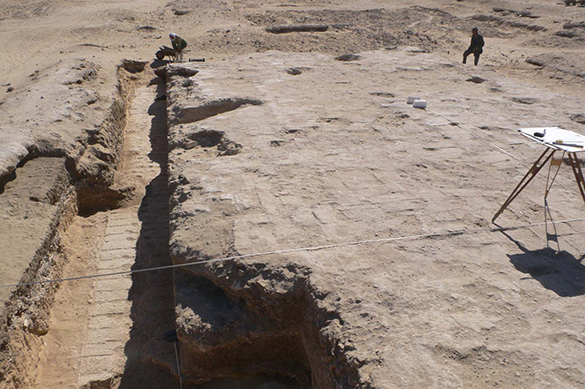
    The first is the continued re-examination of the front part of the Great Aten Temple. We are continuing to remove the large Pendelbury dump that lies over the mud-brick pylon and also obscures the view of the temple from the road. A long stretch of the pylon is now revealed, including more of its mud-brick threshold and access ramps. The dump has produced its crop of sculpture fragments, including a fine piece of indurated limestone (resembling marble) carved with hieroglyphs and made to be inlaid into another kind of stone.

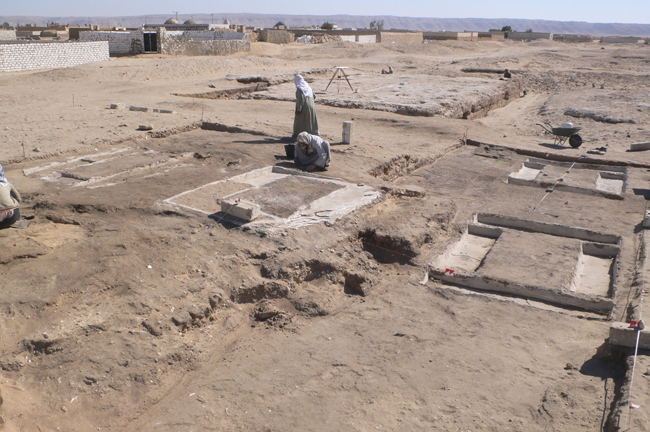
    Further into the temple area and along its axis, the work began with the clearance of another stretch of Pendlebury’s trench along the axis. Two sets of gypsum-lined basins surrounding an offering space, first exposed in 1932, have survived remarkably well. They had been remade several times over. One of them had been partly filled in by Pendlebury with unwanted fragments of sculpture which have now been added to our extensive collection. At the higher level of the later temple floor, a simpler basin, also lined with gypsum, has also survived. Although very close to the modern ground level, the mud floor behind it, that Pendlebury did not excavate, has also survived well, and contains at least one more set of gypsum-lined troughs surrounding a rectangular area that has not been revealed before.

    The front part of the temple, therefore, was the site of activities that involved the pouring of water on a sufficiently regular basis to necessitate periodic renewal of the gypsum linings. It was also a practice that was retained when the temple was rebuilt and its ground level was raised.

    Further still along the axis, into the temple front, lie two conspicuous rectangles of gypsum concrete that seem to have been massive foundations for sets of huge columns that stood in front of the stone pylon. The top of one of these rectangles has now been cleaned. The gypsum surface onto which limestone blocks had been laid, leaving their impressions behind, is in better condition than expected and is in the course of being re-planned.
    The curious insets around the edges, especially on the east where they would have fronted the pylon, turn out to have originally been filled with limestone blocks, presumably to create extra-strong foundations to support unusually heavy weights. Large sculptures come to mind.

    The concrete podium was built as a series of compartments, the lower parts filled with a calcareous gravel. A closer study will add further to our knowledge of Amarna building techniques.

    Pendlebury’s plan shows it surrounded by gypsum foundations at the foot of a trench. The foundations bore the impressions of stone blocks, that belong to a surrounding retaining wall for the concrete and might not have risen to ground level. Stretches of this feature also remain although long parts were probably destroyed even when Pendlebury excavated the trenches. Banked against the outside of these walls is a complex stratigraphy that relates to the building of the later-phase temple. This is in the process of being elucidated. A hieratic jar label of regnal year 12 found in debris beneath the level of the temple’s final floor is a useful pointer to when, in Akhenaten’s reign, the major enlargement of the temple took place.

    At the same time that the re-excavation is taking place, the small team of builders from El-Till is busy setting out the outlines of the stone building, the gypsum foundations of which were uncovered last year. There are two main components to this. The first is the marking of the positions of around twenty columns. Our method is to create flat circular pads, 10 cm high, from white cement, standing on square foundations of small, local stone blocks. When the scheme is finished and a layer of sand is spread over the interior of the building, all that will be visible is a few centimetres of their height. The other component is the laying of a single course of stones along the lines of the original walls. To do this we have taken delivery of blocks made in the limestone quarries of Tura, just outside Cairo. They include corner blocks carved with prominent circular mouldings. In length and width the blocks copy the dimensions of the talatat-blocks from which the original walls were built. But we have increased the depth (from 23 to 26 cm) to be the same as the width, partly to increase the choice of surface that we can display and partly to compensate for the sand and dust that will quickly blow in and around the building. When finished, the interior will be filled with sand to within a short distance of the top, hinting at the higher floor level that the building original possessed.

    The inspection of the interior of the column at the Small Aten Temple, that was mentioned in the last bulletin as scheduled to take place, showed that, in the nearly twenty years that have passed since it was put up, the internal ironwork that holds it together has seen very little deterioration. This is a tribute to the skill with which Simon Bradley designed and built it. Nevertheless, to make sure it has a long life, two of our workmen cleaned the surfaces and gave them two coats of red oxide paint. That done, Simon and a local carpenter worked together to create a thick, robust wooden cap that is now securely bolted over the top of the column.

    The outside of the column has generally weathered in quite a pleasing way.

    The one part that shows deterioration is a wide panel with a flat surface let into the side that, on the original, showed Akhenaten and Nefertiti worshipping the Aten. Simon had originally given this a different finish to the rest of the column, providing it with a coat of smooth plaster. This has been cracking and falling off over the last few years. Simon’s current task is to remedy this.

    We have until the end of March to complete the season’s work at the temples. Then the second major part of the programme for 2013 will commence. This is a return to the South Tombs Cemetery for a further excavation.

    It remains, once again, to thank our supporters, who make the work at Amarna possible.

    26 February 2013

    Barry Kemp/Anna Stevens

  • Update preps ESPN Bracket Bound app for 2013 tourney

    espn_bracket_bound_2013_app_play_store_banner

    As March opens, college basketball fans are enjoying the final days of the regular season with teams jockeying for position in post-season tournaments. Next up will be conference tournaments and then the annual event known as “March Madness” – the NCAA Tournament. To help basketball fans keep up with all the action, ESPN has updated their Bracket Bound app for the 2013 season.

    The app includes some features that users may find useful now, like the ability to setup favorite teams and games to keep track of the action. Other typical sports app features include access to news, conference standings, game results, and video clips of analysis and news. ESPN indicates the app will provide quick access to their WatchESPN app to watch live or recorded events as well as access to Twitter discussions the user may find interesting.

    As far as the 75th NCAA Tournament goes, users can access the latest projections of who will make the field and where. ESPN indicates users will be able to access the ESPN Tournament Challenge using the app, including the ability to complete up to ten brackets. That function is not present in the app for now, but should be available via an update once brackets are announced.

    You can check out some screenshots below. If you are interested in getting ESPN Bracket Bound 2013, use one of the download links below.

    espn_bracket_bound_2013_screen_01
    espn_bracket_bound_2013_screen_04
    espn_bracket_bound_2013_screen_06
    espn_bracket_bound_2013_screen_05
    espn_bracket_bound_2013_screen_02
    espn_bracket_bound_2013_screen_03

    QR Code generator

    Google Play Download Link

    Come comment on this article: Update preps ESPN Bracket Bound app for 2013 tourney

  • Is Verizon prepping an Android 4.2.2 update for Galaxy Nexus users? Sure seems to be the case

    Android_4.2.2_Verizon_Galaxy_Nexus_Update


    If you’re a Verizon Galaxy Nexus owner, then it looks like you’ve got some sort of update on the way… which we were already aware of and expecting. Reports are coming in that the nation’s wireless carrier is currently testing a mysterious JDQ39 build of Android 4.2.2 which seems to feature some new radios, but unfortunately seems to feature an old bootloader and old kernel version.

    PWhy Verizon isn’t updating the kernel and bootloader beats us— but maybe it’s just part of its extensive testing before rolling out to the masses. Nevertheless we’ll certainly be keeping our eyes and ears open to what Verizon has up in its sleeves for you G-Nex users out there.

    source: XDA Forums
    via: Android Central

    Come comment on this article: Is Verizon prepping an Android 4.2.2 update for Galaxy Nexus users? Sure seems to be the case

  • Hackers Access Evernote Secure Areas. Evernote Team Issues Service Wide Password Reset

    evernote

    What would the internet be without hackers hacking things? Not a day goes by where some hacker somewhere is attempting to access secure or private information. Well it looks like the Evernote Operation’s and Security team discovered they they were at the receiving end of suspicious computer activities. Although personal content nor payment information looks to be affected the investigation does show that Evernote user information (usernames, email addresses associated with Evernote accounts and encrypted passwords) were obtained. While this is worrisome in itself, files containing said user information is encrypted. However rather than rely on just that the Evernote team is playing it safe and requiring that you head on over to evernote.com to reset your password. In the process they also would like to remind everyone the importance of keeping your password secure:

    “There are also several important steps that you can take to ensure that your data on any site, including Evernote, is secure:

    • Avoid using simple passwords based on dictionary words
    • Never use the same password on multiple sites or services
    • Never click on ‘reset password’ requests in emails — instead go directly to the service.”

    So if you’re a Evernote user then head on over to their web site to change your password. Hit the source link below to read the full post. It’s great to see a company be proactive about their security.  I don’t know about you, but I’m going to go reset my password right now.


    Source: Evernote

    Come comment on this article: Hackers Access Evernote Secure Areas. Evernote Team Issues Service Wide Password Reset

  • Toy Story: Andy’s Room Live Wallpaper Available in the Play Store

    ToyStoryAndy'sRoom

    Back when I was a kid Toy Story was my favorite movie. Mostly because it appealed to something I then often thought about; my toys coming to life when no one was around. To this day it’s proved a timeless classic with millions of toys, two sequels and multiple videogames. Just the other day even, Disney/PIXAR released Toy Story: Smash It! into the Play Store for your gaming pleasure. They’re not stopping there as they bring an interactive live wallpaper into the mix. Toy Story: Andy’s Room promises to visually brighten your day while also entertaining you with activities involving your favorite Toy Story characters. As if being entertaining weren’t enough Disney/Pixar also brings the following with this wallpaper:

    • Encounter popular Toy Story characters: Unlock and interact with 5 characters from Toy Story including Woody, Buzz, Rex, Hamm, and the Aliens!
    • Collect points to unlock new characters with fun mini games: Catch falling army men, and hit the bullseye on the dart board to earn valuable points!
    • Hang out in Andy’s room from day till night: Play from sunrise to sunset, and watch the room change throughout the day according to your local time!
    • Customize your own cork board: Write fun messages and reminders on the cork board in Andy’s Room!

    If you’re looking for a Toy Story nostalgia fix hit the break for a link to the Play Store download. Enjoy!

    (more…)

  • Play Store Gift Cards to Launch in the UK….Soon?

    google_play_gift_cards

    Google is said to be close to launching its Play Store Gift Cards in the UK very soon.  We believe this to be the case since Google updated their Gift cards & Google Play balance help files to now include the UK.  Gift cards will reportedly be available for purchase in £10, £25, and £50 increments.

    UK readers may recall a similar tease when “redeem pages” popped up in the  UK’s online and device-based stores in Q4 of 2012.  Again, we can only deduct that a UK launch is imminent, but we have made the same assumptions in the past with negative results.  So what makes this different?  This time around though, it seems as though Play Store Gift Cards could be a reality in the UK…soon.

    Source:  Google Play
    Via: Android Police

    Come comment on this article: Play Store Gift Cards to Launch in the UK….Soon?

  • Watson goes to college: How the world’s smartest PC will revolutionize AI

    In 2011, IBM achieved a quantum leap in artificial intelligence technology when its Watson computer program trounced human champions Ken Jennings and Brad Rutter in a three-day Jeopardy! tourney, taking home the million-dollar prize by outscoring the second place competitor by a three-to-one margin.

    Since then, Watson has shown its computing prowess in the world of medicine and in other business settings. However, as was recently announced, IBM decided Watson could use a college education and so will join here us at Rensselaer Polytechnic Institute. With its help, we hope to further advance artificial intelligence in a number of key areas.

    The Watson program is already a breakthrough technology in AI. For many years it had been largely assumed that for a computer to go beyond search and really be able to perform complex human language tasks it needed to do one of two things: either it would “understand” the texts using some kind of deep “knowledge representation,” or it would have a complex statistical model based on millions of texts.

    Watson used very little of either of these. Rather, it uses a lot of memory and clever ways of pulling texts from that memory. Thus, Watson demonstrated what some in AI had conjectured, but to date been unable to prove: that intelligence is tied to an ability to appropriately find relevant information in a very large memory. (Watson also used a lot of specialized techniques designed for the peculiarities of the Jeopardy! game, such as producing questions from answers, but from a purely academic viewpoint that’s less important.)

    Right now, to take Watson into a new domain — for example, to be able to answer questions about health and medicine — Watson works by reading texts. First, it needs a lot of information to go into its memory, which is generally provided by giving it a million or more documents to process from any particular area or discipline. Second, it needs to have information about the specialized terms used – for example, to be told that the word “attack” in “heart attack” is a noun and not a verb. Technical terms, such as, say, “myocardial infarction” also need to be identified. Finally, to hone its ability in the new area it needs a combination of questions and answers to train from.

    But on the Web, we can find much more than text.  Watson will be more powerful if it can also take advantage of other resources. One of our first goals is to explore how Watson can be used in the big data context.  As an example, in the research group I run, we have collected information about more than one million datasets that have been released by governments around the world. We’re going to see what it takes to get Watson to answer questions such as “What datasets are available that talk about crop failures in the Horn of Africa?” Or, at a more local level, “What government agency can help me find a job in New York?”

    We’re also looking at how Watson can use other kinds of information; ideas our students have suggested include:

    • Technical domains such as chemistry and nuclear engineering, where specialized diagrams and formulas are needed.
    • “Commonsense” domains, such as what is happening around our college, where Watson would need to interact with Twitter, Facebook, and other kinds of social media.
    • “Artificial worlds,” such as role-playing games, where Watson would need to differentiate between objects that are real and others that are imaginary.

    On a more theoretical level, we want to understand what Watson can teach us about artificial intelligence in general.  We will explore how the memory-based techniques of Watson can be “embedded” into more complex reasoning systems.  As humans, our memories are used as a component of much more complex cognition than is needed for playing Jeopardy (a tough task in its own right, or course.) Memory helps us to decide which of various approaches may be best when faced with a problem, by providing analogies between the current situation and ones we’ve seen in the past. We also are able to pull up separate memories in different contexts, based on situational need.

    By exploring how Watson’s memory functions as part of a more complex problem solver, we may learn more about how our own minds work. To this end, my colleague Selmer Bringsjord, head of the Cognitive Science Department, and his students, will explore how adding a reasoning component to Watson’s memory-based question-answering could let it do more powerful things. Can Watson be made to solve word problems it has never seen before? Can we enable it to justify the answers it gives? Could it be made into a conversationalist rather than just a question-answerer?

    As we understand Watson better, our students will also be exploring how to deepen its capabilities by programming new components.  They will learn how this new generation of “cognitive computing,” as IBM Senior Vice President and Director of Research John E. Kelly has called it, really works. They will come to understand the architectures, software, and hardware that power the approach, and they will program new modules to give Watson new abilities.

    And finally, of course, there’s the blue sky nature of what Watson may allow. Given such a potent new tool, we suspect this list of projects still just scratch the surface of what our students will come up with. As one said, he is “eager to teach Watson to daydream.”

    James Hendler is a professor at Rensselaer Polytechnic Institute and head of the computer science department. Follow him on Twitter @jahendler.

    Have an idea for a post you’d like to contribute to GigaOm? Click here for our guidelines and contact info.

    Related research and analysis from GigaOM Pro:
    Subscriber content. Sign up for a free trial.

  • CDMA Version of Samsung Galaxy S IV (SCH-I959) Pops up in Benchmark Test

    Samsung_SCH_I959_Benchmark_Test_leak

    It seems like only yesterday Samsung released its flagship handset, the Galaxy S III, to a grateful public.  The specs were impressive at the time, and the price was affordable compared to existing and emerging competitors.

    Samsung is not one to let its success go to its head.  Their impressive marketing budget, coupled with their zest for innovation has helped them climb to the top in a predominantly mobile marketplace.  Their latest handset, the Galaxy S IV  won’t be an exception to the rule!

    The Galaxy S IV (SCH-i959), said to release to China Telecom, boasts some impressive benchmark results to say the least.  Specs listed were:

    • 1.8Ghz Quad-core Exynos processor
    • 1920 x 1080 FHD display
    • CDMA/GSM
    • Android Jelly Bean 4.2.1

    Overall score as reported by AnTuTu Benchmark was an impressive 26,250!  Compared with the test results of 14,544 from the HTC DROID DNA, you can see how impressive this score really is.

    Source:  Blog Of Mobile


    Come comment on this article: CDMA Version of Samsung Galaxy S IV (SCH-I959) Pops up in Benchmark Test

  • Timelapse of a disappearance: Talking with Liu Bolin

    On Thursday at TED2013, Chinese artist Liu Bolin talked about his remarkable photographic installations, in which he paints himself (and sometimes other people) with perfect camouflage to disappear into a busy background. His talk closed with a photo of Liu in the theater at Long Beach, disappearing himself into the stage with paint and pattern over the course of an evening. Watch the timelapse above to understand his process, which involves a lot of people saying “A little to the left… a little to the left …” I caught up with him to discuss.

    Tell me about your process.

    For the talk, I stood up on stage with my outfit pre-painted, and then one of my assistants worked with the camera and stood back to instruct the other painter on what to do, where to paint, what colors to use, until from the camera I appear invisible.

    What inspires you to make a painting?

    That’s a perplexing question for me. When I was preparing for the talk initially I thought I would prepare a talk about art, but then I realized it’s really difficult to talk about pure art in China, because it’s always tied to survival. My life in China has always been adding a lot of things to my physical body and mental, emotional state. For example, in my piece “Supermarket,” it has an actual weight on my body.

    What makes an ideal shot?

    Two things: position of camera and focus. Focus is the most important. For the piece I did for TED, the stage is very colorful and red, so I needed reds and pinks.

    You mentioned in your talk that it’s not just an artist’s work but what they stand for. Can you talk more about that?

    There’s a difference between Chinese artwork and foreign artwork. As a Chinese artist, I ask a lot of questions about society in my work. When I am abroad, though — for example when I went to the Louvre — because I’m usually overwhelmed by my artwork, I have to make art as a souvenir. The TED piece is more of the latter, a form of memory or a souvenir. This year I have a new plan. I think the TED stage will be the highlight of my new series, Happy New City. In the future I will create new kinds of art. My talk was as a summary to conclude what I’ve done before.

    What kind of art do you enjoy?

    First of all, that art has to move me. The creator of that art doesn’t have to be a famous person. The artwork I’m most interested in right now are those that take the subject from real life, such as mobile phones, because most people won’t think of those things as art objects. But through the work of this artist, people realize those objects can be art. This kind of art moves me.

  • Internet Explorer 10 Stable (for Windows 7) – Review

    The stable build for Internet Explorer 10 for Windows 7 has been released this week after spending a few months as a preview for developers.
    The new browser from Microsoft is offered through Automatic Updates system to users with local administrator accounts, being automatically downloaded and installed without any notification.

    Non-administrat… (read more)

  • Evernote is hacked, claims user data ‘should’ be safe

    I am sure I am not alone when I say that Evernote is one of my favorite services. It makes life so much easier — I can write a note on my PC and then see it on my phone when I am out. I can add an item to a shopping list and it appears on my wife’s phone while she is in the store. There are all sorts of cool possibilities. But, if you visit the service today then you may be in for a bit of a surprise.

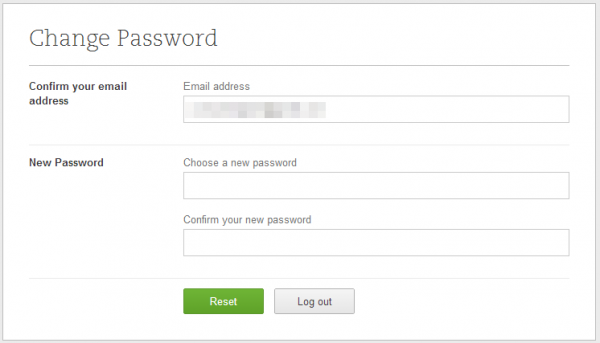
    When you try to log into the site you will be taken to a prompt that asks you to please change your password — no you did not enter your login credentials wrong. The service announced this morning that it was hacked. Dave Engberg of Evernote posted the bad news, while also trying to reassure customers that there is really nothing to worry about and that the password change is simply precautionary.

    “Evernote’s Operations & Security team has discovered and blocked suspicious activity on the Evernote network that appears to have been a coordinated attempt to access secure areas of the Evernote Service”.

    Engberg goes on to assure “in our security investigation, we have found no evidence that any of the content you store in Evernote was accessed, changed or lost. We also have no evidence that any payment information for Evernote Premium or Evernote Business customers was accessed”.

    However, the company did find that the attackers were able to gain access to Evernote user information, which includes usernames, email addresses associated with accounts and also encrypted passwords. Engberg continues to resassure: “Even though this information was accessed, the passwords stored by Evernote are protected by one-way encryption”. The company claims that it is only forcing users to change current passwords as a measure of extra security.

    The announcement wraps up with the usual plea to users about secure passwords — do not use dictionary words, never use the same password on multiple sites, and the other warnings generally associated with these events.

    Upon hearing this news, I immediately visited my own account and, sure enough, was prompted to change my password. I store nothing of importance there — the hackers are welcome to my family’s grocery list. I would ask them only to buy some of it for us if, for some reason, they did gain access.

  • Nokia CEO Stephen Elop on Windows Phone 8: ‘It can be the biggest operating system in the world’

    Nokia_Windows_Phone_8_Lumia_820

    CEO of Nokia, Stephen Elop, was interviewed at this year’s Mobile World Congress in Barcelona with topics ranging from Nokia’s goal in an emerging market to the reason behind Windows Phone 8 on Nokia flagship devices. When asked about Nokia’s outlook on emerging markets, Elop says that opportunities in an emerging market come from offering innovative technology at low price points especially for first time smartphone users.

    When it came to the topic of using Windows Phone 8 in their devices as opposed to Android, Elop noted that the reason for choosing Windows Phone 8 was to stand out amongst the competition who are utilizing other platforms. Elop said that Windows Phone 8 “can be the biggest operating system in the world,” but also said that “we have a lot of work to do with Microsoft to make that happen.” As far as sales go, he said, “Demand has exceed supply in some of our markets.” For the full interview with Bloomberg, click the source at the bottom and let us know your thoughts on Elop’s interview in the comments section below.

    Source: Bloomberg

    Come comment on this article: Nokia CEO Stephen Elop on Windows Phone 8: ‘It can be the biggest operating system in the world’

  • Can Guy Kawasaki save Google from Samsung?

    Google is a hardware company now, something that is too often overlooked. Last week, the search and information company launched its first computer, Chromebook Pixel, which I reviewed overnight yesterday. In August 2011, Google bought Motorola, one of the most iconic American brands and inventor of the cell phone, for $12.5 billion; the deal closed in May 2012. Moto makes handsets and tablets, among other things.

    But Motorola is a brand in decline, and one Google should want to reinvigorate if the plan is to release more-compelling, more-innovative Androids. Why should ASUS, LG and Samsung manufacture Nexus devices when Google has a huge hardware subsidiary? Meanwhile, one of the three is a partner out of control. Samsung threatens to fracture the broader Android ecosystem — a problem I sternly warned about in April 2012 post “Google has lost control of Android“. A resurgent Motorola could bring unity back to the Force, as the saying goes. Google bets that Guy Kawasaki can help make that happen.

    What a Guy

    Kawasaki joined Moto this week, as a consultant/evangelist. In BetaNews group chat yesterday I described him as: “Smart. Articulate. Friendly. And your worst nightmare if marketing against you”. I know him, as many long-time journalists do, as a kind of devil incarnate. During Apple’s worst days, he joined as an evangelist. I summed up his role to colleagues yesterday: “Kawasaki is the reason Mac enthusiasts are crazy online. He organized the first attack squads, nurtured that whole culture of guerrilla evangelism”.

    When Apple was a runt company, Kawasaki’s Mac attack squads clobbered people writing anything even slightly critical of Apple. Any long-time journalist knows the drill. You write X story about Apple and the innuendo-carting cultists swarm in accusing you of Windows bias and shilling for Microsoft. Or in this decade, Google. The accusations whack the writer’s credibility often with no substance (e.g., facts) to support them. The attack evangelism culture Kawasaki nurtured at Apple lives on long past his influence.

    In this decade, Kawasaki is an Android convert — and quite vocal about it. He explains:

    Every time I tell people that I don’t use any iOS products, people go a little nuts when they figure out I’m a pure Android guy. This is a list of my top ten reasons why I like Android more than iOS.

    1. Selecting default applications to open files.
    2. Making Chrome my default browser.
    3. Viewing apps, no matter what folder they’re in, in an alphabetical list.
    4. Installing different keyboards—for example, Swype.
    5. Viewing windows containing live feed of appointments or emails (‘widgets’).
    6. Using any micro-USB cable to charge an Android phone or tablet.
    7. Receiving utomatic, unattended updates to the operating system and applications.
    8. Making multiple aliases for apps, not simply moving apps around.
    9. Using Google Now.
    10. Viewing summaries of notification messages—for example, ’25 new messages’ instead of 25 individual notices.

    Kawasaki is a good fit for Motorola. Colleague Alan Buckingham expressed in BN group chat yesterday: “I loved my Droid X, but I am certainly not a Motorola fanboy”. To which I responded: “Spend an hour with Guy and you would be”. Mihaita Bamburic chimed in: “Kawasaki is a genius. He’s incredibly skillful when it comes to speeches, I’ve seen him a couple of times on YouTube and he got me hooked”. I added: “He’s more effective, more believable than Steve Jobs, but just as charismatic”.

    Android’s Motorola Debt

    Google doesn’t just own Motorola, it owes something to the cellular technology pioneer — and also to Verizon. The carrier launched the Motorola Droid brand, backed by $100 million marketing budget, in autumn 2009. The move invigorated Android global growth, by lifting it in, at the time, the largest region adopting smartphones. Increased visibility, even more than sales, helped Android sales jump a stunning 888.8 percent in 2010, according to Gartner. Moto’s fortunes have since declined, but Verizon remains firmly committed to the Droid brand, even after getting iPhone in February 2011.

    Globally, Motorola’s sales share has collapsed, just 1.7 percent in fourth quarter — that’s tenth place — according to Gartner. Remember Razr, which seemingly everyone who was anyone owned in the mid-Noughties? The original shipped in third quarter 2004, with shipments reaching 50 million less than two years later. Moto is a ghost of former glory, yet with solid engineering culture, enormous patent portfolio and Google’s backing.

    Moto also has a core cult-like following of users devotedly committed to the brand. They remind me of Apple circa 1996, when closure looked likely but a small group remained loyal and vocal about the products. Kawasaki is among them: “I made the switch from iPhone to RAZR more than a year ago”. Verizon brought back to brand, combined with Droid, to smartphones, in October 2011 (sales started the next month).

    A Galaxy Far, Far Away

    Kawasaki’s enthusiasm for a Motorola smartphone is more significant than his Android embrace. The evangelist’s real mission, whether or not acknowledged, is to save Google from Samsung. The South Korean electronics giant is largely responsible for Android’s enormous market share gains, but in process inflicts great pains on the broader ecosystem.

    Based on sales to end users, not shipments to carriers and dealers, Android captured 69.7 percent global smartphone share in fourth quarter, according to Gartner. Samsung, the world’s leader for all handsets and smartphones, accounted for a stunning 42.5 percent of all Androids sold. The next closest vendor: 6 percent. Samsung’s success is mixed for Android as a platform. The electronics company, and not Google, largely controls customers’ experience via TouchWiz UI and other features. Meanwhile, Android updates lag Samsung phones by many months. At least Samsung adopts the newest Android eventually, but TouchWiz skinned.

    Eleven months ago, Forrester Research analyst Frank Gillette predicted that companies adapting Google’s open-source OS would “cause proprietary Android share to surpass the installed base of Google’s Android ecosystem in 2015. This further fragmentation will challenge Android developers, customers, and especially enterprises, and hamper the creation of a shared ecosystem”. Samsung, which is No. 2 to Apple on tablets, is front and center leading to a fractured — not fragmented — Android ecosystem.

    Samsung’s priorities aren’t necessarily Google’s or to the benefit of a the broader Android ecosystem. The Galaxy brand is hugely successful, and a second gravity well pulling brand attention, and even app developers and content partners, to customized Android. Then there is the power that comes with success — massive dominance over the entire market of Android sales. Samsung is a partner Google obviously wants to keep, but also should keep from getting too powerful.

    Nexus RAZR

    Enter Guy Kawasaki and his task evangelizing and revitalizing the Motorola brand, which needs more commitment from Google. As slow as Samsung is sometimes to update Android, Moto often takes longer or leaves customers hanging with nothing. Google must also get behind the subsidiary and get it picking up the pace — in every way. The search and information giant is agile and quick to update products. Motorola is slow moving, like an abandoned ship. There needs to be good captain and crew to support Kawasaki’s efforts.

    If he can succeed in them, and Google supports him, there’s no reason why a new class of Nexus devices — even Chromebooks — shouldn’t come from Motorola. Evangelism is a great starting point. This week, Kawasaki set up the Mobile Devices community on Google+. Discussion is excellent beginning.

    Samsung isn’t a bad Android partner, but the company needs some serious competition. Google and Motorola can give it. Nexus devices show that the Android Army wants pure Android, without the fancy clothes draped over the green robot. Imagine something like Nexus RAZR. Competition can keep Samsung on course with Android, rather than diverting destinations. Otherwise, soon the company will have none — that’s the problem, the future.

    I’d like to congratulate Guy Kawasaki on his new role and wish him well. That sentiment isn’t easily given from someone battling Mac guerrilla evangelists since the 1990s.

    Photo Source: Guy Kawasaki’s Google+ Profile