Google Chrome ha lanzado una versión beta para Linux. Nos gustaría dar las gracias a todos los desarrolladores de Chromium y de WebKit que nos han ayudado a convertir Google Chrome en un navegador rápido y estable. A continuación incluimos algunos datos interesantes sobre el trabajo del equipo de Google Chrome:
60.000 líneas de código escritas para Linux
23 compilaciones de desarrolladores
2.713 bugs corregidos para Linux
12 colaboradores y editores de bugs externos para la base de código de Google Chrome para Linux y 48 colaboradores externos de código
Gracias por la espera. Esperamos que disfrutéis de Google Chrome.
Hi All – I received rather sad news last night – My mums best friend ( in her 70’s) passed away from a diabetic coma!. She was schedule to have both legs amputated and was in hospital – but (am not sure of events) went into a coma and passed away. She was a very vibrant lady who loved her Food, and unfortunately did not have her bloods under control!
Anyway her funeral is on Friday and I will "learn" more of what happened.
Traditional computer security measures are not enough to protect your laptop and netbook. You have to pay attention on various laptop related security risks such as insecure public wireless network, laptop theft, laptop search, about which you don’t worry with your desktop computer. Whether your laptop is stolen or not, your privacy can still be at risk by simply traveling with your laptop. The Homeland Security Department and other authority can search your laptop to look for evidences on any illegal activity and illicit materials stored on your laptop such as unlicensed songs, movies, software or unlawful images of children. However, good laptop security does not necessarily cost you money. Here are 7 easy-to-use, useful and free software that can help you protect your laptop, your sensitive data and your privacy.
1. Encryption. TrueCrypt is a trustworthy encryption program that can protect your data against unauthorized access. www.truecrypt.org
2. Backup. Cobian Backup is a backup program that can protect your data against loss. www.cobiansoft.com. An alternative is Mozy free edition, which is an online backup software with 2 Gbytes space. www.mozy.com
3. Antivirus. AVG free edition provides protection against viruses, spyware and other malware. free.avg.com/ww-en/download-free.
4. Firewall. The built-in Windows firewall can protect your laptop against hackers while you’re online. (but make sure it is configured properly)
5. Alarm. LAlarm is like a car alarm for your laptop. The software can help prevent your laptop from theft, and can also recover and destroy your data in the laptop in case of theft. www.lalarm.com
6. Tracking. Prey is laptop tracking software that can locate your laptop if it is stolen. www.preyproject.com
7. File shredder. Eraser is a data sanitizing program that can permanently delete sensitive data such as passwords, Internet browse history, personal information from your laptop. www.forensicswiki.org/wiki/Eraser
This is my second craft this month using a burned out lightbulb and I think they both are cute decorations for the tree. This is a great way to use lightbulb that have lost their practical use. I love to discover ways to recycle and craft at the same time. Okay, let’s go.
Kathy Zengolewicz
Here is what you will need to get started:
A used lightbulb
A 6” doily
Poinsettia picks or Christmas floral with at least three branches and each branch having at least 5 leaves.
Gold cord or thin ribbon
Invisible thread or fishing string to use as a hanger
Red or gold spray paint (optional)
If you are using the spray paint, be sure to clean the lightbulb first with rubbing alcohol or an ammonia based window cleaner. Let it dry and then spray with the paint of you choice. It also looks great with no paint at all.
Gather the doily up over the lightbulb. You may need to play with it a little bit to get the right fit. Once you have the doily the way you want it, thread the gold cord or thin ribbon through the openings in the doily and tie it. The cord/ribbon should fit nicely around the bulb a little below the metal screw threads.
Tie the invisible thread or fishing string around the bottom of the metal screw part of the bulb to create the hanger.
Separate the branches on the poinsettia pick or Christmas florals, whichever you are using. If you can’t get them separated enough to hide the metal screw thread, then insert them between the lightbulb and the doily making sure that the stem reaches below the gold cord. Space them evenly around the ornament, at the neck of the lightbulb.
Arrange the picks or floral so that the metal screw thread doesn’t show. If you cord isn’t holding them in place, try using a bit of glue from a hot glue gun. This project is very easy and inexpensive to make. Make more than one to hang on you tree.
They are also often called butter beans or chad beans.
The three main varieties are dwarf, small, and large.
The lima bean is believed to have originated in either Peru or Guatemala.
Cultivation of the lima bean in Peru is believed to have started as far back as 6000 BC.
The lima bean was being cultivated in North America by 1301.
Raw lima beans contain a cyanide compound and should not be eaten raw. Only those varieties with the lowest cyanide levels are legally allowed to be sold in the United States. Cooking deactivates the cyanide compound.
One of the most popular North American dishes using lima beans is succotash, a dish containing primarily of corn and lima beans. Succotash is particularly popular in the South.
Large, flat lima beans are used in Japan to make a sweet bean paste called “shiro-an.”
Lima beans have a high molybdenum content and may help people with a sensitivity to sulfites since sulfite sensitivity is often due to low levels molybdenum in the body.
Maybach Zeppelin through the eyes of David LaChapelle – click above to view high-res NSFW gallery
While its enduring legacy will forever be crippling hyperinflation and the inability to fight the rise of Nazism, Germany’s post World War I Weimar Republic has something of a positive, cultural heritage. In the late 1920s and early 1930s, theater, art, architecture (Bauhaus anyone?) and music all flourished in pre-Hitler Germany. Cabaret and promiscuity in general became so widespread that conservatives had to busy themselves banning jazz and passing laws against teenagers purchasing pornography. Long story short, Berlin was quite the place to be during the Jazz Age.
And not a bad place to shop for cars, either. Especially decadent, luxury cars. Like the dreamy Mercedes-Benz SSK. Or a stately Horch 430 Cabriolet Drophead Coupe. And even if we could forget the irrepressible 1931 Maybach Zeppelin DS 8, Daimler wouldn’t let us. To wit, in order to publicize their brand-new Maybach Zeppelin, Daimler has retained the services of noted fashion/art photographer David LaChapelle and furnished him with both the new car and a lovely custard and black example of the OG 1931 Zeppelin. Here’s how Daimler describes the collaboration:
“The renowned American photographer has chosen to collaborate with style icon Daphne Guinness to portray both vehicles in his signature fashion. With creative freedom entrusted to LaChapelle by Maybach, he created photos that whisk the observer to a world filled with luxurious extravagance that features LaChapelle’s celebrated surreal tableaux.”
Fair enough. There is actually something of a precedent here, as Andy Warhol created a 35-part series for Daimler in 1986 entitled, “Car.” Coincidently, it was Warhol that discovered LaChapelle. As far as LaChapelle’s photos go, we’re showing you the much less interesting one here on the mainpage. There’s a Not Safe For Work (nudity) gallery of the other stuff after the jump. Are they any good? Hard to say, but we are reminded of Hunter S. Thompson’s description of Bazooko’s Circus as, “what the whole hep world would be doing Saturday night if the Nazis had won the war… the Sixth Reich.” See for yourselves along with a press release and a making-of video after the jump (NSFW).
One question clients often ask is how much money they should apply for in a given grant request. Our standard answer: ask for the maximum because zeroes are cheap.
As with many aspects of grant writing, there is no right answer to this question. It’s impossible to know. But all other things being equal, you might as well ask for the maximum amount available, since you do the same amount of work in preparing the proposal regardless of the dollar amount requested, and there doesn’t seem to be any relationship between the size of a grant request and the probability of being funded.
Let’s say you’re applying to the Office of Juvenile Justice and Delinquency Prevention’s (OJJDP) Mentoring Initiative for Foster Care Youth program. The maximum you can seek is $500,000. In the vast majority of cases, you’re better off applying for $500,000, instead of, say, $50,000, because you’re unlikely to be harmed by asking for the max. If OJJDP likes your organization and application but thinks you’re requesting for too much, they might knock your award down some, but they’re unlikely to reject you outright.
Once again: zeros are cheap, and it takes just as much effort to write a proposal for $50,000 as it does for $500,000.
The big exception to this is the “silly” factor. Does your organization have an annual budget of $200,000? If so, proposing a $5 million/year budget is going to make the reviewer roll her eyes and perhaps share your folly with her colleagues. You don’t want to elicit the laughter, as Dr. Evil does in Austin Powers when he asks for too little (or much) money:
In the “1969″ section of the video, he asks for $100 billions dollars, and everyone thinks it’s hilarious because of how absurd the request is. You don’t want to create the same effect in grant reviewers.
Foundations are trickier than most government grants because foundations usually don’t have maximum caps on requests. But you can almost always find their range of awards, and if the Peoria Foundation usually makes awards between $10,000 and $75,000, you probably don’t want to ask for $300,000. If you conduct detailed research on each foundation, you’ll find a list of their recent awards (this is what we do as part of our foundation work). You might ask the Peoria Foundation for $50,000 toward a project, but don’t seek an order-of-magnitude difference from their usual neighborhood of funding. And if you’re seeking foundation funding, make sure you read Isaac’s post, “PSST! Listen, Do You Want to Know a Secret? ? Do you Promise Not to Tell? Here’s How to Write Foundation Proposals.”
Sometimes federal agencies specify a minimum grant request. For example, the Neighborhood Stabilization Program 2 under the American Recovery and Reinvestment Act, 2009 (warning: .pdf link) had almost $2 billion available, with a minimum request of $5 million. So to apply for NSP 2 funds, the applicant had to be reasonably large to be believable in spending $5 million. By the way, NSP 2 was intended to address the ongoing foreclosure crisis and the applications were due July 17, as discussed in this post. Apparently, HUD doesn’t know about the foreclosure crisis, since the award announcement has still not been made. But, as Isaac observed of the original version of the program, NSP 1, which was an entitlement rather than a competitive program, HUD’s track record at quickly responding to this crisis isn’t exactly stellar.
Our clients will also ask if they should apply to programs with very large amounts of money or very small amounts available. There’s (usually) no particular advantage in going one way or another. Large amounts often mean that many more agencies will apply, increasing the competitiveness. But unless you have some kind of inside knowledge about who the competition will be, it doesn’t make much sense to assume that a big pot of money will necessarily be more viable. It can be, but won’t always be. The Basic Center Program, which is brought to you by the Administration for Children and Families (ACF), has $13,377,274 available this year. Aside from this being a strange number—what’s wrong with rounding to $13,377,000? Am I really going to miss the extra $274?—it has 91 awards. Organizations that apply for the Basic Center Program are probably doing so just to find some federal money, and if a few thousand organizations apply, it might become very competitive.
Finally, it can also be worth applying for competitions that have relatively small amounts available. For example, the Substance Abuse and Mental Health Services Administration (SAMHSA) often runs highly specific competitions with relatively small amounts of money and numbers of grants, such as the currently open Offender Reentry Program (ORP). This year, there is $13 million available and 33 awards. So, why would an organization bother applying for a ORP grant? First, they might actually be interested in serving former prisoners. But, additionally, they probably know that if they get a SAMHSA grant, their organization’s credibility with other funders goes through the roof. Over the years, we have successfully written funded SAMHSA proposals in which only 10 or 12 awards were made and watched as our clients use the SAMSHA grant to leverage other substance abuse treatment grants and contracts.
Thus, it often pays to apply for fairly obscure grants with small amounts money on the line. But when you do, remember that zeroes are still cheap.
Gold Lock offers military-grade secure mobile communications for Symbian and Windows Mobile. They tout their service as unbreakable, and to prove their point they are offering a $250 000 bounty in pure gold to anyone who can decrypt a phone call that can be downloaded from their website.
Gold Lock says their products utilize technology so powerful it has been licensed by the Israeli Ministry of Defense, yet despite the complex technology taking place in the background, the company’s software and voice products require no technical skills to use.
“Since 2003 we have been telling everyone how our products provide unbreakable protection for their voice and data transmissions, but talk is cheap,” says Noam Copel, Gold Lock’s CEO. “So now we are putting our claims to the ultimate test by inviting anyone that thinks they have the skills to take us down.”
“I don’t think there is a chance at all that I’ll be giving away the gold,” says Copel. “No individual, group or intelligence agency has the skills, technology or time needed to defeat our technology.”
Last week, we showed you our favorite kitchen basics under $25. But let’s face it, if you have a lot of people on your holiday shopping list, even that can get a little pricey. So here are 15 more budget-friendly gift ideas – all under $10.
A quick recipe for a gift or a little snack for yourself, these Sweet and Spicy Mixed Nuts will delight your taste buds. You can make them as spicy as you like or leave them as is for a mild heat. I hope you enjoy.
Sweet and Spicy Mixed Nuts
Ingredients:
1/4 cup unsalted butter
1/4 tsp. cayenne pepper (or to taste)
1/4 tsp. kosher or sea salt
1/2 tsp. garlic powder
1/2 tsp. onion powder
1/2 cup Splenda
1 cup pecans
1 cup hazelnuts
1 cup walnuts
Or use your favorite combination of nuts to equal 3 cups.
Preheat oven to 400′
Melt the butter and add the cayenne pepper, salt, garlic and onion powders and stir. Stir in the Splenda. Spread the nuts out on a sheet pan and mix them together. Pour the butter mixture over them and and toss to coat all of the nuts. Roast in oven for about 10 minutes, watching carefully as they can burn quickly. Remove and set aside to cool. Stir to blend and store in airtight container.
Nutrition Facts
12 – 1/4 Cup Servings
Amount Per Serving
Calories 234.2
Total Fat 23.8 g
Saturated Fat 4.1 g
Polyunsaturated Fat 7.7 g
Monounsaturated Fat 10.8 g
Cholesterol 10.4 mg
Sodium 49.3 mg
Potassium 161.6 mg
Total Carbohydrate 5.9 g
Dietary Fiber 2.6 g
Sugars 1.2 g
Protein 4.1 g
Another delightful confection to tickle your taste buds. Tart Granny Smith apples cut into thick slices and dipped in my special sugar free milk chocolate recipe then rolled in your favorite chopped nuts. This is a terrific little dessert, snack or even a great holiday gift for your favorite diabetic. Quick and easy to make you’ll want to add these on your list of goodies for the holiday season. I hope you enjoy.
Chocolate Dipped Apples
Ingredients:
2 ounces unsweetened bakers chocolate (2 squares), chopped
2 Tbsp. unsweetened cocoa powder
3/4 cup Splenda
3/4 cup heavy cream
3 1/2 cups Granny Smith apples, sliced thick (about 3 large apples making 8 slices each)
1 cup dry roasted peanuts, chopped fine (or your favorite nut)
Combine the chopped bakers chocolate, cocoa and Splenda in a medium sized bowl. Heat the cream in a small sauce pan until it begins to bubble. Pour over the chocolate mixture and whisk to combine. Make sure that everything has melted and has combined. Let cool slightly, about 10 minutes.
Dip the apples into the chocolate about half way up and let the excess drip off. Roll all sides in the nuts to coat and place on a large wax paper lined dish in a single layer. Repeat until all ingredients are used. Refrigerate for at least 2 hours or until chocolate firms.
Nutrition Facts
24 Servings
Amount Per Serving
Calories 83.6
Total Fat 7.1 g
Saturated Fat 2.9 g
Polyunsaturated Fat 1.1 g
Monounsaturated Fat 2.7 g
Cholesterol 10.2 mg
Sodium 3.9 mg
Potassium 90.5 mg
Total Carbohydrate 5.8 g
Dietary Fiber 1.5 g
Sugars 0.3 g
Protein 2.0 g
Brimstone Quadracycle – Click above for high-res image gallery
Power-to-weight ratio – that metric might be the most meaningful performance measurement to consider when judging exactly what piece of machinery you should or shouldn’t strap yourself into/onto. If you’re the type that wants to leave this world with a giant smile on your face and bugs in your teeth, allow us to introduce you to the Brimstone Quadracycle.
Ostensibly a mash-up between a four-wheeled quad, a motorcycle and a drag car, what we have here is the closest thing you can get to a V8 engine strapped to a Power Wheels. Seriously, this is like a real-life childhood fantasy wrought in metal… almost brings a tear to the eye, doesn’t it? It’s absolutely insane. And yes, off course we’d gladly take it for a spin.
Brimstone is reportedly willing to build you one with as much as 750 horsepower from a 455 cubic inch aluminum Dart V8. Performance figures? How ’bout zero to sixty in 2.8 seconds? Or, better yet, zero to 120 in six seconds flat. It’s even fuel efficient, returning up to 30 mpg, and it can be equipped with a hitch to tow a small boat. They’re taking orders now, but you’ll have to claim a spot behind us. Thanks for the tip, Kyle S!
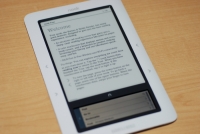
We just landed a Barnes & Noble nook, and while our review is forthcoming, we figured it’d only be appropriate to hit you with a nice gallery of unboxing photos of the device aimed to take on the Amazon Kindle. We give you a look at the nook packaging, touchscreen, welcome screen, and of course, multiple views of the hardware itself. Our early impressions? The nook is nice, and feel great in the hand.
Head on over to our unboxing gallery to check out our Barnes & Noble nook photos, and let us know what you think, and what you want to hear about!
Toyota gives us a rare glimpse inside its California Calty design center, providing an insider’s perspective on the automaker’s aesthetic and how it shapes future models.
We’ve seen it in concept guise twice and now we get an eyeful of Honda’s hybrid hatch in production form, along with new powertrain and dimension details.
On Monday, I attended and participated in the always excellent twice yearly event, the SF Music Tech Summit. As always, it was a fun time, full of interesting people. While smaller than some of the big music events, pound for pound, I tend to end up in a very high percentage of fascinating chats with people at SF Music Tech. The panel I was on was the first in the morning, and was officially called “meet the press,” even though at least two of the five panelists (myself included) don’t consider ourselves press. I didn’t mean to stir up much controversy (never do), but I apparently got a few vocal folks in the audience riled up on a few points. The one that got some attention on Twitter, was the claim that live music was growing. A few folks started screaming and no one then let me back that up, but the numbers don’t lie. A lot of people came up to me afterwards with stories of success by focusing on live music, and I even heard from some folks who are involved in organizing live shows who say that the “complaints” about live shows tend to come from those who focus only on a subset of live venues that have struggled lately — but that the overall live market is thriving (as the numbers show).
However, there was a second point that I later tried to make that again I never had a chance to follow through on, and wanted to do so here. People were asking about what business models are working for musicians, and I started listing out some examples, and a loud gentleman in the front row yelled out that the business model that had to be at the center was selling music. I responded with what I thought was an important question: “Why?” and again people started yelling. Of course, no one answered the question, and then the panel shifted gears to another topic.
But, the reaction from the crowd on that question cemented for me one of the biggest reasons why some in the industry have struggled to grasp new business models. As I discussed in my NARM presentation a few months ago, selling music is just not a good business model, but it doesn’t mean there aren’t good, very profitable, music business models. It’s just that selling music isn’t a very good one. Instead, you need to learn to use the music (which still needs to be good, and is still the central reason why these other business models work) to sell something else — something scarce, which can’t easily be copied. That can be attention, access, time, creative ability, cool physical products, whatever. All of those things are made more valuable the more popular the music is, and you can build all sorts of powerful and immensely profitable businesses once you recognize that.
But if you still think that selling the music or making money directly from the music has to be at the “center” of any music business model, you’re shutting yourself off to the largest opportunities out there. But, the thing is, music has always been a product that makes something else more valuable. While there was some disagreement on the panel from someone about how record stores were profitable in the 70s, that’s a case where the music was making the vinyl (and later, plastic) more valuable. Today, it makes iPods more valuable. As the big box retailers know, it acts as a loss leader to bring people in to buy higher margin goods. Music is great at selling other, higher margin things. If you ignore that in the music business model, you’re missing the big opportunity.
This isn’t to downplay the importance of music, or say that the quality of music doesn’t matter. It absolutely does. But the music is not the scarcity, and you don’t make money off of selling something that’s abundant. You use the abundance to figure out what other scarce goods it makes more valuable and you sell those. So, people can complain and shout all they want, but it doesn’t change the basic fact that until you recognize that selling music directly just isn’t a very good business model, you’re limiting your market tremendously.
CAGJ joined the farmers of Island Meadow Farm – Chandler Briggs, Caitlin Henry and Roby – in an awesome heart wrenching, gut wrenching chicken slaughter during the September Teach out to Vashon Island. Here is a juicy snapshot of our journey.
By CAGJ Intern, Valentina de la Fuente
Something I learned about chickens today is that they live in the present moment. They show no fear or dread as their sisters and friends are snatched by the feet and vanish from their chicken tractor home. They continue naively clucking and scratching and preening themselves until their moment of fate also comes. Perhaps they unconsciously understand their fate. The variety of chicken that Chandler, Caitlin and Roby choose are bread specifically as meat birds. Instead of maturing in several months, they mature in several weeks, and their breasts are significantly larger and juicier, though they’re significantly more lethargic and sedentary. They choose this chicken for several reasons. Because the farm is on an island, the price of imported inputs such as grains is significantly higher. Though the wild, “chicken-like” quality of the bird is sacrificed, killing the birds in a few weeks rather than a few months cuts down significantly on its cost per pound. It’s a decision that is challenging to make.
The killing process is a fascinating, emotional, gruesome spiritual experience. Chandler grabs two birds by their gangly feet as they frantically thrash about, and puts them upside down in a traffic cone like structure nestled in the crotch of a tree. He pulls the head taut through the cone so the neck and jugular are exposed. In a humble act of gratitude, he ceremonially thanks the bird for giving life and nourishment. With a sharp metal blade, he slits the jugular. Bright, neon red blood pulses into white waiting buckets. It bleeds for a minute, then with a sharper and bigger knife, he saws off the head and drops it in the bucket. The bird is dead, but it thrashes violently in the cone, its muscles and nerves continuing to shoot adrenaline through its rigid body. About 15 birds are killed this way. We watch like children, as if seeing death for the first time. People hold each others hands, squeezing harder at the moment of death and violence. Eyes close, blink, and tears work their ways down cold cheeks. Our minds our blank, dull, and numb. All we can do is stare, and feel a little more grown up with each moment, with each death. There is a sense of awe and silence.
The dead body is extracted, instantly dipped into scalding water to loosen the feathers, and then put into a machine that de-feather’s the bird by bouncing it around with rubber suckers. It is hard to imagine that a few moments earlier, this pale yellow piece of meat was a living, feeling, clucking, scratching being. What the machine does not take off, an eager team of volunteers plucks by hand. At a nearby table people stand with sharp knifes extracting livers, gizzards, hearts, and kidneys, for soups and stalks.
The experience of the chicken deaths lives imprinted on my mind for the rest of day, and the weeks following. I feel I have earned my right to eat this meat. This meat holds no lies. Its life and death is not a hidden secret that lies buried, invisible in dark cramped warehouses of shit and stink. It lived fully until its moment of death, offering its metabolism to produce nitrate rich compost, its body to nourish, its death to educate, and its revenue to help sustain the farm.
Audi e-tron concept – Click above for high-res image gallery
Audi may not be positioning itself as a “green brand,” but it’s still putting a rather big toe into the environmentally-friendly waters of electric sportscars with its R8-based e-tron, which is reportedly headed for production in 2012.
As a refresher – as if you needed one – the e-tron debuted as a concept at the Frankfurt Motor Show in September with some truly impressive statistics: four separate electric motors with 230 kW (313 horsepower) and 4,500 Nm (3,319.03 pound-feet) of torque (sort of), which is enough to push it to 62 mph in a mere 4.8 seconds.
So, um… want one? The line forms at the rear, and you’d better not dawdle as Audi says its only planning to build 1,000 of examples. Naturally, pricing has yet to be set, but it’s reportedly expected to be “above R8 levels.” Duh. Regardless, with all those lithium ion batteries and their associated electronic gadgetry, we don’t imagine that Audi plans to make much of a profit when it finally goes on sale in two years.
Larry Nancarrow, Skyjack’s Product Application Specialist and
Senior AWP Training Instructor is pleased to announce a new home
for the Aerial Work Platform Training (AWPT) program offered by
Skyjack Inc, Division of Linamar Corporation. Based out of
the recently completed state-of-the-art Linamar Technical
Center, training courses will be offered for both Scissor Lift
and Self Propelled Boom models.
“I am very pleased and looking forward to be working with
our customers and various Linamar facilities to provide
AWP Training at The Centre” noted Nancarrow. If you are
an external customer and wish to acquire more information
please contact Larry Nancarrow direct at 1-877-288-8403.
Linamar facilities who would like to schedule training should contact
Maja Schweiger, Training Coordinator, at 519-515-0001, Ext. 343.
Skyjack is the fi rst AWP Training Centre in Canada and offers Power
Accessed License (PAL) training which conforms to ISO18878 Standards.
Skyjack began manufacturing scissor lift work platforms in 1986 and through the 1990’s grew to over 30% market share to become a world leader in this sector of the aerial lift industry. Skyjack remains a dominant player who has adapted rapidly to the changing face of the industry.
Quality and reliability are the hallmarks that have given Skyjack a solid reputation as the manufacturer of the best scissor lifts in the world. Skyjack products are manufactured, sold and supported worldwide. In August 2002 Skyjack was purchased by Linamar Corporation (LNR, TSX), a leading manufacturer of precision-machined components, assemblies and modules. Linamar’s solid balance sheet gives Skyjack increased strength and long-term stability. Currently, Skyjack has production facilities in Canada, the United States, and Hungary with support offices in Europe and Asia.
Skyjack produces a full line of self propelled scissor lifts with elevated work heights reaching up to 56ft. Skyjack became the industry leader by providing machine features combining durability, quality, and serviceability, making Skyjack scissor lifts world renowned for product reliability. Skyjacks current Boom lift model lineup consists of telescopic booms featuring work heights ranging from 45 to 71ft with plans to further expand the boom lift product line.
Most recently, the acquisition of Volvo’s Material Handling Equipment business complements the acquisition of Carelift Equipment completed in August of 2007. This Expands Skyjack’s Telehandler product offering resulting in the VR series and Zoom Boom series telehandlers and provides additional manufacturing capacity to further the company’s growth.
Skyjack continues leading the industry engineering reliable lift solutions by people who care.
I brought my trash cans in from the curb and saw a discreet little card about tips for the holidays. I opened my newspaper and a greeting card from my carrier fell out. My realtor sent a little calendar in the mail. My letter carrier, who always gives great service, seems to be putting her all into the job. I haven’t seen my lawn care guy recently. No need to cut lawns with snow on the ground. However, a card is probably going to appear in my mailbox and day. And then some people have the house cleaning service, the kid who shovels snow from the sidewalk, the pool guy, the house sitter…How do you decide whether to give someone a holiday tip and how much should you give?
Well, you’ll be happy to know that you don’t need to tip your realtor. He or she just wants to be sure you remember who you used to buy your current home in case you decide to resell it and would be flabbergasted to receive a tip. And, while your mail carrier may really, really deserve a tip, he or she isn’t allowed to accept it. According to Emily Post, you can give your carrier a small, inexpensive gift, but may not give a gift card or any form of money.
However, your private trash collector employees, your newspaper carrier and all the other folks who provide services for your home would be happy to be tipped. Emily Post has an entire set of guidelines for what to give different people and also talks about what to do if you can’t afford to tip.
If you do decide to leave a tip, just remember that it is best to give it in person or to mail it to your service person’s address. My garbage disposal service company asked that any tips be sent to the staff at the office address because thieves are finding and stealing their tips and this type of thing probably is not limited to my area!
Do you tip the people that help you care for your home or do you feel that they’re just doing their job and don’t deserve a tip on top of the money you already pay for services?
The Obama Administration today issued its long-awaited Open Government Directive (OGD), a blueprint for transparency that the President promised on January 21, his first full day in office. The OGD is “intended to direct executive departments and agencies to take specific actions to implement the principles of transparency, participation, and collaboration” the President spoke of as he took office, and it is hopefully the first of many concrete steps that will be taken to alter the entrenched culture of secrecy that pervades the federal government.
The OGD imposes four broad mandates on the federal bureaucracy: 1) publish government information online; 2) improve the quality of government information; 3) create and institutionalize a culture of open government; and 4) create an enabling policy framework for open government. The Directive sets time limits, ranging from 45 to 120 days, for agency action to implement specific benchmarks (this “open government timetable” is summarized in an excellent analysis by Meredith Fuchs of the National Security Archive). Many of the requirements are fairly concrete; for instance, within 60 days, each agency must create an “Open Government Webpage” to serve as the gateway for agency activities related to implementation of the OGD, including the receipt of public comments. There are lots of good ideas in the directive, and the success of this endeavor will be determined by the enthusiasm (or lack thereof) with which it’s received by agency officials and the federal workforce.
If the White House is serious about gaining enthusiastic, government-wide cooperation to make open government a reality, it can lead by example, and EFF can suggest a great place to start. Back in January and February, soon after the President issued his groundbreaking pronouncements on transparency, we submitted two requests to the White House for information concerning high-profile technology policy issues. The first sought disclosure of a waiver the White House Counsel issued to permit the use of visitor-tracking cookies at WhiteHouse.gov. The second request asked for release of policies governing the use of BlackBerries and other wireless devices by the President and high-ranking White House officials. More than ten months after the submission of those requests, EFF is still waiting for responses.
While we applaud the Obama Administration for continuing to say the right things about government transparency, and look forward to the successful implementation of the initiative announced today, we can’t ignore the fact that the White House continues to be less than forthcoming about some of its own practices and policies. We hope we’ll be receiving the information we requested before the first anniversary of the President’s inauguration.