Category: News

  • Nokia releases NFC Writer app for Windows Phone 8

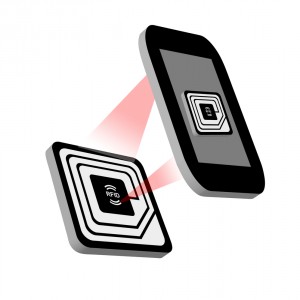
    Finnish phone manufacturer Nokia has launched a new app called NFC Writer, for Lumia devices running Microsoft’s new mobile operating system. The app is designed to take advantage of the built-in NFC (Near Field Communication) chip by automating various tasks through the use of tags.

    Nokia yet again leaves other Windows Phone 8 devices — such as my HTC Windows Phone 8X — outside of the playing field as the Nokia NFC Writer comes as part of its exclusive Nokia Collection suite. The app is available for the Lumia 620, Lumia 720, Lumia 820 and Lumia 920 and nothing else. Which is a shame because there are some pretty nifty little features.

    Nokia NFC Writer is, by and large, designed to read and write standard NFC tags. It can launch apps, check-in to various places, update social statuses, make phone calls or send SMS messages by simply tapping the phone on a written NFC tag. Nokia says that tags created with the app can also be read by “any operating system” which includes the necessary hardware.

    The social network functionality has great potential to automate otherwise boring Facebook or Twitter statuses. “I’m at work” can become a breeze to post simply by tapping an NFC tile. I am unsure as to how it eases the “burden” of making calls, as I don’t suspect that Nokia NFC Writer can also speak on the user’s behalf and explain why there are no groceries.

    Nokia NFC Writer is available to download from the Windows Phone Store.

    Photo Credit: Roger Wissmann/Shutterstock

  • Jolie, Coen Brothers Team Up on WWII POW Biopic

    The Hollywood Reporter is reporting that Ethan and Joel Coen (the Coen brothers, most known for movies such as Fargo, No Country for Old Men, and The Big Lebowski) will be teaming up with Angelina Jolie on a screen adaptation of the book Unbroken: A World War II Story of Survival, Resilience, and Redemption.

    Instead of the Coen brothers lending their directorial weight to the flick, Jolie will instead take the reins to direct the movie. Jolie has previously directed 2011′s In the Land of Blood and Honey. The Coen brothers will instead be taking over the screenplay, rewriting it.

    Unbroken is the biographical account of World War II soldier Louis Zamperini, who crash-landed in the Pacific. He spent 47 days trapped on a raft before washing up in Japan, where he was then held in brutal conditions as a prisoner of war by the Japanese. The book was written by Laura Hillenbrand, who also authored Seabiscuit: An American Legend, which was adapted into the Oscar-nominated Seabiscuit in 2003.

  • Oh no, Samsung has a Passbook wallet app, too

    Android users pining over Apple’s Passbook wallet functionality need pine no more, provided they plan to use a Samsung smartphone. At a developer event on Wednesday, Samsung announced its own wallet software that replicates Apple’s Passbook functionality, complete with an open API for partner integration. Ironically, right after Apple announced Passbook ticket support at 13 Major League Baseball parks, Samsung noted that the MLB is an initial partner for its new wallet.

    Samsung explained the new wallet feature along with a list of other launch partners during the developer session:

    One of the most popular sessions this year featured the introduction of the open API for the Samsung Wallet service, which allows users to collect coupons, membership cards, tickets, and boarding passes from partners’ applications and store them in one place. The service’s launching partners like Walgreens, Belly, Major League Baseball Advanced Media , Expedia, Booking.com, Hotels.com, and Lufthansa were announced during the session.

    I’m conflicted by the news. It’s actually good for consumers to have similar functionality on both iOS and Android, provided the partner list is generally the same. I don’t want to have choose a platform, for example, because its wallet app is the only one that works with vendors I use. But I have to wonder: Why is Samsung doing this and not Google itself for Android?

    This question gets back to the concern I just noted about platform choice. Because this app will only work with Samsung devices, it now becomes a choice of what brand of Android phone to use in support of wallet features. This shouldn’t be an initiative with an original equipment manufacturer; this should be a project for Android as a whole. I don’t blame Samsung; it accounts for more of the Android device market than any of its peers so why shouldn’t it keep pushing ahead?

    Regardless, I love the idea of a digital wallet. Although I haven’t used it lately, I’m a big fan of paying for goods or services through my NFC-enabled phone with Google Wallet. But the point of a digital wallet is to eliminate our big, bulky physical wallets that are filled with currency, cards and whatever else we need to carry. Do we really want to start carrying multiple digital wallet solutions on our devices or choose a phone based on what wallet features it supports? I certainly don’t.

    Related research and analysis from GigaOM Pro:
    Subscriber content. Sign up for a free trial.

  • Seacoast Capital Managers Closes $150M Fund

    Seacoast Capital Managers has closed its third mezzanine fund, Seacoast Capital Partners III, L.P., with $150 million in commitments. The firm has offices in Boston and San Francisco.

    PRESS RELEASE

    Seacoast Capital Managers, LLC (“Seacoast”) announced today that it has held a final close on its third mezzanine fund, Seacoast Capital Partners III, L.P. (“Seacoast III”), with over $150MM of capital commitments. Seacoast, with offices in Boston, MA and San Francisco, CA, is an investment partnership that was founded in 1994 to make non-controlling subordinated debt and equity investments in privately-held lower middle market companies. Seacoast III is a registered Small Business Investment Company (“SBIC”), a program created by Congress in 1958 to help U.S.-based lower middle market businesses meet requirements for growth and working capital not available through banks or other private capital sources. As part of the SBIC program, Seacoast III will have access to over $100MM in debenture funding from the United States Small Business Administration.

    “We’re very much looking forward to deploying Seacoast III” Seacoast Partner Jeff Holland noted, “the landscape for mezzanine capital in the lower middle market remains very attractive, and we’re seeing a lot of interesting opportunities. While a number of other private equity firms have come and gone in the lower middle market over the years, we’ve chosen to stick to what we’ve been doing for over 20 years – providing mezzanine and equity capital to support the management teams of smaller businesses in a historically underserved segment of the market.” Seacoast Partner Tom Gorman added, “We’re lucky to have a diverse base of Limited Partners in Seacoast III, which includes family offices, funds of funds, national and regional banks, and high net worth individuals who understand that the opportunity to drive attractive risk-adjusted returns in the lower middle-market is tremendous.”

    In addition to the final close on Seacoast III, Seacoast announced the completion of the first two investments for Seacoast III, which totaled approximately $15MM of invested capital.

    Mountain Alarm
    Fire Protection Service Corp. (d/b/a Mountain Alarm), based in Ogden, UT, specializes in the design, installation, service and monitoring of security and fire alarm systems for the commercial and residential markets. With operations in five states – Arizona, Colorado, Idaho, Utah and Washington – Mountain Alarm is one of the largest alarm companies in the Mountain West region, and among the top 50 largest alarm companies in the U.S. In early December, Seacoast provided a combination of subordinated debt with warrants and convertible preferred stock to Mountain Alarm as part of a debt recapitalization.

    FAPS
    FAPS, Inc., based in Newark, NJ is the only non-OEM provider of automotive port processing services in the Port of New York and New Jersey. The company provides value-added import, export, domestic remarshaling and rail processing services to major domestic and foreign automotive OEMs. With a processing capacity of over 400,000 vehicles annually, FAPS is one of the largest automotive port processors in the U.S. In late December, Seacoast provided subordinated debt with warrants to FAPS to recapitalize existing debt and provide capital for growth.

    In addition to its final close, Seacoast has added Patrick Gengoux as an Associate in the firm’s San Francisco office. Having recently received an MBA from the Anderson School of Management at the University of California Los Angeles where he received the J. Fred Weston Award for Academic Excellence in Finance, Patrick will be responsible for new deal evaluation, analysis, financial modeling, due diligence and structuring as well as portfolio company monitoring. Prior to UCLA, Patrick worked at Pacific Capital Bank, where he was a generalist working with distressed and underperforming middle market companies. He also worked with Signature Capital Advisers, a special situations private equity fund. Patrick received a B.A. in Economics and International Relations in 2001 from Claremont McKenna College.

    About Seacoast
    Seacoast was founded in 1994 to make non-controlling subordinated debt and equity investments in privately-held lower middle market companies. Seacoast specializes in “sponsorless” transactions, preferring to deal directly with company owners or management teams, although it will selectively consider investments led by professional investor groups. Seacoast typically provides between $3MM and $12MM of debt and equity capital for acquisitions, growth, shareholder buyouts, management buyouts, and leveraged recapitalizations to provide shareholder liquidity. While industry agnostic, Seacoast broadly invests in the specialty manufacturing, value-added distribution, and business services sectors. Seacoast generally targets investments in companies with a minimum of $10MM in revenue and $2MM of EBITDA. With offices in Boston and San Francisco, Seacoast has the ability to invest in businesses across the U.S. – having invested over $245MM in over 20 states since 1994.

    The post Seacoast Capital Managers Closes $150M Fund appeared first on peHUB.

  • 2011-2012 Assessment of the Army Research Laboratory

    Prepublication Now Available

    The charge of the Army Research Laboratory Technical Assessment Board (ARLTAB) is to provide biennial assessments of the scientific and technical quality of the research, development, and analysis programs at the Army Research Laboratory (ARL). The ARLTAB is assisted by six panels, each of which focuses on the portion of the ARL program conducted by one of ARL’s six directorates1. When requested to do so by ARL, the ARLTAB also examines work that cuts across the directorates. For example, during 2011-2012, ARL requested that the ARLTAB examine crosscutting work in the areas of autonomous systems and network science.

    The overall quality of ARL’s technical staff and their work continues to be impressive. Staff continue to demonstrate clear, passionate mindfulness of the importance of transitioning technology to support immediate and longer-term Army needs. Their involvement with the wider scientific and engineering community continues to expand. Such continued involvement and collaboration are fundamentally important for ARL’s scientific and technical activities and need to include the essential elements of peer review and interaction through publications and travel to attend professional meetings, including international professional meetings. In general, ARL is working very well within an appropriate research and development niche and has been demonstrating significant accomplishments, as exemplified in the following discussion, which also addresses opportunities and challenges.

    [Read the full report]

    Topics: Conflict and Security Issues | Engineering and Technology

  • Adaptive Materials and Structures: A Workshop Report

    Final Book Now Available

    In 2012, the Defense Intelligence Agency (DIA) approached the National Research Council’s TIGER standing committee and asked it to develop a list of workshop topics to explore the impact of emerging science and technology. One topic that came out of that list was adaptive structural materials. This workshop was held on July 11-12, 2012.

    The objectives for the workshop were to explore the potential use of adaptive structural materials science and technology for military application. Understanding the current research in this area, and the potential opportunities to use this research by U.S. adversaries, allows the Defense Warning Office to advise U.S. policy makers in an appropriate and timely manner to take action on those areas deemed a national security risk. The workshop featured invited presentations and discussions that aimed to:
    1. Review the latest advances and applications both nationally and internationally related to adaptive structural materials scientific research and technology development.
    2. Review adaptive materials related to shape memory, magnetostrictive materials, magnetic shape memory alloys, phase change materials, and other metal and non-metallic materials research that may be uncovered during the course of workshop preparation and execution, to include all soft or nanoscale materials such as those used in human bone or tissue.
    3. Review modeling, processing and fabrication related to defining designs or design requirements for future military or dual-use air, space, land, sea or human systems.
    4. Review dual-use applications of commercial adaptive structural materials research and development, and the potential impacts on U.S. national security interests.
    5. The workshop then focused on the application of adaptive structural materials technology and the national security implications for the United States, discussing U.S. and foreign researchers’ current research, why the state or non-state actor application of a technology is important in the context of technological and military capabilities, and what critical breakthroughs are needed to advance the field.

    [Read the full report]

    Topics: Conflict and Security Issues

  • Lone Star Recaps Trinity Forge

    Lone Star Investment Advisors has recapped Trinity Forge Inc., a manufacturer of closed die forgings and machined parts. The company is based in Mansfield, Texas. Lone Star is a Dallas-based private equity firm.

    PRESS RELEASE
    Westlake Securities, LLC, a Texas based middle-market investment bank, is pleased to announce that Trinity Forge, Inc. (“Trinity Forge” or the “Company”) has completed a leveraged recapitalization with Lone Star Investment Advisors LLC (“Lone Star”).

    Established in 1955, Trinity Forge is a leading independent manufacturer of closed die forgings and machined parts based in Mansfield, Texas. The Company’s products are used across many industry sectors including oil & gas, mining, handtools, power generation and industrial equipment. The quality of its products along with renowned customer service has resulted in phenomenal long-term growth and customer retention.

    Lone Star is a Dallas-based private equity firm that specializes in leveraged acquisitions and recapitalizations of strategically viable middle-market businesses with strong potential for growth. Lone Star invests in a wide variety of industry sectors including manufacturing/industrial, distribution, business services and energy. Lone Star has a dual mission of for-profit private equity investing in low-income areas of the state.

    Westlake Securities served as exclusive financial advisor to Trinity Forge on the transaction, led by Westlake’s Dallas-based Managing Directors Brad Purifoy and Terry Fick. Senior facilities were provided by Comerica Bank- Middle Market Banking Division. Robert R. Kibby, of Munsch Hardt Kopf & Harr, P.C served as Trinity Forge counsel. Baker & McKenzie LLP represented Lone Star in the transaction, led by Ted Schweinfurth.

    Mr. Purifoy commented “The transaction was a win for all parties, providing the Company’s shareholders with an excellent exit result, while Lone Star’s vision for and commitment to Trinity paired with the Company’s seasoned management team will ensure continued growth of the Company’s high quality operation to the benefit of its customers and employees.”

    “The management team at Trinity Forge is pleased to join forces with Lone Star,” commented Dick Johnston, President of Trinity Forge. “We are eager to pursue new avenues of growth while preserving the pillars of our success: value, service, and integrity.”

    “We were very impressed with Westlake’s team of Brad Purifoy and Terry Fick, and their skilled leadership throughout all stages of the preparation, marketing, and sale process. They remained steadfastly committed to representing our shareholders’ interests and guiding us through to an excellent end result with Lone Star,” stated Dennis Withers, Trinity Forge CEO Emeritus.

    Mr. Purifoy said “Westlake sees an active M&A transaction environment for 2013 due to generally improved economic conditions, and an over abundance of corporate and institutional investor liquiditysearching for high quality companies in which to invest.”

    Ends

    About Westlake Securities, LLC:

    Westlake Securities, LLC is an investment banking firm serving middle-market companies, with offices in Austin, Dallas, Houston and Lafayette. Westlake’s clients include family-owned businesses, privately held companies, publicly traded companies, and private equity and venture capital funds. Services include merger and acquisition advisory, equity capital and debt placement, fairness opinions, valuations and research. Westlake is a member of FINRA and SIPC. For more information, please visit the Westlake website at www.westlakesecurities.com

    The post Lone Star Recaps Trinity Forge appeared first on peHUB.

  • Brokering IT Services Internally: Building the Order Process

    Dick Benton, a principal consultant for GlassHouse Technologies, has worked with numerous Fortune 1000 clients in a wide range of industries to develop and execute business-aligned strategies for technology governance, cloud computing and disaster recovery.

    Dick Benton GlasshouseDICK BENTON
    Glasshouse

    In my last post, I outlined the fourth of seven key tips IT departments should follow if they want to begin building a better service strategy for their internal users: advertise the Ts and Cs. That means developing a simple and easy-to-read list of the terms and conditions under which IT services are supplied. Now we will address actually building the order process, so that services can be provisioned in an automated way that can satisfy today’s on-demand consumers. One of the major cloud differentiators is its ability to support self-service selection followed by automated provisioning; in other words, being able to offer services on a Web page which will trigger scripts to automatically provision the selected resource.

    Historically, the largest roadblock to an expedited provisioning process is the “legacy” approach to service fulfillment. Typically, when the busy consumer seeks access to a resource, he or she is faced with a daunting obstacle course of approvals. Usually, this will involve a lengthy form to complete (sometimes even an online form) with an explicit rationale for the request, along with minute detail on the amount of resources to be consumed and information like peak loadings. Some organizations include an additional section for risk management covering the impact or association the resource may have with various compliance legislation and internal compliance regulation. Other sections will provide space for approval of active directory additions, network access, storage utilization, backup protection and even disaster recovery. Often there will be a section covering the data to be used with the resource and a questionnaire on this data covering its corporate sensitivity and the need for encryption.

    CYA Approach

    Although the process seems to place every conceivable obstacle between the consumer and the resource sought, the process is typically one that has been built over time. Each checkpoint probably developed in response to some painful, embarrassing or uptime-impacting event in the past. The process is designed to specifically eliminate the possibility of those past events recurring. The “cover-your-backside” process is not uncommon in IT procedures.

    Just-in-case provisioning is designed to ensure that the risk of any inappropriate or unauthorized allocation or usage is reduced to near zero. In the past, this has been the foundation of provisioning time frames lasting weeks and even months. Also, it’s why IT is often seen as an impediment rather than an enabler of the business. These forces have also driven an evolution in the defense mechanisms of the resource requestor. The resource requestor learned what the “right” answers were in order to get their request through the process with only a three- or four-week delay. Again, typically there is no detection mechanism nor any procedure for withdrawal of a resource found to have been used in a manner that is different from its “planned” purpose.

  • Photoshop Touch Now Available For Smartphones

    Photoshop Touch is the very popular version of Adobe’s photo editing program built specifically for mobile devices in mind. Unfortunately, the app was only available for tablets, but now Adobe has managed to squeeze it onto phones.

    Adobe announced that Photoshop Touch is now available on the iPhone (4S and 5 only) and Android (4.0 and up only) smartphones. The app costs $4.99, and features a new UI that’s built specifically for smartphones. That being said, it features almost all of the same features and toolsets from the tablet app:

    Much like the tablet version, Photoshop Touch on the phone has core Photoshop features like layers, advanced selections tools, adjustments and filters. We also packed in features exclusive to Photoshop Touch, like Scribble Selection for high-precision selections using only your finger, and Camera Fill for real-time creative blending of your camera feed with layers. This app features the same creative filters as the tablet version, like Color Drops and Acrylic Paint, and also a new Ripple filter.

    Photoshop Touch also takes advantage of Adobe’s Creative Cloud to allow creators to share projects across different devices:

    With Photoshop Touch and the Adobe Creative Cloud, I can start a project on my phone, continue it on my tablet, and polish it off at my desk in Photoshop CS6. Photoshop Touch will automatically keep my projects in sync on each device, at the full resolution and with all the layers intact. This capability is available to every customer with a free Creative Cloud account. There is no paid subscription requirement for syncing.

    You can grab Photoshop Touch right now on the Apple App Store and Google Play. It may just be what you need to touch up that Instagram photo with some extra filters before you upload it.

  • New multiplayer game for Chrome uses smartphones as controllers

    Google has created a new sports game for Chrome, which lets you challenge up to four friends at running, swimming and cycling.

    What makes Chrome Super Sync Sports so special is while the game is displayed on your computer screen, the characters are controlled using smartphones or tablets.

    To play it you need have Chrome installed on your computer, and on any Android or iOS devices you want to use as controllers.

    To play the game, which makes use of modern web technologies, including HTML5 features such as WebSockets, you just need to visit chrome.com/supersyncsports, pick an event and decide how many people will be playing it — there’s a solo mode on offer. Next visit g.co/super in Chrome on your smartphone or tablet, and enter the unique code generated specifically for your game, and you’re all set.

    Players can choose from a selection of 50 athletes, and control their character in the game using various gestures. It’s great fun and works very well.

  • Mars War Logs Trailer Shows Off Combat, Skills

    Last December, Spiders Studio revealed the first trailer for its upcoming Mars: War Logs. The game was billed as a cyberpunk RPG set on the planet Mars. Players will be able to take on the role of a man named Roy as he battles agains Technomancer dictators who control the red planet’s water resources.

    Promises were made that Roy will have “dozens of skills and perks” for players to adapt their play-style to be combat effective, stealthy, or technomancer-y. It’s an ambitious project for something that is slated to be released via Xbox LIVE Arcade and the PlayStation Network, presumably at a price comparable to other downloadable indie titles.

    Today, Focus Home Interactive and Spiders released a trailer for the game focusing on the real-time combat players will be involved in. The system appears to be similar to other other modern third-person action games, such as the Assassin’s Creed games or the Batman: Arkham games.

    The trailer also provides a glimpse at the game’s skill tree and shows off a few of the powers that can be enabled. The crafting and gear system gets a quick mention near the end, but I suspect that might need a video of its own before the game’s “Spring 2013″ release date.

  • Designer Imagines What An iPhone Phablet And iPhone Mini Might Look Like

    0010

    Big screens are the talk of the town at MWC. Got nothing else to announce that makes your handset stand out from the crowd? Throw a huge screen on the sucker. Or just put phone features in a tablet and call it a day. Apple seems to be the only smartphone OEM out there without a giant-screened smartphone, but designer Peter Zigich has created a concept of what a Cupertino phablet could look like, should Apple ever feel the need to big it up.

    In a new blog post, Zigich envisions a number of different concepts for a next-generation iPhone, including a design that gains screen real estate simply by shifting the home button to the side of the device, clearing the entire front for display. That adds an extra row of apps, above and beyond the five plus dock available on the iPhone 5. A recessed, side-mounted home button actually makes a lot of sense, especially with one on each side for convenience/ambidextrous use, as Zigich has placed them in his mockup. Would Apple actually add a button to its design in the real world though? Never, say I.


    Zigich’s basic iPhone 6 redesign borrows cues from the iPad mini to reduce the size of the bezel around the display, which is feasible if Apple integrates its accidental screen edge touch filters to the smartphone. The designer also employs the same tricks in developing an iPhone mini concept, and what he calls an “iPhone 6 XL,” or an iOS powered equivalent of a Galaxy Note-style handset with a big ol’ screen.

    With his nearly edge-to-edge screen, Zigich says that his concept is still perfectly usable with one hand, which has been a sticking point for Apple in the past, at least in terms of the public line it has taken regarding bigger displays on smartphones. And the squat iPhone mini uses the same size screen as is found in an iPhone 4/4S, but in a much smaller package thanks to the new placement of the home button(s) and the shrunken bezel elements.

    These concepts are excellent in that they don’t venture too far from Apple’s current design, making them look and feel like something we could actually see out of Cupertino, but despite their merits I doubt we’ll see Apple unveil very similar designs at any upcoming event. Still, with rumors of different screen sizes and new iPhone SKUs flying, it’s interesting to see a material take on how exactly Apple might go about that kind of product differentiation.

  • Bobby Brown Sentenced For DUI Charge

    Bobby Brown was sentenced yesterday to 55 days in jail after pleading no contest to driving under the influence and without a license in October.

    The incident, which occurred late last year, wasn’t the first one Brown had been busted for; in fact, the suspended license was a result of another, previous DUI charge.

    The musician has been in the headlines a few times since the death of his ex-wife, singer Whitney Houston, last February. As part of his sentencing, he’s also required to complete an alcohol program, pay hundreds of dollars in fines, and install a Breathalyzer device in his car which will prohibit him from turning the ignition if he blows past the limit. He will also be on probation for up to four years after he completes his jail time.

    Brown’s daughter, Bobbi Kristina, has made headlines of her own lately; after reportedly getting engaged to her “brother”, Nick Gordon–who was raised by Whitney Houston but never officially adopted–and crashing her car in a strange, one-vehicle accident, she was criticized by her grandmother Cissy Houston for her behavior. Houston recently released a book about her daughter’s life which Bobbi-Kristina shunned publicly and denounced on Twitter.

  • Newspapers Support AP Fight Against Meltwater

    A group of newspapers, including The New York Times, has lent its support to The Associated Press in a lawsuit against Meltwater, a company that scans news from around the world, and helps businesses track keywords and topics of interest. The service reportedly reproduces headlines and story snippets for clients, along with links to the actual stories – pretty much like a search engine.

    The TImes filed a brief with the court, calling Meltwater a “free-rider,” which engages in the “wholesale copying and redistribution” of its news reports.The brief is also endorsed by other publishers including Gannett and McClatchy (via PaidContent).

    As described on its site, Meltwater offers a product that tracks keywords, phrases, and topics in over 192,000 sources from over 190 countries and 100 languages, and monitors these sources consistently throughout the day. It searches an unlimited amount of keywords throughout the publications, and lets customers receieve daily reports at the timing and frequency of their choosing, “collated into easily digested categories,” as the company describes it.

    Interestingly, the brief paints Google News in a positive light, at least in comparison to Meltwater. The publishers claim that the rate of clickthrough is much greater with Google News and similar services than it is for Meltwater.

    TechDirt reported on the battle between the AP and Meltwater as far back as last April, saying that if the AP’s argument gains traction, it could “effectively outlaw search engines”. Mike Masnick shared this statement from Meltwater at the time:

    Plaintiff’s claims are barred in whole or in part by the doctrine of copyright misuse. Through this Complaint and through other means, Plaintiff seeks to misuse its limited copyright monopoly to extend its control over the Internet search market more generally, thereby improperly expanding the protections afforded by U.S. copyright law. Among other things, AP has misused its copyright monopoly by demanding that third parties take licenses for search results, which do not require a license under U.S. copyright law, and AP has also formed a consortium (called NewsRight) with the purpose of further misusing its copyright monopoly to extract licensing fees that exceed what the law allows.

    We’ve discussed Newsright in the past.

    Meltwater has actually filed a counter-suit against the AP on the grounds of libel, and has the support of the EFF, and as Jeff John Roberts at PaidContent points out, even the Google-backed Computer and Communications Industry Association has backed Meltwater’s claim that it’s a search engine. He shares the NYT Amicus Brief:

    NYT Amicus Brief for Meltwater by

    Earlier this month, Meltwater issued a press release saying it was taking the fight to protect Internet users from unintentionally infringing copyright law.

  • Armor5 Launches with $2M in Seed Funding

    Citrix Startup Accelerator, Nexus Venture Partners and Trinity Ventures have contributed $2 million in seed financing for security technology startup Armor5. The company is based in Santa Clara, Calif.

    PRESS RELEASE

    SANTA CLARA, CA, Feb 27, 2013 (MARKETWIRE via COMTEX) — Armor5 emerged from stealth mode today and announced $2 million in seed funding from Citrix Startup Accelerator, Nexus Venture Partners and Trinity Ventures, to redefine data security and compliance for the mobile enterprise. Founded by security, mobility and cloud computing experts from Adobe, Motorola and Yahoo, Armor5 is the first zero touch service to safeguard intranet, cloud data and applications by ensuring content from these systems never actually resides on the end-users’ devices. A beta version of the Armor5 service is available on its website today.

    How Armor5 works

    Most BYOD security services focus on individual mobile device management. As the use of these devices grows dramatically, new approaches are required to help IT balance the needs between user productivity vs. maintaining security and compliance. According to Osterman Research, annual IT costs for managing smartphones rose 48% from 2011 to 2012. Armor5 has taken an entirely different approach to solving the BYOD security problem. Its service connects to a company’s network via VPN, virtualizes intranet data and cloud applications, and generates a secure URL that mobile workers can use to access content and applications safely from any device — personal or company issued. The entire provisioning process, from IT sign-up to end-user productivity, takes just a few minutes.

    “Our vision is to create a completely self-service, cloud-based answer to the security problems posed by today’s explosive growth in enterprise mobility,” said Suresh Balasubramanian, CEO at Armor5. “We solve immediate pain in the areas of mobility, network security and regulatory compliance. And we do so in a way that provides end-users immediate access to the apps, data and content they need from any device they’re using, without sacrificing data security.”

    “Zero touch” deployment

    In launching its service, Armor5 is introducing a radically simple concept it calls “zero touch” BYOD security. Simply, Armor5 can be deployed without mobile client software installation; without mobile security agents; without any configuration on the part of IT; and without intranet data or enterprise cloud applications ever downloaded to the end-user device. “Zero touch means faster time to deployment, better security and compliance, improved mobile user productivity, and a substantially lower cost for BYOD security,” commented Balasubramanian.

    For additional security, Armor5 offers dynamic watermarking and the disabling of downloading, forwarding and printing of documents. Using the cloud-based Armor5 dashboard, IT can easily monitor and manage end-users, devices and documents, and ensure BYOD policies and compliance standards are being met while providing analytics to speed auditing and reporting.

    Industry support

    “We have been evaluating the Armor5 solution for our data security and compliance needs,” said Keith Phillips, Chief Information Officer, CPP, Inc. “We have been impressed by the simplicity, elegance and ease of setup and use of this novel, 100% cloud-based solution, requiring no agents to install on any device. Their dashboard gives us exposure to detailed activity information that has the potential to evolve into an integral part of our compliance and risk management strategy,” said Phillips.

    “IT must manage compliance in an increasingly BYOD world, without negatively impacting the user experience,” said Michael Osterman, principal and founder at Osterman Research. “Armor5′s unique and interesting approach accomplishes both and should be seriously considered by anyone struggling with BYOD in their organization.”

    “CIOs are understandably concerned with data security given the rise of smartphones, tablets and other mobile devices inside their organizations,” said Fred Wang, general partner at Trinity Ventures. “Armor5 is the first vendor to address the BYOD security problem without requiring software installation on the mobile device. Its singular focus on the intersection of data security and BYOD, and its unique approach to solving the problem, is the reason we are investing.”

    “Corporate asset management, compliance and enterprise security are critical concern areas as the global workforce becomes more flexible and mobile,” said Naren Gupta, co-founder and managing director at Nexus Venture Partners. “We are excited about Armor5′s innovative approach to address these opportunities simply and seamlessly.”

    “Armor5 has tremendous potential to complement Citrix technologies in addressing BYOD challenges,” said Dr. Michael Harries, Senior Director and Chief Technologist at the Citrix Startup Accelerator, which has incubated Armor5. “The service is ideal for CIOs who need an immediate solution to enterprise data security and compliance challenges with the growth of BYOD.”

    About Armor5 Armor5, Inc. is a cloud service provider that’s solving the problem of secure mobile access to enterprise data and applications in a new way. The company serves enterprises, cloud solution providers and any organization struggling to secure network access for mobile users. Armor5 offers the only zero touch, 100% cloud service that accesses a client’s network, virtualizes enterprise data and applications, and provisions secure and compliant access for every end user using any mobile device. Founded in 2011 by former executives from Adobe, Motorola and Yahoo, the company is privately held with patent-pending technology and investment from leading venture capital firms.

    The post Armor5 Launches with $2M in Seed Funding appeared first on peHUB.

  • Microsoft To Get Exclusive EA Content On Next Xbox [Rumor]

    EA has been a strong supporter of the PlayStation 3 since the early days. That tight relationship has continued into the present with Battlefield 3 DLC hitting the PS3 first before the other platforms. Now the publisher may be switching sides.

    CVG reports that Microsoft and EA have partnered up for some unnamed exclusive content for the next Xbox. The report states that it’s unlikely EA will make a game exclusively for the next Xbox, but this exclusivity could come in the form of exclusive DLC.

    In the current generation, Microsoft has enjoyed a rather comfortable relationship with Activision and its Call of Duty franchise. The Xbox 360 gets all Call of Duty DLC before it hits the other platforms. The next Xbox could see another deal coming in the form of exclusive DLC for Battlefield 4, or one of the EA Sports titles.

    Even if EA supports the next Xbox with exclusive content, it’s not like the publisher is abandoning the PS4. EA CFO Blake Jorgensen said that the publisher is “very excited about Sony’s platform” and that they “feel there’s a huge opportunity there” while speaking at the Morgan Stanley Technology, Media and Telecom Conference.

    Of course, we can’t forget that Sony will be getting some exclusive content out of Activision and Bungie with its Destiny project. It’s a huge win for Sony, and somewhat of a black eye for Microsoft after supporting Bungie and Halo for so many years. Alas, all is fair in love and war.

    As we move forward, expect to see more exclusive content announcements. It’s suicide for third parties to make platform exclusive titles anymore so we’re going to start seeing more announcements of exclusive DLC and add-on content. Sony obviously won that particular war this generation by securing exclusive content from major titles like Assassin’s Creed III, Far Cry 3 and Battlefield 3. It looks like Microsoft is ready to step up its game in the next generation, however, and sparks may very well fly.

  • Practice Fusion buys mobile health startup 100Plus to power patient tools with clinical data

    Electronic health records provider Practice Fusion is bringing in some new blood. On Wednesday, the San Francisco-based company said it made its first major acquisition in purchasing 100Plus, a personal health prediction startup.

    Founded in 2011, 100Plus last month launched a mobile app that combines data analytics and game mechanics to encourage people to take healthier steps.

    In the acquisition, 100Plus’ five-person team will join Practice Fusion’s data and product development teams, with Chris Hogg, co-founder of 100Plus, becoming the associate vice president of data science.

    Ryan Howard, Practice Fusion’s CEO, who is also a co-founder of 100Plus, said he and Hogg first met a couple of years ago when Practice Fusion challenged about 50 teams to hack deidentified patient records to come up with interesting applications. Hogg created a tool that found patients’ “health twins” and then predicted their future health based on the trajectories of those twins – an application not so unlike 100Plus, which similarly generates health predictions based on datasets, from sources like 100Plus and the CDC, and user behavior.

    Practice Fusion, which entrepreneurs fingered as the health tech startup most likely to hit a $1 billion valuation in the next five years in a recent survey, offers doctors’ offices free electronic medical records software but plans to build out patient-facing consumer applications.

    “We’ll be launching other consumer apps and we see 100Plus as dovetailing beautifully with that,” said Howard, adding that while the 100Plus app will continue to exist in its current form, they’re not sure if it will be a standalone app or live within the Practice Fusion umbrella.

    Although older companies like eClinicalWorks and AllScripts dominate the electronic health records industry, Practice Fusion offers doctors a free version of what can be expensive software (its paid for with advertising) and its plan has been to out-innovate rivals. With 100Plus, it could give patients a mobile app that feels more like a consumer app than a clinical tool to facilitate communication with doctors. For example, with beautiful photography and fun language, the app currently prompts users to “drink more water” or “walk your neighborhood” and Howard said those prompts could ultimately come from doctors through Practice Fusion.

    Related research and analysis from GigaOM Pro:
    Subscriber content. Sign up for a free trial.

  • Samsung picks Apple’s pocket, ends up with Wallet [video]

    Samsung Wallet App
    Whether or not you agree that Samsung (005930) is the “shameless” copycat Apple (AAPL) has repeatedly accused it of being, there is no denying that the South Korean technology giant has borrowed a few pages from Apple’s playbook. If the design elements in its devices and the launch of features like S Voice and Blocking Mode rolling out on Samsung phones immediately following Siri and Do Not Disturb aren’t telling enough, this 132-page internal Samsung document is pretty damning. Of course, Apple is hardly innocent in all this and has borrowed from plenty of companies in the past as well. The latest chapter in this tiring tale came Tuesday as Samsung unveiled its new Wallet app for Android.

    Continue reading…

  • Waze adds real-time re-routing around road closures to latest iOS, Android update

    Social navigation app Waze is pushing an update to iOS and Android users on Wednesday that will let users report road closures. If enough people use that capability, it could start automatically helping to route other users around the closure.

    Waze, you might recall, is one of the apps Apple CEO Tim Cook recommended last fall that dissatisfied Apple Maps users try until the Apple product improved. But it’s been around for two years, and Waze’s maps are available in 45 countries. The free app has been downloaded 40 million times, the company said Wednesday. Waze road block

    Waze is already used to report speed traps, the cheapest gas stations and accidents that other users can see in real-time and plan their routes around. But road closures is the newest crowdsourced feature and will automatically influence other drivers’ directions. It will work like this: if a road is closed due to snow or ice, if construction pops up, or a street is closed for an event, a user can report it and the app will automatically re-route the user around that road. But if a certain number of people report the same closing, then the app will automatically start re-routing everyone around that road.

    That “certain number” isn’t the same for every kind of road. Two people can’t report Highway 101 as shut down and cause the app to re-route, for example. Waze won’t say exactly how many, but it would have to be a lot more than a single-digit number of reports to take effect. By contrast, a rural county road may be routed around and considered officially closed after a much smaller number of closure reports.

    Waze will automatically detect when a road is back open too — as soon as someone drives through that point and doesn’t report the closure, the app considers the road re-opened.

    Waze says it got a taste of the utility of its real-time crowdsourcing after being asked for help by the White House and FEMA to help in the aftermath of Superstorm Sandy last fall. Waze asked New York area Waze users to mark on the map the gas stations they came across that were open, the length of the lines, and how long the gas was expected to last at that location.

    “Sandy gave us confidence,” Waze spokesman Michal Habdank-Kolaczkowski told me. ”We’re not trying to turn Waze into a crisis-solving app, but as a driver you should know what’s happening on the road,” he said, whether that’s snow, a street fair or construction. “There’s a lot of reasons a road can close, not just a crisis.”

    Related research and analysis from GigaOM Pro:
    Subscriber content. Sign up for a free trial.

  • Spotify for iOS Gets a Swipeable Menu and a New ‘Now Playing’ Bar

    Spotify for iOS has just received a makeover, and it brings a new interface that makes navigation, playback, and more a whole lot easier.

    The first big thing that you’ll notice is that you can now navigate around the app through a new sidebar. At any time while using the app, simply swipe left-to-right to bring up the menu. From there, you can jump off to the search feature, radio, playlists, friend list, what’s new, and settings.

    There’s also a new track menu that can be accessed by a “…” button to the right of every track. That new menu allows users to quickly add the track to a playlist, star it, add it to their queue, share it, begin radio, and more.

    But for me, the most important update is version 0.6.0 is the new “Now Playing” bar that adorns the bottom of the app. Instead of having to access the now playing screen manually, you’ll now always know what’s playing by checking the bottom of the screen.

    The new Now Playing bar also allows you to pause and play the track, as well as skip to the next or backtrack to the previous song simply by swiping left or right inside the bar.

    The update also fixed a few nagging issues including the shuffle function and wrong tracks displaying on the lock screen.

    You can grab the update right now over at the App Store.