Category: News
-
How cable companies offset cord cutters by squeezing more money from Internet customers
-
Laptop Week Review: The Toshiba Kirabook
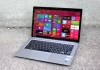
Features:
- Ships with Windows 8 64-bit
- 13.3-inch display running at 2560 x 1440 (221ppi)
- 256GB SSD
- 2GHz Intel Core i7-3537U Processor
- 8GB of RAM
- MSRP: Starts at $1,599, model reviewed costs $1,999
Pros:
- An incredibly high-res display for a Windows laptop
- 2 years of free premium support
- Respectable battery life
Cons:
- No discrete graphics card
- Man, this thing is expensive
Eye Candy Meets Horsepower
Toshiba isn’t exactly known for churning out attractive, high-end notebooks, which is why the company’s new Kirabook is such an oddity. It’s a handsome little thing if you’re into very (and I mean very) understated designs, though I imagine at least a few people will think the Kirabook looks downright dull.
The Kirabook is wedge-shaped like many of its other ultrabook brethren but it’s thankfully very light on branding (save for a small, chrome-esque Toshiba logo slapped on a corner of the Kirabook’s lid), and a finish that comes as a result of the magnesium alloy chassis is nice enough. Sadly, that magnesium frame doesn’t mean the Kirabook is immune to scratches, something I quickly learned after stowing the thing in a checked bag while flying to Austin.
It’s got a respectable spate of ports for an ultraportable too: AC power aside, there are a total of three USB 3.0 ports plus an HDMI out, a headphone jack, and a full-size SD card reader.
If anything, the real eye-catcher here is that sumptuous screen. The Kirabook plays home to a 13.3-inch display running at 2,560 x 1,440 (that makes for a pixel density of 221ppi), and Toshiba likes to crow about it being the highest resolution display available on a Windows notebook. Credit where credit is due, that display is one of the Kirabook’s most notable high points: colors are generally vivid and bright, and the panel seems hardy enough to handle even the most frenzied touch inputs. That’s not to say it’s without its shortcomings though. There’s a bit of light leakage around the edge of the display panel and viewing angles aren’t the greatest — looking at the thing dead-on is pleasant enough, but there’s a bit of color distortion to be seen once you start moving around.
But there’s one big problem when it comes to the display, and it has nothing to do with the panel itself. I won’t belabor the point too much — by now you’ve probably already made up your mind about Microsoft’s divisive OS — but the biggest disappointment is that Windows 8 and the apps that run on it just aren’t completely tuned for these HiDPI screens yet. Cruising through the touch-friendly start screen is a visual pleasure, as is firing up apps like Internet Explorer, Maps, Vimeo, and Netflix since they all thrive on these sorts of displays. Jumping into the desktop is another world entirely, and it’s full of applications and menus that appear blurry and ill-suited for such a neat display. What a bummer.
When it comes to performance, the Kirabook manages to hold its own very nicely. We like running Geekbench around these parts, and on average the Kirabook scored between 7500 and 8000 when it came to running 64-bit benchmarks: very solid numbers, and there wasn’t anything that came up during my day-to-day use that managed to flummox the little guy. That is, except for gaming — the lack of a discrete GPU in a $2000 machine is concerning, and the integrated Intel HD 4000 plus the need to push a crazy number of pixels means that there will be very little Bioshock Infinite running on the Kirabook unless you dramatically crank down the quality.
Speaking of day-to-day use, the Kirabook has more than enough juice to get you through the day. I’ve been toting the 2.9 pound notebook around for the better part of a week, and I’ve consistently been able to camp out in coffee shops and keep the Kirabook going for just over six hours.
There’s little question that the Kirabook is actually a pretty speedy little bugger, but there is a caveat. The downside to all that power is that the tiny fan nestled on the Kirabook’s bum will fire up after even slight provocation, and it’s just loud enough to be grating if you decide to do anything processor-intensive for a while. If you work in environments with plenty of ambient noise it may not be much of a problem, but be warned — those of you who like to work in quiet, zen-like tranquility will probably get pretty miffed.
I haven’t fiddled with many of Toshiba’s older laptop keyboards, but the consensus seems to be that they were largely rubbish. Keyboard snobs may just turn up their noses after a few moments with the Kirabook’s 6 row affair, but despite the fact that the keys feel a bit small I found that using it to peck out posts and emails wasn’t too bad at all after a break-in period. Sad to say, the trackpad was a completely different story.
See, the trackpad occasionally seems to forget what it’s capable of — I can’t tell you how many times I’ve been able to two-finger scroll in Chrome using the trackpad before the Kirabook suddenly stops accepting multi-finger inputs. This may not seem like a big deal to some of you (especially since the Kirabook sports a highly responsive, glass-covered touchscreen) but it’s tremendously frustrating to discover what worked 5 seconds ago doesn’t work any more for no apparent reason.
The elephant in the room here is the price tag that’s attached to this highly portable package — the configuration I’ve been spending time with will set you back a cool $1,999. Toshiba has tried to temper the sticker shock by loading the Kirabook up with full versions of Photoshop Elements and Norton Internet Security (ugh), not to mention two years worth of premium support from a dedicated team of Kirabook specialists all within the United States, but the price differential will probably be enough to make some would-be ultrabook purchasers balk.
Who is it for?
Designers
No. If you’re an artist looking to get some work done, I suspect the blurry, pixelated text and images that result from mixing a hi-res screen and applications that aren’t really ready for it may be enough to get you running for the hills.
On the plus side, Photoshop makes full use of what limited screen real estate the Kirabook affords you and it’s easy enough to get into the swing of things… if you’re willing to squint, that is. Hooking the Kirabook up to an external monitor helps quite a bit, but the sketchy trackpad means you’ll definitely need other peripherals to chip in too.
Founders
No. If you’re a founder looking for a smart way to spend your newly-raised seed funds, you’d probably do well to stay away from the Kirabook. That’s not to say it’s a bad computer, but the crucial bang-for-the-buck factor is notably absent here. The most basic touchscreen-laden Kirabook retails for $1,699, or $100 more than an a higher-end 13-inch Retina MacBook Pro. That’s not an insignificant premium to pay when the Kirabook is marred by a few prominent issues. And sure, you can pick out a slightly less expensive version that eschews the touchscreen, but then there’s really no point in Kirabook in the first place.
Programmers
Maybe? 13.3 inches may seem a little cramped for coding, but that multitude of pixels means that you’ve got plenty of real estate for crafting apps and tapping into APIs. Arguably the price tag is still too steep if all you’re looking for is a machine to run Visual Studio, Android Studio, or good ol’ Notepad++, but there’s nothing here that would immediately disqualify the Kirabook from being a coder’s companion.Bottom Line
You know, for all of the little things Toshiba either got wrong or didn’t execute that well, I still actually really like the Kirabook. The company took a shot on something different, and even though this first iteration isn’t exactly a home run, it has made me rethink the prospect of spending my own money on a Toshiba computer.
Once the Kirabook drops in price (which shouldn’t take long since Intel’s new Haswell chips are barreling down the pipeline), Toshiba’s nifty premium ultrabook may find the success it deserves. For now though, it’s just too pricey and too unpolished for anyone but the biggest Toshiba die-hards to splurge on — here’s hoping that Toshiba manages to firm up the formula when it comes time to whip up the Kirabook 2.
-
Marijuana: Blood Sugar, Waistline Regulator?
A new study shows that people who had smoked marijuana within the last month had smaller waistlines and lower levels of insulin resistance than those who didn’t have the drug.
“These are preliminary findings,” said Dr. Murray Mittleman, who worked on the study at Beth Israel Deaconess Medical Center in Boston. “It looks like there may be some favorable effects on blood sugar control, however a lot more needs to be done to have definitive answers on the risks and potential benefits of marijuana usage.”
While the plant has been used to treat glaucoma and to help chemotherapy patients with nausea, those who conducted the study are quick to point out that it’s not enough to prove anything conclusive when it comes to weight loss or diabetes control…but the results are interesting. It’s thought that regular marijuana use could help regulate the hormone adiponectin, which affects blood sugar levels.
Of course, there are adverse affects that come along with smoking marijuana, too, such as respiratory problems, affects on mental health, and lowered I.Q. levels when used during adolescence.
Medicinal marijuana is now legal in 19 states, plus the District of Columbia.
-
President Obama Discusses U.S. Counterterrorism Strategy

President Barack Obama delivers a speech at the National Defense University at Fort McNair in Washington, D.C., May 23, 2013.
(Official White House Photo by Pete Souza)
Today at National Defense University, President Obama laid out the framework for U.S. counterterrorism strategy as we wind down the war in Afghanistan.
President Obama discussed how the threat of terrorism has changed substantially since September 11, 2011, and explained his comprehensive strategy to meet these threats.
Read his full remarks here or read a fact sheet about the President's speech here.
-
Another Missouri City To Get Google Fiber
Google continues to expand Google Fiber, especially in the Kansas City area.
Google Fiber Community Manager Rachel Hack ways on the Google Fiber blog:
Last night, the City Alderman in Raytown, Missouri voted unanimously to bring Google Fiber to their city. Raytown is the tenth Kansas City-area expansion we’ve announced, and we hope to bring Fiber to more communities in the area, too.
It will be awhile before we can hook up Raytown residents—we need to plan and build our network there first. When we have more info, we’ll be sure to post it here.
Earlier this month, Google announced it would be adding Grandview, Missouri to the list. The city is just south of Kanas City.
The service will also be coming to Austin, Texas and Provo, Utah in the future as well.
-
Donkey Kong Goes Full 3D At Nintendo Event
Nintendo recently held an event for Donkey Kong Country Returns 3D that allowed people to play the game before it launched. That wasn’t all though as Nintendo also decided to terrorize small children when the life-sized DK himself burst through a promotional poster.
Donkey Kong can be a pretty intimidating fellow it seems. He even made some of the adults in the crowd jump.
Donkey Kong Country Returns 3D hits the 3DS on May 24.
-
Next-gen iPad will likely launch after iPhone 5S, feature iPhone 5-style rear mic

-
Facebook sheds some light on what it can get out of Parse
When Facebook acquired Parse last month, it was unclear what good could come of the deal for Facebook. On Thursday, Facebook executives didn’t share detailed new plans for its developer platform or Parse per se, but they did lay out broadly how the social networking giant can benefit.
Mike Vernal, Facebook’s director of engineering, said the integration of Parse technology could boost ad sales by making development of cross-platform mobile apps easier for developers to build and run.
If a startup builds an iOS app with a way to connect into Facebook, great, but its reach is limited to the number of people with iOS devices. Then the developers would have to start over to build a version of the app for Android and Windows Phone operating systems.
That’s where Parse comes in. As a provider of a Mobile Backend as a Service (MBaaS) with software-development kits for multiple operating systems, Parse lets developers quickly build out applications without having to worry about managing servers. When a startup expands its offering from just iOS to Windows and Phone and Android apps and drops them in app stores, promotion becomes important. Facebook can help with that, by getting ads in front of users. The ads expose the applications to the startup’s app, excite users and — here’s the important part — get more ad revenue.
Getting more from mobile has been a key area for Facebook, and that’s why the Parse deal begins to make more sense. This is particularly important following the mixed reception of Facebook Home.
Aside from being an ad revenue driver, Parse makes sense from a content perspective. Not every Facebook user updates his or her lists of favorite things and other fields, so enabling fresher content from more external sources is desirable; it could boost engagement. Facebook recently rolled out to all users the ability to be selective about what content third-party applications can push back to Facebook, and now users can confidently approve of this sharing of stories into the news feed and timelines through more and more apps that developers come up with.
Down the line, Facebook also wants to make this data more accessible through its newish Graph Search tool, Vernal said. That move would scratch another item off Facebook’s long Graph Search to-do list.
As for Parse, it will keep running the way it has been, Sukhar said, whether developers want to use Facebook as a means of promotion or not.
One unanswered question is what will happen to all the apps developers run on Parse. “It’s business as usual, so we’re actually staying on Amazon Web Services,” said Ilya Sukhar, a co-founder of Parse (pictured). But Facebook has a boatload of custom-built infrastructure. Couldn’t it just move Parse-backed apps to Facebook data centers, effectively turning Facebook into a quasi-cloud service provider? Apps will keep running on AWS “right now,” said Facebook’s director of product management, Doug Purdy. But the key words are “right now.”
Purdy made it clear that Facebook wants to just enable third-party developers to build and run apps that people can enjoy regardless of the device they choose. It turns out that’s in Facebook’s best interest, too.

Related research and analysis from GigaOM Pro:
Subscriber content. Sign up for a free trial.- A near-term outlook for big data
- Dissecting the data: 5 issues for our digital future
- NewNet Q2: Google closes the quarter with a bang


-
This Daft Punk/Soul Train Mashup is Brilliant
“Get Lucky,” the lead single off of Daft Punk’s new album Random Access Memories is awesome in a funky kind of way. I mean that Nile Rodgers riff, right? In fact, the whole album is awesome – but that’s another article/possible argument.
Soul Train in the 70s was also awesome. And what do you know, the two make a perfect match. Best mashup you’ll see this week, by far. Here’s DAFT TRAIN:
-
Apple ebook antitrust trial set for 9-12 days in early June
The Justice Department, state governments and Apple met in a Manhattan courtroom on Thursday before U.S. District Denise Cote to make arrangements for an upcoming trial in which Apple is accused of colluding with big publishers to fix the price of ebooks.
The purpose of the hearing was to set schedules, review witness lists and go over last-minute evidence objections ahead of the trial. Cote proposed that each side should be given 22 hours over a four day period plus a final day for closing arguments; the federal government said it would need at least 30 hours to make its case, and Apple requested the same, meaning the total trial would last 12 days. Cote said she will decide in the near future.
The parties also reviewed the witness list, who include prominent publishing CEOs like Macmillan’s John Sargent and Apple executive Eddy Cue. Today’s hearing also raised the possibility that News Corp CEO James Murdoch, who exchanged a series of emails with Apple’s Steve Jobs, could take the stand for cross-examination; the federal government will decide in coming days, on the basis of an evidence issue, whether this will be necessary.
Much of the trial, however, is unlikely to feature dramatic CEO testimony. Instead, the core of the trial is likely to slog through recondite economic arguments and civil evidence issues; part of today’s hearing focused on expert witness opinion about the competitive effects of agency pricing and whether it coincided with Apple’s economic self-interest.
Today’s hearing also focused on an ongoing dispute in which Apple is attempting to force its competitors, especially Amazon, to unseal evidence they have submitted as part of the proceedings.
At the outset of the hearing, in a courtroom that rises 15 stories above lower Manhattan with a view of the Brooklyn Bridge, Cote stressed that the case represented an enormous amount or work, and told the parties to call her “day or night” if they decided to settle.

Related research and analysis from GigaOM Pro:
Subscriber content. Sign up for a free trial.
-
3 Arrests Made For $3 Million Ransom Plot
Three men on Wednesday were charged in a New York kidnapping and ransom plot.
According to a statement from Queens County District Attorney Richard Brown, the three men, Christian Acuna, Dennis Alves, and Eduardo Moncayo, have all been charged with kidnapping and unlawful iprisonment. They each face up to 25 years in prison.
The men allegedly kidnapped an Ecuadoran man named Pedro Portugal off of a Queens street on April 18. At least one of them is alleged to have posed as a police officer before Portugal was shoved into the back of an SUV and beaten as a mask was placed over his head. Portugal was then held in a Long Island City warehouse for over one month. The kidnappers also allegedly contacted Portugal’s mother in Ecuador and demanded a $3 million ransom.
“This is a terrifying story of a businessman allegedly being forcibly abducted off the streets of Queens County in broad daylight and being beaten and held against his will for more than a month while his alleged kidnappers demanded $3 million from relatives in Ecuador for his safe return,” said Brown. “In the process, the victim allegedly suffered physical injuries and has been deeply traumatized by the ordeal. The case warrants vigorous prosecution.”
An NYPD detective found Portugal in the warehouse on May 20. Portugal’s hands were reportedly bound with cloth and duct tape. Another detective was able to chase down Acuna, who fled the scene when police entered.
-
Superman wears Warby Parker
You all know that we’re fans of what the folks at Warby Parker are doing. In particular, we’re quite intrigued by their effort to take their online brand offline. The New York-based company, which recently raised a ton of money, is now taking the next step in terms of branding and is going to be working with the makers of the movie, Man of Steel, on two special frames with a hint of Superman Blue or Red near the temples.

Clark Kent — you know, the nerd journalist who is also Superman — and Warby Parker, the brand that was made by nerds, is one movie merchandising deal that makes a lot of sense. Of course, we talked about Warby Parker’s future with its co-founder at our RoadMap 2012 conference. (You can find out more about our RoadMap 2013 conference later this year by clicking here.)


-
Tesla CEO: With loan repayment, U.S. taxpayers made $20M profit off us
Presidential hopeful Mitt Romney can now eat his campaign words — at least the part where he called Tesla a loser. Tesla CEO Elon Musk said in an interview with Bloomberg TV Thursday that now that Tesla has repaid the entirety of its loan to the Department of Energy, plus interest, U.S. taxpayers have actually made a $20 million profit off of Tesla.
That’s a telling metric for all of Tesla’s former haters, as well as recently converted fan boys. Tesla still has hurdles ahead of it as an independent auto maker, but the company has made it through the Valley of Death and emerged with its first quarterly profit in a decade, and a hot electric car that’s sold out for months.
In contrast, electric car maker Fisker Automotive, which took a loan from the same government program that Tesla did, could reportedly be sold for $20 million, and still owes the government $171 million. Check out my comparison piece: Tesla, Fisker, and what could have been: A tale of two electric car startups.

Related research and analysis from GigaOM Pro:
Subscriber content. Sign up for a free trial.- Ups and downs for cleantech in Q1
- Waiting for the EV market to materialize
- The fourth quarter of 2012 in cleantech

-
Bungie’s Destiny Gets A New CG Trailer, Still No Gameplay
At the February PS4 conference, Bungie announced that Destiny would be coming to the PS4 and PS3. Now the developer has announced that it will be bringing the game to Sony’s E3 press conference with a new trailer.
The trailer doesn’t really tell us much about the game, but it does have that cinematic flair that made Halo such a groundbreaking game when it launched on the original Xbox. If the actual game can pull this off, Destiny may just be a keeper.
We still don’t have any gameplay, but Bungie announced in the above trailer that that the gameplay will finally be shown off at Sony’s E3 press conference on June 10. It’s a pretty big win for Sony when you consider that Bungie was owned by Microsoft just a few years ago.
Beyond the Sony presser, expect a lot more Destiny news at E3. Besides Call of Duty Ghosts, this is Activision’s other big game for 2013. There’s a lot of expectation riding on it so Bungie has to get it right, and I have no reason to doubt them yet.
-
LinkedIn Gets A New Navigation Bar
LinkedIn continues to redesign various functions of its site on both desktop and mobile devices. Today, the company introduced a new navigation bar, which a LinkedIn spokesperson tells WebProNews is “designed to make it quicker and easier for members to find what they are looking for.”
“Over the last year and half we’ve had the chance to learn quite a bit from you about the types of changes that add the most value to your daily professional life, and we’ve brought some of these learnings to the new navigation,” says LinkedIn’s Amy Parnell. ” When approaching this re-design, we analyzed years of navigation data to determine which links were adding the most value for you, and which could be removed to create a more focused and streamlined experience. We also observed how useful Search was as a productivity tool, and aligned the search box with the results page, for fine-tuned search efficiency.”
“As you explore the new navigation bar, you will notice a few visually striking differences, including a simplified menu of tabs to help you quickly and easily locate the features and content that are of most value to you,” she adds. “We have also moved the search bar front and center to make easier than ever to discover and find what you’re looking for on LinkedIn.”
Settings can be found when you hover over your profile picture in the upper right.
The new navigation will be rolling out to English language users over the next month.
-
Apple to reportedly start production for cheaper iPhone in July

-
Tippy top stars of Techstars Demo Day (Boston Edition)
Techstars Boston Demo Day was in a glitzy new setting (the House of Blues withing spitting distance of Fenway) and also drew some surprising (non-tech) star power.
Here are my highly subjective highlights:
1: David Ortiz.

A (very fuzzy) David Ortiz at TechStars Demo Day.
There was a bona fide Big Papi moment on stage as the Red Sox superstar and Boston superhero, in general, as David Ortiz strode on stage to greet Fancred CEO Kash Rassaghi. This startup is building a “social platform” to connect sports aficianados with like-minded fans. Ortiz demanded that Rassaghi “get the Yankess off my cell phone.” (I dropped my phone but recovered in time to get one sub-par shot at left.)
Is there really room for a sports fan platform? Doubtful. But, hey, I’ve been wrong before. And did I mention DAVID ORTIZ???
2: A platform for sustainable, local food
I love the idea behind Freight Farms, which takes shipping crates and retrofits them with water, electricity, internet access and LED lighting to convert them into compact hydroponic gardens.
The elegant idea is to “take the very structure that makes the global food supply chain possible and make it into a platform for producing local food,” said Brad McNamara, Freight Farms CEO.

Freight Farms CEO Brad McNamara.
They are remotely controlled and, because they are stackable, they take up less real estate. Freight Farms has signed several customers including Katsiroubas Brothers, a 100-year old Boston-based produce wholesaler, which is looking for better ways to cut transport costs and offer customers more local product.
“There is nothing better than fresh local food, but the reality is food distribution is a long complicated supply chain — most goods travel 1,500 miles on average to get to your table,” said McNamara.
Freight Farm-grown crops require less water, no pesticides or herbicides. My question: Will a their tomatoes taste like other hot-house tomatoes (i.e., like cardboard) or like an actual tomato? If it’s the latter, I’m totally sold.
3: DIY clothing design
In a nod to the burgeoning “maker market” or do-it-yourself crowd, Mary Huang was to hand to talk up Constrvct, her startup that’s building service that lets you design 3-D clothing onscreen, tweak the size and styling with easy slidebar controls, preview your design on an onscreen maniquin and then make your clothes to order.
 “Makers are underserved in the do-it-yourself market — they’re stuck at the same starting point as their grandmothers,” Huang said. Interest in home-designed clothes is rising thanks to Pinterest and Project Runway, she said, quoting a surprising stat: 3 million sewing machines sold last year, double the number from ten years ago.
4: Fixing manufacturing
LinkCycle says it can use its own data science — and existing data — to help manufacturing plants drastically cut their energy costs.
These facilities — many of them rust belt relics — are notorious for wasting energy and to remedy that many spend millions installing meters and hiring auditors to help. Most of that spending is also a waste, according to LinkCycle CEO Sahil Sahni.
“Why spend so much time gathering data when companies are already sitting on heaps of it?” he asked.
LinkCycle instead takes two exisitng data streams from the ERP systems already running these companies — electricity consumption and total production output. “We developed our own algorithms to take that data and use math — not meters — to save money wihtout having to set foot in the plant,” he said.
Wow, that sounds so easy it makes you wonder why someone else hasn’t done it. Well except for that algorithm part anyway.
So, the new venue was fab but it suffered the same woe as past Techstars events — a lack of reliable connectivity. We soldiered through with personal hotspots and (finally) some intermittent Wifi connections but can’t one of these deep-pocketed sponsors finally figure out how to get reliable broadband into these events? (I’m looking at you Microsoft, Rackspace, Verizon and Softlayer.)

Related research and analysis from GigaOM Pro:
Subscriber content. Sign up for a free trial.- How to Make Cloud Computing Greener
- The case for low-power servers in the data center
- Data center, meet the smart grid

-
Citrix Synergy Highlights Megatrends of Mobile Workstyles
Cloud solutions for mobile workstyles is the theme at the anual Citrix Synergy conference this week in Los Angeles. Citrix (CTXS) unveiled advancements toward its mobile workstyles vision, providing powerful new ways for people to work whenever, wherever and however they choose. The event conversation can be followed on Twitter hashtag #citrixsynergy.
XenMobile Enterprise
With Citrix cloud solutions serving as the engine, the company hopes to enable delivering any type of app, to any type of device, over any type of network, while supporting new forms of social collaboration. Launched at the event Wednesday, Citrix announced XenMobile Enterprise, the edition that combines mobile device, app and data management, a unified corporate app store, mobile productivity apps and “one-touch” live support into an inclusive solution for delivering mobile services to business. With a workforce that requires secure and seamless access to apps and data from any mobile device, Citrix is positioning XenMobile Enterprise as the only solution that delivers everything required to mobilize the enterprise.
“Customers are continuing to ask for consolidation of enterprise mobility technologies under a single provider,” said Stephen Drake, Program Vice President for Mobility Enterprise at IDC. “The introduction of XenMobile Enterprise with the inclusion of Citrix mobile apps demonstrates that Citrix continues to make strides and is raising its visibility as a key enterprise mobility company through a growing portfolio of technologies.”
XenDesktop 7
Citrix also announced the next major release of its XenDesktop desktop virtualization solution. XenDesktop 7 is the first release of project Avalon, an initiative to deliver Windows as a cloud service. XenDesktop 7 offers integrated Windows app and desktop mobility, easier deployment options and simplified management, all delivered through a new, cloud-style architecture. The new version enables any Windows app to function intuitively and transparently on mobile devices, providing a seamless experience on devices of any type.
New HDX Mobile technologies incorporate H.264 compression and compression capabilities can dynamically optimize the bit rate of full HD video so it is viewable over 3G mobile networks. New Citrix StoreFront interface unifies and secures app and desktop access through a seamless user experience. An advanced cloud management capabilities provide a purpose-built help desk console and real-time troubleshooting with EdgeSight end-user experience analytics tools. A simplified architecture can deliver Windows Server (RDS) or VDI desktops from a single console, speeding production deployments by as much as 80 percent.
Many Citrix partners announced solutions for XenDesktop to help mobilize, simplify and secure virtual Windows app and desktop deployments:
- Dell announced three end-to-end offerings for Citrix XenDesktop 7, and a Wyse Xenith Pro 2 dual-core zero client, based on the Wyse Zero framework and purpose built for Citrix XenDesktop.
- CA Technologies (CA) announced new infrastructure management capabilities for XenDesktop 7, providing customers with faster problem resolution and optimized service delivery.
- NVIDIA (NVDA) announced it is unleashing the full graphics potential of enterprise desktop virtualization with the availability of NVIDIA Grid vGPU integrated into Citrix XenDesktop 7. New Citrix HDX 3D technology enhancements offer unmatched direct GPU acceleration to support the most complex 3D and graphical applications.
- NetApp demonstrated that a combined architecture with XenDesktop and NetApp Data ONTAP can help customers deploy storage for persistent and non-persistent virtual desktop use cases for as low as $35.
-
Big data at work: 12 stories about reinvention
Big data has become something of a buzzword. Everybody talks about it, but its impact can be elusive. How is big data really changing the way companies and other organizations function? These 12 stories highlight that transformation: from helping health insurers keep better tabs on patients, to changing how cars are made, to easing traffic congestion on busy freeways. These case studies show big data at work.
Healthcare

Getty Images
We’ve got the medicine to treat lots of ailments — the challenge is getting doctors and patients to focus on the the one or two intervention programs that would make a real difference to a person’s health. Aetna is using big data to try to achieve that.
Cars

Getty Images
When most people think about how cars are built, they think about assembly lines and manufacturing robots. But at Ford, big data is impacting the parts and features of those cars before they’re ever part of a design file.
Presidential campaigns

Getty Images
Many people use Facebook to update their status, share photos, and “like” content. The Obama presidential campaign used all that data on the social network to not just find voters but to assemble an army of volunteers.
–From How Obama’s data scientists built a volunteer army on Facebook
Highway traffic

Shutterstock
Anyone who has driven in Los Angeles has experienced the traffic nightmare. The goverment is using big data to keep traffic moving on the I-10 and I-110 freeways for drivers who are willing to pay for less congestion.
–From Hey, Los Angeles, Xerox thinks it can clear traffic on I-10
Pro basketball

Pro sports teams collect vast amounts of data, yet they’re struggling to make sense of it. Are there two or three things that will guarantee teams a win or at least tip the scale in their favor? That’s Krossover’s premise.
–From How to make your mark in professional basketball at 5′ 9″
Music

More than a decade ago, the music metadata company Gracenote received some cryptic advice from Apple to buy more servers. It did, Apple launched iTunes and the iPod, and Gracenote became a metadata empire.
–From Gracenote co-founder on ‘iPod day’ and better music through data
Social networking

Ghosh’s diagram of LinkedIn’s data architecture, with Hadoop plans laid out
Five years ago, LinkedIn was a shell of the technology company. Today, it’s an engineering powerhouse. Here’s how it got there.
–From How and why LinkedIn is becoming an engineering powerhouse
Insurance

The insurance industry hasn’t exactly been a beacon of technological innovation. But MetLife has bet $300 million on a new system that for the first time puts everything it knows about its customers in one place.
–From The promise of better data has MetLife investing $300M in new tech
Television

How RUWT might work on the TV.
For sports fans, keeping up with what’s on TV is a near impossibility. On many nights there are hundreds of events spread across 8,000-plus channels. One app tracks all that sports and rates games based on how exciting the action is — so you know what to tune into.
Social change

One of India’s highest-rated TV shows aggregates and analyzes the millions of messages it receives from viewers on controversial issues like female feticide, caste discrimination and child abuse — and uses that data to push for political change.
–From How India’s favorite TV show uses data to change the world
Prescription drugs

Shutterstock
While drug prices tend to dominate discussions about prescription drugs, we shouldn’t overlook the economic problems caused by abuse and misuse. One company is using sophisticated models to detect fraud and predict when people will stop taking medications on time.
–From Not taking your medication, or taking waaay too much? The data knows…
Email

MailChimp’s core business is email — it sends about 35 billion emails a year on behalf of roughly 3 million users. But it’s what the company is doing with the data from all those emails that may represent its future.
–From How MailChimp learned to treat data like orange juice and rethink email in the process

Related research and analysis from GigaOM Pro:
Subscriber content. Sign up for a free trial.- GigaOM Research highs and lows from CES 2013
- How HR can make the case for workforce analytics
- The 2013 task management tools market

-
Bar Served Rubbing Alcohol In Place Of Scotch
Times are tough, and when the economy slumps, everyone feels it. Unfortunately, some bar owners in New Jersey tried to crawl out of their slump by mixing food coloring with rubbing alcohol to pass it off as scotch.
In a sting called “Operation Swill”, state police say they have raided 29 bars and restaurants and are accusing them of serving cheap alcohol from expensive bottles. Fortunately, only one used rubbing alcohol, though officials aren’t saying which one. They have released information concerning 13 of the accused restaurants, which are all T.G.I. Fridays. An internal investigation is underway, according to a statement released by the company.
“This alleged scheme is a dishonest ruse to increase profits, and it is a slap in the face to the consumer,” said state Attorney General Jeffrey Chiesa in a statement. “Consumers should have the peace of mind of knowing that they will get what they spent their hard-earned money on every single time – no exceptions.”
Over 1,000 bottles of liquor have been seized and are undergoing tests. Officials say no health complaints have been registered.