Category: News

  • Review: HP Pavilion Elite e9250 from Hardware Geeks By Michael

    Last week HP Loaned me their Elite e9250 Pavilion desktop which features a Intel Core i5-750 processor, 6 Gigs of memory, NVIDIA GeForce GT 2200 1GB, and of course Windows 7 64-bit.

    I only had about a week with the system and since that normally isn’t enough time to fully gauge how well a system can perform, I decided to make it my main machine for the time I had it so that I could spend as much time on it as I could.hp pavilion entertainment e9250
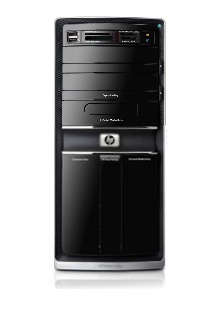
    The e9250 has a similar design to previous HP Pavilion desktops with minor differences. For example it has the 15 in 1 memory card reader at the top of the system like previous Pavilions. But now it has an HDD and Wi-Fi indicator to the right of the memory card slots and to the left of the slots are also two USB ports.

    While HP Pavilions in the past have had two USB ports on the front of the case, they typically were hidden behind a door. This was cool but if you owned a flip camera or any bulky device, that door got in the way when connecting to the USB ports. This made the USB ports unusable unless you used some sort of USB cable extender. So moving the USB ports up top is a big plus for me.

    There is also an expansion bay for an HP Pocket Media drive. Which will come in Handy when using the Easy Backup button. But any external or internal HDD will work with the HP Easy Backup.

    The first thing I did was uninstall all the preloaded software with the exception of Norton 2010 which I like. I then installed the day to day software I typically use. For those curious I use AIM, Live Messenger, FileZilla, Office 2007, Adobe Air (FedEx Desktop and Twitterific), and Dropbox.

    After all that was installed, the system handled itself as if there was nothing installed. In the past I would recommend reformatting the drive and do a clean install of the OS but HP and other OEMS have cut back on the crapware they install on their systems and I no longer think that is necessary.

    Excel, Power Point, Outlook and Word all loaded quickly. I was able to multi task without any noticeable system slowdown, which is crucial if you are a heavy multi-tasker.
    The system handled all of my day to day apps easily. I wouldn’t have expected anything less than what I got. But what I really wanted to test was how well it was to game on the system.

    So I installed the four games I tend to play the most. Crysis, Flight Simulator X, The Sims 3 and WoW. Out of those four games the most resource intensive one is Crysis followed by Flight Simulator.

    It handled Cysis beautifully and a lot of credit for that goes to the GeForce GT 2200. The graphics were amazing and while I am not a huge NVIDIA Fan I have to give them props because the GT2200 satisfied my craving for amazing gaming! (Yes I was trying to rhyme)

    Playing Crysis with all its settings high is no easy feat. The system also handled Flight Simulator, the Sims 3 and WoW beautifully.

    If you are a huge Sims fan, when playing the Sims 3 on this system I noticed no lag. If you played the sims you may have noticed when moving your character around a room with a lot of items in it, the system can begin to lag. I never experienced that with the e9250.

    I wanted to run some PC Mark and 3D Mark test on the system but both kept giving me scores that did not seem accurate, so I didn’t want to post them. I suspect that I have some driver issue on the system that was causing the odd results. If I am able to fix the problem before I send the system back to HP I will update this post with the results.

    Overall HP has given us a great desktop, but I for one would like one without the expansion bay for the Pocket Media Drive.

    But if you are on the market for a new system the e9250 is one I think you should definitely look into as I think it is perfect for the gamer in all of us. The e9259 has a medium form factor which would make it a great system for someone in a small apartment or a college student in a dorm. It would also make a great day to day family computer as well.

    The HP Pavilion e9250 has a starting price of $799 the system I tested will cost you $964.99.

    For more information visit http://www.hp.com

    Source


  • Sky Remote Record finally comes to Windows Mobile

    Screenshot_1

    Its a bit late, but Sky, the largest satellite TV provider in UK, has finally acknowledged the existence of Windows Mobile.

    They have finally released a Remote Record client for Windows Mobile, allowing one to access program listings from anywhere and set recordings.

    Sky_Remote_Record_Client_20091128131755The software seems a simple adaptation of their Nokia client, but appears even easier to use that the on screen menus on the TV due to the ease of use of the touch screen.

    The software also ties into Sky’s news service, and again would seem to be optimised more for a D-pad than touch screen use, but still works pretty well.

    The software can be downloaded from here or use your Microsoft tag (gettag.mobi).

    See a collection of screenshots below.

    Screenshot_2 Screenshot_11 Screenshot_3
    Screenshot_4 Screenshot_7   Screenshot_6
    Screenshot--_1 Screenshot_10 Screenshot_9

    Via Coolsmartphone.com

    Share/Bookmark

  • ICAAC-IDSA — Alone Again (Naturally)

    pcvb_con_hallJust received my latest copy of Infectious Disease News, that large glossy review magazine* that arrives approximately monthly in my mailbox.

    As usual, I turned right to Dr. Theodore C. Eickhoff’s always-thoughtful editorial, this month entitled “Reflections on the 47th IDSA Meeting.”  He writes:

    It was a much more “user-friendly” number of attendees, in contrast to the almost 15,000 people that attended the joint meeting last year. I heard absolutely no one express a desire to have another joint IDSA-ICAAC meeting.

    I can see his point — the combined meeting in Washington last year drew over 15,000 participants, and at times was just too gargantuan to manage.

    But if I could for a moment be the lone voice arguing for a joint meeting, here’s my pitch:  Last year, tons of people  in ID went to ICAAC-IDSA, even people who rarely go to either meeting.  This year, not so much — which might explain the “somewhat muted and subdued” tone Eickhoff found at IDSA this year in Philadelphia.

    Either that or what the Yankees were doing against the Phillies.

    (*Don’t call it a “throwaway!”)

  • Law Firm Goes After 15,000 'Pirates' in the UK

    Online illegal file-sharing is always a hot topic and the big media companies are doing their best to keep it in the spotlight. But for all their talk of protecting their business and the artists’ rights, their anti-piracy fight boils down to what can only be described as a form of extortion. And after the practice proved rather profitable in the US, if not actually making a noticeable dent in illegal file-sharing, it was time to conquer new markets so they’re moving to the UK.

    Some 15,000 ‘pirates’ are about to be sent letters informing them of the legal consequences of their alleged wrong-doing. Hard times await the recipients of these letters with lengthy lawsuits and hefty fines. Fortunately the media companies have a softer side and are offering a simple solution to all of the problems, just pay a few hundred pounds and the whole issue is resolved. Unsurprisingly, most people choose to settle rather than go through the whole painful process.

    The BBC has a lengthy piece on the subject and does a good job at explaining how the whole system works. In this particular case two German companies DigiProtect and MediaCat, which represent various copyright holders including adult content publishers, hired ACS: Law to make sure illegal file sharers get what’s coming to them. The law firm won a major victory rec… (read more)

  • Lazy susan yarn swift

    Porro made this cool yarn swift from a Rationell Variera pot lid organizer and Snudda Lazy Susan. It’s pretty easy to achieve too. Just mark the spots where you want to place the lid organizers. Drill holes and screw them in.

    Visit her blog for her yarn swift instructions.


  • Spamming People's Blogs Just Isn't Very Nice, Google Says

    Spam is one of the biggest problems with the web at the moment and, despite countless efforts and measures, it’s unlikely to go away any time soon. Google has several way of countering spam, be it in Gmail or in the web at large, which it claims are pretty good at making these methods pretty useless, though, this doesn’t seem to faze most spammers. In a recent blog post, it’s focusing on comment spam, specifically on what it does to tackle the problem and what webmasters can do to prevent them. It’s not exactly groundbreaking, but there are a couple of useful tips in there.

    Google starts off by appealing to the spammer’s conscience with things like: “abusing comment fields of innocent sites is a bad and risky way of getting links to your site.” There’s nothing wrong with that sentence, in fact, it’s entirely true. But the morality of the thing insn’t likely to stop anyone from doing it. Google also tries to make the case that original content is the way to go and that a little patience and a lot of hard work will pay off with nice, clean and natural ranking.

    This is all great if you’re talking to a five-year old, but the “do the right thing” and “work hard and one day …” arguments are perhaps lost on the people Google is trying to reach. Fortunately, Googl… (read more)

  • Oxygen Therapy and Quality Of Life Can Go Hand In Hand

    When you place these two phrases together, “oxygen therapy” and “quality of life”, it appears that they contradict each other. But many times the normal reaction is to ask the question:

    “How can you think of achieving quality of life if you are dependent on supplemental oxygen on a full time basis?”

    But is it really a true assumption or even a fair one?

    The majority of people who receive long term oxygen therapy will probably agree that when they were first informed that they had to have additional oxygen, they were shocked and felt depressed. This is a perfectly normal reaction.

    We take breathing for granted as it is an automatic process and in fact it is when we hold our breath that we have to make a conscious decision. So when we are told that we are incapable of breathing on our own, thoughts of suffocating and living under an oxygen mask and perhaps being bedridden are bound to cross our minds. This logically produces a feeling of despair and dejection. This is normal but it should not be the norm in the long term (or even in the medium term).

    One of the things that makes us what we are, human beings, men and women, is that we can choose how we act, how we react, and what we decide to do about it. It is in our nature to make decisions, which is another way of saying we have the freedom of choice. Whatever the circumstances, whatever the trails and tribulations, we can choose how to act. Even if we make the wrong decision, and we do at times, it is still our decision. Attitude is also a decision we take; it is not forced on us by others and much less by circumstances.

    So can anyone, or more importantly, can you, have a life with dignity (that spells “quality of life”) even if you are on supplemental oxygen full time?

    The answer is yes.

    This does not mean it is easy but by the same account, it does not mean it is difficult either. The question should be based on what “quality of life” means to you. We all go through a phase, some never get out of it, where we search for the meaning of life. If life is measured by quantity and by things, as compared to quality and people, then yes it will be difficult to achieve a quality of life because you are dependent on an extra delivery of oxygen.

    If, on the other hand, your life is based on quality and people, if the important things in life go beyond the “material world”, then that same oxygen supply and those material things become tools to help you achieve that which is important.

    Day to day there will be times of joy and times of ease but also times of difficulty and exasperation. Only you will make the difference, nobody else will. You decide your attitude.

    Others may help, and they should be welcome, but the final choice is yours. You will find there are those who will help either directly or indirectly and you can also have the benefits of the new oxygen systems that are making life easier for so many.

    A final point, when your thoughts are turned inwards, when you are in an “I” mode, when everything revolves on and around you, then things can get tough – you are highly tempted to feel sorry for yourself.

    But if your attitude, your thoughts and your actions are directed at others, then you will find that the quality of your life is good.

    Philip Robinson writes on various subjects and one of his health related websites is about Portable Oxygen Machines. For more information on supplemental oxygen resources visit http://www.portableoxygenmachines.net.


  • Google Wave Could Do with a Turbo Boost

    Google got most of the attention this week for its recently unveiled Chrome OS so the Wave team figured it was time for a little update as well. They’re not actually announcing anything but they are revealing the results of a survey they’ve carried out to find out what people liked or disliked about Google Wave. And with most of the tech world unimpressed with Google’s efforts, it would be interesting to know what the actual users think.

    “Since we can’t talk to all of our users individually (no matter how hard we try!), we’ve been running an online survey to get some feedback on the Google Wave experience. We distributed the survey through email (to a random sample of those that volunteered to help), a link in our help center and a tweet. While this may not be a completely representative sample of all Google Wave users, the results have been interesting to us, and we’d like to share them,” Aaron Cheang, User Experience researcher for Google Wave, wrote.

    The results aren’t as useful as they could have been, but there are a couple of interesting nuggets in there. When asked what they liked the most about Google Wave, the majority of users said they liked the idea of the wave as the center of all their communications. The interesting thing is that they didn’t say they liked they way Google had implemented it but rather the concept itself. This is v… (read more)

  • Eiji Aonuma explains why they’re not being aggressive with Ocarina of Time remake

    It’s no secret that fans all over are clamoring for a remake of Ocarina of Time. Some would want to see it on the Wii, others on the DS. Let’s see wh…

  • Black Friday: HP Pavilion dv6-1351nr for $599 at Office Depot

    Office Depot is selling the HP Pavilion dv6-1351nr for $599 through Black Friday after a $100 discount. The HP Pavilion dv6 is a mainstream notebook with a 15.6″ display. It’s a good general computing PC and has enough horsepower to edit home movies, play video games and multi-task.

    The HP Pavilion dv6-1351nr is a retail configuration of HP’s popular Pavilion dv6. You should compare this deal to other Pavilion dv6 deals. This configuration includes an Intel Core 2 Duo processor, which is more powerful than the procesor offered in many Black Friday notebooks. It comes with a 320GB hard drive, 4GB of RAM and a DVD burner. It’s loaded with Windows 7 Home Premium 64-bit.

    The Pavilion dv6-1351nr is available online for $599 which means you won’t have to wait in line tomorrow to get this deal. Visit OfficeDepot.com for more info.


  • 15.6″ HP Pavilion G60-519WM Notebook @ $298 from Walmart

    HP Pavilion Entertainment G60

    Those of you who remember the G60-519WM will be delighted to know that the great deal starts really soon and you’ll have the opportunity to buy this laptop for just $298, as part of Walmart’s Black Friday offer lineup. However, quantities are very limited so you’ll have to be quick if you want to get yourself one of those super-cheap Windows 7 laptops.

    It has quite the specifications for this price – a 2.2 GHz Celeron 900 processor, 3GB of DDR2 RAM, and a 250 GB hard drive. You’ll also get a 15.6″ BrightView screen which can display in a resolution up to 1366 x 768. For rendering 3D graphics, the laptop has an Intel GMA 4500M with 1309MB of shared memory. It has a DVD recorder with the LightScribe function, which allows you to print images on the non-data sides of your discs. There are other goodies as well, and included is a copy of Windows 7 Home 64-Bit.

    The laptop comes for just $298 and it will have pre-installed copies of various paid software, including Symantec Norton Internet Security, Microsoft Office, and other similar applications. Get more information about the laptop here: Walmart


  • First Final Fantasy XIII Japanese TV spot rolled out

    Enough with the teaser trailers. Square Enix is out to get going on spreading the word even faster and wider about Final Fantasy XIII (Xbox 360, PS3)….

  • Panel Of Experts

    *DIANE G HEATLEY, MD
    Pediatric Otolaryngology
    University of Wisconsin
    School of Medicine and
    Public Health:

    Saline nasal washing helps keep the nose healthy. The nose warms, humidifies and filters the air we
    breathe every day. When healthy, it does a good job of filtering, but an unhealthy nose can’t function
    efficiently.
    The nose and sinuses produce a quart of mucus every day. When this thickens, the cilia have a hard
    time moving the mucus blanket. It can then become infected, leading to nasal congestion, drainage,
    post-nasal drip, cough, headache, bad breath and fatigue.
    Saline nasal wash with a Neti Pot or squeeze bottle thins the mucus to &ldquo clean the filter&rdquo that is your
    nose. Saline use has been shown to diminish the number of days a person suffers from respiratory
    symptoms, such as cold or flu, and relieve symptoms of nasal allergy. Saline nasal mist is a great alternative
    for infants, young children, and others who find a true nasal wash to be unpleasant.

    *NEIL SCHACHTER, MD
    Author of Life and Breath:

    Most people are well aware of air pollution in our outdoor environment. What is less known is
    the problem of indoor air pollution in our homes, schools and workplace. In fact, the Environmental
    Protection Agency (EPA) estimates that air quality is two to five times worse indoors than outdoors.
    The key to maintaining healthy levels of indoor air quality is the right form of ventilation, which
    helps balance outdoor air pollutants like pollen and dust against the build-up of gases, irritants and
    allergens that occur naturally in the home. Simple steps to improve ventilation like running the air
    conditioner in warm months can help remove pollutants and gases that are dissolved in the humid
    air. Also, using a high performance filter to help remove particulate matter, mold spores and pollen
    can make a difference. Avoid using cleaning products that release volatile organic compounds, which
    can cause tiny airways to constrict.

    *STEVE RAMOS
    Certified Home Inspector:

    According to the Center for Disease Control (CDC), air pollution in the home can be made worse
    by poor ventilation as well as high heat and humidity levels. Sometimes, improving your indoor air
    quality is as simple as improving your homes ventilation system. Many homes are already outfitted
    with a forced air heating and cooling system that circulates the air. While standard fiberglass filters
    were originally designed to protect the equipment, they don’t provide much improvement toward
    home air quality. High performance filters help protect equipment and help reduce indoor allergens
    like mold spores, dust mite debris, pet dander and particles that can carry bacteria and viruses by
    capturing them from the air that passes through the filter. Look for an electrostatically charge filter
    to help capture more micro particles (.01 to 3 microns) than an ordinary fiberglass filter and change it
    regularly, according to manufacturer directions for maximum efficiency.

    *PEER LAURITSEN
    President
    Oticon, Inc:

    At Oticon, our goal is always to put the needs of people with hearing loss first. As the first company
    to introduce Bluetooth connectivity to the hearing instruments, we recognized the potential for high
    speed, broadband wireless signal processing to address the most common listening challenges for
    people with hearing loss. Powered by our proprietary RISE platform, two hearing instruments are now
    able to communicate wirelessly with each other, processing sounds as a single unit. This is similar to
    the way the brain normally processes sound from two ears to support the proper interpretation of
    speech and other sounds in the environment. The result is a unique spatial awareness that makes it
    possible for hearing instrument users to more easily focus on conversations while &ldquo cancelling out&rdquo
    background noises. With the wireless connectivity built into Oticon hearing instruments, people with
    hearing loss can also stream sound directly from cell phones to their hearing devices. The new ConnectLine
    system, the first and only system of wireless connectivity solutions that connects seamlessly
    to TV and landline phones, allows users to enjoy high quality audio streaming seamlessly through their
    hearing instruments at their own preferred volume and without the delay experienced with off-theshelf
    Bluetooth transmitters.

  • Breathe Easier

    Breathe Easier
    With alternative approaches
    Even in our technologically advanced society there are natural remedies and alternatives. Some treatment options for respiratory conditions that used to be considered on the margins of allopathic medicine such as nasal irrigation are today considered mainstream.

    To learn what is most likely to work in the alternative realm, we turned to naturopath Joshua Leavitt, ND,
    of Whole Health Natural Family Practice in Hamden, CT. What, we asked, does he use for patients with allergies, sinus infections and other respiratory conditions? Here’s what he recommends.

    Allergan. This pharmaceutical grade
    petroleum jelly is rubbed on the inside
    of the nostrils where it catches airborne
    pathogens and helps prevent respiratory
    infections. One study found it slashed
    symptoms of allergic rhinitis (i.e., hay fever)
    by 60 percent with no adverse effects.

    Nettles. Dr. Leavitt often prescribes nettle
    tea or nettle capsules for people with
    allergies, asthma or other inflammatorybased
    respiratory conditions. He recommends
    brewing six to eight cups at a time
    and sipping on it throughout the day, preferably
    sweetened with a local honey produced
    during the season in which allergies
    are worst. One of the few published studies
    on nettles found 300 mg of freeze-dried
    nettles twice a day improved symptoms in
    people with allergic rhinitis about as well
    as their normal medication.

    N-acetylcysteine (NAC). This amino
    acid supplement was originally investigated
    in people with cystic fibrosis. Studies
    find it works well at thinning the thick,
    heavy mucus common during colds and
    sinusitis. Dr. Leavitt recommends 600 mg a
    day, four times a day before meals.

    Salt inhalation. The roots of this therapy
    date back to Hippocrates, who had
    congested patients inhale the steam from
    boiling saltwater. In more recent times,
    people in Eastern Europe sit in salt caves
    and breath the air to clear their congestion.
    For those of us without a nearby salt cave,
    there are salt pipes. The salt is contained
    in the bottom of the ceramic inhaler. You
    breathe in the air emanating form the top
    for 20 minutes at a time. Two studies in the
    New England Journal of Medicine found that
    inhaling a salt-water mist could reduce the
    pus and infection found in the lungs of
    people with cystic fibrosis, an often-fatal,
    genetic respiratory disease.

    Steam inhalation. This low-tech approach
    to clearing out your sinuses or
    nasal congestion involves filling a pot with
    water, adding a few drops of thyme or eucalyptus
    essential oils (available in health
    food stores), and heating the water to just
    below a boil. Remove from the heat, lean
    over the pot and cover your heat with a
    towel, and breathe.

    Sublingual immunotherapy. You
    know about allergy shots, but do you know
    about this non-shot option? It’s based on
    the same theory as allergy shots: exposing
    your immune system to larger and larger
    amounts of the allergen to &ldquo train&rdquo your
    immune system to tolerate it. While the
    shots can take months or even years to
    finally eradicate your allergies, sublingual
    therapy, in which the allergen solution
    is placed under the tongue, works much
    faster and, studies suggest, may be safer.
    Unfortunately, most insurance companies
    don’t cover it.

    Elderberry extract. When it comes to
    preventing infections, Leavitt recommends
    supplementing with elderberry extract, a
    &ldquo top-notch antiviral &rdquo 4,000 to 6,000 IU of
    vitamin D, important for immune function
    and four grams a day of fish oil for its
    anti-inflammatory effects.

  • Ten Steps to Indoor Air Quality

    Ten Steps to Indoor Air Quality
    Think your house is clean? Consider this: The Environmental Protection Agency (EPA) finds that the air inside your house is dirtier than the air outside. Blame tighter construction techniques that enable fumes from paint, plastics and other synthetic materials used in our furniture and carpeting, toxins from cleaning products, pets, secondhand smoke, carbon monoxide, dust mites, and pet dander&mdash among other things&mdash to build up in our homes.

    &ldquo With outdoor air there are regulations for the major pollutants,&rdquo said Neil Schachter, M.D., a New York City pulmonologist and author of the book Life and Breath, &ldquo but with the exception of cigarette smoke, we haven’t gotten a handle on our most common and long-lasting source of pollution, which is the indoor environment.&rdquo Whether pollutants in the indoor environment are irritants or allergens, he said, &ldquo Everyone is at risk.&rdquo Indeed, common symptoms resulting from indoor air pollution include eye, nose and throat irritation, headaches, skin irritation, shortness of breath or cough, and fatigue. Some of the most dangerous indoor toxins come from a relatively benign source: water. &ldquo I can’t tell you the number of people who come to me whose apartments or even homes have been water damaged,&rdquo said Dr. Schachter, &ldquo and that’s a recipe for disaster.&rdquo That’s because any type of dampness promotes the growth of living things like molds and fungi that contribute to bad reactions, he said. Another pollution pitfall is indoor carpeting. Even the EPA notes that carpet can act as &ldquo a sink for chemical and biological pollutants including pesticides, dust mites and fungi.&rdquo Anyone with any type of underlying respiratory problem, whether chronic
    obstructive pulmonary disease (COPD), asthma, allergies or hay fever should assume that &ldquo unless you’re very careful, your home is going to be contributing to your problem,&rdquo Dr. Schachter said. The good news is that there are a number
    of actions you can take to significantly reduce indoor air irritants and allergens.

    For starters:
    1. Use the right cleaning products. Products
    that contain ammonia and chlorine
    can irritate the respiratory tract,
    causing watery eyes and sore throats
    and even triggering coughing and
    shortness of breath, said Dr. Schachter.
    Choose milder yet effective cleaning
    aids that use baking soda, vinegar, hydrogen
    peroxide and citrus oils.
    2. Add houseplants. Some common indoor
    houseplants, such as bamboo
    plants, English ivy and peace lilies, provide
    a natural way to help fight rising
    levels of indoor air pollution by absorbing
    potentially harmful gases. They
    work fast: a six-inch potted green plant
    can clean a room of excess carbon dioxide
    in eight hours.
    3. Nix the carpeting. Instead, choose hardsurface
    flooring like hardwood, tile or
    laminate and opt for area rugs instead
    of wall-to-wall carpeting. Once a year
    send the rugs out for deep cleaning.
    4. Use high-performance (HEPA) air filters
    in vents. These filters capture particles
    such as pollen, smoke, dust mite debris
    and pet dander as air passes through
    the filter. They only work if they’re
    cleaned or changed regularly, however.
    So put reminders on your calendar to
    change them every three months, or at
    the start of each season.
    5. Turn up the air conditioning. Air conditioners
    not only cool the air but can reduce
    humidity levels, preventing mold
    growth during warmer months.
    6. Turn off the humidifier. This is a corollary
    to the previous tip. Room air
    humidifiers are moisture-generating
    sources that serve as reservoirs for bacteria
    and mold. Maintain your home’s
    humidity between 30 and 50 percent
    to prevent mold growth.
    7. Ditch the shoes at the front door. That
    way you won’t track outdoor pollutants
    like pesticides, animal dander, mold
    spores and pollen into your home.
    8. Make some space. Increase airflow and
    help control humidity levels by moving
    furniture away from walls and opening
    closet doors to air out what can be a
    dank, smelly space.
    9. Go for quality. Cheap vacuum bags can
    stir up allergens when vacuuming so
    use bags that contain a HEPA filter.
    10. Use a fan. Showers, especially in smaller
    bathrooms, can raise humidity levels
    and create condensation on walls and
    ceilings so install and use an exhaust
    fan in the bathroom.

  • Cochlear Implants

    Cochlear Implants: Not Just for Kids anymore
    Cochlear implants, tiny, implantable devices that use electrical signals to restore partial hearing and were once reserved for children who were born deaf or lost their hearing at a very early age, have found a new audience.

    Thanks to major advances in digital chip technology spurred by the exploding cell phone industry, today’s cochlear implants are small enough, cheap enough, and good enough to be used in adults&mdash no matter what the reason for their hearing loss. Add the fact that we’re no longer embarrassed to walk around with things sticking out of our ears (think Bluetooth receivers) and you have a perfect storm for the use of the implants in grownups. &ldquo The new implants are so sophisticated you can even understand and appreciate music,&rdquo said Harold C. Pillsbury, MD, who chairs the department of otolaryngology and head and neck surgery at the University of North Carolina School of Medicine in Chapel Hill. They are also covered by 90 percent of health insurance plans, including Medicare. Unlike hearing aids, which make sounds louder and clearer, cochlear implants stimulate the auditory nerve to replace hearing function lost by the cochlea, the auditory chamber of the inner year. In adults, that loss may stem from toxic medications such as chemotherapy, infections, or, most commonly, presbycusis, i.e., age-related hearing loss. Cochlear implants consist of two parts. The external component contains a microphone to pick up sounds connected by a thin cord to a sound processor, which organizes the sounds. A transmitter coil sends the sounds via radio waves to the implant, which is surgically embedded under the skin behind the ear. It contains the receiver and electrode system. The receiver converts the radio waves into an electrical signal which the electrodes use to stimulate fibers in the auditory nerve. Voila! Your brain registers those signals as sound and you &ldquo hear.&rdquo While older units were about the size of an iPod and had to be worn on a belt or in a pocket, some of today’s implants are tiny enough to be tucked behind the ear. Patients also often receive implants in both ears, said Dr. Pillsbury. &ldquo This allows you to hear the sound the same in both ears and determine where it’s coming from,&rdquo he said. It also improves the ability to hear voices in a noisy environment. People with some residual hearing may opt for Electric Acoustic Stimulation (EAS), composed of a hearing aid to amplify low tones and the cochlear implant to transmit high tones.Dr. Pillsbury, who implants more than
    200 devices a year, envisions the day whenno one will be deaf or even hard of hearing.&ldquo There will be those who hear fine anddon’t even need hearing aids those who do well with hearing aids and those who need cochlear implants. But there won’t be anyone who can’t be helped by something.&rdquo Still, despite technology that enables wearers to program cochlear implants for specific environments (i.e., loud parties or quiet rooms), Dr. Pillsbury warns his patients not to expect miracles. Hearing with an implant &ldquo is never going to be perfect,&rdquo he said. But, he added, &ldquo It is getting better and better all the time.&rdquo Cochlear implants are not for everyone. Because they involve surgery performed
    under general anesthesia, they are reserved only for those who don’t get the hearing quality they need with hearing aids. Otherwise, there are no restrictions, said Dr. Pillsbury. &ldquo I just gave them to a 92-year-old woman who couldn’t wait for them to be hooked up,&rdquo he said. She had to wait about two weeks, however, for her incision to heal before he could flip the switch and ask that all-important question: &ldquo Can you hear me now?&rdquo

    News In Brief
    THE AUDIOLOGY AWARENESS CAMPAIGN
    Hearing loss is the third most chronic health problem in America. Untreated hearing loss negatively impacts income on-average up to $12,000. The Audiology Awareness Campaign is a not-for-profit foundation whose mission is to educate the public about the value of hearing healthcare. The foundation represents audiologists nationally to increase public awareness of hearing healthcare. To learn more about protecting your hearing and hearing loss, request a free consumer educational booklet entitled &ldquo Listen-UP America We Hear You&rdquo . For a free set of earplugs call 888-833-EARS(3277) or visit our website www.audiologyawareness.com. Not sure about your hearing? Take a free Online Hearing test, read consumer-friendly brochures about hearing loss and hearing aids, discover more about audiology services, post a question about hearing on &ldquo Ask an Audiologist, or &ldquo Find an Audiologist&rdquo in your area who offers professional services. For further information about the foundation contact Dr. Landau Goodman at [email protected].

  • Hearing Aids

    Hearing Aids: The Future Is Now
    Super Bowl winner and New York Giants defensive line coach Mike Waufle knows a lot about loud noise. The 54- year old is surrounded by roaring crowds every Sunday during football season. At practice he hears the crack of helmets and sharp clanking of weights. In the early 1970s as a U.S. Marine, his ears were assaulted by rifle shots and booming artillery that severely damaged his hearing.

    &ldquo As a coach, I’m a teacher, so clear communication is really important. I was missing a lot of conversations and couldn’t always hear what my players or colleagues said. Hearing loss was also affecting my speech patterns. I tried all kinds of hearing aids but most ended up in a drawer.,&rdquo said Coach Waufle, who is one of the 35 million Americans with severe hearing loss. The solution to his problem was provided by the team’s ear, nose and throat consultant, Michael Scherl, M.D., with his audiology colleagues. Little more than two years ago, Dr. Scherl was involved in early trial work on a unique new hearing aid called Lyric. It was conceived in Silicon Valley to provide users benefits similar to extended wear contact lenses. Unlike conventional hearing aids that have external microphones and require weekly battery changes, Lyric rests deep in the ear canal. It is invisible, completely self-contained and approximately onehalf inch long. The flexible, foam-covered device rests a fraction of an inch from the eardrum to provide exemplary sound quality while making use of the ear’s natural anatomy to funnel sound. It can operate 24/7 for up to four months before having to be replaced by an audiologist. &ldquo Since getting Lyric, my quality of life has been so much better,&rdquo said Coach
    Waufle. &ldquo For instance, the Giants have a large field house with horrible acoustics. Our head coach recently walked up behind me and I could hear every word he was saying. Before Lyric, that would not have been possible. No matter who you are or what you do, it’s really important to know what your boss&mdash or spouse&mdash is sharing with you. &ldquo Beyond that, the biggest change is I can now hear little things like a pencil on the paper when I’m writing, or a turn signal in my car. My daughter says it’s fun watching TV together because the sound isn’t blaring any more. There are so many things to appreciate that could have easily slipped away.&rdquo Although Lyric represents a unique advance in hearing aid design, technology is advancing elsewhere, too. &ldquo Bluetooth capabilities are being added to a host of new hearing aids,&rdquo said veteran audiologist Richard Kaner of Brooklyn Audiology Associates. &ldquo For instance, Oticon has a device called the Streamer&trade that users wear around the neck. It’s an interface between hearing aids and cell phones, land lines, television sets, MP3 players and computers.&rdquo Other leading manufacturers such as Phonak, Siemens and Bernafon also offer expanded connectivity options. Starkey has been a leader in volume adjustment. Users can touch the back of certain hearing aids to adjust volume, or use the touch pad of their cell phone or land line. Additionally, a number of manufacturers are improving speech understanding by transposing high frequencies to lower frequencies. Philadelphia audiologist Dr. Kathy Landau Goodman, Au.D., of Main Line Audiology agrees the future of hearing aids is extended wear devices like Lyric, and devices that can interface with other technologies such as cell phones. &ldquo The most striking thing for me these past 25 years has been the improvement in sound quality,&rdquo said Dr. Goodman. &ldquo Years ago, we didn’t have great technology. Now we do. One client recently said he feels like he’s gone from a horse and buggy to a luxury car.&rdquo If you or someone you know has difficulty hearing, contact a local audiologist who will partner with you to select an appropriate hearing technology. As Helen Keller wrote, &ldquo Blindness separates us from things but deafness separates us from people.&rdquo Author Dr. Paul Pessis, Au.D., is owner and director of North Shore Audio Vestibular Lab in Chicago, and past president of the American Academy of Audiology.

  • Otolaryngology

    Otolaryngology

    Making the Connection

    Why do otolaryngologists specialize in these three particular areas? Most specialists

    limit themselves to one body part or system. Ophthalmologists focus only on eyes.

    Cardiologists make their living off of hearts. ENT doctors get three body areas on which

    to focus their expertise.

    The reason is actually quite simple. The three are all connected. The ear is connected to the nose and throat via the auditory (or Eustachian) tube while the nasal and sinus passages drain directly into the throat via the pharynx. That’s why you get a sore throat when your nose drips and why a cold often turns into an ear or sinus infection. It’s also why people with allergies are much more likely to suffer from chronic ear infections and sinusitis than people without. Given that, it should come as no surprise that ENT docs are some of the busiest specialists around. Just consider the numbers:
    &bull Hearing loss affects one in 10 people. We’re not just talking about older people, either. The increasing noisiness
    of modern life, including earblowing concerts and too-loud MP3 players means that even people in their 30s and 40s are saying, &ldquo What?&rdquo a bit more often than they’d like. In fact, an estimated one in eight children and teens already show signs of hearing loss. Noise isn’t the only risk factor for hearing loss, either. Quit smoking and you could reduce your risk of hearing loss nearly 200 percent. Even eating a healthy diet filled with antioxidantrich fruits and vegetables could reduce your risk.
    &bull Over 35 million people a year have allergies. These numbers are increasing due to environmental changes that affect our immune system. Some say we’ve simply become &ldquo too clean,&rdquo so our immune system overreacts to every foreign object it encounters, even if it’s just a speck of pollen. Allergies are far from benign, however. People with allergies are three times more likely to develop asthma. There’s even some evidence that a history of allergies might increase the risk of Parkinson’s disease.
    &bull More than 30 million adults in the United States get sinusitis each year. The costs of the disease&mdash inflammation of the sinuses&mdash exceeds more than $3 billion a year when you figure in all the doctor and emergency room visits, medications, tests and procedures. And that doesn’t even count days missed from work because of illness.
    &bull Eighty to ninety percent of children have at least one ear infection by the time they turn three. Put another way, ear infections are the reason behind one in three doctor visits during the first five years of life. Chronic ear infections in children can lead to speech, language and cognitive impairments, as well as hearing, motor and balance loss.
    While hearing loss, allergies and chronic sinus infections might be the first things that pop into your mind when you think about an ENT doctor, their expertise extends far beyond those two areas. Having trouble talking or swallowing? Feeling dizzy when you stand up? Hear a buzzing in your ears? It might be time to call an ENT. Was your child born with a cleft palate? Need her tonsils out? She’ll likely see an ENT doctor. For these doctors do more than just peer down your throat and write prescriptions. They are also surgeons, removing sinus polyps, inserting ear tubes and cochlear implants, and operating on thyroid and head and neck cancers. Some even do facial and reconstructive surgery, including nose jobs and face lifts. All of which is a roundabout way of telling you that there is much more to ENT than what you’ll read in this special section. Nonetheless, we’ve tried to highlight some of the more common areas that ENT doctors address, both from a treatment and a preventive perspective. You’ll read about the very latest in hearing aids (hint: forget everything you thought you knew about hearing aids when you read this story), the role of cochlear implants in restoring hearing to adults, and about lifestyle and other non-medical approaches you can take to keep your nose and sinuses healthy. Because, bottom line, if you can’t smell it, hear it, or taste it, you’re missing out on a big part of what makes life special.

  • Q&A Can Fructose Affect My Weight?

    QandA Can Fructose Affect My Weight?

    Obesity expert Louis J. Aronne, M.D., talks about the relationship of fructose, a type of sugar, to weight gain.

    Q: What exactly is fructose?
    A: Fructose is a type of sugar found in foods such as fruit. It is also added to sodas, juice blends, salad dressings, pasta sauce, and other foods, primarily in the form of high fructose corn syrup (HFCS). HFCS is about half fructose and half glucose (another type of sugar).

    Q: How does fructose promote weight gain?
    A: Unlike glucose, fructose may increase appetite. And research indicates that when it’s eaten before or with fat, that fat is more likely to be stored than burned. Consuming HFCS appears to cause resistance to leptin, a hormone that tells you brain how much fat is stored and signals the feelings of fullness. The problem is Americans are consuming more of such sugars, especially in sweetened beverages.

    Q: Is white table sugar better for you than fructose-based sweeteners?
    A: No. Like HFCS, table sugar is about half fructose and half glucose. Some studies have found it has similar effects on the body.

    Q: How can you limit your intake of fructose?
    A: If you drink soda or juice, have only an 8-ounce glass with ice in it. And limit intake of foods that have &ldquo high fructose corn syrup&rdquo on the label.

  • The Smile Factor

    The Smile Factor
    Can Gum Disease Boost Diabetes Risks?

    You can make it harder to control your glucose levels if you neglect your teeth and gums – that we know. But now it appears that gum disease may contribute to the development of diabetes in the first place. According to Ryan T. Demmer, Ph.D., M.P.H., an associate research scientist in epidemiology at Columbia University, research has shown that &ldquo periodontal disease can precede the onset of type 2 diabetes.&rdquo In Diabetes Care, a study by Demmer and his colleagues looked at data on more than 9,000 people who were followed for 17 years. The researchers concluded that those who had moderate gum disease when they were first observed were twice as likely to be diagnosed with diabetes over the life of the study as those who had healthy gums. When gum disease was so bad that it caused substantial tooth loss, the risk of diabetes jumped by 70 percent. The takeaway? Conscientious dental care is imperative for anyone who is at risk for diabetes.