More than 160 National Guard members in three states have responded to flooding
caused by heavy rains from Tropical Storm Ida today…
Category: News
-
Three states respond to Ida flooding
-
Army Guard aviator, commander ends ground-breaking career

A National Guard commander with decades of service flying fixed- and rotary-wing
Army aircraft retired here this week amongst the aviators he served and the
aircraft he put to the sky… -
From Thunderbolt to Lightning: Air Guard pilot selected to fly new F-35

Maj. Jay Spohn has taken the skies by storm…
-
Federal officials pledge support for hiring veterans
Senior federal officials today pledged their support of President Barack Obama’s
directive to increase the hiring of military veterans… -
Nevada Guard kicks off solar energy project

The Nevada National Guard held a groundbreaking ceremony on Nov. 9 for a new $17
million solar energy project… -
Texas welcomes Predator to 147RW

The small aircraft might fit in a two-car garage albeit with some tinkering with
the wings, but as unassuming as it looks one should never underestimate the
Predator’s accuracy and destructive power… -
Dell’s first smartphone aids the Android onslaught
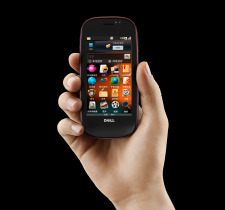 Now that it’s finally been launched in at least some parts of the world today, Dell is working to keep its new Mini 3 smartphone device closely associated with Dell’s computers, calling it “The world’s most compact Dell” directly on its packaging.
“Our entry into the smartphone category is a logical extension of Dell’s consumer product evolution over the past two years,” Ron Garriques, President of Dell Global Consumer Group said in a prepared statement today. “We are developing smaller and smarter mobile products that enable our customers to take their Internet experience out of the home and do the things they want to do whenever and wherever they want.”
This is a wise marketing decision by Dell, as its brand is associated with fully powered computers and not mobile phones. So this approach makes it appear as if Dell isn’t trying something radically different, it’s just shrinking what it has already perfected into a small package.
Further, the mental link consumers draw to computers can be beneficial when marketing “smart” devices.
The Dell Mini 3 is a 3.5″ capacitive touchscreen device, and will be first available in China and Brazil. Dell has shown off the device in a number of places this year, but has stayed mostly silent about it in the English speaking world.
Today, the company confirmed the Mini 3’s release, but added it will announce with each carrier individually.
In China, Dell’s Mini 3 is one of China Mobile’s first “OPhones,” a line of smartphones running a custom Android build called Open Mobile System (OMS). Though it will be available to the largest mobile subscriber base in the world (China Mobile has 500 million customers), it is rumored to be without 3G connectivity.
Before the end of the year, America Movil subsidiary Claro will bring the Dell Mini 3 to Brazil. That version will also be Android-based, but it will have a different interface from China Mobile’s and it will also support 3G.
This is only the first of many announcements about mobile devices expected to come from Dell. The company has contracts to bring its new smartphones to Vodafone in Europe, Australia, and New Zealand, AT&T and Verizon in the US, M1 and Starhub in Singapore, and Maxis in Malaysia. Dates and details of each launch remain undisclosed.
We reached out to Dell today to ask just how much consumers outside of China and Brazil should pay attention to such launches. A spokesman for the company reiterated that this is a global strategy, and that the launches will be up to the carriers, but also that the importance of China Mobile shouldn’t be understated.
After all, the carrier’s subscriber base is greater than the entire population of the United States.
-
Final Fantasy XIII hits North America (both PS3 and Xbox 360) on March 9, 2010!
Final Fantasy XIII will come out in North America on March 9, 2010 for both the PS3 and Xbox 360. So says the official e-mail we just received. You can’t see it, but there’s a smile on my face right now.
There’s only one thing in the announcement that I didn’t know before.
• The game’s theme song, “My Hands,” will be sung by Leona Lewis. She sang the song “Bleeding Love.” Not that I’ve heard of her, but that’s not my scene, so whatever.
There’s also three new screenshots, featuring Lightning, Snow and Vanille.


Four months to go~!
-
After the Intel + AMD armistice: Do we really want a level playing field?
By Scott M. Fulton, III, Betanews
 If there were a psychiatrist seated across the room from us, and we were to present to her our feelings about information technology as a force in our lives, her diagnosis would be simple and immediate: We have an obsession. Maybe having nothing to do with technology itself at all, we’re obsessed with the notion of a nemesis with an unfair advantage influencing the decisions we make.
In every major arena of information technology over the past five years, the principal topic of discussion has been the need to level the playing field, to restore something called “fair competition,” to ensure that the smaller player still has a chance. For the topic of PC operating systems, to this day, there’s a frenzied Pavlovian response to the notion that Microsoft Windows stole its ideas from Apple Mac OS — I moderated public, online discussions about that same topic 25 years ago. For Web applications, we’re beta testing the idea of shifting the Darth Vader mask from Microsoft over to Google, the dominant player in nine out of ten of the world’s queries; and we’re reveling in the irony of AT&T proclaiming Google an evil empire. For smartphones, we’re evaluating whether Apple fits the role of dominant player, whether that Halloween costume we used to fit on Bill Gates and that we’re testing on Eric Schmidt can be swapped out with Steve Jobs.
For applications software, the discussion continues to be over whether “Darth” Microsoft devised the now-standardized XML-based format ISO 29500 as an evil scheme, camouflaged as a fairness initiative, to wrest control of the format for all the world’s documents from…itself. But that discussion has died down somewhat in recent months. There’s still a discussion over whether the agreement between Microsoft and Novell, now almost three years old, is an evil scheme to infuse Linux with elements of Microsoft, like a bad Star Trek: Voyager episode (Trekkers will recall exactly which one I’m referring to). But that discussion has died down somewhat in recent months.
For Web browsers, the notion that the littlest player in the field, Opera Software, is slowing down, is a topic that arouses suspicion among users — is there some type of sabotage going on? But the notion that the biggest player in the field, Microsoft, is slowing down, aroused the largest, most concerted, most pointed, loudest, highest concentrated, most vehement, and occasionally the most personally directed, chorus of orchestrated chants of “We Don’t Care!” that I’ve received in a quarter-century of covering IT. It’s as if no one wants Darth Vader to die before the climactic battle.
(Dozens of you, like a movement, almost radical, in harmony over your apathy. Noted.)
 The public identity of the open source movement is founded on the ideal of the underdog fighting against the odds. Nowhere has the need for Linux to be heard as the lone voice of fairness in the wilderness been more pronounced than on Groklaw, the blog of my friend and colleague, Pamela Jones. Its substantive user base and high level of legal and intellectual discussion were founded around the SCO v. IBM battle, which has smoldered down now to a pathetic remnant prosecuted now by a carcass of a once-zombie company that bore a resemblance to something whose former identity used to be linked to a once-great company. And yet somehow it remains the symbol of everything Linux users believe they try to stand for; this while Linux publications that concentrate on the Linux OS and its software struggle to maintain an audience and eke out any revenue whatsoever.
But that discussion has died down…and perhaps you’re noticing a pattern.
In the current state of the global economy, recovering or not, major market players — especially the larger ones — are realizing they do not have the disposable income necessary to wage a full-scale assault against competitors in the courtroom. In another of the centrally defining, polarizing battles that define many folks’ personal involvement in the IT field, yesterday, Intel admitted as much outright. The company’s executives said that it could not afford to prosecute a course of legal action against AMD that one Betanews reader correctly described as “mutually assured destruction.”
The gloves are coming off, but for a different reason. The information technology industry can no longer afford to maintain the polarizing influences that used to define each and every facet of it. In a steady, measured, intentional transition, IT is becoming a fair and open market.
What the hell happens now?
Are we truly ready for an IT landscape where relative leadership is ascertained using something resembling one of Betanews’ CRPI charts? How will Linux be able to cope with victory, with forces that are at this moment sweeping the unwanted Windows Mobile off of smartphones and replacing it with a Linux distro championed by a dominant market player with a high-salaried CEO, rather than two guys in tie-dyed T-shirts? And now that AMD is guaranteed by its own rival the market stature to competitively bid for prominence, how will Europe’s politicians be able to realign their re-election strategies around less popular, more boring topics like global unemployment, fair trade, and the wars in the Middle East?
Victory — the actual start of a movement toward a level playing field, fair competition, dominance determined by the customer — is not the outcome that everyone was counting upon. If a psychiatrist were analyzing this situation rather than an IT market expert, she would say that we’re relying too much upon our dependence on victimization as a tool to establish our identity. In the absence of an active assault — of any substantial reason for us to claim that anyone is Darth Vader and anyone else is Cosmic Muffin — how will we learn to get along? When we can no longer yelp like dachshunds wishing our tails had been run over by vehicles that passed us by, will we be able to realign our interests, our ideals, our itineraries, our lives…around interoperability? Equality? Alliances? Fair chances? Little, everyday defeats through failure with no one to blame but yourself? Second chances to come back and win again?
Whether we like it or not, our world too is getting flat.
-
Google Eases Retrieval of Sidewiki Entries for Entire Sites
Google has announced the release of a new feature for the Sidewiki API, which the company says makes it easier to retrieve all Sidewiki entries for an entire domain. It allows you to look for new entries created on any page of a site, and subscribe to them via RSS.
If you are unfamiliar with Sidewiki, it is available as part of the Google Toolbar for Firefox and Internet Explorer or as a bookmarklet for Chrome, Safari, or other browsers that don’t support the Google Toolbar.
When using Sidewiki, an expandable window can be viewed on the left-hand side of the web page. When expanded, you can see comments by users or contribute your own. This works for any web page. There is a good chance that your site has been commented on via Sidewiki, and you don’t even know about it.
This actually brings up a pretty good reputation management point. If you are a webmaster, you may want to at least install the bookmarklet in your browser if you don’t use the Google Toolbar. This will allow you to keep tabs on what is being written about your site.
These comments are out there for other Sidewiki users to view. More information about how Sidewiki works can be found here. Google has created a top ten list of ways that people are already using Sidewiki. It may give you some ideas:
- Jason Young speaks from personal experience and gives detailed insight into tuning a bass guitar on EMG’s Bass Tips site.
- Antony Carthy, a programmer in South Africa, wrote tips on how to find latitude and longitude coordinates on Google Maps.
- Google’s own Matt Cutts warns visitors about a deceptive website.
- Shalin Gala of PETA calls on readers to sign a petition next to an article about animal mistreatment.
- Ron Burk suggests a missing reference for a medical article.
- The Mayo Clinic uses Sidewiki to welcome visitors with a special webmaster entry on its homepage (this one requires Sidewiki to view).
- Jesse Poe from New York offers up great insights in a review of an iPhone app by Daniel Johnston, one of his favorite musicians.
- Alfonso Grandis from Italy talks about his eye-witness account of a recent earthquake.
- David Davis, a software engineer from California, improves a snippet of code in a programming tutorial.
- Michael Roizen from the Cleveland clinic adds his advice about H1N1 vaccinations.
Google recommends commenters contribute expert insight, helpful tips, background information, and added perspective when using SideWiki. The company has said in the past that it uses "multiple signals" based on the "quality of the entry," what they know about the author, and other user-contributed signals like voting and flagging. They say they want to only keep the most relevant entries appearing in the sidebar.
Related Articles:
> Google Turning the Web Into an Exclusive Social Network?
> You No Longer Need the Google Toolbar to Use Sidewiki
> Want to Get Your Google Profile Verified?
- Jason Young speaks from personal experience and gives detailed insight into tuning a bass guitar on EMG’s Bass Tips site.
-
Apple Launches iTunes Preview

This is one of those items I find so hard to get behind, rather like the infrequent (boring) updates to MobileMe. But here goes; Apple has ever-so-quietly launched a new web-based front-end to their iTunes music library titled “iTunes Preview.” It allows a visitor to view lists of music available on the iTunes Store via their web browser. There you go. That’s kinda it.
I’m going to assume 99.999 percent of our readers already use iTunes, and are probably intimately familiar with the drill by now; you’re reading a web page and you’re presented with a link to some music, tv show or maybe an app inside the iTunes store. You click the link and, after your browser does a brief Redirection Dance, iTunes pops-up, opens the iTunes store and, as you’d expect, dumps you out on the correct product page. Which is nice.
Except, this isn’t the case if you don’t have iTunes installed. If you’re one of the few people left in this crazy world who doesn’t have iTunes installed, clicking on one of those links previously dumped you (again, after the spastic redirection dance) on a web page commanding you to download and install iTunes. Which is not nice.
Well, all that has (sort of) changed. iTunes Preview exists as something of an interim step designed to partially improve the overall user experience, and partially to get the last remaining holdouts among us to install iTunes. See, despite the “Preview” part of its name, iTunes Preview doesn’t let you actually preview anything beyond Music. And then it’s not actually a preview. It’s just track-listings and user reviews.
If you want to listen to a bit of music before you part with your cash, you’ll still need to install iTunes. And, in case that wasn’t totally obvious already, the webpage provides ample linkage to get you downloading Apple’s venerable media software.

As it stands today, the value and usefulness of iTunes Preview is limited. I guess it’s sort-of useful if all you want is a user-friendly link you can stuff into an email to your significant other (To: Other Half, Subject: Buy me this for xmas). But I’m scraping the bottom of the barrel here in search of really worthwhile functionality. Right now, iTunes Preview verges on being almost entirely pointless. Sure, browse music by artist or album, view metadata like track duration or artist bios, and even find related artists… but anything more than that is reserved for the real iTunes.
However, it’s early days. Who knows what Apple might do in the months and years to come? Is this, for instance, the first step toward freeing users from iTunes, in anticipation of a day when that bloated, lumbering beast will be replaced by a suite of modern, slimline, specialized apps?
Nah, probably not. The music in iTunes might have been liberated from its DRM-shackles, but everyone forgets that iTunes itself is, for most people, one giant walled garden. With one hundred million active credit card accounts tied to the iTunes ecosystem, it’s unlikely Apple will want to break it apart any day soon without a proven, easy and established migration route to its successor(s).
iTunes Preview might be the start of something interesting, but it just as easily might be nothing more than the result of a user-experience “tidy-up” by the iTunes dev team, an idea that languished at the bottom of their “might be nice” wish-list for the last few years and just got executed by their newest interns.
If you’re keen to try it out, you’ll be pleased to learn it works on all the major browsers and is available right now. I’ll get you started with this link to the Michael Jackson artist page so you can see for yourself how it works. You can also access more content from the iTunes Charts page. But don’t get excited — there’s really nothing to see here, folks.


-
HUBO will tear you limb from limb
HUBO Walking! HUBO Taichi! HUBO with sword! HUBO aiming for your heart and lungs!
This clever Korean robot won’t kill you (yet) but it does move in a surprisingly life-life fashion. Seriously: how far are we until we’ve hit Surrogrates territory (an actually OK movie, by the way).
-
Adhoc Party finally coming to North America
Adhoc multiplayer mode won’t be the bane of PSP owners who want the global reach of infrastructure mode anymore. If they have PS3s, that is. Sony has …
-
Google Headed To Swiss Court Over Street View
The Federal Data Protection and Information Commissioner of Switzerland, Hanspeter Thür
, still isn’t happy with Google. Thür
has argued that the Street View program doesn’t do enough to protect individuals’ identities, and despite receiving a concession or two, is now taking Google to court.Street View was introduced in Switzerland about three months ago. Roughly one week later, Thür
complained that certain faces and license plates weren’t indistinct enough. He met with Peter Fleischer, Google’s Global Privacy Counsel, Google agreed to make portions of its photos blurrier, and the problem was resolved. Or so we thought.

It turns out that Thür
also objected to the height from which images had been taken, arguing that a normal person wouldn’t have the same vantage point. He felt that people in more rural areas could be identified even if their faces weren’t visible, too.So, as announced in a formal statement, Thür
"has decided to take the matter further and to take legal action before the Federal Administrative Court." According to the BBC, Thür
wants a tribunal to make Google immediately take down all Swiss Street View images, as well (since the case won’t start or end soon).This situation could have a big impact on how other countries respond to Street View in the future.
Related Articles:
> Google Street View Hits Hawaii, Mexico
> Street View Coverage Of Two More Countries Goes Live
> Street View: Soon With More Blurriness
-
Senate Aides: Reid Considering Medicare Payroll Tax Increase On Wealthy
Senate Majority Leader Harry Reid pondering a proposal to increase the Medicare payroll tax on high earners “to help offset the costs of providing health insurance to millions of Americans, Senate aides said Thursday,” The New York Times reports.
The proposal is in the health reform package that Reid has sent to the Congressional Budget Office for analysis. “The Medicare payroll tax is the primary source of financing for Medicare’s hospital insurance trust fund, which pays hospital bills for beneficiaries, who are 65 and older or disabled. Employers and employees each pay a tax equal to 1.45 percent of wages. Unlike the payroll tax for Social Security, which applies to earnings up to an annual ceiling ($106,800 in 2009), the Medicare tax is levied on all of a worker’s earnings without limit. Mr. Reid is apparently considering an increase in the Medicare payroll tax rate for workers with incomes of more than $250,000 a year, Senate aides said. One idea is to increase the tax rate by one-half of 1 percentage point, to 1.95 percent for high-income people, with an expectation that the government could raise $40 billion to $50 billion over 10 years” (Pear, 11/12).
The Washington Post: “Another option is applying the Medicare tax for the first time to capital gains income, White House budget director Peter Orszag said Thursday at a Washington summit organized by a corporate affiliate of Bloomberg News.” Inclusion of that tax could allow so-called “Cadillac” plans to be taxed less than initially proposed, The Post reports. “But Reid is unlikely to completely abandon the Cadillac tax, Democrats say,” because the tax could cause people to buy lower-cost health insurance policies (Montgomery, 11/12).
The Wall Street Journal reports that “Reid is looking at raising the threshold for insurance policies that would be subject to the 40 percent (Cadillac) tax to $8,500 for individuals and $23,000 for couples, Senate aides said.” Levying a surtax on high income earners instead of on Cadillac plans is one that already has support in the House, which passed an income surtax in its health care reform bill on people who make more than $500,000 (Bendavid, 11/13).
Bloomberg reports that, also while speaking at the summit, Orszag said he sees a health care reform bill passing by the end of the year, but he “wouldn’t say whether the White House supports” applying Medicare taxes to capital gains. “‘We have to see the package as a whole,’ he said” (Donmoyer and Jensen, 11/13).
-
Health Reform: Senate Facing Controversies On Coverage Numbers, Abortion Language
The Wall Street Journal: “When the Senate unveils its health-care bill, all eyes will be on the price tag. But an equally significant number may be how many people get health insurance under the legislation.”
The two versions of committee-passed legislation in the Senate “would extend insurance to fewer people than the final bill passed through the House.” Senate leaders have been working “to increase that number” as they combine and refine the two bills. Hospitals and insurers are warning that if a Senate bill doesn’t cover more people than what the Senate committees proposed, insurance prices will increase.
“The health bill passed by the Senate Finance Committee, which is expected to form the backbone of the final Senate bill, would extend insurance to 94 percent of legal U.S. residents, up from 83 percent of legal U.S. residents currently.” But it would leave 25 million without insurance. In the meantime, a mandate that individuals carry health coverage would accompany such coverage expansion, but “[i]ndustry groups are encouraging lawmakers to look at other ways of penalizing people who don’t get insurance” instead of a current proposal that some say doesn’t have teeth and could incentivize someone to only purchase insurance when they need it (Adamy, 11/13).
The Senate will have to wade through many such issues as it gets ready to begin debate on its health care reform bill, Time reports. “The House fight over abortion guarantees a repeat in the Senate, where conservatives are demanding a similar airtight ban on the use of federal funds to pay for the procedure, and liberals are vowing to stop one they say will also prohibit some women from using private funds” (11/12).
The Associated Press: “millions of American women will face tough choices about abortion coverage if restrictions in the House health care bill become law.” Women likely to be affected by the ban would include self-employed women who must buy their own coverage, divorced women formerly insured under their husband’s plan and women who work for small businesses whose owners “decide to seek more affordable coverage through the new exchange” (Crary, 11/12).
Related KHN story: How The House Abortion Restrictions Would Work (Appleby, 11/10)
The NewsHour explains another problem facing the Senate: “It’s been an uncommonly high profile year for the [Congressional Budget Office],” which is charged with the responsibility of calculating the costs and savings that will result from these legislative proposals. “The approximately 235 analysts and economists who work for the agency generally crunch numbers in relative obscurity.” But this year, as the agency has often been in the spotlight, it has also been critiqued, “as some analysts and policymakers have questioned its power and its track record in providing accurate cost estimates for health care legislation.” Their task is difficult, which accounts for why scores are not always accurate, officials say (Winerman, 11/12).
-
Business and Insurers’ Groups Back Health Reform, But Not All Legislation
A group of CEOs, the Business Roundtable and America’s Health Insurance Plans, the insurance industry group, separately expressed qualified support for health overhaul efforts Thursday.
In a report, the Business Roundtable “which represents big company CEOs, said some of the changes being considered by Congress have the potential to reduce future health care cost increases, bringing medical inflation closer in line with overall economic growth. But the group also warned that other provisions in the bills could raise costs,” the Associated Press reports. President Obama “greeted the analysis as welcome validation at a time when other business groups like the U.S. Chamber of Commerce and the National Federation of Independent Business (NFIB) have soured on the Democrats’ health care bills and are mobilizing the opposition” (Alonso-Zaldivar, 11/12).
If deployed in the right balance, reform measures could save companies up to $3,000 per employee by 2019, according to the report, which was commissioned by the Roundtable but crafted by Hewitt Associates, a consulting firm, CongressDaily reports. A roundtable official said cost-control is the top priority for big companies. Meanwhile, another business group, the Employment Policies Institute, launched a television ad arguing that the reform plans “will make this (debt) crisis worse” (Edney and Hunt, 11/12).
Smaller businesses, on the other hand, are concerned about being able to offer low-cost insurance to their employees in the first place, TIME reports. Though lawmakers have crafted proposals overtly targeted at small business, “business groups like the Chamber and the NFIB vehemently oppose the public option. The Chamber says it would pay below-cost reimbursement rates, leading doctors and hospitals to charge private insurers (and the employers who purchase coverage from them) more to make up the difference. But even if that were true — and there are many observers who say this fear is overblown — it’s not clear that small-business owners would be the ones to suffer” (Pickert, 11/13).
In a briefing Thursday, AHIP chief Karen Ignagni told reporters her industry still supports a full-scale health overhaul this year, despite some qualms about the bills, the Boston Globe reports. “Ignagni echoed the [Business Roundtable’s] assertion that cost-containment efforts should be spread more broadly across the entire health care system, not just confined to experimental projects within Medicare” (Wangsness, 11/13).
-
@comcastcares Dishes on His Top Twitter Apps

Om and Frank Eliason of Comcast
Om and I met Wednesday night with Frank Eliason of Comcast, better known as the person behind @comcastcares. Eliason is a genuinely cool guy who started out as the person solely responsible for handling Comcast complaints on Twitter, and who now has a staff of 10. Each day, he and his staff look over some 10,000 blog posts, handle countless tweets — and then seek to do something about any problems.
Since he’s such a Twitter power user, I asked him what his favorite applications for the micromessaging site were. He said the original Twitter web site is his favorite, but he’s also a fan of Simply Tweet on his iPhone because he likes the push notifications. PeopleBrowsr, an app that helps businesses mine information from Twitter, is another one he uses heavily. As for CoTweet, which is in the news right now for charging businesses $1,500 a month to find information on the service, he said he wasn’t initially a fan, but that ever since the company has modified the application to keep track of conversations between two users over time, he’s been turning to it more frequently. The ubiquitous TweetDeck isn’t something Eliason uses, but he says some of his staff love it.
Our conversation was brief as he had to rush off to meet some of his Comcast customers (he notified them of his presence in San Francisco via Twitter) — a reminder that while online interactions are a nice way to initiate relationships, face-to-face meetings are still necessary to cement them.

-
GameStop details in-store DLC service, to be launched in 2010

It seems the Internet doesn’t like GameStop too much, so I’m not sure how this story will be received. The retailer announced at a conference in New York yesterday that it will launch some sort of in-store DLC service next year. That is, let’s say you buy Game, then immediately buy related DLC from inside the store via a special interface. (GameStop worked with both Sony and Microsoft to figure all this out.) Then, when you get home, the DLC is ready to be added to your game.
It’s merely a convenience thing, as, come on, who has time to buy a game at the store, go home, navigate Xbox Live or PSN, then download and apply the DLC?
GameStop’s COO gave a specific example:
If you love X-Men Origins: Wolverine, imagine being able to take home the physical copy at launch, plus have a few costumes and villains sent to your PS3 waiting for you when you get home.
No, this isn’t going to totally change the way you live your life, but it should be useful to those of you who, gasp, still buy things at a retail store.
-
GOP Hopes To Rally Sentiment Against Dems’ Health Bills But Face Flap Over RNC Abortion Coverage
“For the first time, when asked who voters trusted more on handling health care, congressional Republicans tied Obama at 40 percent with 21 percent undecided,” in Ohio, according to a new Quinnipiac poll, Politics Daily reports. PD adds: “In September, respondents favored Obama by 49 percent to 28 percent. (Ohio) voters oppose Obama’s health care plan by 55 percent to 36 percent with 9 percent undecided and disapprove of his handling of the issue by a similar margin” (Drake, 11/12).
Meanwhile, Republicans are pushing “to re-ignite the town hall fury that inflamed the health care debate and nearly derailed the legislation over the summer,” Fox News reports. “GOP representatives are holding town halls in the next two weeks to rally opposition to President Obama’s sweeping health care legislation that narrowly passed the House last weekend” (Clark, 11/12).
And in other GOP news, reports indicated on Thursday that the Republican National Committee has offered employees insurance plans that cover elective abortions since 1991 – even as Republicans have opposed measures that could cause taxpayers to indirectly subsidize the procedures, Politico reports. RNC Chairman Michael Steele quickly instructed officials to opt out of the abortion coverage. Cigna, the RNC’s insurance company, said it offers customers the opportunity to opt out when they sign up and that the RNC chose not to (Allen, 11/12).


