
On the one day a week he’s not dealing with information technology equipment,
Staff Sgt. Christopher Hipsher spends time volunteering at the Air Force Theater
Hospital…
On the one day a week he’s not dealing with information technology equipment,
Staff Sgt. Christopher Hipsher spends time volunteering at the Air Force Theater
Hospital…

Servicemembers from Chile, the United States, Argentina, Brazil and France
participated in an exercise to see beyond their own operating methodology and
adapt to an environment under a common cause…

The first visit by a sitting president in 59 years began at the Wisconsin Air
National Guard’s 115th Fighter Wing based here at Truax Field Nov.
4…

A temporary increase in the number of Soldiers moving through Camp Liberty is
expected as the U.S. military transitions to a responsible drawdown in
Iraq…

Para Leticia e para Aline a luta terminou, mas ainda existem 9540 novos casos previstos no país. Então, ajuda se faz necessária. Não com dinheiro, mas com sua solidariedade. Cadastre-se no Redome. Se voce for compativel pode salvar mais uma Aline ou uma Leticia.

A leucemia é uma doença maligna dos glóbulos brancos (leucócitos) de origem, na maioria das vezes, não conhecida.e se caracteríza pelo acúmulo de células jovens anormais na medula óssea, que substituem as células sangüineas normais. Os principais sintomas da leucemia decorrem do acúmulo dessas células na medula óssea, prejudicando ou impedindo a produção dos glóbulos vermelhos (causando anemia), dos glóbulos brancos (causando infecções) e das plaquetas (causando hemorragias).Depois de instalada, a doença progride rapidamente, exigindo com isso que o tratamento seja iniciado logo após o diagnóstico e a classificação da leucemia.
PALESTRA AO VIVO SOBRE LEUCEMIA –
Mais sobre leucemia: INCA
Estimativas e indicadores
Saiba mais sobre transplante de medula
Doe Medula – Twitter
Ajuda e orientação: Abrale– Associação Brasileira de Leucemia e Linfoma


I was thinking of ideas on how to add twitter and/or facebook fan page followers. I dont have a real need to have to do so. I was just curious about ways to do so.
Think of it as one of those things my minds wanders off to while Im working out.
One thing that poppedup as what I thought was a decent idea was the idea of rewarding those who refer and/or generate followers to my pages on twitter (@mcuban), or on FAcebook (/markcuban) a unique page where they were the only person approved to have access and for some period of time, they would have exclusive access for questions and answers.
So for instance, if you helped me add 1k followers on twitter, i would create a new ,private account on twitter and you would be the only approved follower. You could ask me anything and I would respond for some period, probably 24 hours. After which I would replace you with another follower. I could do the same on facebook. I would set up a private account and only friend this person. Using the wall, we could have an exchange about any subject.
Good idea or bad idea ?


By Scott M. Fulton, III, Betanews
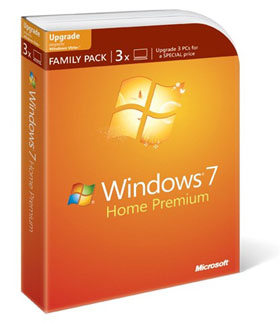 The initial sales figures for Microsoft Windows 7 after its worldwide launch on October 22 are still being tabulated, but the early estimates sound very promising: According to industry analysis firm NPD, unit sales for Windows 7 software SKUs in the US were 234% higher — better than triple — the unit sales for Vista’s launch, and US revenue from Win7 software sales was up 82% over Vista’s launch.
But as Vista veterans will recall, that launch was botched somewhat, first by a costly delay, then by a decision to launch the product twice (first to businesses in October 2006, then to consumers in January 2007), and then by a lack of participation from partners. And there were still more reasons the Vista launch fizzled, one of which, believe it or not, included the scheduling of the launch on a Tuesday.
Windows 98, Windows Me, and Windows XP all launched on Thursdays, to moderate success or higher; and Windows 7 launched on a Thursday. You would think that since NPD’s tabulation of sales figures runs between Sundays and Saturdays, the fact that the initial sales figures only reflect the first three days (plus all those pre-sales) of Windows 7 versus the first five days of Vista, would be even more impressive. Yet it’s those pre-sales that may tell the real tale here, according to NPD vice president of industry analysis Stephen Baker, who credited a better-run pre-sale event from Microsoft and its retail partners as contributing to the more successful launch this time around. If you’ll recall, the hype over Vista had fizzled long before January.
The top three selling SKUs in the three-day window were all upgrades: for Home Premium, followed by Professional (from Vista Business), and the Home Premium Family Pack. We don’t know specific unit sales numbers, but can we draw any conclusions yet about who is doing the upgrading and why? For instance, are they XP users, or are those folks more likely to purchase new PCs with Win7 pre-installed (whose sales are not included in these NPD figures, but whose early estimates also appear positive)?
“Questions like that on hardware are hard to answer after three days of sales,” Stephen Baker told Betanews this morning. “Some portion of the first three days of sales is just pent-up demand, driven by lack of product to sell in the first ten days. So in that respect, I am not sure what the initial motivators are.”
In his blog post on launch day, Baker credited stores like Best Buy with their willingness this time around to cooperate with Microsoft, especially with little things like displaying Win7-based PCs — not Vista — during early October even before Win7 or the PCs with Win7 were available. Seeing those systems, and some of their new form factors, might contribute to some of that pent-up demand Baker told us about.
“In general, though, consumers rarely buy PCs for ‘new’ features,” Baker told us, letting the air out of that balloon. “As a tool and a home communication necessity, PCs are most often bought on need. The latest form factor isn’t or design isn’t what motivates consumers to buy, it is what gets them to buy at the point-of-sale in the store. But getting them to make a decision to buy is based on need, price, and promotion.”
We definitely saw the promotion part of that solution as early as August, with a respectable and, for once, not insulting advertising campaign that blanketed all media, including television. But this time around, OEMs were participating in that promotion as well, and were in sync with Microsoft’s timetable, publishing early notices of markdown deals, and drumming October 22 into consumers’ heads.
But that doesn’t cover the need factor; and we wondered, how much did Vista contribute to that need. Since, after all, the top three selling SKUs were all upgrades, were folks really willing to dump Vista?
No, according to NPD’s Baker: He believes that the factor that publishers like Betanews had been calling the “Vista perception problem” are not as pervasive as we make it out to be, especially in the consumer space. More importantly than how we may dramatize things, consumers were simply more motivated by the “refresh” aspect of the new system, says Baker.
“I would suspect that most of it is new look-and-feel, and a PC refresh without the cost,” he told Betanews. “Bloggers may dislike Vista, but the vast majority of consumers really don’t mind it.”
Causes is a social networking donation platform that uses MySpace so that people can raise money for causes or issues that they believe in. Generally these kinds of activities help provide a community around issues like Breast Cancer, or stop smoking, or other issues that are part of our daily life. Causes is an excellent application that makes the process of raising and donating money for a specific cause very easy and embeddable into someone’s MySpace page.
Last night according to ReadWriteWeb and Stanford Social Innovation Review, Causes has sent an e-mail out to all their MySpace members stating that they will be moving over to Facebook and no longer supporting MySpace. I do not see why they could not do both, but apparently Causes does not want to support both platforms. From a business viewpoint – Causes would be very smart to provide support for both platforms; everyone needs a simple easy way to donate to the cause they believe in.
Stanford Social Innovation Review though also brings up the specter of money, in that it is well known that Facebook caters to a richer clientele than MySpace. Going out to Quanticast – the demographics for MySpace and Facebook makes this a compelling argument.
MySpace Demographics:
Facebook Demographics:
What is interesting about the Quanticast information is on the right side data pane where people who are likely to visit Facebook, Causes shows up as the number one entry in the likely to visit category.

Where on the likely to visit column causes does not even show up.

Demographics are also telling – people are much less likely to be college educated on MySpace, meaning they just simply do not make a lot of money. However, some research points out that poor people donate more overall money to causes that influence their groups or their interest groups than rich people do. The problem also might be in the micropayments processing side; small amounts of money usually are quickly degraded by mounting fees from payment processors, handling, and movement than larger payments, which is a definite possibility and, one of the drawbacks to the micropayment system.
What is sad though is that rather than supporting both platforms, which is just good business, Causes has decided to abandon MySpace in favor of Facebook. Regardless of the reason, from a business viewpoint you don’t abandon a channel until it stops being profitable, if Causes believes that MySpace is no longer profitable, then there is more here about the internal workings and visitor counts of MySpace than we generally have discussed in the blogging world, let alone the press.
Causes definitely needs to post a statement on their blog, so we know what the reason is, rather than speculating as to what the reasons are.

Yesterday’s trip down memory lane with the Gopher protocol got me thinking about all the other protocols I used to use, and those that I continue to use on a regular basis. There’s little doubt that hypertext transfer protocol (HTTP) is one of the most widely used protocols on the Internet today. But there are a host of other protocols used every day! Let’s look at a few of my current favorites, and some that have gone the way of the Dodo bird.
Before I get started, I think we should break out protocols that one uses intentionally, and those ancillary protocols that get used in the normal execution of your other protocols. For example, every time I visit a web page I intentionally use the HTTP protocol. But unless I’m manually keying in IP addresses, there’s an awful lot of DNS traffic taking place, too. I don’t intentionally use the DNS protocol: it happens behind the scenes as I’m using my web browser. So with that out of the way, here are the protocols I intentionally choose to use on a regular basis:
HTTP
No surprise here. I write for CrunchGear, so I use HTTP (TCP port 80) to access the WordPress back-end to compose stories. I visit product web pages. I watch videos at YouTube and Hulu. I compose email at GMail. HTTP is the king of protocols.
SSH
As a systems administrator, I use the Secure Shell protocol (TCP port 22) daily to access the variety of Linux systems I maintain. Whether for my day job, or my personal web server, I’d be dead in the water without SSH. I also use SSH as a SOCKS proxy so that I can access a variety of resources using my home IP address. This is particularly useful when I’m using an untrusted wireless network: the link from my laptop to my proxy server is encrypted, shielding my traffic from anyone snooping that wireless network.
IRC
I use Internet Relay Chat to communicate and collaborate on a number of projects. It’s also a terrific way to get ad hoc support on open source programs that I use. I’m usually idling in one or two channels. I prefer IRC over IM, usually, but can’t really give a good explanation as to why.
X
As a Linux user, I use the X Window protocol all the time. Sometimes it’s to display applications running on my local machine; and sometimes it’s to display applications running from one of the server I maintain.
Some of the lesser used, but still important, protocols I use include
But these are all modern — or at least currently utilized — protocols. What about the stuff from yesteryear? As I mentioned in my Gopher post yesterday, I started using the Internet by way of a SLIP, and later PPP, connection. Prior to accessing the Internet, I was using Bulletin Board Systems, which had their own suite of protocols:
So how about you? What protocols do you use regularly? Which protocols from days of yore do you miss?
Some people wondered why I stayed with my Sidekick despite still not getting my contacts back and all the troubles the network had. The answer is easy. They keyboard is so above any beyond any other phone, I can type a good 50 words per minute on it. (Its amazing how fast my thumbs are on this thing) Which in turn allows me to answer emails quickly and accurately. I dont lose any productivity when Im on my Sidekick compared to sitting in front of my desktop or full sized laptop. To me, thats money in the bank.
Thats not to say I never stray and try new phones and alternatives. I do. I have tried any make and model of phone, with slideout keyboard, touchscreen, you name it. None match the sidekick.
Recently I bought a couple netbooks for my kids. The kids love them. I cant type of them to save my life. Trying to pop over to check and respond to some emails is a frustrating experience. Maybe I could learn to get used to them, but the keyboards are so small, it takes real concentration to try to touch type.
All of which got me thinking. Im not the only person who has mastered their phone keyboard. Regardless of model. Plus, like most of us, I have an investment in “conforming” to the typing platform of my phone. Texting is so popular, we quickly become productive typists on our phones. So rather than creating an entirely new “typing platform” like most Netbooks do, why not create a line of Netbooks that merely are an extension of our phones ? Do Netbooks need, or should they even have Keyboards ? Why not a “monitor” that can travel and be tethered via bluetooth to any and all manner of phone ?
I would love nothing better than to be able to take a nice monitor with some PC/Netbook like features that pairs with my SideKick. Less to carry. Less cost. Just as I can send the sound to an external device, why not allow me to connect from my phone to the monitor , using my phone as my keyboard and even have the option of using the storage on my phone as the hard drive ?
Am I the only one who would prefer this approach ?


Nintendo has sent out a press release announcing the final US release date for The Legend of Zelda: Spirit Tracks. Nestled in all the PR-speak is a ni…
Duplicate content is a common occurrence on the web and in many cases can hurt search engine rankings. While the search engines may not always technically penalize webmasters for duplicate content, there are still a lot of ways it can hurt.
WebProNews is covering the Search Marketing Expo (SMX) East in New York, where representatives from the three major search engines (Google, Yahoo, and Bing) discussed how their respective web properties handle duplicate content issues. Following are some takeaways from each.
Duplicate Content in Google
 The way Google handles duplicate content has been discussed a lot in recent memory. This is largely due to a video Google’s Greg Grothaus uploaded, in which he discusses at length, the way Google handles a variety of different elements of the duplicate content conversation.
Joachim Kupke, Sr. Software Engineer of Google’s Indexing Team reiterated much of what Grothaus said. He also said that Google has a ton of infrastructure for content duplication elimination:
– redirects
– detection of recurrent URL patterns (the ability to ‘learn’ recurrent url patterns to find duplicated content)
– actual contents
– most recently crawled version
– earlier content
– contents minus things that don’t change on a site
Kupke said to avoid dynamic URLs when possible (although Google is "rather good" at eliminating dupes). If all else fails, use the canonical link element. Kupke calls this a "Swiss Army Knife" for duplicate content issues.
Google says the canonical link element has been tremendously successful. It didn’t even exist a year ago, and is has grown exponentially. It has had a huge impact on Google’s canonicalization decisions, and 2 out of 3 times, the canonical tag actually alters the organic decision in Google.
Google says a common mistake is designating a 404 as canonical, and this is typically caused by unnecessary relative links. So, avoid changing rel="canonical" designations, and avoid designating permanent redirects as canonical.
Also, do not disallow directives in robots.txt to annotate duplicate content. It makes it harder to detect dupes, and disallowed 404s are a nuisance. There is an exception however, and that is that interstitial login pages may be a good candidate to "robot out," according to Kupke.
Kupke says that canonical works, but indexing takes time. "Be patient and we WILL use your designated canonicals." Cleaning up an existing part of the index takes even longer, and this may leave dupes serving for a while despite rel=canonical, Kupke adds.
At SMX, Google announced that cross domain rel=canonical is coming within this year. So for example, if the Chicago Tribune has an article on the New York Times, and the rel=canonical points to the Chicago Tribune then Google will only credit the Chicago Tribune with the content.
Duplicate Content in Bing

As far as how Bing views duplicate content, intention is key. If your intent is to manipulate the search engine, you will be penalized.
Sasi Parthasarathy, Program Manager of Bing says to consolidate all versions of a page under one URL. "Less is more, in terms of duplicate content." If possible, use only one URL per piece of content.
Bing isn’t supporting the canonical link element (as a ranking factor) yet, but it is coming. They do say to use it, but it’s just not really a ranking factor in Bing yet. Bing says that there has been an increase in the usage of canonical tags in the past 6 months, but adoption issues still exist. According to Parthasarathy, 30% of canonical tags point to the same domain (which is fine), and 9% use it to point to other domains. This could be a mistake or it could be manipulative. Bing says they will look for other factors to try and determine which it is.
Bing says canonical tags are hints and not directives. "Use it with caution," and not as an alternative to good web design.
With regards to www vs non-www, just pick one and stick with it consistently. Remove default filenames at the end of your URLs. Bing also says 301 redirects are your best friend for redirecting, use rel="nofollow" on useless pages, and use robots.txt to keep content you don’t want crawled out.
Duplicate Content in Yahoo

If everything goes according to plan, you’re going to need to worry about how Bing handles duplicate content if you’re worried about how Yahoo handles it, but Yahoo’s Cris Pierry, Sr. Director of Search, offered a few additional tips.
Pierry says descriptive URLs should be easily readable, and it’s not a good idea to change URLs every year. In addition, use canonical, avoid case sensitivity, and avoid session IDs and parameters.
Pierry also says to use sitemaps, and submit them to Yahoo Site Explorer. Improve indexing by proper robots.txt usage, and use Site Explorer to delete URLs that you dont’ want Yahoo to index. Finally, provide feeds to Yahoo Site Explorer, and report spam sites linking to you in Site Explorer.
Yahoo says metadata and SearchMonkey are enhancing presentation.
WebProNews reporter Mike McDonald contributed to this article from SMX East.
Back in July Facebook updated policies for third-party ads on Facebook Platform. The company disabled two entire ad networks and over 100 more apps were suspended or brought into compliance over ad-related violations. Half of those had over a million monthly active users.
Facebook has now disabled two more offer and ad networks, which the company says have repeatedly violated its policies. This has all been part of Facebook’s continued action against deceptive ads. The company has addressed its efforts in this area on the company’s developer blog.
 "First, deceptive ads are a widespread issue on the Web and one we fight aggressively," says Facebook’s Nick Gianos. "This battle is not new and it’s far from over. We faced stimulus scam ads on our own system earlier this year and pushed them off the site with rigorous enforcement. We did the same months later when deceptive ads from third-party ad networks appeared in applications. We’re doing that again now as we see them appear in the form of offers."
"We recognize that monitoring ads isn’t the first area of focus for an entrepreneur just getting started with social applications," he says. "That’s why ad networks that don’t play by the rules should expect to be our first point of contact in our line of enforcement. Our policies are clear. If you’re an ad network and don’t comply with them, you are doing a disservice to your customers, and you should expect your business opportunities on Facebook to cease."
The company emphasizes that it is the responsibility not only of ad networks, but also of developers to make sure content running in third-party apps is appropriate.
Facebook’s policies on offers and "inappropriate" ad content can be viewed here. If there are questions, which there no doubt will be, they can be sent to Facebook via the Platform Advertising Contact form.
Related Articles:
> Facebook App Developers Face New Obstacles
> Facebook Puts Privacy Policy in Users’ Hands
> Facebook Most Widely Used Network Among Businesses

It looks as if Dell’s Android handset is getting ready for prime time with AT&T as a new filing found on the FCC’s website has revealed the Mini 3iX. With both 850/1900 MHz bands of UMTS as well as Wi-Fi on board, the 3iX is likely to be identical to the Mini 3i which was unveiled in mid-August by China Mobile, the only difference being the aforementioned. If this is indeed the case then we’re looking at a 3.5″ 360×640 touchscreen display, 3 megapixel camera, A-GPS and support for Microsoft Exchange. The question is, will anybody even care?
[Via Unwired View]
 What better way to end the week than with two fresh, shiny new iPhone rumors to chew on? According to various reports, the iPhone 3GS could get an 8GB model just in time for the holidays, and Apple is said to be testing iPhones that support radio-frequency identification (RFID), a tech that allows devices to sense nearby embedded chips without coming in actual contact with them.
While the timing of both rumors happens to be concurrent, please note that it is very unlikely that if Apple were to release an 8GB iPhone 3GS in time for the holiday season, it would use the new RFID tech. It’s more likely that the RFID integration will come to fruition in later models of the iPhone.
Rumors of the smaller capacity 3GS come via Boy Genius Report, which has proved fairly reliable in the past when it comes to predicting product launches by Apple. They claim to have heard news of the 8GB model from two separate sources at AT&T:
Definitely not confirmed, but rather interesting nonetheless. We’ve heard now from two sources that AT&T, and we guess Apple, are contemplating launching an 8GB iPhone 3GS at the $99 price point before Christmas. One source said this was AT&T’s way of combating the Droid madness.
It should be noted that BGR specifically points out that they haven’t heard any of this from Apple or any of its personnel, which could mean that AT&T is pitching the idea but doesn’t necessarily confirm that Apple is receptive. Still, a 3GS at the magical $99 sweet-spot would definitely take some of the wind out of Droid’s sails.
Of course, there is the fact that Phil Schiller said the Apple holiday lineup is set. That should mean no new products, right? Or it could mean that the 8GB 3GS was already on the roster and that it just hasn’t been announced yet. Still, if it is coming in time for Christmas, Apple is already missing out on some prime holiday buying time. We’ll definitely see it before Black Friday if we’re going to see it at all.
Apple is looking into integrating RFID swipe support into new iPhone prototypes, AppleInsider reports. iPhones boasting RFID capabilities could allow for things like making swipe payments, proximity alerts, and getting data from swiping RFID-embedded objects or even animals.
RFID tech is ideal for this sort of thing because it requires little power, since the data transferred is often small in size, usually only a number or a URL. There’s also the cost benefits of the tech, and the fact that they’re already in wide use. According to AppleInsider:
The cost of RFID chips is now down to just a few cents each in quantity, making it possible to apply them to a wide variety of uses. Shipping companies and retailers already use RFIDs to track packages much like barcodes; libraries use them to track books, farmers use them to identify animals in herds, and the army, theme parks and schools attach RFIDs to people.
The site also speculates that Apple could then leverage its existing iTunes accounts, broadening it to make it a method for paying for anything via your iPhone, so long as the vendor you’re dealing with is equipped to accept RFID payments. Such payment systems using cell phones have already been used widely in parts of Asia and Europe.
If Apple gets in early on widespread RFID adoption here in North America, it could see the kind of industrial and business success it’s been missing thus far. It might become as common to see an iPhone-based device on the loading dock as it is to see one in a Starbucks.


Nearly half of all children in the United States and 90% of African American children will rely on food stamps at some point during childhood, and fallout from the recession could push those numbers higher.
Google’s music service in China hasn’t achieved much so far; no one should look for Google’s next quarterly financial report to say it’s brought in hundreds of millions of dollars in revenue or toppled Baidu. But neither has it failed, and one person who’s close to the service recently indicated that it’s picking up steam.
 Gary Chen is close by merit of being the founder and CEO of Orca Digital. Orca Digital owns Top100.cn, which is Google’s partner in the venture.
As for what Chen to say, it turns out that some big companies have aligned themselves with the project, even if they’re not yet spending a lot of money. According to Loretta Chao, "Chen . . . said in an interview that five advertisers have signed on for the service so far, including Nokia Corp., Apple Inc. and Volkswagen AG, with total commitments of 2.5 million yuan ($370,000)."
Then here’s the really interesting part: Chao continued, "Orca Digital and Google expect to sign several more ad deals that could bring in $1 million each, and hope to have a total of 30 advertisers within a half year . . ."
If things continue to snowball at that rate, Google’s music service in China could become quite important in a rather short period of time.
Related Articles:
> Google Search By Voice Learns Chinese (In Limited Fashion)
> Chinese Paper Accuses Google Of "Malicious Retaliation"
> Baidu Pummeled Following Low Forecast
 The final results are in: eBay and private investors led by Silver Lake Partners have struck a deal with Skype founders and JoltID, the technology company controlled by Skype founders Niklas Zennström and Janus Friis. They are also transferring the ownership of intellectual property needed to make sure that Skype works as an Internet telephony service. More than 500 million Skype subscribers can breathe a sigh of relief. Skype founders will be making an investment in the new entity and will get a 14 percent stake in the company. The deal is likely to close in the fourth quarter. Those are the facts. Below the fold you can read my winner-and-loser scorecard on this deal.
Found Money: Zennström and Friis are the real winners here. For a few hundred thousand in legal bills, they have not only managed to wipe out an investor competitor, they have shifted the focus away from the ignominious failure that was Joost. They have turned their ownership of a P2P technology into yet another payday and, most importantly, they are now sitting in the catbird seat to reap the rewards of Skype again. Verdict: Winners
 Double Dipped: In order to get the deal done, both the investors and eBay took a hair cut. Investors now control 56 percent of the Skype while eBay’s stake is down 5 percent to 30 percent of the new Skype. There is a lot of spin in the press release issued by Skype, but the fact remains as I pointed out on the day this deal was announced, Zennström and Friis had them by the curlies. It was clear that this deal wasn’t going to get done without their blessing.
“Skype will be well positioned to move forward under new owners with ownership and control over its core technology,” said eBay President and CEO John Donahoe. “At the same time, eBay continues to retain a significant stake in Skype and will benefit from its continued growth. We look forward to closing the deal and focusing on growing our core e-commerce and payments businesses.”
Poor John is stuck being the mop-up man. eBay, thanks to the stellar work of its previous management team including Meg Whitman, currently running for governor of California, is paying twice for its mistakes. If my previous employer, Business 2.0, was still publishing the 101 Dumbest Things list, I would make eBay’s original Skype deal as the No. 1 dumbest thing…ever! Verdict: Losers.
Index-ed to Nothing: Now let’s look at this great spin quote:
The investor group will no longer include Index Ventures, which has withdrawn from participation. Commenting on its decision to withdraw, Danny Rimer of Index Ventures, said: “We are pleased that Skype will now be able to put litigation behind it, and we wish Josh Silverman, his team and the Skype investors well in continuing to grow a great business. Although Skype has the potential to be a great investment, the deal terms changed for Index such that it no longer matches our investment criteria and thus we have decided not to participate in the transaction.”
Index Ventures and Mike Volpi were the architects of the deal from day one, and so no, they didn’t opt out of the agreement. No one opts out of a deal for which they are happy to bend a few rules. What it means is that they were hustled out, and that tells me two things: This was way, way personal. I have heard it from my sources that there is no love lost between the various entities involved and the lawsuits just brought the hostilities out in the open. Verdict: Losers
Making a Marc: Earlier this morning I spoke with Marc Andreeseen of Andreessen Horowitz and asked him about the deal. “We wouldn’t go through this for just a company, but this is Skype, so from our standpoint it was worth going through,” he said. He pointed out that his firm is all about founders and “we like founders being part of the company.” He added that there is “no emotional baggage and we didn’t take this personally.”
This was a high-profile deal for a new fund. Given that Andreessen Horowitz bet so much of their fund’s total money on this deal ($60$50 million of $300 million), any successful conclusion is a win. Verdict: Winners
Silver Lake Partners: The rest of the investors can breathe easy that this got through. Those personal emails didn’t make pretty reading. The fact that they don’t have to deal with Volpi and Index might be a blessing in disguise. Verdict: Winners
Canada Pension Plan Investment Board: Are they still there…oh cool! Verdict: Meh!
No Silver Lining?: One person who I totally feel for is Silverman, the current CEO of Skype. He gets to run a company which will have the looming presence of its founders.
Whatever the press spin might say, the new investor group is like a poisoned well. It will be a polarized group, always looking over their shoulders. Silverman is going to need to keep a lot of people happy, and those board meetings with nearly two-dozen people aren’t going to be fun, either. But as Biggie Small once said:
“It’s like the more money we come across, the more problems we see.”

 Gemäss heutiger Mitteilung von Ciba Vision werden per 31. Dezember 2009 die beliebten Monatslinsen Focus Monthly Toric in der Basiskurve 9.20 vom Markt genommen. Aber Achtung: das gilt nur für den Radius 9.20. Einzig dieser Radius wird nicht mehr lieferbar sein. Ciba Vision begründet diesen Schritt mit mangelder Nachfrage auf dem Markt. Die aktuelle Nachfrage nach diesem Radius ist zu gering, als dass die Regale von Ciba Vision dadurch verstopft werden. Wahrscheinlich hat Ciba neue und noch bessere Produkte in der Pipeline und brauchen dadurch Platz für ihre neuen Produkte. Schon seit längerem ist eine neue Air Optix Night & Day angekündigt, aber bisher ist noch nicht viel passiert mit der Lieferbarkeit!

 Das gleiche gilt für die farbigen Monatslinsen Freshlook RADIANCE und die Freshlook Handling Tint. Auch diese farbigen Kontaktlinsen verschwinden vom Schweizer Markt.
Remember Twitter’s plans to make “retweeting” an official function?
Sure you do, the mock-ups looked like this:

Well, Twitter just announced the following:
We’ve just activated a feature called retweet on a very small percentage of accounts in order to see how it works in the wild. Retweet is a button that makes forwarding a particularly interesting tweet to all your followers very easy. In turn, we hope interesting, newsworthy, or even just plain funny information will spread quickly through the network making its way efficiently to the people who want or need to know.
So keep your eyes peeled, because you might be one of the lucky ones!
PS. If you’re not seeing the retweet option, Twitter has a consolation prize for you. It’s cleaning up the spam in trending topics.


