Category: News

  • Granite Ventures Promotes Chris McKay

    Granite Ventures has promoted Chris McKay to managing director. He serves as a director with Arcot Systems, Lucid Imagination, Sendmail and Symplified.

    PRESS RELEASE
    Granite Ventures, LLC today announced that Chris McKay had been promoted to managing director.

    “Chris has been a key member of Granite’s investment team, and we are delighted to add him to the management team,” said Standish O’Grady, Granite Ventures’ managing director. “Chris will continue to apply his investment experience and instincts on trends surfacing in infrastructure and applications software, consumer Internet and digital media to identify and capitalize on key technology growth sectors. We look forward to his continued contributions to the firm.”

    Chris began his career in venture capital as an analyst at Hambrecht & Quist. He serves on the boards of directors for Arcot Systems, Lucid Imagination, Sendmail and Symplified, and is a board observer for Convio. Chris previously served as a director of Purisma (acquired by Dun & Bradstreet) and was involved with the boards of Actional (acquired by Progress Software), Connected (acquired by Iron Mountain), Cardiff (acquired by Verity), and Shutterfly (SFLY).

    About Granite Ventures, LLC

    Granite Ventures has been helping early-stage technology companies build solid foundations for success since 1992. Granite has managed over $1 billion in venture capital and has invested in more than 100 private companies. They partner with promising and successful entrepreneurs to create businesses that have a competitive edge, and help those businesses achieve category leadership. More information can be found at www.granitevc.com.

    ShareThis


  • Newspaper Websites Attract 74 Million Visitors In Q3

    An average of 74 million people visited newspaper websites in the third quarter of 2009, representing 38 percent of all Internet users, according to a custom analysis by Nielsen for the Newspaper Association of America (NAA).

    Newspaper website visitors generated more than 3.5 billion page views during the quarter, spending 2.7 billion minutes browsing the sites over more than 596 million sessions.

    The NAA says there are higher levels of subscribers keeping subscriptions, with subscriber "churn" falling dramatically to 31.8 percent in 2008, compared with 54.5 percent in 2000.

    The higher retention rate among subscribers could be due to the fact that in 2008, 92 percent of newspapers offered a discount for participating in a recurring payment plan; 38 percent of new subscriptions were sold on a recurring payment plan while only 28 percent were sold with no initial payment required.

    Newspaper-Website-Audience

    In addition, 32 percent of newspapers priced their daily edition at 75 cents at the end of 2008 (vs. just 2 percent in 2006), while the average seven-day, home-delivery weekday rate rose 8.6 percent at the same time newspapers are increasing retention

    "Newspaper publishers continue to aggressively reinvent their business models, leveraging trusted brands to attract a growing and sophisticated audience in the digital space," said NAA President and CEO John F. Sturm.  "At the same time, industry executives have adopted smarter circulation strategies that are growing circulation revenues even though paid circulation numbers are lower." 

    "This places the focus where it belongs:  retaining core readers who deliver maximum value to advertisers while harnessing digital platforms to broaden our medium’s audience and position us strongly for the future."

    Related Articles:

    Twitter Bigger Than Newspapers in the UK

    Can New Media and Old Media Get Along?

    Can SEO Help Save the Publishing Industry?

    The AP’s Battle For Relevance In A Decentralized Universe

    Americans’ Trust Of News Media At New Low
     

  • Medicare Fraud: One Of The Most Profitable Crimes In U.S.

    Several news outlets report on Medicare and insurance fraud.

    Medicare “provides a rich and steady income stream for criminals who are constantly finding new ways to steal a sizable chunk of the half trillion dollars that are paid out each year in Medicare benefits,” 60 Minutes reports. “In fact, Medicare fraud – estimated now to total about $60 billion a year – has become one of, if not the most profitable, crimes in America.” Medicare fraud leaves little evidence: an FBI agent in South Florida said “the only visible evidence of the crimes are the thousands of tiny clinics and pharmacies that dot the low-rent strip malls. You don’t even know they’re there because there’s never anyone inside. No doctors, no nurses and no patients.” Yet one of those offices, a “tiny medical supply company” charged Medicare “almost $2 million in July and a half million dollars while 60 Minutes was there in August, but we never found anybody inside, and our phone calls were never returned.”

    Kirk Ogrosky, a top Justice Department prosecutor, says the Medicare fraud business is now larger than the drug business in Miami. “But it’s not just Miami: in March, the FBI arrested 53 people in Detroit, including a number of doctors, and charged them with billing Medicare more than $50 million for unnecessary medical procedures. And in Los Angeles, the City of Angels Medical Center recruited homeless people off the street to fill their empty beds, offering them cash and drugs plus clean sheets and three square meals a day, while billing Medicare tens of millions of dollars for their stay.” 60 Minutes also spoke with U.S. Attorney General Eric Holder as well as a Medicare fraudster who bilked the system of about $20 million (Kroft, 10/25).

    Minnesota Public Radio: Medicare fraud is difficult to find and prosecute without whistleblowers, says Minnesota federal prosecutor Gerald Wilhelm. “‘Medicare cases are often what I call the death of a thousand ankle bites,’ Wilhelm said. ‘Every bad claim is a dollar, but there are a billion bad claims so it’s a billion dollars, and so to look at all of those claims is impossible.’” While some cases are obvious, “many cases fall into a gray area that mean second-guessing a physician’s decisions.” But “[t]he Medicare statute itself prohibits the government from interfering with the practice of medicine. Wilhelm said the question with Medicare is often whether a clinic billed the government for a more complex procedure than it performed or than the patient needed. He said it’s like buying a Chevrolet and charging the government for a Cadillac” (Stawicki, 10/26).

    The Minneapolis Star Tribune reports on another type of insurance fraud. One couple in East Bethel says they were ‘royally duped’ into buying health coverage that wasn’t insurance,” which is not uncommon. No one knows how many customers have fallen into this trap. But dubious health plans are “spreading like poison oak all over the country,” says James Quiggle of the Coalition Against Insurance Fraud, a nonprofit watchdog in Washington, D.C. Consumer advocates say companies are taking advantage of the recession and the growing number of uninsured people — 1 in 5 American adults under age 65 — to sell ‘health coverage’ that evaporates when customers try to use it, or provides far less than promised” (Lerner, 10/25).

  • Workers Face Tough Insurance Choices Amid Rising Premiums

    It’s open-enrollment season, meaning large companies are offering workers a chance to change their health plans, but the choices are grim: The cost of premiums is rising even as benefits packages shrink, the Associated Press reports. “Workers and employers both are looking at higher health tabs for next year. And with proposed health care overhauls at least three years away, cynicism about the state of the nation’s health care is running high. It’s enough to give some insurance health fairs all the pizazz of a dour mandatory lecture” (Wyatt, 10/25).

    Politicians all the way up to the White House have pledged that health reform won’t cause people to lose their current, employer-based coverage if they like it, Time reports. “Yet the numbers behind that system show that it may be just as unsustainable as — if not more than — the U.S. health-care system as a whole, in which health care costs nationwide are on pace to exceed 20% of our gross domestic product by 2018” (Pickert, 10/26).

    Of course, the situation of people who get ever more expensive insurance from their companies may look enviable to some. CBS News reports: Sixty percent of businesses in this country currently provide health benefits for their employees. But only half that number cover part-time workers.” Whole Foods is among the rare companies that offers reasonably priced plans to part-timers (Miller, 10/25). 

    The Kansas City Star examines the working uninsured:  “As a statistical group, they are massive and diverse but speak of a singular concern. Medical coverage often stays beyond their reach even with a regular paycheck, leaving them in the same vulnerable place as those with no work or those scratching out the most meager of livings. It is hardly because of a lousy work ethic. Of the approximately 46.3 million uninsured individuals in the United States, 27.8 million are adults with jobs. Full time. Part time. Multiple part time” (Adler, 10/24).

  • Lobbying To ‘Tweak’ Health Reform Bills Heats Up

    “In Washington, there are two ways to wage legislative war: fight to kill and fight to tweak,” the Washington Post reports. “With a growing sense that Democrats may have the votes to pass health-care reform, many participants are now attempting to shape the components of landmark legislation rather than to defeat it.” Lobbyists, corporate executives and lawmakers say the time has come for last-ditch efforts to influence the health bill, with a Senate-wide draft bill expected to go to the budget office for a cost estimate Monday. “We’re entering the final stage, and everyone is maneuvering to get the best possible deal,” said Kaiser Family Foundation president Drew Altman (Connolly, 10/26).

    Lobbyists such as Ken Raske, president and CEO of the Greater New York Hospital Association, have been working towards this moment all year. Raske’s group has spent more than $1 million on lobbying Washington in 2009, The Hill reports. A top fundraiser for the Democratic Party, he’s “collected donations worth more than $152,000 for the Democratic Senatorial Campaign Committee (DSCC) in September alone, according to the latest FEC report”  (Bogardus, 10/25).

    Others may not feel they are getting a fair hearing. The Washington Post reports in a separate story: ” The chief lobbyist for the U.S. Chamber of Commerce alleged Sunday that there is a White House campaign of ‘invectives’ and ‘name-calling’ against his organization, and said the business group is eager to ignore the heated rhetoric.” President Obama’s anti-lobbyist rhetoric – part of his campaign platform – has led to clashes with Washington groups (Shear, 10/26).

  • Core i7/i5-powered MacBook Pros on tap?

    macproupdate102509

    Okay, so Apple just updated the Mac Mini, iMac, and totally redesigned the white MacBook. But what about the MacBook Pros? PC manufacturers are already stuffing Intel Core i7 and i5 CPUs into their flagship notebooks, but the MacBook Pros are still rocking Core 2 Duos. That might change soon according to the OS X 10.6.2 update.

    Buried within a configuration file of the software update, there are MacBook Pro models designated with a different naming scheme. The current MacBook Pros use the 5.(x) model number, but these are referenced as MacBook Pro 6.1 and MacBook Pro 6.1b. It only makes sense that Apple would load the latest and greatest Intel mobile CPU into the MBP line, which hasn’t seen an update since June. The only thing is no one knows when these new models will be available. [Applesana.es via appleinsider]


  • In The House, Democrats Opposed To Abortion Threaten Reform Bill

    Some House Democrats opposed to abortion are threatening to thwart health care reform legislation if it does not clearly steer away from funding abortions. Congress Daily reports: “With Republicans likely to try to use the emotional issue to draw support and money for 2010 contests, Democrats tried to make the bill ‘abortion neutral’ — maintaining existing federal policy without further restricting abortion rights. But anti-abortion rights Democrats are forcing the conversation, and leaders have to answer because there are enough of them to disrupt the overhaul effort. Rep. Bart Stupak, D-Mich., says he has gathered a group of about 40 lawmakers who are willing to vote to prevent House leaders from bringing the health overhaul to the floor unless they allow a vote on an amendment to explicitly outlaw federal funding for abortion.”

    “Leaders are at an impasse on the issue, with both Stupak and House Energy and Commerce Chairman Henry Waxman refusing to give ground. … The topic is one way to get leadership aides to deviate from sunny pronouncements declaring smooth healthcare sailing and point instead to a litany of unresolved issues — medical devices, revenue measures, regional disparities and hospitals were all on one leadership aide’s list. … If leaders can’t agree on changes to the abortion language, they will have to court anti-abortion rights members one by one, hoping to peel enough away to strip the group of its power to hold up the bill. The question is whether other changes will resolve the concerns of members who might not be willing to derail all of health reform because of abortion” (Hunt, 10/26).

    Over the weekend, a number of news outlets were reporting on Stupak’s comments and the legislative maneuvering. “Stupak, who is conservative on social issues, told CNS News that he has organized the voting bloc to support his amendment that would strip the abortion provisions from the legislation,” The Hill reported. House Rules Committee chairwoman Louise Slaughter (D-N.Y.), according to Stupak, said that there is ‘no way’ her panel would provide a vote for his amendment. The group of 40 would join House Republicans in voting against procedural measure that would draft rules for debating the bill on the House floor. Passage of the measure is necessary for the House to hold a floor vote. … With 177 Republicans in the House, Stupak would need at least 41 Democrats to cross the aisle and vote against the rule. Stupak’s amendment was originally defeated by the House Energy and Commerce Committee during mark-up” (Fabian, 10/24).

    NPR‘s Scott Simon interviewed health policy correspondent Julie Rovner about the controversy: “Now, the main deal that’s now in both the House and Senate bills was cut in the House Energy and Commerce Committee back in July. … The idea, remember, is to write language that freezes in place current law on abortion. So, the amendment says that all funds that will pay for abortion will have to come from premiums paid by individuals, not from the federal government. That within each ‘exchange’ — these are the new marketplaces where people will go to buy their insurance, if they buy it on their own or if they’re small businesses — in each exchange, there’ll be one plan that does offer abortion as a benefit and one that doesn’t. And that, in any case, funds that will pay for abortion will have to be segregated from any federal funds” (Rovner, 10/24).

    St. Petersburg Times’ Politifact put some of abortion claims through the Web site’s “Truth-o-Meter: “Republican John Boehner said that the Democrat-backed House proposal ‘will require (Americans) to subsidize abortion with their hard-earned tax dollars.’ We found that the federal government will not send tax dollars to abortion providers, so we rated his statement False. However, we found that health care plans that receive public money to help low-income people pay for insurance will be able to offer abortion coverage if those particular services are paid for with patient premiums, not the subsidies. So the National Right to Life Committee earned a True for its statement that a Senate bill ‘contains provisions that would send massive federal subsidies directly to both private insurance plans and government-chartered cooperatives that pay for elective abortion’” (Drobnic Holan, 10/25).

  • Carl Icahn Quits Yahoo’s Board Of Directors

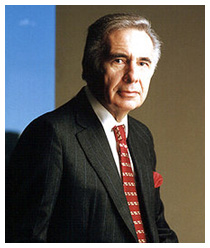
    Another noteworthy event in the long, strange tale of the Microsoft-Yahoo deal has occurred: about 15 months after securing his seat on Yahoo’s board of directors, Carl Icahn has resigned the position.

    It’s important to note that the move isn’t supposed to be interpreted as the first step in starting another fight.  Or even as a sign of disapproval.  In fact, in a letter announcing his resignation, Icahn made it sound more like a case of "mission accomplished" and "time to move on."

    Carl Icahn"When I joined the Board, the company was in a state of turmoil," he wrote.  "In the period since then, we have all worked together to achieve much for the Company, most notably bringing Carol on to be the CEO and then consummating the search deal with Microsoft.  I am proud to have played a role in both these decisions.  Carol is doing a great job and I believe the Microsoft transaction will provide great long term benefits, the potential of which many still do not understand.
    Icahn then continued, "I don’t believe that it is necessary at this time to have an activist on the Board of Yahoo! and currently, my attention is focused on other matters."

    Then here’s one more important detail: Icahn remains a major investor in Yahoo, with a 4.5 percent stake.

    Still, shareholders don’t seem to have taken news of his resignation well.  Yahoo’s stock is down 1.39 percent this morning even though the Dow and the Nasdaq have both made slight gains.

  • Integrated Care’s Drawback: It Could Lead To Health Monopolies

    President Barack Obama and Democratic leaders have repeatedly praised integrated health care for its ability to improve safety and quality while reducing costs, citing examples such as the Mayo Clinic. But health economists worry that such consolidation may actually increase costs and could lead to monopolies.

    The Boston Globe reports: “The health care overhaul proposals before Congress encourage hospitals and doctors to join forces and create networks that would do a better job of coordinating patient care. But large provider groups also carry a risk: They can use their market strength to raise prices and reap higher profits.”

    In the article, the Globe looks at this example: “Partners HealthCare, which includes Massachusetts General Hospital and Brigham and Women’s Hospital as well as a 4,000-physician network of community affiliates, has been accused of using its enormous clout to dictate prices and marginalize competitors. A 2006 Robert Wood Johnson Foundation study found that a wave of hospital mergers in the 1990s led to price increases of 5 to 40 percent, and warned an impending second wave could leave many cities with a monopoly hospital system. Robert Town, a health economist at the University of Minnesota who co-authored the study, said once a provider group becomes indispensable in a community, it can force insurers to pay more — as many have already done” (Wangsness, 10/25).

  • Failure To Fix Medicare Doctor Payments Highlights Perennial Problem

    NPR reports on Senate Democrats’ failed attempt to fix Medicare’s perennial problem of threatening to cut doctor pay. “Just about every year a formula glitch threatens to cut payments to doctors who treat seniors and the disabled,” according to NPR. “And just about every year Congress cancels the cut. This year lawmakers are complaining about the bill because it’s not paid for. But, despite what both Republicans and Democrats are claiming, that’s nothing new.”

    The Senate Democrat bill “couldn’t even make it to the Senate floor — it fell short on its first procedural test last Wednesday by 13 votes. The reason cited by virtually every opponent was that the bill’s $250 billion, ten-year cost wasn’t paid for with other spending cuts or increased taxes” (Rovner, 10/25).

  • Ask.com Gets New U.S. Leadership

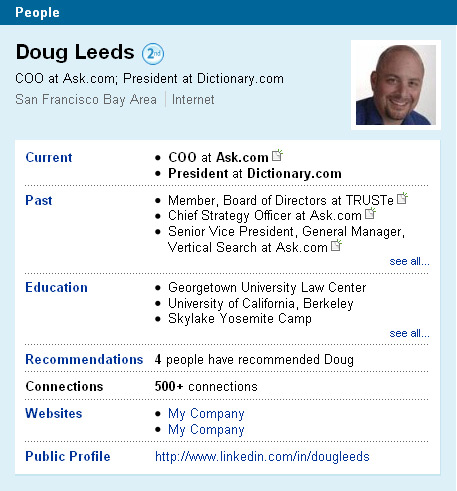
    On Friday Ask.com announced that it has promoted Doug Leeds to President of Ask.com U.S. In addition, Tony Gentile has joined the company as Senior Vice President, Product Management.

    Leeds has been with Ask Networks since early 2006, where he has held several different positions. Most recently, he has been President of the company’s Dictionary.com and Chief Operating officer of Ask Networks. Now as President, he will oversee the US business for Ask.com and lead the development, launch, and execution of Ask’s strategy in the U.S.

    "Doug’s elevation to President of the Ask.com U.S. business is very timely and important to our future, and his ongoing leadership has led to a broad array of successes across our businesses – driving Ask Networks to become the 6th largest internet property in the U.S.," said Scott Garell, President, Ask Networks.

    Doug Leeds

    Leeds has also held executive roles at Yahoo and Vodafone in the past.

    "We are also delighted and fortunate to have Tony join us to lead our product management efforts as we continue to innovate for 2010 and beyond," adds Garell.  "I look forward to working closely with Doug and Tony to make Ask the most trusted place for answers on the web."

    Gentile will report to Leeds. He has worked as Senior Vice President for Product Management at Healthline.com and Founder and President of product consultancy buzzhit!. He has also held senior positions at Knight-Ridder, Ofoto, MyFamily.com, Adobe and PointCast.

    According to data from Compete, Ask.com and Dictionary.com combined for over 39 million unique visitors in the U.S. for the month of September.

  • Dodd And Lieberman: The Tale Of Two Connecticut Senators

    Roll Call reports that the two longtime Connecticut Senators, Democrat Chris Dodd and Independent Joe Lieberman, are at “near-opposite ends of a health care debate that amounts to Congress’ biggest undertaking in a generation.” The relationship between to the two lawmakers was strained in 2008, when Dodd ran for president, but Lieberman supported Republican John McCain. In 2006, Lieberman left the Democratic Party after losing a primary race and Dodd endorsed his challenger.

    “Dodd and Lieberman could end up voting for the same health care package regardless of their differences. Although liberal, Dodd is also pragmatic and has often supported legislation that can pass even if it is less comprehensive than he would like. Lieberman is expected to ultimately side with the Democratic Conference unless he is part of a group of moderates who is unified in resistance. Neither Senator enjoys high approval ratings at home, and in fact Dodd might benefit with his Democratic base by taking a different tack than Lieberman on health care”  (Drucker, 10/26).

    Lieberman, “one of a handful of Senate wild cards in this fall’s healthcare reform debate, says his concern about the Senate bill is based on the national deficit — not the insurers that dominate his state,” The Hill reports. He dispelled speculation that large insurers in his state have compelled him to resist Democrat-authored health overhaul bills. He recalled that he had sued insurers as his state’s attorney general, and said he is willing to bring an end to insurers’ anti-trust exemptions, another idea lawmakers have floated recently (Rushing, 10/26).

  • Dear Internet: Bill Keller doesn’t know the first thing about the “Apple Slate”

    Good old “Two-Fist” Bill Keller, executive editor of the NYT, dropped the Apple bomb at a pay-vs.-free talk at an “off-the-record” staff meeting which, luckily, was been recorded for posterior. His talk mostly revolves around how the NYT will survive the web, itself an important and fascinating topic. However, the Internerds aren’t happy with all of that. Keller, probably tipped off by his staff, mentions the “Apple slate.”

    You see, after hemming and hawing about all this “digitalization” of the computer nerds with all their Kindles and ebooks and supercomputers he lets loose with this rocking little piece of fluff:

    “… we need to figure out the right journalistic product to deliver to mobile platforms and devices. I’m hoping we can get the newsroom more actively involved in the challenge of delivering our best journalism in the form of Times Reader, iPhone apps, WAP, or the impending Apple slate, or whatever comes after that.”

    BLAM! WAP! When a man past a certain age plops the word WAP next to the words “impeding Apple slate,” you can be sure said man knows nothing on either topic.

    However, if you want to hear a smart man talk about his views on the future of journalism, feel free to enjoy this video in that way.

    Bill Keller speaks to the digital group at The New York Times from Nieman Journalism Lab on Vimeo.

    via Reg


  • Swine Flu ‘Emergency’ Declaration Could Mean Expedited Care

    President Barack Obama declared a state of emergency as the number of swine flu cases soars and vaccine production doesn’t keep up with demand. 

    The Los Angeles Times: “President Obama on Saturday declared the swine flu outbreak a national emergency, a procedural step designed to allow healthcare providers to speed treatment and slow the spread of the disease. The action gives Secretary of Health and Human Services Kathleen Sebelius temporary authority to grant waivers that would expedite steps such as setting up off-site emergency rooms to treat potential flu victims apart from other patients. Administration officials said the move was not made as a result of any particular development, but as a preemptive measure to ensure that the tools for a quick response were in place.”

    “According to the Centers for Disease Control and Prevention, 46 states have reported widespread incidence of the swine flu, also known as H1N1. Since the outbreak of the pandemic in April, there have been more than 20,000 hospitalizations from laboratory-confirmed infections and more than 1,000 deaths” (Hook, 10/25).

    ABC News: “Some hospitals have opened drive-thrus and drive-up tent clinics to screen and treat swine flu patients. The idea is to keep infectious people out of regular emergency rooms and away from other sick patients. Hospitals could modify patient rules — for example, requiring them to give less information during a hectic time — to quicken access to treatment, with government approval, under the declaration. It also addresses a financial question for hospitals — reimbursement for treating people at sites not typically approved” (Elliott, 10/25).

    The New York Times, on credibility issues: “Earlier this month, the government was forced to announce that only about 28 million doses would be available by the end of this month, about 30 percent below the 40 million it had previously predicted. … [S]ince the outbreak of the H1N1 swine flu occurred in April, federal projections have been consistently and wildly overoptimistic and have had to be ratcheted down several times. As recently as late July, the government was predicting having 160 million doses by this month.”

    “The reasons for the receding estimates start with the fact that the H1N1 virus, known as swine flu, is not growing as fast as expected in the eggs used to produce vaccine. Moreover, some manufacturers did not even know how little they were producing until a vaccine potency test became available around August, federal officials say. Some companies hit bottlenecks in putting the vaccine into vials and syringes” (Pollack and McNeil Jr., 10/25).

    NPR: “Compared with seasonal flu, young people and children continue to be disproportionately affected by the virus. In the first 11 days of October, one in five kids had influenza-like illness — fever, cough, fatigue, aches and pains. Since April, there have been 95 confirmed pediatric 2009 H1N1 deaths, and nearly half of them have occurred during September and October, according to the CDC. … Across the country, dueling concerns persist: Some people worry that they won’t have access to the vaccine, while others question the vaccine’s safety” (Silberner and Masterson, 10/23).

  • BlackBerry Storm2 to be out on October 28th if anyone cares

    storm2Thank the cell phone gods. Verizon finally announced that the heavily leaked and previewed BlackBerry Storm2 will be available on October 28th for $179 after a $100 mail-in rebate. Let’s move on.


  • Health IT Opportunities Abound, Some Studies Question Value

    “The rest of the world has embraced e-mail, online forms and iPhone apps, but health care still communicates in the centuries-old technology of paper,” McClatchy/Tribune News reports. Now, technology companies are recognizing a business opportunity in that shortcoming. Moving to electronic medical records can be expensive – Kaiser Permanente spent $4 billion switching from paper to digital – meaning money in the bank for well-poised vendors. Some companies are also exploring innovations beyond traditional electronic records systems, such as Epic or Google’s effort to provide consumers with personal, online records (Chan, 10/26).

    Yet, some critics say health information technology is not a “cure-all,” the Washington Post/Columbus Dispatch reports. A $19.5 billion, stimulus-funded program is helping doctors and hospitals adopt new technologies. “Obama has said the changes will save billions in health-care costs and will minimize medication errors… (but) researchers at the University of Minnesota found in March that electronic records prevented only two infections a year. A 2005 report in the journal Pediatrics found that deaths at the children’s hospital at the University of Pittsburgh Medical Center more than doubled in the five months after a computerized order-entry system went online. The center said the study had not found that technology caused the rise in mortality and maintained that medication errors were down 60 percent since computers were introduced in 2002” (Mostrous, 10/25).

  • Verizon announces the BlackBerry Storm2, available Wednesday for $179.99

    feature

    Lovers of all things BlackBerry might want to stop on by their local Verizon dealer this Wednesday as that’s the day “a powerful new Storm rolls onto Verizon Wireless’ network” (sorry, we couldn’t resist.) Going for $179.99 on a 2-year contract after a $100 MIR — no word yet on full retail — the Storm2 is everything that Storm 9530 users could hope for in that it is reliable, dependable and has Wi-Fi. We’ve got a production unit from Verizon that we’re currently testing and will publish a review of it shortly, but for now the best we can give you is a press release couple enormous press shots after the jump.

    vzw-storm2-press

    vzw-storm2-press-2

    BASKING RIDGE, NJ, and WATERLOO, ONTARIO — Verizon Wireless and Research In Motion (RIM) (NASDAQ: RIMM; TSX: RIM) today announced that the BlackBerry® Storm2™ smartphone will be available in Verizon Wireless Communications stores, online at www.verizonwireless.com, and through business sales channels beginning Oct. 28. The BlackBerry Storm2 with BlackBerry® OS 5.0 evolves the BlackBerry® touchscreen platform with hundreds of hardware and software enhancements – including new SurePress™ “clickable” display technology and built-in Wi-Fi® – delivering the exceptional multimedia experience and communications capabilities customers have come to expect from their BlackBerry smartphones.

    Key Features:

    • Smooth design and premium finish with sloped edges, chrome accents, glass lens and stainless steel backplate
    • Large (3.25”), dazzling high-resolution 480 x 360 display at 184 ppi
    • Capacitive touchscreen with integrated functions (Send, End, Menu, Escape) and new SurePress technology that makes clicking the display practically effortless
    • 3G and global connectivity support for making phone calls in more than 220 countries and accessing data in more than 185 countries (with more than 80 destinations in 3G)
    • Network Connectivity: EV-DO Revision A; UMTS/HSPA (2100 MHz); and quad-band EDGE/GPRS/GSM networks
    • Supports Wi-Fi (802.11 b/g)
    • 256 MB of Flash memory
    • 2 GB of onboard media storage and a microSD™/SDHD memory card slot with a 16 GB card included

    Software Updates on BlackBerry Storm2:

    • Features BlackBerry OS 5.0, which includes typing accuracy and selection improvements, as well as usability and visual enhancements such as inertial scrolling, spin boxes that make it easier to set dates and times, gradient shading on buttons, and more use of animation
    • BlackBerry® Browser is improved with faster JavaScript and CSS processing as well as support for Gears and BlackBerry Widgets
    • Customers running BlackBerry® Enterprise Server 5.0 will gain the ability to set follow-up flags, manage e-mail folders, access remote files (Windows Shares), forward appointments, view calendar attachments, and more

    Additional Features and Specifications:

    • 3.2 megapixel camera with autofocus, Image Stabilization (IS), flash and video recording capabilities
    • Premium and easy-to-access phone features, background noise suppression technology, loud distortion-free speakerphone and face detection (proximity sensor) that prevents accidental clicks and blanks the screen while the customer is on the phone
    • Media player for videos, pictures and music, plus support for BlackBerry Desktop Manager for both PCs and Macs, and BlackBerry® Media Sync, for easily syncing Windows Media® Player music with the smartphone*
    • 3.5 mm stereo headset jack and dedicated volume controls
    • Bluetooth® (v2.1) capable with support for Secure Simple Pairing, hands-free headsets, stereo headsets, car kits and other Bluetooth peripherals
    • Built-in GPS for maps and other location-based applications, as well as photo geotagging; and Verizon Wireless’ VZ NavigatorSM service is pre-loaded
    • V CAST Music with Rhapsody
    • Access to BlackBerry App World™, featuring a broad and growing catalog of third-party mobile applications developed specifically for BlackBerry smartphones, with categories including games, entertainment, IM and social networking, news, weather, productivity and more
    • Support for Verizon Wireless’ Mobile Broadband Connect tethering service
    • Removable, rechargeable 1400 mAhr battery that provides up to 5.5 hours of talk time or up to 11.2 days of standby time

    Pricing and Availability:

    • The BlackBerry Storm2 smartphone is available beginning Oct. 28 for $179.99 after a $100 mail-in rebate with a new two-year customer agreement on a voice plan with an Email and Web feature or an Email and Web for BlackBerry plan. Customers will receive the mail-in rebate in the form of a debit card; upon receipt, customers may use the card as cash anywhere debit cards are accepted. Data plans for the BlackBerry Storm2 smartphone begin at $29.99 when added to any Nationwide voice plan.
    • New Operating System for Existing BlackBerry Storm Customers
    • Existing BlackBerry Storm customers will be able to update their handsets to the new BlackBerry OS 5.0 software via Web software load (www.blackberry.com/update), BlackBerry Desktop Manager, or from Verizon Wireless’ download site (www.verizonwireless.com/storm). The software is available today.
    • For additional information on Verizon Wireless products and services, visit a Verizon Wireless Communications Store, call 1-800-2 JOIN IN or go to www.verizonwireless.com. Business customers can contact their Business Sales Representatives at 1-800-VZW-4BIZ.

    * Certain music files may not be supported, including files that contain digital rights management technologies.

    Read

  • Adobe Teams With Salesforce on New Flash Builder

    Adobe and Salesforce.com have partnered to launch the Adobe Flash Builder for force.com, which Adobe says increases developer productivity for creating rich Internet applications in the cloud. The product can be used to enhance existing Salesforce CRM implementations and custom-built Force.com apps, or build new apps altogether.

    "Flash Builder for Force.com is a jointly developed IDE that provides a single, powerful tool for building cloud-based RIAs, which can easily be deployed to end users through the browser using the Adobe Flash Player or directly to the desktop via Adobe AIR," explains Michelle Perkins on the Adobe Flash Platform blog. "This tight integration enables client-side data management and synchronization between cloud and client, simplifying the development of applications that seamlessly run online or offline across operating systems and devices, while taking full advantage of the proven scalability, security and reliability of the Force.com platform."

    You can get an idea of what the product is about in the following introduction video.

    Features include:

    – Professional Eclipse-based IDE, unifying Adobe Flash Builder and the Force.com IDE into a common, highly productive environment for building a variety of Force.com applications.

    – Code-editor, design-view, browser and cross platform compatibility.

    – User interface capabilities with more than 100 easily customized, reusable components, including access to motion graphics, drag and drop capabilities and more.

    – Data visualizations including built-in interactive charting and animation components capable of processing large data sets.

    – Pre-built integration with Adobe LiveCycle Data Services for client-side data management and synchronization services, automatically synchronizing data between the Force.com database and an Adobe AIR secure local data store on the client, allowing developers to build apps that seamlessly span connected and disconnected environments.

    Final delivery for the product is expected to go down in the first half of next year. A developer preview version is currently available at the Salesforce developer site.

    Related Articles:

    Google Improves Flash Indexing Capabilities

    Windows Mobile 6.5 Launching In October

    Salesforce Launches Mobile App Update for iPhone 3.0 OS

    Salesforce Gives Force.com Users Free Sites

    Salesforce Introduces Free Mobile Service

  • Digital Contents Expo Tokyo: Augmented tabletop video game with pinching gesture recognition (video)

    touch_arcade

    The Koike Laboratory from the University of Electro Communications in Tokyo was responsible for one of the most spectacular booths at the Digital Contents Expo that ended in Tokyo yesterday. They developed an “augmented tabletop video game with pinching gesture recognition”. The device is basically a touch screen running an action game.

    The game has been around for a while now, but the latest version I saw at the event was just awesome.

    Just have a look at the video I took at the expo yesterday.


  • Jonathan Bloom Joins Ropes & Gray

    Jonathan Bloom has joined Ropes & Gray LLP as a London-based partner in the law firm’s debt financing practice. He previously was a partner in the high yield practice of White & Case.

    PRESS RELEASE

    Ropes & Gray LLP today announced that Jonathan Bloom has joined the firm as a partner in its Debt Financing practice group.  Bloom is the first addition to Ropes & Gray’s London-based team as the firm builds critical mass in its private equity and debt capability there.  The team is headed by leading finance lawyers Maurice Allen and Michael Goetz, who will spearhead the opening of the firm’s London office in January 2010.  Senior U.S. partners David Chapin and Newcomb Stillwell will be working closely with their new colleagues to launch and grow the London office, demonstrating Ropes & Gray’s commitment to establishing a world-class service center in this important market.

    Commenting on the announcement, Maurice Allen said, “We are thrilled that Jonathan is joining our team.  He brings with him extensive experience in the U.S. securities laws and in structuring and negotiating cross-border Rule 144A and Regulation S high-yield debt offerings and restructurings.  He will help to serve our clients in both the U.K. and Europe, and establish our presence as a private equity leader in the marketplace.”

    Bloom joins Ropes & Gray from White & Case where he was a partner in the High Yield practice.

    “My focus on representing private equity houses, hedge funds and investments banks in a variety of financing transactions has led me to seek a platform that will provide my clients with the breadth and depth of resources they require,” said Bloom.  “With the combination of Ropes & Gray’s preeminent private equity and funds capabilities and the expertise Maurice and Mike have in the London finance market, I’m excited about our ability to deliver for our clients.”

    The opening of Ropes & Gray’s London office marks the firm’s fourth move into key geographic markets in the past two years, following openings in Tokyo, Hong Kong and Chicago.  Ropes & Gray’s worldwide footprint allows it  to serve clients from bases in major world PE centers and to provide global execution of transactions
    #####

    Ropes & Gray is a full-service, global law firm that works with clients across a wide variety of industries to successfully address their greatest legal challenges and achieve their business goals. With more than 1,000 professionals located in leading centers of finance, technology and government, we bring an unparalleled passion for excellence, new ideas and a true team spirit to every project.

    ShareThis