Yesterday Metaio, the Germany-based augmented reality (AR) company, announced a deal with ST-Ericsson which will see the latter integrate a specialized AR processor into the next generation of its mobile chipsets.
This will be the first dedicated chip of its kind to see commercial deployment, and it should have a big impact on the power consumption of AR applications, which are today generally a big battery-suck due to their intensive use of graphics and, increasingly, 3D rendering. As Metaio CEO Peter Meier put it in the statement:
“The AREngine will do for augmented reality what the GPU did years ago for the gaming industry. This is a great leap in the AR space, and we strongly believe that the AR Engine working with ST-Ericsson platforms will help realize the augmented city — the idea of a completely connected environment powered by augmented reality and made possible with next-gen, optimized mobile platforms.”
Here’s the video the companies put out. Notice the emphasis on the use of the AREngine chip in smartphones:
That emphasis on handsets is understandable because ST-Ericsson’s business today is largely in smartphone chipsets – it is surely no coincidence that ST-Ericsson is supposedly going to be supplying its NovaThor chipsets to Nokia, which takes great pride in the CityLens AR app that runs on its Lumia handsets.
However, while AREngine may make use of such apps slightly more attractive on smartphones, I don’t think power consumption is the main reason why people don’t walk around constantly holding their phone at arm’s length in front of them. Here are three far more likely reasons: it looks absurd, it’s dangerous, and it represents poor ergonomics.
That’s not to say AR is useless – far from it; it’s occasionally handy today and I believe there are many cool applications lying on the other side of a tipping point we’ve not yet reached. It’s just that, with smartphones, AR makes the most sense in short bursts, like when you actively need to establish the direction in which you should next walk. And power’s less of an issue there.
Where the AREngine processor would be superbly useful is in smart glasses, of the Google Glass ilk. These devices will be the real tipping point for AR – they remove the absurdity, danger and poor ergonomics of physically and consciously holding something out in front of you as you walk.
And as such wearables get redesigned to make their users look less like tools, their sleeker, skinnier new look will mean less battery space. Combine that with the fact that such devices will need to constantly display AR data, and Metaio and ST-Ericsson’s technology becomes a no-brainer.
If you’re looking for a free video converter then there are now plenty of great free programs around, which is plainly very good news for the end user.
Software developers, though, are having to cram in ever more features to help their converter stand out from the crowd and Video to Video is a particularly strong example.
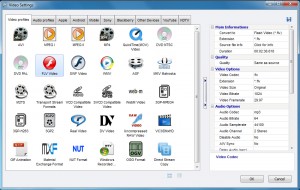
The program supports over 200 input formats, for instance, while exporting over 700. And so it can handle several file types which aren’t so well covered elsewhere (DV, VC3, MXF, NUT).
Video to Video also provides output profiles for a host of different devices: Apple, Android, Mobile, Sony, Blackberry and more. We’re not just talking about one or two generic examples, either. Click the Android tab, say, and you’re presented with more than 240 profiles for mobile devices from all the major manufacturers (and quite a few of the minor ones, too).
You could then accept the default profile settings, click Convert and wait for your new videos to appear. But if you like more control, then you’ll love the options available here. You can set your video and audio codecs, bit rates, resolution, aspect ratio, frame rate and more. There’s subtitle support. You can crop, pad, rotate or flip the video. There are options to tweak brightness, contrast, colors, hue and saturation. And an “Other Filters” list contains tools to sharpen your video, remove noise, stabilize a clip, remove a logo, and more.
A “Tools” menu provides some useful processing options, allowing you to trim videos, join them, rip and burn video DVDs, and more.
There are some unexpected bonus features, too. So the program can actually create animated GIFs from a video, for instance. And an “Images to Video” tool proves a surprisingly powerful way to create video slide shows, with support for a soundtrack, text captions, a vast number of custom transitions, and more.
And all this comes in a straightforward portable package with no codecs to install, no adware, not even a “Donate” button (unless you head to the website).
There are some downsides, too. Once you get past the basics, for instance, the interface isn’t always as intuitive as it could be. And we did run into one technical issue when creating a video slide show; the conversion process failed for no apparent reason when exporting to AVI, but worked just fine if we chose MP4 instead.
For the most part, though, the program performed very well, importing all the files we threw at it, and quickly converting them to our chosen formats. And so if you’re in the market for a video converter with some real power, then should probably download a copy of Video to Video right away.
The BBC’s iPlayer app is available for both iOS and Android, but owners of Apple devices definitely get the better deal with additional features, such as the ability to download shows to their iPhones or iPads for offline viewing.
The latest update from the BBC widens the gap between the app siblings further by introducing improved AirPlay support. Owners of iOS devices who also have Apple TV will now be able to beam a show from the app to the big screen, and then background iPlayer, and use their phone or tablet for something else while the show continues to play.
In addition, the new version of the app fixes various minor problems and glitches, improves playback quality, and ensures downloads are more reliable.
You can grab the latest version of iPlayer from the App Store now.
IBM and Deutsche Telekom, the carrier behind the T-Mobile brand, are to work together on creating smart city systems, the companies have announced.
The smart city concept, which is closely related to the “internet of things”, is reliant on pervasive connectivity, drawing on what has traditionally been known as machine-to-machine (M2M) technology to hook up everything from traffic lights to public transport vehicles to the local broadband network. This usually involves the use of cellular networks.
The idea there is to be able to analyze sensor-based data from all these sources so as to better coordinate them and make cities more efficient, both to live in and in terms of energy use. For example, sensors in parking bays might help drivers find a space more easily, cutting down on the emissions that might come from driving around unnecessarily.
IBM has been working on this type to echnology for a while, as have other companies such as Microsoft, Cisco and Intel. Today’s deal allows IBM to plug its data-wrangling capabilities into Deutsche Telekom’s established global M2M ecosystem – DT will also handle details such as SIM card access management.
“M2M is a technology with enormous growth potential as it adds real value to our daily lives, both in business and privately,” Thomas Kiessling, Deutsche Telekom’s chief product officer said in a statement. “Our joint Smarter Cities initiative gives us the opportunity to work with cities across the globe and offer them valuable end-to-end solutions that help support public welfare as well as their economic growth in the future.”
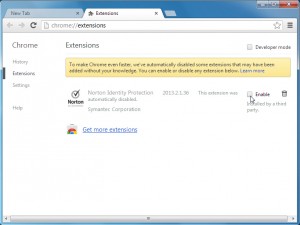
Google has announced the release of Chrome 25 to the Stable Channel for Windows, Linux and Mac, and as revealed in the beta, this release features a major change in the way extensions are handled.
In particular, the previous support for the automatic and silent installation of extensions will now be disabled by default, as apparently Google has noticed that this feature “has been widely abused by third parties to silently install extensions into Chrome without proper acknowledgment from users”. We could argue Google really should have predicted that in the first place, but at least it’s seen the light now.
This change will have an immediate impact, as any extensions previously installed in this way will be disabled by default, while a one-time dialog will ask users to re-enable them.
And the other result is that, in future, every Chrome extension will require specific consent from the user before it can be installed.
Elsewhere, Chrome 25 adds support for speech recognition via the Web Speech API, which means you could be talking to websites very soon. Once you’ve installed the new build then you can get a feel for how this could work at Google’s speech demo page.
The official Chrome blog post on this release reports that it also includes “better support for HTML5 time/date inputs” and “better WebGL error handling”.
And there are also the usual collection of bug and security fixes, although one of the solutions was a little drastic: the Webkit MathML implementation apparently includes a “high severity security issue”, and so it’s been disabled in this release.
The extra security alone makes it well worth upgrading to Chrome 25, then, but if you need to know more than the fine detail on this release is available at the SVN Revision Log.
Just three weeks after Alcatel-Lucent CEO Ben Verwaayen announced his resignation, the Franco-American telecom vendor has found his replacement. Former Vodafone Europe CEO Michel Combes will take the helm of Alcatel-Lucent on April 1.
Combes headed up Vodafone’s all-important Europe region from 2008 to 2012, when he found himself in an employment bind. He left Vodafone to take over as CEO of Vivendi’s SFR in France, only to see the man who hired him, Vivendi CEO Jean-Bernard Levy, ousted before Combes could take on his new role. Now Combes has landed at one of world’s biggest infrastructure vendors.
Verwaayen, as promised, is staying on until April to help Combes ease into his new job.
“Alcatel-Lucent is an unrivalled technology leader in the telecommunications industry with an immense array of talent and capabilities in R&D facing major challenges,” Combes said in a statement. “This is a company I know well and I look forward to succeeding Ben, working with the key international customers, and driving the business into sustained profitability for its customers, employees and shareholders.”
Combes is taking over a troubled Alcatel-Lucent. The company has struggled since the merger six years ago of France’s Alcatel and the U.S.’s Lucent Technologies, which was supposed to create the world’s dominant telecom vendor. Instead, Alcatel-Lucent has lost ground to many of its traditional rivals such as Sweden’s Ericsson as well as newer market entrants such as Huawei.
PayPal is bringing its Here mobile payments service to the U.K., but its familiarly shaped triangular card reader will not be making the journey over the Atlantic. Instead PayPal is launching a new device that better fits the point-of-sale policies of Europe: a card reader with a numeric keypad for entering a key code.
Rather than fit into the headphone jack of a smartphone, the new reader pairs to the an iPhone or Android device via Bluetooth. And instead of swiping the card’s magnetic strip, the card is inserted into the reader so it can access the smart-chip embedded within typical European debit and credit cards, while the keypad is used for entering the customer’s PIN.
PayPal plans to showcase the new reader and service at Mobile World Congress in Barcelona next week, but U.K. merchants will have to wait a bit before they can get their hands on Here. According to PayPal’s blog, the company will roll out the service to select U.K. businesses in the coming months, after which it will launch nationwide. Following the U.K. launch, PayPal will roll out Here in other European countries, though it didn’t identify any by name.
The company faces stiff competition in Europe, with local rivals including iZettle, Payleven, mPowa, Adyen and SumUp.
If you didn’t know any better, you might not believe that Hewlett-Packard came this close to unloading its PC business a year and a half ago. On the company’s first quarter earnings call, CEO Meg Whitman gave a pretty strong impression that she is downright devoted to the Personal Systems Group (PSG), despite the fact that revenue fell 8 percent from the year-ago period.
Revenue for commercial or business PCs fell 4 percent, and for consumer machines it was off 13 percent, but Whitman saw the bright side.
“Against the backdrop of overall PC market contraction in the fourth calendar quarter, we gained 1.4 points of market share in PCs over the prior year, including a 4.6 point gain in the U.S.,” Whitman said Thursday night. She also cited the company’s new EliteBook Revolve convertible, ElitePad 900 as well as its new Google Chrome-based notebook as reason for optimism going forward.
After Whitman’s opening remarks, Raymond James analyst Brian Alexander, pressed her on PSG, noting that its profits were off 50 percent year over year.
“We are committed to this business,” Whitman said in response. “We are going to compete on differentiation, whether that is form factors, increased focus on mobility, a multi-OS strategy, multi-chip strategy, frankly relevant to various industries, we’ve got great response to our ElitePad 900 that can be customized by industry and then services.”
She also acknowledged that pricing will be “problematic and quite competitive… but we think we can manage that.”
HP has wavered on whether it would keep or jettison various businesses over the past year. Its proxy statement in December noted that the company would consider selling off or divesting some businesses as needed. So, given that the company had broached –then retracted a possible PC business spin-off once before– that got tongues wagging again.
This news comes just weeks after PC and server rival Dell announced plans to go private – news which prompted HP to put out its own comments inviting Dell’s customers to avoid the uncertainty of a leveraged buyout and jump ship to Hewlett-Packard.
Given Whitman’s statement of support for this margin-stressed business unit, HP is either in it for the foreseeable future, or talking it up to enhance its value to a potential suitor. Hey, you’ve got to wonder, right?
Anyone who’s ever had their website hacked and defaced by hacker collective Anonymous can have a good laugh at their expense, because it looks as though they aren’t immune to security breaches either. BBC News reports that Anonymous this week “has suffered an embarrassing breach, as one of its popular Twitter feeds is taken over by rival hacktivists.” The Anonymous Twitter hack follows other high-profile Twitter hacks that have occurred over the past few days, including the Twitter accounts for both Burger King and Jeep. Graham Cluley, a senior consultant at security firm Sophos, tells BBC News that the hacks likely resulted from poor password practices, such as either using weak passwords or using the same password across multiple different accounts across the web.
Since almost nothing will actually be announced at Mobile World Congress this year, LG (066570) on Thursday unveiled two new smartphones that will launch later this year. The Optimus F5 and Optimus F7 Android phones look to build on the success of earlier Optimus models while also introducing some key improvements. The mid-range Optimus F5 features a 4.3-inch, 256 ppi display, a 1.2GHz dual-core CPU, a 5-megapixel camera, 8GB of storage, a microSD card slot, 1GB RAM, a 2,150mAh battery and Android 4.1.2 Jelly Bean. The higher-end Optimus F7 includes a 4.7-inch, 312 ppi display, a 1.5GHz dual-core processor, an 8-megapixel camera, 8GB of storage, a microSD card slot, , 2GB RAM, a 2,540mAh battery and Android 4.1.2 Jelly Bean. Both phones will launch in the second quarter, and LG’s full press release follows below.
Greenlight Capital hedge fund manager David Einhorn has a plan for Apple: to increase shareholder value and pump up the downward-drifting stock, why not issue a quarterly dividend of 50 cents — in perpetuity? Based on the conference call he hosted Thursday, Einhorn seems to believe that one of the most conservative companies in tech would get on board with this very unconventional plan to distribute preferred stock shared that he’s dubbed “iPrefs.”
Einhorn is framing the proposal as a way for Apple to avoid having to find other ways of distributing its $137 billion in cash it already has. He said his plan would mean Apple would spend about $1.9 billion per year issuing iPrefs. At the same time, he is trying to defeat a proposal Apple has put before shareholders, that would, among other things, allow Apple to issue “blank check” preferred stock. Last week, Apple CEO Tim Cook called the preferred stock idea “creative” but dismissed Einhorn’s lawsuit to get Proposal No. 2 removed “a silly sideshow.” Apple has promised to consider his ideas.
Here are some observations from Apple followers and finance experts about Einhorn’s strategy:
The Guardian notes that Einhorn’s plan is meant to reward investors and coax them into boosting the stock: “Einhorn is taking a mathematical route. He believes shareholders will reward Apple for giving them cash by pushing up the price of the stock. ‘Apple wants to keep its cake, and its shareholders can eat it too,’ he said.”
Fortune said he didn’t make a good case for the plan’s ability to boost the stock value: “Einhorn himself acknowledged that Apple’s common stock would go down when the iPrefs are issued and that a $50 iPref was also likely to lose value as soon as hit the market — undermining all his subsequent calculations for how much of Apple’s intrinsic value his scheme would unlock.”
Bloomberg quotes investors who aren’t super thrilled with the dual strategy of the iPrefs plan and lobbying against Apple’s shareholder proposal No. 2.: Rich Clayton of CtW Investment Group calls Einhorn’s campaign against Apple “in no way necessary” and says Apple’s proposal “is being hijacked.”
Bespoke Investor Group, via WSJ, says Apple’s cash hoard isn’t that big of a deal anyway: ”While you might think this is high, back in the early 2000s, Apple’s cash as a percentage of market cap was above 50% for years. And during the financial crisis, Apple’s cash got as high as 37%. Just something to be aware of as you hear all these calls for Apple to do something with its loot.”
As of the close of business Thursday, Apple’s cash was roughly 33 percent of its total market capitalization.
Einhorn said Thursday he would be meeting with Cook and other Apple representatives soon. The shareholders get to vote on the plan on Feb. 27.
Sony (SNE) finally took the wraps off its next-generation PlayStation 4 on Wednesday evening, and the upcoming gaming console is packed with premium specs that will help usher in the next stage in the evolution of gaming. Sony touted some great tie-ins with the PlayStation Vita during its two-plus-hour-long presentation, but its mobile ambitions extend beyond its own beleaguered portable console. Within Sony’s PS4 press release, the company announced that it will soon launch second screen experiences on the iPhone, iPad and Android devices thanks to its upcoming “PlayStation App.” Few details were provided, but the relevant section from Sony’s press release follows below.
Perhaps aware of the tsunami of news that will hit during Mobile World Congress, we are seeing an increasing amount of news releases coming out before the actual event. France Telecom/Orange has already told us about one device — an Android smartphone with Fujitsu aimed at the senior market — and now it is following that up with three more, own-branded, Android handsets aimed squarely at the middle market of smartphone users.
The Lumo (pictured) is the carrier’s first own-branded LTE device; the Nivo is a device aimed at the budget segment; and the San Remo is a large-screened 4.7″ device with a brushed-metal casing. All will be out in selected markets in the first half of this year.
And while each of these devices will come loaded with Android 4.1, Patrick Remy, the VP of devices for France Telecom, also notes that we may soon start seeing own-brand handsets from the carrier not built on Android. “There is no willingness to only have Android devices in this range,” he said. “We believe the best opportunity is with Android right now, but we are looking at other operating systems, specifically Windows Phone, but potentially others.”
On the subject of Firefox OS — the mobile platform being built by Mozilla with other partners — “we are monitoring what is being done there,” says Remy. “We are not announcing any launch of such devices at this point in time, but we are definitely interested in that area and depending on the opportunities, there is a chance for an Orange-branded device among those.”
Remy also admits that Orange’s own-brand smartphone devices do not move the needle when compared to the volumes sold by carriers from smartphone leaders Samsung and Apple. But they are proving to be small hits for the carrier, specifically when targeting users in the mid-market — or “higher-end pay-as-you-go or lower end contract customers,” in Remy’s description.
This naturally means these devices do best in markets where these segments are biggest. “Not Luxembourg,” Remy joked of the very affluent little principality where the carrier offers services. But other markets do quite well. In Spain last year, Orange’s best-selling device was the Monte Carlo, another handset in its own-brand range. Overall sales of this line of devices has grown by 62% over the last year. But it’s telling that there are currently “no plans” for any of these three to be offered in the UK this year.
France Telecom/Orange does not release sales numbers on how well these smartphones do but did note that last year its entire range of own-branded devices — including both feature phones and smartphones — were about 10% of all handset volumes, “and that’s increased a bit to about 12%,” says Remy. He notes that within that proportion smartphones are a “significant part of that.”
Orange has struck deals with Alcatel/TCL, Gigabyte, Huawei and ZTE to make its own-brand devices. The Lumo and Nivo come from Gigabyte, whereas the San Remo is made by Alcatel/TCL, with Huawei and ZTE sitting out in this particular round.
Perhaps more than other European telcos, Orange has over the years dedicated a lot of time and energy to creating devices that are filled with Orange-customized services and the Orange brand. These devices play into that theme, but for now will not be packing as much Orange-punch as they can.
Baidu, for example, which has inked a deal with Orange to provide a customized browser for its devices, will not be making an appearance on the devices for now, although this may be something we will see going forward, says Remy. “They’ll come with our standard suite of services and customization,” he noted. These include customized lock-screens, the ability to port your services when roaming, and links to Orange services specific to your home country.
Popular sexting app maker Snapchat on Thursday updated its Android application of the same name with the ability to send self-destructing videos to Snapchat contacts. The video function had been available in the Snapchat Android app as part of a closed beta, but it is now available to all users in Snapchat 2.0. Snapchat bills its app as a way to “build relationships, collect points, and view your best friends,” though the most widely discussed use for the service is sending nude photos — and now, videos — between devices that are automatically deleted after a set amount of time… unless the recipient decides to use a simple trick to save the files permanently. Snapchat 2.0 is available immediately for free in the Google Play store, which is linked below.
Did you know that Google has real people working there? If you have ever tried to contact the company then you may have concluded otherwise. In fact, it may be more difficult than finding a phone number for Amazon — a task that has resulted in websites dedicated to the adventure. Apparently the search giant would like to change that reputation and today it took the first step.
Google has announced a new support package for customers of its Cloud Platform services. This is an enterprise service that the company would like to use to compete against Amazon S3 and Windows Azure. In fact the service is doing very well, with some high-profile customers such as Best Buy. But a bit more was needed to boost things over the hump — namely human interaction.
Today Google announced new customer service options, available in tiers based on what your business requires and, of course what it is willing to pay.
Brett McCully, of the Google Cloud Platform team, announced the service, calling it “a comprehensive collection of support packages for services on Google Cloud Platform, so you can decide what level best fits your needs”.
There will be four levels of service — Bronze, Silver Gold and Platinum. These range in price from free to the sky-is-the-limit (meaning Platinum requires you to contact a service rep to inquire) — however gold starts at $400 per month, just so you have an idea.
Service levels range from “access to online documentation, community forums, and billing support” for the Bronze to “The most comprehensive and personalized support. In addition to Gold, you’ll get direct access to a Technical Account Manager team” for the Platinum subscription.
The service is now open for sign-ups if you care to take the plunge and see what Google truly offers in the way of customer care. And, if you do, then be sure to let us know how it works out for you.
Mobile operator Airtel Africa is rolling out a large-scale Wi-Fi network in 17 countries in an effort to bring high-speed mobile data services to a region of the world that still relies heavily on 2G networks, GigaOM has learned.
Airtel Africa, part of the India-based Bharti Airtel group, will deploy tens of thousands of carrier-grade access points in high-traffic areas throughout its pan-continental network, according to a source close to the deal who asked not to be named because details have not been officially released. Airtel has started building the network in Niger, but it plans to quickly expand it to the 16 other African countries in its footprint. Depending on how successful the rollout is and how much the network is used, Airtel could expand the project to encompass more than 100,000 nodes, our source said.
A Ruckus Wireless Wi-Fi hotspot/small cell
Ruckus Wireless will supply its indoor and outdoor high-capacity access points, while Alcatel-Lucent will supply its service and aggregation router and act as the system integrator on the project. We reached out to Airtel, Ruckus and Alcatel-Lucent. Alcatel-Lucent confirmed it is building a backbone data transport and backhaul network for Airtel, but a spokesman said the company would not comment on any Wi-Fi plans. Ruckus told us they had no comment, and we have not heard back from Airtel.
While Wi-Fi is being used in countries like the U.S. to supplement high-speed 3G and LTE networks, in Africa 3G connections are few and far between and 4G services are virtually nonexistent. According to Ericsson’s most recent Market Report, 85 percent of the subscribers in the Africa and Middle East regions are on 2G networks. Africa’s penetration of smartphones is low compared to more developed regions, but it’s expected to grow quickly as more vendors produce cheaper and cheaper Wi-Fi-equipped Android smartphones.
Our source tells us that Airtel is using Wi-Fi as a 3G/4G replacement, putting up dense clusters of access points in hotels, airports, shopping districts and heavily trafficked outdoor locations. It’s much more inexpensive to use Wi-Fi as a mobile data technology. Even though it can’t provide the coverage of a wide-area cellular network, Airtel can use it surgically, delivering capacity to areas where it will be used the most.
The deal is a big one for Ruckus, which recently went public, even though the rollout doesn’t yet approach the scope of its massive Wi-Fi contract with Japan’s KDDI. For Alcatel-Lucent, the deal is an opportunity to help build an alternate wireless network for one of Africa’s largest carriers using its core infrastructure. Alcatel-Lucent has its own Wi-Fi product, but it’s meant to be deployed in conjunction with its own lightRadio 3G and 4G infrastructure. Airtel uses Nokia Siemens Networks and Huawei for its cellular systems, but the deal could give Alcatel-Lucent a leg up when the next round of network construction begins.
Apart from Niger here are the other countries Airtel will launch Wi-Fi in: Burkina Faso, Chad, the Democratic Republic of the Congo, Gabon, Ghana, Kenya, Madagascar, Malawi, Nigeria, the Republic of the Congo, Rwanda, the Seychelles, Sierra Leone, Tanzania, Uganda and Zambia.
Featured image courtesy of Shutterstock user Anton Balazh
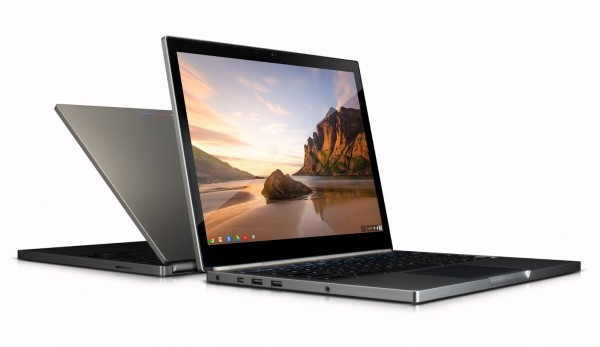
That sound you just heard was Google slapping Apple across the face. Today the search and information giant unveiled and starting selling high-end portable Chromebook Pixel. By just about every measure, Google guns for Apple in its dominant market — premium PCs, or those selling for $1,000 or more. When rumors circulated about the computer, I opined: “Chromebook Pixel looks like MacBook Pro to me“. The impression is stronger now that the real deal is here — from form factor to price, either $1,299 or $1,449.
Should Apple sweat about Chromebook Pixel? I would. Following a years-long retail trend, Apple share of PCs selling for $1,000 or more was over 90 percent in 2012, according to NPD. Stephen Baker, NPD’s vice president of industry analysis, asks if Google is “more trying to compete with Apple and high-end windows machines for premium consumer and maybe corporate?” I answer: Yes. What I want to know: Will you buy Chromebook Pixel? But more importantly: Would you buy Chromebook Pixel instead of 13-inch MacBook Pro?
For Whom?
For many of you the answer is an automatic “No”, because $1,000 is already too much. “I would never pay that much for any computer”, my colleague Alan Buckingham says. “Five-hundred dollars is the limit”. He paid $400 for his current laptop one-and-a-half years ago.
Then there are concerns Google’s “For Everyone” marketing campaign, which emphasized value, creates expectations Chromebooks shouldn’t cost much.
“It just seems like a big jump on price and specs and customer focus to me”, Baker says. During the holidays, Google aggressively promoted the $249 Samsung Series 3 Chromebook, which sells for more than $1,000 less than Pixel. Baker “would have rather seen a more mundane $699-$799 type product that directly brought the value of the Chrome OS to compete with a large iPad or a Win 8 touch machine”.
David Rodríguez Andino agrees with Baker: “Google is crazy pricing this at $1,300. A high-end Chrome OS device should be priced around $700 IMO”.
Commenting to one of my Google+ posts, Ian Betteridge turns “For Everyone” on its head: “The thing was that up until now, Chromebook wasn’t ‘for everyone’. For people like me, who value high-end, well designed hardware with great screens, there was no Chromebook that fitted the bill. Now there is. ‘Everyone’ doesn’t just mean ‘only people who want cheap plastic machines’”. He has a Chromebook Pixel already and so speaks with more authority than I.
I agree with Betteridge. Much as I like current Chromebooks, using Microsoft Surface Pro for nearly a month has me pining for high-resolution display and better performance. The new model promises both and for less than 13-inch MacBook Pro, which I would consider having ended the Apple boycott.
Value has different measures. Armando Ferreira asks the same question I do: “Google, are you poking at Apple because your commercial and price tag sure seem like it?” Value compared to something else, in this case MacBook Pro, is one measure.
Specifications
Here’s how the two laptops compare:
Chromebook Pixel: 12.85-inch touchscreen, 2560 x 1700 resolution, 239 pixels per inch; 1.8GHz Core i5 processor; Intel HD graphics 4000; 4GB DDR3 RAM; 32GB or 64GB of storage; HD WebCam; backlit keyboard; dual-band WiFi 802.11 a/b/g/n 2×2; 4G LTE (on one model); Bluetooth 3.0; mini-display port; two USB ports; Chrome OS. Measures: 297.7 x 224.6 x 16.2 mm. Weighs: 1.52 kg (3.35 pounds). Cost: $1,299 (32GB WiFi); $1,449 (64GB WiFi/4G LTE). 1TB Google Drive storage is included free, for three years.
MacBook Pro: 13.3-inch LED display, 2560 x 1600 native resolution, 227 ppi; 2.5GHz or 2.6GHz Core i5 processor; Intel HD graphics 4000; 8GB DDR3L RAM; 128GB or 256GB storage; HD Webcam; backlit keyboard; 802.11n wireless; Bluetooth 4; two USB 3 and Thunderbolt ports; HDMI port; OS X. Measures: 314 x 219 x 19 mm. Weighs: 1.62 kg (3.57 pounds) Cost: $1,499 (2.5GHz, 128GB); $1,699 (2.6GHz, 256GB).
Usage scenarios are different, which applies to Windows touchscreen computers, too. Chrome OS largely runs apps in the browser, while MacBook Pro supports local apps. Chromebook’s big draw is touchscreen, lower price and TB of free cloud storage. Is that compelling enough for you?
“Pixel is not going to fly of[f] the shelves like a new Mac Book Pro, but it has a niche”, Simon Bengtsson asserts. “There is definitely people caring about simplicity, design and an amazing user experience. Previous Chromebooks has compromised on the last two”.
Pixel Perfect?
At 4:13 p.m. EST, David Hoff “just finished ordering my new Chromebook Pixel”.
Jeff Jarvis got one, too, and chimes in with Betteridge:
I was wishing for a beefier Chromebook. Having proven itself at the low end of the market, I’ve been saying that I wished Google would come up with one at the high end. Now it has: The Chromebook Pixel. I just bought one, sight unseen. It has more memory, a faster processor, a touchscreen (which I’m looking forward to), and LTE built into the most expensive machine. At $1,500 it’s comparable to a Macbook, though I don’t need to buy any software for it.
Jarvis, who has been using the $249 Samsung Chromebook, makes a good point about additional costs: Software.
Peter Sitterly sees value beyond the machine that more than pays for it: “This is definitely priced higher than I thought it would be, but the fact that it comes with 1TB of Google Drive storage for 3 years changes the game a bit. For those who may already be paying $49.99 per month for 1TB of cloud storage, this is a no-brainer. This device would essentially save such folks from $1,799.64 worth of monthly fees over that 3-year span”.
Hasan Ahmad: “Chromebook pixel is the kind of product that Google releases to see how far their rabid fanboys will go to worship them”. I see something more Apple-worship-like here, because of design and features.
Off topic perhaps, but there’s something strange about the social buzz excitement that grates Ferreira, and I have to agree:
You guys know I like Google but help me understand this for a second. Microsoft releases the Surface Pro (64GB) $899.00, it can run legacy apps also all of your Android apps (Bluestack) and also the ability to run another OS like Ubuntu. Yet it’s ‘too expensive’. Google releases the Chromebook which in theory is just a Web Browser, can’t run legacy apps, maybe will one day run Ubuntu (Waiting on devs) only has 32GB of storage for $1,299.00 and people expect to jump on this like peanut butter on jelly?
Right. Why does Microsoft get grilled for Surface Pro passing ($899 or $999), while Google gets a pass?
So roundabout, I return to the two questions: Will you buy Chromebook Pixel and would you buy instead of 13-inch MacBook Pro? Please take the poll above and respond in comments below.
Sterling Partners has invested in Kids Care Dental Group. Financial terms were not announced. Sacramento-based Kids Care is a pediatric dental care practice that serves toddlers, children and teens.
PRESS RELEASE
Sterling Partners, a growth-oriented investment firm with more than $5 billion of assets under management, today announced a partnership with Kids Care Dental Group (“Kids Care”), a leading multi-unit pediatric dental care practice that serves toddlers, children and teens. Terms of the transaction were not disclosed.
Via six office locations throughout the Sacramento area, Kids Care offers an exceptional patient experience for parents and kids alike. Each practice provides a comfortable and fun environment, dentists with advanced education in pediatric dentistry, staff that has training for and experience in treating and interacting with children, and a robust suite of high-quality oral health services including dentistry, orthodontics and oral surgery.
Dr. Aaron Reeves, Kids Care founder and chairman, will remain a partner and continue as a board member.
“We chose Sterling Partners due to their track record for growing healthcare companies that focus on quality patient experiences,” said Dr. Reeves, who founded the practice in 2002. “Sterling shares our long-term vision for expansion, attracting top talent, forming new relationships with families and changing the way kids and their parents think about going to the dentist.”
“As a firm that is drawn to purpose-driven businesses, we were attracted to Dr. Reeves’ steadfast devotion to providing a differentiated dental model for kids,” said Dan Hosler, a Sterling Partners principal. “We will leverage our experience operating multi-unit businesses to help the company accelerate its growth trajectory so that its dental health professionals can focus on what they do best: providing a positive patient experience that builds lifelong oral hygiene habits.”
About Kids Care Dental
Kids Care Dental Group is a Sacramento-based dental practice conceived and dedicated to serve the special needs of toddlers, children, and teens. The practice’s 170+ professionals are committed to providing excellent dental care while promoting lifelong oral hygiene habits in a comforting and fun atmosphere. Kids Care’s differentiated approach revolutionizes pediatric Identistry by offering parents and kids a non-traumatic and easily accessible dental experience. For more information on Kids Care Dental Group, visit www.kidscaredentalgroup.com .
About Sterling Partners
Sterling Partners is a private equity firm with a distinct point of view on how to build great companies. Founded in 1983, Sterling has invested billions of dollars, guided by the company’s stated purpose, INSPIRED GROWTH™, which describes Sterling’s approach to buying differentiated businesses and growing them in inspired ways. Sterling focuses on investing growth capital in small and mid-market companies in industries with positive, long-term trends – education, healthcare, and business services. Sterling provides valuable support to the management teams of the companies in which the firm invests through a deep and dedicated team of operations and functional experts based in the firm’s offices in Chicago, Baltimore and Miami.
The people at Sterling believe in ideas and ideals, in people and partnerships that drive long-term success. For more information, please visit www.sterlingpartners.com.
I’m taking a break from writing about the nitty gritty of Hadoop to highlight yet another promising use case for big data — fighting crime. A new study by University of Michigan researchers details a method for using — according to a university press release — “high-powered computers and loads of data” to help police target neighborhoods most susceptible to high crime rates.
However, it’s not the idea of using data to predict or even solve crime that excites me. We’ve seen those ideas floated before by IBM and even other researchers, and some police departments are already using them. Rather, I’m intrigued by the possibility that this new research could actually help prevent crime by uncovering causes of crime that might have been ignored previously or were just too latent to actually take into account.
Source: University of Michigan
The researchers used myriad data sources — everything from demographic data to drug offenses to the types of alcohol served nearby — in order to create a crime heatmap of Boston. They even considered how the attributes of adjacent neighborhoods affect can affect crime rates in their neighbors. As they add in more data, the researchers think they’ll be able to get a better idea of how those additional variables affect crime rates.
The results, at least as described in the press release (the full paper is available for purchase), are somewhat revelatory, but you can read them yourself.
The bigger picture is one I outlined recently while discussing the promise of big data with regard to gun violence. When we get creative and use the countless data sources now available to us, combined with unprecedented computing capabilities, we can start to analyze things in new ways and see relationships we might not have seen before. In the case of crime broadly or gun crime specifically, there might be geographic, socio-economic or public policy factors that could help governments fight the disease rather than just the symptoms.
Of course, the areas that stand to benefit from big data techniques go far beyond crime. Among the ones we’ll cover at Structure: Data (March 20-21 in New York) alone are health care, medical research, personal finance, national security and commerce. The way I see it, the technology keeps improving and the data keeps proliferating, so it’s up to us to figure out how to use them to solve some of our thorniest business and social problems.
Icicle Seafoods has named Amy Humphreys to the position of President and Chief Executive Officer, effective immediately. Humphreys succeeds Dennis Guhlke, who has resigned. Humphreys previously served as President of Delta Western.
PRESS RELEASE
Icicle Seafoods, Inc. (“Icicle”), one of the largest and most diversified seafood companies in North America, today announced the appointment of Amy Humphreys to the position of President and Chief Executive Officer, effective immediately, succeeding Dennis Guhlke, who has resigned.
Most recently, Ms. Humphreys served as President of Delta Western, Inc., a leading petroleum marketing and distribution company in Alaska.
“We are delighted to welcome Amy to Icicle,” said Mitchell Presser, a founding Partner at Paine & Partners. “Amy is a proven and results-oriented leader with extensive experience in Alaska, including as President of Delta Western, Inc., and 11 years of strategic operational experience at American Seafoods Group. Her operating experience and leadership qualities make her the right person to lead Icicle during its next phase of growth and development. Under Amy, we are confident that Icicle will continue to build upon its position as a leading producer, harvester and processor of a diverse portfolio of seafood products.”
Mr. Presser added, “Under Dennis’s leadership as President and CEO, Icicle made considerable strategic advancements, including diversifying into aquaculture with the acquisition of American Gold Seafoods, and a number of substantial investments and acquisitions in our core Alaskan operation, including the recent acquisition of Snopac. Dennis has successfully led Icicle through a critical growth phase, and the entire company is grateful for his leadership and dedication and we wish him every success in his future pursuits.”
Commenting on her appointment, Ms. Humphreys said, “This is an exciting opportunity. Icicle has a highly diversified business with strong customer relationships, long standing fishermen partnerships, and a deeply talented and devoted employee base. I believe the Company has many opportunities to continue its growth in both wild and farmed seafood product offerings. I look forward to working with Icicle’s management team and employees to enhance the Company’s market position and accelerate its growth and success.”
Prior to her role at Delta Western, Ms. Humphreys was Chief Financial Officer of Northstar Utilities Group, the parent company of five fuel distribution operating companies and a subsidiary of Saltchuk Resources. Prior to that, Ms. Humphreys held various executive roles at American Seafoods Group, including Vice President of Corporate Development and Treasurer.
About Icicle Seafoods, Inc.
Icicle Seafoods, Inc. is one of the largest and most diversified seafood companies in North America. Icicle’s core business is the primary processing of seafood including wild salmon, pollock, crab, halibut, cod, sablefish and herring in most major fisheries throughout Alaska, with both on-shore and floating processing facilities. Icicle also owns the largest United States owned and operated salmon farming company located in the Pacific Northwest of the United States as well as a joint venture in Chile producing farm raised salmon and trout. Icicle’s products are sold throughout the world into a variety of customer channels including industrial, food service, wholesale and retail. Providing these markets with the highest quality seafood has been a founding principle of Icicle. Icicle is headquartered in Seattle, Washington and is owned by investment funds managed by Paine & Partners, LLC, a New York, Chicago and San Francisco based private equity fund.
About Paine & Partners
Paine & Partners provides equity capital for management buyouts, going private transactions, and company expansion and growth programs. Paine & Partners engages exclusively in friendly transactions developed in cooperation with a company’s management, board of directors and shareholders. The firm currently makes investments through its $1.2 billion fund, Paine & Partners Capital Fund III, L. P. and related entities.
Paine & Partners focuses on the food and agribusiness industry globally, and its principals, through a predecessor fund, have made successful strategic investments in Seminis, then the world’s leading global developer, producer and marketer of vegetable and fruit seeds; and Advanta Netherlands Holdings BV, at the time, the largest independent agronomic seed company in the world. Paine & Partners’ most recent investments include Verdesian Life Sciences, LLC, a U.S.-based plant health and nutrition investment platform; Scanbio Marine, a leading Norwegian producer of fish protein concentrate, fish meal, and fish oil; Costa Group, Australia’s largest integrated grower, packer and marketer of fresh fruits and vegetables; and Eurodrip, a leading global manufacturer and supplier of drip irrigation solutions for agricultural and landscaping applications. The complex investment opportunities in today’s rapidly evolving agribusiness environment play to the strengths of Paine & Partners’ differentiated approach. For further information, see www.painepartners.com.


 If you’re looking for a free video converter then there are now plenty of great free programs around, which is plainly very good news for the end user.
 A “Tools” menu provides some useful processing options, allowing you to trim videos, join them, rip and burn video DVDs, and more.
 The BBC’s iPlayer app is available for both iOS and Android, but owners of Apple devices definitely get the better deal with additional features, such as the ability to download shows to their iPhones or iPads for offline viewing.

 Google has announced the release of
  Elsewhere, Chrome 25 adds support for speech recognition via the Web Speech API, which means you could be talking to websites very soon. Once you’ve installed the new build then you can get a feel for how this could work at Google’s