Category: News

  • Earthquake Catastrophes and Fatalities Projected to Rise in Populous 21st Century

    MENLO PARK, Calif. — “Predicted population increases in this century can be expected to translate into more people dying from earthquakes. There will be more individual earthquakes with very large death tolls as well as more people dying during earthquakes than ever before, according to a newly published study led by U.S. Geological Survey engineering geologist Thomas L. Holzer.”

    Holzer and his USGS coauthor James Savage studied earthquakes with death tolls of more than 50,000, which they define as catastrophic, and reported global death tolls from roughly 1500 A.D. to the present. Comparing those events to estimates of world population, they found that the number of catastrophic earthquakes has increased as population has grown. After statistically correlating the number of catastrophic earthquakes in each century with world population, they were able to use new (2011) 21st-century population projections by the United Nations to project that approximately 21 catastrophic earthquakes will occur in the 21st century, a tripling of the seven that occurred in the 20th century. They also predict that total deaths in the century could more than double to approximately 3.5 million people if world population grows to 10.1 billion by 2100 from 6.1 billion in 2000. 

    “This prediction need not be a prophesy: the National Earthquake Hazard Reduction Program (NEHRP) in the U.S. can be a model for how science can inform engineering designs that are adopted into life-saving building codes in earthquake-prone regions,” said USGS Associate Director for Natural Hazards David Applegate. “I also cannot stress enough the value of educated citizens — those who understand the natural hazards of this planet and are empowered to take action to reduce their risk.”

    Four catastrophic earthquakes have already struck since the beginning of the 21st century, including the 2004 Sumatra-Andaman earthquake (and tsunami) and 2010 Haiti earthquake that each may have killed over 200,000 people. The study explains this increase in lethal earthquakes. It is not that we are having more earthquakes; it is that more people are living in seismically vulnerable buildings in the world’s earthquake zones. 

    Holzer’s study underscores the need to build residential and commercial structures that will not collapse and kill people during earthquake shaking.

    “Without a significant increase in seismic retrofitting and seismic-resistant construction in earthquake hazard zones at a global scale, the number of catastrophic earthquakes and earthquake fatalities will continue to increase and our predictions are likely to be fulfilled,” Holzer said.

    The study, “Global Earthquake Fatalities and Population,” is available online.

  • Watch Yesterday’s HTC One Unveiling

    HTC made it known yesterday that it’s serious about gaining back some smartphone marketshare this year with the HTC One. Unfortunately, only the press was allowed at the actual unveiling, and HTC neglected to livestream the event to all its fans. That bit of oversight has been rectified today.

    The HTC One unveiling is now up on YouTube for all to see. Check out 30 glorious minutes of HTC trying to sell the press, and you, on how it’s latest smartphone is going to take the market by storm. Expect plenty of buzzwords and some ham-fisted acting.

    The HTC One will feature a 1080p 4.7-inch display, a 1.7GHz quad-core processor and 2GB of RAM. There’s no price or release date announced for the product yet, but the company is offering a buyback program that will give you the value of your old phone in cash when you buy the HTC One.

    Ah, but where are my manners? You may be short on time, and can’t watch the full 37 minute unveiling event. For those who can’t sit around all day watching executives pretending to be excited about their products, you can watch the condensed highlight reel from the event below.

    [h/t: Droid-Life]

  • HMV to Close Even More Stores, Lay Off 464 More Employees

    U.K. Electronics retailer HMV is set to close 37 more stores and lay off 464 more employees. This is in addition to the 66 store closures and 930 employee lay offs that were announced earlier this month.

    No date has been set for the store closures, but individual stores will be closing in the next four to six weeks. Adding in the other closures, HMV will be left with just over 100 stores in the U.K. The individual stores to be closed have been announced:

    Ashford, Basildon, Bolton, Cheltenham, East Kilbride, Enfield, Folkestone, Glasgow Argyle, Gloucester, Grimsby, Hatfield Galleria, Heathrow T5 Departure Level, Heathrow Terminal 1, Heathrow Terminal 3, Heathrow Terminal 4, Hemel Hempstead, High Wycombe, Isle of Wight, Lancaster, Leadenhall, Mansfield, Middlesbrough, Newbury, Newcastle Silverlink, Newport, Nuneaton, Redditch, Salisbury, Scarborough, Southport, Stafford, Staines, Stockport, Swindon, Taunton, Torquay, Woking.

    Word of the extra closures comes via Deloitte, which was chosen to administrate HMV in Jaunary after the company failed to come to terms with its creditors. Administrators appointed by Deloitte are currently restructuring the retailer for a possible sale.

    “As part of our ongoing review of HMV’s financial position, we have undertaken a further review of the store portfolio and have identified an additional 37 stores for closure,” said Nick Edwards, joint administrator of HMV. “This step has been taken in order to enhance the prospects of the restructured business continuing as a going concern. Together with the previously identified 66 closures, this restructuring will result in a residual portfolio of some 116 stores.

    “We are extremely grateful to the staff for their continued strong support and commitment during an understandably difficult period. All other key stakeholders including suppliers and landlords remain supportive and we appreciate their ongoing assistance.”

  • New renders show how Apple could make wristwatches work more like iPods

    Apple iWatch Renders
    Let’s be honest — an Apple (AAPL) wristwatch doesn’t at first glance sound like the most exciting product the company has come up with over the past decade. But if past patent filings are any indication, the long-rumored ‘iWatch’ could be much more interesting than some might think since they could help make the classic wristwatch work a lot more like an iPod. Researcher Nickolay Lamm, best known for his pre-release renders of the iPad mini and his futuristic iPhone design concepts, passed along some new renders showing what an iWatch could look like if Apple chooses to incorporate some key design elements from some of its older patent filings.

    Continue reading…

  • Training Your Social Feeds Puppy

    Social Feeds

    Even though BlackBerry 10 has launched, there are a lot of you out there looking for BlackBerry 7 OS tips. Today we’ve got tips for the Social Feeds app. How do you get your news? We’ve looked at people who get their news via their BlackBerry devices, but what about social networks? What’s the first thing you do when a huge news story breaks? For me, I check the RSS Feeds tab on my Social Feeds app and then tab over to see what the reaction is on Twitter and Facebook.

    The Social Feeds App is like a Puppy

    Available on BlackBerry 6 OS devices and later, the Social Feeds app does a great job of giving you a view of what’s happening in the world via RSS, social networks, and podcasts. Over on the Inside BlackBerry Help Blog, Ty has a solid blog post on how to set up Social Feeds, but I want to focus on how you can train it for maximum awesomeness — just like a puppy.

    • Stay: The Flagged Items feature lets you save an update or feed for viewing later. Facebook feed tells you it’s your anniversary? Flag it so you can remember to pick up a gift, or else prepare to download the “I’m sorry” app.
    • Fetch: Filter results based on very specific keywords (“Walnut double-chocolate brownies” instead of “brownies”) for smarter results. Since you can search across all feeds, it saves a ton of time over searching Facebook or Twitter individually.
    • Roll Over: Social Feeds also allows you to login to bit.ly to shorten links on the fly. Business users that rely on bit.ly for analytics will find this feature especially helpful.
    • Lay Down: Click the “Do not show here” button on any feed you’re not using to make it faster to swipe across the social landscape. This is your Social Feeds puppy; take out the stuff you’re not using.

    I’m hoping that these quick training tips will help speed up your use of Social Feeds, or at least provide you with the inspiration to share your Social Feeds power tips in the comments below. Mmm, walnut double-chocolate brownies.

  • The Nifty MiniDrive Gives Your MacBook Air Or Pro More Internal, Removable Flash Storage

    IMG_6534

    MacBooks are on a straightforward path to becoming closed case devices, with very little in the way of aftermarket expandability options for consumers. Which is why the Nifty MiniDrive Kickstarter project seemed so promising: It’s a microSD card adapter that fits flush with the side of your MacBook Pro or Air, which means you can add up to 64GB of additional flash storage via a port that many people probably only use very occasionally anyway.

    It’d be easy to do this yourself if Apple used the kind of spring-loaded, flush-mount SD card slot you see on a lot of Windows PCs, but as it is, when using standard SD cards and adapters, the end protrudes about a third of an inch out of the side of the computer, which means keeping something there permanently will invite disaster if you’re putting it in and out of a bag with any frequency. The Nifty MiniDrive fixes that, with a design that’s custom-fit for the different models of MacBook (there’s an Air version, one for the MacBook Pro and another for the 15-inch Retina Pro).

    Removing the card requires a special tool that Nifty ships with each MiniDrive, which is not unlike a SIM-card tray ejector, but with a hook so that it can catch the recessed groove found on the adapter itself. It’s a remarkably effective design, which works well in practice. Losing a MiniDrive tool would mean your drive is stuck in the SD card slot, but you can fashion your own removal tool from a staple or paper clip should it ever come to that, so it isn’t a huge concern. Plus, these are designed to be used mostly by people who don’t require frequent access to that port anyways.


    As you can now get microSD cards in capacities ranging up to 64GB, with 128GB possibly to follow soon, that adds a considerable amount of extra disk space in a package that adds almost no weight to your existing setup, and doesn’t change the outside physical profile of your machine. On my 128GB MacBook Air, the Nifty MiniDrive with a $60 64GB microSD Class 10 card gives me 50 percent more storage. And if I fill it up, it’s easy enough to swap out another drive, keeping the first microSD card close at hand in case I need to retrieve something from the archive.

    Although only made of plastic and glue (plus the metal connectors), the two Nifty MiniDrives (one for 15-inch Retina Mac and one for 13-inch Air) I have are performing well. They’ve survived multiple removals without incident, the silver finish on their endcaps matches the color of the MacBook’s aluminum case perfectly, and OS X instantly recognizes the drives when inserted. In an age of Wi-Fi cameras and mostly cramped SSD storage, they’re a great little addition to any Mac notebook setup, and should be available to order soon from Nifty’s website.

  • Groupon’s Breadcrumb Adds Inventory Management (And More)

    Groupon’s Breadcrumb announced today that it has updated its iPad POS app to include new inventory management features, and some other stuff. The update, the company says, is based on conversations with hundreds of merchants and insights gained from over 10 million menu items sold with the offering.

    In the inventory management area, the app adds “seamless uploading” of new and existing menu items and inventory counts to all Breadcrumb terminals. It also displays how much is let of a specific menu item, which the company says is ideal for venues with large, but limited wine lists or daily fish specials. Breadcrumb says this also facilitates easier tracking of food costs.

    There are also some expanded features for delivery businesses in the update. For example, it integrates caller ID functionality without additional hardware. It also includes faster phone order entry by automatically pulling up customers’ addresses and saving them in the system for future use. Users can also import/export customer data.

    Finally, the update includes improved tip application and monitoring. It prints recommended tip amounts on receipts, permits venues to track declared server tips, and adds an automatic gratuity based on party size.

    “Our venues never want to be in the awkward position of promising something to a customer that they don’t have,” says Breadcrumb founder Seth Harris. “Among other important upgrades, Breadcrumb 1.4 displays what’s in stock in real time, so operators can provide a better customer experience.”

    About a month ago, Breadcrumb launched its AirLift emergency parts replacement service. More on that here.

  • You’ll Never Hit a Ping Pong Shot This Awesome

    Quentin Robinot is better at table tennis than you are, and here’s the proof.

    I love that all his opponent can do is clap. Oftentimes, that’s all you can do.

    [H4ks3IR via Clip Nation]

  • NetApp Expands Portfolio of All-Flash Arrays

    NetApp (NTAP) announced a new all-flash array and high-end flash-optimized storage systems.

    EF540 Flash Array plus FlashRay architecture

    NetApp announced the availability of the EF540 all-flash array for extreme performance-driven enterprise applications. Built on the SANtricity operating system the EF540′s fault tolerant achitecture delivers 300,000 IOPS and sub-millisecond data access.

    “A new class of arrays is unlocking flash’s full potential and delivering capabilities that accelerate the performance, reliability, and efficiency of enterprise data centers,” said Jeff Janukowicz, research director, Solid State Storage and Enabling Technologies at IDC. “For all-flash arrays to gain broader market adoption, it is important to look beyond the performance improvements and deliver must-have reliability, availability, and supportability features. The continued growth of NetApp flash storage systems, underscores the value of the company’s approach to managing and storing the massive amounts of data being created today.”

    NetApp also previewed the architecture of its new, purpose-built FlashRay product family, which will deliver scale-out and efficiency features to maximize the benefits of all-flash arrays. The new product line will combine consistent, low-latency performance, high availability, and integrated data protection with enterprise storage efficiency features such as inline deduplication and compression. The product line will be generally available in early 2014.

    Flash-optimized enterprise storage systems

    NetApp introduced new high-end storage systems – the FAS/V6220, FAS6250, and FAS6290 – to address the demanding performance and capacity requirements of enterprise organizations. The FAS and V-Series platforms are designed for 99.999 percent availability and leverage clustered Data ONTAP for nondisruptive operations even during upgrades. The new enterprise storage systems can scale to over 65PB. All models support flash offerings, which increases IOPS over 80 percent and reduces latency by up to 90 percent.

    “Enterprises need storage and data management solutions that have the scalability for short-term efficiencies and long-term growth,” said Brendon Howe, vice president, Product and Solutions Marketing, NetApp. “NetApp’s FAS storage platforms and integrated flash portfolio are architected for mission-critical SAN and NAS environments to deliver agility at scale, nonstop operations, and ease of management. These systems have the performance and scale for virtualized and cloud environments, enabling IT administrators to make the appropriate infrastructure decisions, whether it is on-premise or in the cloud.”

  • New From NAP 2013-02-20 11:20:33

    Prepublication Now Available

    The potential for using fusion energy to produce commercial electric power was first explored in the 1950s. Harnessing fusion energy offers the prospect of a nearly carbon-free energy source with a virtually unlimited supply of fuel. Unlike nuclear fission plants, appropriately designed fusion power plants would not produce the large amounts of high-level nuclear waste that requires long-term disposal. Due to these prospects, many nations have initiated research and development (R&D) programs aimed at developing fusion as an energy source. Two R&D approaches are being explored: magnetic fusion energy (MFE) and inertial fusion energy (IFE).

    An Assessment of the Prospects for Inertial Fusion Energy describes and assesses the current status of IFE research in the United States; compares the various technical approaches to IFE; and identifies the scientific and engineering challenges associated with developing inertial confinement fusion (ICF) in particular as an energy source. It also provides guidance on an R&D roadmap at the conceptual level for a national program focusing on the design and construction of an inertial fusion energy demonstration plant.

    [Read the full report]

    Topics: Energy and Energy Conservation | Engineering and Technology | Math, Chemistry and Physics

  • Mega Gets 3 Million Users In A Month, Mobile App Coming Soon

    Kim Dotcom’s Mega launched last month with a ridiculous launch party that included a fake FBI raid on Dotcom’s mansion. After the launch, the file-sharing service managed to snag over a million users in just a few days. According to Dotcom, the latest numbers show that Mega continues to grow.

    In a Twitter post yesterday, Dotcom revealed that Mega now has over 3 million users and over 125 million files hosted on the service. He also revealed that Mega would be getting a mobile app soon:

    Dotcom also revealed usage statistics by country, and found that most of Mega’s users come from France, followed by Spain, Brazil and Germany. The U.S. brings up the rear at number five. TechDirt points out that France leading the world in Mega usage is interesting as the country recently put in a “three strikes” system to punish those who pirate content on torrents and P2P networks. They note that correlation is not causation, but it is interesting to think that Mega is becoming a file-sharing haven for those in countries, like France and Spain, that have implemented harsh file-sharing laws.

    As the year goes on, expect Mega to grow even larger with the help of a mobile app and the recent announcement that Mega would be accepting bitcoins as payment. The security and anonymity promised by Mega may also help the file sharing network grow as more countries around the world implement systems intended to punish file-sharers.

    [h/t: The Next Web]

  • Square’s $299 ‘Business in a Box’ Is a One-Stop POS

    To help new and existing businesses get started with their transactions system, Square has unveiled a brand new package deal that starts at just $299.

    It’s called the “Business in a Box” and it’s “all the hardware you need to run Square Register on your counter.”

    For $299, you’ll receive two Square Readers, a Heckler Design WindFall iPad Stand, and an APG Vasario 1616 Cash Drawer. That’s the paperless route. If you want to add the receipt printer to your package, it will force the price up to $599.

    Of course, everything works wirelessly with Square Register.

    “Historically, business owners were forced to piece together multiple hardware components from various manufacturers, manage complicated contracts and pricing structures, and pay for expensive software licensing and service plans. Now, they can be up and running with Square Register in minutes,” says Square.

    It’s an entire point of sale system in one box. The simplicity of it all is exactly what Square is marketing. Why mess around with traditional POS systems or try to piece the parts together yourself when you can get your iPad stand and cash register straight from Square? That’s the idea here.

    If you’re interested, you can check it out or get started today.

  • 8 talks on fighting corruption

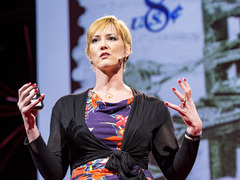
    Afra-RaymondWhen CL Financial — the largest financial institution in Trinidad and Tobago — collapsed in January of 2009, its bailout was far more sweeping than those offered in other countries.

    Afra Raymond: Three myths about corruptionAfra Raymond: Three myths about corruption

    “In an unprecedented fit of generosity — and I use that word carefully — the government of the day made a written commitment to repay all of the creditors,” says Afra Raymond in today’s talk. “It’s not just like Wall Street. Trinidad and Tobago is a place with different laws of physics.”

    In today’s talk, given at TEDxPortofSpain — which happened to be held inside Trinidad and Tobago’s Central Bank — Raymond calls for greater transparency and accountability in his government’s financial dealings. In the talk, he takes a look at several recent examples of government corruption — as well as one that has haunted him for 30 years. While Trinidad and Tobago became wealthy in the 1970s as the value of oil increased, the government quickly ran out of funds. In 1982, the Prime Minister revealed that only 1 out of every 3 dollars that had been earmarked for development had been used to produce goods and services. Sadly, 2 out of every 3 dollars had been wasted or stolen.

    To hear more about these cases of corruption — and the three myths of corruption that Raymond wants to break — watch this brave talk. And here, more talks on government corruption in countries like England, Kenya, Germany and India, that show that this is a problem without borders.

    Peter Eigen: How to expose the corruptPeter Eigen: How to expose the corrupt
    Peter Eigen: How to expose the corrupt
    Pervasive government corruption is at the root of many of the world’s most challenging social problems. In this talk from TEDxBerlin, Peter Eigen shares what his organization, Transparency International, is doing to counter it.
    Heather Brooke: My battle to expose government corruptionHeather Brooke: My battle to expose government corruption
    Heather Brooke: My battle to expose government corruption
    Tenaciously following through on Freedom of Information Act requests about members of Parliament and their expenses, journalist Heather Brooke uncovered a scandal that led to six ministers tendering their resignation. At TEDGlobal 2012, she shares the importance of checking in on our leaders.
    Shaffi Mather: A new way to fight corruptionShaffi Mather: A new way to fight corruption
    Shaffi Mather: A new way to fight corruption
    Shaffi Mather started 1298 for Ambulance, a life-saving service that brought ambulance transportation to parts of India. At TEDIndia 2009, he shares a bold idea for a company to fight corruption in public service.
    Ngozi Okonjo-Iweala: Want to help Africa? Do business hereNgozi Okonjo-Iweala: Want to help Africa? Do business here
    Ngozi Okonjo-Iweala: Want to help Africa? Do business here
    Most people know about — and maybe even expect — corruption in Africa. But at TED2008, Ngozi Okonjo-Iweala shares the lesser-told story of reform in many African nations.
    Sanjay Pradhan: How open data is changing international aidSanjay Pradhan: How open data is changing international aid
    Sanjay Pradhan: How open data is changing international aid
    Sanjay Pradhan of the World Bank Institute got a taste of corruption at just 6 years old, when a contractor, hoping to get government work from his father, delivered a cart of sweets to their doorstep. At TEDGlobal 2012, he shares how the experience shaped his approach to international aid.
    George Ayittey on Cheetahs vs. HipposGeorge Ayittey on Cheetahs vs. Hippos
    George Ayittey: “Cheetahs” vs. “hippos” in African politics
    Ghanaian economist George Ayittey unleashes a torrent of controlled anger toward corrupt leaders across Africa — and calls on the “Cheetah generation” to take back the continent.
    David Bismark: E-voting without fraudDavid Bismark: E-voting without fraud
    David Bismark: E-voting without fraud
    David Bismark demos a new system for voting that contains a simple, verifiable way to prevent fraud and miscounting — while keeping each person’s vote secret.

  • Draw Something Hits 100 Million Downloads

    Around one year ago, Draw Something hit iOS and took the mobile gaming world by storm. The Pictionary-type game averaged one million downloads per day during its first 50 days on the market.

    Of course, this success has to be measured against more recent successes, such as Angry Birds Space, which reached 50 million downloads in only 35 days, or Temple Run 2, which reached 50 million downloads in only 13 days.

    Though it turns out that Draw Something was largely a short-term fad, there are still some mobile gamers trading drawings with each other. Also, the game has spawned a TV show project (basically a reboot of Win, Lose, or Draw).

    Today it was announced that Draw Something has officially reached 100 million total downloads.

    The announcement was made by Zynga, which acquired Draw Something developer Omgpop for $180 million soon after the the game became a sensation. Since that time, Zynga has announced massive layoffs and the company’s stock has taken a nose dive. In its latest financial results, the company announced that it hopes to shift its focus toward building social gaming franchises on mobile platforms.

    Draw Something Infographic

    (Infographic courtesy Zynga)

  • Yahoo’s latest attempt to reinvent the portal is too little and too late

    There’s been a rush of optimism about Yahoo lately, thanks in large part to its new CEO, much-admired former Google executive Marissa Mayer. After a number of speeches about her broader strategy to reinvent the company, the new chief Yahoo unveiled a redesigned site on Wednesday — a relaunch that garnered a bunch of somewhat lukewarm reviews from the usual suspects. The reality is that Yahoo’s latest attempt to reinvent the old “portal” approach to the web might have made sense five years ago, but it is both too little and too late.

    In a post announcing the launch at Yahoo’s “Yodel Anecdotal” blog, Mayer talks about how the site has been redesigned to provide a “stream” of news and information that scrolls onward for as long as a user might like, instead of just a big static chunk of headlines. As she puts it:

    “Since streams of information have become the paradigm of choice on the web, we’re introducing a newsfeed with infinite scroll, letting you experience a virtually endless feed of news articles. Whether you are a sports fanatic or entertainment buff, you can easily customize your newsfeed to your interests.”

    We have a news feed just like Facebook!

    Mayer is right that streams have become the paradigm of choice, but that particular boat set sail a long time ago — Facebook first introduced the News Feed, which has become the go-to news and information source for hundreds of millions of people, in 2006. Twitter, the other news source that pioneered the real-time stream of information, was also created in 2006 and how has hundreds of millions of users. Facebook, of course, recently crossed over the 1-billion-user mark.

    That’s not to say a company couldn’t reinvent the real-time news stream, it just means that if Yahoo plans to do so, it’s going to have to try a lot harder than if it had embarked on such a strategy four or five years ago. All the new Yahoo page appears to do is let headlines scroll beyond the little box that the site used to put them in, something that even newspaper websites — hardly the epitome of innovation — started doing a long time ago.

    A more detailed post on the changes from Yahoo’s VP of product, Mike Kerns, describes a great new feature that lets users “click a button that allows you to share the story via email, Facebook, or Twitter.” If that strikes you as something dramatically new, then you haven’t been paying attention.

    We have apps too, just like Facebook!

    Mayer also talked about new “applications” that Yahoo has added, so that users can always see their updated weather and sports scores, something that again feels like a revamping of a decade-old strategy. The customized portal with tiny news and information “apps” was something that was popular years ago via players like Pageflakes and Netvibes — and Google went after it with iGoogle, an offering it recently decided to mothball. Why? Because it wasn’t providing nearly enough bang for the buck, presumably.

    Yahoo is also boasting about the fact that you can now log in with Facebook and see all your friends’ birthdays and other activity — a feature that Facebook first started offering with its Facebook Connect platform launch almost three years ago, and one that is now used by hundreds of thousands of news sites. This offering is not only late, but reinforces how much of Yahoo’s strategy seems to rely on partnering with others, something that is at best an unlikely route to success.

    dash-tweet-yahoo

    Some supporters of the company argue that Yahoo could reach out to developers of apps that it could run on its home page or in user’s streams, in the same way that Facebook has built much of its success on top of game or app companies like Zynga. But can Yahoo offer anything even close to what Facebook can, either in terms of reach or revenue? And are new versions of Candy Crush Saga or Farmville really worth banking Yahoo’s future on?

    It’s true that Yahoo still has hundreds of millions of loyal users, but then so does AOL’s dial-up business — in other words, there may still be value there, but it is in a process of gradual (and likely accelerating) decline. Yahoo Finance still has its fans, and so does the site’s fantasy sports offerings, but the reality is that its overall traffic has been falling, and tweaks to its home page offerings are not going to reverse that in any significant way.

    In that sense, Mayer’s much-hyped relaunch of the home page seems a lot like adding a new coat of paint and some racing stripes to your old Chevy. It may make you feel better, but it’s not going to go any faster.

    Related research and analysis from GigaOM Pro:
    Subscriber content. Sign up for a free trial.

  • Forbes: Apple may have planted iWatch leaks in desperate move to show it’s still innovating

    Apple iWatch Leaks
    When three major news organizations scoop the same story within the span of a few days and share almost no details about the product they’re scooping, the possibility that the story was planted is very real. Forbes contributor Nigam Arora suggests that this was indeed the case with the recent wave of coverage Apple’s (AAPL) rumored “iWatch” saw, and he questions what Apple’s motivation might have been in planting the story.

    Continue reading…

  • Kurt Cobain’s Birthday Widely Celebrated In The Twitterverse

    Today is Kurt Cobain’s birthday. The Nirvana frontman was born on this day in 1967, which would would make him 46 years old, had he not committed suicide. He died on April 5, 1994, at the height of his career, and fans have not forgotten the mark he made on music when he was here.

    He has managed to make his way into the Twitter Trends today, and even Twitter co-founder Jack Dorsey has tweeted out a quote:

    Here’s what some other Twitter users are sharing:

    Now go read the lyrics to Floyd the Barber and Hairspray Queen.

  • Kim K. Pregnancy Shoot: Pics Posted On Instagram

    Kim Kardashian may be the exact literal opposite of Kate Middleton in every way. The reality star recently posed for DuJour Magazine and wasn’t afraid to show off her “baby bump” in the process, wearing a bikini and throwing in a bit of old-Hollywood glamour in black-and-white shots with a flower in her hair.

    Kardashian, who has been in the headlines quite a bit recently owing to a nasty divorce that just won’t die as well as the baby news (rapper Kanye West is the father), posted some of the pics on Instagram as a teaser for her fans. Have a look below.

    Images: DuJour Magazine/Kim Kardashian/Instagram

    kim k pregnancy shoot

    kim k pregnancy shoot

    kim k pregnancy shoot

  • The Inside Story of Diageo’s Stunning Carbon Achievement

    This is the exclusive, short story of how Diageo North America, with creativity and guts, both in operations and in the senior ranks, achieved the holy grail of carbon emissions reductions. They did it without using carbon offsets — and about 38 years earlier than they had to.

    Here’s what scientists are telling us: the world must cut carbon emissions by at least 80 percent from 1990 levels by 2050 to (we hope) avoid the worst of climate change. This level of change seemed like a pipe dream to many, including me… until I spoke last fall to Roberta Barbieri, the global manager for environmental sustainability for Diageo, the $17 billion spirits company. Imagine my shock, as we talked about setting aggressive goals on carbon emissions, when she casually mentioned that Diageo’s North American division — a group with $5.58 billion in sales and 14 production and manufacturing facilities — had already cut emissions 80 percent.

    The first thing I said was, “Excuse me?!,” followed quickly by, “when can I come and talk to you?”

    It all started in 2008, she told me later, when top Diageo execs had their minds set on doing something big. First, for perspective, they ran the numbers on what it might cost to go entirely carbon free. The back-of-the-envelope calculation was daunting (hundreds of millions of dollars) and included ideas like building bioenergy plants to power some of their largest distilleries — an option that would achieve large reductions, but was in no way cheap. They settled on a still-aggressive goal of 50%, made it public, and, remarkably, crossed their fingers.

    At about this time, Richard Dunne, an environmental exec, entered the picture and took responsibility for meeting the target in North America. He had a strong suspicion that building an expensive bioenergy plant was not the only way to get there. His team implemented a rigorous process of collecting ideas for emissions cuts and estimating the costs. Then they sorted the results on a massive spreadsheet, ranking ideas by net gain on environmental improvement and then by financial investment. By looking at the largest carbon reduction options first, they could group ideas into three big buckets: 1) low/no cost (the no-brainers); 2) some operating expense increase; and 3) more significant capital expenditures (like the bioenergy plant).

    Executives initially thought that only major capital projects would reduce emissions significantly. But Dunne’s process revealed a surprising number of no-brainers. As a result, Diageo North America achieved a 50% carbon reduction by 2012, mainly with a mix of no- and low-cost initiatives. These project range from easy efficiency efforts like lighting retrofits, boiler upgrades, and installing variable speed drives; to larger, but still economical, changes, such as switching fuels (from oil to natural gas) and cutting back from two boilers to one in a small distillery.

    Reaching the 50% reduction in North America years ahead of schedule was a pleasant surprise. But Diageo still needed to go further: the economics on reductions in other regions were not nearly as good, so North America needed to close the gap to help the global organization reach its 50% goal by 2015. But even with the expensive bioenergy plant beckoning as a solution, something even more unusual happened at a Canadian distillery, one of the company’s largest.

    Gene Ruminski, Diageo’s North American sustainability manager, proposed that the Canadian distillery contract with its utility to supply natural gas harvested from a landfill – a net zero carbon solution that would reduce the carbon footprint for North America by another whopping 30%. But there was a big catch: energy costs would go up more than $1 million per year. This expense was more than the single plant could justify.

    But then a senior exec, the president of Global Supply and Procurement, got wind of the idea (important point here: this exec sits on the company’s internal sustainability council). With his global perspective, he realized that even though the landfill gas solution would increase operating costs for this one plant, it was actually a relatively cheap way to deliver a large reduction in emissions. So he gave the go-ahead and some financial leeway to the plant manager who had to take the annual million-plus hit to his bottom line. As it turns out, the plant’s ongoing cost-cutting initiatives had already identified many millions of savings, so Diageo reduced the plant’s target for total cost savings to allow for this massive carbon-reducing project.

    This is an amazing story, with a few important lessons:

    1) Companies still have much more room to cut energy, water, and waste than they realize. Even a well-run company can find enormous savings from easy, low-cost stuff.

    2) Big goals force you to look for big ideas, meaning you can, as Diageo’s Roberta Barbieri says, “do more than just turning off the lights.”

    3) Leadership matters. With a more strategic attitude, you can invest in longer-term value, both tangible and intangible. Flexibility is crucial, as the top exec had to give the plant manager leeway on his savings targets to meet the environmental goal.

    This last point is really critical. Shifting subtly away from an attitude of “maximize profits this quarter at all costs” does not mean you leap right from capitalism to communism; it just means you take into account a broader definition of value to the organization and community. Flexible thinking about value frees you up to find unique solutions. As a clean tech and impact investor Charles Ewald said to me recently, “the gap between ‘capitalism’ and so-called ‘philanthropy’ leaves a lot of room for creativity.”

    I congratulate Diageo for getting creative, finding that chasm, and driving a spirits truck right through it.

  • Appsecute vows one screen for all devops services

    In the current cloud computing landscape, nothing is certain but change. And Appsecute, a company that was banking on providing a single dashboard across multiple platforms as a service (PaaSes), is changing as well. The focus of its new product is to provide devops folks with a single view into the real-time status of all their services as well as a Facebook-like timeline for their projects.

    AppsecuteAnyone who does development work is probably using a half dozen or more services and spends a good part of her day toggling back and forth among various screens. Appsecute itself was using 14 different services, according to CEO and co-founder Mark Cox. That’s a lot of toggling.

    That decentralized information glut is also inefficient in other ways. “Just because a support request comes in doesn’t mean you should interrupt all your developers,” Cox said. Getting the right alerts to the right person and then logging that this person is on the case in a timeline means the rest of the developers keep their heads down on what they were doing.

    The timeline for devops goes to beta now with connectors included for Github code repository and versioning system, Zendesk  and Tender Support customer service software; CircleCI’s continuous integration tool; and AppFog, Cloudfoundry.com, and Heroku PaaSes. Appsecute also promises connectors will come for New Relic, Amazon Web Services, the full Cloud Foundry, Travis CI, Jenkins CI, Team City, Pingdom, PagerDuty, RSS, Twitter, Facebook, SNMP, Nodejitsu, EngineYard, OpenShift, Rackspace, Nagios, Sendgrid, Mailchimp and Cloudability.

    What’s happening in cloud echoes what went on in the earlier distributed computing model. As  companies deployed multiple on-premises applications, they soon came to want a single way to view and (hopefully) manage all that IT. That led to the rise of systems and applications management consoles and other windows into their myriad services.

    So expect more of these products in the cloud realm as well.

    “A number of social stream services have aspects of what we do, particularly the timeline side, [while] other services focus on graphs and metrics. We want to specialize in putting events into the context of the software applications and components that devops care about,” Cox said.

    Indeed, adding a specialized social networking layer to devops tools is not new. Wercker, a  Dutch startup that offers a SaaS-based continuous integration tool  (and which won GigaOM’s Structure Europe Launchpad competition) also touts its Facebook-like timeline as a major plus for devops.

    Providing  the proverbial “single pane of glass” to all important services is an attractive proposition, but it would seem to me that inclusion of AWS into the mix had better come quickly.

    Related research and analysis from GigaOM Pro:
    Subscriber content. Sign up for a free trial.