
Category: News
-
HP will reportedly turn to Android for next-generation mobile devices
-
Google Honors Feodor Chaliapin With A Google Doodle
February 13th marks the 140th birthday of Russian opera singer Feodor Chaliapin, and Google showed a doodle on its home page in Russia.
Wishing a happy 140th to Russian opera singer #FeodorChaliapin known for his powerful bass voice. twitter.com/GoogleDoodles/…
— Google Doodles (@GoogleDoodles) February 13, 2013
While it’s still the 13th here in the states, it has already moved on into the 14th in Russia, where Google is now showing the George Ferris doodle discussed earlier. Presumably, we’ll be getting that one here in the U.S. at midnight.
A Google search for Feodor Chaliapin returns the option to see results about the opera singer or his son Feodor Chaliapin Jr., an actor. If you select the singer, you’ll see Google’s Knowledge Panel for him.
Here’s a sample of Chaliapin’s work:
More recent Google doodles here.
-
Developers rejoice! Vagrant finds a home in the Amazon cloud
Development teams love Vagrant, the open-source tool that automates — and really speeds up — configuration of the virtual environments they need to build and test software. Now Hashicorp is previewing a Vagrant plug-in for Amazon Web Services that will let developers who use Vagrant for local configuration, hook right into Amazon’s public cloud as well.
Reached by email, Hashimoto said there is pent-up demand for this product.
“Vagrant + AWS is a big deal because it is the first time developers can use Vagrant outside of their own local machines. This unlocks capabilities never before seen with Vagrant before. This is really just the tip of the iceberg with what is possible with Vagrant 1.1, the release I’ve been working on for nearly a year now.”
Excellent news > RT @hashicorp: Vagrant AWS Provider. Launch, provision, and manage EC2/VPC instances hashicorp.com/blog/preview-v…—
Tim Freeman (@peakscale) February 13, 2013Used by companies including Expedia, LivingSocial, Yammer, and Mozilla,Vagrant was the brainchild of Mitchell Hashimoto, who developed it in 2010 as a University of Washington student for his own projects. Last November, he launched Hashicorp to bring Vagrant — which thus far only supports Oracle VirtualBox — to more mainstream platforms including VMware Fusion, Workstation and vSphere. That support is still on its way.
According to the web post announcing the AWS news:“Using the same Vagrant workflow you’ve come to know and love, you will be able to launch and provision instances in EC2 or VPC, just as you would a VirtualBox machine today. Paired with local virtualization, the AWS provider can vastly improve your end-to-end workflow, unlocking use cases for Vagrant which simply didn’t exist before.”
Hashicorp is now offering a sneak peek at its AWS provider plug-in for Vagrant 1.1 which will be made available under the open-source MIT License. The actual software will be released — along with Vagrant 1.1, later this month, according to the post.
As more applications get deployed on the public cloud or in hybrid cloud environments, a tool like this one, that lets developers set up and deploy their work across boundaries, will be critical.
This story was updated at 5:51 p.m. PDT with Hashimoto’s comment.

Related research and analysis from GigaOM Pro:
Subscriber content. Sign up for a free trial.- Platform as a Service in 2012
- Takeaways from the second quarter in cloud and data
- Cloud computing infrastructure: 2012 and beyond


-
New report says video ads are soaring — but only 5% are on mobile
New ad industry figures claim the number of online video ads shown in the last quarter of 2012 grew an eye-popping 52 percent compared to the previous three months. This stat shows that TV dollars may be shifting to the web in force; this could also come as good news for publishers who are counting on high-value video ads to prop up their bottom line.
The figure was supplied by Videology, a provider of ad tools to agencies and marketers, and comes with a nifty graphic (via VideoNuze) that shows a snapshot of the industry. Highlights include a growing range of sectors that are buying video ads and increased use of behavioral data to target ads.
The other significant part of the report is that the vast majority of video ads ares still served on the desktop:

Videology said in an email that the mobile’s share of overall video ads grew one percent in the previous quarter and that the overall growth in video means mobile is expanding rapidly. Unlike Google, Videology continues to consider tablets like the iPad as a mobile, not desktop, device for ad purposes.
The third category — “Connected TV” — refers to pre-roll video ads served on devices like Roku, Apple TV and Xbox. The 3 percent figure is up from 1 percent the quarter before.
These numbers shouldn’t be treated as gospel, of coure, as Videology has a stake in the video ad industry. But the company’s broad connections to marketers, publishers and agencies do give it a good big-picture view.
Going forward, it will be interesting to watch how quickly the above desktop-to-video ratio changes to reflect a world in which half of all internet viewing is expected to take place on mobile devices. At the same time, publishers will be watching closely to see if video ads can hold their high value as more inventory comes on the market.
(Image by cybrain via Shutterstock)

Related research and analysis from GigaOM Pro:
Subscriber content. Sign up for a free trial.- The state of cross-platform media measurement
- Connected Consumer 2012: A year of consolidation and integration
- Connected Consumer Q3: Netflix fumbles; Kindle Fire shines

-
Powerball Jackpot Up To $50 Million
The Powerball jackpot is currently at $50 million, as nobody won the $40 million jackpot on Saturday. Prior to that, a ticket in Virginia won the $217 prize a week ago. That ticket was sold in Richmond, and represented the biggest single prize won since the record $588 million prize in Novmeber, which was split between two tickets.
The winning numbers for Saturday’s drawing were: 5, 6, 16, 36, 58, Powerball: 3.
There were no winners of the Match 5 Power Play $2 million prize, but there were winners in Florida, Maryland and New York for the $1 million Match 5 prize.
On Saturday, there were 448,280 winners winning non-jackpot prizes totaling $6,252,616.
Odds of winning the jackpot, according to the Multi-State Lottery Association, are 1 in 175,223,510.
The next drawing is Wednesday night.
Here’s what people are saying on Twitter:
My dude rich just said this other guy is cashing his whole income tax check on powerball
got a powerball ticket for tonight. which means i’ll still be going to work tomorrow. #ineverwinanything
Wanna show me love tomorrow? Bring me that winning Powerball ticket…
Trying to buy Beyonce tix is like trying to win powerball #MissionImpossible
Whoa. I just beat Ryan Chlebek at Words With Friends. I’m going out to buy a Powerball ticket.
if i won the powerball i would buy one of everything from @NastyGal
If I won Powerball first thing I’d do is buy the Pittsburgh Pirates and then immediately cut Brandon Inge
-
HP Reportedly Working On Android Smartphones And Tablets, Despite webOS Failures
HP is looking into getting back into the mobile hardware game, according to a new report from ReadWrite which the Verge says is being confirmed from their own sources. HP famously bought webOS and then brought a tablet to market based on that Palm-developed platform, the TouchPad, which ended up being a dismal failure that the company shut down very quickly.
HP had also launched a smartphone, the Veer 4G based on webOS, but that also proved ineffective at capturing the attention of consumers. The company is apparently still looking to get back into the hardware game after a hiatus spanning a couple of years, however, with a new tablet featuring an NVIDIA Tegra 4 processor, which ReadWrite pegs for an imminent announcement, and is also considering Android-based smartphone for future development. Verge reports that the timeline sounds good, but scheduling could change for a tablet launch.
After HP CEO Meg Whitman took over, she announced that the company would ultimately offer a smartphone to keep up with the fact that for many in the developing world, such a device is now their first and maybe only computer. That launch isn’t planned for 2013, however, Whitman later stated.
But back in late 2011, Whitman did make statements to the effect that HP could create webOS-powered tablets again in 2013. While these reports suggest webOS is likely off the table, HP could stick to Whitman’s target plan of fielding a tablet device based on a mobile OS this year, but one based on Android instead of its own product, which it has since open-sourced.
It shouldn’t come as a surprise that HP would dip its toes back in the mobile hardware pool even after suffering such a reversal the first time around. The fact is that mobile is where the computing industry is going, and Apple’s iPad is almost singlehandedly propping up the sagging fortunes of traditional mobile PC form factors like notebooks. And HP missed earnings expectations in Q4 2012, thanks in part to a continuing “decline in hardware.”
A tablet isn’t a panacea for HP, however. The Android tablet market still has yet to find a champion that can compare to the iPad’s popularity, and there is plenty of competition out there for buyer attention. Fielding a device that impresses above and beyond what’s already out there, at a price point that turns heads is a basic requirement for Android tablet success at this point, from HP or from anyone else.
-
Brütal Legend is Coming to PC, Beta is Live
Using the silliest press release in recent memory, Double Fine today announced that Brütal Legend will be coming to PCs soon. The title is already up for pre-order on Steam, and each pre-order comes with access to the multiplayer beta, which has already begun. Also, hats.
From the Double Fine announcement:
So powerful is the game’s raw lifeforce that even its creators cannot contain it any longer. Owners will receive immediate access to the Brütal Legend PC multiplayer beta, which is now live and already blowing souls. All preorder customers will also be granted two exclusive Team Fortress 2 items, Eddie Riggs’ hair and his guitar Clementine, all the better to spread the word of Metal throughout the virtual land.
“Adding a PC release to Brütal Legend’s list of conquests risks raising the world’s ambient Metal saturation to dangerously high levels,” said Double Fine President Tim Schafer, “which is why we’re conducting this closed beta test for preorders.”
“By purchasing this game, you are waiving your legal rights to recourse if the fire beast Ormagöden bathes the world in flame and ushers in the Age of Metal,” commented our lawyer.
“Shh,” added Mr. Schafer.
See? Silly. Come to think of it, It’s the type of humor game companies could use more of.
The PC version will be getting the upgrades that PC gamers are used to finding in games that have been well-ported by developers. High resolution support, anti-aliasing, uncapped framerates, “major improvements to latency/lag in multiplayer,” and other features will, according to Double Fine, all be implemented before the game is out of beta.
-
How to Create an App in Minutes Using BlackBerry App Generator
We spent part of last week at BlackBerry Jam Europe, which is generally a conference dedicated to those who already develop apps for BlackBerry. However, there are also many programs for beginners. Since I’ve never created an app, I decided to take a run at developing an app for the Inside BlackBerry Blog. As I have literally no experience developing apps, I asked Alex and Luke for some help.
We used the BlackBerry App Generator to automatically pull content from the Inside BlackBerry Blog, and the BlackBerry Facebook and BlackBerry YouTube pages. It took us only about 10 minutes from start to finish and it was absolutely free. The result is a great-looking app that pulls in all of our articles, posts and videos. Let’s have a look as Alex walks us through the process.
[ YouTube link for mobile viewing ]
See how easy it was? Using the BlackBerry App Generator you could have your own app up and running in just a few minutes, even with no development experience. Do you have a blog or content and think it would make a great app? Give the BlackBerry App Generator a try for yourself and let us know.

-
Mason Joins Capstone Partners
Harvey Mason has joined Capstone Partners as a director in the corporate restructuring services group. He will split his time between Boston and New York. Most recently, Mason worked at Argus Management where he specialized in providing interim management and financial advisory services to financially distressed companies
PRESS RELEASE
Capstone Partners LLC, a leading national investment banking firm, announced that Harvey Mason, Jr. has joined the firm as a Director in the Corporate Restructuring Services group, splitting his time between Boston and New York. Capstone’s Corporate Restructuring practice offers performance improvement, turnaround & interim management and a host of related advisory services. Harvey will provide clients with a variety of restructuring services and strategic direction, assisting companies and their stakeholders through difficult operating and financial environments. Harvey will also provide specialty M&A and financing support services to Capstone’s distressed and lower middle-market transaction clients.
“An improving economy is creating opportunities for companies to improve their market positioning through corporate restructuring, mergers and acquisitions. We are pleased to add Harvey to our team of senior restructuring executives to assist in these efforts. He is a seasoned turnaround professional with the experience to deliver immediate stabilization and value,” commented Brian Davies, Head of Capstone’s Corporate Restructuring Services practice. “Our clients ‒ private and public companies, private equity groups, law firms, commercial lenders and unsecured creditors ‒ will benefit from Harvey’s deep industry and operational knowledge, as well as his ability to identify opportunities for improvement and quickly correct complex financial and operational problems while implementing value-building strategies,” added Davies.
Harvey has decades of experience providing financial restructuring, interim management, due diligence, mergers and acquisitions, and forensic and operational consulting services to business organizations experiencing significant difficulties both in and out of formal bankruptcy proceedings. He has served as an interim senior-level executive for several clients in the roles of CFO, VP of Finance, Construction Manager and Controller. His clients represent a broad range of industries including energy, real estate, high technology, financial services, petroleum, transportation logistics, forestry, retail, healthcare, manufacturing, fishing and construction.
Prior to joining CRS Capstone, Harvey worked at Argus Management where he specialized in providing interim management and financial advisory services to financially distressed companies. He began his career at PriceWaterhouse, in the Financial Services and Advisory group in Seattle, Washington. He later served as Senior Vice President for both KPMG and Mesirow Financial Consulting’s Corporate Recovery practice. Harvey is a Certified Public Accountant (CPA) and Certified Insolvency and Restructuring Advisor (CIRA). He is a graduate of the University of Puget Sound, with a BS in Accountancy.
About Capstone
Capstone Partners LLC is a leading national investment banking firm dedicated to serving the corporate finance needs of middle market business owners, investors and creditors. The firm provides merger & acquisition, private placement, corporate restructuring, valuation and financial advisory services. Capstone maintains various industry specialties including business services, consumer products, education & training, government services, health & medical, manufacturing & industrial and technology & telecom. The firm also possesses merchant banking capabilities to actively co-invest in transactions. Additional information about Capstone Partners can be found at www.capstonellc.com.The post Mason Joins Capstone Partners appeared first on peHUB.
-
LG unveils 5.5-inch Optimus G Pro, which looks exactly like Samsung’s Galaxy Note II

-
Home Depot Drops BlackBerry In Favor Of Apple’s iPhone
When it was unveiled, BlackBerry 10 was seen as the shining light for
RIMBlackBerry as it heads back to the path of profitability. The platform’s fans think this is the one that will succeed, but the company still has a major problem ahead of it. It’s traditionally strong enterprise customer base is shrinking.Tom’s Hardware reports that Home Depot is taking its employees off BlackBerry in favor of Apple’s iPhone. It’s a pretty hard hit for the company as Home Depot had 10,000 employees on the BlackBerry platform. It’s unknown if the transition to the iPhone occurred before or after the BlackBerry 10 announcement.
This isn’t the first major loss for BlackBerry as other major businesses and government agencies have been moving their employees off BlackBerry in favor of iOS or Android devices. Late last year, Yahoo kickstarted the migration away from BlackBerry when the company offered to buy every employee a smartphone, but only offered iPhones or Android devices. Soon after, government consulting firm Booz Allen and the U.S. National Transportation Safety Board also moved their employees off of BlackBerry.
Despite all of this bad news, BlackBerry 10 may be doing decently well. BlackBerry announced last week that first day sales of the Z10 was the best the company had ever seen. In a statement to Tom’s Hardware, the company also said that “over 2,7000 unique businesses in North America already registered for our BlackBerry 10 Ready Program.”
In short, BlackBerry is losing business, and that’s a bad thing. To counter this, it’s Z10 handsets seem to be doing decently well, and it still has quite a few Enterprise customers. That’s a good thing. We’ll have to wait a bit longer to see if the good outweighs the bad when BlackBerry 10 launches across all major carriers in the U.S. next month.
-
How to Pick the Next Pope
A few years ago I was having dinner with a high school friend who had just been ordained as a bishop in the Catholic Church. He told me that he’d inherited two assistants, both older than 80, one of them almost deaf. I asked whether he’d received any integration support or training given his promotion from individual performer to manager of a large and complex diocese. Of course, the answer was no.
As an executive search consultant with three decades’ experience in leader selection and development who is also a committed Catholic, I’ve long been frustrated by some of the people practices in my beloved Church. My friend is one of more than 4,000 bishops reporting to the pope, who in turn lead some 400,000 priests, who tend to more than one billion followers. In such an organization, few things are more important than making great appointments. And yet the church’s record on small transitions — like my friend’s — makes me worry about its ability to execute on big ones, such as choosing the successor to Pope Benedict XVI, who this week became the first pope to resign in 600 years.
One positive sign is the pope’s wise choice to retire at 85, acknowledging that he no longer has the “strength of mind and body” to do the job in such a rapidly changing world. I wish more executives would recognize that age inevitably erodes decision-making skills and particularly the fluid intelligence that enables us to solve problems not encountered before.
At the same time, we know that appointing his successor is a much more complicated and challenging decision. The pope’s job is vastly different than the ones done by cardinals, just as the CEO role is nothing like those of C-Level executives. The pope is alone at the top, with no peers and no day-to-day boss (other than God, who happens to be a master delegator). He has to decide on all sorts of complex issues, in an volatile global environment, facing enormous pressure. Meanwhile, there is a fixed pool of candidates: the cardinals who make up the selection committee. (It’s an unusual process in which the recruiters are the potential hires and the direct reports choose their own future leader!)
Unfortunately neither the candidate pool nor the election process will change before next month. But the cardinals can at least make sure they consider the right criteria. So far, speculation on the pope’s successor had centered on representation: three quarters of Catholics live in the developing world, while two-thirds of the electors (and candidates) come from Europe. But this is a side issue. What matters are the factors that best predict leadership success.
When I consider candidates for CEO roles, my primary concern is the person’s potential to perform well in larger, more complex roles. There are three central indicators.
The first is the right motive. Does the candidate display the proverbial paradoxical blend of fierce commitment and deep personal humility? Is he really committed to building lasting greatness and to make our world a better place, for truly selfless reasons? While most cardinals should hopefully satisfy this criterion, of course some will do it more than others.
I also gauge potential by looking for four key leadership assets: curiosity, insight, engagement, and determination. Does the candidate proactively seek new experiences, ideas and knowledge, soliciting feedback and staying open to learning and change? Can he gather and make sense of a vast range of information and discover new insights that, when applied, transform past views or set new directions? Is he good at connecting on an emotional level with others, communicating a persuasive vision and helping others stay connected with the broader organization? Does he seek self-awareness, demonstrate empathy, and inspire commitment? Finally, will he have the strength to persist in the face of difficulties and the ability to bounce back from major setbacks or adversity?
Last, but not least, I look at the candidate’s ability to make great appointments. As Jim Collins once said during a Charlie Rose interview, “The most important leadership skill is, clearly, the ability to make great people decisions, to put people in the right seats and to rigorously take them off the bus when you have to.” This is even more important in the Catholic Church; given its flat structure, huge reach and geographic spread, delegation is essential. So electors must carefully analyze candidate’s track record on hiring, promotion and developing people. Have they made good appointments and worked to move or improve underperformers? Have they championed diversity and inclusion? Have they mentored great successors throughout their career?
When the 118 eligible cardinals cast their votes in March, I sincerely hope they leave aside any personal interests and, following Saint Benedict’s rule of “ora et labora“, make sure to diligently evaluate the best contenders for the papacy. While they do the hard work of assessing, I’ll do the praying.
-
HP planning a new Android tablet? Good luck with that
Having burned through two prior mobile platforms, HP is said to be looking at a third and will use Google Android for an upcoming tablet and possibly a future phone. Taylor Wimberly of ReadWrite reported the development with information from two sources familiar with the matter. The new Android tablet could be announced from HP within a few weeks; potentially at this month’s Mobile World Congress Event in Barcelona.
 Wimberly’s sources indicate an HP tablet has been in the works since Thanksgiving and is likely to run on Nvidia’s Tegra 4 chip. Nvidia officially announced Tegra 4 at last month’s Consumer Electronics Show but had no mobile partners on stage to announce new products or designs with the chip. Instead, Nvidia showed off its own hardware, a handheld gaming console called Project Shield.
I’m not too skeptical of HP actually re-entering the tablet market. After all, the PC business is giving way to fast-growing sales of tablets and smartphones. Plus, HP was already in the tablet market once before: It bought Palm and its webOS platform for $1.2 billion in 2010 and built the HP TouchPad tablet around webOS. Unfortunately, the device was a sales flop and HP quickly killed the tablet as well as its whole investment in Palm and ended up giving much of the platform to the open source community.
HP’s mobile history goes back even further, however. More than a decade ago, I carried an HP iPaq handheld running on Microsoft’s Windows Mobile software. HP eventually got out of that market too, prior to smartphone adoption really taking off. So it makes sense to me that HP could be making another mobile play here, even though HP CEO Meg Whitman has gone on record to say no new smartphones will be coming from HP this year.
 I’m more skeptical that HP can be successful in this market. The problem as I see it is that HP has no other choice but to use Android at this point. And assuming it does, it’s now competing against Samsung, the top seller of smartphones and the only company that’s figured out how to make a profit by using Android. Then there’s Amazon, which uses Android for its Kindle Fire line of tablets. It makes money by selling content to the devices; something that HP doesn’t have to offer.
For HP to be successful in the already established Android market it needs to offer something significantly different and innovative. Those aren’t qualities that I equate with HP these days, but perhaps as they say, ”third time’s a charm.”
This story was corrected at 1:47pm with the correct source site of ReadWrite.

Related research and analysis from GigaOM Pro:
Subscriber content. Sign up for a free trial.- The connected planet: Smartphones aren’t the only player
- What the Google-Motorola deal means for Android, Microsoft and the mobile industry
- A Media Tablet Forecast, 2011 – 2015

-
Marco Rubio’s Water Bottle Moment Tapped for Late but Funny Poland Spring Facebook Post
If you watched Senator Marco Rubio’s GOP rebuttal to the President’s State of the Union address last night, you probably saw him awkwardly reach for a small water bottle in the middle of the speech. The man needed some water, it’s really not that big of a deal. The only thing was that the water bottle was simply placed way too far away from where Rubio was standing, leading to a funny moment.
Of course, Twitter and Facebook jumped on it and “Water Bottle Gate” was born.
Unless you were really paying attention, you probably wouldn’t have noticed that the brand of the water Rubio grabbed was Poland Spring. Well, Poland Spring noticed.
Nice one, Poland Spring. But you posted that this afternoon! You gotta get on that faster!
As a bonus, here’s all of Rubio’s lip-smacking moment throughout his speech. No wonder he needed the Poland Springs:
-
Use DashClock widget to empower the Android 4.2 Jelly Bean lockscreen
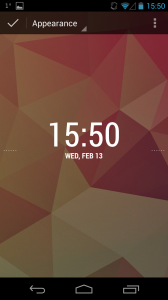 One of the least impressive features added by Google in Android 4.2 is the ability to use lockscreen widgets. By default the second Jelly Bean iteration comes with a limited number of options, none of which is capable of delivering enough glanceable information without swiping left and right to find emails or calendar entries. With DashClock Widget the true potential of lockscreen widgets is unleashed by displaying relevant “status items” right after unlocking the device, all in one go.
DashClock Widget can be used as a Digital clock widget replacement, further building on the stock functionality by introducing support for next scheduled alarm, upcoming calendar appointments, missed calls and unread texts, unread Gmail inbox or Priority inbox count as well as local weather data. Straight off the bat it puts the stock lockscreen widgets to shame by combining sufficient relevant information, all in one place.
In order to take advantage of DashClock Widget users have to unlock the device and navigate to the furthest lockscreen page on the right, tap the “+” sign and select the item named “DashClock” from the provided list. Afterwards a new window will appear, allowing users to enrich the default functionality by adding extensions. The available extensions are the above-mentioned supporting features. Extensions can be removed by swiping items to the left or to the right.
At this point the only extensions that are user-customizable include Weather and Gmail unread count. For the former, users can choose between Imperial and Metric weather units (Fahrenheit and Celsius, respectively). There is one caveat though — users cannot choose a different weather provider, which may be an inconvenience for users outside of supported locations. The latter, Gmail unread count, can be used to display unread counts for either inbox and supports multiple Gmail accounts as well.
Another caveat comes from the calendar functionality, which is limited to appointments. Users like me that sync multiple calendars for upcomings birthdays or events will find the lack of support for basic calendar entries rather disappointing.
Users can also customize the appearance by choosing between multiple clock and date styles with bold numbers and letters or smaller characters, among others. The design can be altered by selecting “Appearance” in the dropdown menu on the top-left side of DashClock Widget’s interface. Compared to the CyanogenMod 10.1 “Chronus” lockscreen widget DashClock Widget ups the ante by providing the above mentioned Gmail, call and text functionality.
DashClock Widget is available to download from Google’s Play Store. The app is only compatible with Android 4.2 Jelly Bean.
-
New purported Galaxy S IV details emerge

-
The Last of Us Delayed to June 14
Naughty Dog today revealed that its highly anticipated PlayStation 3 exclusive The Last of Us has been delayed. The release date for the title was originally May 7, but has been pushed back more than a month to June 14.
The delay was announced by Neil Druckmann, lead game designer at Naughty Dog, through a post to the PlayStation Blog. Druckmann stated that the game needs a “few extra weeks” of polishing. From the blog post:
The Last of Us is an ambitious project. In many ways it may be Naughty Dog’s most ambitious project to date – brand new universe and cast of characters, brand new tech, brand new genre, not to mention it’s easily the longest campaign Naughty Dog has ever made.
As we entered the final phase of development for The Last of Us, we came to realize just how massive Joel and Ellie’s journey is. But instead of cutting corners or compromising our vision, we came to the tough decision that the game deserved a few extra weeks to ensure every detail of The Last of Us was up to Naughty Dog’s internal high standards.
Though game delays are always frustrating news for fans who can’t wait to get their hands on a title, The Last of Us fans can take solace in the fact that they aren’t being toyed with the way Rayman fans are. Gamers who are fans of both Naughty Dog and Rayman can feel free to vent their frustrations in the comment section below.
-
YouTube Hits 12,000 Harlem Shake Videos
According to YouTube, “Harlem Shake” is the biggest video trend of the month. As of Tuesday, YouTube had seen 12,000 Harlem Shake videos with 44 million views.
As YouTube’s Kevin Allocca points out, the meme first started gaining traction last week, thanks to a video from Filthy Frank, but it was SunnyCoastSkate, who established the form most are familiar with.
“From there, the spin-offs spread very quickly,” he says. “As of the 11th, around 12,000 ‘Harlem Shake’ videos had been posted since the start of the month and they’d already been watched upwards of 44 million times. As you can see in the chart below, over 4,000 of these videos are being uploaded per day and that number is still likely on the rise.”

YouTube has created a playlist with some of the most popular versions. Prepare to feel dumber.
-
When the Minimum Wage Makes Economists Smile
Chairman of the President’s Council of Economic Advisers is a grand title, and it’s been held by some pretty impressive academic economists over the years (Arthur Okun, Marty Feldstein, Joe Stiglitz, Ben Bernanke, Cristina Romer — to name a not-entirely-randomly chosen few). But it’s usually hard to detect the Chairman’s fingerprints in administration economic policy. The big decisions are made in the West Wing of the White House, not over in the Executive Office Building where the Council is housed.
So when a chairman does have a clear impact, it gets noticed. Then-chairman Glenn Hubbard, for example, pushed for and got a reduction in taxes on dividends in 2003. And, in the State of the Union Address Tuesday night, current Chairman Alan Krueger got a kind of shout-out from the President, in the form of a proposal to raise the federal minimum wage all the way from $7.25 to $9 and index it to inflation after that.
In 1992, when New Jersey raised the state minimum wage from $4.25 to $5.05, Krueger and his then-Princeton colleague David Card surveyed 410 fast-food restaurants in New Jersey and eastern Pennsylvania before and after the wage hike. The idea was to compare changes in fast-food employment in New Jersey, where the minimum wage had risen, with those in Pennsylvania, where it stayed constant at $4.25. The surprising result: fast-food employment went up in New Jersey relative to Pennsylvania.
This was surprising because the basic supply-and-demand model of economics teaches that, when you raise the price of something (in this case, low-skilled labor) demand for it will go down. There had been a number of philosophical objections posed to this approach through the years — among them the argument that employers possess more power and information than individual workers in most labor markets, allowing them to push wages below the optimal level in the absence of collective bargaining or government intervention. But Card and Krueger now had empirical evidence that the “textbook model,” as they put it, didn’t work. The New Jersey fast food restaurants did pass their increased wage costs on to customers in the form of higher prices — but they weren’t enough higher to hurt business.
This research was a sensation, as economic research goes. It got lots of media attention back in the early 1990s, and has continued to inspire economist after economist to attempt to refute or back up its conclusions (Google Scholar lists 8,780 citations, and Wikipedia summarizes some of the major work). It’s probably accurate to say that most economists still don’t believe that raising minimum wages is a reliable way to increase employment (one hopes that Brian Barry and Anil Kashyap of the University of Chicago will ask their Economic Experts Panel about this soon) — but I also get the sense that the percentage of economists who think it has a substantial negative effect on employment has declined since the initial Card-Krueger research was published. Economists in general have become a bit less trusting of “textbook models” than they were in the 1970s through 1990s. And while it’s dangerous to equate changing fashions in the economics profession with truth, I’ll go ahead say that the business groups making dire claims about the negative economic impact of a minimum wage increase are mostly blowing smoke.
 What ails the U.S. economy, and in particular its workers, though, goes well beyond the minimum wage. According to the Bureau of Labor Statistics, 3.8 million people, or about 3% of the country’s wage and salary workers, made the minimum wage or less in 2011. Yet workers across the income spectrum, except for those at the very top, have been stuck in neutral for a while. Except for a brief uptick during the dot-com era, labor’s share of income has been on a steady decline since the early 1970s. Through the years, this has been mostly attributed to globalization (capital can go anywhere on the globe in search of the highest return, while workers are generally stuck in the country they came from) and technological change (machines are replacing workers). Lately there’s increasing sentiment, perhaps not so much among economists as among others who care about economic policy, that maybe political decisions and changing social mores have played big a role, too.
As Jonathan Schlefer wrote on hbr.org in November, early economists like Adam Smith and David Ricardo believed wages were set by “habits and customs of the people,” to use Ricardo’s words, as much as by economic forces. That’s where something like the minimum wage — or collective bargaining by labor unions — comes in. If, in a free market, the wages and salaries paid closely approximate the actual value of the work done, then minimum-wage laws and unions can only get in the way. But if labor markets are naturally riddled with inefficiency and affected by custom and habit, then laws and unions can conceivably bring a healthier economy — and higher profits for business — by raising wages.
Studies of retailers seem to indicate that this might the case. So does the current example of the Northern European countries, which combine strong unions and high wages with higher competitiveness rankings than the U.S.
Of course, it’s really hard to imagine at this point that unions will ever regain much of a foothold in the U.S. private sector. The minimum wage is irrelevant to most of the workforce, too. And it may still be that most reliable way to increase the wages of American workers is simply to upgrade their skills. But I get the sense that the conversation about pay in the United States is just getting started — and that it’s not going to be dominated by the models out of economics textbooks.


