Category: News

  • New Nintendo Direct Scheduled For Valentine’s Day

    Despite some rather important launch titles being delayed further into the year, the Wii U still loves you. That’s at least what Nintendo may be trying to get across tomorrow with a special Valentine’s Day Nintendo Direct.

    Nintendo announced that its latest Nintendo Direct for North America will go live tomorrow at 9 a.m. EST/6 a.m. PST. The company isn’t saying what exactly will be shown, but says that the event will cover “upcoming Nintendo 3DS and Wii U games.”

    Whatever it is, it’s going to be hard for Nintendo to top January’s Nintendo Direct that announced a number of new titles including a remake of The Legend of Zelda: The Wind Waker. This event sounds like the company will be sharing details on upcoming games of the near future like LEGO City Undercover and The Wonderful 101.

    Of course, we can’t forget the Nintendo 3DS getting some love this time around as well. Nintendo’s release schedule for its handheld is looking far more populated than that of the Wii U for the next few months so expect a few more details on titles like Luigi’s Mansion Dark Moon and Castlevania Lords of Shadow – Mirror of Fate.

    Whatever happens though, Nintendo fans will want to keep their expectations in check. It’s doubtful that the company will announce any new games. It might not even be that long of an event, but we just might get to see Reggie exiling more Nintendo employees to Japan.

  • Bing’s Real-Time Reactions To The State Of The Union Address [Infographic]

    Bing launched a new Politics site with “Bing Pulse” ahead of the State of the Union address, and is now sharing some insights from the endeavor.

    “Last night, millions of Americans tuned into President Obama’s State of the Union address – and Bing stood alone in giving people a rare opportunity to give real-time feedback and access live social data at Bing.com/Politics,” says Mark Penn, Corporate Vice President, Microsoft. “Powered by Bing search technology and its unique social search experience, Bing’s State of the Union experience featured the breakthrough Bing Pulse – what turned out to be the largest live online poll in history.”

    Bing partnered with FOX News on the site, offering what Bing described as a “non-partisan online destination designed to meet” the “growing need for up-to-the-minute political information and second-screen experiences”.

    The Bing Pulse receieved 12.9 million votes, according to Bing, allowing people to join the conversation by “voting” every five seconds on their reactions to President Obama’s speech. Live results from the feature were shown on FOX News.

    The search engine released the following infographic looking at real-time reactions to the speech:

    Bing Looks at State Of The Union Address

    Here’s a look at some findings from Twitter.

  • Building a Global Brand


    John McDonnell, COO of Patrón Spirits International, on how his company grew beyond the domestic market.

  • Hey devs, need some hand holding? Heroku adds premium consulting services for you

    You need help scoping out a new architecture for an application? Or maybe some for-real 24 X 7 support for that application once it’s built? Now Heroku is offering a premium tier of paid services you can tap into, provided you build and host that application on Heroku’s Platform as a Service.

    An eagle-eyed colleague (thanks Derrick) spotted the Heroku business critical applications page on Tuesday and sure enough, it’s a new offering that goes beyond the all-in-one Heroku services that developers get when they put up their credit card for basic PaaS services. The new services include one-on-one consulting, problem support escalation all based on a custom pricing model.

    An exec with a rival PaaS vendor said these new paid options are “right out of the Salesforce handbook for how to monetize cloud.” Salesforce.com bought Heroku, which was then a Ruby-oriented PaaS, three years ago. Since then Heroku has added support for several more languages.

    PaaSes like Heroku, AppFog, Google App Engine, and Microsoft Azure, target developers who want to build applications without sweating all the underlying infrastructure stuff. But, to date, the category has struggled for acceptance beyond that demographic. Classic IT types are usually not wild about running company applications on someone else’s platform so they often push to move the finished application back inside the firewall. Higher level services like these might appeal to  corporate developers and their IT counterparts.

    Related research and analysis from GigaOM Pro:
    Subscriber content. Sign up for a free trial.

  • Obama Administration Launches College Scorecard

    Editor's note: This post was originally published on the official blog of the U.S. Department of Education.

    “… My administration will release a new “College Scorecard” that parents and students can use to compare schools based on a simple criteria — where you can get the most bang for your educational buck.” – President Obama, 2013 State of the Union

    The interactive College Scorecard gives students and families five key pieces of data about a college: costs, graduation rate, loan default rate, average amount borrowed, and employment.

    Too often, students and their families don’t have the right tools to help them sort through the information they need to decide which college or university is right for them. The search can be overwhelming, and the information from different colleges can be hard to compare.

    That’s why, today, our Administration released a “College Scorecard” that empowers families to make smart investments in higher education. As the President said last night, we want to help families get the most bang for their educational buck.

    The College Scorecard – as part of President Obama’s continued efforts to hold colleges accountable for cost, value and quality – highlights key indicators about the cost and value of institutions across the country to help students choose a school that is well-suited to meet their needs, priced affordably, and is consistent with their educational and career goals.

    read more

  • We Need a Better Definition of "Native Advertising"

    If you’re looking for marketing jargon in 2013, look no further than “native advertising.” Brands, media companies and marketing agencies are jumping on the native advertising bandwagon faster than you can say, “what ever happened to Pinterest being the next big thing?”

    But there’s a debate about just what, exactly, the advertising industry means by “native advertising.” Many believe that native advertising is just a digital euphemism for the classic advertorial that would frequently fill a page in your local newspaper or national magazine — only with less of a wall between the traditional church-and-state structure of editorial and advertising (like when The Atlantic ran a subtly flagged advertorial for The Church of Scientology). Others will say that “native advertising’ is advertising that is unique to a specific channel (like when BuzzFeed works with an advertiser to create a piece of content that will only run on BuzzFeed) or it could even be platform-wide (let’s say AOL runs sponsored content across many of their channels, from Huffington Post and TechCrunch to Patch). No wonder flailing publishers like “native advertising” — they can make it mean whatever they want it to mean!

    In 1996, the IAB (Interactive Advertising Bureau) was founded with a core belief that if media and advertising standards were not put in place, the online advertising medium could never mature and capture a brand’s advertising spend. Unlike traditional media (which had established formats and specifications across the multiple channels), every web page could be a media company unto itself with different advertising specifications and measurements in place. The Wild West that was the web back in the nineties would be equally wild for advertising. Beyond best practices, research, education and advocacy, the IAB managed to achieve a common ground in the area of creative standards and measurement guidelines, but this could all go away if marketing professionals can’t agree on a clear definition for “native advertising.”

    Not to sound alarmist, but if there is not a consistent definition (that includes both the technical format along with the content that is embedded within in), the confusion will cause challenges in the growth of online advertising. The industry will revert back to a time and place when publishers could create complex and chaotic environments for advertisers. If every piece of digital creative must now become unique (from the technical to the content), brands are going to struggle with everything from ideation and production to comparable measurement models.

    So let’s try to define it. The divergent definitions above all confuse the unique format (size and technical specifications) of the ad placement with the content (the creative that is placed within that format). I define native advertising as an ad format that must be created specifically for one media channel in terms of the technical format and the content (both must be native to the channel on which they appear and unable to be used in another context). For example, you can’t place a Google AdWords campaign on The New York Times’ website and you can’t run a promoted tweet on The Huffington Post’s Twitter feed. The advertising that you buy from Google to run on their search engine (or network) is unique (or, native, if you will) to their platform, much in the same way that promoted tweets on Twitter were created and can only be run on Twitter. The advertising formats and the content within them are native to the environment.

    So does this mean than any ad is a native ad? If you ran a Super Bowl ad, wasn’t that native to the Super Bowl… or native to TV? Not really. Television ads are traditionally shot the same way. An ad on the Super Bowl could be shown on Storage Wars and nothing would need to be changed. The formats are consistent. The advertising content just happens to be tailored for the big football game, but the format is ubiquitous across the entire television medium.

    For example, The Atlantic also ran an editorial piece titled “Where Design Meets Technology” that was sponsored by Porsche. That was lauded in the media as an attempt to drive native advertising. According to Digiday, the 155-year-old-publication feels that advertising which has the “look and feel of The Atlantic’s content… help[s] brands create and distribute engaging content by making the ads linkable, sharable and discoverable.” Does this sponsored post truly feel like native advertising? What makes this native to The Atlantic? Is it simply the fact that The Atlantic’s editorial team created and curated the content with Porsche’s approval? Could Porsche and their media company not ask to sponsor content on any number of other online publishing platforms? Ultimately, I would argue that this was not native advertising, but simply good content marketing or sponsored content that didn’t smell like pure advertorial.

    The current state of online advertising is about to hit a tipping point. Last month’s MediaPost headline says it all: “Online Poised To Break 25% Budget Milestone, Mobile Fueling Half Its Growth.” With this growth, interest in and confusion over native advertising is likely to grow. Advertising, as we have traditionally defined it, continues to morph as traditional publishers attempt to figure out their digital monetization models. The complexity is only enhanced as the traditional advertising formats in the online channel (namely banner ads or display advertising) continue to provide weaker results to advertisers.

    Until we get a better handle on the definition of native advertising and the standardized formats digital ads can take, brands and publishers will continue to go through the standard growing pains when new opportunities and nomenclature enters the fray. (Just look to that much-ridiculed Scientology piece on the Atlantic as an example.)

    The charm of traditional advertising was in cost and efficacy. One ad could be produced and — with minor adaptation — pumped into a handful of media channels with enough repetition to create awareness and interest to buy. If advertisers are going to have to create unique formats mixed with unique content for each and every different channel and platform, it’s going to massively affect not only budgets and timelines, but also a brand’s ability to get their message out to a larger audience in the same way that they used to. The somewhat ironic irritant here is that marketers know and understand that the best kind of advertising is when the message feels unique and highly personalized to both the consumer and how the ad is placed within the context of the media channels.

    The industry is talking about native advertising as if it is something new. Google AdWords is native advertising. Promoted tweets on Twitter is native advertising. Buying reach on Facebook’s newsfeed/timeline is native advertising. Everything else just feels like sponsored content or an advertorial in sheep’s clothing.

    Native advertising can’t just be about the creative that fills an advertising space. Native advertising must be intrinsically connected to the format that fits the user’s unique experience. There’s something philosophically beautiful about that in terms of what great advertising should (and could) be.

    But first, we need to all speak the same language around “native advertising.” The future of paid advertising depends on it.

  • NYC Tourist Raped After Exiting Cab

    An Australian woman says that after getting out of a cab in New York early Sunday morning, a man came up behind her and dragged her into an alley, where he raped her.

    The 20-year old woman was on her way home after partying at the popular club Lavo, located at East 58th Street between Park and Madison avenues. After hailing a cab, however, she had a disagreement with the driver and quickly got out (one report says the young woman decided to wait because the traffic was so bad). That’s when the rapist allegedly struck.

    There is currently an artist’s rendering of the man’s face being passed around the web, but police are also checking surveillance videos and are working on tracking down the cab driver for questioning. The man is described as a black man, 35 to 40 years old. He is about 6 feet, 2 inches tall, 190 pounds and was wearing a skull cap and dark clothing at the time of the attack.

    Anyone with information is encouraged to call Crime Stoppers at 800-577-TIPS.

    nyc tourist raped

  • President Obama Participates in Fireside Hangouts on Google+

    On Thursday, February 14th at 4:50 p.m. EST, President Obama will sit down with Americans from all across the country for a “Fireside Hangout” – our 21st century take on Franklin D. Roosevelt’s fireside chats. The President will join a live, completely virtual interview from nowhere other than the Roosevelt Room in the White House’s West Wing.

    This online event comes just days after the State of the Union address, where the President laid out his plan to create jobs and strengthen the middle class. During the hangout, which is hosted and moderated by Google, the President will connect with people who are active online to discuss the policies and proposals in the speech.

    Do you have a question that you’d like President Obama to answer? Right now, you can submit a text or video question for the President, and also vote on your favorites. Then, be sure to tune in for the hangout live on Thursday, February 14th at 4:50 p.m. EST. Watch it live on the White House YouTube Channel, Google+ page and at WhiteHouse.gov/live.

    Thursday’s event with the President is the latest in a series of Fireside Hangouts and White House engagement programs on Google+. Last month, Vice President Biden kicked off the series with a virtual conversation about reducing gun violence. And after President Obama presented his plan to fix our broken immigration system, Cecilia Muñoz, Director of the Domestic Policy Council, joined a Fireside Hangout on the issue.

    The White House uses Google+, and other social media networks and online tools, to directly connect President Obama and his Administration directly with the American people. Since our inaugural White House hangout with President Obama after the State of the Union in January 2012, the White House has hosted hangouts about everything from healthy families to small business and mortgage refinancing to human trafficking.

    More than 1.4 million people have followed the White House since we joined Google+ a little over a year ago — and we've invited those followers to join hangouts with senior staff and Cabinet members and come to the White House for special events, like our State of the Union Social and a Google+ photowalk. Follow us on Google+ to stay connected to the White House and get the latest updates on how you can engage. You can also check out the White House on Twitter, Facebook and Pinterest. Learn more about all the ways you can engage with the White House at WhiteHouse.gov/engage.

  • Jimmy Kimmel’s Latest YouTube Challenge Is Borderline Insane (Hint: It Messes with Girls on Valentine’s Day)

    In the past, Jimmy Kimmel has asked people to prank their friends and family around certain holidays, upload the video to YouTube, and let all of us enjoy the lulz. He’s done this for Halloween, by asking parents to tell their children that they ate all of the candy. Hilarious.

    He’s asked people to give their kids terrible Christmas presents and their mothers terrible Mother’s Day presents. Both hilarious. He asked people to unplug the Super Bowl at a pivotal moment in the game and capture everyone’s reaction on video. Priceless.

    But this time…I dunno Jimmy. You’re playing with fire.

  • Interior Prioritizes Renewable Energy Permits, Delays Oil and Gas

    In a study released last week, Dr. Joseph Mason of LSU demonstrated the vast economic benefits of opening up federal lands to oil and gas development: 500,000 new jobs a year and more than $30 billion a year in federal, state, and local tax revenue over the next seven years alone. That’s just for starters. The study also shows that opening new federal lands to oil and gas production will create a cumulative $14.4 trillion in economic activity.  But instead of seizing the opportunity to unlock the benefits of expanding oil and natural gas exploration, the Interior Department on Feb. 6 identified 23 renewable energy projects for priority permitting.

    If all 14 wind, 6 solar, and 3 geothermal projects are approved and built, the Bureau of Land Management (BLM) estimates the completed projects would total 5,300 megawatts of electricity generating capacity. That’s enough energy to power 1.6 million homes when the wind is blowing hard enough, the sun is shining, and the geothermal plant is operating at full capacity.

    While 5,300 megawatts of electricity is a lot, how does that compare to the energy produced from oil and gas production? In the table below, we calculate the total British thermal units (Btu) these projects would produce if their capacity factors equal EIA’s estimates in its Annual Energy Outlook.[i]

    As the table below indicates, BLM’s priority projects would be capable of producing about 44 trillion Btu of energy annually. To put that in perspective, oil wells in North Dakota produced more than 127 trillion Btu in Nov. 2012 alone.[ii] That’s almost three times more energy in one month than BLM expects all of its priority wind, solar, and geothermal projects to produce in an entire year. Not only that, but in the last 14 months for which there is data, North Dakota’s energy production, increased by 46 trillion Btus a month.[iii] In other words, the increase in North Dakota’s monthly production over the last fourteen months was greater than what the Department of Interior’s pet projects will produce over the course on an entire year. Plus, unlike solar or wind, oil can be used when and where it is needed.

    BLM’s Priority Renewable Energy Projects on Federal Land 

    Project Name Capacity (MW) Capacity Factor Capacity Factor2 mWh per year Btu
    Hyder Valley Solar 350 0.25 8760 766,500 2,615,298,000,000
    Quartzsite Solar Energy 100 0.25 8760 219,000 747,228,000,000
    Stateline Solar 300 0.25 8760 657,000 2,241,684,000,000
    McCoy Solar 750 0.25 8760 1,642,500 5,604,210,000,000
    Desert Harvest Solar 150 0.25 8760 328,500 1,120,842,000,000
    Ocotillo Sol 14 0.25 8760 30,660 104,611,920,000
    Ft Mojave Solar 310 0.25 8760 678,900 2,316,406,800,000
    Silverleaf Solar 160 0.25 8760 350,400 1,195,564,800,000
    Blythe Mesa Solar 485 0.25 8760 1,062,150 3,624,055,800,000
    Hidden Hills Solar 500 0.25 8760 1,095,000 3,736,140,000,000
    Silver State South Solar 350 0.25 8760 766,500 2,615,298,000,000
    Boulder City Solar 300 0.25 8760 657,000 2,241,684,000,000
    Mountain View Solar 20 0.25 8760 43,800 149,445,600,000
    Moapa Solar 200 0.25 8760 438,000 1,494,456,000,000
    Mohave County Wind Farm 500 0.33 8760 1,445,400 4,931,704,800,000
    Granite Mountain Wind 84 0.33 8760 242,827 828,526,406,400
    Walker Ridge Wind 70 0.33 8760 202,356 690,438,672,000
    Alta East Wind 300 0.33 8760 867,240 2,959,022,880,000
    Tule Wind 51 0.33 8760 147,431 503,033,889,600
    Searchlight Wind 200 0.33 8760 578,160 1,972,681,920,000
    Casa Diablo 33 0.91 8760 263,063 897,570,273,600
    Silver Peak 5 0.91 8760 39,858 135,995,496,000
    New York Canyon 62 0.91 8760 494,239 1,686,344,150,400
    Total 5294 13,016,484 44,412,243,408,000
    Total average 230 565,934 1,930,967,104,696
    Solar average 285 623,994 2,129,066,065,714
    Wind average 201 580,569 1,980,901,428,000
    Geothermal average 33 265,720 906,636,640,000
    ND oil production (11/12) 127,558,901,200,000


    As another example, IER calculated the energy production potential of the Manteo Prospect, a potential natural gas project off the shore of North Carolina. IER estimated the natural gas project could generate 320 trillion Btu of energy per year—more than 7 times as much energy per year as the Department of Interior’s expedited renewable projects.

    But prospects like Manteo continue to be stopped by the federal government.  For example,  the federal government controls vast swaths of land and water which could be used for more exploration, but the Interior Department has leased just 2 percent of federal offshore areas and less than 6 percent of federal onshore lands for oil and gas development. Since the 2010 drilling moratorium, the Obama administration has pursued a policy of slow-walking offshore drilling permits.  Onshore leasing is treated in a similar fashion, with leases falling to approximately 50% of those issued by the Bush administration, which leased fewer lands than the Clinton Administration before it.  While production of energy from such lands lags far behind those on private and state lands, delays, red tape and uncertainty has grown exponentially. For example, it takes 307 days for the federal government to process a permit to drill on its lands, but only 10 days for North Dakota and 27 days Colorado to process a similar permit.   The government process makes no attempt to be user friendly for those willing to pay money to explore for energy, hire employees and make investments here in the U.S.

    As Dr. Mason pointed out, opening federal lands to oil and gas development would result in enormous economic benefits, yet Interior obviously thinks renewable energy projects are more deserving of streamlined permitting. In the face of basic math, Interior continues to lease a pittance of federal land for oil and gas production, while prioritizing renewable energy projects with more limited potential.

    IER Policy Intern Alex Fitzsimmons contributed to this article.


    [i] Energy Information Administration, Levelized Cost of New Generation Resources in the Annual Energy Outlook 2012, June 25, 2012, http://www.eia.gov/forecasts/aeo/electricity_generation.cfm.

    [ii] According to the Energy Information Administration, 1 barrel of crude oil converts to 5.8 million Btu based on U.S. production in 2011. http://www.eia.gov/kids/energy.cfm?page=about_energy_conversion_calculator-basics

    [iii] For historical oil production statistics in North Dakota, see https://www.dmr.nd.gov/oilgas/stats/historicaloilprodstats.pdf

  • Amazon Cloud Player Comes To Ford SYNC Smart Cars

    The smart car is the next big revenue driver for app developers. These cars may not be everywhere just yet, but app developers would be smart to jump on in its early stages before it takes off. Amazon is doing just that by bringing Cloud Player to Ford’s line of smart cars.

    Amazon announced today that Android devices with Amazon MP3 can now wirelessly connect with Ford SYNC Applink-equipped vehicles. Beyond being able to play your MP3 collection through your car’s speakers, the Ford SYNC version of Amazon MP3 also supports voice commands to keep drivers safe.

    “We want customers to be able enjoy their entire music library wherever they want, from whatever device they choose. And we know that cars and music go hand-in-hand. That’s why we’re excited to bring Cloud Player to the car,” said Steve Boom, Vice President of Digital Music for Amazon.

    The following features of Amazon MP3 are making their way to smart cars:

  • Access their music playlists with the convenience of using voice recognition or dashboard controls
  • Play music stored in Cloud Player or play back music stored on their mobile phone
  • Enjoy eligible music in high-quality 256kbps audio
  • Get rid of CDs, wires, and other ways they used to connect and listen to their music in the car
  • Free up local storage space on their phones by storing and accessing music in the cloud
  • The Amazon Cloud Player app is available in the following Ford models: 2013 Ford Fiesta, Mustang, Focus, E-Series, C-MAX Hybrid, Expedition, Fusion, F-150 and Super Duty.

    You can learn more about Amazon Cloud Player in Ford here.

  • George Ferris Gets A Google Doodle For Valentine’s Day

    Google has begun showing a doodle on its home page in parts of the world where it’s already February 14th. The doodle honors George Ferris, an American engineer famous for creating the original Ferris Wheel for the 1893 Chicago World’s Columbian Exposition.

    February 14th is, of course, Valentine’s Day, which is celebrated in many countries around the world. And what says love like a ride on the Ferris Wheel?

    The doodle is interactive, as they often are. You can push the heart button over and over again to match up different animals who appear to be going out on different kinds of dates. This video Simon Rüger sent us shows some of the different match-ups, as well as the animation:

    Once you click the search icon in the doodle, you’ll be taken to search results for George Ferris, including Google’s Knowledge Graph panel for him:

    George Ferris Knowledge Panel

    It’s actually a good example of when the Knowledge Graph improves the search experience, beyond offering info about the subject. In this case, we see the option to view results for a different George Ferris – the cricketer.

    The Ferris that’s the subject of the Google Doodle died in 1896.

  • O.J. Simpson Party Had Inmates Fighting For Invites

    O.J. Simpson, who is serving a 33-year prison sentence for kidnapping and armed robbery, is apparently living it up while he’s behind bars.

    The 65-year old former football star bought himself a television from the “inmate store” and is one of very few prisoners who has one in his cell, so when it came time for the Super Bowl, he had a little party. A source told The Daily Mail that inmates were fighting over who would get to attend, as there was obviously limited space.

    ‘He’s like the Godfather of the prison now,’ friend Norman Pardo said.

    Simpson made headlines last year when L.A. District Attorney Christopher Darden claimed he thought the infamous glove presented as evidence in Simpson’s murder trial had been tampered with, and ordered an investigation. But members of Simpson’s defense team spoke out against the idea.

    “As members of the defense team, Carl Douglas and I were present in court on the day that Chris Darden asked O.J. Simpson to try on the glove,” attorney Shawn Holley said in a statement. “Mr. Darden’s self-serving assertion that Johnnie Cochran tampered with the glove–or any piece of evidence–is false, malicious and slanderous. Almost 20 years later, it seems Mr. Darden is still trying to exculpate himself from one of the biggest blunders in the history of jurisprudence.”

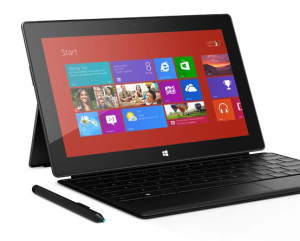
  • Microsoft promises more Surface Pros in stores this week

    It’s a wild week for Microsoft’s Surface Pro team. There was the big release, with lines forming at Microsoft stores, reviews being posted all over the web and then news the tablet sold out at all locations. Not too much can be read into the latter at this point — we do not know how much stock was actually available.

    More are coming. In an overnight announcement, the Surface team lets everyone know that Microsoft is “shipping additional units of the 64GB SKU to Best Buy, Staples and Microsoft Store now. We are shipping 128GB SKU later this week to retailers, with some units available by the end of the week. Our priority (and that of our retail partners) is to fulfill orders from customers who made a reservation first. Canada is following a similar timeline but may take an extra few days to start arriving”.

    Again, we do not know any real numbers here — how many have been sold, how many are now being shipped? Microsoft and analysts will sooner or later let us know if this “success” is artificial or real.

    For now, Microsoft wants us to know that “demand is high and we’re working as quickly as we can to get Surface Pro in market. If your local retailer does not have stock immediately, they should have it soon”.

    Did you get one? Are you anxiously waiting for stock to return or awaiting your reservation unit to be shipped? Or could you not care less?

  • “National Breakup Day” is Today, Declares Virgin Mobile

    With just one day left before Valentine’s Day, Virgin Mobile USA (yes, the mobile carrier) is letting everyone off the hook by declaring today, February 13, “National Breakup Day.”

    Evidently, a survey by Virgin found that 59% of survey-takers, if they were going to break up with their significant other, would break up with them before Valentine’s Day to save a little cash. The survey also found that 42% of survey-takers had stayed in a bad relationship “because they were scared to make a change and try something new.” With these things in mind, the mobile carrier is actively encouraging people to gather their courage and dump their overly attached significant other.

    Of course, for Virgin Mobile the fake holiday isn’t just about promoting break-ups. That would be disturbing. The company is making a comparison between people in strung-out relationships and people who are in expensive contracts with other mobile carriers. Virgin is offering $100 off a Galaxy S II smartphone during National Breakup Day.

    “We want people to understand that they don’t have to be stuck in a bad relationship,” said Ron Faris, head of brand marketing for Virgin Mobile. “If you’re in a tough spot, whether it’s with your significant other or your current postpaid phone carrier, why delay the inevitable? Just break free!”

  • Amazon, CBS Expand Content Deal to Bring More Shows to Prime Instant Video

    Amazon and CBS have just announced an expanded content agreement that will see even more of the network’s programming become available on Amazon’s Prime Instant Video service (Amazon and CBS already have a deal for some of the network’s catalog).

    The new, expanded deal will see CBS and Showtime content like America’s Next Top Model, Everybody Loves Raymond, Jericho, The L Word, Undercover Boss, United States of Tara, and more hit Prime Instant Video.

    “CBS was one of our earliest content partners for Prime Instant Video and our Prime customers have consistently told us how much they love having access to great CBS and Showtime shows,” said Brad Beale, Director of Digital Video Content Acquisition for Amazon. “Adding a wider selection of great TV series, while extending our already popular selection of CBS programming, continues to make Prime an even better deal for customers – and we love that.”

    This announcement comes on the heels of another one involving Amazon and CBS. Earlier this week we learned that Amazon Prime had snatched up the rights to stream CBS’ upcoming show Under the Dome, exclusively, as it airs (4 days after original airing). Under the Dome is based on Stephen King’s novel of the same name It centers on a small New England town that is suddenly cut off from the rest of the world by an giant, transparent dome. It’s being produced by Steve Spielberg’s Amblin Television and will premiere on CBS on June 24th.

    Amazon also recently made a move to steal PBS’ Downton Abbey (past, present, and future episodes) away from Netflix and Hulu.

  • “Ape Woman” Buried After 150 Years Was A Circus Display

    Julia Pastrana, who was labeled as “Ape Woman” and described as “the ugliest woman in the world” during her time, has finally been shipped home and laid to rest after over 150 years of being on display to the public.

    Pastrana was born with the rare disorder congenital terminal hypertrichosis, which left her face and body covered in thick hair, and gingival hyperplasia, which made her lips and gums thick. Combined, those things left her with the appearance of an ape, which was widely regarded as “freak” status in 1854. When she left her Pacific coast home of Sinaloa that year at age 20, she was quickly joined by Theodore Lent, who used her unique appearance to their advantage by taking her on a tour of Europe in a traveling exhibition. Pastrana sang and danced for paying audiences, and she and Lent eventually married. When she became pregnant, however, Pastrana developed a fever and she and the baby both died.

    But rather than lay her body to rest, Lent kept Pastrana on display alongside their son, propping them up inside glass cases for audiences to look at. For years, Pastrana’s body toured the world, until Lent’s death in 1884. After that, the bodies found their way to a Norway fairground warehouse, where they were stolen in 1976. Pastrana’s body was recovered from a trash bin, but her son’s body couldn’t be salvaged. The remains were taken to the University of Oslo, where they’ve been until recently. After several requests from those who knew her story, Julia Pastrana’s body is now at peace in Sinaloa.

    “Julia Pastrana has come home,” said Saul Rubio Ayala, mayor of her hometown of Sinaloa de Leyva. “Julia has been reborn among us. Let us never see another woman be turned into an object of commerce.”

    Pastrana made quite an impact on those who knew her story, even decades after her death.

    “Today, it’s almost incomprehensible that a circus used corpses for entertainment purposes,” said Jan G. Bjaalie, who is head of the Institute of Basic Medical Sciences at the University. “Hers was used in a way we today would consider to be completely reprehensible,” he said. “It’s important that we now have a clear end to the way she was treated.”

    Lead image: Wikipedia

    Pastrana and her son on display (DailyMail)

    ape woman buried

  • Trikanoid gets mouse support

    It’s not even a month since we wrote about Trikanoid, a fun remake of 80’s arcade classic Arkanoid. But developers Triumph Remakers have been busy, and version 1.2 for Windows has just been released (the Mac build is coming soon), with some very welcome additions.

    Top of the “new features” list must be mouse support. Previously the program only supported keyboard control, which wasn’t the most natural way to move your pad around, but being able to control it with your mouse, instead, is a real improvement.

    Trikanoid 1.2 also now allows you to move your pad at the normal, constant rate, or an accelerated ball speed-dependent rate (so when the ball shoots off your pad at an angle and a very high speed, your pad will also move more quickly). This may help you catch balls you’d otherwise miss, but of course you’ll also need great judgment to position your pad accurately when it’s moving so fast, so we’re not yet sure how useful it will be. Try it and see.

    Elsewhere, if you were at all confused by any aspect of the game in the previous edition, you might appreciate the new on-screen instructions.

    And some well-judged compression in the installer means that the download size has been reduced by around 70%.

    While the new mouse support is certainly welcome, we have noticed a minor problem or two.

    We’re not entirely sure about the first, but mouse movement doesn’t seem to be quite as smooth as it should be, almost as though there’s a jump when the pad first starts moving. But we’ll need to spend more time playing the game to be sure (that’s our excuse, anyway).

    The second issue, though, is that the program actually captures the mouse, so if you Alt+Tab away from Trikanoid to some other application then it’ll no longer work (the mouse cursor remains visible, but you can’t move it). This isn’t a major problem – if you want to do something else, just close Trikanoid rather than Alt+Tabbing – but it’s still a little annoying.

    We’d hazard a guess that the issue will be fixed very soon, though. And even with this, Trikanoid is still a fun arcade remake, with great sound and graphics, and the new mouse control makes it more playable than ever.

    Photo Credit: ARENA Creative/Shutterstock

  • When Virtues Hide Vice

    Over the past 10 years, I’ve interviewed thousands of leaders about the difference between being smart and being successful. Most cite two attributes: passion and preparation. There’s no question that both are virtues. But aspiring leaders have to be careful because virtues, left unquestioned, can often hide vice.

    Passion or obsession?

    Professional dancers suffer a wide range of painful injuries, including stress fractures in the spine, arthritis in the hip, and a “trigger toe” condition that can cause their big toe to lock in place. But, according to a study conducted at the University of Quebec, it’s the most passionate ones — those who feel compelled to dance to prove something to themselves or others — who suffer the most. It’s the dancers who love to dance, but don’t live to dance, who manage to stay healthier and have longer, more successful careers.

    The lesson: obsessive passion at work may lead to high performance in the short term but it can also cause burnout and bad judgment. If you find yourself focusing so hard on your job that you forget about everything else, or constantly ruminating about it outside office hours, ask yourself what you’re trying to prove and to whom. It can be tough to diagnose yourself, so get counsel from a trusted work friend or family member. Have them help you find the chips on your shoulder and work to discard them. Also embrace non-work passions. Just as Yo-Yo Ma expanded beyond classical music and Serena Williams found joy outside tennis, outside interests can sustain and enrich your core work.

    Prepared or scared?

    Preparation is another virtue that hides a vice: insecurity. Take, for example, a team of junior consultants I interviewed. Worried that they lacked the experience to meet their clients’ needs, they worked extra hard to develop a book full of data before a meeting intended to sell a new project. But they ended up spending so much time presenting to the client that he didn’t feel heard and rejected their proposal.

    When you over-prepare as a way of reducing your anxiety, you risk becoming locked into a script instead of adapting to the situation as it unfolds. To avoid the trap of unwise preparation, make a point of sharing incomplete work in progress more often and using the constructive criticism you get to rapidly prototype, test and improve. Consider every workplace task or interaction as a chance to get better, rather than an opportunity to show how much you’ve prepared.

    Passion and preparation aren’t always masking unhealthy behavior. They’re still traits to be encouraged. But when you say — or hear someone else say — that something is being done in the name of admirable aims, it’s smart to check that no vice lurks inside the virtue.

  • Apple Is Working On Its Own Smart Watch [Report]

    The smart watch is a good idea that has yet to hit the mainstream. It seems that consumers just don’t really see the need for a watch that syncs with their smartphones just yet. That may all change if Apple gets into the game, and a recent report suggests the company is doing just that.

    Bloomberg reports that Apple has a team of over 100 product designers currently working on a smart watch. The device will reportedly handle some of the functions that are already performed by the iPhone. If it’s like other smart watches, it will also presumably sync with an iPhone or iPad to provide information such as texts, messages and other relevant information directly on the watch’s display.

    Why would Apple be investing in a smart watch though? They’re not exactly taking off into the mainstream. The prohibitive cost for something that does very little, while needing to be charged every day, isn’t exactly what consumers are looking for. Would Apple be able to circumvent these problems, and emerge with another product that the masses will lap up?

    Former Apple employee Bruce Tognazzini certainly thinks so. He wrote in a blog post last week that an “iWatch” would “fill a gaping hole in the Apple ecosystem.” He also said that the value of such a product would “be underestimated at launch” but then “grow to have a profound impact on our lives and Apple’s fortunes.”

    This all merely rumor and speculation for now. An iWatch, as its presumably called, does sound like the natural evolution of the iOS platform. Google is already heavily invested in wearable computing, so it’s only natural to assume that Apple is investing in it as well.