Category: News

  • The Social Sector Needs to Take More Risk and Accept Failure

    In our last post, we talked about how impact investing is where the venture capital industry was 35 years ago. One of the things that characterized the early days of that industry was experimentation. Through an iterative process, the contracts between investors and venture capital firms and between those firms and the underlying venture eventually came to a standardized form. Now, almost all venture capital firms are limited-life partnerships and almost all investments are staged over time and take the form of convertible preferred stock.

    So, if impact investing is still within this early stage of experimentation and iteration, what lessons learned from the formation of the venture capital industry might we apply?

    If we think about what venture capitalists do well it boils down to this: Identifying the right opportunities, backing the right people, and finding ways to help entrepreneurs succeed. Venture capitalists finance structured experiments — with relatively modest amounts of money and time — intended to produce valuable outcomes. An entrepreneur earns the right to more time and more money based on the results.

    While we frequently hail the success stories where an entrepreneur achieves a valuable breakthrough, it is important to take note of what underlies those successes: some probability of total loss. The discovery process is the only way to find out which way the coin will fall. If we look at the past 15 years of venture capital, about 50% of the ventures have failed. When you do the math, it reveals that companies with really big payoffs disproportionately account for the total value created by venture capital.

    This is one of the core competencies of the industry: An ability to tolerate non-moral failure. The entrepreneurial team does everything in its power to succeed on behalf of investors and employees; team members do not lie, cheat, steal or give up easily. The industry accepts that if an experiment fails, the process and the learning that accompanies it can eventually lead to success. Without the 50% failure rate and the ability to re-deploy human and financial capital, we would never get Google. We would never get Intel, Apple, or Amazon. We would never get Federal Express, which came perilously close to failing twice before it gained traction.

    Throughout private industry — from H. J. Heinz to Steve Jobs — enterprising individuals have launched businesses that failed or have been fired only to rebound to great success. The U.S. has led the way in tolerating of risk and applauding enterprising individuals who undertakes something new or hard that has potential for big impact. Failure or poor economic outcomes do not have to ruin careers.

    The opposite is true in the social sector today.

    Across the sector, there is a grave fear of failure and a low appetite for risk. We see social entrepreneurs that refuse to take even small risks as they start their ventures. We see it in the philanthropic institutions that fund them and expect predictability and nothing less.

    For social impact organizations to scale in the same way entrepreneurial tech companies do, investors need to increase their tolerance for non-moral failure. They need to foster a culture of innovation and risk-taking. The social sector needs to embark on an era of experimentation and innovation if it is to identify better ways of addressing social issues. We need to fund lots of creative high potential social ventures even if they carry the risk of failure. Most importantly we have to stop pumping support into struggling ventures because we are afraid to see them fail and be prepared to back again those who have learned from their failures. Smart people are more willing to attempt disruptive change when they know their value will not be destroyed if it doesn’t pan out.

    Venture capital is active, staged commitment of capital to multiple high-potential, high-uncertainty investments with great potential. Failure is inevitable and healthy. Impact investing needs to become the same. This is the only way foundations and other funders can maximize the social benefit from their assets, and move the needle on solving persistent social issues.

    Follow the Scaling Social Impact insight center on Twitter @ScalingSocial and register to stay informed and give us feedback.

  • Fun, interesting science? 11 amazing online sources

    In today’s TED Talk, Tyler DeWitt makes a fantastic case for a simple idea: make science fun. Educators and writers get caught up in the idea that science needs to be taken seriously, and forget that the best way to get kids interested is to… make it interesting. Too much emphasis on being accurate can lead to lessons that are incomprehensible, or just flat-out boring. The money quote from DeWitt:

    “If a young learner thinks that all viruses have DNA, that’s not going to ruin their chances of success in science. But if a young learner can’t understand anything in science and learns to hate it because it all sounds like this, that will ruin their chances of success.”

    Now to the good news. There are a lot of people doing very fun, very engaging, very non-stuffy science work. If you’re a teacher looking for ways to engage your students, or if you just want to see some science yourself, take a look at these great resources:

    Minute Physics. Short videos explaining a physics concept. Sounds simple? It is, and that’s why it’s great. They’re clean, easy to understand, and discuss some of the most fascinating ideas in physics.

    Vi Hart. Another series of videos, this time about math. She uses hand drawings and her own amazing way of talking to make math incredibly fun and relevant.

    It’s OK to be Smart. A Tumblr with a great idea: post interesting science, and be excited about it. Joe Hanson figured that he could make use of the powerful sharing tools on Tumblr to get fascinating science content out there. And he was right.

    Comics! There are a surprising number of amazing web-comics about science. Of course there are the well-loved XKCD and Saturday Morning Breakfast Cereal, which frequently explain, dissect, and have fun with science. There are many, many others, such as sci-ence, where top-notch comic artist Maki Naro illustrates science comics, with a more in-depth explanation below.

    I F***ing love science. One of the most successful Facebook fan pages in existence — it has 3 million likes! Curator Elise Andrew finds funny, awe-inspiring, or otherwise amazing pictures. It’s like LOLcats, but with science.

    There are lots of wonderful places to find science news. Two of our favorites that consistently post high-quality ideas in a playful way are io9, and the inimitable BoingBoing.

    Of course, there is our very own TED-Ed. Short, beautifully animated lessons for high school students.

    There’s also The Story Collider, the story-telling event dedicated to how science makes a difference in lives and changes people. I highly recommend it, but I’m biased because I happen to run it. We have a podcast full of alternately funny and touching science stories.

  • The Power of Real-Time Advertising

    Now that the Super Bowl is over and we know who won the game, everyone’s asking who won the marketing battle that surrounds it. There’s so much discussion every year about who got what spot, what they paid for it, and whether or not they should have released their commercial early. But the biggest storyline out of this year’s Super Bowl had less to do with the commercials themselves and more to do with the way that brands engaged with events and consumers in real-time.

    While there will always be debate about which TV spots deliver the most ROI, one thing is certain: no matter how much you’ve planned ahead, and no matter how deeply integrated your campaign may be, there’s no better (or cheaper) way to cut through the clutter than to improvise. The idea of improvisational marketing is a dangerous one to many of the big brands that advertise around the Super Bowl, for obvious reasons. Even the slightest misstep or off-color remark can go viral and forever damage a brand within minutes. But responding to events in real-time, as they unfold, and weaving your brand into the conversation in a way that entertains and supports your brand proposition, can be the most powerful marketing of all.

    Sunday’s power outage provided the perfect surprise for brands to pounce on creatively. Tide shrewdly tweeted, “We can’t get your #blackout. But we can get your stains out.” In a dig at their luxury car rival, Audi tweeted, “Sending some LEDs to the @MBUSA Superdome right now…” At Mondelēz International, our Oreo brand team and their agency partners sat together in a war room and came up with this gem, which has since been re-tweeted more than 15,000 times:

    This was a big, albeit unplanned moment, but the beauty of real-time content is that there’s always something interesting happening in the world, and always an audience who cares about it. The ubiquity of digital technology and mobile devices enables people at far corners of the globe to share moments together, regardless of where they’re located, their economic status, or how old they are. By focusing content development around these shared cultural moments, marketers can transcend the demographics-driven targeting that has for so long defined the industry, reaching more people in a more relevant way.

    We saw firsthand the power of tapping into big cultural moments when we celebrated Oreo’s 100th birthday in 2012. We produced 100 consecutive “Daily Twists,” spotlighting global cultural developments, as they happened, through an Oreo lens. Covering everything from LGBT Pride Month to the Mars Rover landing, we were able to join the global conversation with fresh content, and this timeliness nearly tripled the level of consumer engagement compared to the three months prior to the campaign.

    The biggest challenge for brands that want to engage their consumers in real-time is that consumer conversations move at incredible speed due to social and mobile technologies. For large brands, making sense of that conversation requires rapidly sifting through vast amounts of data, but also making that data available across functions within the organization in a way that empowers brands to translate social insights into actions.

    Only by gathering, analyzing, and broadcasting these data in real-time do organizations position themselves to deliver on a wide variety of organizational challenges. By empowering brands to make strategic decisions on the fly, companies and their agencies can execute on smarter media plays that have small windows of opportunity, such as observing earned media trends and adjusting their paid media strategies to amplify them. Just as important is that there’s a cross-functional process in place, best achieved by getting everyone in the same room, so that multiple departments can see, evaluate, and act on data and conversation they wouldn’t otherwise see.

    Beyond process and proximity, the most critical point is that visualizing data tells a story and changes culture in a way that numbers themselves cannot. By giving everyone access to the same data-driven picture, you put the onus on the group to understand and act on the trends, challenges, and opportunities that emerge. This culture of listening, accountability, and collaboration is what brands need behind them to succeed in a real-time world.

  • Announcing the State of the Union White House Social

    On Tuesday, February 12th, President Obama will deliver his fourth State of the Union Address from the Capitol. Over at the White House, we’ll be hosting our second State of the Union Social event. The White House Social program invites people that engage with us online to attend in-person events, and then share their experience with their own online networks in real time.

    We’re excited to announce that the first White House Social of the second term will be a unique opportunity for our followers on social media to watch President Obama’s State of the Union Address live from the White House, and then participate in a panel discussion with Administration officials about the vision and policies presented during the speech. 

    Interested in joining? Apply for the White House social today! Registration closes at 6:00 p.m. ET on Wednesday, February 6th at http://www.wh.gov/social. After you sign up, spread the word. Let your followers know that you signed up for a #WHSocial.

    If you plan on watching from home, we will be streaming an enhanced version of the speech on WhiteHouse.gov that features graphics, data and charts that help explain policies and the issues. You can also tune in live on FacebookYouTubeGoogle+ and through our mobile apps

    After the speech, stay tuned for a chance to ask White House officials your questions about the issues that were highlighted in President’s address. Before, during and after the speech, you can submit your questions for the panel here, or on Twitter using the hashtags (#WHChat & #SOTU).

    Take a look back at the 2012 State of the Union:


  • Check Out Borderlands 2 Running On Nvidia’s Project SHIELD

    One of the stranger announcements at CES this year was Nvidia’s Project SHIELD. In essence, it’s a handheld gaming device powered by the company’s new Tegra 4 mobile processor. Nvidia has stated that it will play all the latest and greatest Android titles, but the company has been primarily pushing its secondary function of streaming PC titles to its 5-inch screen.

    In what Nvidia is dubbing PC Mondays, the company will be showing a PC game running on Project SHIELD every week for the foreseeable future. This week’s game is Borderlands 2 – one of the best PC ports of last year. The title looks absolutely glorious on my 1680×1050 monitor, but how does the game perform on a tiny 5-inch screen? Check out Nvidia’s demo to find out:

    Borderlands 2 seems to perform just fine on Project SHIELD. Nvidia notes that games will stream at 60 FPS with no noticeable degradation in quality. The only caveat is that the game is on a smaller screen which means that some less pronounced details may not be as readily apparent as they are on a larger screen.

    Alongside PC Mondays, Nvidia will also be putting up a new video every Thursday showing an Android game running on Project SHIELD. It will be interesting to see if any developers take advantage of the increased power available to them on Project SHIELD for their Android titles.

  • Dead Space 3 DLC Announced, Background Mini Series Begins

    Dead Space 3 was released in the U.S. today, and already extra content for the title is being announced.

    EA and Visceral Games today announced the “AwakenedDLC add-on will be available sometime in March. The announcement states that the content will allow players to “experience the franchise’s darkest chapters as the Necromorph battles become even more gruesome and terrifying than ever before. The add-on will cost $10 via the PlayStation Network or Origin, and 800 Microsoft Points via Xbox LIVE.

    “With Dead Space 3 our goal was to evolve the franchise bringing in innovative new features like drop-in/drop-out co-op, weapon crafting, and an engaging atmosphere while still retaining the incredible suspense, horror, action and sound that the series is known for,” said Steve Papoutsis, general manager of Visceral and executive producer of Dead Space 3. “Gamers are going to be thrown in and out of space, taken to a violent new ice planet and allowed to explore several different abandoned spaceships and caves. But we’re not stopping there. In Dead Space 3 Awakened, gamers will experience some of the most disturbing content they have ever seen in a Dead Space game – they are going to love it.”

    In addition to new content for fans already deep into Dead Space lore, EA today began a YouTube mini series designed to acclimate gamers new to the Dead Space franchise. Dead Space: A Journey Through Terror will highlight all the important plot points from the first two Dead Space games, and are filled with spoilers. The first episode, titled “Isaac Clarke’s Journey,” details the protagonist’s former battles with the necromorphs.

  • Face Tattoo After First Date: Girl Has BF’s Name Inked

    Face tattoos are not as common in some parts of the world as others, but it’s probably safe to say that no matter where you live, you’re going to get a few stares when you walk down the street if you have giant letters inked on your cheeks.

    But one Russian girl didn’t care about any potential repercussions when she did just that and allowed her boyfriend of one day to tattoo her face with his name. Lesya Toumaniantz says it’s a show of devotion and, even though they had only just met in person, they’d been involved online for a while.

    “It’s a symbol of our eternal devotion. I’d like him to tattoo every inch of my body,” she said.

    Rouslan Toumaniantz, her beau, is an experienced tattoo artist and dealt with some controversy a few years back when a female client claimed he botched her ink, giving her way more stars than she’d asked for. She later recanted her story and said she’d lied because her family was upset over the tattoo.

    The couple have reportedly made their love official by getting married; Lesya has already changed her last name. And while some think she’s made a huge, painful mistake, a friend says she was only doing what felt right.

    “I know that there are people who are terrified that Lesya has made a rash decision that she’ll regret horribly, but sometimes the best decisions are the ones you make in an instant with your heart rather than the ones long-debated in your mind,” the friend says.

    Image: CEN

    face tattoo after first date

  • The year of the introvert: A Q&A with Susan Cain on the release of her paperback

    Susan-CainAt TED2012, Susan Cain asked us to stop the madness. That is: the group work madness. At offices and schools around the globe, the desire for collaboration has led to an onslaught of open floor plans and group projects where individuals aren’t given much space to think on their own. And this is a big problem, Cain explained, because a third to half of people in the world are introverts. They thrive on their own and feel at their best in quiet moments, without over-stimulation.
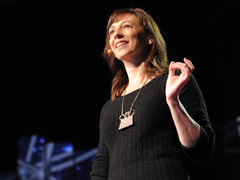
    While our culture tends to laud extroverts — people who are outgoing, social and high on charisma — Cain stood up for the introverts of the world in her talk.

    Susan Cain: The power of introvertsSusan Cain: The power of introverts

    “Our most important institutions, our schools and our workplaces, they are designed mostly for extroverts and for extroverts’ need for lots of stimulation,” says Cain. “This is our loss for sure, but it is also our colleagues’ loss and our communities’ loss. And at the risk of sounding grandiose, it is the world’s loss. Because when it comes to creativity and to leadership, we need introverts doing what they do best.”

    In the past year, Cain’s talk has been viewed nearly 4 million times. Meanwhile, her book Quiet: The Power of Introverts in a World that Can’t Stop Talking became a New York Times bestseller. With the paperback of the book now on bookstore shelves, the TED Blog spoke — softly — to Cain about the experience of the past year.

    Do you feel like Quiet has made a dent in the cultural bias toward extroversion?

    Yes, and it started within minutes of giving my TED talk! One member of the audience was Jim Hackett, the CEO of Steelcase — a self-identified introvert and just a lovely fellow. He told me he’d been thinking for years about ways to encourage employee privacy at work. His company has spent the last year working on this question. And Herman Miller, the office furniture manufacturer, is following the same path.

    Since then, I’ve heard from other businesses who are using the ideas in Quiet to rethink their corporate culture, and from schools asking their teachers to read the book and question practices like grading children on class participation.

    I’ve also heard many stories of individuals empowered by the message of the book. Just last night, I met a lovely young woman who said she’d always wanted to be an entrepreneur but was afraid she was too quiet to pull it off. But after she saw my TED talk, she started her own company.

    What are some of the most basic things we can do in schools and offices to make sure introverts are in their element and that their voices get heard?


    In workplaces, we need to dramatically rethink open office design. These spaces are so economical that I don’t expect them to disappear, but they desperately need to be balanced with private nooks and crannies. Also, it’s fine to organize people into teams, but that doesn’t mean the actual work has to get done collectively. Most people think better when they’re on their own and not subject to constant interruption and scrutiny.

    In schools, I am just going to repeat what I said in my TED talk, almost a year ago now: stop the madness for constant groupwork. Constant groupwork is even bad for extroverted kids. According to psychologist Anders Ericsson’s research on how people become stars, excellence depends not on talent but on sustained, deliberate practice that is often conducted in solitude.

    Now that you’ve been speaking about this book for a year, do you feel any more extroverted?

    No way! Yes, I’m more comfortable giving speeches than I used to be. Yes, I feel lucky and grateful to connect with so many great audiences. But I will always feel most at peace when I’m home with my family, or lounging around a café with my laptop and a latte in hand.

    If you were starting over in writing this book today, what would you include that wasn’t in the original text?


    I wouldn’t change much about the book. But I wish I’d had reader resources ready and waiting to go, at publication date. Every day, teachers and businesspeople ask me for tools they can use to harness the talents of the introverts in their lives. And regular people ask me for help with dating, schmoozing, public speaking and career choices.

    Right now I’m developing an online course in public speaking for introverts. And I’m planning a young-adult version of Quiet. But there’s so much more to do.

    The truth is, this is a job not for one person but for hundreds, thousands, maybe millions. Luckily, many other people have started to write about and work on these issues, too. (I’ve listed some of them in the “Resources” area of my website.) There truly is a Quiet Revolution afoot. I really hope that people reading this will think about the places in your own world that you’re in a position to influence.

    Is there anything new that readers will find in the paperback?


    Yes, lots of stuff. The paperback now opens with my 10-point manifesto for introverts. And in the back of the book, there’s a new reader’s guide, list of introverts in literature, and other resources — tips on public speaking for introverts, tips for parenting an introverted child. Also, tips for educators.

    Want more? You can find Cain on Facebook. Or head to her very comprehensive website »

  • Microsoft To Launch Five New Retail Stores By Summer

    CPT-MICROSOFT-STORES

    Microsoft has been ramping up its retail presence in the past year, and has today announced that it will introduce five new stores to the U.S. over the course of 2013.

    The exact dates of the store openings have not been disclosed, but the company promises they’ll be ready to go by summer.

    Here are the new locations where Microsoft will have a retail presence:

    • Natick Mall, Natick, Massachusetts
    • Ala Moana Center, Honolulu, Hawaii
    • Pioneer Place, Portland, Oregon
    • The Somerset Collection, Troy, Michigan
    • Woodfield Mall, Schaumburg, Illinois

    This comes on the heels of a recent announcement of six new U.S. stores, in San Antonio, Miami, Beachwood, San Francisco, Salt Lake City and St. Louis. That’s a total of 11 new stores in 2013, to go along with the 29 already-operational Microsoft stores in North America.

    The company said in 2011 that it has plans to open 75 new retail stores over a two- to three-year period. 2013 has only just begun, so unless Microsoft plans on launching nearly half of its goal in 2014, I would expect to hear a few more announcements like this one in the coming months.

    Here’s what Redmond had to say about it:

    Our customers continue to tell us that they value our stores for connecting them to the best of Microsoft. This delights us to no end. From the newest touchscreen laptops, desktops, and tablets running Windows 8, to Windows Phones, to Xbox and Kinect consoles and accessories, to a wide array of first and third-party software titles, our goal is to introduce you to the best choice, value and service we have to offer.

    Microsoft is clearly making a big push in the retail segment, but in terms of the competition, they’ll have a ways to go before the have the same retail presence as Apple. In fact, Apple has retail stores in every one of the five new locations.

  • You Should Be Drinking Your IPAs Out of This Glass

    If you’re a beer-lover who thinks that it’s important to drink certain styles of beer in certain styles of glasses, this new product from two major American breweries may interest you.

    Purveyors of tasty brews Dogfish Head Brewery and Sierra Nevada Brewing Co. have teamed up with Spiegelau glassware to create the ultimate glass for India Pale Ale lovers. They call it the “new standard for IPA glassware.”

    “I’ve been a longtime believer in the importance of using quality glassware to enhance the enjoyment of quality craft beer,” says Dogfish Head Founder and President Sam Calagione. “The process of collaborating on the design of this hop-centric glass takes this concept to the next level.”

    Why does this glass make the IPA-drinking experience better? According to its designers, a whole bunch of things. For instance the glass’ walls are thin and rounded, allowing proper temperature regulation. The shape also helps to “amplify hop aromas,” something that any IPA drinker will know is important.

    The glass also has “wave-like ridges to aerate beer on its way in and out of the glass” and “a laser-etched logo on the bottom of the bowl to sustain carbonation and head.”

    Spiegelau VP Matthew Rutkowski believes that If pilsners, saisons, and other styles of beer have universally-recognized glasses that maximize flavor and regulate consistency, why not the IPA?

    “The goal of this initiative was to develop a glass that would serve as the new global standard for the American IPA style of beer, just as the world recognizes wheat, pilsner and other beer glass styles,” Rutkowski says. “We are thrilled to have collaborated with two of America’s pre-eminent IPA brewers on this project, as this further validates that we are offering beer drinkers a glass that will maximize their tasting experience to its fullest potential.”

    You can order one of the new IPA glasses from the Dogfish Head store. It’ll run you $9. Even if you think the whole “glass matters” thing is bullsh*t, it’s still a pretty cool glass.

    Man, I’m thirsty.

    [Dogfish Head Brewery]

  • Vitamin D, omega-3 may help clear amyloid plaques found in Alzheimer’s

    A team of academic researchers has pinpointed how vitamin D3 and omega-3 fatty acids may enhance the immune system’s ability to clear the brain of amyloid plaques, one of the hallmarks of Alzheimer’s disease.
     
    In a small pilot study published in the Feb. 5 issue of the Journal of Alzheimer’s Disease, the scientists identified key genes and signaling networks regulated by vitamin D3 and the omega-3 fatty acid DHA (docosahexaenoic acid) that may help control inflammation and improve plaque clearance.
     
    Previous laboratory work by the team helped clarify key mechanisms involved in helping vitamin D3 clear amyloid-beta, the abnormal protein found in the plaque. The new study extends the previous findings with vitamin D3 and highlights the role of omega-3 DHA.
     
    “Our new study sheds further light on a possible role for nutritional substances such as vitamin D3 and omega-3 in boosting immunity to help fight Alzheimer’s,” said study author Dr. Milan Fiala, a researcher at the David Geffen School of Medicine at UCLA.
     
    For the study, scientists drew blood samples from both Alzheimer’s patients and healthy controls, then isolated critical immune cells called macrophages from the blood. Macrophages are responsible for gobbling up amyloid-beta and other waste products in the brain and body. 
     
    The team incubated the immune cells overnight with amyloid-beta. They added either an active form of vitamin D3 called 1alpha,25–dihydroxyvitamin D3 or an active form of the omega-3 fatty acid DHA called resolvin D1 to some of the cells to gauge the effect they had on inflammation and amyloid-beta absorption.
     
    Both 1alpha, 25-dihydroxyvitamin D3 and resolvin D1 improved the ability of the Alzheimer’s disease patients’ macrophages to gobble-up amyloid-beta, and they inhibited the cell death that is induced by amyloid-beta. Researchers observed that each nutrition molecule utilized different receptors and common signaling pathways to do this.
     
    Previous work by the team, based on the function of Alzheimer’s patients’ macrophages, showed that there are two groups of patients and macrophages. In the current study, researchers found that the macrophages of the Alzheimer’s patients differentially expressed inflammatory genes, compared with the healthy controls, and that two distinct transcription patterns were found that further define the two groups: Group 1 had an increased transcription of inflammatory genes, while Group 2 had decreased transcription. Transcription is the first step leading to gene expression.
     
    “Further study may help us identify if these two distinct transcription patterns of inflammatory genes could possibly distinguish either two stages or two types of Alzheimer’s disease,” said study author Mathew Mizwicki, an assistant researcher at the David Geffen School of Medicine at UCLA.
      
    While researchers found that 1alpha,25-dihydroxyvitamin D3 and resolvin D1 greatly improved the clearance of amyloid-beta by macrophages in patients in both groups, they discovered subtleties in the effects the two substances had on the expression of inflammatory genes in the two groups. In Group 1, the increased-inflammation group, macrophages showed a decrease of inflammatory activation; in Group 2,  macrophages showed an increase of the inflammatory genes IL1 and TLRs when either 1alpha,25-Dihydroxyvitamin D3 or resolvin D1 were added.
     
    More study is needed, Fiala said, but these differences could be associated with the severity of patients’ nutritional and/or metabolic deficiencies of vitamin D3 and DHA, as well as the omega-3 fatty acid EPA (eicosapentaenoic acid).
     
    “We may find that we need to carefully balance the supplementation with vitamin D3 and omega-3 fatty acids, depending on each patient in order to help promote efficient clearing of amyloid-beta,” Fiala said. “This is a first step in understanding what form and in which patients these nutrition substances might work best.”
     
    According to Fiala, an active (not oxidized) form of omega-3 DHA, which is the precursor of the resolvin D1 used in this study, may work better than more commercially available forms of DHA, which generally are not not protected against the oxidation that can render a molecule inactive. 
     
    The next step is a larger study to help confirm the findings, as well as a clinical trial with omega-3 DHA, the researchers said.
     
    The Alzheimer’s Association contributed to the initial phase of the study.
     
    Fiala is a consultant for the Smartfish Company that is producing a drink with an active form of omega-3 DHA.
     
    Additional study authors include Guanghao Liu, Larry Magpantay, James Sayre, Avi Siani, Michelle Mahanian, Rachel Weitzman, Eric Hayden, Mark J. Rosenthal, Ilka Nemere, John Ringman and David B. Teplow.
     
    For more news, visit the UCLA Newsroom and follow us on Twitter.

  • Ouya Launches At Retailers Nationwide In June

    Ouya – the little game console that could – is almost upon us. Those who helped make it the most successful gaming Kickstarter ever only have one more month before its delivered to them. What about those who didn’t preorder one last year though? They’ll have to wait a bit longer.

    Speaking to the Wall Street Journal, Ouya CEO Julie Uhrman said that the Ouya would be hitting retail in June of this year. The company has struck deals with various retailers, like Target, Amazon, GameStop and Best Buy, to carry the mini-console. Before that though, the company will be shipping out Kickstarter backer units in March and early preorders in April.

    GameStop and Amazon already have preorder pages up for the Ouya with the console retailing for $99.99. The base console comes with one console and a controller. Extra controllers will retail for $49.99 each.

    As for game support, Uhrman told the WSJ that about 200 titles are being prepared for Ouya at the moment. The titles range from indie efforts to games from big name studios. An example of each would be Minecraft from Mojang and Final Fantasy III from Square Enix.

    Ouya has the games and right price, but can it compete with the new consoles coming from Sony and Microsoft this year? Uhrman says that it’s not their intention to compete with the other consoles, but instead “carve out own niche.”

    Retailers seem to have faith in Ouya, and it’s Kickstarter campaign still impresses. It still remains to be seen, however, how consumers will respond once it officially launches. I find it hard to imagine people playing sloppy controller-based ports of smartphone titles on their televisions, but wholly original content may just Ouya the kickstart it needs to succeed where others have failed.

  • Mophie’s iPhone 5 Battery Case, The Juice Pack Helium, Now Available For $79.95

    helium-mophie

    Mophie is one of the most trusted names in iPhone and mobile backup batteries, and the company has finally debuted its battery case for iPhone 5. The Mophie Juice Pack Helium is around 13 percent thinner than the Air version released for iPhone 4S and iPhone 4 (get it? Helium is lighter than air), and retails for $79.95 right now direct from the Mophie store. The cases should ship in time for Valentine’s Day, the company says.

    The new Mophie boasts a 1500 mAh battery, which keen readers will notice is technically enough to double the 1,440 mAh power station inside the iPhone 5. That’s enough to boost your device’s talk time life by up to 6 hours on 3G, or provide another 6 hours of cellular browsing, 7 hours of WiFi browsing, 30 hours of audio playback or 7 hours of movie watching, according to Mophie.

    The new slim down design is offered in both dark metallic and metallic silver colors, with the dark scheme shipping first, and it has the same LED power indicator and forward-facing speaker ports that have made the Mophie line a winner for the past few years. Of course the things can also stand to shed some weight and girth, so this new thinner design is very welcome, but the fact is that when you need juice and you’re without any kind of outlet, having one of these on hand can really save the day, and they take up less space than something like an external charger.

    One final advantage of the Juice Pack Helium is that it has a micro USB port to take the place of the Lightning connector, which handles pass-through charging and data syncing just fine. That’s good news if you’ve already got a ton of micro USB cables (one is also included) lying around from other devices and don’t want to invest heavily in replacing all those 3o-pin Apple chargers from your past iOS devices. This may be one of those cases where a blogger’s needs may not reflect the larger community’s, but I’m definitely a believer given Mophie’s track record, and for sure picking one of these up.

  • Google Releases Toolbar PageRank Update

    Google updates toolbar PageRank about four times a year. They updated it in November, and August before that. Now they’ve updated it again – the first update of 2013.

    People started noticing the update on Monday. As usual, webmasters are taking to Twitter to express their comments on the ups and downs.

    It’s become pretty well known in the industry that toolbar PageRank is not the most helpful indication of how Google views a page, though actual PageRank is certainly still an important signal (Matt Cutts even referenced it in the latest Webmaster Help video).

    As usual, here’s the obligatory Matt Cutts video discussing toolbar PageRank:

    [via Search Engine Roundtable]

  • OUYA To Launch Soon, But Where Are The Games?

    Ouya_Family_1024x1024

    With less than two months before OUYA’s launch, it’s time to tell the truth — its future doesn’t look promising. The OUYA is starting to feel like a gaming console without the games. Publishers and developers aren’t promoting OUYA games because there’s nothing to promote — nothing that was specifically developed for the launch line-up. Even worse, Final Fantasy III will be the flagship launch title, a game that has been available on countless gaming systems for years. OUYA isn’t the gaming revolution that backers expected.

    Earlier today, Darrell Etherington reported that the Android-based gaming console would launch in-store in June. The more than 68,000 backers to its Kickstarter campaign will get their consoles in March. While the company is still planning to ship on time, that was only half of the launch challenge.

    Gamers buy a new gaming system based on two key elements: launch games and who is making the console. As the OUYA is not coming from an established company, the team is facing an even harder task — selling enough good games to make the console interesting.

    You may say that the OUYA is an Android-based console and that many titles will be ported to a TV screen and OUYA’s gaming controller in minutes. Yet, there is no way you could compare an Android game with what gamers expect from a traditional gaming console. Even the Nintendo Wii U with its pretty weak launch line-up could count on ZombiU, Assassin’s Creed 3 or New Super Mario Bros. U. Angry Birds (or an equivalent game) and Final Fantasy III won’t convince an experienced gamer. You don’t need a dedicated device to play Canabalt.

    Moreover, Best Buy or Target customers don’t care about Android. When they’ll walk into a store and see the Android logo, it won’t mean anything to them. Normal people, those who don’t usually back projects on Kickstarter, they buy a Samsung phone, not an Android phone made by Samsung. That’s why average consumers do not line up to buy Nexus phones. Without its Kickstarter video, the OUYA is uninteresting.

    When it comes to games, even though OUYA claims to launch with 200 games, most of them are just Android ports or come from inexperienced developers. There is no big system-seller that may convince undecided gamers. And if you backed the console for its emulating capacity, you’ll be part of a very tiny minority.

    Vevo, XBMC or TuneIn are nice additions, but are already available on most TV boxes or support equivalent apps. The Roku, the Apple TV or even the Xbox 360 and the PlayStation 3 have long been hooked up to everyone’s TV, ready to stream content. The OUYA will not sell en masse for these apps alone.

    Before the end of the year, OUYAs will gather dust on store shelves, next to Boxee devices and other products that promised to revolutionize TV or gaming without actually achieving this status. The OUYA won’t be the first to disappoint, and there will certainly be other gaming consoles in the future that will end up in the attic in no time.

  • So God Made FarmVille Parodies Popular Super Bowl Ad

    Whether you liked it or not, Dodge’s Super Bowl ad “So God Made a Farmer” made a big splash. Whether it will help the company sell more Ram pickup trucks is still left to be seen.

    This parody ad, though funny, will probably not do much to further popularize FarmVille. That’s probably a good thing.

    If there is a God, I can’t imagine that he would have made FarmVille.

    [Whatstrending via Fark]

  • To Have Real Influence, Focus on a Great Outcome

    Few people like to be pushed into doing something, or sold hard on it. And few like to push or deliver a hard sell. But at the end of the day, or even the end of a conversation, you do have to move things forward. So how do effective leaders really get things done?

    As part of the research for our book, I and Dr. John Ullmen, a lecturer at the UCLA Anderson School of Business, interviewed more than 100 people who “get things done,” but who aren’t pushy. But when we asked them, “Who persuaded you to do something really important?” more than a few arched their backs and replied defensively, “Nobody persuaded me to do anything important!”

    When we switched tactics and asked, “Well then who positively influenced you to become the person you are?” they leaned back, smiled, took a deep breath of satisfaction and replied, “Now that’s a different story!”

    This helped us uncover a pattern of great influencers. It follows four steps. We will cover all of them in turn in future posts, but here’s the first: They go for great outcomes. (To avoid keeping you in suspense, in brief the next three are: Step 2: Listen past your blind spots; Step 3: Engage them in “their there;” Step 4: When you’ve done enough… do more.)

    When people paint a picture of a great outcome, they’re not trying “to persuade people to do something important.” They’re trying to “positively influence them” to get them to a better place.

    Take the story of Jim Sinegal, co-founder and former CEO of Costco, largely seen as the heart and soul of that great company. Jim is very humble and doesn’t like to be given too much credit for his and Costco’s success. He often tells the story of how, as a recovering juvenile delinquent still headed in the wrong direction, he was working as a bagger at FedMart in San Diego. One day he was singled out by the legendary Sol Price, the founder of FedMark who is viewed as the father of the warehouse store concept. Price saw beyond where Jim was, even beyond where he wanted to be, to where and who he could be — and focusing on that “great outcome” let him influence Jim, even as others had failed to persuade him. Price’s dedication to customer value and the caring treatment of employees lived on through Jim and is so ingrained in the Costco culture that those values live on beyond his stewardship as CEO.

    Someone and something that have produced a great outcome for me is Pete Linnett and the Life Adjustment Team (LAT) that he founded. I was trained and practiced as a clinical psychiatrist and psychotherapist for more than twenty years before transitioning to business consulting, executive coaching and writing. For much of that time I was haunted by and felt complicit in what a poor job the mental health, drug and alcohol treatment systems did preventing relapse and lessening recidivism. Practitioners are well-intentioned, caring individuals, but the system is flawed. That is because the treatment is largely located by what is convenient to the practitioner, as opposed to where the patient lives which is their life. LAT accomplishes relapse prevention by having their case managers go out to where the patients live — taking them to doctor’s appointments, doing recreational activities, teaching them how to communicate better, even helping them learn to manage their money. LAT also works with patients’ families to eliminate conflicts.

    Switching to this method has not only produced a great outcome for my patients, but it’s also produced a great outcome for me. Finally, the monkey is off my back and I’m no longer haunted by the guilt of being party to such a flawed system. But if Pete had come to me and said, “Let me tell you why my method is better than the method you’re currently using,” he’d have instantly gotten my back up — even though he was right. Instead, by starting with the great outcome — “What if it were possible to get more of your patients healthy, and to stay healthy?” — he made it easy for me to jump on his approach.

    He wasn’t trying to persuade me. He was trying to have a positive influence — and to improve my ability to have a positive influence, too.

    Ask yourself what a great outcome would be for your people, your company, yourself. How can you use influence — instead of persuasion — to get there?

  • Mars Rover Curiosity Pounds a Rock

    NASA today announced that Mars rover Curiosity is closer than ever to the first full use of its hammering drill. Over the weekend the rover completed a successful test of the drill’s percussive action.

    The “drill-on-rock checkout” left a mark on the rock, named “John Klein,” chosen as the target for the first drill sampling of rock material in the history of Mars exploration. It was another step in the drill testing announced last week.

    There is still one more test to be performed before the actual drilling can commence. A “mini drill” test will use both the rotary and percussive capabilities of the drill to create a ring of rock powder around a hole. The test will, say researchers, allow them to test the material and see if it is a dry powder that can be tested by Curiosity’s sample handling equipment.

    The rover team at NASA’s Jet Propulsion Laboratory (JPL) has been preparing to use Curiosity’s drill for almost two Earth months now. The event has been carefully prepared for in detail, with researchers taking time to choose a suitable rock target and test every aspect of the drill. Mars Science Laboratory Project Manager Richard Cook has called the event “this mission’s most challenging activity since the landing.”

  • Mary Leakey Honored With Google Doodle

    Mary Leakey is being honored with a Google doodle in parts of the world where it is already February 6th (like Australia).

    Leakey was a British archaeologist and anthropologist, who discovered the first fossilized Proconsul (extinct ape believed to be ancestral to humans) skull. She also discovered the Zinjanthropus (Paranthropus, a genus of extinct hominins) skull.

    Leakey was born on February 6, 1913, which obviously, makes this her 100th birthday. She died in 1996 at the age of 83. Here’s a look at Google’s Knowledge Panel for Leakey:

    Mary Leakey

    Simon Rüger shared this doodle video with us:

    Google has run a number of other doodles already this week in different parts of the world. There were at least four on Monday, including the Canadian penny, Sri Lanka Independence Day, Josef Kajetán Tyl and Manuel Álvarez Bravo.

  • Couple Wins Lottery Twice In Two Days

    An Arkansas couple were hoping for nothing more than a relaxing weekend on the lake recently when they got much more than they bargained for: two big lottery wins in just two days.

    Stephen and Terri Weaver were on their way to a cabin on Greers Ferry Lake when they stopped at a convenience store to grab a few lotto tickets. Stephen bought five $1 Million Riches scratch-offs, and Terri bought four.

    “We pick up a couple tickets on the weekend when we go to our cabin on the river,” said Terri. “It’s a weekly thing. We just pick up a few here and a few there.”

    This time was different, however, as when they got to the cabin and scratched off the tickets, they saw that one of Stephen’s was a winner.

    The couple celebrated (after Stephen recovered from what he thought was a heart attack) and decided to stay the weekend at the cabin as they had planned, and on the way home on Sunday, stopped and bought a few more tickets just for fun. Incredibly, Terri landed a $50,000 winner after an investment of just ten dollars.

    “When she handed it to me, I fell back in my chair and almost went into cardiac arrest again,” Stephen said of the second ticket. We jumped around, hollered, and screamed. It’s just not possible that it happened twice. The odds must be astronomical.”

    The couple will start a nice nest egg with the money but say they will both keep their jobs for now. Last year around this time, the entire nation (and beyond) was captivated by Mega Millions, which reached an insane amount for the jackpot a few times after no winners claimed the winning numbers.