Category: News

  • With Hundreds Of Thousands Of Phones Collected, Device Recycler ecoATM Adds Tablets

    ecoatmmachine_01

    According to Strategy Analytics, about 1.6 billion mobile phones were shipped in 2012, with 700 million of those being smartphones. That doesn’t even take tablets into account. Compass Intelligence estimates that 18 million new tablets were sold during the fourth quarter of 2012. Naturally, as waves upon waves of new smartphones and tablets hit stores, people need a way of disposing of their old, used devices.

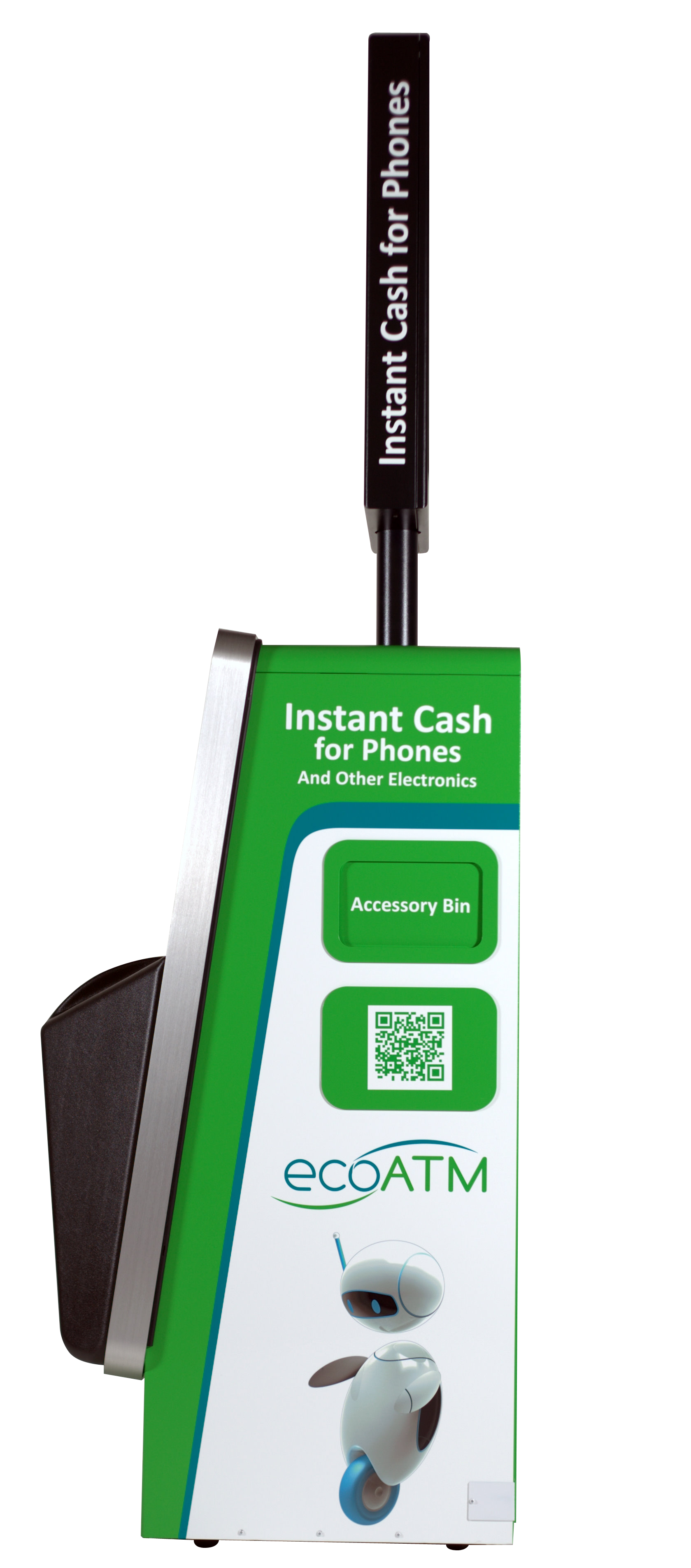
    Enter ecoATM, the Coinstar for your has-been mobile devices. For those unfamiliar, the San Diego-based startup is the maker of nifty ATM-like kiosks that fully automate the buy-back of used consumer electronics, giving you cash for your old iPod. We first caught wind of this innovative concept when it debuted at DEMO Spring 2011, promising to bring its self-serve recycling kiosks to a mall near you.

    Since then, the startup has found plenty of eager adopters at retail outlets and has paid out “millions of dollars to hundreds of thousands of customers.” And, in the process, ecoATM Chairman and CEO Tom Tullie says it has saved landfills from hundreds of thousands of potentially toxic devices. To date, the startup has been able to “find a second life” for 60 percent of the devices it has collected, recycling the rest.

    However, until now, ecoATM has only addressed a portion of the used device market, as its kiosks have been limited to accepting your cell phones, smartphones and MP3 players. But, today, with the tablet market in full bloom, the startup has expanded its support in kind, announcing that its kiosks will now be accepting used tablets of all stripes. Cash for clunky tablets. [Want to find the location of the nearest ecoATM, GPS yo self here.]

    Now that a year has passed since ecoATM took home the Best Clean Tech Startup award at the Crunchies, we decided to check in with Ryan Kuder, the company’s marketing director, to hear more about the progress the startup has made over the last 12 months. Not surprisingly, Kuder tells us that 2012 was a year of dramatic growth for ecoATM and its kiosks, and the validation of winning a Crunchie “right at the beginning of that” definitely helped. (Wink.)

    Since winning the award, ecoATM has gone from 50 kiosks to about 300 in 20 states. This year, he’s hoping to add another 600 or 700 kiosks, bringing the total to 1,000. And although ecoATM has focused on placing machines in malls, Kuder said, “Eventually, we’re going to run out of malls.” That’s why it’s also testing kiosks in supermarkets and other locations. (To fund that growth, ecoATM raised a $17 million round in the spring.)

    But are people actually using the machines? Well, Kuder said people used ecoATM to recycle “hundreds of thousands of phones” last year, and with the company’s expansion plans, that number should go into the millions this year.

    As the tablet announcement suggests, ecoATM is also expanding beyond phones into other categories of portable electronics, but Kuder said the company will be proceeding carefully: “You know, it’s important to do the things we do well.”

    By the way, the Crunchies are tomorrow night at the Louise M. Davies Symphony Hall in San Francisco. You can buy tickets here.

  • Apple’s idea of innovation is premium-priced iPad?

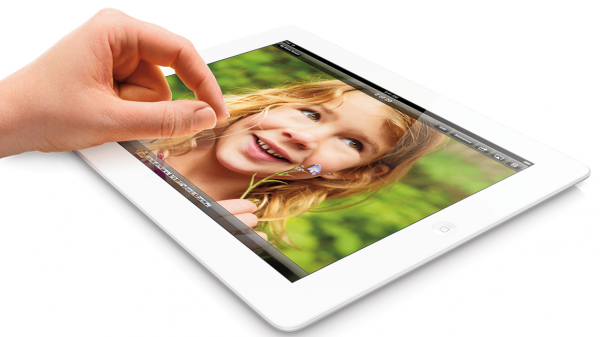
    Yesterday morning, when I rolled out of bed (West Coast time) and saw colleague Wayne Williams’ headline on 128GB iPad, I thought: “Well, good for Apple! This should bring down the price and raise storage capacity of other models”. But the details wiped away all enthusiasm. This thing sells for as much as $929. What the frak? Who will pay that much for a tablet in a market pining for considerably lower prices, like $199?

    Apple’s idea of innovation is to double storage and charge considerably more for it. Perhaps CEO Tim Cook and company read too many blogs about supposedly overpriced Microsoft Surface Pro, which iPad gangbangers insist competes with the fruit-logo tablet. Not so — Microsoft priced against Windows ultrabooks and MacBook Air. But based on that faulty comparison, Apple can claim bragging rights. The new iPad ships February 5, four days before Surface Pro — that’s no coincidence — and by comparison for less but with more. With 128GB storage, Microsoft’s slate is $999, while the other isn’t just $70 less but packs 4G LTE radio, too. Reasonable comparisons stop there, and no one should be fooled, although many will be.

    To be fair, Apple hasn’t indicated how the new model will affect the price of others. The 128 gigger with WiFi only, will sell for $799, where the 64GB sits today. It’s Apple pushing up iPad pricing — now ranging from $329 to $929 — that mindboggles. The strategy is tried-and-true Cook tactic, going back a decade. He long managed Apple’s supply chain as COO before taking the top job in summer 2011.

    Kirk and Spock

    But Cook has a problem: He’s no Steve Jobs, nor should he be. My favorite analogy for the pair is Captain Kirk and Mr. Spock. Kirk, like Jobs, is more emotional, intuitive, risk-taking. Cook is more like Spock, making logical, logistical decisions that maximize margins. Under Jobs, Apple released category-creating, or redefining products, that left people breathless — and wanting to buy. Cook brought Appleware to market and wrung every cent the supply chain would give.

    Typically, new Apple products go through a clear supply-chain process. The big, new thing launches at some event, then Apple starts selling with a base set of features that are good, but not great. These offset startup manufacturing and distribution costs, while maximizing margins from a special concept: Cool. Plenty of buyers demand the newest, coolest product, and they’re willing to pay a premium price to get it, and Apple certainly doesn’t discourage them from doing so.

    To many of these buyers, the tech gadget is as much an accessory — statement of their coolness, superiority — as useful product. Apple engages in a tried-and-true retail practice. It’s good business. Clothing stores take a similar approach. There are teens who must have the newest wears from Aeropostale, American Eagle, Gap or Hollister at full price; they can’t wait for sales. They want to be cool. Apple sometimes charges more for fashion, just like clothiers. Remember the black MacBook, which cost $150 more than the white model, simply for the color? With iPad 4, the pay-more principle applies.

    You can see this process everywhere at Apple. First is the category definer, the new thing for the company. Then there is a process of iteration, where Apple improves features while keeping prices the same and sometimes lowering them near the end of the product cycle before something new in that category comes along. Pick any Apple product. The first several generations of iPod look similar (2001-2003), then Apple changed up with iPod mini (2004), nano (2005) and touch (2007) and completely refreshed the lineup (2012). The music player is an end-of-life category that will receive nominal reinvestment of time.

    Look at iPhone. The first three generations looked pretty much the same. Hell, the original shipped with no MMS support (standard equipment everywhere else) and 2.5G data. Apple maximized margins through iteration, essentially sprucing specs, through the 3GS. But iPhone 4 brought in a new design, while 4S was the iterative product. Its successor once again resets with new design and improved capabilities. However, there are only so many ways to improve products around certain design concepts, so over time the differences are less noticeable.

    Pad Pricing

    That brings me to iPad. The first two models weren’t that different. Apple changed up with iPad 3, but not drastically. Rather than innovation, Apple opted for souped-up iteration, by slapping on a high-resolution display and bigger battery supporting it. iPad 4 is like the 2, gradual improvements inside. By contrast, iPad mini is like the iPod mini, a smaller version of a successful product appealing to those who want a more carry-all device or something that simply costs less.

    But iPad mini digresses from the Jobs model and feels all Cook. In the past, smaller Apple gear often cost less without overlap. iPod mini sold for less than Classic, as did nano later. MacBook and later the Air are smaller and less expensive, while offering different benefits — major one being improved portability. By contrast, iPad mini pricing runs smack into iPad 4, ranging from $329 to $659; the larger tablet goes from $499 to $829, and starting next month $929.

    That brings me to back to the 128 gigger’s price. There’s always someone who will pay more, if for no other reason than to feel cooler or better than everyone else. So Apple raises iPad pricing at a time when other companies focus more on value. That is, again, tried-and-true Apple, too.

    Now for some contrast. Dell almost singlehandedly is responsible for PC pricing today. During the late 1990s and early 2000s, the Round Rock, Texas-based company engineered a superior supply and passed savings on to customers — all while driving a price war that sank selling prices and margins with them. Apple chose to keep the Mac a premium brand, while maximizing margins on lower volumes. Now, in the 2010s, Apple has the superior supply chain, but chooses to pass profits onto investors rather than savings to customers. Hey, if people want to pay more for something, Cook and Company will let them.

    Something else: iPad mini saps margins. Selling prices for Apple tablets are down more than 12 percent quarter on quarter in Q4 and $101 year over year. iPad 4 adds $100-$130 to the top-line model, depending on whether comparing to the $799 128 gigger or $829 64GB slate with WiFi and LTE.

    But at the end of the day, there is something else: Can Spock command the starship Enterprise as well as Kirk, or James T. as well without the Vulcan? The answer says much, by analogy, about Jobs and Cook. I have confidence in Cook’s ability to maximize margins. If iPad 4 128GB, or iPhone 5, indicates anything, Cook without Jobs isn’t yet enough.

  • Caine Monroy of Caine’s Arcade takes the TEDx stage

    It’s just a beautiful story: a 9-year-old creates a homemade arcade out of cardboard and invites the world to come play with him. Filmmaker Nirvan Mullick was thoroughly transfixed when he stumbled upon young entrepreneur Caine Monroy’s arcade, located in his father’s auto parts store, and made a short documentary about it. Mullick’s initial goal was to raise a $25,000 scholarship fund for Monroy.

    Caine is now 10 and, in November, appeared at TEDxYouth@SantaMonica alongside Mullick. There Mullick revealed that his doc, Caine’s Arcade, got a million views and raised $60K on the very first day it was posted. In the Q&A above, the pair share how they decided to help other kids with the vast sums they were receiving by launching the Imagination Foundation. Their idea is to find, foster and fund creative entrepreneurship in kids through initiatives like the Cardboard Challenge.

    In an amazing moment in the video above, Monroy shares the five rules he’s learned from his journey. Number 2: “Do a business that is fun.” And Number 5: “Use recycled stuff.”

  • First Impressions of BlackBerry 10 – Live from the BlackBerry Experience Fan Events

    Pic taken on a BlackBerry Z10!

    Yes, we took this photo on a new BlackBerry Z10!

    We’re here live at the BlackBerry Experience Fan Events in New York City and Toronto celebrating all things BlackBerry 10. You know just how fantastic we think BlackBerry 10 is; now it’s time for you to tell us what you think! Whether you are on the ground in New York City or Toronto or you have checked it out through our video demos, we want to know your first impression.

    So, what are you waiting for? Vote now below!


  • Will you buy the BlackBerry Z10?

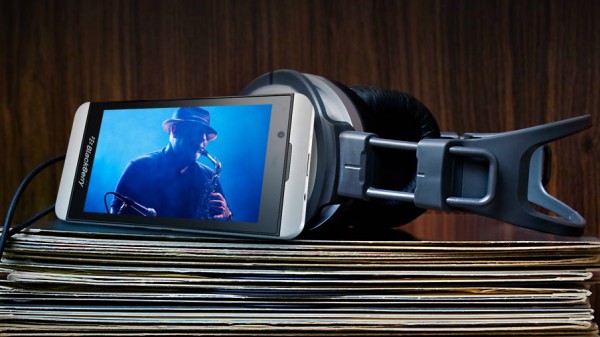
    Today, the company formally known as Research in Motion, unveiled the BlackBerry 10 platform, and first two supporting devices — the touchscreen Z10 and physical keyboard-packing Q10. The new products are quite literally a corporate relaunch, which includes ditching moniker RIM for BlackBerry.

    While the Z10 and Q10 are officially launched, BlackBerry provides little information on the keyboard phone, while plenty on the other. The screen is smaller (3.1 inches versus 4.1 inches) and the battery is larger (but BlackBerry doesn’t say by how much). So for today, I’ll stick with what we know something about, and that’s the Z10.

    Comparing Specs

    From the photos and videos, the new touchscreen BlackBerry is handsome, as is BB10 — although almost too polished for my tastes. The smartphone is available in black or white. What I really want to know: Will you buy one? Judge from the specs — and compared to three other smartphone platforms.

    BlackBerry Z10: 4.2-inch touch display with 1280 x 768 resolution and 356 pixels per inch; 1.5GHz dual-core processor; 2GB RAM; 16GB storage (expandable to 64GB with microSD card); 8-megapixel auto-focus rearing-facing and 2MP fixed-focus front-facing cameras; 1080p video recording (rear camera), 720p (front); 4G: Quadband LTE 2, 5, 4, 17 (700/850/1700/1900 MHz), Triband HSPA+ 1, 2, 5/6 (850/1900/2100 MHz), Quadband HSPA+ 1, 2, 4, 5/6, (850/1700/1900/2100 MHz), Quadband EDGE (850/900/1800/1900 MHz); Verizon 4G: LTE Band-13 (700 MHz), CDMA Cell-band and PCS-band (800/1900 MHz), WCDMA Band-1 and Band-8 (2100/900 MHz), GSM/EDGE Quadbands (850/900/1800/1900 MHz); WiFi N; 4G mobile hotspot; Bluetooth 4; NFC; micro-HDMI; accelerometer; ambient light sensor; gyroscope; magnetometer; proximity sensor; 1850 mAh battery; and blackBerry 10. Measures 130 x 65.6 x 9 mm and weighs 137.5 grams.

    The Z10 will be available, starting tomorrow, in the United Kingdom from 3UK, BT, Carephone Warehouse, EE, O2 and Phones 4u. In Canada, on February 5 from various carriers, for $149.99 with three-year contract. In UAE, on February 10, unsubsidized for AED 2,599. In the United States, AT&T, T-Mobile and Verzion will offer the Z10, which will be available starting in March. Unconfirmed pricing starts at $199.99.

    Apple iPhone 5: 4-inch display with 1136 x 640 resolution, 326 ppi; Apple A6 dual-core processor; 1GB RAM; 16GB, 32GB or 64GB storage (depending on model); 8MP rear-facing and 1.2MP front-facing cameras; UMTS/HSDPA/HSUPA (850, 900, 1900, 2100 MHz), GSM/EDGE (850, 900, 1800, 1900 MHz), LTE (bands vary by carrier model and region); accelerometer; ambient-light sensor; gyroscope; GPS; proximity sensor; digital compass; Bluetooth; WiFi N; 1440 mAh battery; carrier locked; iOS 6. Measures 123.8 x 58.6 x 7.6 mm and weighs 112 grams. With two-year contract sells for: $199 (16GB), $299 (32GB), $399 (64GB). Carrier locked, but in United States not Verizon model.

    Google Nexus 4: 4.7-inch display with 1280 x 768 pixel resolution, 320 ppi; Qualcomm Snapdragon S4 Pro processor; 2GB RAM; 8GB or 16GB storage (depending on model); 8-megapixel rear-facing and 1.3MP front-facing cameras; GSM/EDGE/GPRS (850, 900, 1800, 1900 MHz), 3G (850, 900, 1700, 1900, 2100 MHz), HSPA+ 21; WiFi N; wireless charging; Bluetooth; NFC; SlimPort HDMI; accelerometer; ambient-light sensor; barometer; compass; GPS; Gyroscope; microphone; 2100 mAh battery; unlocked; Android 4.2. Measures 133.9 x 68.7 x 9.1 mm and weighs 139 grams. Sells unlocked and without contract commitment for $299 (8GB) or $349 (16GB), direct from Google.

    Nokia Lumia 920: 4.5-inch display with 1280 by 768 resolution with 332 pixels per inch; 1.5GHz Qualcomm Snapdragon 4 dual-core processor; HSPA+ and LTE (no T-Mobile USA HSPA support); 1GB RAM; 32GB storage (and 7GB SkyDrive free); 8.7MP rear-facing camera (F/2 aperture, 26mm focal length and Carl Zeiss Tessar lens) with LED flash; front-facing camera; 1080p video at 30fps (back camera), 720p (front); NFC; Bluetooth 3.1; Assisted-GPS; WiFi N; WiFi Direct; WiFi Channel bonding; DLNA compatible; magnetometer; ambient-light, proximity and orientation sensors; 2,000 mAh battery; and Windows Phone 8. Dimensions: 130.3 mm high by 70.8 mm wide by 10.7 mm thick; weighs 185 grams. Sells for $99.99 with two-year contract from AT&T.


    Reader Reaction

    Some of you already expressed opinions in comments. For John Mann, “The dealbreaker: No Google Maps”.

    Patrick Gallagher: “After watching some of the comparison videos, it would appear the Z10 is currently (unless the final version is slower than the beta) the fastest smartphone on the market, with a browser that manages to be the best browser — not just on mobile, but overall, including desktop platforms. Looking forward to trying this out – Google maps or no”.

    “From the looks of it, it’s going to be a battle between Android and BB10 for the most innovative OS”, Bob Grant comments. “I hope they keep it civil. (CrApple wouldn’t)”.

    Posting to Google+, John Blossom observes there are “lots of rosy reviews from the media for the new BlackBerry Z10 touchscreen phone, which looks far more like an iPhone than anything that Samsung ever churned out. If Apple doesn’t whinge about this one, then their motives for suing Sammy are revealed fully. That said, it looks like a nice unit packed with great features”.

    So what do you think? Will you buy the Z10? And if so, are you a BlackBerry user or switcher from something else? If not, why not? Please take the poll above and comment below.

  • BlackBerry 10 Global Launch Event Keynote Wrap-Up

    BlackBerry 10 launch event keynote

    Today was a truly amazing day for us here at BlackBerry. We officially launched our new platform, BlackBerry 10, and some of you will be able to get your hands on a BlackBerry Z10 as soon as tomorrow. Check out the recap below to stay on top of the day’s news.

    Research In Motion is now BlackBerry

    On stage, Thorsten announced that from now on the company will be called BlackBerry – one brand, one promise. Check out the full blog post, and don’t the miss the interview with Frank Boulben, CMO of BlackBerry.

    BlackBerry Z10

    The BlackBerry Z10 is a stunning device with a gorgeous touchscreen that uses the latest technology for fast, accurate typing and a crystal clear display. Running on the new BlackBerry 10 platform, this device has elegant features that bring the BlackBerry experience to the next level. Read more about the BlackBerry Z10 in the full blog post.

    BlackBerry 10 launch event keynote

    BlackBerry Q10

    The BlackBerry Q10 is the first BlackBerry 10 device to feature a physical keyboard. It’s packed with the same great features you’ve become familiar with in BlackBerry 10, but provides an unmatched physical typing experience for customers who just need to have that keyboard. See how it works in the full blog post and video.

    BBM Video Chat with Screenshare

    BlackBerry Messenger, or BBM, has been taken to the next level with BBM Video Chat and screen sharing capabilities. This is going to open up some new possibilities for collaborating and communicating with your friends and colleagues. Watch as Vivek demos this on stage from the Global Launch event, and read more about it in the full blog post.

    [ YouTube link for mobile viewing ]

    BlackBerry Story Maker

    Easily compile your photos, videos and songs into your own movie – BlackBerry Story Maker allows you to create your own cinematic moments on the new BlackBerry Z10 and share them with your friends. Check out Vivek’s demo here:

    [ YouTube link for mobile viewing ]

    70,000 Apps at Launch

    BlackBerry 10 will launch with more apps than any first-generation platform, and will have more than 1,000 of the top apps from around the world. BlackBerry 10 also has commitments from partners including Disney, Cisco, Foursquare, Skype and Rovio. Check out the full blog post and video here.

    BlackBerry 10 launch event keynote

    BlackBerry Welcomes Alicia Keys as Global Creative Director

    We’re very excited to be entering into a partnership that will see a unique collaboration between BlackBerry and 14-time Grammy® Award-winning artist, Alicia Keys. She’ll be working with the team for creative inspiration and will lead the BlackBerry Keep Moving Projects. Read more about our collaboration with Alicia Keys and the “Keep Moving” Projects here.

    [ YouTube link for mobile viewing ]

    This has truly been an exciting day for all BlackBerry customers and fans. Let us know your impressions of the global launch of BlackBerry 10 below!

  • Khosla Ventures Leads $4.5 Mln Round for DB Networks

    DB Networks said Wednesday that it has raised $4.5 million in Series B fund led by Khosla Ventures. Shirish Sathaye, a Khosla general partner, has joined DB Networks board. San Diego-based DB Networks provides database security equipment.

    PRESS RELEASE

    DB Networks, an innovator of database security equipment, announced today it has raised $4.5 million in Series B funding led by Khosla Ventures of Menlo Park, California. DB Networks also announced that Shirish Sathaye, general partner at Khosla Ventures, has joined its Board of Directors.
    DB Networks is commercializing a next-generation security platform for real-time advanced database attack detection. Based on patent-pending behavior analysis technology, DB Networks Adaptive Database Firewall is able to rapidly and automatically detect SQL injection attacks.
    “DB Networks is deployed and engaged at several of the world’s leading financial institutions” said Shirish Sathaye, general partner at Khosla Ventures. “We want to be instrumental in growing DB Network along with their highly experienced and successful team.”
    “DB Networks is extremely excited to be working with Khosla Ventures and to have Shirish Sathaye on our board” said Brett Helm, CEO of DB Networks. “This investment, along with the expertise of Khosla Ventures, will allow us to open up a new era in database security.”
    About DB Networks
    DB Networks is innovating database security equipment for organizations who need to protect their data from advanced attacks. DB Networks Adaptive Database Firewall is an effective countermeasure against SQL Injection and database Denial of Service attacks. Unlike traditional database security solutions, which require extensive user customization, as well as time-consuming white list/black list maintenance, DB Networks Adaptive Database Firewall automatically learns each applications proper SQL transaction behavior. Any SQL transaction which subsequently deviates from the model immediately raises an alarm as an attack. DB Networks is a privately held company headquartered in San Diego, California. For additional information, please visit us at dbnetworks.com.
    About Khosla Ventures
    Khosla Ventures offers venture assistance, strategic advice and capital to entrepreneurs. The firm helps entrepreneurs extend the potential of their ideas in breakthrough technologies in clean energy, mobile, IT, cloud, big data, storage, health, food, agriculture and semiconductors. Vinod Khosla founded the firm in 2004 and was formerly a General Partner at Kleiner Perkins and co-founder of Sun Microsystems. Khosla Ventures is based in Menlo Park, Calif.

  • iOS 6.1 Adoption On Track To Be Fastest Yet Says Onswipe, With 22% Of Users On Board In 36 Hours

    ios6-users1

    iOS 6.1 arrived just a couple of days ago, bringing little beyond support for new international LTE carriers and movie ticket purchasing via Siri in the U.S., but it’s already been installed on a significant percentage of active iPhones, iPads and iPod touches out there. Onswipe, creators of touch templates for web-based content, have seen adoption of iOS 6.1 rise quickly, from 11.35 percent within the first 24 hours, to 16.92 percent this morning, and up to an impressive 21.81 percent as of 3 PM ET today.

    Onswipe is gathering data from over 13 million monthly active users on iOS, which itself represents considerable growth, a 3 million user climb from last month’s 10 million total active users. That means its numbers represent a pretty significant statistical pool to draw from to gather these results. Onswipe CEO Jason Baptiste explained in an interview that his company’s expanded reach is giving the company an even better idea of what’s happening with iOS adoption curves, and that this time around, people are upgrading faster than ever.

    Consider that when Apple released its iOS 6 update, it took a week for 44.58 percent of users to get on board. iOS 6.1 is growing at a faster rate, and looks to be on track to top that should its momentum continue. Why? According to Baptiste, it’s likely due to the fact that Apple’s over-the-air update mechanism has been out in the wild for a while now (it’s been built-in to iOS since iOS 5 arrived in October, 2011), meaning users have had time to get comfortable with it and know more or less how the process works.

    The fact that users are comfortable enough with the OTA update mechanism to upgrade almost immediately is great news for developers, both of native apps and of web-based mobile-friendly platforms like Onswipe’s since it means that they can create experiences that will be the same for a larger number of customers at once, without having to take into account different software versions with idiosyncratic quirks. Android, by comparison, has just 10 percent of users on Jelly Bean, which was released in July 2012, so it’s clear that Apple’s still way out ahead of the competition in terms of making sure developers don’t face a fragmentation issue.

  • The New York Times Launches BlackBerry 10 App

    The New York Times has launched their news and information BlackBerry 10 app. The app has a slick BlackBerry 10 design and user interface with both the front page and sections are accessed with a swipe towards the left.

    Digital subscribers get access to more sections and unlimited articles while free users get unlimited top news and a 10 free articles per month until needing a 99 cents per month digital subscription.

    The app also has a video section, but the videos can currently only be viewed in portrait mode taking up less than a quarter of the Z10′s gorgeous screen. The videos feel like you’re watching a portrait video on a widescreen tv which is a bit annoying for now.

    I should also note this about the BlackBerry Z10 touchscreen keyboard within BlackBerry World. The only letter I had to press, was “N” the rest I was swiping up correct word guesses.

  • New BlackBerry 10 Phones Coming to All Major U.S. Carriers

    Nearly every detail of BlackBerry’s (RIM has changed its name to just “BlackBerry”) new BlackBerry 10 operating system and smartphones were painstakingly covered in the company’s big launch event earlier today. The one very noticeable thing that wasn’t covered, however, was when the new devices would actually launch in the U.S.

    Canada got a clear release date of February 5, but U.S. BlackBerry fans will have to wait until sometime in March. The specific launch date will probably vary by carrier, but each of the major U.S. carriers has at least confirmed that it will carry at least one of the two new BlackBerry 10 smartphones.

    AT&T and Verizon, the two largest U.S. wireless carriers, have both confirmed that they will be carrying the BlackBerry Z10 (the one that resembles an iPhone) and the BlackBerry Q10 (the one with the traditional BlackBerry physical keyboard). The white version of the Z10 will be a Verizon exclusive handset. Verizon is also the only carrier that has so far announced a price for either of the new BlackBerry devices. The Z10 (both black and white) will retail for $200 plus a two-year Verizon service contract.

    Neither T-Mobile nor Sprint will be selling both the Z10 and the Q10. They seem to have some sort of split deal with BlackBerry, where T-Mobile will be selling the Z10 and Sprint will be selling the keyboard-laden Q10.

    None of the carriers are taking pre-orders for the BlackBerry smartphones yet, though all of them but Sprint are allowing customers to sign up for email notifications regarding the devices.

  • A Record Year for the American Wind Industry

    Since taking office, President Obama has been focused on building an energy economy in the United States that is cleaner as well as more efficient and secure. As part of that effort, the Administration has taken historic action over the past few years to support the development and deployment of renewable energy that will create new jobs and jumpstart new industries in America. And we are making significant progress towards those goals.

    Today, the American Wind Energy Association (AWEA) has released its Fourth Quarter Market Report for 2012, which highlights a number of exciting milestones.

    The American wind industry had its best year ever in 2012, with more than 13,000 MW installed. In the fourth quarter alone, more than 8,000 MW were deployed – an all-time record for the industry and twice as much wind as the previous record set in the fourth quarter 2009.

    Thanks to this growth, the wind industry was able to achieve another milestone in 2012: achieving 60 GW of cumulative wind capacity in the United States. To put it another way, the United States today has more than 45,000 wind turbines that provide enough electricity to power 14.7 million homes – roughly equivalent to the number of homes in Colorado, Iowa, Maryland, Michigan, Nevada, and Ohio combined.

    To underscore how quickly wind power is taking root in America, consider this: it took 25 years to reach 10 GW, which occurred in 2006. But it only took four years to grow from 20 GW (2008) to 60GW (2012). And last year – for the first time ever – wind power provided the largest share of new electric capacity (42%) in the United States. Of course, more wind also means less carbon pollution that contributes to climate change. With 60 GW installed, it’s like taking 17.5 million cars off the road.

    All of this progress builds on the encouraging trends in renewable energy over the past few years. Since 2008, the U.S. has doubled renewable generation from wind, solar, and geothermal sources, and America is now home to some of the largest wind and solar farms in the world. Wind power currently contributes more than 10% of total electricity generation in six states, with two of these states above 20%. And nearly seventy percent of the equipment installed at U.S. wind farms last year – including wind turbines and components like towers, blades, gears, and generators – was made here in the United States, up from just 35 percent in 2005.

    This is what we can achieve when we commit ourselves to smart and effective policies that promote clean energy technologies, create jobs, and grow our economy. That’s why, in addition to making the largest investments in clean energy in American history, President Obama fought for – and secured – an extension of the Production Tax Credit (PTC). If the PTC had expired at the end of last year, it would have landed a punishing blow to the domestic wind industry resulting in layoffs for tens of thousands of American workers.

    But the President refused to let that happen. So instead of layoffs, we are hearing stories from wind companies all across the country – from Iowa Colorado, to Ohio and Illinois – that are retaining and re-hiring workers. Instead of moving business overseas, these companies are investing in the next generation of American-made wind technology and are poised for additional growth in the years ahead.

  • Rackspace Accelerates OpenStack Enterprise Push

    openstack-cloud

    Rackspace announced OpenStack private cloud capabilities and partnerships with AMD, Brocade, Hortonworks and Arista Networks.

    Rackspace Hosting wants to make it easier to deploy and run clouds, and has been partnering with leading hardware and software providers to create three new Private Cloud Open Reference Architectures. Reference architectures and test criteria for OpenStack solutions help to ensure consistent performance, supportability and compatibility.

    “The cloud is a paradigm shift that affects IT operations and introduces an entirely new business model; therefore defining Open Reference Architectures is an essential step towards achieving cloud maturity,” wrote Paul Rad, Vice President of Private Cloud at Rackspace, in a blog post. These Reference Architectures help with Enterprise OpenStack adoption.

    Along with the new reference architectures, the company has developed the Rackspace Private Cloud Certification Toolkit, which validates all of the functionality of an OpenStack private cloud so your cloud operations team can be sure that your cloud is operational and that it has all of the necessary components properly installed and configured. Some of the first partners certified include AMD, Brocade, Hortonworks and Arista Networks.

    Ensuring compatibility and interoperability means that customers using Rackspace Private Cloud Software with OpenStack can more easily implement a reliable and flexible private cloud solution.

    The three reference architectures are:

    • Mass-compute with external storage: A scalable-compute cloud architecture where data can be stored to external resilient volumes and exported over iSCSI
    • Mass-compute: A scalable-compute cloud architecture for variable workloads where data resides on the compute nodes directly.
    • Distributed Object Storage: An architecture for an object storage cloud to store critical data across multiple zones for resiliency.

    Here’s a look at some of the hardware and software providers included in the first round of certifications:

    AMD SeaMicro

    AMD SeaMicro SM15000 server is certified for the Rackspace Private Cloud. A product certification for mass compute and object storage ensures that enterprise deployments of Rackspace Private Cloud on AMD’s SeaMicro SM15000 servers are tested and solid for the enterprise.

    AMD’s SeaMicro SM15000 system is a very high-density, energy-efficient server. In 10 rack units, it links 512 compute cores, 160 gigabits of I/O networking, up to five petabytes of storage with a 1.28 terabyte high-performance supercompute fabric, called Freedom Fabric. The SM15000 server eliminates top-of-rack switches, terminal servers, hundreds of cables and thousands of unnecessary components for a more efficient and simple operational environment.

    The AMD SeaMicro SM15000 server has been certified for the following Rackspace Private Cloud reference architectures:

    • OpenStack Compute (“Nova in a Box”) scales horizontally and integrates with legacy systems and third-party technologies
    • OpenStack Object Store (“Swift in a Rack”) provides a massively scalable, redundant storage system.

    “The AMD SeaMicro SM 15000 system offers Rackspace Private Cloud customers unprecedented density, storage capacity and performance, bringing enterprises one step closer to running the cloud in their own data centers,” said Rackspace’s Rad.

     Brocade

    The Brocade VDX switch with VCS Fabric technology underwent the validation processor compatibility and interoperability and was given the thumbs up.

    “Ethernet fabric adoption has now reached critical mass and our enterprise and service provider customers are reaping the benefits of Brocade VCS Fabric technology as part of their cloud-based architectures,” said Jason Nolet, vice president of Data Center Networking, Brocade. “This certification from Rackspace is validation that the Brocade VDX switch family with VCS Fabric technology is perfectly designed to deliver the automation, reliability and agility expected by Rackspace and their customers.”

    A member of the OpenStack community since 2011, Brocade has embraced this open source cloud platform as part of its cloud architecture strategy and is optimizing its networking solutions for OpenStack.

    Hortonworks Data Platform

    Hortonworks, a leading contributor to Apache Hadoop, today announced that the Hortonworks Data Platform (HDP), an enterprise-ready, 100-percent open source platform powered by Apache Hadoop, has achieved certification for Rackspace Private Cloud.

    With HDP, data can be processed from applications that are hosted on Rackspace Private Cloud environments, allowing organizations to quickly and easily obtain additional business insights from this information. The provisioning, monitoring and management components of HDP are important enablers for the integration with the Rackspace Private Cloud, providing an easy path for getting data into and out of the cloud. HDP qualifies for the Rackspace Private Cloud Open Reference Architecture “Mass Compute with External Storage”.

    “The Hortonworks Data Platform is emerging as the de facto Apache Hadoop distribution for cloud providers, and the certification for Rackspace Private Cloud is another significant step in the enterprise viability of Hadoop,” said Herb Cunitz, president, Hortonworks. “Our commitment to the 100-percent open source model ensures that cloud providers will avoid any vendor lock-in when deploying HDP and Rackspace Private Cloud, and further extends the Apache Hadoop ecosystem to the private cloud, providing another method for exploring and enriching enterprise data with Hadoop.”

    Arista Networks

    Arista 7050 Series switches have achieved quality assurance and certification for Rackspace Private Cloud. The Arista 7050 Series enables wire speed, 10 GbE and 40 GbE switching, powered by Arista (Extensible Operating System) EOS for software defined networking applications.

    “The combination of Arista 7050 Series switches with Rackspace Private Cloud Software provides enterprise IT professionals with a certified, next generation data center architecture that drives new levels of IT efficiency,” said Ed Chapman, vice president of Business Development, Arista Networks.

    The Arista 7050 Series switches provide the low latency, wire speed network performance required in an OpenStack-powered cloud, in form factors of up to 64 ports in a 1 RU chassis. In addition, the Arista 7050 Series provides industry leading power efficiency with typical power consumption of less than 2 watts/port with twinax copper cables, and less than 3 watts/port with SFP/QSFP lasers.

  • Stratego, Everyone’s Favorite Capture-the-Flag Board Game, Makes Its iPad Debut

    I f-ing love Stratego. Let’s get that out of the way. When I think of Stratego, I remember childhood nights spent beating my grandfather in the classic game of capture the flag. HOW DID YOU NOT REMEMBER I HAD A BOMB THERE, PAPA? Of course, he totally remembered and he let me win every time. Still, my memories of Stratego are not adversely affected by that realization.

    Well, Stratego fans: you can now play the game on your iPad (multiplayer and single player).

    Keesing Games has just released the Official Stratego app for iPad. Yes, it’s just for iPad – not your iPhone or iPod touch. That’s probably for the best, considering there’s about 80 pieces on the board at the onset.

    Stratego fans have been able to play on the Web and on Facebook for some time now, and the good news is that you’ll be able to cross-platform play with them on your iPad.

    You’ll also have the ability to save your battle setups for quick play, and you can customize your pieces as well.

    Unfortunately, I’ve not yet had the chance to play it. CNET calls the game “impressive, if imperfect” and has this to say:

    “I…found Stratego to be pretty buggy, alternately crashing, producing error messages, or having trouble signing into Facebook. Plus, the AI is what I’d call overly aggressive, as it never forgets the location of your pieces (once revealed) the way a human would. I won’t say beating the AI is impossible, but at the very least the game should offer a choice of skill levels.”

    But against real players, the game is much better.

    The game costs $6.99, which is a little steep. But the multiplayer aspect and the ability to save loadouts, along with added achievements and customizable pieces should make it worth it for a hardcore fan of the game. Although, they may considering waiting a little bit to download the game – bugs could be fixed and that price could drop.

  • Injustice: Gods Among Us Finally Explains Itself… Kind Of

    Beyond a few hints, we still don’t really know why the DC Universe heroes are fighting each other in NetherRealm’s Injustice: Gods Among Us. The latest trailer doesn’t explain everything, but it gives us a few clues.

    The latest trailer – aptly titled “Story Trailer” – seeks to explain a bit of the background behind the world of Injustice. Joker has apparently destroyed Metropolis, Superman and Wonder Woman are subjecting mankind to an iron fist rule ala Red Son, and Batman seems to be the freedom fighter trying to bring order to the chaos. All in all, your typical alternate world DC plot.

    The trailer also gives us our first look at Hawkgirl, who might be a playable character in the game.

    The trailer indicates that the story will please long time DC fans, but will the gameplay satisfy notoriously picky fighting game fans? The studio’s previous title, Mortal Kombat 9, won over critics and players alike. Injustice will do just fine if it retains the same accessible, yet highly tuned, fighting system that its predecessor sported.

    Injustice: Gods Among Us will launch on April 16 for the Xbox 360, PS3 and Wii U.

  • Watch This Lovely, Charming Animated Short

    Every now and then, an animated short will come along that just charms the pants right off of you. “Paperman” has that quality, and it’s also got a lovely retro feel thanks to the black-and-white animation. The lighting is gorgeous, too, and will draw you in from the moment you start watching.

    The short takes a sweet look at fate, love at first sight, and paper airplanes, all while drawing the viewer in to a spectacular view of a city. Take a look.

  • Google extends Exchange ActiveSync support for Windows Phone

    In mid-December, as part of the “Winter cleaning” operation, Google announced plans to drop support for Exchange ActiveSync effective January 31. Microsoft condemned the decision, and quite vigorously.

    Matters are changed. Windows Phone users will get a six-month reprieve, until July 31, to give Microsoft time to adapt. “The Windows Phone team is building support into our software for the new sync protocols Google is using for calendar and contacts — CalDAV and CardDAV”, Microsoft’s Michael Stroh says. The company also will use IMAP for push support in order to fully replace EAS’ functionality.

    “As announced last year, our plan is to end support for new device connections using Google Sync starting January 30”, a Google spokesperson tells BetaNews today. “With the launch of CardDAV, it’s now possible to build a seamless sync experience using open protocols (IMAP, CalDAV and CardDAV) for Gmail, Google Calendar and Contacts. We’ll start rolling out this change as planned across all platforms but will continue to support Google Sync for Windows Phone until July 31”.

    While the announcement is good news for Windows Phone users, the same cannot be said for those running Windows 8.

    The termination of EAS support will have no effect for existing Gmail connections set up until January 30. After, Windows 8 users will have to make sure the “include your Google contacts and calendars” option is not selected when setting up the account. In the contrary case email will not sync, Microsoft warns.

    Furthermore, calendar and contacts sync will not work for Gmail connections, as Windows 8 does not support CalDAV and CardDAV. The operating system will, however, use IMAP for push email. The issue can potentially be addressed through a future update, although it’s unlikely one will be available soon enough.

  • Harold Drake Dies: Famed Reporter Was 83

    Harold Drake, who served as reporter for Pacific Stars And Stripes and also helped record the Vietnam War, has died of complications from cancer. He was 83 years old.

    Drake traveled the globe in his later years, interviewing different celebrities and public figures. The long and varied list of people he spoke to included musician Rod Stewart, Mother Teresa, and Hollywood icon Elizabeth Taylor. He spoke of the dangers of being in Vietnam and was actually based out of Tokyo for over 40 years, until his retirement in 1995. He was fascinated with Asian culture and made a life, not just a career, there. What made his stories stand out, say his peers, was his ability to weave a tale that pulled readers in on a personal level.

    “He managed to find the human element in everything he wrote,” former Pacific Stars and Stripes news editor Ron Rhodes said. “And he was always a gentleman in the process.”

    Former co-workers say he was an incredible wordsmith.

    “He was quirky, but always fun and always smart,” said Gerry Galipault. “You could tell his mind was working a mile a minute, thinking about what to write next, what to say. And he always said it beautifully.”

  • Mobile Game Development Is Easy And Profitable (If You’re Lucky)

    It seems that everybody is going into mobile game development these days. The traditional console market is shrinking as more and more gamers tire of the same 6-year-old hardware. They’re beginning to look for new experiences that they can’t get anywhere else, and mobile games provide that experience. It’s a huge industry and developers stand to profit from it.

    A new infographic from Adobe shows just how much money a developer stands to make from creating games for mobile platforms. How much money? Let’s just say that the mobile gaming industry now makes about as twice as much as the music industry. That’s $56 billion being pumped into a single industry annually. Beyond the money, those looking for audience have one as 98 million Americans play social or casual games.

    Making games is hard though, right? Actually, making games, especially for mobile platforms, is easier than ever. Can you program in Flash? Have an artist for a friend? You have all you need to make the next great mobile title. Adobe AIR allows you to seamlessly port your Flash developed titles to mobile platforms while taking advantage of native hardware acceleration.

    Mobile Game Developer Is Easy And Profitable (If You're Lucky)

    Of course, anybody going into game development must have tempered expectations. It’s unlikely that you’re going to have the next Angry Birds or Temple Run on your hands right from the get go. Game development is grueling and sometimes painful, but incredibly rewarding for those who stick with it. Making bank is only a nice bonus on top of creating something that has the power to connect people on a deeper level than anything else available.

    In short – If you’re making a game to make money, you’re gonna have a bad time.

  • Facebook Earnings Out, Mobile Users Exceed Web Users For First Time

    Facebook released its Q4 and full-year 2012 earnings today, beating analysts’ expectations.

    Revenue for the quarter was $1.585 billion, up 40% year-over-year. Revenue from advertising was $1.33 billion (84% of total revenue), up 41% year-over-year. GAAP income from operations was $523 million down from $548 million for the same period last year. GAAP net income for the fourth quarter was $64 million, compared to net income of $302 million for the fourth quarter of 2011.

    Along with the financials, Facebook shared its latest stats. Monthly active users were 1.06 billion as of December 31 (up 25% year-over-year). Daily active users were 618 million on average during December (up 28% year-oever-year). Mobile active users were 680 million as of December 31 (up 57% year-over-year). Mobile daily active users exceeded web daily active users for the first time during the fourth quarter.

    CEO Mark Zuckerberg said, “In 2012, we connected over a billion people and became a mobile company. We enter 2013 with good momentum and will continue to invest to achieve our mission and become a stronger, more valuable company.”

    More from the conference call to come…

    Here’s the release in its entirety:

    MENLO PARK, Calif., Jan. 30, 2013 /PRNewswire/ – Facebook, Inc. (FB) today reported financial results for the fourth quarter and full year ended December 31, 2012.

    “In 2012, we connected over a billion people and became a mobile company,” said Mark Zuckerberg, Facebook founder and CEO. “We enter 2013 with good momentum and will continue to invest to achieve our mission and become a stronger, more valuable company.”

    Fourth Quarter and Full Year 2012 Financial Summary

    In millions, except percentages and per share amounts Q4’11 Q4’12 FY’11 FY’12
    Revenue $    1,131 $    1,585 $    3,711 $    5,089
    Income from Operations
       GAAP $       548 $       523 $    1,756 $       538
       Non-GAAP $       624 $       736 $    1,980 $    2,261
    Operating Margin
       GAAP 48% 33% 47% 11%
       Non-GAAP 55% 46% 53% 44%
    Net Income
        GAAP $       302 $         64 $    1,000 $         53
        Non-GAAP $       360 $       426 $    1,164 $    1,317
    Diluted Earnings per Share (EPS)
        GAAP $      0.14 $      0.03 $      0.46 $      0.01
        Non-GAAP $      0.15 $      0.17 $      0.50 $      0.53

    Fourth Quarter 2012 Operational Highlights

    • Monthly active users (MAUs) were 1.06 billion as of December 31, 2012, an increase of 25% year-over-year
    • Daily active users (DAUs) were 618 million on average for December 2012, an increase of 28% year-over-year
    • Mobile MAUs were 680 million as of December 31, 2012, an increase of 57% year-over-year
    • Mobile DAUs exceeded web DAUs for the first time in the fourth quarter of 2012

    Recent Business Highlights

    • Mobile revenue represented approximately 23% of advertising revenue for the fourth quarter of 2012, up from approximately 14% of advertising revenue in the third quarter of 2012
    • Facebook launched Graph Search Beta, a structured search tool that enables users for the first time to find people, places, photos and other content that has been shared on Facebook
    • Launched Facebook for Android 2.0, completely rebuilt to deliver improved stability and faster performance and opened Facebook Messenger to anyone with a telephone number

    Fourth Quarter 2012 Financial Highlights

    Revenue – Revenue for the fourth quarter totaled $1.585 billion, an increase of 40%, compared with $1.13 billion in the fourth quarter of 2011.

    • Revenue from advertising was $1.33 billion, representing 84% of total revenue and a 41% increase from the same quarter last year. Excluding the impact of year-over-year changes in foreign exchange rates, advertising revenue would have increased by 43%.
    • Payments and other fees revenue for the fourth quarter was $256 million.  As planned, in the fourth quarter of 2012 the company recognized revenue from four months of Payments transactions for accounting reasons detailed in our Form 10-Q filed on October 24, 2012.  Adjusting for the $66 million of revenue in the extra month of December, Payments and other fees revenue would have been essentially flat year-over-year.

    Costs and expenses – Fourth quarter costs and expenses were $1.06 billion, an increase of 82% from the fourth quarter of 2011. Excluding share-based compensation and related payroll tax expenses, non-GAAP costs and expenses were $849 million, an increase of 67%.

    Income from operations – For the fourth quarter, GAAP income from operations was $523 million, compared to income from operations of $548 million for the fourth quarter of 2011. Excluding share-based compensation and related payroll tax expenses, non-GAAP income from operations for the fourth quarter was $736 million, compared to $624 million for the fourth quarter of 2011.

    Operating margin – GAAP operating margin was 33% for the fourth quarter, compared to 48% for the fourth quarter of 2011. Excluding share-based compensation and related payroll tax expenses, non-GAAP operating margin was 46% for the fourth quarter, compared to 55% for the fourth quarter of 2011.

    Income tax provision – The GAAP income tax provision for the fourth quarter was $441 million, representing an 87% effective tax rate. Excluding share-based compensation expense and related payroll tax expenses, the non-GAAP effective tax rate would have been approximately 41%.

    Net income – GAAP net income for the fourth quarter was $64 million, compared to net income of $302 million for the fourth quarter of 2011. GAAP EPS for the fourth quarter was $0.03, compared to $0.14 for the same quarter in the prior year. Excluding share-based compensation and related payroll tax expenses, and income tax adjustments, non-GAAP net income for the fourth quarter was $426 million, or $0.17 per share, compared to $360 million and $0.15 per share for the same quarter in the prior year.

    Capital expenditures – Purchases of property and equipment for the fourth quarter were $198 million. Additionally, $89 million of equipment was procured or financed through capital leases during the fourth quarter of 2012.

    Cash and marketable securities – As of December 31, 2012, cash and marketable securities were $9.63 billion.

    Webcast and Conference Call Information

    Facebook will host a conference call to discuss the results at 2 p.m. PT / 5 p.m. ET today. The live webcast can be accessed at the Facebook Investor Relations website at investor.fb.com, along with the company’s earnings press release, financial tables and slide presentation. Facebook intends to use the investor.fb.com website as a means of disclosing material non-public information and for complying with its disclosure obligations under Regulation FD.

    Following the call, a replay will be available at the same website. A telephonic replay will be available for one week following the conference call at +1 (404) 537-3406 or + 1 (855) 859-2056, conference ID 85750523.

    About Facebook

    Founded in 2004, Facebook’s mission is to make the world more open and connected. People use Facebook to stay connected with friends and family, to discover what’s going on in the world, and to share and express what matters to them.

    Contacts

    Investors:
    Deborah Crawford
    [email protected] / investor.fb.com

    Press:
    Ashley Zandy
    [email protected] / newsroom.fb.com

    Forward Looking Statements

    This press release contains forward-looking statements regarding our future prospects, new product benefits, business strategy and plans, which are subject to the safe harbor provisions of the Private Securities Litigation Reform Act of 1995. These forward-looking statements are only predictions and may differ materially from actual results due to a variety of factors including: our ability to retain or increase users and engagement levels, including mobile engagement and our ability to increase revenues and engagement across a range of geographies; our ability to monetize our mobile products; competition; our ability to expand and further monetize the Facebook Platform; privacy concerns; security breaches; increases in the costs necessary to grow and operate our business; and our ability to manage growth and geographically-dispersed operations. These and other potential risks and uncertainties that could cause actual results to differ from the results predicted are more fully detailed under the caption “Risk Factors” in our Quarterly Report on Form 10-Q for the quarter ended September 30, 2012 filed with the SEC on October 24, 2012, which is available on our Investor Relations website at investor.fb.com and on the SEC website at www.sec.gov. Additional information will also be set forth in our Annual Report on Form 10-K for the full year ended December 31, 2012. In addition, please note that the date of this press release is January 30, 2013, and any forward-looking statements contained herein are based on assumptions that we believe to be reasonable as of this date. We undertake no obligation to update these statements as a result of new information or future events.

    Non-GAAP Financial Measures

    To supplement our consolidated financial statements, which are prepared and presented in accordance with GAAP, we use the following non-GAAP financial measures: total revenue and advertising revenue excluding foreign exchange effect, non-GAAP costs and expenses, non-GAAP income from operations; non-GAAP net income; non-GAAP diluted shares; non-GAAP diluted earnings per share; non-GAAP operating margin; and non-GAAP effective tax rate. The presentation of these financial measures is not intended to be considered in isolation or as a substitute for, or superior to, financial information prepared and presented in accordance with GAAP. Investors are cautioned that there are material limitations associated with the use of non-GAAP financial measures as an analytical tool. In particular, many of the adjustments to our GAAP financial measures reflect the exclusion of items, specifically share-based compensation expense and payroll tax related to share-based compensation expense and the related income tax effects, that are recurring and will be reflected in our financial results for the foreseeable future. In addition, these measures may be different from non-GAAP financial measures used by other companies, limiting their usefulness for comparison purposes. We compensate for these limitations by providing specific information regarding the GAAP amounts excluded from these non-GAAP financial measures.

    We believe these non-GAAP financial measures provide investors with useful supplemental information about the financial performance of our business, enable comparison of financial results between periods where certain items may vary independent of business performance, and allow for greater transparency with respect to key metrics used by management in operating our business.

    We exclude the following items from one or more of our non-GAAP financial measures:

    Share-based compensation expense. We exclude share-based compensation expense because we believe that the non-GAAP financial measures excluding this item provide meaningful supplemental information regarding operational performance. In particular, because of varying available valuation methodologies, subjective assumptions and the variety of award types that companies can use under FASB ASC Topic 718, we believe that providing non-GAAP financial measures that exclude this expense allow investors the ability to make more meaningful comparisons between our operating results and those of other companies. Furthermore, our share-based compensation expense was materially affected in the second quarter of 2012 due to the terms of our RSUs granted prior to 2011, related to which we recognized $986 million in share-based compensation expense in the period, despite the fact that these awards were granted and earned over several years. Accordingly, we believe that excluding this expense provides investors and management with greater visibility to the underlying performance of our business operations, facilitates comparison of our results with other periods, and may also facilitate comparison with the results of other companies in our industry.

    Payroll tax expense related to share-based compensation. We exclude payroll tax expense related to share-based compensation expense because, without excluding these tax expenses, investors would not see the full effect that excluding that share-based compensation expense had on our operating results. Furthermore, our payroll tax expense was substantially higher due to the terms of our RSUs granted prior to 2011, where, despite the fact that these awards were granted and earned over several years, we recognized $151 million in payroll tax expense in 2012 with most of this being recognized in the second quarter of 2012. In addition, these expenses are tied to the exercise or vesting of underlying equity awards and the price of our common stock at the time of vesting or exercise, which factors may vary from period to period independent of the operating performance of our business. Similar to share-based compensation expense, we believe that excluding this payroll tax expense provides investors and management with greater visibility to the underlying performance of our business operations and facilitates comparison with other periods as well as the results of other companies.

    Income tax effect of share-based compensation and related payroll tax expenses. We believe excluding the income tax effect of non-GAAP adjustments assists investors and management in understanding the tax provision related to those adjustments and provides useful supplemental information regarding the underlying performance of our business operations.

    Assumed preferred stock conversion. As a result of our initial public offering, all outstanding shares of preferred stock were automatically converted into shares of Class B common stock. Consequently, non-GAAP diluted shares and net income per share for periods prior to June 30, 2012 have been calculated assuming this conversion, which we believe facilitates comparison with prior periods.

    Dilutive equity awards excluded from GAAP. In our calculation of non-GAAP weighted average shares used to compute earnings per share attributable to Class A and Class B common stockholders, we include unvested RSUs for the year ended December 31, 2012 as well as for the three months and full year ended December 31, 2011, the number of which is substantial due to the terms of RSUs granted prior to 2011. We believe including these awards facilitates comparison between periods.

    Foreign exchange effect on revenue. We translate current quarter and full year revenues using prior year exchange rates, which we believe is a useful metric that facilitates comparison to our historical performance.

    For more information on our non-GAAP financial measures and a reconciliation of such measures to the nearest GAAP measure, please see the “Reconciliation of Non-GAAP Results to Nearest GAAP Measures” table in this press release.


    FACEBOOK, INC.
    CONDENSED CONSOLIDATED STATEMENTS OF OPERATIONS
    (In millions, except for per share amounts)
    (Unaudited)
    Three Months Ended Year Ended
    December 31, December 31,
    2011 2012 2011 2012
     Revenue $    1,131 $    1,585 $    3,711 $    5,089
     Costs and expenses:
    Cost of revenue 247 398 860 1,364
    Research and development 124 297 388 1,399
    Marketing and sales 120 193 393 896
    General and administrative 92 174 314 892
    Total costs and expenses 583 1,062 1,955 4,551
     Income from operations 548 523 1,756 538
     Interest and other income (expense), net
    Interest expense (16) (16) (42) (51)
    Other income (expense), net (12) (2) (19) 7
     Income before provision for income taxes 520 505 1,695 494
     Provision for income taxes 218 441 695 441
     Net income $       302 $         64 $    1,000 $         53
     Less: Net income attributable to participating securities 97 332 21
     Net income attributable to Class A and Class B common stockholders $       205 $         64 $       668 $         32
     Earnings per share attributable to Class A and Class B
     common stockholders:
    Basic $      0.15 $      0.03 $      0.52 $      0.02
    Diluted $      0.14 $      0.03 $      0.46 $      0.01
    Weighted-average shares used to compute earnings per share
    attributable to Class A and Class B common stockholders:
    Basic 1,325 2,368 1,294 2,006
    Diluted 1,519 2,506 1,508 2,166
     Share-based compensation expense included in costs & expenses:
    Cost of revenue $          3 $          9 $          9 88
    Research and development 42 124 114 843
    Marketing and sales 13 27 37 306
    General and administrative 18 24 57 335
    Total share-based compensation expense $         76 $       184 $       217 $    1,572
     Payroll tax related to share-based compensation included in costs & expenses:
    Cost of revenue $         – $          2 $         – $          5
    Research and development 16 2 53
    Marketing and sales 4 1 20
    General and administrative 7 4 73
    Total $         – $         29 $          7 $       151
    Share-based compensation expense related to Pre-2011 RSUs included in costs & expenses:
    Cost of revenue $         – $          2 $         – $         63
    Research and development 14 504
    Marketing and sales 4 216
    General and administrative 4 255
    Total $         – $         24 $         – $    1,038
    Payroll tax related to Pre-2011 RSUs included in costs & expenses:
    Cost of revenue $         – $          2 $         – $          5
    Research and development 5 39
    Marketing and sales 3 18
    General and administrative 32
    Total $         – $         10 $         – $         94
    FACEBOOK, INC.
    CONDENSED CONSOLIDATED BALANCE SHEETS
    (In millions)
    (Unaudited)
    December 31, December 31,
    2011 2012
    Assets
    Current assets:
    Cash and cash equivalents $             1,512 $             2,384
    Marketable securities 2,396 7,242
    Accounts receivable 547 719
    Income tax refundable 451
    Prepaid expenses and other current assets 149 471
    Total current assets 4,604 11,267
    Property and equipment, net 1,475 2,391
    Goodwill and intangible assets, net 162 1,388
    Other assets 90 57
    Total assets $             6,331 $           15,103
    Liabilities and stockholders’ equity
    Current liabilities:
    Accounts payable $                  63 $                  65
    Platform partners payable 171 169
    Accrued expenses and other current liabilities 296 423
    Deferred revenue and deposits 90 30
    Current portion of capital lease obligations 279 365
    Total current liabilities 899 1,052
    Capital lease obligations, less current portion 398 491
    Long-term debt 1,500
    Other liabilities 135 305
    Total liabilities 1,432 3,348
    Stockholders’ equity
    Convertible preferred stock 615
    Common stock and additional paid-in capital 2,684 10,094
    Accumulated other comprehensive (loss) income (6) 2
    Retained earnings 1,606 1,659
    Total stockholders’ equity 4,899 11,755
    Total liabilities and stockholders’ equity $             6,331 $           15,103


    FACEBOOK, INC.
    CONDENSED CONSOLIDATED STATEMENTS OF CASH FLOWS
    (In millions)
    (Unaudited)
    Three Months Ended Year Ended
    December 31, December 31,
    2011 2012 2011 2012
    Cash flows from operating activities
    Net income $       302 $         64 $    1,000 $         53
    Adjustments to reconcile net income to net cash provided by operating activities:
    Depreciation and amortization 103 224 323 649
    Loss on write-off of equipment (2) 7 4 15
    Share-based compensation 76 184 217 1,572
    Deferred income taxes (1) 248 (30) (186)
    Tax benefit from share-based award activity 28 179 433 1,033
    Excess tax benefit from share-based award activity (28) (179) (433) (1,033)
    Changes in assets and liabilities:
    Accounts receivable (102) (80) (174) (170)
    Income tax refundable 116 (451)
    Prepaid expenses and other current assets 89 (38) (24) (14)
    Other assets 20 2 (5) 2
    Accounts payable (30) (19) 6 1
    Platform partners payable 5 14 96 (2)
    Accrued expenses and other current liabilities 46 (2) 37 160
    Deferred revenue and deposits 5 (55) 49 (60)
    Other liabilities (1) 16 50 43
    Net cash provided by operating activities 510 681 1,549 1,612
    Cash flows from investing activities
    Purchases of property and equipment (185) (198) (606) (1,235)
    Purchases of marketable securities (283) (1,717) (3,025) (10,307)
    Sales of marketable securities 426 1,529 113 2,100
    Maturities of marketable securities 18 920 516 3,333
    Investments in non-marketable equity securities (1) 1 (3) (2)
    Acquisitions of businesses, net of cash acquired, and purchases of intangible and other assets (19) (24) (911)
    Changes in restricted cash and deposits 1 6 (2)
    Net cash used in investing activities (43) 535 (3,023) (7,024)
    Cash flows from financing activities
    Net proceeds from issuance of common stock 998 6,760
    Taxes paid related to net share settlement of equity awards (2,862) (2,862)
    Proceeds from exercise of stock options 1 8 28 17
    Proceeds from issuance of debt, net of issuance costs 1,496 1,496
    Repayment of long-term debt (250)
    Proceeds from sale and lease-back transactions 155 170 205
    Principal payments on capital lease obligations (53) (135) (181) (366)
    Excess tax benefit from share-based award activity 28 179 433 1,033
    Net cash provided by financing activities 131 (1,314) 1,198 6,283
    Effect of exchange rate changes on cash and cash equivalents 8 4 3 1
    Net increase (decrease) in cash and cash equivalents 606 (94) (273) 872
    Cash and cash equivalents at beginning of period 906 2,478 1,785 1,512
    Cash and cash equivalents at end of period $    1,512 $    2,384 $    1,512 $    2,384
    Supplemental Cash Flow Data
    Cash paid during the period for:
    Interest $            9 $          8 $         28 $         38
    Income taxes $         18 $            – $       197 $       184
    Cash received during the period for:
    Income tax refunds $             – $       131 $             – $       131
    Non-cash investing and financing activities:
    Net change in accounts payable and accrued expenses and other current liabilities related to property and equipment additions $         73 $         40 $       135 $        (40)
    Property and equipment acquired under capital leases $         80 $         89 $       473 $       340
    Fair value of shares issued related to acquisitions of businesses and other assets $         12 $         – $         58 $       274


    Reconciliation of Non-GAAP Results to Nearest GAAP Measures
    (In millions, except for number of shares)
    (Unaudited)
    Three Months Ended Year Ended
    December 31, December 31,
    2011 2012 2011 2012
    GAAP revenue $    1,131 $    1,585 $    3,711 $    5,089
    Foreign exchange effect on 2012 revenue using 2011 rates 23 123
    Revenue excluding foreign exchange effect $    1,608 $    5,212
    GAAP revenue year-over-year change % 40% 37%
    Revenue excluding foreign exchange effect year-over-year change % 42% 40%
    GAAP advertising revenue $       943 $    1,329 $    3,154 $    4,279
    Foreign exchange effect on 2012 advertising revenue using 2011 rates 23 123
    Advertising revenue excluding foreign exchange effect $    1,352 $    4,402
    GAAP advertising revenue year-over-year change % 41% 36%
    Advertising revenue excluding foreign exchange effect year-over-year change % 43% 40%
    GAAP costs and expenses $       583 $    1,062 $    1,955 $    4,551
    Share-based compensation expense (76) (184) (217) (1,572)
    Payroll tax expenses related to share-based compensation (29) (7) (151)
    Non-GAAP costs and expenses $       507 $       849 $    1,731 $    2,828
    GAAP income from operations $       548 $       523 $    1,756 $       538
    Share-based compensation expense 76 184 217 1,572
    Payroll tax expenses related to share-based compensation 29 7 151
    Non-GAAP income from operations $       624 $       736 $    1,980 $    2,261
    GAAP net income $       302 $         64 $    1,000 $         53
    Share-based compensation expense 76 184 217 1,572
    Payroll tax expenses related to share-based compensation 29 7 151
    Income tax adjustments (18) 149 (60) (459)
    Non-GAAP net income $       360 $       426 $    1,164 $    1,317
    GAAP diluted shares 1,519 2,506 1,508 2,166
    Assumed preferred stock conversion 545 548 203
    Dilutive equity awards excluded from GAAP1 286 276 110
    Non-GAAP diluted shares 2,350 2,506 2,332 2,479
    GAAP diluted earnings per share $      0.14 $      0.03 $      0.46 $      0.01
    Net income attributable to participating securities 0.05 0.20 0.01
    Non-GAAP adjustments to net income 0.04 0.14 0.11 0.59
    Non-GAAP adjustments to diluted shares (0.08) (0.27) (0.08)
    Non-GAAP diluted earnings per share $      0.15 $      0.17 $      0.50 $      0.53
    GAAP operating margin 48% 33% 47% 11%
    Share-based compensation expense 7% 12% 6% 31%
    Payroll tax expenses related to share-based compensation 0% 2% 0% 3%
    Non-GAAP operating margin 55% 46% 53% 44%
    GAAP profit before tax $       520 $       505 $    1,695 $       494
    GAAP provision for income taxes 218 441 695 441
    GAAP effective tax rate 42% 87% 41% 89%
    GAAP profit before tax $       520 $       505 $    1,695 $       494
    Share-based compensation and related payroll tax expenses 76 213 224 1,723
    Non-GAAP profit before tax $       596 $       718 $    1,919 $    2,217
    Non-GAAP provision for income taxes 236 292 755 900
    Non-GAAP effective tax rate 40% 41% 39% 41%
    1 Gives effect to unvested RSUs in periods prior to our IPO for comparability

  • Evernote Works With the BlackBerry 10 Remember App

    I noticed on my new BlackBerry Z10 that the 1st party Remember app comes pre-loaded with a spot for you to log in to your Evernote account. I was already of fan of the popular cloud notation and archiving app and BlackBerry 10 has made it easier than ever to access my notes.

    The Z10′s Remember loads notes very quickly, much faster than the BlackBerry 7 standalone Evernote app. The only downside is that if you’re used to having your notes sorted by last modified the way Evernote does it by default, be prepared for the Remember app to sort them by creation date instead.

    I usually end up writing a lot of notes on my laptop that get synced to my BlackBerry, but with this new deep integration I think I’ll be creating more notes on my Z10.

    One of the strengths of the BlackBerry 10 platform is how they allow developers to access the PIN API, giving your apps the access they need to your core apps like calendar, messages and Remember.

    Click here to download Evernote for your legacy BlackBerry for free from BlackBerry World.

    Click here to download Evernote for the BlackBerry PlayBook for free from BlackBerry World.

    If you’ve got a BlackBerry 10 device, just sign in to Evernote to access all your notes.