Category: News

  • BlackBerry 10 Sneak Peeks at the Canadian Embassy Inauguration Event in Washington, D.C.

    Earlier this week we trekked down to Washington, D.C. where BlackBerry was the technology partner at a Canadian Embassy inauguration event. Government leaders, military officers, and Capitol Hill personnel were in attendance and eager to get hands-on with BlackBerry PlayBook tablets and BlackBerry 10 Dev Alpha devices.

    Reactions to the QNX-based tablet and upcoming smartphone were solidly positive, and it was a real pleasure to see individuals discovering features, functionality, and gesture-based interaction that they hadn’t before experienced. The ability to peek into BlackBerry Hub, the overall flow of BlackBerry 10, and the separation between work and personal data with BlackBerry Balance were clear differentiators for the attendees. Check out the video below to see what a few of them had to say:

    [ YouTube link for mobile viewing ]

    Read more at the Inside BlackBerry for Business Blog »

  • Israel election cuts Iran risk

    Israeli markets cheered election results today, with stocks rising 1 percent and the shekel edging up towards recent nine-month highs. Right-wing prime minister Benjamin Netanyahu claimed victory, but his Likud party and ultra-nationalist allies Yisrael Beitenu lost ground to a new centrist party. Final results are expected tomorrow.

    Voters seem to have concentrated on domestic issues, including the state of the economy, but foreign investors tend to look at the geopolitical risks, and these appear to have lessened.

    Punters have been removing their bets on an air strike on Iran, particularly since the re-election of Barack Obama as U.S. President in November. The chance of a strike on Iran by the U.S. or Israel by the end of the year has fallen to 23.1 percent today, according to online exchange Intrade.com, compared with around 35 percent shortly after the U.S. election, and a high of 60 percent in October.

    Political risk analyst Alastair Newton at Nomura also thinks chances of a strike have diminished. He writes in a note today:

    Although Israel’s stated policy on Iran is unlikely to shift significantly whatever the make-up of the next government, securing the necessary support in the security cabinet for a strike now looks like a much harder task than would have been the case had Mr Netanyahu won a clear majority.

  • New From NAP 2013-01-23 11:55:49

    Prepublication Now Available

    Review of the Research Program of the U.S. DRIVE Partnership: Fourth Report follows on three previous NRC reviews of the FreedomCAR and Fuel Partnership, which was the predecessor of the U.S. DRIVE Partnership (NRC, 2005, 2008a, 2010). The U.S. DRIVE (Driving Research and Innovation for Vehicle Efficiency and Energy Sustainability) vision, according to the charter of the Partnership, is this: American consumers have a broad range of affordable personal transportation choices that reduce petroleum consumption and significantly reduce harmful emissions from the transportation sector. Its mission is as follows: accelerate the development of pre-competitive and innovative technologies to enable a full range of efficient and clean advanced light-duty vehicles (LDVs), as well as related energy infrastructure. The Partnership focuses on precompetitive research and development (R&D) that can help to accelerate the emergence of advanced technologies to be commercialization-feasible.

    The guidance for the work of the U.S. DRIVE Partnership as well as the priority setting and targets for needed research are provided by joint industry/government technical teams. This structure has been demonstrated to be an effective means of identifying high-priority, long-term precompetitive research needs for each technology with which the Partnership is involved. Technical areas in which research and development as well as technology validation programs have been pursued include the following: internal combustion engines (ICEs) potentially operating on conventional and various alternative fuels, automotive fuel cell power systems, hydrogen storage systems (especially onboard vehicles), batteries and other forms of electrochemical energy storage, electric propulsion systems, hydrogen production and delivery, and materials leading to vehicle weight reductions.

    [Read the full report]

    Topics: Energy and Energy Conservation | Engineering and Technology

  • Two Wrongs Don’t Make a Right

    Paul C. "Chip" Knappenberger and Patrick J. Michaels

    Global Science Report is a weekly feature from the Center for the Study of Science, where we highlight one or two important new items in the scientific literature or the popular media. For broader and more technical perspectives, consult our monthly “Current Wisdom.”

    As economic heavyweights assembled for their annual summit held by the World Economic Forum (WEF) in Davos, Switzerland, they were greeted by a call for $700 billion/yr of increased spending out to the year 2030 to “to close the green investment gap worldwide, leading to sustainable economic growth that attains global climate change goals.” They were told that this goal can be reached through an additional $36 billion/yr investment from the world’s governments (on top of the $96 billion/yr currently spent) that will “spur up to US$ 570 billion in private capital needed to avoid devastating climate impacts on economy.”

    This call was made by the WEF’s own Green Growth Action Alliance as it released its first Green Investment Report at the outset of the Davos conference.

    The Green Growth Action Alliance justified the call for the extra spending this way:

    Such investments are urgently needed to avoid the potentially devastating impacts of climate change and extreme weather events as witnessed in many parts of the world in 2012. Scientists agree that extreme weather has become the “new norm” and comes at a huge, and rising, cost to the global economic system. Without further action, the world could see a rise in average global temperatures by 4ºC by the end of the century. According to scientists, this could lead to further devastating impacts, including extreme heat waves, more intense tropical storms, declining global food stocks and a sea-level rise affecting hundreds of millions of people.

    Using a poor excuse to call for a bad idea doesn’t seem much like progress.

    The science of global warming re extreme events is hardly compelling.  The data noise, generated from both natural processes and from other human influences, largely overwhelms any anthropogenic greenhouse effect signal in most cases.

    However, compelling evidence is emerging that the magnitude of the climate sensitivity—that is, how much warming we should expect from a doubling of atmospheric carbon dioxide concentration—has been overestimated. Even if there was good scientific evidence that higher temperatures lead to a more “extreme” climate (there’s just about as much evidence for the opposite), an overestimate of the sensitivity would lead to an overestimate of extremes.

    And these overestimates are being used by the Green Growth Action Alliance to oversell the need to do something about climate change.

    In fact, there are much more pressing needs.

    For example, according to the International Energy Agency (IEA), there are currently 1.3 billion people globally without access to electricity. The IEA recognizes that getting these folks hooked up is imperative for economic growth:

    Energy alone is not sufficient for creating the conditions for economic growth, but it is certainly necessary. It is impossible to operate a factory, run a shop, grow crops or deliver goods to consumers without using some form of energy. Access to electricity is particularly crucial to human development as electricity is, in practice, indispensable for certain basic activities, such as lighting, refrigeration and the running of household appliances, and cannot easily be replaced by other forms of energy. Individuals’ access to electricity is one of the most clear and un-distorted indication of a country’s energy poverty status.

    It would seem to us, that getting electricity to those without is a better way to achieve the Green Growth Action Alliance’s goal of “driving development and well-being” than is “reducing greenhouse gas emissions.”

    And the best way to get (cheap, reliable) electricity to large numbers of people is through electricity systems that are powered by greenhouse gas-emitting fossil fuels. This is not to say that there are not instances where boutique energy sources such as solar may provide a better solution, but just that those instances are minor compared to the magnitude of the task—which makes doubly bad Green Growth Action Alliance advice to shift substantial capital from fossil fuel projects to help fund its green solutions.

    The bottom line is this: Fossil-fuel energy leads to more people with electricity which leads to more economic growth which leads to richer, more stable, more resilient and more environmentally-friendly societies with greater wellbeing.

    Don’t get us wrong, we are all for market-driven innovation, but in Davos, the urgency for such innovation is being overhyped, and the situation is made worse by the urging for public sector spending in order to fuel it.

  • Almond+ Wireless Router And Smart Home Hub Hits Kickstarter, Pre-Orders Start At $95

    almond+-router


    The Almond+, a successor to Securifi’s popular Almond home wireless router, made its Kickstarter debut today after making its first hardware demo appearance at CES this year. The router adds 802.11ac network compatibility to the Almond’s existing basic, no computer necessary touchscreen hardware, along with support for Z-Wave and ZigBee based smart-home devices and appliances, making it a standalone central control hub for the connected home.

    The appeal of Almond and Almond+ routers lie in their ability to take a device that has remained largely unchanged in terms of user interface, and update that hardware for a world where users have generally moved beyond having to enter IP addresses into browser address bars just to configure their device. The original Almond was the first router that brought complete setup via touchscreen input to the device itself, which while already handy, will probably become more so as the trend towards mobile computing continues.

    The Almond+ takes that leap forward and adds another, building in support for ZigBee and Z-Wave wireless home automation standards, which means that the router can also directly control Phillips Hue light bulbs, for instance, and SmartThings-compatible devices. The ZigBee and Z-Wave standards are those with the most early traction, so Almond+ should work with hundreds of devices and sensors right out of the box. Even at its retail price of $99, the Almond+ beats out the competition in terms of standalone home automation hubs on price, plus it includes the 802.11ac-compatible router, which will come in handy as more CE devices build in that successor to 802.11n Wi-Fi.

    Another advantage of the Almond+ is arguably its design, though the bold colors and boxy look might not fit your particular taste. Personally, I can easily see throwing one of these things on the wall and actually enjoying its presence there, which is a different strategy from many other router maker’s approach of “make this as invisible or bland-looking as possible.” And at $99, it’s a fair-priced device that has a lot of future-proof features, since it’s unlikely that home electronics companies will abandon both ZigBee and Z-Wave given that companies like Philips are already on board.

    The really nice thing about the Almond+ is that it’s being made by Securifi, which has already built out a supply chain for the original and distributed thousands of them through Amazon. That means that you’re more than likely to actually receive a product that resembles what you see on the Kickstarter page today, which is not something you can say for every crowdfunded gadget.

  • T-Mobile Has The Nexus 4 In Stock! You Guys! Hurry!

    nexus 41

    If you’re quick, you can snag a Nexus 4 from T-Mobile right now for $199 on contract. Ever since its launch, the phone has been rather hard to purchase. Blame Google. Blame LG. But it doesn’t matter now, ’cause you can buy one right this very second.

    The Nexus 4 launched on the Google Play store late last year. It sold out almost immediately. T-Mobile then started selling the phone in some retail locations last week. Now, right on schedule, the Nexus 4 is available through its website as long as you’re willing to sign a contract — which is kind of a bummer.

    Part of the Nexus 4′s breakout success comes from its original pricing. Google cut the wireless carrier out of the picture and sold the phone at a fair price without requiring a new contract. At $349 the phone was slightly more than a comparable iPhone, but owners weren’t locked into a 2 year service agreement.

    So, if you’re willing to lock yourself into a two-year agreement, here’s the link to the hottest Android phone currently on the market. If not, keep on refreshing the Nexus 4′s Google Play product page. It’s bound to be in stock sometime in 2013.

  • 5 talks from and about military generals

    According to Colin Powell, the retired four-star general and former United States Secretary of State, learning to give a salute can be life changing.

    Geoff Mulgan: A short intro to the Studio SchoolGeoff Mulgan: A short intro to the Studio SchoolAt TED, many have shared what they believe to be missing from our current education system — Ken Robinson says its space for kids to flex their creative muscles while Geoff Mulgan argues it’s a lack of hands-on doing. But in today’s talk, given at TEDxMidAtlantic, Powell gives a very different answer. He says that what kids really crave is structure.

    To explain what he means, Powell tells his own story of growing up in the New York public school system. He admits that he wasn’t a very good student.

    “I didn’t do well at all … straight ‘C’ everywhere,” says Powell, revealing that he felt lucky to be accepted into the City College of New York given his grades. “Then I found ROTC. I found something that I did well and something that I loved doing … From there, my whole life was dedicated to ROTC and the military.”

    Powell says that it was the army’s sense of order that allowed him to change his course and become one of CCNY’s most famous graduates. And it’s a phenomenon he sees repeated whenever a new class of shows up for boot camp.

    “The first thing we do is put them in an environment of structure — put them in ranks, make them all wear the same clothes,  cut all their hair off so they look alike … teach them to obey instructions and understand the consequences of not obeying,” says Powell. “The most amazing thing happens over that time. Once that structure is developed, once they understand the reasoning … in 18 weeks they have a skill, they are matured … We need more of this kind of structure and respect in the lives of our children.”

    To hear Powell’s ideas on how to provide structure, and the importance of “the gift of a good start,” listen to his talk. And here, watch more talks by and about military generals.

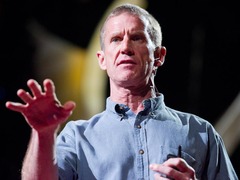
    Stanley McChrystal: Listen, learn ... then leadStanley McChrystal: Listen, learn … then leadStanley McChrystal: Listen, learn … then lead
    A fellow retired U.S. Army four-star general, in this talk from TED2011, Stanley McChrystal gives unexpected thoughts on leadership. His take? That it’s as much about absorbing the wisdom of the people around you as it is about giving orders.
    James Stavridis: A Navy Admiral's thoughts on global securityJames Stavridis: A Navy Admiral's thoughts on global securityJames Stavridis: A Navy Admiral’s thoughts on global security
    In the U.S. Navy, admiral is the equivalent rank to general. Here, a talk from admiral James Stavridis, one of the few high-ranking military officers in the United States who tweets and blogs. In this talk from TEDGlobal 2012, he shares why he believes the security of the future will be built with bridges rather than with walls.
    Peter van Uhm: Why I chose a gunPeter van Uhm: Why I chose a gunPeter van Uhm: Why I chose the gun
    A retired four-star general in the Royal Netherlands Army, as well as his country’s former Chief of Defence, Peter van Uhm says that his career path has been motivated by a deep love of peace rather than a hunger for war. In this talk from TEDxAmsterdam, he shares his story.
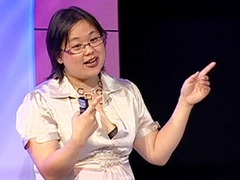
    Jennifer 8. Lee hunts for General TsoJennifer 8. Lee hunts for General TsoJennifer 8. Lee hunts for General Tso
    You may know him as a tasty plate of fried chicken in sauce — but who was General Tso? Was he even a real general? Journalist Jennifer 8. Lee investigates the origins of popular “Chinese food” dishes in America, including General Tso’s Chicken. In this talk, she tracks down the background of the Qing dynasty military hero and visits his distant relatives — who were shocked that the dish named after the icon was even considered Chinese.

  • Crack Open Your Favorite Beer Because Untappd is Available on BlackBerry 10

    Untappd is an awesome app that combines a social network, beer guide and venue checkins. In short, the app lets you tell your friends what beers you’re drinking and where. The location element allows you to discover venues that offer the best beers and the beer guide is constantly expanding as it’s crowdsourced. The good people at Untappd have officially announced that a native BlackBerry 10 Untappd app is now available and come January 30th, you’ll be able to use it on your new BlackBerry 10 device, along with features that are exclusive to the platform. Read on for more details.

    Here is the official blog post from the Untappd team:

    “We’re always working hard to bring Untappd to as many devices as possible and it’s our goal to get as many people drinking socially as possible. In keeping with this goal, we’re excited to announce that Untappd is officially available on BlackBerry 10 as a native app. Blackberry 10 is set to launch on January 30th, 2013.

    Featuring the latest updates (many of which haven’t even hit iPhone or Android yet… don’t worry, they’re coming soon) the BlackBerry version of Untappd is sure to delight those of you that continue to stand by our friends at RIM. You will now be able to add photos to your check-ins, gain better GPS accuracy, and enjoy all that a native app has to offer in terms of performance and reliability.

    So when you get your BlackBerry 10 device on January 30th, be sure to go download Untappd for BlackBerry and drink socially. While you’re at it, please leave a review!”

    Check out Untappd for BlackBerry (available for all devices) at this link.

  • It’s Time to Cut Back on Social Media

    I recently got back from the New Media Expo in Las Vegas. Scheduled before the massive annual CES gathering, it’s a powwow for bloggers and other social media enthusiasts, early adopters who are quick to jump on board the next great thing. So imagine my surprise when I realized one of the undercurrents of the event, burbling repeatedly to the surface, was a desire to cut back on social media efforts.

    That doesn’t mean doing less overall or abandoning new media. But it does speak to a desire to prune and focus on the platforms that have the most impact. It’s hard to say no to the crush of social media demands. During a panel I moderated with well-known blogger and tech expert Robert Scoble, he said there was no alternative to constant, ubiquitous engagement and held up a spare battery he carried for his smartphone, so he’d never run out of juice. No time to respond to tweets? Do it while you’re walking down the hallway, he said. Plenty of people agree with him. One consultant friend recently chided me for not being on Pinterest or Instagram — and like her, many worry they’ll fall behind if they’re not hard-core super users, or if they don’t get in on the ground floor. Clearly there is a first mover advantage in some cases: Chris Brogan developed a passionate following as an early blogger, and Guy Kawasaki jumped onboard Twitter and became a powerhouse there.

    But as I advise my clients to do, I believe everyone needs to think about which platforms best speak to your strengths. At the New Media Expo, I also interviewed Nick Harris, head of digital marketing for Benjamin Moore. For such a visual product, literally differentiated by its color, Pinterest is a terrific platform. But for a consultant like me who traffics in ideas, blogging and tweeting make a lot more sense as investments.

    In fact, we’re now reaching a point where having a scattered focus could truly be deleterious to your goals, because you’re only able to half-engage or create mediocre content. Marcy Massura of Weber Shandwick, who was on another panel with me, commented that “presence means nothing.” Indeed, if you have a Twitter profile with 35 followers, or a MySpace page that hasn’t been touched since 2007, it often looks worse than having nothing at all. (Personally, I just KO’d my Foursquare account.)

    It’s become increasingly clear that with the proliferation of new platforms, no person or company can become the master of them all. Nor should they. The harder decision is figuring out which ones you should prioritize — or jettison. Establishing ROI has always been the holy grail of social media. We may still have a ways to go before we can quantify its objective, dollars-and-cents impact (if you read about something on Facebook, and then saw a tweet, and then went to the mall to buy it, does it count?). But even anecdotally, you probably have some good operating theories. For instance, if you target women, Pinterest is a great bet; if it’s males, Google+ is currently their stomping ground. And as I’ve written about here on HBR.org, blogging is the best way to demonstrate true content mastery and thought leadership.

    The “best” platforms will be different for every person or brand. But in 2013, think hard about how you can cut back, so you can focus on what matters.

  • New From NAP 2013-01-23 10:45:01

    Prepublication Now Available

    Chronic multisymptom illness (CMI) is a serious condition that imposes an enormous burden of suffering on our nation’s veterans. Veterans who have CMI often have physical symptoms (such as fatigue, joint and muscle pain, and gastrointestinal symptoms) and cognitive symptoms (such as memory difficulties). For the purposes of this report, the committee defined CMI as the presence of a spectrum of chronic symptoms experienced for 6 months or longer in at least two of six categories—fatigue, mood, and cognition, musculoskeletal, gastrointestinal, respiratory, and neurologic—that may overlap with but are not fully captured by known syndromes (such as CFS, fibromyalgia, and IBS) or other diagnoses. Despite considerable efforts by researchers in the United States and elsewhere, there is no consensus among physicians, researchers, and others as to the cause of CMI. There is a growing belief that no specific causal factor or agent will be identified. Many thousands of Gulf War veterans1 who have CMI live with sometimes debilitating symptoms and seek an effective way to manage their symptoms. Estimates of the numbers of 1991 Gulf War veterans who have CMI range from 175,000 to 250,000 (about 25-35% of the 1991 Gulf War veteran population), and there is evidence that CMI in 1991 Gulf War veterans may not resolve over time. Preliminary data suggest that CMI is occurring in veterans of the Iraq and Afghanistan wars as well.

    In addition to summarizing the available scientific and medical literature regarding the best treatments for chronic multisymptom illness among Gulf War veterans, Gulf War and Health: Volume 9: Treatment for Chronic Multisymptom Illness recommends how best to disseminate this information throughout the VA to improve the care and benefits provided to veterans, recommends additional scientific studies and research initiatives to resolve areas of continuing scientific uncertainty and recommends such legislative or administrative action as the IOM deems appropriate in light of the results of its review.

    [Read the full report]

    Topics: Health and Medicine

  • Surprise! President and Mrs. Obama Greet White House Tour (Bo Was There, Too)

    President and Mrs Obama Surprise Guests on a White House Tour, Jan. 22, 2013

    President Barack Obama and First Lady Michelle Obama greet visitors during an inaugural open house in the Blue Room of the White House, Jan. 22, 2013.

    (Official White House Photo by Pete Souza)

    President Obama and First Lady Michelle Obama kicked off the second term with a tradition that began in the first: A special surprise greeting for guests on a White House tour on Tuesday. Followers of the First Lady's new Twitter account were given a heads up that something special was about to happen in the Blue Room when Mrs. Obama sent a tweet teasing:

    The President and First Lady welcomed the guests with handshakes, hugs and even fistbumps, and Bo was treated to a near-constant stream of affectionate pats and petting. The entire event was livestreamed, and you can watch a replay below: 


    read more

  • What If You Could Truly Be Yourself at Work?

    For two years now, we have been holding regular “community” meetings at our office to give team members an opportunity to check in about how they’re doing, not just professionally but also personally. Each person answers several questions beginning with a deceptively simple one: “How are you feeling today?”* The rest of us simply listen.

    It was only when we faced a sudden crisis that I finally understood why these meetings had been so important. On a weekend last October, the 23-year-old son of one of our team members died unexpectedly and tragically. On Monday morning, I called our team together in our conference room.

    The feelings that surfaced that morning were raw — grief, bewilderment, fear, an acute awareness of the fragility of life and the preciousness of our own loved ones, and empathy for our grieving colleague.

    The emotions ran even higher at a community meeting on the first day our colleague returned to work several weeks later. Painful as it was for all of us, we were able to create a container for our colleague’s heartbreak. Sharing our feelings also made them feel less burdensome. We held her, and holding her held us. It was cathartic, and that helped each of us to go back at the end of the meeting and focus again on the work at hand.

    It dawned on me that day how powerful and liberating it is to say exactly what you’re feeling, and to feel truly listened to without judgment.

    The impetus to hold community meetings came to us from something called “the Sanctuary Model,” developed by a psychiatrist named Sandra Bloom as a way to help people deal with chronically stressful and overwhelming circumstances — mostly in the world of mental health.

    Increasingly, however, the everyday experience of corporate life can be overwhelming in and of itself.

    In addition to whatever stresses we bring from home, including not getting sufficient sleep, we’re deluged with email, running from meeting to meeting, skipping meals, and working longer and more continuous hours than ever. Is it any surprise we’re struggling? Worse yet, in most workplaces the unspoken expectation is that we will check any strong emotions we’re feeling at the door.

    You know the drill. You put on your game face when you walk into work. “How are you?” a colleague asks, by rote and without real interest. “Fine,” you respond, automatically, regardless of how you’re actually feeling.

    “How many of us,” Bloom writes, “have ever felt truly safe in a social setting … [meaning] cared for, trusted, free to express our deepest thoughts and feelings without censure, unafraid of being abandoned or misjudged, unfettered by the constant pressure of impersonal competition, and yet stimulated to be thoughtful, creative, spontaneous and solve problems?”

    To the contrary, as demand grows, we feel more anxious, more isolated, and more vulnerable.

    Each of us has a tipping point — a moment when we feel so depleted that we fall into survival mode. We’re often unaware of it, but when we move from feeling calm and secure to anxious and under siege, we literally become different people.

    Our fight or flight physiology kicks in. In turn, our focus automatically narrows to protecting ourselves. We lose the ability to think clearly and creatively, respond to others with care and consideration, or consider the long-term consequences of our choices. Instead, we do whatever we think we need to do to survive in the moment.

    Community, I’ve come to deeply believe, is the cure. It does indeed have the power to serve as a sanctuary — to protect, ground and encourage us, not just in extreme circumstances, but also in the face of countless everyday challenges. Support in a community can also give us the strength to forego immediate gratification in favor of choices that uphold shared values, serve the collective good, and generate long-term value.

    I’m convinced that it’s the strength of our community at The Energy Project which has allowed us to become a truly high-performing team. The safety and trust we feel with one another has freed us to focus our efforts on our mission. We have a small full-time staff — 14 of us, along with another dozen working part-time — but we’ve been able to work at senior levels in some of the world’s largest companies. One reason is that we squander almost no energy on internal politics. We’re in this together, including when one or another of us is struggling and needs help.

    I’ve always thought of our core team as a living laboratory for the practices we teach our clients — whether it’s the power of renewal, or focusing on one thing at a time, or learning to deal more skillfully with conflict. What I now realize is that I’ve been overlooking one of the most powerful elements of our work.

    Each of us is far less likely to succeed by forever pushing to stand out from the pack than by building communities of care and trust committed to raising the bar for everyone.

    Transformation takes a village. None of us can truly do it alone.

    * The other questions we ask at community meetings include “What’s the most important thing you learned last week?” “What’s your goal for this week?” and “What are you feeling most grateful for?”

  • On Benghazi, the Buck Stops with Hillary

    Malou Innocent

    Secretary of State Hillary Clinton will face the wrong questions when she testifies today on the September 11, 2012, terrorist attack in Benghazi. The buck stops with Secretary Clinton—and it should. But members of Congress will focus on politically charged and distracting issues. The terrorist attack on the consulate was abhorrent. However, a broader discussion about the NATO-led regime change in Libya—and its unfolding political aftermath in Mali—would be a better use of Congress’s time. The consequences of intervention should not be ignored, and its antecedents must be explored.

    Secretary Clinton was among the handful of U.S. and European officials who urged Western military action in Libya, a mission that entangled the United States in yet another volatile, post-revolutionary Muslim country, and accelerated neighboring Mali’s destabilization. North Africa’s vortex of Islamist crosscurrents has now sucked America and France into Mali. Indeed, the reverberations of NATO-led regime change in Libya impelled U.S. and French involvement in Mali. Like the conflict in Libya, France cannot do the heavy lifting in Mali on its own. Senators should ask: How far will the conflict in Mali go? Will the United States end up holding the broken pieces once again? Is America now “leading from behind”?

    Furthermore, Congress should ask Secretary Clinton about how the White House shamelessly recast the word “war” into “kinetic military operations.” That Orwellian revisionism allowed the administration to side step the War Powers Act and bypass congressional authorization. In the course of supposedly demonstrating America’s selflessness in the promotion of democracy abroad, the administration compromised the integrity of our institutions at home. In that respect, the Libyan adventure has added to the steady aggrandizement of America’s imperial presidency

    Secretary Clinton probably won’t go into any of that, and pitchfork wielding senators likely won’t ask her about those far-reaching consequences.

  • BlackBerry Enterprise Service 10 has arrived! Get it today [VIDEO]

    The highly anticipated BlackBerry Enterprise Service 10 officially launches today. RIM’s enterprise mobility management solution with BlackBerry Enterprise Server has evolved over the past decade, and today we’re pleased to offer our re-invented solution to help businesses embrace mobile trends and enable management, productivity, and secure interaction with corporate data. I caught up with RIM’s Jeff Holleran, Sr. Director of Enterprise Product Management, to discuss the launch:

    [ YouTube link for mobile viewing ]

    Learn more at www.blackberry.com/bes10

    Features of BlackBerry Enterprise Service 10

    A cost-efficient, secure, reliable, and scalable solution, BlackBerry Enterprise Service 10 offers a robust feature set to help you get your employees up and running on their, or your, devices. Here are some of the new features, and there’s much more.

    Read more at the Inside BlackBerry for Business Blog »

  • Budget Zombies

    Tad DeHaven

    The Washington Post’s David Fahrenthold reports on a tiny federal program that House Republicans and even the Obama administration would like to terminate but that is seemingly invincible. The Christopher Columbus Fellowship Foundation, a grant program created in 1992, was supposed to pay for itself from the proceeds of coins honoring the 500th anniversary of Columbus’s landing in the new world. 

    After the coin money ran out, however, the foundation’s board of directors ran to Congress. In 2008, Mississippi Republican Sen. Thad Cochran came to the program’s rescue with a $600,000 appropriation. It has received an annual handout ever since: 

    “It’s a sort of a national treasure, if you want to know the truth about it,” said James H. Herring, a lawyer who was the board’s vice chairman until recently. Herring was also a former chairman of the Mississippi Republican Party, which had donated more than $28,000 to Republican causes, including $1,250 to Cochran’s campaigns. 

    A spokesman for Cochran said the senator supported the program long before Herring, his fellow Mississippi Republican, was put on its board. Cochran, he said, believes that the program has merit and has produced “notable accomplishments.” 

    Cochran himself was unavailable for an interview this week.

    Yep, just a coincidence there. 

    It’s almost impossible to find a program that both Democrats and Republicans want to kill. And the Columbus program is miniscule. So what does it say about the prospects for spending cuts when politicians from both parties can’t even get rid of a dinky program that neither supports?  

  • What Capitalism Can’t Fix

    Increasingly, I see people looking starry-eyed to business and markets to solve social problems. In so doing, they run the risk of dismissing the impact of nonprofits — and diminishing the value of organizations that seek to make a difference without creating the potential conflicts that come with the profit motive. My view is that pretending companies and markets hold all the answers actually puts at risk our ability to deal with our most pressing societal problems — and to help our most vulnerable citizens.

    The rhetoric is everywhere — from the trade press to the mainstream media to business school faculty to corporate titans to Silicon Valley entrepreneurs. Former GE CEO Jack Welch, writing in Business Week, characterized the nonprofit sector as a “foreign land” in which performance is not a priority and employees are guaranteed “lifetime employment.” Alexis Ohanian, co-founder of Reddit, wrote last year on the Wired web site, “Let’s be real: The nonprofit model is broken. The 20th-century way of “guilting” people into giving to an opaque, inefficient organization with massive overhead is no longer a viable model.” In a recent blog post here on HBR.org, Dan Pallotta suggests that nonprofits should use the tools of capitalism such as high pay and providing returns to investors to increase charitable giving.

    The rush to disparage nonprofits and the stampede to embrace the idea that for-profits — or for-profit models — can more easily combat our toughest social problems deny reality. Many crucial objectives simply cannot be accomplished while generating a financial return. Other objectives can but there is a price to be paid. In health care, for example, research indicates a decline in quality when non-profit hospitals switched to become profit making, as Eduardo Porter explained this month in the New York Times.

    The laudable push for companies to commit more energy to dealing with social problems should not obscure the need for strong independent nonprofits that focus on mission not profit. And while nonprofits can learn from companies and companies can learn from nonprofits, it is a mistake to deny differences.

    After all, there is a crucial distinction between an institution that reinvests surpluses in its mission and one that faces unrelenting pressure to distribute profit to shareholders. Consider higher education in the United States. Nonprofit universities frequently offer an education that costs more than actual tuition — the difference made up through charitable gifts and endowment returns — while for-profit institutions must cover their costs with tuition and create a profit margin. The results — and the evidence from lawsuits, media reports, and congressional and GAO investigations of for-profit universities — speak for themselves.

    Despite this and many other cautionary tales, an increasing number of people both inside and outside the nonprofit world seem drunk on the Kool-Aid of business superiority. Too often people equate “business thinking” with effectiveness. Even those inside the world of nonprofits and philanthropy have internalized the idea that operating “like a business” means operating effectively (never asking which business: Countrywide Financial? BP? Enron?).

    The stereotypes of nonprofits are just that: stereotypes. There are, of course, numerous examples of nonprofit influence and impact — from work on environmental issues to citizens’ rights to reductions in tobacco use to reductions in worldwide child mortality — but also lesser known examples. Take the work of the Institute for Healthcare Improvement, a nonprofit whose 18-month campaign to reduce hospital mortality rates has saved an estimated 122,300 lives by inspiring and guiding hospital executives, physicians, and nurses to adopt six basic patient-safety practices. As Peter Fader, a University of Pennsylvania professor and director of the Wharton Customer Analytics Initiative, has observed: Nonprofits often excel at using “their data to better understand their ‘customer base.’ In this area, big companies with lots of resources really can learn from their cash-strapped nonprofit cousins.”

    The point is this: No type of organization — government, business, or nonprofit — has a monopoly on effectiveness. And nonprofits are typically tackling the most complex problems of all. If those problems could have easily been solved by government or business, they wouldn’t exist at all.

    I’m a huge believer in free-market capitalism. I have an M.B.A. and have worked as a corporate consultant. But I think we’re better off being sober about what markets can and cannot accomplish.

    I’d suggest three practical questions to ask in sorting through how to achieve important social goals.

    • Does the pursuit of profit conflict with or facilitate the achievement of your goal? How likely are profit and social impact to be in tension? How will that tension be managed or resolved?
    • What kind of choices and information do people have? Markets work best when people have choices and when there is good information, so ask, do those conditions apply? Are you looking at an opportunity — like creating products or technologies that will help poor people in some aspect of their lives — that lends itself to a free-market solution? Or are you looking at something, like the management of a prison or nursing home system for a state, where a provider is likely to have a virtual monopoly — meaning management is free to prioritize profit over the social mission without paying any kind of price?
    • Finally, are you addressing an issue that actually results from market failure, such as, environmental degradation? If you don’t understand capitalism’s role in contributing to a problem, you probably won’t be able to rely on capitalism to chart a path to the solution.

    Then decide what makes most sense, and don’t assume that a pure nonprofit isn’t the way to go.

    Follow the Scaling Social Impact insight center on Twitter @ScalingSocial and register to stay informed and give us feedback.

  • 2 Guys, 1 Bike – RideApart

    RideApart

    If you’re a watcher of Youtube’s DRIVE Network then you know that TUNED host Matt Farah is a big man, and RideApart host Jamie Robinson is not. This is why seeing them roll two-up on a Honda CBR1000 is just plain hilarious. They spent the day hitting the California canyons, scraping fairings and having a grand old time. Personally, I’d never jump on the back of a bike, even if Jamie Robinson was the pilot. Matt however, he’s a different story all together. Check out the comedy after the jump.

    Source: Youtube.com/DRIVE

  • Chop Dreams 2012

    Chop Dreams 2012

    There are those times when the only thing you need to get you through your day is a long, kick-ass motorcycle ride. Enjoy.

    Source: Vimeo.com


  • Invest in Digital Marketing to Control Your Destiny

    Unhappy critics may well look askance at Barack Obama’s performance as Commander-in-Chief. As campaigner-in-chief, however, this President is demonstrably without peer. His “Obama for America” fundraising, analytics and “get out the vote” operation was a masterpiece of agile electoral innovation and entrepreneurship. Partisans from both sides of the aisle believe it transformed presidential politics.

    They’re right. But, actually, they’re thinking too small. The Obama campaign’s techniques, tools and technologies deserve detailed and dedicated attention from every organization that takes data-driven decisions seriously. There’s not a brand manager, health care administrator, CMO or CIO who wouldn’t benefit big-time from benchmarking their own operations to this campaign’s. It was that good.

    By far the best synthesis and summary of the digital keys to the campaign’s success is Engage DC’s Inside the Cave. I’ve seldom read a briefing so artfully — and accessibly — capturing the critical success factors that turn innovative tools into successful outcomes. Although superbly presented as a case study in campaign organization and technology, its essential lessons go way beyond the mechanics of procuring donors, donations and votes. This is what investing to control your destiny looks like.

    The campaign had an outward facing “Digital” component addressing email, social media and fundraising, as well as “Technology” and “Analytics” departments focused on making campaign processes and purchases more efficient. The organization was dedicated to the proposition that it would not just use tools and analytics to get better, it would use them to learn how to get better — and act accordingly. Ego and experience were subordinated to measurable results.

    “We basically found our guts were worthless,” observed a senior member of the campaign’s email team, on the fact that nobody on the team could reliably predict which emails would perform best. The campaign committed itself to a relentless regimen of experimentation, test and test again. The team “regularly tested” as many as 18 variations on subject line and email copy. (“Hey” was the most successful subject line of the campaign based on email opens.)

    This emphasis on test extended through every phase of the operation. The campaign ran what it called a “Game Day” exercise testing its abilities to respond to possible worst case scenarios of technical failure and surprise. These drills, which coincidentally ran the week before Hurricane Sandy, allowed the DevOps (for Development Operations) team to keep the campaign’s systems running while learning how to perform rapid disaster recovery response.

    “We knew what to do,” said Harper Reed, the campaign’s Chief Technology Officer. “We had a runbook that said if this happens, you do this, this and this.” While practice doesn’t necessarily mean perfect, it made a significant difference in organizational and operational effectiveness and esprit. (By painful contrast, the Romney campaign’s experience with its Orca operational system offers a painful case study of what can happen when experimentation and stress-tests are managerially marginalized.)

    Whether doing extensive A/B testing on its donation pages or deploying a clever mobile app, “Quick Donate” (which allowed for/facilitated “drunk donating”), the campaign’s technologists and analysts constantly sought to create virtuous cycles of better outcomes leading to better data leading to great efficiencies. I was particularly impressed by how rigorously and relentlessly the analytics teams modeled their “markets,” i.e., the voters and electorate. According to Inside the Cave, the analysts ran 66,000 simulations each night to project who was winning every battleground state, based on dynamic models based on voter contact data. Of course, the analysts were using Facebook and Twitter data, as well.

    All these near-real-time “market” data helped determine resource allocation. The campaign developed impressive tools to better optimize the efficiencies and effectiveness of both their digital and traditional media buys. Innovative tools allowed out-of-state volunteers to make calls to swing state undecideds. Indeed, the campaign created a sweet suite of apps and services supporting its “sales force” — i.e., the “get out the vote” volunteers — who would successfully move the needle on election day.

    Yes, there were integration problems and issues. Campaign field director Jeremy Bird observed that, “we never got to a point where a field staffer thought it made more sense to text someone than to call them.” But these were frustrations borne of failed effort, not ignorance or intent. I must point out that, even if Obama had lost, the operational innovation and effectiveness of his campaign would still evoke admiration and emulation. No other national campaign has gotten more measurable value from technology, data and analytics in less time than this one.

    The briefing’s What’s Next: 2016 is as insightfully useful for today’s CEO as tomorrow’s presidential candidate. Each one of its three big themes — Better Social Targeting, Real Time Analytics Overtakes Polling and True Digital Integration — would likely deserve their own internal task force inside every Fortune 1000 firm.

    While it may seem odd to look to a (largely volunteer) presidential campaign for digital/analytical/operational inspiration, (look at Sasha Issenberg’s excellent The Victory Lab for historical context), the fact is that I know of very few business organizations that have gotten comparable value for money and effort from their own innovation investments.

    Until the actual “Obama for America” codebase is freely available (and this is the subject of intense debate), if you want a blueprint, map or resource for your own organization’s digital marketing aspirations, read, reread and then circulate Inside the Cave. It will provoke the internal conversation and debate your business likely needs.

  • Morning Advantage: It’s My Job and I’ll Tweet If I Want To

    Let’s say you get word that a colleague is (unfairly, in your mind) ratting you out for not working hard enough. So you turn to Facebook, engaging with some coworkers about their feelings on the matter.

    Then you all get fired for violating your company’s social media policy.

    This is one of several cases the National Labor Relations Board has considered recently, as described by New York Times reporter Steven Greenhouse. For the most part, it affirms one of the key tenets of employment law that was created decades before social media became so ubiquitous: that employees have a right to discuss work conditions freely, without fear of retaliation. So how should you shape your company’s social media expectations to support both your employees’ rights and your company’s brand? Take these two social media policies, one from Wal-Mart and the other from General Motors, that differ only slightly but are on opposite ends of the legal spectrum: Wal-Mart’s prohibits “inappropriate postings that may include discriminatory remarks, harassment and threats of violence or similar inappropriate or unlawful conduct,” while GM states that “offensive, demeaning, abusive or inappropriate remarks are as out of place online as they are offline.” The latter, the Board says, is unlawful because it’s too vague. So is specificity the key, as one expert counters? Maybe. But the gray areas still seem to be in the overwhelming majority of company policies.

    WE THE PROGRAMMERS

    The Battle Over the Tech That Got Obama Elected (The Verge)

    After much public celebration over the ragtag team of digital wizards that catapulted Obama to another term, a bit of a storm is brewing over their code. As is the wont of the open source community, there’s a push to make that information available to other programmers to implement and improve upon (especially because the system was itself built using other open source models). But the administration and the Democratic National Committee is thus far keeping a tight lid on both the data and the code, raising questions about privacy, politics, and who owns what in the digital space.

    SMILE AND SAY “DATA ANALYSIS”

    Google’s Happiness Machine (Slate)

    Farhad Manjoo offers an inside look at Google’s People Operations department, where HR managers use deep analytics to figure out how to make employees REALLY happy. Among the findings: base salaries matter more than bonuses, an optimal lunch-line wait time (to maximize collegial banter while minimizing annoyance) is 3-4 minutes, job candidates need only go through four interviews, and middle managers really do improve performance. Oh, and in an effort to retain more women, the company now offers five months paid maternity leave, taken whenever the new mom wants. Will the tech wars be won with satisfied talent? Google seems to think so. — Alison Beard

    BONUS BITS:

    The Golden Years

    America’s CEOs Want You to Work Until You’re 70 (Businessweek)
    Study Finds Tweeting, Retweeting May Help You #Lose Weight (Wired)
    The Most Dangerous Word to Use at Work (Fortune)