Category: News

  • Zeta-Jones: Bipolar Treatment Nears An End

    Catherine Zeta-Jones announced last month that she would be entering treatment for bipolar disorder, and now the 43-year old actress is about to be released from a health care facility.

    Zeta-Jones has sought treatment before a couple of years ago, which prompted her to go public with her struggle despite the potential negative affect it could have had on her career.

    “This is a disorder that affects millions of people, and I am one of them,” she said. “If my revelation of having bipolar II has encouraged one person to seek help, then it is worth it…There is no need to suffer silently and there is no shame in seeking help.”

    The actress was praised by husband Michael Douglas recently, who spoke about her while promoting a film at Cannes.

    “She comes home tomorrow,” Douglas said. “She’s doing a really good job of getting balanced. I’m proud of her.”

    Zeta-Jones spoke candidly about the disorder to InStyle Magazine last December, saying she hopes to remove the stigma attached to the word.

    “It’s not easy. I’m not the kind of person who likes to shout out my personal issues from the rooftops, but with my bipolar becoming public, I hope fellow sufferers will know it’s completely controllable,” she said. “I hope I can help remove any stigma attached to it, and that those who don’t have it under control will seek help with all that is available to treat it.”

  • Aspiring Americans Share their Stories as Senate Debates Immigration Reform

    President Barack Obama and Vice President Joe Biden meet with DREAMers

    President Barack Obama and Vice President Joe Biden meet with DREAMers who have received Deferred Action and U.S. citizen family members of undocumented immigrants, in the Oval Office, May 21, 2013.

    (Official White House Photo by Pete Souza)

    As the Senate debates bipartisan immigration reform legislation, the President and the Vice President hosted a meeting today in the Oval Office with young immigrants, also known as DREAMers, as well as with the siblings and spouses of undocumented immigrants. The meeting was an important opportunity for the President and the Vice President to hear directly from people whose families are affected daily by our nation’s broken immigration system.

    The President and the Vice President were moved by the stories of courage and determination these young immigrants shared. The DREAMers shared how the deferred action changed their lives for the better and emphasized that they and their families need a permanent solution that will allow them to fully contribute to the country they call home. Their stories were both powerful and authentic, inspiring us all to remember the important task and responsibility we carry as public servants and members of the Obama administration.

    read more

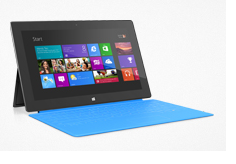
  • The NFL is not only arriving on Xbox One, but also Surface

    It may not be entirely what we hoped for, but today the NFL makes strides towards greeting the twenty-first century. Earlier we saw the big Xbox reveal which, among other things, reveals a partnership with the National Football League. The sport is the last holdout of major U.S. leagues to embrace the internet, but better late than never, I suppose.

    Today’s show in Redmond, Wash. features a short video-taped appearance by commissioner Roger Goodell to talk of the new features that Xbox One customers can expect. However, it is only half of the story. Later in the day, the Surface team announces that the NFL will also be available to customers of the Microsoft tablet.

    “The NFL is a great stage for Surface because Surface has the chance to help change the game — including how medical staff take care of players, coaches strategize, players learn, and referees, um, referee. This is a partnership that we’re excited to embark on” the Surface team tells us.

    “The NFL is a great stage for Surface because Surface has the chance to help change the game – including how medical staff take care of players, coaches strategize, players learn, and referees, um, referee. This is a partnership that we’re excited to embark on” the company points out.

    Now, of course, it is up to the league to make this work, and it has failed in the past to show that it has much knowledge of the web. Perhaps a new page has been turned.

  • Darius Rucker: Racist Tweet Garners Disbelief

    Darius Rucker, formerly of Hootie And The Blowfish, has found a hit in his version of the old Dylan song “Wagon Wheel”. But some aren’t impressed with his rendition, apparently, and one naysayer took to Twitter to call him out on his move to country in a pretty despicable way.

    User PQKullman wrote, “Leave country to the white folk,” to which Rucker replied, “WOW… is this 2013 or 1913? Ill take my grand ole Opry membership and leave your racism. Wow.”

    It’s unfortunate that Rucker had to be on the receiving end of such a negative country fan, but he appears to be taking it all in stride. He later tweeted:

    When one of Rucker’s followers commented, “Bet he wouldn’t say that to Nelly’s face,” Rucker shot back, “?Wouldn’t say it to mine, either.” And he makes a good point; social media sites, while good places to connect with people, are also havens for those who know they can hide behind a screen name. Unfortunately, it doesn’t seem as though cyber-bullies will be going away anytime soon.

  • Minnesota not on top ranking list for broadband availability according to NTIA

    NTIA’s Report on Broadband Availability is out. They have tracked availability from June 2010 to June 2012. Here’s the quick answer…

    ntia

    Broadband at the basic speed combination of 3/768 is available to 98.18% of the population, and 94.39% of Americans can subscribe to services of at least 10 Mbps

    I’d like to remove that 3/768 track, but the NTIA explains why they track such slow speeds…

    NTIA begins its analysis at the combined advertised connection of 3 Mbps downstream and 768 kbps upstream, which is the closest combination of speeds for which NTIA collects data that would allow a consumer to “access a basic set of applications that include sending and receiving e-mail, downloading Web pages, photos and video, and using simple video conferencing.”

    I think it’s also important to know their definition of available; it’s a little non-standard…

    For the purposes of NTIA’s data collection, broadband is “available” if it can be deployed to a business or consumer within 7-10 business days and without an extraordinary commitment of resources. This definition is in contrast to “adoption,” which means that a consumer or business subscribes to or uses broadband at a particular location. The definition of broadband does not specifically include price, latency, bandwidth limitations, or other factors that may impact a user’s ability to purchase or use the service.

    What about Minnesota?

    As always I’m most concerned with how Minnesota stacks up in the report. They include a list of the top 15 States with Most Broadband Access at 10, 25, and 50 Mbps. Minnesota does not make any of those lists. I guess on a silver lining note, we don’t make the worst list either. Minnesota also got no mention on a recent Akamai report that track speed and adoption.

    About a week ago, Connect Minnesota gave a sneak preview on Minnesota’s broadband availability. (Connect Minnesota provides data to NTIA for their report.)

    Last October, our data showed that there was 61.57% access across the state at the 10 Mbps by 6 Mbps tier (and 81.97% at the 10 Mbps x 3 Mbps tier, fixed platform; factoring in mobile broadband, we had 87.18% availability at this speed tier).

    As of April 2013, we see an improvement of nearly eight percent: April 2013 data showed that 69.19% of Minnesota households have access to broadband at a minimum of 10 Mbps download by 6 Mbps upload (and 87.0% at the 10 Mbps x 3 Mbps tier, fixed platform; factoring in mobile broadband, we have 97.28% availability at this speed tier).

    It’s great (really great!) to see a 8 percentage growth – and hopefully that will put us on track to make the Top 15 list in the future but it doesn’t help us rank today.

    Outside of the Minnesota perspective, there were a few other points I found interesting…

    • Almost 100% of urban residents have access to download speeds of at least 6 Mbps, but only 82% of rural communities can access these speeds. Almost 88% percent of urban residents have access to speeds of 25 Mbps. Only 41% of rural residents, less than half those in urban communities, have the same access. …
    • approximately 5% of the population lives in areas with basic wireless broadband service, but no wireline broadband service. …
    • The increase in wireline speeds is primarily a result of an increase in cable speeds, followed by a much smaller increase in fiber deployment.

  • Oklahoma Tornado Captured By Guy Sticking His Hand Out of His Shelter

    There have been a lot of incredible videos to come out of Monday’s massive tornado that hit the Moore, Oklahoma area. This fits the bill, but it comes with a twist.

    This guy filmed the tornado as it passed above his shelter. Crazy, right? I can’t even fault him for his vertical video – I mean, he’s filming a massive tornado. Only in the YouTube age, folks.

    [Charles Gafford via reddit]

  • Sprint exec hints more BlackBerry 10 devices are on the way in 2013

    Sprint BlackBerry 10
    Sprint will launch the BlackBerry Q10 this summer as its first BlackBerry 10 smartphone. Lois Eichelberger Fagan, director of product portfolio for Sprint, revealed in an interview with CNET that the company had originally planned to launch the BlackBerry Z10 and Q10 together earlier this year, however the plan was abandoned after BlackBerry delayed the Q10 until June. The company decided the timing wasn’t right for a Z10-only launch and felt more confident in the Q10, which it believes will sell better among BlackBerry users because of its QWERTY keyboard. The executive noted, however, that the carrier isn’t done with BlackBerry and plans to release a second smartphone later this year. Fagan didn’t go into further detail about the device, only saying that there is “more to come.”

  • Google Talks Google+ And Search For 40 Minutes [Video]

    Google gave a presentation about Google+ and Search at Google I/O last week. With Google’s “social layer” becoming a bigger part of search and the larger Google ecosystem, this is probably one marketers will want to check out.

    “In this session we’ll walk you through a series of techniques you can use to make your app and content shine on Google,” Google says in session description. “Using these techniques you can connect more directly with new and existing users on Google Search.”

  • RBC Joins in $45M Bessemer-Led Financing of Adaptive Planning

    Mountain View, California-based Adaptive Planning Inc., a maker of cloud-based business analytics software, has secured US$45 million in funding in a deal led by U.S. venture capital firm Bessemer Venture Partners. Bessemer was joined by the company’s existing investors, which include Canadian firm RBC Venture Partners, a backer of Adaptive Planning since 2008.

    PRESS RELEASE:

    Adaptive Planning, the worldwide leader in cloud-based business analytics solutions for companies and nonprofits of all sizes, today announced at its Accelerate 2013 global user conference that it has secured a major new round of $45 million in venture funding. Bessemer Venture Partners (BVP), a premier global venture capital firm, led the round, with existing investors ONSET Ventures, Norwest Venture Partners (NVP), RBC Venture Partners, Cardinal Venture Capital, and Monitor Ventures also participating. Adaptive Planning will use the additional capital to scale its direct sales and partner channels in North America, expand into attractive new enterprise and international markets, and drive new product innovation.

    “The addition of Bessemer as an investor is a great testament to our market leadership — to our exceptional customer growth, product innovation, and high levels of customer satisfaction,” said John Herr, CEO of Adaptive Planning. “We grew new software bookings by 90 percent last year with high capital efficiency. As such, we didn’t need to raise more capital, but did so to take advantage of a huge opportunity in front of us to build a dominant global presence in a rapidly growing market. What’s more, BVP is a great partner with an outstanding SaaS track record, and we look forward to working closely with them to maximize this business opportunity.”

    As part of the funding, Byron Deeter, a BVP partner and an industry leader in cloud technology investments, will join Adaptive Planning’s board of directors. “We see the stars aligning with Adaptive Planning: the company is at the intersection of increasing cloud adoption, an acute market need for better analytics, and a customer base that is passionate about its products,” said Byron Deeter, whose firm is one of the leading cloud/SaaS venture firms with successful cloud investments in companies such as Box, Cornerstone OnDemand, DocuSign, Eloqua, LinkedIn, and Skype. “Combining cloud leadership in a huge and largely untapped market with a top-notch team to lead the company’s growth, Adaptive is poised to win.”

    “Adaptive Planning is on an impressive trajectory,” added Sergio Monsalve, Partner at NVP. “The company has built and significantly expanded its cloud business analytics platform to empower finance and operational teams. Its unique ability to transform planning, consolidations, reporting and analysis has resulted in improved costs, productivity and critical business decisions for thousands of brand name customers worldwide.”

    With 5x more customers than all other cloud competitors combined, Adaptive Planning has become the solution of choice for cloud-based corporate performance management (CPM) and business intelligence (BI). Addressing a $33 billion market, Adaptive Planning has more than 1,600 customers in 80 countries worldwide, with the number one market share and the top customer satisfaction rating among all cloud providers in its category.

    “Adaptive Planning has always been very effective at anticipating and capitalizing on evolving market drivers to create strong demand. The rapid move to cloud computing, the rise of mobile computing, and the need to make better, faster, data-driven decisions have been great opportunities for the company,” said Terry Opdendyk, Founder and Partner of ONSET Ventures, which has been an investor in the company since its formation. “As an alternative to manual, spreadsheet-based processes and legacy on-premises software, Adaptive Planning is establishing a new standard for cloud-based BI and CPM solutions.”

    “Adaptive’s rapid growth path is a function of its customers’ satisfaction,” commented Robert Antoniades, a Partner at RBC Venture Partners, an existing investor in Adaptive Planning. “The new infusion of capital will help accelerate the company’s market leadership, world-class product innovation, and global expansion.”

    The funding announcement is part of the news announced this week at Adaptive Planning’s annual user conference, Accelerate 2013, at the Hotel Nikko in San Francisco on May 21-22. The conference is the largest annual global gathering of cloud BI and CPM professionals, with approximately 500 Adaptive Planning customers and partners attending.

    The news comes on the heels of an announcement last month of Adaptive Consolidation, a breakthrough new integrated cloud-based solution for comprehensive and intuitive financial consolidation and analysis. Adaptive Consolidation introduces powerful new capabilities, coupled with an intuitive user interface, that make incredibly complex and time-consuming processes appear to be easy. Businesses can close their books accurately, quickly, and painlessly, with intuitive definition of rules that are automatically applied to the consolidation process each period.

    Adaptive Planning also introduced late last year its Adaptive Discovery solution, breakthrough new cloud-based visual analytics featuring interactive data visualization and alerting and an intuitive and highly interactive way for managers across an organization to access, analyze, and explore key financial and operational data. With Adaptive Discovery, CFOs, VPs of Sales, and other business leaders can quickly and easily gain insights into the underlying trends in the business, allowing them to make more intelligent business decisions that drive greater success.

    About Adaptive Planning
    Adaptive Planning is the worldwide leader in cloud-based business analytics solutions for companies and nonprofits of all sizes. The company’s software as a service (SaaS) platform allows finance and management teams to work together to plan, monitor, report on, and analyze financial and operational performance. With capabilities for budgeting, forecasting, reporting, consolidation, dashboards, and business intelligence, Adaptive Planning enables finance, sales, and other business leaders to make better, faster, more collaborative decisions that drive a true competitive advantage.
    Adaptive Planning is used by over 1,600 organizations worldwide, from midsized companies and nonprofits to large corporations, including AAA, Boston Scientific, CORT, Konica Minolta, NetSuite, Philips, and Vail Resorts. The company is the 5th fastest growing software company in Silicon Valley on the Deloitte Technology Fast 500™ list; has the #1 brand in midmarket CPM; and ranks #1 in customer satisfaction in independent industry surveys. With customers and partners in 81 countries worldwide, the company has the strongest channel ecosystem in the cloud CPM space, with worldwide partners including Armanino McKenna, Intacct, IntuitiveTek, Plex Systems, SAP, and NetSuite, which offers a specialized version of Adaptive Planning as the NetSuite Financial Planning module. Adaptive Planning is headquartered in Mountain View, Calif. and is funded by Bessemer Venture Partners (BVP), Norwest Venture Partners (NVP), Royal Bank of Canada (RBC), ONSET Ventures, Monitor Ventures, and Cardinal Venture Capital.

    About Bessemer Venture Partners
    With $4.0 billion under management, Bessemer Venture Partners (BVP) is a global venture capital firm with offices in Silicon Valley, Cambridge, Mass., New York, Brazil, Mumbai, Bangalore and Herzliya, Israel. BVP delivers a broad platform in venture capital spanning industries, geographies, and stages of company growth. From Staples to Skype, VeriSign to Yelp, LinkedIn to Pinterest, BVP has helped incubate and support companies that have anchored significant shifts in the economy. More than 100 BVP-funded companies have gone public on exchanges in North America, Europe and Asia. See www.bvp.com or follow BVP on Twitter: @bessemervp
    About Norwest Venture Partners
    Norwest Venture Partners (NVP) is a multi-stage investment firm that has partnered with entrepreneurs to build great businesses for more than 50 years. The firm manages over $3.7 billion in capital and has funded more than 500 companies since inception. Headquartered in Palo Alto, Calif., NVP has subsidiaries in Mumbai and Bengaluru, India and Herzelia, Israel. NVP makes early to late-stage venture and growth equity investments across a wide range of sectors including: technology, information services, business services, financial services, consumer products/services and healthcare. For more information, please visit www.nvp.com Follow NVP on Twitter @NorwestVP
    About Onset Ventures
    ONSET Ventures (www.ONSET.com) specializes in providing start-up, follow-on, and intellectual capital to entrepreneurs and early-stage technology ventures to help transform world-class ideas into sustainable and valuable businesses, through a process of “venture craftsmanship.” The firm has backed over 130 companies since 1984 and has more than $1 billion under management.
    About RBC Venture Partners
    Established in 1997 and headquartered in Toronto, RBC Venture Partners is the venture capital investment arm of RBC (RY on the TSX and NYSE) with over C$250 million under management. RBC Venture Partners invests directly in early and growth stage software, technology and services companies targeting the financial services industry. For more information visit www.rbc.com/vp.
    Contact Information
    Contact:

    GlobalFluency
    Stephanie Evans
    650-433-4163
    [email protected]

    Adaptive Planning
    Derek Kober
    650-810-2486
    [email protected]

    Adaptive Planning
    650-528-7500
    www.adaptiveplanning.com

    Photo courtesy of Shutterstock.

    The post RBC Joins in $45M Bessemer-Led Financing of Adaptive Planning appeared first on peHUB.

  • Audax Recaps Chesapeake IRB

    Audax Group said Tuesday it completed the recap of Chesapeake Research Review, which does business as Chesapeake IRB. Financial terms weren’t announced. Columbia, Md.-based Chesapeake provides independent institutional review board services to pharmaceutical, biotech and medical device companies, universities, academic medical centers, and hospital systems. Madison Capital Funding provided financing for the deal.

    PRESS RELEASE

    BOSTON–(BUSINESS WIRE)–Audax Group announced it has completed the recapitalization of Chesapeake Research Review, Inc., d/b/a Chesapeake IRB (“Chesapeake”). Headquartered in Columbia, Maryland, Chesapeake is a leading provider of independent institutional review board (“IRB”) services to major pharmaceutical, biotech and medical device companies, universities, academic medical centers, and hospital systems. Chesapeake performs independent reviews of proposed research projects and principal investigators to assure the protection and welfare of human subjects in clinical trials.

    Geoffrey S. Rehnert, Co-CEO of Audax Group, said “Chesapeake operates an independent IRB with a leading reputation and a differentiated 21 CFR Part 11 compliant IT platform in a fragmented and growing market. We look forward to working with Dr. Felix Gyi and his team to grow the business organically and through strategic add-on acquisitions and expanding into adjacent services.”

    Dr. Felix Gyi, Founder and CEO of Chesapeake, said “We are excited to partner with Audax Group as we embark on this new stage for our business. Their operational expertise and successful track record in sourcing and integrating add-on acquisitions will be an asset as we continue to build Chesapeake’s market presence as a leading IRB.”

    Goulston & Storrs and Kirkland & Ellis LLP served as counsel to Audax Group. Shea & Associates, Inc. advised Chesapeake. Madison Capital Funding LLC provided financing to support the transaction.

    ABOUT AUDAX GROUP

    Audax Group, founded in 1999, is a leading investor in lower-middle market companies. With offices in Boston and New York, Audax has over $5 billion in assets under management in its Private Equity, Mezzanine, and Senior Debt businesses. For more information visit the Audax Group website www.audaxgroup.com.

    The post Audax Recaps Chesapeake IRB appeared first on peHUB.

  • Arias Speaks to Jury at Sentencing, Pleads For Her Life

    On May 8, Jodi Arias was found guilty of murdering her former boyfriend, Travis Alexander, in 2008. Alexander was found in his shower with his throat slit, his head shot, nearly 30 stab wounds. Now, a jury is deciding whether Arias will receive the death penalty or life in prison.

    After being delayed for a bomb threat, the sentencing phase of Arias’ trial began last week. The jury has already heard emotional testimony from Alexander’s family, who stated that the murder had affected their health and brought on nightmares. Today, jurors heard from Arias herself.

    According to an Associated Press report, Arias testified on her own behalf Tuesday morning. Though just after she was found guilty Arias had stated she would prefer the death penalty, she pleaded with the jury today to spare her life and sentence her to life in prison.

    “My nieces are the closest I’ll ever come to motherhood, because I’m not going to have children of my own,” said Arias. “I’m not going to become a mother. Because of my own terrible choices, I’ve had to lay that dream to rest.”

  • Pot-Eating Pigs End Up Fat And Delicious

    Pot-eating pigs are the reality for some pork farmers in Washington state after the state legalized marijuana use late last year. You’re not going to get high from these bovine, but these pot-eating pigs are apparently delicious.

    Reuters reports that Susannah Gross, a farmer outside of Seattle, has been feeding her pigs the leftovers of the marijuana plant. It’s an experiment that few farmers are participating in, but the results so far are encouraging.

    Much like humans, pigs under the influence of marijuana eat far more food. This leads to pigs being 20 to 30 pounds heavier than usual. It also leads to the pigs being tastier than usual, at least to those who partook in a local “Pot Pig Gig” that saw the pork resulting from the pot-eating pigs being served as part of a meal.

    The success of this initial program now has pot growers and farmers in Washington excited over the idea of raising chickens and cows on the leftovers of the pot plants.

    Oh, and for those wondering, you’re probably not going to get high from eating animals fed weed waste. No studies so far have yet to find a link, but there’s not a lot of data out there to begin with. There will obviously be more studies once the use of weed waste as animal food enters the mainstream.

  • Five Things Tim Cook Should Do at Apple (Now that He’s Done Testifying)

    Tim Cook performed brilliantly in front of Congress today. He was authoritative, in breathtaking command of his facts, as he always is, and brought a unique perspective to each response. Senator Levin was out for blood, but “No one laid a glove on him,” as Phillip Emer DeWitt wrote for Fortune. He put his questioners to shame. His response to the question of whether Apple was violating basic rules of fairness was brilliant: “I am a fair person. Apple is a fair company. I would not administer [something that was unfair.]” This is no dime-a-dozen MBA or supply-chain guy. This is a man of unique character and exceptional intelligence with an opportunity to make his own mark, not just on Apple, but on history.

    There are a few important things that he could do a this point in his tenure that I believe would advance his movement toward that destiny in a big way.

    Make a Self-Deprecating Joke
    Tim Cook is the stiffest scripted presenter since Neil Armstrong. But most people aren’t bothered by that. What bores them is his unconsciousness about it. If Tim simply let people know that he knows he’s a lousy presenter he’d instantly be a better presenter. He should start out WWDC with a killer self-deprecating routine acknowledging how stiff he is. Mock himself. People would love it. They would love him.

    Run a Great Ad Series
    Apple needs to get brave and bold and fun with its advertising again. Maybe it revives the Mac vs. PC campaign, but make it iOS vs. Android, and destroy Android over the inability to get the latest software updates, the malware problems, the privacy issues, the lack of ability to easily synch all of your content to all of your devices, the freeze-ups, the cheesy product lanches, etc. Alternatively, get inspirational and move people with the difference Apple products make in the lives of the blind, poor children in rural schools, entrepreneurs in the developing world. The medium is the message, and a bold company cannot stay cautious with its creative. Tim has to lead this charge.

    Stop Delegating Big Announcements to Others
    Tim has taken the delegating thing too far. Product announcements are the setting for the leader of the organization to demonstrate their excitement about the product and to make the argument for the product. When Tim delegates every element of the keynotes to his Senior VPs, and just bookends the keynote with opening and closing remarks, he can come across as dispassionate about the products, and illiterate on how they integrate with the overall Apple story and how they integrate with his vision.

    Steve Jobs was like a litigator at a keynote — he made arguments — he made irrefutable cases for how the current class of products sucks, why they suck, what the fundamental problem is, and then he showed how Apple was going to fix it. He didn’t just say he was going to delight customers, he deconstructed how Apple would do it by taking them on an argumentative odyssey in which Apple was always the hero there to slay the dragons of mediocrity. It showed that he cared about delighting customers because he understood what frustrated them. That made him human to his customers, and for all his aloofness, Apple fans could relate to Steve Jobs because he showed them that he empathized with their problems.

    Tim Cook has to do the same thing. He has to show that he uses the products. That’s his job. This delegation of major product announcements — wholesale — to others is either lazy or it’s based on a misguided sense of how you motivate your reports.

    Make the Distinction Between Product Design and the Design of the Future
    Product design and future design are two different things. Jony Ive can design the products of the future, but he can’t design the future of the company. Imagine President Kennedy hiring a “Chief of Vision,” instead of providing the vision himself. Tim Cook has to contemplate what his vision is for the future of Apple and he should stage a major event to articulate it.

    Don’t Worry About Being Liked
    Steve Jobs’ vision wasn’t his only strong suit. His willingness to fight for that vision and to be disliked if that’s what it took to make that vision real was as valuable as the vision itself. The sense of possibility that he emanated didn’t just show up in a new product. It showed up in his ability to get the product out the door six months earlier than anyone said it could be done. And he didn’t make that happen by worrying about being liked. At every level he showed people that human beings were capable of something more. He didn’t do that by appealing to their lazier angels. Delighting customers also means showing people that real things can get done, and get done much faster than they get done by all of the other companies that frustrate them in their lives — you know, the companies that are forever showing concept products that people love but that never make it to market. And to get things done like that, you have to mess with that inherent human tendency to slow things down. People don’t like it, until you show them what they’re really capable of. They might dislike you today. But they’ll love you in the long run.

    There is zero reason — zero reason — that Tim Cook cannot earn a place in the pantheon of great American business leaders. But to do it, he’s going to have to stretch outside of his comfort zone.

  • Venture-Backed Ambit Biosciences Prices IPO

    San Diego-based Ambit Biosciences Corp., which discovers, develops and commercializes drugs to treat needs in oncology, autoimmune and inflammatory diseases, has priced its initial public offering at US$8.00 per share. Listing on NASDAQ under the symbol “AMBI,” the company plans to raise US$65 million. Ambit has since 2000 been backed by U.S. and Canadian venture capital firms, including Apposite Capital, Avalon Ventures, Forward Ventures, Genechem, GIMV, GrowthWorks, Horizon, MedImmune, NovaQuest, OrbiMed Advisors, Perseus-Soros, Radius Ventures and Roche Venture Fund.

    PRESS RELEASE:

    Ambit Biosciences Corporation today announced the pricing of its initial public offering of 8,125,000 shares of its common stock at $8.00 per share. Ambit has granted the underwriters a 30-day option to purchase up to an additional 1,218,750 shares at the initial public offering price to cover over-allotments, if any. Ambit’s common stock is scheduled to begin trading on The NASDAQ Global Market on May 16, 2013, under the symbol “AMBI.”

    The joint book-running managers for the offering are Citigroup and Leerink Swann. In addition, BMO Capital Markets is acting as lead manager and Robert W. Baird & Co. Inc. is acting as co-manager.

    This offering is being made by means of a prospectus, copies of which may be obtained from Citigroup Global Markets Inc., c/o Broadridge Financial Solutions, 1155 Long Island Avenue, Edgewood, New York, 11717, or by email at [email protected] or by phone at 1-800-831-9146, and Leerink Swann LLC, Attention: Syndicate Department, One Federal Street, 37th Floor, Boston, Mass., 02110, or by email at [email protected] or by phone at 1-800-808-7525.

    A registration statement relating to these securities was declared effective by the U.S. Securities and Exchange Commission (SEC) on May 15, 2013.

    This press release shall not constitute an offer to sell or the solicitation of an offer to buy nor shall there be any sale of these securities in any state or jurisdiction in which such offer, solicitation or sale would be unlawful prior to registration or qualification under the securities laws of any such state or jurisdiction.

    About Ambit Biosciences
    Ambit is a biopharmaceutical company focused on the discovery, development and commercialization of drugs to treat unmet medical needs in oncology, autoimmune and inflammatory diseases by inhibiting kinases that are important drivers for those diseases. Ambit’s lead drug candidate, quizartinib (AC220), is a once-daily, orally-administered potent and selective, inhibitor of FMS-like tyrosine kinase-3 (FLT3) and is currently under clinical development in patients with relapsed/refractory acute myeloid leukemia (AML) and in newly diagnosed AML patients in combination with chemotherapy as well as maintenance following a hematopoietic stem cell transplantation (HSCT). In addition to quizartinib, Ambit’s clinical pipeline includes AC410, an oral JAK2 inhibitor, and CEP-32496, a BRAF inhibitor licensed to Teva Pharmaceutical Industries Ltd. Ambit’s preclinical portfolio includes a proprietary CSF1R inhibitor program.

    Contacts:
    Ian Stone or David Schull
    Russo Partners
    (619) 308-6541
    (212) 845-4271
    [email protected]
    [email protected]

    Robert Flamm, Ph.D.
    Russo Partners
    (212) 845-4226
    [email protected]

    Photo courtesy of Shutterstock.

    The post Venture-Backed Ambit Biosciences Prices IPO appeared first on peHUB.

  • Naturally, The Westboro Baptist Church Trolls Oklahoma Tornado Victims

    In what may be one of the most non-surprising “news” of the year, members of the Westboro Baptist Church, professional life trolls that they are, have blamed the Oklahoma tornado tragedy on Kevin Durant, among other things.

    Well, of course they did.

    I mean, why else would destructive weather carve up the Midwest of the United States, if not for Durant’s support of Jason Collins? Had the Oklahoma City Thunder’s star kept his mouth shut about “glorifying gays” or something, the tornado cells that plagued the middle of the country would not have even happened. At least, that’s the gospel according to Fred Phelps, Jr, son of Pastor Fred Phelps, as you can probably guess. I’ll let his Twitter post fill in whatever blanks you may have:


    If these bastions of dignity decide to picket any of the upcoming memorial services related to the tornadoes, would anyone really be surprised? In other news, how insecure does one have to be to go to such extremes just to stay relevant? By now, it’s obvious this pleasant group does not care about perception. They only want the attention that follows their pathetic trolling attempts. Instead of getting upset by them, it’s also clear the best way to deal with such nonsense is to mercilessly mock it, much like the guy in the lead image is doing. If you’re a hacker, or know how to use hacker tools, I guess the Anonymous communication strategy, at least when it comes to entities they don’t like, is an option as well.

    Not that we would condone anything like that.

  • Boost Mobile applies a unique spin on the mobile wallet

    Sprint-owed prepaid operator Boost Mobile unveiled a mobile financial services app called Mobile Wallet at CTIA Wireless in Las Vegas on Tuesday. This isn’t your typical near field communications (NFC) or QR code contactless payment setup though. Instead, Boost is combining its prepaid mobile services model with a prepaid cash account, providing a physical prepaid card that customers can use at the register.

    Mobile Wallet was developed by Wipit, a mobile payments provider for people without bank accounts and credit cards. Its platform therefore makes an ideal fit for many Boost customers who rely on cash to make pay for their wireless service. The approach seems to emulate the mobile payments revolution going on Africa and South Asia, where mobile operators are become bigger financial services providers than the traditional banks.

    Mobile Wallet allows you to pay bills and send money to family or friends in 135 countries through Ria’s cash transfer network. Soon Boost will also offer a digital check cashing service, which lets you scan in a physical check and deposit the funds in your wallet account. You can also transfer money between different accounts, and top off your Boost Mobile plan within the app.

    What you can’t do is use the Wallet App to make a payment at store. But Boost and WiPit have gotten around that problem by issuing a Visa prepaid card to any customer that signs up for a premium account. The card draws directly from the Wallet account and is accepted anywhere where Visa is. Google reportedly considered adopting the same approach for its digital wallet but dropped the idea.

    Of course, all of these services come with fees, many of which are rather steep. Paying bills costs anywhere from $2 to $5 per transaction, while Ria money transfer fees vary depending on amount and destination. Even loading money into the account costs $3, though once the money is there, you can spend it freely using the Visa card. Until the check cashing service goes live, customers can only load money into the account at authorized Boost dealer locations.

    The app is available to Boost’s Android customers and is downloadable in Google Play, but initially Boost is only enabling accounts for customers in Los Angles, San Diego and parts of New Jersey. The company is planning a nationwide rollout by the end of the year.

    Related research and analysis from GigaOM Pro:
    Subscriber content. Sign up for a free trial.


  • Xbox One Will Kind Of Block Used Games

    The Xbox One is the official name of Microsoft’s next-generation games console. While it may do more than just play games, gamers are still curious about certain rumors that have been floating around about the new console. Will it play used games? Will it require an always online Internet connection? Microsoft finally answered those questions today… kind of.

    The Xbox One will kind of block used games from being played on the console. Now, what does that mean? It means that every game must be installed on the system. The game disc you buy in the store is merely a means of getting that information installed on the hard drive. Of course, what’s to stop from multiple friends all sharing the same disc, and getting the same game?

    Wired explains:

    “…each disc would have to be tied to a unique Xbox Live account, else you could take a single disc and pass it between everyone you know and copy the game over and over. Since this is clearly not going to happen, each disc must then only install for a single owner.

    Microsoft did say that if a disc was used with a second account, that owner would be given the option to pay a fee and install the game from the disc, which would then mean that the new account would also own the game and could play it without the disc.”

    Of course, it seems that Microsoft itself is confused as to the extent of its own used game policy. On the official Xbox site, a QA page (which has since been removed) says the following about used games on the Xbox One (courtesy of NeoGAF):

    We are designing Xbox One to enable customers to trade in and resell games. We’ll have more details to share later.

    Adding more layers to the confusion, John Hicks, Editor of Official Xbox 360 Magazine, tweeted out a few details regarding the policy:

    So, what does this all mean? What we can pull from this mess of misinformation and confusing statements is that Microsoft will indeed have a policy regarding the use of used games on its console. It’s not going to be as simple as buying a used game and popping it in.

    Now, the statements from the Microsoft itself and Hicks suggest that the next Xbox won’t be entirely anti-used games. Instead, the next Xbox may only charge a fee if you have no intention of sellin the game.

    For example, you may be charged a small fee if you lend the disc to a friend and they install it on their system. You still get to play the game, but they get to as well after paying said fee. Now, that fee may not be present when buying used games because the person who sold the game previously forfeited the original license and had the game uninstalled from their system.

    It should be noted that the above example is pure speculation based upon what we’re seeing from a variety of sources. We won’t know anything for sure until Microsoft clarifies the situation itself. The official QA said that we would hear more about Microsoft’s used games policy soon, but it may want to address it sooner rather than later to dispel all the confusion surrounding the Xbox One and its used game policy.

    UPDATE: And the plot thickens. An official Xbox Support twitter account is now saying that there are no fees associated with used games on the Xbox One.

  • Laptop Week Review: The 13-Inch MacBook Pro With Retina Display

    IMG_8879

    Features:

    • Ships with OS X 10.8 Mountain Lion
    • 2560 x 1600 13.3-inch at 227 PPI
    • 128GB SSD
    • 2.5GHz Intel Core i5 Processor
    • MSRP: $1,499

    Pros:

    • Portability combined with high-quality display
    • Super speedy sleep and resume
    • Good battery life

    Cons:

    • Just two USB ports
    • Non-upgradeable RAM

    If I could only have one MacBook (which is usually the case for your average laptop-buyer), this is the one I’d pick without hesitation. Fewer issues than its 15-inch cousin, which pioneered the Retina line, combined with a much lighter design with a smaller desktop footprint for a display that can still give you crazy amounts of screen real estate all add up to a sure-fire winner.

    The Most Flexible Mac

    I’ve owned a lot of Macs. To find myself so ready to claim any single one a clear “winner” seems crazy, but the 13-inch MacBook Pro with Retina Display is it. The smaller Retina notebook has proven itself through trial by fire and continues to be the Mac I pick for nearly every situation.

    For example it’s my constant companion at every travel event I ever go to. The 15-inch is just a hair too heavy and unwieldy, but the 13-inch Retina hits the sweet spot. It slides easily into any bag, takes up an amount of desk space that’s better for your peripherals and for those seated around you, and yet can stil provide you with one of the best screens in the business.

    True Retina-quality graphics isn’t the reason to own this notebook. Apple’s “Best for Retina display” radial button in the Displays settings menu is something you can go ahead and forget about right now; instead, select “scaled” and crank that sucker up to the “More Space” maximum. But if that’s not enough, go grab DisplayMode from the Mac App Store and enjoy up to 2560 x 1280 resolution, which is beyond that supported by Apple’s official settings. My eyes suffer after 2048 x 1280, so that’s where I keep it, but even there you get so much screen real estate it feels positively sinful. If you’re used to a Cinema display or two at home, there’s nothing else that compares.

    The hardware is up to Apple expectations, and while I’ve experienced case creak on the 15-inch version (a widely reported issue), I’ve never had a problem with the 13 inch’s fit and finish. It feels as sturdy as a laptop can (with the possible exception of Google’s leaden Chromebook Pixel) and it withstands rough treatment with gusto, as a busy blogger can attest.

    In terms of Geekbench, the base Core i5 13-inch, which is the version I’m reviewing here, consistently scores between 6,000 and 7,000. That’s not a chart-topping number, but the machine hardly stutters, even under fairly demanding conditions. I thought I’d miss the dedicated graphics card or upgraded RAM from my 15-inch model, but I don’t, at least not for anything short of using Final Cut Pro X.

    Another nice win for the 13-inch is battery life. The Pro can stretch itself to around seven and a half hours if I need it to, but even with my incredibly sloppy, multi-app setup with tons of things going on in the background and about a thousand Chrome tabs open, it seems to average around five.

    Who is it for?

    Designers

    Yes. The one complaint that designers might have with the Retina MacBook Pro is that its screen is still glossy and that the color rendering and contrast are a little exaggerated to make photos pop. But if you need a device for running Photoshop or Illustrator, the Retina scratches that itch, even with the minimum specs at the $1,499 level.

    Plus, you can always power up to three external displays via Thunderbolt and HDMI out, but I’d only recommend doing this if you’re very cold and also enjoy the sound of a fan operating at maximum power. Still, in a pinch the Retina Pro becomes a solid companion for a 27-inch Cinema Display, giving designers even more flexibility.

    Founders

    Yes. John pointed out that entrepreneurs love MacBook Airs in his review of the Dell XPS Developer’s Edition, but that’s actually outmoded. If you’re a modern entrepreneur, and keeping a close watch on your company’s design and suitability for the future of HiDPI devices and displays, you’ll want the 13-inch Retina. It’s still light enough to carry with you everywhere, plus you can pile on the open applications thanks to the screen real estate benefits I mentioned above.

    The 13-inch Retina is pretty much exactly like the successful entrepreneur: flexible where it needs to be, rigid when it doesn’t; equally comfortable doing their thing in the boardroom or working out of the small local coffee shop; equipped with enough endurance to keep producing through the day.

    Programmers

    Yes. Programmers love Macs, and this is a Mac that’s easy to fall in love with. You want to run Xcode next to the iOS Simulator and still have room to keep a team chat window open? You can do that with the 13-inch Retina Pro, so long as you’re okay with squinting. You can build websites and watch them output and tweak on the fly without squishing anything inordinately. If there’s a development flaw on the Pro, it’s not an apparent one.

    Bottom Line

    MG said this laptop was near perfect back when he reviewed it at launch, and it’s pretty hard to disagree. There are support threads filled with growing pains and other issues experienced by the inaugural 15-inch Retina Pro, but Apple seems to have worked out any kinks with this one, and the added portability is a big benefit besides. It’s still a pricey beast, but the use value to cost ratio is through the roof regardless.

  • Look out, Siri – IBM’s Watson coming soon to smartphones

    IBM Watson Smartphone Apps
    IBM spoke of shrinking its intelligent supercomputer Watson down to smartphone size last summer, and now it appears that the company is getting close to achieving that goal. Watson, which gained notoriety by famously trouncing two champions on Jeopardy, will not initially come to smartphones as a stand-alone app like Siri or Google Now, though it could eventually give both services a run for their money. Instead, IBM will partner with a number of companies including ANZ Bank, Nielsen, Celcom, IHS, and Royal Bank of Canada, Forbes reports to have Watson power customer service systems for these companies. Watson will initially be accessible though Web chats, email, smartphone apps and SMS, and voice recognition functionality is expected to come in future versions of the offering. Apps that include this new “Ask Watson” feature are expected to begin rolling out in the next few months.

  • Featured Android Game Review: Bowling Paradise [Sports]

    Bowling_Paradise_Splash_Banner

    There certainly is no shortage of bowling games in the Google Play Store. We recently reviewed Concrete Software’s PBA Bowling Challenge, which is a cool game, but if you are looking for something a little more mellow, you might want to check out Bowling Paradise from InnoLab. You won’t find any tournaments or power-ups in this one, it’s just pure bowling in a zen-like atmosphere.

    Bowling Paradise gives you eight locations to choose from: Beach (peaceful and relaxing), Garden (fresh and relaxing), Slope (exciting – ball rolling down a wavy path), Camping (quiet camping night), Dome (classic, luxury), Space (high impact – ball can fly in the air), Mushroom (imaginary land), Lights (special light effects). As you can see, each area gives you not only a completely different look, but can also impact gameplay.

    You have 10 different balls and/or 10 different sets of pins to choose from. The game will automatically rotate the balls with each throw based on which ones you chose. Each ball is basically the same as far as gameplay, it’s just a matter of the look. The same goes for pins. Each frame will have a different set of pins based on the ones you chose. As far as pure gameplay, it’s bowling so it’s quite simple. Just move the ball horizontally along the line and flick your finger to get it going. You can add hook to the ball (while rolling) by using a swiping gesture, tilting your device, or both. You can select which you prefer in the settings. You can also turn the music and sound FX on or off as well as choose whether you want the camera to follow your roll or not.

    Gameplay does feel zen-like because of the very relaxing music that plays in the background. Also, the pins fall very slowly, unlike the real thing. In fact, there are often times where it will look like you are going to be stuck with a split, but eventually more pins fall. At the end of each game, you will get a stat page that tells you how many spares, strikes, and open frames you had along with your previous high score for that location and some fireworks. The higher your score the better the fireworks are.

    All in all, Bowling Paradise is pretty simple and perfect for the casual bowling fan. My only complaint is that it only plays in portrait mode. I played it on a Nexus 7 and I think it’s more comfortable to play in landscape. You can grab the free version today, and the Pro version costs $2.10. The pro version will give you the ability to play against the computer (3 levels) or play against up to 3 of your friends (on the same device). Check out their trailer video below and hit one of the download links to get started. Let me know what you think.

    Bowling_Paradise_Featured_Small
    Bowling_Paradise_01
    Bowling_Paradise_02
    Bowling_Paradise_06
    Bowling_Paradise_05
    Bowling_Paradise_04
    Bowling_Paradise_03
    Bowling_Paradise_07
    Bowling_Paradise_08
    Bowling_Paradise_10
    Bowling_Paradise_09
    Bowling_Paradise_11

    Click here to view the embedded video.

    QR Code generator
    Play Store Download Link – Free

    QR Code generator
    Play Store Download Link – Paid

    Come comment on this article: Featured Android Game Review: Bowling Paradise [Sports]