Category: Wireless

  • Broadband cord cutters? If this is a thing, ISPs, regulators and Silicon Valley have utterly failed

    I’m supposed to be covering the internet of things, but the story today in the Wall Street Journal on the one percent of people who have reportedly cut their wireline broadband subscriptions to use wireless instead is a hot mess that requires some careful rebuttal. But first, that the Wall Street Journal is even writing about this issue at all, as a possible “thing,” and doing so without directly citing the high cost of wired broadband until the fifth paragraph is rage-inducing.

    The WSJ minces around the cost issue by distracting readers with the chimera of more Wi-Fi hotspots and better cellular coverage as the reason people are cutting the wireline cord. But its examples show cost is the issue for most people. Essentially Patrick Downs, quoted in the story, doesn’t want to pay for a wireline connection and a wireless connection, so he picked wireless because mobility is a higher value-add for him. Apparently youth in Japan were doing the same thing, prompting NTT to lower its fiber to the home prices.

    Sticker shock is an issue

    And if cost is the primary reason people are electing to ditch their wireline service we have two problems. One, wireline broadband costs too much, and the second is wireline can’t convincingly differentiate its value from the current LTE-wireless offerings. The first is a problem that can be laid at the door of ISPs and our regulator’s inability to boost competition or innovation in broadband. It’s taking private companies like Google and Gigabit Squared to move the needle on faster speeds and lower costs in wireline after Verizon all but stopped deploying its FiOS fiber to the home service to its customers.

    USbroadbandsubscribersQ12013

    As the WSJ story notes:

    Leichtman Research surveys show that spending for home Internet service has risen steadily over the years, to an average of $46.78 a month last year from $28.46 in 2005. People trading up to faster services—from dial-up to DSL to cable to fiber-optic—accounts for some of the increase, but so do rising prices.

    What it barely mentions is that broadband is just part of a growing telecommunications bill for most Americans, that includes cellphones, pay TV and broadband (and sometimes home voice). And what it skips over, but would be a great business story, is that despite the world moving to all-IP, where it is technically possible to deliver TV, voice and data all via the same packet network and infrastructure, prices have not dropped, and have indeed risen. The issue here is a lack of competition and regulatory will. Consumer habits are also hard to break.

    For example, on the regulatory side the FCC defines anything over 4 Mbps down as broadband, which means wireless LTE networks are broadband, just like a gigabit network is. The FCC also doesn’t have a real solution for boosting speeds and pushing innovation other than empty goals that are announced after companies have already put in the real work of building out new infrastructure.

    On the consumer side, people are sticking with their existing carriers (they like the subsidies) despite the nation’s top 2 carriers implementing pricing plans that eliminate many of the savings one might earn by using over-the-top IP services like Google Voice, Skype or WhatsApp.

    The bigger problem is that both services look the same

    That’s the pricing side. But the second problem is a bigger one in my mind. That people don’t differentiate between wireless and wireline means that the technology and entertainment industry is failing to deliver apps and experiences that make people want and demand a fast wireline service. The carriers (especially in rural areas) love that people are willing to look at wireless and wireline and see the same service, because delivering wireless has higher margins and it means carriers don’t have to invest in costly underground network upgrades.

    Is Netflix a good enough reason to buy wireline broadband?

    Is Netflix a good enough reason to buy wireline broadband?

    And, despite the real issues I think consumers will have if they embrace LTE in exchange for a wireline connection, the fact that Netflix or Hulu streaming is the main argument people in the story seem to have for keeping wireline broadband, means we need to push the envelope on building better apps.

    While we may all have that quirky friend who chooses Clearwire or just uses their cell phone data plan (I have a co-worker who does this), if this becomes a real thing, it’s not just some pithy story about how people are giving up wireline connections because they cost a lot and we have a lot of free Wi-Fi and good cellular networks. It’s an indictment on our telecommunications policies over the years and our failure to offer visionary apps and services that make people look at wireline broadband as indispensable.

    Right now, these 1 percent cutting their broadband cords, look at broadband the way early adopters might have looked at electricity. You got electricity so you could get light bulbs. But electricity brought so many other innovations and improvements to our quality of life that even though flashlights are cheap and widespread, no one says they are going off the grid because their Maglite gives them all the lumens they need. Broadband is the web today. But as more devices get connected, broadband will become more than just access to Facebook. It will be access to healthcare, to education, to entertainment and to our relationships. And it will allow smarter devices in our homes to connect, get and share useful data.

    Our regulators, our innovators and our ISPs need to see that. Otherwise, we’ll be sipping our lives through cocktail straws and marveling at those who invested in the firehose of innovation that superfast wireline broadband can provide.

    Related research and analysis from GigaOM Pro:
    Subscriber content. Sign up for a free trial.

  • Researchers set world record for wireless data speeds at 40Gbps

    Wireless Data Speed World Record 40Gbps
    Remember how exciting LTE-Advanced peak speeds of 1Gbps used to be? Well they still sound exciting but they’re nothing compared to what German researchers have just accomplished. TechWeek Europe reports that “researchers from the Fraunhofer Institute for Applied Solid State Physics (FIAF) and the Karlsruhe Institute for Technology (KIT) have managed to transmit data over the air at a speed of 40 Gbps,” a world record for wireless data speeds that just happens to be “fast enough to send a full DVD in under a second.” Network engineers who worked on the project tell TechWeek Europe that the new wireless technology could be used to offer fiber-like connectivity to rural areas that have been previously unable to get access to high-speed Internet capabilities.

  • Why HTC may be doomed no matter how good its devices are

    HTC Samsung Rivalry Analysis

    Although its HTC One has received across-the-board acclaim as one of the world’s best smartphones, HTC still finds itself in dire straits. Businessweek’s Joshua Brustein has written what amounts to an advice column for HTC that ironically shows all the ways that the company may not be able to compete with rival Samsung no matter how good its devices are.

    Continue reading…

  • Report: Google wants to connect the developing world with wireless

    You might have thought Google’s gigabit fiber plans in the U.S. were big, but Google may have even bigger broadband ambitions in the developing world. According to a Wall Street Journal report, Google is working with governments and local regulators in countries all over Africa and Southeast Asia to build wireless networks that would connect the unconnected.

    The Journal, citing unnamed sources, said Google plans to make use of white spaces, the spectrum between TV transmissions that many governments are allocating for wireless broadband use, as well as satellites and aerial transmitters located on balloons or blimps. Finally, Google is developing low-cost devices and processors that will allow even the most resource-limited populace to take advantage of those networks.

    whitespaceThe Journal states Google aims to connect a billion or more people to the internet through the effort. That strikes me as a big exaggeration. If Google is working with the types of technologies the Journal listed, it would be working with very limited capacities. Satellite broadband provides a finite bandwidth at extremely high cost, and aerial platforms would be constrained by their backhaul – you can’t run fiber to a tower suspended in the sky.

    White spaces definitely show promise, and Google has already begun trials of the technology in South Africa. Google may even be weighing the use of white spaces in its U.S. broadband strategy. But in most countries there’s a limited amount of spectrum available for white space transmission, and in general its use is limited to rural areas where there’s less chance of it interfering with TV signals. The Journal stated that Google is focusing its efforts primarily in rural areas, but if Google really plans to connect a billion unconnected people, it would also need to hit urban centers.

    Still, even if Google’s plans is a quarter as ambitious as the Journal claims, it could have an enormous impact on the developing world. In sub-Saharan Africa, 3G and 4G cellular is practically non-existent, which has led carriers like Airtel to invest heavily in cheaper unlicensed technologies like Wi-Fi, and wireline broadband available only commercial centers.

    Using these technologies, Google won’t be able to provide the broadband connections we in the U.S. accustomed to at home, work or on wireless networks, but for millions of people Google could provide their first internet connections.

    White space image courtesy of Flickr user Cillian Storm.

    Related research and analysis from GigaOM Pro:
    Subscriber content. Sign up for a free trial.


  • HTC reportedly in ‘utter freefall’

    HTC Business Strategy Criticism
    Any hopes that the HTC One would lead to a rapid turnaround for struggling electronics manufacturer HTC have apparently vanished. Unnamed sources have told The Verge that HTC is in a state of chaos and that high-profile employees are fleeing left and right. Among the recently departed at HTC are former chief product officer Kouji Kodera, former vice president of global communications Jason Gordon, former global retail marketing manager Rebecca Rowland, former director of digital marketing John Starkweather and former product strategy manager Eric Lin. The Verge’s sources say that morale at HTC is very low because employees see that the company is in “utter freefall.”

    Continue reading…

  • Iron Range Entrepreneur Speaks up for Broadband Deployment and Tax Incentives

    Last November the Minnesota Broadband Task Force met in Duluth – a meeting that coincided with the Minnesota Broadband Conference. The Task Force heard from one young entrepreneur about his business developing apps and the difficulty he had getting his job done with limited broadband on the Iron Range. Yesterday the same entrepreneur (Jake Dahl) had a Letter to the Editor in the Duluth News Tribune

    I’m a 2012 graduate of Eveleth-Gilbert High School and currently attend Mesabi Range Community and Technical College. For the past couple years, I’ve been developing a series of handy smart phone apps that users can download on their iOS devices. In the short time I’ve been doing this, the app consumer community here has grown significantly as more and more people are using wireless devices (mostly the iPhone) for a wide variety of needs. Entrepreneurs like me are tapping into those needs and developing useful applications that mobile users want.

    It’s a thriving industry, but we need a strong wireless broadband system to support our efforts.

    He pleads the case for improving broadband infrastructure by allowing tax incentives to defray costs of broadband deployment…

    That’s why we’re even more concerned about recent developments in the state Legislature that would increase taxes on broadband network providers. Instead of doing everything it can to encourage network providers to expand broadband services, the Minnesota Senate recently passed a bill that would repeal some of the tax breaks the state offers on purchases of telecommunications equipment.

    Many Internet-related entrepreneurs like me worry that such a move would slow mobile broadband development and deployment on the Iron Range and around the state. The state needs to do everything it can to encourage private investment in broadband. The high-tech community here and elsewhere in the state depends on it.

    I thought I’d include the video of Jake’s remarks from last November too…

  • Samsung Galaxy S4 review

    Samsung Galaxy S4 review
    What company is rolling out an iterative update to its best-selling smartphone in the world? One that builds upon the success of the previous model, yet for the most part retains the same shape, design, and form of last year’s phone? If you guessed Apple, you’d be wrong. The brand new Samsung Galaxy S4 improves upon the Galaxy S III in almost every way, but with HTC’s One already winning on materials and even user interface design, can Samsung build on its current momentum without reinventing the home button?

    Continue reading…

  • HTC can’t catch a break, now faces European injunction for HTC One

    HTC can't catch a break: Now faces European injunction for HTC One
    HTC may have made the world’s best Android phone with the HTC One, but the company has had trouble getting the device to potential customers in a timely manner. In addition to the HTC One’s delayed release date, the device is now facing an injunction granted by a Dutch court to rival manufacturer Nokia, which is alleging that key microphone components used for the HTC One violate an exclusivity deal between Nokia and ST Microelectronics. An unnamed source tells Engadget that “the issue is likely to be a breach of an NDA between Nokia and ST Electronics as the phone maker asserts that the ‘microphone components [were] invented by and manufactured exclusively for Nokia.’” While this sort of case may be irritating for European consumers who are hoping to get their hands on the HTC One, Engadget helpfully notes that at least it isn’t yet another patent dispute.

  • Juniper Launches Programmable EX9200 Core Switch

    juniper-ex9204-front

    Juniper Networks (JNPR) announced new  products for enterprise campus and data center infrastructures, to take on the spikes in BYOD, mobile users and new enterprise application deployments. Its new agile, programmable network will enable network operators to respond to business changes and monitor and react responsively to how the network meets application service level agreement (SLA) requirements.

    Highly Programmable Switch

    The Juniper EX9200 Programmable Switch enables accelerated response to changing business needs, while its built-in ability to support a virtual WLAN controller. the Juniper JunosV Wireless LAN Controller, delivers reliability and flexibility across the enterprise. Built upon the Juniper One Programmable ASIC, the EX9200 prepares enterprises for emerging Software-Defined Networking (SDN) protocols, allowing for network automation and interoperability without the need for additional hardware. Its Virtual Chassis simplifies network architecture and reduces network devices and layers by to to 50 percent. Equipped with 1/10/40GbE interfaces, it is set to deliver 100GbE performance later this year.

    “A dynamic and competitive global marketplace requires organizations to be flexible and responsive,” said Bob Laliberte, senior analyst, Enterprise Strategy Group. ”As a result, the underlying IT infrastructure and the network especially needs to be able to evolve with the business. The Juniper EX9200 Ethernet switching platform delivers a level of programmability that will allow enterprises to prepare for emerging protocols and applications. This programmability will also ensure that network operators will have the flexibility to add those future services with limited need for hardware upgrades, thus providing a high degree of assurance and investment protection.”

    Tackling BYOD, Wireless and Single Pane Management

    Addressing the BYOD trend and seamless integration between wired and wireless networks, Juniper’s virtual WLAN controller is designed to run on any combination of physical appliances, on a virtual machine (VM), or directly on Juniper Networks switches (future). Juniper has made wireless controller functionality a service on the network while offering consistent, industry-leading capabilities such as controller clustering, in-service software upgrades, self-organizing adds, moves and changes, and local switching across the portfolio.

    Additionally Juniper launched its Junos Space Network Diretor, a single campus-to-data center management tool, to provide a holistic view into the enterprise network. By consolidating different management tools into a single application, the new software  accelerates application deployment time and reduces complexity and operational expenditures.

    “Juniper’s EX9200 dramatically simplifies how we provide cost-effective, reliable, high-bandwidth and high-capacity networking to our research and education participants, as well as faculty, students and staff,” said Schyler Batey, lead network engineer at Pacific Northwest GigaPOP. “The advanced programmability of the EX9200 delivers future-ready capabilities that can be easily adapted to support new requirements created by emerging applications, such as SDN and EVPN, while automation features allow us to transform network operations, reducing complexity and overhead.”

  • Surveys show wired service trumps wireless

    I’ll preface this post by saying (again) that I think there’s a permanent place in the world for wired and wireless access. The question of preference has come up lately as people are required to make choices – generally based on finances. Remote communities choose wireless options because it’s so much cheaper than fiber. Residents choose wireless often because a wireless-friendly device (tablet, smartphone) is so much cheaper than a laptop. The National Broadband Plan and federal funding leans toward wireless with the Mobility Fund.

    But Telecompetitor is reporting that when asked, UK residents would choose wired over video and mobile services…

    If they had to give up one service (video entertainment, mobile, broadband), U.K. consumers would ditch video (49 percent) or mobile (30 percent) before their fixed network broadband connection (two percent), a survey of  more than 10,000 U.K. consumers has found.

    The article goes on to describe the survey takers…

    Nor is it clear whether the thinkbroadband findings are in some way atypical of “most” consumers. The survey is skewed towards early adopters and information technology-literate users.

    About  41 percent of respondents described themselves as “confident” with IT and 49 percent said they considered themselves “power users.”

    Still, 51 percent of respondents say they use broadband “for personal use only.” Some 46 percent of respondents use their broadband for work.

  • Study shows adult Minnesotans have increased their use of smartphones for Internet access

    Some interesting stats from Connect Minnesota…

    ST. Paul, MN – New data from Connect Minnesota shows that approximately 2.1 million (51%) adults in the state use the Internet on their cell phones or subscribe to mobile wireless service for a laptop or tablet computer. The previous year’s survey showed that 39%, or 1.6 million adults in the state, used mobile Internet service; a 12 percentage point increase.

    In 2011 and 2012, Connect Minnesota conducted residential technology assessments in Minnesota to measure the growth of mobile Internet. The study shows that the reasons Minnesotans do (or do not) choose to access mobile Internet on their cell phones are multi-faceted. In addition we explored questions that have been raised nationally, such as the impact of data caps on mobile broadband adoption and usage.

    This survey was conducted in support of Connect Minnesota’s efforts to close Minnesota’s digital gap and explores the barriers to adoption, rates of broadband adoption among various demographics, and the types of activities broadband subscribers conduct online, among other findings.

    The data are available via an interactive widget on the Connect Minnesota website.

    “Connect Minnesota’s research shows that mobile broadband plays an ever-increasing role in how Minnesotans get online,” said Connect Minnesota State Program Manager Bill Hoffman. “As we look ahead, I think mobile broadband will continue to be an integral part of Minnesota’s broadband landscape.”

    Among the key findings of the residential survey are:

    • Among Minnesotans who use mobile Internet and subscribe to home broadband service, 13% say they use their home broadband service less frequently now that they have mobile Internet.
    • Minnesotans who use mobile Internet but do not subscribe to traditional home broadband service are younger, have a lower median household income, and are more likely to reside in rural areas of the state than Minnesotans with home broadband subscriptions.
    • Approximately 557,000 cell phone owners cite wanting to access the Internet while away from home as their main reason for using mobile Internet service.
    • Among Minnesota adults who subscribe to mobile Internet service, 37% say that their plan comes with “data caps,” or restrictions on how much data they can use.
    • Nearly one in three Minnesota adults who have mobile Internet plans with data caps say they had gone over their limit in the previous year. Geographically, 27% of suburban Minnesotans with an Internet cell phone plan have gone over their monthly data limit at least once in the past year. That’s a lower percentage than urban or rural residents.
    • Of the 1.4 million Minnesotans not subscribing to Internet on their cellphones, 27% say that the main reason they do not use mobile Internet service is because they do not want or need it.

    Connect Minnesota’s 2012 Residential Technology Assessment was conducted in late 2012 and includes responses from 1,201 residents. The survey was conducted as part of the State Broadband Initiative (SBI) grant program, funded by the U.S. Department of Commerce, National Telecommunications and Information Administration, and by the American Recovery and Reinvestment Act of 2009.

    For a quick comparison, I’ll remind folks of the Pew report on teens and technology I mentioned recently, they reported…

    • 78% of teens now have a cell phone, and almost half (47%) of those own smartphones. That translates into 37% of all teens who have smartphones, up from just 23% in 2011.

  • Teens & Technology: Is mobile the right tool or the only tool available?

    rural phonePew Internet and American Life released a new report this week on teens’ use of technology and the Internet. I’m always interested in these reports – both because of my obvious interest in broadband but also because after a big birthday in February I am now the proud keeper of two teens. And as of this week they each have an iPhone.

    Here are some of the broadband highlights from the report…

    • 95% of teens are online, a percentage that has been consistent since 2006.
    • One in four teens (23%) have a tablet computer, a level comparable to the general adult population.
    • Nine in ten (93%) teens have a computer or have access to one at home. Seven in ten (71%) teens with home computer access say the laptop or desktop they use most often is one they share with other family members.

    I’m impressed by 95 percent of teens being online – although that is a huge wake up call to the five percent who aren’t. It would be interesting to know why those teens aren’t online. Yesterday Connect Minnesota released a report on Minnesota adoption. They found reasons that most Minnesotans who aren’t online have stayed offline. The top answers are:

    • Don’t want it (19 percent)
    • Broadband fees are expensive (13 percent)
    • No content worth viewing (13 percent)

    Since I just saw my teen send SnapChat pictures to a friend on the whole drive home from dinner last night – I can’t believe the bar for ”cotent worth viewing” is that high with teens. You wonder if it’s cost or access or parents’ decision. The bigger question is how do we prepare those teens to use the technology their peers take for granted?

    There were also range of statistics on cellphone use by teens:

    • 78% of teens now have a cell phone, and almost half (47%) of those own smartphones. That translates into 37% of all teens who have smartphones, up from just 23% in 2011.
    • About three in four (74%) teens ages 12-17 say they access the internet on cell phones, tablets, and other mobile devices at least occasionally.
    • One in four teens are “cell-mostly” internet users — far more than the 15% of adults who are cell-mostly. Among teen smartphone owners, half are cell-mostly.
    • Older girls are especially likely to be cell-mostly internet users; 34% of teen girls ages 14-17 say they mostly go online using their cell phone, compared with 24% of teen boys ages 14-17. This is notable since boys and girls are equally likely to be smartphone owners.
    • Among older teen girls who are smartphone owners, 55% say they use the internet mostly from their phone.

    So now I have the data to contrast my teens’ whining that they were the only ones in the world without smartphones – but I have to admit 37 percent is pretty impressive. I’m intrigued by 25 percent of teens being cell-mostly internet users. I get that 71 percent share a computer at home, which makes it harder to use the laptop or desktop, but that number still surprises me. And I wonder if it is because their cell use is virtually constant through the day so that any other time spent on a traditional computer seems brief? Or is the cell use replacing traditional use?

    For me the difficulty with smartphone/cell-only (or mostly) access has been my difficulty understanding how someone could get their “work” done on a smartphone. For example – I don’t want to read a Pew Report, cross reference other studies or type out this blog post on my smartphone. I do want my smartphone for directions (maps and occasional how-to videos), contact management, easy communication (Facebook, Twitter, text), music while I workout, ready reference, comparison shopping; some of those activities are work related.

    The big question to me – for teens and others who choose cell/smartphone access – are we doing things differently? (Do they find a smartphone sufficient for research and writing?) Is the “work” changing? For example are people watching videos instead of reading reports and are they commenting via video? Because I’d choose a smartphone for that work too.

    Do they choose smartphones because it’s the right tool for the job or because it’s the only tool available?

  • Wi-Fi offers huge opportunities, but here’s how companies could blow it

    My humble wish is this: That in the industry’s collective rush to monetize the blossoming Wi-Fi marketplace, we don’t hobble it before it hits its stride. Because let’s face it, we could botch it so, so easily.

    Up until fairly recently, Wi-Fi was about in-home PC connectivity. But a few factors – the popularity of smartphones, the advent of tablets, overburdened cellular networks, among others – have come together to make Wi-Fi ubiquitous and its use in public settings commonplace.

    And the trend is only strengthening; In-Stat says that 800 million smartphones alone will ship in 2013 (and a few billion Wi-Fi equipped devices), and Cisco’s 2013 Global Mobile VNI report found that mobile offload will increase from 33 percent (429 petabytes/month) of mobile data traffic in 2012 to 46 percent (9.6 exabytes/month) in 2017.

    In our exuberance to monetize the Wi-Fi industry, here are the three big ways where network operators or owners of service provider Wi-Fi deployments can mess it up (Note: the author’s employer, Cisco, makes and sells a variety of Wi-Fi equipment, but the content of this article applies equally to competing products as well).

    Make it hard to access Wi-Fi

    We have reached the point where we simply expect Wi-Fi to be readily available in airports, hotels and public places. And yet we all know the shock of discovering when the opposite is true. In most places, paying for Wi-Fi not only takes money out of consumers’ pockets, it’s also a hassle and a time suck. But keeping it free to consumers does not, in fact, destroy the business model. It creates others. The fact is people are enticed by free Wi-Fi.

    Consider the tale of the cable MSO (I can’t name names yet) that added free Wi-Fi to its broadband package. The result: 15-18 percent churn reduction over 18 months. Now factor in what can happen with the addition of Wi-Fi network intelligence. Pairing free Wi-Fi with location-based analytics improves the business experience and opens up new revenue streams in crowded locations such as hotels and malls.

    Say our friend Harry walks into IKEA. Call it a loyalty app, call it a mobile butler, call it a personal concierge – it gets awakened on his phone, by the intelligent network, and alerts him: “Want some free Wi-Fi, Harry, compliments of IKEA?” Harry agrees and is now on the IKEA Wi-Fi network, and chances are high that he’s looking for something IKEA can help him find or discover.

    Now doing the opposite – making Wi-Fi difficult to use, with registration and pay schemes – drains time, battery power and more importantly enthusiasm. Anecdotally, a mobile operator recently mentioned to us that even a simple “terms and conditions” pop-up on their network causes a 50 percent drop-off rate, with users abandoning the activity they were planning on engaging in based on inconvenience.  And to the contrary, at a recent professional football game, another operator offered an unadvertised version of Wi-Fi which then generated more than a terabyte of traffic – simply because it was free and easy-to-use.

    Abuse the user’s trust

    Trying to knowingly or unknowingly capture private data about people, via their gadgets, always backfires in the long run. How happy and willing would you be to regularly frequent a Wi-Fi network if you knew you were going to be bombarded with myriad privacy-invading apps? Not so much.

    The popularity of Groupon and other discount sites, however, confirms that if consumers crave anything it’s deals. The challenge then is offering them without compromising security and violating privacy. To effectively balance these factors, let your customers drive your Wi-Fi service. Recognizing the difference between user information and device information is essential to establishing trust with the customer. Rather than mining personal user data, Wi-Fi and location-based services can be used to improve the user experience through their intelligence and by allowing the user to opt in only with the info they want.

    Our friend Harry is now on a Las Vegas vacation and could use a little assistance finding his way around the Bellagio resorts. Wi-Fi can help Harry find the ATM machines when GPS can’t reach him indoors or offer him discounted tickets for a late-night show. By enhancing Harry’s experience through network intelligence – offering him information he wants and, crucially, none that he doesn’t – loyalty is built and trust remains intact. The less intrusive the experience, the safer the end-user feels which is critical for encouraging network usage.

    Spamming them with unwanted advances

    So now you’ve earned Harry’s trust, but that doesn’t mean Harry wants six different offers from you within the span of 10 minutes. That means not pushing your coupon pop-up to Harry until you see one of two things: 1) he appears to be idle, and/or 2) an opportunity to send something contextually relevant arises.

    This creates instant value for loyalty and “mobile butler” apps. If you’re the CIO of an IKEA-sized venue, and you know that a quarter of a million people downloaded your loyalty app, you’re probably still ho-hum about the whole thing. Why? Because most people aren’t accustomed to opening the app of the store they’re entering.

    However, what’s “intelligent” about intelligent Wi-Fi is that it can awaken the app, to trigger the “Hey Harry,  free Wi-Fi” offer. Next, help him find what he’s looking for. Again, Harry’s mobile butler: “What are you looking for, Harry?” Uh, a drafting table. “Drafting tables are on aisle 10 and there is a special today – 20 percent off.” Result: One sold drafting table. User-pulled, not vendor-pushed.

    Or, consider a mobile app / intelligent network launch we did with AT&T and the Fernbank Museum of Natural History in Atlanta. When you enter, a green light flashes near the antenna icon on your phone. Selecting it returns nearby services – maps, restroom locations, guided tours and more. The café  can detect slowdowns in the mid-afternoon, based on dwell times and crowding (flow control is another proven use for intelligent Wi-Fi.) It auto-generates a trigger that pushes an offer to museum-goers – “Free hot cocoa in the cafe!” – to attract appetites, and thus sales.

    Jared Headley is director, service provider mobility, for Cisco. 

    Photo courtesy Richard Paul Kane/Shutterstock.com.

    Related research and analysis from GigaOM Pro:
    Subscriber content. Sign up for a free trial.

  • Triple duty Coda One may be the only Bluetooth speaker you’ll ever need

    It’s difficult for me to get too jazzed about Bluetooth speakers these days. They all do the same thing, right? Some work as speakerphones for cars while others are great for streaming music wirelessly. At the Consumer Electronics Show last month, however, I stumbled on to what I thought was an atypically unique Bluetooth speaker: the Coda One. I’ve been using a review unit for the past few weeks and while this device isn’t for everyone, it impressed me thanks to its three distinct uses.

    It’s a speakerphone for the car

    Coda One for car The Coda One comes with a clip so you can attach it to the visor in your car. When paired to your phone, it works like any other hands-free car solution. Being an electric hybrid, my car is pretty quiet on the road. Even so, some callers said they could easily tell I was on a speakerphone.

    These are folks I’ve spoken with before over Bluetooth using the integrated wireless system in my car, which they felt offered better sound quality. Still, they’ve heard worse solutions as well. Incoming calls are announced through the Coda One and a simple button press answers calls or switches to a second call. The visor clip has a magnetic attachment because …

    It’s a standalone speaker for calls and music

    Coda One for musicRemove the Coda One from the magnetic clip and you have a very portable external speaker. Sure you can still take calls with it without the clip, but it doubles as a music player. Sound isn’t what I’d call high-end; I use a Jambox at home to stream music in a room and the sound is much louder and richer.

    But the Coda One output is passable for a small wireless speaker. Put another way: It offers the best sound of any hands free in-car Bluetooth speaker I’ve used. I like how it actually stands up on its own thanks to two small rubber feet, giving it a mini boombox profile. (Wikipedia’s boombox entry is here for those under 25 years of age — ah, the 1980s.)

    It’s a wireless handset too. What?!?

    coda-one-phoneThe Coda One’s third use is my favorite. When on a call, pressing the Multi-Function Button on the device takes it out of speakerphone mode. At this point, you hold the Coda One up like a mini handset with a speaker near your ear and a microphone near your mouth. In this configuration the device is small enough that you don’t look silly talking on the phone. Heck, it’s about the length of my good old Motorola StarTAC when it was open and in use.

    Why would I be excited about this? I’ve been early to the trend of phones getting bigger at the same time tablets have shrunk in size. I’ve even used a 7-inch tablet as a primary phone with VoIP for months at a time. Instead of looking the fool with a tablet alongside my head, the Coda One becomes a perfectly sized handset for larger devices.

    Final thoughts

    Overall, I like concept of the Coda One although I wish the sound quality in speakerphone mode were a tad better. It doesn’t have its own voice command capabilities, but can be used with one on your smartphone: Siri and Vlingo are specifically mentioned and I used it with the voice controls built into BlackBerry 10. Coda One supports multi-pairing – up to eight devices — and battery reportedly lasts for 20 hours of talk time or 40 days of standby. Supported Bluetooth 3.0 profiles include HFP, HSP, PBAP and A2DP.

    The Coda One is expected to launch with a $99 price tag. Are there better hands-free speakerphones? Yes. Are there better wireless speakers? Yes.

    tablet-as-phoneBut few can do everything the Coda One does in various places and if small tablets do become large voice-capable devices, I could easily see myself buying one of these versatile Bluetooth devices. Then I won’t look like this when having a conversation on a tablet.


    Related research and analysis from GigaOM Pro:
    Subscriber content. Sign up for a free trial.

  • British Telecom cuts its broadband prices and announces BT Cloud, a new online storage service

    BT has said it will end traffic throttling, remove usage caps on all but its entry level broadband packages, and slash the price too.
    Its new Totally Unlimited Broadband offering will be priced from £16 a month for 16Mbps copper broadband, £23 for 38Mbps Infinity, and £26 for 76Mbps Infinity. New customers will also get the first six months free.

    In addition, the provider is rolling out a new online storage service. BT Cloud is available for all consumer broadband customers, with standard users getting 2GB of free storage, and Infinity 76Mbps and Unlimited customers receiving a much more generous 50GB allowance.

    Making the announcement, John Petter, managing director of BT’s Consumer division, said: “We believe we have boosted our broadband offering by moving our best broadband deals to totally unlimited. Customers told us that they wanted to be able to enjoy catch-up TV, streamed films and other bandwidth-eating applications without having to worry about going over their limit or being slowed down by their ISP. But we wanted to make that really affordable too, without the sort of traffic management Virgin Media, TalkTalk or EE customers may find themselves subject to. Unlike Sky, we’re extremely confident that our network can stand up to the extra bandwidth demands from totally unlimited products everywhere across the UK”.

    Photo Credit: T. L. Furrer/Shutterstock

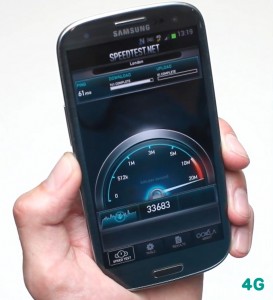
  • EE’s 4G now available to around 45 percent of the UK population

    EE (formerly Everything Everywhere) was created by the merger of the T-Mobile and Orange businesses in 2010, becoming the UK’s largest mobile network operator in the process. It’s also currently the only provider offering 4G LTE connectivity in the UK, and has just expanded its 4G data service to cover an additional nine towns and cities.

    This expansion means 4G EE is now available in a total 27 UK locations, making it — according to EE at least — accessible to nearly half of the UK’s population.

    “As the first operator to bring 4G to the UK, it is important that we make it accessible to as much of the population as possible, as quickly as possible,” Olaf Swantee, CEO of EE said, regarding the expansion. “To be ahead of schedule and covering approximately 45 percent of the population within just 90 days of the launch is a great achievement for our network team.”

    The new locations to gain access to 4G are Amersham, Bolton, Chelmsford, Hemel Hempstead, Southend-on-Sea, Stockport, Sunderland, Sutton Coldfield and Wolverhampton.

  • Why 2013 won’t be the year for super speedy WiGig products

    There could be a delay in planned WiGig products that transfer data at super fast speeds up to 6 gigabits-per-second across short distances. What’s the holdup? According to Mobile World Live: The merger between the WiGig Alliance and the Wi-Fi Alliance, which was announced earlier this month.

    wigigAlthough the merger activities may delay products, the two groups working together will help product development and adoption of WiGig technology. This will make it easier for product manufacturers to use both standard Wi-Fi and WiGig in devices and make it simple for consumer to understand the different wireless capabilities since WiGig is very different.

    The technology is meant for fast transfers between devices close to each other or in the same room by using 60 GHz spectrum. Expect to see wireless computer docks, easier ways to stream content from a mobile device to a large screen and other similar use cases where WiGig can replace today’s data transfer cables.

    WiGig started as a 2009 initiative with bold plans to deliver products as early as 2010, but that date came and went a while ago. And recently, the WiFi Alliance has spent much effort on the new 802.11ac standard for Wi-Fi, which uses wider channels and multiple data streams to boost wireless speeds and range well beyond 802.11n products. But this market is just getting started, so 802.11ad product certifications that include WiGig functionality, originally expected for 2013, are looking like a 2014 event at this point.

    According to a video interview with Dr Ali Sadri, WiGig Alliance Chair,  “Based on our existing plan we should have certification in place later this year so there’s a little slip of the programme, maybe even beginning of ‘14.”

  • Virgin Media to begin charging for Wi-Fi on the London Underground

    Introduced in time for last year’s Olympics, Virgin Media’s free Wi-Fi service has proven to be a big hit with people travelling on the tube, but all good things come to an end, and this particular gravy train is about to terminate. Well, for some people at least.

    Although Virgin will be ending its free-to-all Wi-Fi service from Tuesday (29 January), the good news is if you’re a Virgin Media broadband or mobile customer, or are with EE (Orange and T-Mobile), or Vodafone, you’ll be able to continue to use it for gratis. So that’s bad news for O2 and 3 subscribers in particular.

    If you’ve used the free Wi-Fi before and are on one of the supported carriers, you should receive an email telling you the service will still be free for you (if you haven’t already). If you’re with another operator, you can still use the Wi-Fi but it will cost you £2 for a day’s access, £5 for a week, or £15 for a monthly Virgin Media Wi-Fi Pass.

    Virgin plans to beef up its Wi-Fi service over the coming months, adding hotspots to a further 28 stations by the end of the year.

  • Broadband options around Marshall

    For the second in her Broadband series, Deb Rau from the Marshall Independent focused on broadband options available in the area. Cable (first in the form of Prairiewave, now Knology) has been a big players in towns such as Tracy.

    I love the look back in her article…

    “Before that [cable], there was dial-up. It was 56 kilobits per second, if you could get it,” said David Spencer, finance director for the city of Tracy, and a local resident. Getting a telecommunications hookup in town was “very big, not just for the Internet, but for telephones and cable television too.”

    Remember when you had to convince an Internet service provider to bring dialup to your area? I was one of the people you called if you wanted MRNet to come to your town. I remember getting the calls and I remember visiting areas where the Internet was a long distance phone call. It wasn’t that long ago.

    The article recognizes the expense of bringing infrastructure to rural areas where the population density is lower, which means fewer customers per mile, which in turn means you have to cover more miles. But that being said, local providers in the area have talked about customer base tripling in the last 5 years.

    Cable isn’t the only option, wireless is mentioned too…

    Some groups have opted to pursue alternatives to cable-based Internet in southwest Minnesota, however. About four years ago, the Southwest/West Central Service Cooperative invested in a system of microwave wireless towers to provide high-speed Internet to a total of 31 school districts in the region. Minnesota Valley Television also uses a wireless network to bring Internet service to rural areas.

    The MVTV wireless network was another good option for Tracy.

    MVTV received ARRA funding so their area is about to expand. They weren’t the only providers in Southwest Minnesota to receive funding. The Southwest Minnesota Broadband Group has received moved to deploy fiber – but maybe I’m getting ahead of the Marshall series on broadband.

  • So Long, Unlimited Data: Verizon Wants Tiered 4G Plans [Verizon]

    Yesterday, Verizon Wireless big boss Lowell McAdam told investors that when 4G hits, unlimited data plans won’t make sense anymore. Instead, buying “buckets” of data—where you’d purchase a set number of monthly megabytes—is the model of the future. More »


    VerizonWirelessVerizonLowellMcadamDomain NamesDisputed Domain Names