Blog

  • Commissioning: In Pursuit of the Truly Green Building

    WorldChanging has an article on green buildings, looking at the practice of “commissioning,” in which an engineer monitors the efficiency of a building from its design through its initial operation, in order to reduce long-term energy usage by buildings – Commissioning: In Pursuit of the Truly Green Building.

    In a different world, it could be a reality television show — “Buildings On Trial,” with a street-savvy engineer going into skyscrapers, factories, offices and other commercial buildings to find the dumb mistakes that make them waste energy and produce a disproportionate share of the nation’s global warming emissions.

    And in almost every case, even new buildings proudly displaying a LEED “green building” plaque by the front door, the engineer would come back out with a list of energy hog culprits: Here’s the ventilation system fan installed backwards, so it blows full force into another fan blowing in the right direction. Here’s the control system set up so heating and cooling systems both work at once, like driving with your feet on the brakes and the accelerator at the same time. Here are the stuck dampers that prevent the building from drawing on outside air when the temperature is right.

    Such mistakes are commonplace even in the best buildings — and often costly. In one case, says Dave Moser of Portland Energy Conservation, Inc., an Oregon nonprofit, it cost a building owner $5,000 to fix stuck dampers — and cut $50,000 off the annual energy bill. In a case of simultaneous heating and cooling at an 85,000-square-foot academic building, a minor programming fix cost almost nothing and saved $100,000 a year in wasted energy, according to Mark Miller of Strategic Building Solutions, a Connecticut company.

    The business of finding and fixing these mistakes is called “building commissioning,” a term borrowed from the standard naval practice of commissioning a new ship with sea trials to determine whether it’s fit for service. People started doing roughly the same thing with non-residential real estate in the mid-1990s, as buildings with computer-controlled systems became almost as complex as ships at sea. Commissioning frequently involves no more than a few weeks of testing out systems. But in the most complete form, the commissioning agent works with architects in the design stage, to help save money by specifying properly sized energy systems, then follows the building through construction, trains the operating staff, and tracks energy performance in different seasons through the first year of operation. Older buildings now also go through retro-commissioning, in search of improved efficiency.

    But if you imagine that real estate developers must be lining up for this service — if only to save money, or determine whether they are getting the building they paid for — you would be mistaken. Even now, well under 5 percent — and probably closer to 1 percent — of new commercial buildings actually go through the process. Projects seeking certification under the Leadership in Energy and Environmental Design (or LEED) program, managed by the U.S. Green Building Council, can earn extra points by going through “enhanced” commissioning. But they’re only required to do “fundamental” commissioning — a sort of commissioning-lite, potentially performed not by a third party, but by an “independent” employee of the construction manager whose contractors made the mistakes in the first place.

    And yet building commissioning is “arguably the single-most cost-effective strategy for reducing energy, costs, and greenhouse gas emissions in buildings today,” according to a 2009 report from Lawrence Berkeley National Laboratory. If applied to the nation’s entire non-residential building stock, including retro-commissioning of older buildings, it would yield $30 billion in potential energy savings every year by 2030, the study projects, and avoid 340 million tons of global warming emissions annually. To put the latter number in perspective, other studies project that the United States is now on a path to increase global warming emissions by more than a third, up to 9.7 billion metric tons a year by 2030. Roughly 35 percent of emissions come from heating, cooling, and providing electric power for buildings and homes, split evenly between commercial and residential. So building commissioning is hardly the only remedy required. But the potential savings ought to make it one of the most attractive.

    Why isn’t it more popular? A lot of developers, and even some building efficiency experts, have simply never heard of commissioning. Others have gotten turned off, says Glenn Hansen of Portland Energy Conservation, Inc., by early experiences in which “a fairly junior engineer” would go through a building checking off boxes on a clipboard. In a 2008 study by the New Buildings Institute, the energy performance in many LEED-certified “green” buildings was actually worse than in the average conventional building, probably because inexperienced people doing “fundamental” conditioning had failed to detect problems.


  • Justin Timberlake Or Lindsay Lohan — The Next “American Idol” Judge?!

    Can you believe that it’s Simon Cowell’s last night as the acid-tongued voice of reason on American Idol? Well, here’s something you’ll believe even less: Justin Timberlake are Lindsay Lohan are reportedly being lined up as his potential replacements!

    While Justin — a former Mouseketeer and boy bander — managed to carve his tenure with Nsync into a wildly-successful solo career, it is scandal-bitten actress/sometimes singer Lohan who is the favorite to join the talent contest once Cowell’s reign ends with tonight’s Season 9 finale, a anonymous FOX executive squealed to London’s The Mirror on Wednesday.

    “‘American Idol’ was our top show and a lot of that had to do with the love-hate relationship between Paula Abdul and Simon Cowell. Then Paula left and now Simon’s going, too. We want a regular explosive dynamic between the judges. Lindsay has music experience and unpredictability.”

    Either Crystal Bowersox or Lee DeWyze will be crowned this season’s Idol on tonight’s show.


  • Dell Streak gets official announcement & specs

    After what felt like years of speculation, the Dell Streak is officially official. As in Dell has announced it and it’s coming to O2 in the U.K. in early June and the US later this summer (likely AT&T). The announcement is completely in line with what Dell CEO Michael Dell told us a couple weeks back and the specs are similar to all the leaked info we’ve seen in the past months. But there’s nothing like a good ‘ol press release to put the final stamp on it.

    The official specs of the Dell Streak:

    • 1 GHz Qualcomm Snapdragon Processor
    • 5-inch WVGA capacitive touchscreen
    • 5-megapixel camera with LED Flash
    • 16GB internal memory with microSD support
    •  Wi-Fi, GPS, Bluetooth 2.1
    • 7.2 Mbps HSDPA
    • launching with Android 1.6, update to Android 2.2 by end of the year

    The only thing we don’t have is pricing, and we hope Dell doesn’t mess it up. All you folks across the pond will find the Streak available online and in stores from O2, Carphone Warehouse, and Dell.co.uk. Us Americans have to wait just a little bit longer. Thanks Dell. [businesswire]

    This is a post by Android Central. It is sponsored by the Android Central Accessories Store

  • Rico Butler’s Dead Body Found

    A football player from the Hilliard Davidson High School named Rico Butler was found dead in a quarry near Dublin and Trabue roads.

    According to reports, the 17-year-old star player’s body was recovered 11 p.m. Tuesday. Rico Butler went to the quarry with his friends for swimming and when he drowned, his friends spent whole one hour searching him but they failed to find him. They informed police for help at around 8 p.m. The rescue divers started searching for the kid and found his dead body three hours later in the quarry near the Trabue roads.

    The news spread like wild fire through text messages and calls and dozens of Hilliard Davidson student started gathering near the quarry. They carried flashlights with an intention to help the divers find Rico Butler. His parents also arrived at the quarry after hearing the news.

    It was the second Hilliard Davidson student to lose his life within the past six months. Earlier in December, 16-year-old, Arthur Lane, lost his life after hitting with a train.

    Related posts:

    1. Jennifer Aniston: Looking For The Perfect Guy, Want To Start A Family Soon
    2. George Huguely Accused of Murder of Schoolmate and Ex-girlfriend
    3. Puerto Rico earthquake damaged homes and roads

  • Dancing With the Stars Winner – Nicole Scherzinger and Derek Hough

    Nicole Scherzinger and Derek Hough are now hailed as the winners of “Dancing With the Stars” as they dominated the 10th season . After an ardous 12 weeks of the competion, we saw the pair – Hough and Scherzinger – perform a high-energy jive for their final dance that earned a perfect score of 30 which made head judge Len Goodman say, “There can only be one winner of ‘Dancing With the Stars’. It should be you.” Pussycat Doll Nicole Scherzinger said after the show, “I feel like I just won a Grammy. A dancing Grammy!”

    The pair kissed the mirror ball trophy as they were raised by other dancers.  “Win or lose tonight, I was just very, very happy with the entire season,” said Hough. “To get the trophy at the end of it, that was just amazing.” Hough was a two-time “Dancing” champ. Scherzinger said that the personal lessons which she learned during the season were more valuable than the trophy. She exclaimed, “This has been probably the greatest reward personally, this whole personal journey. I’ve learned so much about myself. I’ve learned so much about Derek Hough. He’s made me a better person through this.” She added that she plans to work on winning a real Grammy after this season’s Dancing With the Stars.

    Related posts:

    1. Who Won Dancing With the Stars 2010?
    2. Who Won Dancing With the Stars 2010? Congratulations Nicole Scherzinger!
    3. Dancing with the Stars 2010 Winner!! Lets Find Out

  • Seattle Genetics, Growing Up in a Hurry With Millennium, Aims to Make Most of Cancer Drug

    sgen1
    Luke Timmerman wrote:

    Seattle Genetics has spent more than a decade thinking about cutting-edge biology, chemistry, and clinical trials to prove its drug candidates work. Then last week, for the first time in nine years I’ve been reporting on CEO Clay Siegall, he talked with passion about things like manufacturing, inventory, quality assurance, quality control, and insurance reimbursement.

    It all might sound awfully boring. But it’s a sure sign that Bothell, WA-based Seattle Genetics (NASDAQ: SGEN), with help from its partner Millennium: The Takeda Oncology Company, is learning fast what it takes to be a mature, commercial biotech company. And while it may be a slow news period for Seattle Genetics (NASDAQ: SGEN), it has to grow up in a hurry, because it is only a few months away from finding out if it has really struck gold with a new therapy for Hodgkin’s disease and related lymphomas.

    The big story at Seattle Genetics and Millennium centers on brentuximab vedotin, an “empowered antibody” that specifically seeks out cancer cells and unleashes a potent toxin on them for extra tumor-killing punch. This concept has not lived up to its hype over the past 30 years, but by the second half of 2010, Seattle Genetics and Millennium will learn from a pivotal clinical trial of 100 patients how well this therapy really helps sick patients. If successful, the companies will be able to seek FDA approval in early 2011, and potentially get a faster-than-usual six-month review that the agency sometimes gives to drugs with lifesaving potential. Patients, employees, investors, and an entire field of research is counting on Seattle Genetics and Millennium to deliver the goods. So Siegall & Co. are quietly trying to lay the groundwork now to make sure they are truly ready to make sure this drug is a hit.

    Clay Siegall

    Clay Siegall

    “Our drug has a chance to be a very important drug for patients,” Siegall says.

    For those just getting up to speed on this story, here’s a quick refresher. Seattle Genetics, founded in 1998, had its breakout moment in June 2008 at the American Society of Clinical Oncology meeting. That’s when the company released preliminary results showing its experimental treatment was able to completely wipe out or partially shrink tumors for 12 of 38 patients, with mild to moderate fatigue, cough, and nausea as side effects. Results only got better when researchers enrolled a few more patients, and longer-term follow-up data arrived.

    A lot of things have fallen into place for Seattle Genetics as a business ever since that appearance at ASCO. It raced to the FDA in early 2009 with a proposal for a pivotal clinical trial, and won the agency’s blessing for the study design. The company got this trial up and running at 27 locations in North America and Europe, and completed enrollment six months ahead of schedule—a lightning pace in oncology, where it’s extremely difficult to enroll patients on time. The company raised more than $200 million from investors in 2009, during a dark period in the overall biotech financial market. In December, Millennium wrote a $60 million upfront check to Seattle Genetics to form a partnership, which left the smaller company with 100 percent of the commercial rights to the experimental drug in the North American market.

    Much of what has happened since then has been the sort of behind-the-scenes blocking and tackling that biotech companies need to do, and often fail to do, as they prepare to commercialize a new drug. Part of that effort is in hiring new types of people, with skills in things like …Next Page »


  • Projeção: Novo Opel Astra cupê

    Proje�§�£o do Opel Astra cup�ª

    Depois de conhecido e lançado a versão hatch do novo Opel Astra, todas as atenções recaem agora para a possível, especulada e tão aguardada versão esportiva cupê do modelo de maior sucesso da companhia.

    Tanto é que essa já é a segunda projeção feita para o possível Astra cupê, que poderá receber os nomes Astra GTC, Astra Coupé ou ainda Calibra. De qualquer forma, se realmente for lançado, o modelo não deverá ficar com um visual tao distante dessa projeção.

    Aproveitando-se do visual já esportivo de sua versão hatch, o Astra cupê da projeção apenas salientou alguns pontos a fim de lhe conferir mais esportividade e agressividade, como seu teto mais baixo e para-choque e saias laterais redesenhadas. Além disso, o Astra cupê recebeu, ou melhor, excluiu as duas portas traseiras.

    Seu desempenho em relação ao hatch provavelmente deverá ser melhorado, e a especulações são de que o Astra cupê deverá receber um motor de 2.0 litros turbo com um potencia de 190 a 200 cavalos, possibilitando-o realizar a aceleração de 0 a 100 km/h em torno de 8 segundos e ter uma velocidade máxima em torno de 240 km/h.

    Fonte: TopSpeed


  • New Intel Tablet Chips, Nvidia Slates Expected at Computex

    Computex, the big consumer electronics show in Taiwan, is approaching and it’s expected the big focus will be on new tablets. Several companies will be unveiling slates designed to compete with the iPad, and while some of them will be based on technology from ARM and Nvidia there will be some Wintel tablets, too. Intel is expected to announce some silicon designed specifically for tablet products, and it is unknown what processor products this might be.

    Two major manufacturers had announced early this year the upcoming release of Android tablets based on Nvidia Tegra technology, but DigiTimes is reporting that pressure from Intel and Microsoft will result in Windows 7 slates from the companies being shown. Asustek and MSI are both major players in the personal computer space, and the race to get a slate to market on any platform validates how hot the segment has become. We were impressed with the Tegra tablets we saw in action at the CES back in January.

    This week an Intel executive mentioned that the company will be announcing at Computex new products aimed at tablets specifically. Not much is known about Intel’s planned announcement but it’s clear the company is not ignoring the hot category.

    Related content on GigaOM Pro (sub. req’d): Can Anyone Compete With the iPad?


    Atimi: Software Development, On Time. Learn more about Atimi »

  • Yes, the version of Froyo we’re using isn’t final, but you knew that, right?

    Froyo not a final build

    Yes, folks, we’re well aware that the Froyo ROM we’re all running on our Nexus Ones isn’t a final build. We said as much on Monday, and it was confirmed by Google just a couple of hours later and has been reiterated several times since.

    Think it through: The Froyo update first started showing up on a few devices — journalists no less — and these were devices that originally were distributed by Google. So the Goog knew the IMEIs — a unique identifier of the phone — and started pushing out early updates. It was a targeted distribution.

    When an over-the-air update is pushed, it actually just tells your phone "Go to this Internet address to download the update." From that point, it’s just a matter of finding the download location (which takes about 30 seconds if you know how), and that’s the ball game. The rest of us now have this early version of Froyo.

    Rest assured, we’ll see a more final build soon, and hopefully we’ll have the source code released before then so that our favorite chefs can get to cooking. As for when a specific phone will get a Froyo update, well, we don’t know. And it’s really unlikely anybody else does at this point either. So be careful in reading those random posts from customer-service bots or some guy in a store. We thought we’d taught you better than that. 🙂

    This is a post by Android Central. It is sponsored by the Android Central Accessories Store

  • Government Spending May Hurt the Private Sector

    This morning, Tyler Cowen links to an interview with Joshua Coval of Harvard Business School on the effect of earmarks on the private business environment of a state.  It turns out that the American political system provides us with a little natural experiment:  when a member of Congress becomes chair of a powerful committee, earmarks to that member’s state or district increase dramatically.  But the result of this spending is more than a little surprising:

    Sean Silverthorne: First, a little
    bit about your empirical approach to the research. Why did you decide
    to study changes in congressional committee chairmanships?

    Joshua Coval: Our original goal was to investigate
    how politically connected firms benefit from increases in the power of
    their representatives. A benefit in focusing on changes in committee
    chairmanships is that their timing is largely exogenous from the
    perspective of the ascending chairman and his constituents. That is, a
    change in chairmanship can only occur if the incumbent retires or is
    voted out–both of which are entirely independent of what is currently
    happening in the ascending chairman’s state.

    Q: One of your findings was that the chairs
    of powerful congressional committees truly bring home the bacon to their
    states in the forms of earmark spending. Can you give a sense of how
    large this effect is?

    A: Sure. The average state experiences a 40 to 50
    percent increase in earmark spending if its senator becomes chair of one
    of the top-three committees. In the House, the average is around 20
    percent. For broader measures of spending, such
    as discretionary state-level federal transfers, the increase from being
    represented by a powerful senator is around 10 percent.

    Q: Perhaps the most intriguing finding, at
    least for me, was the degree and consistency to which federal spending
    at the state level seemed to be connected with a decrease in corporate
    spending and employment. Did you suspect this was the case when you
    started the study?

    A: We began by examining how the average firm in a
    chairman’s state was impacted by his ascension. The idea was that this
    would provide a lower bound on the benefits from being politically
    connected. It was an enormous surprise, at least to us, to learn that
    the average firm in the chairman’s state did not benefit at all from the
    increase in spending. Indeed, the firms significantly cut physical and
    R&D spending, reduce employment, and experience lower sales.

    The results show up throughout the past 40 years, in large and small
    states, in large and small firms, and are most pronounced in
    geographically concentrated firms and within the industries that are the
    target of the spending.

    Obviously, libertarians will find this result congenial. But frankly, it has me stonkered.  Earmarks are an exogenous gift of cash from outside the state–which in turn means a transfer of real resources into the state.  Why would private activity go down?

    I can tell a story about crowding out, where the federal money either does something that the private sector might have done anyway, or hires away resources (particularly skilled labor) from private firms.  If the government is monopolizing the local supply of cranes and crane operators in order to build a new sewage treatment plant, your construction project may not get built.  And because government funds are for discrete projects, and future funds are uncertain–your chairman may get unelected, or their party may lose power–it’s probably hard to get firms or workers to relocate to your area in order to pick up the slack.

    I can even tell a slightly more exotic story where there’s what economists call a “resource curse” to federal funds.  Countries that have large deposits of natural resources are not, as you would expect, richer and happier as a result; rather the reverse.  It turns out that when you have a fat supply of practically free money, the elites spend all their time thinking about how to divert that money into their pockets, and none of their time thinking about how to build good political and economic institutions.  And because the government can support itself without tax revenues, it is not made accountable to the citizenry it is betraying.  Norway is the great exception to this rule–but Norway had very strong institutions before it had fossil fuels.

    The new thinking is that foreign aid may involve a resource curse as well.  And you can argue that perhaps this argument extends to federal largesse–the more money the state or district receives directly from the federal government, the less incentive it has to maximize the efficiency of its own institutions.

    These are interesting stories, but do they explain a 15% drop in capital spending?  That’s a pretty big drop to be caused by something as seemingly innocuous as a new road project.  I remain puzzled, and would like to see a lot more work done in this area.


    Email this Article
    Add to digg
    Add to Reddit
    Add to Twitter
    Add to del.icio.us
    Add to StumbleUpon
    Add to Facebook


    United StatesUnited States CongressTyler CowenHarvard Business SchoolCongress

  • Obama job approval 48-43; first time ahead this year: Quinnipiac poll

    Below, from release….

    OBAMA APPROVAL TIPS POSITIVE FOR FIRST TIME THIS YEAR,
    QUINNIPIAC UNIVERSITY NATIONAL POLL FINDS;
    MORE VOTERS APPROVE OF KAGAN SUPREME COURT PICK

    American voters approve 48 – 43 percent of the job President Barack Obama is doing, up from a negative 44 – 46 percent April 21, the first time since December that more voters give him a thumbs up rather than thumbs down, according to a Quinnipiac University poll released today.
    But voters say 74 – 21 percent that the U.S. economy is in a recession now and disapprove 50 – 44 percent of the way President Obama is handling the economy, the independent Quinnipiac (KWIN-uh-pe-ack) University survey finds.
    Voters approve 48 – 30 percent, with 22 percent undecided, of Obama’s nomination of Elena Kagan to the Supreme Court. Men approve 45 – 34 percent and women approve 50 – 27 percent. Republicans disapprove 57 – 22 percent, but Kagan wins 73 – 10 percent backing from Democrats and 45 – 31 percent support from independent voters.
    American voters also say 42 – 36 percent that they would vote for a Democrat rather than a Republican in this year’s Congressional elections, reversing a 44 – 39 percent Republican lead March 24.
    Obama’s policies have hurt rather than helped their personal financial situation, voters say 29 – 16 percent, with 54 percent who say the policies have made no difference. Going forward, voters expect Obama’s policies to hurt rather than help them personally 36 – 28 percent, with 32 percent who expect no difference.
    “The increase in President Barack Obama’s job approval is a welcome step for the White House. His ratings have been in the no man’s land of just below parity for some time and now the question is whether this is the beginning of an upward trend or just a blip,” said Peter A. Brown, assistant director of the Quinnipiac University poll.
    -more-
    Quinnipiac University Poll/May 26, 2010 – page 2
    “The fact that three out of four American voters still see the nation in recession, despite the claims from the so-called experts, highlights the disconnect between Wall Street, Washington D.C.’s K St. and Main Street,” said Brown.
    “For Obama to get his job approval back over 50 percent, where the White House would like to be, he needs to convince Joe and Jill Six-pack that his programs are helping them.”
    American voters trust Obama 45 – 36 percent over Congressional Republicans to handle the economy. Independent voters trust Obama more 38 – 34 percent.
    There is a noticeable gender gap in Obama’s approval rating: Men disapprove 48 – 45 percent, while women rate him positively 51 – 39 percent. His 48 – 43 percent disapproval from independent voters is a sizable jump from a 50 – 38 percent disapproval in April and responsible for much of the President’s overall increase. Democrats approve of his performance 78 – 13 percent while Republicans disapprove 77 – 17 percent.
    “On the economy, President Obama gets slightly less negative grades: 50 – 44 percent disapprove, compared to 55 – 40 percent disapproval in April. And on creating jobs his 56 – 38 percent disapproval rating last month has improved to 51 – 40 percent disapprove,” Brown said.
    A total of 70 percent of American voters are “somewhat dissatisfied” or “very dissatisfied” with the way things are going in the nation today. And 80 percent say the way things are going makes them more likely to vote this November.
    Looking at the Kagan nomination, voters split 43 – 43 percent on whether Senators should consider her views on controversial issues, or just her qualifications for the Supreme Court. But voters say 50 – 37 percent that Senators who disagree with Kagan’s views would not be justified using a filibuster to block her nomination.
    Looking at other aspects of Obama’s job performance, American voters:
    • Approve 48 – 43 percent of the way he is handling foreign policy;
    • Disapprove 51 – 44 percent of his handling of health care;
    • Approve 45 – 40 percent of his handling of Afghanistan;
    • Approve 49 – 41 percent of his handling of terrorism.
    From May 19 – 24, Quinnipiac University surveyed 1,914 registered voters nationwide with a margin of error of +/- 2.2 percentage points.
    The Quinnipiac University Poll, directed by Douglas Schwartz, Ph.D., conducts public opinion surveys in Pennsylvania, New York, New Jersey, Connecticut, Florida, Ohio and the nation as a public service and for research.
    For more data or RSS feed- http://www.quinnipiac.edu/polling.xml, call (203) 582-5201, or follow us on Twitter.

    1. If the 2010 election for the U.S. House of Representatives were being held today, would you vote for – the Republican candidate or the Democratic candidate in your district?

    Tot Rep Dem Ind Men Wom Wht Blk His

    Republican 36% 85% 5% 33% 40% 32% 42% 12% 21%
    Democrat 42 5 87 30 39 45 35 81 52
    SMONE ELSE(VOL) 3 1 1 6 4 3 4 – 3
    WLDN’T VOTE(VOL) 1 – – 2 1 1 1 – –
    DK/NA 18 9 7 29 17 19 19 6 24

    AGE IN YRS……. INCOME…………. POL PHIL………
    18-34 35-54 55+ <50 50-100 >100K Lib Mod Con

    Republican 27% 42% 37% 28% 42% 50% 8% 27% 65%
    Democrat 54 38 39 49 40 35 78 48 16
    SMONE ELSE(VOL) 1 4 3 4 2 3 2 5 2
    WLDN’T VOTE(VOL) 2 – 1 1 1 1 2 1 –
    DK/NA 17 15 20 19 15 11 11 21 17

    TREND: If the 2010 election for the U.S. House of Representatives were being held today, would you vote for the Republican candidate or the Democratic candidate in your district?

    May 26 Mar 24 Jul 2 Jun 4 Apr 29
    2010 2010 2009 2009 2009

    Republican 36 44 34 32 34
    Democrat 42 39 42 42 41
    SMONE ELSE(VOL) 3 1 2 2 1
    WLDN’T VOTE(VOL) 1 1 1 1 1
    DK/NA 18 16 21 22 22

    2. Do you approve or disapprove of the way Barack Obama is handling his job as President?

    Tot Rep Dem Ind Men Wom Wht Blk His

    Approve 48% 17% 78% 43% 45% 51% 40% 90% 67%
    Disapprove 43 77 13 48 48 39 51 8 24
    DK/NA 9 6 9 9 7 10 9 2 9

    AGE IN YRS……. INCOME…………. POL PHIL………
    18-34 35-54 55+ <50 50-100 >100K Lib Mod Con

    Approve 60% 46% 42% 51% 45% 50% 79% 58% 19%
    Disapprove 30 47 49 40 47 45 12 33 75
    DK/NA 10 7 9 9 8 6 9 9 6

    TREND: Do you approve or disapprove of the way Barack Obama is handling his job as President? (*High also 59% Mar 2009)

    PostVt PreVt APPROVE…….
    Poll Poll High Low
    May 26 Apr 21 Mar 25 Mar 25 Feb 11 Jun 4 Apr 21
    2010 2010 2010 2010 2010 2009* 2010

    Approve 48 44 45 46 45 59 44
    Disapprove 43 46 46 49 46 31 46
    DK/NA 9 10 9 6 9 10 10

    INDEPENDENTS…………………………………..
    PostVt PreVt APPROVE……
    Poll Poll High Low
    May 26 Apr 21 Mar 25 Mar 25 Feb 11 Jun 4 Dec 9
    2010 2010 2010 2010 2010 2009 2009

    Approve 43 38 40 40 40 57 37
    Disapprove 48 50 44 53 49 30 51
    DK/NA 9 12 15 7 10 13 11

    3. Do you approve or disapprove of the way the Democrats in Congress are handling their job?
    Tot Rep Dem Ind Men Wom Wht Blk His

    Approve 34% 8% 64% 25% 31% 36% 27% 66% 50%
    Disapprove 57 86 26 65 62 52 64 22 37
    DK/NA 9 6 11 10 6 12 9 13 14

    AGE IN YRS……. INCOME…………. POL PHIL………
    18-34 35-54 55+ <50 50-100 >100K Lib Mod Con

    Approve 43% 33% 28% 38% 30% 36% 60% 37% 16%
    Disapprove 47 59 62 50 63 59 32 51 79
    DK/NA 10 8 10 12 7 5 8 12 5

    TREND: Do you approve or disapprove of the way the Democrats in Congress are handling their job?
    PostVt PreVt APPROVE…….
    Poll Poll High Low
    May 26 Mar 25 Mar 25 Feb 11 Jan 13 Mar 4 Mar 25
    2010 2010 2010 2010 2010 2009 2010

    Approve 34 36 30 28 32 45 30
    Disapprove 57 55 62 63 59 45 62
    DK/NA 9 9 8 9 9 10 8

    4. Do you approve or disapprove of the way the Republicans in Congress are handling their job?
    Tot Rep Dem Ind Men Wom Wht Blk His

    Approve 26% 48% 16% 20% 25% 28% 26% 27% 30%
    Disapprove 62 41 73 69 67 58 62 65 55
    DK/NA 11 11 10 11 8 14 11 8 15

    AGE IN YRS……. INCOME…………. POL PHIL………
    18-34 35-54 55+ <50 50-100 >100K Lib Mod Con

    Approve 26% 29% 24% 25% 27% 31% 17% 21% 38%
    Disapprove 61 61 65 61 65 61 74 67 53
    DK/NA 13 9 11 14 8 8 9 12 9

    TREND: Do you approve or disapprove of the way the Republicans in Congress are handling their job?
    PostVt PreVt APPROVE……
    Poll Poll High Low
    May 26 Mar 25 Mar 25 Feb 11 Jan 13 Mar 25 Oct 8
    2010 2010 2010 2010 2010 2010 2009

    Approve 26 34 31 28 32 34 25
    Disapprove 62 58 60 61 58 58 64
    DK/NA 11 8 9 11 11 8 11

    5. In general, how satisfied are you with the way things are going in the nation today? Are you very satisfied, somewhat satisfied, somewhat dissatisfied, or very dissatisfied?

    Tot Rep Dem Ind Men Wom Wht Blk His

    Very satisfied 3% 2% 5% 2% 3% 3% 2% 9% 6%
    Smwht satisfied 26 13 44 21 24 28 21 53 28
    Smwht dissatisfied 31 28 31 34 30 32 33 20 31
    Very dissatisfied 39 56 18 43 41 36 43 17 33
    DK/NA 1 1 1 – 1 2 1 – 1

    AGE IN YRS……. INCOME…………. POL PHIL………
    18-34 35-54 55+ <50 50-100 >100K Lib Mod Con

    Very satisfied 4% 2% 3% 3% 4% 4% 4% 3% 2%
    Smwht satisfied 37 22 23 29 23 25 45 31 11
    Smwht dissatisfied 32 31 31 31 32 33 32 37 25
    Very dissatisfied 26 43 42 36 41 37 17 28 61
    DK/NA 1 1 1 1 1 1 2 – 1

    TREND: In general, how satisfied are you with the way things are going in the nation today? Are you very satisfied, somewhat satisfied, somewhat dissatisfied, or very dissatisfied?
    VERY+SMWHT SAT
    High Low
    May 26 Apr 21 Mar 25 Mar 24 Feb 11 Dec 11 Nov 13
    2010 2010 2010 2010 2010 2001 2008

    Very satisfied 3 3 4 3 2 21 2
    Smwht satisfied 26 28 25 26 24 47 14
    Smwht dissatisfied 31 29 28 29 33 19 38
    Very dissatisfied 39 40 41 41 40 10 44
    DK/NA 1 – 2 1 1 3 2
    6. Does the way things are going in the nation today make you more likely or less likely to vote in the elections in November this year?

    Tot Rep Dem Ind Men Wom Wht Blk His

    More likely 80% 89% 81% 77% 81% 80% 80% 91% 73%
    Less likely 7 2 5 10 7 6 6 2 13
    No diff(VOL) 12 9 13 11 11 13 12 5 10
    DK/NA 1 – 1 1 1 1 1 1 3

    AGE IN YRS……. INCOME…………. POL PHIL………
    18-34 35-54 55+ <50 50-100 >100K Lib Mod Con

    More likely 82% 82% 79% 80% 83% 86% 80% 80% 84%
    Less likely 7 7 6 8 4 6 6 7 7
    No diff(VOL) 10 11 14 10 12 8 14 11 9
    DK/NA 1 – 1 1 – – – 1 1

    7. Do you approve or disapprove of the way Barack Obama is handling – the economy?

    Tot Rep Dem Ind Men Wom Wht Blk His

    Approve 44% 16% 73% 38% 42% 46% 37% 78% 57%
    Disapprove 50 81 22 54 54 46 57 18 34
    DK/NA 6 2 6 8 4 8 6 4 9

    AGE IN YRS……. INCOME…………. POL PHIL………
    18-34 35-54 55+ <50 50-100 >100K Lib Mod Con

    Approve 53% 41% 39% 45% 42% 49% 73% 54% 18%
    Disapprove 39 55 55 48 54 48 19 39 79
    DK/NA 8 4 6 7 4 3 7 7 3

    TREND: Do you approve or disapprove of the way Barack Obama is handling the economy?

    APPROVE……
    High Low
    May 26 Apr 21 Mar 25 Feb 11 Jan 13 Mar 4 Mar 25
    2010 2010 2010 2010 2010 2009 2010

    Approve 44 40 39 41 41 57 39
    Disapprove 50 55 57 54 54 33 57
    DK/NA 6 5 5 5 6 10 5

    8. Do you approve or disapprove of the way Barack Obama is handling – foreign policy?

    Tot Rep Dem Ind Men Wom Wht Blk His

    Approve 48% 19% 78% 41% 47% 48% 41% 84% 63%
    Disapprove 43 71 14 49 47 39 50 7 32
    DK/NA 9 10 8 9 6 12 10 9 5

    AGE IN YRS……. INCOME…………. POL PHIL………
    18-34 35-54 55+ <50 50-100 >100K Lib Mod Con

    Approve 58% 46% 41% 49% 45% 54% 78% 57% 22%
    Disapprove 35 44 48 40 47 42 17 33 70
    DK/NA 7 9 11 11 8 4 5 10 8

    TREND: Do you approve or disapprove of the way Barack Obama is handling foreign policy?

    APPROVE…….
    High Low
    May 26 Apr 22 Mar 25 Feb 10 Jan 13 Apr 29 Jan 13
    2010 2010 2010 2010 2010 2009 2010

    Approve 48 48 46 46 45 57 45
    Disapprove 43 42 43 43 46 32 46
    DK/NA 9 10 12 11 9 11 9

    9. Do you approve or disapprove of the way Barack Obama is handling – health care?

    Tot Rep Dem Ind Men Wom Wht Blk His

    Approve 44% 12% 75% 38% 42% 45% 35% 88% 51%
    Disapprove 51 86 19 56 53 49 60 8 38
    DK/NA 6 2 7 7 4 6 5 4 11

    AGE IN YRS……. INCOME…………. POL PHIL………
    18-34 35-54 55+ <50 50-100 >100K Lib Mod Con

    Approve 56% 39% 40% 45% 41% 43% 78% 50% 15%
    Disapprove 38 58 53 47 56 56 16 43 81
    DK/NA 6 3 7 8 3 1 6 6 4

    TREND: Do you approve or disapprove of the way Barack Obama is handling health care?

    PostVt PreVt APPROVE…….
    Poll Poll High Low
    May 26 Apr 21 Mar 25 Mar 25 Feb 11 July 2 Jan 13
    2010 2010 2010 2010 2010 2009 2010

    Approve 44 40 44 36 35 46 35
    Disapprove 51 55 50 58 58 42 58
    DK/NA 6 5 6 6 6 13 6

    10. Do you approve or disapprove of the way Barack Obama is handling – the situation in Afghanistan?

    Tot Rep Dem Ind Men Wom Wht Blk His

    Approve 45% 38% 57% 43% 51% 40% 41% 72% 48%
    Disapprove 40 47 33 41 38 42 43 20 45
    DK/NA 14 15 10 16 10 18 16 7 7

    AGE IN YRS……. INCOME…………. POL PHIL………
    18-34 35-54 55+ <50 50-100 >100K Lib Mod Con

    Approve 49% 49% 40% 43% 46% 56% 51% 52% 35%
    Disapprove 39 40 42 40 44 37 41 31 51
    DK/NA 12 11 18 17 10 7 8 16 14

    TREND: Do you approve or disapprove of the way Barack Obama is handling the situation in Afghanistan?

    APPROVE…….
    High Low
    May 26 Apr 22 Mar 25 Feb 10 Jan 13 Mar 25 Nov 18
    2010 2010 2010 2010 2010 2010 2009

    Approve 45 49 52 51 45 52 38
    Disapprove 40 39 36 39 45 36 49
    DK/NA 14 12 12 10 10 12 12

    11. Do you approve or disapprove of the way Barack Obama is handling – creating jobs?

    Tot Rep Dem Ind Men Wom Wht Blk His

    Approve 40% 17% 67% 33% 37% 43% 34% 69% 56%
    Disapprove 51 77 26 58 57 47 58 24 34
    DK/NA 9 6 7 9 6 10 9 8 9

    AGE IN YRS……. INCOME…………. POL PHIL………
    18-34 35-54 55+ <50 50-100 >100K Lib Mod Con

    Approve 48% 38% 36% 43% 39% 41% 64% 50% 17%
    Disapprove 43 55 54 48 57 52 27 43 76
    DK/NA 9 7 10 10 5 7 9 7 7

    TREND: Do you approve or disapprove of the way Barack Obama is handling creating jobs?

    May 26 Apr 21 Mar 25 Feb 11 Jan 13 Dec 22
    2010 2010 2010 2010 2010 2009

    Approve 40 38 37 37 34 37
    Disapprove 51 56 57 56 59 56
    DK/NA 9 6 6 7 7 8

    12. Do you approve or disapprove of the way Barack Obama is handling – terrorism?

    Tot Rep Dem Ind Men Wom Wht Blk His

    Approve 49% 21% 75% 46% 50% 48% 42% 87% 57%
    Disapprove 41 70 18 43 42 41 47 10 34
    DK/NA 10 9 7 11 8 11 10 3 9

    AGE IN YRS……. INCOME…………. POL PHIL………
    18-34 35-54 55+ <50 50-100 >100K Lib Mod Con

    Approve 55% 49% 44% 50% 48% 52% 74% 61% 23%
    Disapprove 34 43 45 38 45 43 19 28 70
    DK/NA 10 8 11 11 7 5 7 11 7

    TREND: Do you approve or disapprove of the way Barack Obama is handling terrorism?

    May 26 Apr 22 Mar 25 Feb 10 Jan 13
    2010 2010 2010 2010 2010

    Approve 49 49 49 49 48
    Disapprove 41 41 41 44 44
    DK/NA 10 10 9 8 8

    14. Do you approve or disapprove of President Obama’s nomination of Elena Kagan to the Supreme Court?
    Tot Rep Dem Ind Men Wom Wht Blk His

    Approve 48% 22% 73% 45% 45% 50% 43% 79% 49%
    Disapprove 30 57 10 31 34 27 34 10 24
    DK/NA 22 21 18 25 21 23 23 11 26

    AGE IN YRS……. INCOME…………. POL PHIL………
    18-34 35-54 55+ <50 50-100 >100K Lib Mod Con

    Approve 50% 49% 47% 47% 49% 57% 72% 61% 22%
    Disapprove 24 34 30 28 33 31 12 17 56
    DK/NA 26 17 23 25 18 12 16 23 21

    15. Should Senators support or oppose Elena Kagan’s nomination to the Supreme Court based only on whether she is qualified to be a justice, or should they also consider her views on controversial issues like abortion and gay marriage?

    Tot Rep Dem Ind Men Wom Wht Blk His

    Qualifications 43% 34% 47% 48% 46% 41% 44% 35% 35%
    Consider views 43 57 39 36 41 44 43 49 40
    DK/NA 14 10 14 16 13 15 13 16 25

    AGE IN YRS……. INCOME…………. POL PHIL………
    18-34 35-54 55+ <50 50-100 >100K Lib Mod Con

    Qualifications 43% 47% 39% 38% 47% 55% 51% 53% 31%
    Consider views 45 43 41 44 45 39 41 37 52
    DK/NA 12 10 20 18 8 6 9 10 17

    16. If Senators did not agree with Elena Kagan on controversial issues like abortion and gay marriage, do you think they would be justified, or not justified in using the filibuster to prevent her nomination from coming to a vote?

    Tot Rep Dem Ind Men Wom Wht Blk His

    Justified 37% 63% 22% 33% 39% 35% 39% 32% 23%
    Not justified 50 28 64 54 52 49 50 51 58
    DK/NA 13 9 14 13 9 16 11 17 19

    AGE IN YRS……. INCOME…………. POL PHIL………
    18-34 35-54 55+ <50 50-100 >100K Lib Mod Con

    Justified 35% 38% 40% 37% 43% 33% 23% 30% 54%
    Not justified 55 52 45 49 51 63 66 60 34
    DK/NA 10 9 15 14 6 4 11 10 13

    17. Would you describe the state of the nation’s economy these days as – excellent, good, not so good, or poor?

    Tot Rep Dem Ind Men Wom Wht Blk His

    Excellent – 2% – – – 1% – 2% 1%
    Good 12 7 19 10 14 11 10 19 15
    Not so good 46 42 52 44 45 47 46 47 52
    Poor 40 49 26 44 40 40 43 29 32
    DK/NA 1 – 2 1 1 1 1 2 –

    AGE IN YRS……. INCOME…………. POL PHIL………
    18-34 35-54 55+ <50 50-100 >100K Lib Mod Con

    Excellent 1% – – – – 2% – 1% –
    Good 13 13 11 12 16 13 18 16 5
    Not so good 51 45 42 47 43 48 52 53 35
    Poor 35 41 44 40 41 36 29 29 59
    DK/NA – 1 2 1 – 1 1 1 1

    TREND: Would you describe the state of the nation’s economy these days as excellent, good, not so good, or poor?
    EXLNT+GOOD….
    High Low
    May 26 Dec 22 Nov 18 Aug 6 July 2 Dec 10 Mar 4
    2010 2009 2009 2009 2009 2003 2009

    Excellent – – – – 1 3 –
    Good 12 7 8 6 7 37 3
    Not so good 46 46 42 49 44 42 28
    Poor 40 45 49 44 47 16 68
    DK/NA 1 1 1 – 1 1 –

    18. Do you think the nation’s economy is getting better, getting worse, or staying about the same?

    Tot Rep Dem Ind Men Wom Wht Blk His

    Better 32% 12% 52% 30% 35% 30% 30% 42% 34%
    Worse 24 31 13 27 22 25 25 17 17
    The same 43 56 35 42 42 43 44 40 46
    DK/NA 1 1 – 2 1 2 1 1 2

    AGE IN YRS……. INCOME…………. POL PHIL………
    18-34 35-54 55+ <50 50-100 >100K Lib Mod Con

    Better 39% 31% 29% 29% 38% 36% 53% 40% 13%
    Worse 17 27 25 26 20 21 15 16 38
    The same 44 41 45 44 41 42 32 44 47
    DK/NA 1 1 1 1 1 2 1 1 2

    TREND: Do you think the nation’s economy is getting better, getting worse, or staying about the same?
    May 26 Dec 22 Aug 6 July 2 Apr 29 Apr 1
    2010 2009 2009 2009 2009 2009

    Better 32 28 28 27 24 19
    Worse 24 28 29 29 33 32
    The same 43 43 41 42 42 47
    DK/NA 1 1 2 2 2 2
    19. Who do you trust to do a better job handling the economy – President Obama or the Republicans in Congress?

    Tot Rep Dem Ind Men Wom Wht Blk His

    Pres Obama 45% 10% 82% 38% 45% 45% 36% 85% 65%
    Reps in Congress 36 79 7 34 40 32 43 5 20
    DK/NA 19 11 12 27 15 22 21 10 15

    AGE IN YRS……. INCOME…………. POL PHIL………
    18-34 35-54 55+ <50 50-100 >100K Lib Mod Con

    Pres Obama 54% 45% 40% 48% 43% 48% 79% 55% 18%
    Reps in Congress 30 40 37 31 44 38 10 25 65
    DK/NA 16 15 23 21 13 14 11 20 17

    TREND: Who do you trust to do a better job handling the economy – President Obama or the Republicans in Congress?

    May 26 Dec 22 Aug 6 July 2 Apr 1 Mar 4
    2010 2009 2009 2009 2009 2009

    President Obama 45 45 47 54 55 56
    Reps in Congress 36 36 36 32 27 26
    DK/NA 19 19 17 14 18 18

    20. Do you think President Obama’s policies have helped the economy, hurt the economy, or haven’t made a difference?

    Tot Rep Dem Ind Men Wom Wht Blk His

    Helped 39% 12% 69% 31% 37% 41% 33% 77% 40%
    Hurt 29 59 6 30 31 27 35 3 21
    No difference 28 28 21 34 28 28 30 16 30
    DK/NA 4 1 4 5 4 4 2 4 9

    AGE IN YRS……. INCOME…………. POL PHIL………
    18-34 35-54 55+ <50 50-100 >100K Lib Mod Con

    Helped 50% 37% 34% 43% 38% 38% 68% 48% 15%
    Hurt 15 34 35 25 35 29 8 17 56
    No difference 31 27 26 28 25 31 20 33 27
    DK/NA 4 1 5 4 2 1 5 2 2

    TREND: Do you think President Obama’s policies have helped the economy, hurt the economy, or haven’t made a difference?

    May 26 Dec 22 Aug 6
    2010 2009 2009

    Helped 39 37 37
    Hurt 29 28 29
    No difference 28 31 31
    DK/NA 4 4 4

    21. Looking forward, do you think President Obama’s policies will help the economy, will hurt the economy, or won’t make a difference?

    Tot Rep Dem Ind Men Wom Wht Blk His

    Will help 45% 12% 77% 38% 41% 48% 38% 82% 58%
    Will hurt 32 65 6 35 36 29 39 3 17
    No difference 18 19 13 22 19 17 18 9 26
    DK/NA 5 4 4 5 4 6 5 5 –

    AGE IN YRS……. INCOME…………. POL PHIL………
    18-34 35-54 55+ <50 50-100 >100K Lib Mod Con

    Will help 59% 41% 37% 48% 44% 43% 76% 54% 17%
    Will hurt 21 39 35 26 43 34 8 20 61
    No difference 15 17 21 20 12 20 14 21 17
    DK/NA 4 3 7 6 1 3 2 5 4

    TREND: Looking forward, do you think President Obama’s policies will help the economy, will hurt the economy, or won’t make a difference?

    May 26 Dec 22 Aug 6
    2010 2009 2009

    Will help 45 49 49
    Will hurt 32 29 33
    No difference 18 17 14
    DK/NA 5 5 4

    22. Do you think President Obama’s policies have helped your personal financial situation, hurt your personal financial situation, or haven’t made a difference?

    Tot Rep Dem Ind Men Wom Wht Blk His

    Helped 16% 5% 29% 11% 15% 17% 12% 32% 30%
    Hurt 29 50 6 35 31 27 34 4 21
    No difference 54 45 63 52 53 54 53 60 48
    DK/NA 2 – 2 2 1 2 1 4 1

    AGE IN YRS……. INCOME…………. POL PHIL………
    18-34 35-54 55+ <50 50-100 >100K Lib Mod Con

    Helped 19% 18% 11% 17% 14% 15% 29% 17% 7%
    Hurt 17 34 34 24 32 36 12 22 47
    No difference 63 48 53 58 52 49 57 60 44
    DK/NA 2 – 2 1 2 – 1 1 2

    TREND: Do you think President Obama’s policies have helped your personal financial situation, hurt your personal financial situation, or haven’t made a difference?

    May 26 Dec 22 Aug 6
    2010 2009 2009

    Helped 16 15 13
    Hurt 29 26 23
    No difference 54 58 63
    DK/NA 2 1 1

    23. Looking forward, do you think President Obama’s policies will help your personal financial situation, will hurt your personal financial situation, or won’t make a difference?

    Tot Rep Dem Ind Men Wom Wht Blk His

    Will help 28% 7% 52% 21% 25% 31% 22% 62% 42%
    Will hurt 36 72 7 39 40 33 43 4 18
    No difference 32 19 36 36 32 32 31 31 39
    DK/NA 4 2 4 3 2 5 4 3 1

    AGE IN YRS……. INCOME…………. POL PHIL………
    18-34 35-54 55+ <50 50-100 >100K Lib Mod Con

    Will help 40% 28% 20% 33% 26% 24% 53% 33% 10%
    Will hurt 20 45 39 29 43 43 10 27 63
    No difference 38 25 35 34 29 32 35 37 24
    DK/NA 2 2 6 4 2 1 2 3 3

    TREND: Looking forward, do you think President Obama’s policies will help your personal financial situation, will hurt your personal financial situation, or won’t make a difference?

    May 26 Dec 22 Aug 6
    2010 2009 2009

    Will help 28 31 33
    Will hurt 36 37 36
    No difference 32 30 28
    DK/NA 4 2 3

    24. Do you think the United States economy is in a recession now?

    Tot Rep Dem Ind Men Wom Wht Blk His

    Yes 74% 85% 64% 76% 75% 74% 76% 63% 79%
    No 21 13 29 21 22 20 20 28 18
    DK/NA 5 2 7 3 3 6 4 9 3

    AGE IN YRS……. INCOME…………. POL PHIL………
    18-34 35-54 55+ <50 50-100 >100K Lib Mod Con

    Yes 71% 77% 75% 75% 78% 69% 68% 72% 83%
    No 25 19 19 19 20 28 28 25 14
    DK/NA 3 4 6 6 2 3 4 3 3

    TREND: Do you think the United States economy is in a recession now?

    May 26 May 15
    2010 2008

    Yes 74 71
    No 21 24
    DK/NA 5 5

    25. Do you approve or disapprove of the federal health care overhaul?

    Tot Rep Dem Ind Men Wom Wht Blk His

    Approve 40% 13% 69% 35% 40% 41% 34% 68% 52%
    Disapprove 51 83 23 54 53 50 58 23 40
    DK/NA 8 4 8 11 8 9 8 9 8

    AGE IN YRS……. INCOME…………. POL PHIL………
    18-34 35-54 55+ <50 50-100 >100K Lib Mod Con

    Approve 51% 37% 37% 44% 36% 44% 73% 51% 12%
    Disapprove 40 59 52 46 60 54 21 41 81
    DK/NA 9 4 11 10 4 1 6 8 8

    TREND: Do you approve or disapprove of the federal health care overhaul?

    May 26 Apr 21
    2010 2010

    Approve 40 39
    Disapprove 51 53
    DK/NA 8 8

    26. Do you think the U.S. is doing the right thing by fighting the war in Afghanistan now, or should the U.S. not be involved in Afghanistan now?

    Tot Rep Dem Ind Men Wom Wht Blk His

    Right thing 49% 70% 35% 50% 55% 44% 54% 29% 42%
    Shld not be inv 42 23 56 40 39 44 36 63 53
    DK/NA 9 7 9 10 6 13 10 8 5

    AGE IN YRS……. INCOME…………. POL PHIL………
    18-34 35-54 55+ <50 50-100 >100K Lib Mod Con

    Right thing 42% 57% 46% 39% 57% 63% 35% 48% 60%
    Shld not be inv 48 37 42 50 35 32 60 44 30
    DK/NA 10 6 12 11 8 6 5 8 10

    TREND: Do you think the U.S. is doing the right thing by fighting the war in Afghanistan now, or should the U.S. not be involved in Afghanistan now?

    RIGHT THING…
    High Low
    May 26 Apr 22 Mar 25 Feb 10 Jan 14 Jan 14 Nov 18
    2010 2010 2010 2010 2010 2010 2009

    Right thing 49 56 55 56 59 59 48
    Shouldn’t be inv 42 36 37 37 35 35 41
    DK/NA 9 8 8 7 6 6 11

  • BP Oil Spill: “Top Kill” Remains Uncertain

    What could be the turning point in BP’s efforts to stop a broken oil well from gushing crude into the Gulf of Mexico remains on an uncertain schedule.

    This morning, company officials had hoped to begin pumping heavy drilling mud into the well to block the oil flow, a procedure known as “top kill.”

    While the method has a good track record on land, it has never before been attempted offshore at a depth of 5,000 feet. Engineers are still trying to determine how the extreme water pressure at that depth will affect the process.

    In the pre-dawn hours, BP was still conducting tests on the failed Blowout Preventer (BOP) on top of the well to determine whether the company could successfully execute a top kill.

    FOLLOW JONATHAN ON TWITTER, FACEBOOK AND KYTE.

    “The tests involve pumping drilling fluids into the BOP to measure pressures and flow paths,” BP Press Officer Robert Wine explains in an email to FOX News producer Dan Gallo. “This work may take up to another day and, when complete, a decision will be made on the execution of the top kill procedure itself.”

    Company officials have given the operation a 60 to 70 percent chance of success. They say the entire procedure could take up to two days.

    After considerable discussion and controversy, BP agreed to continue providing a live video feed to the general public, showing the site of the well on the ocean floor during the top kill process.

    The company is telling viewers to expect “significant changes” in the oil flow during the procedure and says these changes “will not provide a reliable indicator of the overall progress, or success or failure, of the top kill operation as a whole.”

  • BP-owned Alaska oil pipeline shut after spill

    Reuters reports that BP has another problem on its hands, this time in Alaska – BP-owned Alaska oil pipeline shut after spill.

    The Trans-Alaska Pipeline, partly owned by BP, shut down on Tuesday after spilling several thousand barrels of crude oil into backup containers, drastically cutting supply down the main artery between refineries and Alaska’s oilfields.

    The accident comes at a difficult time for BP — the largest single owner of the pipeline operator, holding 47 percent — as it struggles to plug a gushing Gulf of Mexico oil well.

    The shutdown followed a series of mishaps that resulted from a scheduled fire-command system test at Pump Station 9, about 100 miles south of Fairbanks, said Alyeska Pipeline Service Co, the operator of the 800-mile oil line.

    The power outage triggered opening of relief valves, causing an unspecified volume of crude oil to overflow a storage tank into a secondary containment. There were no injuries, but the approximately 40 people at the work site were evacuated, Alyeska spokeswoman Michele Egan said.

    North Slope oil producers have cut their flow into the pipeline’s Prudhoe Bay intake station to 16 percent of their normal rates, Egan said. There is enough storage capacity to allow the line to be shut down for 48 hours as long as producers maintain the 16 percent flow rate, she said.

    It is unclear how long the shutdown will last.


  • Paul Gray Autopsy: No Sign Of Foul Play – Pregnant Brenna Gray Cries

    Brenna Gray, wife of Slipknot bassist Paul Gray paid her last tributes to her husband yesterday. Just yesterday, we had reported the death of the great guitar player of the band Slipknot. Brenna told that she had an ‘amazing husband’ and also revealed that she was pregnant with the guitar player’s baby, which would have been the first baby for the couple. A fully Tattooed Brenna, in tears, was seen walking along with the band members.

    Cause Of Death could not confirmed even after Gray’s initial post-mortem examination. Authorities told that there were no signs of foul play and the body proved to be ‘inconclusive’.

    Brenna Gray was heard as saying:

    ‘Paul was my husband. He was an amazing person and I just want people to remember him for just that, and his daughter will remember him for the way he was.’

    In front of the press after calling a press conference in their hometown of Des Moines, Iowa, the lady weeping in tears was all praise for her husband. She told everyone to remember Paul in a good way, while also revealing that the bump on her belly had Paul’s first child which she told was a baby girl.

    Another source told that even though the initial autopsy revealed nothing, it could take up to six weeks to find the actual cause of death.

    Related posts:

    1. Paul Gray Dead- No More Slipknot Bass Player: Farewell Slipknot Bassist!
    2. Slipknot Bassist Paul Gray – Found Dead in a Hotel Room
    3. Paul Gray Found Dead

  • Quentin Tarantino Friars Club Roast

    Outspoken lensman Quentin Tarantino will be raked over the coals in a biting roast at New York’s legendary Friars Club later this year.

    Honorees are ridiculed in mocking tributes during the organization’s annual event. Matt Lauer was the Friars Club’s 2008 guest of dishonor — now it’s Tarantino’s turn!

    “Having seen Pulp Fiction and Kill Bill, I pray that he understands that we only roast the ones we love,” Friars Club President Freddie Roman joked.

    The show will take place at the New York City Hilton on Oct. 1.


  • How to perform a soft reset and a hard reset

    If your BlackBerry is acting funny, chances are a simple reboot will do the job. The question, however, is of how to perform the proper reset. Some problems are small and can therefore be solved with a soft reset. Other problems are a bit more ingrained, and will require a hard reset. In this post we’ll go over the terms and how to accomplish them.

    (more…)

  • New in the App Catalog for 25 May 2010

    App CatalogHey all, it’s time for another dash of App Catalog newness. Here’s what’s looking cool:
    • iTunes Search lets you search the iTunes Store database, listen to previews, and as we saw earlier this week, set those previews as your ringtone.
    • Tumbly gives you access to your Tumblr account, post your own stuff, and read what your friends are posting.
    • Communicate Speed Dial offers a new option in the ever-expanding speed dial segment of the App Catalog, this time giving you the option to group your contacts and have full access to all communications avenues.

    Obviously, that’s not all. If we spotlighted everything, then it wouldn’t be a spotlight. Or would it? Either way, the rest is after the break.

    read more

  • Chalupa Architekti places Czech Embassy in the lap of nature

    czech embassy in washington4

    Eco Factor: Green roofed sustainable building with natural surroundings.

    Prague-based architects Chalupa Architekti have won a competition to design the new Embassy of the Czech Republic in Washington DC, USA. Exhibiting deep connection with the surrounding nature, the new embassy has three distinct parts, all of which have their own story to tell.

    (more…)

  • Obama raises $1.7 million at $35,200 per couple fund-raiser.

    WASHINGTON–President Obama raised $1.7 million Tuesday night at fund-raisers in San Francisco– $1.1m for the Democratic Senatorial Campaign Committee and $600,000 for Sen. Barbara Boxer (D-Calif.).

    The price list, according to the invitation:

    The cocktail reception cost $250 to $500 per person.

    It’s $2,000 for the VIP reception, which includes “premium standing area at the cocktail reception,” according to the invite.

    The dinner costs $35,200 per couple or $17,000 for an individual, and it includes a photo with the POTUS.

    From the pool report: An official from Boxer’s campaign says there will be 1,000 people total attending the fundraisers, roughly 100 paid for the dinner. After the Fairmont events, Obama headed to a private fundraiser at the home of Ann and Gordon Getty

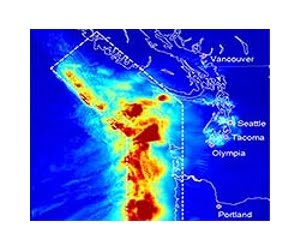
  • One in Three Chance of Quake in Fifty Years in NorthWest

    This article provides a good analysis of likely quake risks along the North West subduction zone.  We have some real numbers for once that are much more accurate.  The bad news is that the quakes occur at such great intervals that human memory is lost.  However risk analysis refines it enough to show that the biggest quakes will occur toward the northern end and that we are now preparing to break records in terms of longetivity between quakes.  That is not good news.

    The good news, if we may call it that is that no large communities are actually fronting the Pacific until you hit LA.  In fact they are all situated behind the first coastal range and this possibly acts as a damper also.

    This means rather clearly that a quake will be at the top of the scale and approach that of the big one that hit Anchorage forty years ago.  The geography itself will be badly disturbed.

    Also, building codes have been steadily improving and establishing a high standard for quake resistance.  Even the past thirty years has seen a progressive conversion of the building stock to where quake resistance now dominates.  I would like to see stress skin panel technology implemented but an extra decade or two will make little difference.
    However, present trends will see the building stock largely replaced in fifty years and thoroughly rebuilt within a century to meet ever improving standards. 

    I do not think it is possible to make a building bullet proof but it certainly can make it survivable for all but the very unlucky.

    1 In 3 Chance That A Huge Quake Will Hit Northwest In Next 50 Years
    by Staff Writers

    Corvallis OR (SPX) May 25, 2010

    The major earthquakes that devastated Chile earlier this year and which triggered the catastrophic Indonesian tsunami of 2004 are more than just a distinct possibility to strike the Pacific Northwest coast of the United States, scientists say.

    There is more than a one-in-three chance that it will happen within the next 50 years.

    New analyses by Oregon State University marine geologist Chris Goldfinger and his colleagues have provided fresh insights into the Northwest’s turbulent seismic history – where magnitude 8.2 (or higher) earthquakes have occurred 41 times during the past 10,000 years.

    Those earthquakes were thought to generally occur every 500 years, but as scientists delve more deeply into the offshore sediments and other evidence, they have discovered a great deal more complexity to the Cascadia Subduction Zone.

    “What we’ve found is that Cascadia isn’t one big subduction zone when it comes to major earthquakes,” Goldfinger said. “It actually has several segments – at least four – and the earthquake activity is different depending on where a quake originates. The largest earthquakes occur in the north and usually rupture the entire fault. These are quakes of about magnitude-9 and they are just huge – but they don’t happen as frequently.

    “At the southern end of the fault, the earthquakes tend to be a bit smaller, but more frequent,” he added. “These are still magnitude-8 or greater events, which is similar to what took place in Chile, so the potential for damage is quite real.”

    Based on historical averages, Goldfinger says the southern end of the fault – from about Newport, Ore., to northern California – has a 37 percent chance of producing a major earthquake in the next 50 years. The odds that a mega-quake will hit the northern segment, from Seaside, Ore., to Vancouver Island in British Columbia, are more like 10 to 15 percent.

    “Perhaps more striking than the probability numbers is that we can now say that we have already gone longer without an earthquake than 75 percent of the known times between earthquakes in the last 10,000 years,” Goldfinger said. “And 50 years from now, that number will rise to 85 percent.”

    Understanding the Cascadia Subduction Zone history is further complicated by the possibility that major earthquakes in the northern segment have occurred in “clusters.” A thousand years may go by without a major event, and then an earthquake would occur every 250 years or so.

    “We’re just starting to understand the whole idea of clusters and there isn’t consensus on whether we are in one or not,” Goldfinger said, “but that possibility does exist, which further suggests that we may experience a major earthquake sooner than later.”

    The last major earthquake to hit the Cascadia Subduction Zone was in January of 1700, and scientists are aware of the impact because of written records from Japan documenting the damage caused by the ensuing 30-foot tsunami. Their knowledge about what happened in Oregon and Washington is more speculative, but the consensus – gleaned from studies of coastal estuaries, land formations, and river channels – is that the physical alteration to the coast was stunning.

    Goldfinger, who is a professor in OSU’s College of Oceanic and Atmospheric Sciences, is one of the leading experts on the Cascadia Subduction Zone and his comparative studies have taken him to the Indian Ocean and, most recently to Chile. In 2007, he led the first American research ship into Sumatra waters in nearly 30 years to study similarities between the Indian Ocean subduction zone and that off the Northwest coast.

    When a major offshore earthquake occurs, Goldfinger says, the disturbance causes mud and sand to begin streaming down the continental margins and into the undersea canyons. Coarse sediments called turbidites run out onto the abyssal plain; these sediments stand out distinctly from the fine particulate matter that accumulates on a regular basis between major tectonic events.

    By dating the fine particles through carbon-14 analysis and other methods, Goldfinger and colleagues can estimate with a great deal of accuracy when major earthquakes have occurred.

    Goldfinger has used the technique to recreate the seismic history of the Cascadia Subduction Zone over the past 10,000 years. Going back further than 10,000 years has been difficult because the sea level used to be lower and West Coast rivers emptied directly into offshore canyons, he pointed out. Because of that, it was difficult to distinguish between storms debris and earthquake turbidites.

    The OSU professor is convinced that the Pacific Northwest is at risk for an earthquake that could meet – or exceed – the power of seismic events that took place in Chile, as well as Haiti. If a magnitude-9 earthquake does strike Cascadia, he says, the ground could shake for several minutes. Highways could be torn to pieces, bridges may collapse, and buildings would be damaged or even crumble. If the epicenter is just offshore, coastal residents could have as little as 15 minutes of warning before a tsunami could strike.

    That immediacy is why engineering and coastal communities are exploring different ways of evacuating low-lying areas, including the construction of high-rise, tsunami-resistant facilities.

    “It is not a question of if a major earthquake will strike,” Goldfinger said, “it is a matter of when. And the ‘when’ is looking like it may not be that far in the future.”