Blog

  • UN says case for saving species ‘more powerful than climate change’

    Via Prison Planet.com » Sci Tech

    Juliette Jowit
    London Guardian
    May 22, 2010

    The economic case for global action to stop the destruction of the natural world is even more powerful than the argument for tackling climate change, a major report for the United Nations will declare this summer.

    The Stern report on climate change, which was prepared for the UK Treasury and published in 2007, famously claimed that the cost of limiting climate change would be around 1%-2% of annual global wealth, but the longer-term economic benefits would be 5-20 times that figure.

    The UN’s biodiversity report – dubbed the Stern for Nature – is expected to say that the value of saving “natural goods and services”, such as pollination, medicines, fertile soils, clean air and water, will be even higher – between 10 and 100 times the cost of saving the habitats and species which provide them.

    To mark the UN’s International Day for Biological Diversity tomorrow, hundreds of British companies, charities and other organisations have backed an open letter from the Natural History Museum’s director Michael Dixon warning that “the diversity of life, so crucial to our security, health, wealth and wellbeing is being eroded”.

    Full article here

    UN says case for saving species more powerful than climate change 260310banner2

  • Ford Fusion Hybrid – Real Life Experience

    Ford Fusion "leaves"My brother and his girlfriend sent photo’s of her new Ford Fusion Hybrid.  They and the car live in the Research Triangle Park area in NC … 

    Buying a hybrid can help you as an individual take action and be greener … here is a real word experience.

    They report …"We went to the beach week before last and got about 39mpg averaging 70mph.  The Fusion has an LCD dashboard display for everything except the speedometer, and uses a “growing  vine” to show how well you are managing the hybrids capabilities."E and her Fusion

    That is some pretty good MPG … stay tuned for more updates on the Fusion.


    Via:  Greentechnolog and ES  LINK 


  • Dr. Cass Sunstein wants to turn off the lights

    Via Prison Planet.com » Commentary

    Jerry Mazza
    Infowars.com
    May 21, 2010

    Paul Joseph Watson, a writer at Prison Planet whom I greatly respect, gave us a reminder Monday May 17th that Obama Czar Wants Mandatory Government Propaganda On Political Websites. The Big Brother Czar is also a Harvard Professor currently dishing up the pabulum for Obama’s White House that “conspiracy theories” should be banned from the Internet; so much for Harvard, Czar-Dr. Cass Sunstein and intellectual freedom.

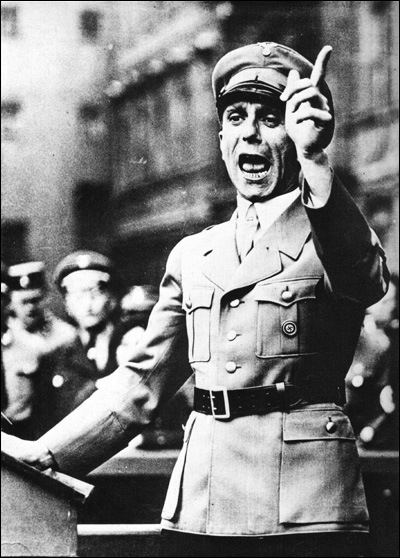
    Sunstein’s tonality is reminiscent of Joseph Goebbels New Years Address for 1939.

    Dr. Cass Sunstein wants to turn off the lights  onepixel  
      Dr. Cass Sunstein wants to turn off the lights  goebbels


    What’s more Sunstein wants to “legally force” Americans “to do what’s best for our society” and water down their free speech (granted by the US Constitution), by mandating websites with pop-up links to opposing government propaganda be “forcibly included on political blogs.” Could we have such pop-ups when the President is speaking, Henry Kissinger, Bibi Netanyahu, AIPAC, Larry Silverstein, NIST, Fox News, Lloyd Blankfein?

    Coincidentally, the also Harvard educated Constitutional lawyer now President, Barack Obama, agrees with Sunstein and has knighted him “Head of Information Technology in the White House for ‘Conspiracy Theories,’” i.e. any political thought that doesn’t regurgitate establishment views, like Obama’s ties to the CIA at Columbia University and after. Those who talk truth to power will be taxed or banned. I hear the clicking of boot heels as Sunstein speaks and I write.

    In fact, Sunstein’s “thinking” came from a rather sullied “White Paper,” in which he talks about countering “dangerous ideas” and “taking those who disseminate such theories” to where? Prisons like Hitler’s camps, Stalin’s Siberian gulags.

    These dangerous ideas and/or theories would include “some held by the vast majorities of Americans,” such as the incredible body of facts that prove the JFK assassination was part of a wider plot, including the CIA, Big Oil, the Mafia, the defense industry, and a combination of assassins. Sunstein is such a patent ploy for the New World Order that he should wear an “NWO” armband, perhaps a skull and bones on his lapel.

    Sunstein adds to his hit list that believing “global warming is a deliberate fraud” is another theory government censorship should stomp its black boot on. Frankly, whether you or I believe in global warming or not is our business and constitutional right, and not his. Sunstein calls “false and dangerous” the idea that exposure to sunlight is healthy, despite certain medical experts that agree prolonged exposure reduces risk of developing certain cancers. Again, whether it does or doesn’t is a matter for open discussion in a democratic society. Choices of credence should be made by individual physicians and lay people according to their patients and health.

    Dr. Cass Sunstein wants to turn off the lights  100210banner1

    Basically, this crypto-Nazi wants to write into law that government should dictate “the very nature of reality to Americans and that their opinions can only be voiced at best when accompanied by mandatory federal propaganda or at worst that Americans can be silenced entirely by federal decree,” as Watson writes. He also points out that our Supreme Court nominee Elena Kagan argued “that the government can ban books and political pamphlets.” What’s going on there at Harvard (where Kagan served as law school Dean) that cries out for such repression? Tom Paine must be turning over in his grave.

    Memories of Goebbels

    Frankly, Sunstein’s tonality is reminiscent of Joseph Goebbels New Years Address for 1939. “This is Goebbels’… address to Germany, delivered on 31 December 1938. He reviews the past year, recalling repeatedly that Austria had been incorporated into Germany. Despite his claim that complainers are not worth dealing with, he devotes a major part of the speech to denouncing those who failed to share his faith in Adolf Hitler….”

    The “complainers” that Goebbels was referencing were the intellectuals, writers, journalists, activists, the Internet bloggers and questioners of their day, who had criticized Hitler’s barbaric behavior, including the burning of the Reichstag, which Hitler and the Nazis blamed on the vision-impaired, Dutch left-wing radical Marinus van der Lubbe, who later was tried by them and beheaded. Or course, after successfully lying that the communists, not the Nazis under Goebbels direction did it, Hitler went on to create the “Enabling Act” which enabled the Nazis to strip away most of the civil rights of Germans, as did George Bush’s renewed PATRIOTACT for Americans, and which this author would like to see banned forever from our laws.

    But after praising the “miracles” [read violence] that brought the Nazis to power, Goebbels goes on to say, “This ability to believe is rather weak in some circles, above all in those with money and education. They may trust more in pure cold reason than a glowing idealistic heart. Our so-called intellectuals do not like to hear this, but it is true anyway. They know so much that in the end they do not know what to do with their wisdom. They can see the past, but not much of the present, and nothing at all of the future. Their imagination is insufficient to deal with a distant goal in a way such that one already thinks it achieved.” I assume that distant, imagined goal was the fall of the Third Reich a decade later, leaving Germany in ruins, poverty and disgrace, a path on which the US may be dangerously in its pursuit to world hegemony.

    Goebbels continues, “They [the complainers] were also unable to believe in the victory of National Socialism while the National Socialist movement was still fighting for power. They are as little able today to believe in the greatness of our national German future. They perceive only what they can see, but not what is happening, and what will happen.”

    We perceive only what they see, like the red nanothermite dust in the ruins of Ground Zero, the high-powered aerosolized military explosive that took the towers down on 9/11. But then, we also see what has happened as a result, the creation of the War on Terror, blamed on the Muslim’s, Osama bin Laden and box-cutter carrying hijackers, which lies gave us the right to start our ongoing havoc, still running in Iraq, Afghanistan, now Pakistan, and all points south and east.

    Returning to Goebbels, “That is why their carping criticisms generally focus on laughable trivialities. Whenever some unavoidable difficulty pops up, the kind of thing that always happens, they are immediately inclined to doubt everything [the administration’s 9/11 conspiracy theory] and to throw the baby out with the bath water [the truth out with blind belief]. To them difficulties are not there to be mastered, but rather to be surrendered to [lies are there to believed rather than questioned].

    Goebbels adds, “One cannot make history with such quivering [sic questioning] people. They are only chaff in God’s breath. Thankfully, they are only a thin intellectual or social upper class, particularly in the case of Germany. They are not an upper class in the sense that they govern the nation, but rather more a fact of nature like the bubbles of fat that always float on the surface of things.” Bubbles of fat floating on the surface of things? Could that be the corpulent Goering? Today’s rotund Rush Limbaugh, Newt Gingrich? I’ll work on that one.

    Ergo, on mindless blasts of rhetoric like those of Goebbels, the Third Reich, meant to last a thousand years, fell into dust and disgrace in 12. Alas and alack, for the sake of freedom, for the future of America, to all who would turn off the light of truth, professors or thugs, presidents or prelates, philosophers or fools, czars or czarinas, I wish you all a hard landing in reality, ASAP.

  • Is the OAS Firearms Convention Unconstitutional?

    by Julian Ku

    David Kopel, Theodore Bromund, and Ray Walser offer this Heritage Foundation essay analyzing (and attacking) the Inter-American Convention on the Illicit Sale of Firearms, Ammunition, Explosives and Other Related Materials (CIFTA).   Although critical, the essay doesn’t actually focus on the constitutional problems, since those are fairly unclear. In fact, the First Amendment problems seem larger than the Second Amendment problems.  Interestingly, although the writers agree that most constitutional defects could be cured by reservations, the fact that Harold Koh is  the legal adviser in the State Department leads them to argue that such reservations would not be made, or not defended in court if later challenged.

    The conflict between the U.S.’s treaty obligations and the Constitution would also be useful to domestic advocates who argue that the Constitution is a barrier to U.S. compliance with “international norms.” Thus, the convention fits neatly into a broader transnationalist strategy to reduce the ability of the U.S. to govern itself through laws and institutions of its own making. By backing the convention, its advocates also advance the idea that the U.S. should act at the suggestion and under the guidance of other states and ultimately of the “international community.”

    The defects in the convention are serious and pose prudential risks that cannot be remedied without a substantial number of U.S. reservations to the convention. It is particularly troubling that Harold Koh, a key Administration appointee, offered an unqualified endorsement of the convention before taking office and expressed doubt about the legal validity of reservations. While his criticism of the legality of reservations is baseless, the number and extent of the necessary reservations would be substantial and incompatible with the core of the convention. The U.S. can therefore neither properly ratify the convention with reservations nor safely ratify it without reservations.

    I am not as worried as they are about this treaty, or about the legal validity of reservations. But it is true that I have a hard time imagining Koh defending the constitutionality of such reservations in court. t.

  • Kit de personalización para el nuevo Porsche Cayenne por TechArt

    Porsche_Cayenne_TechArt

    El preparador alemán, TechArt, ha presente un kit personalizado para el nuevo Porsche Cayenne con el objetivo de equiparlo como su dueño lo quiere y ofrecerle un modelo aún más exclusivo. Este nuevo kit se centra principalmente en el interior aunque también añade algunas en su exterior.

    Así el nuevo Cayenne podrá montar llantas de entre 20 y 23 pulgadas y pequeños retoques en su exterior. Mientras que en el interior ofrece un gran abanico de posibilidades que serán acordes a las exigencias de cualquier tipo de cliente.

    TechArt ofrece tanto acabados en cuero con costuras en una gran variedad de colores, pedales deportivos de aluminio o una instumentalización en colores personalizados. Sin embargo también incorpora retoques en madera o en carbono. En cuanto al motor apenas lo toca aunque lo más seguro que dentro de poco tendremos alguna preparación más del Porsche Cayenne.

    Vía | worldcarfans


  • A & D Quick Response Auto Inflate Blood Pressure Monitor with EasyFit Cuff

    INDICATIONS: Features Of A&D Life Source Quick Response Blood Pressure Digital Monitor with Easy Fit Cuff, Model: UA-787EJ. Clinically validated for accuracy. 60 reading memory. Easy Fit cuff fits most arms. Date/Time Stamp.

    View A & D Quick Response Auto Inflate Blood Pressure Monitor with EasyFit Cuff Details

  • MIT Designs More Environmentally Friendlier Planes

    MIT Concept plane

    MIT has designed two airplanes that are more environmentally friendly … quieter and with fewer GHG emissions.  Based on work from a NASA research contract these may provide planes of the future …

    "MIT … two new airplane designs … create more environmentally friendly planes … quieter … can take off from shorter runways … …"

    " … “D” or “double bubble,” would use 70 percent less fuel than a Boeing 737, according to MIT. Note the long, skinny wings and the small tail."

    " … the H, would replace the Boeing 777 for international flights. It’s closer in design to current planes and would burn 50 percent less fuel."

    "NASA will pick two of the six teams to move forward, probably within the next few months. … these planes won’t be ready to fly until 2035. …"

    Via:  SmartPlanet LINK

  • Google I/O 2010 Round-Up

    The two days of the annual Google I/O 2010 developers conference were packed with announcements and, though there were just a few major themes, it might have been hard to keep up with all of the new stuff. So, to ensure that you haven’t missed out on anything, we’ve put together a small round-up of some of the most important announcements and new products co… (read more)

  • A Word on Maqaleh

    by Deborah Pearlstein

    Cross-posted at Balkinization

    Following my co-blogger Ken Anderson’s lead, I wanted to add a few additional notes on the D.C. Circuit’s holding today that a group of detainees held at the U.S. military base at Bagram, Afghanistan, do not have a constitutional right to seek a writ of habeas corpus in U.S. federal court. While acknowledging that at least two of the detainee-petitioners had been picked up far outside the Afghan borders (one, most notably, in Thailand) and only came to be in the Afghan theater because the U.S. government brought them there, the court concluded that the “practical obstacles inherent in resolving the prisoner’s entitlement to the writ” while petitioners were detained in an active theater of war weighed against recognizing an extraterritorial constitutional right to habeas.

    Many things to say on the decision’s import and meaning, but here I’ll just start with two unrelated points. First, on the import. Whatever one thinks of the opinion on the merits, it may be easy to overstate its practical significance. The Obama Administration’s litigation strategy in all of its highest profile detention cases has been to moot key cases on their facts before they can be finally resolved by the Supreme Court. Such was the case with, for example, the weighty claim by a group of Gitmo detainees that winning their habeas cases entitled them to release in the United States. So too here, all indications are the Administration is scurrying not only to hand over its detention operations in Afghanistan to the Afghans generally (a move key human rights organizations endorse as a matter of international law), but also reportedly to transfer remaining non-Afghan detainees to their home countries for continued detention and/or trial. It’s possible the Administration may not succeed in its mooting strategy this time. But given the months they now have between petitions for rehearing en banc in the D.C. Circuit and (failing that) for cert sure to follow, I wouldn’t necessarily bet against them. If the U.S. cedes control of Bagram before the case reaches the Supreme Court, what will remain on the books is the ruling of an appeals court, in a decision, as Ken also seems to see it, highly and self-consciously limited to its particular facts.

    Second, on the content. It seems fair to say the reasoning in the opinion was slight. And not just because out of the 26 pages of published writing, one doesn’t reach the meet of the analysis until the bottom of page 19 (after which follows about a page’s worth of block quotes, and another nearly full page of conclusion restating the decision in summary). What reasoning there is doesn’t especially engage the particular facts of the case. Consider, for example, how heavily today’s decision rested on the analysis in the Supreme Court’s 1950 decision in Johnson v. Eisentrager, in which the Court declined to allow U.S. military detainees held in Germany (following their war crimes convictions in China) to seek habeas in U.S. courts. In particular, the Maqaleh court quoted in block the following passage from Eisentrager in support of its conclusion that habeas for the 3 Bagram detainees here would be unwise to pursue:

    “Such trials would hamper the war effort and bring aid and comfort to the enemy. They would diminish the prestige of our commanders, not only with enemies but with wavering neutrals. It would be difficult to devise more effective fettering of a field commander than to allow the very enemies he is ordered to reduce to submission to call him to account in his own civil courts and divert his efforts and attention from the military offensive abroad to the legal defensive at home. Nor is it unlikely that the result of such enemy litigiousness would be a conflict between judicial and military opinion highly comforting to enemies of the United States.”

    To be clear, in suggesting that habeas for Bagram would “bring aid and comfort to the enemy” and “diminish the prestige of our commanders” in Afghanistan, the appeals court here did not expressly (or even impliedly) cite to some particular claim in the record before it. Neither was it discernably deferring to some perceived superiority of the Executive’s assessment of the strategic or practical import of allowing the Bagram detainees captured outside Afghanistan to seek a writ of habeas corpus. Rather, the D.C. Circuit seemed to be doing exactly what the Eisentrager Court did – asserting, based on the court’s own impression, that greater legal process would only hamper the strategic cause for which the United States is fighting in (on this occasion) Afghanistan.

    Yet particularly in the counterinsurgency context in which the U.S. is now fighting, it seems an odd – and overstated – position for the court to take. Indeed, as the Commander of NATO forces in Afghanistan, U.S. General McChrystal, explained in his pivotal strategy report last year, “the Afghan people see U.S. detention operations as secretive and lacking in due process.” Because detention operations could thus become “a strategic liability,” the United States faces a “critical” need “to conduct all detention operations in this country in accordance with international and national law.” McChrystal went on to recommend the turnover of detention operations to the Afghans, once they developed the capacity to sustain such operations lawfully and effectively. There is nothing in his report that would support the conclusion the Maqaleh court reached about the impact of judicial review on “the enemy,” and much in it that might support the view that habeas in the limited context presented here – where detainees have been shipped from a country at peace with the United States into a country where the United States is at war – might be of some strategic benefit with “wavering neutrals” pending handover to the Afghan government.

    I don’t mean to overstate the point. The government here, after all, opposed extending habeas to Bagram. Nonetheless, especially given the stakes, it seems insufficient for the court to rely centrally on an assertion that seems at least somewhat in tension with positions the government has itself elsewhere taken on this particular issue. In Hamdan, the government had argued that it was impracticable to pursue war crimes trials under existing court martial rules on the bare grounds that the demands of counterterrorism were great. Writing for a majority of the Supreme Court, Justice Stevens rejected this claim as, among other things, lacking basis in the record. Hard to demonstrate the D.C. Circuit crossed that threshhold here.

  • Google to Enhance Navigation Service via Ruba Acquisition

    Google is probably planning to enhance its navigation service, Google Maps, since it has recently purchased the online travel guide Ruba, which is a dedicated community to provide visitors with journey reviews and visual guides created by other travelers. No details have been revealed about this acquisition, other than a blog post notify… (read more)

  • Review of Bill Mckibben’s must-read book “Eaarth”

    You had to wonder when it would happen.  That moment when someone would take us from talk of how to prevent climate change to acknowledging that it was here already, here to stay, and that it had — and would continue — to irrevocably foreclose on many of the opportunities humanity has taken for granted for millennia.

    Figures it would be Bill McKibben. His first book, The End of Nature was one of the earliest to introduce global warming into popular culture. His latest book, Eaarth: Making a Life on a Hot New Planet, lays out our grim new reality relentlessly (excerpt here). Yet it is not, fundamentally, a pessimistic book.

    McKibben’s premise, that we’re already on a new and different planet just as surely as if we’d boarded a spaceship en masse and arrived at a new world, is presented convincingly.

    This new world is less friendly, less accommodating, less commodious, just when we needed the old Earth to be more benign.

    If you are a regular reader of Climateprogress, you already know we’re now inhabiting an alien place but McKibben’s book is still a must read.

    For one thing, he has a knack for expressing complex scientific issues in ways that are accessible to the general public, often in sound bites, and in the age of Twitter this is increasingly the lingua franca of social discourse and cultural exchange – for good or ill.

    Here are a few gems:

    We’re running Genesis backward, decreating.

    Decreating.  My spell check wants to reject that word, yet it is too apt to discard.  It is precisely what we’re engaged in.

    Or take this example of ultimate irony McKibben uses with great skill to drive home how lemming-like our behavior has been on our trip to Planet Eaarth.  It appeared in Australian papers back in June of 2009:

    New construction plans for the World’s largest coal export facility had been quietly altered to raise the structure two or three meters for fear of rising sea levels.

    And yes, it’s true that lemmings don’t actually commit mass suicide, but some myths are too valuable to discard – besides, it appears that people do.

    In describing how we’ve completely overshot any hope of preserving the old Earth, McKibben almost makes this stuff funny:

    We have, in short, goosed our economy with one jolt of Viagra after another, anything to avoid facing the fact that our reproductive days were passed, and hence constant and unrelenting thrust was no longer so necessary.  (I suspect global warming is the planetary equivalent of the dread “erection lasting more than four hours” that we’re warned about …)

    Or take this passage, where he skillfully lampoons the whole consumer excess that brought us to Eaarth when he notes the effect of $4.00 a gallon gas:

    Suddenly, in fact, you felt a little less confident that you were an Explorer, a Navigator, a Forrester, a Mountaineer, a Scout,  a Tracker, a Trooper, a Wrangler, a Pathfinder, a Trailblazer. You all of a sudden were in Kansas or maybe in New Rochelle – not Durango, or Tahoe, or Denali, or the Yukon. Discovery and Escape and Excursion suddenly seemed less important than the buzz-killing fact that it took a hundred bucks to fill the tank.

    Yes, he actually entertains us while mapping out our collective trip to perdition. No mean feat.

    He holds out hope for a world that is richer in some ways than the one we left behind.  A world where community matters, where the scale is manageable, and where connections between people and the land are stronger, if less global.  A world, McKibben points out, that is not like Freidman’s Hot, Flat and Crowded. The time when we could grow green and maintain and expand our current globalized consumer economy came and went, according to McKibben.  On the less commodious Eaarth, the investments to do so are simply too staggering; the paucity of natural capital upon which to do it, too scant; and the share of capital spent just coping with what we’ve wrought, too high.

    To a lot of global warming luminaries his message will feel like a cold mackerel slapped across their collective cheek.  Growth is civilization’s drug of choice, and like any addict, we will fight with tooth and claw to keep partaking of it.

    But McKibben makes his case convincingly.  He invokes the much maligned  Limits to Growth and the Club of Rome (which, it turns out wasn’t wrong in its prognostications, merely off by a couple of decades), Jared Diamond’s Collapse and the relentless litany of facts that describe the detritus of the old Earth that is even now washing up on our shores.

    But McKibben doesn’t advocate obsessing on our collapse – which he says gives us only two choices: “Either you’ve got your fingers stuck firmly in your ears or you’re down in the basement oiling your guns” – rather he calls on us “… to choose, instead, to manage our descent.”  To “… aim for a relatively graceful decline” (emphasis is McKibben’s).

    While McKibben is standing on firm ground for most of Eaarth, he does make one misstep.  In recommending a world that is more local — in which provision of food, energy, raw materials and goods are distributed, not centralized — McKibben maintains that political power must be similarly dispersed.  He suggests that our institutions should be scaled to our technologies.  Yet managing a “graceful decline” or even a steady state economy will be the greatest collective challenge humanity has ever taken, and it is one we must take together. To presume that the actions of thousands of small entities can effect such a change — or that we can count on every one of them to do it — is to ignore most of human history.  Any strategy that invests most of the responsibility for change to a bunch of individual and essentially autonomous entities runs smack into Hardin’s Tragedy of the Commons.

    If humanity is to make a transition as profound as McKibben says we must, then we need even stronger institutions at both the national and international level.

    The world, including many who have been tireless advocates of climate action, will likely reject McKibben’s diagnosis and his prescription — hoping against hope that we can return to Earth and have what we’ve always had by slapping a green veneer over the massive consumption machine that is our contemporary economy. But they fool only themselves. We are now on planet Eaarth, and much of out talent, capital and time will be spent coping with this harsher, less forgiving new world.

    Regular CP book reviewer John Atcheson, has more than 30 years in energy and the environment with government, private industry, and the nation’s leading think tanks.  He is working on his own novel about climate change.

    Related Post:

  • DC and Tri training

    Traveling is tiring!
    Sunday morning we made it to Washington, DC for my nursing conference. Like I said, 7,000 critical care nurses; truly amazing.
    As some of you may remember, I won an all-expense paid trip from a scholarship at my hospital. I was more than grateful to receive this wonderful opportunity. Also, I was way, way more than grateful to be staying at the GRAND HYATT!!
    We walked passed many hotels in DC on our voyages to the monuments, and we both concluded that no other hotel was as swanky and awesome as ours…

    More photos from DC later.
    Let’s get to the good stuff, besides nursing/nation’s capital.
    Triathlon training!
    Yesterday I started week 4 of the couch to 5k program. It was definitely the most difficult run yet. We had to run 3 minutes, walk 90 seconds, run FIVE minutes, walk 2 and a half minutes, and then repeat that AGAIN. Let me tell you, during that last 5 minute run, I was dying. I read all of these blogs of people running marathons and they run forever, but five minutes for me is a huge, huge deal. I kept telling myself, “Pain is temporary, Quitting lasts forever.” It actually worked, too because just the thought of quitting and feeling bad about myself is enough motivation to help me tolerate being hot and out of breath! Since the beginning of the program, I have definitely advanced because there is no way I could have run for 5 minutes straight during week 1!! no way!

    After my run, I had one goal in mind: clip-in pedals+shoes for my bike!
    I thought about it constantly during my trip.

    The bike shop was helpful and the dude let me try on a bunch of shoes. I decided on black so they won’t look so dirty!

    He installed everything for me, then gave a small demonstration and set me on my way outdoors! I was so nervous!! I felt like a bird leaving the nest, thinking, “wait, you’re not coming with me? waaah.” But I put on a brave face and went to the back of the building with less cars.
    For the first minute or two, I could not clip in. I just couldn’t “find it,” but once I got over the initial panic of feeling like a loser, I clipped in fine and began to ride. WOW!! I LOVE THEM. So much more efficient and comfortable!!
    After riding around for a bit, I asked if he would watch me ride and tell me if my seat should be adjusted. He happily obliged and raised my seat probably over an inch more.

    Does this make me hardcore now??? 🙂

    I’m about to go on my first ride with my new pedals this morning. My goal is 12 miles under 60 minutes.
    Wish me luck!

    ps: I would also like to officially ANNOUNCE that I have officially gone vegetarian! It’s been a gradual process and for the past probably month I have been following a vegetarian diet, but now I am making more of a constant effort. I think that visiting the farm, and reading, “Eating Animals” definitely solidified my decision to actually label myself. As you may remember, I did not want to label myself before. So yes, *stands up* hello, I’m Nicole, and I’m a vegetarian. *sits down*


  • U.S. Senate approved the Financial-Bill

    U.S. Senate approved the Financial-BillThe U.S. Senate has approved the financial regulation bill (59 votes for and 39 against) performing one of the objectives of President Barack Obama. President Barack Obama acknowledged that “Americans should not pay for the mistakes of Wall Street. Our goal is not to punish the banks, but to protect American citizens,” Obama acknowledged. So, four Republicans, 53 Democrats and two independents joined to pass what is considered the biggest reform in the system of regulation of U.S. institutions since the Great Depression of the 30s.

    The Democratic majority leader Harry Reid in the Senate said that “the Financial-Bill that passed today (Thursday night) contains a message for Wall Street… make it clear that they can not return to bet with other people’s money.” He tells them that the days when companies were “too large to permit collapse are over,” he explained.

    Republicans have sought to delay and soften the project in recent months in the negotiations and discussions behind closed doors on Capitol Hill, saying it was a government move to tighten the purse to the private sector. This law will give more power to the Federal Reserve as a chief of police to possible risky investment decisions taken by banks. Meanwhile, also creates a new independent entity, Office of Consumer Financial Protection, which will establish the rules for mortgages, student loans and credit cards to prevent abuse.

    Among the key points of the reform, which strengthens the supervisory role of state agencies and provides more checks on Wall Street, are the following:

    Financial regulation. The rule creates a single regulatory board and gives the Federal Reserve new powers on major financial companies.


    Crisis Management. The law focuses the regulatory authority and gives the government more powers for intervention, fragmentation and/or liquidation of banks or financial institutions to collapse, without mechanisms to rescue at the expense of taxpayers.

    Financial stability. The new Supervisory Board of the Financial Stability Forum, comprised of various regulatory agencies and chaired by the Treasury secretary, will monitor the risks caused by large and complex financial institutions. This nine-member board may recommend that the Federal Reserve to impose stricter rules on capital, or fragmentation of signatures.

    Consumer Protection. An Office of Consumer Financial Protection to monitor banks with more than 10,000 million in assets.

    Derivatives. Places limits on the operations that banks can do with “derivatives”, such as packages of mortgage insurance and default swaps to which they blame for much of the financial crisis.

    High-risk funds. The “hedge funds” that operate more than 100 million dollars will be registered with the Securities and Exchange Commission.

    Related posts:

    1. All 41 GOP Senators United to Oppose Financial Reform Bill
    2. Senator Grassley Forgets GOP, Backs Derivatives Curbs With Democrats
    3. Wall Street Protesters Fired Up Over Big Banks

  • Financial Reform Won’t Alter Capitalism’s Icarus Trajectory

    Financial Reform Won’t Alter Capitalism’s Icarus Trajectory
    Perhaps the most troubling reality in the 21st century is that our economics now dictates our cultural values, rather than the reverse, where we the people would decide how resources, production and mutual prosperity should be systematized to achieve the best society for all. By Stuart Whatley

    Perhaps the most troubling reality in the 21st century is that our economics now dictates our cultural values, rather than the reverse, where we the people would decide how resources, production and mutual prosperity should be systematized to achieve the best society for all.

    Related Entries


  • James Carville Takes On Obama On Oil Spill: He’s ‘Risking Everything’ With ‘Go Along With BP Strategy’

    James Carville Takes On Obama On Oil Spill: He’s ‘Risking Everything’ With ‘Go Along With BP Strategy’
    Democratic strategist James Carville and MSNBC anchor Chris Matthews, two reliable supporters of President Barack Obama, have issued withering critiques of the administration’s handling of…

    HUFFPOST HILL – MAY 21, 2010
    Dems want Wall Street reform signed by July 4th, but the fireworks won’t stop until the midterms. Everyone will be taking a hit of that…

    Joseph A. Palermo: And Carter Thought He Faced National Malaise
    The spectacle of British Petroleum literally killing off the Gulf of Mexico before our eyes while the Obama Administration apparently believes that BP is honorable…

    Richard Blumenthal Wins Connecticut Democratic Nomination, Linda McMahon Wins Republican Nomination
    HARTFORD, Conn. — Connecticut Republicans have endorsed former World Wrestling Entertainment executive Linda McMahon for the U.S. Senate seat being vacated by Democrat Chris Dodd….

  • Fox?falsely suggests?financial reform to blame for market drops

    Fox?falsely suggests?financial reform to blame for market drops

    Fox & Friends repeatedly falsely suggested the stock market declines in the U.S. and Asia were solely in response to the Senate passing financial reform, despite the fact that guest Stuart Varney said the drops were “not about” the legislation. Indeed, the declines are largely blamed on economic instability in Europe.

    Fox & Friends blames market drops on financial reform 

    Carlson: “At first blush the markets don’t like it at all.” Fox & Friends co-host Gretchen Carlson stated on May 21, “[w]ell the Senate makes a historic move in other news, and at first blush, the markets don’t like it at all. The Senate passed the president’s financial reform bill last night. This morning, Dow futures down 3. European markets are off about 20 and the Asian markets are down about 10.”

    Doocy: “So far this morning, the markets haven’t really reacted positively to” financial reform. Co-host Steve Doocy reported later in the program, “[i]n a late night session, the U.S. Senate has approved an historic crackdown on financial reform. And so far this morning, the markets haven’t really reacted positively to it. The Dow futures are down about 10. European markets are off about 1 1/2 percent and the Asian markets already closed down a little better than 2 percent because of the sell off here in the United States yesterday.”

    Varney told Fox & Friends the market decline was “not about” financial reform

    Varney: Stock market drop was “not about” financial reform. During the program, Doocy stated, “Meanwhile, yesterday, the stock market crashed as the Senate passed that bill that clamps down on Wall Street. A coincidence?” Doocy then asked Fox business analyst Stuart Varney, “Are these connected or are they two separate things?” Varney stated:

    VARNEY: Largely separate. Largely separate.The big decline in the stock market, 1,000 points down, by the way, in a couple of weeks, that’s everything to do with the American situation that is a slow recovery with no jobs, some say the failure of Obama’s economic policies, and Europe, collapse in Europe, chaos in Europe. This financial regulation reform bill, that really hasn’t had that big of an impact on the stock market. It’s not about that.

    Varney: Friday’s activity is a “replay of yesterday.” Later on America’s Newsroom, Varney stated that Friday’s drop is a “replay of yesterday in many respects” and that “[e]verybody’s nervous because you’ve got chaos in Europe, a weak U.S. economy”:

    VARNEY: If it were open for trading right now, the Dow would be below 10,000. It will be off around 85, 90 points. You’re seeing a replay of yesterday in many respects. Oil is down, gold is down, the stock market is down, but you’ve got Treasury bond prices way up. Now that’s a technical thing but it means there’s a flight to safety. Everybody’s nervous because you’ve got chaos in Europe, a weak U.S. economy, flooding to safe havens like the U.S. treasury market. That’s what’s happening now.

    Reports: Current market declines primarily due to European economic instability

    WSJ: Market decline is ”an accumulation of worrisome developments, primarily out of Europe.” The Wall Street Journal reported May 21:

    New worries about the health of the global economy flared Thursday, driving U.S. stocks to their first official correction since the bull market began last March, roiling credit markets and causing big swings in currencies.

    […]

    There was no one particular piece of news that drove Thursday’s market swoon. Instead, investors said it was an accumulation of worrisome developments, primarily out of Europe, where officials are struggling to convince the market they have the Greece crisis under control. Worries mounted that the troubles may spread beyond Europe to stymie growth elsewhere. And China’s effort to tighten monetary policy has made investors increasingly nervous about growth slowing in that country.

    Concerns are building that the progress made in pulling the global economy out of recession is slipping away. That contrasts with the sentiment this time last year when central banks and governments seemed to be working effectively together to stabilize the markets and economy.

    NY Times: ”Stocks on Wall Street were unsettled in early trading on Friday following declines in Europe and Asia.” The New York Times reported on May 21 that, “[s]tocks on Wall Street were unsettled in early trading on Friday following declines in Europe and Asia amid continued fears that the debt crisis could undermine the economic recovery in the euro zone and perhaps beyond”:

    The decline in Europe came even as German lawmakers voted to approve their country’s share of the nearly $1 trillion rescue deal to save the euro and contain the debt crisis.

    The Dow Jones industrial average fell below 10,000 within minutes of the opening bell, declining 143.59 points, or 1.4 percent, before regaining some ground. Shortly before 10 a.m., both the Standard & Poor’s 500-stock index and the Nasdaq composite index crept into positive territory.

    The last time that the Dow closed below 10,000 was Feb. 8, when the index finished at 9,908.39. The reason for the decline back then: Greece’s debt crisis.

    “Certainly when you saw Europe stall you knew it wasn’t going to be pretty,” said Uri Landesman, president of Platinum Partners, speaking soon after the opening. “I expect there to be more of the same today,” with riskier assets selling off.

    NY Times: “[B]iggest factor unnerving markets” was fear that European economic stability “might spill to the United States.” The New York Times also reported in another May 21 article that “traders and analysts said the biggest factor unnerving markets was the continuing prospect that European governments might not have done enough to stem the panic over Greece and other heavily indebted nations, and that their problems might spill to the United States, affecting the pace of economic recovery.” From the article: 

    Stock markets in Asia fell sharply in early trading on Friday after continuing declines on Wall Street and in Europe.  

    Fears that the fragile economic recovery in the United States might be threatened by the financial and political crisis inEurope gripped Wall Street on Thursday, sending the stock market into a sharp decline and leaving anxious traders wondering where the pain might stop, The New York Times’s Mark MacDonald reported.

    […]

    Nagging worries that Europe’s debt crisis could spread, compounded by uncertainties over financial regulation on both sides of the Atlantic, have set investors on edge the world over.

    […]

    But traders and analysts said the biggest factor unnerving markets was the continuing prospect that European governments might not have done enough to stem the panic over Greece and other heavily indebted nations, and that their problems might spill to the United States, affecting the pace of economic recovery.

    Some economists warn, for example, that weakness in Europe’s economies combined with the ongoing appreciation of the dollar against the euro could hurt American exports.

    The Times also reported that ”uncertain progress of financial reform in the United States” and in Germany, the labor strike in Greece, and violence and political tension in Asia were also partially responsible.

    Bloomberg: Stocks fell “on concern that Europe’s debt crisis will slow global economic expansion.” Bloomberg reported on May 21 that, “[s]tocks fell for a seventh day and oil declined on concern that Europe’s debt crisis will slow global economic expansion. The euro erased gains that drove it to its strongest in a week.”

  • Twilight Saga 3 Eclipse – New Leaked Twilight 3 Eclipse Movie Video

    EXCLUSIVE Watch Hot New Twilight 4 Eclipse Leaked Preview Video Clip Here

    Twilight Leaked Movie Video
    (Sevensidedcube) Twilight Eclipse is very close to fans, and is almost here, still every new Twilight Eclipse Clip from movie makes fans day and they’re happy to get close to movie before it’s release. In this movie preview clip we get a bigger picture about Twilight Eclipse actually, the clip is about Edward fighting for love of Bella with Jacob.

    Watch the new leaked Twilight Video and let us know what you think, who will Bella (Kristen Stewart) actually choose in movie? Will she end up with Jacob (Taylor Lautner) or she remains with the older love Edward (Robert Pattinson). We will see this but it’s not easy to predict Eclipse’ future as there will be the new movie called Breaking Dawn.

    Volves or Vampires we’ll know this summer as Twilight Eclipse official movie theather release date is June 30 2010. Enjoy the Eclipse movie preview at the end of the post thanks to comingsoon.net. We’ll be here with Twilight news and updates in future too.

    Related posts:

    1. Twilight 3 Eclipse Official Poster Is Out
    2. Watch Twilight Eclipse Hd Full Official Movie Trailer
    3. Twilight Eclipse Shows 10-second Preview

  • Greek general strike: Is the Gaza flotilla caught in the middle?

    Greek general strike: Is the Gaza flotilla caught in the middle?
    Several friends of mine just left for Greece in order to join an eight-ship flotilla that plans to sail from Athens to Gaza at the end of May. The eight ships will be carrying humanitarian supplies designed to help break a four-year siege of the Gaza strip — or at least that was the plan. […]

  • Can Small Farms Survive?

    Can Small Farms Survive?

    Cross-posted from Food Politics. Many of us have been heartened to learn that the number of small farms in the U.S. is increasing for the first time in a century.  The latest Census of Agriculture reports more small farms in 2007 than in 2002. But the USDA, which tracks such things in reports such […]

  • Aquamarine Power to generate 250 percent more electricity with Oyster 2

    oyster 2

    Eco Factor: Wave power generator captures wave energy to produce electricity.

    Aquamarine Power’s attempt to enhance its wave power technology resulted in a new wave power generator that produces 250% more electricity than its predecessor. Dubbed the Oyster 2, this wave power device is a buoyant, hinged flap which is attached to the seabed to capture energy found in nearshore waves and converts it into clean sustainable electricity.

    (more…)