Blog

  • Save $100/Year By Retrofitting Your Toilet To Dual-Flush

    You know, not everything that goes into your toilet requires the same amount of water to push it down the pipes. Wouldn’t it be better to use more water on the denser stuff, and vice versa?

    Well, with no tools and just $20, you can trick out your toilet so that it’s “dual flush” (a new toilet with dual flush built-in can run you from $99 to a few hundred). Dual flush means it lets you, at the push of a button, decide whether you want to you a lot of water or a little. John over at Young House blog put one in this weekend and gives a step by step walkthrough.

    You might not be able to pimp your ride, but you can at least trick out your throne and save a little coin.

    Easy Upgrade: Super Toilet [Young House Love]

    RELATED: Bail Yourself Out By Draining Water Costs

  • Florida DMV Tells Woman She Lives On “Eat Ass” Street

    A woman in Florida got her driver’s license in the mail only to find that she apparently lived on “Eat Ass” street. Her entire street address is printed as “Eat Ass Englewood, FL 34223,” thus raising the question of how exactly they mailed the license to her.

    The DMV told the local NBC station:

    “The Department of Highway Safety and Motor Vehicles has numerous safeguards in place when customers conduct business with us to ensure the accuracy and integrity of the information provided to us. We have opened an investigation into this matter to determine who and how this misinformation was provided. Using false information related to a Florida driver license or ID card is a crime, and subject to applicable penalties of law. We have already reissued the customer’s drivers license at no cost.”

    Mysterious.

    5-19-2010 4-47-33 PM.jpg

    Woman’s new driver’s license reads “Eat @%$” [2News] (Thanks, Ryan!)

  • Self-proclaimed “irritant” Bob Lutz honored by GM

    Filed under: , ,

    Bob Lutz is now officially into the swing of being retired. The former General Motors Vice Chairman has been living the life of leisure since the end of April, but the company he helped steer through Chapter 11 took some time to honor the living automotive legend in a number of receptions held yesterday. Lutz took the occasion to hand out a little wisdom to his fellow workers by telling them not to be afraid to be an irritant or point out deficiencies in the company, saying the philosophy worked for him throughout his career.

    Lutz received a number of keepsakes during the celebration, including a set of aluminum versions of the cars he helped bring to market while at GM, including the Chevrolet Volt, Malibu and the Pontiac Solstice, as well as a small diecast engine. He spent his time signing autographs and shaking hands between speeches. Lutz also spoke to the theme of his next book – a tome that he’s been working on since walking away from the automaker last month.

    The text will focus mainly on the troubles that riddled GM before the meltdown and what the company can do to avoid falling into the same pitfalls in the future. His advice? Don’t abandon common sense, and don’t try to outthink the industry. It isn’t one that requires “a huge intellect.”

    [Sources: Detroit Free Press, The Detroit News | Image: AP Photo/Seth Wenig/Getty]

    Self-proclaimed “irritant” Bob Lutz honored by GM originally appeared on Autoblog on Wed, 19 May 2010 16:01:00 EST. Please see our terms for use of feeds.

    Permalink | Email this | Comments

  • LaCie’s new net-connected RAID external is featureless and black, like my soul


    Luxury storage masters LaCie have introduced a new drive (well, drives) intended for maximum data protection and connectivity. Inside that forbidding black box are two hard drives, and every bit that’s written to one is written to the other in true RAID 1 fashion. It has built-in server and torrent download functions, which could be nice, and if it’s connected to your router, you should be able to access your files from pretty much anywhere.

    It’s also got a USB 2.0 interface, so you can use it as a normal hard drive as well. Capacity is either 2TB or 4TB, though if I’m not mistaken, effective capacity is half that. After all, there are only two drives in there and they’re mirroring each other exactly. 4TB of space would require two 4TB hard drives… and those don’t exist yet. $480 for a total of 2TB of space is a bit insane if you ask me.

    You might remember the Drobo FS that debuted a month or so back that shares many of these features. The LaCie is cheaper, but the limited capacity really kind of sinks it if you need a versatile or professional solution. For a little light storage and torrenting, the Network Space MAX will be fine, but if you need expandability and more options on the accessibility front, the Drobo is a necessary buy — though it’s significantly more expensive.


  • Gulf Oil Disaster "Looks Very Scary", Says Astronaut [Oil Disaster]

    “It looks very scary. It’s not good. I really feel… not good about that.” That’s what the International Space Station Commander, cosmonaut Oleg Kotov, says about the Gulf’s oil disaster. This is the last satellite image. Update: New image added. More »


  • From paradise to Superfund, afloat on New Jersey’s Passaic River

    by Mary Bruno

    .series-head{background:url(http://www.grist.org/i/assets/river_series/header_B.gif) no-repeat; height:68px; text-indent:-9999px;} h3.subscribe-head{padding-left:5px;background-color:black;color:#ff8400;} dl.series-nav{margin-top:-15px;}

    For the first 18 years of my life I lived along the final 17-mile stretch of the
    Passaic River. That’s the dirty, ugly part of the river that passes through the
    most crowded, industrialized part of the United States.

    The
    Passaic forms the western border of my home town: North Arlington, New Jersey,
    a tiny borough just a few miles north of the river’s mouth in Newark. Our house
    sat on a steep slope above the river. In the winter, when the oak and maple
    trees were all bare, I could see the water
    from our front porch. Sometimes in summer, when a flood tide overwhelmed the
    river’s sluggish current, the Passaic would smell faintly of the sea.

    The
    Passaic was my home town river, but I didn’t have much to do with it as a kid.
    I crossed over it often enough, every time we visited my mother’s family, who
    lived on the other side. But I rarely played by the Passaic. I never fished it
    or took a boat out on it. I certainly didn’t swim in it. I didn’t really know
    the river. I just knew that it gave me the creeps.

    The lower Passaic flows through the most densely populated, heavily industrialized area in the country.Photo: Mary Bruno

    Like the
    state it flows through, the river has a serious image problem. The Passaic is
    as historic as New York’s storied Hudson, and in some places—the 77-foot-high
    cascade in Paterson, for one—it is just as majestic. But most people, even
    some New Jerseyites, have never heard of the
    river. Those who have know it only as one of America’s most polluted waterways.
    It’s hard to bond with a river like that.

    The
    Passaic is a poster child for rivers—for nature—everywhere. The river had
    been the lifeblood of the region, the source of food and power, the playground
    of the rich, the avenue of transportation, communication and commerce. The
    first white settlers sailed up the Passaic in 1662 and founded Newark, the
    nation’s third oldest city, on its banks. The river’s abundant charms fueled an
    explosion of growth and industry that transformed the fledgling United States
    into a global manufacturing powerhouse. But in time the industrial revolution
    it spawned would poison and betray the Passaic. By 1952, the year I was born,
    the river’s beauty and majesty were dim and distant memories. Its lower stretch
    was a toxic canal. The Passaic wasn’t a source of wonder and delight, or even
    interest anymore. For a whole generation, my generation, it inspired fear, revulsion,
    and denial instead.

    The
    river wasn’t fearsome in any traditional sense. It didn’t rage or thunder. It
    didn’t loll along and then suddenly turn into a boil or hurl itself over a
    cliff—not this far downstream anyway. It wasn’t icy cold or booby trapped
    with eddies. It wasn’t even that wide; a dog paddler like me could make it all
    the way across. But the river scared us just the same. It scared us in a deep
    down creepy kind of way.

    We
    were afraid of its impenetrable darkness. We were afraid of its industrial smell.
    We were afraid of the things that lived beneath its surface and the things that
    had died there. We were afraid of spotting a hand or a head bobbing in the
    rafts of garbage that floated by. We were afraid
    of submerged intake valves that sucked water into the factories along the
    banks. We were afraid of the river’s filth. It wasn’t the kind of filth that
    came from playing football with your friends. It was grownup filth. The kind
    that scared the blue out of water and coated the riverbank with
    oily black goo. It was the kind of filth you could taste; the kind that could
    make you sick, maybe even kill you. We were afraid of getting splashed with
    river water or of touching river rocks. We were afraid of falling in or of—God forbid—going under. We were afraid of the river’s anger
    at being so befouled, and afraid, most of all, of the revenge we felt certain
    the river would exact.

    Surely,
    I thought, there must be more to my home town river than the oily, garbage-strewn
    slough that I remembered.

    .series-head{background:url(http://www.grist.org/i/assets/river_series/header_B.gif) no-repeat; height:68px; text-indent:-9999px;} h3.subscribe-head{padding-left:5px;background-color:black;color:#ff8400;} dl.series-nav{margin-top:-15px;}

    “Our job is to make advocates of people,” said former NY/NJ Baykeeper executive director Andy Willner.Photo: Mary BrunoAndy
    Willner, recently retired Executive Director of the N.Y./N.J. Baykeeper
    Association, is passionate, generous, cocky, fearless, and a bit bombastic. I
    love him. He says the N.Y./N.J. Metropolitan Area is a “big region” with “low
    environmental self-esteem.” His mission is to awaken citizens to regional treasures
    like the Passaic. He says that people don’t know the Passaic anymore, that the
    river is a stranger to them, and that you can’t care about something that you
    don’t know. He invited me to join him on a Passaic River boat ride.

    Our
    boat was a 16-foot Aqua Patio. It looked like a floating hot tub, all white
    with a high freeboard and banquette seating, ideal for the civilian river trips
    that the Baykeeper regularly runs up the Passaic. The two-hour tour took us
    about three miles upriver, from the mouth in south Newark to the New Jersey
    Performing Arts Center at the north end of downtown. It was the first time I
    had ever actually been out on the Passaic.

    I took
    a seat in the bow with a pair of environmental engineers from Pennsylvania and
    three attorneys from the Rutgers Environmental Law Center. Janice and Martin, a
    retired couple from New
    York, were squeezed into the stern alongside two researchers from the New York
    Academy of Sciences, who were studying the ecology of New York Harbor.

    Skipper
    Bill Sheehan had the helm amidships. He was sturdy and gruff with a shark tooth
    necklace and a bushy red moustache the color of sunset that completely obscured
    his upper lip. He leaned against the gunwale, just in front of Janice, one hand
    on the wheel. He had the look of a cop, or a bartender, or the ship’s captain
    that he was. The look of someone who is comfortable being in charge.

    Andy, our
    host, was a sunnier presence. He had a full gray beard and a thick shag
    of salt and pepper hair. A seafaring rabbi. A 35mm camera swung from his neck.
    He used his free hand—the one that wasn’t gesticulating—to brace the camera
    against his middle-aged paunch. He had made this trip upriver on many, many
    occasions, but he snapped pictures with the eagerness of a first-timer. He
    pointed out his favorite bridge. He marveled aloud at the play of sunlight on
    the glass facades of the new office towers along the shore. Wonder lives next
    to outrage in his heart.

    We set
    out from the Passaic Valley Sewerage Commission’s massive sewage treatment
    plant on the shores of Newark Bay. The 172-acre complex of circular tanks,
    pipes, pumps and stacks processes waste for 1.3 million residents in New
    Jersey’s Passaic, Bergen, Essex, and Hudson counties.

    Once
    we cleared the dock, Andy unfurled a nautical chart and located our position in
    the labyrinth of bays, tidal inlets, islands, and marsh. Raritan Bay was below
    us, linked to Newark Bay by the Arthur Kill, a tidal strait that separates New
    Jersey from Staten Island. Across Newark Bay to the east lay the Meadowlands,
    the vast salt marsh that is home to the Hackensack River. Above us, and well
    within view, were the mouths of the Hackensack and the Passaic. The two rivers
    flow down from the north and squeeze the last bite of land between them into a
    chubby, muddy “V” called Point No Point before they disappear into Newark Bay.

    Andy
    straightened up, and with a sweep of his right arm, lassoed up the entire view.
    “All these bays were much larger,” he said. “They were all extraordinary
    wetlands. The Passaic was one of the most bountiful rivers in the whole system,
    this estuarine stream with tributaries coming into it and a marsh system all
    around it.”

    .series-head{background:url(http://www.grist.org/i/assets/river_series/header_B.gif) no-repeat; height:68px; text-indent:-9999px;} h3.subscribe-head{padding-left:5px;background-color:black;color:#ff8400;} dl.series-nav{margin-top:-15px;}

    I
    strained to picture the scene that Andy was describing. Like so much wild
    habitat in New Jersey, the wetlands that surround Newark Bay have been
    manhandled over time. In most places their transformation is so complete that
    discerning the natural features of the landscape is an exercise in extreme
    imagination. The once sinuous outline of Newark Bay, scalloped by coves and
    inlets and the mouths of its tidal rivers and creeks, is now ruler straight
    thanks to a century-long parade of large scale public and private development
    projects. “You can see how geometric
    the shoreline is,” said Andy, tapping the chart. “These are big fills.”

    The
    transformation of the Newark Meadows began in 1914 when the city of Newark,
    hungry for real estate, began reclaiming the marshland along the western shore
    of Newark Bay. Port Newark came first. The city dredged a mile-long shipping
    channel in the bay. They mixed the dredgings with garbage and ash and heaped
    the malodorous blend on top of the salt marsh until the landfill was firm
    enough to support the docks and warehouses that followed. By 1974, the Newark
    Meadows had completely disappeared, buried beneath the Port Newark/Elizabeth
    Marine Terminal, the Newark Liberty International Airport, and the New Jersey
    Turnpike. Similar landfill operations soon claimed much of the eastern shore of
    Newark Bay too. Signature stands of
    white fuel storage tanks now occupy acres of former salt marsh in Bayonne.
    Welcome to the Garden State.

    This
    massive industrial footprint is the first impression that most visitors to the
    state will have, certainly the millions who arrive and depart by way of Newark
    airport. And it’s a lasting impression. The industrialization of the Newark Bay
    marshland has done more to stereotype New Jersey than all the jokes about big
    hair and the mob. Newark Airport, Port Elizabeth, the N.J. Turnpike, and the
    Bayonne and Elizabeth fuel tanks are, alas, the icons of my home state.

    My
    fellow Aqua Patio passengers seemed unfazed by the industrial sights and
    smells. Most were there on business. The environmental engineers were
    reconnoitering the Passaic for a client that just bought riverfront property;
    the scientists were exploring the Passaic, Hackensack and Hudson River
    estuaries for a larger survey of New York Harbor; the lawyers were compiling an
    inventory of structures and businesses along the Passaic. Janice and Martin
    were just looking for something interesting to do on a pleasant autumn
    afternoon. “Marty loves to be out on the water,” said Janice. The couple read
    about the Baykeeper tours in the newspaper, and drove out from their home in Manhattan.

    They
    couldn’t have picked a better day. The sky was an aching, cloudless blue, the
    temperature a delightful 75 degrees F. It was the kind of Indian summer evening
    that can make even the Passaic River look good. And it did look good. The water
    was actually blue. Its surface, miraculously free of debris, rippled and
    sparkled with every breeze. The sun was slipping lower in the sky. Three
    fingers from the horizon. Now two. The
    light was sharp and golden. We were sailing through honey.

    Shipping containers are just one of the industrial eyesores along the Passaic River in Newark.Photo: Mary BrunoWe
    passed abandoned factories and rotting docks on the Newark side of the river,
    and a junkyard with towers of pancaked sedans, and acres of red and blue
    shipping containers stacked seven high. Backlit and spectral, each eyesore had
    its own sad beauty. Together, they recalled a vanished era, the mid-19th century,
    when Newark was the king of U.S. manufacturing and the banks of the Passaic
    teemed with commerce.

    About
    three miles upriver, just north of the Benjamin Moore paint factory, we came to
    the Diamond Alkali superfund site. The address, 80 Lister Avenue, is on the far
    eastern edge of Newark, in the city’s historic Ironbound district. Bill
    maneuvered the Aqua Patio in closer to shore, and shifted the engine into
    neutral. Most of the passengers stood—to take pictures, pay respects. Diamond
    isn’t the only superfund site along the Passaic, but it is by far the most
    notorious. For Passaic River advocates, 80 Lister Avenue is a battle cry.

    .series-head{background:url(http://www.grist.org/i/assets/river_series/header_B.gif) no-repeat; height:68px; text-indent:-9999px;} h3.subscribe-head{padding-left:5px;background-color:black;color:#ff8400;} dl.series-nav{margin-top:-15px;}

    From
    1951 to 1983, the Diamond Alkali plant manufactured pesticides and weed killers
    and close to a million gallons of Agent Orange, the defoliant that U.S.
    military aircraft sprayed onto the jungles of South Viet Nam during the war.
    The process of making Agent Orange generated huge quantities of dioxin, a
    poisonous byproduct that remains the most carcinogenic substance known to man.
    Diamond’s dioxin poisoned its workers, its plant site, the surrounding
    neighborhood, and the river too. We were right to be afraid of the Passaic.

    The six-acre, concrete grave for the remains of the Diamond Alkali plant. RIP.Photo: Mary BrunoThe
    remains of the Diamond Alkali plant were entombed beneath the grey concrete
    mound we floated past. It was the highlight of the tour. Fifteen feet high and
    about the size of a football field, the mound was secured behind a concrete
    bulkhead and a steel fence, sealed with multiple layers of clay, and capped
    with an impermeable “geofabric” membrane. The mound is a six-acre grave within
    which lie the remains of the deconstructed Diamond factory buildings and 932
    shipping containers filled with 66,000 cubic yards of dioxin-contaminated dirt,
    dust and debris that environmental cleanup crews vacuumed from the streets,
    stores, schools, houses, playgrounds,
    and empty lots near the property.

    A few
    thousand years from now, remarked Bill, archeologists studying this site will
    conclude that the people of the late 20th Century “built monuments to their
    pollution the way the ancient
    Egyptians built monuments to their pharaohs.” With that, he kicked the engine
    back in gear and we continued slowly upstream. The skyline of downtown Newark
    was just ahead. Sunlight lasered off the smoked glass windows of the FBI’s new
    riverside tower.

    “How
    come there are no other boats on the river?” asked Janice. Her face was hidden
    beneath the peak of her white cotton cap, which was pulled low against the
    harsh sun. It was a good question, direct and obvious, and it cut to the heart
    of things. Even the poison mound and the Mad Max landscape and the occasional
    doomsday commentary from Andy and Bill hadn’t managed to spoil the simple joy
    of being out on the water.

    My
    mother would have enjoyed this boat ride. She always dreamed of living by the
    water. Whenever she would mention this, my father would tease her: “You do!”
    he’d say. “You live on the Passaic River.”

    In a
    way, he was right. There was a time when people would have coveted our home above
    the river. The Passaic was valued once, even beloved. Civic leaders harnessed
    its power to fuel their industrial revolution. Artists immortalized its beauty
    in paintings and verse. The river’s clear, navigable waters sustained the
    settlers, who farmed and fished its fertile basin, and built cities and towns,
    like mine, along its banks. But those days didn’t last.

    The
    Passaic’s beauty had been ravaged and its bounty spent long before Janice posed
    her question. The river view mansions were boarded up. Riverfront hotels shut
    down. Rowing clubs disbanded. The benches in riverside parks were turned to
    face the street. By the time I was born the Passaic’s lower stretch was a garbage can, a cesspool. The river was
    poisoned and it was dead and even a kid like me could see it.

    No one
    in my large extended family ever mentioned the state of the river. No one
    seemed to mourn it. The Passaic was something we crossed over or drove along,
    but it was never something we engaged. The river was like an elephant in the
    living room of my childhood. Its death was a ho-hum fact of life, like Friday
    night shore traffic on the Garden State Parkway or Hudson County politicians on
    the take. Some people must have fought for the river once. But the battle was
    long over. People moved on. Like those park benches, they turned their backs on
    the Passaic.

    My
    mother, the water dreamer, told us not to play by the river, but she didn’t
    have to. How come there were no other boats on the Passaic River on this
    perfect late-September afternoon? I knew
    the answer to Janice’s question.

    .series-head{background:url(http://www.grist.org/i/assets/river_series/header_B.gif) no-repeat; height:68px; text-indent:-9999px;} h3.subscribe-head{padding-left:5px;background-color:black;color:#ff8400;} dl.series-nav{margin-top:-15px;}

    The Passaic River at Millington Gorge.Photo: John Bruno

    There
    are hundreds of thousands of waterways in the continental United States, 3.5
    million miles of endlessly moving liquid. How many of these waterways are
    technically rivers is a rather tricky
    question. “River” is not a scientific term. Indeed, science is a little laissez
    fair when it comes to classifying a waterway as, say, a stream versus a river.

    My
    Webster’s Tenth Collegiate Dictionary defines a river as “a natural stream of
    water of considerable volume.” What constitutes “considerable volume” is left
    to someone else to decide.
    So it’s not surprising that rivers vary greatly in size and habit. Some are
    quite small; the D River in Oregon flows just 120 feet through Lincoln City to
    the Pacific Ocean.  Some rivers are
    massive like the wide Missouri, which at 2,450 miles is America’s longest. Some
    rivers are ephemeral, surging into being after a desert downpour only to vanish
    with the rain, leaving behind a lacework of empty washes that hold the promise
    and threat of rushing water until the next big thunderstorm. A few rivers, like
    Florida’s Kissimmee, form gigantic puddles that sheet in slow motion, like the
    gentlest flood inching across a grassy sea some 40 miles wide.

    Taken
    together, America’s rivers drain the countryside like a giant open vascular
    system that collects water from the interiors of the continent and transports
    it to the seas. Their precious cargo is pirated along the way for drinking,
    bathing, irrigating, recreating, and for powering millions of homes and
    industries. Rivers bring life, and they can take it away too. Such is the
    strange arithmetic of water: too much or too little is deadly.

    Like
    the Passaic, most rivers are the raison d’etre for
    the communities and industries that have sprouted along their banks. There are
    thousands of river towns in the U.S. – Minneapolis, St.Louis,
    New Orleans, Augusta, Savannah, Albuquerque, el Paso, Cincinnati, Wheeling,
    Great Falls, Bismarck, Kansas City, Sioux City, Jefferson City, Omaha, Trenton,
    Toledo, Fort Wayne, Wilmington. Those are just some of the larger ones. The
    Passaic spawned Newark (1666) and Paterson, N.J. (1791), two erstwhile
    industrial powerhouses, as well as dozens of smaller communities like my home
    town. Like most rivers, the Passaic has paid dearly for its largesse.

    In
    strictly physical terms, the Passaic is a fairly small river, just 90 miles
    long. Nevertheless, it is New Jersey’s longest river, edging out the Raritan by
    about five miles. The name Passaic means “peaceful valley” in the language of
    the Lenni Lenape, the Native American tribe that occupied northern New Jersey
    before the white settlers arrived.  

    The
    Passaic is many rivers: swift and clear in its upper stretch, sluggish and swampy
    in mid-section, a thundering cascade at Great Falls, brackish below the Dundee
    Dam, and so industrial in its final miles that New Jersey poet laureate William
    Carlos Williams declared it “the vilest swill hole.”

    The
    river rises in Mendham, an historic township in north central Jersey. It heads
    almost due south at first, then veers sharply north, then northeast, then due
    east and then south again, making two final northward loops before emptying
    into Newark Bay. This erratic path traces a sloppy, upside-down U that winds
    through, over, under, and around seven New Jersey counties, 45 of its cities
    and towns, three swamps, three dams, four meadows, four waterfalls, a pond, a
    lake, 49 bridges and seven highways, and past countless homes, parks, playing fields,
    parking lots, diners, junkyards, office buildings, shopping centers, gas
    stations, warehouses, and factories. The drive from Mendham to Newark is about
    30 miles. The Passaic takes the long way around.

    .series-head{background:url(http://www.grist.org/i/assets/river_series/header_B.gif) no-repeat; height:68px; text-indent:-9999px;} h3.subscribe-head{padding-left:5px;background-color:black;color:#ff8400;} dl.series-nav{margin-top:-15px;}

    At 90 miles, the Passaic is the longest, crookedest, and most historic river in New Jersey. Map: Passaic River

    The
    Passaic’s 90-mile journey can be divided into three long stretches. The Upper
    Passaic is a largely downhill romp through meadows and forest and along the
    southeastern edge of the Great Swamp National Wildlife Refuge. The Central
    Basin is the long, flat, flood-prone mid-section
    that flows north through an ancient lakebed. The Lower Valley, where I grew up,
    is a 35-mile-long corridor with sides that curl like plumped pillows as it
    sweeps down from the cliffs of Paterson to the sea level marshes of Newark.

    In its
    convoluted journey from pristine headwaters to the superfund site at its mouth,
    the Passaic mirrors the triumphant and tragic relationship between nature and
    industry in America. The wildness
    and beauty that awed the first settlers some 400 years ago turned America into
    an industrial titan. Rivers like the Passaic powered the mills, farms, and
    factories that produced clothes, food, steel and electricity, a robust
    international trade, and a large and solid middle class. But along the way, the
    mighty frontier that helped forge American enterprise and character fell victim
    to an industrial fervor that seemed, at every turn, to sacrifice natural
    resources for financial gain.

    The
    power and much of the breathtaking natural beauty of our national mountains,
    forests, rivers, and seas survives today only in the isolated patches of our
    national parks, and then just barely. “Our tools are better than we are,” wrote
    naturalist Aldo Leopold in his 1949 environmental classic A Sand County Almanac.
    “They suffice to crack the atom, to command the tides. But they do not suffice
    for the oldest task in human history: to live on a piece of land without
    spoiling it.” My great grandmother Emily Sullivan had a saying: “Don’t shit in
    the nest.” The Passaic River is an object lesson in what can happen when we
    ignore that simple, salty advice.

    The
    Passaic changes character in the Lower Valley. Seventeen miles upstream of the
    river’s mouth in Newark Bay, the Dundee Dam crosses the river. The Passaic is
    fresh water above the dam. Below, the river becomes a swirl of fresh water and
    seawater whose salinity varies with conditions of weather, river flow, and ocean
    tide. Water levels in the river fluctuate about five feet with each daily tide.
    During extreme high tides, the Passaic can rise as much as 11 feet. When
    conditions are right—a high tide during the dry summer season, for instance—the
    tongue of saltwater from Newark Bay can lick the Dundee Dam, a full 17 miles
    upstream.

    The
    Aqua Patio passengers were all quieter on the return trip, even Bill and Andy.
    I wondered what they would all take away from this experience. Andy used the
    Passaic River cruises to shake people up, open their eyes, confront them with
    the tragedy and the possibility of the Passaic. Later that year, he would take
    the mayors of Newark and Harrison out for a ride on the river. Baykeeper hosts
    cruises for local business leaders, for the press and for the general public
    too.

    “Our
    job is to make advocates of people,” said Andy. He was giving me a lift back to
    my car, steering his Subaru Outback slowly along the paved streets that wind
    through the PVSC plant from the riverside dock to the visitor’s parking lot at
    the main entrance. “Remember Moby Dick?”
    he asked, out of the blue. “The first chapter is all about Manhattan. When
    industry and pollution kind of took the water away from people, the people
    responded appropriately: they turned their back on the waterway and took on
    other interests. Same thing with the Passaic. When
    the Passaic became foul, when it was no longer a place to picnic and boat and
    swim, it became less known to everyone except the people who worked on it. And
    those people used it as a highway and a toilet, and when it started to smell
    bad and people started to hear warnings about it, the Passaic became an unknown
    place.”

    I left
    Andy standing in the parking lot, deep in conversation with the two
    environmental engineers from the cruise. 
    My maiden voyage on the Passaic River had the desired effect.  Andy would have been pleased. I didn’t get
    over my fear of the Passaic. But after the boat ride that fear mingled with
    curiosity and a kind of compassion. The river had touched me.


    This is the first of a two-part excerpt from This American River: From Paradise to Superfund, Afloat on New Jersey’s Passaic.

    Stay tuned for Part Two: Paddling the Passaic from its pristine beginning to its dioxin-laced end.

    Related Links:

    Grass That’s Truly Greener

    An examination of benefits to Americans in the American Power Act

    Details emerge on study of cancer near U.S. nuclear plants


  • List of expected attendees joining reception following State Dinner

    lynn-desert.jpg
    (Lynn Sweet/Sun Times)

    THE WHITE HOUSE

    Office of the Press Secretary

    _______________________________________________________________________________________

    FOR IMMEDIATE RELEASE

    May 19, 2010

    Below is a list of expected attendees who will join tonight’s Reception and Performance following the State Dinner:

    The President & First Lady Michelle Obama

    His Excellency Felipe Calderón Hinojosa, President of Mexico and Mrs. Margarita Zavala

    The Honorable Tom Atkin, Special Assistant to the President & Senior Director, NSC

    Mr. Monte Briggs Hawkins

    The Honorable Joe Baca, United States Representative

    Mr. Robert C. Barber, Cambridge, MA

    Mrs. Denise Bauer, Belvedere Tiburon, CA

    Mr. Steve Bauer

    The Honorable Robert Rand Beers, Under Secretary for National Protection Programs, U.S. Department of Homeland Security, Washington, DC

    Mrs. Marian Beers

    The Honorable Alan D. Bersin, Assistant Secretary of Homeland Security for International Affairs

    The Honorable Barbara Boxer, United States Senate

    Mr. Michael Camuñez, Special Assistant to the President, Office of Presidential Personnel

    Mr. Steven Means

    Mr. Thomas Castro, BMP Radio, Houston, TX

    Ms. Jacqueline Castro

    The Honorable Gil Cedillo, California State Senate, Los Angeles, CA

    Mr. Gilbert Martinez

    The Honorable James E. Clyburn, United States Representative, Washington, DC

    The Honorable Henry Cuellar, United States Representative

    Amy Travieso

    Mr. Jim Demers, Concord, NH

    Mr. Carlos Elizondo, Washington, DC

    Mr. Mark Dumas

    The Honorable Eliot Engel, United States Representative

    Mrs. Patricia Engel

    The Honorable José W. Fernández, Assistant Secretary of State for Economic, Energy and Business Affairs, U.S. Department of State, Washington, DC

    Ms. Andrea Gabor

    Ms. María Garza, President, Mexican American Council, Homestead, FL

    Edward Garza

    Mr. Stuart Grant, Greenville, DE

    Mrs. Suzanne Grant

    The Honorable Raúl Grijalva, United States Representative

    Ms. Marisa H. Grijalva

    The Honorable Gary Grindler, Acting Deputy Attorney General of the United States

    Christine Grindler

    Ms. Christy Haubegger, Creative Artists Agency, Los Angeles, CA

    Mr. Steven Wolfe Pereira

    The Honorable David Heyman, Assistant Secretary for Policy, U.S. Department of Homeland Security, Washington, DC

    Ms. Victoria T White

    The Honorable Rubén Hinojosa, United States Representative

    Mrs. Martha Hinojosa

    The Honorable Fred Hochberg, Export-Import Bank, Washington, DC

    Dr. John P. Holdren, Washington, DC

    Ms. Roberta Jacobson, Deputy Assistant Secretary of State for North American Affairs

    Mr. Jonathon Jacobson

    The Honorable David Johnson, Assistant Secretary of State for INL

    Ms. Scarlett Swan

    Mr. Lon Johnson

    Mr. Michael Kempner, East Rutherford, NJ

    Mrs. Jacqueline Kempner

    Mr. Steven Lerner, Chapel Hill, NC

    Dr. Sharon Van Horn

    The Honorable David Lipton, SAP and Senior Director for International Economics

    Ms. Mary Galbraith

    The Honorable Nita Lowey, United States Representative

    Mr. Stephen Lowey

    The Honorable Ben Ray Lujan, United States Representative

    Ms. Deanna Archeleta

    Ms. Maria Matos, Wilmington, DE

    Ms. Sindy Ortiz

    Mr. Gary Matthews, Chicago, IL

    Mrs. Sandy Matthews

    Mr. John F. McShane

    Mrs. Kathleen C. McShane

    The Honorable Daniel Meltzer, Deputy Assistant to the President and Principal Deputy Counsel to the President, White House Counsel

    The Honorable Janet Murguía, President and CEO, National Council of La Raza, Washington, DC

    Mauro Morales

    The Honorable Grace Napolitano, United States Representative

    Ms. Angela Salinas

    Mr. Danny Ortega, Chair, National Council of La Raza Board, Phoenix, AZ

    Mr. Raul Perea-Henze

    Mr. Stephen B. Sobhani

    Mr. Jon Ralston, Las Vegas Sun, Henderson, NV

    Ms. Madeline Ralston

    The Honorable Vivian Rapposelli, Secretary, Delaware Department of Services for Children, Youth and their Families, Newark, DE

    Stephen Rapposelli

    The Honorable Nick Rasmussen, SAP and Senior Director for Counterterrorism

    Mrs. Maria Rasmussen

    Mr. Sean Regan, Director, NSSS Transborder Security Policy

    Mrs. Eva N. Regan

    Ms. Rosa Rosales, San Antonio, TX

    Mr. Brent Ashley Wilkes, Executive Director, League of United Latin American Citizens (LULAC), Washington, DC

    The Honorable Lucille Roybal-Allard, United States Representative

    Mr. Edward Allard

    The Honorable Francisco Sánchez, Undersecretary of Commerce, Washington, DC

    Ms. Mileydi Guilarte

    The Honorable Linda Sánchez, United States Representative

    Mr. James Sullivan, Guest of Then Honorable Linda Sanchez

    The Honorable Loretta Sanchez

    Ms. Esther L. Coopersmith

    The Honorable Elizabeth Sears Smith, Office of Cabinet Affairs

    Mr. Douglas Smith

    Mr. Jeffrey Stirling

    Mrs. Cynthia L. Stirling

    The Honorable Paul Stockton, Assistant Secretary of Defense for Homeland Defense and Americas’ Security Affairs

    Mrs. Kristin Stockton

    The Honorable Bruce Swartz, Department of Justice

    Ms. Deborah Goodings

    Ms. Grace Tsao-Wu, Chicago, IL

    Ms. Laura Kofoid

    Ms. Mimi Valdés Ryan, Co-Founder/Editor-in-Chief, Kidult.com, New York, NY

    Mr. Florian Bachleda

    Mr. Jorge Valencia, West Des Moines, IA

    Ms. Ramona Rowbury-Valencia

    Secretary Tom Vilsack, Secretary, Department of Agriculture, Washington, DC

    Mrs. Christie Vilsack

  • UT and Y-12 Team-Up for Nuclear Engineering Class Project

    KNOXVILLE — Here is the scenario: weapons-grade uranium is being secretly stored inside Pasqua Hall, the engineering building on the University of Tennessee, Knoxville, campus by the fictional government of Elbonia, and a terrorist organization is trying to get it and blow it up.

    Those are the hypothetical terms of, nuclear engineering professor and Governor’s Chair, Dr. Howard Hall’s class project, pitting one half of class against the other.

    The blue team’s goal is to protect the uranium. The team members have devised a multi-tiered strategy to secure the dangerous material.

    The red team is the bad guys. The team’s goal is to infiltrate the facility and detonate the material. Their tactics include an induced riot, food poisoning and sneaking in through steam tunnels.

    “What the students are learning here today is a real practical exercise in putting together a system, or really it is a system of systems, to keep that material out of the hands of the bad guys,” Dr. Hall said.

    The class played out the scenario in the form of a tabletop exercise using a 3-D model of Pasqua Hall to allow for more realistic movement. The model removes a lot of the simulations or “playisms” commonly associated with these types of exercises.

    The exercise took place at the Y-12 National Security Complex, a real-life weapons-grade uranium storage and processing facility in Oak Ridge.

    “The fact that they can come here, do the exercise, see the highly-enriched uranium nuclear facility, it really brings home the reality and importance of this,” Dr. Hall said.

    “It gives an extra sense of realism that you aren’t just sitting in a classroom where you have done everything else for the course,” said Dave Dixon, a first-year nuclear engineering PhD student.

    In the exercise, the two teams are separated. In one room, they strategize and debate what to do next. In the other, they make their move.

    “We didn’t know what the defenses were and how to infiltrate. It is like chess. We move in anticipation that they are going to react in a certain way,” said nuclear engineering senior Jeremy Townsend.

    The approach to the exercise is the same used by Y-12 to train nuclear security personnel all over the world.

    Moves are made inside the Pasqua Hall model and dice are rolled to see who gets shot and with which weapon.

    This exercise even included a mole — a traitor on the inside of the blue team.

    All the while, Hall and nuclear security experts from Y12 watched and analyzed the teams’ responses.

    “It’s a great liaison for us,” said Justin Kesterson with Y12’s national security training and analysis programs. “It gives us the opportunity to meet with folks who we will probably be working with in the near future and probably be working for.”

    Y-12 personnel not only were involved in the facilitation of the table top exercise, but also in the development of both blue and red team strategies. Periodically throughout the semester, Y-12 Physical Protection Experts from the National Security Analysis and Training Program would meet with class participants and field questions regarding the application of protection strategies learned during the course.

    This is the first time Y-12 and UT Knoxville have collaborated in nuclear security education and Dr. Hall is committed to making sure it won’t be the last.

    “We are going to continue to partner,” Dr. Hall said. “We are going to continue to find new ways to bring the real world experiences and real world facilities like Y-12 into the academic mission.”

    After four hours of attacks and counterattacks, the red team won, obtaining not just the uranium, but most likely, a good grade in the class.

    C O N T A C T :

    Whitney Holmes (865-235-3302, [email protected])

  • Advertising Fail: CEO Who Publicized His SSN Gets His Identity Stolen | Discoblog

    Gap cards and cell phones and, quite possibly, kittens. These are a few of Todd Davis’s favorite things. Actually, not. These are the favorite things of the thirteen criminals who stole Davis’s identity and used it to apply for credit cards and cell phone accounts. Davis’s true delight is plastering billboards with his social security number to demonstrate his confidence in his identity theft protection company, LifeLock. Obviously, his company’s services leave a little something to be desired. On Tuesday the Federal Trade Commission promised Davis that he’ll be doing more than blushing—LifeLock must pay twelve million dollars for deceptive advertising and for failing to secure customer data.
    Wired reports: “In truth, the protection they provided left such a large hole … that you could drive that truck through it,” said FTC Chairman Jon Leibowitz, referring to a LifeLock TV ad showing a truck painted with Davis’s Social Security number driving around city streets.
    For only ten dollars per month, LifeLock’s first services consisted of placing fraud alerts on consumers’ personal credit files every ninety days—something that anyone with a phone or a computer could do, for free. As covered extensively by the Phoenix NewTimes, the U.S. District Judge Andrew Guilford ruled last May that this …


  • Gartner: Android Grows 8% in Global Smartphone Share

    Research firm Gartner has published the latest quarterly smartphone numbers, and it’s easy to see why the honchos at Google are all smiles at the I/O conference this week. Android grew an impressive 8 percent of smartphone market share this year, moving it into fourth place overall. This puts Android only trailing Nokia, RIM and Apple in smartphone sales. Windows Mobile drops to fifth place behind Android.

    Nokia remains the 800-pound gorilla in the smartphone cage with 44 percent of the market, although this share is a 4 percent drop. RIM showed a modest 1 percent YOY drop while Apple gained almost 5 percent. Windows Mobile and Linux both dropped almost as much as Nokia.

    Microsoft faces a big challenge with the launch of Windows Phone 7 looming near. It will be worth watching to see if its market share goes back up once the new platform launches. WebOS is not garnering enough sales to appear as in individual line item on Gartner’s chart; HP has some work ahead with the integration of Palm.

    Related research on GigaOM Pro (sub. req’d): To Win In the Mobile Market, Focus On Consumers


    Alcatel-Lucent NextGen Communications Spotlight — Learn More »

  • List of expected attendees for White House State Dinner

    lynn-dinner.jpg
    (Lynn Sweet/Sun-Times)

    THE WHITE HOUSE

    Office of the Press Secretary

    _______________________________________________________________________________________

    FOR IMMEDIATE RELEASE

    May 19, 2010

    Below is a list of expected attendees at tonight’s State Dinner, followed by the list for the head table:

    The President & First Lady Michelle Obama

    His Excellency Felipe Calderón Hinojosa, President of Mexico and Mrs. Margarita Zavala

    Mr. Michael Adler, Miami Beach, FL

    Mrs. Judy Adler

    Mr. Javier Alatorre, Mexico

    Mr. Will Allen, Growing Power, Oak Creek, WI

    Ms. Cynthia Allen

    Ms. Adrienne Arsht, Washington, DC

    The Honorable David Axelrod, White House Communications

    Mrs. Susan Axelrod

    The Honorable Xavier Becerra, House of Representatives

    Dr. Carolina Reyes

    The Honorable Joseph R. Biden, Jr., Vice President of the United States

    Dr. Jill Biden

    Mr. Dennis Blair, Director, Office of the Director of National Intelligence

    Mrs. Diane Blair

    The Honorable Antony Blinken, Deputy Assistant to the President and National Security Advisor, Office of the Vice President

    The Honorable Cory Booker, Mayor of Newark, Newark, NJ

    Ms. Gayle King, New York, NY

    The Honorable John Brennan, Assistant to the President for Homeland Security and Deputy National Security Advisor for Counterterrorism, Homeland Security Council

    Mrs. Katherine Brennan

    Mr. Lindsey Buss, President and CEO, Martha’s Table, Washington, DC

    Mrs. Betina Franceschini

    Mr. Charles Cawley, Camden, ME

    Mrs. Julie Cawley

    Mr. Kenneth Chenault, Amex, New York, NY

    Mrs. Kathryn Chenault

    The Honorable Steven Chu, Secretary of the Department of Energy, Washington, DC

    Mrs. Jean Chu

    The Honorable Hillary R. Clinton, Secretary of State

    Secretary Ernesto Cordero, Secretary of Finance and Public Credit

    Mr. Shani Davis, Chicago, IL

    Mr. Jae Su Chun

    Mr. José Díaz-Balart, Telemundo, Hialeah, FL

    Mrs. Brenda Díaz-Balart

    The Honorable Chris Dodd, United States Senate

    Mrs. Jackie Clegg Dodd

    The Honorable Thomas Donilon, Assistant to the President, Deputy National Security Advisor, NSC

    Ms. Cathy Russell, Chief of Staff to Dr. Jill Biden

    Ms. María Elena Durazo, Los Angeles County Federation of Labor, Los Angeles, CA

    Mr. Henry Tamarin, Chicago, IL

    Mr. Don Edwards, Chicago, IL

    Mrs. Anne Edwards

    Mr. Carlos Elizondo Mayer-Serra, Mexico

    The Honorable Rahm Emanuel, Chief of Staff to the President

    Ms. Amy Rule

    Mr. John B Emerson, Beverly Hills, CA

    Ms. Kimberly K Marteau

    Ambassador Patricia Espinosa Cantellano, Secretary of Foreign Affairs, Mexico

    Ms. Giselle Fernandez, Los Angeles, CA

    Ms. Karen Gordon

    Mr. Jorge Fernández Menéndez, Mexico

    Ms. Patricia Flores, Head of the Office of the President, Mexico

    Mr. David Friedman, Longmont, CO

    Ms. Shawna Friedman

    The Honorable Mike Froman, Deputy Assistant to the President and Deputy National Security Advisor for International Economic Affairs, NSC

    Ms. Nancy Goodman

    The Honorable Robert Gates, Secretary of Defense, Washington, DC

    Mrs. Becky Gates

    The Honorable Timothy F. Geithner, Secretary of the Treasury, Washington, DC

    Mrs. Carole Geithner

    Mr. Leo Gerard, President, United Steel Workers, Washington, DC

    Mr. Gerald Fernandez

    Ms. Whoopi Goldberg, Whoop Productions, New York, NY

    Mr. Thomas Leonardis

    Ms. Maria María, Mary’s Center, Washington, DC

    Mr. Michael Rexrode

    Secretary Fernando Gómez Mont, Mexican Interior Secretary

    Mr. James Gorman, Morgan Stanley, New York, NY

    Mrs. Penny Gorman

    Mr. Joe Hansen, President, United Food and Commercial Workers Int’l, Washington, DC

    Ms. Bonnie Lou Ladin

    Ms. Jane Hartley, CEO, Observatory Group, New York, NY

    Mr. Ralph Schlosstein, New York, NY

    The Honorable Eric Holder, United States Attorney General, Department of Justice, Washington, DC

    Dr. Sharon Malone, MD

    The Honorable Steny Hoyer, United States Representative

    Ms. Kathleen May

    Ms. Dolores C Huerta, Delores Huerta Foundation, Bakersfield, CA

    The Honorable Valerie Jarrett, Assistant to the President and Senior Advisor

    Mr. James L Jones

    Mrs. Diane Jones, McLean, VA

    The Honorable Tim Kaine, Richmond, VA

    Ms. Anne Holton

    Justice Anthony Kennedy, Washington, DC

    Mrs. Mary Kennedy

    The Honorable Pat Kennedy, Under Secretary, Management, U.S. Department of State, Washington, DC

    Ms. Elizabeth Swope

    The Honorable R. Gil Kerlikowske, Washington, DC

    Ms. Anna Laszlo

    The Honorable Ron Kirk, USTR, Washington, DC

    Ms. Elizabeth A Kirk

    The Honorable Raymond LaHood, Secretary of the Department of Transportation, Washington, DC

    Mrs. Kathy LaHood

    Mr. David C Lizárraga, Los Angeles, CA

    Mrs. Yvonne Lizárraga

    Ms. Eva Longoria-Parker, Los Angeles, CA

    Mr. David Figueroa, Pasadena, CA

    Mr. George Lopez, Los Angeles, CA

    Mrs. Ann M Lopez, Toluca Lake, CA

    Mr. Joaquín López Dóriga, Mexico

    Ms. Monica Lozano, Publisher, La Opinion, Los Angeles, CA

    Mr. David Ayon

    The Honorable Capricia Marshall, Chief of Protocol, U.S. Department of State, Washington, DC

    The Honorable Iris Martinez, Hispanic Caucus Chair, Chicago, IL

    Mr. Tony Martinez, Brownsville, TX

    Mrs. Carla Martinez

    Mr. Thomas F. McLarty, President, McLarty Associates, Washington, DC

    Mr. Eliseo Medina, Oxnard, CA

    Ms. Liza Medina

    The Honorable Robert Menendez, United States Senate

    Ms. Gwendolyn Beck

    The Honorable Jim Messina, Office of Chief of Staff

    Ms. Ana Elizabeth Himelic

    Dr. Mario Molina, Department of Chemistry, University of California San Diego, La Jolla, CA

    Ms. Guadalupe Limón

    Mr. Brian Moynihan, Bank of America, Boston, MA

    Ms. Susan Berry

    Admiral Michael G Mullen, Chairman of the Joint Chiefs of Staff, Arlington, VA

    Mrs. Deborah Mullen

    The Honorable Cecilia Muñoz, Office of Intergovernmental Affairs

    The Honorable Janet Napolitano, Secretary, Department of Homeland Security, Washington, DC

    Senator Carlos Navarrete, President of the Senate, Mexico

    Mr. Kevin O’Reilly, Director for North America, National Security Staff, NSC

    The Honorable Peter Orszag, Director, Office of Management & Budget

    Ms. Bianna Golodryga

    Mrs. Valerie Owens, Kennett Square, PA

    Mr. Jack Owens

    Congresswoman Beatriz Paredes, President of the Institutional Revolutionary Party (PRI), Mexico

    The Honorable Carlos Pascual, Ambassador to Mexico

    Ms. Gabriela Rojas Jimenez

    The Honorable Nancy Pelosi, United States Representative and Speaker of the House

    Mr. Paul Pelosi

    The Honorable Federico Peña, Denver, CO

    Ms. Neila J Peña

    The Honorable John Pérez, Speaker of the House, State of California, Sacramento, CA

    Mr. Jason Seifer

    Mr. Victor Pérez, Hoy, Chicago, IL

    Miss Agape Pappas

    Congressman Francisco Ramírez Acuña, President of the House of Representatives, Mexico

    Mr. Jorge Ramos, Univision, Miami, FL

    The Honorable Harry Reid, United States Senate

    Mrs. Landra Reid

    Mr. Dan Restrepo, Senior Director for Western Hemisphere Affairs, NSA, Washington, DC

    The Honorable Silvestre Reyes, United States Representative

    Mrs. Carolina Reyes

    The Honorable Susan Rice, United States Ambassador to the United Nations, New York, NY

    Mr. Ian Cameron, New York, NY

    The Honorable Bill Richardson, Governor of New Mexico, Santa Fe, NM

    Ms. Vesta Richardson

    Mrs. Marian Robinson

    Mr. Reynaldo Robledo, CEO Robledo Vineyards Managment, LLC,, Mexico

    Mr. Luis Rubio, Mexico

    Mr. Jesse Ruiz, Dinker Biddle and Reath LLP, Chicago, IL

    Mrs. Michele Ilene Ruiz

    Secretary Gerardo Ruiz Mateos, Secretary of Economy

    The Honorable Kenneth Salazar, Secretary of the Department of the Interior, Washington, DC

    Mrs. María Elena Salinas, Univision, Miami, FL

    Mr. Manuel Machado

    Mr. Mark Sanchez, New York Jets, Florham Park, NJ

    D’Brickashaw Ferguson

    Mr. Arturo Sarukahn, Ambassador, Embassy of Mexico, Washington, DC

    Mrs. Veronica Valencia-Sarukhan

    Mr. Scott Schenkelberg, Executive Director, Miriam’s Kitchen, Washington, DC

    Mrs. Susan Gillespie

    The Honorable Susan Sher, Assistant to the President and Chief of Staff to the First Lady

    Mr. Carlos Slim, América Móvil, Inbursa, Grupo Carso, Mexico

    The Honorable Hilda L. Solis, Secretary of Labor, Department of Labor, Washington, DC

    Mr. Sam Sayyad, El Monte, CA

    Mr. Andy Spahn, Los Angeles, CA

    Jennifer L Perry

    The Honorable Jim Steinberg, Deputy Secretary of State, Washington, DC

    Ms. Sherburne B. Abbott

    Mr. Tom Strickland, Chief of Staff, U.S. Department of the Interior, Washington, DC

    The Honorable (Dr.) Larry Summers, Director, National Economic Council

    Ruth Summers

    The Honorable Mona Sutphen, Office of Chief of Staff, West Wing, Washington, DC

    Mr. Clyde Williams

    Ms. Ana Claudia Talancón, Mexico

    Mr. Dennis Toner, Wilmington, DE

    Mrs. Ann Toner

    Mr. Robert I Unanue, President, Goya Foods, Secaucus, NJ

    Ms. Elizabeth Unanue

    Mr. Guillermo Valdés, Director General of the Center for Investigation and National Security (CISEN), Mexico

    The Honorable Arturo A. Valenzuela, Assistant Secretary of State for Western Hemisphere Affairs, U.S. Department of State, Washington, DC

    Ms. Kathryne Mudge

    Mr. Arturo Vargas, Executive Director, National Association of Latino Elected and Appointed Officials, Los Angeles, CA

    Mrs. María Vargas

    The Honorable Nydia Velázquez, United States Representative

    Mr. Dennis Rivera

    The Honorable Antonio Villaraigosa, Mayor, City of Los Angeles, Los Angeles, CA

    Ms. Prisila Rodriguez

    Mrs. Alexa Wesner, Austin, TX

    Mr. Blaine Wesner, Reston, VA

    Mr. Frank White, Jr., Washington, DC

    Ms. Sylvia Denise Davis

    Mr. Wellington Wilson, Olympia Fields, IL

    Mrs. Kaye Wilson

    Mr. Robert Wolf, Purchase, NY

    Mrs. Carol Wolf

    Mr. Lorenzo Zambrano, CEO CEMEX, Mexico

    Mr. John Zidich, Arizona Republic, Phoenix, AZ

    Mrs. Pamela Zidich

    Seating Chart for Head Table beginning with the President and moving to his right.

    v The Honorable Barack Obama

    v First Lady Margarita Zavala

    v Mr. David Lizárraga

    v Mrs. Mary Kennedy

    v Ms. Maria Elena Durazo

    v Mr. Jason Seifer

    v Mrs. Landra Reid

    v Mr. Henry Tamarin

    v Ms. Maria Elena Salinas

    v Mr. Frederico Peña

    v First Lady Michelle Obama

    v His Excellency Felipe Calderon Hinojosa

    v Ms. Dolores Huerta

    v Justice Anthony Kennedy

    v Mrs. Priscilla Lizarraga

    v Senator Iris Martinez

    v Senator Harry Reid

    v Mrs. Nelia Peña

    v The Honorable John Pérez

    v Representative Nydia Velázquez

  • 2010 Suzuki Kizashi GTS – Long-Term Road Test Intro

    We welcome Suzuki’s latest not-a-motorcycle to our long-term fleet.

    Suzuki wants you to know it makes cars in addition to its widely recognized motorcycles, which perhaps explains the massiveness of the “S” on the grille of the Kizashi. While fully enclosed and riding on four wheels, the Kizashi does retain one characteristic from Suzuki’s other business: diminutiveness. Instead of going head to head with big family sedans like the Toyota Camry and Honda Accord, the Kizashi is smaller by half a size.

    Keep Reading: 2010 Suzuki Kizashi GTS – Long-Term Road Test Intro

    Related posts:

    1. 2010 Suzuki Kizashi – Short Take Road Test
    2. 2010 Suzuki Kizashi AWD – Short Take Road Test
    3. 2010 Subaru Legacy 3.6R Limited – Long-Term Road Test Intro
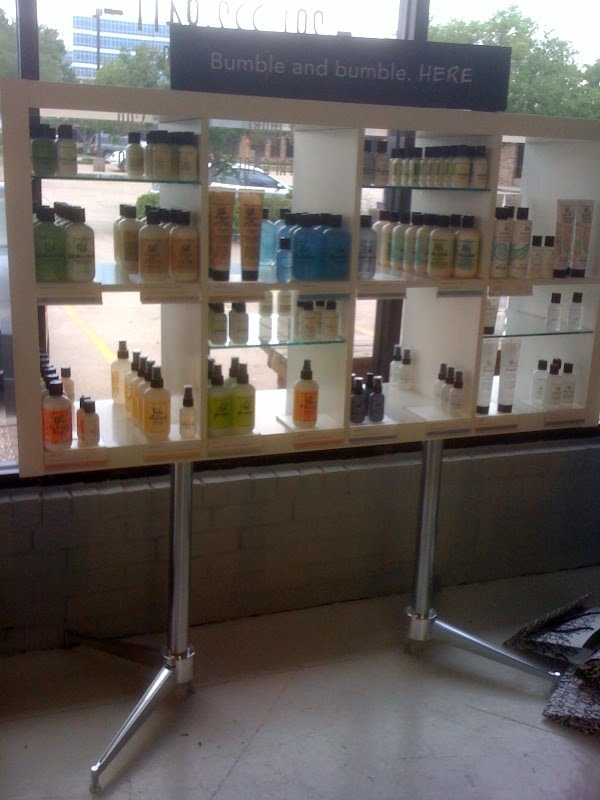
  • Contemporary display shelf

    Materials: Expedit 2×4, glass inserts, legs, drill, shelving brackets

    Description: Here at Salon Vivid, we are remodeling our salon, and wanted product display shelves to match the contemporary feel we are trying to achieve. Not being able to find exactly what we were looking for, we decided to get creative!

    We purchased the 2×4 Edpedit in white from Ikea. To have the products at an eye level for our clients, we supported them with 3 ft. legs we found online. To attach the legs, we screwed them into the bottom of the shelving unit.

    We also wanted the merchandise organized for easy recognition. We decided to insert shelves so our travel sized products would be located next to the full sized products. We ordered custom made glass shelves to fit the dimensions of the cubes. To apply the shelves, we drilled holes and inserted shelving brackets to support the glass.

    We love the shelves, especially how they fit the needs of our salon. Also, we receive many compliments on them from our clients!

    ~ Salon Vivid (Phiet), Webster, Texas


  • Did You Know That You Can Move Entire Brick Buildings? [Engineering]

    My dad moved a brick wall once. Seriously. He used a chisel to break the four sides of the wall, moved it a meter, and then applied cement to fix it to its new position. These, however, are entire buildings. More »


  • NY Times asks Harvard’s Associate Professor Hannah Riley Bowles about women and salary negotiation

    Women need to take the initiative in asking for a raise, Associate Professor Hannah Riley Bowles at the Harvard Kennedy School explains in a New York Times article published May 14.  Her studies show that women need to take the initiative to ask for more pay and need to employ a negotiating approach that helps them get the compensation they deserve while maintaining good relationships at work.

    To read the full article, click here.

  • 2010 Hyundai Genesis Coupe 2.0T R-Spec – Short Take Road Test

    Hyundai gives tuners more of what they need and less of what they don’t. But is it enough?

    Hyundai released its Genesis coupe a little late to capitalize on the pre-recession Fast and Furious era, but the company’s factory-backed pro drift car, myriad SEMA customs, and tire-shredding TV commercials show that the Korean company understands the power of the aftermarket among consumers of affordable, sporty cars. Nowhere is this more evident than with the Genesis coupe 2.0T model, which starts at $22,750 and packs a turbocharged, 210-hp, 2.0-liter four-cylinder.

    Keep Reading: 2010 Hyundai Genesis Coupe 2.0T R-Spec – Short Take Road Test

    Related posts:

    1. 2010 Hyundai Genesis Coupe 2.0T – Short Take Road Test
    2. 2010 Hyundai Genesis Coupe 3.8 – Road Test
    3. Name That Exhaust Note, Episode 40: 2010 Hyundai Genesis Coupe 2.0T R-Spec
  • Turns Out Lifelock’s CEO Has Been A Victim Of Identity Fraud 13 Times

    Ah, Lifelock. The company, which was recently fined $12 million for bogus advertising and absolutely dreadful security practices (the private data that Lifelock claimed it was helping you protect was not encrypted and was available to more than just authorized employees). Of course, the most amusing thing of all was how the CEO of the company, Todd Davis, plastered his Social Security Number everywhere to show how “safe” he felt with the company’s service. In the past, we had noted that this didn’t actually stop him from from being a victim of identity fraud — when someone used his well publicized SSN to get a $500 loan in his name. Oh, and then there was the story about how the CEO then personally went to the home of the guy who did this, and “coerced” a confession out of him. In doing so, it ruined the police investigation and tainted the case.

    Thankfully, it now turns out that there were twelve other opportunities to taint evidence. Yes, it’s now come out that the CEO who proudly gave away his SSN because his own company would protect him has been a victim of identity fraud at least 13 times. And they say 13 is an unlucky number…

    The stories go on and on, with lots of people using his Social Security Number to open up various accounts — many of which it appears he didn’t find out about until collections agencies came calling. Could there be any worse advertising for Lifelock than this? It’s even pissing off the police


    “It’s unfortunate he chose to conduct business in that way,” [Albany police] spokeswoman Phyllis Banks said. “It’s not fair to [AT&T] because they’re losing a pretty substantial amount of money.”

    Permalink | Comments | Email This Story


  • Online buying tips for new / used cars

    Used Car Salesmen Tricks

    One of the biggest moments in many people’s lives is driving off in their brand-spanking-new automobile. It’s an exhilarating feeling. It’s also a big moment because in that very instant, that brand-spanking-new car loses a big chunk of its value—the difference between the retail price you paid and the car’s wholesale value. That’s typically thousands gone in an instant.

    That’s why some car buyers choose to shop around for a used car. You save yourself that steep initial drop-off in value. More importantly, you get a car that runs just as well, is just as dependable, and looks and feels as good as that new car—that is, if you play your cards right.

    For if there is one pitfall of buying a used car, it’s the risk of buying a lemon, a junker—call it what you want, you get the point: the wrong car. Used car dealers, after all, have nearly as bad a reputation, if not worse, than lawyers do. This holds true for individual people selling their cars through newspapers, Web auctions and classified sites, or with the old-fashioned signs in their car windows. The saying, “Buyer Beware,” no where has more meaning than with cars.

    The opposite to that, of course, is that there are some real steals out there in used cars. We’re talking about quality vehicles that will perform beyond your expectations at a low price. Here’s how to find these perfect used vehicles, and avoid the top 10 scams that used car dealers everywhere try to pull on you.

    1. Get a second opinion for the hype. Used car dealers will bombard you with every adjective under the book to sell you on a car—sporty, thrifty, fast, and etc. Don’t take their word for it. Instead, find someone you know, whether a neighbor, a colleague, a family member, or a friend, who owns the same make and model of the vehicle, and ask them for their opinion.

    2. Do a background check. One of the most unethical, but legal, things someone can do to you is sell you a used car that’s been in a flood (and sort of repaired), or one that’s had 10 previous owners (none of whom repaired it). To be sure you don’t fall victim to this, track down a history report, including a clearance check on the vehicle title. You can even get some of this information from the seller, simply by asking why they are selling it. You’d be surprised what beans people may spill.

    3. Examine for past damage. Used car dealers may also try to peddle a vehicle that was wrecked in a major accident. It’s amazing what autobody experts can do to repair a car’s exterior. So don’t go by the outer appearances of a vehicle. Before you buy it, make sure that it does not have serious damage to its frame, which it would have if it was involved in a crash.

    4. Call up your trusted mechanic. Used car dealers, especially the big lots, will say they put their used cars through a “100 point inspection,” or something like that. Once again, a second opinion is in order. Get this one from your own mechanic. He’ll be able to tell how good a shape the car actually is in. Also be sure to ask him or her how often the car had been serviced. A good mechanic can even gauge that.

    5. Research for recalls. Needless to say, a used car dealer may sell you a car that’s actually under recall in his mad rush to get the car off his lot. So be sure to call the car manufacturer, or visit their Web site, to see if the vehicle has any active recalls.

    6. Avoid the leftover lemon. Along with recalled vehicles, dealers may even perpetrate something much worse on you—sell you a lemon. (By definition, a lemon is a car that’s still under warranty, which has such major problems that, warranty or not, it still cannot be fixed in a reasonable way.) The best way to avoid this is to research in Consumer Reports or the various automobile magazines, which all have yearly reviews of every make and model on the market. They’ll tell you whether a kind of car is known for being a lemon and prone to breakdowns.

    7. See through the old paint and bait. Along with performing their “100 point inspection,” car dealers may shine and wax a used car—even repaint it—to hide dents, dings, and rust spots. A keen eye, though, can see right through this.

    8. Take the test drive. Once you’ve done all your research, homework, extra credit, and everything else called for in the first seven steps, then comes the fun—the test drive. Drive the car for as long as its owner or dealer will allow you. Then you’ll get a better feel for how the vehicle handles, accelerates, brakes, and otherwise suits your tastes (or doesn’t).

    9. Be wary of the pushy seller. At any stage of the game—from the moment you first talk to the seller to the test drive—be careful if the seller gets pushy. Any dealer or seller who is in a rush to move a vehicle should set off bells and whistles. Why the rush? Are they hiding something? In some cases the seller may just be excited to sell you the car—and actually happy for you—but in many other cases, they may be up to something. Better be safe than sorry.

    Follow these 9 simple steps to avoid the scams and pitfalls of used car deals, and you could get the car of your dreams—for far less than you’d pay if it was brand-new. Plus, you get that same high when you drive your new used car home, without losing thousands of dollars.

    Used Car Buying Tips

    Some of these used car buying tips won’t be new to you. Often the trick is just to apply what you already know. On the other hand, when it comes to expensive areas of life like buying a car, one new thing learned can save you hundreds of dollars. Try some of the following.

    1. Make a low offer. Okay, you knew this one. A trick you may not have used, though, is to make a low offer, and then leave your phone number with the seller. Time has a way of making sellers desperate, especially after you just helped convince them that they are asking too much.

    2. Be careful with car price guides. Use the “blue book” etc, but try not to pay more than wholesale. I can’t think of many times when people I know have paid more than “bluebook,” so these “average” sales prices are doubtful.

    3. Talk to people. This is one of the simplest and effective used car buying tips. Just let friends, family and others know you’re looking for a car. Quite often people would be happy to avoid the whole process of advertising and showing their car if they could just get rid of it by giving a good deal to a friend.

    4. Check out the engine. Have a mechanic look at the car, and tell you what it’s likely to need in the next year or so. Then make a list, so the seller can see in writing why you are offering less than he wants.

    5. Auctions. See if there is a public auction in your area. If not, maybe you can go with a dealer friend and give him a $100 to buy a car for you.

    6. www.carfax.com. It’s around $25 to run vehicle background checks for a month – long enough to find your next car. They’ll show the chain of title, accident reports for the car, and even safety and reliability scores for that model.

    7. “Ugly” cars. Watch for cars that sit on the lot for months. Dealers will often sell these “ugly ducklings” at a loss just to move them. Again, you may want to leave your phone number with a low offer.

    8. Rental company cars. They are sold fairly cheap when they get the new ones in. Buy at bluebook wholesale or less, because they have had many different drivers, so they’ve more wear than normal.

    9. Repos. Credit unions and some small banks do their own selling of repossessed cars. You usually bid on paper, maybe with a $50 deposit, and then get your $50 back if you’re not the winning bidder. If they don’t sell their own repossessions, ask where they are sold.

    10. Consider gas mileage. High mileage may be better, but maybe a car that costs $500 less will use only $400 more gas in the two years you expect to own it. Do the math.

    The Guide To Better Car Buying Deals

    Buying a car is like making a journey into the unknown especially if you do not know the meaning of mileage and the only seats you have sat on inside a car are the ones for the passengers. Without a map, one can get lost, confused by several choices and generally duped into accepting a less than great a deal.

    Still like any journey, with the right guide to buying a car, one can breeze through the experience with flying colors. Below is a guide to getting better car buying deals not only in terms of getting high quality cars but also in being aware of rebates and discounts. Both online and offline transactions were mentioned and discussed as some people are already doing their shopping online.

    Read on and see for yourself which car buying guide you already know and which one you just heard for the very first time.

    Car buying guide #1: List your requirements and stick to it.

    Knowing what you need and what you want already takes you halfway the decision-making process. List your requirements and search for a perfect match out of the hundreds of car models available. You can do this in the old fashion way by visiting the car dealers near your area or the new age way through the wonders of the World Wide Web. One car buying guide which you should remember is to never go to dealers without having a car in mind. Websites like CarDirect.com has a handy research tool that can help you refine your search

    Car buying guide #2: Have a budget and stick to it.

    When you have already decided on your car model, you can now look into the prices being offered by various car dealers. One car buying guide that is really important is to do price comparisons, which are available online at InvoiceDealers.com or CarsDirect. You can also ask advice from people who have bought cars in the last five years. Chances are, car dealers still have the same practices.

    Car buying guide #3: Be on the look out for special sales and promos

    Most car dealers and even websites will always come up with a promo or a special deal guaranteed to outsell the competition. You can also leave your contact details and ask the car dealers that you have visited to inform you of upcoming promos. That way, you will stay up to date and would be able to compare different deals offered by different companies. One can also try looking for great deals over the Internet.

    Car buying guide #4: Buy at the right season

    One car buying guide that is a sure hit is perfecting the timing of buying a car. Usually, car dealers go on sale by the end of December as there is low demand for expensive gadgets. Because of the Christmas shopping rush, few actually buy a car at this period of time. Another great time is on July to October where new models have to replace the new. Sometimes, car manufacturers even offer big discounts just to be rid of the stock.

    Car buying guide #5: Beware of Add-ons

    Some dealers would put add-on services that you do not really need until the price skyrockets. Beware of these add-ons and really determine if that is something that you would like for your car.

    Source: LiveDrivingTips.com

  • Ah yes, this guide to 3D capturing and viewing technologies is most comprehensive


    I’ve been thinking of writing up a post detailing the different viewing methods for 3D TV/gaming/cinema and their various strengths and weaknesses, but it looks like that won’t really be necessary. Cyberlink has put together a really nice and very detailed guide to pretty much everything the end user needs to know about 3D.

    If anything, they err on the side of objectivity. Whether one method or another is better isn’t really the point — and as I mentioned in my reply to Roger Ebert’s issues with 3D, these technologies are maturing quickly and to pick a winner (or declare them all losers) would be shortsighted. And as a commenter points out (I noticed this as well), polarized solutions are given a sort of lowballing, though higher resolutions and/or dual projectors in cinemas can easily circumvent the resolution issue Cyberlink cites. Might Cyberlink be in the business of selling active shutter glasses, perhaps?

    At any rate, if you’re in the market or just want to be informed, this is a great (though rather long) article. You can download the whole thing as a PDF or read it over at Tom’s Hardware.


  • Best Buy wants to install your copy of Red Dead Redemption


    We could either give Best Buy the benefit of the doubt and chalk these stickers up to an over-zealous blue shirt or Best Buy really does expect to con some ignorant customers out of some cash. Your call. [via Consumerist]