Blog

  • Jeep releases video of 2011 Grand Cherokee in action

    Jeep’s highly anticipated 2011 Grand Cherokee is merely weeks away from arriving in showrooms, so to whet the automotive world’s appetite, the automaker has released a promotional video of its crucial new vehicle. The video shows the Grand Cherokee traversing some gentle terrain near the off road mecca of Moab, Utah.


    In addition, the automaker released a number of new images showing the upcoming Grand Cherokee in more colors.

    Pricing, released last week, for the 2011 Jeep Grand Cherokee Laredo 4×4 will start at $32,995 (including a $780 destination charge) with the up-level Grand Cherokee Limited 4×4 model commanding $39,995. The range-topping Overland 4×4 model will carry a sticker price of $42,995.

    The entry-level 2011 Grand Cherokee 4×2 will list from $30,995 – $495 less than the outgoing model.

    The launch of the new Grand Cherokee marks the first application of company’s new, flexible fuel 3.6-liter Pentastar V6 engine, which features Variable-Valve Timing, 290 horsepower and 260 pound-feet of torque at 4,800 rpm. Also available is a 5.7-liter HEMI V8, generating 360 hp and 390 lb-ft of torque at 4,250 rpm. The HEMI features VVT and fuel-saving Multi-displacement System (MDS) technology with dual exhaust to maximize efficiency.

    Torsional stiffness is 146 percent more than the current Grand Cherokee and stiffer than the BMW X5 and Toyota Highlander, according to Chrysler. The Quadra-Lift air suspension system delivers off-road capability along with the new Selec-Terrain system that allows the driver to choose the drive system that best matches on- or off-road conditions. New front and rear independent suspension systems deliver better on-road handling and comfort, the company claims. Quadra-Lift adds up to 4.5 inches of lift span that is supported by four-corner air springs that provide a cushioned, premium ride. Quadra-Lift operates automatically, or may be controlled manually via console controls.

    The interior has been revamped with better materials and overall aesthetics. An available all-new CommandView dual-pane sun roof provides twice as much glass surface than a standard sun roof and extends from the windshield to the rear of the vehicle. The front panel can be opened rearward, providing additional light and fresh air to first-row passengers. The rear panel, which is fixed, allows light and open viewing for second-row passengers and comes standard with a power sun shade.

    The vehicle’s 114.8-inch wheelbase is 5.3 inches longer than the model it replaces and contributes to an overall vehicle length that is 1.8 inches longer than the prior model. The longer wheelbase creates more interior room and gives passengers an additional 4 inches of rear-seat knee and leg room. The vehicle also is 3 inches wider. The front doors have larger openings — by about two inches in height and width — while the rear doors open wider — 78 degrees versus 67 degrees — for improved access to the interior.

    For added passenger comfort, rear seats recline 12 degrees. There’s also a 12-degree forward angle to allow 24 degrees of variation. Cargo volume behind the second-row has increased by 6.8 cubic feet, to 36.3 cubic feet total. An available fold-flat front-passenger seat provides even more cargo storage room. An all-new power rear liftgate is available, controlled via the key fob.

    Seventeen-inch wheels are standard and deliver off-road capability, while optional 18-inch and 20-inch wheels can be ordered.

    The standard “uconnect guardian” will automatically call emergency services in the event of an accident. Other features include remote door unlocking, roadside assistance, a stolen vehicle locator, and an “emergency call” feature. UConnect Web mobile internet will also be on offer.

    Standard safety features include Electronic Stability Control (ESC), Electronic Roll Mitigation (ERM), four-wheel Anti-lock Brake System (ABS) with rough-road detection, and the four-wheel Brake Traction Control System (BTCS). Other safety features include full-length side-curtain air bags which extend protection to front and rear outboard passengers, seat-mounted side thorax air bags that enhance protection for the driver and front passenger and active head restraints which deploy in the event of a rear collision.

    The 2011 Jeep Grand Cherokee also features SIRIUS Travel Link, offering up-to-the minute information about gas prices, weather conditions, sports scores and movie listings. In addition, the all-new 2011 Grand Cherokee features SIRIUS Traffic, which monitors traffic in 78 markets across the U.S.

    The all-new 2011 Jeep Grand Cherokee entered production at the 2.7-million-square-foot Jefferson North Assembly Plant (JNAP) in Detroit, which has been the site of Grand Cherokee production since its introduction in 1992, earlier this month. Expect to see the 2011 Jeep Grand Cherokee on dealer lots by mid-June.


    Source: Leftlane

  • Scientists creating super bug to produce fuel from hydrogen and carbon dioxide

    super bug

    Eco Factor: Bacteria to produce liquid fuels directly from hydrogen and carbon dioxide.

    A team of researchers from the North Carolina State University and the University of Georgia are working together to create a version of the Extremophile, a super bug that creates butanol or ethanol. The bug would skip the entire photosynthetic sugar-making step and would create liquid fuels directly from hydrogen and carbon dioxide.

    (more…)

  • 2011 Audi S7 expected to receive the new 4.0-liter V8 engine

    Audi Sportback ConceptDays after a spy video of the upcoming Audi A7 was revealed, we now get a some informations regarding the high-powered S7. The fact that this is an S7 is given away by its wheel and brakes, as well as a set of quad tailpipes.

    Reports have yet to be confirmed but it is believed that this model will receive Audi’s new 4.0-liter V8 along with the eight-speed transmission. Actually, this transmission will be found in most of Audi’s lineup as we announced it in this post.

    [via insideline]

    Source: Car news, Car reviews, Spy shots

  • VW to buy Italdesign Giugiaro, sources say:

    Volkswagen AG will buy a controlling stake in Italy’s largest design and engineering firm, Italdesign Giugiaro S.p.A., two industry sources confirmed to Automotive News Europe.

    One of the sources said that an announcement could come as early as next week. Italdesign and VW representatives declined to comment.

    The move is consistent with VW’s plan to be the world’s largest automaker by 2018 with sales of 10 million vehicles a year. To reach that goal, VW’s 10-brand group, including Porsche, will need more designers and engineers. In 2010 alone, VW group plans to add 60 models, including upgrades.

    Italdesign, co-founded by Giorgetto Giugiaro in 1968, currently has 975 employees and 800 computer-aided design workstations. Most of the workers and equipment are based at the company’s headquarters in Moncalieri, Italy, 9 miles south of Turin.

    Italdesign is a private company entirely owned by Giorgetto Giugiaro, 71, who serves as chairman, and his son Fabrizio, 45, who heads the design and model division.

    Both executives are expected to continue working at the company following the VW takeover.

    Italdesign does not disclose its financial results. The most recent data available shows that in 2008 the company increased its revenues 6.2 percent to 136 million euros ($166 million) and reported an operating breakeven.

    Engineering work stays confidential

    Recent models designed by Italdesign include the Alfa Romeo 159 sedan and station wagon, the Brera coupe, the Fiat Grande Punto, Idea; the Suzuki SX4 and its Fiat Sedici sister model.

    Italdesign’s design work is often made public by its automaker clients, but its engineering work typically remains confidential.

    In the past five years, the only engineering task that Italdesign was allowed to take public credit for was engineering the model range of BMW’s second-generation Mini–a hatchback, convertible and Clubman station wagon.

    Previous engineering works include the Citroen C3 Pluriel convertible small car and variants of the past generation Renault Megane compact.

    For VW Italdesign styled the first generation Audi 80, VW Passat and Scirocco; the entire family of VW’s W12 sports car concepts, plus several Seat models and concept models for the rebirth of the Bugatti brand under VW.

    For more


    the design room at Italdesign Giugiaro.

    Source: Car news, reviews and auto show stories

  • Hyundai considers Indian diesel engine plant

    Hyundai is reportedly considering opening a $550 million diesel engine factory in India designed to serve that burgeoning market. The plant would supply Hyundai’s Chennai, India, assembly plant, which builds the company’s diminutive i10 hatchback.

    The i10 was designed specifically for the Indian market, although it is sold in a number of European, Asian and African markets as well. It currently offers a South Korean-built 1.1-liter diesel, but that engine is installed only in higher-specification i10s marked for export.

    A company representative said that the automaker is mulling producing the diesel engine locally in India in an effort to reduce the company’s break even point for the powertrain. Hyundai says that i10s sold in India tend to be lower-specification, entry-level models that compete at a more competitive price point than export i10s sold abroad.

    The automaker says it needs to forecast demand of between 150,000 and 200,000 diesel-equipped i10s in order to justify the additional Indian assembly plant.

    “We initially want to localize some critical engine components in India,” a Hyundai source in Seoul told the Indo-Asian News Service. “Once that is done, making other components like cylinder block heads is not a problem.”

    Hyundai is India’s largest vehicle exporter.

    References
    1.’Hyundai Motor mulls…’ view


    Source: Leftlane

  • Men Floating In Bouncy Castle Interrupt International Sailing Regatta [Wtf]

    As if a video of three men taking a bouncy castle on a five-mile journey across a lake isn’t odd enough, there are an interrupted international sailing regatta, a guy in a shark costume, and police officers involved as well. More »


    sportSailingBoatsRowingRegatta

  • Karadon Zonguldak

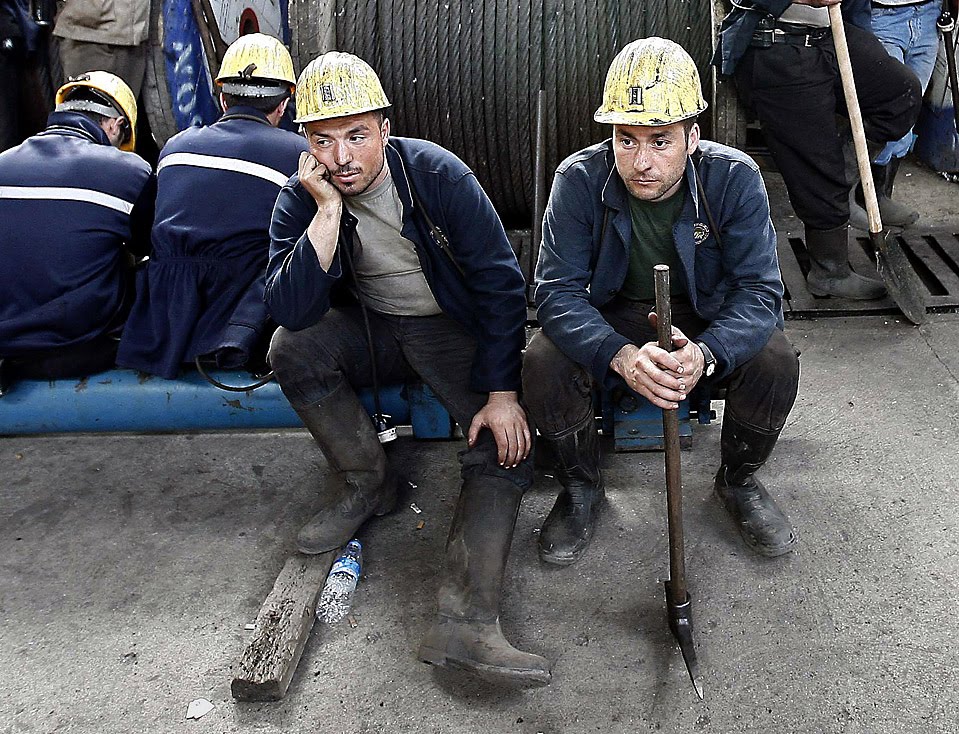
    Turkey prays for miners trapped underground
    Turkey is focused on the fate of 30 workers trapped deep underground in a mine in Zonguldak following a methane gas explosion.

    The explosion that buried the workers 540 meters underground at the state-run Turkish Hard Coal Enterprises (TTK) Karadon mine on Monday drew the entire country’s attention to this northwestern province. However, despite all efforts, the miners had not been rescued by the time Today’s Zaman went to print. Energy and Natural Resources Minister Taner Yıldız said fallen rock was hampering rescue efforts but that the teams were doing their best to reach the trapped miners.

    Five separate rescue teams made up of 400 men were deployed to the mine hours after the incident occurred on Monday. They started working in shifts under difficult circumstances to extract the victims. They dug a passage early yesterday but it collapsed, and they were then forced to approach the miners from a different route, more than 2,000 meters away from the site of the explosion. A member of the rescue team collapsed due to a lack of oxygen while working underground. He was treated in one of the ambulances standing by to take the miners to hospitals if they are successfully rescued.

    Labor Minister Ömer Dinçer said there were reports suggesting that the methane gas concentration was not very high in some parts of the collapsed mine and that the trapped workers might still be alive if they were in one of these sections of the mine.

    “We are keeping our hopes alive. We hope that our fears will not be realized,” Dinçer said, adding later in the day that as time passed their hopes were decreasing. He also said there was no visible violation of safety rules but that the reason behind the explosion has not yet been ascertained. Dinçer noted that their primary focus was not on looking for who was responsible for the explosion but on rescuing those trapped.

    Turkish Red Crescent (Kızılay) President Tekin Küçükali said their teams were working without stop to help the people waiting near the mine for news on the rescue efforts. “Our state and the government have put all their resources to use to rescue those workers. Three ministers are dealing with the matter personally. Our teams are on 24-hour duty,” said Küçükali, adding that they provided soup on Monday night and meals yesterday while also affording professional psychological counseling for relatives waiting for their loved ones to be rescued.

    Civil Servants’ Trade Union (Memur-Sen) issued a written statement following the blast yesterday and said the incident has led to immense sorrow across Turkey. “We expect those 30 workers trapped to be safely rescued and good news to be delivered to their families, friends and the entire nation as soon as possible,” the statement read, adding that “it is our the most natural right to expect all those accidents that happened because the required safety measures were not met or because of inspection deficiencies and negligence to come to an end. Although the state having the means to rescue them is pleasing, the best work to do is to prevent similar accidents from happening again.”

    Deadly mine blasts have been a common occurrence in Turkey. The explosion at the mine in Zonguldak was the third mine explosion in the country in the past six months. In February, a methane gas explosion collapsed an underground chamber in a coal mine in the northwestern province of Balıkesir, killing 13 workers. Nineteen miners were killed in Bursa in December of last year in a similar accident. Both accidents led to national grief when images of the workers’ families weeping helplessly hit television screens. However, little has been done to take necessary measures to prevent another such tragedy from happening. In country’s worst mining disaster, a gas explosion killed 270 miners near Zonguldak in 1992.

    Victims’ families in desperate wait

    In the meantime, victims’ families waited tirelessly all day near the mine’s entrance. Some have more than one relative trapped deep in the mine. Ayşe Aklin’s son, son-in-law and nephew are trapped underground. “I told my son not to go and work in the mine and that I would take care of him by selling milk, but he took this job,” she said, with her eyes full of tears. Gülşen Karabektaşoğlu, with her 6-year-old daughter Ebrar, was waiting for her husband to be rescued. “My husband faced danger when he passed out a month ago after being poisoned by gas. However, he could not quit the job because we are renting our house. He, in fact, is a cook but started working there almost five years ago due to financial difficulties,” she said.

    19.05.2010, News, TODAY’S ZAMAN WITH WIRES

  • DIY electric 1968 Porsche 912 isn’t fast but clean

    1968 porsche 912_1

    Eco Factor: 1968 Porsche 912 modified to run on electricity.

    The race to build electric cars isn’t just making auto manufacturers think about new green machines, but is also making some individuals lend a helping hand for the sake of the environment. A Hollywood producer is trying to do his bit by converting a 1968 Porsche 912 to run on a clean electric engine.

    (more…)

  • Fecundity vs. lesbianism; what’s more atypical? | Gene Expression

    Sex Lives of Supreme Court Justices:

    Now that the sex lives of Supreme Court justices have become grist for commentators, we are finally free to discuss a question formerly only whispered about in the shadows: Why does Justice Antonin Scalia, by common consent the leading intellectual force on the Court, have nine children? Is this normal? Or should I say “normal,” as some people choose to define it? Can he represent the views of ordinary Americans when he practices such a minority lifestyle? After all, having nine children is far more unusual in this country than, say, being a lesbian.

    The GSS can answer this question. Sort of. It turns out that the highest number of children it asks about are “8 or more.” Limiting the sample to 1998-2008 so it has some contemporary relevance, ~1% of respondents in the GSS has 8 or more children. But that’s not quite fair, since many respondents are young adults, or just starting their families. Limiting the sample to those who are 60 years or older you have ~3.5%. Limiting to 70 and above it goes up to ~4.5%. Scalia is 74 years old, so I think it might be appropriate to judge him by his generation, though the relative gerontocracy of the Supreme Court, and American politics in general, might warrant examination. In 2008 in the GSS asked about sexual orientation, and ~2% of women stated they were lesbian, gay or homosexual. So whether Scalia is more abnormal than a lesbian measured against the general population depends on the reference population you use. For his generation, probably not, but for this generation, perhaps.

  • Banning Short Selling Does Not Improve Quality of Sovereign Debt

    Austria is not Australia. Sorry about that.

    Late last week we reported that the Australian Mint sold more gold coins in the first two weeks of April than it had in all of the first quarter combined. That was a mistake. It was the Austrian Mint, which makes a lot more sense, given that nearly all of the sales were to Europeans who are in mild state of panic about the stability of their currency and their banking sector.

    Speaking of which, a few weeks ago we speculated that Germany might be an earlier victim of the sovereign debt crisis because its various banks and financial institutions own a lot of Spanish and Portuguese debt. Credit default swaps were blowing out faster on German debt than other sovereign nations in which deficits and debt were bigger.

    But this is really a question of where risk resides in the credit system at the moment. And the market is pointing somewhere in the middle of Europe. So if you were a speculator, or merely wishing to hedge your position in German financial stocks, you’d buy credit default swap insurance. It seems like a sensible thing to do, although apparently you can’t do it anymore.

    Bloomberg reports that, “The euro slid to its least since April 2006 after Germany prohibited naked short-selling and speculating on European government bonds with credit-default swaps and the Bank of Italy allowed lenders to exclude losses on government debt.” Hmmn. Is this like not being able to buy health insurance if you have a pre-existing condition?

    Investors unable to hedge their risk may have to sell. Or, short-sellers will have to cover, which means you could get a brief rally in European shares, the euro, and euro bonds. But it’s hardly the sort of thing to boost confidence. Another Bloomberg article elaborates: “Germany will temporarily ban naked short selling and naked credit-default swaps of euro-area government bonds at midnight after politicians blamed the practice for exacerbating the European debt crisis.”

    The key words here are “naked” and “politicians”. Naked short selling, unlike the covered kind, is selling a security you don’t own instead of borrowing it first and then selling it. There’s a healthy debate about whether you can or should be able to sell something you don’t own or that isn’t owned by anyone. Why speculators are doing it is obvious. Whether they should be able to do it is less obvious.

    But that it’s a good investment idea…well that is another matter entirely. And politicians who are blaming euro bond weakness on short sellers are looking for a villain that is not them. It’s a confusion of cause and effect, like blaming the buzzards for the death of the corpse. It does buy them time though, in the blame game.

    Banning short selling does not improve the quality of sovereign debt or sovereign finances in Europe. And by the way, we’ve been copping it from European subscribers lately who feel aggrieved. They point out that there are other even more serious debt problems in the UK and the USA. And in terms of flawed currencies, what about the greenback and the pound?

    Correct you are, aggrieved Europeans! The dollar’s day of reckoning will come too. But in the mean time, US bonds and the greenback are enjoying the “flight-to-something-else” bid. We wouldn’t call it a flight to safety, mind you.

    But it does explain the chart below, which shows the gold price in both U.S. and Australian dollars. Note the price rising in both currencies. And note that the Aussie gold price appears to move up as global investors flee risk (emerging markets and leveraged commodity plays). The greenback gold price is climbing too, but less fast.

    6 Month Spot Gold in Australian Dollars vs US Dollars

    Meanwhile, will the centralised slap down on markets in Europe work? The authorities are trying to protect vulnerable institutions by preventing short sellers and speculators from attacking them. And the Bank of Italy’s decision to exclude losses on government debt from capital adequacy considerations is nothing less than inspired. It could start a trend.

    It’s not a loss if you don’t count it!

    More seriously, why institute the ban on naked short selling now? And why take the extra step of preventing anyone in the market from going short government bonds? To be charitable, you could assume that the asset price falls (especially in government bonds) are the work of evil speculators (the global wolf pack) who are unfairly damaging and destroying confidence in otherwise credit-worthy securities and sound government fiscal policies (cough).

    But more likely, if asset values on bank balance sheets are falling (principally government bonds) then it could again trigger the whole deleveraging vicious cycle we saw in 2008 where institutions are forced to sell some assets to cover losses on other assets or loans. You get a whole lot of selling and much lower prices, which is of course exactly what needs to happen.

    Some in Europe are saying another EU aid package is “inevitably going to come” and that the euro’s decline is “unstoppable.” Those are the words of former Bank of England policy maker David G. Blanchflower on Bloomberg Television. “What we really have to think about,” he said: “are rescuing the banks, dealing with this credit crisis, giving confidence back to the euro area, which they’ve not done…And let’s think about how we can organize the next rescue package, which inevitably is going to come.”

    Meanwhile, back on the resource ranch, the more we think about the Resource Rent Tax, the more obvious it is that it’s a back-door nationalisation of the mining industry through the tax code. Without asking permission from the miners or the Australian people – and based on the idea that the government owns Australia’s resources even if private capital develops them – the government has made itself a partner in the profits and losses of Australia’s miners.

    You can understand, why, when times are good, you’d want to participate in profits – especially if you didn’t have to take any of the risk (as is the case with imposing the tax on existing projects whose risks and costs were born by private investors). It reminds us of what John Dillinger said when he was asked why he robbed banks.

    “Because that’s where the money is.”

    But has anyone bothered to ask if the Australian people should or want to be responsible for 40% of the losses born by miners? Is that good public policy? What are the long-term consequences? Can anyone know?

    That Australians would indirectly be on the hook for losses born by the mining industry is the case, as far as we understand the new proposal. Or, put another way, it’s a subsidy to marginal projects and inefficient producers. In a market system, private capital takes risks and bears the losses and gains from those risks. Investors consent to put their own capital at risk in explorers and that is that.

    But now the government is essentially agreeing to put your tax money at risk in the mining business. It raises the possibility that the resource tax going to increase the inefficiency of capital spending in the resource sector at the same it may decrease total investment by the private sector.

    If both those things happen, the Rudd tax would distinguish itself in the annals of government policy as being doubly bad. That’s quite an achievement. But really, do we want the same people who gave us the pink bats and BER programs to now get stuck into the mining industry?

    Economically, this puts the government on the hook for bad investments in the mining sector in the future, and in perpetuity. When you’re a partner, it’s for better or for worse. For richer AND for poorer. If you really thought about it, you might have second thoughts about whether making all Australians compulsory partners in the mining business was such a good idea. But that would only occur to you if you were thinking. It’s not just a question of coercion. It’s a question of economic prudence.

    Right now, the government is hardly thinking about future bad investments. It’s thinking about billions in new tax money it can redistribute to achieve whatever ambition of the day it has for the Australian economy. But at what could be the top of this leg of the commodity cycle, those billions y never materialise, especially if what Bill says about China below is true. And then?

    Dan Denning
    for The Daily Reckoning Australia

    Similar Posts:

  • Toyota Recalls Lexus Vehicles

    Toyota Motor Corporation is to recall Lexus vehicles due to problems on the computerized steering system. Toyota, the Japanese auto giant, had received about 12 reports of electrical problems causing the steering system to malfunction for a few seconds, as reported by Japanese daily Yomiuri Shimbun on Wednesday.

    Meiko Iwasaki, spokeswoman of the carmaker, said that Toyota is to recall about 11,500 Lexus cars: 4,500 Lexus Cars in Japan and 7,000 vehicles overseas, including 3,800 cars in the United States. The recall covers four models – LS460, LS460L and hybrids LS600h and LS600hL – which are affected with the defect. Toyota, the world’s largest carmaker, had recalled about 10 million vehicles worldwide since last year. It had also agreed last month to pay a record US fine for hiding accelerator pedal defects that caused more than 50 deaths in the United States. Iwasaki stated that customers in Japan have complained about wheels not returning to original positions fast enough after making turns. The problem is both mechanical and software-related, she added.

    Toyota shares have declined 1.4 percent in Tokyo and were trading 1 percent lower at 3,496 yen, whereas the Nikkei Stock Average was down 1.6 percent.

    Related posts:

    1. Toyota Sequoia SUV recall
    2. GM Recalls 1.3 Million Cars
    3. Toyota Car Recall Model and Years

  • The Declassified History of NSA Computers [Retromodo]

    Straight from the Department of Defense History comes a recently declassified gem: Samuel S. Snyder’s History of NSA General-Purpose Electronic Digital Computers. It’s a wonderful late-night read with plenty of old-school computing trivia. [GovernmentAttic (PDF) via Schneier via Boing Boing] More »


    United StatesNSA General-Purpose Electronic Digital ComputersSamuel S SnyderCollectingRecreation

  • Firefox for Android pre-alpha updated, gets nightly builds

    Mozilla-Fennec-on-Android

    Blogger and Tech Lead of Mozilla’s mobile devices team Stuart Parmenter has slipped out a new pre-alpha build for Android 2.x users.  He still warns that it’s likely to be very buggy and isn’t even close to ready for prime time, but for us curious types he has posted it on his blog here to download and play with.

    It’s considerably better running and a bit smaller (the download is 9.6 MB, and the install is now 25MB versus 30MB in size) than the last build.  I put it through the paces a little bit and found it to be quite a treat, especially knowing that it’s still an early development version.  And interestingly enough, it outscores the native Android browser on the Acid3 test.  If you’re feeling adventurous head over to Stuart’s blog and give Fennec a spin.  [pavlov.net

  • Lindsay Absolutely Denies Her Relationship with Indrani

    “No, no, no…In NO way am I dating her,” Lohan told Us magazine when asked about the reports. Lindsay is absolutely in denial with her relationship with Indrani Pal Chaudhuri.


    Lohan, who was just reported to be separated with her lesbian girlfriend DJ Samantha Ronson last year, is said to be dating again!  The New York Post reported Lohan who is only 23 years old and Pal Chaudhuri who is 36 years old began dating after meet last fall at a photo shoot. Pal Chaudhuri confirmed the romance to the Post, saying, “We have been spending a lot of time together. I have never had a relationship with a woman before, but Lindsay is just somebody who I find fascinating, gorgeous and extremely smart, as well as super-hot.”

    How ever, while Lindsay is completely denying her relationship with Indrani whose real name is Julia I. Pal-Chaudhur, Indrani’s business partner Markus Klinko went one step further by confirming the romance. He told the New York Post, “Lindsay and Indrani have been seeing each other since we shot her last fall. I’ve seen them on dates, I have seen them making out… Indrani is a good influence on Lindsay. She is the opposite of a party girl – a Princeton graduate, she’s into art and is a philanthropist – not what you’d expect (of) the typical girl for Lindsay to go out with.When they are together, they talk about art and the deeper meaning in life.”

    Who is talking about the real thing? Lindsay or Indrani? They better need to clear things up so that people will not be troubled. Does Lindsay have relationship with Indrani? Or Indrani is just saying these stuffs just to promote her show?

    Related posts:

    1. Truth About Lindsay Lohan And Photographer Indrani
    2. Lindsay Lohan have a new romantic relationship
    3. Indrani or Julia I. Pal-Chaudhuri: Lesbian Lindsay Lohan’s New Lover!