Blog

  • Metro: Last Light Review (PC)

    Metro 2033, the first-person shooter that came out from 4A Games and THQ back in 2010, was the definition of a flawed gem, as it delivered a great world and atmosphere but was let down by gameplay bugs and some wonky mechanics.

    With Metro: Last Light, the game’s sequel, 4A Games and new publisher Deep Silver want to deliver a drastically improved experience … (read more)

  • Crawford Performance Turbo BRZ – TUNED

    Subaru BRZ

    Anyone whose ever driven the new Subaru BRZ will tell you two things. First, it’s an amazing car with great road feel, handling and a fun factor that’s off the charts. Two, it’s underpowered and slow. Crawford Performance seeks to cure this by offering a package that not only doubles the BRZ’s horsepower, but TRIPLES it’s torque! Matt Farah of TUNED recently got his hands on Crawford’s new BRZ to see just how good it really is.

    Source: Youtube.com/DRIVE

  • Congress wants to know a little more about Google Glass privacy guidelines, sends a friendly letter to Larry Page in the process

    google-glass_598


    Considering Google has had a history of well… questionable privacy guidelines for its products and services, Congress is taking some preliminary measures to ensure the Glass headset will adhere to some privacy safeguards we’ve all come to love. As reported by the Wall Street Journal,  8 members of Congress wrote a letter directly to Larry Page insisting on a discussion of the privacy implications of not just the Glass headset, but the technology that comes along with it. The biggest concern? The letter specifically highlights “privacy implications”, while highlighting the “facial recognition technology” that could potentially provide the personal information of any one single individual the Glass camera is pointed at.

    As it stands, Google has declined any comments on the letter as of now— but we suspect it won’t be long before it provides a formal response indicating the Glass headset will more than certainly be compliant with our strict privacy standards. You can check out the letter for yourself at the source link below.

    source: Wall Street Journal Blog

    Come comment on this article: Congress wants to know a little more about Google Glass privacy guidelines, sends a friendly letter to Larry Page in the process

  • eBay for iOS update includes new UI and registration via driver’s license

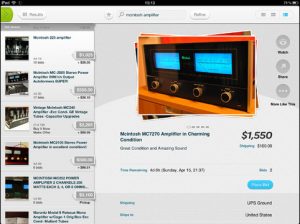
    The iOS versions of eBay’s app have been updated with a redesigned interface and a raft of other changes. The latest release improves on the stripped back UI that was available in previous versions and larger photos can now be accessed. As before, there are versions of the app available for iPad (which is version 2.3.0) and iPhone (which has reached version 3.0.0).

    But there’s more than a new look to the latest version of the app. If you’re one of those people who has yet to create an eBay account, the signup process just got a whole lot easier — if you’re in the US, that is. Forget time-consuming form filling, you can now sign up for an account with a quick scan of your driver’s license.

    Improvements have been made for buyers and sellers alike, and anyone looking to grab a last-minute bargain will find that scope for sniping is now more accessible. There are better filtering options so sellers can be sorted by their feedback rating and seller can now more easily list items that are similar to those they already have for sale — no more starting listing from scratch.

    eBay users in both the US and UK can now buy multiple items faster than before thanks to a new option. It is now possible to checkout multiple items at the same time so there’s no need to skip back and forth between pages as much.

    You can find out more and download a free copy of the app by paying a visit to the eBay for iOS review page — there are separate versions available for iPhone and iPad.

  • Yahoo Could Buy or Invest in Tumblr, Talks Have Been ‘Serious’ [REPORT]

    According to a report from Peter Kafka and Kara Swisher at All Things D, Yahoo CEO Marissa Mayer has her sights on wildly popular blogging platform Tumblr.

    Quoting “sources close to the situation,” Yahoo may be looking to invest in, partner with, or even outright buy Tumblr. According to sources, talks have been “serious,” but as you know serious talks does not a deal make. Mayer, who has been watching Tumblr since her days at Google, reportedly started up talks with Tumblr execs, including CEO David Karp, soon after taking the CEO job at Yahoo.

    One thing is for certain about a Tumblr acquisition – it wouldn’t be cheap. As Tumblr continues to grow (they just hit 100 million blogs a little over a month ago), the platform will only attract more attention. Estimates value Tumblr at $800 million at least, with some suggesting that it could be a $1 billion company.

    On the surface, it’s clear to see how a Yahoo and Tumblr deal could benefit both parties. Since Mayer took over Yahoo, the company has been going through a shift – mainly in an attempt to regain some relevance that it has lost over the past few years. Tumblr is one of the hottest things on the internet, so that can’t hurt. Plus, Tumblr would benefit from even more exposure. If there’s one thing that Yahoo does have a ton of clout left in it’s the Yahoo homepage. Yesterday, Mayer announced a partnership with Twitter to bring real-time tweets to the Yahoo newsfeed. Tumblr could benefit from this sort of increased promotion.

    Since Mayer became CEO, Yahoo has been busy making small acquisitions – Summly, Astrid, Milewise and GoPollGo. But a Tumblr buy would be a huge deal. We’ll be anxious to see how this one develops.

    UPDATE: According to GigaOm, Facebook may be circling, looking to snatch Tumblr out of Yahoo’s hands.

  • Microsoft’s new commercial finally sells the benefits of Surface RT

    This is how you sell a tablet. Tuesday evening of May 14, Microsoft debuted a new commercial for the Surface RT that finally explained the benefits of the tablet. No dancers. No super cool music. Just Microsoft talking about why the Surface RT is the next device you should own. The company emphasized the included USB port, kickstand, keyboard, and the single biggest sell of Surface RT, the included Office 2013 install. It sold the Surface as the power of a computer in the package of a tablet.

    Is this not precisely what I called on Microsoft to do in my previous article about those odd (but awesome) Windows 8 ads? In that article I told the story about a guy who was working in a coffee shop on his Surface when someone walked up to him and said, “Is that the tablet that clicks?” He recognized the product from the commercials, but seemed to be unaware of anything other than its clicking. I wrote,

    This situation underscores the reality that people just aren’t aware of what the Surface actually is and how much more it is than just a tablet. If Microsoft can get this message out by focusing on features against competitor devices like the iPad, people will continue to be confused.

    This commercial will easily solve the problem that consumers have of trying to understand the value of the Surface. I have not seen the commercial since, so it was probably just a trial run by Microsoft just to test the waters. I for one am impressed and Microsoft definitely needs to create more of these commercials for the Surface Pro as well as Windows 8 in general.

    I tried finding this commercial on YouTube but was not successful. If you find it, let me know and I can update this post.

    Have you seen this commercial? Do you think it properly sells the advantages of the Surface RT?

  • iOS quick tip: Turn on spoken notifications

    An iOS feature you may not know about is one where you can have your notifications spoken to you. It’s not Siri EyesFree, which is a mode designed to be integrated with cars. But it does use the same Siri voice to speak to you.

    Spoken notifications can come in handy when using your iOS device while working out at the gym, riding a bicycle or attached to your car’s hands-free audio system via Bluetooth.  No need to actually look at the screen and read the message you just received. All you need to do is listen. Here is how to set it up.

    Enable the VoiceOver Accessibility setting

    The iOS setting that you need to enable is actually an accessibility feature called VoiceOver.  This feature can be used to read all aspects of the screen using Siri’s voice, including notifications that pop up on the screen.  The following steps will also allow you to easily turn on and off the VoiceOver setting, as it may not be a feature that you want enabled all of the time.

    VoiceOver Settings

    • Open the Settings App and navigate to the Accessibility setting located within the General settings.
    • Select the VoiceOver settings located at the top of the list, but do not turn it on just yet. Instead scroll down to the bottom of the VoiceOver settings and turn on Speak Notifications.
    • Navigate back to the list of all Accessibility settings and scroll down to the bottom of the list.
    • Set the Triple-click Home Button setting to turn on VoiceOver and exit out of the Settings app.

    That’s it.  Now every time the Home button is triple-clicked, the device will enter into VoiceOver mode.  Once in VoiceOver mode, Siri’s voice will read aloud all of the information on the screen, including notifications. To turn off VoiceOver, simply triple-click the Home button again.

    Works with any Notifications-capable app

    This VoiceOver feature as configured above will work with any app that takes advantage of iOS’s notification system.  Just be sure to configure the notification setting so that the app you are interested in can display an alert on the lock screen.  Using VoiceOver this way will respect your Do Not Disturb settings.

    Twitter Notifications

    One app in particular that is useful to use in association with this feature is Twitter.  I have enabled certain news accounts that I follow on Twitter to be able to send me notifications.  With VoiceOver feature enabled, Siri will speak over the music that I am listening to and read the tweet to me.  It’s like adding your own custom news service to your favorite music stream, which I have found to be a very useful feature.

    Related research and analysis from GigaOM Pro:
    Subscriber content. Sign up for a free trial.


  • Google Glass successfully unlocked, boots up with Ubuntu at I/O

    Ubuntu

    Google I/O 2013 featured a session titled, “Voiding Your Warranty: Hacking Glass,” which was pretty much exactly what you would expect it to be. During the session, Google Glass was successfully unlocked, given root access, and then loaded up with Ubuntu.

    Of course most manufacturers wouldn’t encourage people to hack into their devices, but because Google Glass is a developer device, they’re looking for all kinds of experimentation.

    In order to install Ubuntu, a few steps (simplified) had to be taken:

    • Load Glass with Launcher, Settings, and Notepad APKs
    • Pair Glass to a keyboard and trackpad
    • Jump into the terminal, unlock and gain root access
    • Follow the normal process of installing Ubuntu
    • (Load up a terminal emulator, complete Linux installer)

    The definition of “hack” that Google would probably use can be found on Urban Dictionary. Check it out after the break.

    To program a computer in a clever, virtuosic, and wizardly manner. Ordinary computer jockeys merely write programs; hacking is the domain of digital poets. Hacking is a subtle and arguably mystical art, equal parts wit and technical ability, that is rarely appreciated by non-hackers.


    Come comment on this article: Google Glass successfully unlocked, boots up with Ubuntu at I/O

  • Now Some Members Of Congress Are Scared Of Google Glass

    Google Glass has sparked a conversation on the value of privacy ever since it was revealed last year. Those arguing for or against have become much louder in recent months, however, since the hardware is now in the hands of a select few developers. As expected, some members of Congress are now starting to chime in.

    The Hill reports that the bi-partisan congressional Privacy Caucus sent an open letter to Google CEO Larry Page asking for clarification on Glass and the myriad of privacy issues it presents. The letter contains many of the same talking points that groups like Stop the Cyborgs have brought up in the past, but it seems to at least be giving Google the benefit of the doubt in this case.

    Here’s some of the more interesting questions that many of us, including myself, would want answered:

    “What proactive steps is Google taking to protect the privacy of non-users when Google Glass is in us? Are product lifecycle guidelines and frameworks, such as Privacy by Design, being implemented in connection with its product design and commercialization? For example, if a Google Glass customer/user decides to resell or to dispose of their Google Glas product, would there be any product capabilities incorporated into the device to ensure that one’s personal information remains private and secure?”

    “In Google’s privacy policy, it states that the company “may reject requests that are unreasonably repetitive, require disproportionate technical effort … risk the privacy of others, or would be extremely impractical.” Please provide examples of when Google would reject requests on Google Glass that would risk the privacy of others? Would Google place limits on the technology and what type of information it can reveal about another person? If so, please explain. If not, why not?”

    “Given Google Glass’ sensory and processing capabilities, has Google considered making any additions or refinements to its privacy policy? If so, please explain. If not, why not?”

    There are a total of eight questions, but the above three are by far the most important. The last question is especially interesting as Google has run into complaints and threats of regulation when it changes its privacy policy. Even if Google were to change its privacy policy to reflect the the privacy implications of Glass, it’s a given that somebody would find something to complain about.

    In addition to questions about its privacy policy, the Privacy Caucus drags the 3-year-old street view Wi-Fi data collection scandal into the spotlight yet again. They want to know if Google will be doing anything to prevent Glass from unintentionally collecting data. It’s somewhat of a moot point because Glass and the street view cars are very different. Even if Google Glass could store data from unprotected Wi-Fi sources, the paltry 16GB of onboard storage ensures that it wouldn’t be able to collect very much.

    As for Google’s response to all of this, a spokesperson for the company told The Hill that Google is “thinking very carefully how [it] design[s] Glass because new technology always raises new issues.”

    That’s about all we can ask for at the moment. It will be interesting, however, to see if Page actually responds to the letter. During his closing remarks at Google I/O on Wednesday, he raised concerns that the law wasn’t keeping pace with technology. Would he argue that privacy laws aren’t keeping up with what Google is trying to achieve with Glass?

  • CDC: Poop Found in a Majority of Public Pools

    The CDC this week revealed that a new study on fecal matter in public pools uncovered a disturbing statistic. Over half of pools tested in the study were found to have E. coli, a marker for fecal contamination.

    The study tested pool filters from public pools, looking for genetic material. It found that 58% of the filters tested positive for a strain of E. coli that is normally found in human intestines and in feces. The CDC stated that the study indicates people are either pooping in pools or failing to clean themselves well before entering pools.

    “Swimming is an excellent way to get the physical activity needed to stay healthy,” said Michele Hlavsa, chief of the Healthy Swimming Program at the CDC. “However, pool users should be aware of how to prevent infections while swimming. Remember, chlorine and other disinfectants don’t kill germs instantly. That’s why it’s important for swimmers to protect themselves by not swallowing the water they swim in and to protect others by keeping feces and germs out of the pool by taking a pre-swim shower and not swimming when ill with diarrhea.”

    The CDC recommends several practices to cut down on pool contamination. Some of the obvious ones include people not swimming if they have diarrhea, showering with soap before swimming, and washing hands after using the restroom or after changing diapers. The agency also recommends taking bathroom breaks every hour, and checking children’s diapers every half-hour. More advanced pool users can check chlorine levels and water PH before swimming. Possibly the best advice the CDC gives, though, is that swimmers should not swallow the water they swim in.

  • What Value Creation Will Look Like in the Future

    Organizations have nearly perfected implementing the industrial model of managing work — the effort applied toward completing a task. For individuals, this model ensures that we know what we’re supposed to do each day. For organizations, it guarantees predictability and efficiency. The problem with the model is that work is becoming commoditized at an increasing rate, extending beyond manual tasks into knowledge work, as data entry, purchasing, billing, payroll, and similar responsibilities become automated. If your organization draws value from optimizing repetitive work, you’ll find that it will be increasingly difficult to extract that value.

    The value of products and services today is based more and more on creativity — the innovative ways that they take advantage of new materials, technologies, and processes. Value creation in the past was a function of economies of industrial scale: mass production and the high efficiency of repeatable tasks. Value creation in the future will be based on economies of creativity: mass customization and the high value of bringing a new product or service improvement to market; the ability to find a solution to a vexing customer problem; or, the way a new product or service is sold and delivered.

    We already have a word for creative output applied on a consistent basis to improve products and services: innovation. We need to bring it out of the R&D lab and mainstream it — define it, measure it, increase, and optimize it. We need to understand how to manage creativity as well as we do managing effort today. Productivity means we’ve wrung cost out of our operations. Creativity means we created more value: we sold X units of something that didn’t exist before; we increased the sales of Y not because we made it cheaper, but because we made it better or we increased our value to customers by servicing needs we hadn’t serviced before. Think of how the iPhone redefined the mobile market, and how cable redefined how we consume entertainment and paved the way for entire new companies like ESPN. Taking cost out will always be important, but the equation is changing: individuals, management, strategy, and operations will have to learn how to put value in.

    Organizational structure will have to change to meet the new reality of creativity as a core component of value and continuous innovation as the mechanism to sustain it. The new organization will include structures that support innovation 24/7/365 and at increasing scale. They will be more like organisms than machines. They’ll be structurally fluid — bringing individuals together in creative networks designed to adapt to an ever changing landscape of customer needs and desires, often at a moment’s notice. Management will be the job of those who oversee creative economies, ecosystems, and communities; it will be the job of managing innovation on a continuous basis where scale is used to create differentiated products and services to solve problems and meet needs on a customer by customer basis — all in real or near real time.

    The value chain will supplant the supply chain. Supply chain management is about taking out cost and making process efficient, but, as we’ve said, this won’t be enough; value chain management is about how to create value; how to coordinate the continuous innovations of creative contributors and how to make that process efficient for the consumer and the contributor. And creative networks will bring the same scale to creativity that social networks do to our to our circles of friends. The network doesn’t just have value in the social sphere. What social networks do for our ability to stay in touch and satisfy our need to interact with others, creative networks will do for work, management, product and service innovation and, ultimately, value creation beyond anything we have ever seen.

    What you can do:

    Master the machines. It doesn’t take a programmer, math whiz or rocket scientist to know that machines are taking over every form of routine work (whether physical or intellectual). Understanding how this happens and how to apply it to whatever you are doing will free you up to start thinking about how you add creative value.That creative value may well be organizing the machines to manifest a creative product or service.

    Get obsessed with value. How do you define it? Measure it? How do the changes you are thinking about create value? What new capability, product, or service will your organization bring your customers that they will value? How will this make their life better? How will it amaze them? Start getting your people together regularly to think about how to add value to your customers and to your organization. Make this time sacrosanct.

    Make creativity real. This isn’t an R&D effort or something to be done outside of your normal role. The skunk works is the organization. If you’re in senior management, make it clear that your organization is beginning a long term process of embedding innovation into your DNA; that creativity is the new effort and innovation on a continuous basis is the process to make it real: this is what the organization is about and does, and will be the primary responsibility of everyone in it.

    Nothing happens overnight. This will take time and it is painful. For as much talk as there is about how change is good, people hate it. Recognize that we’re looking to improve the apple cart we have over time, not to overturn it. This is a process, not an event.

  • NVIDIA’s Shield May Be A Tough Sell, But Now You Can Pre-Order It From GameStop And Newegg Anyway

    nvidia-shield_2

    If you were among the select few that signed up for NVIDIA’s Shield newsletter then you’ve been able to pre-order the company’s curious handset for a few days now. The remainder of the gaming masses originally had to wait until Monday for their own turn, but that’s no longer the case — NVIDIA’s retail partners have jumped on the pre-order bandwagon too so you can now stake your claim on a Shield from Newegg, Gamestop, and Canada Computer starting today.

    MicroCenter will also sell the Shield in June but it hasn’t yet gotten its pre-order page set up. Get yourself together, MicroCenter.

    I’m still not convinced that the Shield will find a foothold outside of the geekiest mobile gamers, but our own Darrell Etherington recently took the thing for a spin and came away rather impressed. He even went as far as calling it “the way Android games should be played,” a sentiment I don’t completely disagree with — we’ve seen the quality of mobile games surge by leaps and bounds these past few years, to the point where they easily eclipse consoles on years past. While those mobile games have slowly come into their own, the control schemes that are forced upon us thanks to the advent of the touchscreen leave much to be desired. There’s still something limiting and unsatisfying about effetely pawing at a piece of glass (or worse, a resistive display — yuck), a sentiment that others have championed too. Early reactions to the Shield are generally positive at least where the hardware and control layout is concerned, so at least there’s that to look forward to.

    But in the end, will the Shield sell? And what does NVIDIA hope to get out of it? As it happens, NVIDIA may not care all that much about pure sales volume anyway. Time’s Jared Newman spoke to NVIDIA GM of mobile games Bill Rehbock at I/O, who pointed out that the Shield was designed to highlight the sorts of high-end gaming experiences developers have crafted for Android, not to mention the power of the company’s Tegra 4 chipset. There’s little question that NVIDIA’s newest system-on-a-chip has got plenty of horsepower to play with, but it’s still hard to see the Shield as much more than an incredibly niche device that raises more questions than answers.

  • Samsung says Galaxy S4 is its fastest-selling smartphone of all time

    Galaxy S4 Sales
    The Galaxy S4 is Samsung’s fastest-selling smartphone ever with shipments topping 6 million units in two weeks. Samsung co-CEO Shin Jong-kyun revealed on Friday that sales of the Galaxy S4 into channels will likely pass 10 million units next week, The Korea Times reported. The executive noted that it is selling much faster than the Galaxy S III, which took 50 days to reach the 10 million mark. The Galaxy S4 will hit the same milestone in less than a month.

    Continue reading…

  • Facebook Suggests Advertising Popular Posts with Notifications to Page Admins

    Facebook is doing more and more these days to get pages to promote their content, and it seems that they company has now expanded that push to notifications.

    We noticed a new type of notification this morning, one that comes from Facebook and informs you that a certain post on a page on which you’re an admin is “performing better than 90% of other posts on the Page.” It then suggests that you “advertise it to get even better results.”

    Various WebProNews writers received this same notification this morning (we’re all admins on the WPN Facebook page). Clicking on the notification takes us to the “Advertise on Facebook” page and gets us started on setting up a promoted post with said article.

    Here’s what it looks like in the notifications:

    I’ve reached out to Facebook for comment on the test, and will update this article accordingly.

    This isn’t the first attempt that Facebook has made in recent memory to get page owners to promote more of their posts. Last month, Facebook made a few subtle changes to Pages, including the addition of a new analytics box inside the admin panel. Facebook also softened the language of page promotion, changing the “promote” post button to one that says “boost” post.

  • Sponsored post: Announcing BeyondCore Light: advanced analytics for all

    BeyondCore2Traditional analytics software forces you to choose between power and simplicity. Statistical analysis tools like SAS are powerful but require extensive coding experience, while visual reporting software like Tableau are business user accessible but don’t offer advanced analysis capabilities. Both types of solutions answer only specific questions from the user, but there are simply too many questions that could be asked of any reasonable size data. While machine learning or “kitchen-sink” regressions can look at large numbers of questions at the same time, these are expert tools whose output is typically indecipherable by business users. BeyondCore is designed from the ground up to combine power and simplicity.
    Since 2004, BeyondCore worked with nine leading services firms and analyzed data from a dozen of the Fortune 100 to build its award-winning Advanced Analytics solution from the ground up.

    BeyondCore’s one-click automated analysis explores all of the millions of possible patterns in your data, conducts rigorous statistical tests and presents the most important insights, without the risk of human bias or error.

    Unlike any other analytics solution, BeyondCore automatically generates a two-minute animated briefing that is like having an analyst walk you through a set of slides while highlighting the key insights.

    BeyondCore makes advanced analysis so comprehensible that business users are comfortable with the results and can easily overlay their human intuition on top of the analysis. This is how BeyondCore translates automated analysis into actionable business insights.

    BeyondCore Light brings BeyondCore analysis to business users for $5,000. Sign up today.


  • Deal: Free Shipping on any Straight Talk Phone

    In yesterday’s piece on the Google Galaxy S4, commenter TurboFool asked me an interesting question: “Are you completely unaware if [sic] the huge market of prepaid SIM-only carriers so many of us are switching to now?” As the guy who also runs Prepaid Reviews, I’m certainly aware that these services exist. At the same time, I’m not sure I’d spend $650 on a device like the S4 and bring it to one of these carriers.

    (His point about stock Android stands, though. I know plenty of people who rooted their Galaxy S3 models just to get rid of the TouchWiz UI.)

    The problem with the SIM-only deals is that they typically do not offer LTE speeds. A few T-Mobile MVNOs have said they will offer LTE when T-Mobile makes it available to them, but there’s no guarantee on that. There are, to be sure, a few MVNOs that offer HSPA speeds of 21 or 42 MBPS, and those can provide speeds that can at least compete in LTE’s ballpark (and depending on your region might be your best bet). So yes, there are options beyond the Big Four. I’m just not sure if I consider them ideal.

    Straight_Talk_Logo

    Yet SIM-only deals aren’y the only prepaid ones to be had these days. In recent years Straight Talk, a Tracfone brand, has taken off in a major way. That’ll happen when you offer unlimited everything for $45, and a reasonable plan for $30 per month. Make no mistake: unlimited data is absolutely not unlimited on Straight Talk. They throttle speeds for excessive users. But it’s still tough to ignore the price tag for monthly service.

    Right now Straight Talk is running a promotion for free ground shipping on any phone order over $29.99. If you’re going for the $45 plan, you won’t find much worth buying under $30, so there’s your free shipping. They have an array of models, from the Galaxy S3 on down. They also have deals with the Big Four networks, so you might get a Verizon-network phone, rather than a T-Mobile one.

    The post Deal: Free Shipping on any Straight Talk Phone appeared first on MobileMoo.

  • When can a book be digital-only, and when does it need to be print too?

    Book publishers are increasingly experimenting with digital-first and digital-only initiatives, where they publish a book only as an ebook and then publish a print edition later, or never. It’s a good way to take a chance on unknown authors, but it also means that a book is not available in all the formats that a customer might want it. At the Book Industry Study Group’s Making Information Pay conference on Wednesday, publishers discussed print versus digital — “p. versus e.” — strategy.

    Rachel Chou, the chief marketing officer at Open Road Media, noted that the company only publishes between twelve and fifteen front-list (new) titles per year; everything else is back-list. Most of the titles are available only as ebooks, but Open Road makes some available through print-on-demand (POD), and will do short print runs if a book is really taking off. “There are certain books that really need to be in a [physical] bookstore,” she told moderator Phil Olila, chief content officer at Ingram Content Group. “They deserve that table up front, they have that reader that really wants to hand out a gift.” Open Road starts print runs at 500 copies, and the largest print run they have done is 15,000 copies. “If we’ve done a print run and we find that it’s really taking awhile to get through the inventory,” she said, “we can switch it back” to POD.

    Chou also noted that advertising has changed: “I think we’ve done three print ads in three years. The budgets have definitely gone toward digital and online and social advertising.”

    Dan Weiss, publisher at large at Macmillan’s St. Martin’s Press, has overseen digital-only series like the Sweet Valley Twins e-singles. He noted that the cheap paperback mass market is shrinking, and said, “We think it’s gradually being replaced by digital-first.”

    “We’ve done serials, we’ve done e-first, e-only, we’ve scooped up online writers like [Amanda] Hocking. We’ve done prequels, sequels, interstitials,” Weiss said. The company hasn’t done a print-only deal — like bestselling self-published author Hugh Howey’s print-only deal with Simon and Schuster for Wool — yet. “We feel it’s important as a full-service publisher to have all rights,” Weiss said. “That may change.”

    While Weiss said that St. Martin’s doesn’t like to give away content for free, he has occasionally had difficulty convincing others at the company of the need to price digital content cheaply (a challenge that he said is not limited to Macmillan). “As the serial format continues to grow, getting publishers and getting my colleagues to understand that pricing is crucial has been really challenging,” he said. “We have to argue that this is the minor leagues, and we’re trying to build sluggers for the major leagues, that we can take into print.”

    Photo courtesy of Shutterstock/Vladimir Melnikov 

    Related research and analysis from GigaOM Pro:
    Subscriber content. Sign up for a free trial.


  • Data Center Jobs: RagingWire Data Centers

    At the Data Center Jobs Board, we have a new job listing from RagingWire Data Centers, which is seeking a Sr. National Account Manager (Sales Hunter) in San Francisco, California.

    The Sr. National Account Manager (Sales Hunter) must develop and manage territory coverage and account strategy plans and execute against sales objectives, margin goals, and overall business strategy , develop client relationships throughout the organization in each pertinent area of the business, develop a technology plan, communication plan, and develop an overall client satisfaction plan, create and implement a plan for using corporate, regional, local, and global marketing programs for lead development, participate in firm-wide sales activities including focused sales campaigns, and perform strategic account reviews with team to identify and target practice area specific opportunities. To view full details and apply, see job listing details.

    Are you hiring for your data center? You can list your company’s job openings on the Data Center Jobs Board, and also track new openings via our jobs RSS feed.

  • Everything you need to know about Windows 8.1

    Microsoft is working on an update to Windows 8 and RT and will be releasing a preview version of it in June (in time for the Build developer conference), with the full release expected before the year’s end. The software giant has confirmed three things for definite about the update: its name (Windows 8.1), its price (free), and where you’ll be able to get it from (the Windows Store).

    But thanks to early build leaks and statements from Microsoft, we also know quite a bit about the many changes the new release will bring to the polarizing operating system. Here’s a rundown of what to expect.

    Tile Sizes

    The leaked 9374 build of Windows 8.1 showed two additional tile sizes — a larger one that’s double the size of the largest one in Windows 8, and a smaller one that’s a quarter of the size of the current smallest tile.

    Personalize

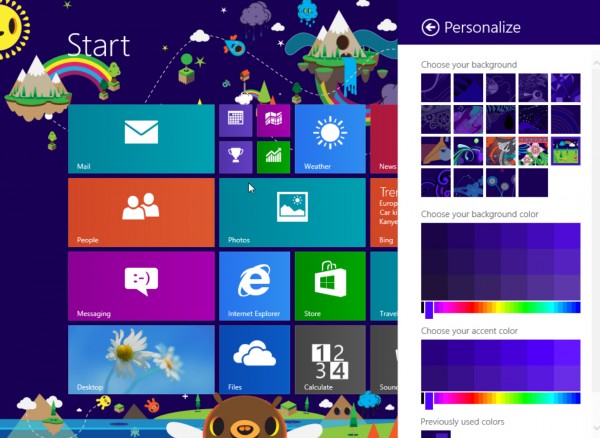
    The Settings charm has a new Personalize option that will let you change the Start screen background, and choose a different color and/or accent color.
    Split-screen apps

    Windows 8.1 will improve multi-tasking by letting you run two apps side by side, with each app taking up one half of the screen. If you have a large high-resolution display you’ll also be able to run three or four apps on screen.

    Swipe Up

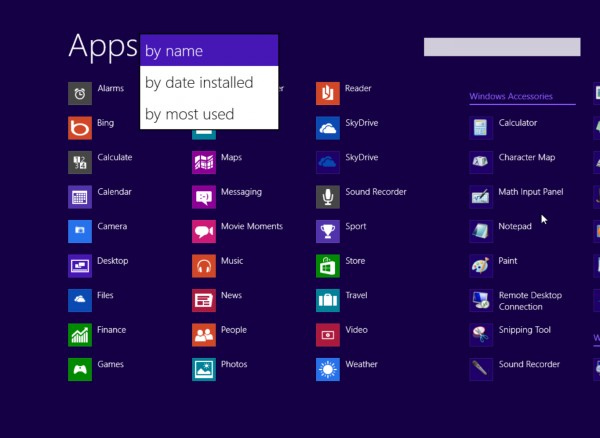
    Swiping upwards on the Start screen will reveal your apps list, and you’ll be able to sort the apps by Name or Date Installed. A handy addition.
    Internet Explorer 11

    Microsoft’s browser is being updated and will include Do Not Track protection, upgraded developer tools, and will probably support WebGL and SPDY. The Modern UI version will have an integrated download manager.

    Support For Smaller Screen Sizes

    Microsoft reportedly believes there’s a demand for iPad Mini-sized tablets running Windows and so has been working to make sure Windows 8.1 displays well on smaller screens.

    Automatic Desktop Scaling

    The Windows 8 desktop display scaling issue should be fixed in 8.1, with the update offering auto scaling based on screen size and pixel density. A slider will let you adjust things to suit your tastes (and eyesight). You will of course still be able to adjust things manually.

    Assigned Access

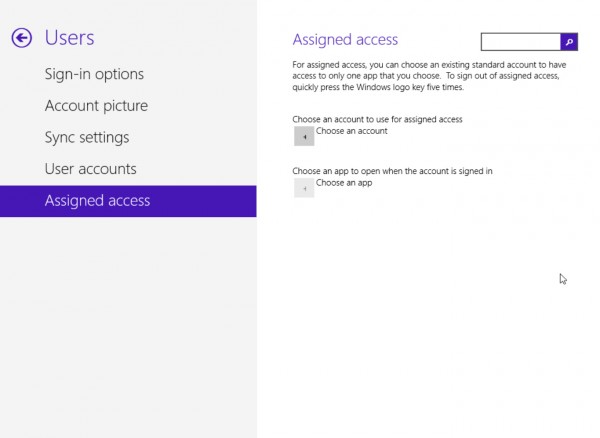
    The leaked 9374 build included a Kiosk Mode that lets you lock down Windows to a single app — making it useful for Media Centers, or for showing a particular app in a public place. In the most recent leak, 9385, the Kiosk feature was renamed Assigned Access.
    SkyDrive

    The leaked builds show SkyDrive as a more integrated option and suggest you’ll be able to back up your PC data to the cloud.

    Lock Screen

    Windows 8 can display status and notification information on the lock screen. Windows 8.1 adds the ability to add an alarm. It also lets you use the lock screen as a picture frame.

    New Apps
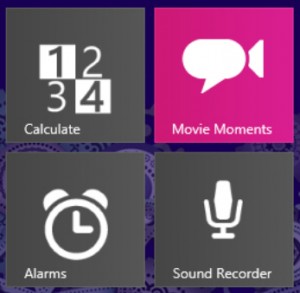
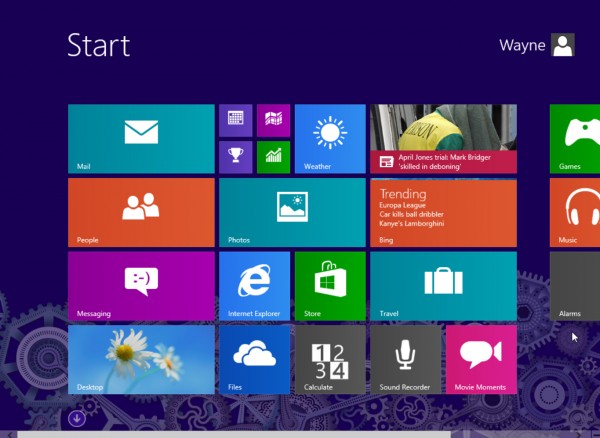
    The update will include some new and improved apps, such as Alarms, Calculate, Sound Recorder, and Movie Moments (this last one lets you trim a scene from a video, add captions, and share it with friends). Leaked build 9385 also revealed the Camera app is being worked on with quite a few changes, including a new panorama feature that looks like Photosynth.

    New Drivers

    Because what would a system pack update be without lots more of these?

    Improved Touch

    Touch will still be the primary focus in Windows 8.1, so expect lots of refinements here.

    A Start Button

    Microsoft hasn’t yet confirmed the return of the Start button in Windows 8.1 and there’s been no sign of it in any of the leaked builds. There have been lots of rumors about it though, with some people claiming it will be a traditional Start button with a Start menu, and others just that it will be there purely to open the Start screen.

    In an interview with The Verge last week, Tami Reller, Windows division CFO, admitted Microsoft was aware of the outcry for a Start button. “We have heard that, we definitely have heard that and taken that into account,” she said, before adding: “We’ve really also tried to understand what people are really asking for when they’re asking for that”.

    Oh dear. Has Microsoft really not grasped what people have been requesting since before Windows 8 even launched? A Start button, Tami, with a Start menu attached.

    Boot To Desktop

    Again, we don’t know for certain if this option will make an appearance in 8.1, but the ability to skip the Modern UI screen is a request Microsoft is more than aware of.

    Windows 8.1 – A Work In Progress

    At the end of last week, Frank Shaw, Microsoft’s Vice President of Corporate Communications said:

    Unlike a can of soda, a computer operating system offers different experiences to different customers to meet different needs, while still moving the entire industry toward an exciting future of touch, mobility, and seamless, cross-device experiences.

    We are going to keep improving Windows 8, as we do with all our products, making what’s good even better. There will be new devices, new use cases, new data that makes us think, “Hey, we should do more of this, or less of that”. And we will. There will be people who agree, strongly. There will be those who disagree, equally strongly. All good, all expected.

    With his reference to a “can of soda” Shaw is of course alluding to the New Coke comparison that a lot of people have made about Microsoft’s new operating system.

    It’s clear from what Shaw and Reller have both said that Windows 8.1 won’t be the full back down that a lot of people have been hoping for. Rather it will serve to refine and improve the Windows 8 experience to make the OS more palatable and easier to use, as well as introducing some appealing new features.

    Will it go far enough to persuade the doubters to make the switch from Windows 7 (or earlier)? We’ll just have to wait and see. As always leave your thoughts and comments below.

  • Ultra HD TV could see boost from plummeting prices

    Ultra HD TV Prices 2013
    Recent reports suggested Ultra HD TV might not flop after all, and their prospects will only be helped by an early round of price cuts. Preliminary analyses from industry watchers didn’t paint a promising picture for Ultra HD, but more recent reports say new higher-resolution 4K panels might account for as much as 20% of all flat TV displays shipped this year. Now, a new report from Digitimes points out that Ultra HD TVs already saw deep price cuts in China for the holidays. Some models apparently saw price drops so huge that they matched the pricing of comparable 1080p TVs. Digitimes’ sources say suppliers are expected to ship between 3.5 million and 4 million 4K TV displays in 2013.