Blog

  • Report: VW CEO says Seat getting its last chance

    Filed under: , ,

    Seat Ibiza Sport Tourer – Click above for high-res image gallery

    It’s no secret that Seat is the dimmest bulb in the Volkswagen classroom. The beleaguered Spanish manufacturer squandered a total of $138 million in the first quarter of this year alone – more than double what the next two least profitable brands in the German manufacturer’s lineup lost. In a last-ditch effort to get Seat back on its feet, VW has announced that it will both expand the company’s offerings and spread the brand outside of Spain. The plan is the brainchild of James Muir, the company’s new CEO as of September of last year.

    Many of the problems currently afflicting Seat are due to the fact that Spain’s economy has taken a beating during the global recession. Likewise, most of the company’s sales come from Southern Europe – an area that hasn’t fared well amid the financial crisis. VW hasn’t said exactly where the Seat name will be showing up in the near future, but you can bet your lucky underpants it will be somewhere with a little extra money in its pocket.

    Likewise, the company didn’t say much about what we can expect in terms of new models. According to Bloomberg Businessweek, a total of 56 percent of Seat sales come from the Ibiza compact, and Muir says that if the automaker’s outlook is to improve, that needs to change.

    [Source: Bloomberg Businessweek]

    Report: VW CEO says Seat getting its last chance originally appeared on Autoblog on Tue, 18 May 2010 10:01:00 EST. Please see our terms for use of feeds.

    Permalink | Email this | Comments

  • Guardian Says It Needs to Become an Open Platform

    While some newspapers like the Times of London and the New York Times have either implemented or are expected to launch paywalls for their content, The Guardian in Britain has taken the exact opposite approach: Not only does it give its content away for free to readers, but through its “open platform” and API, it allows developers and companies to take its content as well, and do whatever they want with it — including building it into commercial applications. Are the higher-ups at the paper crazy? Not according to Chris Thorpe, The Guardian’s “developer advocate” and a member of the team that built the open platform and helps companies integrate it into their apps and services.

    In an interview in Toronto on Monday, Thorpe said that the paper doesn’t want to charge its users for content, but instead wants to enable developers and companies to create businesses around that content and then partner with them. Unlike the New York Times, which restricts developers to only an excerpt of its content and doesn’t allow them to use it in commercial applications or services, The Guardian’s API provides full access to its content and allows developers and companies to use it even in revenue-generating applications.

    In fact, “We not only say that you can use the content in a commercial application, we encourage it,” Thorpe said. “It gets our content to places where it wouldn’t be otherwise, and then we can build relationships with content partners around that.” The platform, which is still in the experimental stage, has attracted about 2,000 developers who have signed up for the API and created over 200 apps and web services. Platform developer Matt McAlister has called it an attempt to “weave The Guardian into the fabric of the Internet.”

    Thorpe noted that the API — which he said will be coming out of beta soon — may be free, but it does come with strings attached. If you want the full text of articles to use in your app or service, you agree (by signing the licensing agreement) that The Guardian has the right to insert ads into the stream of content it sends you through the API. The paper is also working on partnerships with a number of outside companies and agencies that use content from the newspaper’s database as part of a their service or site, and some of those look to be closer to monetizing the paper’s own content better than The Guardian itself can.

    For example, Thorpe said that some sites and services that are focused on a sport such as football will take The Guardian’s content related to a specific team and use that to build out their site. Using the same stories or content on The Guardian site isn’t worth much, because the newspaper doesn’t know when a diehard Arsenal fan visits the site, and therefore can’t serve them related ads. But a dedicated site for those fans can take that same content and monetize it much more effectively.

    Thorpe also admits that The Guardian’s ownership structure — it’s owned by the Scott Trust — likely has something to do with the paper’s interest in an open API, and its willingness to provide its content to others despite the lack of any immediate return, since it can afford to think longer term rather than just focusing solely on quarterly earnings. The vision of the paper is to become the leading voice of liberal thought on the Internet, he said, and the newspaper’s leadership firmly believes that becoming an open platform is the best way to achieve that.

    In the video embedded below, Thorpe talks briefly about the strategy behind the open API:


    Alcatel-Lucent NextGen Communications Spotlight — Learn More »

  • EDF Climate Corps: Building a movement for energy efficiency in business

    This summer, 51 Climate Corps fellows will take their places on the front lines of a new movement for energy efficiency in business – a movement grounded in smart economics and fueled by the talents of the next generation of business leaders.

    It’s a movement whose time has come. Climate change is the environmental challenge of our generation, and the need for action has never been greater. The catastrophic oil spill in the Gulf of Mexico has focused the nation on the need to confront our reliance on fossil fuels. And that has renewed hope for swift action in the Senate on a climate bill.

    But there’s one solution to the climate crisis that we don’t need to wait for — energy efficiency. The opportunity is enormous: a 2009 McKinsey report estimates that by 2020, the United States could reduce its annual energy consumption by 23% through energy efficiency measures alone. This would cut greenhouse gas emissions by over a gigaton – that’s a billion tons – and cumulatively save companies and consumers over a trillion dollars.

    Energy efficiency is doable right now, it’s cost-effective, and it’s absolutely critical to slowing climate change. But it’s not happening fast enough. To truly take energy efficiency to scale, we need a national movement that captures the imagination of people from dorm rooms to boardrooms across the country.

    That’s why Environmental Defense Fund created EDF Climate Corps. The heart of the program is the EDF Climate Corps fellow. With our partner Net Impact, we recruit students from top-tier MBA programs, provide them with intensive training and embed them in companies around the country. For 10-12 weeks, the fellows serve as champions of energy efficiency, developing customized investment plans that help their companies cut costs and greenhouse gas emissions.

    In the first two years of the program, Climate Corps fellows identified almost $90 million in net operating cost savings, and 280 million kilowatt hours of energy savings – enough to power 24,000 homes annually. Even more impressive: companies report that they are implementing projects accounting for 84% of the energy savings identified by the fellows.

    With results like these, it’s no wonder that the program has grown by leaps and bounds, from 7 fellows in 2008 to 51 fellows this summer. We have 47 companies on board this year, across industries from telecommunications (AT&T and Verizon), to IT (Cisco and Sungard), e-commerce (eBay and Yahoo!) retail (Target and JCPenney) and financial services (Bank of America and Wells Fargo). Several companies are returning to Climate Corps for a second year – Cisco for a third.

    The beauty of EDF Climate Corps is that it gives tomorrow’s business leaders a chance to change the world today. That’s what attracted Jeremy Dommu, a 2010 fellow from George Washington University, to the program. As Jeremy writes in a blog for Business Week, “I look forward to a summer in which I am tasked with making suggestions that will have a positive impact on both the planet and a company's bottom line.”

    So to Jeremy, and to our other 50 champions of energy efficiency: welcome to Climate Corps!

    Sign up to receive further updates on Climate Corps 2010, including regular blog posts by our fellows.

  • Long-Delayed Senate Climate Bill Considers Need for Transparency

    Sens. John Kerry (D-MA) and Joe Lieberman (I-CT) recently introduced long-awaited Senate climate change legislation. The bill seeks to reduce greenhouse gas emissions in the United States by 17 percent of 2005 levels by 2020 and 83 percent by 2050, matching targets set in a House bill passed in 2009. The bill includes several provisions calling for transparent and participatory policies, especially relating to measures that would create new financial markets for buying and selling the right to pollute. How well such transparency would be implemented is a major question, and the success of the emissions reductions may depend on the level of openness that is built into the nation’s climate change policy.

    <!–break–>

    A lack of transparency in key parts of the financial sector is considered to be a major contributing factor to the ongoing economic hardships now afflicting the U.S. and other nations. Numerous recent market crises, such as the 2008 petroleum price spike, the crash of the subprime mortgage and credit default swap markets, and the Bernard Madoff Ponzi scheme have raised significant concerns about the transparency and stability of financial markets. The proposed climate legislation would create enormous new financial markets in an attempt to reduce greenhouse gas emissions. Many are concerned that a lack of transparency in U.S. climate policies would undermine progress in reducing emissions, resulting in the loss of precious time.

    The Kerry-Lieberman bill, known as the American Power Act (APA), calls for an expanded greenhouse gas registry to track emissions, public disclosure of key data sets related to emissions reductions, and stresses the need for transparent and participatory design and implementation of market-based programs, which provide greater flexibility to polluters seeking emissions reductions, among other transparency measures. Requiring openness and accountability from the early stages of climate policy development would help ensure the policies make real emissions reductions and would help identify poorly performing measures.

    The APA includes market-based policies for reducing emissions, such as the creation of a carbon exchange that uses quarterly auctions to trade the right to emit decreasing "allowances" of greenhouse gases, and the use of "carbon offsets," which allow polluters to meet some of their required reductions by paying for emissions reduction projects elsewhere in the U.S. or in foreign countries. According to the Pew Center on Global Climate Change, "Congress has the opportunity to design the carbon trading market oversight framework at a point in time before long-standing carbon trading practices and systems have been fully established."

    Greenhouse Gas Registry

    One fundament of a transparent, accountable climate change program is a clear and accurate system for reporting who is emitting greenhouse gases and how much. As a result of language inserted into a 2008 appropriations bill, the U.S. Environmental Protection Agency (EPA) created a mandatory greenhouse gas reporting rule for thousands of large emitters across the U.S. economy. The first reports from facilities are due in 2011. The APA calls for EPA to build on this program to meet the bill’s expanded information needs.

    The APA would amend the Clean Air Act to expand the existing registry by covering additional sources such as vehicle fleets, requiring reporting on the capture and sequestration of greenhouse gases, requiring more frequent reporting, and placing limits on what information can be withheld from the public by claiming it as a trade secret. The revised registry would also authorize EPA to collect data from 2007 forward, whereas the existing registry only collects emissions data from 2010 onward.

    Carbon Offsets Transparency

    Carbon offsets are a mechanism whereby a polluter can meet a portion of its required emissions reductions by investing in a project that reduces emissions or sequesters carbon elsewhere. For example, a cement factory could pay to have trees planted or a refinery could pay for citizens to install solar panels. Offsets theoretically allow more flexibility for polluters to comply with the law because paying others to reduce emissions can be cheaper than reducing the polluters’ own emissions.

    Transparency is again critical to realizing real emissions reductions through offsets. The U.S. Forest Service advises that to be legitimate, offsets must be real, measurable, verifiable, and additional (meaning the offset would not have occurred under a business-as-usual scenario). In a 2008 study, the Government Accountability Office (GAO) determined that "any use of offsets for compliance that lack credibility would undermine the achievement of the program’s goals." GAO emphasized the need for transparency to ensure the offsets projects are creating reductions that are real, measurable, and would not have otherwise happened.

    The Kerry-Lieberman bill establishes criteria to assure that offset credit is earned only for real and permanent actions that would not have occurred otherwise. The APA includes requirements for the public disclosure of the government’s approval or disapproval of specific offsets projects and the information relevant to making the decision. Additionally, the APA calls for audits of offsets projects; however, the results of the audits would be aggregated before being disclosed, likely denying the public information about specific projects.

    The transparency of offsets projects in foreign countries receives special attention in the APA. There are many opportunities for offsets projects in developing countries, such as reforestation projects. Questionable practices surrounding past voluntary offsets programs have drawn criticism of their accountability and veracity. One section of the APA requires that "local communities (particularly the most vulnerable communities and populations in the communities and indigenous peoples in areas in which any activities or programs are planned) are engaged through adequate disclosure of information, public participation, and consultation, including full consideration of the interdependence of vulnerable communities and ecosystems to promote the resilience of local communities." Similar language calling for transparency and public participation appears elsewhere in the offsets provisions of the bill.

    Scientific Review

    The EPA and other relevant agencies are required to make periodic reports to Congress on new scientific information, on whether the U.S. program is meeting its goals, and on whether the nation’s efforts are sufficient to avoid the most devastating impacts of climate change. For example, a new technical advisory committee will be created to analyze carbon capture and sequestration technologies. All of this committee’s studies must be made public.

    Auctions

    The Kerry-Lieberman bill authorizes the U.S. Commodity Futures Trading Commission to create rules for the transparent operations of a carbon allowance market, including the public disclosure of carbon market participants. Bidders in auctions must disclose whom they are bidding for, and the identity of winning buyers and the final carbon price must be disclosed. The bill specifies that a greenhouse gas allowance tracking system must be available to the public on the Internet.

    Other Transparency Provisions

    One controversial feature of the APA calls for expedited and expanded licensing and construction of nuclear power plants. The bill calls on the Nuclear Regulatory Commission (NRC) to report to Congress on ways to move forward on this nuclear expansion. The bill states that the NRC’s recommendations must provide ways for "interested parties that have standing" to have their "legitimate concerns" heard.

    Another significant measure in the APA is the requirement that companies drilling for natural gas that use a common yet controversial technique known as hydraulic fracturing must publicly disclose the identities of the chemicals used in the drilling process. Hydraulic fracturing has been linked to numerous cases of drinking water contamination, but the chemicals used in drilling, many of which are known to be toxic, are concealed from the public by drilling companies that claim the information is proprietary.

    The prospects for the Senate bill are unclear. The House passed its bill in June 2009. Little time remains for the Senate to act on its bill, which technically is considered a "discussion draft." Climate change legislation must get through the Senate, conference committee, and a full congressional vote before the end of the session. Otherwise, a new Congress must take up the matter anew in 2011.

    For Updated News and Information:

  • PSN Premium rumor has the Internets shaking in its boots

    In my lower moments I can be found browsing various message boards, watching mere children argue over what video game console is superior, the Xbox 360 or the PS3. No, I’m not lying, sad as that may be. Eventually the PS3 supporters whip out this gem: “Yeah, well at least we don’t have to pay to play online,” which is a clever dig at Xbox Live’s $50 price tag. Don’t tell them this rumor, then: Sony will unveil a PSN Premium at E3 next month, and it will cost money.

    The deal is that Sony will announce a PSN Premium of sorts at E3. It won’t affect the way you play PSN right now, so I don’t know why I raised that specter a few sentences ago. The day after it comes out, you’ll still be able to shoot your friends dead in Modern Warfare 2 totally gratis. Rather, this premium service will add all sorts of bells and whistles such as a free game every month and a music streaming service à la Spotify (which is great, I’m using it right now as I type).

    Those are the only two items mentioned, a free game and a music streaming service.

    Again, I must stress that this is merely a rumor, one of many pre-E3 rumors that are floating around out there, ruining people’s lives and causing public relations departments to copy-paste “It’s not our policy to comment on rumors” in e-mail after e-mail.

    Depending on the game, the free game gimmick may just sorta be “meh,” but if you were able to play Racing Game with any song in this streaming service’s catalog, well, that would be neat.

    What else could such a premium service add? Not being a PS3 owner, I’m only vaguely familiar with PSN’s offerings. Maybe Sony will throw unlimited (or limited!) movie rentals/streams, something along those lines.

    I have no idea, clearly.


  • Tarballs Hit Key West

    Key West park rangers found 20 3 to 8-inch tarballs Monday that had washed up onto the shores. Tarballs are blobs of oil that become weathered after travelling through the ocean.

    The samples will be analyzed to figure out where they came from, but if they’re from the BP spill, it would heighten concerns that the oil has already started entering the loop current, which would transport it into the Florida Keys and the Atlantic.

    A tarball won’t necessarily hurt you, but the Coast Guard says not to touch them and report any you find.

    Tar balls wash up at Key West beaches; surveys continue today [Palm Beach Post]

    PREVIOUSLY:

    BP Sucking Off 1,000 Barrels/Day From Spill, Only Thousands More To Go
    BP’s Oil Cap Misses, Crude Still Spews
    BP Sending Massive Funnel To Contain Oil Spill

  • “Lost” Auction

    Devoted fans of ABC’s exiting disaster-themed drama Lost are in for a treat: Producers of the cult series are marking its conclusion by offering viewers a chance to own a piece of TV history when priceless props and mementos from the set go under the hammer at the Profiles in History Auction this summer.

    “This will have every iconic item from all six seasons – up to the last episode. This will be a watershed event, the most iconic TV show to ever sell its property. One of the reasons they (producers) are doing this is that they want to give something back to the fans, who are so into this show,” says auction house owner Joseph Maddalena.

    An official date for Lost: The Auction will be announced sometime in the coming weeks. In the meantime, check out this sneak peek at the props up for grabs, including the show’s famed Apollo Chocolate bars, character passports, and handwritten letters…..

    The 2.5 hour Lost series finale airs this Sunday, May 23.


  • Sprint Recommends Apps for Memorial Day Travelers

    Sprint is doing their part to make Android handset owners aware of apps that can benefit them come Memorial Day.  If you plan to do any traveling or cooking out, you’ll be wise to check out these recommendations!  Many of you seasoned vets may already be familiar with these titles.  However, if you’re new to the Android family, these make a great starting point.

    • Kayak – Connects you to the popular travel search engine to find deals on airfare or get the perfect hotel. If your flight is canceled, find a new one in a minute, or get on the phone with the airline in seconds.  FREE!
    • TripIt Travel Organizer – Puts all your travel plans right on your phone, no matter where your travel was booked. Forward travel confirmation e-mails to [email protected] to build your itinerary, sync your plans with your calendar, and access your travel info any time right on your phone. FREE!
    • WeatherBug – Easily find out the current local weather, plus hourly and seven-day forecasts for your vacation destination. WeatherBug features live neighborhood weather updates from 8,000 weather stations across the country – including National Weather Service weather alerts, such as tornado warnings. By using integrated GPS, the app can change its forecasting location automatically, so there’s no need to manually enter your new location once you arrive.   FREE!
    • WHERE – Provides useful information about the local area, places to visit, things to do, and opportunities to save money with offers and coupons. Sprint plans to preload WHERE on select new Sprint phones launching in 2010.  FREE!
    • NY Bus & Subway Maps – Delivers quick access to New York MTA subway and bus maps on Android phones. Similar apps are available for public transit options in Boston, Chicago, Washington, D.C., and other cities. FREE!
    • Backpacker’s GPS Trails – Doubles as a portable trip database and personal navigation device for your outdoor travels: hiking, backpacking, mountain biking, trail running, mountaineering, or basic trail navigation. Search by name or park, or select from trails near your current location to find adventures across North America, and use the compass to follow bearings or go to waypoints on the trail. $9.99

    Might We Suggest…

    • Sprint Loves Your Mom, Do You?

      Wireless provider Sprint is doing what they can to have you looking like a champ this coming Mother’s Day.  Hesse and Co. have put together a list of Android apps designed to make mom’s life easier …


  • Richard Blumenthal never served in Vietnam? (video)

    Richard Blumenthal never served in Vietnam (video)
    This can not be good news for Democrats and their hopes of retaining the Senate. New York Times, Raymond Hernandez reports this afternoon that Richard Blumenthal, the Connecticut AG and likely Democratic candidate to fill the seat of Dodd in the Senate, has lied about his service in Vietnam. Although in an earlier video he mentioned that he did not serve in Vietnam.

    “We have learned something important since the days that I served in Vietnam,” Blumenthal said to the group gathered in Norwalk in March 2008. ”And you exemplify it. Whatever we think about the war, whatever we call it — Afghanistan or Iraq — we owe our military men and women unconditional support.”

    There was one problem, Mr. Blumenthal, a Democrat who is now running for U.S. Senate, never served in Vietnam. Won at least five military deferments from 1965 to 1970 and took several measures that allowed it to avoid going to war, according to records.

    Blumenthal is presumed to be on the crest of an easy victory over either candidate of the Republican Party, but we’re guessing that is in doubt.

    Blumenthal is part of the school activist AGS, having taken the popular struggle against big businesses, and more recently the rating agencies. In January, noted that “Wall Street’s worst nightmare” was now headed to the Senate.

    No related posts.

  • Bill for Afghan war could run into the trillions

    Via Prison Planet.com » World News

    Eli Clifton
    Inter Press Service
    May 18, 2010

    WASHINGTON – The U.S. Senate is moving forward with a 59-billion-dollar spending bill, of which 33.5 billion dollars would be allocated for the war in Afghanistan.

    However, some experts here in Washington are raising concerns that the war may be unwinnable and that the money being spent on military operations in Afghanistan could be better spent.

    “We’re making all of the same mistakes the Soviets made during their time in Afghanistan from 1979 to 1989, and they left in defeat having accomplished none of their purposes,” Michael Intriligator, a senior fellow at the Milken Institute, said Monday at a half-day conference hosted by the New America Foundation and Economists for Peace and Security.

    “I think we’re repeating that and it’s a history we’re condemned to repeat,” he said.

    Bill for Afghan war could run into the trillions 150410banner1

    Intriligator also argued that the real, long-term cost of the war in Afghanistan may completely overshadow the current spending bill.

    Nobel Prize-winning economist Joseph Stiglitz and Harvard professor Linda Bilmes estimated that the long-term costs – taking into account the costs of taking care of wounded soldiers and rebuilding the military – of the war in Iraq will ultimately cost three trillion dollars.

    Intriligator suggested that a similar calculation for the costs of the war in Afghanistan would indicate a long-term cost of 1.5 to 2.0 trillion dollars.

    “Why are we putting money into Afghanistan to fight a losing war and following the Soviet example rather than putting money into [our] local communities?” he asked.

    The Senate has been under pressure to approve the spending bill before the Memorial Day recess at the end of the month.

    On Thursday, the Senate Appropriations Committee approved the 59-billion-dollar bill drafted by the committee’s Chairman Daniel Inouye and Sen. Thad Cochran.

    Gaining the approval of the Senate Appropriations committee may be the easy part in the push to get the bill to Obama’s desk by the end of the month.

    House Speaker Nancy Pelosi has already indicated that the spending bill will face more intense opposition in the House as congressional Democrats are predicted to offer put up some resistance to the funding for Obama’s 30,000 troop surge in Afghanistan.

    Experts at the event today expressed their concern with both the physical cost of the war as well as the tradeoffs in spending required by the ongoing costs of fighting the Taliban insurgency.

    “The climate bill, for all its defects, if it has a prayer of passing, might provide some of the money we need to keep the momentum on building a green economy going. But so could the savings from an Afghan drawdown,” said Miriam Pemberton, a research fellow at the Institute for Policy Studies.

    Intriligator emphasised the human cost of fighting a counterinsurgency campaign not just for U.S. soldiers but for Afghan civilians.

    “We can’t distinguish the insurgents or Taliban from the rest of population so we kill a lot of innocent civilians,” he said.

    A number of think tank events this week and the Obama administration’s push to gain support in Congress for the supplemental appropriations bill coincided with a high-profile visit last week by Afghan President Hamid Karzai who spent four days in meetings with Obama and members of his cabinet as well as with lawmakers on Capitol Hill.

    Karzai’s trip to Washington and the warm reception afforded to him by the White House and lawmakers appeared to be part of a public relations offensive to build support in Washington for Karzai’s government and Obama’s troop surge.

    Karzai’s visit came as polls have shown a major downturn in U.S. support for the war in Afghanistan and support amongst NATO allies has been dwindling.

    In early April, news emerged that Karzai, in a closed door meeting, threatened to drop out of politics and join the Taliban.

    A senior Obama administration official retorted that Karzai might be sampling “Afghanistan’s biggest export” – a reference to the widespread opium cultivation in Afghanistan.

    The publicity campaign is facing an uphill battle this month but the administration has much to gain by putting a good face on the U.S. relationship with Karzai.

    Indeed, the White House will need Karzai’s cooperation if it is to get Congressional support for passing the spending bill and will require Karzai’s assistance if Obama is to meet his goal of beginning U.S. troop withdrawals by mid-2011.

    Karzai’s trip appears to have made some progress in showing off a “reset” relationship between the Obama White House and the Karzai government but a number of voices here in Washington are raising concerns over whether a U.S. victory in Afghanistan is possible by mid-2011 or at any time in the near future.

    “The fear was that if we withdraw from Afghanistan there will be civil war and external great powers will take sides. Is that worse than losing American soldiers day after day? So there’s a civil war. So the regional great partners take sides. Why wouldn’t they? It’s their neighbours. It’s their borders.” said Michael Lind, policy director of the Economic Growth Programme at the New America Foundation, at Monday’s conference.

    This article originally ran at Inter Press Service.

  • New Hotmail lets you add bigger attachments, organize your inbox, edit documents

    By Tim Conneally, Betanews

    I’m constantly reminded how slow email actually is.

    On the homescreen of one of my smartphones, I’ve got the official Twitter widget and the official Facebook widget which are pretty much constantly refreshing. Likewise, my email inbox is set to refresh just as frequently. Every day, when someone sends me a message in Facebook or replies to a Tweet, the widgets tell me first, and then five minutes later I get the email alerting me again. Because of this, I have an email account just for social network updates that is overflowing with unread messages.

    My fast, immediate communications have been shifted to other services, but the more heavyweight content: presentations, photos, and documents are still being sent over email.

    Today, Microsoft announced it is releasing a new Windows Live Hotmail this summer to suit the “peoples’ email needs as of 2010,” which includes finding a way to organize all of that semi-relevant junkmail and a way to send even bigger attachments.

    Get Microsoft Silverlight

    The new Hotmail inbox will let users organize their emails in new ways. Where the old inbox just let you sort your emails by date, sender, subject, or size, the new inbox will also let you sort them by category. These categories include: messages from contacts, social network updates, or messages from groups and mailing lists. Because social network updates and mailing list posts are sometimes unwanted, you can sort them by category and push them into folders and out of your principal inbox.

    Microsoft is also tying in its SkyDrive cloud storage feature into Hotmail, letting users attach as many as 200 photos each 50MB in size to a single email. The same goes for Office documents like Word files, Excel spreadsheets or PowerPoint presentations, you can stick 10 GB of attachments to Live Hotmail email messages.

    With Office documents, a bit of productivity has been folded into Hotmail. Users can open the documents in Office Live, make changes, and push them back to the original sender with all the updates.

    The update this summer will also add enhanced account protection, full-session SSL, multiple email accounts, subfolders, contact management, and even more storage.

    Copyright Betanews, Inc. 2010


    Add to digg
    Add to Google
    Add to Slashdot
    Add to Twitter
    Add to del.icio.us
    Add to Facebook
    Add to Technorati


    MicrosoftFacebookWindows Live HotmailWindows Live SkyDriveSocial network

  • Congress blocks indiscriminate IMF aid for Europe

    Via Prison Planet.com » Commentary

    Ambrose Evans-Pritchard
    London Telegraph
    May 18, 2010

    Europe may have to clean up its own mess after all. The US Senate has voted 94:0 to block use of taxpayers’ money for IMF rescues that make no economic sense or bail-outs for countries like Greece that far are beyond the point of no return.

    “This amendment will help prevent American taxpayer dollars from underwriting dysfunctional governments abroad,” said Texas Senator John Cornyn, the chief sponsor. “American taxpayers have seen more bailouts than they can stomach, and the last thing they should have to worry about are their hard-earned tax dollars being used to rescue a foreign government. Greece is not by any stretch of the imagination too big to fail.”

    Co-sponsor David Vitter from Louisiana said America had run out of money. “Our country already owes trillions of dollars in debt. We simply can’t afford to take on other countries’ debt in addition to our own.”

    It is unclear where this leaves the EU’s $1 trillion “shock and uh” package. Urlich Leuchtmann from Commerzbank said the IMF share of $320bn was the only genuine money on the table, the rest being largely euro smoke and mirrors, or plain bluff.

    The measure is an amendment to the US financial overhaul law. Backed by both parties, it can hardly be ignored by the Obama administration whatever Tim Geithner may or may not want to do. The bill has to go to Conference for reconciliation with the House, but the point is made.

    Full article here

    Congress blocks indiscriminate IMF aid for Europe  100210banner1

  • Senate Passes Limited “Audit the Fed” Amendment

    During the ongoing Senate debate on the financial reform bill, Federal Reserve transparency briefly took center stage. Sen. Bernie Sanders (I-VT) introduced an "Audit the Fed" amendment to the bill during the week of May 16, which the Senate approved in a 96-0 vote after the amendment was greatly scaled back. The amendment would instruct the Government Accountability Office to "conduct a one-time audit of all loans and other financial assistance provided during the period beginning on December 1, 2007 and ending on the date of enactment of this Act."

    <!–break–>

    Supporters of the Audit the Fed movement, led by Rep. Ron Paul (R-TX), are disappointed that the amendment would not require full, regular audits of the Fed, which would include audits of the setting and execution of monetary policy, communications among or between employees of the Fed, and transactions with foreign banks. Instead, the amendment the Senate passed is a narrowly focused accounting of the Fed’s actions during the financial crisis, specifically its use of so-called Section 13(3) powers.

    Section 13(3) of the Federal Reserve Act gives the Fed broad powers. The important sentence in the statute reads, "In unusual and exigent circumstances, the Board of Governors of the Federal Reserve System" may provide discounted "notes, drafts, and bills of exchange," provided they are properly secured (collateralized), and the institution in question could not obtain credit from another bank. In other words, so long as the Fed believes there are "unusual and exigent circumstances," the Fed can decide to lend money to almost any financial institution, even non-depository institutions (not all of the Fed’s emergency actions were under Section 13(3), but the most controversial actions were).

    Beginning in 2008, the Fed began to use these powers for the first time since the 1930s. The Fed set up several programs, with names such as the Asset-Backed Commercial Paper Money Market Mutual Fund Liquidity Facility, the Term Asset-Backed Securities Loan Facility (TALF), and the Commercial Paper Funding Facility, all of which were variations on the same theme: the programs were all designed to function as the lender of last resort. If no other institution will lend to a financial firm, it can turn to the Fed and receive loans. While the rates provided by the Fed through these programs were not very favorable compared to market rates, they provided important lifelines to struggling firms that rely on open market borrowing for their daily business.

    However, there is virtually no oversight over these programs. The Fed can choose to declare "unusual and exigent circumstances" whenever it wants to, and it can lend as much money as it wants to almost any institution it wants, so long as the loans are collateralized. Congress has no oversight over these actions. Also significantly hindering oversight of the Fed’s actions is the fact that the Fed is not required to disclose which institutions receive aid from Section 13(3) programs. Outside of the Fed, no one knows who is receiving public funds through these programs. There is no guarantee, for instance, that firms receiving these loans were struggling because of liquidity problems and not because they were on the brink of collapse due to over-exposure to subprime loans. The Fed is supposed to be helping the former institutions, not the latter.

    Supporters of the Audit the Fed movement were hoping to use the recent exercise of Section 13(3) powers to bring about a full audit of the Fed. Capitalizing on populist distrust of the Fed, Paul’s Audit the Fed bill, which mandates a full audit, had over 300 cosponsors in 2009 when it passed the House as part of that chamber’s financial reform package, far more than it has garnered in sessions past. That momentum died in the Senate, where Sanders’ companion bill had far fewer cosponsors, and Sanders eventually had to pare back his amendment in order to gain enough support. The Senate version is a step back from the House version; specifically, it would not audit the Fed’s monetary policy decisions, one of Paul’s main targets. Both chambers’ versions would, however, require an audit of the Fed’s international currency swaps, which are outside of the Fed’s Section 13(3) powers but have garnered criticism.

    Importantly, the Senate amendment does include a provision the House version does not. It requires the Fed to publish information on recipients of Fed emergency support, such as name, amount of support, type of support, and rationale for providing the support. As noted earlier, who received the Fed’s support to troubled financial institutions is a closely held secret, as the Fed argues that releasing this information would constitute a black mark against the firms, hurting their ability to borrow in the open market. Only firms in danger of collapsing would need such help, the argument goes, so announcing which firms were receiving aid would be like announcing which firms are on the brink of collapse, making it even harder for them to recover.

    Transparency advocates and members of the media have long fought for disclosure of the identities of these institutions, arguing that the public has a right to know how its money is being used. Bloomberg News is in the process of suing the Fed for these names.

    While the House bill calls for an audit of the Fed’s emergency lending actions, it does not require publishing information on recipients of the aid. This addition will bring significant transparency to the Fed’s actions over the past several years and will help give a better picture of the financial crisis.

    Observers say even this limited Audit the Fed amendment is meaningless if the Senate does not approve the larger financial reform package. Senate Majority Leader Harry Reid (D-NV) filed cloture on the bill late on May 17, setting up a final vote on May 19. It looks likely that the bill will pass the Senate, setting up a conference committee between the House and Senate. The recipient disclosure provisions from the Senate’s version will likely stay in, but it is unclear how broad the final audit will be. It seems that the president and Fed officials have been persuasive, at least in the Senate, where they have successfully lobbied for Sanders’ weaker amendment, and Rep. Barney Frank (D-MA), chair of the House Financial Services Committee, was initially reticent to support a wide-ranging audit. These factors make it more likely the Senate’s narrow audit will be the version that comes out of the conference committee later in 2010.

    For Updated News and Information:

  • Watch Miss USA Pole Dancing: Sizzling Miss America 2010 Rima Fakih!

    Miss USA pole dancing has been the talk of the town. Who will not be interested to watch and know more about Miss America 2010 Rima Fakih pole dancing? This might sound awkward knowing that Rimah Fakih is an Arab-American. Miss USA pole dancing seems a big issue, other think of it as a scandal. Is it really a big deal? Rima Fakih pole dancing picture is spreading in the internet.

    The picture is courtesy by Mojo in the morning. This is a morning radio show that posted images of Rima Fakih that was said to be competing from a contest entitled “Stripper 101″ way back 2007. The contest shows the best moves of pole dancers; some real strippers teach, and the chosen best student wins the price. All the contestants were said to have been fully clothed. The now “Miss America 2010”-Rima Fakih won the competition, as sources reveals.

    Find out more of Miss USA pole dancing…

    No related posts.

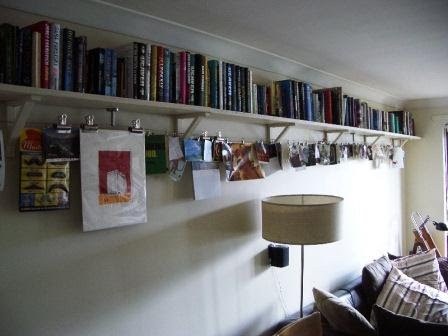
  • Book up top, rail below

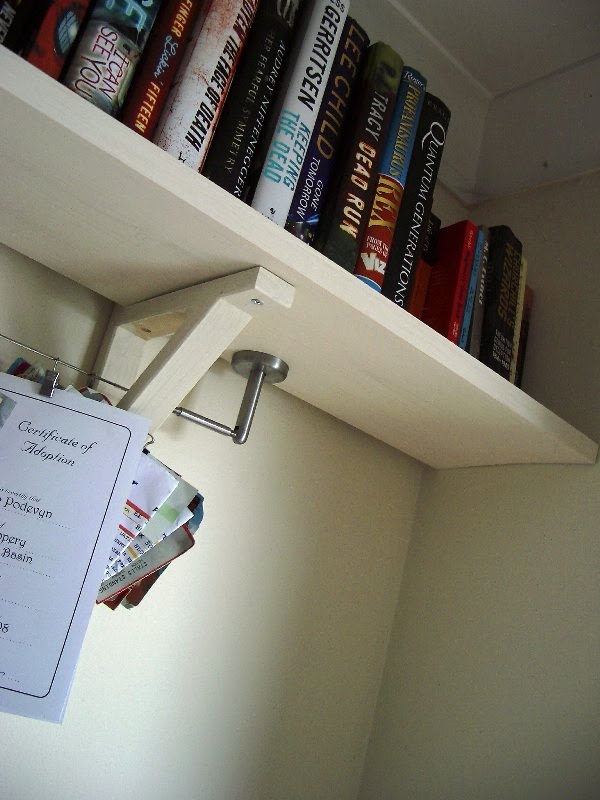
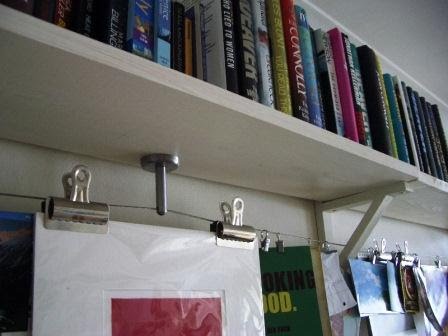
    Materials: Ekby Valter brackets, Dignitet curtain rail system

    Description: Spanning about 5m, this is a practical book shelf at head height with an integrated rail for clipping photos, postcards or basically any signiciant tosh lying around your flat.

    I used 7 Ekby Valter brackets spaced at about 0.8m centres. Timber was supplied from my local timber merchants (ie not Ikea!) and painted, as well as the brackets before fitting to the wall. The Dignitet rail system is then attached to the underside of the shelf and threaded through the brackets. Curtain clips or some beefy bulldogs (not Ikea) used for hanging larger items.

    ~ Pods, Newcastle


  • Tar Balls in Key West, FL

    Tar Balls have turned up on the beaches of Florida for the first time since BP’s disastrous oil spill began polluting the Gulf of Mexico nearly a month ago.

    Laboratory tests are underway to determine the source of the oily, sticky gobs, ranging in size from three to 8 inches. The U.S. Coast Guard found the 20 tar balls on the sands of Fort Zachary Taylor State Park, just a mile or so from Key West’s busy cruise ship port and tourist magnet Duvall Street.

    While no one can say these tar balls washed in from the BP Deepwater Horizon spill, this is THE scenario that has worried Florida, the Federal Government and the scientific community for 4 weeks now.

    Based on BP’s estimates, more than 5 million gallons of oil has gushed into the Gulf so far, threatening the coastlines and already harming the economies of Louisiana, Mississippi, Alabama and the Florida Panhandle. But if the oil slick meanders east and south, into the gulf’s Loop Current, the oil could be carried down Florida’s West Coast, through the Florida Keys and up the eastern seaboard.

    Meanwhile, at the spill site, BP announcing today it now is successfully siphoning 2000 barrels of oil a day from the largest of the two leaks up to a ship on the surface, which is collecting the oil and burning off the natural gas. Efforts to cap the well with “drilling mud” and cement by this weekend are planned in what’s called a “top kill.” BP’s C.O.O. Doug Suttles says if that succeeds, that will be “the end of this incident.”

    That only applies to the ongoing spilling of oil. The containment, collection and cleanup is estimated to still take months and years, at a cost that no one knows for sure just yet.

  • Woody Allen says President Obama should be granted dictatorial powers (seriously)

    Via Prison Planet.com » Prison Planet

    Fox News
    May 18, 2010

    Woody Allen has a strange take on the democracy that allowed him to become rich and famous.

    The “Scoop” director said it would be a cool idea for President Barack Obama to be dictator for for a few years.

    Why?

    So he could get things done without all the hassle of opposing views getting in the way.

    In an interview published by Spanish language newspaper La Vanguardia (that we translated), Allen says “I am pleased with Obama. I think he’s brilliant. The Republican Party should get out of his way and stop trying to hurt him.”

    But wait – there’s more!

    The director said “it would be good…if he could be a dictator for a few years because he could do a lot of good things quickly.”

    Of course, Allen has a famously strange relationship with reality. The director took nude photos of his lover Mia Farrow’s teen-age adopted daughter Soon-Yi Previn, and then ended up marrying her after separating from Farrow.

    Farrow also said he molested their seven-year-old adopted daugther, Dylan. A judge refused to act on the charges, but called his relationship with Soon-Yi “grossly inappropriate.”

    Perhaps that judge has an opinion on Allen’s “dictator” comments?

    Woody Allen says President Obama should be granted dictatorial powers (seriously) 150410banner7

  • More Kudzu Blues: Now the Invasive Vine Is Increasing Air Pollution | 80beats

    KudzuKudzu: It’s worse than you thought. The invasive plant now covers more than 7 million acres in the United States, mostly in the Southeast but not limited to there. Besides overrunning trees as it spreads like wildfire, the vine also brings another danger: In a study in the Proceedings of the National Academy of Sciences, Jonathan Hickman sounds the alarm that kudzu could cause a spike in ozone, polluting the air.

    Ozone, of course, is a good thing when it’s high in our atmosphere, blocking some of the sun’s harmful radiation. But down on the surface of the planet, ozone isn’t such a good thing. It can cause respiratory problems in people and harm plants’ ability to absorb carbon dioxide; it also is a major constituent of smog.

    Kudzu’s contribution to ozone levels works like this: Like other members of the pea family, or legumes, Kudzu grabs nitrogen from the air and puts it into the soil. There microbes convert nitrogen into nitrous oxide, one of the pollutants that also comes from automobile exhaust. That gas escapes from the soil and into the air, and undergoes reactions that lead to the creation of ozone [Discovery News].

    When this reaction happens on a small scale it’s not a big problem. However, there’s getting to be so much kudzu in the U.S. that Hickman decided to measure what its ozone contribution might be. So his team studied the soil of Madison County, Georgia, picking some areas where kuzdu had invaded and some where it had not. In the kudzu-ed areas, he says, nitrous oxide emissions were double that of the kudzu-free areas.

    To drive home the point, Hickman and his colleagues ran a simulation in which kudzu spread over the entirety of its region except for soils in the city or those used in agriculture. Crunching those numbers, the team estimated a dramatic increase—35 percent—in the number of days that would register an atmospheric ozone level in excess of the safe limit set by the Environmental Protection Agency.

    That’s a pretty extreme scenario; kudzu alone isn’t going to drive up ozone pollution by a third. Even with kudzu stretching out ever further, its present contribution to ozone is most likely a minor one, Hickman says, but the ozone potential is one more reason to loathe the vine.

    He acknowledged that any soil used to grow nitrogen-fixing plants or were fertilised for agricultural reasons would result in an increase in gases involved in the formation of ozone. “But in those cases, we are doing these things for necessary reasons — namely food production,” he observed. “In the case of Kudzu, it is an undesirable plant that is spreading over a large area in the south-east US” [BBC News].

    It’s also an undesirable plant that people brought to America on purpose, making it not just a poster child for invasive species, but also for importing a foreign organism to try to fix some other problem in an ecosystem.

    Kudzu (Pueraria montana) is a rapidly growing vine native to Asia that was introduced to the United States in 1876 at the Centennial Exposition in Philadelphia as an ornamental plant and later promoted to farmers in the Southeast as a means of controlling soil erosion by the U.S. Soil Conservation Service during the 1930s [LiveScience].

    Related Content:
    DISCOVER: The Truth About Invasive Species
    DISCOVER: Humans vs. Animals: Our Fiercest Battles With Invasive Species (photo gallery)
    80beats: Should Humans Relocate Animals Threatened by Global Warming?
    80beats: Globalized Pollution: Asian Smog Floats to American Skies
    80beats: Today’s Biggest Threat to the Ozone Layer: Laughing Gas

    Image: flickr / SoftCore Studios


  • Steel Still Has a Future, Says Audi’s Lightweight Chief

    Audi is the automaker furthest ahead in aluminum construction, but the head of its lightweight materials effort says that steel definitely has a future.

    Heinrich Timm, head of Audi’s Aluminum and Lightweight Design Center in Neckarsulm, Germany, is considered by many to be the godfather of the modern aluminum car. In a lengthy private briefing at Audi’s sprawling, 13,700-employee Neckarsulm plant, where aluminum R8s and A8s are assembled along with a raft of other mainstream Audis, Timm said the future for body construction in lower-cost cars will be a mix of materials such as aluminum, steel, and composites, including plastic and carbon fiber.

    Because aluminum is typically twice the cost of steel, and its use means that costs for almost every other aspect of the car—from assembly to parts handling to service and repair—are significantly higher, “from an economic sense, it doesn’t make sense to use one material,” says Timm.

    With the ultra-chic R8 and new R8 Spyder convertible as well as the freshly redesigned A8 sedan being assembled in the halls below from aluminum, Timm said the prototype for lower-cost cars actually is the current Audi TT, which is assembled in Gyor, Hungary. It’s made from 31 percent aluminum sheet, 31 percent steel sheet, 22 percent aluminum castings, and 16 percent aluminum extrusions. By comparison, the more expensive A8 uses just 8 percent steel in its mostly aluminum body. The whole rear of the TT’s skeleton is conventional steel stampings, used strategically for weight balance, strength, and cost, says Timm.

    Timm, a 38-year Audi veteran who started working on aluminum construction in 1982, believes steel will always be king in smaller, cheap cars where every dollar added to the price counts. But in mid-priced cars, targeted use of aluminum and composites in the body construction can help hold the line on weight.

    Weight gain in the mid-size segment, where Audi’s own A4 competes, has averaged a 10 percent increase per year, says Timm. However, the current A4 gained no weight over its predecessor, he says, because the company is smarter about its use of materials, and especially its use of steel. “There are 11 types of steel sheet in the A4,” says Timm, including various exotic types of high-strength steel in critical load areas.

    According to Timm, if the car’s weight drops by 220 pounds but everything else remains the same, fuel use drops by 1 to 3 mpg and a car needs 20 fewer feet to hit 60 mph. Audi has also focused on components such as fuel tanks, suspension bits, and brakes in the search to save extra pounds. Because its effect is so magnified, rotational mass, including the weight of flywheels, crankshafts, and road wheels, is a particularly attractive target. Cutting two pounds from a flywheel has the same effect on fuel economy as pulling 35 pounds off the body, says Timm. Using its own lightweight A5 2.0T concept as an example, look for future Audis to continue shedding the pounds.

    Related posts:

    1. Lightweight Audi A5 2.0T Concept – Prototype Drive
    2. Audi’s Diversified Electric Future
    3. Next Audi A8 Pushed Back, Plus Audi Plans for 2010 and Beyond – Car News
  • Homeland Security threatens to seize farmland at US-Canada border

    Via Prison Planet.com » Prison Planet

    David Filipov
    Boston Globe
    May 18, 2010

    FRANKLIN, Vt. — The red brick house sits unassumingly on a sleepy back road where the lush farmlands of northern Vermont roll quietly into Canada. This is the Morses Line border crossing, a point of entry into the United States where more than three cars an hour constitute heavy traffic.

    The bucolic setting of silos and sugar maples has become the focus of a bitter dispute that pits one of America’s most revered traditions — the family-owned farm — against the post-9/11 reality of terror attacks on US soil.

    The Department of Homeland Security sees Morses Line as a weak link in the nation’s borders, attractive to terrorists trying to smuggle in lethal materials. The government is planning an estimated $8 million renovation here as part of a nationwide effort to secure border crossings.

    It intends to acquire 4.9 acres of border land on a dairy farm owned for three generations by the Rainville family. Last month, the Rainvilles learned that if they refuse to sell the land for $39,500, the government intends to seize it by eminent domain.

    The Rainvilles call this an unjustified land-grab by federal bullies.

    Full article here

    Homeland Security threatens to seize farmland at US Canada border 150410banner7