Blog

  • BP Sucking Off 1,000 Barrels/Day From Spill, Only Thousands More To Go

    By attaching a mile-long pipe to its leaking well, BP is now able to slurp off 1,000 barrels of oil daily. The Gulf of Mexico spill currently emits about 5,000 barrels of oil per day, according to BP/Coast Guard/NOAA estimates, which have been challenged by independent scientists who put the figure more at 70,000 barrels per day, and criticized BP for using methodology specifically not recommended for measuring large oil spills. BP’s response: we’re here to stop the oil, not measure it. Looks like we’re gonna need a bigger milkshake straw.

    BP Capturing About One-Fifth of Oil Leaking in Gulf [BusinessWeek]
    Gulf Spill May Far Exceed Official Estimates [NPR]
    Size of Oil Spill Underestimated, Scientists Say [NYT]

    PREVIOUSLY:
    BP’s Oil Cap Misses, Crude Still Spews
    BP Sending Massive Funnel To Contain Oil Spill

  • Replacing the viaduct with a tunnel

    Tunnel a reality

    Editor, The Times:

    “McGinn on tunnel: worth it ‘at all costs’?’ ” [page one, May 15] leads me to wonder why there is such a big deal being made about potential cost overruns on the tunnel getting built to replace the viaduct.

    Let’s face it: Rarely does a huge public-works project stay within budget. The tunnel is a reality.

    To help with cost overruns, tolls could be paid by businesses moving goods from one end of the tunnel to the other.

    And it is not just Seattle property owners who would benefit from the new tunnel. As the story pointed out, “The state Legislature stipulated overruns will be paid by Seattle-area property owners.”

    To me, the “Seattle area” includes people and businesses in Tacoma, Everett and Bellevue, as well as the rest of Pierce, King and Snohomish counties.

    I frankly do not see why the federal government should not be asked to foot some of the cost overruns as well. After all, without a free-flowing Highway 99 tunnel, I-5 would be more clogged. That is bad news for the entire region’s business community, including the Eastside.

    Something the mayor could be doing instead of battling against the reality of a tunnel would be to craft proposals emphasizing a transit-friendly tunnel and getting the region’s government and business players to commit to significantly improved incentives for citizens to use buses and light rail.

    — Tom Hundley, Seattle

    Our way or the highway

    Mayor McGinn is opposed to the tunnel for the sake of being opposed. He has no alternative proposal worthy of consideration.

    The mayor is not helping the city of Seattle with his recalcitrance. He should step aside and let progress happen.

    — Jon Lehman, Seattle

    Tunnel a ‘Seattle’ idea, a Seattle cost

    I suspect that the vast amount of traffic on the viaduct is not Seattle traffic. In that regard its replacement could be considered “largely a state project.”

    But replacement of the viaduct with a much more expensive and disruptive deep-bore tunnel, with many unknowns, is the choice of people such as former Mayor Greg Nickels, who sought to “connect” Seattle to the waterfront —though, clearly, it has always been connected.

    The benefits to be derived by the replacement with a tunnel would accrue to the few industrial and retail owners nearby and residents gaining very small bits of views between those businesses.

    The decision to replace the viaduct with a tunnel is certainly the choice of Seattle. Non-Seattle drivers who must pass through the city would much prefer an improved and cheaper, more direct replacement of the viaduct. The city should pay a lot more than just the overruns.

    — Spencer Higley, Edmonds

  • Nestle to save orangutans, tropical forests, and our climate

    by Phil Radford

    Photo courtesy Frank Peters via FlickrFinally … some good news! Today, Nestle, the world’s
    biggest food and drinks company, announced that it will cease using products
    that drive the tropical rainforest destruction.

    This is great news for our environment in what has otherwise
    been a bleak few weeks. President Obama continues to dig in (or drill in) and stand firm behind
    his plans to increase offshore oil drilling
    despite the BP Deepwater oil disaster and continues to work to lift the ban on commercial whaling.

    In the midst of it all, Nestle’s recent act is a refreshing
    act of leadership.

    Here is why this matters: 17 percent of global-warming
    pollution comes from deforestation. Brazil and Indonesia are among the four
    most polluting countries (with China and the U.S.) because cutting trees
    releases carbon pollution.

    To address the main driver of deforestation in Brazil—cattle ranching—Greenpeace worked with Nike,
    Wal-Mart, Timberland,
    and other companies to pressure their suppliers to stop grazing cattle on
    recently deforested land.

    In Indonesia, palm oil and pulp plantations are both driving
    deforestation and pushing orangutans to the brink of extinction. After
    being caught red-handed
    , Nestle has committed to identify and exclude
    companies from its supply chain that own or manage “high-risk plantations or
    farms linked to deforestation.” This exclusion would apply to companies such as
    Sinar Mas, Indonesia’s most notorious palm-oil and pulp-and-paper supplier, if
    it fails to meet the criteria set out in the policy. It also has implications
    for palm oil traders, such as Cargill, which continue to buy from Sinar Mas.

    Palm oil:
    Cooking the planet

    Palm oil is used in a huge range of products—from
    chocolate, toothpaste, and cosmetics to so-called “climate-friendly” biofuels.
    Global demand for both palm oil and paper is increasing, with companies like
    Sinar Mas expanding into Indonesia’s forests and peatlands. As a result, the
    country has one of the fastest rates of forest destruction on the planet and is
    the world’s third-largest greenhouse-gas emitter, after China and the United
    States.

    A Greenpeace report, “Caught Red-Handed: How Nestle’s Use of Palm Oil is Having a
    Devastating Impact on Rainforest, the Climate and Orangutans
    ,”
    exposed how Nestle’s growing use of palm oil is linked to companies involved in
    the destruction of forests and peatlands in the Paradise Forest region of
    Southeast Asia.

    The Paradise Forest region is one of the most important, but
    highly threatened, tropical forest regions on the planet. With world-renowned
    wildlife diversity, the rainforest islands of Paradise are home to critically
    endangered orangutans, Sumatran tigers, and spectacular birds that exist
    nowhere else on Earth. But with a world-record-breaking deforestation rate,
    there’s not much time to protect their habitat.

    An anatomy of
    a Greenpeace campaign

    Long past are the days when all it took were a few
    courageous people in a boat blocking nuclear tests or grenade-tipped harpoons
    to pass global bans on nuclear testing or commercial whaling. But this does not
    mean that modern campaigns, with social media, global coordination, public
    mobilization, and deep research, don’t still depend on individuals taking
    principled, peaceful, courageous action to make change that few thought was
    possible.

    The Nestle announcement is a step toward such significant
    change—the end of tropical deforestation.

    Of course, it took quite a bit of work to provide support
    for the champions in Nestle who were working to make the company a force for
    good. The release of the “Caught Red-Handed
    report was just the beginning. Add thousands of canvassers on the street in as many
    as 24 countries telling millions of people about Nestle and deforestation.
    Layer on the video spoof of Kit Kat, a Nestle brand in most countries but the U.S. (where Hershey’s
    distributes Kit Kat), which was seen by millions around the globe within just a
    few hours of its release.

    Then imagine tens of thousands of Greenpeace’s 2.9 million
    members becoming your Facebook friend, only they’re not really your friends …
     So many activists flooded Nestlé‘s
    Facebook page that its overwhelmed moderator began to engage with them in some
    very unfriendly ways. The media took note, including The Wall Street Journal, which chronicled the firestorm in the
    article “Nestle Takes a Beating on Social-Media Sites.”

    On March 17, good-humored protests took place across Europe and disrupted the Nestle shareholder
    meeting
    , calling for an end Nestle’s “Kit Kat-astrophic
    policies.”

    Today, Nestle announced that it will “focus on the
    systematic identification and exclusion of companies owning or managing high-risk
    plantations or farms linked to deforestation” and “ensure that its products
    have no deforestation footprint.” And
    for today, Greenpeace will commend Nestle on its commitments. Now comes the
    real work—changing its practices.

    Related Links:

    Tools for supporting international action on global warming: American Power Act

    What’s in your food that’s destroying orangutans?

    Raiding rainforest funds in climate legislation will turn cost projections into fantasy


  • New England Auction Managers Question Reports of Positive First Week Under Catch Shares

    As published by John Sackton on SeafoodNews.com: SEAFOOD.COM NEWS, May 12, 2010 – New Bedford, Boston, and Gloucester Auction owners question reports that suggest the first week of New England Fisheries under catch share managment were good. In a May 11, 2010 report on the first week of landing reports under catch shares, Seafood News reported that offshore boats are thriving under new catch share rules in New England with regional landings up 4% in the first week.

    Read the full post »

  • Gibbs: Why Would the New Iran Nuke Move Scuttle the Sanctions Process?

    Building on his previous noncommittal statement about Iran’s declared deal to send most of its uranium to Turkey for enrichment, Robert Gibbs was a human dose of Ativan during his press briefing this afternoon when asked if the move scuttles the United States’ delicately cobbled sanctions effort at the United Nations Security Council:

    Q You’re not concerned at this point that this is going to unravel the whole deal?

    MR. GIBBS: No. Again, I think there’s — as I said, there are certain steps that would certainly be progress. I think it’s important to understand what this proposal signifies is less than what they agreed to last October — an understanding that the words and the deeds of the Iranian leadership rarely coincide. So I think before we have — I think we have to get — the international community has to see the proposal in its detail through the IAEA before it can make a final determination.

    Notice the burden shifting back to Iran. Gibbs continued:

    Q Just the fact that Iran appears to be agreeing to something, even though you want more information to be sent to the IAEA, is this a step in the right direction?

    MR. GIBBS: Well, again, I’m reticent to — well, even as I said — if they were to make good on this and ship out 1,200 kilograms of low-enriched uranium, yes, that would represent progress. But, again, Dan, I think it is important to understand that this is less than — this agreement is — or proposal is less than what they agreed to last October. And understand that even though they agreed to this last October, it never came to pass because they changed their mind. So that’s why I say the words and the deeds of the leadership in Iran have rarely coincided.

    That’s similar to a preliminary conclusion reached by the Institute for Science and International Security, which finds “no reason to stop negotiating in the Security Council the imposition of sanctions on Iran”:

    Such an exchange of LEU [Low-Enriched Uranium] today, however, would take place today under very different circumstances.  Iran has continued to enrich uranium in the intervening seven months.  Iran has also begun its own effort at the Natanz Pilot Enrichment Plant to produce 20 percent enriched uranium (the level needed for the Tehran Research Reactor), announced plans to deploy a more advanced centrifuge, and start building two more centrifuge plants without notifying the IAEA until late in the construction process.  Additional outstanding issues with the IAEA also remain.  In particular, despite repeated requests, Iran continues to be uncooperative with the IAEA on implementing more effective safeguards and answering questions about its alleged work on researching the design and delivery of nuclear warheads.

  • LG Aloha passes through FCC; headed to AT&T?

    LG Aloha

    After everyone thought that Verizon’s new LG Ally was the North American counterpart of the LG Aloha, along comes another LG device that looks to be the real Aloha.  The mystery device, with the code name LG-C710h, recently made its way through FCC testing with cellular bands 850 and 1900, the very same that AT&T uses on its network.  Adding the Aloha to its network would be great for AT&T since its Android offerings are severely lacking, with only the Android 1.5-sporting Backflip available (along with the Nexus One on Google’s soon-to-be closed phone store).  The rumored specs of the Aloha are:

    • Android 2.1
    • 1 GHz Snapdragon processor
    • 3.5-inch AMOLED 800×480 touch display
    • Sliding 4-row QWERTY keyboard
    • 5 megapixel camera
    • 720p HD DivX compatible playback
    • Wi-Fi, GPS, DMB tuner

    With specs like those, AT&T could definitely attract some Android fans to its network, considering the lack of good Android devices with physical QWERTY keyboards. Does this news have you considering AT&T for your Android fix?  Sound off below!

    Via AndroidandMe


  • High-school students at Ellington competition

    High-school assignments don’t tune into students’ needs

    “Garfield makes great music, history at Ellington competition” [NWTuesday, May 11] provides another piece of evidence that Seattle’s music programs offer outstanding opportunities for young musicians.

    While most of the attention is placed on high schools, it is also true that Garfield High’s success depends on its feeder school, Washington Middle School (WMS). Garfield High has received abundant streams of incoming musicians each year — until now.

    The new neighborhood-based high-school assignment plan would prevent some talented WMS musicians from attending Garfield High due to assignment boundaries. Seattle Public Schools needs to make accommodations to serve the educational needs of these musicians.

    As an eighth-grader at WMS, where a large percentage of the population participates in music ensembles, I know from experience that my bandmates are extremely dedicated and hardworking where music is concerned. They have looked forward to playing at Garfield High for years, and are about to be sent down dead ends. Garfield is the only south-end high school that offers music programs at such a high level.

    Seattle Public Schools is continually touting its incredible music programs, and have clearly created this plan without realizing the damage it would inflict on said programs. I hope it can create a system that tracks WMS students to Garfield High before the performing-arts programs take a definitive turn for the worse.

    — Alice Mar-Abe, Seattle

  • The Treasury’s Mortgage Mod program Is Dying As Trials Begin To Slow, And Debt-To-Income Ratios Worsen

    tableFrom Treasury: HAMP Servicer Performance Report Through April 2010

    Click on table for larger image in new window.

    About 299,000 modifications are now “permanent”, and 277,000 trial modification cancelled. There is still a huge number of borrowers in limbo. According to HAMP, there are 637,353 “active trials”.

    As of April, there were 1,214,085 trials started, and as of last September there were 553,568. That gives 660,000 trials started over the last 7 months – about the same number as “active trials”. Ouch. That suggests that the HAMP trial period is about 7 months!

    The second graph shows the cumulative HAMP trial programs started.

    Notice that the pace of new trial modifications has slowed sharply from over 150,000 in September to around 47,160 in April 2010. This is slowest pace since the program started, probably because of two factors: 1) servicers are now pre-qualifying borrowers, and 2) servicers are running out of eligible borrowers. The program is dying …

    On page 6 is some new data. Not surprisingly the servicers who verified income before starting a trial modification have a much higher conversion rate than servicers that allowed borrowers to state their income.

    HAMPDebt-to-income ratios worsen

    If we look at the HAMP program stats (see page 5), the median front end DTI (debt to income) before modification was 44.9% – up slightly from 44.8% last month. And the back end DTI was an astounding 80.2% (up from 77.5% last month).

    Think about that for a second: over 80% of the borrowers income went to servicing debt. And it is over 64% after the modification. Do they have a life?

    Just imagine the characteristics of the borrowers who can’t be converted!

    In summary: 1) the program is dying, 2) the borrowers DTI characteristics are poor – and getting worse, and 3) there are a large number of borrowers in modification limbo.

    Join the conversation about this story »

  • New Arizona law targets ethnic studies in public schools

    It’s all ethnic studies

    Leonard Pitts Jr.’s column “My history is part of your history” [Opinion, May 16] suggests that Arizona’s new law restricting ethnic studies courses in public schools is too vague to be legally enforceable.

    This law, passed at the urging of Arizona Superintendent of Public Instruction Tom Horne, specifically targets the Hispanic studies program in the Tucson Unified School District (TUSD). Since TUSD has already publicly stated that it would not abandon this highly successful educational program, the law’s actual legality could soon be tested.

    Using the law’s wording, a reasonable person could argue that most of the K-12 curriculum that promotes EuroAmerican values and perspectives on history and social change is an ethnic-studies program violating the law, especially as that curriculum largely ignores Native American and other key ethnic aspects of American history.

    — James Nason, Professor Emeritus, University of Washington

  • Seattle police officers respond to video showing abuse of Latino man

    Our responsibility to speak up

    As a community of faith, we are outraged at the racist verbal abuse and physical ill-treatment of a Latino man by two Seattle police officers responding to a recent robbery in the Eastlake area. Compounding our anger is the choice made by KCPQ (Channel 13), a local FOX news affiliate, to hold back the release of the video recording of this incident. [“TV news director quits over videotape,” NWFriday, May 14.]

    These are acts of injustice from institutions pledged to serve the public good. Committed to work against racism, we call attention not only to this particular incident, but also to the acts of daily racism that degrade and dehumanize us all.

    Institutionalized racism continues because those in power remain apathetic and ignorant because we let them do so. It is our moral responsibility as witnesses to call for accountability and change in systems that perpetuate unconscious and conscious hatred. The silence of racism must be broken.

    — Reverends Diane Schmitz and Brooke Rolston, Sacred Action for Racial Justice; an outreach ministry of University Baptist Church, Seattle

  • Android 2.2 rumors: blazing speed, tethering, full Flash support, and more

    By Tim Conneally, Betanews

    Last year at Google I/O, the search company’s annual developer conference, we got the first look at Android 2.0, also known as “Eclair.”

    On Wednesday this week, Google I/O 2010 will begin, and we’re sure to see the next version of Google’s mobile operating system: Android 2.2, also known as “FroYo.” Last week, the telltale giant dessert-themed sculpture representing 2.2 was rolled out onto the lawn of Google’s Mountain View headquarters, just as they have before previous versions were released.

    Right now, there are no official announcements regarding the content of Android 2.2, but recent rumors have suggested that there will be three killer upgrades in FroYo which I personally hope we get to see in action this week. These three improvements are:

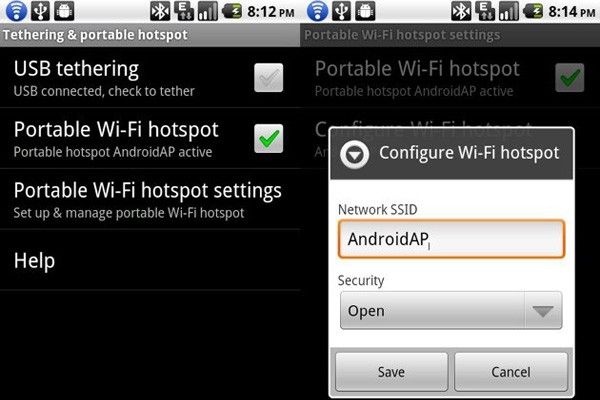
    Android Tethering

    • Tethering — The ability to turn any Android phone running 2.2 into a USB 3G modem or into a 3G Wi-Fi hotspot.
    • Full Flash Support — The addition of Flash 10.1 that both Google and Adobe have repeatedly mentioned could finally equip Android with a full, desktop-style Flash experience.
    • 450% speed boost — A site called Android Police tested the Dalvik virtual machine in FroYo with benchmark software called Linpack, the build on a Nexus One tested at 6.5-7 MFLOPS versus an older build on an older HTC Hero which only hit 2 MFLOPS.

    The Frogurt is also Cursed.

    There are a number of other new features rumored to be included in Android 2.2, which are a bit less flashy. These include: More free RAM, a JIT compiler (a.k.a. “Just In Time” compiler, allows higher-speed code execution,) improved access to the OpenGL ES 2.0 library, FM Radio support, developer access to color LED in trackball, and improved cross-multitouch resolution.

    Again, none of these have been confirmed, but they are all plausible and would be welcome additions to the platform.

    Copyright Betanews, Inc. 2010


    Add to digg
    Add to Google
    Add to Slashdot
    Add to Twitter
    Add to del.icio.us
    Add to Facebook
    Add to Technorati


  • Verizon Says 4G Phones Are Coming In May 2011


    Verizon Wireless Network

    Verizon Wireless is working to quickly build a 4G wireless network, but it can’t beat Sprint (NYSE: S), which is launching its first 4G phone on June 4.

    Verizon Wireless CEO Lowell McAdam said at the Reuters Global Technology Summit in New York that the company won’t be ready to launch phones until May 2011. At that time, it envisions having at least five 4G handsets available. He said the phones will likely be from Motorola (NYSE: MOT), HTC, LG (SEO: 066570) and RIM (NSDQ: RIMM). In the meantime, many of those same players with the addition of Samsung, will build tablets, running Google’s Android software, that could be ready as soon as the fourth quarter.

    Both Verizon and Sprint will have to convince consumers to bite on the new gadgets despite far inferior coverage maps. By the fourth quarter, Verizon hopes to cover 100 million people in 25 to 30 markets including New York City. Right now, Sprint’s partner Clearwire (NSDQ: CLWR) has built a 4G network in 32 markets and has many more on its way in the remainder of 2010.


  • Michelle Obama at George Washington University grauation. Transcript.

    Michelle george Washington
    May 16, 2010

    Written for PD may 17, 2010

    THE WHITE HOUSE

    Office of the First Lady

    ___________________________________________________________

    For Immediate Release May 16, 2010

    REMARKS BY THE FIRST LADY

    AT GEORGE WASHINGTON UNIVERSITY COMMENCEMENT

    National Mall

    Washington, D.C.

    10:55 A.M. EDT

    MRS. OBAMA: Wow. Thank you all. Thank you so much. (Applause.) Thank you. “Dr. Obama” — I like that. (Laughter.) I think I’ll have everybody at home start calling me that. (Laughter.)

    Thank you. I am so honored to help you celebrate this wonderful day.

    And thank you, Ally; thank you, Dr. Knapp, for your generous introduction. I also want to thank Russ Ramsey, Chair of the George Washington University Board of Trustees.

    And congratulations to the extraordinary young men and women of the Class of 2010! (Applause.)

    You guys, you should be so proud of yourselves and your incredible accomplishments. But let’s not forget all the people who also share in that pride — again, your moms and dads, and brothers and sisters, your friends, grandparents, mentors — all of whom took this journey with you in ways both seen and unseen. So this is their day, too. So let’s give them another round of applause and thank you. (Applause.)

    Now, I’m here today for a reason — and not just because it’s a quick commute. (Laughter.) I am here because, as you’ve seen, eight months ago, I used you all in great ways. I issued a challenge to the students, faculty, staff, and trustees of GW. I promised you that if you performed 100,000 hours of service to the greater Washington community this school year, that I’d come and speak at your commencement.

    Well, I am a woman of my word! So congratulations on this remarkable achievement. Thank you for the incredible contributions that you’ve made to the lives of so many people.

    But I will say that if I had known that you’d complete more than 3,300 hours on the first day of the challenge — (laughter) — I’d probably have picked a higher number! (Laughter.)

    Each month, you sent me just wonderful letters updating your progress. “Dear Mrs. Obama, we’re at 19,000 hours.” “Dear Mrs. Obama, we’re at 46,000 hours.” “Dear Mrs. Obama, we’ve at 73,958 hours.” (Laughter.) Yes, I got every minute of detail. (Laughter.) And soon enough, I realized, “Uh-oh, I better start working on that commencement speech!” (Laughter.)

    But more impressive than the fact that you did it was really how you did it. Your letters were filled with, oh, wonderful stories of holding food drives, and beautifying parks, and making care packages for our troops and writing postcards to their families.

    You helped your neighbors in Foggy Bottom dig out after “Snowmageddon” — an effort spurred by Ally.

    And led by junior Eden Sutley, you helped more than 1,000 — hey, Eden, yay for Eden — (applause) — you helped more than 1,000 World War II veterans from her home state of Louisiana come to see the monuments on this Mall and visit their fallen friends at Arlington.

    You hosted about 200 local senior citizens for GW’s eighth annual Senior Prom. And yes, I saw the photos, and it looked like they were showing you all how to dance. (Laughter.)

    GW law students — (applause) — you showed a greater commitment to community and public service careers than ever before. GW medical students — (applause) — they ran their own clinic in Anacostia for our neighbors most in need of medical aid, and so many students wanted to do it that you had to hold a lottery. And more than 500 of you spent Martin Luther King, Jr. Day at Roosevelt Senior High School here in D.C. You repainted the classrooms, and revamped the athletic facilities, you updated the library. You all restored an entire school. And just think about that. What was just a few hours to you is going to make the difference for thousands of young lives for years to come.

    And those are just some of the stories that I’ve read in your letters. But what you may not know is that the people whose lives you’ve touched, they also sent me letters.

    One was from a local retirement community for veterans and their spouses. On September 11, the day that I issued the challenge to you, more than 100 of you hopped on a bus and spent the day there.

    And the letter described in moving detail how you altered your plans to stay an extra hour so you could keep talking with an original Tuskegee Airman; how you decided to set up regular visits with the veterans; how you started a monthly intergenerational discussion group. I mean, the letter went on and on about just how incredible you were. And it described just what your efforts meant to those veterans. But it also showed me what theirs meant to you.

    And that’s what you guys have done, simply because this university decided to play a role in the life of its neighbors. You have made immeasurable differences in the life of this community and to your country. And you should be so proud, because we certainly are.

    And for every act of service that you performed for the community here in D.C., you committed yourselves to serving the greater global community, as well.

    I’m talking about the more than 200 of you who took your winter breaks abroad — building a school in Guatemala, community center in Peru, comforting the sick in Ecuador; the freshman who spent his break in Ghana helping prevent blindness; and the students who helped Sudanese refugees settle in Tennessee; stepping in one night to teach when the refugees’ English teacher didn’t show up — a class that the refugees called their very best.

    So even as you’ve buried yourselves in your books, becoming thoughtful and educated scholars — so parents, they did that, right? — (laughter) — you’ve also immersed yourselves in your community, becoming active and engaged citizens.

    You have fully joined a generation of activists and doers. And when you think about how your generation has come of age, that’s pretty astounding. I mean, you all have seen so much. Just since you were in middle school, you’ve witnessed terrorism touch our soil, you’ve seen the cost of war reach into our communities. You’ve watched unimaginable devastation and suffering in the aftermath of a tsunami; a hurricane; an earthquake. You’ve felt the wrath of a recession that’s changed your towns and even your families.

    Now, that’s a whole lot to bear for any generation. So, no one would have blamed you had you chosen to hunker down and turn inward; if you had simply focused on making sure that your own lives were secure.

    But so many of you have done the exact opposite. Instead, you’ve dived in. You’ve reached out. You have volunteered and applied to organizations like Teach for America and the Peace Corps in record numbers. In fact, this year is the second year in a row that GW led universities of this size in the number of undergraduate alumni serving in the Peace Corps. (Applause.)

    So for every ill of this interconnected world, you’ve tried to find a way to make good. Where there’s hate, you’ve tried to heal it. Where there’s need, you’ve tried to fill it. Where there’s devastation, you’ve tried to rebuild it.

    You guys can’t be stopped. You don’t know the meaning of the word “can’t.” And every time someone’s tried to say to tell you that, you’ve replied what — “Oh, Yes We Can.” (Laughter and applause.)

    In fact, you remind me of something President Wilson once said. He said, “Sometimes people call me an idealist. Well, that’s the way I know I’m an American.”

    Even so, you’ve probably also run up against people who love your idealism, but warn you to lower your sights; to scale back your ambitions a bit; to settle for something less.

    And you know their hearts may be in the right place. They may be worried that you’re in for a letdown once you realize that it can take years and even decades for your best efforts to bear fruit. See, we live in a culture, after all, that tells us that our lives should be easy; that we can have everything we want without a whole lot of effort.

    But the truth is — and you know this — creating anything meaningful takes time. And sometimes, the only thing that happens in an instant is destruction.

    And I say this because during our trip to Haiti, Jill Biden and I, we got to visit the people there, and there amidst so much misery and destruction, all of which occurred in a matter of minutes, it is so easy to ask: After so much ruin, how can anything rise again? After so much loss, how can anyone still have hope?

    But let me tell you that everyone I met during that visit — doctors, relief workers; Haitians, Americans, citizens of the world — they were focused on the task of answering those questions. Yeah, they were exhausted and they were heartbroken. But they were equally unyielding in their determination to help that country heal, and fully aware of how many years that would take.

    And by the way, I also met with President Preval and his wife, Elisabeth, who’s a GW graduate herself. And she just went on and on about how GW, the community, has been there at the forefront of the efforts to help Haiti from the very beginning.

    But the point is, everyone I encountered during my trip embodied a Haitian proverb that I learned which says that, “little by little, the bird builds its nest.” And your generation is doing its best to live by this idea.

    You see, as impatient as you may be to get out there and change the world — and that’s a good thing — you’re equally patient for that change to come. As idealistic as all of you may be, what your generation has lived through has also tempered you with a deep realism.

    You understand things that perhaps your parents and I even don’t always have to consider when our world was still separated by walls of concrete and communication.

    That we are no longer isolated from what happens on the other side of the world. That it’s in our best interest to look beyond our immediate self-interest, and look out for one another globally. That so many of today’s challenges are borderless, from the economy to terrorism to climate change, and that solving those problems demands cooperation with others. And more than any other generation, yours is fully convinced that you’re uniquely equipped to solve those challenges. You believe that you can change your communities and change the world. And you know what, I think you’re right. Yes, you can.

    So today, graduates, I have one more request to make of you, one more challenge, and that is: Keep going. Keep giving. Keep engaging.

    I’m asking you to take what you’ve learned here and embrace the full responsibilities that a degree from an institution like GW gives you. I’m asking your generation to be America’s face to the world. It will make the world safer, it will make America stronger, and it will make you more competitive.

    Now, you didn’t think I’d show up here without another challenge, did you? (Laughter.)

    I know that some of you may be thinking, well, “Hang on, Michelle. I’m in debt, I’ve got to find a job in a tough economy, and now you want me to what?”

    And I know there are parents out there thinking the same thing. “Hang on, Michelle. I just shelled out six figures to get my kid to this day, and now you want her to do what?” (Laughter.)

    I’m just asking you to keep being you, to keep doing what you’re doing. Just take it global.

    Yes, that can mean serving in the world’s most broken places. Or it can simply mean surfing foreign news sources to get an idea of how other young people see things in other parts of the world.

    It can mean continuing your own personal and professional growth by traveling far and wide. Or it can mean reaching back to convince the students behind you to try study abroad programs, especially students from communities and backgrounds who might not normally consider it.

    It can mean seizing that overseas opportunity with a company. Or it can mean staying here and fixing the world by doing business with the world, and, at the same time, creating opportunity in your own community.

    This class of graduates in particular has a leg up, because at GW, you’ve already been trained to think this way. Nearly half of undergraduates here study abroad. As Zoe said, you can’t walk a block without running into the State Department, or the World Bank, or any number of NGOs and faith-based organizations. And all around you, every day, are classmates and friends from more than 130 different countries. So for you, it’s as easy as falling out of bed, even if some of you stay in bed until noon. (Laughter.)

    But so many Americans either don’t have those opportunities or simply don’t consider them.

    And as interconnected as we are; as quickly as the 21st century global economy moves; we have to find ways to extend those opportunities to as many young people as possible.

    And I say this as someone who, like, perhaps many of your parents, didn’t always have or consider those opportunities. As you heard, I grew up in a blue-collar neighborhood on the South Side of Chicago, where the idea of spending some time abroad just didn’t register. My brother and I were the first in our families to go to college, so we were way more focused on just getting in, getting through, and getting on with our lives. And after law school, my priority was paying off my student debt. So, I just never considered that I needed to take an additional journey or expand the boundaries of my own life.

    And then I met my husband, whose life was — yeah, yeah — (laughter) — his life was somewhat different than mine. His had been more informed by experiences abroad. And watching him helped me to expand the way I looked at things; to consider my life as connected not just to my country but to the world. And it’s a perspective that we now are trying to instill in our daughters, as well.

    And today, fortunately my new role, it affords me extraordinary opportunities to visit foreign countries. And during these trips, I try to spend as much time as possible with young people. And those experiences are what convince me so fully that it’s in this nation’s best interest that your generation get out there, because it’s going to strengthen all of us.

    Now, there are some things that government can do, and things that I’ll pursue as First Lady, to bring these opportunities within reach to more young people.

    For example, my husband is committed to substantially increasing the number of volunteer opportunities within the Peace Corps. And, by the way, joining the Peace Corps only requires that you be young at heart, because the oldest active member is 85 years old! (Applause.)

    We’re also expanding exchange programs, study abroad opportunities; and encouraging universities like GW to create their own, because as those of you who have already participated in study abroad know, the most lasting lessons sometimes don’t always come from books.

    But more important than anything government can do will be a sincere willingness on your part to keep sharing your enthusiasm; to keep believing that you can make a difference; to keep going to places where there is brokenness and injustice and despair, and asking what you can do to lift those places up.

    It is through the simple act of engaging with your counterparts around the world that you can make the world a safer place. As you know, in times of tension, we tend to focus on what makes us different — things like color or creed; class or country — when sometimes, that only serves to deepen misunderstanding and harden mistrust. In the midst of our struggles, we too easily forget about all that we share in common — that no matter where or how we live, we all have the same dreams: a life of dignity, a chance at opportunity, a better future for our kids.

    It reminds me of a story our Secretary of State and friend, Hillary Clinton, told during a visit to one of our embassies earlier this year. She spoke about a meeting she attended with a State Councilor of China, who proudly told her that he had just had his first grandchild.

    And Secretary Clinton responded that she thought everyone should bring pictures of their children and grandchildren to international meetings, and set those pictures right in front of them and ask themselves, “Is the decision that we’re about to make going to make their lives better?” And then at the very next meeting together, the first thing he did when he had arrived was pull out a picture of his grandchild.

    Now, perhaps some of you have had similar interactions with your classmates; interactions that helped you discover that when we just make that effort to engage with one another; when we share our stories; we begin to build familiarity that often ultimately softens mistrust. We begin to see ourselves in one another. We begin to realize that the forces that bind us are so much more powerful than the forces that blind us.

    And because many of you already serve around the world, this class knows firsthand that each one of those interactions in the world has the power to start a chain reaction. Every child that learns to read can teach another. Every girl taught that she has power inspires dozens of others. Every school built improves thousands of lives.

    And just as that makes the world safer, it also makes America stronger.

    Imagine a child whose first memory of an American is a student who helps him see again. Imagine a community whose first experience with America is a group of youth on winter break standing side by side with them building homes. Imagine a country shattered by a catastrophic earthquake that they see wave after wave of rescuers and doctors and relief workers all wearing the stars and stripes on their sleeve.

    Imagine how powerful that is. Imagine what impact thousands of stories like that today can have a decade from now.

    Now, this is not to discourage any American from continuing to serve in their own communities in this country as best they can, especially in a time when so many fellow Americans need help here at home. And thanks to the ingenuity of the American people, and a newly strengthened AmeriCorps, there are more opportunities to serve at home than ever before.

    But just know that when you serve others abroad, you’re serving our country, too. You’re showing the world the true face of America — our generosity, our strength, the enduring power of our ideals, the infinite reservoir of our hope.

    And yes, serving abroad will make you stronger, more competitive, a more valuable asset for a career in the public or private sectors. Just talk to any of your colleagues who have spent some time abroad. And one of the first things they’ll tell you, for example, is that you’ll never learn a language or develop self-reliance as quickly as you will when you’re on your own in a foreign country!

    But they may also tell you that making a difference abroad might just be the thing that inspires you to come back and make a difference here at home. They might tell you that engaging with the world doesn’t just change the course of other people’s lives — it may change the course of yours, too. You may just find that pivot point that you’ve been looking for, or maybe one that you didn’t even expect at all.

    An extraordinary young woman that I met in Mexico last month, during my visit, she told me that in high school, she felt as if she were living in a bubble. So on a whim, she went to Vietnam to volunteer with children.

    She described her days there as very “unfair” and “difficult.” She said there were days there “that [made] us feel meaningless.” But she also said there were days “…where I felt I could change the world.” And that trip made her realize she wanted to be a doctor. And when she returned to Mexico, she enrolled in medical school. But her journey led her to an important pivot point in her life. She said, and these are her words, “I realized that this is my country. This is where I belong and this is my culture, where I need to help.”

    You see, that young woman, she went halfway around the world before she found her way home. And I suspect that something has — like that has happened to many of you.

    I know it did for Davina Durgana, who’s a remarkable young woman who’s graduating with you today. A simple mission trip to El Salvador inspired her to take up the cause of human trafficking — modern day slavery — when she came back. She found an internship that allowed her to work on an anti-human trafficking campaign, and she’s going to pursue graduate studies in human rights next year at the Sorbonne.

    And by the way, Davina, she also serves as a Big Sister to a young girl in Anacostia; she volunteers with wounded warriors at Walter Reed; she helped run a Girl Scouts troop where she encouraged underprivileged girls to get involved; she volunteers as an EMT at the busiest fire department in the D.C. area, and convinced other classmates to join her — and, somehow, she found time to graduate! That’s for your parents, Davina. (Laughter.)

    In the end, the simple act of opening your mind and engaging abroad — whether it’s in the heart of campus or in the most remote villages — can change your definition of what’s possible.

    And more importantly, you can change ours. See, after all, it’s your generation that always has — often from the very Mall where we’re sitting right now. I mean, just look around you. It was on this Mall where young people marched for women’s rights. It was on this Mall where young people marched for civil rights. It was on this Mall where young people marched for peace, for equality, for awareness.

    Decade after decade, young Americans who loved their country; and loved its ideals; who knew that it stood for something larger in the world; came here to this spot to wade into the rushing currents of history because they believed that they could change its course.

    And on a cold January morning last year, many of you came here to wade in yourselves. It was the day my husband took the oath of office as President of the United States. And that day, he pledged to seek a new era of American engagement, and he asked each of us to embrace anew our duties to ourselves, our nation, and the world.

    Now, I’m not a President. I’m just a citizen. But as a citizen, I’m asking you, as graduates of this global institution, to seize those responsibilities gladly. I’m asking you to fully embrace your role in the next vital chapter of our history. I’m asking you to play your part.

    And from what I’ve seen from your class, I have no doubt that you will. Look, we believe in you so deeply. So, your new challenge begins now — and it’s one that doesn’t end after 100,000 hours.

    So thank you, graduates. I wish you God’s grace and the greatest luck on the journey ahead. Congratulations. Thank you. (Applause.)

    END 11:22 A.M. EDT

  • Hábitos de conducción, la visibilidad

    luces_lluvia

    Hace tiempo que quería hacer esta entrada, porque eso de andar tanto por autopista siempre da para ver situaciones curiosas o incluso peligrosas. Y no, de momento no he conseguido fotografiar a algún conductor de la A-52 miccionando (seguro que lo conseguiré…), pero os vuelvo a traer otro ejemplo de cómo no se debe de conducir cuando la climatología es adversa.

    La foto que veis al principio no es un juego óptico, es simplemente lo que se veía desde mi coche una tarde de febrero por la A-6 con lluvia intensa, si agudizáis la visión podéis ver como una furgoneta Renault Trafic adelanta a otra, pero hay una diferencia clara, la Trafic lleva las luces antinieblas traseras puestas y la Berlingo no (que está siendo adelantada).

    Una furgoneta blanca, con un gran chaparrón cayendo y algo de niebla en el ambiente y tan tranquilo que iba el conductor sin conectar nada más que las luces de cruze, es una situación perfecta para que sufra una colisión por alcance, puesto que iba a una velocidad inferior a 90 km/h. Y la comparación clara de visibilidad la teneis con la Trafic que al menos se le ven las luces e intuyes que hay un vehículo.

    Que conste, que cada día estoy más convencido que no sabemos conducir con aguaceros intensos, porque me he topado con varias tormentas y situaciones similares muchas veces y el comportamiento de muchos conductores es irresponsable, lástima que no siempre podemos sacarle fotos y comentarlo.

    Foto | David Taboada


  • Gameloft Releases 10 HD Games for Android Smartphones

    Gameloft, developer of downloadable games, announced 10 HD games aimed at higher end Android smartphones (like Sony Ericsson XPeria X10, HTC Desire, HTC Incredible, Motorola DROID, Motorola Motoroi or Nexus One). The catch, however, these games will be sold outside Google’s Android Market and sold directly from their website at $4.99 USD each.

    Luckily your favorite Android App Review website will have all the games reviewed soon with videos, so you can virtually try it before you buy it! :P

    The 10 titles include:

    • Asphalt 5
    • Let’s Golf!
    • Assassin’s Creed
    • Hero of Sparta
    • Gangstar: West Coast Hustle
    • Dungeon Hunter
    • Real Football 2010
    • N.O.V.A. Near Orbit Vanguard Alliance
    • Modern Combat: Sandstorm
    • Tom Clancy’s H.A.W.X

    Stay tuned for our reviews soon!

    [Via Wired via Gameloft Press Release]

    Algadon Free Online RPG. Fully Mobile Friendly.

  • DIY: Coat Hook Headphone Hanger

    Need a quick and easy place to store your headphones? I’ve been unplugging mine and putting them in a drawer, but I think I like this idea better. The person who sent the tip into Lifehacker suggests mounting a coathook to the bottom of your desk, and then hanging your headphones from the hook. I like the idea, but what if you have a glass desk?

    Aside from the obvious problem if you have a glass desk, placement is also key. I’ve got rather long legs and loathe keyboard drawers because they are an exercise in pain. Obviously you’d want to place the hook to the side of the desk instead of the middle, but what about smaller desks? I’m going to do a slight variation on this and use one of those 3M Command Hooks. Best part is, it doesn’t require you do drill a hole in your desk (or wall), and it’s easy to move if necessary.


  • Devon Burr

    Devon Burr
    Assistant Professor
    Earth and Planetary Sciences

    Expertise:
    Devon Burr is an expert in planetary geology, particularly of Mars and Titan. Her research focuses on understanding the evolution of these bodies as evidenced by their surface features. Burr is involved in investigations into flooding and fluvial (river-related), glacial, periglacial (ground ice) or wind-formed landscapes. She regularly uses data returned by NASA spacecraft missions to other planetary bodies. To support analysis of these remote mission data, she conducts geologic field work on terrestrial analogues, wind tunnel laboratory experiments and numerical modeling.

    Expertise Categories: Geology | Planetary Geology | Geomorphology | Mars | Titan | Rivers | Flooding | Astrobiology | Wind Tunnels

    Contact Information

    Email: [email protected]
    Phone: 865-974-6010
    Web: http://web.eps.utk.edu/faculty/burr.html

  • Paulson Now Owns $3 Billion Of Bank Of America, Kraft Shares Liquidated (BAC, KFT)

    johnpaulson glasses tbi

    Paulson scooped up tons of bank shares last quarter, continuing a trend we’ve seen for awhile now.

    Paulson said back in the fall that Bank of America was a double from there, and that was when BAC was at around $16 per share. The stock is up slightly now, but was up significantly mid-April.

    Check out the chart:

    bac

    Here’s what Paulson bought and sold last quarter, according to his 13F:

    Bank of America: ~170 million shares, up from ~150 million for a total investment of $3 billion

    CIT Group: ~4.5 million shares for ~$170 million

    Wells Fargo: 17.5 million shares for ~$550 million (he bought into Wells Fargo in Q4 and upped his stake about ~$100 million)

    Kraft: Paulson sold out completely

    MGM: 40 million shares for ~$500 million

    Paulson also bought up (he owned some in Q4 too) Lear Corp, the car seat and car power manufacturer we mentioned Eric Mindich bought a stake in last quarter. And he upped his stake in SPDR slightly.

    Join the conversation about this story »

  • Spy Shots: 2011 Land Rover LRX stays true to the concept

    Filed under: , , , ,

    2011 Land Rover LRX – Click above for high-res image gallery

    It was only a matter of time before our army of steely-eyed spy photographers were able to snag a handful of shots of the upcoming Land Rover LRX. Proving once and for all that BMW doesn’t have the market cornered on psychedelic vinyl body wraps, the Indian-owned British SUV manufacturer’s answer to the CUV question was spotted busting a move on public streets. If you can look past the electrified coral reef patterns smeared all over the vehicle’s body work, it’s easy to see that this may be the most interesting thing to roll out of the brand’s tea-drinking consciousness in years.

    So far, we know that the LRX may or may not sail under a different name once it lands in showrooms next year. Whatever Land Rover decides to call it, the baby-ute should be available in both front and all-wheel drive flavors. That’s right, we said 2011 will bring a FWD Land Rover to the scene. If that’s not enough to put a twist in the knickers of brand purists everywhere, reports have also suggested that buyers will also be able to opt for a hybrid version.

    So why are we so excited? This has to be one of the best-looking, most innovative models we’ve seen from Land Rover since England was still invested in crushing lesser cultures for the good of Queen and country. The LRX isn’t square, isn’t powered by a V8 and will actually attempt to address real-world concerns like fuel economy. Even better, judging from the short overhangs front and rear, the all-wheel drive version will possibly be able to keep up with its big brothers once the going gets off road.

    Spy Shots: 2011 Land Rover LRX stays true to the concept originally appeared on Autoblog on Mon, 17 May 2010 15:59:00 EST. Please see our terms for use of feeds.

    Permalink | Email this | Comments

  • Mobile Devs: Get 20% off the Uplinq Conference

    Qualcomm, makers of just about every comm chip in existence, are holding their annual Uplinq conference in San Diego this year and would like to invite you folks to roll on down for a bit of mobile fun in the sun. Check out their site and if you think the event is for you hit the jump for a coupon code to get 20% off.

    The first 100 CrunchGear readers who register for the conference will receive a 20% discount off the $375 registration fee – an offer only available for the blogger community. Your readers just need to enter the promo code “CRUNCH123” upon registering (in the Registration Code box) and if they are within the first 100, they will receive the discount.

    The registration site is right here and don’t forget your coupon code.