Blog

  • Paul Rodriguez Signature Skate Pack laptop bag

    Paul Rodriguez Skate Pack incasePaul Rodriguez has accomplished a lot in his skateboarding career.  He was the 2002 Trans World Skating Rookie of the Year, won an X-Games Gold medal in Street Skating in 2005 and also became the first pro-skater to be sponsored by Nike.  Combine all of these things with the fact that his father is famous comedian Paul Rodriguez, Sr. and it is not surprising that P-Rod is branching out to areas beyond grinding rails and landing kick-flips.  Enter Incase and the Paul Rodriguez Signature Collection.  Started in 2008, the current line features a new version of his signature skate pack that can accommodate up to a 17” .  Featuring a reinforced notebook compartment, a dedicated iPod pocket with headphone port, a concealed back panel zippered pocket to secure important documents and heavy-duty, water-resistant YKK zipper pulls with closed-seam construction the P-Rod Skate Pack ensures that whatever you put inside it will be protected from most anything that you or any inevitable multiple-crashes can throw at it. 


    Tags:
    ,
    ,
    ,
    ,
    ,
    ,
    ,
    ,
    ,
    ,
    ,
    ,
    ,
    ,
    ,
    ,

    Paul Rodriguez Signature Skate Pack laptop bag originally appeared on Gear Live on Thu, April 29, 2010 – 12:37:28


  • OpenTable: Reservations in the palm of your hand

    Looking to go out for a romantic dinner date with a special someone? Family in town, and you want to take them to a popular bistro downtown? OpenTable has just what you’re looking for. With access to hundreds of local eateries, OpenTable allows you to conveniently make, change, or cancel reservations from the convenience of your Android device.

    So how well does OpenTable work? Pretty darn well actually. Just this past week, I made reservations at a popular restaurant in downtown Minneapolis at 5pm to surprise my wife before going to see a play. Realizing I was running slightly late at work, I was able to change the reservation from 5 to 5:30 all while stopped at a stoplight on the drive home. I was also able to click on the address in the app to get directions via Google Maps.

    The interface for OpenTable is simple and pleasant. It first prompts you to either grant it access to your location via GPS or to select a metro area. Once it’s found your location, simply enter a date and time, the number of people in your party, and the maximum number of restaurants you’d like to see. OpenTable will do the rest. Once you pick a restaurant, the app shows the location, a brief description and available reservation times. What’s great about OpenTable is that reservations are confirmed almost instantaneously via an email to your email address on file (registration is required). A main drawback is the lack of ability/intuitiveness of the search function. You can only search for a restaurant you’re looking for after you’ve drilled into the restaurant list..

    The Good

    • Very easy to use. Two clicks to make or change a reservation allowing for a convenient mobile experience.
    • Has a wide selection of restaurants in its database. All of the major (and some of the minor) restaurants in my suburban town were covered.
    • No phone call to the restaurant is necessary, which is a huge plus to folks like me who hate using the phone.
    • Clean and simple user interface.
    • Clicking on the address takes you to the map for easy access to directions.

    What I’d like to see in a future release

    • One-click access to be able to call the restaurant from the app itself if need be.
    • Easier ability to search for restaurants by name should you already have a restaurant in mind.

    Final Verdict:
    This is a nice-to-have app for the avid or casual restaurant-goer. My wife and I go to restaurants once per month or so, and have found this app extremely useful for making reservations and even finding new restaurants that we might not have tried otherwise.

    OpenTable is currently in version 1.1 and can be downloaded for free on the Android Market. More information on the app and OpenTable can be found at http://www.opentable.com/page.aspx?pageid=11&ref=5920

    Note: This review was submitted by Anthony Domanico as part of our app review contest.


    Related Posts

  • Khadr ‘Bombmaking’ Video Doesn’t Clearly Show Khadr Planting Bombs

    GUANTANAMO BAY — The prosecution in Omar Khadr’s pre-trial hearing screened what may be its trump card when the actual trial portion of the military commission gets underway in July: a 25-minute video captured by U.S. forces in Afghanistan showing a 15-year old Omar Khadr in a compound with people making and emplacing roadside bombs. The older men on the tape, believed to be from 2002, talk openly about intending to use them on Americans. Only the tape doesn’t show Khadr emplacing the bombs, and only briefly shows him handling a part believed to be for an improvised explosive device.

    Khadr, a Canadian citizen, followed his family to Afghanistan, particularly his parents, who appear to be well-connected to al-Qaeda. In the video, it’s not clear if his father is present. But Khadr is shown with a number of adult men who specifically talk about attacking Americans in Afghanistan. (In a different shot, one fans himself and says, “As for the jihad against the heat, it is the hardest.” They sit on a carpet with wires and what appear to be circular Italian VS 2.2 anti-tank mines. At one point, Khadr — chubby-cheeked, with bushy hair and a wispy mustache — handles a piece of equipment that appears to be related to the bomb construction.

    The video is amateur — several voices ask if the camera is on or working properly — and it repeatedly and abruptly splices together random footage. Some of it shows men horsing around, calling each other names. Other parts show a fat man eating a mango and wiping his fingers with pink toilet paper. An odd shot shows a reclining, shirtless man balancing a piece of machinery on his chest and occasionally trying to lick it. Khadr briefly appears, lit by green night vision, giggling in a close up of his face while appearing to still be in the compound, checking to see if the camera works.

    It cuts out, and several minutes pass before the camera captures an extended nighttime scene of men digging into the road to emplant an improvised explosive device. There is briefly sound of a “young male’s voice,” as FBI Special Agent Robert Fuller testified. The picture is dark, and it does not clearly show anyone who looks like Khadr.

    There are other shots of Khadr on the tape. In one, he sits on a carpet, fanning himself, complaining of the Afghan heat and expressing thanks to his hosts for the fruit juice they gave him. There is an AK-47 in the background, but Khadr does not touch it in the frame. At one point he tells a disembodied voice, “You look like a teddy bear.”

    Portions of the tape have aired on CBS’s “60 Minutes.” (I couldn’t immediately find it on YouTube.) To the best of my knowledge, the version of the tape we watched in court has previously been aired in a different Guantanamo hearing for Khadr, but not outside of a courtroom.

    Khadr’s attorney, Kobie Flowers, objected to the airing of the tape, calling it irrelevant and unfairly prejudicial. Flowers argued that the hearing is to determine the voluntariness of Khadr’s statements to interrogators and the place for images that speak to the overall merits of the prosecution’s case against Khadr is the full hearing. (Although Flowers said yesterday he would seek to exclude the video for trial.)

    But the prosecution won out. The statements on the video “show the maturity and the sophistication and the intellect of the accused,” Navy Capt. John Murphy said. “Although the statements themselves are going to be elements at trial, they’re supportive of the fact that they’re both voluntarily provided and reliable.”

    The video, it should be said, does not include anything relevant to the murder charge against Khadr.

  • Lawsuits challenge Arizona immigration law

    [JURIST] Two lawsuits were filed Tuesday challenging Arizona’s new immigration law, which makes it a crime to be an undocumented immigrant and requires police to question anyone whose immigration status appears suspect. Arizona police officer Martin Escobar filed suit in the US District Court for the District of Arizona, alleging that SB 1070 is unconstitutional and could hamper police investigations. A second suit was filed by the National Coalition of Latino Clergy and Christian Leaders (CONLAMIC), which argues that the legislation is preempted by federal law. Also Thursday, several advocacy groups, including the Mexican American Legal Defense and Education Fund (MALDEF), the American Civil Liberties Union (ACLU), and the National Immigration Law Center (NILC) formally announced their intention to challenge the bill.
    The bill, signed into law last week by Governor Jan Brewer, has caused intense controversy. Earlier this week, Mexican President Felipe Calderon strongly criticized Arizona’s new immigration law, claiming that the measure opens the door to intolerance and hatred. US President Barack Obama has also criticized the law, calling for federal immigration reform. Under the law, it is designated a crime to be in the country illegally, and immigrants unable to verify their legal status could be arrested and jailed for six months and fined $2,500.

  • PSN US – PlayStation Store update 04/29

    Now that Sony’s moving the regular updates to Tuesday, this would be the last time that you’ll be reading the PlayStation Store update on a Thursday. Let’s see what they have for us today.

  • Target: We’re Out Of Scales, So Just Buy A Mirror

    Reader Allnitecp says:

    I saw this at Target, and knew I had to send it in.

    Its funny that when they run out of bathroom scales they think that a mirror is a good substitute….

    I got a good chuckle out of it.

    And when they run out of mirrors do they suggest “that one pair of jeans you bought right after you had swine flu?”

  • Linda McMahon Will Refuse Pay If Elected To Senate Seat

    Republican Linda McMahon says she will not accept a paycheck if she is elected to the U.S. Senate.

    Rank-and-file members of Congress currently receive $174,000 per year and are free to turn down a pay increase or a pay check.

    “Linda just doesn’t believe politics ought to be a cushy job that turns into a profession,” said McMahon’s spokesman, Shawn McCoy. “There’s an enormous amount of work that needs to be done to get this country back on track beginning with job creation and tightening of government’s fiscal belt. Her refusal to take a salary, I think, is an important symbolic gesture that underscores her principles on this.” 

    McMahon is running against Rob Simmons and Peter Schiff for the Republican nomination. They could not be reached for comment 

  • Something’s wrong when our best option is burning an oil slick

    by Eric de Place

    Yesterday was a good day for an energy policy reality check. Because we are in a place where the environmentally responsible choice is lighting a giant oil slick on fire.

    And that really is the best option available to us right now. That’s how bad the situation in the Gulf of Mexico is. It is yet another horrifying example of the broken—and I would say morally bankrupt—energy system that Americans remain shackled to thanks to republicans and democrats alike.

    As a reminder, here’s what President Obama had to say one month ago when he announced expanded offshore oil drilling:

    …we need to move beyond the tired debates of the left and the right, between business leaders and environmentalists, between those who would claim drilling is a cure all and those who would claim it has no place.

    Can someone please remind me why exactly do we need to move beyond the “tired” debates?

    I’m not tired of those debates at all. In fact, I think we’re just getting started!

    Eight days ago the drilling rig Deepwater Horizon exploded. Eleven people are missing, presumed dead. The rig is hemorrhaging 42,000 210,000 gallons of oil a day into the Gulf. The resulting slick is 40 miles wide and 80 miles long. And it’s moving toward a wildlife refuge, people’s homes, and a lucrative shellfishery. All of which means that the best option we have—the best option for the environment, I mean—is lighting an oil slick on fire.

    Super. Just as long as we move beyond the tired debates.

    This post originally appeared on Sightline Daily.

    Related Links:

    The Climate Post: Mighty winds a-blowin’

    Gulf of Mexico: from magnificent resource to industrial sacrifice zone

    Tragic oil spill = smarter climate bill?


  • Obama Nightclub Opens In Shanghai

    President Obama is now a part of the nightlife in China. The Obama Club opened in Shanghai on Monday — although several club staffers say they’ve heard of the hotspot’s all-powerful namesake.

    Visit msnbc.com for breaking news, world news, and news about the economy

    The nightclub is lavish with two stone lion statues and an enormous outdoor fountain that operates in time with a piano ballad, according to AOL.com, which posted photos of the club’s grand opening this week. The club has state-of-the-art audio and video entertainment systems, dancers, hostesses, and a rooftop garden.

    Guests are greeted inside by a strobe light, fog machines and six big screens that display graphics that “look as though they might have been borrowed from an iTunes audio visualizer.” It boasts a capacity of 2,000, making it one of the largest entertainment venues in Shanghai.

    The club is using Obama’s campaign platform for “Change” to build its clientele.

    “Because Obama has mentioned “change” during his election campaign, so in truth we also hoped that this nightclub, a pinnacle of culture and entertainment, can be an instrument of change,” says Dragon Chiang, vice chairman for Shanghai Yahe Investment. “We no longer want people to think of nightclubs as a certain kind of venue. We hope that under our leadership, this nightclub can have a fresh way of operating.”


  • Samsung: “Like our new phone? Play some dodgeball!”

    Let’s try a little thought experiment here. Think about a new cell phone: it’s shiny, has a touch screen, and even a QWERTY keyboard. What else comes to mind when you think about that phone? What do you feel like doing?

    If your answer to that last question was “play dodgeball”, then congratulations! You’re insane exactly the type of person Samsung is looking for!

    To commemorate the launch of their Reality handset on Verizon, Samsung is attempting to set the Guinness record for the world’s largest game of dodgeball at the 69th Regiment Armory in New York. Over 1,500 potential dodgeball champions will square off, all for the glory of receiving a new phone (oh, and some gift cards). Having played with the feature phone already, it seems like this whole event is poised to be much cooler than the device it was meant to hype, but I’m sure that was the point. If you want in on the ball-slinging fun (unlike me, who was that one kid in gym class who pretended to sprain his ankle to avoid doing things), make haste to their Facebook page and sign up.

    Ah, who am I kidding? I secretly hope a bunch of tech bloggers sign up, just to settle the score once and for all.

    [Press Release]


  • ‘Country Living’ will build its House of the Year in NYC’s financial district

    A rendering of 'Country Living' magazine's 2010 House of the Year. (Photo: PRNewsFoto/Country Living)

    A rendering of 'Country Living' magazine's 2010 House of the Year. (Photo: PRNewsFoto/Country Living)

    From Green Right Now Reports

    Country Living magazine today announced it will go energy-conscious with its 2010 House of the Year building project  ”Home Green Home.”

    Developed by New World Home and designed by the Country Living editors, the house will showcase “green” products and features for every room. The magazine said the house will be built and temporarily set in New York City at the World Financial Center.

    Country Living said it will host an event unveiling the House of the Year on June 3, and will open its doors to the public June 4th.

    Earlier this year, Hearst Brand Development partnered with New World Home to introduce the Country Living Collection, a collection of historically inspired modular homes featuring USGBC LEED Certification. The collection is aimed offering consumers attainable green living coupled with classic country style. The 2010 House of the Year, aptly named the “Hudson” cottage as it will be built on the shores of the Hudson River near New York Harbor, will be available for any Country Living reader to purchase across the country, an option that has never been available to readers before, the magazine said.

    The 1,600 square foot “Hudson” cottage will be featured in the November 2010 issue of Country Living magazine. All of the interior and exterior details were selected by the magazine’s editors. Interior designer Katie Ridder will decorate the home with green furnishings and an emphasis on bold color. With 2 bedrooms and 2 1/2 baths, the home features a 1,100-square-foot wrap-around porch and an open floor plan that fully integrates the greenest products and practices available today.

    Country Living’s 2010 House of the Year will be open to the public June 4th-June 16th, Monday-Friday 11-5, Saturday and Sunday 9-6 and Thursday June 17th 10-2 at The World Financial Center. Tickets are free. Following the open house the home will move to Crystal Springs Resort near Vernon, N.J. where it will become a permanent Country Living Green Modular Home design center.

    Country Living said it will donate $5,000 to benefit National Parks off the New York Harbor Conservancy.

  • Lexus resumes sales of GX 460, software update available to owners

    Filed under: , , , ,

    2010 Lexus GX 460 – Click above for high-res image gallery

    Sixteen days after the Lexus GX 460 landed on Consumer Reports “Do Not Buy” list and Toyota issued a stop-sale on the luxury ‘ute, Lexus has developed a fix for the stability control issue discovered by CR and has begun rolling out the fix.

    In a statement issued by Mark Templin, the Lexus Group Vice President and General Manager says that the automaker’s engineers were able to recognize and develop a remedy for the stability control system which CR deemed unsafe during its “Throttle Lift Off” test.

    In addition to resuming sales, dealers began contacting customers yesterday to start issuing the software update and Lexus owners can expect their GXs to be reprogrammed within a week. For owners who still don’t wish to drive their affected SUV, Lexus will continue to offer a courtesy vehicle free of charge. Full details in the press release after the jump.

    Continue reading Lexus resumes sales of GX 460, software update available to owners

    Lexus resumes sales of GX 460, software update available to owners originally appeared on Autoblog on Thu, 29 Apr 2010 15:29:00 EST. Please see our terms for use of feeds.

    Permalink | Email this | Comments

  • Tragic oil spill = smarter climate bill?

    by Keith Harrington

    Several weeks before President Obama made the tragic decision to approve expanded offshore drilling, ten costal-state senators wrote a letter [PDF] to their colleagues John Kerry (D-Mass.), Lindsey Graham (R-S.C.), and Joe Lieberman (I-Conn.) pressing the trio to keep expanded offshore drilling out of their now floundering climate and energy package.
     
    In the letter, the senators warned about the serious threats such drilling posed to their states’ coastlines:

    While technological advances have attempted to lower the environmental and economic risks of drilling, experience has shown that no technology is foolproof. Since 1964 offshore operators have had 40 spills of greater than 42,000 gallons … Far from being a thing of the past spills occur with alarming frequency … Drilling near our coasts poses a severe risk to our states’ coastlines and in turn to our coastal communities.

    As up to 5,000 barrels (210,000 gallons) of crude oil a day rise from the wreckage of the Deepwater Horizon rig and make their way toward the Louisiana coast, the concerns expressed in that letter look more prescient than ever. As this spill drives home with frightening clarity, offshore oil drilling remains a dirty and catastrophically dangerous business—despite cynical and self-serving claims from Washington and the oil industry. The type of nightmare the senators warned of has tragically come to pass once again, with 11 workers killed and disastrous consequences for communities and ecosystems along a coastline already beset by the destructive forces unleashed by the burning of fossil fuels.
     
    The incident also highlights the major flaws of the KGL approach to climate policy making. In order to build support for a bill that is supposed to protect the climate, they’ve had to give away the store to the very dirty energy interests whose products are destroying it. In order to stop the damage being done by fossil fuels, the senators are pushing for an expansion of their production. If it sounds kind of crazy, that’s because it is.

    While it may be difficult and distasteful to see anything positive in a tragedy like this, the truth is this inevitable disaster couldn’t have happened at a more politically critical time—just as lawmakers were moving to codify the condemnation of our coastlines. In the same way that the Big Branch mining disaster caused elected officials to take a hard look at mining safety, one can only hope that the Deepwater Horizon spill will serve as the powerful wake-up call the president and Congress need to reverse the foolhardy course they have chosen regarding offshore drilling.

    To make sure this happens, we need our coastal-state senators to be the voice of reason once again, and reiterate their critique of the unreason of the KGL-Obama approach to climate policy:

    … we cannot support legislation that will mitigate one risk only to put our coasts at greater peril from another source.

    Perhaps now there’s a chance the president and the Senate leadership will actually listen. 

    Related Links:

    The Climate Post: Mighty winds a-blowin’

    Something’s wrong when our best option is burning an oil slick

    Louisiana shrimpers file lawsuit over U.S. oil spill


  • 6 Financial Reform Compromises Republicans May Demand

    Now that Senate Republicans have allowed the financial reform debate to begin, what demands will they have for a bipartisan compromise? Until this week, there were only several vague notions of changes they wanted. Reports included concern with the resolution fund, a push for less aggressive rules for derivatives, and a desire for the prudential regulator to overrule the consumer protection agency. But through the leak of the summary of their financial reform alternative, we can gather a little more specificity of the kinds of changes Republicans might call for.

    No Resolution Fund

    The Republicans intend to eliminate the $50 billion resolution fund which would be paid for proactively by large financial institutions to cover costs in winding down big firms that fail. But until the Republican alternative was leaked, we didn’t know how Republicans wanted the resolution authority to cover resolution costs without the fund. Now we know that they want to do this through loans to creditors to be paid back through after bankruptcy proceedings end.

    As mentioned yesterday, this is a strange idea, as it could result in a taxpayer bailout if creditors end up not being able to pay back those loans. You can certainly imagine a situation where Lehman got a loan due to the Bear Sterns failure, for example, and defaulted on it. Alternatively, the Republicans might settle for after-the-fact assessments on financial firms to pay for any shortfall. This also seems a poor alternative, however, since the financial firms who didn’t fail would be forced to pay for the poor performance of their competitors.

    Mandatory Liquidation

    Republicans worry that the Senate bill allows a little too much wiggle room to regulators to bail out firms. That’s why it takes great care in its alternative bill to forbid the Federal Reserve or FDIC to keep alive failing firms. It orders liquidation if any government involvement — other than temporarily liquidity for firms that can prove their solvency — is required.

    It’s a little unclear how well this would have worked during the financial crisis. When there’s a great deal of uncertainty in the market around asset values, how can a firm prove its solvency? At first, AIG was thought to be a mere liquidity problem. With this standard, the government likely would have found itself winding down several other major firms, possibly including Citigroup and Bank of America. It’s hard to see how the economy could have handled that, even with a resolution mechanism in place.

    GSE Reform

    There’s a gaping hole in both the House and Senate reform bills when it comes to Fannie Mae and Freddie Mac. Neither addresses the problem. Republicans, however, have made clear that they believe that the GSEs were a chief cause of the financial crisis and need major supervision and new limits.

    This will be a hard sell to Democrats, who likely want no part in dealing with a mess of this size at this time. The Treasury has also said that it has no intention of approaching GSE reform until 2011. Republicans could be more willing to let this point drop, however, as Democrat’s refusal to address the GSE problem could make for a nice political talking point come midterms.

    Federal Reserve Reform

    The Republicans want to more aggressively rein in the freedom of the Federal Reserve. They would create a Presidential appointee to supervise the central bank. They would also prefer if it had less flexibility in deciding how to run its credit programs and how to conduct its emergency lending operations.

    While the Republicans’ distaste in bailouts is understandable, jeopardizing Fed independence and tying the central bank’s hands in stabilizing credit market is inadvisable. At most, Senate Democrats could revise their bill to include some of the enhanced Fed oversight found in the House bill’s amendments.

    Consumer Financial Protection Agency Changes

    Interestingly, there was nothing explicit in the Republican plan that would significantly water-down a consumer financial protection agency. In fact, what Republicans want here looks sort of like what the House version calls for. Unlike Senate bill author Chris Dodd’s surprising decision to have a sort of all-powerful consumer protection czar, the House would have a council of regulators decide how to protect consumers.

    The Republicans want something similar. But more specifically, they appear to have many of the same figures sitting on the CFPA council as would sit on the prudential regulation council. That would presumably eliminate the worry of regulatory conflict, since the power would be condensed to mostly the same group. It might not be too likely that you see this approach fully adopted, but Senate Democrats would meet Republicans in the middle and have a committee head the CFPA like in the House bill.

    Less Agressive Derivatives Regulation

    The Republican and Democrat plans don’t actually differ that much on derivatives. They both seek to better utilize clearing and exchanges. They would both allow regulators to exempt some derivatives from clearing. They also both provide for special consideration of so-called end-users — firms with businesses that have a natural exposure a derivative could help hedge.

    The main difference, of course, comes in the more controversial measures Democrats want to take, the most extreme of which includes forcing banks to spin off their derivatives desks. Republicans will likely fight this. But some Democrats might find this provision goes too far as well. Also look for a regulation exemption for existing derivative contracts, which will make Warren Buffet happy, and could get Senator Ben Nelson (D-NE) on board.

    It remains unclear how many of these demands Republicans can get Democrats to agree to, but they’ll likely get at least a few. Other of their priorities, where the House and Treasury concur, could be ironed out through conference after a bill passes the Senate.


    Email this Article
    Add to digg
    Add to Reddit
    Add to Twitter
    Add to del.icio.us
    Add to StumbleUpon
    Add to Facebook


  • Sony to announce Android Dragonpoint TVs at Google I/O

    Reports of a Google TV service have slowing been coming in since March and now it looks like Google will unveil all the details at next month’s Google I/O.

    Bloomberg is reporting that Sony, Intel, and Google plan to discuss their new line of home-entertainment devices in San Francisco on May 19 and May 20. Sony will make the TVs, Intel will provide the Atom chips to power them, Google will deliver the software, and Logitech is working on a special keyboard accessory.

    The first Google TV will run a new version of the Android operating system called Dragonpoint. It is likely based on the Froyo build (Android 2.2) and will have full Flash 10.1 support out of the box.

    Google I/O just got a little bit more interesting. Check back May 19th for full coverage as we will be onsite to report all the latest details.

    Related Posts

  • Verizon Droid Incredible by HTC Available Today but It’s Already Sold Out Online

    The Incredible is available in stores today.  Stop by your local Verizon wireless store and play around with the demo unit. Unfortunately if you didn’t preorder, that may be the closest you will get to possessing this phone. Verizon is reporting that this phone has been sold out.

    Verizon expects to have more units by May 4th. Lately HTC has had problems keeping the HD2 and the Desire in stock. There were even reports that the Nexus One was sold out for Vodafone. Maybe HTC didn’t anticipate this many people wanting these devices? Whatever the reason they need to pump out a bunch of phones and do it quick.

    [via slashphone]

  • What Banks Are in Danger in the SAFE Act?

    The SAFE Banking Act proposed by Sens. Brown and Kaufman (which should be introduced soon as an amendment to the Senate financial regulation bill) answers the Too Big to Fail conundrum decisively by capping each bank’s deposits at 10% of total deposits in the country. That doesn’t hit many banks, since the country’s largest commercial bank, Bank of America, has about 12% of total deposits. But here’s the game-changer. The law would also create two ceilings on liabilities: non-deposit liabilities are capped at 2% of GDP for banks and 3% of GDP for non-banks.

    What does that mean? It means banks and non-banks with huge obligations in the repo market and other shadow bank industry deposits would have to dramatically reduce their size. Let’s take a look at how drastic the change would be (this graph below thanks to the invaluable Mike Konczal). Here’s how the graph works. If you’re in the green zone, you’re safe under SAFE. Wells Fargo makes it, barely. The rest would have X amount of time to slim down their liabilities or break apart to avoid whatever punishment mechanism Congress chose to implement.

    Too draconian? Maybe. But Demos points out that Bank of America, which currently has more than 7 percent of GDP in non-deposit
    liabilities, was around 2 percent in 2003.


    Email this Article
    Add to digg
    Add to Reddit
    Add to Twitter
    Add to del.icio.us
    Add to StumbleUpon
    Add to Facebook


  • Chinese Military Shovels Put Swiss Army Knives To Shame [Multitools]

    When you first see this Chinese military shovel in action, you may be tempted to think you’re just watching variations on digging. Impertinent fool! That “shovel” is about to chop down a tree. And row a boat. And saw. And… More »


  • Innovative Fisheries Management Tools Can Help Further Protect Glover’s Reef and Other Areas in Belize

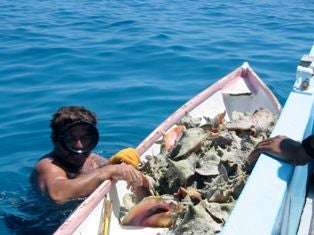
    Erik Olsen presents a balanced perspective on management and conditions a Glover’s Reef Marine Reserve in Belize in “Protected Reef Offers Model for Conservation” (New York Times, Science, April 27, 2010) and “On Patrol with the Reef Ranger” (New York Times, Green Blog, April 27, 2010). The Government of Belize has worked well with NGOs and fishermen to establish and maintain this reserve, no easy task when resources are limited. The abundant sea life and recovering sharks and rays are evidence of excellent performance at this site. But, Glover’s Reef and other areas in Belize are under increasing pressure from overfishing.

    Read the full post »

  • Cape Wind decision may take green power national

    by Todd Woody

    Offshore wind turbinePhoto courtesy phault via FlickrWhen Interior Secretary Ken Salazar announced federal
    approval of the Cape Wind project on Wednesday, the media coverage tended
    to focus on the denouement of a nearly decade-long battle over the United States’
    first offshore wind farm.

    And indeed, our East Coast cousins put Californians to shame
    when it comes to green NIMBYism. (Not to dismiss legitimate environmental
    concerns over offshore wind farms, but the nine-year struggle to put 130 wind turbines
    in the Kennedy’s backyard in Nantucket Sound makes the permitting of Mojave
    Desert solar power plants look like a breeze by comparison.)

    The fight over Cape
    Wind isn’t over yet—the
    project still needs to obtain approval from other agencies, and opponents are
    likely to mount legal challenges.

    But what struck me is that the Obama administration’s move
    marks the emergence of an East Coast renewable energy industry that will help
    nationalize the transition to green power. To be sure, there are wind farms,
    solar installations, and biomass plants east of the Mississippi. But Big Green power has largely
    been a phenomenon of the West Coast and the Great Plains,
    regions rich in wind and sunshine.

    Plans to build massive solar power plants and turbine farms
    have spawned a renewable energy infrastructure of investors, bankers,
    utilities, manufacturers, and a nascent green workforce of builders and
    technicians. In other words, a political constituency to push for favorable
    state and federal tax incentives, renewable energy standards and climate change
    legislation.

    Putting aside profound ideological differences, the failure
    of Congress to pass climate change legislation and the interminable haggling boils
    down to regionalism—coal states versus natural gas, wind, and solar states.
    Just witness the willingness of Texas oil
    companies to bankroll a California ballot
    initiative that would put the Golden
    State’s landmark global
    warming law on hold. (Texas
    is becoming big wind state, but as a huge oil state it retains a much bigger
    stake in fossil fuels.)

    Now imagine the potential consequences of the federal
    government’s approval of Cape
    Wind.

    “This will be the first of many projects up and down the
    Atlantic coast which I expect will come online in the years ahead as we build a
    new energy future for our country,” Salazar said at a press conference in
    Boston on Wednesday.

    There are currently proposals to build nearly 2,500
    megawatts’ worth of offshore wind farms from Massachusetts
    to North Carolina,
    according to the American Wind Energy Association. Other developers want to put
    wind farms off the Texas coast and in the Great Lakes.

    Given that such wind farms would be close to major East
    Coast population centers, there’d be no need to construct long-distance
    transmission lines, which would avoid some costly environmental and political
    battles. (Though putting such lines under water comes with its own high costs
    and environmental considerations.)

    A series of Cape Wind-sized turbine farms—each generating,
    at peak output, the electricity of a mid-sized coal-fired power plant—would also
    create thousands of construction and maintenance jobs and put the U.S. in a
    position to compete in the massive megawatt offshore market now dominated by
    European companies and countries, with China not far behind.

    Silicon Valley venture
    capitalists have shied away from investing in wind, viewing it as a relatively
    “mature” industry that doesn’t offer many opportunities for technological
    disruption, the potential to upend an industry and make a lot of money. (Plus,
    wind farms are impractical off the California
    coast due to the depth of the ocean and the need to build floating platforms
    for the turbines.)

    But the rise of offshore wind appears to be changing this
    thinking.

    Offshore turbine farms can tap stronger and more consistent
    winds and thus generate more electricity. But they currently do so at up to
    twice the cost of land-based installations. That’s due to the expense of
    building and maintaining wind farms in deep water and constructing turbines
    that can withstand rough seas, high winds, and corrosion.

    Enter the VCs. To minimize those costs and create economies
    of scale, companies like Vestas and Clipper Windpower are developing massive
    turbines that can generate up to 10 megawatts each. (Most land-based turbines
    generate one to 2.5-megawatts.)

    That means there’s opportunities as well for startups
    engineering advanced gearboxes capable of operating gigantic turbines, motors
    and other materials, according to Jim Kim, a partner at Khosla Ventures, one of
    Silicon Valley’s leading green tech venture
    capital firms.

    Kim was on a panel I moderated Tuesday at Nordic Green, a
    conference held at SRI International in Menlo Park,
    Calif., that brings together Silicon Valley
    venture capitalists with entrepreneurs from Scandinavia,
    a region that knows a thing or two about Big Wind.

    Khosla Ventures has invested in Danotek Motion Technologies,
    a Michigan
    startup that makes generators and other components for wind turbines. The firm
    also participated in a round of funding for Nordic Windpower, a Berkeley,
    Calif.-based company that is developing new designs for wind turbines that
    promise to cut their capital costs and maintenance expenses.

    “We’re taking a new look at wind,” said Kim. “There’s
    opportunities in a space we have not previously played.”

    The winds of change are blowing from the East for a change.

    Related Links:

    The Climate Post: Mighty winds a-blowin’

    Cape Wind offshore project approved by Obama admin after nine-year battle

    Bobby Kennedy shares his hopes for renewables [VIDEO]