Blog

  • New Android app helps you if you’ve fallen and can’t get up

    Android phones save lives. Or they could, if they had this application installed. Let’s say grandma is walking around the house with her Droid in the pocket of her house coat, and she falls down. Luckily, you installed the iFall application. It uses the accelerometer in her phone to tell you that she fell down, allowing you to come to the rescue.

    The new application is being developed by researchers at Florida State University, and uses the Android platform to determine if a user has fallen. It also is aware if the user has gotten back up, or if they are lying there unable to move. After a fall is detected, the application activates, and shows a notification that has to be cleared by the end user. If there is no response, then the application notifies whomever you request. The app is still in development at this time, but the plan is to release iFall into general use this summer.

    [via medGadget]


  • Food Police Target Kids’ Toys

    Santa Clara County’s board of supervisors despondently voted 3-2 yesterday to ban toys in Californian restaurant meals marketed to kids that exceed a certain amount of calories. The purpose, said the measure’s sponsor, is to fight obesity. Get it?  They’re banning toys for kids…for the children. Given the twisted logic of obesity crusaders, perhaps it was only a matter of time.

    Of course, it’s hard to see how this directly fights obesity. As our senior research analyst points out on Fox Philadelphia last night, it’s not as if your 6-year-old drives to a fast-food joint to buy a kids’ meal.

    In essence, this county measure is a slap in the face to parents. It accuses moms and dads of being unable to responsibly buy food for their kids.

    But guess who appears happy at the depressing move by Santa Clara County? You got it—master manipulator MeMe Roth and the killjoys at the Center for Science in the Public Interest (CSPI). When this proposal was first floated last month, a spokeswoman from CSPI said that a toy ban was “on our list of promising policy options” and also claims today that CSPI's research says most kids’ meals are “unhealthy.” (“Unhealthy” is a label CSPI seems to give to anything but steamed kale, Brussels sprouts, and sweet potatoes. Not exactly the happiest of meals.)

    Most residents of Santa Clara County think this is bogus as well. A poll reveals that 80 percent of residents think that banning toys in kids’ meals isn’t an important issue. Who knows—maybe the next county proposal will be to force kids to finish their vegetables before they're allowed dessert.

  • Hours Before Khadr Hearing Begins, Gates Signs Manual for Military Commissions

    GUANTANAMO BAY — A source from the convening authority for the military commissions just informed the press corps that Secretary of Defense Robert Gates has finally signed and issued a Manual for the Military Commissions Act of 2009. It’s 7:30 p.m. as I write this. Approximately 13 and a half hours from now, Col. Pat Parrish, the military judge presiding over Omar Khadr’s pre-trial hearing, will gavel the first full-fledged military commission proceeding of the Obama administration into order. The source told us that as of right now, prosecution and defense counsels are meeting with Parrish to inform him that the Manual is out.

    Oh, one more thing: As of right now, a copy of the Manual isn’t at Guantanamo Bay. No one involved in tomorrow’s hearing has read it. Apparently its a very big file — inches thick if printed out — and internet speeds here are pretty slow.

    Why’s this important? Because the Manual for the Military Commissions establishes the rules of evidence and the rules of procedure for the commissions — absolutely critical stuff for any judicial activity. Earlier this afternoon, Mike Berrigan, the deputy chief defense council for the commissions, bluntly told a press conference, “We don’t know what the law is” as a result of not having the Manual. Berrigan’s effective opposite, commissions prosecutor Navy Capt. David Iglesias, who claimed yesterday that the Military Commissions Act established sufficient rules, conceded shortly after Berrigan’s statement, “Reasonable people differ on this point.”

    Iglesias further elaborated that if the judge sees things Berrigan’s way, “Tomorrow will be a very short day,” since the judge will simply delay the hearing until the issuance of the Manual. It bears mentioning that if officers of the court haven’t had time to read the Manual before the hearing, Iglesias’s quip still applies.

  • Howard on the Libel Suit Against Joseph Weiler

    by Kevin Jon Heller

    On a non-aggression note, Jennifer Howard has an article in yesterday’s Chronicle of Higher Education about Karin Calvo-Goller’s baseless criminal-libel suit in France against NYU’s Joseph Weiler.  It’s an excellent piece — and not just because she is kind enough to quote me.  Here’s a snippet:

    If you’re an author confronted with a negative book review, you have several options. You can write an angry letter to the editor. You can complain to friends and family about the reviewer’s lack of discernment. You can decide that bad publicity is better than no publicity at all and let the book speak for itself (often the wisest course, in my experience as a book-review editor).

    What you don’t do is sue the editor of the newspaper or journal that published the review.

    So it came as a shock to journal editors to learn that one of their own, Joseph H.H. Weiler, editor of the European Journal of International Law, would face a criminal-libel lawsuit in France over a review that he published on a Web site that he also edits, one that posts reviews of scholarly books.

    Although the case, set for trial in June, is so unusual that it seems unlikely to set a precedent that would seriously dampen academic reviewers’ freedom of critique, that possibility still has editors worried. And it has left observers scratching their heads over why a scholar would choose to dispute a review in court and not in the usual arenas of academic debate.

    The article is only free to non-subscribers for another four days.  So read it while it’s hot!

  • This Shrimp Was Once a Bendy Straw [DIY]

    Turn a bendy straw into a shrimp with a pair of scissors and a few folds. The result is about as tasty as imitation crab meat. [InstructionsJP/InstructionsENG via Recylclart via Make:] More »


  • 2010 Tesla Roadster Sport – Quick Take

    2010-Tesla-Roadster-Sport-placement

    A jumpin’ orange flash that needs no gas, gas, gas.

    What’s New?

    The Roadster Sport is a $19,500 upgrade package to the basic $110,950 Tesla Roadster. The differences: new drivetrain software and a hand-wound stator in the Sport’s 375-volt AC induction motor with higher winding density and lower resistance, bumping the motor’s torque from 273 pound-feet to 295. Horsepower is now 288 for both base and Sport models. In the suspension, remote-reservoir shocks offer 10 stiffness settings and three positions for the anti-roll bars. Black, forged alloy  wheels wear stickier Yokohama Advan A048s.

    Keep Reading: 2010 Tesla Roadster Sport – Quick Take

    No related posts.

  • Infinity Ward staffers sue Activision for $125 million, Activision responds

    It looks like the Infinity Ward versus Activision drama is far from over as new report surfaced this morning of another lawsuit filed by a group that call themselves the “Infinity Ward Employee Group” against the Call

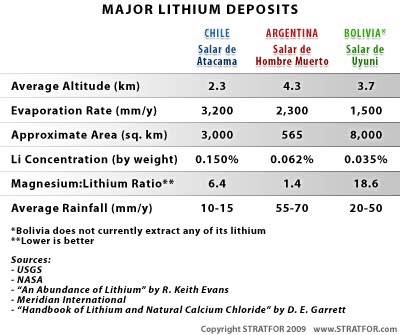
  • Energy Report: ‘Cobalt, lithium demand is going to be tremendous’ TNR.v, CZX.v, LMR.v, RM.v, WLC.v, CLQ.v, LI.v, SQM, FMC, ROC, F, HEV, AONE, VLNC,

    Interesting note from Canaccord on Lithium and TNR Gold has been mentioned with International Lithium spin out – company gets onto the radar screens and results from announced exploration programs will drive performance of the new focused Lithium exploration and development play with properties in Argentina, Nevada, Canada and Ireland.”

    CommodityOnline:

    ‘Cobalt, lithium demand is going to be tremendous’
    Published on: April 27, 2010 at 12:10

    In this exclusive interview with The Energy Report, Gordon Monk of Performance Capital Advisers discusses the worldwide movement toward green sources for energy production. Gordon explains how cobalt and lithium are linked to solar and wind power. He also talks about why he prefers primary producers of cobalt to those that obtain cobalt as a byproduct of other operations.
    The Energy Report: Gordon, your focus these days is on moving from conventional energy to green energy. What particular sectors of green energy are you focused on?
    Gordon Monk: There are a number of sectors that I’m interested in. There’s been a tremendous move of capital to wind in recent years. Certainly solar is another area that’s also gaining a lot of attention. One of the areas that I’m focused on right now would be hybrid electric vehicles, specifically the batteries containing cobalt.
    TER: There have been some failures with batteries containing cobalt. Some reports indicate there is a small possibility of those batteries catching fire. Do you have some information that you could share with us on this topic?
    GM: As I understand it, the problems associated with those batteries had to do with overheating. The chemistry was such that the batteries would release a small amount of oxygen, which then creates the chance of possible combustion. There’s been a lot of technology focused on the problem. Modern batteries now are equipped with microchips that control the discharge conditions of batteries. There have also been additives to the batteries which have more or less solved the problem. With the problems being solved, the benefits of using those batteries far outweigh the negatives of the past.
    TER: Do you see cobalt continuing to be used in these types of batteries?
    GM: Oh, absolutely. A report by J.P. Morgan suggests that the current output of around 740,000 units is going to increase to 12.9 million by 2020. So I think that in itself is a pretty strong indication that cobalt is here to stay.
    TER: What do you find interesting about wind and solar companies? Their potential?
    GM: Yes, it falls into the whole movement to green. In recent years there’s just a tremendous focus on the environment and the environmental problems associated with conventional energy. I can speak to oil and gas and coal, the usual culprits. I find solar and wind fascinating because they solve a lot of the problems associated with greenhouse gas emissions. The capital flows that are going into these areas suggest to me that they are here to stay. I think there are tremendous opportunities in the space.
    TER: How is cobalt connected to solar and wind technologies?
    GM: Cobalt plays a role in renewable solar panel technology and wind generation. Cobalt is also used as a super alloy in wind turbines.
    TER: So you see increased demand for cobalt because of wind and solar technologies, in addition to batteries?
    GM: Yes, because of the batteries and because of the green movement in general. Cobalt is not just found in batteries and that’s something that’s key. I think a lot people misunderstand that. Batteries currently account for around 26% of the market for cobalt. Super alloys, which include turbine blades and heat-resistant steel, account for another 23% to 25% of the market. It’s underappreciated about what it can do.
    TER: Cobalt is generally thought of as a byproduct of other operations. Is that correct?
    GM: Yes, that’s right. Cobalt comes as a byproduct from copper, as well as nickel, historically. As I said, only 15% of world production comes from pure cobalt. I’d like to see more, just because it won’t be a slave to other metals in terms of output. So if we can have more primary cobalt producers, things are going to be a lot better from a stability standpoint.
    TER: If the demand for cobalt continues to go up, do you see companies starting to produce cobalt exclusively?
    GM: Yes and no. I think that’s why the opportunity really lies with the primary cobalt producers. That could happen, but when you start taking a look at the percentages of cobalt that are coming out as a byproduct, I don’t really see any scenario where they’d necessarily switch to extracting just to get the cobalt. I think the opportunities again lay with the primaries.
    TER: Looking at green technology, what sort of timeframe do you see before things really start to get active?
    GM: I think the argument can be made that things are already starting to get active in the area. You’re starting to see orders in the billions of dollars for units for these hybrid electric vehicles, HEVs. So I think we’re just getting started in terms of the space right now. It’s a movement. This green movement is unstoppable at this point with all of the focus on the environmental issues. I should also like to point out that I’m one of those who believe that cobalt has a relationship to the price of oil. We’ve seen oil moving up in recent times. That’s an influence on cobalt and on these hybrid electric vehicles. That influence is from a substitution standpoint. That’s only going to increase awareness and I think increase demand for substitutes.
    TER: With the increasing amount of focus on the green technologies, what’s the long-term impact going to be on conventional energy sources?
    GM: That’s a good question. I think conventional is here for a while. It’s just so ingrained in the economies of the world. These movements to green, while they are tiny as compared to consumption, the movements themselves are significant enough where these kinds of metals—cobalt, lithium—they can’t be ignored. Because when you start putting these on a chart, when you look at the demand perspective, it looks like a hockey stick. The demand is just going to be tremendous. It’s going to take a long time to replace conventional, if ever. As long as this green movement is going on, and people start caring about the environment, there’s going to be tremendous up pressure.
    TER: Is that going to increase as governments start instituting more restrictions on conventional sources?
    GM: I think so. It’s not necessarily restrictions on conventional, but rather requirements on hybrid. There have been a number of initiatives in recent times where carbon emissions have to be cut by “x,” or total energy production needs to come from green sources. So it’s not like they’re saying you have to stop. What they’re saying is more that it is going to have to come from these other areas. So, yes, to a certain extent legislative action will play a role.
    TER: Where does the investment opportunity lie for green technologies? Are these companies actually doing a lot of development, or is it that they’re purchased by larger companies?
    GM: You know that’s a very interesting question. If I was a large multinational producer, I’d be looking at replacing my traditional revenue models. If you’ve got the opportunity to do that by acquiring profitable companies in the green tech space I’d absolutely do that. You’re going to see a lot of these companies start off as fledging green producers of energy, and then be acquired by the larger companies as a way of those bigger companies augmenting traditional revenue models. So absolutely there’s going to be lots of pick-ups.
    TER: Are you seeing any opportunities in natural gas? Some people are saying that there simply isn’t enough supply, while others insist there’s really going to be an opportunity going forward. GM: I’m one of those at this point that agree with the supply issues that you’ve mentioned. There’s been technology, like horizontal fracking, which basically makes available a tremendous amount of natural gas from historical traditional sources. So it’s going to take a while for the supply to clear out. That’s sort of the short-term view. I think the long-term view is it’s a cleaner source. We’re going to continue to need power. I look at China as essentially going through the industrial revolution right now, and just barely scraping the surface of what total consumption ultimately will be there. So I don’t think you can really discount any source certainly in the long run.
    TER: Do you consider natural gas a green technology, or more of a conventional energy source? GM: I look at it more as conventional. Just by virtue of it still being a fossil fuel.
    TER: The LME recently issued its first warrants for cobalt. How do you think it’s going to impact cobalt in general?
    GM: I’m glad they did that to cobalt and to moly as well. It’s going to be great for the companies to basically price hedge. You’re able to lock in the price that you sell cobalt for. It smoothes the peaks and valleys of price fluctuations. It adds a level of transparency as well to the metal. Certainly from a tracking standpoint it’s a whole lot easier to find it. It’s a leveler. It’s a hedger. I think it’s a great development for cobalt.
    TER: Lithium and cobalt are linked, of course, because of lithium-cobalt batteries. Lithium has been the hot story in the energy markets. Do you see cobalt creating the same kind of buzz? GM: Yes. I think it’s a matter of awareness. Absolutely lithium has had just a tremendous amount of buzz. There was a while there, when I was a broker, that you’d be seeing little lithium companies spreading up all over the place. The second they had a press release that there was lithium you’d see the price spike. I think that the same potential exists for cobalt, but you know, again, it’s just about awareness. I don’t think people understand how important cobalt is in HEVs, as well as the other uses, such as the super alloys that I mentioned. I think the awareness is going to catch up, and therein lays the opportunity.
    TER: Are there any other energy sectors that you’re keeping an eye on?
    GM: Oil and gas is certainly an area that I’ve had some experience in. I think it’s interesting that we’re creeping up again in the price. We’ll see if that backs off.
    TER: Do you see oil at some point going much higher than it is right now, or getting to the $100 per barrel point again?
    GM: It’s funny how you start hearing those comments as it starts creeping up to $100. I don’t know. I think it’s due for probably a correction to the downside. I have trouble seeing why it is where it is right now.
    TER: China is growing massively in their industrial revolution and requesting a lot of solar investments. What are some interesting plays for investors?
    GM: The China question is interesting to me from an investor standpoint. A lot of the investments you see going on in China involve a lot of private companies being formed, private companies raising money in the solar space. Obviously investors can’t participate in that. Again, it’s almost a cobalt story because these technologies also require large amounts of batteries, and by extension, cobalt. So it’s difficult perhaps to play it directly, but again it comes back to cobalt. TER: Critics complain that a lot of these green technologies, such as solar and wind energy, are only surviving because of government subsidies. Do you agree with that? What happens if those government subsidies are removed?
    GM: Well, it’s a technology question, isn’t it? It’s taken government subsidies to get them to where they are right now, and subsidies are also driving technologies to make them more efficient, which then brings the cost down. It’s a profitability paradigm. We’ve already seen tremendous developments in alternative energies, which are now almost as cost effective when you compare them against the price of, let’s say, oil. We’re going to get to a point where these things are profitable on their own, if they aren’t already. Aside from that there’s this global movement towards green. People want to stop killing the planet, to put it bluntly. So I think all of these technologies that I referenced are here to stay.
    TER: Gordon, we appreciate your input. By arrangement with: http://www.theenergyreport.com/
  • Shattered Dreams—iPhone Video Chat Might Be Wi-Fi Only [Unconfirmed]

    Code trickles promised video chat hiding inside iPhone OS 4, raising hopes and inflating sci-fi fantasies. Now code snippets bring us back to earth, that iPhone video calling might be real but only over Wi-Fi. More »


  • iSkin Launches Silo Fashion Laptop Carriers for the Ladies

    iskin3 148x300 iSkin Launches Silo Fashion Laptop Carriers for the LadiesLadies have you ever been in a conundrum about laptop bags? Sure many more look feminine these days, but under that designer flair it still resembles a laptop bag. Well these newest bags from iSkin totally turn laptop bags on their ear. It’s the laptop bag redefined in the words of iSkin. The Silo Laptop carriers come in unique, bold and fun designs perfect for the ladies.

    The collection features three bag styles (silo Slim, silo Tote and silo Messenger) each styled with a unique graphic identity (Ami, Happy Friends, Royal, Karl The Ninja and Digital Camo). iSkin commissioned acclaimed illustrator Cako Martin and designer Esther Sanchez to create the bags’ original artwork.

    iSkin press release Image 1024x438 iSkin Launches Silo Fashion Laptop Carriers for the Ladies

    The Happy Friends design features Japanese-inspired characters.  Ami features a confident female image with high-fashion style. Royal has elegantly embossed arabesque curve design.  The Karl The Ninja has a pattern revealing the mysterious gaze of an ancient Japanese warrior. Digital Camo takes camouflage and brings it to a futuristic level of pixels that seemingly float on the surface of the bag.

    iskin 150x150 iSkin Launches Silo Fashion Laptop Carriers for the Ladiesiskin4 150x150 iSkin Launches Silo Fashion Laptop Carriers for the Ladiesiskin21 150x150 iSkin Launches Silo Fashion Laptop Carriers for the Ladiesskin5 150x150 iSkin Launches Silo Fashion Laptop Carriers for the Ladiesskin6 150x150 iSkin Launches Silo Fashion Laptop Carriers for the Ladies

    The silo Tote allows you to carry your laptop, includes a zippered center compartment, two built-in accessory pockets, and two additional mesh pockets.  Also, the bag features  double straps that can be carried by hand, arm or shoulder.  Available designs include Ami, Happy Friends and Karl The Ninja  designs. Silo Slim contours to the shape of your laptop and has an exterior pocket, reinforced interior with quilted and removable compartment and cushioned handle with microfiber that retracts to fit your grip. Silo Slim comes in Ami, Happy Friends and Royal designs. Lastly Silo Messenger provides space for your laptop, legal-sized documents and folders, and includes three interior pockets. silo Messenger also has a stitched woven handle to provide added grip. Featured designs for this bag are Karl The Ninja, Royal and Digital Camo. All bags are available starting today at iSkin and retail for $140-$150 respectively.

  • Lexus shows off new hybrid concept… bicycle?

    Filed under: , , ,

    Lexus hybrid bicycle concept – Click above for high-res image gallery

    When we think of the term “hybrid,” at least in its vehicular sense, we tend to conjure up images of cars like the Toyota Prius and Honda Insight. These machines are so named due to their dual powertrains, most generally consisting of an internal combustion engine and an electric motor and battery.

    Really, though, a hybrid could be any vehicle that gets its motive force through multiple sources… no matter what those sources may be. Hence, Lexus‘ newest hybrid concept proudly carries its moniker despite the complete lack of an engine. It does, however, have a 240-Watt electric motor powered by a 25.9-volt lithium battery pack, along with… pedals?

    That’s right. Though it managed to escape our attention up to this point, Lexus actually displayed a duo of hybrid electric bicycles at last year’s Tokyo Motor Show, and the Japanese automaker is now touting the bike as part of its sponsorship of the Great British Bike Ride.

    According to Lexus, the frame is constructed of carbon fiber (the same composite that makes up Valentino Rossi’s MotoGP bike, gushes Lexus) and uses an eight-speed internal gear system sourced from Shimano, in reference to the LS 600h’s eight-speed automatic. There are no plans to put the bike into production. Want to know more? Check out the high-res image gallery below and see the press release after the jump.

    [Source: Lexus]

    Continue reading Lexus shows off new hybrid concept… bicycle?

    Lexus shows off new hybrid concept… bicycle? originally appeared on Autoblog on Tue, 27 Apr 2010 18:25:00 EST. Please see our terms for use of feeds.

    Permalink | Email this | Comments

  • Is This The HTC Wildfire?

    Some of you may have heard of this name before. HTC had a vote recently which allowed users to pick the name of their next device. Wildfire was the winner with the most votes. Today the FCC had some hands on time with a new Android device that has a full QWERTY slide out keyboard.

    This device is called the HTCPC70110 has been approved by the Commission with AT&T 3G bands(potential bad news). It has a touch screen as well as a blue keyboard. The usual Android touch-sensitive keys make an appearance as well. From the looks of this device and the color scheme it could very well be the Wildfire which will be marketed as “playful and full of youth” handset as described in the voting to choose a name.

    [via unwiredview]

  • Want a custom HTC keyboard for your Android phone?

    HTC_IME keyboard for Android

    That’s right. It’s a Hello Kitty skin on top of the HTC on-screen keyboard. I’m OK with that. And you should be, too. (There’s also Batman, Spider-Man, a panda, Jango Fett, Autobots, Ohio State, Atari and the N.Y. Giants, if you don’t want to make your own.) Available with or without root. [Droid-Life] Thanks, Kellen!

  • Be Gizmodo’s Fan, Friend, or Follower [Announcements]

    Did you know that Gizmodo has a Facebook page, a Twitter account, and a new and improved newsletter? That means you can keep track of all our best stories without lifting a finger. Or with lifting fewer fingers, anyway. More »


  • Will Samsung Jump on the Google TV Bandwagon?

    Samsung may join Sony in building out televisions based on Google’s Android operating system, according to a report in the Korea Herald. An executive at the company, which is the largest manufacturer of TVs worldwide, said that Samsung is “examining the business feasibility of Google TVs” in the latest sign that Android might catch on as the OS of choice for connected consumer electronics (CE) devices.

    It was revealed last month that Google is partnering with Sony and Intel on Android-based CE products that might include a dedicated set-top box or come in the form of software that would run on Internet-connected TV sets. The Google TV products would be based on the Intel Atom processor, which is used for smartphones and other mobile Internet devices, and could enable media companies to build dedicated applications that run directly on users’ TV sets.

    TV apps are expected to become big business for media companies and CE manufacturers alike; according to recent research from In-Stat, TV-based applications could generate more than $1.7 billion in annual revenue by 2013, driven by an increasing number of broadband-connected devices in the living room. Already, Vudu, Roku and Boxee are looking to enable paid downloads of apps through their connected TV devices. Samsung, too, has already created its own framework for building apps that run on its connected TVs, called Samsung Apps.

    The only problem is that developing for each of those different platforms can be a cumbersome enterprise for those that want to roll out video apps and other services directly on the TV. But standardizing on a single OS — like Google Android, for instance — would enable CE manufacturers to create a single development platform for connected devices, while also making it easy for developers to create apps that could potentially run on millions of devices.

    While there are certainly advantages for CE makers that might want to use Adroid for future devices, there are also hurdles — for one thing, the cost of manufacturing devices that can run Google’s OS might be prohibitively expensive. Panasonic, for instance, reportedly decided against using Android on its connected TV sets because of costs associated with doing so. That’s because, according to Panasonic EVP Bob Perry, Android would require too much processing power to make it a viable solution. Panasonic also has its own widget/app solution, called VieraCast — but like Boxee, Roku, Vudu and Samsung, that just means one more platform for media companies to develop for.

    Related content on GigaOM Pro: Why Cable Operators Need an Apps Strategy (subscription required)

  • Obama and Giannoulias at Quincy Wednesday

    WASHINGTON–Don’t expect President Obama to give a campaign-related shoutout to Illinois Democratic Senate nominee Alexi Giannoulias when Obama delivers a speech in Quincy on Wednesday because it is a government, not a political event, White House Deputy Press Secretary Bill Burton said Tuesday.

    Obama flew to the Midwest on Tuesday on a swing to include stops in Quincy and events in Iowa and Missouri.

    Burton, during a briefing, was asked about Giannoulias, an Obama friend who is the Illinois state treasurer. Giannoulias will be in Quincy in his role as an elected official–not a candidate. All statewide elected officials in the states were invited.

    Burton was asked, “Do you think the President is going to acknowledge his presence and talk a little bit about his campaign, which is sort of having some trouble at the moment,” a reference to the failure last week of the family controlled Broadway Bank.

    Replied Burton, “I don’t think it would be appropriate for the President to talk about anybody’s campaign at what are all official events.”

  • Hugh Simms – Fitzgerald Collection

    Hugh Simms exclaims to reinvent the bowtie by including materials such as denim and recycled military bags to these neckwear accessories. Based out in Los Angeles, Hugh Simms accessories is all about live, work, and play in the city. The Fitzgerald collection lives up to this concept with their current collection consisting of different designs and names for each piece such as Showtime, Switch, Denim Bow, and Army Bag Bow. Visit the Hugh Simms site now for more information on the collection and to shop for items.

    Continue reading for more images.


  • MSHA Closed Three Massey Mines in Last Month

    Just hours before Senate lawmakers met this afternoon for a hearing on mine safety — a hearing inspired by the deadly blast at Massey Energy’s Upper Big Branch Mine in Montcoal, W.Va. — the Labor Department revealed that, in response to a series of anonymous complaints, the agency has closed parts of three other Massey mines in West Virginia since March 24. One of those closures occurred on April 9 — four days after the explosion at UBB.

    “When our inspectors went in those mines, we found illegal conduct that one would not think [existed] in mines today,”Joe Main, who heads the Mine Safety and Health Administration, told the Senate lawmakers.

    Main said that the agency doesn’t know the identities of those who called in with safety concerns. But the “specificity” of the complaints, he added, seemed to indicate that they were probably Massey miners.

    (No one from Massey was asked to appear at Tuesday’s hearing because lawmakers “didn’t want to step on the company’s toes,” in the words of one Senate aide, while the Department of Labor is investigating the Upper Big Branch blast.)

    The three projects subject to the surprise raids were: Spartan Mining Co.’s Road Fork #51 Mine in Wyoming County, W.Va.; Inman Energy’s Randolph Mine in Boone County, W.Va.; and Independence Coal Co.’s Cook Mine in Boone County, W.Va. At two of the three projects, inspectors seized the phone lines to prevent mine operators from warning the miners underground that an inspection was imminent.

    Details of the infractions follow:

    On March 24, 2010, MSHA received an anonymous hazard complaint reporting that Road Fork #51 Mine was running two continuous miners on a single split of air. The complaint also alleged that the operation was mining into the coal face deeper than its approved plan allowed and had experienced several face methane ignitions that were not reported to MSHA. As a result of the complaint and MSHA’s surprise inspection tactics, the company was caught violating several mine standards. Eight 104(d)(2) withdrawal orders were issued for the mine’s failure to maintain the minimum air quantity ventilation requirements, accumulation of combustible materials and roof control violations. Proper ventilation is required by the law to prevent mine explosions and black lung. In one instance, the operator failed to follow the approved roof control plan by illegally mining 8 feet beyond the allowable depth of 20 feet. Miners were withdrawn from these sections, effectively stopping production, until the mine was re-inspected to make sure the problems were fixed.

    Also on March 24, 2010, MSHA received an anonymous complaint about hazardous conditions at Randolph Mine just days after a small fire occurred there. Mine inspectors found that the mine operator was not providing adequate ventilation to reduce the risk of explosions and exposure to coal mine dust. The practices were similar to those found at Road Fork # 51 Mine; the operator was also caught taking illegal deep cuts into the coal. Nine 104(d)(2) withdrawal orders were issued for a variety of hazards including inadequate ventilation. Inspectors found that there was no air movement in some sections caused by line curtains (used to control air flow) being rolled up for a distance of 60 feet. There were also inadequate on-shift examinations as well as obvious and extensive accumulation of loose coal up to 20 inches deep. (Loose coal accumulations can provide the fuel for mine fires.) The section foreman was observed operating the continuous mining machine with the ventilation line curtain 29 feet from the working face where the plan required a maximum of 20 feet. Rock dust – a critical explosion protective measure – had not been applied in seven entries to the required 40-foot distance. Miners were withdrawn from the affected area while the violations were being abated.

    On April 9, 2010, following the tragic explosion at Upper Big Branch Mine, MSHA received a hazard complaint about Independence Coal Co.’s Cook Mine regarding water in the escapeway. Upon inspection of the mine, six 104(d)(1) orders were issued for taking illegal deep cuts of 30 feet into the coal face when the plan allowed a maximum of 20 feet, blockage of the primary escapeway with water, inadequate pre-shift and on-shift examinations, and excessive widths beyond the roof control plan parameters. MSHA inspectors also found that numerous roof bolts were sheared off and damaged, increasing the risk of hazardous roof falls.

  • Klausner Adds Another Visual Voicemail Patent Lawsuit

    Small patent holding firm Klausner Technologies has sued HTC for infringing the patents on visual voicemail it says it holds, adding the phone maker to a long list of companies that have been attacked with the overly broad patent. Just as in the previous cases, it’s not clear how this system actually helps anybody that’s doing any actual innovation; the company with the patent, but which has never apparently done anything to actually bring it to market, gets to assess an innovation tax on companies doing the actual legwork. Meanwhile, the idea underlying the patent — displaying voicemail info on a screen — really isn’t much more than a foreseeable progression of technology. So carry on, patent system, holding back innovation and misaligning incentives.

    Permalink | Comments | Email This Story


  • NCBI ROFL: I’d like a number 2 value meal, a frosty, and a peer-reviewed publication, please. | Discoblog

    An observational study of consumer use of fast-food restaurant drive-through lanes: implications for menu labelling policy. “OBJECTIVE: … The present study was designed to quantify the number of customers who purchase fast food through drive-in windows as a means of informing legislative labelling efforts. DESIGN: This was an observational study. SETTING: The study took place at two McDonald’s and Burger King restaurants, and single Dairy Queen, Kentucky Fried Chicken, Taco Bell and Wendy’s restaurants. SUBJECTS: The number of customers entering the chain restaurants and purchasing food via the drive-through lane were recorded. A total of 3549 patrons were observed. RESULTS: The percentage of customers who made their purchases at drive-throughs was fifty-seven. The overall average (57 %) is likely a conservative estimate because some fast-food restaurants have late-night hours when only the drive-throughs are open. CONCLUSIONS: Since nearly six in ten customers purchase food via the drive-through lanes, menu labelling legislation should mandate the inclusion of menu labels on drive-through menu boards to maximise the impact of this public health intervention.” Photo: flickr/s2art Related content:
    Discoblog: NCBI ROFL: Alice Waters would not approve.
    Discoblog: NCBI ROFL: Fresh squeezed orange juice odor: a review.
    Discoblog: NCBI ROFL: eat me.