Blog

  • Famed Fake Newspaper Columnist Sides With Receipt Checkers

    As any dedicated Consumerist follower knows, our readers generally fall down pretty squarely on the side of not having to show your receipt when you exit a store. That being said, we should always welcome the dissenting view, especially from a respected journalist.

    Thus, we’d like to draw attention to a recent column written by longtime Onion columnist, Jim Anchower, who recently detailed his recent experiences as a receipt checker… and just what a pain in the butt it is when people refuse to show their receipts.

    Quoth Mr. Anchower:

    I’ve been working plenty of hours at the warehouse discount place. I even got a little overtime. We were short-staffed because a bunch of people were out sick back in November, so they made me stand up front and look at people’s receipts.

    I actually wound up getting into it with some guy because he told me I didn’t need to check his receipt, and I said bullshit I didn’t and that he should get his ass back here, otherwise I would have to take him down. He went for it, so I went for it, and a manager came and had to break us up. I didn’t punch the guy or anything, but I wasn’t going to let him disrespect me like that, because I was right and he was being a dick.

    After that, they decided they didn’t want me working with people, so they moved me to the bakery.

    Now, before it’s pointed out by a few dozen commenters, yes, we know Mr. Anchower isn’t real (or at least we’ve been lead to believe he isn’t real). But does that make his point of view any less valid?

    Okay, well yes… it probably does.

    Please join us next week, when Myron Reducto explains the pros and cons of the grocery shrink ray.

    I Still Ain’t Sure About This Socialism Medicine [The Onion]

  • Is news subject to Apple’s developers’ agreement?

    By Scott M. Fulton, III, Betanews

    iPad appsWhile bitterness continues over the implications of Sections 3.3.1 through 3.3.3 of Apple’s recently modified Developers’ Agreement (PDF available here, through the Electronic Frontier Foundation), there’s lingering suspicion about the indeterminate boundaries pointed to by the long-standing Section 3.3.14, which now applies to iPad content as well as iPhone.

    “Applications may be rejected if they contain content or materials of any kind (text, graphics, images, photographs, sounds, etc.) that in Apple’s reasonable judgment may be found objectionable, for example, materials that may be considered obscene, pornographic, or defamatory,” the section reads.

    On the surface, that may seem perfectly reasonable, especially given the example the company chose to employ appears to set a standard respecting what some might call “the norms of decency.” But recent well-publicized rejections didn’t appear to have much to do with decency at all, including one it made last December that recently came to light (and that more recently has been reversed): the Pulitzer Prize-winning cartoonist Mark Fiore’s political cartoon app. In a letter to Fiore now made public, Apple cited section 3.3.14 as the basis for its decision, lumping caricatures of President Obama right in there with hardcore.

    This while the makers of iFartMobile tout the creation of what it calls an “olfactic framework,” bringing to mind various aromas through the precise cataloguing and reproduction of associated sounds.

    The cloud of controversy this issue has created — iFartMobile notwithstanding — is that the public attention it creates is an ecosystem unto itself. Being rejected, or perhaps just reject-worthy, is maybe the best free attention that an app can receive, as evidenced by the mention the olfactory app received on ABC’s Jimmy Kimmel Live last January.

    In Germany, the daily news publisher Bild has been claiming censorship on the iPhone under 3.3.14. Citing unfair censorship of the news, Bild publisher Axel Springer issued a statement in February saying, “We consider Apple’s behavior to be unfair, arbitrary, bad for business and dangerous for freedom of the press.”

    But as anyone in Germany who reads Bild knows, in addition to “the news,” it also features topless models. That may or may not be “porn,” though it may certainly classify as content that some folks don’t want to see. Of course, they don’t have to download the app, then.

    That doesn’t explain why Playboy’s iPhone app was permitted. A quick check of the online edition of Bild this afternoon (we test content so you don’t have to) suggests Playboy’s content could actually be described as somewhat racier, and Bild‘s as very tame, as in “art museum.”

    Washington Post columnist Rob Pegoraro, in a Fast Forward column online now but dated next Sunday, listed some of the other arbitrary-sounding rejections that Apple has made for some apps and some content (though perhaps not others) under Section 3.3.14, including a text-only English-language translation of the Kama Sutra of Vatsyayana. That led Pegoraro to wonder for a moment — never mind what Apple says explicitly, what do we think it says? Is there an understanding that Apple has the authority to remove the Washington Post‘s own iPhone app if, at some point, it objected to its content?

    The Post‘s spokesperson told the Post‘s reporter, “This is our understanding.”

    I asked Pegoraro today for clarification — certainly this doesn’t mean the Post is worried that Apple can censor its content, does it? No, he told me, he does not believe that’s a worry on the minds of Post management, and he’s not worried about it either. “The history of the App Store shows that Apple’s reviewers are at their inscrutable worst only when they think nobody’s looking,” Pegoraro told Betanews. “That said, I was glad to see that folks here realize the scope of the authority Apple’s granted itself to regulate the software selection for its mobile devices.”

    A spokesperson for National Public Radio also told Pegoraro that it operates under a similar understanding with Apple, although it knows of no reason why Apple would want to censor NPR. These two admissions to Pegoraro led author Dan Gillmor to respond today in his Mediactive blog: “We now have confirmation from two of America’s most respected news organizations — the Post and NPR — that they willingly participate in a distribution/access ecosystem where the company that owns it can remove their journalism from that system for any reason it chooses. I suspect that the spokeswomen for the Post and NPR have technically violated the terms of their companies’ developers agreements with Apple even by saying that much. Which is, of course, part of the problem.”

    Copyright Betanews, Inc. 2010


    Add to digg
    Add to Google
    Add to Slashdot
    Add to Twitter
    Add to del.icio.us
    Add to Facebook
    Add to Technorati


  • Daley suggests people should decide fate of video gambling in Chicago

    Posted by John Byrne and Hal Dardick at 4:05 p.m.


    As backers of video gambling gear up a push to allow the machines in Chicago, Mayor Richard Daley today said the issue should be decided by the voters.


    Legalized video gambling is a primary funding mechanism for a $31 billion statewide construction program approved last year. But many towns and counties, responding to groups who stress the risks of gambling addiction, have voted to ban it. Chicago, which has long had a ban on video gambling, would have to opt-in for the machines to be allowed.


    "It’s not me, it will be the people who decide this,” Daley told reporters. “If you put it on the ballot, you’ll find out what the people want."
    "You do your surveys and find out," Daley added when asked if he thinks Chicagoans would support the measure. "One thing they don’t want, they don’t want their taxes increased, you know that."


    In Chicago, it’s estimated that allowing video gambling could generate $30 million a year for the city budget, based on the local 5 percent take.


    A coalition of businesses and unions that would benefit from the public works projects video gambling would fund said the decision should be left to the City Council, as envisioned under state law.


    Greg Goldner, a mayoral ally working for Back to Work Illinois, the pro-video gambling group, said the public can express its views through elected representatives, as envisioned by the General Assembly.


    Back to Work has been lobbying aldermen, who have yet to schedule hearings on the issue.


    "A lot of cities are banning it,” Daley noted. “They say, ‘We don’t want the video poker,’ and they still get state funding, regardless if you have it or not."


    Gov. Pat Quinn said the construction program is not reliant on Chicago making the machines legal, as some have suggested.


    "The video gaming is maybe 20 or 25 percent of the overall financing," Quinn said, referring to the construction bill. "We have ample financing for this year, next year and several years to come."

  • Houlihan interested in mayoral run: Felsenthal

    In the wake of Rahm Emanuel eyeing City Hall one day, retiring Cook County Assessor James Houlihan talks to Carol Felsenthal about one day running for mayor over at Felsenthal Files at Chicago Magazine

  • Why Nobody Wants Palm — Except Maybe Facebook

    Another day and another potential buyer of Palm has been crossed off the list — HTC is reportedly passing on the opportunity to purchase the troubled smartphone maker. Which means all signs are now pointing to Lenovo making a bid, especially in light of its recent decision to jump back into the smartphone market. But at this point, I don’t see Lenovo — or any other handset maker, for that matter — spending the billion or so dollars some expect Palm would fetch, for I think it’s too late for its webOS to compete against the platforms of Apple and Google.

    With application developers focusing the lions’ share of their attention on creating titles for iPhone and Android handsets, any company considering involvement with Palm faces a limited ecosystem for software as compared to larger rivals. As a former Palm Pre owner, webOS was a joy to use, but it never truly gained the attention of developers, and so without a vast library of high-quality apps to choose from, I jumped ship.

    Multitasking is good, but not enough

    To be sure, I’ve owned or used phones from every platform and can say unequivocally that Palm’s webOS handsets do multitasking better than any other smartphone device, thanks to their innovative card system. But it’s not enough of a differentiator; if it were, consumers would shun Apple’s iPhone, which offers limited multitasking for native Apple software.

    And Lenovo has already started to build atop of the multitasking Android OS; it introduced the world to its Android-powered Lephone in February. Its decision was an easy one to understand: The operating system doesn’t cost the company anything and it can leverage the growing popularity of Google’s platform in the process.

    Why not a Facebook phone?

    So given that Lenovo’s already made its support for the Android platform clear, who’s left to save Palm? Maybe it’s time to step outside the box and consider a less traditional option: Facebook. The webOS Synergy feature can already be used to link a Palm phone with a Facebook profile for easier contact management. In light of the social networking site’s plan to make the entire web social, that’s just the tip of the potential iceberg.

    Imagine that Facebook partners with and pays Palm to rebrand its handsets as Facebook phones. Due to ineffective marketing, consumers don’t know about webOS, but they do know what Facebook is. The rebrand alone could vault Palm’s handset line into the spotlight. With the right hooks between Facebook and webOS, the devices would be dedicated social networking mobile phones, the number of which is steadily increasing due to the rise in social activities on smartphones. Palm could use the huge Facebook ecosystem as a carrot to dangle in front of mobile app developers, and Facebook would gain control over a mobile platform.

    Perhaps we’ve been asking the wrong question about Palm all along. It’s not which carrier does Palm need, it’s which company Palm should partner with to save itself?

    Related research on GigaOM Pro (sub req’d):

    Could Games Redeem Windows Mobile and Palm’s webOS?

    To Win In the Mobile Market, Focus On Consumers

    Image courtesy of Palm

  • Palm Shake-Up Imminent, Rubinstein May Be Out

    Palm right now is a disaster. Its sales are going nowhere, its market share is plummeting, and try as it might, it can’t even find a buyer. Industry sources tell us that a major restructuring and management shakeup is imminent and CEO Jon Rubinstein may be replaced.

    This is still a rumor at this point, but it makes sense. Palm is suffering from a ton of unsold inventory, and it cannot keep up with Apple, Android, or Blackberry in the smartphone wars. Palm clearly needs to be bought at this point if it is going to survive, and Rubinstein may not be the right person to make that sale. Rubinstein came from Apple, where he was head of hardware. He was recruited by Palm’s biggest investor Elevation Partners. Rubinstein is great engineer, but not a great marketer. It appears he is having trouble selling Palm, even as a distressed asset.

    The writing is on the wall. Palm’s executive talent is already beginning to walk out the door. Palm still has some valuable assets in terms of products, patents, intellectual property, and a recognizable brand. But Rubinstein may not be the best person to make a sale happen. He was brought in to take on Apple, after all. Not to sell damaged goods.

    I’ve reached out to Palm for comment.

    [crunchbase url=”http://www.crunchbase.com/person/jon-rubinstein,http://www.crunchbase.com/company/palm” name=”Jon Rubinstein,Palm”]


  • Waste Management strike

    Time for talking in good faith as negotiation game goes sour

    Editor, The Times:

    The strike at Waste Management is one more example of what happens when management treats the contract negotiations as a game rather than as a debate. [“Garbage strike puts pickup in jeopardy,” page one, April 22].

    This is what happens when the game must be won rather than reaching a compromise so that everyone is respected and satisfied —when the work force that actually touches and delivers the product is treated like a liability to be minimized rather than an asset to be nourished.

    It always comes down to a question of attitude and Waste Management has proved that its deeds do not match its words. Instead of spinning the facts for the media, company management needs to start working to understand how value is added to their product.

    The various city and county jurisdictions where the trash will not be picked up need to immediately impose the fines, allowed under their respective contracts, so that Waste Management will sit back down at the bargaining table and negotiate in good faith.

    — Hank Thomas, Issaquah

    Forget the garbage truck, hop onto the unemployment bandwagon

    Waste Management is on strike. I just cannot believe the audacity and greed of unions and their members in demanding more money and more benefits at a time when their fellow citizens are losing their jobs and their homes.

    If they get more money and benefits, the employer will merely pass the cost on to the rest of us, who cannot afford to pay more.

    With so many unemployed and seeking employment, it is time to break the unions by hiring qualified nonunion applicants now. The unions can take what the company is offering, or their members can look for other employment —just like the rest of us.

    — Pauline Cornelius, Ollala

  • Strategic Defaulters Are Not Mortgage ‘Deadbeats’

    Bloomberg News’ Caroline Baum has a tart piece on strategic defaults and consumer spending — invoking the theory, first put forward by HousingWire’s Paul Jackson, that underwater homeowners are purposefully defaulting on their mortgages and using the funds to buy regular goods. That would explain why consumer spending is increasing despite high unemployment, declining real incomes and rising foreclosure rates. Historically, at least, cash-strapped consumers cut their discretionary spending and then stopped paying their auto loans and credit cards before quitting their mortgages. But the latest recession has upended that calculus. And homeowners left owing more on their homes than their homes are worth are more and more often walking away.

    Baum writes, “Those deadbeat homeowners, facing possible eviction and in some cases unemployed, are throwing caution to the wind — and money at retailers.”  I quibble with that depiction. Strategic defaulters are not “deadbeat,” nor are they lacking “caution.” They are making an economically rational calculation, generally one that is in their best interests. They walk away, and the bank takes their house — that is how real-estate contracts work, and banks themselves do it all the time.

    As Roger Lowenstein wrote in the New York Times Magazine: “Mortgage holders do sign a promissory note, which is a promise to pay. But the contract explicitly details the penalty for nonpayment — surrender of the property. [When a homeowner strategically defaults, he] isn’t escaping the consequences; he is suffering them.”

    Moreover, strategic defaulters tend to be economically distressed. These “deadbeats” decide that they and their families would be better off finding a new place to live, rather than continuing to let their mortgage winnow away at their income. My guess is that they aren’t heading out to buy new Hummers, but rather thinking more along the lines of toothpaste and new shoes and infant formula.

    Baum also questions whether the math works. She writes:

    A mortgage lender or bank experiences reduced cash flow, which means less money flowing to shareholders who, the last time I checked, were consumers in their own right. Sure, one can argue that the borrower has a greater propensity to consume than the lender, but this is a case of what Lawler calls “single-entry analysis for double-entry bookkeeping” and what I view as an example of Bastiat’s broken window.

    This makes no sense. When a consumer strategically defaults, she reaps the benefits of the boost in income immediately. The relationship between banks’ cash flows and shareholder payouts is, on the other hand, obviously non-immediate and highly complex. The bank waits to classify payments as late, then the house as in default, then as a foreclosure. It takes a while for the foreclosure to happen. Then the bank often waits to put the property back on the market. Then it takes some time for the bank to sell it, sometimes for profit, sometimes for a loss. Banks do this on the scale of hundreds of thousands. And every once in a while they determine how much to give their shareholders in dividends. There is no magical transaction by which a single default nicks a penny from every shareholder at the end of the quarter. But the theory that homeowners are strategically defaulting in high enough numbers to free up consumer spending seems rational to me.

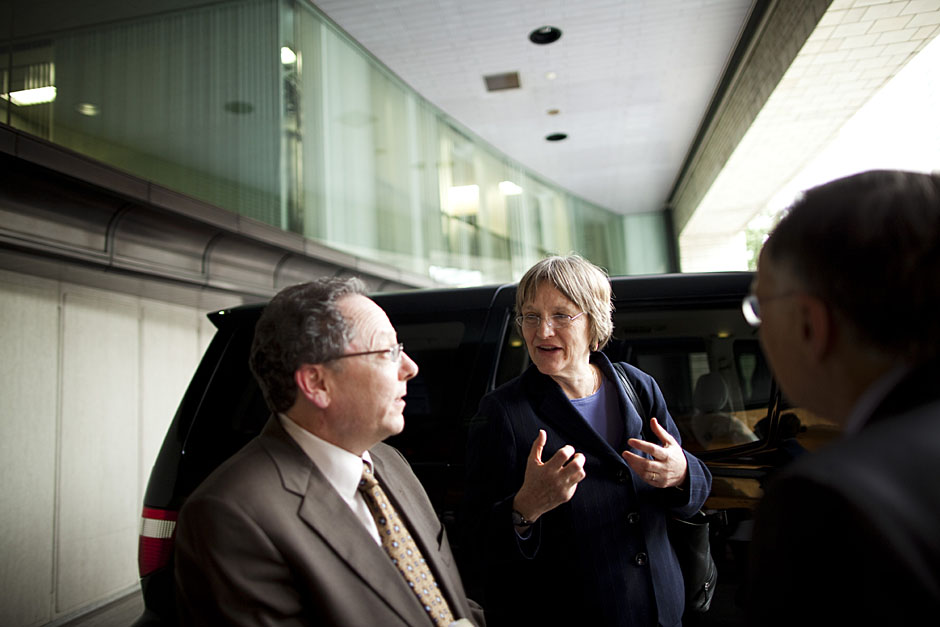
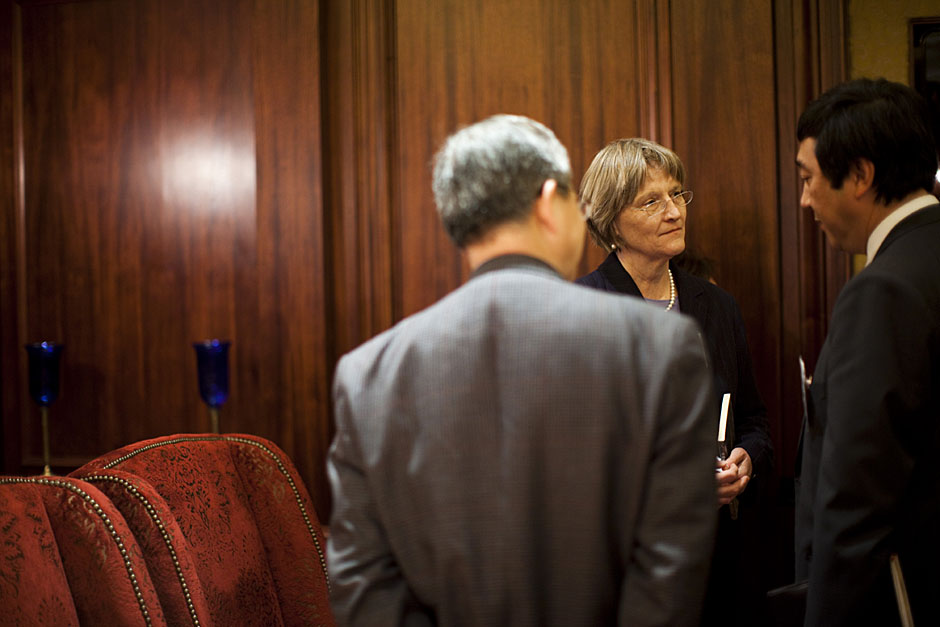
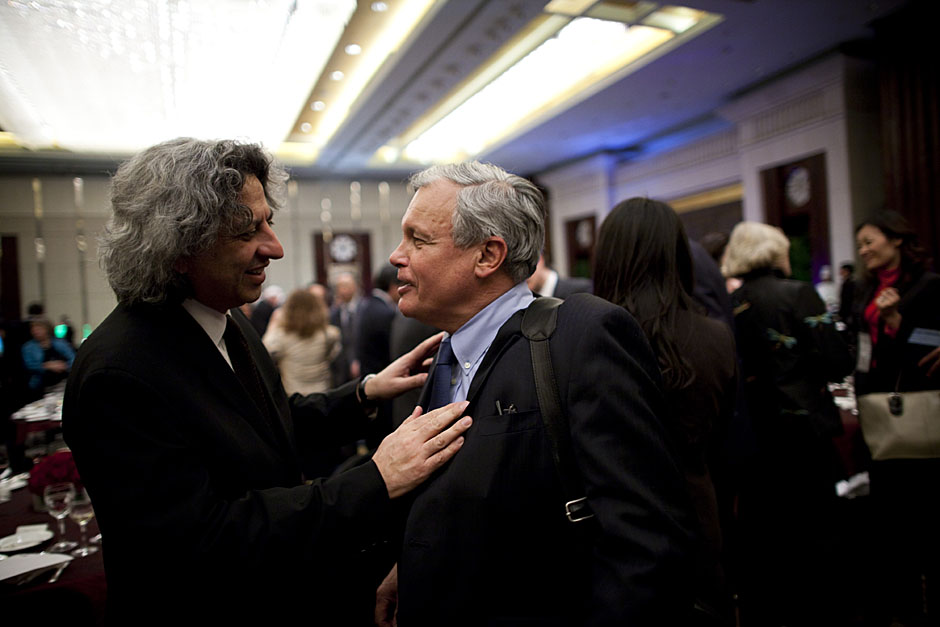
  • Drew Faust visits Asia

    Harvard President Drew Faust has embraced Harvard’s international image in both practical and symbolic ways. Faust, whose appointment was celebrated around the world as an example of what women now can achieve, has traveled to China, Botswana, South Africa, Western Europe, and most recently took a weeklong trip to Japan and China.


  • Beijing 2010: 2011 Volkswagen Phaeton ups the luxe

    Filed under: , , , ,


    2011 Volkswagen Phaeton – Click above for high-res image gallery

    As impressive of a vehicle as the seminal Volkswagen Phaeton may have been, the uber-luxe German sedan was an unqualified flop of an experiment here in the United States. In some other parts of the world, though, VW’s BMW and Mercedes-Benz (not to mention VW-owned Audi) competitor is still going strong.

    Hence, VW has seen fit to give the Phaeton a mild update for the 2011 model year, and it tellingly used the Beijing Motor Show as the platform to reveal its top-shelf sedan. In case you missed the exterior changes, take a closer look at the front and rear fascias, where you’ll find tighter lines and new LED lighting.

    It’s inside the cabin where the Phaeton gets the bulk of its improvements. Included in the refresh is VW’s latest navigation technology, along with a helpful seeing-eye camera that can monitor speed limit and no passing signs and inform lazy drivers of the data. There is also a lane-departure system that keeps the car between the proper lines and Dynamic Light Assist that adjusts the headlights to keep from blinding oncoming traffic.

    Powertrain options remain the same as before, with a 450-horsepower 6.0-liter W12 engine taking top billing over a 335-hp 4.2-liter V8 and a 3.6-liter V6 that puts out 280 ponies. Finally, those looking to save a few bucks at the pump can opt for a 3.0-liter diesel V6. Check it out for yourself in the high-res image galleries below.

    Photos by Sam Abuelsamid / Copyright (C)2010 Weblogs, Inc.

    Continue reading Beijing 2010: 2011 Volkswagen Phaeton ups the luxe

    Beijing 2010: 2011 Volkswagen Phaeton ups the luxe originally appeared on Autoblog on Fri, 23 Apr 2010 16:01:00 EST. Please see our terms for use of feeds.

    Permalink | Email this | Comments

  • Aggressive-panhandling ordinance assailed

    Cloaking poverty not how Seattle operates

    The editorial on the enhanced “aggressive solicitation” ordinance was a crass attempt to discredit anyone with a conscience. [“Missteps are mounting for Mayor Mike McGinn,” Opinion, April 21].

    It seems that anyone unwilling to walk in lock-step with commercial interests missteps in your view. However, as one of those small and “vulnerable” females, I deny that The Times speaks for me with its editorial.

    The editorial neglected to mention that Mayor McGinn and those four City Council “no” votes had the support of the 34th, 36th, 37th and 46th District Democrats, The Seattle Human Rights Commission, Seattle NAACP, Real Change News, the Seattle King County Coalition on Homelessness, Interfaith Taskforce on Homelessness, Seattle Displacement Coalition, El Centro de la Raza, Minority Executive Directors Coalition of King County, Lutheran Public Policy Office, Statewide Poverty Action Network, Asian Counseling and Referral Services, Church Council of Greater Seattle, ACLU of Washington, Seattle Community Council Federation, Urban Rest Stop and the Seattle Community Council Federation.

    Hundreds of citizens also wrote, called and made public testimony. These public officials who stood up were not lone loons as the editorial tries to paint them.

    This ordinance was not about safety, as proponents claimed. It was purely about the haves being annoyed by the voices of the have-nots — an assertion of some unstated right of business owners to not have their customers witness poverty.

    Even if one sees that stance as valid, there is already an aggressive-panhandling ordinance on the books. The enhancement of that code was a great waste of city resources, pure vanity of one council member who has delusions that he is fit to be mayor — reminiscent of Mark Sidran’s “civility laws” a decade ago. Then and now, it was fueled by the paranoia of people of means, not only of the sight horrid homeless people, but that anyone could and might be next to be forced to beg for help.

    We need leaders who unify us, not stratify us when we are in crisis. The problems of economic inequality and homelessness cannot be legislated away. The “aggressive solicitation” ordinance was an insidious gesture. Those who supported it should be ashamed.

    — Christal Wood, Seattle

    Safer in New York than Seattle

    Seriously, why would Mayor Mike McGinn veto the panhandling bill? My family of six just came back from a week in New York City. We stayed right in the heart of things and were so impressed by how safe we felt — no panhandling. Sure, there were guys selling the knockoffs, but I never felt unsafe.

    I cannot go downtown Seattle without getting harassed several times a day for money. I actually felt safer in New York. If I were a business owner in Seattle, I would be furious with the mayor. We need to get our streets safe and harassment-free.

    Panhandlers need resources to get out of this cycle. They cannot feel good about having to ask for money. Besides, all that money is doing is fueling the reasons for why they are on the streets in the first place. Let’s help them and help our city by passing this panhandling bill.

    — Peggy Cunningham Orse, Seattle

    Can’t just sweep people under the rug

    I walk downtown every day and see the homeless and jobless panhandling. I have never been aggressively confronted in my 20 years downtown by people asking for money.

    While it is my prerogative to give them money or food, it is my prerogative, and I am a female small in stature. The aggression I have seen downtown has been by drunken people and gangs of youths. That is what the police need to patrol, not people holding up signs asking for assistance.

    Maybe it makes those of us who do have jobs and are not homeless uncomfortable, but let us not forget our fortune and those less fortunate. We cannot just sweep people under the rug because they are asking for help. Mayor Mike McGinn would be right to veto the panhandling law.

    Where’s the humanity, people?

    — Dolores Rogers, Seattle

  • Thanks for nothing, Olympia

    Time to live within our means

    We could not agree more with the recent op-ed, “Thanks for nothing, Olympia” [Opinion, April 21], that the state Legislature proved itself an adversary of small business.

    The Associated Builders & Contractors represents hundreds of contractors, suppliers and construction professionals. Our industry has been hit harder than most during the current recession, losing 55,700 jobs since February 2008. Workers’ compensation and unemployment insurance costs continue to rise with no relief in sight.

    How has the Legislature helped? By raising taxes.

    Legislators must streamline government and reduce the tax burden on small businesses so we can get Washingtonians working again. Instead, they have relied on $800 million annually in new taxes, federal funds, one-time fund transfers and delayed tough decisions, from pension obligations to K-12 cost-of-living increases. This would only make things worse down the road.

    Even if revenue growth returns to normal in the next biennium, the state budget will not be able to fund promises made during previous legislative sessions. Where will they go for new revenue then? I would rather not wait and see. We need more legislators with private-sector experience to teach the rest of them to live within their means.

    — Kathleen Garrity, president of Associated Builders & Contractors, Bellevue

    More equitable tax system needed

    The op-ed’s comments about Labor & Industries fees are misleading.

    L&I is an insurance program designed to protect Becker Trucking Inc. and its employees from the catastrophic expenses involved with a workplace injury. It is similar to Rolan Becker’s truck insurance that he purchases privately and protects his company, trucks and employees from the catastrophic expenses of traffic accidents.

    The op-ed claims Becker only gets $1 back in claims for every $3 he pays into L&I. That should be compared to how many dollars he gets back in truck insurance claims to the dollars he pays for truck insurance. That would allow us to compare two systems and then make an informed decision on efficiencies.

    Washington is the only state that taxes the gross revenue of business because, unlike other states, the people chose that over paying any type of income tax. Cutting education, reducing human services and letting our infrastructure deteriorate does not sound like a plan to either attract business or provide the skilled work force business will need.

    Becker should be looking for a better and more equitable system of taxation to maintain the roads his trucks drive, protect the health and welfare of his employees and family, educate his children and employees and attract the business that will allow him to grow his business.

    — Larry Mueller, Seattle

  • The Comma Stays

    Like all political decisions, the majority is overpowered by the interested. While I seriously doubt that the serial commaists represent 13/17th of the population, they rallied and got out the ground troops. I also suspect that ACORN was involved, or (even more likely) the squirrels themselves.

    But enough about that. Mud, Mambas, and Mushrooms it is. Now let’s talk about subtitles. The last blog was creatively titled, “Kurtis Scaletta,” and subtitled, “Author of Mudville,” later changing to “Author of Mudville and Mamba Point,” and could have gone on to be “Author of Mudville; Mamba Point; and Wake, ME” (correct punctuation courtesy of Bettye Smith via Facebook). Once an Oxford Semi-Colon has entered the picture, you know it’s time for a change, and as far as I’m concerned, that’s an unhealthy word to punctuation mark ratio. So let’s go back to the drafting board. What should be the subtitle of this blog?


    Filed under: Miscellaneous

  • Making more than $400,000 a year? Pay up, Gates Sr. urges

    Think about merit-based tax breaks

    The recent focus on taxing and punishing the “rich” is becoming absurd. [“Gates Sr. pushes for state income tax on wealthy,” page one, April 21.]

    I was raised poor and believed that hard work, an education and looking for ways to serve rather than be served would get me ahead.

    I would like to propose a tax plan based on the fact that we get more of whatever behavior we reward. It starts with a 50 percent income tax rate for everyone on every dollar, regardless of the source; investments, wages, tips, unemployment and insurance — they are all the same.

    From 50 percent, we start reducing tax liability based on what individuals have done that is good for our society. High-school graduates shed a few percent. College graduates drop another couple of points for each successive degree. People buying a home have more points eliminated, and more when the house is paid off.

    A great credit score should earn a rate reduction, as would owning a business that employs people and having a clean police record. Necessary and noble professions such as teachers and military would are also see a rate reduction.

    There must be incentives for living in a way that is a benefit to society rather than a burden, a model where education, hard work, and staying out of trouble are rewarded.

    There will always be people who need help improving their lot in life and they should be assisted to make the transition from a high tax life to a life that is less taxing on everyone —including themselves.

    — Matt Jackson, Mukilteo

    ‘Make it easy to rope a bull, it’s no problem to rope a calf’

    Well we’re at it again: A new attempt at a state income tax is being foisted on the public.

    My father told me a story one time when I was a teenager about a conversation he had with his father when he was a teenager. Congress was passing the 16th Amendment, the Income Tax Law.

    He told his father: “I don’t see anything wrong with it, it is only going to tax those rich people making over $5,000 a year.”

    At that time, the average yearly income for most working people was less than $500 or $600 a year. His father looked at him, smiled, and said, “If you make it easy to rope a bull, it’s no problem to rope a calf.” The 16th Amendment was ratified Feb. 3, 1913.

    How long after passage of this bill in Olympia will it take to lower the level at which the tax is applied to the rest of us?

    — Ernest Altice, Ellensburg

  • Snaptic announces Android “Move Your App” developer challenge and conference

    Snaptic and HopeLab are joining forces with TED to encourage developers to create apps that promote a healthier lifestyle. The challenge looks for Android developers to build apps that “get people to move, are fun to use, and are innovative in their approach to encouraging physical activity.”

    The finalists of the challenge will be invited to showcase their applications at the Snaptic Developer Conference and the grand prize winner will receive travel and accommodations to TED Global 2010 in Oxford.

    This developer challenge was inspired by Jamie Oliver, who was awarded the 2010 TED Prize for his fight to improve the health of young people.

    “I wish for your help to create a strong, sustainable movement to educate every child about food, inspire families to cook again and empower people everywhere to fight obesity.”Jamie Oliver2010 TED Prize Winner

    Developers can register for the challenge now and must complete their submission by Friday, May 21, 2010.

    The Snaptic Developer Conference will be hosted in San Francisco on May 27, 2010

    Highlights of the event include:

    • Interactive sessions with amazing speakers
    • Android: Intents, tools, stats, users, tips and happiness
    • Hands-on help from the Snaptic Team and other experts
    • Meet innovators in tech and cool developers like you!

    Related Posts

  • Ferrari 599XX Laps Nürburgring in 6 Minutes, 58 Seconds

    Ferrari is the latest manufacturer to claim a lap record on the famed Nürburgring, with the race-ready 599XX. ( Click here to read our review of the burly beast.) Test driver Raffaele De Simone lapped the German track just in 6 minutes, 58 seconds. Click here to watch an in-car video of the lap.

    Ferrari says the 599XX is the first “production-derived” car to lap the ‘Ring under seven minutes, although using the word “production” here, while technically true, seems like a stretch. The 599XX has Lexan windows instead of glass, a trick active downforce system complete with trunk-mounted fans, costs $1.5 million, and isn’t road-legal. In our book, that’s pretty far from production, no matter how similar the bodywork is to a regular 599GTB. Regardless, 6:58 is blisteringly quick and a testament to the 599XX’s monstrous performance levels.

    Related posts:

    1. Gumpert Apollo Sport Laps Nürburgring in 7:11, Claims Production-Car Record
    2. Ferrari 599XX – Video
    3. Ferrari 599XX – First Drive Review
  • Verizon Droid Incredible vs. Nexus One – graphics benchmark test

    A few of you have asked about graphics benchmarking on the Verizon Droid Incredible, so here you go. It’s right up there with the Google Nexus One, and it should be. In other news, that Gundam’s pretty darn cool.

  • Beijing 2010: The Randomness That is a Chinese Auto Show, Part II


    Every design is inspired by something, but certain Chinese makers still can’t seem to difference between inspiration and full-on carbon copy of another automaker’s cars. Case in point is Huanghai Auto, who displayed nothing but shameless copies of well-known machinery. On its stand were a Mercedes ML ripoff, a Lexus RX lookalike (above), and even a Chevy Colorado clone (below).


    That last one is a head-scratcher. Can’t the company at least pick compelling vehicles to copy?


    Perhaps taking the award for the shakiest long-term business outlook is Longbo Hummer, which had no fewer than seven soon-to-be-deceased H2s on its stand sporting various modifications, from giant wheels and scissor doors to limo-like stretching and various other customizations. Sure, the company modifies other vehicles, too, but the future isn’t bright for its division dedicated solely to GM’s box on wheels.

    This thing will seriously stop you in your tracks. From the side, it’s a faithful representation of a Rolls-Royce Phantom, only this beast looks even larger than the mammoth Rolls—we didn’t think that was possible. The front, however, is stuck in the 1950s, which is when FAW, a state-owned automaker, began producing cars for its dignitaries.

    The S11 is clearly inspired by the Ferrari Enzo in the front, it has an R8-like sideblade, and Ferrari-esque taillights. And—get this—from 50 feet it didn’t even look that bad. Upon closer inspection the panel gaps and fits—particularly surrounding the taillights—were pretty egregious, and its doors resisted mightily when we tried to slam them closed. We then noticed that this “sports car” is packing a mid-mounted Mitsubishi 2.4-liter four-cylinder and a five-speed manual, which doesn’t exactly live up to the expectations set by its design.

    Hmm, wonder where Lifan Motors got the idea for the paint scheme for its Tim320 model. It one-ups the Mini in whimsical customization, though, with pink seat and steering wheel covers.

    Lastly, we guess this shouldn’t have been surprising given China’s population of 1.3 billion, but being packed elbow to elbow while perusing the show introduced us to the way things work around here. It’s in no way mean-spirited, but people are not shy about giving a nudge in order to get where they’re going. And sometimes it feels more violent than that. This is the most crowded auto show we’ve ever been to, and I think I’ve received fewer elbows while playing post in pickup basketball.

    Related posts:

    1. Beer Goggles at the 2008 Beijing Auto Show: 5 Chinese Cars Ready for America
    2. 2009 Audi Q5 Launches in Beijing, Exclusive Info and Photos on the Next-Gen MMI System
  • Avocados: Heart-healthy aphrodisiac

    avocado salsa

    (Photo: Juan Carlo)

    Avocados, a staple in Mexico and Central and South America, were considered an aphrodisiac by the Aztecs, who called the pear-shaped fruit ahuacate.  Avocados were first grown in the U.S. early in 20th century.

    In the 1920s, farmers changed the name to avocado because ahuacate was difficult for Americans to pronounce. Worse yet, it is the Aztec word for testicle. As it turns out, the ancient Aztecs may have been onto something!

    Few would argue that good health is essential for good sex. Food affects how we feel and function, and one of the best ways to build sexual health is through good nutrition.  

    Avocados contain many nutrients considered essential to sexual health, such as vitamin E. Sometimes called the “sex vitamin,” Vitamin E is believed to promote the production of sex hormones, which support attraction, mood and desire. Avocados are also rich in vitamin B6 and potassium, which are essential for the production of sex hormones.

    It’s true that avocados are high in fat, however most of the fat is monounsaturated like that found in olive oil, which can actually help lower blood cholesterol.1 Avocados are a good source of potassium and folate, nutrients important to circulation and heart health and good circulation is essential for erectile health.

    Avocados are also rich in phytonutrients including cholesterol-lowering beta-sitosterol2 and the antioxidant glutathione.  Evidence suggests that beta-sitosterol may also help prevent certain cancers, including prostate cancer.3

    The avocado is a fruit that is often thought of as a vegetable. It adds a creamy texture and rich green hue to dips, salads, and sandwiches.

    The chunky avocado salsa, below, combines diced avocado with colorful tomatoes, red bell peppers, and chilies. Researchers have found that avocado enhances the absorption of phytonutrients in carotenoid-rich fruits and vegetables, such as bell peppers and tomatoes.4

    Note: Individuals with a latex allergy should avoid avocados as they may experience a reaction (sometimes severe), caused by the similarity of allergens in avocados and natural latex.


    Chunky avocado salsa

    This delicious dip gets its zip from tasty and convenient Mexican stewed tomatoes and is lower in fat than traditional guacamole.

    6 servings

    • 2 cloves garlic, minced
    • 3 medium scallions with 2” green, thinly sliced (1/2 cup)
    • 1 stalk celery, chopped
    • ½ cup diced red bell pepper
    • ½ cup diced jicama
    • 1 (or 2) serrano pepper, chopped (to taste)
    • 1 ripe large Hass avocado, diced
    • Juice of one lime
    • 1 (14 ½ ounce can) Mexican stewed tomatoes, diced
    • ½ cup fresh or frozen white corn
    • ¼ cup chopped fresh cilantro
    • Hot pepper sauce, to taste

    In a medium bowl, combine garlic, scallions, celery, bell pepper, jicama,* chilies, avocado, and lime juice. Add tomatoes, corn, cilantroc and hot pepper sauce.  Serve immediately.

    *Jicama is a round root vegetable with mild flavored, crunchy white flesh. Simply peel away the brown skin and dice.

    Chunky avocado salsa

    Nutrition analysis per serving: 1 cup
    Calories = 85
    Protein = 2g
    Carbohydrate = 13g
    Fiber = 4g
    Total fat = 4g
    Sat Fat = 0.5g
    Cholesterol = 0mg
    Calcium = 30mg
    Sodium = 262mg


    Marie Oser is a best-selling author, writer/producer, and host of VegTV. Follow Marie on Twitter: http://twitter.com/vegtv

    More from ecomii:


    Sources:

    1. Lopez Ledesma, R; Frati Munari, A C : Hernandez Dominguez, B C : Cervantes Montalvo, S : Hernandez Luna, M H : Juarez, C : Moran Lira, S (1996 Winter). Monounsaturated fatty acid (avocado) rich diet for mild hypercholesterolemia. Arch-Med-Res. 27 (4): 519–23.
    2. Avocado Fruit is a Rich Source of Beta-Sitosterol Duester, Karen C.  J Am Dietetic Assoc (April 2001) 101 (4): 404-405
    3. Von Holtz RL, et. al., beta-Sitosterol activates the sphingomyelin cycle and induces apoptosis in LNCaP human prostate cancer cells. Nutr Cancer 1998;32(1):8-12.
    4. N. Z. Unlu, T. Bohn, S. K. Clinton, and S. J. Schwartz Carotenoid Absorption from Salad and Salsa by Humans Is Enhanced by the Addition of Avocado or Avocado Oil
      J. Nutr., March 1, 2005; 135(3): 431 – 436.
  • Samsung SHW-M110S: Long Lost Twin of the Galaxy S?

    Details have been uncovered about a new Samsung handset that will debut in South Korea in the coming months. The Samsung SHW-M110S features a 4-inch AMOLED touchscreen, a 1GHz processor, Bluetooth 3.0, Wi-Fi 802.11n and Samsung’s redesigned TouchWiz 3.0.

    It is common practice for a single phone to have numerous different model numbers, and it appears from the specs that the SHW-M110S is indeed related to the Galaxy S.

    Might We Suggest…

    • Samsung shows off Galaxy S Android smartphone
      At CTIA Wireless, Samsung has unveiled its latest creation–the Galaxy S smarphone. The Galaxy S is expected to usher in a new era of mobile phones for the Korean based company. All future smartphones…