Blog

  • Why We Need an Open “Like” Standard

    Mark Zuckerberg in his keynote at Facebook’s f8 conference this week did his best to convince attendees that the launch of “social plugins” powering a billion or more “Like” buttons across the web was the best thing that could ever happen to the Internet. Not everyone was sold on the idea, however. To some, it sounded like a company that wanted to get its proprietary hooks into every corner of the web and suck users’ activity data back to the mothership. That’s fine for Facebook, of course, but not so fine for anyone else who’s interested in that information, and doesn’t want to have to go to Zuckerberg on bended knee and ask for it.

    Chris Dixon, co-founder of Hunch, is one of those people. So while Zuckerberg was announcing Facebook’s ambitious plans, Dixon and some like-minded programmers were cooking up their own launch: an open-source standard for recommendations called Open Like. The idea behind the project, which is still in its embryonic stages, is that websites and services would be able to federate recommendations or “likes” by adopting a uniform standard for the data. In the same way that OAuth (which Facebook is now supporting) is an open standard for sharing user information, and OpenID is an open standard for logging into websites and services, Open Like would allow anyone who adopts the standard to make use of recommendation data.

    “I feel like everyone is falling asleep while Facebook and Twitter are taking over,” Dixon said in a phone interview. “I love Facebook and Twitter — I think I’m even an investor in Twitter through some venture funds I’m a shareholder in — but I just think it’s a bad thing for the web. What if HTTP or SMTP were owned by one company?” What Facebook is trying to do with its open graph protocol might be good for Facebook, the Hunch co-founder says, but that doesn’t mean it’s good for anyone else. “They’re acting in their economic interests — there’s nothing evil about it,” he says. “But people who think that it’s some kind of move towards being open are just naive.”

    It’s worth pointing out that Facebook’s attempt to aggregate and understand the “semantic web” is a direct threat to Dixon’s Hunch, which is also trying to extract meaning from the behavior of users online, whether through Twitter or some other social network. And Dixon says he doesn’t want to be in charge of the Open Like venture in part because there’s a perception of conflict given his interest in Hunch (which he co-founded with Flickr creator Caterina Fake). But that doesn’t mean having an open standard for recommendations and related behavior isn’t a good thing, because it undoubtedly is, in the same way that having OAuth and OpenID are good for the web as a whole.

    Even calling what Facebook has launched an “open graph protocol” is misleading, according to Dixon. “It doesn’t open anything, except for Facebook. It’s basically a system for tagging pages so that Facebook can understand them.” Just as Google has an open operating system in Android but keeps a lock on its search and ad algorithms, he says, Facebook is only being partly open. “If it’s open, then why can’t I download the whole social graph? I can get it piecemeal, but not the whole thing. These companies make noises about being open, but they aren’t where it counts.” Wikipedia, he notes, lets users download the software that powers it, along with all the content, and create their own version of Wikipedia if they want.

    It isn’t so much that he is anti-Facebook, Dixon says, as he is pro-open. Why? Because that’s what spurs innovation. Some might argue that the “Like” system Facebook is implementing isn’t really that important — and certainly not as important as HTTP — but in the social web, knowing all about someone’s interests and behavior around those interests is an incredibly powerful set of data. “I don’t think their ultimate goal is nefarious,” says Dixon. “I just think it hurts innovation to have this kind of thing controlled by any one company.”

    The Hunch co-founder says he is currently looking for an “open advocate” — possibly even Google — to take over the Open Like initiative. Would Google be interested? The idea certainly seems to have caught the interest of Chris Messina, an open standards advocate who is now working for the search company. Messina mentioned the Open Like effort approvingly in a post about Facebook’s social graph, in which he says:

    When all likes lead to Facebook, and liking requires a Facebook account, and Facebook gets to hoard all of the metadata and likes around the interactions between people and content, it depletes the ecosystem of potential and chaos — those attributes which make the technology industry so interesting and competitive.

    Messina added that he’s “looking forward to what efforts like OpenLike might do to tip back the scales, and bring the potential and value of such simple and meaningful interactions to other social identity providers across the web.” Indeed, that’s something we should all have an interest in.

    Related content from GigaOM Pro (sub req’d):

    Can Developers Help LinkedIn Learn to Have Fun?

    Post and thumbnail photos courtesy of Flickr user Stuck in Customs

  • SB 1070….Not Your Average Bill

    UPDATE
    We have just been told that the Governor will announce her plans in a press conference this afternoon about 6 miles from her office at the Arizona State Capitol.

    About 10 feet from my computer sits a massive brick of a radio truck, that when the side of it opens, reveals a stage. Owned by a local hispanic station here in Phoenix, the truck has become the rallying point for the thousand or so who have gathered on the front lawn of the Arizona State Capitol. Between chanting “Si Se Puede” (Yes we can) and U-S-A, the protestors hears from a variety of speakers. Mayors, locals, radio DJ’s, all are in opposition to SB1070, the proposed crackdown on illegal immigration that now sits on Governor Jan Brewer’s desk.

    The bill would make it a state crime for illegal immigrants to not have an alien registration document, require police to question people about their immigration status if there is reason to suspect they are illegal immigrants, prosecute those who knowingly harbor illegals, among other provisions.

    The bill passed here by state representatives back on April 19 and if Brewer doesn’t sign it by midnight Saturday Night, the bill becomes law anyway. Most observers on either side of this issue agree that her action will be groundbreaking whether or not the bill passes, possibly changing the political climate here in the Grand Canyon State and across the country.

    President Obama said today this bill is partly the result of Congress’ fail to action, he condemned it and hinted the feds might step in and are going to monitor it closely if it passes. Will this legislation have the dire economic and social consequences predicted as some have predicted? Will it hurt the Republican Party here, or bolster their power? These questions will soon be answered. What do you think?

    Meantime, we’ve been told by Brewer spokesman Paul Senseman that Brewer’s Office has half a dozen people answering the calls at all times. Due to budget battles and other issues in the last year, the phone lines are always lit up…but this case has taken the lead with calls coming in from all over the country. So far he believes the majority of those calling are asking Brewer to veto the bill.

    While some fear this new bill if approved could be used for racial profiling, especially for the numerous Latino immigrants living in the state, the state legislature disagreed. Those who voted in favor said in a press release posted on the website of Arizona State Legislature, “the new bill a new way to protect churches, community organizations and civil rights.”
    “The Bill gives our local police officers the tools they need to combat illegal immigration, while protecting the civil rights of citizens and legal residents.”

    The passing of the SB1070 bill comes in the wake of the murder of local rancher Robert Krentz who was allegedly killed It is alleged Krentz, 58, was killed after a confrontation with illegal immigrants in a potential case of drug carter scout, theft or retaliation.

  • First Full Face Transplant–Jaw, Nose, Teeth, Etc–Declared a Success | 80beats

    full-face-transplantA hospital in Barcelona has announced that it has successfully carried out the world’s first full face transplant.

    A team of 30 doctors conducted a 24-hour surgery on the patient who had lost most of his face in an accident; in the end the surgeons gave him new jaws, cheekbones, nose, teeth, skin, and other features.

    The patient now has a completely new face from his hairline down and only one visible scar, which looks like a wrinkle running across his neck, said Dr. Joan Pere Barret, the surgeon who led the team [Associated Press]. She added that if you ran into the patient at the hospital now, you would not notice anything unusual.

    This is the first time that doctors have performed a total facial transplant. Over the past few years, partial facial reconstructions have been performed on ten patients, including on an American woman who suffered an unspecified trauma and a Chinese farmer whose face was mauled by a bear. All the patients were put on a strict regime of immunosuppressant drugs after surgery to ensure that their bodies didn’t reject the transplanted bones, muscles, and skin, and were also given psychiatric counseling.

    The current Spanish patient is reportedly a farmer in his 30s who accidentally shot himself in the face in 2005. Prior to the face transplant, he had to breathe and be fed through tubes. After looking at himself in the mirror, post-surgery, he is said to be happy with his new visage.

    Related Content:
    80beats:First American Face Transplant Is Successful (So Far)
    80beats: Bear Attack Victim Gets Successful Face Transplant
    80beats: Woman Gets Transplanted Windpipe That Was Grown in Her Arm
    Discoblog: Organ Transplants Gone Horribly Awry
    DISCOVER: How Do Transplant Patients Wind Up With Killer Organs?

    Image: Valle d’hebron Hospital


  • Hitting the jackpots at MGM Mirage …

    When you walk into a casino, you should pretty much count on leaving some money behind — everyone knows the odds usually favor the house. But shouldn’t casino-company investors expect something different?

    Maybe not at MGM Mirage (soon to be renamed MGM Resorts International), to judge from its latest preliminary proxy filing.

    Let’s face it, 2009 wasn’t a good year for MGM Mirage, or for its shareholders: Revenue fell 17%, and MGM’s net loss widened to $1.3 billion from $855 million. Counting dividends, MGM shares handed in an abysmal total return of -33.7%, trailing the S&P 500 by 57 points and other resorts and casinos by more than 5 points. 2008 wasn’t pretty either.

    Nonetheless, the champagne seems to have flowed a little faster, and the disco balls glittered more brightly, in the executive suite.

    Chairman and Chief Executive James J. Murren saw his total compensation for 2009 jump to $13.75 million, from $4 million in 2008 and $6.6 million in 2007. Much of that came in the form of stock appreciation rights and options ($7.1 million), but he also got $3.4 million in cash incentive pay, a $500,000 bonus, and a $500,000 raise (bringing his salary to $2 million a year).

    At this rate, the worse MGM does, the better Murren seems to do: By our calculation, Murren personally pocketed the equivalent of about 1.1% of the company’s losses last year — $1 for every $93.93 MGM lost. By contrast, in 2008, his total pay worked out to just under half of 1% of net losses. Other top execs saw their compensation rise sharply as well, by as much as 36%.

    The pay came under a new contract that took effect in April 2009, just four months after he took the CEO’s job, and the bonus came “in recognition of their efforts relating to the financing of CityCenter” — the sprawling and troubled complex jointly developed by MGM and Dubai World — “as well as executing capital raising transactions that improved the Company’s financial position.”

    Nor does Murren stand to suffer much if shareholders and the board decide he’s no longer playing his hand as well as he might. He already cashed out $3.5 million last year from the company’s deferred compensation plan — a sort of super-sized 401(k) arrangement sometimes described by consultants as a loan to the employer — leaving just over $65,000 behind in the company’s care. And if he’s fired, he stands to collect up to another $14.6 million in severance, including $7 million cash. (He can get a similar package if he quits after a merger.)

    All of which just goes to show: Few things in life are like betting on a sure thing — unless you’re an MGM executive.

    Image source: joevare via Flickr


  • YouTube Celebrates Fifth Anniversary

    Can you believe it’s been 5 years since the very first video went live on YouTube.com?

    Geez, what did people do for chuckles before we had knee-slappers like “Scarlett Takes A Tumble” and “The Breakfast Song” to split our sides to?

    Today, April 23, is the anniversary of the day a 19 second clip entitled “Me At The Zoo became the first video uploaded to YouTube. The world’s leading video-sharing interface has become such a pop culture phenomenon it seems hard to believe it’s only 5 years old. Over the past half a decade, millions of videos have been uploaded and shared all over the globe.

    The video that started it all shows YouTube co-founder Jawed Karin during a trip to the San Diego Zoo. A caption accompanying the footage reads: “The first video on YouTube, uploaded at 8:27PM on Saturday April 23rd, 2005. The video was shot by Yakov Lapitsk.”

    “Me At The Zoo” now has more than 1,975,791 views.


  • Blippy: “We Take Security Seriously”

    After this morning’s revelation that Blippy.com — the site for people who think foursquare isn’t enough oversharing — had somehow leaked users’ credit card numbers to anyone with Google, the company wants everyone to know that the problem is not as big as it seems and, yes, they are taking it seriously.

    From the NY Times:

    In a phone interview Friday morning, Blippy’s co-founder, Philip Kaplan, said the card numbers in question belonged to four Blippy users. He explained that when people link their credit cards to Blippy, merchants pass along their raw transaction data – including some credit card numbers – and the site scrubs that information to present just the merchant and the dollar amount spent. But several months ago, when Blippy was being publicly tested, that raw transaction data was present in the site’s HTML code, where it was retrieved by Google.

    And then over on Blippy’s official blog:

    Here are the details:

    * Say you buy lunch at Quiznos. Your credit card statement shows a complex entry like “Quiznos Inc Store #1234 San Francisco.” But Blippy cleans this up to only show “Quiznos.” We refer to these as the “raw data” vs the “cleaned up data.”

    * Raw data is typically harmless. But it turns out that some credit cards (4 out of thousands in this case) show the credit card number in the raw data. For example, “Quiznos Inc Store #1234 from card 4444….”

    * Many months ago when we were first building Blippy, some raw (not cleaned up, but typically harmless) data could be viewed in the HTML source of a Blippy web page. The average user would see nothing, but a determined person could see “raw” line items. Still, this was mostly harmless — stuff like store numbers and such. And it was all removed and fixed quickly.

    * Enter Google’s cache. Turns out Google indexed some of this HTML, even though it wasn’t visible on the Blippy website. And exposed 4 credit card numbers (but a scary 196 search results).

    * We’re working with Google now to remove Blippy from their cache, and they inform us it will be completed within a couple of hours.

    Not once, but twice in their blog post does Blippy emphasize that they are “taking it seriously.”

    Also, Blippy says that having your credit information splashed over the web to billions of people isn’t such a horrible thing. “You’re never responsible if someone uses your credit card without your permission,” they say. “That’s why it’s okay to hand your credit card over to waiters, store clerks, and hundreds of other people who all have access to your credit card numbers.”

    We’d sure love to hear from some of the people whose card numbers have been seen by a few million people to see how they feel about this.

    Blippy And Credit Card Numbers [Official Blippy Blog]
    When Over-Sharing Leads to Problems [NY Times]

  • BritisH Council holds ‘ I Rep Africa’ festival in Ghana

    wapi poster finalThe British Council will conclude its Words and Pictures (WAPI) series with a festival dubbed “I Rep Africa” at the Coconut Grove Regency Hotel courtyard on May 8. The festival is a celebration of what it means to be young and African in the 21st century. It’s an event for Ghana’s established stars to come together with the stars of tomorrow, to have fun and network.

    There will performances by R2Bees, alongside Ghana’s best young WAPi artists, underground Ghanaian musicians, a fashion show and spoken word. Other activities will include: expert discussion panel for young creatives to learn from the professionals; plus acting workshops, spoken word, craft fair, and much more.

    This is also a chance for the best artists to win star prizes by showing how they ‘Rep’ Africa in their chosen art form. If you are a visual artist, musician, spoken word artist or photographer, you stand a chance to win a place on the British Council’s Creative Entrepreneurs Training scheme, worth GHC1800. All entries in visual art and photography will be judged before the event, with spoken word and music battling it out on the day.

    There will be an opportunity for young, upcoming creatives and artists to network with the experts in the field. A panel of professionals in journalism, broadcasting, photography, music and advertising will also be there to share their experience and give tips on how to survive in the industry.

    ‘It’s gonna be great to come here and see all the young up-and-coming artists playing the fresh sounds of tomorrow. It’s important for us to support up and coming artists because they are the future of the Ghana’s music industry’, says R2Bees.

  • Energy Answer Not Blowin’ In The Wind by Doug L. Hoffman

    Article Tags: Doug L. Hoffman, Windfarms

    Image Attachment

    The future look of the American coastline.

    The wind is notably capricious, varying in strength and direction in seemingly random ways. The output of wind turbines, which capture the energy of the wind and turn it into electrical power, also varies unpredictably. Leveling out these fluctuations is the biggest obstacle to wind power serving as an effective alternative to conventional power sources. A study, just published in PNAS Online, claims that wiring together offshore wind farms, from along the entire length of the US East Coast, could provide a steady power source for the area. This has led to proclamations by a number of green power advocates that America’s energy problems can be solved by wind power. Unfortunately, steady to a scientist is not the same as steady to a power grid engineer, or consumers.

    The potential energy of wind is tremendous. One estimate puts it at nearly five times as much as the world’s entire existing electricity demand. To environmentalists and climate change alarmists who fear the emission of CO2, wind offers a seemingly perfect energy source: it requires no dirty fossil fuels or hated nuclear power; no drilling, mining, or uranium enrichment; and wind’s carbon footprint is essentially zero. The catch is that wind is notably unreliable, and if there is one thing consumers cannot abide, it is unreliable electrical power. A study, to be published in the Proceedings of the National Academy of Sciences (PNAS), and made available online, claims to have tamed the wind and smoothed out its inconsistent behavior. Motivation for the study is stated in the paper’s first paragraph:

    Source: theresilientearth.com

    Read in full with comments »   


  • Where no meat has gone before | Bad Astronomy

    Now I know why watching Trek made my blood pressure rise.

    meat_enterprise

    Hey, y’know what would go well with this? Antipasto. HAHAHAHAHA!

    Anyway, this one certainly looks like more of a meal than the Tiny-E. And it’s weird: the secondary hull looks like a Shuttle external tank. Life imitates art imitates life.

    Tip o’ the meat grinder to BABloggee cturner301 and MyFoodLooksFunny.


  • Daley says Rahm Emanuel didn’t step on his toes with mayor remark

    Posted by John Byrne at 1:14 p.m.


    Rahm Emanuel’s recent remark that he wants to be mayor of Chicago isn’t an affront, Mayor Richard Daley said today.


    "Sure, everybody would like to be mayor. This is a great city," Daley said when asked to respond to Emanuel’s recent attention-grabbing comment that he’s interested in the job.


    "It’s not stepping on my toes. Rahm’s a good friend of mine," Daley said at a news conference to welcome an international biotechnology conference to the city. "I thought it was something he should be proud of, that someday he would like to be mayor of the city of Chicago. There’s nothing wrong with that."


    Daley said he and Emanuel, a former North Side congressman who’s serving as President Barack Obama’s chief of staff, have discussed Emanuel’s future plans.


    "Sure I talked to him, I talk to him. Sure, I know about it," Daley said.


    But Daley said he hasn’t offered Emanuel any advice about a mayoral run. "I don’t give any advice, I don’t give people advice. I don’t advise people, I’m not an adviser."


    Emanuel said during an interview on the "Charlie Rose Show" Monday that he would like to run for mayor once Daley steps down. Today, Daley declined to say today whether he plans to run in next year’s city election.


    "Why, what happened?" Daley said when questioned about his future plans. "Next question."


    "I’m at a press conference, I’m not here to tell you what’s going to happen in the future," Daley added, saying he does not know when he will decide if he will campaign for another term.

  • Rogers: Europe Should Just Let Greece Go Bankrupt

    Jim Rogers spoke on CNBC this morning about how he sees Europe bailing out Greece as a huge mistake that will bring further problems in the future.

    • 0:40 They need to let Greece go bankrupt, it would clean up the system
    • 3:10 Far more downside to come in the news
    • 3:40 Can’t solve a problem of debt with more debt 
    • 5:25 This is not just a euro zone problem, this is a global debt problem, and there is little slack left in the system

    Join the conversation about this story »

  • Xbox Live on Windows Phone 7 only for select few developers

    Andre Vrignaud, Director Games Platform Strategy at Microsoft, has made it clear on his blog that only some titles will receive the honour of XBox Live Integration on Windows phone 7. Ostensible a move to maintain quality and provide a differentiator that will prevent the “race to zero” that has seen many quality titles prices at only $1.99 on the iPhone, he said:

    To answer, it’s important to understand that we have a managed portfolio for Xbox LIVE titles on Windows Phone 7. As we looked at how the mobile gaming industry was evolving, it was obvious that there’s a significant problem with the “race to zero” – or having too many, mixed quality titles available on a marketplace. Too many offerings makes it very hard for any specific title to stand out (no matter how high-quality), and negatively impacts the overall business ecosystem by making it almost impossible for developers to earn a fair return on their work. Our goal with the Windows Phone 7 games that utilize Xbox LIVE services is to cultivate a portfolio of high-quality titles that are regularly released – this is very similar to the portfolio management we do for Xbox LIVE Arcade titles.

    Of course developers are still free to create games without achievements and other Xbox Live paraphernalia, but if you think your idea is Live Worthy you can try your luck by applying at [email protected].

    Do our readers think this strategy, which will likely see only tens of games versus thousands featuring the integration, will be successful in the face of Apple’s most likely more democratic and open service? Let us know your thoughts below.


  • The 15 Best Mutual Fund Managers Of Q1

    cindy-sweeting

    We’ve already outed the Worst Mutual Fund Managers of Q1.  So now it’s time to give credit where it’s due.

    The first three months of 2010 had a sucker’s dip that sent the weak-kneed running.

    But then the market rallied again, ending the quarter with 4.87% gains in the S&P 500.

    Mutual fund managers who stayed the course–or, better yet, bought the dip–were able to lock down big gains.

    So who were they?

    15. Robert T. Deere (photo not available)

    15. Robert T. Deere (photo not available)

    Q1 return: +6.16% 

    Fund: DFA Global Equity I (DGEIX)

    Size: $1,521,000,000

    Top holdings: General Electric Company, J.P. Morgan Chase & Co., AT&T, Inc., Wells Fargo Company, Bank of America Corporation

    Source: Morningstar

    14. Robert Gardiner (left) and Blake Walker

    14. Robert Gardiner (left) and Blake Walker

    Q1 return: +6.27% 

    Fund: Wasatch Global Opportunities (WAGOX)

    Size: $171,000,000

    Top holdings: Wirecard AG, O2Micro International, Ltd., Dollar Tree Stores, Inc., Eps Co Ltd, Ted Baker PLC

    Source: Morningstar

    13. Bill Nygren (left) and David Herro

    13. Bill Nygren (left) and David Herro

    Q1 return: +6.41% 

    Fund: Oakmark Global Select I (OAKWX)

    Size: $350,000,000

    Top holdings: Compagnie Financiere Richemont, The DIRECTV Group, Inc., Adecco SA, Rohm Company Limited, Sap AG

    Source: Morningstar

    12. David Winters

    12. David Winters

    Q1 return: +6.48% 

    Fund: Wintergreen (WGRNX)

    Size: $1,093,000,000

    Top holdings: Jardine Matheson Holdings Limited, Berkshire Hathaway, Anglo American PLC, Imperial Tobacco Group PLC, Japan Tobacco Inc.

    Source: Morningstar

    11. David Fingold

    11. David Fingold

    Q1 return: +6.53% 

    Fund: Dynamic Discovery I (DWGDX)

    Size: < $1,000,000

    Top holdings: Schweiter Technologies AG, Occidental Petroleum Corporation, Apache Corporation, Visa, Inc., Accenture PLC

    Source: Morningstar

    10. Bob Taylor

    10. Bob Taylor

    Q1 return: +6.67% 

    Fund: Oakmark Global I (OAKGX)

    Size: $1,999,000,000

    Top holdings: Snap-on, Inc., Laboratory Corporation of America Holdings, Oracle Corporation, TF1 – Tv Francaise, Daiwa Securities

    Source: Morningstar

    9. Jonathan L. Knowles (photo not available)

    9. Jonathan L. Knowles (photo not available)

    Q1 return: +6.85%

    Fund: American Funds SMALLCAP World A (SMCWX)

    Size: $19,462,000,000

    Top holdings: XinAo Gas Holdings Ltd., Kingboard Chemical Holdings Ltd., Container Corporation of India, MSC Industrial Direct Co., Inc., Cochlear Limited

    Source: Morningstar

    8. Barry McNeil and Oriosto Medrano Santana (picture and chart not available)

    8. Barry McNeil and Oriosto Medrano Santana (picture and chart not available)

    Q1 return: +6.85% 

    Fund: Simple Capital Fund

    Size: < $1,000,000

    Top holdings: NA

    Source: Morningstar

    7. Sarah Ketterer, Harry Hartford, Jonathan Eng, and James Doyle

    7. Sarah Ketterer, Harry Hartford, Jonathan Eng, and James Doyle

    Q1 return: +7.10% 

    Fund: Causeway Global Value Inst (CGVIX)

    Size: $4,000,000

    Top holdings: Technip, Fanuc Ltd., Sanofi-Aventis, Deutsche Post AG, Tnt NV

    Source: Morningstar

    6. Timothy Malloy (left), Christopher Arbuthnot (right), and Roger Hamilton

    6. Timothy Malloy (left), Christopher Arbuthnot (right), and Roger Hamilton

    Q1 return: +7.56% 

    Fund: JHancock Global Opportunities A (JGPAX)

    Size: $406,000,000

    Top holdings: Sirius XM Radio Inc., Denbury Resources, Inc., Liberty Media Corp., Capital Shs A, Warren Resources, Inc., OGX Petroleo E Gas Participacoes S.A.

    Source: Morningstar

    5. David D. Basten (left) and David M. Basten

    5. David D. Basten (left) and David M. Basten

    Q1 return: +7.58%

    Fund: API Master Allocation A (APIFX)

    Size: $20,000,000

    Top holdings: API Efficient Frontier Capital Inc A, API Efficient Frontier Value A, API Efficient Frontier Growth A

    Source: Morningstar

    4. Cindy Sweeting, Bradley Radin, and Harlan Hodes

    4. Cindy Sweeting, Bradley Radin, and Harlan Hodes

    Q1 return: +7.61% 

    Fund: Templeton Global Smaller Comp A (TEMGX)

    Size: $1,034,000,000

    Top holdings: Tempur-Pedic International, Inc., FNMA, Sealy Pfd, Dah Sing Financial Holdings Ltd., Bk Of Ayudhya

    Source: Morningstar

    3. Francis X. Claro and James Tringas

    3. Francis X. Claro and James Tringas

    Q1 return: +8.21% 

    Fund: Evergreen Global Opportunities A (EKGAX)

    Size: $348,000,000

    Top holdings: 51job, Inc. ADR, Monster Worldwide, Inc., Evergreen Inst US Gov MMkt, USG People NV, New World Resources NV

    Source: Morningstar

    2. Brian McMahon and Vinson Walden

    2. Brian McMahon and Vinson Walden

    Q1 return: +9.07% 

    Fund: Thornburg Global Opportunities A (THOAX)

    Size: $321,000,000

    Top holdings: Global Crossing, Ltd., Fifth Third Bancorp Pfd, Dell, Inc., Willis Group Holdings PLC, Teva Pharmaceutical Industries, Ltd. ADR

    Source: Morningstar

    1. James Drasdo, Gregg Ireland and Gordon Crawford

    1. James Drasdo, Gregg Ireland and Gordon Crawford

    Q1 return: +9.44% 

    Fund: GMO Flexible Equities III (GFEFX)

    Size: $426,000,000

    Top holdings: NIPPON TELEGRAPH AND TELEPHONE CORP., Orix Corp, Mitsubishi Ufj Financial Group, Inc., Seven & I Holdings Co., Ltd., Sumitomo Electric Industries

    Source: Morningstar

    Don’t miss…

    Don't miss...

    The 15 Worst Mutual Fund Managers Of Q1

    Join the conversation about this story »

  • Paid apps back in Europe

    App CatalogIt was a brief scare, but we always like it when it wraps up with a happy ending. Palm and O2 have whipped up a fix and brought paid apps back to the European App Catalog. If you can think back all the way back to yesterday, you may recall that a second phantom webOS 1.4.1 update was pushed out in Europe, with the intention of helping move users with issues to the newer operating system. Unfortunately, it also hid all paid apps from European users, thought at least any installed apps were still there on affected phones. Thankfully, well within the promised 48-hour time frame, Pre owners on O2 can get back to the downloading of paid applications. Hugs all around.

    Thanks to Martin for the tip!

  • Levin Committee Slams Ratings Agencies

    The Senate Permanent Subcommittee on Investigations, headed by Sen. Carl Levin (D-Mich.), held its third hearing on the financial crisis today, and up to bat were the credit ratings agencies. These companies — just three players, Moody’s, Fitch and Standard & Poor’s, dominate the market — take financial products issued by banks and other financial firms, perform thorough investigations and assign a rating to them based on the chance that the product will default. Or, at least, that’s how it’s supposed to work.

    In practice, “[the] agencies allowed Wall Street to impact their analysis, their independence and their reputation for reliability,” Levin said this morning. “They did it for the money.” In short: The banks gamed the ratings agencies, and did it well. Here’s from the summary of the Levin report:

    “Investors trusted credit rating agencies to issue accurate and impartial credit ratings, but that trust was broken in the recent financial crisis,” said Levin. “A conveyor belt of high risk securities, backed by toxic mortgages, got AAA ratings that turned out not to be worth the paper they were printed on.  The agencies issued those AAA ratings using inadequate data and outmoded models.  When they finally fixed their models, they failed for a year — while delinquencies were climbing — to re-evaluate the existing securities.  Then, in July 2007, the credit rating agencies instituted a mass downgrade of hundreds of mortgage backed securities, sent shockwaves through the economy, and the financial crisis was on.  By first instilling unwarranted confidence in high risk securities and then failing to downgrade them in a responsible manner, the credit rating agencies share blame for the massive economic damage that followed.”

    From 2002 to 2007, the credit rating agencies earned record profits, reporting $6 billion in gross revenues in 2007.  They also allowed the drive for profits and market share to affect ratings.  Knowing that Wall Street firms might take their business elsewhere if they didn’t get investment-grade ratings for their products, the agencies were vulnerable to pressure from issuers and investment bankers.  As one Moody’s executive wrote in October 2007: “It turns out that ratings quality has surprisingly few friends: issuers want high ratings; investors don’t want rating downgrades; short-sighted bankers labor … to game the rating agencies.”

    The credit rating agencies still, three years into the crisis, have a conflict of interest at the heart of their business. The financial firms that produce the financial products, not the financial firms that buy them, pay for the supposedly independent ratings. In a released email, one S&P employee describes colleagues in the company’s mortgage unit: “They’ve become so beholden to their top issuers for revenue they have all developed a kind of Stockholm syndrome which they mistakenly tag as Customer Value creation.” The Dodd bill creates an office of credit ratings within the Security and Exchange Commission, and increases oversight. But it does little to change the underlying problem.

  • Last Stop – Sea Breeze, NC

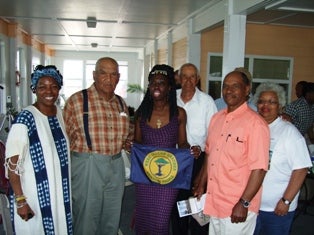
    During the past few months the Gullah/Geechee Sea Island Coalition and EDF have held listening sessions with African-American fishermen in the South Atlantic – from South Carolina to Florida and Georgia. The sessions provided us with the opportunity to listen and document the concerns of these fishermen working in commercial and subsistence fisheries. Our series of listening sessions concluded last weekend in Sea Breeze, North Carolina. Fitting of its name, Sea Breeze once hailed as a popular beach destination for African-Americans in the Wilmington area.

    Read the full post »

  • Twitter Buys Cloudhopper To Manage Billions Of Text Messages


    TwitterPeek

    Twitter has acquired Cloudhopper after working with the startup for the past eight months to manage the billions of text messages it sends worldwide.

    Terms of the deal were not disclosed. On Twitter’s blog, it said it processes close to a billion text messages a month worldwide, and has bought Cloudhopper to help further scale that business. Over the years, Twitter has had a love-hate relationship with SMS. While Twitter was designed to be mobile because it limits messages to 140 characters, it can be costly. In 2008, Twitter stopped sending messages in the UK, claiming that it could cost $1,000 a year per to support each user.

    It’s unclear how Cloudhopper will help, but Twitter said the company will enable Twitter to connect directly to mobile carrier networks in countries all over the planet. Cloudhopper was founded by Joe Lauer in late 2008. Previously, Lauer was the Founder and VP of Simplewire, which was acquired by Qpass in 2006. The company is now known as OpenMarket, and is a division of Amdocs (NYSE: DOX) (which purchased Qpass). OpenMarket is in the similar business of SMS aggregation.


  • Two-headed lizard whose heads hate each other discovered in Australia

    two-headed-bobtail-lizard.jpg
    Photos via Metro

    Check out this bizarre two-headed bobtail
    lizard that was discovered a couple of days ago in Perth Australia! Also, it turns out that the
    heads hate each other, and the larger one keeps attacking the smaller
    one.

    The bobtail lizard is a type of skink lizard commonly known as a
    Shingleback in the great down under. Occurrences of two headed large vertebrates surviving in the wild are infrequent to say the least — the lizard’s two heads are the result of a rare genetic mutation.

    It’s been rescued and is being
    cared for at a reptile park in Henley Brook. The
    wildlife biologists say it’s doing well, but note that two-headed
    lizards don’t typically have very long life expectancies. You know,
    because of the whole two head, one body thing. Here’s an x-ray of
    the creature:

    two-headed-lizard-x-ray.jpg

    The BBC has
    more details
    : the two headed lizard “apparently eats
    from both heads but the larger head has also tried to attack the
    smaller one, and its movement is difficult as both heads control its
    back legs. It also has a healthy sibling without any mutation. Bobtails
    give birth to live offspring, rather than laying eggs.”

    two-headed-lizard.jpg

    Given that we just had Earth Day, we’re all aware that global climate change is
    continuing largely unabated. Deforestation may have slowed some but is
    still a colossal issue, endangered species are dropping like flies and
    water is running out all over the place.

    But this two-headed lizard is still neat-looking.

    Brian Merchant covers politics for TreeHugger,
    where a version of this post originally appeared.

    More
    from TreeHugger

     Check out Yahoo! Green on Twitter and Facebook.


  • Lawsuit: Hotel Obliged Guest’s Requests For Whites-Only Service

    Are you a racist looking for a luxury hotel in Florida? Then the Ritz Carlton in Naples might just be the place for you. A lawsuit filed this week claims that when guests of the hotel asked to not be served by “people of color” or with “foreign accents,” the management agreed to their demands.

    The suit, filed by a Haitian-born waiter at the Ritz Carlton, alleges that a British couple who were staying at the hotel made such a request with regard to the staff attending to them.

    According to the plaintiff, the request was noted in the hotel computer, adding that the couple is “very very” prejudiced. The request for whites-only service was then relayed to other members of staff, including the plaintiff who says in the suit that on March 12 he was attempting to do his job when “he was prevented by his immediate supervisors from doing so… because they [the guests] did not want to be waited on by a black person per the instruction of [the hotel’s director].”

    Not shockingly, the hotel wouldn’t talk to the press about the lawsuit but did say, “The Ritz Carlton Hotel Company does not tolerate discrimination from our employees or our guests.”

    Here’s a PDF of the lawsuit

    Waiter sues Ritz-Carton Naples, claiming discrimination [News-Press.com]

  • Cultures of foreplay

    Photo by Flickr user LLima. Click for sourceI’ve just read a fantastic article in the Journal of Sex Research on culture and how we decide what is a sexual disorder or ‘paraphilia’. It has a fascinating section where it talks about cultural variation in common or acceptable sexual practices and it touches on how foreplay differs between societies.

    Kissing during foreplay, it seems, is not universal and seems to be a particular fetish of Western lovers.

    Finally, in most cultures, sexual intercourse is preceded by some degree of foreplay—that is, sensory and sexual stimulation intended to induce arousal. This stimulation may be visual, tactile, or otherwise. When visual, it may be the sight of the partner or parts of his or her body or clothing, but these may vary across cultures (Bhugra, 2000). Kissing as part of sexual foreplay is common in the West but virtually unknown in other parts of the world (Ford & Beach, 1965). There are some cultures where penetration was the key element to intercourse, and neither foreplay nor afterplay was recorded. Ford and Beach pointed out that physical pain and biting are sometimes permitted as part of sexual foreplay and, therefore, such behaviors are likely to be readily incorporated into the sexual repertoire. Thus, individuals learn about methods of sexual arousal and sexual activity from their cultural habits and, in order to avoid being labelled and treated as deviant, they conform to prevalent and expected mores.

    Unfortunately, the article is locked behind a paywall. Undoubtedly for your own good though. Imagine what would happen if you started to deviate from culturally accepted foreplay practices. Anarchy. And then where would we be?

    Link to PubMed entry for article.