Blog

  • Open Graph, Facebook a la conquista de la web

    Api social Google

    Tienen en Facebook la fe del converso. Hace años su planteamiento era el de levantar los muros más altos posibles entre su servicio de redes sociales y el resto de la web, con una mezcla de soberbia y desconexión de la realidad que perdura en alguno de sus competidores: sólo con Facebook basta. Con el tiempo despertaron de este sueño y lo que han anunciado hoy en la f8 Conference es fruto de ese “aggiornamiento”: la experiencia online es distribuida, los datos son nuestros. Porque eso sí que no ha cambiado en la estrategia de Facebook, saber más y más de sus usuarios como leitmotiv de cada nueva funcionalidad que ofrecen.

    Open Graph y el “Me gusta” en la web

    Esta filosofía se traduce en lo que han venido a llamar “Open Graph“, que viene a ser una ampliación a lo grande de lo que empezaron con Facebook Connect. Si otras webs podían integrar el login, escribir en el newsfeed del usuario y consultar sobre contactos (si el usuario da permiso, claro), el nuevo paso es añadir las interacciones propias de Facebook.

    Lo más interesante es la extensión del “Me gusta” por como plantean desde la red social la relación: si somos una web de música que integra esta funcionalidad y un usuario indica que “le gusta” cierta banda, esto se publica en su perfil con enlace a la web. El incentivo para esta web integre el “me gusta” de Facebook es directo: tráfico. Eso y poder hacer más social y personalizado su web, con funcionalidades del tipo “los artículos que han votado tus amigos”: a muchos que llevamos tiempo trabajando en “hacer sociales las publicaciones” se nos ha quedado la sonrisa congelada. ¿Qué gana Facebook? Un perfil mucho más detallado y, sobre todo, estructurado de sus usuarios. Personalización de la publicidad, comercio electrónico, el buscador más personal que se puede hacer… el potencial es enorme.

    Docs.com, barra, social plugins

    Zuckerberg ha hecho más anuncios (blog oficial), desde una barra que los sitios pueden integrar (sí, de esas odiosas barras del pie de tantas webs) hasta “social plugins” que vienen a ser una suerte de widgets más potentes que el actual “hazte fan”. Ambos van en la dirección de facilitar a las webs que no van a invertir en desarrollo para integrar su API y Open Graph el que los usuarios puedan dejar información y acceder a lo sus contactos han hecho en esa web.

    También hay que mencionar Docs.com, movimiento dedicado con toda la intención contra Google y su Google Docs: Microsoft y Facebook aliados en la ofimática online para compartir documentos y trabajar de forma colaborativa en la web. Puede uno imaginarse a la gente de Facebook regodearse tras tantos movimientos de Google en “lo social” para contrarrestarles, desde Open Social hasta Buzz.

    ¿Estamos creando un monstruo?

    Cada integración de Connect y de Open Graph es un refuerzo de su liderazgo en la lucha por la identidad online, les da visibilidad, datos y tráfico. A cambio Facebook recompensa – y esa es la clave de la adopción por parte de otras webs – con tráfico… pero el resultado global es que entre todos se cede parte de la naturaleza distribuida de internet a un actor que concentra y centraliza y, poco a poco, se está constituyendo como el facilitador de lo social en la web. ¿Cuánto tardaremos en ver entrar a Facebook en los mercados de tantas webs que ahora lo alimentamos?

    Más información en blog de desarrolladores Facebook, CNet, Giga Om, Techmeme.


  • Supreme Court hears arguments on meaning of ‘mistake’ in civil procedure case

    [JURIST] The US Supreme Court heard oral arguments Wednesday in Krupski v. Costa Crociere on the appropriate construction of “mistake” in Federal Rule of Civil Procedure 15(c)(1)(C). The rule permits an amended complaint to “relate back” for statute of limitation purposes when the amendment corrects a mistake concerning the proper party’s identity. The US Court of Appeals for the Eleventh Circuit held that the rule does not apply to substitution of the correct defendant for a related corporation with a similar name where the plaintiff has imputed knowledge of the identity of the added defendant prior to filing suit. Counsel for the petitioner argued that the rule should apply when substituting the correct defendant. Counsel for the respondent argued that there can be no mistake where the plaintiff knows all the facts. There is a circuit split on the issue.

  • Reach Logitech Executive Customer Service

    If you have a Logitech customer service issue, warranty repair request or otherwise just need to kick your issue to the top because regular customer service isn’t doing it for you, here is a gal to contact:

    Nancy Morrison, VP of Corporate Communications, United States and Worldwide
    510-713-4948
    [email protected]

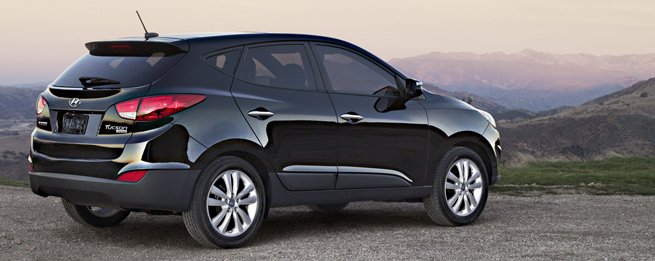
  • 2010 Hyundai Tucson

    2010 Hyundai Tucson

    In theory, the SUV was a sensible choice: more room for your cargo, more ground clearance when roads are snowy or unpaved, and more traction when climbing slippery hills.

    It’s the trade-offs that make traditional midsize SUVs a less ideal choice: poor fuel economy, high purchase price, and difficulty maneuvering and parking.

    Small CUVs were a response to these trade-offs, but they went to the other extreme and created trade-offs of their own: cramped interiors, a lack of refinement and a general lack of ruggedness.

    To differentiate the Hyundai Tucson from the small CUVs on the road, Hyundai engineers decided the Tucson needed to offer the best of both worlds, combining the rugged utility of an SUV with the maneuverability and refinement of a car. Once you experience it, you’ll understand why the Tucson is the right vehicle for our times.

    via Hyundai Official Website

  • DeMint Support = Fast Cash

    Just yesterday, Sen. Jim DeMint (R-S.C.) announced his decision to endorse Indiana Senate candidate Marlin Stutzman, who faces multiple challengers in the May 4 GOP primary. DeMint told FOX News yesterday, “We can raise some money and we’re going to do that with a money bomb over the next week, try to draw some attention.”

    Well, that was fast.

    DeMint’s PAC, Senate Conservatives Fund, wasted no time assisting Stutzman. The PAC kicked things off yesterday by spending $6,500 for a web ad and email list usage to benefit Stutzman’s campaign. And that’s just Day 1…

  • A Life-Extending Coup: Flies That Can’t Smell Food Live 30 Percent Longer | 80beats

    sn-aging-thumb-200xauto-306In today’s edition of far-out science, researchers have found evidence that the wafting aroma of food has an effect on an organism’s lifespan–and they’ve demonstrated that interfering with a fruit fly’s sense of smell causes it to live a longer, healthier life. While there’s no guarantee that the trick would work for humans, optimistic researchers suggest that certain odors—or drugs that block us from sensing them—might one day help prevent disease and extend lives [ScienceNOW].

    In the past decade, scientists have established a clear connection between extremely low-calorie diets and extended lifespans; studies have demonstrated that yeast, fruit flies, mice, and monkeys on these diets live longer than their peers. While the exact mechanism at work isn’t yet clear, researchers suspect that a near-starvation diet causes an organism’s metabolism to slow down, and triggers other changes that evolved to help organisms survive in times when food was scarce. Now scientists say it may not be just what a creature eats, but also what it smells that has an effect on how long it lives.

    In one 2007 study, molecular biologist Scott Pletcher and his colleagues found that completely eliminating fruit flies’ sense of smell caused them to live nearly 20 percent longer than normal flies. They also found that wafting the smell of yeast, a tasty treat for fruit flies, towards flies that were on a low-cal, live-extending diet hastened the death of those flies. This led the scientist to hypothesize that specific odors might be influencing the flies’ lifespans. Luckily, other scientists had identified a receptor in a group of neurons that enable fruit flies to smell carbon dioxide, which signals the presence of a good meal of tasty yeast [ScienceNOW]. So, Pletcher and his team set out to find if the CO2 had anything to do with the duration of the flies’ lives.

    For the new study published in PloS Biology, Pletcher eliminated the fruit flies’ ability to smell carbon dioxide, while keeping the rest of the olfactory system intact. Even on a standard, full-calorie diet, the flies that couldn’t detect CO2 lived up to 30 percent longer than other flies. The researchers suggest that the absense of CO2 may have indicated to the altered flies that food was scarce in the environment, prompting them to snap into survival mode. Oddly, however, the life-extending effect was only seen in female flies–male flies gained no such benefit. The smell-deprived female flies also seemed healthier and stronger by several measures: They stored extra fat, produced more offspring, and proved to be more resistant to oxidative stress than normal flies.

    Pletcher isn’t sure how the inability to smell CO2 extended the females’ lifespans, but he says the findings open up fascinating new areas for studies of human aging. He suggests that there might be certain smells or drugs that would block certain odors, and which could give humans a bit more time before we shuffle off our mortal coils. Matt Karberlein, an aging expert who wasn’t involved in Pletcher’s research, was cautiously optimistic about that possibility, saying: “We definitely undergo physiological changes in response to smelling food – I’m getting hungry just thinking about it – so I think it’s possible” [New Scientist].

    Related Content:
    80beats: A Single Genetic Tweak Gives Mice Longer, Healthier Lives
    80beats: Low-Calorie Diet Staves off Aging & Death in Monkeys
    Not Exactly Rocket Science: Low-calorie diets improve memory in old age
    DISCOVER: In Worms, a New Theory on Aging

    Image: Scott Pletcher / University of Michigan, Ann Arbor


  • Can You Become Addicted To Tanning?

    A few weeks back, Consumerist readers voted overwhelming in favor of requiring parental consent for children using tanning beds, and a new study linking regular tanning to addictive behavior may back up your sense of caution on the matter.

    In a study published in Archives of Dermatology, researchers say that, much like with other addicts, there are some people who will continue to tan even after experience the negative effects of too much tanning.

    Researchers talked to 229 students who use indoor tanning beds and around 30-40% of those polled met the psychiatric diagnostic criteria for addiction. In addition to feeling compelled to tan, the study found that these people also claimed to have more symptoms of anxiety and admitted to a higher level of alcohol and marijuana use.

    “I think there’s growing evidence that it can be addicting for a minority of individuals,” says Catherine Mosher, a clinical psychologist and one of the study’s authors. “Addiction is a very complex phenomenon, and it will take evidence from multiple sources to validate the idea that it is an addiction.”

    ABC News spoke a 27-year-old woman whose uncle died from skin cancer but who continued to tan regularly until she was diagnosed with a melanoma:

    “I absolutely believe that I was addicted to tanning,” said 27-year-old melanoma survivor Kristi Setzer, who said she began a tanning regimen to look good for her wedding in 2006.

    “I felt that I would look thinner and not blend in with my wedding dress,” Setzer, now a law student, recalled.

    After going tanning, she estimates, almost every day for a year before her wedding, she continued afterward, despite better than average knowledge of its possible effects.

    “I knew that melanoma had serious consequences,” Setzer said. “My uncle actually died after a battle with melanoma, but even though I knew that, I felt compelled to go tan.

    “Even after my wedding I continued indoor tanning until August of 2008, when I received my diagnosis of melanoma,” she said.

    Despite the anecdotal data, many doctors are cautious to label tanning as addictive without further research.

    “It takes a long time to formally classify something as an addiction,” said Suzette Glasner-Edwards, a clinical psychologist and researcher at UCLA. “Typically it takes a lot of research studies to see if all the symptoms… really conform to how we understand addiction to other things. It’s a pattern of progressively losing control over a behavior… If they don’t have impairment in their life as a result of it, then they won’t get that diagnosis.”

    Study Shows Links Between Tanning and Addictive Behavior [ABC News]

  • IN Senate Race: What’s old is “news”

    What’s your definition of news?

    Is it information that’s 2 1/2 months old?

    It was for Dan Coats last night.

    In a five-candidate race, Coats is considered a slight favorite in the May 4th Indiana Republican primary for the US Senate seat being vacated by Democrat Evan Bayh. After Tuesday night’s televised GOP Senate debate, Coats told reporters he had an announcement to make, before taking questions.

    Coats said, “Lemme just pass on some news that I’d like to give you here. I’m really pleased to announce tonight that uh…in fact I just got off the phone with Mike Pence. He’s given me his unqualified endorsement and support for this race which I’m thrilled to have. He said some very good things about me when I indicated my intention to run. He’s been supportive but uh…to say he’s given me now his unqualified support is…is…is very important to me and I’m very appreciative.” (You can watch Coats says this for yourself on the video linked to this story.)

    The endorsement announcement was bigger than anything that happened in the debate. Congressman Mike Pence is very influential among Indiana Republicans. In the minds of many Hooiser GOP’ers only Governor Mitch Daniels endorsement would be bigger. (And Daniels in not endorsing. He says he’ll back the primary winner.)

    Wednesday morning, on Coats’ campaign FaceBook page, the status trumpeted the Pence endorsement:

    Dan Coats for Indiana Big News! Congressman Mike Pence has given Dan his unqualified endorsement for the U.S. Senate!

    The thing is…Pence’s backing was old news. That’s how Pence’s chief of staff Bill Smith described it when  contacted by Fox News.

    In early February, a statement of support for Coats candidacy was issued. This was shortly after Coats’ announcement that he intended to join the race. The Pence statement was picked up by some DC media outlets.

    Roll Call on February 3rd ran the following quote attributed to Pence:

    “I am very excited about the possibility that former Senator Dan Coats may run for the United States Senate in 2010 and I sincerely hope he does it,” Pence said in a statement. “His integrity and conservative record would make him the ideal candidate for Hoosiers. If he runs, I will support him.”

    Fifteen days later, Coats filed to run in the Indiana Senate election.

    Smith says since that February statement, “The Congressman has not been hesitant” to tell reporters who asked that he was a Coats-backer. Smith made it clear in a telephone interview that while the February statement did not contain the word ‘endorsement’, it was certainly considered one by Pence.

    Still, there was at least some confusion about Pence’s backing of Coats. Some supporters had contacted Pence’s offices asking who the Representative liked in the primary. Smith says all who inquired were told the same thing, “Coats”.

    But it shouldn’t have been confusing for people who visit Coats campaign website. On a page titled “What They’re Saying” a Pence quote sits atop the list:

    Congressman Mike Pence: “His integrity and conservative record would make him the ideal candidate for Hoosiers.” (Congressional Quarterly, 2/3/10)

    So, did Coats just plain get it the timing wrong with his post-debate “news” announcement?

    Apparently.

    Kevin Kellems of the Coats campaign sent an e-mail this morning which reads in part:

    “Cong. Pence called Dan after the debate.  I don’t speak for him, but I believe the reason the Congressman reached out to Dan was to make it clear that his statement of support that came very early on was indeed an endorsement.”

    So, Coats did have Pence’s endorsement all along…even before Coats was officially in the race. And certainly a lot of people missed it (including this reporter). But was Coats post-debate announcement last night “news” as he said?

    As we says around here at Fox, “You decide.”

  • Shooting Challenge: H to the D to the R [Photography]

    For this week’s Shooting Challenge, the topic will be something I’ve been looking forward to for a long time…something our photographic community has proven expansive and adventurous enough to tackle: HDR (high dynamic range) photography. More »


  • 2010 Audi R8 V10

    2010 Audi R8 V10

    One of the best gets even better, as Audi introduces a monster V10 engine for its already stunning R8.

  • Ubuntu 10.04 Lucid Lynx Hit By Major Memory Leak Problem

    With less than about a week left till the final release and a day till the Release Candidate, Ubuntu 10.04 Lucid Lynx has been hit by a very serious memory leak problem involving X.Org.

    Last week, the Lucid repository received an update for X.Org Server to enable GLX 1.4. This update in X.Org Server resulted is some crashes and as a result another patch was introduced to fix the crash. This update to fix the crash has resulted in a major memory leak which causes the system to get slower and slower until it becomes completely sluggish and unusable.

    This problem is currently being considered “Urgent” and the attempts by the Ubuntu developers to fix this issue has been unsuccessful so far. In order to fix the problem in time for the final release, the developers are considering rolling back the patches, including the one which enables GLX 1.4. This will mean going back to GLX 1.2.

    [via ubuntu-dev mailing list]

    Ubuntu 10.04 Lucid Lynx Hit By Major Memory Leak Problem originally appeared on Techie Buzz written by Ricky Laishram on Wednesday 21st April 2010 03:18:56 PM. Please read the Terms of Use for fair usage guidance.

    Don’t miss these Related Posts:

    Join Techie Buzz on Your Favorite Social Networking Sites


  • Alfa Romeo coming to US: Giulia, MiTo, Giulietta, a new spider, two SUVs on the way

    We’re slowly getting more information on Fiat Group’s role here in the United States as Sergio Marchionne reveals his 5-year business plan for the Italian automaker today in Turin, Italy. Following the Fiat 500 later this year, Marchionne says that Fiat’s Alfa Romeo brand will come to the stateside by 2012.

    Leading the charge will be three new models, a midsize SUV, a sedan and a station wagon (both called the Giulia). The Alfa Romeo Giulia will replace the current 159 sedan. The SUV will be based on a Chrysler product – either the Dodge Journey or the new 2011 Jeep Grand Cherokee.

    A year after that (in 2013), Alfa Romeo will add the 5-door MiTo hatchback and a new Spider, a small convertible. Both of those will be followed by the new Giulietta hatchback and larger SUV in 2014.

    We’re looking forward to Alfa’s return.

    Click through for Fiat’s official chart.

    – By: Omar Rana

    Source: KickingTires


  • “The Future of Cuba, Cuban-Americans, and the U.S. Government: Reconciliation or War Crime Tribunals and Property Restitution?”

    “The Future of Cuba, Cuban-Americans,

    and the U.S. Government:
    Reconciliation or War Crime Tribunals and Property Restitution?”

    with

    Jorge I. Dominguez

    and

    Anita Snow

    Date: May 4, 2010

    Time: 4-6 PM

    Where: CGIS Building, Weatherhead Center for International Affairs,

    1737 Cambridge Street, Room N-354*, Cambridge MA

    Contact Chair: Donna Hicks ([email protected]).

    *Please note this event is not in the usual room.

    Speaker Bios

    Jorge I. Domínguez is Antonio Madero Professor of Mexican and Latin American Politics and Economics, vice provost for international affairs, special advisor for international studies to the dean of the faculty of arts and sciences, and chairman of the Harvard Academy for International and Area Studies. He is the author or co-author of various books, among them “La política exterior de Cuba, 1962-2009″; “Consolidating Mexico’s Democracy: The 2006 Presidential Campaign in Comparative Perspective”; “The United States and Mexico: Between Partnership and Conflict, 2nd ed.”; “Constructing Democratic Governance in Latin America, 3rd ed.”; “The Construction of Democracy: Lessons from Practice and Research”; “Cuba hoy: Analizando su pasado, imaginando su futuro”; “Between Compliance and Conflict: East Asia, Latin America, and the “New” Pax Americana”; “The Cuban Economy at the Start of the Twenty-First Century”; “Democratic Politics in Latin America and the Caribbean”; “Technopols: Freeing Politics and Markets in Latin America in the 1990s”; “To Make a World Safe for Revolution: Cuba’s Foreign Policy”; “Economic Issues and Political Conflict: U.S.-Latin American Relations”, and many articles on domestic and international politics in Latin America and the Caribbean.

    A past president of the Latin American Studies Association and a past board chairman of the Latin American Scholarship Program of American Universities, he currently serves on the editorial boards of “Political Science Quarterly”, “Foreign Affairs en español”, “Cuban Studies”, “Foro internacional”, and “Istor” and is a contributing editor to “Foreign Policy”. He was series editor for the Peabody Award-winning Public Broadcasting System television series “Crisis in Central America”. His current research focuses on the international relations and domestic politics of Latin American countries. For more information, visit http://www.people.fas.harvard.edu/~jidoming

    Anita Snow is a 2010 Nieman fellow and a veteran journalist who has spent most of her career working for The Associated Press in Latin America. Before coming to Cambridge last year, she was the AP’s bureau chief in Havana for a decade, single-handedly opening the office in 1999 after the news organization’s 30-year absence from the island. In Cuba, she covered stories including the custody fight over Cuban boy Elian Gonzalez, who was rescued at sea off the coast of Florida after a boat wreck, and the illness and eventual resignation of leader Fidel Castro. Previously, Snow worked for the AP in Mexico and Central America for more than six years.

    About the Herbert C. Kelman Seminar Series

    The 2009-2010 Herbert C. Kelman Seminar on International Conflict Analysis and Resolution series is sponsored by the Program on Negotiation, the Nieman Foundation for Journalism, the Joan Shorenstein Center on the Press, Politics, and Public Policy, The Weatherhead Center for International Affairs, and the MIT-Harvard Public Disputes Program, as well as Boston area members of the Alliance for Peacebuilding. The theme for this year’s Kelman Seminar is “Reconciliation: Coming together after the shooting stops”.

  • IEA leads the way in SOS rally, march

    Nearly 5,000 IEA members from throughout Illinois were in Springfield Wednesday, among the estimated 15 thousand participants in what might have been the biggest-ever State Capitol rally of its type.  (see rally and march photos)

    The Save Our Schools/Save Our State (SOS) rally, sponsored by the Responsible Budget Coalition (RBC), sought to convince lawmakers to act to end the state budget crisis. State government is facing a shortfall of $13 billion. It is estimated as many as 20,000 education employees will be laid off this August, causing larger class sizes, the elimination of music, arts and sports programs in many districts and an overall decline in education quality statewide.

    “We have a crisis that is on the brink of becoming a tragedy” said IEA President Ken Swanson. “The legislature must act now.”

    The best solution is for the Illinois House to pass HB 174, or something like it, which would provide a comprehensive tax reform measure. HB 174 cleared the Illinois Senate last spring but has not been voted on in the House.

    “It will take revenue to save our schools and save our state,” Swanson said. “Our message to lawmakers is they must end the bad behavior that led to this crisis and address the revenue needs of the state.”

    # # #

  • UPDATE: CBC budget cuts

    Published April 20, 2010
    President Rich Cummins, KONA Radio 

    Play Audio
    Part l:  Braced for Future Cuts / Preserving Daily Mission of the College (3:06 min)
    Part ll:  Don’t Starve the Solution  (2:11 min)
    Part lll:  Current and Future Impact  (2:30 min)

    KONA:  …for now you’re looking at about a $1.6 million cut in the budget.  How soon do you think you’ll finish the work on that?

    Cummins:  I’ve had a committee working on it with me for the last several months.  We knew that a big cut was coming.  We weren’t sure about what the number would be because the Senate and the House versions varied very dramatically.  Unfortunately, it landed on the Senate side of the spectrum and we’ll be taking more cuts than we hoped for.  …that committee concluded it’s work on Friday and is sending me some recommendations that I’ll consider–that I’ll add and subtract from.  And within the next three weeks I’ll be moving to make those cuts.

  • National Astronomy Day Festivities at Moore Observatory

    NEWS RELEASE
    April 21, 2010                                                             Contact: Frank Murray, 542-4835

    Day and night activities are planned at Moore Observatory at Columbia Basin College Saturday, April 24 in celebration of National Astronomy Day.

    Viewing will begin at 6 p.m. with solar observation from a variety of solar telescopes provided by CBC and the Tri-City Astronomy Club. Guests will be invited to view the sun and sunspots.

    In addition, videos will be shown inside the observatory of various galactic phenomenons.

    Public star gazing will begin at about 8 p.m. through the Moore Observatory’s 16-inch Schmidt-Cassegrain telescope. Everyone is welcome to attend and there is no admission charge. The Moore Observatory is located in the northwest corner of the CBC Pasco campus.

  • ‘Inside Islam: What a Billion Muslims Really Think’

    NEWS RELEASE
    April 21, 2010                                                          Contact: Erica Jesberger, 544-4916

    The documentary Inside Islam: What a Billion Muslims Really Think will be shown at 7 p.m. Tuesday, April 27 in the Gjerde Center on the Columbia Basin College Pasco campus.

    After the film, a panel of Muslim professionals from the Tri-Cities will comment on the film and answer audience questions.

    Focused on the issues of terrorism, democracy, and gender justice, the film challenges the popular notion that Muslims and the West are on a collision course and instead highlights a shared relationship that is based on facts, not fear. The film asks questions on many Americans’ minds: Why is there so much anti-Americanism in the Muslim world? Who are the extremists and how do Muslims feel about them? What do Muslims like and dislike about the West? What do Muslim women really want?
     
    Inside Islam: What a Billion Muslims Really Think runs 55 minutes. This free public showing is sponsored by the CBC Reads committee, the Office of Diversity, and the Associated Students of CBC.

  • Map Of The Day: In Case You Had Any Doubt Where The World’s Growth Was Coming From

    The IMF has released their report on the world economy, and while the recovery is robust worldwide, you can tell quite easily that this is all about emerging markets growth.

    Emerging Markets Map

    Now check out the details of the world recovery >

    Join the conversation about this story »